Kazan Kremlin
The Kazan Kremlin is a place where East meets West, Islam and Orthodox Christianity coexist, and a thousand years of history merges with modernity. This isn't merely a fortress but a symbol of Tatarstan's unique identity — a region where two great cultures live in peaceful harmony. When you walk along the white stone walls and see the minarets of Kul Sharif Mosque standing beside the domes of the Annunciation Cathedral, you realize: there's nowhere else like this in the world.
Kremlin History: From Bulgar Fortress to UNESCO Site
The history of this place reaches deep into the past. As early as the 10th century, a Bulgar fortress stood here on a high hill above the Kazanka River. In the 15th century, it became the center of the Kazan Khanate — a powerful state controlling Volga trade.
In 1552, Ivan the Terrible's troops captured Kazan after a bloody siege. The khanate fell, mosques were destroyed, and the Tatar population was expelled beyond the city walls. But the kremlin remained — Russian tsars understood its strategic importance.
On the site of the khan's citadel, Pskov masters erected new walls of white limestone, built churches and administrative buildings. This created the appearance we see today — a blend of Russian and Tatar, medieval and modern.
In 2000, the Kazan Kremlin was inscribed on the UNESCO World Heritage List as "an exceptional testimony to historical continuity and cultural diversity."
What to See
Kul Sharif Mosque
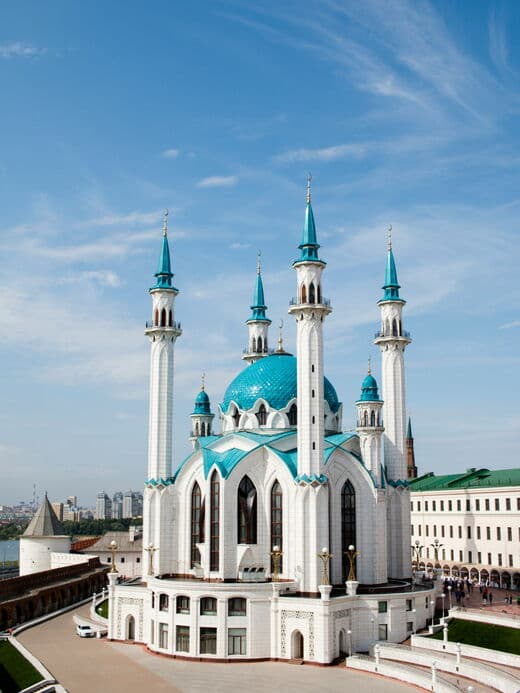
The main symbol of modern Kazan is Kul Sharif Mosque, opened in 2005 for the city's 1000th anniversary. It was built on the site of the legendary mosque of the Kazan Khanate destroyed in 1552, and named after its last imam who perished defending the city.
The white-and-blue building with four minarets has become Kazan's calling card. Inside you'll find a spacious prayer hall, an Islam museum, and observation balconies. Entry for tourists is free (observe the dress code).
Söyembikä Tower
The leaning Söyembikä Tower is the kremlin's most mysterious structure. The seven-tiered tower stands 58 meters tall and leans nearly 2 meters off vertical — visible to the naked eye. The exact construction date is unknown (17th-18th century), as is the cause of the lean.
A romantic legend connects the tower to Queen Söyembikä, who supposedly threw herself from it rather than become Ivan the Terrible's wife. Historians consider this a beautiful fiction, but the legend lives on.
Annunciation Cathedral
The oldest surviving monument of Russian architecture in the Middle Volga region is the Annunciation Cathedral (1561-1562). It was built immediately after the capture of Kazan and became a symbol of the new authority. The white-stone cathedral with golden domes is a classic example of Pskov architecture.
Presidential Palace
The former Governor's Palace (19th century) is now the residence of the President of Tatarstan. You can't go inside, but you can admire the facade and the palace church.
Museums
The kremlin houses several museums: the Museum of Tatar Statehood History, the Natural History Museum, the Islamic Culture Museum (in Kul Sharif Mosque), and the Manezh exhibition hall. If time is limited, choose one or two.
What to See Nearby
From the kremlin begins the pedestrian Bauman Street — Kazan's Arbat with shops, cafes, and street musicians. It's the city's main tourist artery.
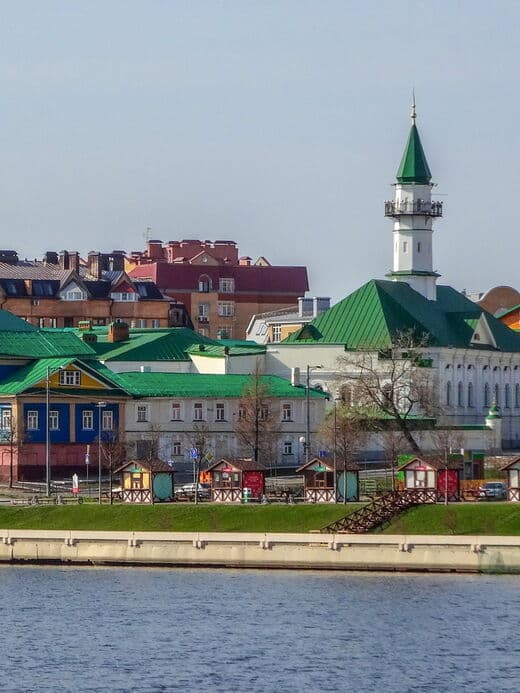
South of the kremlin, on the opposite bank of the Kazanka, spreads Old Tatar Quarter — a historic district preserving traditional Tatar architecture, mosques, and the atmosphere of old Kazan.
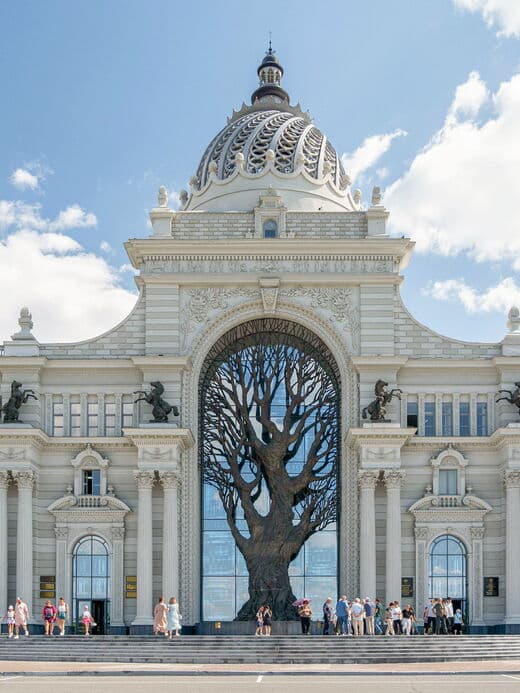
Near the kremlin is the Kazanka River embankment with views of the Kazan Arena stadium and the Palace of Agriculture (an Agriculture Ministry building that looks like a fairytale palace).
Practical Tips
When to Visit
The kremlin territory is open from 8:00 AM to 8:00 PM (until 10:00 PM in summer). Museums typically operate from 10:00 AM to 6:00 PM, closed Mondays. Kul Sharif Mosque is open until 8:00 PM.
The best times are morning (fewer tourists) or evening (beautiful light for photos). At sunset, the kremlin walls take on golden hues.
Tickets
Entry to the kremlin grounds is free. Tickets are only needed for museums (100-300 rubles). Combined tickets for all museums are available.
Getting There
Kremlevskaya metro station is right at the kremlin walls. You can also walk from the train station (15 minutes) or from Bauman Street.
How Much Time You Need
Minimum 1.5-2 hours for walking the grounds and visiting the mosque. With museums — 3-4 hours. For full immersion — a whole day with lunch at nearby cafes.
Atmosphere and Character
The Kazan Kremlin is a place of power. Here you feel the weight of history: for thousands of years people have built, destroyed, and rebuilt on this hill. Bulgars, Tatars, Russians — each people left their mark, and all these layers coexist without contradiction.
The proximity of Kul Sharif Mosque and the Annunciation Cathedral makes an especially strong impression. Two temples, two faiths, two cultures — and between them no conflict, only mutual respect. This is Kazan's formula, a city that has learned to live at the crossroads of civilizations.
Come here without rushing, allow yourself to feel this place. Sit on a bench overlooking the Kazanka, listen to the call to prayer from the minaret, enter the quiet of the cathedral. And the kremlin will reveal itself not as a tourist attraction but as living testimony to this land's remarkable history.