Old Tatar Settlement
Kazan is a city where East meets West, Orthodoxy and Islam, Russian and Tatar cultures. Nowhere is this synthesis felt as keenly as in the Old Tatar Settlement—a historic district on Lake Kaban's shore where Tatar families have lived for over 450 years. When I first walked these streets, I was struck: just steps from the Kremlin—a completely different world, with wooden mosques, painted window frames, and the aroma of chak-chak from every courtyard.
Settlement History: From Exile to Prosperity
The Old Tatar Settlement's history begins with tragedy. In 1552, Ivan the Terrible captured Kazan, and the Tatar population was expelled beyond city walls—forbidden to live in the city itself. Thus arose the settlement on Lake Kaban's southern shore, where Tatars built their parallel city with their own mosques, madrasas, bazaars, and bathhouses.
The first century and a half was hard. Tatars were forbidden from building stone structures or raising minarets higher than Orthodox churches. Everything changed under Catherine II, who visited Kazan in 1767 and permitted stone mosque construction. First was Marjani Mosque, built in 1770—it still stands as Kazan's oldest stone mosque.
The 19th century was the settlement's golden age. Tatar merchants grew wealthy trading with China, Persia, and Central Asia. They built luxurious mansions, donated to mosques and madrasas, opened printing houses and published newspapers. Kazan Tatars were among the most educated Muslims in the Russian Empire.
Soviet times nearly destroyed this world. Mosques closed, madrasas became warehouses, old houses were demolished. But in the 1990s revival began: mosques reopened, historic buildings are being restored, and the district became one of the city's main attractions.
Architecture: Between Russia and the East
Traditional Tatar Wooden Houses
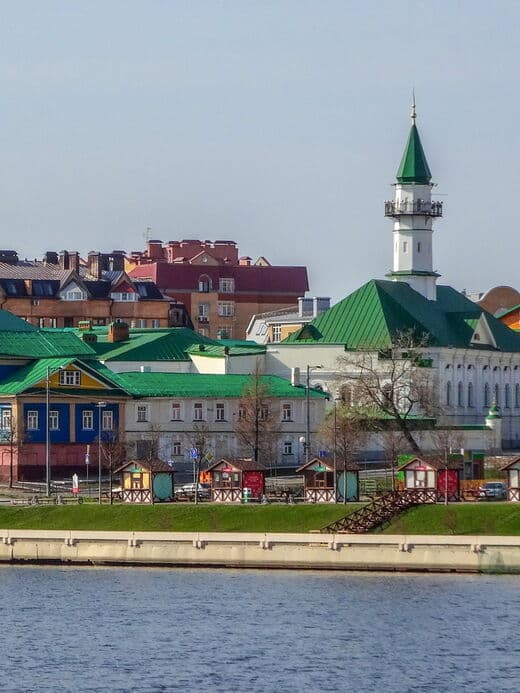
Walk along Kayum Nasiri, Tukay, and Fatykh Karim streets—here 19th-century traditional Tatar houses survive. They differ from Russian ones: façade faces the street (not the courtyard), windows are decorated with bright carvings with Eastern motifs, gates lead to inner courtyards with gardens.
The window frames are especially impressive: Russian carving and Eastern ornament intertwined—floral motifs, geometric patterns, stylized tulips (a symbol of Tatar culture). Each house is unique; you can spend hours photographing these carved windows.
Merchant Mansions
Wealthy Tatar merchants built stone mansions in eclectic style—a mix of classicism, Art Nouveau, and Eastern motifs. The Shamil House (now a museum), Iskhakov House, Yunusov-Apanayev House—these buildings impress with their scale and refinement. Notice the décor: alongside European elements appear arabesques, Eastern ornaments, stylized inscriptions.
Settlement Mosques
Several historic mosques survive in the settlement. Marjani Mosque (1770)—the oldest, built in Baroque style with Tatar architectural elements. Apanayev Mosque (1768)—even older by permit, but rebuilt in the 19th century. Burnayev Mosque (1872) is notable for its "Empire-style" minaret.
All these mosques are active—you can go inside (observing dress code), hear the adhan, speak with the imam. This is living tradition, not a museum exhibit.
What to See
Kayum Nasiri Street
The settlement's main pedestrian street is named for a 19th-century Tatar enlightener. Museums, cafés, souvenir shops are concentrated here. Don't miss the Chak-chak Museum—an interactive exhibit about the famous Tatar dessert with tastings.
Sharif Kamal House-Museum
A small museum in a 19th-century wooden house dedicated to a Tatar writer. Interiors recreate Tatar intelligentsia life: carved furniture, embroidered curtains, samovar on the table.
Lake Kaban
The settlement borders Lake Kaban—one of Kazan's most mysterious places. Legend says the last Kazan khan's treasury lies at the lake bottom, sunk before Ivan the Terrible's assault. Treasure hunters still search, but the lake keeps its secrets.
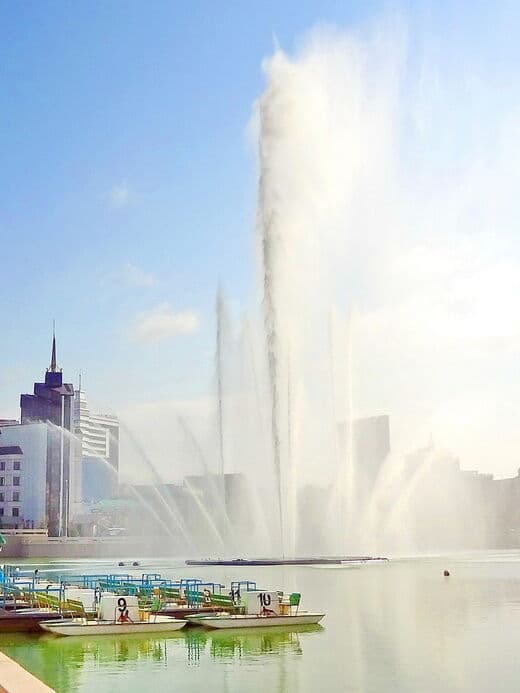
The lake embankment is excellent for evening walks. Summer brings illuminated fountains; you can rent a pedal boat or simply sit in a café overlooking the water.
Markets and Food
The Old Tatar Settlement is paradise for food tourists. Local cafés serve authentic Tatar cuisine: echpochmak (triangular meat and potato pies), kystyby (flatbread with mashed potatoes), tokmach (noodle soup), and of course chak-chak. Try "House of Tatar Cuisine" or "Tatar Estate" cafés.
What to See Nearby
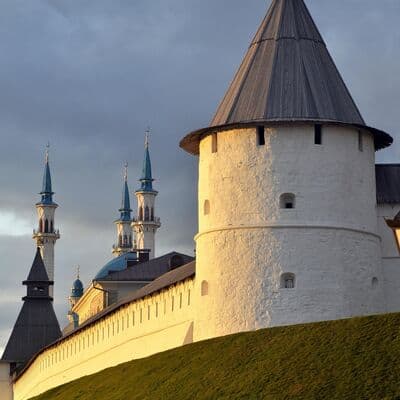
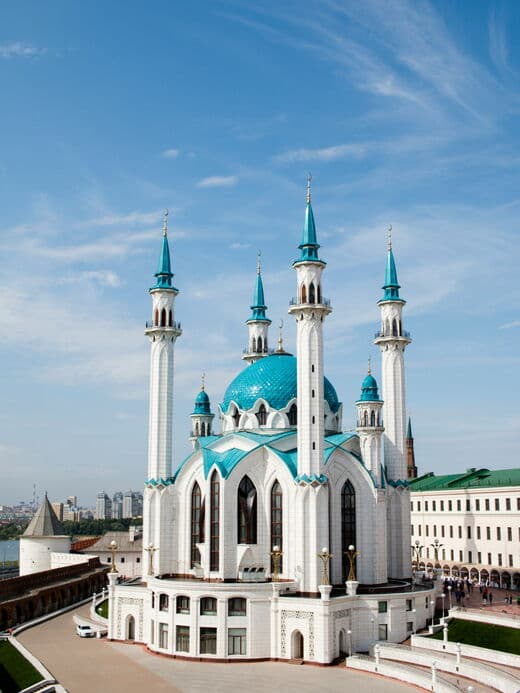
The settlement is steps from Kazan Kremlin—a UNESCO World Heritage site home to the famous Kul Sharif Mosque. This is Kazan's main attraction, not to be missed.
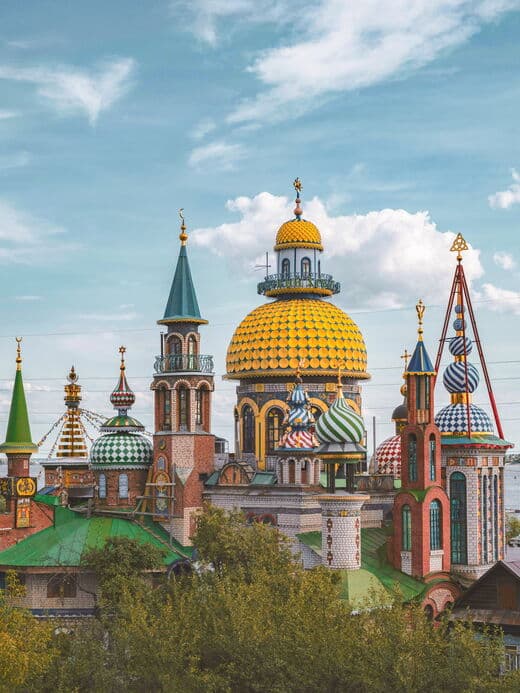
North of the settlement runs pedestrian Bauman Street—Kazan's Arbat with shops, restaurants, and street musicians. Here too is the Temple of All Religions—an unusual structure combining architectural elements of different faiths.
Practical Tips
When to Come
The settlement is interesting any time of year. Summer is pleasant for walking the Kaban embankment, autumn for photographing carved frames against golden foliage, winter for warming up in cafés with hot tea and chak-chak.
Best time of day—morning (few tourists, peaceful photography) or evening (beautiful lighting, special atmosphere). At sunset, mosque minarets turn golden—the best photo time.
Getting There
From the Kremlin—15 minutes on foot via Profsoyuznaya and Moskovskaya streets. From Ploshchad Tukaya metro—10 minutes. You can also take a bus to Tatarstan or Kayum Nasiri stops.
Time Needed
Minimum—2-3 hours for walking and lunch. With museum visits—half a day. To deeply immerse in Tatar culture, plan a full day and attend cooking or calligraphy workshops.
Atmosphere and Tips
The Old Tatar Settlement is Kazan's best place for those wanting to see the city beyond tourist routes. No glossy Kremlin showiness, no Bauman Street noise. This is a living district where the adhan sounds from mosques, where fresh pastry scents waft from bakeries, where you can hear Tatar speech.
A special atmosphere reigns at sunset when minarets turn golden and embankment lanterns light up. This is when to visit a local café, try echpochmak with hot tea, and simply observe life flowing.
The settlement isn't a museum but a living community preserving its identity for over 450 years. Here you can see a different Russia—multinational, where East and West interweave into unique culture.