Marjani Mosque
Marjani Mosque is Kazan's oldest surviving stone mosque and the first Muslim temple built after a nearly two-century ban. This modest building in the Old Tatar Quarter preserves the memory of times when Tatars were forbidden from building mosques in the city. And of the man who helped lift that ban.
History: The First Mosque After the Ban
After the fall of the Kazan Khanate in 1552, Tatars were forbidden from living in the city and building stone mosques. For more than 200 years, Kazan's Muslims prayed in wooden structures in the Old Tatar Quarter — a district beyond the city walls where they had been relocated.
Everything changed in 1767 when Catherine II visited Kazan. Local Tatar merchants presented her with gifts and asked permission to build a stone mosque. The Empress agreed — a gesture within her policy of religious tolerance.
Construction was completed in 1770. The mosque was named after the outstanding theologian Shigabutdin Marjani (1818-1889), who served as its imam for many years. Marjani — reformer, enlightener, historian — is one of the most revered Tatar thinkers.
Architecture
Marjani Mosque is a unique example of "Tatar baroque." The architect (whose name wasn't preserved) combined Russian baroque style with traditional Islamic architecture. The result is a building that resembles neither Russian churches nor typical Eastern mosques.
The two-story building is crowned by a minaret — it stands on the roof rather than separately, a compromise with authorities (the minaret wasn't supposed to exceed the height of Orthodox bell towers). The facade is decorated with baroque window frames and traditional Tatar ornament — the combination looks surprisingly harmonious.
Inside is a spacious prayer hall with a mihrab (a niche indicating the direction of Mecca) and a minbar (pulpit for sermons). The interior is restrained, without excessive decoration — in the spirit of Sunni tradition.
Shigabutdin Marjani
The mosque bears the name of its famous imam — Shigabutdin Marjani, who served here from 1850 to 1889. Marjani was a remarkable man: a theologian and historian who simultaneously called for purifying Islam from later accretions and openness to European science.
His major work, "Mustafad al-Akhbar," was the first scholarly history of the Tatar people. Marjani opened a library and school at the mosque where they taught not only religious subjects but secular sciences as well. Conservatives criticized him for this, but enlightened circles supported him.
Today Marjani is a national hero of Tatarstan. Streets, institutes, and prizes bear his name. And the mosque where he served has become a pilgrimage site for those who honor his memory.
What to See Nearby
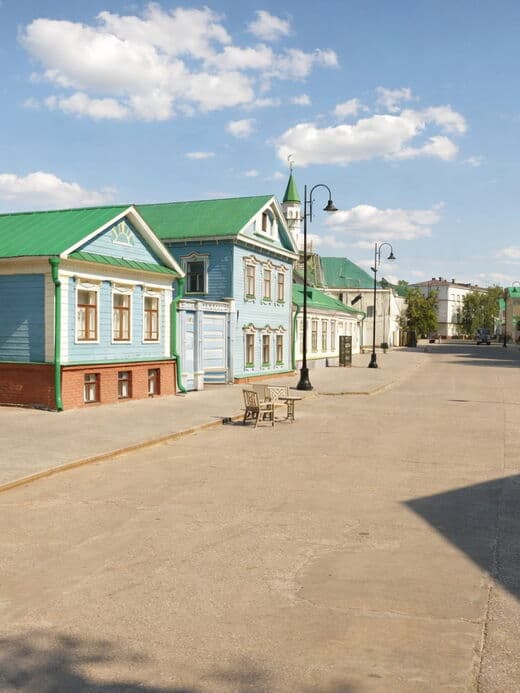
The mosque is in the heart of the Old Tatar Quarter — a historic district with traditional Tatar architecture. Also here are other old mosques (Apanay, Burnay), wooden 19th-century houses, and the Chak-Chak Museum.
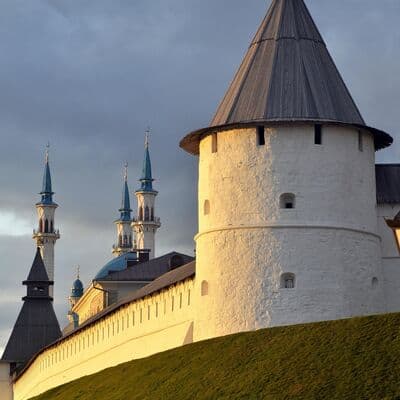
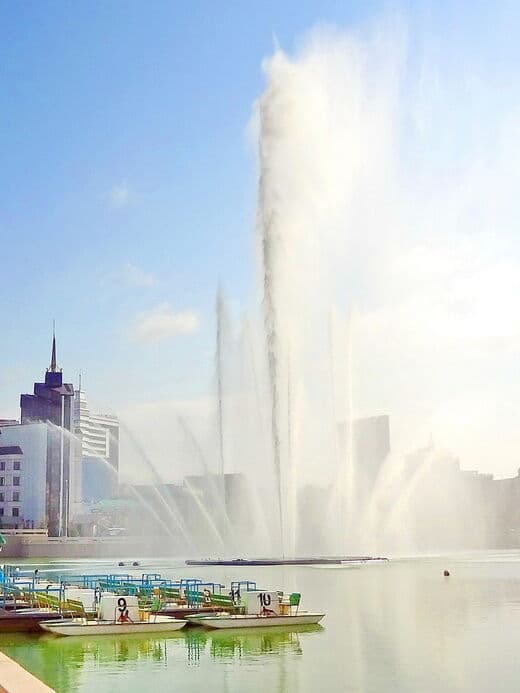
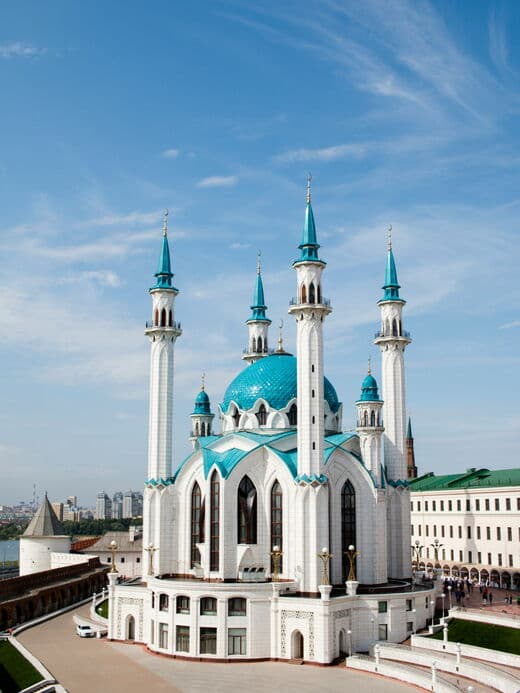
A few minutes' walk away is Lake Kaban with its embankment and the legend of the khan's treasure. And it's a 15-minute walk to the Kazan Kremlin with Kul Sharif Mosque.
Practical Tips
Visiting
The mosque is active, and entry is free. Observe the dress code: covered shoulders and knees, women should wear a headscarf. The best time to visit is morning or after the midday prayer.
Getting There
Address: 17 Kayum Nasiri Street. From the Kremlin it's a 15-minute walk via Profsoyuznaya Street. From Tukay Square metro station — 10 minutes.
Atmosphere and Character
Marjani Mosque isn't a museum but a living temple. Locals come here to pray, nikah ceremonies (Muslim weddings) and memorial services are held here. The atmosphere is modest, homey — nothing like the grand Kul Sharif.
But it's precisely in this modesty that special value lies. Here you feel the spirit of an era when Tatars were just beginning to reclaim their rights after centuries of oppression. The first stone mosque built with imperial permission — a symbol of the perseverance of a people who preserved their faith and culture against all odds.