About
Andorra: The Complete Travel Guide to Europe's Best-Kept Mountain Secret
Why Visit Andorra
Andorra is one of those countries that most people struggle to point out on a map. A tiny principality of just 468 square kilometers (181 square miles), wedged between France and Spain in the heart of the Pyrenees Mountains. And that obscurity is precisely what makes it so appealing: while crowds descend upon Barcelona and Paris, you can find yourself in a place where mountain peaks soar above 2,900 meters (9,500 feet), where winter brings some of the best-value skiing in all of Europe, and where summer hiking trails rival anything Switzerland offers at a fraction of the cost.
The first thing that catches you off guard about Andorra is the sheer density of experiences packed into such a small space. This is the sixth-smallest country in the world, yet in a single day you can ski pristine mountain runs in the morning, enjoy lunch at a restaurant with panoramic views of snow-capped peaks, spend the afternoon soaking in the largest thermal spa complex in Southern Europe -- Caldea -- and then stroll through duty-free shopping streets where electronics, perfume, and designer goods cost 15-25% less than in Barcelona or Toulouse. Try doing all that in Switzerland and see what happens to your credit card.
The second argument for Andorra is value. Andorra is not a member of the European Union, despite using the euro as its currency. This means its sales tax (called IGI) sits at just 4.5%, compared to 21% in Spain and 20% in France. Electronics, perfume, alcohol, tobacco, clothing, cosmetics -- everything costs noticeably less here than across either border. Thousands of residents from Barcelona and Toulouse drive up on weekends purely for the shopping. But if you come to Andorra just for the retail therapy, you will miss 90% of what makes this place genuinely special.
The third argument is safety. Andorra consistently ranks among the ten safest countries on the planet. The crime rate is so low that locals joke the biggest danger is slipping on a mountain trail. Police are approachable and genuinely helpful to tourists, emergency services are efficient, and street crime is virtually nonexistent. For families traveling with children, it is about as worry-free as a European destination gets. The U.S. State Department assigns Andorra its Level 1 advisory -- the lowest possible -- meaning 'Exercise Normal Precautions.' For Americans accustomed to reading alarming travel advisories, that is reassuring.
And the fourth argument -- nature. Andorra is 90% mountains. There are no major industrial zones, no polluting factories, and no airport (yes, you read that correctly -- you cannot fly into Andorra). The air is clean, the water in mountain rivers runs crystal-clear, and the views from the high passes make you forget you are standing in one of the world's smallest countries. The Madriu-Perafita-Claror Valley is a UNESCO World Heritage Site, and that designation alone tells you something about the caliber of natural landscape you are dealing with.
For American travelers specifically, Andorra offers something increasingly rare in Europe: genuine value without sacrificing quality. You get Alpine-level scenery, well-maintained infrastructure, multilingual service, and prices that will not make you wince -- especially if you are coming from having spent a week in Paris or Zurich. For British travelers, it is a fantastic alternative to the overcrowded French Alps or the increasingly expensive Austrian ski resorts. For Australians and Canadians making the long-haul trip to Europe, Andorra is the kind of unexpected side-trip that becomes the highlight everyone talks about when you get home.
One more thing worth mentioning upfront: Andorra has no border controls. There are no passport stamps, no immigration lines, no customs checks when you enter (though there are customs when you leave -- more on that later). You simply drive or ride a bus through the mountains and suddenly you are in a different country. It feels almost clandestine, and that sense of discovery sets the tone for the entire visit.
Regions of Andorra: Which One Is Right for You
Andorra is divided into seven parishes (parroquies) -- think of them as counties or boroughs. Each parish has its own personality, its own attractions, and its own atmosphere. Despite the country's tiny size, the differences between them are real and noticeable. Here is a thorough breakdown to help you decide where to base yourself and what to prioritize.
Andorra la Vella
Andorra la Vella is the capital of the principality and the highest capital city in Europe, sitting at 1,023 meters (3,356 feet) above sea level. It is the main commercial center of the country, where the majority of shops, restaurants, hotels, and entertainment options are concentrated. If you are visiting Andorra for the first time, your trip will almost certainly begin and end here.
The central shopping street -- Avinguda Meritxell -- stretches for roughly 1.5 kilometers and is absolutely packed with stores. Perfumeries, electronics shops, clothing boutiques, tobacco stores, jewelry shops -- they line both sides of the street without interruption. On weekends, especially during the winter ski season, this street can get seriously crowded as thousands of Spanish and French day-trippers pour in for the shopping. If you want a more relaxed experience, come on a Tuesday or Wednesday.
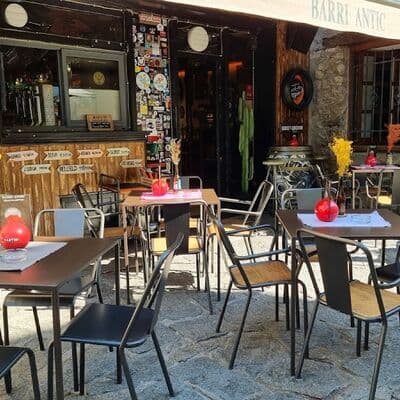
But the capital is far more than an open-air shopping mall. Barri Antic -- the Old Quarter -- is the historic heart of the city. Narrow cobblestone lanes, houses built from mountain stone, quiet plazas with trickling fountains -- you could spend a couple of pleasant hours here just wandering and soaking in the medieval atmosphere. The quarter sits on a hill above the Valira River and preserves its original medieval layout, which is remarkable considering how much commercial development has transformed the rest of the city. For Americans used to the relatively young architecture back home, walking through streets that have looked essentially the same for five or six centuries is a genuinely moving experience.
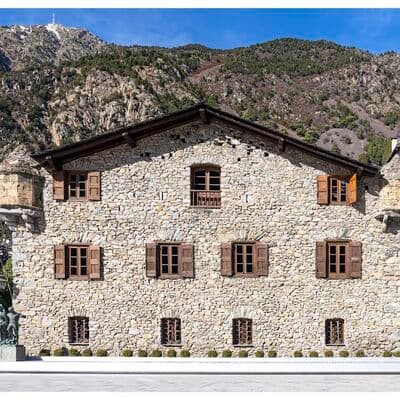
The standout historical attraction is Casa de la Vall (literally 'House of the Valley'). This 16th-century stone building served as the seat of Andorra's parliament -- the General Council -- from 1702 until relatively recently. Inside, you can see the original council chamber, including the famous Cabinet of the Seven Keys (Armari de les Set Claus). Each of Andorra's seven parishes held one key, and the cabinet could only be opened when all seven agreed -- a physical manifestation of consensus democracy. The guided tours are typically free but require advance booking, and they provide a fascinating window into Andorra's uniquely democratic history, which stretches back to 1278 -- predating most European democracies by centuries. For anyone with even a passing interest in political history, this is not to be missed.
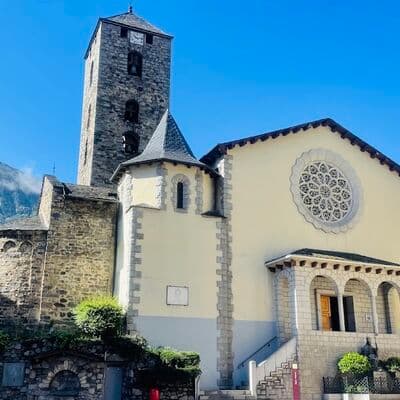
Adjacent to the Old Quarter stands the Church of Sant Esteve -- a Romanesque church dating to the 12th century, one of the oldest in the country. It is not large, but it is wonderfully photogenic, especially with the mountains rising behind it. The simplicity of its architecture -- unadorned stone, a clean bell tower, minimal decoration -- speaks to a time when these mountain communities were isolated and self-sufficient.
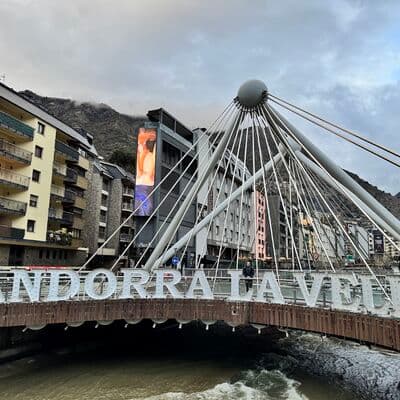
The Pont de Paris bridge over the Valira River is another signature landmark of the capital. It connects the city center with the Escaldes-Engordany parish and looks particularly striking in the evening when the lighting comes on and reflects off the water below. It is one of those spots where you will find yourself reaching for your phone camera almost involuntarily.
A special mention goes to Caldea -- the largest thermal spa complex in Southern Europe. Technically it sits in the neighboring parish of Escaldes-Engordany, but it is literally a two-minute walk from central Andorra la Vella. We will cover it in detail in the Unique Attractions section, but know that it is absolutely worth your time even if you have never considered yourself a spa person.
If you are looking for a cultural outing, visit the MW Museum of Electricity. This might seem like an unusual choice for a mountain country, but the museum tells the story of Andorra's electrification -- a country that until the mid-20th century was one of the most isolated corners of Europe. The exhibits are interactive and engaging, and it is genuinely interesting even for children. The building itself, a converted hydroelectric plant, is worth seeing.
Where to stay: The capital offers the widest selection of hotels across all categories, from hostels to five-star properties. It is the optimal base for shopping and urban exploration. The downside: during high season it can be noisy and crowded, and parking is both expensive and scarce. If you have a rental car, consider staying slightly outside the center and taking the bus in.
Escaldes-Engordany
Escaldes-Engordany has effectively merged with Andorra la Vella -- the border between them runs along the Valira River, and most visitors do not even notice when they cross from one parish into the other. But Escaldes has its own distinct identity and a few compelling reasons to spend time here.
The headline attraction is the thermal springs. This is where Caldea is located, and the name 'Escaldes' itself derives from the word for 'hot waters' (from the Catalan 'escaldar,' meaning to scald). Natural thermal water emerges from underground here at 68-70 degrees Celsius (154-158 Fahrenheit) -- among the hottest natural springs anywhere in Europe. You can feel this legacy in the steam that occasionally rises from grates in the street on cold winter mornings.
The shopping street Avinguda Carlemany is essentially a continuation of the commercial strip from Andorra la Vella. The shops are slightly less densely packed here, but you will find several excellent restaurants and cafes with outdoor terraces -- a nice change of pace from the retail intensity of Meritxell.
The Escaldes-Engordany Art Center (CAEE) hosts rotating exhibitions of contemporary art, with a permanent collection featuring works by Catalan and Andorran artists. Admission is usually free or nominal, and it provides a welcome cultural counterpoint to all the shopping and outdoor activities.
For hiking enthusiasts, several mountain trails begin from Escaldes, including the main route into the Madriu-Perafita-Claror Valley -- the UNESCO World Heritage Site. We will discuss this extraordinary valley in more detail later.
Where to stay: An excellent choice for travelers who want to combine thermal relaxation with shopping convenience. Many hotels have their own spa facilities fed by natural thermal water. Prices tend to be slightly lower than in the very center of Andorra la Vella, while accessibility is essentially the same.
Ordino
Ordino is arguably the most beautiful and authentic parish in Andorra. If the capital is about shopping and urban life, Ordino is about mountains, silence, and stone villages that have barely changed in five centuries. Many experienced travelers who have visited Andorra multiple times name Ordino as their favorite part of the country, and after spending time here, you will understand why.
The town of Ordino itself is small but exceptionally picturesque. Stone houses with slate roofs, narrow lanes, the Church of Sant Corneli and Sant Cebria (12th century), small plazas with fountains -- it has that timeless European mountain village atmosphere that feels almost too perfect to be real. Crucially, there are no crowds of tourists carrying shopping bags here. The vibe is completely different from the capital.
The Nikolai Syadristy Miniature Museum is a genuinely unique attraction -- works of art so small they can only be viewed through a microscope. A camel inside the eye of a needle, a rose carved on a human hair -- it sounds gimmicky until you actually look through the lens and your jaw drops. Kids absolutely love it, and adults find themselves lingering much longer than expected.
Sorteny Natural Park (Parc Natural de Sorteny) is a protected nature reserve with alpine meadows and more than 700 plant species. Trail options range from easy strolls (1-2 hours) to serious mountain hikes (full day). In spring and summer, it is paradise for botanists and photographers alike. The wildflower displays in June are spectacular.
In winter, Ordino becomes the gateway to the Ordino Arcalis ski zone, which is part of the Grandvalira system -- the largest ski resort in the Pyrenees. Ordino Arcalis is the domain of advanced skiers and freeriders. There are fewer crowds than on the main Grandvalira runs, and significantly more opportunities for off-piste skiing. If you have skied Vail, Jackson Hole, or Chamonix and crave that kind of challenge, this is your zone in Andorra.
Where to stay: Ideal for travelers seeking mountain tranquility and authentic atmosphere. There are not many hotels, but those that exist tend to be cozy and family-run. Ordino is only 10 minutes by bus from the capital, so you are never far from civilization. This is one of the best bases for summer visitors focused on hiking.
La Massana
La Massana is the parish on the western side of Andorra that transforms into a major ski base in winter thanks to the Pal Arinsal resort. This comprises two interconnected ski sectors: Pal (ideal for beginners and families, with gentler slopes) and Arinsal (better for intermediate to advanced skiers, with steeper terrain and freeride opportunities). If you are learning to ski or bringing children for their first time on slopes, Pal Arinsal is probably a better choice than the larger Grandvalira -- less intimidating, friendlier infrastructure, and slightly lower prices.
In summer, La Massana is the departure point for the hike to Andorra's highest peak -- Coma Pedrosa (2,942 meters / 9,652 feet). The ascent takes roughly 4-5 hours and requires good physical fitness but no technical climbing skills. From the summit on a clear day, you can see both France and Spain simultaneously, with the entire principality spread below you. It is one of the most rewarding hikes in the entire Pyrenees range.
In summer 2026, Pal Arinsal hosts Stage 11 of the UCI Mountain Bike World Series (July 8-12, 2026) -- one of the biggest mountain biking competitions in the world. The bike park offers 5 trails totaling 16 km and operates throughout the summer season. In winter, 4 snowshoeing and winter trekking routes are available, including the family-friendly 'Rastres de l'hivern' ('Winter Traces') trail designed for children aged 6-12.
The town of La Massana itself is quiet and pleasant, with several good restaurants serving traditional mountain cuisine. In the surrounding area, the village of Pal features 11th-century Romanesque churches and mountain views that will leave you breathless. If you have time, walk up to Sant Climent de Pal -- the architecture alone justifies the effort.
Where to stay: The best option for beginner skiers and families with children. Lots of apartments and family-oriented hotels. The capital is 15 minutes away by bus or car.
Encamp
Encamp sits to the east of the capital and serves as one of the main gateways to Grandvalira -- the largest ski complex in the Pyrenees. From the center of Encamp, the Funicamp gondola lift -- one of the longest in the world at 6.2 km -- carries you directly to the Grandvalira slopes. The ride takes about 15 minutes and is an attraction in its own right: the views of the valley below are stunning, even if you have no intention of skiing.
Encamp is a smart budget option for skiers. Hotels here are cheaper than in Pas de la Casa or Soldeu, while the Funicamp provides access to the same world-class slopes. The only downside: there can be a queue for the gondola in the morning, especially on weekends. Arrive by 8:30 to beat the rush.
Beyond skiing, Encamp houses the National Automobile Museum (Museu Nacional de l'Automobil) -- a collection of over 100 cars, motorcycles, and bicycles spanning from the late 19th century to the present day. Even if you are not a car enthusiast, the collection is impressively curated. Think of it as a rainy-day activity, though it honestly deserves a visit regardless of weather.
In summer, trails from Encamp lead to several mountain lakes (Estanys d'Encamp). These are moderate-difficulty routes suitable for reasonably fit hikers. The lakes themselves are pristine and surrounded by rugged alpine scenery.
Where to stay: Optimal for budget-conscious skiers. Convenient location between the capital and Grandvalira.
Canillo
Canillo is the largest parish by area -- it covers nearly a third of the entire country -- and yet it is one of the least populated. This is where you will find two of Grandvalira's flagship sectors: Soldeu and El Tarter.
Soldeu is the international ski capital of Andorra. The infrastructure here is excellent, English-speaking staff is common (this is where British tour operators tend to send their clients), ski schools are world-class, and the runs cater well to intermediate and advanced skiers. In 2026, the Aguila slope in the El Tarter sector hosts a Women's Alpine Ski World Cup event (downhill and super-G, February 28 - March 1, 2026) -- the biggest sporting event in Andorra's history. If you happen to be visiting during that window, it is worth catching some of the action.
Pas de la Casa is the highest settlement in Andorra at 2,050 meters (6,725 feet), located right on the French border. It has a dual reputation: on one hand, excellent high-altitude ski runs with guaranteed snow through late season; on the other, the cheapest duty-free shopping in all of Andorra and a lively (some would say raucous) nightlife scene. French day-trippers pour in for cheap alcohol and tobacco. If you are after a quiet mountain retreat, look elsewhere. If you want to ski hard during the day and party at night, welcome to Pas de la Casa. Think Whistler Village meets a duty-free mall at 6,700 feet.
For the 2025-2026 season, Grandvalira received record investment of 39 million euros (an 86% increase over the previous season). The money is going into lift modernization, artificial snow-making systems, and general infrastructure upgrades. A new multi-purpose complex with ticket offices, rental facilities, and a ski school is under construction at Pas de la Casa, scheduled to open for the 2026-2027 season.
Outside ski season, Canillo offers the Palau de Gel (Ice Palace) -- an ice rink, swimming pool, and sports center. Also worth visiting is the Romanesque Church of Sant Joan de Caselles -- one of the most beautiful in the country, with 12th-century frescoes that have survived remarkably well. Art historians consider it among the finest Romanesque churches in the entire Pyrenees range.
Where to stay: Soldeu is for serious skiers with an above-average budget. Pas de la Casa is for budget-minded skiers and nightlife enthusiasts. Canillo town itself is for families seeking peace and quiet. For British visitors, Soldeu will feel particularly familiar -- it is where most UK package holidays to Andorra are based.
Sant Julia de Loria
Sant Julia de Loria is the southernmost parish, sitting on the border with Spain. It is the least touristy region of Andorra, and that is precisely what makes it interesting for travelers who want to see the 'real' Andorra -- without the shopping streets and ski resort infrastructure.
The main natural attraction is the valley of the Valira del Nord and surrounding conservation areas. It is quieter, greener, and more authentic than anywhere else in the country. If you have spent a few days in the commercial bustle of the capital, an afternoon in Sant Julia feels like a different country entirely.
The Tobacco Museum (Museu del Tabac), housed in the former Reig tobacco factory, tells the story of one of Andorra's most important historical industries. The exhibition is unexpectedly engaging, including faithful reconstructions of production processes from different eras. It provides genuine insight into how Andorra's economy functioned before tourism took over.
Naturlandia is an adventure park at approximately 2,000 meters elevation. The headline attraction is the Tobotronc -- the world's longest alpine coaster at 5.3 km (3.3 miles). You sit in a specially designed sled on rails and hurtle through the mountain forest at speeds up to 40 km/h (25 mph). The speed is controlled by a hand lever, so you can go flat-out or cruise gently while admiring the scenery. Children absolutely love it, and adults tend to enjoy it just as much. Beyond the Tobotronc, Naturlandia offers ziplines, rope courses of varying difficulty, hiking trails, and archery. In winter: snowshoeing, cross-country skiing, and a dedicated tubing zone.
Where to stay: There are few hotels here, but if you are driving into Andorra from Spain, Sant Julia is a convenient first stop. The capital is 10-15 minutes away by car.
Unique Attractions and Landmarks
Grandvalira -- The Largest Ski Resort in the Pyrenees
Grandvalira is not a single resort but an entire interconnected ski system spanning six sectors: Pas de la Casa, Grau Roig, Soldeu, El Tarter, Canillo, and Encamp. Total run length exceeds 210 kilometers (130 miles), with elevation ranging from 1,710 to 2,640 meters (5,610 to 8,660 feet), 128 runs, and 67 ski lifts.
For context: that is roughly twice the size of any resort in the Spanish Pyrenees and comparable to major Alpine resorts. Yet a day pass at Grandvalira costs around 60 euros ($65 USD) -- versus 70-80 euros at most Alpine resorts and over $200 at premium Swiss destinations like Zermatt or Verbier. For American skiers accustomed to paying $200-$250 for a day pass at Vail, Deer Valley, or Aspen, Grandvalira is a revelation. You are getting world-class terrain at roughly a quarter of the price. British visitors familiar with the cost of a week in Meribel or Val d'Isere will also find the value proposition very attractive.
The season typically runs from early December to early April. For 2025-2026: December 5 through April 6. Thanks to altitude and a powerful artificial snow-making system (a significant portion of that 39 million euro investment), snow coverage is essentially guaranteed throughout the season.
Key things to know: The unified Grandvalira ski pass gives access to all six sectors. If you have a car, you can ski a different zone every day. If you are using public transit, choose your base hotel near the sector that interests you most.
For beginners: The best zones are El Tarter and Canillo -- wide, gentle runs with excellent ski schools staffed by multilingual instructors. For advanced skiers: Grau Roig and Ordino Arcalis -- steep terrain, serious off-piste opportunities. For families: Canillo -- dedicated children's zones with animation, gentle slopes, and the Mon(t) Magic theme park right at the lift station. For nightlife: Pas de la Casa -- bars, clubs, cheap drinks, and an atmosphere that gets genuinely wild on weekends.
Pal Arinsal -- For Beginners and Freeriders
Pal Arinsal is the second-largest ski complex in Andorra, forming part of the Grandvalira Resorts system. Two linked sectors: Pal (for beginners and families, with mellower terrain) and Arinsal (for intermediates and above, steeper slopes and excellent freeride access).
In summer, Pal Arinsal transforms into a mountain bike park and outdoor tourism hub. The bike park offers 5 trails of varying difficulty totaling 16 kilometers, with lift access for bikes. Mountain biking is one of the premier summer activities in Andorra, and Pal Arinsal is the best venue for it. In winter, 4 snowshoeing and winter trekking routes operate here, including the family-oriented 'Rastres de l'hivern' trail for children aged 6-12 -- a snowshoe walk combined with a scavenger-hunt element focused on identifying animal tracks.
For American visitors: if you have skied resorts in Colorado or Utah, Pal Arinsal will feel pleasantly intimate by comparison. The lack of mega-resort commercialism is refreshing, and the snow quality at altitude is surprisingly good for a Pyrenean resort.
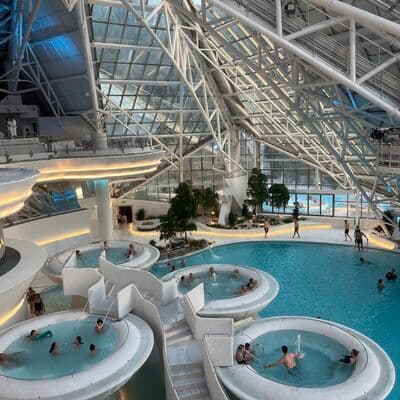
Caldea Thermal Spa
Caldea is a must-visit in Andorra, even if you have never set foot in a spa in your life. The largest thermal complex in Southern Europe occupies a futuristic glass tower that has become the architectural signature of the country. You can see it from almost anywhere in the central valley, and at night it glows like something out of a science fiction film.
The water comes from the natural hot springs of Escaldes-Engordany, heated deep underground and emerging at near-boiling temperatures before being cooled for the pools. Water temperature in the pools ranges from 32-36 degrees Celsius (90-97 Fahrenheit), with outdoor pools running slightly warmer in winter -- which creates the deeply satisfying experience of floating in steaming water while snowflakes fall on your face. The complex includes indoor and outdoor pools, whirlpools, a hammam (Turkish bath), multiple saunas, hydrotherapy jets, and a swim-up bar (yes, you can float around with a cocktail in hand).
There are two main zones: Thermoludic (the primary experience, ages 15+) and Inuu (the premium zone, ages 16+, with an expanded range of treatments and a more luxurious atmosphere). For families with children under 15, there is Likids -- a dedicated zone with water slides, fountains, and play areas.
Practical advice: Visit on a weekday afternoon if at all possible. The difference in crowd levels compared to a weekend is dramatic. Winter weekends can be genuinely packed, with queues for the whirlpools and limited space in the outdoor areas. Also, tickets purchased online in advance are cheaper than at the door. A 3-hour session in the Thermoludic zone runs roughly 35-55 euros depending on the day and how far ahead you book. The Inuu experience runs 55-90 euros. Americans will recognize this as a genuine bargain compared to similar thermal experiences in, say, Iceland's Blue Lagoon or Budapest's Szechenyi Baths, both of which charge comparable prices for significantly less impressive facilities.
Madriu-Perafita-Claror Valley -- UNESCO World Heritage Site
The Madriu-Perafita-Claror Valley is the only UNESCO World Heritage Site in Andorra. It is a glacial valley covering 4,247 hectares (about 9% of the country's total area) that has preserved a landscape essentially unchanged for millennia.
What makes it special is not just natural beauty -- though there is plenty of that -- but the evidence of how humans have adapted to mountain life over centuries. Ancient shepherding paths, stone huts (bordes), medieval forges, and water management systems are all woven into a landscape of alpine meadows, mountain lakes, and dramatic rock formations. It is a living museum of Pyrenean mountain culture.
Trail options through the valley range from gentle walks of a couple of hours to multi-day treks. The most popular route runs from Escaldes-Engordany to the Madriu Refuge (Refugi de l'Illa), roughly 5-6 hours one way. The refuge provides basic accommodation -- bunks, blankets, a kitchen -- allowing you to overnight and continue further into the valley the next day. For Americans who have hiked in national parks like Yosemite or Glacier, this will feel familiar in concept but distinctly European in character -- the human presence in the landscape stretches back much further.
Important: There are no roads and no lifts in the valley. Only foot trails. That is precisely what makes it special. Bring sufficient water, food, and warm layers -- mountain weather changes with alarming speed. A sunny morning can become a driving rainstorm by early afternoon.
Casa de la Vall -- Symbol of Andorran Democracy
Casa de la Vall is a 16th-century stone house that served as the seat of Andorra's parliament for over three hundred years. It is one of the oldest parliamentary buildings in the world still standing (though the parliament has since moved to a new building, Casa de la Vall remains the paramount symbol of Andorran statehood and democratic tradition).
Inside, you can see the General Council chamber, the Chapel of Sant Ermengol, the criminal court room (Sala de la Justicia), and the famous Cabinet of the Seven Keys. Guided tours are typically free but require advance reservation. The guides explain the unique political system of Andorra -- the only country in the world with two co-princes: the President of France and the Bishop of Urgell. For Americans and Britons accustomed to thinking of democracy as something that began with Magna Carta or the Constitution, learning that Andorra's democratic tradition dates to 1278 -- and has functioned continuously ever since -- is genuinely thought-provoking.
Romanesque Churches of Andorra
Andorra is an open-air museum of Romanesque art and architecture. More than 40 Romanesque churches from the 11th to 13th centuries survive within the country's borders -- an extraordinary density for such a small territory. Many have preserved their original frescoes, carvings, and architectural elements.
The Church of Sant Esteve in Andorra la Vella is among the most accessible and well-preserved. But if you have time, the following are well worth the effort:
- Church of Sant Joan de Caselles in Canillo -- featuring a magnificent carved wooden altarpiece (retable) from the 12th century and a unique Romanesque crucifix. Art historians consider it one of the finest Romanesque churches in the entire Pyrenees.
- Church of Sant Climent de Pal -- with an unusual square bell tower (atypical for Romanesque churches) and beautiful frescoes that have survived remarkably well.
- Church of Sant Marti de la Cortinada -- with preserved medieval frescoes and an adjoining cemetery that evokes a powerful sense of continuity with the past.
- Church of Sant Cerni de Nagol -- perched on a cliff above Sant Julia de Loria, with breathtaking valley views and 12th-century frescoes that still retain traces of their original vivid color.
Most of these churches are free to visit, but opening hours can be limited, especially in off-season. Check with the local tourist office in advance to avoid disappointment. For anyone interested in medieval European architecture, this concentration of Romanesque buildings in such a compact area is truly exceptional -- you would have to travel across multiple regions of France or Spain to see a comparable collection.
Naturlandia
Naturlandia is the adventure park in Sant Julia de Loria at roughly 2,000 meters elevation. The star attraction is the Tobotronc: the world's longest alpine coaster at 5.3 km. You climb into a sled on rails and race through mountain forest. Speed is controlled by a hand lever -- you can hit 40 km/h or take it easy and enjoy the scenery. It is one of those attractions that sounds like it might be touristy but turns out to be genuinely thrilling.
Beyond the Tobotronc, Naturlandia offers ziplines, rope courses at multiple difficulty levels (from age 3 up to genuinely challenging adult courses), hiking trails, archery, and other activities. In winter: snowshoeing, cross-country skiing, and a tubing zone. This is one of the best destinations in Andorra for families with children and for anyone who wants active outdoor adventure without needing ski equipment.
When to Visit Andorra
Winter (December through March): Ski Season
Winter is the high season and the primary reason most tourists visit Andorra. The ski season generally runs from the first week of December through early April. For 2025-2026: December 5 through April 6.
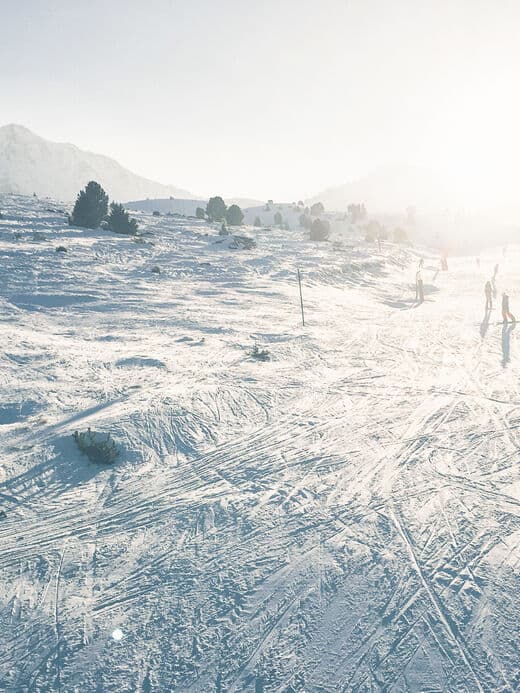
The best time for skiing is January and February: stable snow coverage, comfortable temperatures (daytime on the slopes typically -2 to +5 Celsius / 28-41 Fahrenheit), and reasonably long daylight hours. December can bring unstable snow on lower runs, while March sees melting on sun-facing slopes.
Avoid Christmas and New Year (December 22 through January 7) and school holiday weeks in Spain and France (typically mid-February). During these periods, prices surge, lift queues grow substantially, and runs become uncomfortably crowded. For American visitors accustomed to planning around US holiday schedules, the key dates to avoid are the European school breaks, which do not align with American ones.
The sweet spot: late January through the first week of February. Excellent snow, fewer crowds, reasonable prices. This window also tends to have the most reliable weather conditions -- cold enough for good snow coverage, but without the bitter cold snaps that occasionally hit in early January.
Spring (April through June): Shoulder Season and Early Trekking
April is a transitional month. The ski season ends, summer infrastructure has not fully launched. Some hotels and restaurants close for a break. But this is precisely when you can find the lowest accommodation prices of the year.
By May, lower-altitude snow has melted, mountain trails begin opening, and the valleys turn green with emerging grass and wildflowers. Valley temperatures run 10-18 Celsius (50-64 Fahrenheit), with cooler conditions at altitude. June marks the beginning of the full summer season -- all trails open, stable weather, long days. It is an excellent time for trekking if you want to avoid the July and August crowds.
Summer (July and August): Peak Trekking and Mountain Tourism
Summer is the second high season, though less intense than winter. Valley temperatures run 20-30 Celsius (68-86 Fahrenheit), mountain temperatures 10-20 Celsius (50-68 Fahrenheit). Afternoon thunderstorms in the mountains are common -- a typical Pyrenean phenomenon -- but they are usually brief and dramatic rather than sustained.
Everything is open: mountain trails, bike parks, rope courses, lakes for swimming. Most ski lifts operate in summer, carrying hikers and mountain bikers up to the high terrain. If you are coming specifically for trekking, July and August are the prime months. But remember: afternoon storms are real. Start your hikes early in the morning and aim to be off exposed high ground by 2-3 PM.
Autumn (September through November): Quiet Days and Fall Colors
September may be the single most pleasant month to visit. The summer heat has eased, tourists have thinned out dramatically, mountain trails are still open, and the mountains begin their transformation into autumn color. Temperatures are comfortable -- 15-22 Celsius (59-72 Fahrenheit) in the valleys. October brings peak fall colors. Andorra's forests -- oak, beech, birch, pine -- produce an extraordinary palette of gold, amber, and deep red. Photographers will be in paradise. November is dead season. Summer infrastructure is closed, ski season has not started. Many hotels and restaurants are on break. Weather is unpredictable. Visit only if you genuinely enjoy solitude and do not depend on tourist infrastructure.
Festivals and Events
If you want to time your visit to coincide with local culture, look out for:
- Carnival (February-March) -- Colorful parades, particularly in Andorra la Vella and Encamp. Costumes, music, street performances.
- Madriu Day (June) -- A festival celebrating the UNESCO valley. Guided walks, exhibitions, concerts.
- Festes del Foc / Midsummer Festival (June, summer solstice) -- A traditional Pyrenean fire festival inscribed on UNESCO's Intangible Cultural Heritage list. Torchlight processions descend from mountain peaks to villages. It is genuinely spectacular and deeply moving.
- National Day of Andorra (September 8) -- The main national holiday. Ceremonies, concerts, and fairs in all parishes.
- Escudella de Sant Antoni (January) -- A festival centered on the traditional Catalan soup escudella. Enormous cauldrons set up on streets, free servings for everyone, folk performances. A wonderful way to experience Andorran community spirit.
Getting to Andorra
Andorra is one of the few countries in the world without an airport. Not a small airport, not a regional strip -- no airport at all. There is also no train station. The only way in is by road -- bus, car, or private transfer. This creates certain logistical challenges but is also part of the charm: you literally drive into the mountains, watching the landscape shift from Mediterranean to Alpine as you climb.
From Barcelona (Spain)
This is the most popular route. Distance: approximately 200 km (125 miles). Travel time: 3-3.5 hours.
Bus: Several companies operate the route: Andbus (andbus.net), Directbus (andorradirectbus.es), and ALSA. Roughly 24 departures daily between 6:15 AM and 11:45 PM from Barcelona Sants station and El Prat Airport (BCN). Cost: from 32 euros one way. Travel time: about 3 hours. Book in advance, especially on Friday evenings and weekends during ski season -- buses genuinely sell out. For Americans flying into Barcelona, you can catch the Andbus directly from Terminal 1 or Terminal 2 at the airport, which saves the hassle of getting into the city first.
By car: From Barcelona via the C-16/E-9 highway through Cerdanya and the Envalira Tunnel. The drive is scenic, particularly the last 50 km. The Envalira Tunnel (Tunel d'Envalira) is a toll tunnel -- roughly 6 euros -- but it saves time and avoids the serpentine mountain pass. The alternative route over the Port d'Envalira pass (2,408 m / 7,900 feet) is the highest road pass in the Pyrenees. In summer, the views are extraordinary. In winter, it can be closed due to snow. If you are renting a car, note that not all rental companies based in Spain or France permit cross-border travel to Andorra. Always verify this before signing the rental agreement -- violations carry serious penalties.
Private transfer: From Barcelona airport, expect to pay 150-200 euros for a private car (up to 4 passengers). Worth considering if you are traveling in a group or have lots of luggage.
From Toulouse (France)
The second most popular route. Distance: approximately 185 km (115 miles). Travel time: 3 hours.
Bus: Departures are less frequent than from Barcelona. Main schedule: departure from Toulouse at 7:30 PM, from Blagnac Airport at 8:00 PM, arrival in Pas de la Casa at 10:30 PM, in Andorra la Vella at 11:00 PM. Cost: 36 euros one way, 64 euros round trip. From March 9, 2026, Toulouse lines resume after winter break. This route makes sense if you are flying into Toulouse from the UK or elsewhere in Europe.
By car: From Toulouse via the N-20/N-320 through Ax-les-Thermes and Pas de la Casa. The last 30 km involves mountain switchbacks. In winter, snow tires or chains are mandatory -- this is enforced and not optional.
From Other Cities
Madrid: No direct buses. Best option: fly to Barcelona (1 hour), then bus (3 hours). Or drive -- about 6 hours.
Girona: Andbus operates from Girona Airport (popular with Ryanair and other budget carriers) -- about 4 hours, from 35 euros. Good option for budget-conscious UK travelers.
Perpignan: Transfer or car -- about 2.5 hours via France.
For Americans: There are no direct flights from the US to any airport within quick striking distance of Andorra. The most practical routing is to fly into Barcelona (direct flights from New York JFK, Miami, Chicago, Los Angeles, and other major cities on carriers including Delta, American, Iberia, and others). From Barcelona, either the bus or a rental car gets you to Andorra in 3 hours. An alternative is to fly into Toulouse via Paris or another European hub.
Nearest airports:
- Barcelona (BCN) -- 200 km, 3-3.5 hours. Most convenient overall.
- Toulouse (TLS) -- 185 km, 3 hours. Best for those arriving from France or the UK.
- Girona (GRO) -- 260 km, 4 hours. Budget airlines (Ryanair).
- Reus (REU) -- 270 km, 3.5 hours. Budget airlines.
- Lleida (ILD) -- 160 km, 2 hours. Small airport, limited flights.
Getting Around Andorra
Public Transportation
Andorra has no railways, no trams, and no metro. The sole form of public transportation is buses. But the bus system works surprisingly well for such a small country, and you can absolutely explore Andorra without a car if you plan carefully.
The main lines (L1-L6) connect all parishes. Buses run from early morning to late evening (roughly 7:00 AM to 9:00 PM, with more frequent service on main routes). Fares range from 1.75 to 4 euros per ride depending on distance. Multi-ride passes and day tickets are available and offer meaningful savings if you are using buses regularly.
During ski season, dedicated ski bus routes (skibus) run from the main towns to ski stations. Many of these are free with a valid ski pass -- a significant perk that is not always well advertised. Check at your hotel or the tourist office for current schedules.
Important: Buses can be overcrowded during rush hours and on winter weekends. Build extra time into your schedule, especially if you need to make a connection or catch a departure to Barcelona.
Renting a Car
If you want maximum flexibility, rent a car. But there are important nuances to consider.
Roads: Main roads are in excellent condition -- good asphalt, clear markings, adequate lighting. Secondary mountain roads are narrower with switchbacks but perfectly drivable in a standard car. The main highway CG-1 runs through the entire country from south to north. For Americans accustomed to wide multi-lane highways, the mountain roads will feel narrow but are well-maintained and safe if you drive at appropriate speeds.
Winter driving: Winter tires are mandatory from November through April. If you rent a car in Spain or France to drive into Andorra, confirm that you have winter tires or chains. Mountain passes (especially Port d'Envalira) can be closed due to snowfall. This is not a suggestion -- it is a legal requirement, and you can be turned away at the border or fined if your vehicle is not properly equipped.
Parking: In Andorra la Vella, parking is a genuine challenge. Street parking in the center is metered and limited (blue and green zones). Underground garages exist but fill early on weekends and during high season. Expect to pay 1-3 euros per hour. The free Parc Central parking lot is a 10-minute walk from the center -- useful but it fills up by 11 AM on busy days.
Rental options: You can rent within Andorra itself (Avis, Europcar, local companies) or pick up in Barcelona/Toulouse. If renting in Spain or France, always verify that your rental agreement permits travel to Andorra -- not all companies allow it, and penalties for unauthorized border crossings with rental vehicles can be severe.
Fuel: Gasoline in Andorra is 15-25% cheaper than in Spain and significantly cheaper than in France. Many French and Spanish motorists deliberately detour through Andorra to fill up. Gas stations are available in all main settlements. For American reference: European fuel is priced per liter, not per gallon. Even with Andorra's discount, expect to pay roughly $5-6 per gallon equivalent -- still much more than US prices but substantially less than neighboring countries.
Taxis
Taxis exist in Andorra but are less ubiquitous than in larger cities. The fleet is limited, and during peak hours or bad weather, wait times can be significant. Fares are reasonable by European standards. Call for dispatch rather than trying to flag one down on the street. Uber and similar ride-hailing apps do not operate in Andorra.
Walking and Cycling
Central Andorra la Vella and Escaldes are very walkable -- main attractions, shops, and restaurants are within comfortable walking distance of each other. From one end of the 'shopping mile' to the other takes about 25-30 minutes on foot. In summer, cycling is an excellent way to get around the valley floors. Bike paths and rental shops exist. But factor in the terrain -- uphills to the higher villages can be genuinely steep, and you may find yourself walking your bike up some sections unless you have an e-bike.
The Cultural Code: Understanding Andorra
Languages
The official language is Catalan (catala). Andorra is the only country in the world where Catalan is the sole official language -- a point of considerable national pride. In practice, virtually all Andorrans speak Spanish (Castilian) fluently, most speak French, and many speak English, particularly in the tourism industry.
In shops and restaurants, you will be understood in Spanish or French without any difficulty. English works well too, especially in the capital, in Soldeu (where British tour operators have a strong presence), and in international hotels. In smaller villages, English may be less common, but people will make the effort. A few words of Catalan will be received with genuine warmth and appreciation:
- Bon dia -- Good day / Hello
- Gracies -- Thank you
- Si us plau -- Please
- Adeu -- Goodbye
- Quant costa? -- How much does it cost?
For American and British visitors: you will get by perfectly well with English in most tourist-facing situations. But making even a minimal effort in Catalan, Spanish, or French is appreciated and will often result in noticeably warmer service. Download Google Translate or DeepL before your trip -- both support Catalan.
Mentality and Social Norms
Andorrans are calm, reserved, and friendly people. They are proud of their country, its history, and its unique political system. The society is conservative but genuinely welcoming to tourists -- tourism and commerce form the backbone of the economy, and Andorrans understand this deeply.
Several things worth knowing:
- Andorrans do not appreciate being called Spanish or French. They are Andorran -- with their own culture, language, and history stretching back over seven centuries. This is a sensitive point, so be mindful of it in conversation.
- Punctuality is valued (unlike in southern Spain), though not to German levels of precision. If you have a booking or appointment, be on time.
- In churches: be quiet and respectful. Many of the Romanesque churches are still active places of worship, not just tourist attractions.
- Photography is welcome almost everywhere, but in churches it is polite to ask first.
- Smoking is prohibited in enclosed public spaces (restaurants, bars, shops). Despite the cheap tobacco, Andorra strictly enforces European-style smoking regulations.
Tipping
Tipping in Andorra is not obligatory -- service is typically included in the bill. This will feel familiar to Australian and British visitors but may require adjustment for Americans, who are accustomed to the US tipping culture. If you are satisfied with the service, rounding up the bill or leaving 5-10% will be received with gratitude but is genuinely optional. In bars, leaving small change is sufficient. In taxis, round up to the nearest euro. In hotels, 1-2 euros for porters is appropriate.
Dress Code
Andorra is an informal country. Even in upscale restaurants, the dress code rarely goes beyond smart casual. For mountain excursions: proper gear -- hiking boots, layered clothing, windbreaker, hat. For city walking: comfortable shoes are essential, as streets frequently go uphill. Leave the stilettos and dress shoes at home unless you have a specific formal event.
Religion and Holidays
Andorra is predominantly Catholic. The church plays a visible role in community life, particularly in villages. Each parish has a patron saint and celebrates the feast day with processions and festivities. On Sundays and religious holidays, many shops and restaurants may be closed or operating on reduced hours. Factor this into your shopping plans. This is not like a US Sunday where most retail is open -- closures are real and widespread, especially outside the main commercial streets.
Safety in Andorra
Andorra is one of the safest countries in the world. As of 2026, it ranks 8th out of 193 countries in safety indices, scoring 96 out of 100. The U.S. State Department assigns Andorra a Level 1 rating -- 'Exercise Normal Precautions' -- the lowest risk category.
Crime
The crime rate is extremely low. Serious crimes against tourists are very rare. However, petty theft -- primarily pickpocketing -- does occasionally occur in crowded areas: the shopping streets of Andorra la Vella, Pas de la Casa, and at busy ski resort facilities. Apply the same common-sense precautions you would use in any popular tourist destination: do not leave belongings unattended, avoid carrying large amounts of cash, and keep an eye on your bags in crowds. That said, the risk level here is substantially lower than in Barcelona, Paris, or any major European city.
Common Scams
Serious tourist scams are essentially nonexistent in Andorra -- the scale and nature of the country simply do not support it. But a few things are worth noting:
- Ski equipment rental: Unscrupulous rental shops may try to claim 'damage' to equipment when you return it. Photograph everything before and after use -- take timestamped photos on your phone.
- Restaurant overcharging: Some tourist-oriented establishments may add extra items to your bill. Always review the check before paying, and do not be embarrassed to question discrepancies.
- Taxis: Meters are mandatory, but if you take an unofficial taxi, agree on the fare before getting in.
- Fake police: Very rare, but there have been isolated instances of people in civilian clothes claiming to be police and asking to see wallets for 'verification.' Real police do not do this. Ask to see credentials and call the police number to confirm.
Mountain Safety
The real danger in Andorra is the mountains themselves. Every season, rescue services evacuate dozens of tourists who overestimated their abilities or underestimated the weather. This is the safety issue to take seriously:
- Stay on marked trails, especially in fog or poor visibility. Getting lost above the treeline in deteriorating weather is a life-threatening situation.
- Mountain weather changes in minutes. Even if the morning is sunny and warm, carry warm layers and rain gear. Always.
- At altitudes above 2,000 meters (6,500 feet), the sun is deceptively strong. You can sunburn even on cloudy days. SPF 50 sunscreen is not optional -- it is essential. In winter, snow reflects up to 80% of UV radiation.
- In winter: avalanche risk is real. Do not ski or snowboard off-piste without avalanche safety equipment and knowledge of current conditions. Check the daily avalanche bulletin.
- Always tell someone your planned route and expected return time before heading into the mountains.
Emergency Numbers
- General emergency: 112 (works from any phone, even without a SIM card)
- Police: 110
- Fire service: 118
- Ambulance: 116
- Mountain rescue: 112 (ask for mountain rescue -- 'Bombers de muntanya')
Road Safety
Roads in Andorra are well-maintained but mountainous. Switchbacks, sharp turns, elevation changes. In winter: snow and ice. Drive carefully, particularly if you are not accustomed to mountain roads. Speed limits: 40 km/h (25 mph) in built-up areas, 60-90 km/h (37-56 mph) outside. Fines for speeding are substantial. The legal blood alcohol limit is 0.5 per mille (lower than the US limit of 0.08% BAC in most states, so be extra cautious about drinking and driving). For Americans: remember that speed limits and distances are in kilometers, not miles.
Health and Medical Care
The Healthcare System
Healthcare in Andorra is of a high standard but comes with important caveats for foreign visitors. The main hospital -- Hospital Nostra Senyora de Meritxell in Escaldes-Engordany -- is the only one in the country, but it is equipped to modern European standards. For serious or highly specialized cases (neurosurgery, cardiac surgery, etc.), patients are transported to Barcelona or Toulouse.
The critical thing to understand: Andorra is NOT part of the European Union, which means the European Health Insurance Card (EHIC) does NOT work here. For UK travelers accustomed to using the UK Global Health Insurance Card (GHIC) across Europe, this is a significant exception. For Americans, the situation is familiar -- you need private insurance regardless. Without insurance, you will pay for medical services entirely out of pocket, and costs can be substantial.
Essential: Purchase travel medical insurance before your trip. Confirm that it explicitly covers Andorra (not all policies do, since Andorra is outside both the EU and the Schengen Area). If you plan to ski or engage in mountain trekking, your policy must specifically cover winter sports, mountain activities, and helicopter evacuation. Read the fine print -- 'extreme sports' exclusions can sometimes apply to standard skiing. Americans should also verify that their domestic health insurance does not cover them abroad (most US plans do not), making travel insurance even more critical.
Pharmacies
Pharmacies (farmacia) are found in every significant settlement. Standard hours are 9:00 AM to 8:00 PM, with some closing for a lunch break. Duty pharmacies operate on a rotating 24-hour basis -- the schedule is posted on the door of every pharmacy and published in local media. Many medications that require prescriptions in other countries are available over the counter in Andorra, and prices for pharmaceuticals are often lower than in Spain or France.
Vaccinations
No special vaccinations are required for visiting Andorra. Ensure your routine immunizations are current (diphtheria, tetanus, measles, COVID-19 as applicable). Tick-borne encephalitis is not endemic in Andorra, but ticks are present in mountain areas during warmer months. Use insect repellent and check your body after mountain walks, particularly if you have been walking through brush or tall grass.
Water
Tap water in Andorra is safe to drink and of high quality -- it is mountain water, clean and fresh. You can drink from the tap without concern. In the mountains, stream water is generally clean as well, but for safety it is best to use a filter or boil it first. The tap water tastes noticeably better than what comes out of taps in most cities -- one of the quiet perks of being in a mountain country.
Sun and Altitude
At altitudes of 1,000 to 2,900 meters (3,300 to 9,500 feet), ultraviolet radiation is significantly stronger than at sea level. Sunscreen (SPF 50), UV-filtering sunglasses, and a hat are essential year-round. In winter on ski slopes, you can burn as easily as on a beach -- snow reflects up to 80% of UV radiation. This catches many visitors off guard, particularly those who associate sunburn exclusively with summer beach holidays.
Altitude sickness is virtually impossible in Andorra -- the maximum elevation (Coma Pedrosa peak at 2,942 meters) is not high enough to cause serious altitude-related problems. However, if you arrive from sea level and immediately head to high altitude, spending the first day at a relaxed pace is sensible. Dehydration at altitude is a more realistic concern -- drink more water than you think you need, even if you do not feel thirsty.
Money and Budget
Currency
The official currency is the euro (EUR), even though Andorra is not formally part of the eurozone (it does not have an agreement with the European Central Bank to mint its own coins). In practical terms, this makes zero difference to visitors -- euros are accepted everywhere and are the only currency in use. For American visitors: at the time of writing, 1 euro is approximately $1.08-1.12 USD. For ease of budgeting, you can roughly equate euro prices with dollar prices and add 10%. For British visitors: 1 euro is approximately 0.85-0.87 GBP. For Australians: 1 euro is approximately 1.60-1.70 AUD.
Cards and Cash
Bank cards (Visa, Mastercard) are accepted virtually everywhere -- hotels, restaurants, major shops, ski stations. American Express is accepted less frequently. Contactless payment (NFC / tap-to-pay) works at most terminals. Apple Pay and Google Pay are widely supported.
Cash is still useful for small purchases, markets, taxis, and small establishments in villages. ATMs are available in all main settlements. Withdrawal fees depend on your bank -- check in advance. American visitors should note that some US debit cards may incur foreign transaction fees; credit cards with no foreign transaction fee (such as Chase Sapphire, Capital One Venture, or similar) are ideal. UK travelers should check whether their bank charges for EU/non-EU withdrawals.
Currency Exchange
If you are coming from the eurozone (Spain, France), no exchange is needed. If you hold a different currency, exchange before arriving -- Barcelona or Toulouse airports offer better rates. Currency exchange offices within Andorra are scarce and the rates are not always favorable. Americans are best served by simply withdrawing euros from an ATM upon arrival, using a card with low or no foreign transaction fees.
Prices and Budget
Andorra is not the cheapest country in Europe, but neither is it the most expensive. Thanks to the low sales tax (4.5% IGI), many goods cost less than in neighboring countries. Accommodation and dining prices are at moderate European levels -- cheaper than Switzerland, Austria, or Scandinavia, but not as cheap as Portugal or Eastern Europe.
Budget traveler ($45-80 USD / 40-70 EUR per day):
- Hostel or budget hotel: 25-45 EUR per night ($27-49)
- Breakfast at a cafe: 5-8 EUR ($5.50-9)
- Lunch (menu del dia -- set lunch): 10-15 EUR ($11-16)
- Dinner at an affordable restaurant: 12-20 EUR ($13-22)
- City bus ride: 1.75 EUR ($1.90)
Mid-range traveler ($110-200 USD / 100-180 EUR per day):
- 3-4 star hotel: 60-120 EUR per night ($65-130)
- Dining at good restaurants: 30-50 EUR per day ($33-55)
- Grandvalira ski pass: approx. 60 EUR per day ($65)
- Caldea (3 hours): 35-55 EUR ($38-60)
Comfort traveler ($220+ USD / 200+ EUR per day):
- 4-5 star hotel: 120-250 EUR per night ($130-275)
- High-end dining: 50-100 EUR per dinner ($55-110)
- Private ski lessons: 45-70 EUR per hour ($49-77)
- Caldea Inuu zone with treatments: 55-90 EUR ($60-99)
For American context: a week of skiing in Andorra (including accommodation, lift passes, meals, and equipment rental) will cost roughly 40-50% of what the same week would cost at a major US resort like Vail, Park City, or Mammoth Mountain. For British visitors, a ski week in Andorra runs approximately 30-40% less than an equivalent week in France's Trois Vallees or Austria's St. Anton.
Tax-Free Shopping and Customs Limits
Andorra is a shopping haven thanks to its low sales tax (IGI at 4.5%). But there is a crucial catch: when you leave Andorra, you cross a customs border (Andorra is not in the EU). There are strict duty-free export limits:
- Alcohol: 1.5 liters of spirits (over 22% ABV) OR 3 liters of drinks under 22% ABV + 5 liters of table wine
- Tobacco: 300 cigarettes OR 150 cigarillos OR 75 cigars OR 400g of pipe tobacco
- Perfume: 75g of perfume or 375ml of eau de toilette
- Other goods: Up to 300 EUR in value (for travelers by car) or 430 EUR (for air passengers onward)
The customs checks at the border are real, not perfunctory. Exceeding limits can result in confiscation and fines. French customs officers are particularly thorough -- they frequently stop vehicles and inspect purchases. Spanish customs are somewhat less rigorous but still active. Keep all receipts.
For Americans returning to the US: You also need to comply with US customs limits. The standard duty-free personal exemption for US residents returning from abroad is $800. Alcohol: 1 liter per person (over 21). Tobacco: 200 cigarettes and 100 cigars. TSA regulations apply for carry-on liquids if you are flying home from Barcelona -- anything over 100ml in a container must go in checked luggage. Plan your shopping accordingly.
For UK travelers returning to the UK: Post-Brexit, the UK has its own duty-free limits that differ from EU rules. Check current HMRC guidelines before your trip, as limits on alcohol and tobacco imports from non-EU countries apply.
Itineraries: How to Spend Your Time in Andorra
3 Days -- 'The Andorra Sampler' (Minimum Viable Visit)
Day 1: Andorra la Vella and Escaldes
Morning: Arrive in Andorra la Vella. Check into your hotel. Walk down Avinguda Meritxell -- the main shopping street -- to orient yourself and get a first impression of the country. The sheer density of shops will be striking, but resist the urge to buy everything on day one. You will have a better sense of prices and priorities after exploring more.
Lunch: Try a 'menu del dia' (set lunch) at one of the restaurants in the Old Quarter -- 10-15 EUR for a complete three-course meal with drink. This is genuinely one of the best value meals in Western Europe.
Afternoon: Barri Antic (Old Quarter). A leisurely stroll through the cobblestone lanes, with a visit to Casa de la Vall (guided tour, approximately 30 minutes -- book ahead) and Church of Sant Esteve. Take your time here. The contrast between the medieval quarter and the modern shopping streets is part of what makes Andorra fascinating.
Evening: Caldea. End your first day by soaking in thermal waters. If you arrived in winter after a long bus ride from Barcelona, there is no better way to dissolve the travel fatigue. A 3-hour session is optimal. If the weather cooperates, spending time in the outdoor pools while looking up at the mountain stars is an experience you will remember long after the trip is over.
Day 2: Skiing (Winter) / Trekking (Summer)
Winter: A full day at Grandvalira. If you are a beginner, head for the Canillo or El Tarter sectors. If advanced, try Grau Roig or Pas de la Casa. Day pass: approximately 60 EUR. On-mountain lunch at one of the slope-side restaurants: 15-25 EUR. The views alone justify the price.
Summer: Trek into the Madriu-Perafita-Claror Valley. Depart early (7-8 AM) from Escaldes-Engordany. Medium-difficulty trail, 5-6 hours to the refuge and back. Alternatively, an easier option: Sorteny Natural Park in Ordino (2-3 hours, suitable for most fitness levels).
Day 3: Ordino + Shopping
Morning: Take the bus to Ordino (15 minutes from the capital). Walk through the village, visit the Miniature Museum, see the Church of Sant Corneli. This is where you experience the quieter, more authentic side of Andorra.
Lunch: At one of Ordino's restaurants -- try escudella (the national hearty soup) or trinxat (the iconic potato and cabbage dish).
Afternoon: Return to Andorra la Vella for focused shopping. Perfume, electronics, alcohol -- but remember those export limits. Buy strategically rather than impulsively.
Evening: Farewell dinner with mountain views.
7 Days -- 'All of Andorra' (The Optimal Itinerary)
Day 1: Arrival and Capital Exploration
Arrive in Andorra la Vella. Check in. Walk the center: Avinguda Meritxell, Pont de Paris, the Valira River promenade. Get your bearings, make initial purchases if anything catches your eye.
Evening: Dinner in the Old Quarter. Try local Andorran wine -- the country's winemaking industry is in its early stages, and the wines are not yet exported. This is genuinely something you can only taste here.
Day 2: History and Thermal Bliss
Morning: Barri Antic, guided tour of Casa de la Vall, Church of Sant Esteve. Pop into the MW Museum of Electricity -- it is nearby and takes about an hour.
Lunch: Escaldes neighborhood -- Avinguda Carlemany. More relaxed than the main strip, with several good options for a sit-down meal.
Afternoon and evening: Caldea (3-4 hours). If you want the premium experience, try the Inuu zone -- it is significantly quieter, more luxurious, and worth the price difference.
Day 3: Grandvalira (Winter) / Madriu Valley (Summer)
Winter: Full day at Grandvalira. Focus on the Soldeu and El Tarter sectors -- best overall infrastructure and the most international atmosphere.
Summer: Committed trek into the Madriu-Perafita-Claror Valley. Early start, bring food and plenty of water. This is the kind of hike that redefines your understanding of Andorra as something far beyond a shopping destination.
Day 4: Ordino and La Massana
Morning: Ordino -- the village, Miniature Museum, Church of Sant Corneli, a gentle walk toward Sorteny Natural Park (1-2 hours, no rush).
Lunch: In Ordino or La Massana -- mountain cuisine at its most authentic.
Afternoon: La Massana and the village of Pal. Romanesque churches, mountain panoramas. In winter, optionally spend a few hours at Pal Arinsal if you want to try a different ski experience.
Day 5: Canillo and Encamp
Morning: Canillo -- Church of Sant Joan de Caselles (one of the most beautiful Romanesque churches in the Pyrenees, genuinely worth the trip). Palau de Gel (ice rink and pool, great if traveling with kids).
Lunch: In Canillo.
Afternoon: Encamp -- National Automobile Museum (allow 2-3 hours if you are a car enthusiast, 1-1.5 hours otherwise). Ride the Funicamp gondola lift for the valley views -- worthwhile even without ski equipment. The 6.2 km ride is one of those unexpected highlights that people mention when recounting their trip.
Day 6: Sant Julia de Loria and Naturlandia
Morning: Sant Julia de Loria -- Tobacco Museum (1-1.5 hours). Walk through the town, which has a noticeably different atmosphere from the commercial center of Andorra la Vella.
Lunch: In Sant Julia -- seek out a local restaurant away from the tourist circuit.
Afternoon: Naturlandia -- the Tobotronc (5.3 km alpine coaster), rope courses, and other activities. Allow a minimum of 3 hours. This is pure fun and a welcome change of pace from the cultural and hiking elements of the rest of the trip.
Day 7: Shopping and Departure
Morning: Final shopping run. Avinguda Meritxell for electronics and perfume. If you want the cheapest alcohol and tobacco prices, Pas de la Casa has them -- but it is about 30 minutes by car from the capital, so factor in travel time.
Remember the export limits. Customs at the border with Spain and France is real. French customs officers are particularly diligent. Do not risk it -- the fines and confiscation are not worth the savings on an extra bottle of whisky.
Lunch: One final serving of trinxat or escudella. You will miss these dishes when you are home.
Afternoon: Departure.
10 Days -- 'Andorra Without Rushing'
Days 1-7: Follow the 7-day itinerary above.
Day 8: Second Day of Skiing or Deep Trekking
Winter: Try Pal Arinsal for variety. If you are a beginner, book a lesson with an instructor (45-70 EUR per hour -- it makes a dramatic difference to your technique and confidence). Lunch in the village of Pal afterward.
Summer: Hike to Coma Pedrosa (2,942 m / 9,652 ft) -- the highest point in Andorra. Depart early from Arinsal. Allow 4-5 hours for the ascent, 3-4 hours for the descent. You need solid hiking fitness and proper mountain gear (boots, layers, water, food). The summit views encompass France, Spain, and the entire principality. If you have hiked fourteeners in Colorado, the fitness requirement is comparable though the altitude is lower.
Day 9: Rest and Culture
Morning: Sleep in (especially if you tackled Coma Pedrosa yesterday). Or take a gentle morning stroll around Escaldes -- visit the CAEE art center.
Lunch: Try Andorran craft beer -- yes, Andorra has its own microbreweries (Alpha, Cervesa Nacional d'Andorra). They are surprisingly good and represent a newer dimension of Andorran culture.
Afternoon: Second visit to Caldea -- this time try the Inuu zone with a massage or treatment. You have earned it.
Evening: Dinner at the best restaurant you have identified during your stay.
Day 10: Mountain Lakes and Departure
Morning: Trek to one of the mountain lakes -- Estany d'Engolasters (easy, 1 hour, suitable for all fitness levels) or the Tristaina Lakes in Ordino Arcalis (moderate, 2-3 hours). The mountain lakes of Andorra are turquoise gems set among rocks and alpine meadow -- impossibly photogenic. If you have visited Moraine Lake in the Canadian Rockies, the visual impact is similar though on a more intimate scale.
Lunch: Picnic by the lake (stock up on sandwiches and fruit beforehand).
Afternoon: Return and departure.
14 Days -- 'Andorra and Beyond'
Days 1-10: Follow the 10-day itinerary.
Day 11: Pas de la Casa and the Border
Morning: Drive or bus to Pas de la Casa -- Andorra's highest town at 2,050 meters (6,725 feet). Shopping here offers the country's lowest prices on alcohol, tobacco, and perfume. The atmosphere is that of a border trading town -- utilitarian rather than charming, but the savings are real.
Afternoon: If you have a car, drive over the Port d'Envalira pass (2,408 m / 7,900 ft) to the French side and back. The views are breathtaking. In winter, the pass may be closed -- use the tunnel instead.
Evening: Pas de la Casa's nightlife (bars and clubs) if that is your scene. The town has a reputation for lively evenings, particularly among younger British and French visitors.
Day 12: Day Trip to La Seu d'Urgell (Spain)
La Seu d'Urgell is a Spanish town just 10 km from the Andorran border, and the seat of the Bishop of Urgell -- one of Andorra's two co-princes. The Cathedral of Santa Maria (12th century) is a magnificent Romanesque structure with a cloister and the Diocesan Museum. The Olympic Park on the Segre River (built for the 1992 Barcelona Olympics) offers kayaking and whitewater rafting -- a completely different kind of adventure from mountain hiking.
Lunch: Spanish cuisine and tapas -- a delicious contrast after days of Andorran mountain food.
Evening: Return to Andorra.
Day 13: Deep Exploration or Personal Favorites
Option A: A multi-day trek through the Madriu-Perafita-Claror Valley with an overnight in a mountain refuge. This is how the valley was meant to be experienced -- slowly, over more than a single day.
Option B: Return visits to places that resonated with you. Perhaps another afternoon in Ordino, a longer trail to hidden waterfalls, a museum you skipped earlier.
Option C: Pure relaxation. Shopping, Caldea, a book on a terrace with mountain views and a glass of wine. Two weeks in, you have earned a lazy day.
Day 14: Farewell
Unhurried morning. Final breakfast at your favorite cafe. Last-minute purchases. Photographs. Departure with a promise to return.
21 Days -- 'Deep Dive into the Pyrenees'
Three weeks is a luxury that allows you to truly immerse yourself in Andorra and its surroundings at a pace that most travelers never experience. This itinerary is for those who understand that the best travel happens when you stop rushing.
Days 1-14: Follow the 14-day itinerary.
Day 15: Andorran Village Life
Spend a full day in one of the small mountain villages -- Llorts, Sispony, Anyos, La Cortinada. Walk the streets, step into Romanesque churches, chat with locals (in Spanish, Catalan, or halting French -- the effort matters more than the fluency). Check if there is a farmer's market happening -- they are irregular but deeply authentic.
Day 16: Tristaina Mountain Lakes
The circular trail from Ordino Arcalis to the three Tristaina Lakes is one of the most beautiful hikes in the Pyrenees. About 4 hours round-trip. The lakes sit at 2,200-2,300 meters and mirror the surrounding peaks like glass. Arrive early for the best light and fewest people.
Day 17: Day Trip to Ax-les-Thermes (France)
Ax-les-Thermes is a French thermal town 30 minutes from Pas de la Casa. There is a free thermal pool right in the town center (Bassin des Ladres), paid spa centers, excellent chocolatiers, and authentic French markets. The contrast with Andorra is striking -- here you are fully in France, with all the croissants, cheese shops, and Gallic atmosphere that implies. A wonderful palate cleanser after two weeks of Andorran mountain culture.
Day 18: Water Sports or Winter Adventures
Summer: Whitewater rafting on the Valira River and its tributaries. Organized tours range from family-friendly Class I-II to more challenging Class III rapids. Expect to pay 40-60 EUR per person including equipment and guide.
Winter: Snowmobile tours in Grau Roig, or dogsledding (several companies offer mushing experiences). Both are exhilarating alternatives to skiing and provide a completely different perspective on the mountain landscape.
Day 19: Second Visit to Sant Julia + La Rabassa
La Rabassa is a zone of Nordic forests in Sant Julia de Loria. In winter, it is the best cross-country skiing location in Andorra, with up to 15 km of groomed trails. In summer: horseback riding, hiking, and mountain biking through coniferous forests. The atmosphere here is distinctly different from the rocky alpine terrain elsewhere in the country -- more Scandinavian in feel.
Day 20: Slow Day
No plans. Breakfast at a cafe. A walk along a favorite trail. Lunch with a good glass of wine. Reading. One last visit to Caldea. Dinner at that restaurant you have been meaning to try. This is the day that makes three weeks different from two -- the luxury of having a day with genuinely nothing you need to do.
Day 21: Departure
Final purchases (remember the limits). Photographs. The promise -- made to yourself, half-believed -- that you will come back. Bus to Barcelona or Toulouse. The mountains recede in the window behind you, and you realize that this tiny country lodged itself somewhere in your memory in ways you did not expect.
Connectivity: Staying Online in Andorra
Mobile Service
Critical information: Andorra is NOT part of the EU or the European Economic Area. This means European 'Roam Like At Home' regulations do NOT apply here. If you have a European SIM card, it will operate in international roaming mode in Andorra, and charges can be extremely expensive. This catches many British and other European travelers off guard.
For Americans: your US phone plan's international roaming rates will apply. Check with your carrier before traveling. T-Mobile's Magenta plans include some international data, but coverage and speed in Andorra may be limited. AT&T and Verizon typically charge day-rates for international use.
Andorra's sole mobile operator is Andorra Telecom (STA). You can purchase a prepaid SIM card at Andorra Telecom offices or at tobacco shops (estancs). Cost: from 15-20 EUR with a data package. Coverage is good in valleys and settlements; in high mountain areas, it may drop out.
eSIM: If your phone supports eSIM, this is likely the most convenient option. Several international providers (Airalo, Holafly, and others) offer eSIM packages that cover Andorra. Verify coverage before purchasing -- not all 'European' eSIM packages include Andorra. Buy and activate before your trip.
Practical tip: If you are in Andorra for just a couple of days, the simplest approach is to disable mobile data entirely and rely on Wi-Fi. The roaming charges from some carriers can reach 5-15 EUR per megabyte -- a single hour of casual browsing could cost you more than a nice dinner.
Wi-Fi
Free Wi-Fi is available in most hotels, restaurants, and cafes. Quality varies: good in large hotels, potentially weak or absent in small mountain refuges. Andorra Telecom provides a network of free Wi-Fi hotspots (Andorra WiFi) in main tourist zones -- Andorra la Vella, Escaldes, ski stations. Registration via SMS is required (you need a working phone number). For most visitors staying in hotels and eating in restaurants, Wi-Fi availability will be sufficient for everyday needs like messaging, social media, and basic browsing.
Phone Calls
International dialing code for Andorra: +376. Emergency calls (112) work from any phone, even without a SIM card inserted.
Food and Drink: What to Eat in Andorra
Andorran Cuisine
Andorran food is mountain food of the Pyrenees, shaped by Catalan, French, and Spanish culinary traditions. The dishes are hearty, warming, and perfectly suited to cold mountain weather. Do not come here expecting Michelin-star molecular gastronomy (though the overall quality of cooking is high). Come expecting honest, satisfying mountain food prepared with good ingredients and served in generous portions. For Americans accustomed to large serving sizes, you will not leave hungry.
Dishes You Must Try
Escudella -- This is the national dish, and it is magnificent. A thick stew-soup made with multiple types of meat (pork, chicken, veal), sausages (butifarra blanca and butifarra negra -- white sausage and blood sausage), chickpeas, potatoes, cabbage, and pasta. It simmers for hours and is traditionally served in two courses: first the broth with pasta, then the meat and vegetables. After a full day of skiing, a bowl of escudella is one of the most satisfying things you will ever eat. Think of it as the Andorran answer to a hearty beef stew, but more complex and layered in flavor.
Trinxat -- A potato and cabbage cake with bacon (cansalada). Potatoes and cabbage are boiled, roughly mashed together, mixed with bacon, and pan-fried until crispy and golden. It sounds simple because it is. It tastes far better than it has any right to, and it is one of the defining flavors of Andorran cuisine. The crispy exterior and soft, savory interior make it addictive. You will find yourself ordering it repeatedly.
Conill a la brasa -- Rabbit grilled over coals, marinated in garlic and mountain herbs. The meat is tender with a smoky aroma, typically served with alioli (garlic sauce) and fried potatoes. Rabbit is not common in American or British cuisine, so this is a chance to try something genuinely different in a setting where it is prepared with centuries of tradition behind it.
Coca -- A Catalan flatbread that can be sweet (with fruit, sugar, pine nuts) or savory (with vegetables, meat, fish). Think of it as somewhere between a pizza and a pie. The savory versions make excellent snacks, and the sweet versions are wonderful with coffee.
Xarcuteria (Charcuterie) -- Mountain-cured meats: ham (pernil), sausages (llonganissa), salami (fuet). Andorran charcuterie is made from animals raised on mountain pastures and has a distinctive flavor that reflects the terroir. For visitors from countries with strong charcuterie traditions (Italy, France), the quality here holds up well. For Americans, this is leagues beyond anything labeled 'charcuterie' at your average grocery store back home.
Formatge (Cheese) -- Mountain cheeses, primarily from goat and sheep milk. Both fresh and aged varieties are available. The standout is Formatge de Tupi -- a sharp, fermented cheese aged in clay pots with olive oil and garlic. The flavor is intense and not for the faint of palate, but it is memorable and utterly unique to the region. Pair it with bread and a glass of robust red wine.
Crema Catalana -- A dessert resembling creme brulee but with a distinctly Catalan character: cinnamon, lemon zest, and a caramelized sugar crust on top. Served in a clay dish, it is the perfect ending to any meal. Lighter than it looks and deeply satisfying.
Drinks
Wine: Andorra is not a wine-producing powerhouse -- vineyards only appeared here in recent decades (Casa Auvinyа is one of the few Andorran wineries). But restaurant wine lists feature extensive selections of Spanish and French wines at excellent prices, thanks to the low tax. Priorat, Ribera del Duero, Rioja, Bordeaux, Burgundy -- it is all available, often at prices that would make a sommelier in New York or London weep with envy.
Beer: Andorra has several craft breweries: Alpha (founded 2015, producing IPAs, stouts, seasonal varieties) and Cervesa Nacional d'Andorra. The craft beer scene is small but genuine, and trying the local brews is part of experiencing the newer side of Andorran culture. For American visitors accustomed to the thriving US craft beer scene, the quality is credible and the novelty of drinking craft beer at 1,000+ meters elevation adds something intangible.
Hot Chocolate: Mountain cafes and restaurants serve hot chocolate that is thick, rich, and often flavored with chili or cinnamon. After a day on the mountain, it is arguably the perfect drink. Not the thin, watery hot chocolate of American diners -- this is the real thing.
Ratafia: A traditional Pyrenean liqueur made from green walnuts infused in spirits with herbs and spices. Strong, aromatic, typically served as a digestif. A bottle of ratafia makes an excellent souvenir -- distinctive, portable, and genuinely unique to the region. You will not find this at home.
Spirits: Andorra's shops carry an enormous range of spirits, cognacs, and whiskeys at prices substantially below European averages. If you are a whisky enthusiast, the savings on premium Scotch and bourbon can be significant -- just respect the customs limits when you leave.
Where to Eat
Bordes (Mountain restaurants): Converted mountain barns and stone huts turned into restaurants. Stone walls, wooden beams, roaring fireplaces. Menus center on escudella, trinxat, and grilled meats. Prices are moderate (20-40 EUR per dinner). The best are found in Ordino and La Massana. These are the establishments that define the Andorran dining experience -- rustic, authentic, and deeply satisfying.
On-mountain restaurants: At Grandvalira and Pal Arinsal ski stations, restaurants operate right on the slopes. Food quality is decent, prices are above average (15-25 EUR for lunch). The views are priceless. Eating lunch on a sun terrace at 2,000 meters with mountains in every direction is one of the signature pleasures of an Andorran ski holiday.
Spanish and Catalan restaurants: Tapas, paella, pintxos -- all available in Andorra la Vella. Quality is generally good (proximity to Catalonia sets a high bar). These are good options when you want a break from mountain-specific cuisine.
French restaurants: Several establishments in Escaldes and Pas de la Casa offer French cuisine. Duck breast, confit, creme brulee -- for those craving a Gallic touch.
Budget options: Pizzerias, kebab shops, sandwich bars -- all present, particularly on the commercial streets. A budget lunch runs 8-12 EUR.
Supermarkets: For self-catering: E.Leclerc (a large hypermarket in Encamp), BonPreu, and Pyreneesmart. Grocery prices are lower than in Spain and France. Stocking up on picnic supplies for mountain hikes is both economical and practical.
Breakfast
The typical Andorran/Catalan breakfast is pa amb tomaquet -- bread rubbed with fresh tomato and drizzled with olive oil. It is served with ham, cheese, or plain, alongside a cafe amb llet (coffee with milk) or freshly squeezed orange juice. It sounds almost too simple to be noteworthy, and then you taste it and realize why Catalans consider it one of the great breakfasts of Europe. Fresh, clean, satisfying, and infinitely better than a processed hotel buffet. Seek it out.
Shopping: What to Buy and Where
Duty-Free Shopping
Andorra is the shopping paradise of the Pyrenees. The low sales tax (4.5% IGI) makes many goods 15-25% cheaper than in neighboring Spain and France. The main retail corridors are Avinguda Meritxell and Avinguda Carlemany in Andorra la Vella/Escaldes.
Best buys:
- Perfume and cosmetics: Chanel, Dior, Guerlain, Estee Lauder, Tom Ford -- all cheaper than in airport duty-free stores. Key retailers: Pyrenees, Perfumeria Julia, Puntgran. The savings are genuine and meaningful, particularly on premium fragrances.
- Electronics: Smartphones, tablets, headphones, cameras -- savings of 10-20%. Key retailers: Fnac, MediaMarkt. Check that the warranty is valid in your home country before purchasing. European models may have different chargers or frequencies.
- Alcohol: Whisky, cognac, rum, liqueurs -- significantly cheaper. Pas de la Casa has the lowest prices. Remember the customs limits when leaving.
- Tobacco: Cigarettes, cigars, pipe tobacco -- 2-3 times cheaper than in France. But export limits are strict: 300 cigarettes per person.
- Eyewear: Designer frames and sunglasses -- savings of 20-30%. Numerous opticians on the commercial streets.
- Jewelry and watches: Gold, silver, brand-name watches -- cheaper than in EU countries.
Traditional Souvenirs
- Ratafia: The Pyrenean walnut liqueur. Beautiful bottle, unique flavor, excellent gift. Available at specialty food shops throughout the country.
- Mountain cheeses: Formatge de Tupi and other local varieties. Buy vacuum-packed for transport.
- Cured meats: Llonganissa, fuet, pernil -- mountain-cured with a distinctive Pyrenean character.
- Honey: Andorran mountain honey from alpine meadows. Varieties include chestnut, lavender, and wildflower. Quality is exceptional.
- Andorran chocolate: Several local chocolatiers (Xocland, Chocolate Jolonch) produce excellent chocolate that makes a portable and universally appreciated gift.
- Stone and wood crafts: Local artisans create decorative items and jewelry from Pyrenean stone and wood.
Where to Shop
The Shopping Mile: 1.5 km from Avinguda Meritxell (Andorra la Vella) to Avinguda Carlemany (Escaldes). All major brands, chain stores, perfumeries. This is the main event for retail therapy.
Illa Carlemany: A large shopping center in Escaldes with stores, a cinema, and restaurants. Good for rainy days or when you want everything under one roof.
Pyrenees department store: A wide-ranging department store covering everything from clothing to electronics. Think of it as the Andorran Selfridges or Nordstrom.
Pas de la Casa: The lowest prices on alcohol, tobacco, and perfume in the country. But shop quality is mixed -- expect more 'bazaar-style' outlets mixed in with legitimate retailers.
Village markets: For local products -- cheeses, honey, cured meats. Schedules vary -- check at tourist offices. These are wonderful for authentic, artisanal products that you will not find on the main commercial streets.
Practical Shopping Tips
- Shops typically open 9:30-10:00 AM to 8:00 PM. Many close for lunch (1:00-3:00 PM), particularly smaller establishments.
- Sundays: Many shops are closed (not all, but many, especially in off-season).
- Sales (Rebaixes): Winter (January-February) and summer (July-August). Discounts of 50-70% are common.
- Keep all receipts -- customs officers may request proof of purchase when you leave.
- Major stores accept cards. Smaller tobacco shops and perfumeries may require cash or have a minimum transaction amount for card payment.
- Compare prices before your trip. Not everything is cheaper in Andorra -- electronics can sometimes be found for less on Amazon or in Spanish online stores. The genuinely unbeatable deals are on perfume, alcohol, tobacco, and eyewear.
Useful Apps
- Andbus: Main bus operator's app -- schedules, online ticket purchasing, real-time bus tracking.
- Grandvalira: Official ski resort app -- trail maps, snow conditions, lift wait times, ski pass purchase.
- Pal Arinsal: Same for the Pal Arinsal resort.
- Caldea: Ticket booking, information on treatments and zones.
- Visitandorra: Official tourism app -- maps, events, attractions, accommodation.
- Google Maps / Maps.me / AllTrails: Navigation. Google Maps works well in Andorra. Download the offline map before your trip -- essential for mountain areas where cellular coverage drops. AllTrails has good coverage of Andorran hiking routes with GPS tracks and user reviews.
- Windy: Mountain weather forecasting -- significantly more accurate for mountain conditions than standard weather apps. Critical for planning hiking days.
- Wikiloc: Catalog of trekking routes with GPS tracks. Extensive coverage of Andorran trails.
- DeepL / Google Translate: For translation assistance. Both support Catalan, which is helpful for signs, menus, and local communication.
Andorra With Children
Andorra is a genuinely excellent family destination, and that is not marketing language. The country is safe, compact, and has well-developed infrastructure designed with families in mind. Here is what parents need to know.
Winter With Kids
Children's ski schools operate at all major resorts. At Grandvalira, dedicated children's zones include Mon(t) Magic in Canillo -- a themed park with slides, mazes, and entertainment right at the ski station -- and specially designed beginner runs with soft barriers for the youngest learners. Pal Arinsal offers the family-friendly 'Rastres de l'hivern' trail for children aged 6-12 -- a snowshoe walk combined with a quest-style adventure involving animal track identification.
Caldea has the Likids zone for children under 15 -- complete with water slides, fountains, and play areas. Adults can enjoy the main Thermoludic zone in peace while children are entertained separately. This is genuinely well-designed family infrastructure, not an afterthought.
The Palau de Gel in Canillo offers ice skating, swimming, and a general sports complex. An ideal activity for days when skiing is not on the agenda or when everyone needs a change of pace.
Summer With Kids
Naturlandia is the premier family entertainment destination. The Tobotronc (5.3 km alpine coaster) accepts children from age 4 with adult accompaniment. The rope courses have difficulty levels starting from age 3 up to genuinely challenging teen-appropriate courses. Children love the sense of adventure, and the mountain setting elevates it above typical theme park experiences.
The Pal Arinsal bike park offers beginner routes including gentle trails suitable for children. Children's mountain bike rental is available on-site. For families who bike together at home, this is a fantastic activity.
Mountain lakes make excellent family hiking destinations. Estany d'Engolasters is an easy trail (about 1 hour) suitable even for young children. The lake is clean and in summer you can wade in (swimming is chilly -- water is around 15 Celsius / 59 Fahrenheit, but kids rarely care about that).
Year-Round Family Activities
Museums: The Miniature Museum in Ordino, the MW Museum of Electricity (interactive exhibits), and the National Automobile Museum in Encamp are all genuinely engaging for children of various ages.
Practical considerations: High chairs in restaurants are standard. Diapers and baby food are readily available at any supermarket. Medical care is prompt and high-quality. Car seats are legally required (and can be rented with a hire car). Overall, Andorra is one of the most family-friendly destinations in Europe -- the combination of safety, compact size, and diverse activities makes it work exceptionally well for families with children of any age.
Active Adventures Beyond Skiing
Many people think of Andorra exclusively as a ski destination. That is a significant misunderstanding -- summer and shoulder-season activities here are every bit as compelling as the winter ones, and in some ways more rewarding.
Trekking and Hiking
Andorra is a hiker's paradise. Over 60 marked trails totaling more than 300 kilometers criss-cross the country, classified by difficulty:
- Easy (1-2 hours): Estany d'Engolasters, Ordino village walk, Valira River trail in Andorra la Vella. Suitable for all fitness levels and families.
- Moderate (3-5 hours): Tristaina Lakes, Sorteny Park, mountain lake trails from Encamp. Require reasonable fitness but no technical skills.
- Challenging (6-8 hours): Madriu-Perafita-Claror Valley, Coma Pedrosa summit (2,942 m). Require good fitness and proper equipment.
- Multi-day: GRP (Gran Recorregut de Pais) -- a circular route around the entire country, 7 days, 130 km, with overnights in mountain refuges. Coronallacs -- 92 km over 4-5 days through the highest passes in the country. These are serious undertakings that rank among the best multi-day treks in the Pyrenees.
Mountain refuges (refugis) are simple but functional: bunks, blankets, basic kitchen facilities. Overnight cost: 12-20 EUR. Booking is recommended in high season (July-August). For Americans familiar with the hut system in the European Alps, the concept is identical though the scale is more intimate.
Mountain Biking
Andorra is actively developing as a mountain biking destination. The Pal Arinsal bike park offers 5 trails, 16 km, with lift access for bikes. Grandvalira also opens lifts in summer for mountain bikers. In July 2026: Stage 11 of the UCI Mountain Bike World Series.
For road cycling, Andorra's passes attract cyclists from across Europe. Port d'Envalira (2,408 m) and Col d'Ordino (1,980 m) are legendary climbs that have featured in the Tour de France and Vuelta a Espana. If you are a serious road cyclist, tackling these climbs should be on your bucket list.
Whitewater Sports
The Valira River and tributaries offer rafting from May through September. Difficulty levels range from Class I (gentle float) to Class III (moderate rapids). Organized tours run 40-60 EUR per person, including all equipment and guide.
Horseback Riding
Several equestrian centers offer guided rides through mountain trails, from one-hour introductions to full-day excursions. La Rabassa in Sant Julia de Loria is one of the best venues for horseback riding in the country.
Rock Climbing and Via Ferrata
Several equipped via ferratas (routes with metal ladders and cables along cliff faces) exist in Andorra. The via ferrata in Canillo is one of the most renowned in the Pyrenees. Equipment can be rented, and basic skills are required. This is an excellent intermediate step between hiking and technical climbing.
Winter Activities Beyond Skiing
- Snowboarding: All resorts have snowboard parks with jumps and rails.
- Cross-country skiing: Naturlandia (Sant Julia) and La Rabassa -- main centers. Up to 15 km of groomed trails.
- Snowshoeing: Routes from all main stations. Pal Arinsal offers 4 designated snowshoeing routes.
- Dogsledding (mushing): Tours on dog sleds in Grau Roig. An exotic and memorable experience in the Pyrenean mountains.
- Snowmobiles: Organized tours through snowy mountains -- from 60-80 EUR for 30 minutes.
- Ice climbing: In the Ordino Arcalis area, frozen waterfalls offer ice climbing opportunities (requires experience and equipment).
The Political System: Understanding What Makes Andorra Unique
Andorra has one of the most unusual political systems on Earth, and understanding it adds a layer of depth to your visit that goes beyond the typical tourist experience. It is not just a curiosity -- it shapes how Andorrans see themselves and their place in the world.
Andorra is the only country in the world with two co-princes (Co-Princes). One is the President of France (yes, Emmanuel Macron holds the title of co-prince of Andorra). The other is the Bishop of Urgell (based in the Catalan city of La Seu d'Urgell, just 10 km from the border). This dual-monarchy system has existed since 1278, when the Pareatge Agreement -- signed by the Count of Foix and the Bishop of Urgell -- established joint governance. It has functioned continuously for nearly 750 years.
Real political power rests with the General Council (Consell General) -- a parliament of 28 members elected for 4-year terms. The head of government (Cap de Govern) is the prime minister. The co-princes fulfill primarily ceremonial functions, though they formally sign legislation. The system works, and Andorrans are deeply proud of it.
Andorra became a full member of the United Nations only in 1993, when it adopted its first-ever constitution. Before that, it functioned on the basis of medieval treaties -- for over 700 years. This makes Andorra one of the oldest continuously functioning democracies in the world, predating the American republic by more than five centuries.
An interesting fact: Andorra has had no military since the 13th century. Every Andorran head of household is formally obligated to keep a rifle at home, but this is a tradition rather than a genuine military requirement. Defense is guaranteed by France and Spain.
Another fact that surprises visitors: Andorra was technically forgotten when peace treaties were signed after World War I -- it was simply not invited to the negotiations. The theoretical state of war with Germany continued until 1958, when this oversight was formally corrected. It is one of those historical footnotes that seems too absurd to be true, but it is.
Practical Tips and Insider Knowledge
Here are the non-obvious tips that will save you time, money, and frustration -- the kind of things you learn by actually being there rather than reading a glossy brochure.
Transport and Logistics
- Book the Barcelona bus in advance. Especially for Friday evenings and weekends in winter. Buses genuinely sell out, and being stranded at Barcelona airport with no ride to Andorra is not a hypothetical scenario -- it happens to people every weekend in peak season.
- Envalira Tunnel vs. the mountain pass: The tunnel costs about 6 EUR but saves 20-30 minutes and eliminates the switchbacks. In winter, the pass may be closed entirely -- the tunnel becomes the only option. In summer, the pass is free and the views from the top (2,408 m) are extraordinary. If you have the time and weather is good, take the pass at least once.
- Parking in Andorra la Vella: The free Parc Central lot is a 10-minute walk from the center. On weekends it fills by 11 AM. Alternative strategy: park on the outskirts and take the bus in. Your blood pressure will thank you.
- Border queues: On Sunday evenings in winter, the queue to leave Andorra through the Spanish border can be very long as thousands of weekend shoppers and skiers head home simultaneously. If possible, depart early Sunday morning or wait until Monday.
Money and Shopping
- Prices may be listed without tax. The 4.5% IGI is small, but on major purchases (electronics, watches) the difference adds up. Always confirm whether IGI is included in the displayed price.
- Compare prices before your trip. Not everything in Andorra is cheaper. Electronics can sometimes be found for less on Amazon or in Spanish online retailers. The genuinely strong savings are on perfume, alcohol, tobacco, and eyewear.
- Customs at the border is serious. Particularly on the French side. If you exceed limits and get caught -- and they do catch people regularly -- goods are confiscated and fines are imposed. Do not try to be clever about it.
- Keep all receipts. Customs officers may request proof that goods were purchased in Andorra (and not, for example, being transported through Andorra from somewhere else).
Ski Tips
- Ski passes are cheaper online. Purchase on the Grandvalira or Pal Arinsal website a few days in advance -- savings of 5-15% compared to the ticket window. This adds up significantly over a week of skiing.
- Rent equipment in town, not on the mountain. Rental shops in Andorra la Vella or Encamp charge 20-40% less than rentals at the ski stations themselves. The equipment is the same quality.
- Bring lunch from a supermarket. Sandwiches and snacks from a supermarket cost 3-5 EUR. On-mountain restaurant lunch: 15-25 EUR. Over a week of skiing, the cumulative savings are substantial.
- Best times on the slopes: Before 10:30 AM (before day-trippers arrive) or after 3:00 PM (when many people have left). Midday is actually often less crowded than late morning because many skiers take extended lunch breaks.
- Funicamp timing: If you are staying in Encamp and using the Funicamp gondola to reach Grandvalira, arrive by 8:30 AM. By 9:00, the queue builds, and on weekends it can mean a 30-40 minute wait.
Health and Comfort
- Sunscreen year-round. At 2,000+ meters, UV radiation is dramatically stronger. In winter, snow reflection amplifies it further. Apply before going out and reapply every 2 hours.
- Lip balm with SPF. Lips burn and crack at altitude with surprising speed. Carry SPF 30+ lip protection at all times.
- Hydration. At altitude, your body loses moisture faster than you realize. Drink more water than you think you need, even when you do not feel thirsty. Dehydration headaches are the most common minor health complaint among visitors.
- Ease into altitude. If you arrived from sea level, do not rush to 2,500 meters on your first day. Give your body a day to adjust to the thinner mountain air.
Connectivity
- Disable mobile data when you cross the border. Roaming in Andorra is expensive (the country is outside the EU roaming zone). A few minutes of inattention can generate a bill of 20-50 EUR or more. This is the single most common financial mistake tourists make in Andorra.
- Download offline maps before your trip. Google Maps, Maps.me, AllTrails -- download the Andorra region while you still have reliable Wi-Fi. In the mountains, cellular coverage can vanish entirely.
- eSIM is the best solution. Airalo or Holafly offer eSIM packages with Andorra coverage starting from 5-10 EUR for several gigabytes. Purchase and activate before departure.
Instead of a Conclusion
Andorra is a country that surprises. It surprises you with how much fits into 468 square kilometers. It surprises you with mountains that rise directly behind the last house in the capital. It surprises you with the possibility of skiing in the morning, soaking in thermal springs at midday, and buying designer perfume at a 25% discount in the evening -- all without ever crossing a border or getting on a plane.
This is not a country you visit to tick off a box on your list (especially since they will not stamp your passport -- there is no border control coming in). This is a place that deserves at least a week: time enough to slow down, breathe the mountain air, and remember that Europe is far more than Paris, Rome, and Barcelona. Andorra is proof that some of the continent's most rewarding destinations are the ones hardly anyone talks about.
The best compliment I can pay Andorra is this: people who visit for the first time almost always come back. Some return for the skiing. Some for the summer trails. Some for the shopping. But everyone comes back for the mountains. Because the mountains of Andorra are not a backdrop for photographs -- they are the reason to come.
A few final thoughts before you go:
- Do not try to see everything in a single day. Yes, the country is tiny. No, one day is not enough. Three days is the absolute minimum; a week is optimal.
- If choosing between winter and summer for a first visit: come in winter (skiing + Caldea + shopping), then return in summer for the mountains. You will see two completely different countries.
- Book accommodation early during high season (December-March and July-August). In shoulder season, you can often book on arrival.
- Learn five words of Catalan. It takes ninety seconds, and the locals will genuinely appreciate the effort.
- Buy travel insurance. Andorra is outside the EU; your European or domestic health coverage almost certainly does not apply here.
- And above all: get up high. The most beautiful things in Andorra are at the top. The higher you climb, the more the country reveals itself. Do not spend your entire visit at shopping-street altitude. The real Andorra is upstairs.
Information current as of 2026. Check visa requirements and transport schedules before your trip.