Luxor Temple
Luxor Temple stands in the heart of the city — where Ancient Egypt meets modernity. The obelisk at the entrance, colossal statues of Ramesses II, columns from the time of Amenhotep III — and around them buzzes ordinary life: cars, hotels, tourist shops. The temple has outlived pharaohs, Greeks, Romans, Christians, and Muslims — and still stands, a reminder of eternity.
Temple History
Luxor Temple was built around 1400 BCE under Pharaoh Amenhotep III and expanded by Ramesses II a century later. It was dedicated to Amun, his wife Mut, and their son Khonsu — the "Theban Triad" of gods.
The temple's main function was the annual Opet Festival. During it, statues of the gods were carried from Karnak Temple to Luxor along a processional road lined with sphinxes. The festival lasted several weeks and was accompanied by feasts, music, and dancing.
After Egyptian religion faded, the temple wasn't abandoned. Romans established a military camp here. Christians built a church (its remains are still visible). Muslims built the Abu el-Haggag Mosque, which stands directly on the ancient temple's roof and remains active today.
What to See
Entrance Pylons and Obelisk
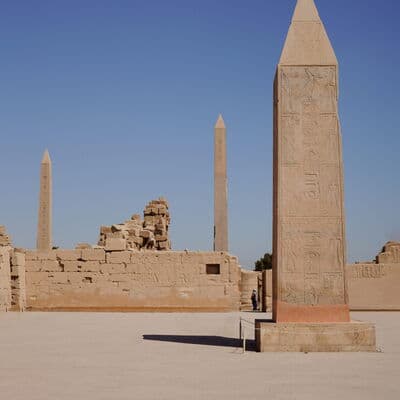
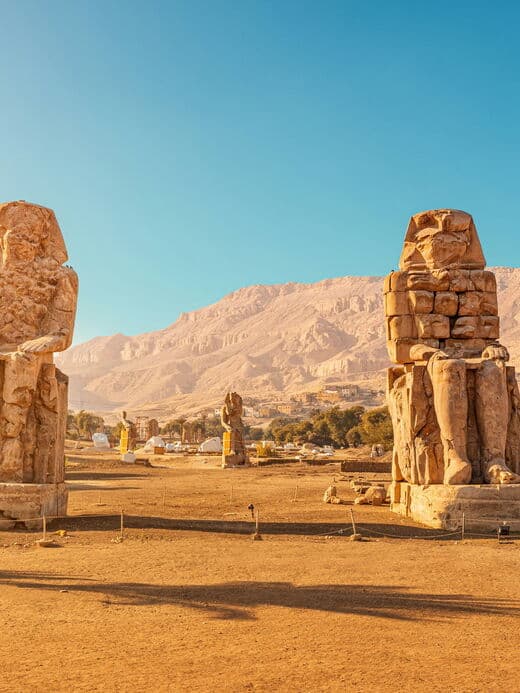
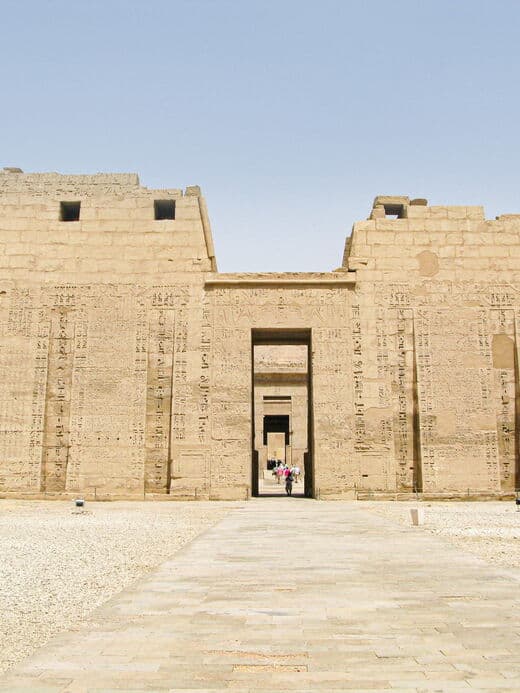
The entrance is guarded by six colossal statues of Ramesses II (four seated, two standing). Before the pylon stands an obelisk — its twin graces the Place de la Concorde in Paris (a gift from Egypt to France in 1833).
Court of Ramesses II
The first court is surrounded by a double colonnade. Here you'll find another statue of Ramesses and the entrance to the Abu el-Haggag Mosque. The mosque was built at the level of ancient sand deposits — when the temple was excavated, it ended up several meters above the floor.
Colonnade of Amenhotep III
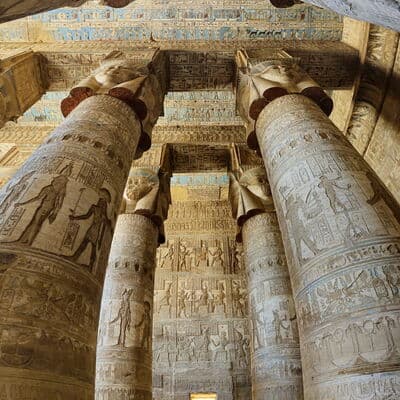
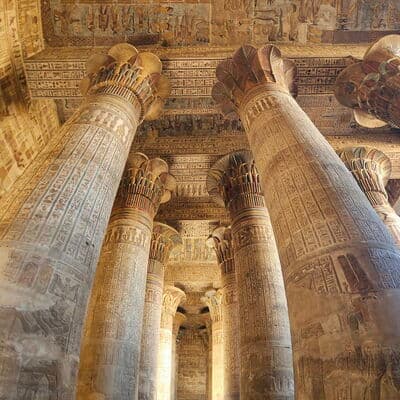
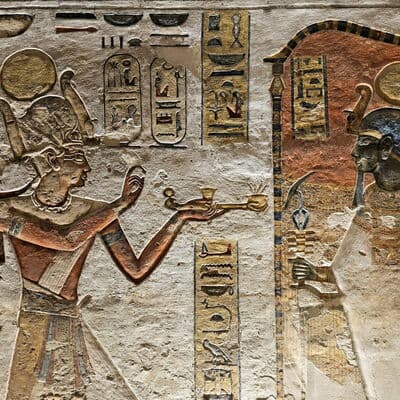
A processional colonnade of 14 columns with open papyrus-form capitals. The walls are decorated with reliefs depicting the Opet Festival — the procession of divine statues from Karnak.
Court of Amenhotep III
An elegant court with columns around the perimeter. In Roman times, a fortress stood here, and the southern wall was painted with frescoes depicting Roman emperors.
Sanctuary
The temple's most sacred area. Under Alexander the Great, a new sanctuary was built here — reliefs show Alexander in pharaonic garb making offerings to Amun.
Avenue of Sphinxes
In 2021, the Avenue of Sphinxes connecting Luxor Temple with Karnak was fully cleared — nearly 3 km and about 1,350 sphinxes. Now you can walk it on foot, as priests did three thousand years ago.
Evening Illumination
The temple is especially beautiful in the evening when the lighting comes on. Columns and statues are bathed in warm light, creating a magical atmosphere. You can sit at one of the cafes on the embankment and enjoy the view.
Practical Tips
When to Visit
The temple is open from 6:00 AM to 9:00 PM. The best time is sunset or after dark. During the day it's hot and crowded.
Tickets
About 200 Egyptian pounds. Combined tickets with Karnak are available.
How Much Time You Need
1-2 hours is enough for viewing. The temple is more compact than Karnak.
What to See Nearby
Karnak Temple is 3 km away — you can walk via the Avenue of Sphinxes. On the west bank lies the Valley of the Kings.
Atmosphere and Character
Luxor Temple is a meeting of eras. Pharaohs, Greeks, Romans, Christians, Muslims — all left their mark here. A mosque atop an ancient temple is no accident but a symbol: each era built upon the foundation of what came before.
In the evening, when the temple is illuminated and the call to prayer sounds from the mosque's minaret, you feel this especially acutely. Three thousand years of history — and it's all alive, real, continuing. Luxor Temple isn't a museum but a place where past and present are inseparably linked.