Cheonggyecheon Stream
In the middle of Seoul's concrete jungle flows a stream—11 kilometers of water, greenery, and tranquility crossing the city's business center. Cheonggyecheon Stream is one of the world's most impressive urban renewal examples: a place that was once a dirty river, then an overpass, now the favorite walking spot of millions of Seoulites.
History: From River to Overpass and Back
Cheonggyecheon isn't an artificial canal but a real river that flowed here for centuries. During the Joseon era (1392-1910), this was the capital's main waterway: cargo was floated, laundry was washed on banks, royal palaces reflected in the waters.
With 20th-century industrialization, the river became a sewage ditch. By the 1950s, Cheonggyecheon was so polluted that authorities decided to simply cover it—first with concrete slabs, then a four-lane overpass. By the 2000s, it was an ordinary urban highway with constant traffic jams, and few remembered a river flowing beneath the asphalt.
Everything changed in 2003 when Seoul Mayor Lee Myung-bak (later Korea's president) launched the stream restoration project. The overpass was demolished, the river cleaned, banks landscaped. In 2005, Cheonggyecheon opened to the public—and immediately became a city favorite.
The project cost $900 million and sparked much debate. Critics warned of traffic jams from the disappearing highway. But calculations proved right: people started using the metro more, the surrounding area transformed—real estate prices rose, new businesses opened, ecology improved.
What to See
Stream Beginning: Cheonggye Plaza
The stream begins at Cheonggye Plaza—home to "Spring" sculpture by Claes Oldenburg and Coosje van Bruggen: a giant multicolored shell 20 meters high. This symbolizes the stream's rebirth and is the starting point for walks.
Nearby is a cascade where water falls from street level to the streambed. Always crowded: some taking photos, others just sitting by the water.
Walking Along the Water
Pedestrian paths run along the entire stream—walk all 11 km or choose a section. The channel runs about 5 meters below street level, so city noise recedes and you find yourself in an unexpected oasis of quiet.
Along the way—22 bridges, each with its own history and design. Some are historic, restored from Joseon-era drawings. Others are modern with unusual architecture.
Along the banks—willows, flower beds, rest areas. In places you can descend to the water itself—stepping stones allow crossing on foot. In summer, children love playing here while adults sit with feet in cool water.
Evening Lighting
After sunset, the stream transforms: bridge and bank lighting comes on, and Cheonggyecheon becomes even more beautiful. Especially impressive is the section near the stream's start, where the cascade is illuminated with colored lights.
Festivals
In November, the Lantern Festival runs along the stream—thousands of glowing figures are installed directly in the water and on banks. Themes change yearly but consistently attract hundreds of thousands of visitors.
What to See Nearby
Cheonggyecheon crosses central Seoul, so many attractions are nearby.
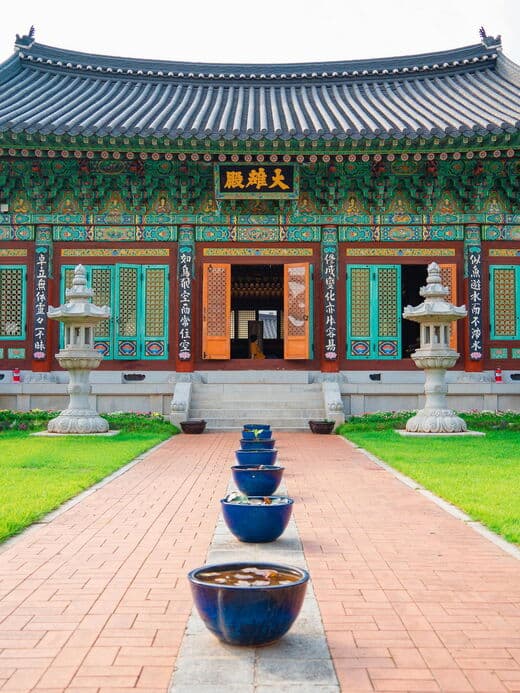
At the stream's start, to the north—the Insadong district with galleries, antique shops, and tea houses. A bit further—Jogyesa Temple, Korea's main Buddhist temple.
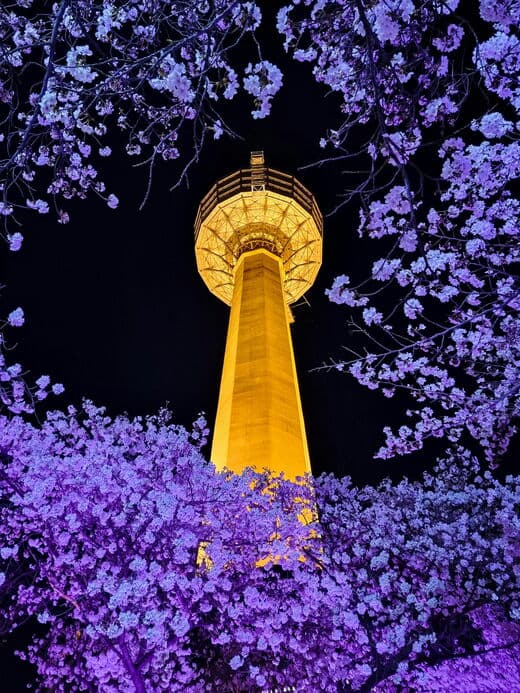
To the north you can see Namsan Tower—climb to the observation deck and see the stream from above.
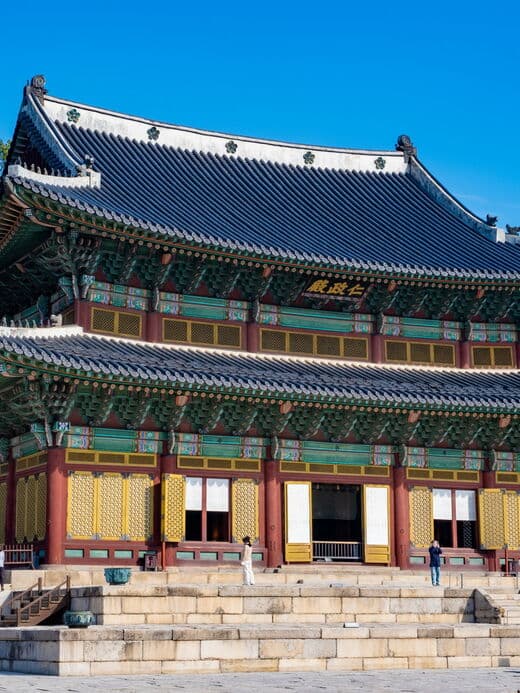
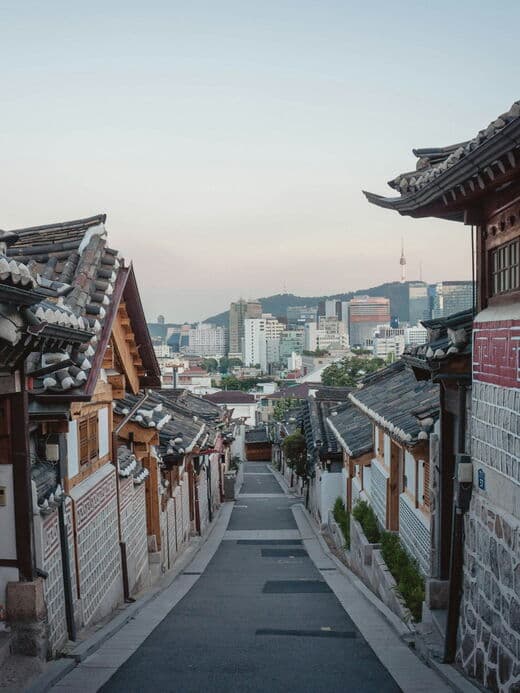
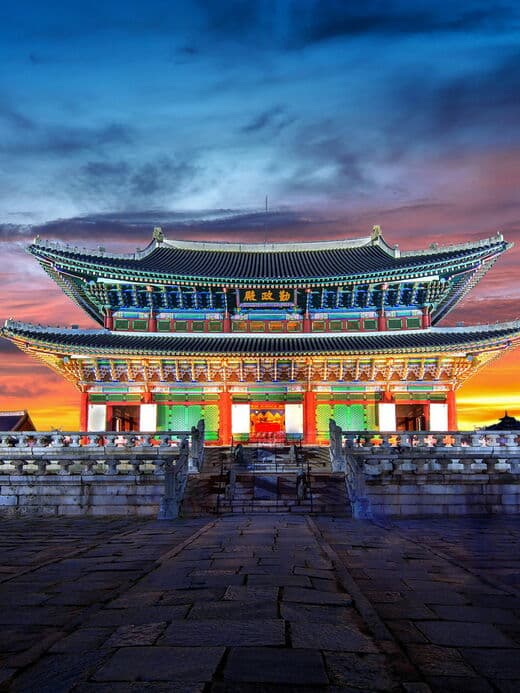
Further north—historic quarters: Bukchon Hanok Village, Gyeongbokgung and Changdeokgung palaces.
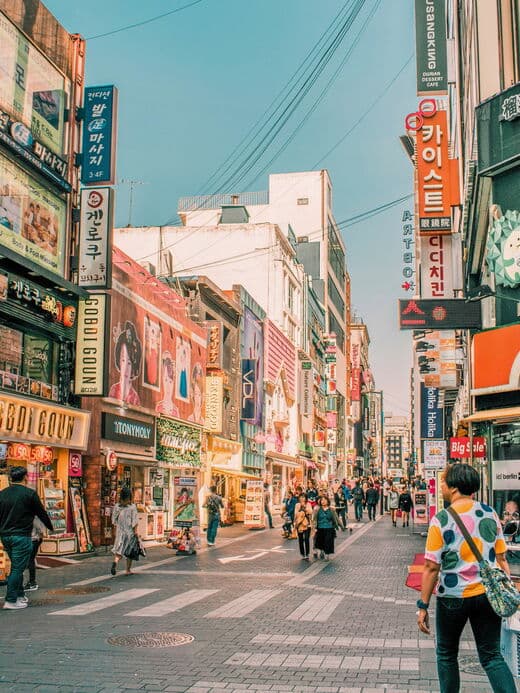
South of the stream—Myeongdong district (shopping) and Namdaemun Market (traditional market).
Practical Tips
When to Visit
The stream is accessible 24/7 and free. Best time—evening when lighting is on, or early morning when few people are around.
Weekends are very crowded, especially in good weather. For a peaceful walk, choose a weekday.
Seasons: spring brings cherry blossoms along banks, summer is pleasant to sit by water in heat, fall has beautiful foliage, winter features an ice rink at Cheonggye Plaza. Lantern Festival—November.
Getting There
Access from many metro stations. Most convenient: Gwanghwamun (Line 5) for stream start, or City Hall (Lines 1, 2), Jonggak (Line 1), Euljiro (Lines 2, 3).
Time Needed
For the central section (2-3 km)—about an hour. For the entire stream—3-4 hours. But you can simply sit by the water for 15 minutes to rest from urban bustle.
Atmosphere and Character
Cheonggyecheon is an oasis in the concrete jungle. Descend a few steps—car noise stays above, and around you—water murmuring, birds singing, leaves rustling. This is where Seoulites escape stress: office workers lunch on the banks, couples walk hand in hand, retirees practice tai chi.
The stream is especially lovely in evening, when skyscrapers on both sides light up and water reflects their glow. Something magical in this contrast: a river amid a megalopolis, silence amid noise, nature amid concrete.
Cheonggyecheon reminds us that cities can change for the better. Where there was a dirty highway, clean water now flows. Where there was concrete, trees now grow. An inspiring example of bringing nature back to the city—and how the city only benefits.