Gyeongbokgung Palace
Gyeongbokgung Palace is the main royal palace of the Joseon Dynasty, built in 1395. Located in central Seoul against Mount Bugaksan. The name means "Palace of Radiant Happiness." It's a living lesson in Korean history and architecture.
Palace History
Built three years after the Joseon Dynasty was founded. Originally included over 500 buildings. Burned by Japanese forces in 1592, lay in ruins for 270 years. Reconstruction began in 1867. Much destroyed during Japanese occupation (1910-1945). By 1945, only 40 buildings remained. Restoration continues since 1990.
Architecture
The layout reflects Confucian principles and Korean cosmology. The palace is strictly oriented north-south, with Mount Bugaksan protecting from the north. The main Gwanghwamun Gate faces south, symbolizing the ruler's openness to the people.
Main Attractions
Geunjeongjeon — Throne Hall
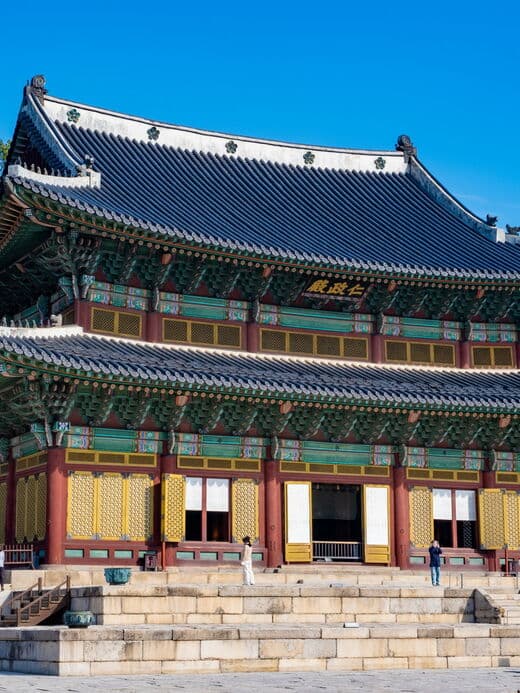
The palace's heart, Korea's largest wooden building. Stands on a two-tier stone platform. Inside: red lacquered columns, painted ceiling with dragons, gilded throne under a canopy. Stone markers in the courtyard are rank markers for officials.
Gyeonghoeru — Pavilion on Water
48 granite columns in the middle of an artificial pond. Site of royal banquets for foreign ambassadors. The reflection creates perfect symmetry. Best photo time is early morning or sunset.
Hyangwonjeong
Hexagonal pavilion on an island in the palace's northern section. A place for royal family meditation. Special atmosphere of peace.
Changing of the Guard
Ceremony at Gwanghwamun Gate at 10:00 and 14:00. Guards in 15th-century historical costumes perform formations to drumbeats. Photos with guards possible after the ceremony.
What to See Nearby
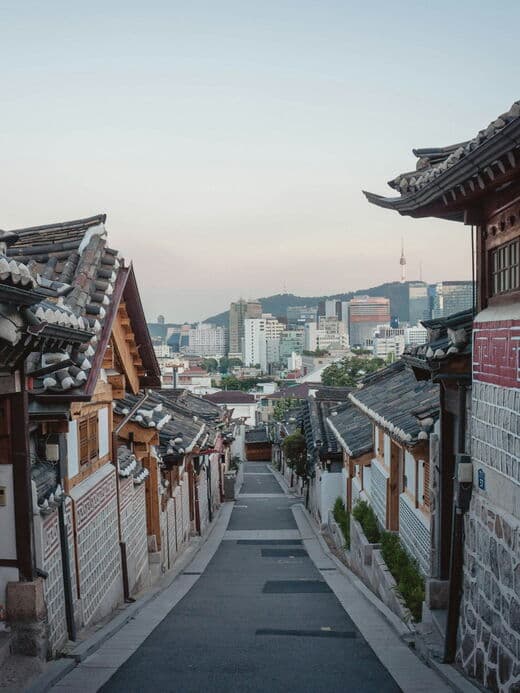
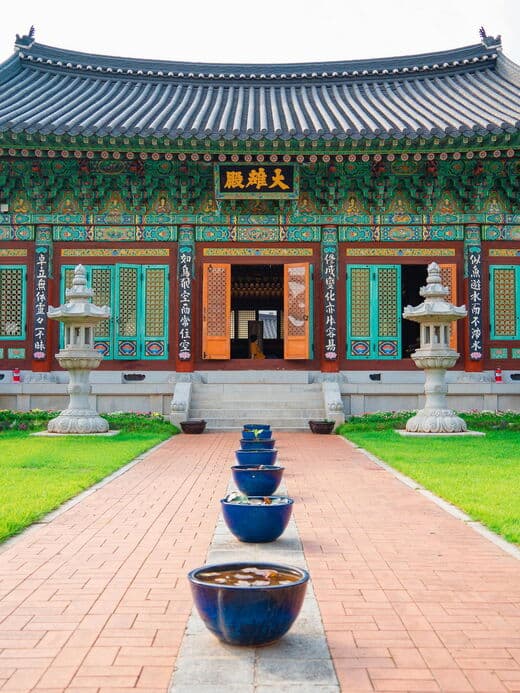
Beyond the eastern wall is Bukchon Hanok Village with traditional houses. South is Sejong Avenue with the hangul creator's monument. East is Insadong for antique lovers. Also recommended: Changdeokgung Palace with Secret Garden (UNESCO) and Jogyesa Temple.
Practical Tips
Open 9:00-18:00 (until 17:00 in winter), closed Tuesdays. Best time is late spring or autumn. Free entry in hanbok (traditional costume). Hanbok rental: 15,000-30,000 won. Allow 2-3 hours. Free National Folk Museum on grounds.
Atmosphere
Morning brings meditative silence; you can examine carved dragons on gutters and haetae at the gates. Midday guests in hanbok create a living history atmosphere. At sunset, tiled roofs turn gold. This is a window into Korea's soul.