Xi'an
Xi'an 2026: What You Need to Know
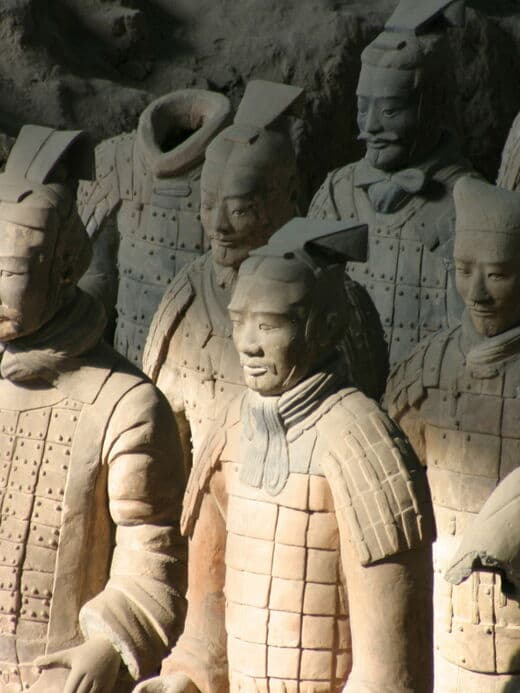
Xi'an is where Chinese civilization began. The former capital of 13 dynasties, the starting point of the Silk Road, and the place where thousands of clay soldiers have been guarding the tomb of China's first emperor for over two millennia. History here is not locked behind museum glass - it is woven into everyday life. You cycle along a 14th-century wall, eat lunch in a Muslim quarter with 700 years of history, and fall asleep in a hotel built atop Tang Dynasty palace ruins.
In short: Xi'an deserves a visit for the Terracotta Army, a bike ride along the Ancient City Wall, street food in the Muslim Quarter (biangbiang noodles, roujiamo), the Shaanxi History Museum, and the Giant Wild Goose Pagoda. Budget 3-4 days for the city itself, plus one day for Mount Huashan if you are up for it.
Xi'an is for travelers who want to touch the real roots of Chinese history rather than chase Shanghai's skyscrapers or Beijing's political grandeur. The city is compact, affordable, blessed with some of the best street food in all of China, and served by an excellent metro system. The downsides? Suffocating heat and smog in summer, occasional sandstorms in spring, and shoulder-to-shoulder crowds in the Muslim Quarter during peak season. But these are minor inconveniences weighed against what you will experience here.
Neighborhoods: Where to Stay
Bell Tower and Drum Tower Area - the Old City Center
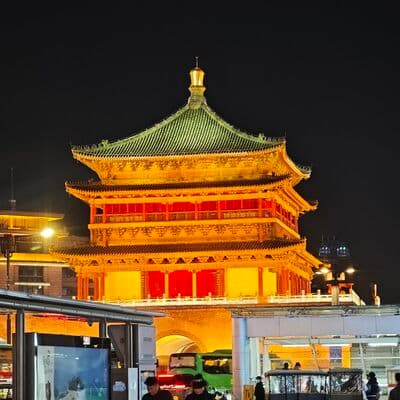
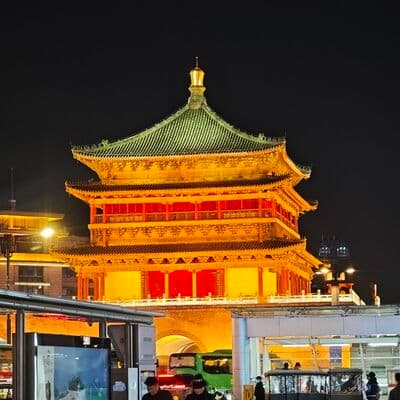
The heart of Xi'an, where four main avenues converge at a single intersection. From here you can walk to the Bell Tower, the Drum Tower, and the Muslim Quarter. This is the most convenient neighborhood for a first visit: everything is within reach, the metro is right underneath you, and restaurants line every street. In the evening, the plaza around the towers lights up and transforms into an open stage with street musicians, dancers, and photographers jostling for space.
Pros: Walking distance to major sights, best restaurant selection in the city, excellent transit connections.
Cons: Noisy (especially on weekends and holidays), hotel prices above average, traffic jams during rush hour.
Prices: $$ (Hostels from CNY 50 / ~$7 per night, 3-star hotels from CNY 250 / ~$35, 4-5 star from CNY 500 / ~$70)
Muslim Quarter - Food, Atmosphere, Character
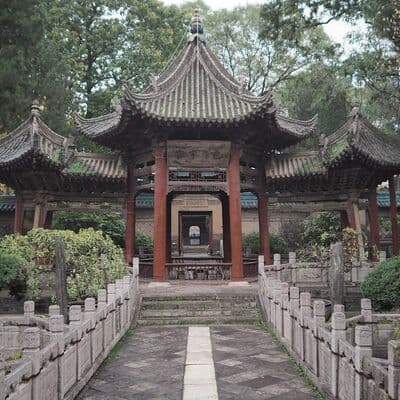
The Huimin District is a labyrinth of narrow alleys northwest of the Drum Tower. The Hui Muslim community has lived here for over 700 years. During the day you will find markets overflowing with souvenirs and spices; in the evening, an endless parade of food stalls billowing smoke and steam. Tucked inside these lanes is the Great Mosque of Xi'an - one of the largest in China, built in a unique Chinese-Islamic architectural style with wooden pavilions and stone arches instead of minarets and domes.
Pros: Best street food in the city, authentic atmosphere, affordable accommodation.
Cons: Very noisy in the evenings, narrow streets, few modern hotel options.
Prices: $ (Guesthouses from CNY 80 / ~$11, small hotels from CNY 150 / ~$21)
Giant Wild Goose Pagoda Area - Qujiang District
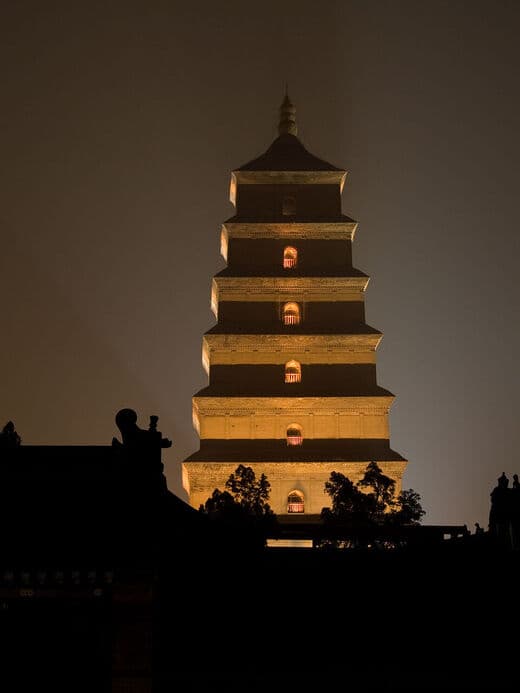
A modern district on the city's south side, built around the Giant Wild Goose Pagoda. Everything here is new: wide boulevards, manicured parks, museums, and shopping malls. The Shaanxi History Museum is within walking distance. Every evening, the plaza in front of the pagoda comes alive with a musical fountain show - one of the largest in Asia. This neighborhood is a solid pick for families and travelers who prefer a quieter base over the chaos of the old center.
Pros: Clean, green, and peaceful; museum and pagoda nearby; good hotel infrastructure.
Cons: Far from the Muslim Quarter and the City Wall; the area can feel somewhat sterile compared to the old town.
Prices: $$-$$$ (3-star hotels from CNY 300 / ~$42, 4-5 star from CNY 600 / ~$84)
City Wall Area - Beilin District
The neighborhood inside and immediately surrounding the Ancient City Wall. This is where you will find the Beilin Museum (Forest of Stone Steles) - over 3,000 steles bearing calligraphy from the Han through Qing dynasties. The district is quiet, defined by narrow lanes and old courtyard houses. An excellent choice for history and architecture enthusiasts who want to live in the atmosphere of old Xi'an without the nonstop bustle of the Muslim Quarter.
Pros: Rich historical atmosphere, walking distance to the wall, quiet.
Cons: Fewer restaurant and shop options, some hotels occupy older buildings with basic amenities.
Prices: $$ (Hotels from CNY 200 / ~$28, boutique hotels from CNY 400 / ~$56)
Lintong District - Close to the Terracotta Army
A suburban area about 25 miles east of downtown. It makes sense as a base only if the Terracotta Army and Huaqing Palace hot springs are your main objectives. The area is quiet, prices are lower than the city center, and a handful of decent hotels sit near the attractions. But getting to the rest of Xi'an means an hour on the bus or 30 minutes in a taxi.
Pros: Right next to the Terracotta Army, quiet, cheaper.
Cons: Far from the city center and other sights, limited dining options.
Prices: $ (Hotels from CNY 120 / ~$17)
Hi-Tech Zone (Gaoxin) - Business and Shopping
The business district in the southwest. Modern malls, corporate offices, international chain hotels. There is little of tourist interest, but if you are in Xi'an for work or simply want a neighborhood with Western-style cafes and familiar restaurant chains, this is your spot. The metro connects you to the old center in 20-25 minutes.
Pros: Modern infrastructure, quiet, reliable hotel brands.
Cons: Far from sights, no sense of place or local character.
Prices: $$-$$$ (Business hotels from CNY 350 / ~$49)
Best Time to Visit
Xi'an sits in central China and has a continental climate with four distinct seasons and wide temperature swings between them.
Best months: April-May and September-October
Spring (April-May): Temperatures between 59-77F (15-25C), gardens and parks in bloom. The ideal window for cycling the City Wall and hiking Huashan. Fewer tourists than in autumn. The only catch is occasional sandstorms in April - one or two days, and not every year.
Autumn (September-October): The golden season. 64-82F (18-28C), dry and comfortable. Trees in the parks turn amber and crimson. One major warning: the first week of October is Golden Week, China's national holiday. Prices double or triple, every site is packed, and hotel rooms vanish. If at all possible, avoid October 1-7.
Acceptable: March, June, November
March: Still cool at 46-59F (8-15C), but manageable for walking. Very few tourists - a good window for seeing the Terracotta Army without the crush.
June: Heat is building (up to 95F / 35C) but still tolerable before the worst of summer arrives. Early rains begin.
November: Cool at 41-59F (5-15C), foliage has dropped, but tourist numbers are low and prices follow suit.
Worst: July-August and January-February
Summer (July-August): Punishing heat up to 104F (40C) with high humidity. Walking around the city is genuinely miserable. The one silver lining: air-conditioned museums become a refuge rather than a chore.
Winter (January-February): Cold (down to 23F / -5C), gray skies, heavy smog. But if your visit coincides with Chinese New Year (late January or February), you will see spectacular lantern displays on the City Wall and festive decorations across the city. Note that many small shops close for 3-5 days during the holiday.
Festivals and events
- Chinese New Year Lantern Festival (January-February): Thousands of illuminated lantern installations along the City Wall. The entire city is decorated, though many small businesses shut down for several days.
- Qingming Festival (early April): Tomb-Sweeping Day. Ceremonies at the Mausoleum of the Yellow Emperor - China's legendary founding ancestor.
- Dragon Boat Festival (June): Boat races, zongzi (sticky rice dumplings wrapped in bamboo leaves).
- Xi'an International Marathon (October): The course runs along the City Wall - one of the most scenic marathon routes in China.
Itinerary: 3 to 7 Days
Xi'an in 3 days: the essentials
Day 1: The Heart of the Old City
8:00-10:30 AM - Start with the Ancient City Wall. Rent a bicycle at the South Gate (CNY 45 / ~$6 for 100 minutes) and ride the full loop - 8.5 miles (14 km) in about 90 minutes to 2 hours. The morning light is ideal for photos and the crowds have not yet arrived. The wall opens at 8:00 AM; admission is CNY 54 / ~$8.
11:00 AM-12:00 PM - Bell Tower and Drum Tower. Climb both (combo ticket CNY 50 / ~$7). The Bell Tower offers the best panoramic view of the old city's four main avenues. The Drum Tower houses a collection of ancient drums with percussion performances every 30 minutes.
12:00-2:00 PM - Lunch in the Muslim Quarter. Walk west from the Drum Tower and you will hit Beiyuanmen Street. Try roujiamo (CNY 7-10 / ~$1-1.50), biangbiang noodles (CNY 15-25 / ~$2-3.50), and yangrou paomo lamb soup.
2:30-4:00 PM - Great Mosque of Xi'an. Enter from a side alley in the Muslim Quarter (CNY 25 / ~$3.50). A genuinely unique site: Chinese garden architecture housing an active Islamic place of worship. Wooden pavilions, stone archways, Arabic calligraphy - a calm oasis hidden behind the noisy market streets.
4:30-6:00 PM - Beilin Museum (Forest of Stone Steles). More than 3,000 stone steles bearing calligraphy spanning from the Han to the Qing dynasties. Even if you cannot read Chinese, the sheer scale and the artistry of the carving are impressive. Admission CNY 50 / ~$7.
Evening - Return to the Muslim Quarter for dinner. After dark it transforms: charcoal smoke from grills, neon signs, thousands of people. Try lamb skewers (CNY 3-5 / ~$0.50-0.70 per stick) and fresh pomegranate juice (CNY 10 / ~$1.50).
Day 2: Terracotta Army and Huaqing Palace
7:30 AM - Leave early. Bus 306 (also labeled 'You 5') departs from Xi'an Railway Station's north plaza - CNY 7 / ~$1, about 90 minutes. Or book a DiDi for roughly CNY 120-150 / ~$17-21. The key is to arrive by the 8:30 AM opening before the tour bus convoys show up around 10:00.
8:30 AM-12:00 PM - Terracotta Army. Start with Pit 1 - the largest, with over 6,000 warriors. Then Pits 2 and 3. Do not skip the Bronze Chariots exhibition. Audio guides in English cost CNY 30 / ~$4 (or download an app before you go). Admission is CNY 120 / ~$17 (March-November) or CNY 80 / ~$11 (December-February).
12:30-1:30 PM - Lunch near the museum. The restaurants at the entrance are overpriced and mediocre. You are better off taking a short bus ride to Lintong town (10 minutes) where the locals actually eat - real food at real prices.
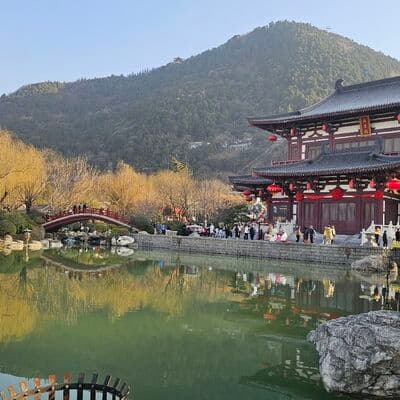
2:00-4:30 PM - Huaqing Palace (Bus 306, one stop back, CNY 6 / ~$1). Imperial hot springs where Yang Guifei - the Tang emperor's legendary consort - once bathed. A beautiful park at the foot of Mount Li. Admission CNY 120 / ~$17.
Evening - If you still have energy, the 'Song of Everlasting Sorrow' show at Huaqing Palace (March-October, CNY 268-988 / ~$37-137) is a large-scale outdoor performance with fire, water, and lasers against the mountain backdrop. Book in advance.
Day 3: Southern Xi'an and Museums
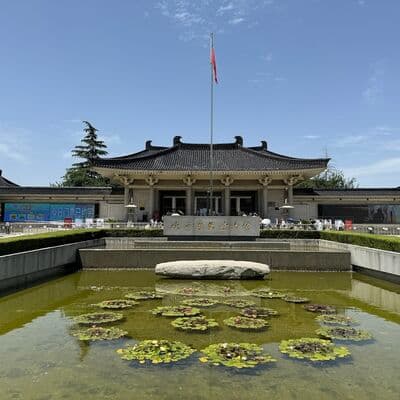
9:00 AM-12:00 PM - Shaanxi History Museum. One of China's finest museums, full stop. Free admission with passport (limited to 6,000 visitors per day - arrive at opening or book online). Galleries span from the Neolithic era through the Tang Dynasty. The Tang Dynasty gold and silver gallery is behind a separate CNY 30 / ~$4 ticket and absolutely worth it.
12:30-1:30 PM - Lunch in the Qujiang area. Plenty of restaurants along Furong Yuan Road.
2:00-3:30 PM - Giant Wild Goose Pagoda. The symbol of Xi'an, built in 652 AD to store Buddhist scriptures brought from India. Climbing to the top costs CNY 40 / ~$6 (plus CNY 40 for Da Ci'en Temple entry). The view from the top is worth every step.
4:00-5:30 PM - Walk through the Tang Paradise Boulevard (Datang Buye Cheng). A pedestrian street styled after the Tang Dynasty: red lanterns, street performers, locals and tourists dressed in hanfu (traditional clothing). You can rent a hanfu outfit yourself (CNY 50-150 / ~$7-21) and blend right in.
8:00 PM - Musical fountain show at the Giant Wild Goose Pagoda plaza. Every evening (8:00 PM in summer, 7:00 PM in winter). Free. One of the largest fountain displays in Asia - arrive 30 minutes early to get a good vantage point.
Xi'an in 5 days: at a relaxed pace
Follow the first 3 days as above, then add:
Day 4: Culture and Off-the-Beaten-Path Xi'an
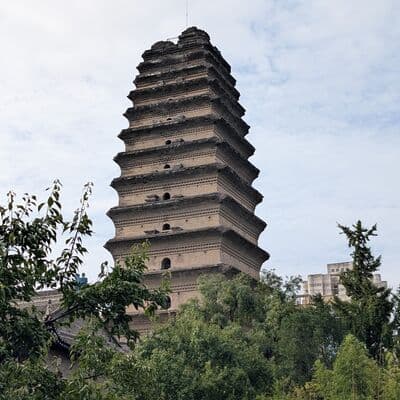
9:00-11:00 AM - Small Wild Goose Pagoda. A peaceful site away from the main tourist circuits. This 707 AD pagoda sits in the shaded grounds of Jianfu Temple. Admission is free (with passport). The on-site Xi'an Museum features solid interactive exhibits.
11:30 AM-1:00 PM - Shuyuanmen (Academy Street). An old lane lined with calligraphy workshops, antique shops, and teahouses. Pick up a calligraphy brush (from CNY 20 / ~$3) or try writing a character yourself under a master's guidance - the shopkeepers are usually happy to show foreigners the basics.
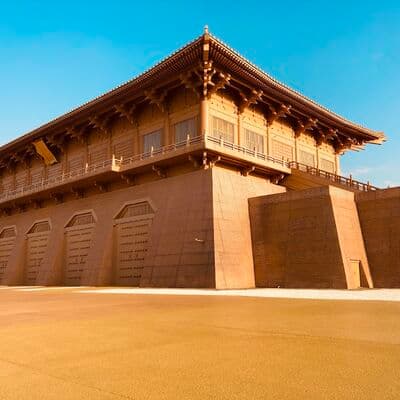
2:00-5:00 PM - Daming Palace National Heritage Park. The ruins of the largest palace complex in human history - its footprint was 4.5 times the size of Beijing's Forbidden City. Very few tourists make it here, and the grounds are vast. Rent an electric cart (CNY 30 / ~$4) or a bicycle. Admission CNY 60 / ~$8.
Evening - Head to Defuchang district or Yongxingfang night market - local evening food markets without the tourist markup. Real food at local prices.
Day 5: Mount Huashan - Challenge and Reward
6:00 AM - Early start. High-speed train from Xi'an North to Huashan North (30 minutes, CNY 55 / ~$8). From the station, a shuttle bus to the entrance (CNY 10 / ~$1.50).
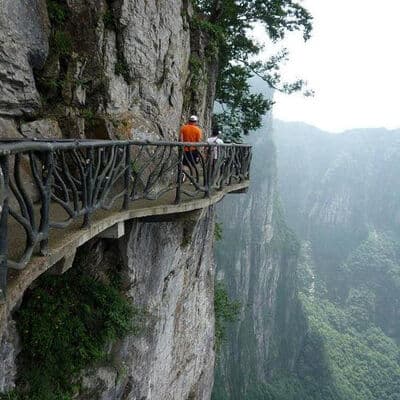
7:30 AM-5:00 PM - Mount Huashan - one of China's five sacred mountains and arguably the most thrilling mountain hike in the country. Take the cable car to North Peak (CNY 80 / ~$11 one way) then hike across all five peaks. The must-do experience: the Changkong Plank Road to South Peak - a narrow plank path barely 12 inches wide bolted to a sheer cliff face. You are harnessed in (CNY 30 / ~$4 for the safety line), but your legs will shake regardless. The full circuit takes 6-8 hours. Mountain admission is CNY 160 / ~$22 (March-November).
Tip: Buy gloves at the entrance (CNY 5 / ~$0.70) - the iron chains on the ascent are ice-cold in the morning. Bring water and snacks from the bottom; prices on the mountain are 3-4 times higher.
Xi'an in 7 days: with day trips
Follow the first 5 days as above, then add:
Day 6: Temples and Tombs
9:00 AM-12:00 PM - Tomb of Qin Shi Huang. Yes, there is more than just the Terracotta Army. The actual burial mound of the First Emperor sits about a mile from the warrior museum. It is an enormous earthen hill that remains unexcavated to this day - ancient records describe rivers of mercury inside. The surrounding park includes minor excavation sites and a quiet walking trail with almost no crowds.
1:00-5:00 PM - Famen Temple (2 hours from Xi'an by bus). This temple houses a finger bone of the Buddha - one of the most important Buddhist relics in the world. The underground palace, containing Tang Dynasty treasures, was discovered accidentally in 1987 when a pagoda partially collapsed after heavy rain. Admission CNY 100 / ~$14.
Day 7: The Spirit of Old Xi'an
9:00-11:00 AM - Hanyangling Museum (Tomb of Emperor Jing). An underground museum with transparent glass floors - you walk directly above active excavation sites. Thousands of miniature clay figurines (smaller than the Terracotta Warriors, but fascinating in their own right). Bus from Xi'an, about 40 minutes.
12:00-2:00 PM - Farewell lunch: order the dumpling banquet at De Fa Chang restaurant (from CNY 98 / ~$14 per person). Eighteen varieties of dumplings shaped like animals, flowers, and fish - culinary art on a plate.
3:00-5:00 PM - One last walk along the City Wall at sunset. The lights come on around 6:00 PM and the wall glows against the darkening sky. Alternatively, end your trip at the Drum Tower plaza where locals gather every evening to dance, play badminton, and walk their dogs - a slice of everyday Xi'an that no museum can replicate.
Where to Eat: Restaurants and Cafes
Street food and markets
Xi'an is the undisputed street food capital of northwestern China. The Muslim Quarter (Beiyuanmen Street and its side alleys) is the main draw, but not the only one. Here you eat standing up, at plastic tables, surrounded by clouds of steam and smoke. Average spend: CNY 15-30 / ~$2-4 per meal.
What to look for: roujiamo at stalls with a line (CNY 7-12 / ~$1-1.70), lamb skewers (CNY 3-5 / ~$0.50-0.70 per stick), hulatang (spicy pepper soup, CNY 8-12 / ~$1-1.70), pomegranate juice (CNY 10-15 / ~$1.50-2), sweet steamed rice cake zenggao (CNY 5-10 / ~$0.70-1.50).
Tip: Dongxin Street Night Market is the local alternative to the Muslim Quarter - same great food without the tourist crowds. Locals come here for lamb skewers, cold noodles, and cheap beer. Open from 6:00 PM until late.
Local hole-in-the-wall joints
The best food in Xi'an is served in tiny restaurants with no English menu. Look for places packed with locals in work clothes at lunchtime - that is your quality indicator. Best areas: the alleys (not the main avenues) around the Bell Tower, the South Gate neighborhood, and Fenghe Road.
Typical menu: biangbiang noodles (CNY 12-18 / ~$1.70-2.50), liangpi cold noodles with cucumber and chili (CNY 8-12 / ~$1-1.70), zhajiangmian noodles with meat sauce (CNY 12-15 / ~$1.70-2). Portions are enormous by American or European standards.
Pro tip: Show a photo of the dish on your phone if you cannot read the menu. Or use a translation app - point your camera at the menu in the Baidu Translate app (Google Translate works offline if you downloaded the Chinese language pack before arrival).
Mid-range restaurants
De Fa Chang: Legendary dumpling house since 1936, located on Bell Tower Square. The dumpling banquet (jiaozi yan) features 18 varieties of dumplings shaped like rabbits, flowers, and fish. From CNY 98 / ~$14 per person. Reserve a table for dinner.
Xi'an Restaurant (Xi'an Fanzhuang): Operating since 1929. Classic Shaanxi cuisine: braised lamb, pumpkin dumplings, hand-pulled biangbiang noodles. Average check CNY 80-150 / ~$11-21.
Lao Sun Jia: Specialists in yangrou paomo (lamb soup with hand-torn bread). In business since 1898 - one of the oldest restaurants in the city. Average check CNY 50-80 / ~$7-11. The paomo ritual here is the real deal: they hand you a bowl and a flatbread, you tear it into tiny pieces, then the kitchen fills the bowl with rich lamb broth. Take your time with the tearing - the smaller the pieces, the better the result.
Upscale dining
Xi'an is not Shanghai, and you will not find Michelin-starred restaurants here. But there are excellent options for a special dinner. Tang Court at the Shangri-La hotel serves refined Cantonese cuisine with city views (average check CNY 300-500 / ~$42-70). China Folk's Restaurant (Zui Chang'an) offers creative Shaanxi cuisine in a dramatic interior featuring traditional opera performances and clay sculptures (CNY 150-250 / ~$21-35).
Coffee and breakfast
Xi'an's coffee culture is booming. In the Qujiang district and around the Giant Wild Goose Pagoda, you will find dozens of third-wave coffee shops. Sculpting in Time Cafe is a chain with cozy interiors and decent coffee (latte CNY 28-38 / ~$4-5). Luckin Coffee - China's homegrown chain - offers prices roughly half of Starbucks (americano CNY 12-18 / ~$1.70-2.50), with locations on practically every block. For a local breakfast, seek out neighborhood joints serving doufu nao (savory tofu pudding, CNY 5-8 / ~$0.70-1) and youtiao (fried dough sticks, CNY 3-5 / ~$0.50-0.70).
Must-Try Food
Xi'an is one of China's great food cities. The cuisine here blends Han Chinese and Hui Muslim traditions, with a focus on noodles, lamb, and bold spices. Here is what you absolutely must eat.
Biangbiang noodles (BiangBiang mian) - Wide noodles as broad as your palm, hand-pulled and slapped against the counter (that slapping sound is the 'biang!'). Served with chili oil, vinegar, garlic, and vegetables. From CNY 12 / ~$1.70 per bowl. The best versions are found in small noodle shops inside the City Wall, not in the tourist-facing stalls of the Muslim Quarter.
Roujiamo - Often called the 'Chinese hamburger,' though it predates the hamburger by roughly two thousand years. Slow-braised pork (or beef in the Muslim version) stuffed into a crispy flatbread. CNY 7-12 / ~$1-1.70. Look for stalls with a line - the meat will be freshly prepared. Try both the pork and the beef versions to compare.
Yangrou paomo - The 'tear and eat' soup. You are given a bowl with a flatbread and you tear it into tiny pieces by hand - the smaller the better. You then hand the bowl back to the kitchen, where the cook fills it with boiling lamb broth and meat. The tearing is part of the ritual; do not rush it. From CNY 25 / ~$3.50 at Lao Sun Jia.
Liangpi - Cold rice or wheat noodles with cucumber, bean sprouts, sesame paste, vinegar, and chili oil. The perfect dish on a hot day. CNY 8-12 / ~$1-1.70. It comes in two varieties: rice-based (softer) and wheat-based (chewier) - try both.
Hulatang - A thick, spicy pepper soup with beef, tofu, wood ear mushrooms, and vegetables. This is what Xi'an eats for breakfast. Warming, filling, and just CNY 8-12 / ~$1-1.70. Find it in early-morning food stalls between 6:00 and 10:00 AM.
Zenggao - A sweet steamed cake made from glutinous rice layered with jujube dates and red bean paste. Sold at stalls throughout the Muslim Quarter. CNY 5-10 / ~$0.70-1.50 per portion. Warm, sticky, and satisfying.
Lamb skewers (kao yangrou chuan) - The Muslim Quarter is thick with charcoal smoke from grills turning out skewer after skewer of lamb dusted with cumin and chili flakes. CNY 3-5 / ~$0.50-0.70 each. Order ten at a time. You will not regret it.
Guantang baozi - Soup dumplings. Paper-thin dough filled with meat and scalding hot broth. Pick them up by the top knot, bite a small hole, slurp the soup, then eat the rest. You will burn your tongue the first time. Everyone does. CNY 15-25 / ~$2-3.50 per steamer.
What to avoid: Skip the 'specialty combo sets' at tourist-facing restaurants along the Muslim Quarter's main drag - you will pay three times the going rate for mediocre food. Avoid stalls with no line at the very entrance to Beiyuanmen Street - they target tourists. Walk 500 meters deeper into the quarter or duck into the side alleys. Dayuanyuan Lane is the parallel street where the local Hui community actually eats - cheaper and better.
For vegetarians: Liangpi (meatless), zenggao, vegetable noodles, and tofu dishes at Buddhist restaurants near the Giant Wild Goose Pagoda. Most food in the Muslim Quarter involves meat - make sure to specify in advance. The phrase 'wo chi su' (I am vegetarian) will be understood.
Local Secrets and Tips
1. Book the Shaanxi History Museum online. Free tickets sell out within seconds of release. Reservations open 5 days in advance through the museum's WeChat account. The workaround: pay CNY 30 / ~$4 for the 'Tang Treasures Hall' ticket - it uses a separate, shorter queue and gets you into the main museum as well.
2. Arrive at the Terracotta Army by 8:30 AM. By 10:00 AM the tour buses arrive and Pit 1 becomes a wall of selfie sticks. Start with Pit 1, then Pit 3, then Pit 2 - this runs counter to the flow of most organized groups.
3. Skip the front rows of the Muslim Quarter. The stalls at the entrance to Beiyuanmen Street are tourist traps: higher prices, smaller portions. Walk 500 meters deeper in or turn into the side alleys. Dayuanyuan Lane is the secret parallel street where local Hui residents eat - cheaper and better by a wide margin.
4. Download apps before you land. DiDi (ride-hailing), Alipay or WeChat Pay (payment - cash is increasingly refused), Baidu Maps (Google Maps is unreliable in China - offset coordinates and no transit data), and Pleco (the best Chinese dictionary app). Critically, download a VPN before your trip. VPN websites are blocked inside China, so if you arrive without one, you lose access to Google, Instagram, WhatsApp, and most Western services.
5. Payment: cash is dying fast. In 2026, the vast majority of vendors - including street food stalls - prefer WeChat Pay or Alipay. Foreign visitors can link an international Visa or Mastercard to Alipay, and it genuinely works. That said, keep CNY 200-300 / ~$28-42 in cash for the occasional tiny stall or rural vendor that only takes bills.
6. Cycle the City Wall counter-clockwise. Most tourists ride clockwise. Go the other way and you will face far less oncoming traffic. Start from the South Gate (Yongningmen) - it has the best bike rental facilities and the most photogenic views to kick off your ride.
7. Do not take a taxi from the Terracotta Army exit. Drivers at the museum entrance quote 3-4 times the real price. Walk 500 meters to the public bus stop or order a DiDi from your phone - you will save CNY 100-150 / ~$14-21.
8. Rent a hanfu - it is not just for Chinese tourists. Renting a traditional Tang Dynasty outfit (CNY 50-150 / ~$7-21) and strolling through the Tang Paradise or along the City Wall is a wildly popular activity. Foreigners in hanfu are greeted with genuine delight - expect locals to ask for photos with you.
9. Smog is a real problem in winter. From November through February, the AQI (Air Quality Index) regularly exceeds 200, which is categorized as 'very unhealthy.' Pick up an N95 mask before your trip or grab one at any pharmacy in Xi'an (CNY 3-5 / ~$0.50-0.70). Check air quality daily using the AirVisual app or IQAir website.
10. Haggle at markets, never at restaurants. At souvenir markets, the opening price is typically 3-5 times the real value - negotiate hard. At restaurants and food stalls, prices are fixed and bargaining is considered rude.
11. Mount Huashan: bring gloves and water. The iron chains on the steep ascents are freezing cold in the morning, and the stone steps are slippery after rain. Water on the mountain costs CNY 10-15 / ~$1.50-2 per bottle (vs. CNY 2 at the base). Food at the summit exists but is expensive and uninspiring - pack snacks from below.
Transport and Connectivity
From the airport to the city center
Xi'an Xianyang International Airport (XIY) is located about 22 miles (35 km) northwest of the city center.
- Metro (Line 14 + transfer): The cheapest option. Airport to city center (Bell Tower) takes roughly 50-60 minutes for CNY 7-9 / ~$1-1.30. Runs from 6:00 AM to 11:00 PM.
- Airport Express Bus: Multiple routes to different parts of the city. To the railway station area: CNY 25 / ~$3.50, 40-60 minutes. Runs from 6:00 AM until the last arriving flight.
- Taxi / DiDi: CNY 120-150 / ~$17-21, 40-60 minutes depending on traffic. The only option for late-night arrivals.
Getting around the city
Metro: Xi'an has 10 metro lines as of 2026, covering all major attractions. Clean, fast, air-conditioned, and easy to navigate. Fares: CNY 2-8 / ~$0.30-1.10 depending on distance. Buy tokens from vending machines (they accept coins and Alipay) or pick up a Chang'an Tong transit card (CNY 20 / ~$3 deposit plus top-up) that also works on buses. Station names and signs are displayed in both Chinese and English.
Buses: The network is dense, but announcements are in Chinese only. Useful for routes the metro does not cover. Fare is CNY 1-2 / ~$0.15-0.30, payable by transit card or Alipay. Bus 306 ('You 5') is the dedicated tourist route to the Terracotta Army - look for it at the north plaza of Xi'an Railway Station.
Taxis and DiDi: Base fare CNY 9 / ~$1.30 for the first 3 km (about 2 miles). A typical ride across the city center costs CNY 15-25 / ~$2-3.50. DiDi is far more convenient than hailing a cab: you can enter your destination in English and pay through the app. Practical tip: take a screenshot of your destination's name in Chinese characters and show it to the driver if the app's navigation acts up.
Shared bikes and scooters: Hello Bike and Meituan Bike sharing systems are everywhere, starting at CNY 1.5 / ~$0.20 for 30 minutes. Unlock via Alipay. An excellent way to cover short distances in the flat city center.
Internet and communication
SIM card: The easiest option for Americans, Brits, and Australians is to buy an eSIM before departure. Providers like Airalo and Holafly offer plans from about $5 for 1 GB over 7 days. If you prefer a physical SIM, pick one up at the airport from China Mobile or China Unicom - you will need your passport. Expect to pay CNY 50-100 / ~$7-14 for 10-20 GB over a month.
Wi-Fi: Free in most hotels, cafes, and metro stations (registration with a phone number is usually required). Speeds are generally decent.
VPN: This cannot be stressed enough. Google, Gmail, Instagram, Facebook, WhatsApp, YouTube, and most Western news sites are blocked in China. Download and configure a VPN before you board your flight. Once you are in China, VPN provider websites are inaccessible. Reliable options as of 2026 include Astrill and Shadowrocket. ExpressVPN has become inconsistent. Test your VPN before departure to make sure it works.
Essential apps:
- WeChat: China's everything app - messaging, payments, mini-programs, booking. Being without WeChat in China is like being without a phone.
- Alipay: Payment accepted virtually everywhere. Link your international Visa or Mastercard - the foreign card integration has worked reliably since 2024.
- DiDi: Ride-hailing. Has an English-language interface.
- Baidu Maps: Navigation. Google Maps in China displays a coordinate offset and lacks public transit data, making it essentially useless for daily navigation.
- Meituan: Food delivery, ticket booking, restaurant reviews - China's all-in-one lifestyle app.
- Pleco: The gold standard Chinese-English dictionary. Includes a camera-based character reader that works offline.
Final Verdict
Xi'an is the city for travelers who want to understand China through its history and its food rather than through its skyline and shopping malls. Three days is the minimum to cover the essentials. Five days is the sweet spot, adding Huashan and the less-visited corners. A full week allows for deeper day trips to temples and tombs on the outskirts.
Ideal for: History and archaeology enthusiasts, food-obsessed travelers (especially those who eat meat), budget travelers, and anyone who has already seen Beijing and Shanghai and wants to experience a more authentic side of China.
Not the best fit for: Beach seekers, nightlife hunters expecting Shanghai-level scenes, travelers who cannot tolerate heat (summer is brutal), or strict vegetarians (options exist but are limited).
Daily budget: CNY 200-400 / ~$28-56 (backpacker), CNY 400-800 / ~$56-112 (mid-range), CNY 800+ / ~$112+ (comfortable). Xi'an remains one of the most affordable major cities in China for visitors.
Information current as of 2026. Prices and schedules may change - verify before your trip.