Santo Domingo
Santo Domingo 2026: What to Know Before You Go
Santo Domingo is the oldest continuously inhabited European settlement in the Americas, and it feels like it. Walk through the Zona Colonial and you are stepping on the same cobblestones that Columbus's son once walked. But this is not a museum city frozen in time - it is a living, loud, complicated Caribbean capital of over three million people where merengue blasts from colmados at 7 AM and the smell of frying empanadas follows you down every block.
The short version for search engines: Santo Domingo is the capital of the Dominican Republic, founded in 1496, home to UNESCO World Heritage colonial architecture, exceptional Caribbean food, and a cost of living that makes it one of the best-value capital cities in the Western Hemisphere. A solid visit takes 3 to 5 days.
Who is this city for? History lovers will be in paradise - the first cathedral, the first university, the first hospital, the first paved road in the Americas are all here. Food travelers will eat extraordinarily well for very little money. Budget backpackers can survive on $30-40 a day without trying hard. Culture seekers will find world-class museums, live music every night, and a nightlife scene that does not start until midnight.
The honest downsides: Santo Domingo is not a beach destination. The city beaches exist but they are not why you came. Traffic is genuinely terrible - a 5-kilometer trip can take 45 minutes during rush hour. The heat and humidity from June through October will test your patience. Street harassment happens, power outages are a fact of life, and some neighborhoods require basic urban awareness. But if you want to understand the Dominican Republic beyond the all-inclusive resorts of Punta Cana, this is where you start.
Santo Domingo Neighborhoods: Where to Stay
Choosing where to stay in Santo Domingo matters more than in most cities. The neighborhoods have distinct personalities, price ranges, and safety profiles. Here is an honest breakdown of six areas worth considering.
Zona Colonial - Best for First-Time Visitors
The Zona Colonial is the historic heart and the obvious choice for tourists. UNESCO-protected architecture, major sights within walking distance, dozens of restaurants and bars. Boutique hotels in restored colonial buildings run $50-120 per night. Hostels start at $12-18 for a dorm bed. Downside: touristy on main streets and side streets get dark after 11 PM - stick to well-lit blocks around Parque Colon and Calle de las Damas at night. Best for: first-timers, history lovers, solo travelers. Price range: $-$$.
Piantini - Upscale and Safe
Piantini is the wealthiest neighborhood in Santo Domingo, full of embassies, international restaurants, and high-end shopping at Agora Mall and Blue Mall. Hotels are international chains (JW Marriott, Intercontinental) running $150-300 per night. Airbnbs go for $80-150. Very safe, very walkable, zero colonial charm. You will need a taxi to reach the historic sites. Best for: business travelers, families, those who prefer modern comfort. Price range: $$$.
Gazcue - Budget Near the Center
Gazcue sits between the Zona Colonial and the Malecon, a residential neighborhood of crumbling mid-century houses. Plaza de la Cultura with its museums is here. Mostly small guesthouses and budget hotels ($25-60) plus Airbnb apartments ($30-50). Quieter than the Colonial Zone, more authentically Dominican, walkable to both the historic center and the waterfront. Local comedores serve plate lunches for $3-5. Downside: not much nightlife and you need street smarts after dark. Best for: budget travelers, museum visitors. Price range: $.
Malecon - Waterfront With Faded Glory
The Malecon is Santo Domingo's oceanfront boulevard, a 12-kilometer promenade lined with hotels, casinos, and monuments. In the 1970s it was the glamorous heart of the city; today it is rougher around the edges. Some big hotels have aged poorly, and the promenade can feel exposed at night. But watching the sunset from the Malecon seawall remains one of Santo Domingo's great free experiences. Hotel Jaragua and Renaissance are the landmark properties ($80-180). Best for: sunset lovers, ocean views on a moderate budget. Price range: $$.
Naco - The Middle Ground
Naco is Piantini's slightly more affordable neighbor. Safe, walkable, with good restaurants and easy access to both the modern city and the Colonial Zone via taxi or metro. Hotels run $60-150, Airbnbs $40-90. Growing food scene with Dominican and international options. The Naco metro station connects you to the rest of the city for 20 pesos. Best for: mid-range travelers wanting safety and convenience without premium prices. Price range: $$-$$$.
Poligono Central - Budget Local Life
Poligono Central encompasses the commercial corridors around Avenida 27 de Febrero and Winston Churchill. This is where dominicanos actually live and shop - sprawling markets, street food vendors, zero tourists. Accommodation is mostly local hotels and Airbnbs ($20-50). The metro connects to the Colonial Zone in 15 minutes. The trade-off: busy, noisy, requires decent Spanish and street smarts. But if you want the cheapest, most authentic daily life experience, this is it. Best for: adventurous budget travelers, Spanish speakers. Price range: $.
Best Time to Visit Santo Domingo
Santo Domingo has a tropical climate - it is hot year-round with average temperatures between 77 and 90 degrees Fahrenheit (25-32 Celsius). The question is not temperature but rain and hurricanes.
Peak Season: December through April
This is the dry season and the best time to visit. Humidity is lower, rain is rare, and temperatures are pleasant by Caribbean standards. January and February bring the famous Dominican Carnival - weeks of parades, costumes, and street parties across the country, with Santo Domingo's celebrations among the largest. Hotel prices are at their highest but still reasonable by Caribbean standards. Book accommodation at least two weeks ahead during Christmas through New Year and Carnival weekends.
Shoulder Season: May and November
May is the start of the rainy season but storms are usually short afternoon downpours that clear quickly. November marks the end of hurricane season, and prices drop noticeably. These months offer a good balance of lower prices and manageable weather. May brings the Santo Domingo Book Fair, a major cultural event. November has the Dominican Republic Jazz Festival.
Low Season: June through October
This is hurricane season. Direct hits on Santo Domingo are rare, but tropical storms bring heavy rain and power outages. August is the hottest month but hosts the Merengue Festival on the Malecon - a massive free music event. Keep an eye on weather forecasts and have travel insurance. The upside: hotel rates drop 30-50% and tourist crowds disappear.
Dominican holidays (Christmas through January 6, Easter week) fill hotels with domestic tourists. Check the holiday calendar before booking.
Santo Domingo Itinerary: 3 to 7 Days
Day 1: The Colonial Zone
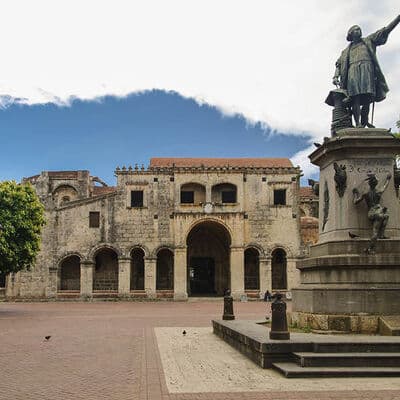
Start early - by 8 AM - before the heat builds. Begin at Parque Colon, the central square, where the Cathedral of Santa Maria la Menor stands - the first cathedral in the Americas, completed in 1540. Entry is free; spend 20-30 minutes inside.
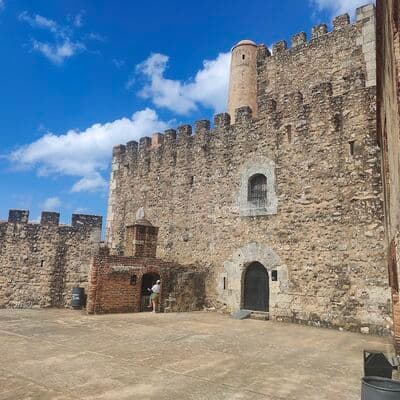
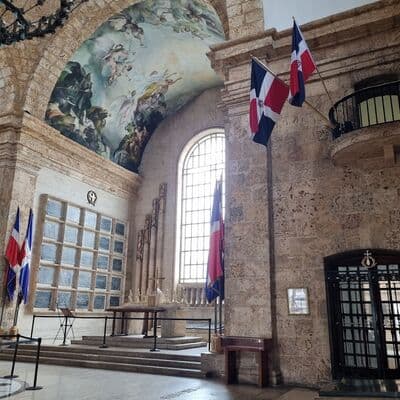
Walk south down Calle de las Damas, the first paved street in the New World. Halfway down: the National Pantheon, a former Jesuit church converted into a mausoleum for Dominican national heroes. Continue to Fortaleza Ozama, the oldest European military construction in the Americas. Climb the Tower of Homage for river views. Entry 70 RD$ ($1.20).
Double back to the Alcazar de Colon, built by Diego Columbus in 1510. Period furniture, colonial artifacts. Budget an hour. Entry 100 RD$ ($1.70).
Lunch at Pat'e Palo on Plaza Espana facing the Alcazar - touristy but the setting is unbeatable, $12-20. For cheaper: any comedor on the side streets, $3-5.
Afternoon: wander the colonial streets. Visit Calle El Conde pedestrian shopping street, browse amber and larimar jewelry shops, and stop for a cold Presidente at one of the open-air bars on Plaza Espana at sunset. Dinner at Buche Perico - try the mofongo or chivo guisado (stewed goat), $8-15 per person.
Day 2: Modern Santo Domingo and the Malecon
Morning at Plaza de la Cultura, a complex of four museums and the National Theater. The Museum of Dominican Man has excellent Taino exhibits; the Museum of Modern Art holds a strong Caribbean collection. Each museum 100-200 RD$ ($1.70-3.50). Plan 2-3 hours.
Lunch at a comedor around Gazcue - where office workers eat. La Bandera Dominicana (rice, red beans, meat, salad, fried plantains) runs $2.50-4.
Afternoon: walk or taxi to the Malecon. Stroll the waterfront, watch fishermen cast lines from the seawall. Grab a Presidente from a nearby colmado and find a spot on the rocks for sunset - one of the city's best free experiences.
Dinner at Adrian Tropical on the Malecon - massive seafood portions and tropical cocktails, $10-18 per person. On weekends, the Malecon comes alive with outdoor bars and impromptu dance parties.
Day 3: Nature Day - Los Tres Ojos
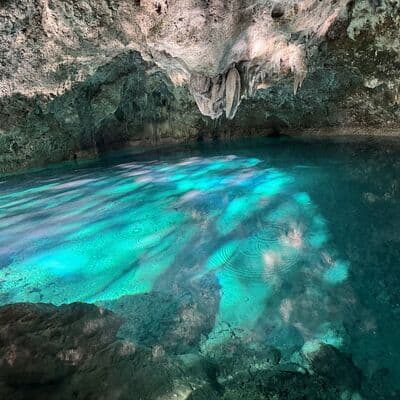
Head east to Los Tres Ojos, a system of three open-air caves with crystal-clear limestone lakes, about 20 minutes from the Colonial Zone. Taxi or InDriver costs $5-8 each way. The caves are stunning - turquoise water in ancient sinkholes surrounded by tropical vegetation. A small boat crosses the third lake. Entry is 200 RD$ ($3.50). Go early for the best light. Budget 1.5-2 hours.
On the way back, stop at the Columbus Lighthouse (Faro a Colon), the massive cross-shaped monument that supposedly houses Columbus's remains. The museum inside is worth a visit and Parque Mirador del Este is good for a shaded walk.
Afternoon: Chinatown (Barrio Chino) on Avenida Duarte. Dominican-Chinese food is its own fusion - try a chofan (Dominican fried rice), cheap and delicious ($3-6).
Days 4-5: Extended Exploration
Day 4 could be a beach day - take a guagua or taxi to Boca Chica (30 minutes east, lively local beach) or Juan Dolio (45 minutes, quieter). Both offer a genuine Dominican beach experience with cheap seafood shacks and cold beer.
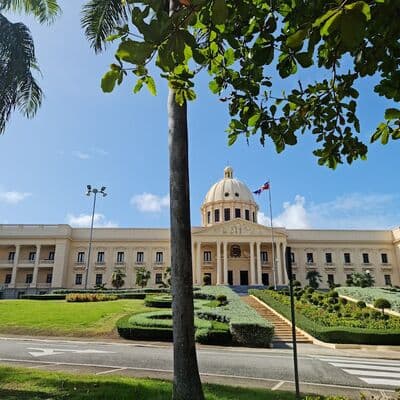
Day 5 is for neighborhoods and food. Morning at the Mercado Modelo - bargain hard, expect to pay half the first quoted price. Visit the National Palace from outside (tours are restricted but the building is impressive). Explore Gazcue on foot for art deco buildings and small galleries. Evening in the Zona Colonial for live music - Grupo Bonye plays free concerts on Sunday evenings, and bars host live merengue and bachata throughout the week.
Days 6-7: Day Trips
Day 6: Bus to Jarabacoa (2.5-3 hours by Caribe Tours, about $6), the mountain town known as the city of eternal spring. Waterfalls, river rafting, and temperatures 15 degrees cooler. Return the same evening or stay overnight.
Day 7: San Pedro de Macoris (1 hour east), the baseball capital of the Dominican Republic. Tour the Tetelo Vargas Stadium, visit sugar mill ruins, eat at the waterfront malecon. Deep Dominican culture territory - bring your Spanish.
Where to Eat in Santo Domingo
Street Food and Snacks
Street food is cheap, abundant, and safe if you follow the crowd. Chimis (Dominican hamburgers with shredded cabbage and tangy sauce) are sold from food trucks all over the city - the best along the Malecon at night, $1.50-2.50 each. Empanadas run 30-50 RD$ ($0.50-0.85). Yaniqueques (Johnny cakes) are the beach snack of choice. Friquitin carts sell fried chicken, tostones, and salami for $1-3.
Comedores - The Heart of Dominican Eating
Comedores are small, no-frills lunch spots where working Dominicans eat daily. Choose your rice, beans, meat (chicken, pork, beef, or goat), and sides. A full plate with a drink costs 200-350 RD$ ($3.50-6). Look for places packed with locals between noon and 2 PM. No English menus - point at what looks good or say 'La Bandera' for the standard plate.
Mid-Range Restaurants
Pat'e Palo on Plaza Espana - colonial atmosphere, Dominican and European dishes, $12-25 per person. The terrace overlooking the Alcazar is the main draw. Buche Perico in the Colonial Zone - local favorite for traditional Dominican food done well, $8-15. Try the mofongo or the goat stew. Adrian Tropical on the Malecon - massive portions, seafood platters, tropical cocktails, family-friendly, $10-18. SBG (Segafredo) on Calle El Conde - good coffee, decent pasta and sandwiches, strong WiFi, $6-12. Popular with digital nomads.
Fine Dining
El Meson de la Cava - Santo Domingo's most famous restaurant, built inside a natural cave. Upscale Dominican and international cuisine, $30-60 per person. Reserve ahead. La Residence in Hotel Frances - French-Dominican fusion in a colonial courtyard, $25-45. Mila in Piantini - the current fine-dining favorite, modern tasting menu approach, $40-70.
Cafes and Breakfast
Dominican breakfast defaults to mangu with fried cheese, salami, and eggs - 'los tres golpes' (the three hits). Most hotels serve it. For coffee, Cafe Lara in the Colonial Zone roasts its own beans - espresso 80 RD$ ($1.40). Mamey in Piantini does excellent specialty coffee and brunch ($5-12). Dominican coffee is very good and cheap throughout the city.
What to Try: Santo Domingo Food
Dominican cuisine is comfort food built on rice, beans, plantains, and slow-cooked meats. It is not spicy (unlike Jamaican or Haitian food) but deeply flavorful from sofrito, garlic, and oregano. Here are the dishes you should not leave without trying.
La Bandera Dominicana - literally 'the Dominican flag.' White rice, red kidney beans, stewed meat (usually chicken or beef), and a side salad with tostones (fried plantains). This is what Dominicans eat for lunch every single day. Available everywhere for 200-350 RD$ ($3.50-6). Start here.
Mofongo - mashed fried green plantains with garlic, pork cracklings, and olive oil, formed into a dome and served with broth or stewed shrimp. Originally Puerto Rican, the Dominican version is its own thing. 350-600 RD$ ($6-10) at restaurants. Buche Perico does an excellent version.
Sancocho - a thick, rich stew of seven meats with root vegetables like yuca, platano, and yautia. This is Sunday family food - every Dominican grandmother has her own recipe and they are all correct. 300-500 RD$ ($5-8.50). The version at comedores on Sundays is the most authentic.
Chimi - the Dominican street burger. A seasoned beef or pork patty on a slightly sweet bun with shredded cabbage and a pink mayo-ketchup sauce. Sold from converted trucks and carts, mainly in the evening. 100-200 RD$ ($1.70-3.50). Malecon chimis at midnight are a Santo Domingo rite of passage.
Pica Pollo - Dominican fried chicken, marinated in lime and oregano, fried until impossibly crispy. Sold at dedicated pica pollo shops everywhere. A quarter chicken with tostones and coleslaw runs 250-400 RD$ ($4.30-7). It is better than it has any right to be.
Empanadas and Catibias - wheat flour empanadas filled with beef, chicken, or cheese, and catibias made from yuca flour with a slightly chewy texture. Both are fried and sold from street carts. 30-80 RD$ ($0.50-1.40) each. Eat them hot.
Mangu - boiled and mashed green plantains with butter and onions, served for breakfast with fried salami, fried cheese, and eggs. The combination is called 'los tres golpes.' 150-300 RD$ ($2.60-5) at breakfast spots. This is the Dominican breakfast and you need to try it at least once.
Morir Sonando - literally 'to die dreaming.' A sweet, creamy drink made from orange juice, milk, sugar, and ice, blended until frothy. It should not work but it absolutely does. 80-150 RD$ ($1.40-2.60). Available at juice stands and restaurants everywhere. The best ones use fresh-squeezed oranges.
Vegetarian survival tips: Dominican cuisine is heavily meat-based. Best options: habichuelas guisadas (stewed beans) with rice and tostones, yuca frita, ensalada verde. Ask comedores for 'sin carne' but check that beans are not cooked with pork - they often are. Piantini and the Colonial Zone have a few dedicated vegetarian restaurants.
Tourist trap warning: Restaurants on the main plazas charge 2-3 times what you would pay one block away. Walk 50 meters from Plaza Espana or Parque Colon and prices drop dramatically. Also, English 'tourist menus' often list higher prices than the Spanish menu at the same restaurant.
Santo Domingo Secrets: Local Tips
These are the things nobody tells you before you arrive, learned from experience rather than guidebooks.
- Grupo Bonye free concerts: Every Sunday evening, this legendary Dominican band plays free open-air concerts in the Zona Colonial - usually in the ruins of the Hospital San Nicolas de Bari or the Plaza Espana. It is the best free entertainment in the city. Show up around 5 PM. Locals bring chairs, rum, and dancing shoes. Join them.
- Do not drink the tap water: Buy bottled water (a 5-gallon botellon costs 100 RD$ / $1.70). Use bottled water for brushing teeth if you have a sensitive stomach. Ice in restaurants is usually purified and safe.
- The metro is your best friend: Two lines, clean, air-conditioned, safe, 20 RD$ ($0.35) per ride. Does not reach the Colonial Zone directly, but Centro de los Heroes station is a 10-minute walk. During rush hour, the metro beats any taxi by an hour.
- Bargain everywhere except supermarkets: Mercado Modelo, street vendors, taxi drivers without meters, even small shops - negotiation is expected. Start at 40-50% of the quoted price and work up. Be friendly, not aggressive. In supermarkets and chain stores, prices are fixed.
- Avoid motoconchos unless you know what you are doing: Motorcycle taxis are the cheapest transport (25-50 RD$) but extremely dangerous. No helmets, no insurance, and Dominican traffic is aggressive. Tourists on motoconchos are a leading source of emergency room visits. Use InDriver or the metro instead.
- Learn 20 words of Spanish: English is not widely spoken outside high-end hotels. Even basics - 'cuanto cuesta' (how much), 'la cuenta' (the bill), numbers, food words - transform your experience. Dominicans speak fast and swallow consonants, so even Spanish speakers may need to ask them to slow down.
- Colmados are everything: Small corner stores that are the social center of Dominican neighborhoods. Beer, snacks, phone credit, groceries. They always have cold Presidente. Hanging out at a colmado with a beer is more authentically Dominican than anything in the Colonial Zone.
- Phone safety matters: Do not walk around with your phone visible. Phone snatching by passing motorcyclists is common. Use your phone inside shops or restaurants, keep it in a front pocket on the street. Locals do the same.
- Power outages are normal: Called apagones, they happen regularly. Most hotels have generators (plantas) that kick in automatically. Carry a portable battery pack. The Colonial Zone and Piantini rarely go dark for long.
- Sundays mean sancocho and baseball: Dominican families gather on Sundays for sancocho and to watch baseball (November through January). If a Dominican family invites you for Sunday lunch, say yes immediately. Bring a bottle of rum as a gift.
Transport and Connectivity
Getting From the Airport to the City
Las Americas International Airport (SDQ) is about 30 kilometers east of the Colonial Zone. Official airport taxis charge $35 to the Colonial Zone, $40-45 to Piantini or Naco. The better move is to order an InDriver from the arrivals area - typically $20-28 to the Colonial Zone. Have the app installed and use airport WiFi to order. There is also an OMSA bus into the city for 35 RD$ ($0.60), but it does not run late at night and requires a transfer.
Getting Around the City
Metro: Two lines, clean, air-conditioned, 20 RD$ ($0.35) per ride. Rechargeable card 60 RD$ ($1). Runs 6 AM to 10:30 PM. Lines intersect at Duarte station. Does not cover the Colonial Zone directly but Centro de los Heroes station is a 10-minute walk.
OMSA buses: Large blue government buses, 35 RD$ ($0.60). Air-conditioned, reasonably reliable. Google Maps sometimes shows routes.
Guaguas: Private minibuses, 25 RD$ ($0.43), crowded and hot with no published schedules. Flag them down from the roadside, shout 'baja' to get off. Authentic but challenging for newcomers.
Taxi apps: InDriver is the most popular - you name your price, drivers accept or counteroffer. Rides $3-8 within the city. DiDi also operates. Uber has limited presence. Metered taxis are rare; negotiate before getting in ($3-5 for short trips).
SIM Cards and Connectivity
Get a SIM card upon arrival. The two main carriers are Claro (best coverage) and Altice (competitive data prices). Both have airport booths. A prepaid SIM with 5 GB costs 500-800 RD$ ($8.50-14). Top up at any colmado. 10 GB plans run $10-15 per month with solid 4G in the city.
For eSIM, Airalo, Holafly, and Nomad offer Dominican Republic plans starting at $8-12 for 5 GB. Activate before landing for instant data. These are data-only (no local number) but WhatsApp calling covers most needs.
WiFi is available in most hotels and cafes, though speeds vary. Coworking spaces in Piantini offer reliable connections for $15-25 per day. SBG on Calle El Conde and Cafe Lara in the Colonial Zone are popular digital nomad workspots.
Essential apps: InDriver (rides), WhatsApp (everyone uses it), Google Maps (navigation), Google Translate (menus), PedidosYa (food delivery - the Dominican DoorDash).
Who Santo Domingo Is For: The Summary
Santo Domingo is ideal for history enthusiasts, food travelers, budget backpackers, and culture seekers who want to see the real Dominican Republic beyond the resort walls. Five centuries of history, extraordinary food, vibrant nightlife, and prices that let you live well on very little.
It is not for beach seekers (go to Samana or Punta Cana), resort relaxation, or those who need English everywhere. Come here to walk colonial streets, eat mofongo at midnight, and dance merengue with strangers. Two to four days is the sweet spot; seven days lets you explore deeply with day trips. Bring curiosity, basic Spanish, and comfortable walking shoes.