Saint Petersburg
Saint Petersburg 2026: What You Need to Know Before You Go
Saint Petersburg is a city that defies a single label. It is simultaneously imperial and underground, grand and gritty, a living museum and a thriving bar scene. Every facade is a work of art, every courtyard a set piece from a Dostoevsky novel, and the White Nights in June turn the city into a place where time simply stops existing.
In brief: Saint Petersburg is worth visiting for the Hermitage Museum (the largest art collection on earth), the drawbridges opening at night, the fountains of Peterhof Palace, the White Nights in June, the Mariinsky Theatre, and a surprisingly excellent food scene. The city center is compact and walkable - plan 4-5 days for the core sights and 7 days if you want to include the suburban palaces.
Who is this city for? Anyone who loves architecture, history, art, and long walks along canals. Saint Petersburg is one of the most beautiful cities in Europe, and that is not an exaggeration. But be honest with yourself: the weather is often overcast, in winter it gets dark by 3 PM, and your legs will cover 15-20 kilometers a day easily. On the other hand, during the White Nights (late May through early July) the city makes up for every grey day all at once.
Pros: jaw-dropping architecture on every corner, world-class museums, one of the best restaurant scenes in Russia, excellent metro system, safe even at night. Cons: wildly unpredictable weather, rain can start at any moment regardless of the forecast, high prices during peak season (June-July), long queues for the Hermitage and Peterhof in summer. Also - and this is critical for visitors from the US, UK, Australia, and Canada - Visa and Mastercard do not work in Russia due to sanctions. You will need cash or a workaround (more on that below).
Neighborhoods of Saint Petersburg: Where to Stay
Central District - the classic choice for a first visit
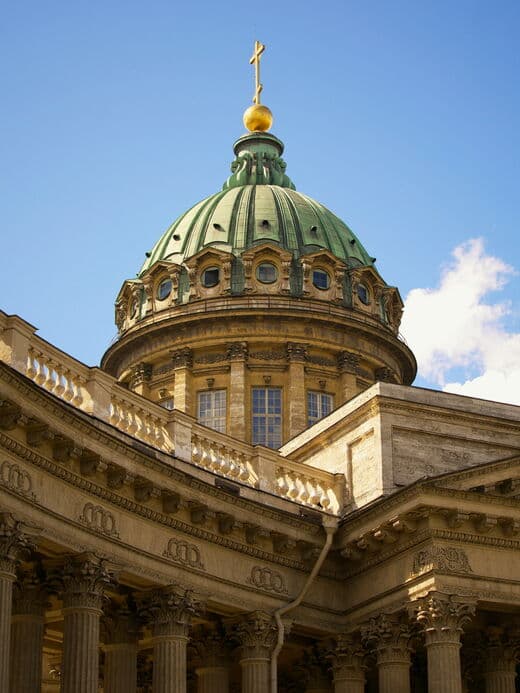
This is the heart of Saint Petersburg: Nevsky Prospekt, the Hermitage, Church of the Savior on Spilled Blood, Kazan Cathedral - all within walking distance. The district is densely packed with 18th and 19th century historic buildings, and it has the city's best concentration of restaurants, cafes, and shops. In the evening, Nevsky Prospekt comes alive with street musicians, theatergoers, and crowds of people simply strolling.
Best for: first-time visitors, short trips (2-4 days), anyone who wants to walk everywhere.
Pros: all major landmarks are nearby, excellent public transport connections, restaurants and cafes for every budget.
Cons: noisy along Nevsky, accommodation prices above average, parking essentially does not exist.
Prices: $$-$$$ (hostels from 800 RUB / ~$9 per night, hotels from 4,000 RUB / ~$44, boutique hotels from 8,000 RUB / ~$88)
Admiralteysky District - for culture lovers
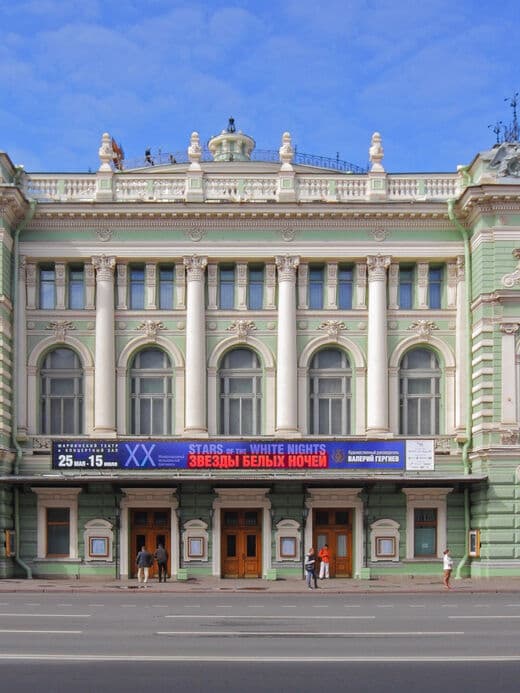
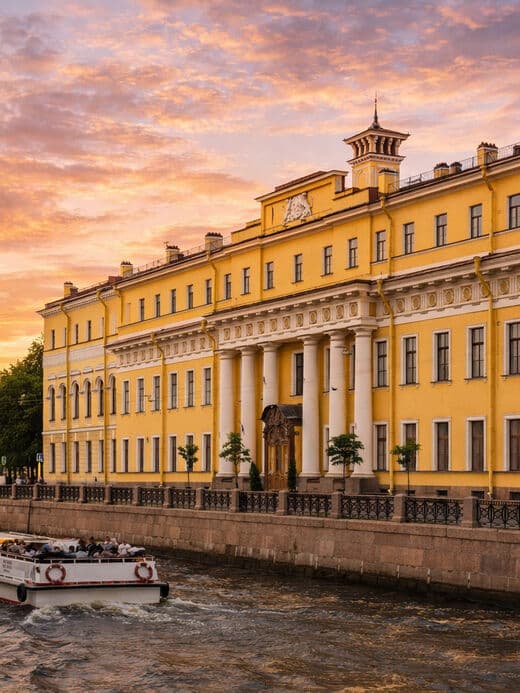
Adjacent to the center on the south side. This is where you will find St. Isaac's Cathedral, the Mariinsky Theatre, Yusupov Palace, and New Holland Island - one of the trendiest public spaces in the city, with restaurants, a pond, pop-up events, and a winter ice rink. The district is quieter than the center but everything is still a short walk away. Kolomna, a sub-neighborhood of Admiralteysky, has atmospheric streets with genuine Petersburg character and almost no tourist crowds.
Best for: couples, theater and architecture enthusiasts, those who want to be near the center without the chaos of Nevsky.
Pros: Mariinsky Theatre and New Holland within walking distance, beautiful embankments along the Moika and Fontanka rivers, cozy atmosphere.
Cons: metro stations are slightly farther than in the center, quieter in the evenings (though some consider that a plus).
Prices: $$ (hostels from 700 RUB / ~$8, hotels from 3,500 RUB / ~$39)
Petrogradskaya Side - hipster Petersburg
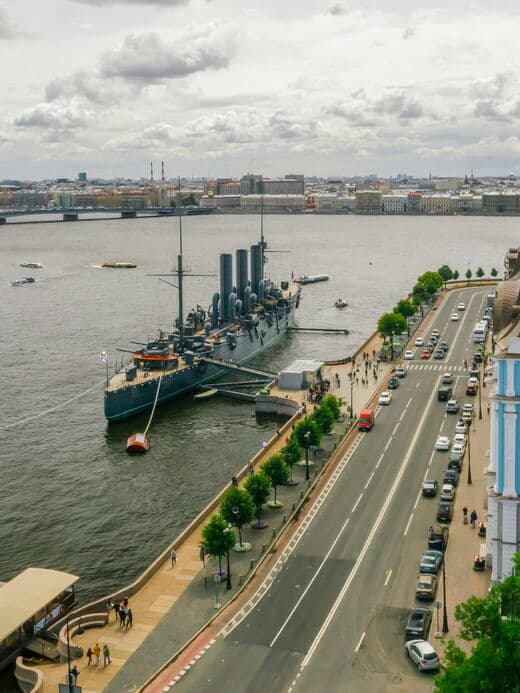
Cross the Neva from the center and you enter a different world. Peter and Paul Fortress (the city's birthplace), Cruiser Aurora, cozy streets lined with coffee shops and bars. Kamennoostrovsky Prospekt is one of the most beautiful avenues in the city, yet tourists somehow miss it entirely. This area also has the zoo, a botanical garden, and a growing number of trendy restaurants.
Best for: longer stays, younger travelers, anyone who wants to feel the 'local' side of Petersburg.
Pros: lower prices than the center, excellent bars and restaurants, embankment views of the historic center, 15-minute walk to the center across Trinity Bridge.
Cons: drawbridges at night (from roughly 1:30 AM to 5:00 AM the bridges are raised - you cannot get back to the center!), some attractions are a bit far on foot.
Prices: $-$$ (hostels from 600 RUB / ~$7, hotels from 2,500 RUB / ~$28)
Vasilyevsky Island - student quarter and creative hub
The Strelka of Vasilyevsky Island with its Rostral Columns is the postcard view of Saint Petersburg. But the island is more than just that tourist viewpoint. It is home to the university, the Erarta Museum (the largest private contemporary art museum in Russia), and the Sevkabel Port on the harbor side - a creative space hosting festivals, food markets, and events with stunning views of the Gulf of Finland.
Best for: budget travelers, contemporary art lovers, students.
Pros: some of the best views of the city, museums, Sevkabel, reasonable prices.
Cons: getting to the center requires crossing bridges (which are raised at night!), parts of the island are exposed to strong winds from the gulf.
Prices: $-$$ (hostels from 500 RUB / ~$6, apartments from 2,000 RUB / ~$22)
Moskovsky District - near the airport
A Soviet-era district with wide avenues and Stalinist architecture. Not touristy at all, but functional: Pulkovo Airport is here (bus 39 to Moskovskaya metro takes 30 minutes), and Moscow Railway Station sits at the northern edge near the center. If you have an early flight or a tight budget, this is a practical choice.
Best for: transit travelers, those seeking budget accommodation with good metro access.
Pros: lowest accommodation prices in the city, airport proximity, metro access, plenty of supermarkets.
Cons: far from the center (20-30 minutes by metro), no tourist infrastructure, bland architecture.
Prices: $ (hostels from 400 RUB / ~$4, apartments from 1,500 RUB / ~$17)
Liteyny and Vladimirsky - for foodies and theater lovers
The neighborhoods between Nevsky Prospekt and Smolny represent the quiet, intellectual side of Petersburg. Rubinshteina Street is the legendary 'restaurant row' with dozens of bars and eateries for every taste and budget. Pyat Uglov (Five Corners) is an atmospheric intersection worth seeing. The BDT (Bolshoy Drama Theatre) is nearby, along with antique shops and bookstores. This is the ideal base if your evenings revolve around food and drink.
Best for: foodies, nightlife lovers, theater enthusiasts.
Pros: the best restaurant street in the city (Rubinshteina), close to the center, theaters nearby.
Cons: Rubinshteina gets very noisy on evenings and weekends, restaurant prices are creeping up.
Prices: $$ (apartments from 2,500 RUB / ~$28, hotels from 3,500 RUB / ~$39)
Best Time to Visit Saint Petersburg
Saint Petersburg is beautiful year-round, but each season transforms it into a completely different city. Choose based on your priorities.
White Nights: late May through early July (peak around mid-June)
This is the main draw. The sun barely sets, the city does not sleep, and the embankments are packed with people until dawn. The drawbridges open at around 1:30 AM - watching the massive Palace Bridge rise while the Neva glows in twilight is a spectacle worth flying halfway around the world for. The 'Scarlet Sails' festival in late June features a tall ship with crimson sails, a massive fireworks display, and over a million spectators along the river.
Downsides: this is absolute peak season. Hotel prices double or triple, the Hermitage has 2-3 hour queues, and Peterhof is packed. Book everything 2-3 months ahead. Also, if the St. Petersburg International Economic Forum (SPIEF) falls during your dates in June, hotel prices go through the roof - check dates and avoid if possible.
September through early October: the golden season
The best time for a thoughtful traveler. Fewer tourists, weather still mild (12-18C / 54-64F), and the parks turn golden - Pavlovsk and Catherine Palace grounds are especially stunning in autumn. Hotel prices drop 30-40%. The theater season opens in September, with the Mariinsky and BDT launching their new programs.
December through January: winter magic
The city is decorated for New Year (Russia's biggest holiday), Palace Square gets a huge Christmas tree and an ice rink. The Hermitage is queue-free (15 minutes instead of 2 hours). The catch: it gets dark by 3:30 PM, temperatures drop to -15C (5F), and the wind off the Neva cuts through you. But prices are at their lowest, and hot mulled wine at the Christmas markets helps.
March through April: shoulder season
The most unpredictable time. Snow melts, streets are slushy, but the city is empty - perfect for museums without crowds. Canal boats start running again in April. Prices are minimal. Bring waterproof boots.
Key festivals and events
- Scarlet Sails - late June, the spectacular graduation celebration on the Neva with fireworks
- Stars of the White Nights - May through July, the Mariinsky Theatre's flagship festival
- City Day - May 27, concerts and public events citywide
- Night of Museums - mid-May, museums stay open until dawn, many with free entry
- SPIEF (Economic Forum) - June, hotel prices spike enormously during this period
Tip: if your budget is limited, come in early September. It is the ideal balance of decent weather, lower prices, and the absence of crushing crowds.
Saint Petersburg Itinerary: From 3 to 7 Days
3 Days in Saint Petersburg: the essentials
Day 1: Historic Center and Nevsky Prospekt
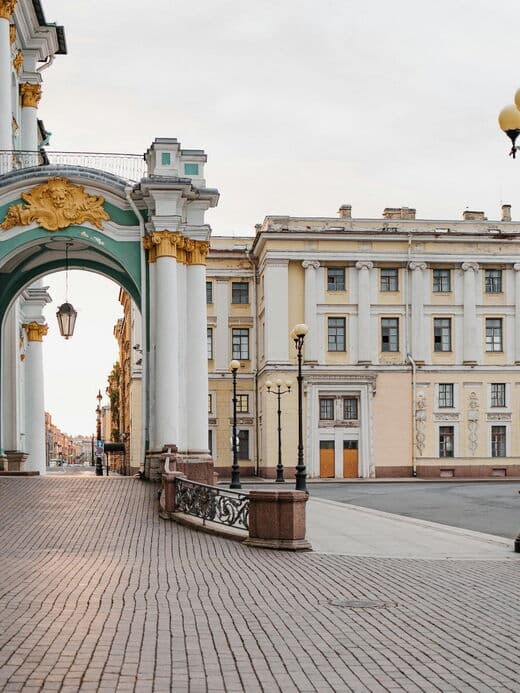
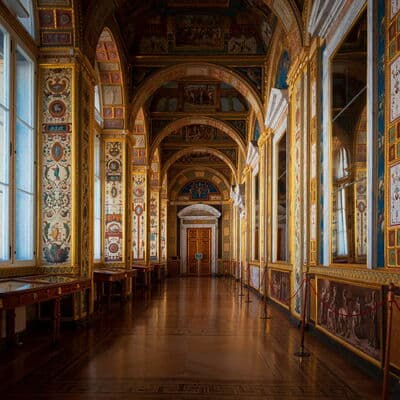
9:00-12:00 - Hermitage Museum. Arrive at opening time, enter from the Palace Square side. Buy your ticket online in advance - it saves at least an hour of queuing. Three hours is the absolute minimum: prioritize the Impressionist halls (3rd floor), the grand state rooms, and the Egyptian collection. Do not attempt to see everything in one visit - it is physically impossible, the museum has over 3 million items across 400 rooms.
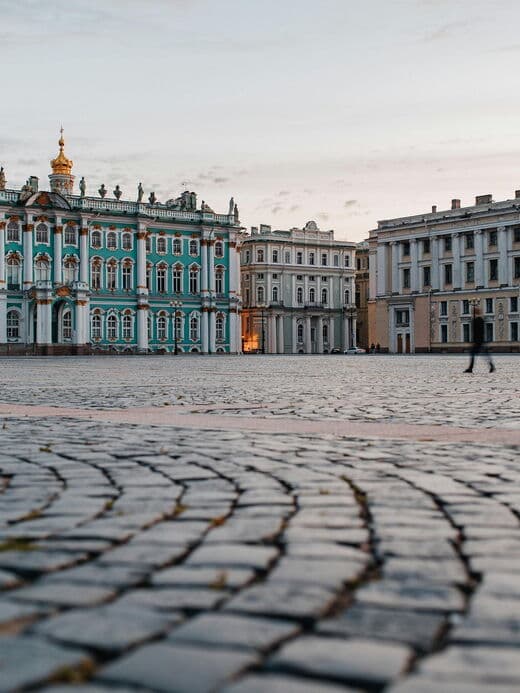
12:00-12:30 - Step out onto Palace Square, take in the Alexander Column. Walk through the arch of the General Staff Building opposite - it houses an excellent Impressionist and Post-Impressionist collection (Monet, Renoir, Matisse, Picasso) and is far less crowded than the main Hermitage.
12:30-14:00 - Lunch. Walk along Bolshaya Morskaya Street toward St. Isaac's Square. For a quick and authentic bite, find the 'Pyshechnaya' on Bolshaya Konyushennaya - a legendary doughnut shop open since 1958, always has a queue, and it is absolutely worth it. A plate of pyshki (fried doughnuts dusted with powdered sugar) and a cup of coffee costs under 200 RUB (~$2).
14:00-16:00 - St. Isaac's Cathedral. Climb the colonnade (separate ticket, about 400 RUB / ~$4) for the best panoramic view of the city from 43 meters up. You can see the entire center, the Neva, and the Peter and Paul Fortress. Nearby stands the Bronze Horseman, the most famous monument to Peter the Great, immortalized by Pushkin.
16:00-18:00 - Walk along Nevsky Prospekt. Pop into Singer House (now a beautiful bookstore with a second-floor cafe overlooking Kazan Cathedral), admire the lavish Art Nouveau interior of the Elisseeff Emporium (1902), and cross the Anichkov Bridge with Klodt's famous horse-taming sculptures.
18:00-20:00 - Dinner on Rubinshteina Street (runs perpendicular to Nevsky). You have dozens of choices: Georgian food at Pkhali Khinkali, Russian comfort food at Kvartirika, Asian fusion at Duo Asia. Expect to spend 1,000-2,500 RUB (~$11-28) per person for a full meal with drinks.
After 10 PM - Walk the embankments. If it is summer, stay up for the drawbridge opening at around 1:30 AM. The best viewing spots are the Palace Embankment or the embankment near the Kunstkamera on Vasilyevsky Island.
Day 2: Petrogradskaya Side and the canals
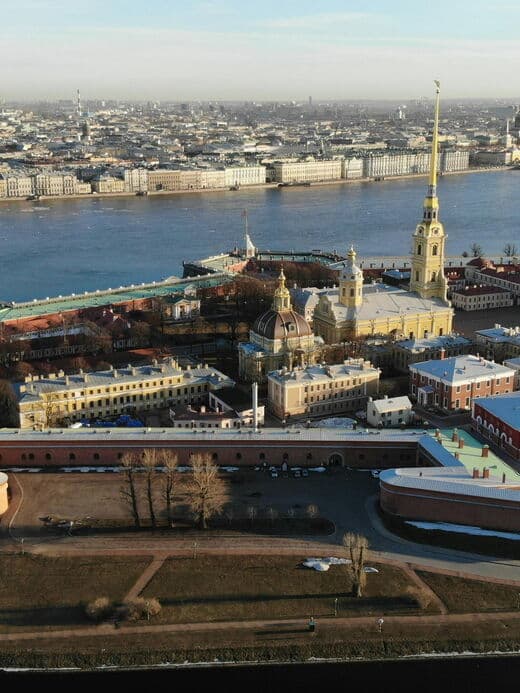
9:00-12:00 - Peter and Paul Fortress. This is where the city was founded in 1703. The cathedral inside contains the tombs of every Russian emperor from Peter the Great to Nicholas II. Climb the bell tower - at 122.5 meters it is the tallest point in the historic center. Every day at noon, a cannon fires from the fortress wall - a tradition since 1865. Do not be alarmed; everyone jumps the first time.
12:00-13:30 - Lunch on Petrogradskaya Side. Try the cafes along Kamennoostrovsky Prospekt.
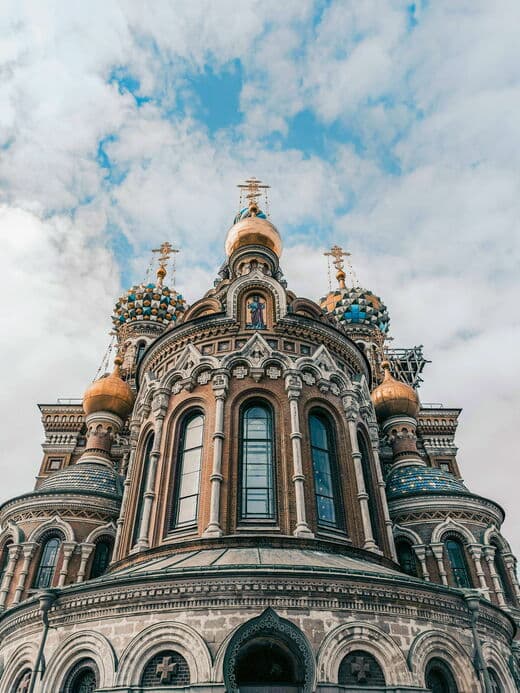
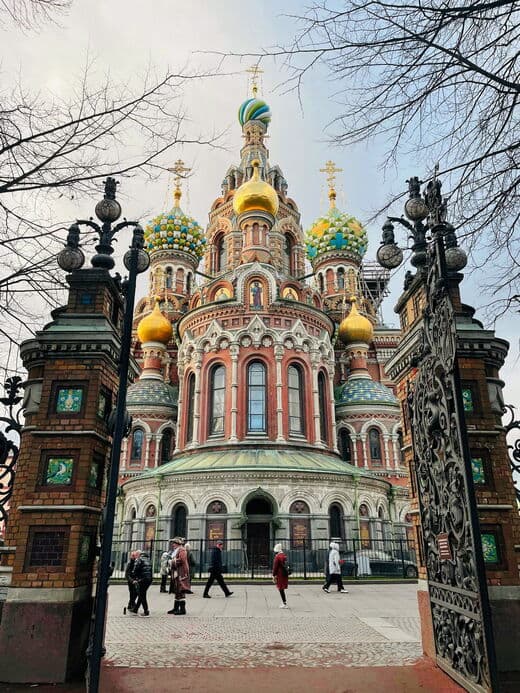
14:00-15:30 - Church of the Savior on Spilled Blood. The most visually striking building in Saint Petersburg - a riot of colorful onion domes and mosaics, built on the spot where Emperor Alexander II was assassinated in 1881. The interior holds 7,000 square meters of mosaics, one of the largest collections in Europe. Entry is about 400 RUB (~$4).
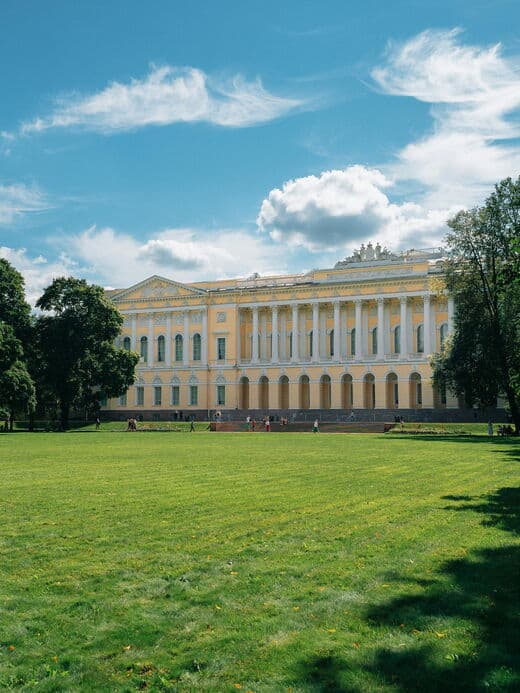
15:30-17:00 - Russian Museum. The world's largest collection of Russian art, from medieval icons to the avant-garde. If the Hermitage is about world art, this museum is about Russia itself. Highlights include works by Repin, Malevich, Kandinsky, and Aivazovsky.
17:00-18:30 - Stroll through the Summer Garden (Peter the Great's personal garden, free entry) and across the Field of Mars. If it is summer, take a canal boat tour (800-1,500 RUB / ~$9-17, about 1 hour) - seeing the city from the water is an entirely different experience.
19:00-22:00 - Dinner and evening at New Holland Island. A beautifully restored former naval warehouse complex with restaurants, a park, and regular events.
Day 3: Peterhof - the Russian Versailles
9:00 - Take the Meteor hydrofoil from the pier near the Hermitage. It takes 30-40 minutes and costs 1,200-1,500 RUB (~$13-17) one way. The alternative is bus 200 from Avtovo metro station (cheaper but slower, about 45 minutes).
10:00-14:00 - Peterhof. The Lower Park with its fountains (operational from late May to early October) is the star attraction. The Grand Cascade alone features 64 fountains and 255 bronze sculptures. The trick fountains are genuinely fun - they spray unsuspecting visitors. The palace interior requires a separate ticket; book online to skip the queue.
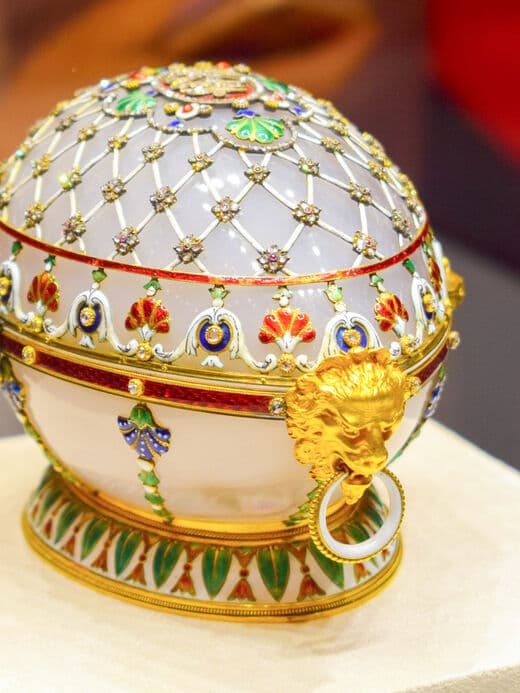
16:00-18:00 - Back in the city, visit the Faberge Museum (home to nine of the legendary Faberge eggs) or browse the shops on Nevsky.
18:00-20:00 - Farewell dinner.
5 Days in Saint Petersburg: at a relaxed pace
Follow the 3-day plan above, then add:
Day 4: Tsarskoye Selo and Pavlovsk
Take the suburban train (elektrichka) from Vitebsky Station to Tsarskoye Selo (30-40 minutes, about 70 RUB / ~$1). Catherine Palace and the legendary Amber Room - a chamber entirely decorated in amber panels, gold, and mirrors, looted by the Nazis and painstakingly reconstructed over 25 years. Then walk or take a short bus ride to Pavlovsk Palace and its enormous 600-hectare park, one of the finest landscape parks in Europe. In autumn, the golden foliage here is breathtaking.
Day 5: Offbeat Petersburg
Start with the Erarta Museum on Vasilyevsky Island for contemporary Russian art. Alternatively, the Street Art Museum in a former factory on the outskirts is a unique experience. After lunch, visit Grand Maket Russia - an astonishing 1:87 scale model of the entire country, covering 800 square meters with moving trains, cars, and day-night cycles. End the day at the Lakhta Center observation deck (the tallest building in Europe at 462 meters) for sunset views over the Gulf of Finland.
7 Days in Saint Petersburg: the full experience
Follow the 5-day plan, then add:
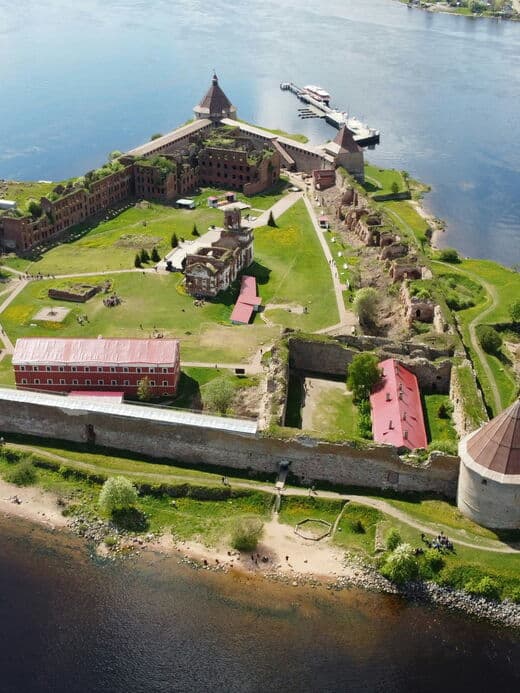
Day 6: Day trip to Kronstadt (a fortified island town, reachable by bus) or Oreshek Fortress on Lake Ladoga (a medieval fortress on a small island, a powerful and atmospheric place). In the evening, attend a performance at the Mariinsky Theatre - ballet tickets start at about 2,000 RUB (~$22), and the new Mariinsky II has superb acoustics.
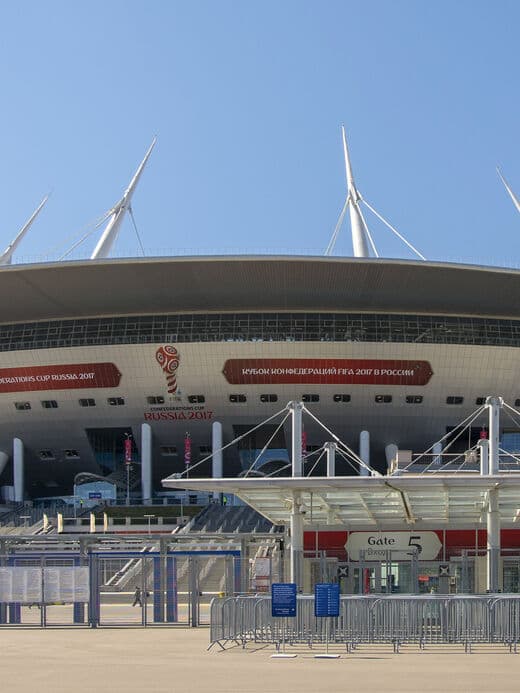
Day 7: Free day for the things you missed. Suggestions: the Kuznechny Market for local produce and honey, Alexander Nevsky Lavra (a working monastery with the graves of Dostoevsky, Tchaikovsky, and other Russian greats), Smolny Cathedral (Rastrelli's blue-and-white masterpiece), explore the famous courtyard wells (dvoriki) in the Dostoevsky neighborhood, or catch a football match at Gazprom Arena if the season is on.
Where to Eat in Saint Petersburg: Restaurants and Cafes
Street food and markets
The Pyshechnaya on Bolshaya Konyushennaya has been serving hot fried doughnuts since 1958 - a plate of five costs about 100 RUB (~$1), and the condensed milk coffee is the ideal companion. Teremok is a fast-food chain specializing in bliny (Russian crepes) with both savory and sweet fillings - quick, cheap, and genuinely good. For a proper market experience, head to Kuznechny Market near Vladimirskaya metro for fresh berries, honey, Georgian churchkhela, and pickled everything. Vasileostrovsky Market is a modern food hall in a converted market building on Vasilyevsky Island, with stalls serving Korean, Georgian, Vietnamese, and Russian food under one roof - a great option for groups who cannot agree on a cuisine.
Budget-friendly local spots
Stolovaya No. 1 is a Soviet-style canteen chain open 24/7 where a full meal (soup, main course, salad, drink) costs 300-500 RUB (~$3-6). The food is honest, filling, and surprisingly decent. Kvartirika recreates a Soviet-era apartment as its interior and serves classics like pelmeni (dumplings), borscht, and herring under a fur coat in a nostalgic setting. Piroshkovaya sells hot meat and cabbage pirozhki (stuffed pastries) for 50-80 RUB each - perfect fuel for a long walking day.
Mid-range restaurants
Rubinshteina Street is the undisputed restaurant row. Pkhali Khinkali serves excellent Georgian food (khinkali dumplings, khachapuri cheese bread, lobio bean stew) at reasonable prices - a full dinner runs about 1,500-2,000 RUB (~$17-22) per person. Tar-Tar Bar is popular for its creative takes on Russian classics. Banshiki does great brunch on weekends. Off Rubinshteina, Koko is known for modern Russian cuisine using local ingredients - expect dishes like smoked muksun fish, Karelian trout, and wild mushroom risotto. For a panoramic view, try restaurants on the upper floors along the Moika or Fontanka embankments.
Fine dining
BOBO offers a refined tasting menu experience with wine pairings. Palkin has been operating since 1785 - one of the oldest restaurants in Russia, with a menu that balances tradition and modern technique. Expect to spend 5,000-10,000 RUB (~$55-110) per person at these establishments, which is remarkably affordable compared to equivalent restaurants in London, New York, or Sydney.
Cafes and breakfast spots
Saint Petersburg is the coffee capital of Russia, with more specialty coffee shops per capita than any other city in the country. Mekhanizm and Bolshe Coffee are solid for pour-over and filter coffee. Duo Cafe does excellent breakfasts. Mechtateli (Dreamers) is a cozy spot with good pastries. If tea is more your thing, Russia has a strong tea culture - look for places serving tea from a samovar with jam, honey, and pastries.
What to Try: The Food of Saint Petersburg
Koryushka (smelt) - the springtime symbol of Petersburg. From late April through May, the entire city smells of fried smelt. Every restaurant puts it on the menu, street vendors sell it from stalls, and locals buy it by the kilogram. It is a small, delicate fish, lightly battered and fried - addictive and cheap.
Pyshki - ring-shaped fried doughnuts dusted with powdered sugar. The ones at the Pyshechnaya on Bolshaya Konyushennaya are the gold standard, but you will find them all over the city. Think of them as the Russian beignet.
Bliny - Russian crepes, thinner than American pancakes but thicker than French crepes. Fillings range from sour cream and jam (sweet) to salmon and cream cheese (savory). Teremok chain does them well; for a fancier version, look for restaurants serving bliny with red caviar.
Pelmeni - Siberian dumplings filled with meat (usually pork and beef), served with sour cream and a splash of vinegar. Simple, satisfying, and available everywhere from canteens to upscale restaurants.
Selyodka pod shuboy (herring under a fur coat) - a layered salad of pickled herring, beetroot, potato, carrot, egg, and mayonnaise. It sounds bizarre and looks like a purple cake, but it is a beloved Russian classic that somehow works. Try it at least once.
Shaverma - this is what the rest of Russia calls shawarma, but in Petersburg it is shaverma. Correcting a local on this is a guaranteed way to start a heated debate. The late-night shaverma stands near metro stations are a rite of passage.
Ukha - a clear, fragrant fish soup, traditionally made with freshwater fish. The Petersburg version often uses smelt or perch. A warming bowl on a cold, rainy day is medicinal.
Georgian food - Georgia's cuisine has a massive presence in Petersburg. Khinkali (soup dumplings), khachapuri (cheese-filled bread), lobio (bean stew), and pkhali (walnut-herb paste) are available at dozens of Georgian restaurants across the city. This is some of the best value dining available.
Craft beer - Petersburg has a thriving craft beer scene. Look for bars serving local breweries like AF Brew, Bakunin, and Jaws. A pint typically costs 300-500 RUB (~$3-6).
For vegetarians and vegans: Botanika and Ukrop are dedicated vegetarian restaurants with creative menus. Most Georgian restaurants also have excellent vegetarian options (mushroom khinkali, bean dishes, eggplant rolls). The food scene has become much more accommodating in recent years.
Secrets of Saint Petersburg: Local Tips
The drawbridge trap. If you are staying on Petrogradskaya Side or Vasilyevsky Island and your evening plans are in the center, know this: bridges start opening around 1:30 AM and most do not close again until about 5:00 AM. If you miss the last window, you are either paying for a very long taxi detour via the ring road or sleeping on a bench. There is a brief window when some bridges close for about 20 minutes around 3:00-3:30 AM before opening again - check the exact schedule for the year you visit.
Shaverma, not shawarma. This is not just a food note - it is a cultural marker. If you want to immediately identify yourself as someone who has done their research, call it shaverma when in Petersburg. Locals take this extremely seriously, and it is a reliable conversation starter.
Buy museum tickets online. For the Hermitage, Peterhof, Catherine Palace, and St. Isaac's Cathedral, buying tickets online in advance is not just convenient - it saves enormous amounts of time. Summer queues for the Hermitage can exceed two hours. Online tickets let you walk past the line entirely.
Always carry an umbrella or rain jacket. Petersburg weather changes within minutes. A sunny morning can turn into a downpour by noon and back to sunshine by 2 PM. Locals call this 'all four seasons in one day.' A compact umbrella in your bag is non-negotiable.
The metro is a museum. Petersburg's metro system is the deepest in the world (some stations are 80+ meters underground), and many stations are genuine architectural masterpieces. Avtovo station has crystal chandeliers and marble columns. Kirovsky Zavod looks like an underground palace. Ride the escalators - some take over three minutes - and appreciate the Soviet-era grandeur. It also costs only 70 RUB (~$0.80) per ride.
White Nights and sleep. During White Nights (late May to early July), it never truly gets dark. This is magical but can destroy your sleep schedule. Bring a sleep mask or book accommodation with blackout curtains. You will be tempted to stay out until 3 AM every night because it looks like 8 PM outside - resist at least some of the time, or you will be a zombie by day three.
Courtyard wells (dvoriki). Petersburg's famous courtyard wells - enclosed courtyards surrounded by tall apartment buildings with only a small opening to the sky - are atmospheric and photogenic. Many are in the Dostoevsky neighborhood around Sennaya Ploshchad metro. Some are accessible through open archways; just walk in quietly and look up.
The Hermitage in one visit. Do not even try. The museum has over 3 million items and 400 rooms. If you spent 30 seconds looking at each exhibit, it would take over 11 years. Pick 2-3 sections (Impressionists on the 3rd floor are a must), see those properly, and come back another day if your schedule allows.
Rooftop tours. Seeing Petersburg from the rooftops is an experience unlike any other - a sea of chimneys, domes, and spires stretching to the horizon. Several companies offer legal rooftop tours (search for 'rooftop excursion Saint Petersburg'). Prices are typically 1,000-2,000 RUB (~$11-22).
Transport and Connectivity
Getting to Saint Petersburg
There are currently no direct flights from the US, UK, Australia, or Canada to Russia. The most common routing is through Istanbul (Turkish Airlines, multiple daily flights), Dubai (Emirates, FlyDubai), or Doha (Qatar Airways). From Istanbul, the flight to Pulkovo (LED) is about 3.5 hours. Budget 12-20 hours total travel time depending on layover duration. Some travelers also route through Belgrade (Air Serbia) or Abu Dhabi (Etihad).
From Pulkovo Airport to the city
Bus 39 or 39E runs to Moskovskaya metro station (about 30 minutes, 60 RUB / ~$0.70). From there, it is 20 minutes by metro to the center. A taxi to the city center costs about 1,000-1,500 RUB (~$11-17) via Yandex Go. Avoid the taxi touts inside the terminal - they charge 2-3 times the app price.
Getting around the city
Metro: Five lines, runs from about 5:30 AM to midnight. A single ride costs 70 RUB (~$0.80). Get a Podorozhnik card (rechargeable transit card) at any metro station - it costs 80 RUB for the card itself, then load money for rides at 56 RUB per trip (discounted from the single-ticket price). The metro is fast, reliable, and covers the center well, though some attractions require a short walk from the station.
Buses and trolleybuses: Useful for routes not covered by metro. Same Podorozhnik card works. Google Maps does not reliably show public transit routes in Russia - use Yandex Maps instead, which gives accurate real-time arrival information.
Taxis: Use Yandex Go app exclusively. Never hail a taxi on the street - you will overpay dramatically. Typical rides within the center cost 200-400 RUB (~$2-4). Note: Yandex Go requires a Russian phone number to register. Set this up before arrival (see SIM card section below).
Walking: The center is very walkable. From the Hermitage to the Church on Spilled Blood is 15 minutes. From Nevsky to the Mariinsky is about 30 minutes. Budget 15-20 km of walking per day and bring comfortable shoes.
Money and payments
Critical: Visa, Mastercard, and American Express do not work in Russia. Your cards from US, UK, Australian, or Canadian banks will be declined everywhere - ATMs, shops, restaurants. You have two main options:
- Cash: Bring USD or EUR in clean, undamaged bills (no tears, stains, or markings - Russian banks are strict about bill condition). Exchange at any bank for rubles. Rates are fair. You can exchange up to $10,000 without declaration. Sberbank typically has slightly worse rates; try other banks like Tinkoff or Alfa-Bank.
- UnionPay cards: If your bank at home issues UnionPay, these work in Russia. Some travelers obtain a UnionPay card specifically for Russia trips.
Many shops, restaurants, and museums accept cash only or have minimum card amounts, so always keep rubles on hand regardless.
SIM cards and internet
Getting a Russian SIM card as a foreigner has become significantly harder since 2025 (it now requires a Russian tax ID and Gosuslugi registration in most cases). The practical solution: buy an eSIM before you travel. Providers like Airalo, Holafly, and Nomad offer Russia eSIMs with data plans starting at about $5-10 for a week. This gives you mobile data for maps, translation, and Yandex Go without the hassle of local registration. Note that your eSIM data may be briefly blocked for the first 24 hours upon activation in Russia - this is resolved with a phone call to the number provided in the welcome SMS.
VPN - essential
Instagram, Facebook, and X (formerly Twitter) are blocked in Russia. Parts of YouTube, Netflix, BBC, and CNN may also be restricted. Download and configure a VPN before you arrive - VPN provider websites are blocked within Russia, so you cannot sign up once there. AdGuard VPN and Outline work reliably. ExpressVPN does not work in Russia. With a VPN active, everything functions normally.
Essential apps
- Yandex Maps - far more accurate than Google Maps for Russia, with real-time transit, walking routes, and business information
- 2GIS - detailed offline maps with building-level navigation, very useful for finding specific entrances and courtyards
- Yandex Go - the only reliable taxi app (requires Russian phone number; use your eSIM number)
- Yandex Translate - works offline, camera translation for menus and signs
- Ostrovok or Yandex Travel - for hotel booking (Booking.com does not operate in Russia)
Language
English proficiency is limited outside of major hotels and some tourist-oriented restaurants. In the center, younger staff at cafes and museums often speak basic English. Outside the center, expect almost none. Learning the Cyrillic alphabet takes about a day and is enormously helpful - you can then sound out street names, metro stations, and menu items. Key survival phrases: 'spasibo' (thank you), 'pozhaluysta' (please/you're welcome), 'skolko stoit?' (how much?), 'gde?' (where?). Yandex Translate's camera mode is a lifesaver for restaurant menus.
Who Saint Petersburg Is For: Final Thoughts
Minimum 3 days, optimal 5, maximum 7-10 days for a thorough exploration including the suburban palaces. Saint Petersburg is ideal for lovers of architecture, art, history, and gastronomy. It is not a beach destination, the weather will test your patience, and the logistics of cashless payment take some planning. But the sheer density of beauty per square kilometer is unmatched by almost any city in Europe.
The city rewards those who prepare. Buy your museum tickets online, download your VPN and maps before the flight, bring cash in clean bills, pack layers and a rain jacket, and wear your most comfortable walking shoes. Do all that, and Saint Petersburg will give you one of the most memorable trips of your life - a city where imperial grandeur, Soviet history, and a vibrant modern culture collide on every street corner.