Fabergé Museum
In the Shuvalov Palace on the Fontanka embankment rests a collection that returns Russia to its origins — imperial Easter eggs by Fabergé, taken out of the country after the revolution and repurchased decades later. This is a private museum, but the collection is world-class.
Carl Fabergé and His Eggs
Carl Gustavovich Fabergé was a jeweler whose name became legendary. His firm created jewelry for the imperial court, but world fame came from the Easter eggs — annual gifts from emperors to their wives and mothers. Each egg is a unique work of art with a surprise inside: a miniature carriage, a yacht model, portraits of children.
Fifty imperial eggs were created in total (1885-1916). After the revolution they scattered across the world: the Kremlin Armoury in Moscow, private collections, museums. Nine eggs are in St. Petersburg, in the Fabergé Museum.
The Collection
Imperial Eggs
The main exhibits are nine Easter eggs made for the Romanovs. The "Hen Egg" (1885) was the first, starting the tradition. The "Coronation Egg" (1897) contains a miniature replica of Nicholas II's coronation carriage. The "Lilies of the Valley" (1898) features portraits of Nicholas and his daughters. Each is a technical and artistic masterpiece.
Other Fabergé Works
The collection extends beyond eggs. Boxes, photo frames, clocks, desk sets, jewelry — everything the Fabergé firm produced. Stone animal figurines (the nephrite elephant is a hit). Cigarette cases and snuff boxes from the imperial family.
Russian Art
The museum is broader than Fabergé. The collection of Russian enamel from the 16th-20th centuries is among the largest. Icons in precious frames. Porcelain from imperial factories. Paintings from icon-painting to the Peredvizhniki movement.
The Palace
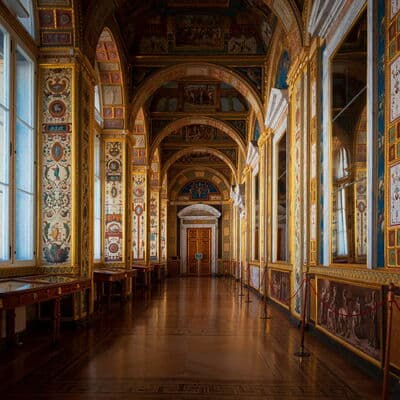
The Shuvalov Palace is an 18th-century architectural monument on the Fontanka embankment. Interiors have been restored: the grand staircase, enfilades of halls, stuccowork, gilding. The building itself is an exhibit. The combination of imperial interiors and precious display cases creates a special atmosphere.
Practical Information
Tickets
About 500 rubles, discounts available. Audio guide included. Online purchase saves time — there can be queues.
Opening Hours
Daily from 10:00 AM to 9:00 PM (box office until 8:15 PM). No days off — rare for museums. Fewer people in the evening.
Getting There
Address: 21 Fontanka Embankment. Nevsky Prospekt or Gostiny Dvor metro — 10-minute walk along the embankment. Entrance from Italyanskaya Street.
How Much Time
For the main collection — 1.5-2 hours. The audio guide helps you not miss details. Without it you can go faster but will miss much.
Context
The museum was created by entrepreneur Viktor Vekselberg, who in 2004 purchased the Forbes collection with nine Fabergé eggs. This is the largest return of cultural treasures to Russia. The museum is private but has been open to the public since 2013.
Atmosphere
The Fabergé Museum isn't about jewelry — it's about a lost world. The eggs were created for a family that would be executed a few years later. The treasures scattered across the world along with emigration. And now they're back in St. Petersburg — in a palace on the Fontanka, in display cases under guard. History compressed into gold and enamel.