Nantes
Nantes: The Ducal Capital on the Banks of the Loire
Nantes is France's sixth-largest city and the capital of the Pays de la Loire region, located at the confluence of the Loire, Erdre, and Sèvre rivers. This dynamic city, former capital of the Duchy of Brittany, is today known for its rich historical heritage, innovative approach to urban development, and unique creative projects. The famous Machines of the Isle of Nantes with its giant mechanical elephant, the majestic Castle of the Dukes of Brittany, and the lively banks of the Loire attract millions of visitors annually.
History of Nantes: From Gallic Settlement to French Metropolis
Nantes' history spans more than two thousand years. On the site of the modern city existed a Gallic settlement of the Namnetes tribe, which gave the city its name. After the Roman conquest, the port of Condevincum grew here, becoming an important trading center on the Loire River.
In the early Middle Ages, Nantes was repeatedly raided by Vikings. In 937, the city became the capital of the independent Duchy of Brittany and remained so for five centuries. It was in Nantes in 1532 that the edict uniting Brittany with France was signed, and in 1598, Henry IV issued the famous Edict of Nantes here, granting freedom of worship to the Huguenots.
Trading Wealth and Dark Pages of History
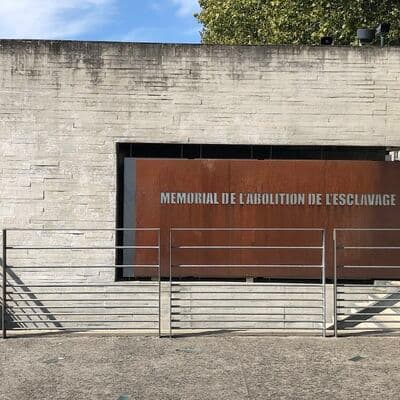
In the 17th and 18th centuries, Nantes became one of France's largest ports and, unfortunately, the country's main center of the slave trade. The triangular trade between Europe, Africa, and America brought enormous wealth to the city, reflected in the luxurious mansions of Île Feydeau and the Loire waterfront. Today, the city doesn't hide this dark chapter of its history: the Memorial to the Abolition of Slavery on the quay serves as a reminder of this tragic past.
Industrial Era and Modern Renaissance
The 19th century transformed Nantes into a major industrial center with developed shipbuilding and food processing industries. The famous LU (Lefèvre-Utile) biscuits were invented here. After the decline of the shipyards in the 1980s, the city underwent a massive transformation: former industrial territories on the Isle of Nantes became creative spaces, and Nantes earned a reputation as one of Europe's most innovative cities.
Castle of the Dukes of Brittany: Heart of Historic Nantes
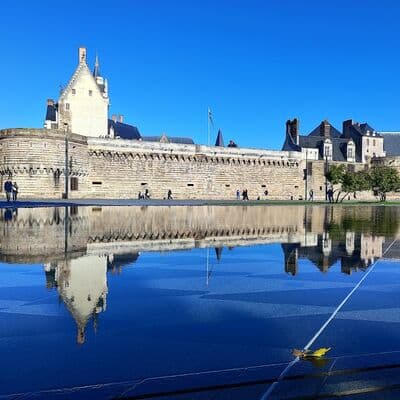
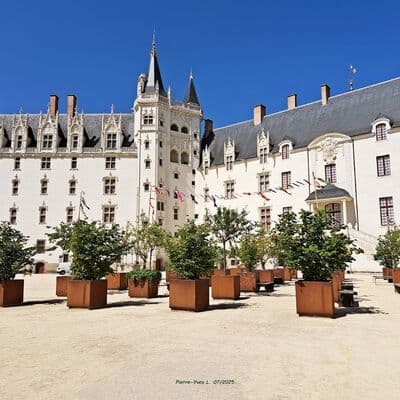
The Castle of the Dukes of Brittany is the city's main historical monument and one of the best-preserved Renaissance castles in France. Built between the 13th and 16th centuries, the castle served as the residence of the Dukes of Brittany and later the Kings of France.
Architecture and Museum
The castle represents a unique combination of medieval fortress and Renaissance palace. Massive defensive walls and towers with machicolations contrast with the elegant white stone buildings of the inner courtyard. Today, the castle houses the Nantes History Museum, which tells the story of the city's development from antiquity to the present day, including an honest account of the slave trade.
Walking the Ramparts
One of the main pleasures of visiting the castle is walking along the ramparts. They offer magnificent views of the city, the Cathedral of Saints Peter and Paul, and modern districts. Entry to the castle grounds and climbing the walls is free; a fee is only charged for museum admission.
Machines of the Isle of Nantes: Jules Verne's Fantastic World
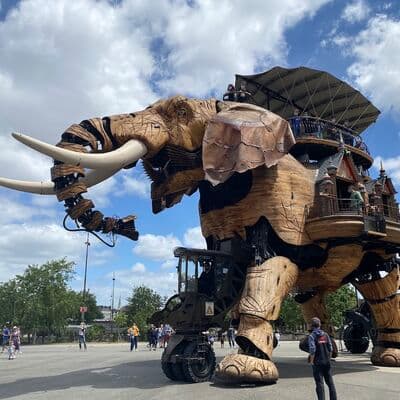
The Machines of the Isle of Nantes is the city's most unusual and famous attraction, an embodiment of "mechanical dreams" in the spirit of Jules Verne and Leonardo da Vinci. On the site of former shipyards, the company La Machine has created an amazing world of giant moving sculptures.
The Grand Elephant
The main star is the twelve-meter Grand Elephant, capable of carrying up to 50 passengers on its back. This incredible mechanism of steel and wood slowly strolls around the island, trumpets, blinks, and sprays water on unsuspecting passersby. A ride on the elephant is an essential experience for every visitor to Nantes.
The Marine Worlds Carousel and Gallery of Machines
The Marine Worlds Carousel is a three-level, 25-meter-high carousel populated by fantastic sea creatures: giant crabs, deep-sea fish, mechanical jellyfish. The Gallery of Machines allows you to see the workshops where these wonders are created and to try prototypes of future mechanisms, including elements of the Heron Tree under construction.
Cathedral of Saints Peter and Paul
Nantes Cathedral is a grand Gothic temple whose construction continued for over 450 years (1434-1891). Despite such a long construction period, the cathedral impresses with its stylistic unity due to strict adherence to the original Gothic plan.
Interior and Tomb of Francis II
Inside the cathedral, the tomb of the last Duke of Brittany, Francis II, and his wife Marguerite de Foix deserves special attention - a masterpiece of Renaissance sculpture by Michel Colombe. The snow-white marble, allegorical figures of Strength, Prudence, Justice, and Temperance, and touching images of the deceased make this tomb one of the most beautiful in France.
The 2020 Fire and Restoration
In July 2020, the cathedral was severely damaged by a fire that destroyed the main organ and damaged part of the interior. Restoration continues, but the cathedral is open for visits. The fire served as a reminder of the fragility of historical heritage and the importance of its preservation.
Isle of Nantes: Creative Quarter on the Loire
The Isle of Nantes is a former industrial territory that has become a symbol of urban renewal. Cultural centers, parks, residential quarters, and creative spaces have grown up on the site of closed shipyards and warehouses.
From Shipyards to Art
The transformation of the island began in the 2000s and has become one of the most successful examples of post-industrial development in Europe. Preserved industrial structures - cranes, shipways, docks - have been transformed into art objects and festival venues. Not only the Machines of the Isle are located here, but also an architecture school, a media center, numerous galleries, and cafés.
Buren's Rings
At the western tip of the island, artist Daniel Buren created the installation "18 Rings" - a series of illuminated ring structures along the waterfront. The rings look especially spectacular at dusk when the lighting creates a magical atmosphere.
Bouffay Quarter: Bohemia and Ancient Streets
The Bouffay Quarter is the most atmospheric district of old Nantes, a labyrinth of narrow medieval streets with half-timbered houses, galleries, antique shops, and cozy restaurants.
Place du Bouffay
The center of the quarter is Place du Bouffay with its famous cafés and terraces. This is a favorite meeting place for locals, especially lively on weekends. The best restaurants serving traditional cuisine and wine bars are concentrated around the square.
Rue Juiverie and Rue Saint-Pierre
The quarter's streets are a true open-air gallery. Ancient half-timbered houses, crooked facades, hidden inner courtyards create the unique atmosphere of old Brittany. In the evening, the streets come alive: bars open, live music plays, young people gather on the terraces.
Passage Pommeraye: A Masterpiece of Commercial Architecture
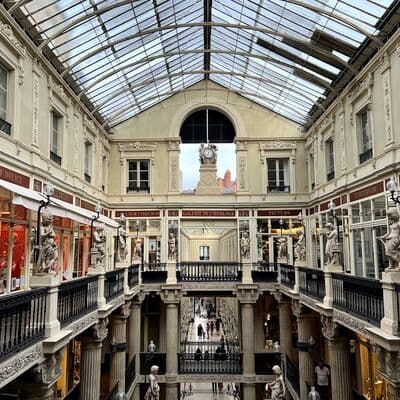
Passage Pommeraye is a covered shopping gallery from the 19th century, recognized as a French historical monument. Built in 1843, the passage connects two streets at different levels with an elegant system of stairs and galleries.
Architecture and Atmosphere
Three tiers of galleries, decorated with cast iron balustrades, sculptures, and a glass roof, create a unique space. The passage served as a prototype for the famous passages of Paris and still preserves the atmosphere of 19th-century elegance. Boutiques, bookshops, and cafés are located here.
Jules Verne and Nantes
Nantes is the birthplace of Jules Verne, one of the most widely read writers in the world. The city is proud of its famous son and preserves his memory in many places.
Jules Verne Museum
The Jules Verne Museum is located in a 19th-century mansion overlooking the Loire. The exhibition tells the story of the writer's life and work, presenting rare manuscripts, first editions of his novels, personal belongings, and objects that inspired his fantastic inventions.
The Writer's Childhood Places
The house where Jules Verne was born on Île Feydeau is marked with a memorial plaque. The banks of the Loire, where young Jules wandered dreaming of distant travels, the Isle of Nantes with its shipyards - all these places are reflected in his novels about incredible journeys and wonderful machines.
Nantes Gastronomy: A Taste of the Atlantic and Loire
Nantes cuisine combines the maritime traditions of Brittany, the richness of the Loire Valley, and the influence of colonial trade. The city is famous for its freshest seafood, river fish, duck, and, of course, the famous Muscadet white wine.
Muscadet - Wine of the Loire
Muscadet is a dry white wine produced in the Nantes area, the perfect accompaniment to seafood. Light, mineral, with refreshing acidity, it pairs beautifully with oysters, mussels, and river fish. The best versions labeled "sur lie" (aged on the lees) have a special depth of flavor.
Oysters and Seafood
Proximity to the Atlantic provides Nantes with the freshest seafood. Oysters from Cancale and Marennes-Oléron, langoustines, scallops - all can be tasted in numerous restaurants and markets. A visit to the Talensac Market - the city's largest covered market - is especially recommended.
Duck Nantaise
Canard nantais (Nantes-style duck) is a traditional regional dish. The duck is prepared with Muscadet and served with a sauce of white wine, cream, and mushrooms. This hearty and aromatic dish is the pride of local gastronomy.
Galettes and Crêpes
As part of historic Brittany, Nantes is famous for its galettes - buckwheat pancakes with various fillings (ham, cheese, egg) and sweet crêpes. The best crêperies can be found in the Bouffay quarter.
LU Biscuits and Nantes Sweets
The famous "Petit-Beurre" biscuit from LU was invented in Nantes in 1886. Although the factory has moved, the tradition continues. Also worth trying are Nantes Rigolettes - caramel candies with fruit filling, and the famous Gâteau Nantais - a moist almond cake with rum.
Le Voyage à Nantes: The City as a Work of Art
"Le Voyage à Nantes" (The Journey to Nantes) is a unique project that transforms the entire city into an art gallery. Every summer (and partially year-round), a route marked by a green line on the sidewalk runs through the city, connecting dozens of works of art.
Permanent Installations
Among the permanent objects are the already-mentioned Buren's Rings, "Elusive" (a sliding sculpture on the waterfront), the "Trompe-l'oeil" staircase with its optical illusion, and many others. These works are organically woven into the urban fabric and are accessible year-round.
Summer Festival
Each summer, Le Voyage à Nantes presents new temporary installations by international artists. The route, approximately 12 kilometers long, passes through the historic center, the Isle of Nantes, gardens, and waterfronts, turning a walk through the city into an exciting adventure.
Practical Information for Travelers
Getting There
From Paris, you can reach Nantes by TGV high-speed train in 2.5 hours. Nantes Atlantique Airport receives flights from many European cities and is connected to the center by shuttle bus. Nantes is also connected by direct TGV to Lille, Strasbourg, and Lyon.
City Transportation
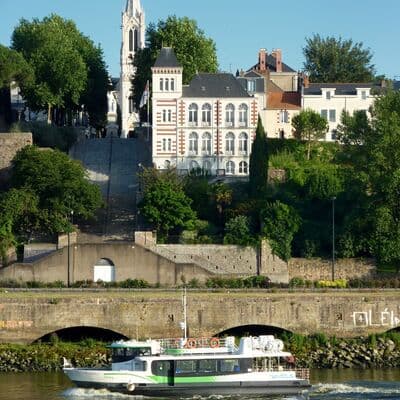
Nantes' center is compact and perfect for walking. The tram network of three lines covers the entire city and suburbs. The Bicloo system (city bikes) is a convenient way to get around the flat city. The Navibus river shuttle runs between the main attractions on the Isle of Nantes.
When to Visit
Nantes is good any time of year. Spring (April-May) and autumn (September-October) are ideal for walking: mild weather, fewer tourists. Summer (July-August) is the time of Le Voyage à Nantes festival, but it can be hot. Winter is mild due to the ocean's influence, and Christmas markets create a festive atmosphere.
Where to Stay
The historic center around the castle and Place du Commerce is the most convenient area for tourists. The Isle of Nantes offers modern hotels with Loire views. The Bouffay quarter is for nightlife lovers. Budget options can be found near the train station.
Around Nantes
Muscadet Vineyards
The Muscadet wine region is located south and east of Nantes. Numerous wineries (domaines) offer tastings and vineyard tours. The valley of the Sèvre et Maine river with its picturesque villages and châteaux is especially beautiful.
Atlantic Coast
Atlantic beaches are less than an hour's drive from Nantes. Pornic, La Baule with its magnificent 9-kilometer beach, the resort town of Le Croisic - these are popular destinations for day trips. At the mouth of the Loire is the picturesque town of Saint-Nazaire with its impressive shipbuilding yards.
Loire Châteaux
Nantes is the western gateway to the famous châteaux of the Loire Valley. The nearest are Châteaubriant, Clisson (with its Italian architecture), and the magnificent Angers with the largest medieval tapestry, the "Apocalypse."
Nantes for Different Travelers
For Families with Children
Nantes is an ideal city for family vacations. The Machines of the Isle will delight children of all ages: riding the elephant, the Marine Worlds Carousel, the interactive gallery. The planetarium, Natural History Museum, river shuttle rides, and playgrounds in the gardens complete the program.
For Art Lovers
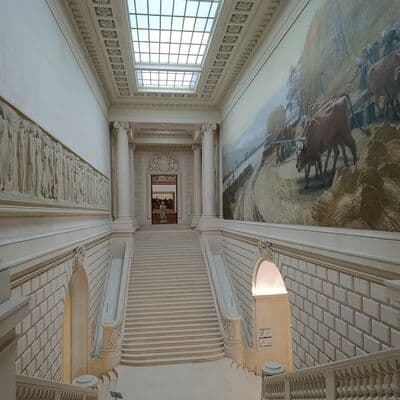
In addition to Le Voyage à Nantes, the city offers the Museum of Fine Arts with a collection from old masters to contemporary art, numerous galleries in the Bouffay quarter, street art in industrial areas. The HAB Galerie contemporary art center on the Isle of Nantes presents the most current exhibitions.
For Foodies
A gastronomic tour of Nantes includes the Talensac Market, wine bars serving Muscadet, crêperies in the Bouffay quarter, and modern restaurants on the Isle of Nantes. Don't miss Rue de la Fosse - the "restaurant street" with dozens of establishments for every taste. Nantes and Bordeaux are two of the most important gastronomic centers in western France.
For History Enthusiasts
The Nantes History Museum in the Castle of the Dukes of Brittany, the Memorial to the Abolition of Slavery, the Jules Verne Museum, the cathedral with the tomb of Francis II - Nantes offers a rich historical program. Guided walking tours help better understand the complex history of the city.
Travel Tips
- Tickets for the Machines of the Isle are best booked online in advance, especially in summer
- Free entry to the Castle of the Dukes of Brittany grounds and ramparts
- The green line of Le Voyage à Nantes on the sidewalk is the best guide to the city
- Talensac Market is open every morning except Monday - arrive early
- Try Muscadet directly from producers - many wineries are not far from the city
- Summer evenings on the terraces of the Bouffay quarter are a great way to soak up the atmosphere
- The Navibus river shuttle is not just transport, but a mini-cruise on the Loire
- Bicloo bikes are a convenient way to get to the Isle of Nantes and back
- Sunday is the day for antique markets at Place du Bouffay
- Don't miss Petite Hollande - a park on the banks of the Loire with beautiful views
Nantes is a city of contrasts and discoveries. Here, medieval streets coexist with futuristic mechanical creations, rich history is honestly reflected upon in modern museums, and the Loire River unites different eras and quarters. Nantes is unlike any other French city: it's a place where the creative imagination of Jules Verne comes to life, where past and future meet in a unique urban space. Two or three days in Nantes will leave unforgettable impressions and a desire to return again.