Bordeaux
Bordeaux 2025: Complete Guide to France's Wine Capital
Bordeaux is a city whose name has become synonymous with great wine. But behind the famous labels lies one of Europe's most beautiful cities, where elegant 18th-century architecture stands alongside contemporary cultural venues, and the Garonne River creates a romantic backdrop for strolls through the historic center. The capital of the Nouvelle-Aquitaine region is a UNESCO World Heritage Site and has experienced a true renaissance in recent years.
In 2025, Bordeaux remains one of France's most attractive destinations. The city successfully combines winemaking traditions with modern urban culture, historic monuments with innovative museums, and gastronomic heritage with trendy restaurants. You can spend a week exploring vineyards or a weekend enjoying the urban atmosphere.
City History: From Romans to Present Day
Burdigala - that's what the Romans called this settlement, founded in the 1st century BC on the banks of the Garonne. Even then, grapes were cultivated here, and local wines were supplied to imperial tables. Roman heritage still shows through in the layout of central streets and the ruins of the Palais Gallien amphitheater.
In the 12th century, Bordeaux became English. The marriage of Eleanor of Aquitaine to Henry Plantagenet transferred all of southwestern France to the English crown for three centuries. This period determined the fate of Bordeaux wines - it was the English who created global demand for claret, red wine from Bordeaux. To this day, Great Britain remains one of the largest importers of Bordeaux wines.
The true golden age came in the 18th century. Trade with colonies in the West Indies and Africa made Bordeaux one of Europe's wealthiest cities. It was then that the magnificent quays, plaza ensembles, and mansions that form today's cityscape were built. The entire historic center is a model of classicism and one of Europe's largest urban architectural ensembles from the 18th century.
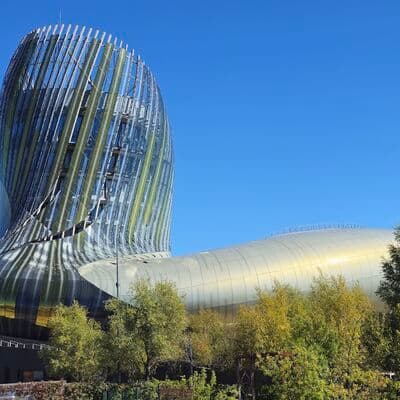
The 20th century brought decline and revival. After decades of neglect, Bordeaux began massive restoration in the 1990s. Facades were cleaned of centuries of grime, a tramway network was opened, and the waterfront was transformed. In 2007, the historic center was inscribed on the UNESCO list, and in 2017, the Cité du Vin museum opened, becoming a new symbol of the city.
Historic Center: Architectural Masterpieces
Place de la Bourse and the Water Mirror
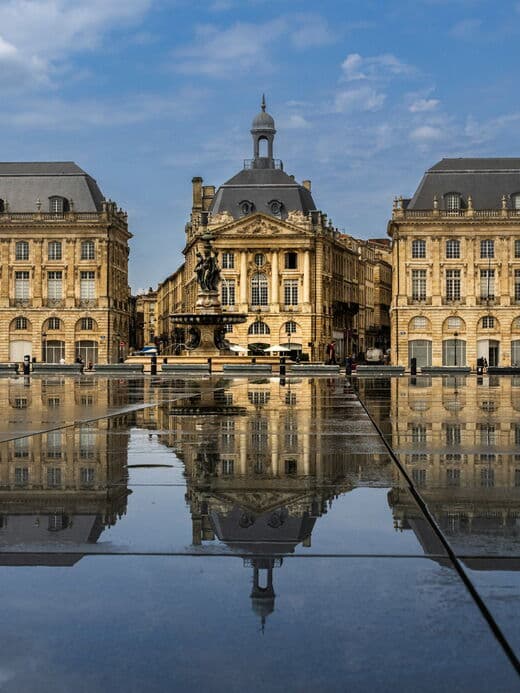
Place de la Bourse is Bordeaux's calling card and one of the most photographed views in France. The semicircular 18th-century ensemble with elegant facades of the Stock Exchange Palace and Customs House is reflected in the famous Miroir d'eau (Water Mirror) - the world's largest reflecting pool at 3,450 square meters.
The Water Mirror, opened in 2006, has become an iconic spot for tourists and locals alike. A thin layer of water on the granite surface creates a perfect reflection of the square by day, and transforms into a mystical fog space in the evening. In summer, children and adults wade barefoot through the water - it's the only place in Bordeaux where getting your feet wet is entirely official.
Saint-André Cathedral
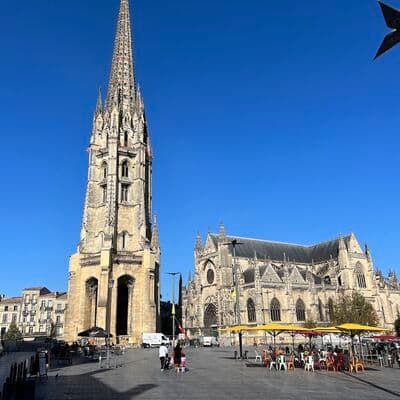
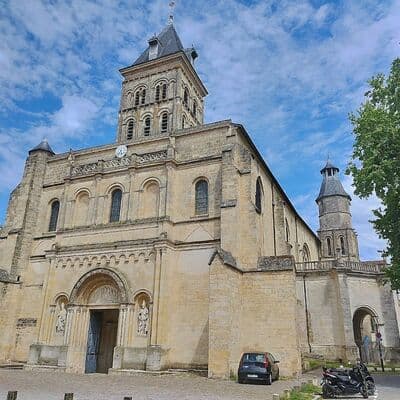
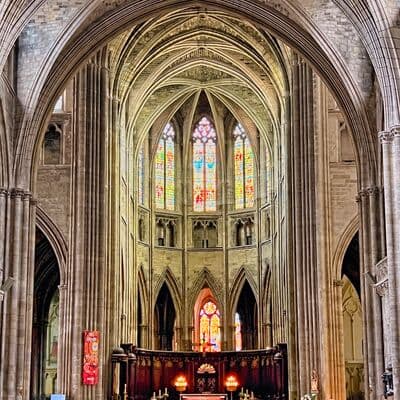
Saint-André Cathedral is one of the most important Gothic monuments in southwestern France. Here in 1137, Eleanor of Aquitaine married the future King Louis VII. The magnificent western facade and the separate Pey Berland Tower form an impressive silhouette of the city center.
Climbing the 66-meter Pey Berland Tower is a must-do. The 231 steps lead to an observation deck with city panoramas: the tiled roofs of old Bordeaux, the ribbon of the Garonne, modern bridges, and endless vineyards on the horizon. At the top stands a gilded statue of Our Lady of Aquitaine.
Grand Théâtre
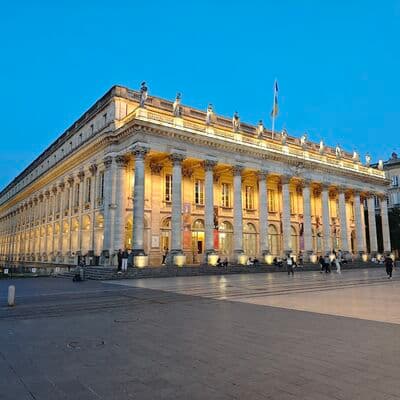
The Grand Théâtre de Bordeaux is a masterpiece of neoclassical architecture, built in 1780 to the design of Victor Louis. The colonnade of twelve Corinthian columns topped with statues of muses and goddesses makes the facade one of the most elegant in Europe. The theater served as the model for Charles Garnier when creating the Paris Opera.
The interior is equally impressive: the grand staircase served as the model for the Palais Garnier, and the auditorium with blue and gold décor seats over a thousand spectators. Tours of the theater are conducted daily, but the best way to appreciate it is to attend a performance. The Bordeaux National Opera offers a diverse repertoire from classics to contemporary productions.
Garonne Waterfront
The Bordeaux quays (Les Quais) stretch five kilometers along the left bank of the Garonne. After a grand renovation, they've become a favorite promenade for residents. Historic facades are reflected in the river, where cruise boats glide, and in the evening the city is painted in golden sunset tones.
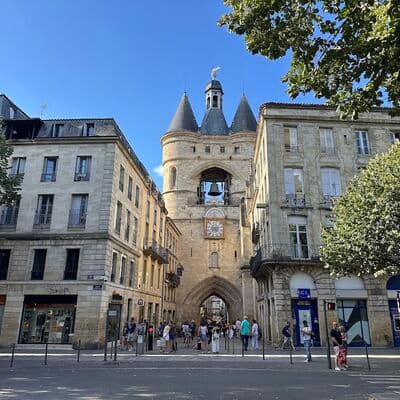
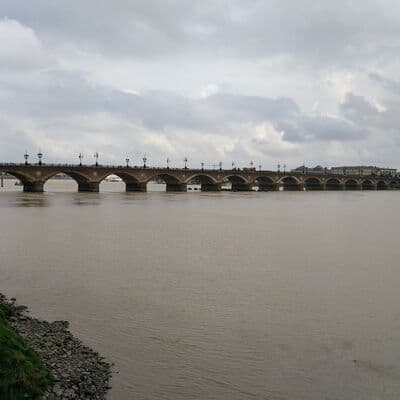
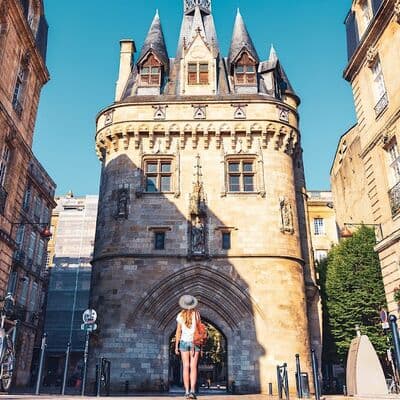
Along the waterfront are the Water Mirror, Place de la Bourse, the historic Porte Caillau gate, and numerous cafés with terraces. On Sundays, a flea market sets up here, and in summer, festivals and open-air concerts take place. A walk from the Pont de Pierre bridge to the Chartrons takes about an hour and provides a sense of Bordeaux's history and present.
Cité du Vin: Temple of Wine
The Cité du Vin is not a museum in the traditional sense but a modern cultural center dedicated to world winemaking. The building, designed by the XTU architecture firm, resembles either a twisted grapevine or wine swirling in a glass. Opened in 2017, it quickly became one of France's top attractions.
The permanent exhibition spanning 3,000 square meters tells the story of wine from ancient times to the present. Twenty thematic modules with interactive installations, audiovisual shows, and sensory experiments immerse visitors in the world of winemaking from all continents. Here you can learn about terroirs, production techniques, and the culture of wine consumption.
The visit ends on the eighth-floor belvedere, where each visitor is offered a glass of wine from a collection of world winemakers. The panorama of Bordeaux from here is breathtaking: the bend of the Garonne, the historic center, the Bassins à flot docks. A wine bar, restaurant, and boutique complete the experience.
Wine Tourism: Beyond the City
Bordeaux Wine Classification
Bordeaux is France's largest wine region with 111,000 hectares of vineyards and more than 6,000 châteaux. The famous 1855 classification divided the best Médoc estates into five cru categories. Since then, the status of Premiers Crus remains unsurpassed: Château Margaux, Château Latour, Château Lafite Rothschild, Château Mouton Rothschild, and Château Haut-Brion - the holy five of world winemaking.
But Bordeaux is not just about great crus. The region includes 65 appellations with diverse styles: reds from Médoc and Saint-Émilion, dry whites from Graves, sweet wines from Sauternes, sparkling from Crémant de Bordeaux. There's a worthy wine for every budget and taste.
Vineyard Routes
Médoc - the legendary peninsula north of Bordeaux where the most famous châteaux are concentrated. The route from Saint-Estèphe through Pauillac to Margaux passes through the heart of great winemaking. Many estates welcome visitors for tastings and cellar tours, but visits must be booked in advance.
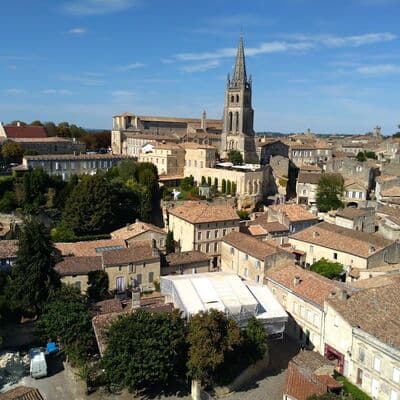
Saint-Émilion is the jewel of the right bank and a UNESCO site. The medieval fortified town on a hill is surrounded by vineyards that produce some of the world's best Merlot. The underground 11th-century monolithic church carved into rock, catacombs, and vineyard panoramas make Saint-Émilion an essential stop.
Sauternes and Barsac south of Bordeaux are the birthplace of legendary sweet wines. Autumn mists from the Ciron River create conditions for the development of noble rot, Botrytis cinerea, which concentrates sugar in the grapes. Château d'Yquem - the only Premier Cru Supérieur in the classification - produces wine that can age for centuries.
Organizing Wine Tours
The Bordeaux tourist office offers many options: from half-day bus excursions to private tours with a sommelier guide. You can rent a bicycle and independently explore the vineyards - special routes are laid out throughout the region.
The wine school at Cité du Vin offers tasting courses from basic to professional levels. A two-hour workshop will teach you to distinguish grape varieties, understand terroir, and properly pair wine with food. The school's certificate is valued among oenophiles worldwide.
Bordeaux Gastronomy
Regional Cuisine
Bordeaux cuisine is a union of river, sea, and vineyard. Entrecôte à la bordelaise - the classic steak with red wine sauce, shallots, and bone marrow - embodies the spirit of local gastronomy: quality products, simple preparation, wine pairing.
Oysters from the Arcachon Basin are the region's pride. They're served with crispy crépinette sausages or simply with lemon and rye bread. In oyster restaurants along the coast, this combination is washed down with dry white Entre-Deux-Mers - the perfect gastronomic experience of the southwest.
Canelé is Bordeaux's sweet symbol. Small pastries with a caramelized crust and tender vanilla-rum filling were born in convents where nuns used egg yolks left over after fining wine with egg whites. Today, canelés are sold in every bakery, but the best are made at historic confectioners Baillardan and La Toque Cuivrée.
Restaurants and Markets
Marché des Capucins is Bordeaux's main food market, open every day except Monday. Here you can buy everything: from fresh oysters to truffles from Périgord, from local cheeses to vegetables from nearby farms. Around the market are dozens of cafés and bars that cook with products straight from the stalls.
Bordeaux's restaurant scene is developing rapidly. Traditional bistros neighbor trendy gastrobars, Michelin-starred restaurants stand alongside democratic wine bars. Le Gabriel in the Chartrons, La Tupina with classic regional cuisine, Miles near Cité du Vin - there's a choice for every taste and budget.
Modern Bordeaux: New Districts
The Chartrons
Les Chartrons - the former wine merchants' quarter north of the center. This is where the warehouses of négociants stood, who bought, aged, and sold wines from the entire region. Today, the Chartrons is Bordeaux's trendiest district with antique shops, designer boutiques, craft beer bars, and contemporary art galleries.
Rue Notre-Dame is the quarter's main artery. On Sundays, an antique market operates here, attracting collectors from all over Europe. The Musée du Vin et du Négoce in an old cellar tells the story of the wine trade that made Bordeaux rich.
Bassins à Flot
Bassins à flot - the former port area undergoing urban transformation. Old docks are being converted into cultural venues and residential quarters. Here are Cité du Vin, the World War II submarine base transformed into a cultural space, and the Bassins de Lumières digital art center.
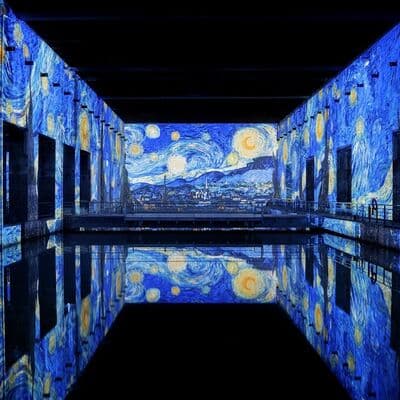
Bassins de Lumières is the world's largest digital art center. In the giant reservoirs of the former submarine base, immersive shows are projected: Impressionist paintings, Klimt, Van Gogh come alive on 12-meter-high walls, reflected in the water. It's an amazing experience at the intersection of technology and art.
The Right Bank
The right bank of the Garonne (La Bastide) long remained an industrial outskirt but is experiencing a renaissance today. The botanical garden, waterfront with views of the historic center, and new residential quarters attract young people and families. Darwin - a former barracks turned into an ecological and cultural cluster with an organic restaurant, skate park, and coworking spaces.
Practical Information for 2025
Getting There
Bordeaux-Mérignac Airport is located 12 kilometers from the center. A shuttle bus reaches Saint-Jean station in 30 minutes. Flights connect Bordeaux with most European capitals and major cities.
The TGV high-speed train arrives from Paris in 2 hours 4 minutes - one of the fastest lines in France. Direct connections also link Bordeaux with Lyon, Marseille, Toulouse, and Nantes.
Getting Around
Bordeaux's tramway network is one of the most modern in France. Three lines cover the main attractions and districts. A one-day or three-day pass includes unlimited tram and bus rides.
The historic center is compact and ideal for walking. The VCub bike-sharing system with over 170 stations allows quick travel between districts. The first 30 minutes of each ride are free.
Best Time to Visit
Bordeaux is beautiful year-round, but optimal months are May through October. Spring and autumn are ideal for visiting vineyards: harvest takes place in September-October, and in November you can taste young wine.
Summer is hot but bearable thanks to the ocean's proximity. Winter is mild, with temperatures rarely below freezing. During the Wine Festival in June, the city becomes one big wine bar - the best time for oenophiles.
Where to Stay
For a first visit, hotels in the triangle between Place de la Bourse, the cathedral, and the Grand Théâtre are ideal. The Chartrons district suits those seeking a trendy atmosphere. Near Cité du Vin, modern apart-hotels have opened with dock views.
InterContinental Bordeaux - Le Grand Hôtel opposite the Grand Théâtre is the epitome of luxury. Boutique hotels in historic mansions offer authentic experiences: La Cour Carrée, Hôtel de Tourny. Budget options include chain hotels near Saint-Jean station.
Around Bordeaux
Arcachon and Dune du Pilat
The Arcachon Basin an hour from Bordeaux is a pilgrimage site for oyster lovers and seascape enthusiasts. Dune du Pilat - Europe's tallest sand dune at over 100 meters - rises above pine forest and ocean. The climb to the summit is rewarded with panoramas from the Atlantic to the oyster parks.
The town of Cap Ferret on the opposite shore of the bay is an elegant resort with villas in the pine forest. People come here for oysters, beaches, and an atmosphere of quiet luxury.
Cognac
The town of Cognac two hours north is the birthplace of famous brandy. The old houses of Hennessy, Martell, and Rémy Martin are open for visits. Tasting cognac in cellars where barrels are covered with black fungus from evaporating alcohol is an unforgettable experience.
Dordogne
The Dordogne Valley east of Bordeaux is a land of castles, caves with prehistoric paintings, and foie gras. The town of Sarlat-la-Canéda with its perfectly preserved medieval center is one of France's most beautiful places.
Bordeaux for Different Travelers
For Wine Lovers
A week allows you to cover the main appellations: Médoc, Graves, Saint-Émilion, Sauternes. Book château visits in advance, especially at prestigious estates. A tasting course at Cité du Vin is an excellent start for understanding the region.
For Architecture Lovers
Bordeaux is one of the finest examples of 18th-century urban planning. Three days are sufficient to see the main ensembles: Place de la Bourse, the cathedral, Grand Théâtre, the quays. A Chartrons tour reveals the history of the wine trade.
For Foodies
Oysters at Marché des Capucins, entrecôte at a traditional bistro, canelé at a historic confectioner - the essential program. A trip to Arcachon for the freshest oysters and to a farm for foie gras completes the gastronomic journey.
For Families
Cité du Vin (no alcohol for children, but with interactive exhibits), the Water Mirror, Botanical Garden, Arcachon beaches - Bordeaux is family-friendly. A Garonne cruise appeals to children of all ages.
Conclusion: Why Visit Bordeaux
Bordeaux is much more than wine. It's a city of incredible beauty where every facade tells a three-hundred-year-old story, and the river reflects clouds and cathedral spires. Here winemaking traditions meet contemporary culture, historical heritage meets urban innovation.
Unlike Paris, Bordeaux allows you to live at an unhurried pace, enjoying long lunches with a glass of great wine, wandering cobblestone streets without tourist crowds. This is France as it should be: elegant, gastronomic, cultural, and yet accessible.
Plan your trip to Bordeaux in 2025. The city and its vineyards await those ready to discover one of the world's most refined regions.