Turin
Turin - The Elegant Capital of Piedmont at the Foot of the Alps
Turin is Italy's fourth-largest city and the capital of the Piedmont region, spread along the banks of the Po River at the foot of the majestic Alps. This is a city with an aristocratic character, where wide arcaded boulevards, magnificent baroque palaces, and refined cafés create the atmosphere of a former royal capital. Turin is the birthplace of Italian cinema, home to the FIAT automobile industry, and guardian of the famous Shroud of Turin. This underrated tourist destination holds remarkable treasures and ranks among Italy's most elegant cities.
History of Turin: From Roman Camp to Capital of United Italy
Turin's history begins with the Roman military camp Augusta Taurinorum, founded in the 1st century BC. The city developed as an important trading center on the route through the Alps. During the Middle Ages, Turin came under the control of the House of Savoy, which transformed it into the capital of their domains.
The 18th century was Turin's golden age. The Savoy dukes, and later kings of the Kingdom of Sardinia, invited the best architects - Guarini, Juvarra, Alfieri - to create grand palaces and churches. The city acquired the elegant baroque appearance it maintains to this day.
In 1861, Turin became the first capital of unified Italy. Although the capital moved to Florence four years later, and then to Rome, Turin retained its status as an industrial and cultural center. In the 20th century, FIAT was born here, transforming the city into Italy's automotive capital and attracting thousands of workers from across the country.
Royal Residences of the House of Savoy
The Residences of the Royal House of Savoy are UNESCO World Heritage sites, forming a unique architectural ensemble scattered across Turin and its surroundings.
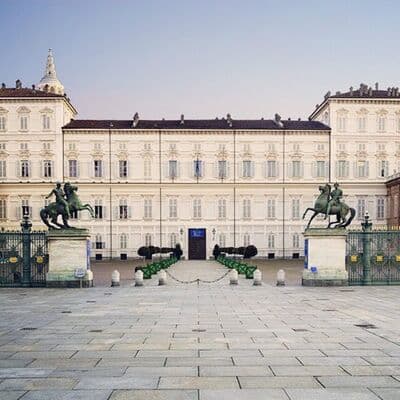
The Royal Palace (Palazzo Reale) on central Piazza Castello was the main residence of the Savoy monarchs. The lavish 17th-19th century interiors, the Armory with one of Europe's richest weapons collections, and the Royal Library containing Leonardo da Vinci's self-portrait are open to visitors. The palace garden, designed by André Le Nôtre, is an oasis of calm in the city center.
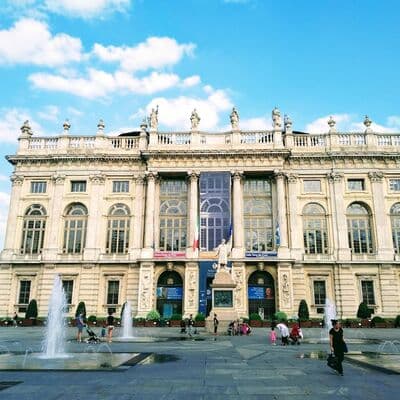
Palazzo Madama is a true architectural nesting doll: Roman gates, a medieval castle, and a baroque façade by Juvarra coexist in one building. Today it houses the Museum of Ancient Art with collections from the Middle Ages to the 18th century.
Palazzo Carignano is Guarini's masterpiece with a unique undulating brick façade. Victor Emmanuel II, the first king of united Italy, was born here, and the first Italian parliament met within its walls. The building now houses the Museum of the Risorgimento - the history of Italian unification.
Royal Residences Outside the City
Palazzina di Caccia di Stupinigi is a hunting lodge 10 km from Turin, one of the most lavish examples of European Rococo. Juvarra created this residence for Savoy hunts. The central oval hall with frescoes and the huge bronze deer sculpture on the roof make an unforgettable impression.
Reggia di Venaria Reale - the "Italian Versailles" - lies 15 km from the city. This grand 17th-century palace and park complex features the endless Gallery of Diana, fountains, and gardens. After extensive restoration, it's one of Italy's most visited attractions.
Castello di Rivoli is a medieval fortress transformed into a baroque residence. Today it houses the Museum of Contemporary Art with works by Koons, Murakami, Cattelan, and other stars of the world art scene.
Mole Antonelliana and the Cinema Museum
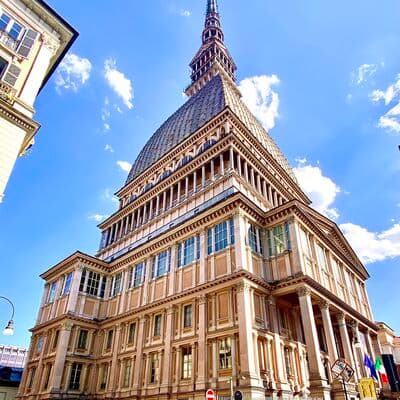
The Mole Antonelliana is Turin's symbol, depicted on Italian 2-cent euro coins. This 167.5-meter-tall building was conceived as a synagogue, but due to the ambitious architect Antonelli, the project exceeded all budgets and deadlines. The city bought the building and converted it into a monument to the Risorgimento.
Today the Mole Antonelliana houses the National Cinema Museum - one of the world's finest. The collection traces film history from 18th-century optical toys to modern blockbusters. Visitors can recline in deck chairs watching classic films, explore sets and costumes. A panoramic elevator ascends to an observation deck with breathtaking views of the city and Alps.
Turin is the birthplace of Italian cinema. Here in 1914, the first Italian feature film "Cabiria" was shot, and the city's studios rivaled Hollywood until World War I.
Egyptian Museum
Turin's Egyptian Museum is the second most important in the world after Cairo's. The collection numbers over 30,000 artifacts spanning the entire history of Ancient Egypt. The foundation of the collection was established when French consul Drovetti sold his Egyptian collection to the House of Savoy in 1824.
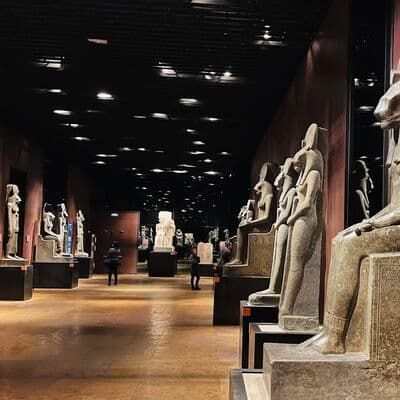
Among the museum's treasures is the completely preserved tomb of architect Kha and his wife Merit with burial goods, papyri, and mummies. The sculpture gallery impresses with colossal statues of pharaohs and sphinxes. Special pride goes to the Turin Papyrus Map showing gold mines and the Turin King List - one of the key sources for Ancient Egyptian chronology.
After the 2015 renovation, the museum received modern multimedia equipment. Black galleries with dramatic lighting create an atmosphere of immersion in the world of the pharaohs.
The Shroud of Turin
The Shroud of Turin is a linen cloth measuring 4.4 by 1.1 meters bearing the imprint of a man's body, which tradition holds covered Jesus Christ's body after the crucifixion. It is one of Christianity's most venerated and enigmatic relics.
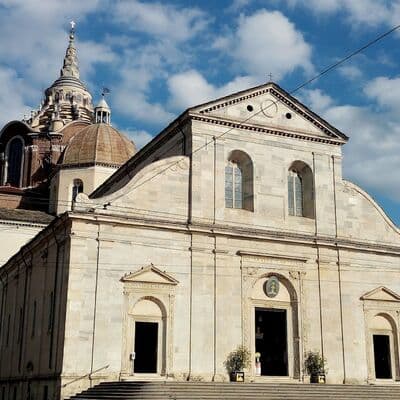
The Shroud is kept in the Cathedral of Saint John the Baptist in a special chapel. The original is shown to the public extremely rarely - once every few decades. However, near the cathedral, the Shroud Museum operates, where visitors can see a full-size copy and learn about the history and scientific research of this mysterious relic.
The 15th-century cathedral with its elegant Renaissance façade of white marble is the only example of Renaissance architecture in Turin. Attached to it is Guarini's baroque Chapel of the Holy Shroud - a masterpiece with a dizzying dome.
Squares and Streets of Turin
Turin is famous for its regular layout, inherited from the Roman camp. Wide straight streets with 18 kilometers of arcades create a city ideal for strolling in any weather.
Piazza Castello is the heart of the city, surrounded by main attractions: the Royal Palace, Palazzo Madama, Teatro Regio, and the Church of San Lorenzo with Guarini's amazing dome.
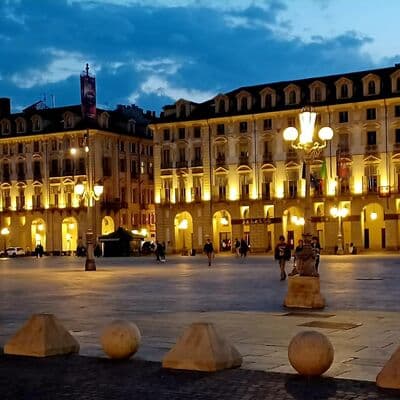
Piazza San Carlo - Turin's "drawing room" - is an elegant square with twin baroque churches and an equestrian statue of Duke Emmanuel Philibert. Historic cafés shelter under the arcades - Caffè Torino, Caffè San Carlo.
Via Roma is the main shopping street with boutiques of world brands under magnificent arcades. Via Po is a wide boulevard from Piazza Castello to the Po River, lined with the university, bookshops, and cafés.
Piazza Vittorio Veneto is one of Europe's largest squares, descending to the riverbank. The Victor Emmanuel I Bridge leads to the Gran Madre di Dio church - a neoclassical rotunda with legends of the Holy Grail.
Churches of Turin
The Church of San Lorenzo is Guarini's baroque masterpiece. Outside, the building is unassuming, but the interior astounds with its fantastic dome of interlacing ribs creating a starry sky effect.
Santa Maria del Monte dei Cappuccini is a church and monastery on a hill across the Po River. The climb rewards with panoramas of the city and Alps. Nearby is the Mountain Warfare Museum.
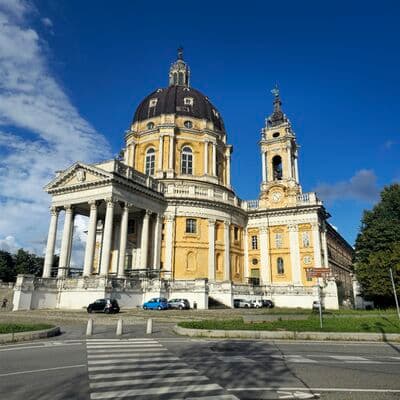
Basilica di Superga is a monumental temple on a 672-meter hill, built by Juvarra to commemorate victory over the French in 1706. Savoy kings are buried here. A rack railway ascends from the city to the basilica. This is also the site of the 1949 tragedy when a plane carrying the Torino football team crashed into the church wall.
Automotive Turin
Turin is Italy's automotive capital. Here in 1899, FIAT (Fabbrica Italiana Automobili Torino) was founded, transforming the city into a 20th-century industrial center.
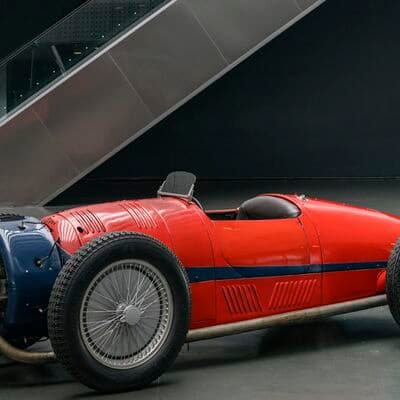
MAUTO - the Automobile Museum - is one of the world's largest and oldest car museums. The collection of 200 automobiles spans the entire history of automotive engineering: from early steam carriages to Formula 1 racers and concept cars of the future. Models from FIAT, Alfa Romeo, Lancia, Ferrari, and rare foreign examples are represented.
The former FIAT Lingotto factory is an icon of industrial architecture. This giant building with a rooftop test track where cars were tested has been converted into a shopping and exhibition complex, hotel, and concert hall. The roof with its panoramic track can be visited.
Pinacoteca Agnelli is a private museum on the upper floors of Lingotto with an Impressionist collection belonging to the FIAT founders' family.
Museums and Galleries
Galleria Sabauda is one of Italy's most important picture galleries, with works by Van Eyck, Mantegna, Veronese, Van Dyck, and Rembrandt. Located in the complex with the Royal Palace.
MAO - Museum of Oriental Art - features five sections dedicated to Chinese, Japanese, Indian, Southeast Asian, and Islamic art. The collection is housed in the historic Palazzo Mazzonis.
GAM - Gallery of Modern and Contemporary Art - holds a collection from the 19th century to the present. Works by Monet, Renoir, Kandinsky, Klee, and Warhol.
Lavazza Museum is an interactive museum of coffee history from the famous Turin brand. Multimedia installations and tastings.
Turin Cuisine and Chocolate
Piedmontese cuisine is among Italy's most refined, and Turin is its gastronomic capital. The city is famous for chocolate, wine, and truffles.
Gianduiotto is the famous Turin chocolate and hazelnut candy invented in the 19th century. Nutella also comes from here - the spread was created by Ferrero company in nearby Alba.
Bicerin is Turin's legendary drink of hot chocolate, coffee, and cream served in layers in a glass. Caffè Al Bicerin has operated since 1763 - Cavour himself tasted bicerin here.
Aperitivo with stuzzichini is Turin's tradition of an evening drink with appetizers. Many bars offer a buffet of snacks with your drink.
White truffle from Alba is one of the world's most expensive delicacies. In autumn, Alba (an hour from Turin) hosts its famous truffle festival.
- Agnolotti - Piedmontese dumplings with meat or vegetable filling
- Vitello tonnato - thinly sliced veal with tuna, anchovy, and caper sauce
- Bagna cauda - hot sauce of anchovies, garlic, and olive oil served with vegetables
- Fritto misto - assortment of fried meats, vegetables, and sweets
- Grissini - crispy breadsticks invented in Turin
Piedmont Wines
Piedmont is one of the world's great wine regions. An hour's drive from Turin lie the Langhe and Roero hills, a UNESCO World Heritage site.
Barolo and Barbaresco are the "kings" of Italian wines from Nebbiolo grapes. Powerful, tannic reds capable of long aging.
Barbera is a more accessible red wine with bright acidity and fruity notes.
Moscato d'Asti is a light, sweet sparkling wine, perfect with desserts.
Practical Information
Getting there: Turin Caselle Airport (TRN) is located 16 km from the center. Sadem trains and buses connect the airport with Porta Nuova station (40 minutes, €8). High-speed Frecciarossa and Italo trains link Turin with Milan (50 minutes), Rome (4.5 hours), and other cities.
Transportation: Turin is compact and walkable. Metro, trams, and buses cover the city. A day pass costs €5. The Torino+Piemonte Card provides free museum entry and public transport.
When to go: Spring (April-June) and autumn (September-October) are best. Autumn is especially attractive for truffle season and grape harvest. Winter suits skiing in the nearby Alps - the 2006 Olympics resorts are an hour away.
Turin and the Alps
Turin is the gateway to the Alps. On clear days, snow-capped peaks are visible directly from city streets.
Sestriere and Bardonecchia are ski resorts that hosted the 2006 Winter Olympics. Slopes for all levels, modern infrastructure.
Aosta Valley is the neighboring region with Mont Blanc, the Matterhorn, and medieval castles. Courmayeur and Cervinia are elite resorts.
Lake Maggiore and Lake Orta are picturesque lakes an hour away, with the Borromean Islands and romantic villas.
Related Destinations
Continue your journey through Northern Italy: Milan is just 50 minutes by high-speed train - an ideal weekend combination. To the south lies charming Genoa with its port and old town. For food lovers - Bologna, Italy's culinary capital.