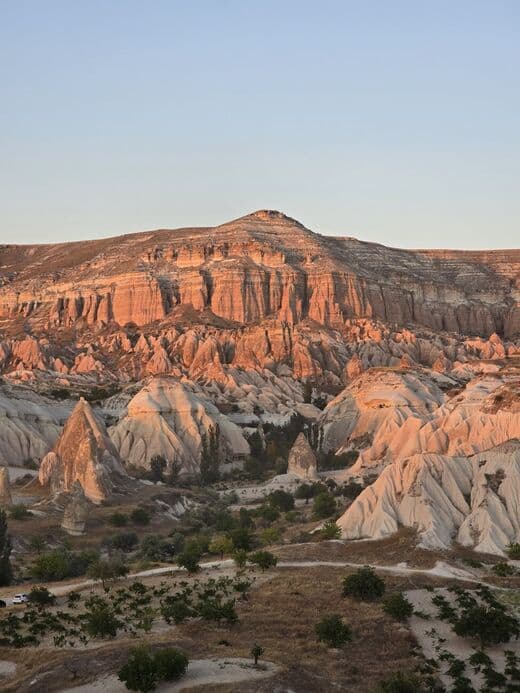
Goreme 2025: The Complete Guide to Cappadocia - Hot Air Balloons, Cave Hotels, and Lunar Landscapes
Best Time to Visit Cappadocia
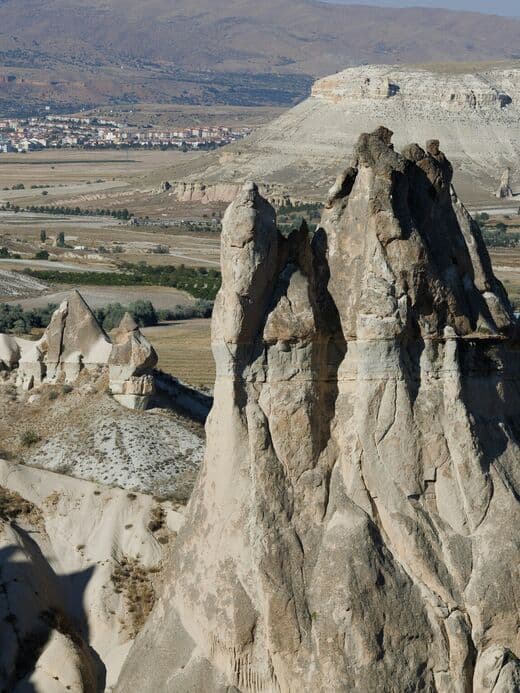
Cappadocia, located in Turkey's central Anatolia region, experiences a continental climate with distinct seasons. Unlike the coastal regions, this landlocked area sees significant temperature variations, cold winters with occasional snow, and hot, dry summers. The region's unique landscape of fairy chimneys, cave dwellings, and volcanic rock formations takes on different characters throughout the year, each season offering its own magic.
Spring (April to June): The Golden Season
Spring represents perhaps the ideal time to explore Cappadocia. April temperatures range from 10°C to 18°C (50°F to 64°F), climbing to a pleasant 20°C to 28°C (68°F to 82°F) by June. The landscape transforms into a tapestry of wildflowers, with poppies dotting the valleys and fruit trees blossoming in the orchards. Most importantly for hot air balloon enthusiasts, spring offers excellent flying conditions with calm morning winds and clear skies. The flight cancellation rate drops to around 15-20% during this period, compared to 40-50% in winter months.
Late April and May strike the perfect balance: warm enough for comfortable hiking, cool enough to avoid the intense summer heat, and ahead of the peak tourist season that begins in June. Hotel prices remain reasonable, and you'll find shorter queues at popular attractions like the Goreme Open-Air Museum.
Summer (July to August): Hot and Crowded
Summer brings soaring temperatures, often exceeding 35°C (95°F) during the day, with little humidity and intense sunshine. While the balloon flight conditions remain excellent (calm winds persist through summer), outdoor activities become challenging during midday hours. The underground cities, however, offer a natural escape - these ancient subterranean complexes maintain a constant 13-15°C (55-59°F) year-round.
This is peak tourist season, meaning higher prices, fully booked cave hotels, and crowded viewpoints at sunrise. If you must visit in summer, book accommodations and balloon flights at least 4-6 weeks in advance. Plan outdoor activities for early morning or late afternoon, and consider the evening valley hikes when temperatures become bearable.
Autumn (September to November): The Photographer's Paradise
September through early November presents another excellent window for visiting. Temperatures gradually decrease from summer highs to comfortable 15°C to 25°C (59°F to 77°F) range. The grape harvest in late September and October adds cultural dimension to your visit, with wineries in Urgup opening for tastings and local villages celebrating the season.
The autumn light, softer and more golden than summer's harsh rays, creates magical photography conditions. Morning mists fill the valleys, and the fairy chimneys seem to glow at sunrise. October sees fewer tourists than summer while still maintaining good balloon flying conditions - an ideal compromise between weather, crowds, and prices.
Winter (December to March): Magical but Challenging
Winter Cappadocia offers a completely different experience. Snow blankets the fairy chimneys from December through February, creating scenes straight from a fantasy novel. Temperatures drop to -5°C to 5°C (23°F to 41°F), occasionally plunging to -15°C (5°F) during cold snaps. The landscape, already otherworldly, becomes truly magical under a white covering.
However, winter poses practical challenges. Hot air balloon flights face a 40-50% cancellation rate due to wind, snow, and low visibility. Some hiking trails become impassable, and smaller hotels may close for the season. On the positive side, hotel prices drop by 30-50%, and you'll share the major attractions with only a handful of other visitors.
| Month | Average Temp | Rainfall | Balloon Success | Crowds |
|---|---|---|---|---|
| January | -2°C / 28°F | 40mm | 50% | Very Low |
| February | 0°C / 32°F | 35mm | 55% | Very Low |
| March | 5°C / 41°F | 40mm | 65% | Low |
| April | 11°C / 52°F | 45mm | 80% | Moderate |
| May | 16°C / 61°F | 50mm | 85% | Moderate |
| June | 21°C / 70°F | 30mm | 90% | High |
| July | 25°C / 77°F | 10mm | 95% | Very High |
| August | 24°C / 75°F | 5mm | 95% | Very High |
| September | 20°C / 68°F | 15mm | 90% | High |
| October | 14°C / 57°F | 25mm | 80% | Moderate |
| November | 7°C / 45°F | 35mm | 65% | Low |
| December | 1°C / 34°F | 45mm | 50% | Very Low |
How to Get to Cappadocia
By Air: Your Two Airport Options
Cappadocia is served by two airports, and understanding the differences will help you choose the right one for your trip. Neither is in Goreme itself - both require ground transportation to reach the main tourist areas.
Nevsehir Kapadokya Airport (NAV)
The closer option at just 40 km (25 miles) from Goreme, NAV airport primarily serves Turkish Airlines flights from Istanbul. The transfer takes approximately 30-40 minutes. This airport operates seasonally, with more flights during peak tourist season (April-October) and reduced service in winter. The smaller terminal means faster immigration and luggage collection, but facilities are limited - don't expect lounges or extensive dining options.
Kayseri Erkilet Airport (ASR)
The larger and more consistently served airport lies 80 km (50 miles) from Goreme, requiring a 60-75 minute transfer. Multiple airlines operate here, including Turkish Airlines, Pegasus, and AnadoluJet, offering more schedule flexibility and often lower prices. The trade-off is the longer ground journey, but shuttle services run regularly and cost $15-20 USD per person.
Flights from Major International Hubs
From the United States
No direct flights exist from the US to Cappadocia. The standard route involves flying to Istanbul (IST) - Turkish Airlines operates direct flights from New York (JFK), Los Angeles (LAX), Chicago (ORD), Washington (IAD), Houston (IAH), Miami (MIA), Boston (BOS), Atlanta (ATL), and San Francisco (SFO). Flight time to Istanbul runs 10-14 hours depending on departure city. From Istanbul, connect to either NAV (1 hour 15 minutes) or ASR (1 hour 25 minutes).
Sample routing from New York: Depart JFK at 11:00 PM, arrive Istanbul 5:00 PM next day, connect to Kayseri departing 7:30 PM, arrive 8:55 PM. Total journey time approximately 22 hours with layover. Turkish Airlines offers good connection packages and allows free Istanbul stopovers if you want to explore both cities.
Round-trip prices from major US cities typically range from $800-1,200 USD in economy, $2,500-4,000 USD in business class. Book 2-3 months ahead for best prices, or watch for Turkish Airlines sales which can drop economy fares to $600-700.
From the United Kingdom
Turkish Airlines operates direct flights from London Heathrow (LHR), London Gatwick (LGW), Manchester (MAN), Birmingham (BHX), and Edinburgh (EDI) to Istanbul, with flight times of 3.5-4 hours. British Airways also serves the Istanbul route from Heathrow. From Istanbul, connect to NAV or ASR.
Alternatively, Pegasus Airlines (Turkey's low-cost carrier) sometimes operates seasonal direct flights to Kayseri from London Stansted during peak summer months. These budget flights can offer significant savings but check baggage allowances carefully and expect no-frills service.
Expect to pay £300-500 for economy round trips, £800-1,500 for business class. EasyJet and other budget carriers fly to Istanbul Sabiha Gokcen (SAW), which offers connecting flights to Kayseri, though this adds travel time.
From Europe
Most major European cities connect through Istanbul. Direct flights to Istanbul operate from Paris (CDG), Amsterdam (AMS), Frankfurt (FRA), Munich (MUC), Rome (FCO), Madrid (MAD), Barcelona (BCN), Milan (MXP), Vienna (VIE), and Zurich (ZRH). Flight times range from 2.5-4 hours depending on origin.
Some travelers choose to fly into Antalya (AYT) on the southern coast, especially if combining a Cappadocia trip with Mediterranean beaches. The drive from Antalya to Goreme takes 4-5 hours (approximately 300 km), making it feasible as a one-way routing - fly into Antalya, drive to Cappadocia, fly out from Kayseri or vice versa.
From Asia and Oceania
Turkish Airlines' extensive network reaches Sydney (SYD), Melbourne (MEL), Singapore (SIN), Bangkok (BKK), Hong Kong (HKG), Tokyo (NRT), Seoul (ICN), Shanghai (PVG), and Beijing (PEK). From Australia, expect 18-24 hours total travel time including connections. Asian departures range from 12-18 hours total journey time.
Airport Transfers
Both airports offer multiple transfer options to Goreme and surrounding villages:
Shared Shuttle Service: The most popular option at $15-20 USD per person from NAV, $20-25 from ASR. Companies like Helios Transfer, Cappadocia Transfers, and Nevsehir Shuttle operate regular services timed to flight arrivals. Book in advance through your hotel or directly with the transfer company. Shuttles drop you directly at your hotel.
Private Transfer: For €40-50 from NAV or €60-80 from ASR, you get a dedicated car or van with driver meeting you at arrivals. Worth considering for groups of 3-4, families with children, or those arriving on late-night flights when shuttle options may be limited. Most hotels can arrange private transfers.
Rental Car: Available at both airports through Avis, Budget, Europcar, and local Turkish companies. Prices start at $30-40 per day for economy cars. Having your own vehicle offers flexibility for exploring the region's scattered attractions, but note that GPS navigation can be unreliable in some valleys. Fuel costs approximately $1.50 per liter.
By Bus from Istanbul
For budget travelers or those who prefer overland journeys, overnight buses connect Istanbul to Nevsehir (the nearest major town to Goreme). The journey takes 10-11 hours, with departures from Istanbul's main bus terminal (Esenler Otogar) in the evening, arriving early morning - perfectly timed for a sunrise balloon flight if you're adventurous.
Metro Turizm, Kamil Koc, and Suha offer the most comfortable services, with seats reclining to near-flat positions, onboard entertainment, and tea/coffee service. Prices range from $15-30 USD depending on seat type. From Nevsehir bus station, minibuses (dolmus) run to Goreme every 30 minutes during daytime hours for approximately $2.
Getting Around Cappadocia
Understanding the Geography
Cappadocia isn't a single city but a region encompassing multiple towns, villages, and natural attractions spread across roughly 50 km (30 miles). Goreme serves as the tourist hub, but you'll likely want to visit Uchisar, Urgup, Avanos, Derinkuyu, and various valleys - each requiring transportation. Understanding your options helps maximize your exploration time.
Walking
Within Goreme village itself, everything is walkable. The main street with restaurants, shops, and tour agencies spans about 600 meters. The Goreme Open-Air Museum lies 1.5 km from the village center - a pleasant 20-minute walk through fairy chimney formations. Morning and evening walks through Goreme offer stunning views as the rock formations catch the changing light.
Several valleys begin at Goreme's edge, making walking the only way to truly experience the landscape. The Rose Valley (Gulludere), Red Valley (Kizilcukur), and Pigeon Valley (Guvercinlik) all have trailheads accessible on foot from town. Detailed below in the attractions section.
Dolmus (Shared Minibuses)
The local dolmus network connects Goreme to surrounding towns frequently during daytime hours (roughly 7 AM to 7 PM, less frequent in winter). These minibuses run on semi-fixed routes, picking up and dropping off passengers anywhere along the way. Simply flag one down on the main road or wait at designated stops.
| Route | Duration | Frequency | Price |
|---|---|---|---|
| Goreme - Uchisar | 10 min | Every 30 min | 15 TL / $0.50 |
| Goreme - Urgup | 20 min | Every 30 min | 20 TL / $0.70 |
| Goreme - Avanos | 15 min | Every 30 min | 15 TL / $0.50 |
| Goreme - Nevsehir | 20 min | Every 20 min | 20 TL / $0.70 |
| Urgup - Mustafapasa | 15 min | Every hour | 15 TL / $0.50 |
Note: Prices current as of late 2024 and subject to inflation adjustments. The Turkish Lira fluctuates significantly against the dollar, so actual USD equivalents may vary.
Organized Tours: Red, Green, and Blue
The most practical way to see Cappadocia's scattered attractions is through organized day tours. Three color-coded itineraries have become industry standard, offered by virtually every agency in town:
Red Tour (North Cappadocia)
Covers Goreme Open-Air Museum, Uchisar Castle, Devrent (Imagination) Valley, Avanos pottery town, and Pasabag (Monks Valley). Full day, typically 9:30 AM to 5:30 PM. Price: €35-50 per person including lunch and entrance fees.
Green Tour (South Cappadocia)
Visits Derinkuyu Underground City, Ihlara Valley hike (4 km section), Selime Monastery, and Pigeon Valley viewpoint. Full day with more walking. Price: €40-55 per person including lunch and entrance fees.
Blue Tour (Extended Cappadocia)
Less commonly offered, includes Soganli Valley, Mustafapasa Greek village, Kaymakli Underground City, and Mazikoy. Full day. Price: €45-60 per person.
Tours include hotel pickup, air-conditioned minibus, English-speaking guide, lunch at a local restaurant, and all entrance fees. Groups typically number 8-15 people. For a more personalized experience, private tours run €150-250 for a car plus guide.
Rental Vehicles
Car Rental: For maximum flexibility, rent a car. Companies like Avis, Budget, and local agencies have offices in Goreme and at both airports. Daily rates start at $30-40 for economy cars, $50-70 for SUVs. Manual transmission is standard; automatic costs extra. The roads are generally good, though some valley roads are unpaved. GPS navigation works but not always accurately - download offline maps.
ATV/Quad Bike: A popular way to explore valleys and off-road areas. Half-day rentals run $40-60, full day $70-100. Sunrise and sunset ATV tours through Love Valley and surrounding areas offer dramatic scenery. Be aware that ATVs are noisy and dusty, impacting both the peaceful atmosphere and your fellow travelers.
Bicycle/E-Bike: Several shops in Goreme rent mountain bikes ($15-20/day) and e-bikes ($30-40/day). The terrain is hilly, making e-bikes advisable unless you're a strong cyclist. Cycling offers a wonderful way to reach nearby valleys and viewpoints without tour group crowds. Rent early morning for cooler temperatures and better light.
Taxis
Taxis are available but not always metered outside Goreme. Agree on prices before starting your journey. Sample fixed rates: Goreme to Uchisar €10-12, Goreme to Urgup €15-18, Goreme to Kayseri Airport €60-70. Your hotel can call a reliable driver when needed. Many taxi drivers offer half-day or full-day hire for custom itineraries - expect €80-120 for 4-5 hours.
Where to Stay: Districts and Areas
Choosing where to base yourself in Cappadocia affects your experience significantly. Each town offers a different atmosphere, accommodation style, and access to attractions. Here's what to expect from each area:
Goreme: Tourist Central
The heart of Cappadocian tourism, Goreme offers the greatest concentration of cave hotels, restaurants, tour agencies, and fellow travelers. The village climbs up a hillside, with accommodations carved into the volcanic tuff rock at various elevations. Staying higher means better sunrise views (and watching balloons from your terrace) but more steps to climb.
Pros: Walking distance to Open-Air Museum, most balloon companies depart from Goreme, abundant restaurant and nightlife options, easy access to valley hiking trails, everything you need is within a 5-minute walk.
Cons: Most crowded, can feel touristy, noise from restaurants and bars in central areas, heavily photographed (your terrace may appear in strangers' Instagram posts).
Best for: First-time visitors, solo travelers, those wanting nightlife and dining options, budget travelers (widest range of price points).
Recommended hotels: Kelebek Special Cave Hotel (mid-range, excellent terraces), Mithra Cave Hotel (luxury with pool), Goreme House (budget-friendly cave rooms), Sultan Cave Suites (the famous Instagram terrace).
Uchisar: Castle Views
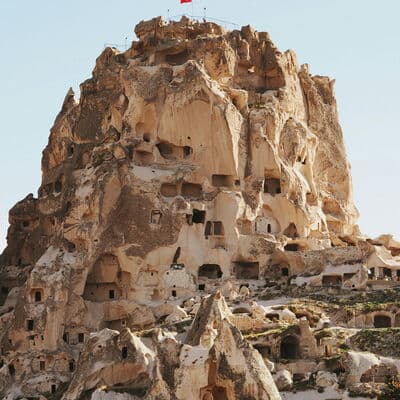
Perched on the highest point in the area around the natural rock fortress (Uchisar Castle), this quieter village offers spectacular panoramic views. It's slightly more upscale than Goreme, with boutique hotels favoring romance and relaxation over backpacker buzz.
Pros: Stunning 360° views, less crowded, more upscale ambiance, excellent sunset positions, feels more authentic away from main tourist strip.
Cons: Limited restaurant options (most guests eat at hotel), requires dolmus or car to reach attractions, fewer budget accommodations, less nightlife.
Best for: Couples, honeymoons, travelers seeking tranquility, those with rental cars, photographers wanting elevated viewpoints.
Recommended hotels: Museum Hotel (ultra-luxury, cave rooms with antiques), Argos in Cappadocia (restored monastery, wine cellar), Taskonaklar (boutique cave hotel).
Urgup: Wine Country Elegance
The largest town in the region, Urgup combines traditional Ottoman-era mansions with modern Turkish town amenities. Known for its wine heritage, the area around Urgup produces Cappadocia's best wines, and several hotels feature vineyards. The town has a more residential feel with excellent restaurants and fewer backpackers.
Pros: Best dining scene in the region, authentic Turkish town atmosphere, wine tasting opportunities, larger grocery stores and banks, beautiful stone houses.
Cons: 15-20 minutes from main attractions, fewer cave hotels compared to Goreme, requires transport to reach balloon launch sites.
Best for: Wine enthusiasts, those wanting local culture beyond tourism, repeat visitors, travelers with rental cars, food-focused visitors.
Recommended hotels: Sacred House (incredible design, antiques), Yunak Evleri (cave suites in cliff face), Serinn House (modern boutique).
Avanos: Pottery and the River
Situated along the Red River (Kizilirmak), Avanos maintains its centuries-old pottery tradition. The town is less touristy and more authentically Turkish, with artisans still working clay in traditional workshops. Prices are significantly lower here for both accommodation and dining.
Pros: Authentic atmosphere, lowest prices in the region, pottery workshops and experiences, riverside setting, friendly local community.
Cons: Least convenient location for major attractions, fewer cave hotels, limited restaurant variety, requires transport for everything.
Best for: Budget travelers, those interested in crafts and artisan culture, visitors seeking authentic local experience, long-term stays.
Ortahisar: Peaceful Alternative
Another castle town (ortahisar means "middle fortress") between Goreme and Urgup, this village sees fewer tourists while offering similar cave hotel experiences. The impressive rock citadel dominates the skyline, and the surrounding orchards produce excellent apricots and grapes.
Pros: Very peaceful, authentic village life, lower prices than Goreme, excellent valley access for hiking, less photographed (privacy).
Cons: Limited restaurants, basic services, requires transport, fewer English speakers.
Best for: Hikers, photographers seeking lesser-known spots, travelers wanting village immersion, returning visitors.
Cave Hotels: What to Expect
Cappadocia's signature accommodation is the cave hotel - rooms carved into soft volcanic tuff rock, some dating back centuries, now converted to modern lodging. Understanding what "cave room" means helps set expectations:
True cave rooms: Carved directly into rock with no windows (or small ones), naturally cool in summer (around 18-20°C / 64-68°F even in August), potentially damp in winter, romantic lighting required due to darkness, excellent acoustics (can be quiet or echo-y depending on design).
Cave-style rooms: Built from local stone with arched ceilings mimicking cave aesthetics but including normal windows and construction. More comfortable climate control but less authentic.
Arch rooms: Stone-built rooms with the characteristic Cappadocian arched ceilings, usually with terraces or balconies, proper windows, the most comfortable option while maintaining regional character.
Most mid-range and upscale hotels offer a mix of room types at different price points. If the cave experience matters to you, confirm exactly what room type you're booking before paying.
| Category | Room Type | Low Season | High Season |
|---|---|---|---|
| Budget | Basic cave room | $30-50 | $50-80 |
| Mid-range | Cave suite with terrace | $80-150 | $150-250 |
| Upscale | Luxury cave suite | $200-350 | $350-500 |
| Ultra-luxury | Historic cave with pool | $400-700 | $700-1,200 |
Top Attractions and Experiences
Hot Air Balloon Flights: The Signature Experience
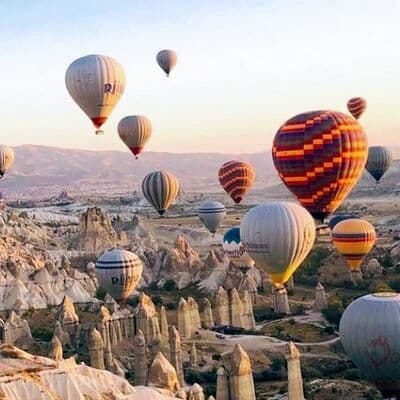
Cappadocia hosts the world's most scenic hot air balloon flights, and for many visitors, this experience alone justifies the trip. On clear mornings, up to 150 balloons rise simultaneously over the fairy chimneys, creating a spectacle unlike anywhere else on Earth. Here's everything you need to know:
The Flight Experience
Standard flights last 60 minutes, with premium options extending to 90 minutes or longer. You'll be picked up from your hotel around 4:30-5:00 AM (depending on season and sunrise time), driven to the launch site for light refreshments while watching the balloons inflate. Take-off happens at first light, around 5:30-6:30 AM depending on season. The balloon rises to 300-1,000 meters, offering views across the entire region - valleys, fairy chimneys, Erciyes Mountain in the distance, and dozens of other balloons around you.
After landing, you'll participate in a champagne toast (a hot air ballooning tradition worldwide) and receive a flight certificate. Return to your hotel is typically by 8:00-8:30 AM, leaving the rest of your day free.
Choosing a Company
Not all balloon operators are equal. The Civil Aviation Authority licenses around 25 companies, ranging from budget outfits to premium operators. Key differences include basket size (16-28 passengers standard vs. 8-12 for premium), pilot experience, equipment age, and service level. Price correlates reasonably with quality.
Premium operators ($300-500): Royal Balloon, Butterfly Balloons, Voyager Balloons, Turkiye Balloons. Smaller baskets (maximum 12-16 passengers), experienced chief pilots with 10,000+ flight hours, newer equipment, higher-quality breakfast and champagne, better customer service. Higher chance of flying in marginal conditions due to pilot skill.
Standard operators ($200-300): Larger baskets (20-28 passengers), qualified but less experienced pilots, adequate safety records, basic breakfast service. Good value if budget is a concern but experience will be less personalized.
Booking Strategy
Book directly with premium operators 4-6 weeks ahead during peak season (April-October), 1-2 weeks ahead in low season. Hotels and tour agencies sell flights at all price points but usually at marked-up prices. For standard flights booked on arrival, expect to pay $180-250 depending on season and negotiation.
Cancellation policies: Weather-related cancellations (common) result in full refunds or rescheduling. Most companies attempt flights on consecutive mornings until successful or your departure. Book your balloon flight for an early day of your trip to allow for weather delays.
What to Wear and Bring
Dress in layers - it's cool at altitude even in summer. Flat shoes required (no heels, sandals discouraged). Bring camera or phone but be prepared for crowded basket conditions. Hat and sunglasses helpful. Motion sickness is rare (smooth flight, no turbulence like in airplanes) but take medication if you're prone to it.
Goreme Open-Air Museum (UNESCO World Heritage Site)
This UNESCO-listed complex contains the highest concentration of rock-cut Byzantine churches in Cappadocia, featuring stunning frescoes dating from the 10th-12th centuries. The site covers a hillside with approximately 30 cave churches, most featuring well-preserved painted interiors depicting Biblical scenes.
Highlights: The Dark Church (Karanlik Kilise) - best-preserved frescoes in the region, requires separate ticket (150 TL additional); Tokali Church - largest church on site with unusual blue-painted interior; Apple Church (Elmali Kilise) - excellent Ascension fresco on dome.
Practical info: Open 8:00 AM to 7:00 PM (shorter hours in winter). Entrance: 700 TL ($23). Dark Church: additional 150 TL ($5). Arrive early (8:00-9:00 AM) or late afternoon to avoid tour groups. Allow 2-3 hours. No photography allowed inside churches. Museum Pass Turkey valid here.
Underground Cities
Ancient underground settlements carved into soft volcanic rock, used by early Christians hiding from persecution and later by locals seeking refuge from invasions. Two main cities are open to visitors:
Derinkuyu Underground City
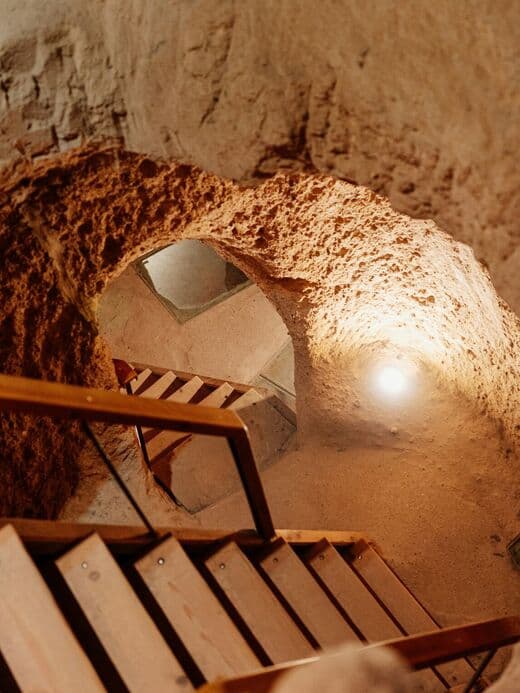
The deepest underground city in Cappadocia, extending 8 levels and 55 meters below ground. Could shelter 20,000 people plus livestock. Features include churches, wineries, stables, kitchens, and a ventilation system still functioning after 1,500+ years. The narrow passages and low ceilings require some crawling - not suitable for severely claustrophobic visitors or those with mobility issues.
Practical info: Open 8:00 AM to 7:00 PM. Entrance: 400 TL ($13). Located 30 km south of Goreme. Usually included in Green Tour or accessible by car/taxi.
Kaymakli Underground City
Shallower but wider than Derinkuyu, spanning 4 open levels. Better for those uncomfortable with tight spaces. The layout is more horizontal, making navigation easier. Contains similar facilities - living quarters, churches, storage rooms, wine presses.
Practical info: Open 8:00 AM to 7:00 PM. Entrance: 350 TL ($12). Located 25 km south of Goreme.
Valley Hiking
Cappadocia's valleys offer spectacular hiking through otherworldly landscapes. The best trails can be walked independently - no guide required - though tour agencies offer guided options if preferred.
Love Valley (Baglidere)
Famous for its phallic rock formations (hence the name), this valley offers dramatic scenery and moderate hiking. Trail starts from Goreme or Uchisar, approximately 4 km one way, 2 hours. Best at sunrise or sunset when formations glow orange-pink.
Rose Valley (Gulludere) and Red Valley (Kizilcukur)
These connected valleys feature pink and red rock formations that shift color with the light. Popular sunset hike, with multiple cafes along the trail offering Turkish tea and photo opportunities. Full route from Cavusin to Goreme: 6 km, 3 hours. Can be shortened to 1-2 hour out-and-back from Goreme.
Pigeon Valley (Guvercinlik)
Named for the countless pigeon houses carved into the rock (pigeon droppings historically used as fertilizer), this valley connects Goreme to Uchisar. Easy, mostly flat 4 km walk, under 2 hours. Excellent views of Uchisar Castle at the end.
Ihlara Valley
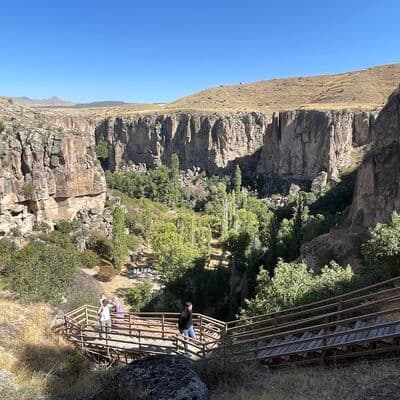
A 16 km canyon carved by the Melendiz River, containing over 100 cave churches along its walls. Lush green contrast to the arid fairy chimney landscape. Typically hiked as a 4 km section (included in Green Tour), but full-length trek possible for serious hikers. Located 70 km south of Goreme - requires transportation.
Uchisar Castle
The highest point in Cappadocia, this 60-meter natural rock citadel offers 360° views across the region. Climb through carved tunnels and staircases to the summit for panoramic vistas reaching Erciyes Mountain on clear days. Best at sunset when the fairy chimneys below catch golden light.
Practical info: Open 8:00 AM to 7:00 PM. Entrance: 150 TL ($5). Climb takes 15-20 minutes. Steep in places - wear appropriate shoes.
Devrent (Imagination) Valley
This valley's rock formations resemble animals, people, and mythical creatures if you use your imagination. No churches or historical sites - purely natural sculpture garden. Look for the camel rock, Napoleon's profile, and various claimed resemblances. Free to visit, included in most Red Tours, 20 minutes north of Goreme.
Pasabag (Monks Valley)
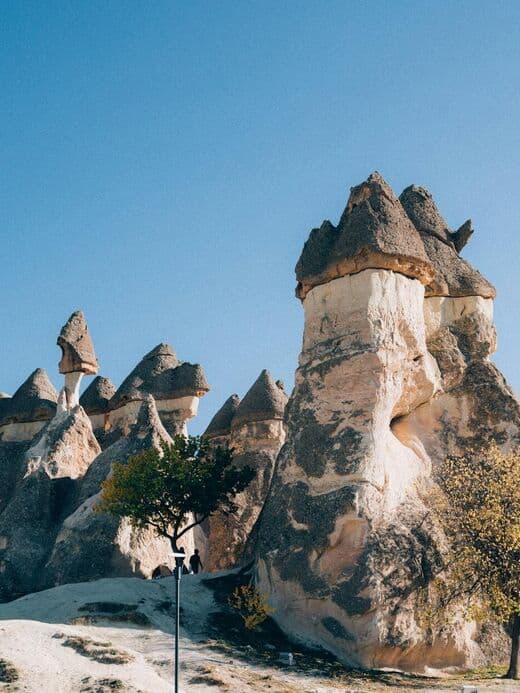
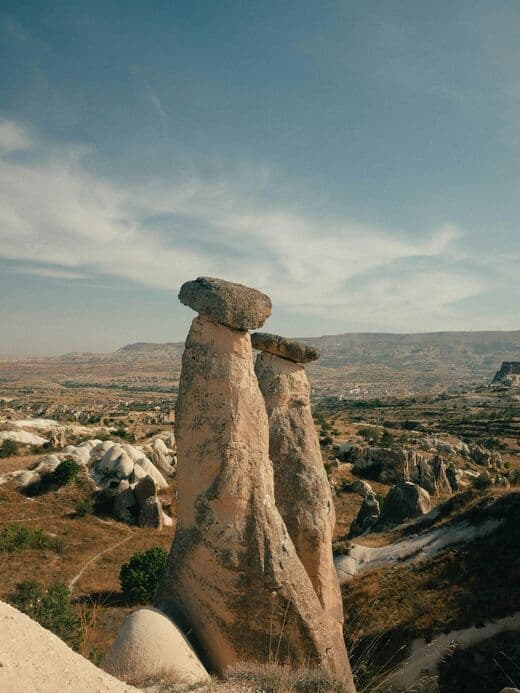
Home to the region's most striking fairy chimneys - tall, mushroom-shaped rock pillars topped with darker stone caps. Several chimneys were converted to hermit monk cells in Byzantine times, accessible via carved stairs. The valley is small but photogenic, walkable in 30-45 minutes.
Practical info: Open 24 hours, entrance free. Located on road between Goreme and Avanos, 5 km from Goreme. Usually combined with Red Tour or easily reached by dolmus.
Selime Monastery
One of the largest religious buildings in Cappadocia, this monastery complex carved into a mountainside features a cathedral-sized church, kitchens, stables, and living quarters. Feels like an entire city carved from rock. Star Wars fans may recognize it from Episode II filming.
Practical info: Open 8:00 AM to 6:00 PM. Entrance: 120 TL ($4). Located at the end of Ihlara Valley, usually combined in Green Tour.
What's New in 2025
Infrastructure and Access
The Turkish government's continued investment in Cappadocia's tourism infrastructure brings several improvements in 2025:
High-Speed Rail Extension: The long-awaited high-speed rail connection is now in advanced planning stages, with the Ankara-Kayseri line expected to reduce travel time from the capital to under 2 hours. While not yet operational, preliminary work has begun and completion is projected for late 2026.
Nevsehir Airport Expansion: Upgrades to terminal facilities and runway capacity now allow larger aircraft and increased frequency during peak season. Turkish Airlines has added more direct flights from Istanbul, reducing reliance on Kayseri for busy travel periods.
Digital Museum Tickets: The Museum Pass Cappadocia now includes digital entry at all major sites via smartphone. Purchase online and skip ticket queues at Goreme Open-Air Museum, underground cities, and other paid attractions. Three-day regional pass costs 1,000 TL ($33) covering all sites.
New Experiences
Balloon Flight Timing: To manage overcrowding and safety, new regulations in 2025 stagger departure times into two waves. Premium operators typically fly in the first wave (optimal conditions), while budget operators may fly in the second wave (still beautiful but busier). Book premium if timing matters.
Night Sky Experiences: Cappadocia has been designated an International Dark Sky Park candidate, leading to new stargazing programs. Several hotels now offer astronomer-led evening sessions, and dedicated observation decks have been established at select viewpoints. The region's minimal light pollution makes for exceptional stargazing, particularly around the new moon.
Expanded Wine Tourism: Urgup and surrounding villages have developed a formal Cappadocian Wine Route for 2025, linking eight wineries with organized tours, tastings, and vineyard accommodations. Turasan and Kocabag remain the leading producers, now joined by smaller boutique operations focusing on indigenous grape varieties.
Sustainability Initiatives
Overtourism Management: Popular hiking trails now feature timed entry during peak hours to prevent overcrowding. Rose Valley and Love Valley have installed simple ticketing systems during sunset hours (5:00-7:00 PM in summer), limiting numbers for better experiences.
Electric Vehicle Charging: New EV charging stations in Goreme, Urgup, and Avanos support the growing number of electric rental cars. If planning to rent an EV, confirm charging point locations and compatibility before departure.
Cave Hotel Regulations: Updated building codes for cave hotels prioritize both heritage preservation and guest safety. Hotels built or renovated after 2024 must meet new ventilation, emergency exit, and structural standards. Look for the "Certified Heritage Accommodation" designation when booking.
Price Updates 2025
Turkey's ongoing inflation affects visitor costs. Entrance fees have increased 30-40% from 2024 levels, though prices remain reasonable in dollar or euro terms due to currency fluctuations. Budget accordingly:
| Item | 2024 Price | 2025 Price |
|---|---|---|
| Goreme Open-Air Museum | 520 TL | 700 TL |
| Dark Church (additional) | 100 TL | 150 TL |
| Derinkuyu Underground City | 300 TL | 400 TL |
| Standard Balloon Flight | €180-220 | €200-250 |
| Premium Balloon Flight | €280-350 | €300-400 |
| Museum Pass Cappadocia | 750 TL | 1,000 TL |
Cappadocian Cuisine
Regional Specialties
Cappadocian cuisine reflects the region's agricultural heritage and Central Anatolian traditions. Unlike coastal Turkish areas with seafood focus, here you'll find hearty meat dishes, baked goods, and preparations unique to this volcanic landscape.
Testi Kebab (Pottery Kebab)
The signature dish of Cappadocia, testi kebab involves lamb, beef, or chicken slow-cooked with vegetables inside a sealed clay pot. The pot is dramatically cracked open tableside, releasing aromatic steam and revealing tender meat that's been stewing for hours. The clay pot cooking method is native to the region - Avanos has produced pottery for millennia, and this culinary tradition emerged from that craft.
Every tourist restaurant offers testi kebab, but quality varies. The best versions use proper slow cooking (4-6 hours minimum), quality meat, and handmade pots that are genuinely used once. Budget spots may cut corners with pressure cooking or reused pots. Expect to pay 300-500 TL ($10-17) for an authentic version.
Where to try: Dibek Restaurant (Goreme) - traditional preparation in historic cave setting. Top Deck Restaurant (Goreme) - good quality with panoramic views. Old Cappadocia (Urgup) - local favorite.
Manti (Turkish Dumplings)
Tiny dumplings filled with spiced minced meat, served with garlic-yogurt sauce and often topped with melted butter and dried mint. Cappadocian manti tends to be smaller than other regional versions - the smaller the dumpling, the more skilled the cook, according to tradition. Homemade versions in family restaurants far exceed commercial preparations.
Gozleme
Flatbread filled with cheese, spinach, potato, or minced meat, cooked on a convex griddle. You'll see gozleme stands throughout the region, often operated by village women using traditional techniques. A cheap, satisfying meal at 60-100 TL ($2-3). Try the spinach and cheese combination (ispanakli ve peynirli).
Yaprak Sarma and Dolma
Grape leaves or vegetables stuffed with rice, pine nuts, and spices. The vegetarian cold versions (zeytinyagli - cooked in olive oil) work as excellent mezze, while meat-stuffed hot versions constitute main courses. Cappadocian versions often include local dried fruits and nuts.
Breakfast Culture
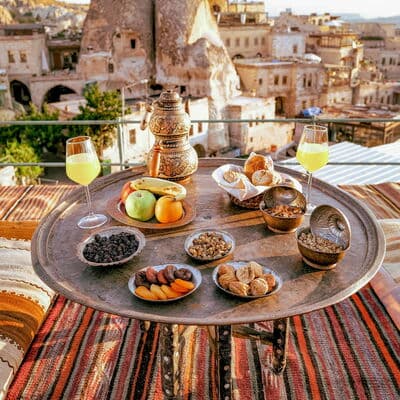
Turkish breakfast (kahvalti) is an event rather than a meal, and Cappadocian hotels take it seriously. Expect a spread of cheeses (including the regional curd cheese tulum), olives, tomatoes, cucumbers, eggs prepared to order, honeycomb, jams, butter, clotted cream (kaymak), sucuk (spiced sausage), and fresh-baked bread. Cave hotel breakfasts typically include regional specialties like gozleme made to order.
Most mid-range hotels include breakfast; budget properties may charge extra. Even if staying in self-catering accommodation, try at least one proper Turkish breakfast at a restaurant - Topdeck Cafe in Goreme and Manzara Restaurant in Urgup both offer excellent spreads for 150-250 TL ($5-8).
Wine
Cappadocia has produced wine for millennia, with volcanic soil creating distinctive mineral characteristics. The region's extreme continental climate - hot summers, cold winters - challenges grape growing but produces concentrated flavors. Local varieties to try:
Emir: White grape native to Cappadocia, producing crisp, citrusy wines. Excellent with fish or cheese, though you'll find more meat than seafood here.
Kalecik Karasi: Light red comparable to Pinot Noir, with cherry and spice notes. Works well slightly chilled with lighter dishes.
Okuzgozu and Bogazkere: Fuller-bodied reds, often blended together. Better with heartier meat dishes like testi kebab.
Wineries to visit: Turasan Winery (Urgup) - largest producer, free tastings. Kocabag Winery (Urgup) - boutique production, quality focus. Mahzen Winery (Uchisar) - cave cellars, atmospheric setting.
Restaurant Recommendations by Area
Goreme
- Dibek: Traditional cave restaurant, excellent testi kebab and regional dishes. Book ahead for terrace seating. 200-400 TL per person.
- Pumpkin Goreme: Rooftop terrace with balloon views, good breakfast and dinner. 150-300 TL per person.
- Nazar Borek: Tiny local spot for traditional borek (savory pastries) and gozleme. Under 100 TL.
- Topdeck Cave Restaurant: Good all-rounder with views. 200-350 TL per person.
Urgup
- Ziggy Cafe: Best dining in the region. Modern Turkish cuisine with local ingredients. Advance booking essential. 300-500 TL per person.
- Dimrit Cafe: Casual vibe, creative dishes, good vegetarian options. 150-250 TL per person.
- Prokopi: Wine-focused restaurant in historic Greek building. 250-400 TL per person.
Uchisar
- Lil'a Restaurant: At Museum Hotel, fine dining with spectacular views. 500-800 TL per person.
- Elai: Contemporary Turkish at Argos hotel. 400-600 TL per person.
Nightlife and Evening Entertainment
Cappadocia is not a party destination. Most visitors arrive exhausted from travel, wake at 4:30 AM for balloon flights, and spend days hiking through valleys. Nightlife exists but is low-key compared to Istanbul or Mediterranean resort towns.
Evening Activities
Sunset Viewpoints
The most popular evening activity involves watching the sunset paint the fairy chimneys in shades of gold, orange, and pink. Top spots:
- Sunset Point (Goreme): Easy walk from town center, gets crowded but deservedly popular.
- Uchisar Castle: Highest viewpoint, 360° panorama, requires entrance fee but stays open for sunset.
- Red Valley Viewpoint: Dedicated sunset cafe with tea service, stunning valley views.
- Love Valley Entrance: Less crowded alternative, interesting rock formations in foreground.
Turkish Night Shows
Several venues offer evening entertainment packages combining dinner with traditional performances: whirling dervish demonstrations (not full Sufi ceremonies), folk dancing, belly dancing, and live music. Typically 3-4 hours including transport and dinner. Quality is touristic rather than authentic, but enjoyable if expectations are calibrated.
Where: Evranos and Saruhan caravanserais host the most atmospheric shows in historic Silk Road buildings. Price: €50-70 including dinner, unlimited local drinks, and hotel transfers.
Rooftop Bars
Several hotels and restaurants offer rooftop terraces for evening drinks:
- Fat Boys Cafe (Goreme): Backpacker vibe, cheap beer, pool table. Open until midnight.
- Cafe Safak (Goreme): Central location, wide drink selection, casual atmosphere.
- Red Red Wine House (Goreme): Cave bar specializing in Cappadocian wines.
- Hotel terrace bars: Kelebek, Sultan Cave Suites, and others allow non-guests for drinks with purchase.
Stargazing
The region's minimal light pollution creates excellent stargazing conditions. Several operators offer astronomy evenings with telescopes and guides. Or simply walk 10 minutes from any town center on a clear night for remarkable naked-eye viewing. New moon periods offer the darkest skies; the Milky Way is clearly visible from May through October.
What to Expect
Most restaurants and bars close by 11:00 PM, with only a few spots in central Goreme staying open until midnight or 1:00 AM. There are no nightclubs or late-night dancing venues. Many visitors are in bed by 10:00 PM in preparation for early-morning balloon flights or sunrise hikes.
If you want nightlife combined with Cappadocia, consider spending a few days in Istanbul before or after your cave country adventure. The region's appeal lies in natural beauty and cultural heritage, not late-night entertainment.
Shopping and Souvenirs
What to Buy
Pottery (Avanos Speciality)
The town of Avanos has produced distinctive red clay pottery for over 4,000 years, using clay from the Kizilirmak (Red River). Today's artisans continue traditional techniques while also creating contemporary designs. Prices range from 50 TL for small decorative items to 500+ TL for large pieces. Visit workshops to see potters at work and understand what you're buying.
Recommended shops: Chez Galip (famous for hair museum and quality ceramics), Firca Seramik (family operation, traditional techniques), Sultan's Ceramic (varied selection, fair prices).
Pottery classes: Several Avanos workshops offer hands-on pottery experiences, typically 1-2 hours at 200-400 TL per person. You shape your own piece under instruction, though kiln-firing requires returning the next day or shipping.
Carpets and Kilims
Turkish carpets remain a popular purchase, though Cappadocia is not the cheapest place to buy them. Shops throughout Goreme and Urgup sell both antique and new hand-knotted rugs in traditional Central Anatolian patterns. Expect to pay $200-500 for small kilims (flat-woven rugs), $500-2,000+ for wool knotted carpets, significantly more for silk or antique pieces.
Buying tips: Never accept the first price; negotiating 30-40% off is normal. Ask about materials (wool vs. synthetic), origin (hand vs. machine made, Turkey vs. imported), and age. Request to see the back of the carpet - handmade pieces have slight irregularities while machine-made look too perfect. Get a written certificate of authenticity for valuable pieces.
Cappadocian Wine
A bottle of local wine makes an excellent souvenir - unique to the region and reasonably priced. Turasan and Kocabag bottles start at 150-200 TL in shops (cheaper than at wineries). Airport shops stock regional wines if you forget to buy in town. Pack in checked luggage with proper padding.
Onyx and Jewelry
The region produces decorative onyx objects - chess sets, eggs, vases, bowls - sold throughout tourist shops. Quality and prices vary enormously. True onyx has translucent properties when held to light. Cheap resin imitations flood the market, so buy from reputable shops if quality matters.
Turkish Textiles
Hammam towels (peshtemal), cotton throws, and traditional embroidered items make lightweight, packable souvenirs. Quality cotton peshtemal cost 100-200 TL and work as beach towels, scarves, or home decor. Ikat-printed fabrics and Anatolian embroidery also available.
Fairy Chimney Souvenirs
Inevitable tourist kitsch includes miniature fairy chimneys, balloon-themed items, and Cappadocia-branded products. Fun for inexpensive gifts, but don't expect artisanal quality. Ceramic fairy chimneys from Avanos at least support local craft tradition.
Shopping Areas
Goreme Main Street
Tourist-focused shops concentrated along the 600-meter main drag. Competitive pricing due to density, but also more aggressive sales tactics. Good for comparing options and last-minute purchases.
Urgup Bazaar Area
More local shopping experience around the old town. Fewer tourists, slightly lower prices, more authentic atmosphere. Better for carpets and antiques.
Avanos Town Center
Best for pottery and ceramics. Walk the main street visiting workshops rather than just tourist shops. Prices lower than Goreme for equivalent quality.
Bargaining Culture
Negotiating prices is expected for carpets, antiques, and leather goods. Not appropriate for food, accommodation, or fixed-price shops. Start at 40-50% of asking price and settle around 30-40% off. Walk away if prices don't meet your budget - sellers often call you back with better offers. Never begin serious negotiation unless you're willing to buy at a reasonable price.
Budget Planning
Daily Budget Ranges
Budget Traveler: $50-80/day
- Accommodation: $25-40 (basic cave room in guesthouse or hostel dorm)
- Food: $15-25 (local restaurants, gozleme, breakfast included at hotel)
- Transport: $5-10 (dolmus, walking)
- Activities: Free-$10 (valley hiking, sunset viewpoints)
At this level, skip the balloon flight or book the cheapest operator. Focus on hiking, free viewpoints, and enjoying the landscape without paid attractions. Still a rewarding experience but requires sacrifice on the signature activity.
Mid-Range Traveler: $150-250/day
- Accommodation: $80-150 (cave suite with terrace)
- Food: $30-50 (hotel breakfast, good restaurants)
- Transport: $10-20 (occasional taxi, organized tours)
- Activities: $30-50 (entrance fees, museums)
Add balloon flight ($200-300 one-time cost) spread across your stay. This budget allows comfortable cave hotel experience, good dining, and all major attractions.
Upscale Traveler: $400-700/day
- Accommodation: $200-400 (luxury cave suite, pool access)
- Food: $80-150 (fine dining, wine pairings)
- Transport: $50-100 (private tours, transfers)
- Activities: $70-150 (premium experiences)
Premium balloon flight, private guided tours, spa treatments, wine tasting experiences, and luxury cave hotels with all amenities.
Major Expenses Breakdown
| Expense | Budget Option | Mid-Range | Premium |
|---|---|---|---|
| Balloon Flight | $180-200 | $220-280 | $350-500 |
| Cave Hotel (night) | $40-60 | $100-180 | $300-600 |
| Red/Green Tour | $35-45 | $45-60 | $150+ private |
| Airport Transfer | $15 shared | $20-25 shared | $60-80 private |
| Goreme Museum | $23 (700 TL) | ||
| Underground City | $13 (400 TL) | ||
| Dinner for Two | $20-30 | $40-70 | $100-200 |
Money-Saving Tips
- Visit off-season: November-March sees 30-50% lower accommodation prices, though weather may impact balloon flights.
- Buy Museum Pass: At 1,000 TL covers Goreme Museum, underground cities, and other sites - pays for itself in 2-3 visits.
- Walk the valleys: Free hiking offers Cappadocia's best experiences without entrance fees.
- Eat local: Gozleme stands and local restaurants cost fraction of tourist spots.
- Book balloon direct: Hotel markup is 10-20% over direct booking.
- Share transport: Split taxi costs with other travelers for airport transfers.
- Carry TL cash: Some discounts for cash payment, and small vendors may not accept cards.
Currency and Payments
Turkish Lira (TRY/TL) is the official currency. ATMs available in all towns. Major credit cards accepted at hotels, tour agencies, and upscale restaurants. Smaller shops, village eateries, and dolmus require cash. Euro and USD sometimes accepted at tourist businesses but at poor exchange rates - always pay in lira.
As of late 2024, $1 USD ≈ 30 TL. The lira fluctuates significantly, so check current rates before departure. ATM withdrawals offer the best exchange rates; avoid airport currency exchanges.
Culture and Etiquette
Religious and Social Context
Turkey is a secular republic with a Muslim-majority population. Cappadocia, particularly the tourist areas, is quite liberal by Turkish standards - you'll see alcohol served openly, women in Western dress, and relaxed attitudes toward visitors. However, respecting local customs enhances your experience and shows appreciation for your hosts.
Dress Code
Casual Western clothing is acceptable throughout tourist areas. For mosque visits (not common in Cappadocia but possible in surrounding towns), women should cover shoulders, upper arms, and legs below the knee; head coverings are required inside mosques. Men should avoid shorts inside mosques.
The region's conservative rural areas appreciate modest dress - avoid very short shorts or revealing tops when visiting villages. For hiking, practical clothing is perfectly fine regardless of coverage.
Hospitality Culture
Turkish hospitality (misafirperverlik) runs deep. Expect to be offered tea (çay) frequently - in shops, hotels, restaurants, even during carpet negotiations. Accepting tea doesn't obligate you to purchase, though aggressive sellers may use it as a sales tactic. A simple "teşekkür ederim" (thank you) is always appreciated.
Refusing hospitality can cause offense, so accept graciously when possible. If you genuinely can't take another tea, politely decline by placing your hand on your heart.
Photography Etiquette
Photography is allowed almost everywhere outdoors. Inside Goreme Open-Air Museum and other historical sites, no photography is permitted within the rock-cut churches - this protects fragile frescoes and is strictly enforced. Signs indicate prohibited areas.
Ask permission before photographing local people, especially in rural areas or traditional settings. Most people consent happily, but assuming permission can cause offense.
Drone photography requires permits in Turkey and is generally prohibited over tourist sites without authorization. The Civil Aviation Authority enforces restrictions, and balloon operators specifically forbid drone flights during balloon hours for safety reasons.
Bargaining Culture
Negotiating is expected for carpets, antiques, and souvenirs in bazaar settings. Not appropriate for food, fixed-price shops, hotels (though asking for discounts on long stays is fine), or services with stated prices. The process should be friendly - aggressive bargaining or showing anger is considered poor form. Walk away if prices don't meet your budget.
Tipping
Tipping isn't obligatory but is appreciated:
- Restaurants: 5-10% for good service, often left as cash even when paying by card.
- Hotels: 10-20 TL per night for housekeeping, more at luxury properties.
- Balloon pilots/crew: €10-20 per person for pilots, €5-10 for ground crew if you're happy with the experience.
- Tour guides: 50-100 TL per person for day tours.
- Drivers: 10-20% of taxi fares for helpful drivers.
Language
Turkish is the national language, but English is widely spoken in tourist areas. Hotel staff, tour guides, and restaurant servers typically communicate well in English. Learning a few Turkish phrases shows respect and often brings smiles:
- Hello - Merhaba
- Thank you - Teşekkür ederim
- Please - Lütfen
- Yes/No - Evet/Hayir
- How much? - Ne kadar?
- Beautiful - Güzel
- Delicious - Lezzetli
- Goodbye - Hoşça kal
Practical Tips
Pre-Trip Planning
Visa Requirements
Visa requirements depend on nationality. Check current rules at the official e-Visa website (evisa.gov.tr) well before travel, as requirements change.
- US citizens: Require e-Visa ($50.50), valid for 90 days within 180-day period, multiple entry. Apply online at least 48 hours before departure.
- UK citizens: Require e-Visa (approximately £40), similar terms to US.
- EU citizens (most): Visa-free for 90 days, just need valid passport.
- Canadian citizens: Require e-Visa ($60 CAD), valid for 30 days.
- Australian citizens: Require e-Visa ($60 AUD), valid for 90 days.
Always use the official government e-Visa site, not third-party services that charge extra fees. Process takes minutes and approval is typically instant for qualifying nationalities.
Health and Vaccinations
No specific vaccinations required for Turkey. Standard travel health precautions apply - ensure routine vaccinations are current. Tap water is not generally drunk in Turkey; bottled water is cheap and widely available. The dry climate and active outdoor activities make staying hydrated especially important.
Travel Insurance
Strongly recommended. Balloon flights, hiking in remote valleys, and ATV activities carry inherent risks. Ensure your policy covers adventure activities and medical evacuation. The nearest major hospital is in Kayseri (80 km from Goreme).
On the Ground
Connectivity
Buy a Turkish SIM card at the airport for reliable data coverage. Turkcell offers the best coverage in Cappadocia, followed by Vodafone and Turk Telekom. Tourist SIM packages with 10-20GB data cost 400-600 TL. Alternatively, most hotels offer free Wi-Fi, though quality varies.
For international travelers, check if your home carrier offers reasonable Turkey roaming packages before buying local SIM.
Power and Adapters
Turkey uses European-style two-pin plugs (Type C and F) at 230V. US and UK visitors need adapters. Cave hotels often have limited outlets due to rock construction - bring a power strip or multi-port USB charger.
Safety
Cappadocia is very safe for tourists. Petty crime is rare, violent crime almost unheard of in tourist areas. Normal travel precautions apply - don't leave valuables in parked cars, be aware of surroundings at night. Solo female travelers generally feel comfortable, though unwanted attention occasionally occurs in isolated areas.
The main physical risks involve hiking on uneven terrain, heat exposure in summer, and adventure activities. Wear appropriate footwear for valley walks, carry water, and inform someone of your hiking plans if venturing to remote areas.
Altitude and Climate
Cappadocia sits at approximately 1,100 meters (3,600 feet) elevation. Most visitors won't notice altitude effects, but those sensitive to elevation should take it easy the first day. The continental climate means significant temperature swings between day and night - even summer nights can be cool. Bring layers.
Sun protection is essential year-round. The clear skies and elevation intensify UV exposure. Bring sunscreen, sunglasses, and a hat for daytime activities.
Balloon Flight Tips
- Book early: Secure flights for your first full day to allow for weather delays.
- Dress in layers: Cool at altitude even in summer; warm on ground before sunrise.
- Flat shoes required: No sandals, heels, or loose footwear for safety.
- Eat lightly: Light pre-flight snack; big breakfast after landing.
- Charge devices: You'll want full batteries for photos and video.
- Motion sickness: Rare (no turbulence), but take medication if prone.
- Prepare for crowds: You'll share the basket with 12-28 others.
- Accept weather cancellations: Safety takes precedence over schedules.
What to Pack
- Hiking shoes: Essential for valley walks on uneven terrain.
- Layers: Temperature swings between morning and midday require flexibility.
- Sunscreen and hat: Strong UV at elevation.
- Flashlight/headlamp: For underground cities and evening walks.
- Power adapter: European plugs (Type C/F).
- Reusable water bottle: Stay hydrated; refill at hotels.
- Small daypack: For hiking and day trips.
- Camera with good low-light: Many cave interiors and dawn/dusk shots.
Sample Itineraries
3-Day Essential Cappadocia
The minimum time to experience Cappadocia's highlights. Requires early starts and efficient planning.
Day 1: Arrival and North Cappadocia
- Arrive at Kayseri or Nevsehir airport, transfer to Goreme (1-1.5 hours)
- Check into cave hotel, explore Goreme village
- Book balloon flight for Day 2 or 3 (confirm early morning pickup)
- Late afternoon: Walk to Sunset Point for evening views
- Dinner at traditional restaurant (try testi kebab)
- Early to bed for 4:30 AM balloon pickup
Day 2: Balloon Flight and North Tour
- 4:30 AM: Balloon flight pickup, return by 8:30 AM
- 9:00 AM: Breakfast at hotel (you'll be hungry and exhilarated)
- 10:00 AM - 5:00 PM: Red Tour (Goreme Museum, Uchisar Castle, Avanos, Pasabag, Devrent Valley) or self-drive equivalent
- Evening: Wine tasting at Turasan or Kocabag winery in Urgup
- Dinner in Urgup (try Ziggy or Dimrit)
Day 3: South Cappadocia and Departure
- 8:00 AM: Green Tour or private driver to south Cappadocia
- 9:30 AM: Derinkuyu Underground City
- 11:00 AM - 1:00 PM: Ihlara Valley hike (4 km section)
- 1:30 PM: Lunch at riverside restaurant in Belisirma
- 2:30 PM: Selime Monastery
- 4:00 PM: Return to Goreme, collect luggage
- 5:00 PM: Transfer to airport for evening departure
5-Day Comprehensive Experience
A comfortable pace allowing deeper exploration without rushing.
Day 1: Arrival and Orientation
- Arrive and transfer to cave hotel
- Afternoon walk through Goreme village
- Late afternoon: Pigeon Valley walk to Uchisar (4 km, easy)
- Sunset from Uchisar Castle
- Dolmus return to Goreme, dinner
Day 2: Balloon and Open-Air Museum
- Balloon flight at dawn
- Extended breakfast
- 10:00 AM: Goreme Open-Air Museum (2-3 hours, include Dark Church)
- Afternoon: Explore Rose Valley on foot (2-3 hour hike)
- Sunset at Red Valley viewpoint with tea
Day 3: South Cappadocia
- Morning: Green Tour or private driver
- Full day: Derinkuyu, Ihlara Valley, Selime Monastery
- Return late afternoon
- Evening: Turkish Night show at Saruhan caravanserai (optional)
Day 4: Active Exploration
- Sunrise hike in Love Valley (or sunrise ATV tour)
- Late morning: Pottery workshop in Avanos
- Afternoon: Wine tour visiting 2-3 Urgup wineries
- Evening: Fine dining at Ziggy or Lil'a
Day 5: Flexible and Departure
- Sleep in (finally!)
- Morning: Kaymakli Underground City (alternative to Derinkuyu if interested)
- Or: Second balloon flight if first was cancelled
- Or: Spa treatment at hotel
- Shopping in Goreme or Avanos
- Afternoon departure
7-Day Extended Exploration
For those wanting complete immersion including lesser-visited areas.
Days 1-5: Follow 5-day itinerary above
Day 6: Off the Beaten Path
- Blue Tour or private exploration to Soganli Valley (Byzantine churches, few tourists)
- Mustafapasa Greek village (historic architecture, photo opportunities)
- Ortahisar for authentic village atmosphere
- Evening: Cooking class at local restaurant
Day 7: Relaxation and Departure
- Second balloon flight (highly recommended for different perspective/conditions)
- Hammam experience in Goreme or Urgup
- Final souvenir shopping
- Leisurely lunch overlooking the valleys
- Departure
Romantic Itinerary (4 Days)
Designed for couples and honeymoons.
Day 1:
- Stay at Museum Hotel or Argos in Cappadocia (Uchisar)
- Private transfer with champagne
- Couples massage at hotel spa
- Sunset dinner on panoramic terrace
Day 2:
- Private premium balloon flight (smaller basket, better champagne)
- Extended breakfast in bed or on terrace
- Private guide for Goreme Museum and Rose Valley
- Wine tasting with sunset at Mahzen Winery
- Intimate dinner at Elai or Lil'a
Day 3:
- Sleep in, lazy morning at hotel
- Private vintage car tour through valleys
- Picnic lunch arranged by hotel at scenic viewpoint
- Pottery class for two in Avanos
- Turkish bath experience
Day 4:
- Sunrise from hotel terrace (watch balloons from bed)
- Final shopping for engagement/anniversary mementos
- Romantic departure
Frequently Asked Questions
Balloon Flights
What happens if my balloon flight is cancelled?
Weather cancellations are common, especially in winter (40-50% of flights cancelled). Reputable companies reschedule for the next available day at no charge. If you can't stay longer, full refunds are provided. Book your flight for the first day of your trip to allow buffer days.
Is the balloon flight worth the cost?
Overwhelmingly yes, according to most visitors. It's consistently rated as the highlight of Cappadocia visits and one of the world's premier balloon experiences. The combination of unique landscape and mass balloon launches creates scenes impossible to replicate elsewhere. Even at €200-300, it represents good value for an hour-long once-in-a-lifetime experience.
Is the balloon flight safe?
Yes, when operated by licensed companies with experienced pilots. The Turkish Civil Aviation Authority regulates balloon operations strictly. Serious accidents are rare. The main risks involve landing in windy conditions - injuries occasionally occur when baskets tip on rough landings. Premium operators with experienced pilots have better safety records.
Can I fly if I'm pregnant, elderly, or have health conditions?
Pregnant women in their third trimester are typically not permitted to fly. No age limit exists for healthy elderly passengers. Those with severe mobility issues may struggle with basket entry/exit (climbing over waist-high sides). Heart conditions, severe asthma, and vertigo warrant consultation with your doctor before booking.
Accommodation
Are cave hotels comfortable?
Modern cave hotels range from basic to ultra-luxury. Mid-range and upscale options offer comfortable beds, en-suite bathrooms, heating/cooling, and amenities comparable to conventional hotels. True cave rooms can be dark (limited windows) and occasionally damp in winter, but well-designed ones feel romantic rather than primitive.
Should I stay in Goreme or elsewhere?
Goreme for first-time visitors wanting maximum convenience and nightlife options. Uchisar or Ortahisar for couples seeking romance and tranquility. Urgup for foodies and wine enthusiasts. See the Districts section for detailed comparison.
Practical Matters
How many days do I need in Cappadocia?
Minimum 2-3 days to see highlights (balloon flight, museum, one valley, one underground city). Ideal 4-5 days for comfortable pacing. 6-7 days allows off-beaten-path exploration and possible second balloon flight. Beyond a week, most visitors feel they've covered the region thoroughly.
Is Cappadocia suitable for children?
Yes, with caveats. Children love the fairy chimneys, underground cities, and balloon flights (minimum age varies by operator, typically 4-6 years). However, extensive hiking on uneven terrain challenges young children, and some underground passages require crawling. Mid-range activity levels work best for families.
What if I'm claustrophobic?
Avoid underground cities - the narrow passages and low ceilings trigger claustrophobia in many visitors. Kaymakli is slightly more spacious than Derinkuyu. Cave hotels vary widely - some rooms feel open and airy, others genuinely cave-like. Request "arch rooms" with windows if concerned.
Is the region accessible for travelers with disabilities?
Limited accessibility, unfortunately. Most attractions involve uneven terrain, stairs, and narrow passages. Cave hotels rarely have elevators. Underground cities are impossible for wheelchair users. Balloon baskets require climbing over sides. However, panoramic viewpoints accessible by vehicle allow experiencing the landscape, and some modern hotels offer accessible rooms.
Can I visit Cappadocia as a day trip from Istanbul?
Technically possible but not recommended. The 1.5-hour flight each way plus transfers leaves minimal time for sightseeing. Day tours exist (fly at 6 AM, return at 10 PM) but the rushed experience doesn't do justice to the region. Overnight stays are strongly recommended.
Is Turkey safe to visit in 2025?
Cappadocia is very safe for tourists. The region sees no political tensions, minimal crime, and welcoming locals. Check your government's travel advisories before booking, but central Anatolia (where Cappadocia is located) is far from any concerning border areas. Standard travel precautions apply.
Do I need to speak Turkish?
No. English is widely spoken in tourist areas, and language barriers are easily overcome with translation apps. Learning basic Turkish phrases (hello, thank you, please) is appreciated but not necessary.