Genoa
Genoa - Great Maritime Republic, Birthplace of Columbus, and Capital of Pesto
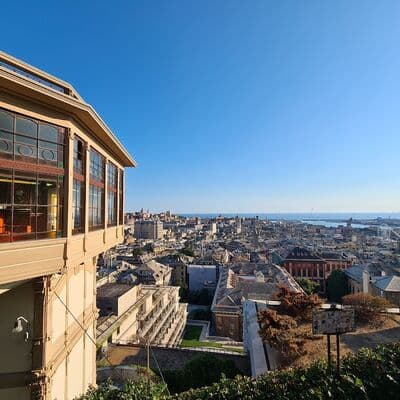
Genoa, capital of Liguria, stretches along the Ligurian Sea coast at the foot of the Apennines. This city with a thousand years of history was one of Italy's four great maritime republics, rivaling Venice for Mediterranean dominance. Today Genoa impresses with its contrasts: magnificent palaces of Strada Nuova stand alongside a labyrinth of medieval alleyways, while Italy's largest port neighbors charming fishing villages.
History - Mistress of the Seas
Genoa's history as a maritime power began in the early Middle Ages. The city successfully resisted the Saracens and by the 11th century had become one of the leading trading powers of the Mediterranean. Genoese merchants established trading colonies from Crimea to North Africa, controlling spice and silk routes.
Genoa's golden age came in the 16th-17th centuries when Genoese bankers financed the Spanish crown and controlled much of European finance. It was then that the magnificent palaces of Strada Nuova (now Via Garibaldi) were built, becoming symbols of the republic's wealth. During this period Genoa earned the nickname "La Superba" - The Superb.
Genoa gave the world Christopher Columbus (though his exact birthplace is disputed), violinist Niccolò Paganini, and revolutionary Giuseppe Mazzini. In the 19th century, the city became a center of the Risorgimento - the movement for Italian unification.
Strada Nuova and the Rolli Palaces
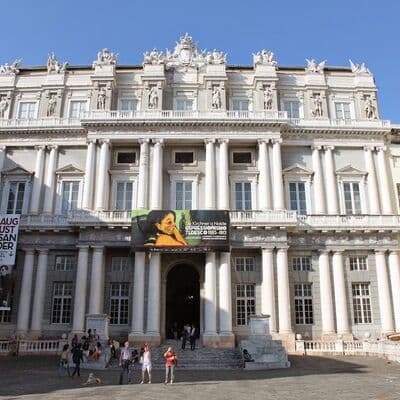
Via Garibaldi (formerly Strada Nuova) is Genoa's main attraction and a UNESCO World Heritage Site. This "street of kings" was laid out in the mid-16th century and lined with palaces of the wealthiest Genoese families.
Palazzo Rosso
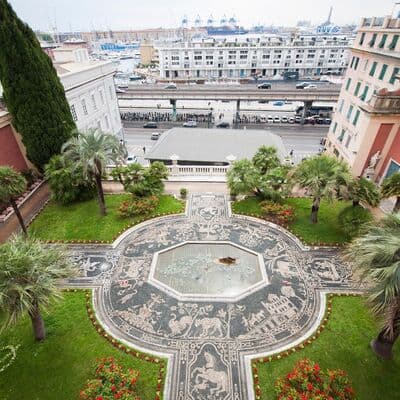
A 17th-century palace with a rich painting collection: works by Van Dyck, Veronese, Dürer, and Caravaggio. Especially impressive are portraits of Genoese aristocracy by Van Dyck, who worked in Genoa for six years. The rooftop offers panoramic views of the old town and port.
Palazzo Bianco
Opposite Palazzo Rosso stands Palazzo Bianco with its collection of Flemish and Italian painting. Masterpieces by Rubens, Memling, Filippino Lippi, and Genoese masters are housed here.
Palazzo Doria-Tursi
The largest palace on the street, now city hall. The museum halls contain Paganini's violin "Il Cannone" by Guarneri - it's removed from its display case once a year for a concert by the winner of the Paganini International Competition.
The Rolli Palace System
42 palaces in Genoa's historic center are listed as UNESCO "Rolli Palaces." This was a unique system: in the 16th-17th centuries, Genoese nobility was required to host distinguished guests of the republic according to special lists (rolli). The wealthiest families competed in the luxury of their décor.
Old Town - Europe's Largest Medieval Center
Genoa's historic center is one of Europe's largest medieval urban centers. The labyrinth of narrow alleyways (caruggi) with tall buildings, where sunlight barely reaches the pavement, preserves the atmosphere of a medieval port city.
San Lorenzo
Genoa's cathedral with its black-and-white striped Gothic façade. Construction began in the 12th century. Inside is the Chapel of San Giovanni Battista with the relics of John the Baptist, the city's patron. The treasury holds the Sacred Basin (Sacro Catino) - medieval legends linked it to the Holy Grail.
Piazza San Matteo
A small square belonging to the powerful Doria family. The Church of San Matteo (12th century) and surrounding palaces were private property of one family. Admiral Andrea Doria, who saved Genoa from French absorption in the 16th century, is buried here.
Porta Soprana
Medieval gates from the 12th century - remnants of the city walls. Nearby stands the house where Christopher Columbus supposedly was born (a reconstruction). The original building was destroyed by French bombardment in 1684.
Via Garibaldi and the Alleyways
The contrast between the grand Strada Nuova and the dark alleyways of the old port is striking. Hidden in the caruggi are Romanesque churches, medieval towers of noble families, antique shops, and traditional taverns. It's safe during the day, but at night it's better to stick to lit streets.
Port and Waterfront
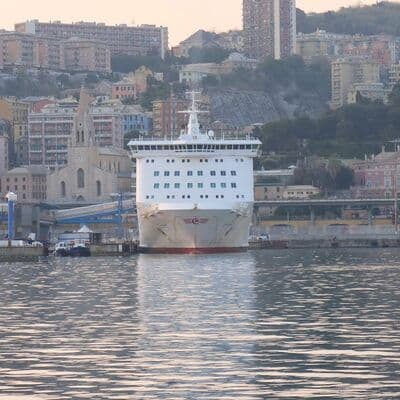
Genoa's port is Italy's largest and one of the Mediterranean's main ports. The Old Port (Porto Antico) was transformed for Expo 1992 according to a design by Renzo Piano, a Genoa native.
Genoa Aquarium
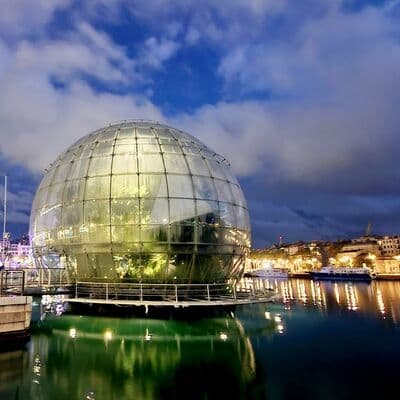
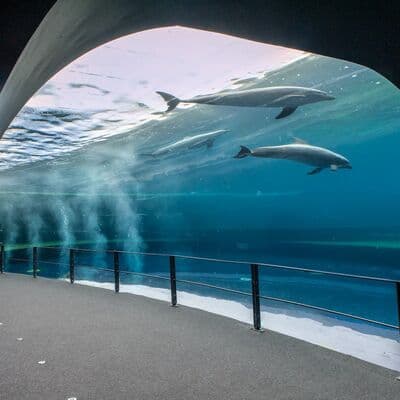
Europe's second-largest aquarium with more than 12,000 animals of 600 species. Dolphins, sharks, penguins, jellyfish, and tropical fish. Especially impressive are the manatee pavilion and the Biosphere - a glass sphere with tropical forest.
Biosphere and Bigo Panoramic Lift
A 20-meter diameter glass sphere recreates a tropical forest with exotic plants and animals. Nearby is the Bigo panoramic lift, rising 40 meters and offering 360-degree views.
Neptune Galleon
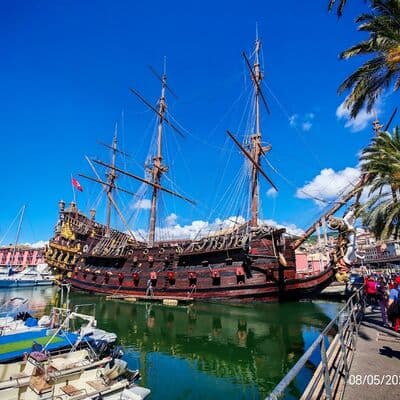
A full-size replica of a 17th-century Spanish galleon built for Roman Polanski's film "Pirates." You can board and explore the cabins and decks.
Galata Maritime Museum
The Mediterranean's largest museum dedicated to seafaring. The exhibition covers history from Genoese galleys to transatlantic liners. A special section is devoted to Italian emigration to America - you can walk through recreated emigrant cabins.
Churches and Religious Art
Genoa is rich in churches with outstanding works of art.
Santa Maria di Castello
A 12th-century Romanesque church on the site of a Roman castrum. The adjacent Dominican monastery contains 15th-century frescoes and an Annunciation by Giusto di Raimbondino.
Santissima Annunziata del Vastato
A 16th-17th century Baroque church with a dazzling golden interior. Ceiling frescoes by the Carlone brothers and altarpieces by Rubens, Procaccini, and Guido Reni.
San Donato
A 12th-century Romanesque church with an octagonal bell tower. Inside is an Adoration of the Magi by Joos van Cleve (16th century).
Staglieno Cemetery
A 19th-century monumental cemetery - an open-air museum with stunning marble sculptures. Realistic tombstones by the era's finest sculptors depict mourning angels, allegorical figures, and portraits of the deceased. Mazzini and other famous Genoese are buried here.
Villas and Gardens
Genoese aristocracy built country villas with terraced gardens on hillsides.
Villa del Principe
A 16th-century palace of Admiral Andrea Doria - the only Genoese villa with preserved seaside gardens. Frescoes by Perino del Vaga, Raphael's pupil, decorate the halls. Terraced gardens descend to the sea, though partially lost to port expansion.
Nervi Parks
The suburb of Nervi, 11 km from the center, is a resort area with parks and villas. The Passeggiata - a promenade along the rocky shore with sea views. In the parks are a rose garden and modern art museums in historic villas.
Castello D'Albertis
A 19th-century neo-Gothic castle on a hill overlooking the city. An ethnographic museum with collections brought by Captain D'Albertis from his voyages around the world.
Genoese Cuisine
Ligurian cuisine is one of Italy's most distinctive, based on aromatic herbs, olive oil, and gifts from the sea.
Pesto Genovese
The legendary sauce of basil, pine nuts, garlic, Parmesan, Pecorino, and olive oil. Genoese small-leaf basil (basilico genovese DOP) is the key ingredient. Pesto is served with trofie or trenette pasta, often with potatoes and green beans (trenette al pesto).
Focaccia
Genoese focaccia is a flat bread with olive oil and coarse salt. Eaten for breakfast with cappuccino or anytime. Variations: focaccia di Recco with stracchino cheese, focaccia with onion.
Farinata
A crispy flatbread of chickpea flour baked in wood-fired ovens in huge copper pans. Popular street food. Often sold in specialized shops called farinaterie.
Seafood
Cappon magro - a festive dish of fish, seafood, and vegetables on hardtack. Stoccafisso accomodato - Genoese-style dried cod. Fritto misto di mare - assorted fried seafood. Anchovies from Monterosso - a Cinque Terre delicacy.
Sweets
Pandolce - Genoese Christmas cake with candied fruit and nuts, less sweet than Milanese panettone. Canestrelli - delicate flower-shaped cookies.
Ligurian Riviera
Genoa is the starting point for exploring Liguria's picturesque coastline.
Cinque Terre
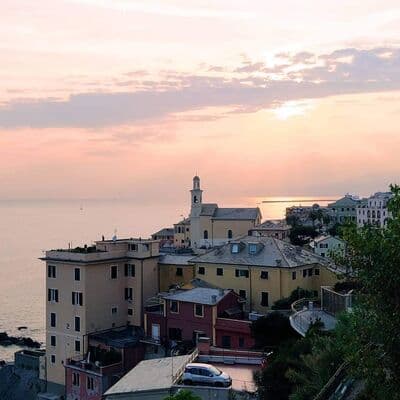
Five colorful villages on cliffs - Monterosso, Vernazza, Corniglia, Manarola, Riomaggiore - a UNESCO site. Terraced vineyards, seaside trails, fresh anchovies, and local wine. Riomaggiore is an hour by train.
Portofino
An elite resort in a protected bay - a favorite of celebrities. Pastel houses, yachts, expensive restaurants. You can walk from Santa Margherita Ligure or take a boat.
Santa Margherita Ligure
An elegant resort town with belle époque villas, a promenade, and pebble beaches. A base for visiting Portofino.
Camogli
A picturesque fishing town with tall colorful houses by the water. Famous for its fried fish festival in May (Sagra del Pesce) - a giant 4-meter diameter frying pan.
Riviera di Ponente
The western coast: San Remo with its casino and song festival, Bordighera with palm trees, Albenga with its medieval center.
Practical Information
Useful tips for a comfortable visit to Genoa.
Transportation
Cristoforo Colombo Airport (GOA) is 6 km from the center, connected by Volabus. Piazza Principe and Brignole railway stations are on main lines. Milan is 1.5 hours by high-speed train, Pisa 2 hours, Nice 3 hours.
City Transport
A single metro line, buses, funiculars, and elevators (Genoa is a city of hills). The Largo degli Zecca and Sant'Anna funiculars climb to the upper town with panoramic views. The historic Casella railway goes into the mountains.
Genoa in One Day
Optimal route: morning at Palazzo Rosso and Via Garibaldi, then San Lorenzo Cathedral and the old town, lunch with focaccia and pesto, afternoon at the Old Port with the aquarium, evening dinner at the port.
When to Visit
Best time is late spring (April-June) and early autumn (September-October). Summer is hot and crowded on the Riviera. Winter has mild climate, fewer tourists.