Pisa
Pisa 2026: What to Know Before You Go
Pisa is not just the Leaning Tower. Most visitors roll in for a couple of hours, snap a photo pretending to hold up the tower, and leave without ever discovering the real city underneath. That is a mistake. Pisa is a genuine Tuscan university town with 50,000 students, stunning Arno River embankments, outstanding food that rivals Florence at half the price, and a relaxed atmosphere that bigger Tuscan cities lost decades ago.
The short version: Pisa deserves at least two full days. Beyond the famous Piazza dei Miracoli with its tower and cathedral, there is a Keith Haring mural, a jaw-dropping Gothic church perched on the riverbank, a medieval square that once served as the heart of a maritime republic, and walkable city walls with panoramic views. Better yet, Pisa is a perfect base for exploring Tuscany: Lucca is 30 minutes by train, Florence one hour, and Cinque Terre under two hours.
Because it is a university city, Pisa has the kind of infrastructure travelers love: affordable trattorias on every corner, lively bars, decent public transport, and a flat, bikeable layout. The Piazza dei Miracoli sits on the northern edge of the historic center, but real life happens south of it, along the Arno embankments and in the narrow lanes behind Borgo Stretto. The downsides? The area around the tower is overrun with souvenir sellers and tourist traps, and some streets near the train station look rough. But walk ten minutes in any direction and you are in a completely different world.
Neighborhoods: Where to Stay in Pisa
Centro Storico (Historic Center) - the classic first-timer choice
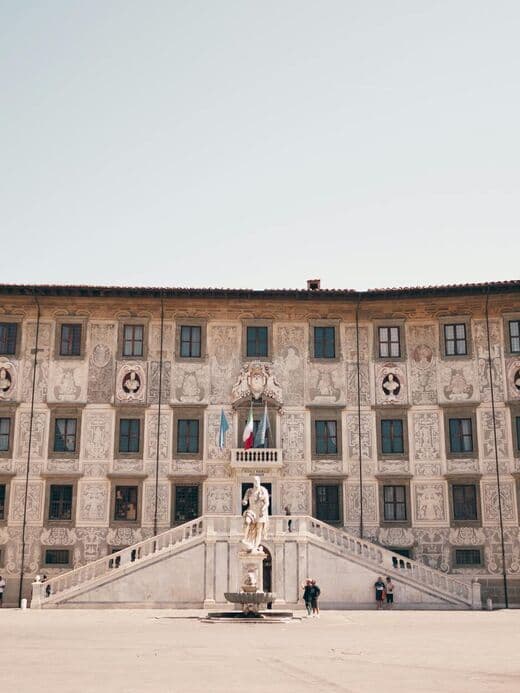
The heart of Pisa stretches between Pisa Centrale station and Piazza dei Miracoli. Medieval lanes open onto small squares, the pedestrianized Borgo Stretto arcade is lined with shops and cafes, and the impressive Piazza dei Cavalieri anchors the neighborhood with the grand Palazzo della Carovana. From here, the tower is a 10-minute walk north and the river is 5 minutes south.
Pros: everything within walking distance, restaurants and bars everywhere, beautiful architecture at every turn
Cons: noisy evenings (student bars), parking is essentially impossible
Prices: $$ (B&Bs from 60-80 EUR / $65-87 per night, hotels from 100 EUR / $109)
Borgo Stretto and Mezzo - old Tuscany atmosphere
Borgo Stretto is Pisa's main pedestrian street, lined with 13th-century arcades that shelter the best cafes, gelaterias, and boutiques in town. The parallel Via Oberdan is a quieter alternative. The Mezzo district, wedged between Borgo Stretto and the river, is the most photogenic part of Pisa: colorful palazzo facades reflected in the Arno, like a miniature Florence without the crowds. Evening passeggiata here is a daily ritual worth joining.
Pros: most beautiful area, excellent restaurants, perfect evening strolls along the river
Cons: above-average prices, fewer budget options
Prices: $$-$$$ (B&Bs from 80 EUR / $87, boutique hotels from 120 EUR / $131)
San Martino (south bank of the Arno) - where locals actually live
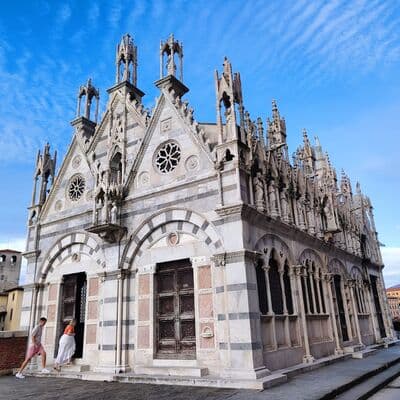
Cross the Arno and you enter non-touristy Pisa. The San Martino district is quiet, residential, and full of family-run trattorias frequented by university professors rather than day-trippers. This is where you will find the stunning Santa Maria della Spina, a tiny Gothic masterpiece bristling with spires on the riverbank. Green spaces, authentic atmosphere, and prices that reflect what Italians actually pay.
Pros: authentic atmosphere, lowest prices in the center, excellent food
Cons: 20-25 minute walk to Piazza dei Miracoli, fewer nightlife options
Prices: $ (apartments from 50 EUR / $54, B&Bs from 55 EUR / $60)
Zona Stazione (near the train station) - budget and logistics
The area around Pisa Centrale is ideal if you plan to use Pisa as a Tuscany base. Trains to Florence (1 hour), Lucca (30 minutes), and Livorno (20 minutes) run frequently, and you are steps from the platform. The neighborhood is functional rather than charming: supermarkets, pharmacies, bike rentals. Not picturesque, but within 10 minutes you are in the historic center, and the savings on accommodation are real.
Pros: cheapest accommodation, excellent transport links, practical amenities
Cons: unattractive streets immediately around the station, train noise
Prices: $ (hostels from 25 EUR / $27, hotels from 60 EUR / $65)
San Rossore / Porta a Lucca - near the tower, away from chaos
West of Piazza dei Miracoli, toward the San Rossore nature park, this neighborhood puts you five minutes from the Leaning Tower without any of the tourist madness. Mornings here, locals jog along the medieval city walls. The park itself offers walking trails through pine forests and dunes. It is green, quiet, and surprisingly central.
Pros: close to the tower without the crowds, San Rossore park access, peaceful
Cons: few restaurants, far from the train station
Prices: $$ (apartments from 65 EUR / $71, B&Bs from 75 EUR / $82)
Marina di Pisa - beach and seafood
A coastal district 12 km from the center on the Tyrrhenian Sea. If combining sightseeing with beach time appeals to you, this works. Sandy and pebble beaches, fresh fish restaurants, and sunsets over the water. The bus takes 25 minutes to the center; having a car is more convenient. In summer, locals come here after work for a seaside aperitivo. In winter, it is very quiet - some would say dead.
Pros: sea access, fresh seafood, peaceful setting
Cons: far from the center, transport needed, deserted in winter
Prices: $-$$ (apartments from 45 EUR / $49, larger rentals from 70 EUR / $76)
Best Time to Visit Pisa
Pisa works almost year-round, but some months are dramatically better than others for different reasons.
Sweet spot: April through June and September through October
Spring in Tuscany means temperatures around 68-77F (20-25C), wisteria blooming on medieval facades, and long evenings on the Arno embankments. April and May still have relatively thin tourist crowds, and accommodation runs 30-40% below peak summer rates. September and October are golden: the heat has broken, students have returned (the city comes alive again), and the season for white truffles and new wine begins. One date to circle: the Luminara di San Ranieri on June 16, when the Arno embankments are lit by 70,000 candles. It is free, it is magical, and it is one of the most beautiful spectacles in all of Tuscany - arrive by 9 PM and grab a spot on Ponte di Mezzo for the best view.
Hot but manageable: July and August
Temperatures hit 90-100F (32-38C), and in Pisa's stone streets it feels even hotter. Lines at the tower peak - book tickets two to three weeks ahead or risk being shut out. The upside: Marina di Pisa beach is 20 minutes away for a midday escape. A word of warning: many local restaurants close during ferragosto (the second half of August) when Italians take their own vacations. The tourist-trap spots on Via Santa Maria stay open, which tells you everything you need to know about them.
Budget and quiet: November through March
Winters are mild by Northern European or American standards: 46-54F (8-12C) with periodic rain. Tourist crowds thin to almost nothing, meaning you can climb the tower without booking days ahead. Accommodation prices drop by half. December brings Christmas markets on Piazza dei Cavalieri. The downside: short daylight hours (dark by 4:30 PM) and some seasonal restaurants close. But museums and indoor attractions are uncrowded, and there is something special about having the Camposanto frescoes to yourself.
Key events
- Luminara di San Ranieri (June 16) - 70,000 candles illuminate the Arno embankments. Free. Arrive by 9 PM for the best experience
- Regata delle Antiche Repubbliche Marinare (June) - historic regatta featuring Pisa, Genoa, Amalfi, and Venice. Held in Pisa once every four years (next: 2028)
- Gioco del Ponte (last Sunday of June) - a medieval battle reenactment on the Ponte di Mezzo bridge. Costumed teams push a heavy cart across the bridge. Free to watch, unforgettable atmosphere
- Capodanno Pisano (March 25) - Pisan New Year, celebrated continuously since 1100 AD according to the old calendar. A quirky local tradition with ceremonies in the cathedral
Pisa Itinerary: From 1 to 5 Days
One day in Pisa: the essentials (if you are passing through)
9:00-11:30 AM - Piazza dei Miracoli
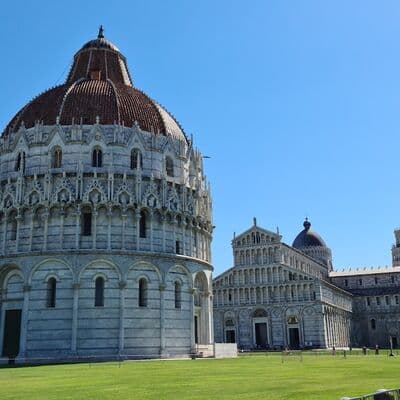
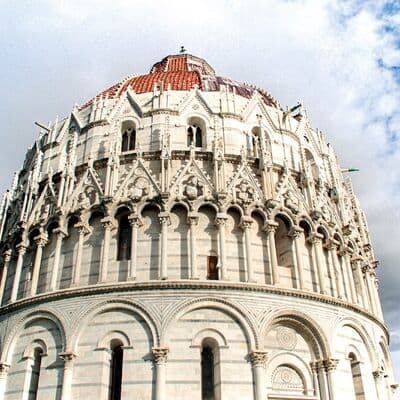
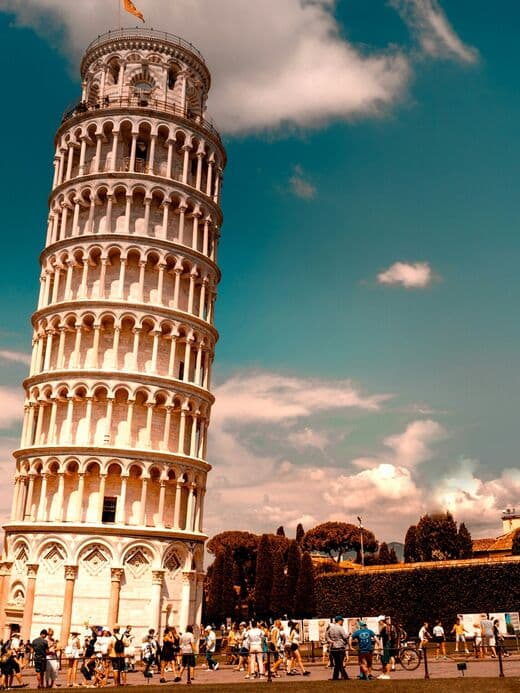
Start with Pisa Cathedral - entry is free, and the interior with its mosaics and Giovanni Pisano's pulpit is more impressive than the tower itself. Next, the Baptistery of St. John - step inside for the acoustics alone. Every 30 minutes a guard demonstrates the echo effect, which sustains for a remarkable 20 seconds. Then climb the Leaning Tower itself - tickets are strictly timed, so book online in advance. There are 294 steps, and you can physically feel the tilt as you ascend. The top rewards you with views across Pisa to the Apuan Alps. Practical notes: backpacks and large bags must be left in the free lockers, and children under 8 are not permitted on the tower.
11:30 AM-12:00 PM - Camposanto Monumentale
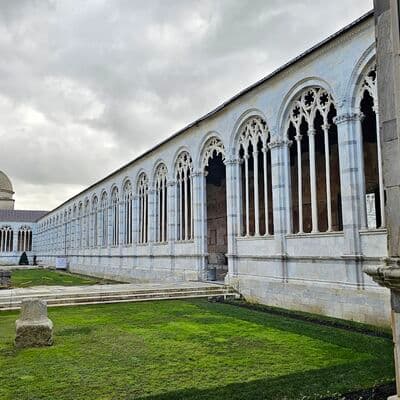
A medieval cemetery with Roman sarcophagi and haunting 14th-century frescoes. This is the most underrated part of Piazza dei Miracoli - only about 10% of visitors bother to enter. The 'Triumph of Death' fresco is a masterpiece of medieval art that influenced generations of painters. Do not skip this.
12:00-1:30 PM - Lunch in the center
Walk away from Piazza dei Miracoli immediately - the restaurants there are tourist traps with inflated prices and mediocre food. Head south on Via Santa Maria for about 10 minutes until you reach Borgo Stretto. Look for trattorias with handwritten menus on a chalkboard outside and Italians eating inside. Your must-try: cecina, a thin chickpea-flour flatbread baked in a wood-fired oven. At Il Montino on Vicolo del Monte, a portion costs just 3 EUR.
2:00-4:00 PM - The real Pisa
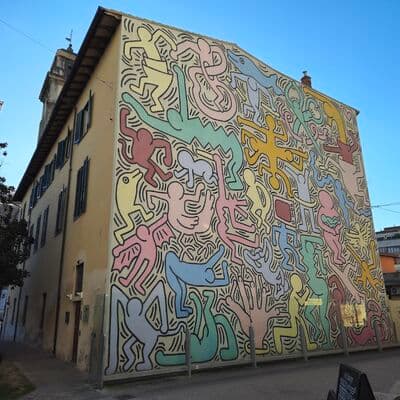
Piazza dei Cavalieri - Pisa's second most important square, once the center of the Pisan Republic. Marvel at the Palazzo della Carovana with its sgraffito-decorated facade. Then walk along the Arno embankment to Santa Maria della Spina, a tiny Gothic church covered in spires that looks like it was carved from lace. Continue to the Tuttomondo mural by Keith Haring on the wall of the Sant'Antonio church - the last monumental work the artist created, painted in 1989. It is a surprisingly joyful piece for a public wall in a medieval city.
4:00-5:30 PM - Palazzo Blu
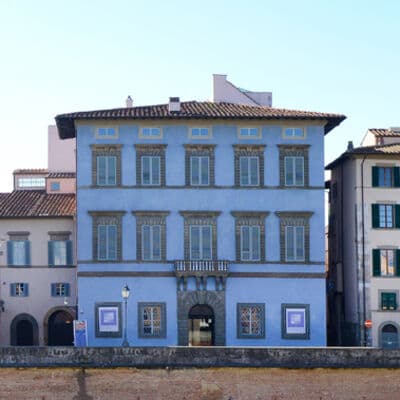
An art museum on the Arno embankment with a permanent collection that is free to visit, plus rotating temporary exhibitions that are consistently excellent. The 14th-century building with its distinctive blue facade is one of the most photographed in the city.
6:00 PM - Aperitivo on the river
Grab an outdoor table on Lungarno Pacinotti and watch the sunset paint the Arno gold. A Spritz Aperol runs 5-7 EUR. The colorful palazzo facades reflected in the water make this the best way to end a day in Pisa.
Three days in Pisa: taking your time
Day 1: Piazza dei Miracoli and the historic center (as described above)
Day 2: South bank, walls, and gardens
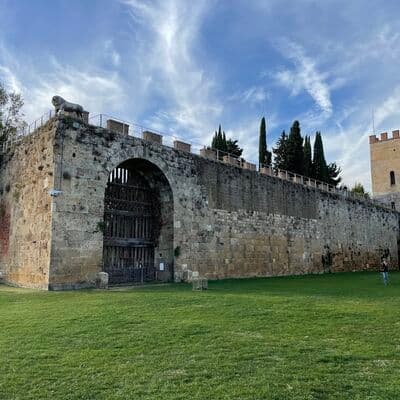
9:00-11:00 AM - Walk the medieval walls of Pisa. These 12th-century fortifications stretch 3 km and are open for walking (entry 3 EUR / about $3.30). You get an unusual elevated perspective of the city and views toward the Apuan Alps. Enter near Piazza dei Miracoli or at Piazza delle Gondole.
11:00 AM-12:30 PM - Botanical Garden of Pisa, the oldest university botanical garden in Europe, founded in 1544. Tropical greenhouses, a succulent collection, and a peaceful atmosphere that feels miles from the tourist bustle. Entry 4 EUR.
12:30-2:00 PM - Lunch in San Martino. Cross the Arno via Ponte della Fortezza and find any trattoria on Via San Martino. Order pappardelle al ragu di cinghiale (wild boar ragu) - this is classic Tuscan comfort food at its finest.
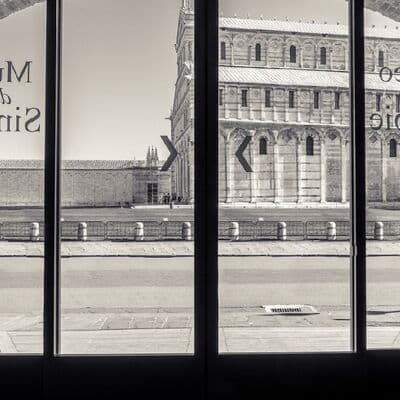
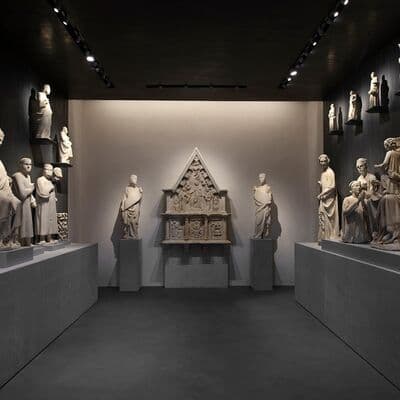
2:30-4:00 PM - Sinopie Museum, housing the original preparatory drawings for the Camposanto frescoes, or the Museo dell'Opera del Duomo with original sculptures from the cathedral and baptistery facades.
4:30-6:00 PM - Explore the lanes around Via San Frediano, Pisa's university quarter. Bookshops, wine bars, and student hangouts. Stop at Libreria Feltrinelli for Italian art books or translated literature.
Evening - Dinner on Piazza delle Vettovaglie, a small square that hosts a market by day and comes alive with bars by evening. Order a plate of affettati toscani (Tuscan cured meats) and a glass of Chianti.
Day 3: Day trips from Pisa
Option A: Lucca (30 min by train, 3.60 EUR) - a walled city where you can walk or cycle the entire circuit of perfectly preserved ramparts. An oval piazza built on the footprint of a Roman amphitheater, over 100 churches, and a calm that contrasts beautifully with Pisa's student energy.
Option B: Florence (1 hour, from 8.70 EUR) - a full day in the Tuscan capital. The Uffizi, Michelangelo's David, Ponte Vecchio. Take an early train and return on the last one.
Option C: Cinque Terre (1.5 hours, from 12 EUR) - five colorful villages clinging to cliffs above the sea. Leave early, hike between villages, and be back in Pisa for dinner.
Five days in Pisa: the deep dive
Days 1-3: as described above.
Day 4: Tuscan road trip
Rent a car (from 30 EUR/day) and head to San Gimignano, the medieval 'Manhattan' with its tower-studded skyline, or Volterra, an Etruscan hilltop town with alabaster workshops. Stop at Chianti wineries along the way. Book a tasting in advance - typically 15-25 EUR per person for 3-5 wines with snacks. The rolling Tuscan hills on this drive are genuinely one of the most beautiful landscapes in Europe.
Day 5: Marina di Pisa and winding down
Morning at the beach in Marina di Pisa or Tirrenia (bus LAM Rossa, 30 min, 1.50 EUR). Lunch at a seaside fish restaurant - fritto misto and spaghetti alle vongole with your feet practically in the sand. Evening: a farewell stroll along the Arno and dinner at whichever trattoria became your favorite over the week.
Where to Eat in Pisa: Restaurants and Cafes
Street food and markets
Pisa's signature street food is cecina (also called farinata elsewhere in Italy) - a thin, crispy chickpea-flour flatbread baked in a wood-fired oven. Simple, cheap, and addictive. Here is where to find the best:
- Il Montino (Vicolo del Monte) - a Pisa legend since the 1920s. Cecina for 3 EUR, pizza slices for 2.50 EUR. The line is the quality guarantee. Order cecina e carciofi (with artichokes) or the classic plain version. Cash only
- Pizzeria da Nando (Via Santa Maria) - less famous but cecina just as good. Locals come here specifically to avoid the line at Il Montino
- Piazza delle Vettovaglie - morning market (until 1 PM) with fruit, cheese, and meat stalls. Buy pecorino toscano (Tuscan sheep's cheese) and finocchiona (fennel-studded salami) for a perfect picnic along the Arno
Local trattorias
The rule: if the menu is handwritten in Italian only and there is a faded photo of someone's grandmother on the wall, you have found the right place.
- Osteria dei Cavalieri (Via San Frediano) - the gastro-favorite among locals. Creative Tuscan cooking with a daily-changing menu based on what is fresh. Average check: 25-35 EUR ($27-38). Book ahead
- La Clessidra (Via Santa Cecilia) - a tiny trattoria with just 6 tables. The owner makes pasta by hand in front of you. The menu is fixed, based on whatever she found at the market that morning. 20-25 EUR ($22-27)
- Il Crudo (Lungarno Pacinotti) - excellent cured meats, cheese boards, and wine. Ideal for a light dinner or aperitivo on the embankment. 15-20 EUR ($16-22)
- Trattoria La Buca (Via Galli Tassi) - homestyle Tuscan grandma cooking. Ribollita, lampredotto, bistecca. Lunch 12-18 EUR ($13-20), dinner 20-25 EUR ($22-27)
Mid-range and upscale
- Ristoro dei Vecchi Macelli (Via Volturno) - Michelin-level quality without Michelin prices. Seafood and Tuscan classics, beautifully executed. Tasting menu 40-50 EUR ($44-54). Reservations essential
- Osteria di Culegna (Via Nunziatina) - modern Tuscan cuisine with inventive presentations and flavor combinations. 35-45 EUR ($38-49)
Cafes and breakfast
Italian breakfast is a cappuccino and a cornetto (croissant). Total cost: 2.50-3.50 EUR ($2.70-3.80). Do not expect eggs and bacon - that is not how it works here.
- Pasticceria Salza (Lungarno Pacinotti) - a historic pastry shop operating since 1898. Cakes, pastries, handmade chocolates. Cappuccino on the terrace with a view of the Arno is the ideal Pisan morning
- Caffetteria BEM (Via Luigi Bianchi) - specialty coffee in Pisa. Pour-over, V60, AeroPress. For those who need more than standard Italian espresso
- Keith (near the Haring mural) - a trendy cafe with craft coffee and weekend brunch. Named after you-know-who
The cardinal rule: avoid any restaurant on Via Santa Maria between Piazza dei Miracoli and the center. This is the tourist mile with inflated prices and forgettable food. Walk one street to either side and the quality-to-price ratio changes dramatically. If you see a menu in six languages with photos of the dishes, keep walking.
What to Eat: Pisan and Tuscan Food
Pisa sits within Tuscany, one of Italy's greatest food regions. But it also has its own local specialties that you will not find done properly anywhere else.
Cecina / Farinata - Pisa's calling card. A thin, crispy flatbread made from chickpea flour, olive oil, water, and salt, baked in a wood-fired oven until the edges crackle. Perfection through simplicity. Eaten on its own (2-3 EUR a portion) or stuffed inside schiacciata (a Pisan sandwich). The best versions come from Il Montino or L'Olandese Volante. If you eat one thing in Pisa, make it this.
Ribollita - Tuscan bread soup made with black cabbage (cavolo nero), cannellini beans, vegetables, and stale bread, simmered slowly until thick and hearty. The name means 'reboiled' because it is traditionally even better on the second day. This is peasant food elevated to an art form. 8-12 EUR in trattorias.
Pappa al pomodoro - another Tuscan bread soup, this time tomato-based. The simplest possible ingredients: bread, tomatoes, garlic, basil, and olive oil. Served warm in winter or at room temperature in summer. Deceptively satisfying for something so basic. 7-10 EUR.
Bistecca alla fiorentina - the legendary Florentine T-bone from Chianina cattle, ordered for two people minimum (at least 800g / 1.75 lbs), cooked only al sangue (rare). Price is per kilogram: 40-55 EUR ($44-60). Do not ask for well-done - they will either refuse or be genuinely offended. If rare steak is not for you, order something else without shame.
Ragu di cinghiale - wild boar ragu, the Tuscan alternative to Bolognese. A dark, intense sauce slow-cooked with red wine. Served with pappardelle (wide pasta ribbons) or pici (thick hand-rolled spaghetti). Rich, gamey, and deeply satisfying. 12-16 EUR ($13-17).
Cacciucco - Livornese fish stew. Technically from neighboring Livorno (20 min by train), but Pisa does it well too. At least five kinds of fish and seafood in a robust tomato broth, served over garlic-rubbed toast. A serious, filling dish. 18-25 EUR ($20-27).
Pecorino toscano - Tuscan sheep's cheese in varying stages of aging. Fresco (young, 20 days) is soft and creamy. Stagionato (aged 4+ months) is hard and sharp. Served with honey and pear slices - a classic combination. At the market: 12-20 EUR per kilo.
Cantuccini con Vin Santo - almond biscotti dipped in sweet Vin Santo dessert wine. The classic Tuscan ending to a meal, often brought to the table free after dinner. Do not bite a dry cantuccini - dip it in the wine and wait five seconds for it to soften. This is a ritual, not a snack.
Gelato - Pisa has excellent gelato if you know what to look for. Avoid shops where the gelato is piled high in colorful mounds above the containers (that is a sign of artificial stabilizers and coloring). Good signs: muted natural colors, metal lids on the containers, and a short flavor list. De' Coltelli (Lungarno Pacinotti) and La Bottega del Gelato (Piazza Garibaldi) are reliable. A serving costs 2.50-4 EUR ($2.70-4.40).
What to avoid: any restaurant with photos of food on the sign, someone outside trying to wave you in, and menus printed in six languages. These are tourist traps. A real trattoria does not need advertising - the line of locals out front is its marketing.
For vegetarians: Tuscany is surprisingly friendly. Ribollita, pappa al pomodoro, cecina, mushroom and truffle pastas, bruschette, and all manner of vegetable antipasti are standard everywhere. For vegans it is trickier, but Gazebo Medici and a few newer spots cater specifically to plant-based diets.
Secrets: Local Tips for Pisa
1. Do not spend your entire day at Piazza dei Miracoli. This is the single most common mistake visitors make. Two to three hours is plenty for the tower, cathedral, baptistery, and Camposanto. After that, head into the actual city - that is where the real Pisa begins. Many travelers later say their biggest regret was not giving the town itself more time.
2. Tower tickets: online only, plan ahead. Book at opapisa.it one to two weeks in advance during high season. Cost: 20 EUR for the tower alone; combo tickets covering the whole square are better value. Cathedral entry is free but requires a timed ticket. Pro tip: the first slot of the day (8:30 AM in summer) has the fewest people and the best light for photos from the top.
3. The best photo of the tower is not from Piazza dei Miracoli. Walk to Via Roma for a framed street view, or get up on the city walls (enter at Porta Santa Maria, 3 EUR). The rooftop terrace of Grand Hotel Duomo offers another angle. For something unexpected, shoot from the upper gallery of the Baptistery looking out at the tower - very few people think to do this.
4. Pisa is a cycling city. The center is flat as a pancake and distances are short. Bike rental runs 10-15 EUR/day ($11-16), and many B&Bs lend bikes for free. CicloPi, the city bike-share, costs just 3 EUR/day. A bicycle is genuinely the best way to get around - faster and more pleasant than buses, cheaper than taxis, and very much what locals do.
5. Aperitivo is not optional - it is a daily ritual. Between 6 and 8 PM, bars serve Spritz or a glass of wine for 5-8 EUR ($5.50-8.70) with complimentary snacks: olives, chips, bruschette, sometimes a full buffet. Bazeel on Lungarno Mediceo and Orzo Bruno on Via Case Dipinte are student favorites with generous spreads. This is the best-value meal in Italy.
6. Sunday is a dead day. Most shops close, and many restaurants too. Plan Sundays for walking, museums, and parks rather than shopping or eating out. The Piazza dei Miracoli sites stay open, but the city center feels like a ghost town.
7. Beware the bracelet scam near the tower. People will approach you, tie a friendship bracelet onto your wrist, and then demand payment. A firm 'No grazie' and walking away is the correct response. The whole zone around Piazza dei Miracoli is prime territory for aggressive vendors and minor scams. Keep your wits about you, and do not engage.
8. San Rossore Park is a hidden gem. A vast nature reserve with dunes, pine forests, and wild horses, literally 15 minutes from Piazza dei Miracoli. Free walking trails and a complete change of scenery from medieval streets. In autumn, foraging for mushrooms is a local tradition (if you know what you are picking).
9. Tap water is safe to drink. Carry a refillable bottle and use the fontanelle (public drinking fountains) scattered around the city. You will save 2 EUR every time you skip a plastic bottle, and it adds up fast.
10. Coffee etiquette matters. Cappuccino is a morning drink - order it after 11 AM and Italians will smile politely at the tourist. After lunch, it is espresso or caffe macchiato only. Coffee drunk standing at the bar costs 1-1.50 EUR; sit at a table and you pay 2.50-3 EUR for the same drink. Locals stand.
11. Coperto is not a scam. Nearly every restaurant adds a coperto (cover charge for bread and service) of 1.50-3 EUR per person to the bill. This is standard Italian practice, not a rip-off. Tipping is not expected, but rounding up the bill is appreciated.
12. Five Italian words that change everything. 'Buongiorno' (until about 1 PM), 'buonasera' (afternoon onward), 'grazie' (thank you), 'scusi' (excuse me), and 'il conto per favore' (the check, please). Italians genuinely appreciate any effort to speak their language, even if your pronunciation is terrible. Start every interaction with a greeting - it is considered rude not to.
Getting Around: Transport and Connectivity
From the airport to the center
Pisa's Galileo Galilei Airport (PSA) is one of the most conveniently located in all of Italy - just 2 km (1.2 miles) from the city center. Getting into town is fast and cheap:
- PisaMover (automated train) - airport to Pisa Centrale station in 5 minutes flat. Departures every 5-8 minutes, running from 6 AM to midnight. Cost: 5 EUR ($5.50). The fastest option by far
- LAM Rossa bus - airport to center in about 15 minutes, passing through town. 1.50 EUR ($1.60) - buy the ticket at a tabaccheria (tobacco shop) or vending machine before boarding
- Taxi - fixed fare to the center of 10-15 EUR ($11-16). Taxi stand is outside the terminal. Night surcharge adds about 30%
- Walking - yes, seriously. It is a 25-30 minute walk to the center on sidewalks. If you pack light and the weather is good, this is a perfectly viable option
Getting around the city
On foot - the primary mode of transport. Pisa's historic center is compact: the walk from the train station to Piazza dei Miracoli takes about 25 minutes, and everything else falls within a 30-minute radius. Flat terrain makes walking effortless.
By bicycle - ideal for Pisa. The city is flat with dedicated bike lanes on major routes. CicloPi (city bike-share) costs 12 EUR/year or 3 EUR/day. Regular rental shops charge 10-15 EUR/day ($11-16). Many hotels and B&Bs offer bikes for free - ask when you book.
City buses (CPT) - useful mainly for Marina di Pisa, San Rossore park, or the airport. Within the center, you will not need them. Single ticket: 1.50 EUR (valid for 90 minutes). Buy tickets at a tabaccheria before boarding - you cannot buy on the bus, and inspectors do check.
Taxis - call by phone (+39 050 541600) or find them at stands (Pisa Centrale, Piazza dei Miracoli). Uber does not operate in Pisa. Short rides within the city: 7-12 EUR ($8-13).
Trains from Pisa (your Tuscany gateway)
Pisa Centrale is a major rail hub, making the city an excellent base for exploring the region. Key connections:
- Lucca - 30 min, 3.60 EUR ($3.90), trains every 30 min
- Florence - 1 hour, 8.70 EUR ($9.50) on Regionale trains, every 15-30 min
- Livorno - 20 min, 2.60 EUR ($2.80)
- Cinque Terre (Riomaggiore) - 1.5 hours, 8-13 EUR ($8.70-14) with a change at La Spezia
- Rome - 3 hours, from 20 EUR ($22) on Frecciabianca high-speed trains
- Milan - 3 hours, from 25 EUR ($27)
Buy tickets on trenitalia.com or at machines in the station. Regional trains do not require seat reservations - just validate (stamp) your ticket at the green machines on the platform before boarding. Forget to validate and you risk a 50 EUR fine, even with a valid ticket. This catches tourists constantly.
Internet and connectivity
Local SIM card: Iliad offers the best value - 9.99 EUR/month for 120 GB data plus calls and texts. Their shop is on Corso Italia. You need your passport and an Italian address (your hotel works). Vodafone, TIM, and WindTre have shops near the station with tourist-friendly plans.
eSIM: Airalo or Holafly offer plans from 5-10 EUR for 1 GB over 7 days. Activate before you arrive. This is the most convenient option for short visits - no shop visits, no paperwork.
Wi-Fi: Free in most hotels and cafes, usually decent speed. The city's public Wi-Fi network (Pisa WiFi) exists in the center but is unreliable. Do not count on it.
Useful apps
- Trenitalia - train schedules and mobile tickets. The app works in English and saves you from queuing at machines
- Moovit - local bus routes and real-time tracking
- Google Maps - walking and cycling navigation works excellently in Pisa. Offline maps recommended for areas with spotty signal
- TheFork - restaurant reservations with discounts up to 50%. Essential for popular spots like Osteria dei Cavalieri
- Satispay - mobile payments accepted at many cafes and shops in Italy
Who Pisa Is For: Final Thoughts
Pisa is not a one-stop photo op - it is a full-blooded Tuscan city with character, history, and outstanding food that deserves real time. Two to three days is the sweet spot for Pisa itself; five days if you want to use it as a Tuscany base, which it does brilliantly.
Ideal for: couples seeking Italian romance without Florentine crowds; food lovers on a budget; independent travelers planning a Tuscan itinerary; photographers and architecture enthusiasts; anyone who appreciates a lively university-town atmosphere.
Not the best fit for: dedicated beach vacationers (the sea is nearby but this is not a resort); nightlife seekers (options are limited to student bars); families with small children (few kid-specific attractions); serious shoppers (retail is limited).
How long: minimum 1 full day (if passing through), ideal 2-3 days, maximum 5-7 days (with Tuscany day trips).
Information current as of 2026. Prices may vary by season. USD conversions are approximate.