About
Oman Travel Guide: Your Complete Journey to Arabia's Hidden Gem
Let me tell you about a country that completely rewired my understanding of the Middle East. Oman is not what you expect. It is not the glitzy excess of Dubai, nor the oil-wealth spectacle of Qatar. Instead, it is something far more intriguing: a nation that modernized on its own terms, preserving traditions while quietly building one of the most tourist-friendly destinations in the Arabian Peninsula. After multiple trips totaling several months exploring everything from the capital's grand mosque to remote desert camps where Bedouin hospitality remains unchanged for centuries, I can say with confidence that Oman deserves a spot on every serious traveler's list.
Why Visit Oman: The Case for Arabia's Best-Kept Secret
You might be wondering why Oman, specifically, when the Middle East offers so many destinations. The answer lies in what Oman uniquely provides: authenticity without inconvenience, tradition without restriction, and natural beauty that rivals anywhere on Earth without the crowds that plague similar landscapes elsewhere.
First, let us talk about the people. Omanis are genuinely welcoming in a way that feels neither performative nor transactional. Unlike destinations where tourism has created a certain weariness among locals, Omanis seem to take personal pride in sharing their country with visitors. I have had complete strangers invite me for coffee, insist on guiding me to hidden spots, and refuse any form of payment. This hospitality is rooted in Bedouin tradition but feels remarkably contemporary and sincere.
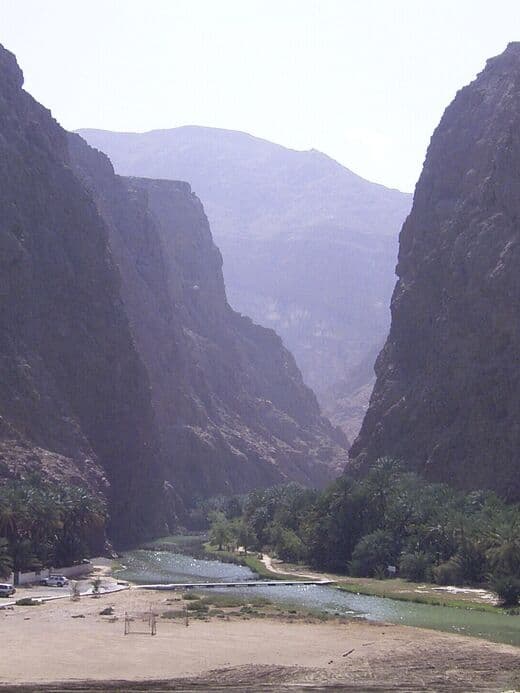
The landscape diversity is staggering. Within a single day of driving, you can experience pristine beaches with turquoise waters, dramatic mountain ranges reaching over 3,000 meters, vast desert dunes that glow orange at sunset, and lush green wadis (valleys) with natural swimming pools hidden between canyon walls. Few countries pack such geographic variety into a relatively compact area. The Wadi Shab alone demonstrates this beautifully: a hike through dramatic gorges leads to emerald pools and a hidden cave with a waterfall inside.
Safety is another compelling factor. Oman consistently ranks among the safest countries globally, not just in the Middle East but worldwide. Violent crime against tourists is essentially unheard of. Petty theft is rare. Women travelers report feeling remarkably comfortable, even when traveling solo. The country's political stability, under the wise leadership established by the late Sultan Qaboos and continued by Sultan Haitham, has created an environment where tourism can flourish without the concerns that affect neighboring regions.
For history enthusiasts, Oman offers a depth that many Middle Eastern destinations cannot match. This is not a country that emerged from the desert in the past fifty years. Oman has been a maritime power for millennia, trading with East Africa, India, and China long before Europeans discovered these routes. Ancient frankincense trade routes crossed this land. Portuguese colonizers left their mark on coastal forts. The traditional architecture of places like Nizwa and the old quarters of Muscat reflects centuries of cultural evolution rather than recent reconstruction.
The infrastructure strikes an ideal balance for travelers. Roads are excellent, even into remote areas. Accommodations range from international luxury chains to authentic desert camps. English is widely spoken, especially in tourist areas. Credit cards are accepted at most establishments. Yet despite this convenience, Oman has avoided over-development. You will not find the artificial islands and indoor ski slopes that characterize some Gulf neighbors. Instead, the country has invested in preserving its natural and cultural heritage while making it accessible.
Adventure seekers will find plenty to occupy them. World-class diving along the Musandam Peninsula, where the Indian Ocean meets the Gulf of Oman. Challenging mountain hikes in the Hajar range, including the dramatic Balcony Walk. Off-road expeditions into the Wahiba Sands that satisfy even experienced four-wheel-drive enthusiasts. Kayaking through fjord-like inlets that rival Norway for dramatic scenery. Canyoning through wadis with waterfalls and swimming holes. The Daymaniyat Islands offer some of the best snorkeling and diving in the entire region, with protected marine reserves teeming with life.
Photography opportunities are exceptional. The quality of light in Oman, particularly during golden hour, creates images that require minimal editing. Ancient forts against mountain backdrops, traditional dhow boats in harbors, desert landscapes that seem to shift color by the minute, and architectural details that reward close attention. Whether you shoot with a professional camera or a smartphone, Oman will fill your memory cards with memorable images.
For families, Oman works surprisingly well. The culture is conservative but welcoming to children. Many hotels cater specifically to family travelers. Natural attractions like beaches and wadis provide entertainment without requiring expensive admission fees. The pace is relaxed enough that family travel does not feel rushed or stressful. Kids particularly enjoy experiences like camel rides in the desert, swimming in natural pools, and exploring old forts that feel like stepping into adventure movies.
The culinary scene, while not Oman's primary draw, offers genuine discoveries. Beyond the standard Middle Eastern fare available throughout the region, Omani cuisine incorporates influences from East Africa, India, and Persia that reflect its trading history. Fresh seafood along the coast rivals anything in the Mediterranean. The coffee culture, featuring cardamom-spiced Arabic coffee served with dates, becomes a ritual you will miss after leaving.
Finally, value. While not a budget destination, Oman offers better value than many comparable experiences. Luxury desert camping that would cost a fortune in Morocco or Jordan is surprisingly accessible. Fuel is cheap, making road trips economical. Mid-range accommodation provides quality that would cost significantly more in Europe or the United States. Dining out remains reasonable by Western standards. When you consider the quality of experience against the cost, Oman competes favorably with almost any destination worldwide.
Regions of Oman: A Geographic and Cultural Overview
Muscat: The Capital of Contrasts
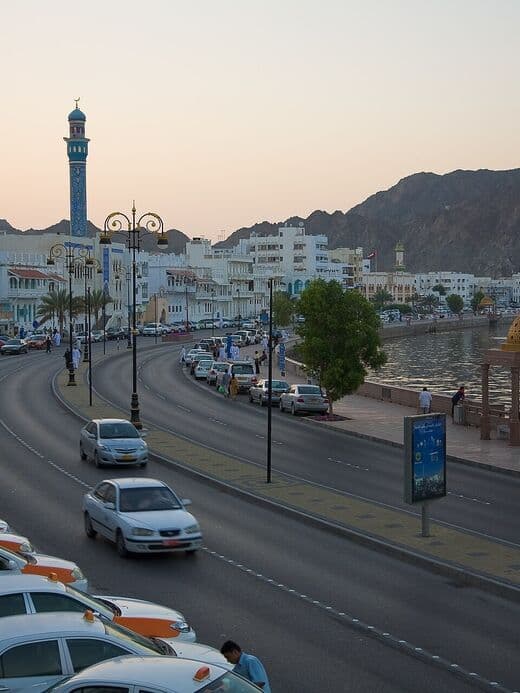
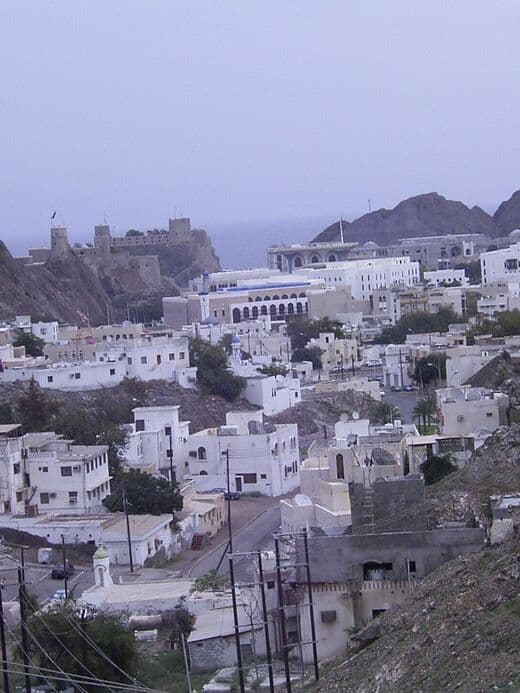
Muscat defies typical capital city expectations. There are no towering skyscrapers competing for attention, no aggressive urban sprawl devouring the surrounding landscape. Instead, Muscat stretches along the coast in a low-rise arrangement that preserves sightlines to the dramatic mountains that back the city. A law requiring all buildings to incorporate traditional Omani architectural elements in white, beige, or sandstone tones creates a visual harmony rare in modern cities.
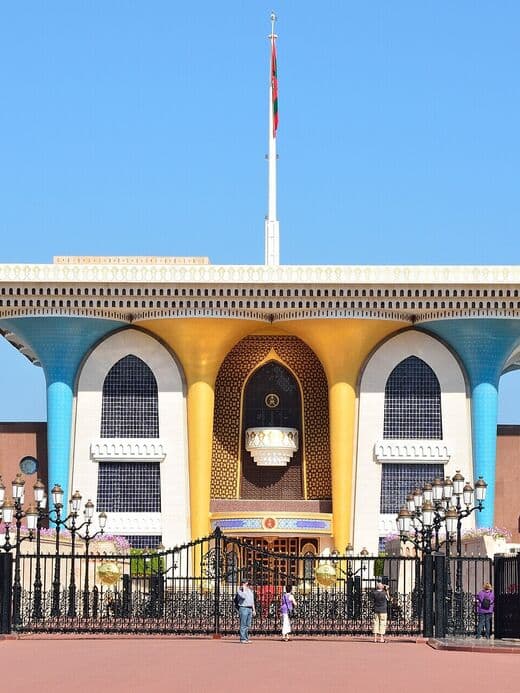
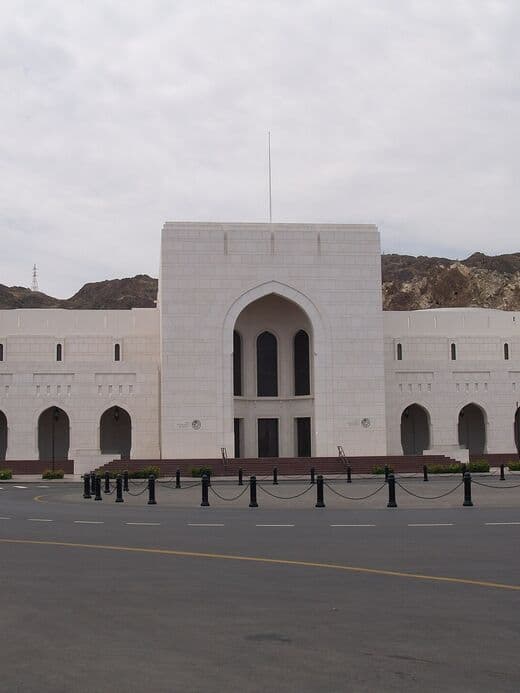
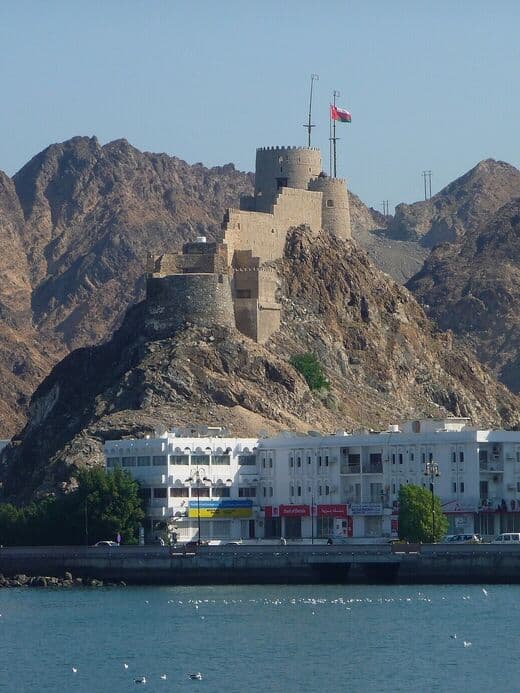
The city actually comprises several distinct areas that together form greater Muscat. Old Muscat, the historical core, sits between two Portuguese forts - Al Jalali Fort and Al Mirani Fort - that have guarded this harbor for centuries. Here you find the Al Alam Palace, the ceremonial palace of the Sultan, with its distinctive blue and gold facade. The National Museum of Oman provides an excellent introduction to the country's history and culture, while the Bait Al Zubair Museum offers a more intimate look at Omani heritage through private collections.
Mutrah, the traditional trading heart of Muscat, centers on the Mutrah Souq, one of the oldest and most authentic markets in the Gulf region. Unlike the tourist-oriented souks of other Gulf cities, Mutrah retains genuine commercial function alongside its appeal to visitors. The Mutrah Corniche offers a pleasant waterfront walk with views of traditional dhow boats and the Mutrah Fort perched above. This is where evening strolling culture thrives, with Omani families and visitors alike enjoying the sea breeze after sunset.
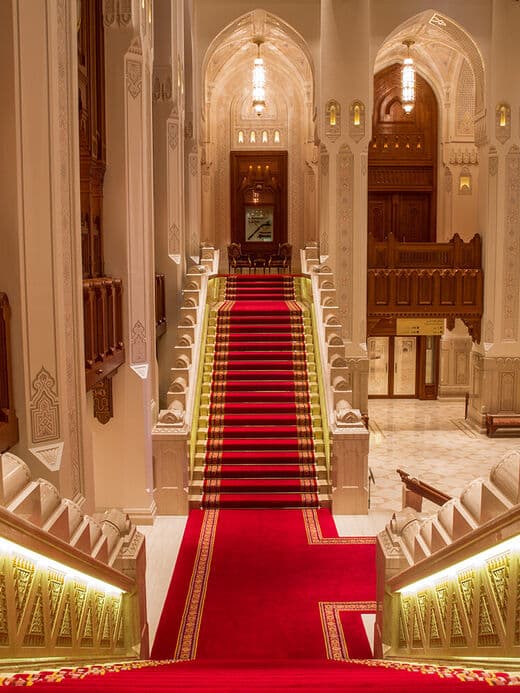
The Sultan Qaboos Grand Mosque stands as Muscat's most magnificent architectural achievement. Completed in 2001, it can accommodate 20,000 worshippers and features one of the world's largest hand-woven carpets and chandeliers. Non-Muslim visitors are welcome outside of prayer times, and the experience of walking through its marble courtyards and intricate interiors should not be missed. The scale is breathtaking, yet the design maintains a sense of serenity rather than overwhelming grandeur.
For cultural entertainment of a different sort, the Royal Opera House Muscat hosts world-class performances in a stunning contemporary interpretation of Islamic architecture. The building alone merits a visit, and if your timing aligns with a performance, the experience combines artistic excellence with architectural beauty.
Modern Muscat spreads through areas like Qurum, where Qurum Beach offers a stretch of sand popular with both locals and visitors. The Qurum Natural Park provides green space and walking paths. Shopping malls, restaurants, and hotels cluster in this area, providing the contemporary amenities travelers expect. The Oman Aquarium makes for a good rainy day option or an escape from afternoon heat.
Further out, destinations like Bimmah Sinkhole and Wadi Shab can be reached on day trips from Muscat, though staying overnight in the area allows more relaxed exploration. The Daymaniyat Islands nature reserve offers exceptional diving and snorkeling accessible via boat trips from the capital.
Muscat serves as the natural starting point for most Oman itineraries, with the international airport providing access and the city's accommodation options ranging from budget to ultra-luxury. Plan at least two to three days here to appreciate both the cultural attractions and the relaxed pace that characterizes life in this unusual capital.
Nizwa and the Interior: Mountains and Heritage
Drive two hours inland from Muscat, crossing the Hajar Mountains through dramatic passes, and you reach Nizwa, the historical heart of Oman and once its capital. This region offers the country's most concentrated collection of cultural heritage sites alongside access to spectacular mountain scenery.
Nizwa Fort, one of the largest in the Arabian Peninsula, dominates the old town. Its massive circular tower, built in the 17th century, offers panoramic views and a fascinating exploration of historical defensive architecture. Beneath the fort, the Nizwa Souq provides a more authentically local market experience than Muscat's tourist-oriented Mutrah. The Friday livestock market, where Omanis trade goats and cattle in traditional auction style, offers a glimpse into rural life that has continued for generations.
Surrounding villages showcase Omani mountain architecture at its finest. Misfat Al Abriyyin clings to a mountainside above date palm plantations fed by ancient irrigation channels called falaj. Narrow walkways wind between mud-brick houses, some now converted to guesthouses that offer overnight stays in traditional settings. Birkat Al Mouz presents another impressive falaj system and provides access to dramatic mountain hiking. Al Hamra features one of the oldest inhabited villages in Oman, with houses dating back over 400 years.
The fortress of Bahla, a UNESCO World Heritage Site, represents an earlier era of Omani power. Its massive mudbrick walls stretch for kilometers, enclosing what was once one of the most important towns in the interior. Nearby Jabreen Castle showcases the finest examples of Omani decorative art, with painted ceilings that have survived centuries remarkably intact.
This region rewards those who stay overnight rather than rushing through on a day trip. The pace is slower, the accommodation more traditional, and the stargazing exceptional once you escape Muscat's light pollution. Base yourself in Nizwa or one of the mountain villages to properly explore what many consider Oman's most culturally rich region.
The Hajar Mountains: Oman's Dramatic Spine
The Hajar mountain range runs like a spine through northern Oman, separating the coastal areas from the interior. These are not gentle rolling hills but genuinely dramatic peaks, with Jebel Shams reaching 3,009 meters as Oman's highest point. The name means Mountain of the Sun, appropriate given how early sunlight strikes its summit.
Jebel Shams is home to Oman's Grand Canyon, a spectacular gorge with vertical drops of nearly 1,000 meters. The Balcony Walk, a path carved into the cliff face, offers one of the most dramatic hikes in the Middle East. The path is not technically difficult but requires a head for heights and takes about four to six hours round trip. Standing on the edge, looking across a void that seems to swallow sound itself, ranks among Oman's most memorable experiences.
Jebel Akhdar, the Green Mountain, rises to around 2,000 meters and supports agriculture impossible in the lowlands. Rose terraces produce the famous Omani rose water during the spring harvest season. Pomegranates, apricots, and other fruits thrive in the cooler climate. Luxury resorts have developed here, offering summer escapes from coastal heat along with exceptional hiking and mountain biking opportunities.
The mountain roads themselves provide adventure. The route to Jebel Shams requires a four-wheel-drive vehicle and confidence on steep, unpaved sections. The Jebel Akhdar road is paved but restricted to 4WD vehicles due to its gradients. These restrictions actually preserve the mountain experience, preventing the casual traffic that might otherwise diminish the sense of wilderness.
Village life in the mountains follows rhythms established over centuries. Stone houses cluster on terraces carved into slopes. Falaj irrigation systems channel water from mountain springs to agricultural plots. The hospitality extended to visitors in these communities feels particularly genuine, as tourism remains relatively uncommon despite the spectacular surroundings.
The Sharqiya Coast: Beaches and Turtles
The eastern coast of Oman, stretching from Sur down toward the Wahiba Sands, offers some of the country's finest beaches along with one of its most remarkable wildlife experiences: nesting sea turtles. This region provides a different character from the developed north, with smaller towns, emptier beaches, and a pace that feels genuinely relaxed.
Sur served as Oman's main shipbuilding center for centuries, and dhow construction continues here today. Watching craftsmen build these traditional vessels using techniques passed down through generations provides a connection to Oman's maritime heritage that museum exhibits cannot replicate. The town's relaxed atmosphere and waterfront setting make it a pleasant base for exploring the region.
Ras Al Jinz, at Oman's easternmost point, hosts one of the world's largest green turtle nesting sites. During nesting season, roughly from May to October, guided night visits allow observation of turtles coming ashore to lay eggs or hatchlings making their way to the sea. This experience requires booking accommodation at the reserve's scientific center, as access is restricted to protect the turtles. Witnessing these ancient creatures in their natural nesting behavior creates memories that rank among any trip's highlights.
Beaches along this coast range from developed resort areas to completely empty stretches of sand accessible only by 4WD vehicles. Camping on remote beaches, with no light pollution and the sound of waves, offers an experience difficult to find elsewhere. The water is warm year-round and generally calm, excellent for swimming and snorkeling.
Wadi Tiwi and Wadi Shab, carved through the mountains where they meet the coast, provide spectacular day hikes combining gorge scenery with natural swimming pools. Wadi Shab in particular has gained fame for its turquoise pools and the cave with a waterfall accessible by swimming through a narrow gap. Arrive early on weekends to avoid the crowds that have discovered this gem.
Wahiba Sands: The Accessible Desert
The Sharqiya Sands, still commonly called Wahiba Sands after the Bedouin tribe that traditionally inhabited them, offer Oman's most accessible desert experience. Unlike the vast Empty Quarter that covers much of southern Arabia, Wahiba stretches only about 180 kilometers north to south and 80 kilometers east to west, making it possible to experience genuine desert landscape without extensive expedition planning.
Do not let the relatively compact size suggest this is desert-lite. The dunes here reach heights of 100 meters or more, with colors shifting from red-orange to golden depending on light and location. Standing atop a dune at sunset, watching colors shift across a landscape that extends to every horizon, delivers the quintessential Arabian desert experience most travelers seek.
Desert camps ranging from basic Bedouin-style setups to luxury glamping operations dot the accessible edges of Wahiba. A night in the desert is almost mandatory for any Oman itinerary. Camp activities typically include camel rides, dune bashing in 4WD vehicles, and traditional meals under stars unobscured by any light pollution. Some camps offer sandboarding or quad biking for those seeking more active adventure.
The Bedouin communities who still call this desert home offer cultural encounters available nowhere else in Oman. Some camps are run by Bedouin families who share their traditions with visitors willing to engage beyond the standard tourist experience. Coffee ceremonies, discussions of desert life, and simple hospitality around a fire create connections that feel increasingly rare in modern travel.
Access to Wahiba typically comes via paved roads from either the coast (through Sur) or the interior (through Nizwa). At the desert's edge, pavement gives way to sand tracks that require 4WD vehicles. Most visitors either arrange transport through their camp or join organized tours from Muscat. Independent travelers with their own vehicles need confidence in sand driving and should carry recovery gear.
Dhofar: Arabia's Tropical Secret
The southern region of Dhofar, centered on the city of Salalah, feels like a different country entirely. While the rest of Arabia bakes through summer, the khareef monsoon season from June to September transforms Dhofar into a green paradise with waterfalls, mist-shrouded mountains, and temperatures that feel almost European.
This unique microclimate made Dhofar the ancient source of frankincense, the valuable resin that once drove trade routes across the ancient world. The UNESCO-listed Frankincense Trail preserves sites associated with this historic trade, including ancient ports, caravan routes, and the still-living groves where frankincense trees are harvested using methods unchanged for millennia.
Salalah itself offers palm-lined beaches, archaeological sites, and a laid-back atmosphere distinct from Muscat. The Al Baleed archaeological site preserves remains of one of the most important ports in medieval Indian Ocean trade. The nearby Al Husn Souq provides opportunities to purchase frankincense directly from producers.
The mountains behind Salalah, especially during and immediately after khareef season, offer landscapes that seem transplanted from Ireland or Scotland rather than Arabia. Waterfalls cascade down green hillsides. Cattle graze in misty meadows. The contrast with the desert that lies just beyond the monsoon's reach creates one of the most surprising geographic transitions anywhere.
Beyond the monsoon zone, Dhofar transitions to dramatic desert landscapes including the Empty Quarter's southern fringes. Archaeological sites like Shisr (ancient Ubar, the legendary Lost City of Arabia) lie out here, requiring expedition-style travel but rewarding those who make the journey.
Reaching Dhofar requires either a flight from Muscat (about 90 minutes) or a substantial drive (roughly 1,000 kilometers through largely empty desert). Most visitors fly down and spend three to four days exploring the region before returning north. Those with time for the road trip experience one of the most isolated highway journeys anywhere, crossing terrain that changes dramatically from north to south.
Musandam: Arabia's Norway
Separated from the rest of Oman by a strip of UAE territory, the Musandam Peninsula juts into the strategic Strait of Hormuz with a coastline so dramatically fjord-like that it has earned the nickname Arabia's Norway. This is Oman's most remote and least visited region, requiring either a flight or a drive through the UAE, but the effort rewards with scenery found nowhere else in the Middle East.
Khasab, Musandam's main town, serves as the base for dhow cruises through the fjords (called khors here). These trips, ranging from half-day excursions to overnight camping voyages, reveal towering limestone cliffs plunging into crystal-clear water, isolated fishing villages accessible only by boat, and dolphins that frequently accompany vessels through the calm waters.
The diving and snorkeling in Musandam ranks among the best in the region. The meeting of Persian Gulf and Gulf of Oman waters creates nutrient-rich conditions that support exceptional marine life. Visibility regularly exceeds 20 meters, revealing coral formations, tropical fish, rays, and occasionally whale sharks during certain seasons.
Above water, the Musandam mountains offer dramatic landscapes accessible via bone-rattling tracks requiring serious 4WD capability. The village of Jebel Harim sits at nearly 2,000 meters, offering views across the Strait of Hormuz to Iran on clear days. Fossils embedded in the limestone record the geological history of a landscape that lay beneath ancient seas before tectonic forces thrust it skyward.
Reaching Musandam from the rest of Oman requires either a flight from Muscat to Khasab or a drive through UAE territory (requiring appropriate visas and vehicle paperwork). The isolation has preserved both the landscape and traditional ways of life, creating an experience distinct from anywhere else in Oman.
Unique Natural Wonders of Oman
Wadis: Desert Oases Beyond Imagination
If you come to Oman expecting only desert and arid landscapes, the wadis will completely reconfigure your expectations. These seasonal riverbeds cut through the Hajar Mountains, creating gorges and valleys where water flows year-round in many locations, supporting ecosystems that seem impossibly lush given the surrounding terrain.
Wadi Shab has become Oman's most famous wadi, and rightfully so. The journey begins with a boat ride across a small lagoon, followed by a hike through a narrowing canyon where date palms shade the path and pools of turquoise water invite swimming. The final destination, a cave accessible only by swimming through a narrow gap in the rock, conceals a waterfall that plunges into a deep pool. The entire experience takes about three to four hours round trip and ranges from easy walking to swimming through chest-deep water.
Wadi Tiwi offers similar beauty with fewer crowds. A road winds up the wadi through traditional villages where falaj irrigation channels still feed terraced agriculture. Multiple swimming holes along the way provide refreshment, and the upper reaches require hiking to access. Camping is possible in the wadi, creating a magical overnight experience surrounded by canyon walls and starlight.
Wadi Bani Khalid, easier to access and with established facilities including a restaurant and changing rooms, works well for those wanting wadi beauty without adventure. The lower pools are popular with families and can get crowded on weekends, but hiking upstream reveals quieter spots. The water here flows year-round, maintaining its emerald color even in the driest months.
Wadi Al Arbeieen sees far fewer visitors despite scenery that matches the famous wadis. The approach requires 4WD capability, which filters out the casual crowds. Rock formations here include some dramatically eroded features, and the pools tend to be deeper with excellent swimming.
The experience of these wadis goes beyond simple natural beauty. The transition from arid mountainscape to palm-shaded canyon floor feels almost miraculous. The sound of flowing water, so rare in this region, creates an auditory backdrop that enhances the visual drama. Local communities living in wadi villages maintain traditions adapted to these unique environments over centuries. Swimming in pools that have formed over millennia, surrounded by canyon walls that stretch toward narrow strips of sky, ranks among travel experiences difficult to replicate anywhere else.
Marine Environments: Where Desert Meets Sea
Oman's coastline stretches over 3,000 kilometers, encompassing environments from mangrove lagoons to coral reefs to dramatic rocky shores. The marine life reflects Oman's position where multiple oceanic influences meet, creating biodiversity that surprises visitors expecting Arabian waters to be less interesting than tropical destinations.
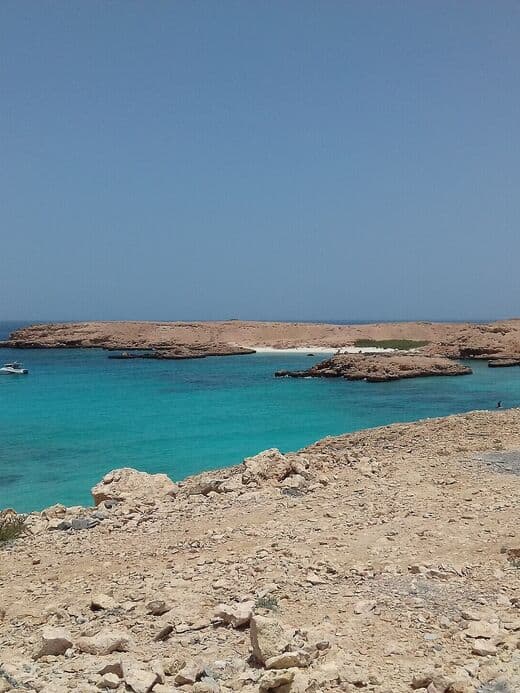
The Daymaniyat Islands nature reserve offers Oman's most accessible premium diving and snorkeling. Nine islands scattered across 75 square kilometers protect coral reefs, nesting seabirds, and populations of green and hawksbill sea turtles. Boat trips from Muscat (roughly 90 minutes) reach dive sites with visibility often exceeding 20 meters, where reef fish, rays, and occasional whale sharks create memorable underwater encounters.
The Musandam Peninsula's fjords provide diving environments completely different from the islands. Here, nutrients from deeper waters support larger marine life in a setting where underwater cliffs and caves add topographic interest. The isolation means many sites see few visitors, providing dive experiences that feel genuinely exploratory.
Along the eastern coast, the less-developed shores offer opportunities for beach camping, fishing, and exploration that have become rare in more accessible destinations. Ras Al Jinz protects nesting sea turtles as described earlier, while the beaches stretching north and south see remarkably few visitors despite their beauty.
Dolphin encounters happen regularly off the Omani coast, with dhow trips from both Muscat and Khasab frequently accompanied by pods of dolphins riding bow waves. Several species inhabit these waters, with spinner dolphins particularly known for their acrobatic displays.
The marine environment reflects Oman's general approach to tourism: accessible enough to enjoy but not overdeveloped to the point of degradation. Regulations protect sensitive areas while still allowing visitors to experience exceptional natural environments.
Desert Landscapes: Beyond the Dunes
While the Wahiba Sands draw most attention, Oman's desert landscapes extend far beyond a single dune field. The variety of desert terrain here encompasses rocky plains, gravel flats, isolated mountains rising from sand seas, and the fringes of the Empty Quarter itself.
The Empty Quarter, Rub al Khali in Arabic, remains one of Earth's least inhabited places. Oman's portion, accessible through Dhofar or via expeditions from the interior, offers landscapes of almost extraterrestrial starkness. Sand seas stretch to every horizon. The silence, broken only by wind and occasional wildlife, feels complete in a way modern travelers rarely experience. This is expedition territory, requiring serious planning, appropriate vehicles, and ideally experienced guides, but the reward is access to one of the planet's last truly wild places.
More accessible desert landscapes surround Nizwa and the interior regions. Here, rocky plains dotted with acacia trees and occasional Bedouin encampments provide Arabian atmosphere without the logistical challenges of deep desert travel. The light at dawn and dusk transforms these landscapes into photographic opportunities that rival the famous dunes.
The transition zones between desert and mountains create their own unique environments. Dry riverbeds (also called wadis, though different from the water-bearing ones) carve through rocky terrain, their banks supporting vegetation adapted to occasional flash floods. Camels graze in seemingly barren areas, finding sustenance invisible to human eyes. The adaptation of life to these harsh conditions provides ongoing fascination for those paying attention.
Sinkholes and Cave Systems
The limestone that forms much of Oman's geology creates karst features including sinkholes and cave systems that offer yet another dimension to the country's natural attractions.
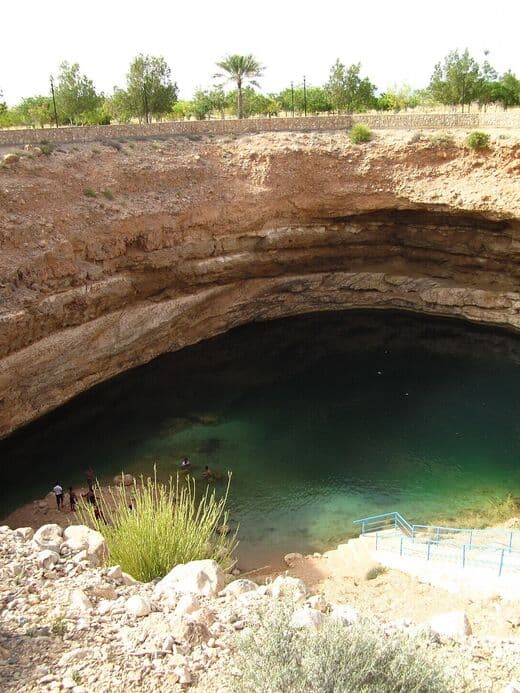
Bimmah Sinkhole, located between Muscat and Sur, has become a popular swimming spot. The roughly 50-meter-wide, 20-meter-deep depression fills with blue-green water that connects to the sea through underground channels. Local legend attributes the sinkhole's creation to a falling star, while geologists explain it as limestone dissolution, but either explanation works when you are floating in the cool water surrounded by cliff walls. Basic facilities including parking and changing rooms make this an easy stop on coastal road trips.
Al Hoota Cave, near Nizwa, provides the country's most accessible underground experience. A train carries visitors into a cavern system featuring dramatic stalactites, stalagmites, and an underground lake supporting a species of blind cave fish found nowhere else on Earth. The cave maintains constant cool temperatures, making it a refreshing escape from afternoon heat. Tours run regularly, though advance booking is advisable during busy periods.
Other sinkholes and cave systems exist throughout the mountains, many undeveloped and requiring more adventurous exploration to access. The same geological processes that created Bimmah and Al Hoota continue, meaning this landscape holds discoveries yet to be made.
Hot Springs and Mineral Waters
Geothermal activity creates hot springs at several locations in Oman, providing natural bathing opportunities with purported therapeutic benefits. The springs at Ain A'Thawwarah (also called Nakhal Hot Springs) near Rustaq emerge at temperatures around 45 degrees Celsius, flowing through a palm-shaded wadi into channels where locals and visitors soak. The setting, with falaj channels, palm groves, and mountain backdrops, enhances what would already be a pleasant experience.
Other hot springs at Al Jaylah, in the mountains near Nizwa, require more effort to reach but reward with greater isolation. The mineral content of these waters varies by location, with some believed to help skin conditions or joint problems. Whether or not you believe such claims, soaking in warm mineral water surrounded by mountain scenery creates relaxation difficult to achieve through other means.
When to Visit Oman: Timing Your Trip
Oman's weather varies dramatically by region and season, making timing important but also providing options throughout the year. Understanding these patterns allows you to plan around your priorities, whether that means optimal hiking conditions, turtle watching, monsoon greenery, or simply avoiding extreme heat.
The peak tourist season runs from October through March, when temperatures across most of Oman range from pleasant to perfect. Daytime highs in Muscat during these months typically reach 25-30 degrees Celsius (77-86 Fahrenheit), with evenings cooling enough for comfortable outdoor dining. This is the best period for hiking, desert camping, and general exploration. The downside is higher accommodation prices and the need to book popular activities in advance, though Oman never experiences the overwhelming crowds of some destinations.
December through February represents the coolest period, when nighttime temperatures in the desert can drop near freezing and mountain areas occasionally see frost. Packing layers becomes essential if your itinerary includes altitude. This is also when European and North American visitors most commonly travel, so expect busier conditions at major attractions.
The shoulder seasons of April-May and September-October offer compromises between weather and crowds. April and May see rising temperatures but remain tolerable for most activities, particularly in the mountains where elevation moderates the heat. September marks the end of summer, with temperatures beginning to decline and the last of the khareef moisture lingering in Dhofar.
Summer (June through August) brings extreme heat to most of Oman, with temperatures in Muscat regularly exceeding 40 degrees Celsius (104 Fahrenheit) and humidity making conditions feel even more oppressive. This is not the time for desert camping or extensive outdoor activities in the north. However, summer brings unique opportunities elsewhere.
Dhofar's khareef monsoon season, running roughly June through September, creates conditions unlike anywhere else in Arabia. The monsoon brings mist, rain, and temperatures around 25 degrees Celsius (77 Fahrenheit) while the rest of the Gulf suffers through summer. Salalah becomes a refuge for Gulf residents seeking relief from heat, and the green landscapes offer photography opportunities found at no other time. If you can handle occasional rain and want to see a completely different Oman, the khareef season rewards the visit.
For turtle watching at Ras Al Jinz, the nesting season runs from May to October, with peak activity in July and August. This creates a reason to visit during the otherwise challenging summer months, combining turtle observation with the Dhofar khareef for a summer itinerary that avoids the hottest regions.
Ramadan deserves consideration when planning. During this holy month, which shifts annually according to the Islamic lunar calendar, restaurants may close during daylight hours and working hours adjust. Travelers are not expected to fast but should avoid public eating, drinking, and smoking during daylight hours out of respect. Many find Ramadan creates opportunities for cultural engagement, as iftar meals (breaking the fast at sunset) often involve community celebration. Eid al-Fitr, the festival marking Ramadan's end, brings widespread celebration and holiday atmosphere.
The takeaway: October through March for general travel, summer for Dhofar and turtle watching if you can handle heat elsewhere, and shoulder seasons for those seeking fewer crowds and willing to accept warmer conditions.
Getting to Oman: Flights and Entry Requirements
International Flights
Muscat International Airport serves as Oman's primary gateway, with connections to major hubs across Europe, Asia, and the Middle East. Oman Air, the national carrier, operates an expanding network including direct flights to London, Frankfurt, Paris, Milan, Munich, and several Asian destinations. The airline has built a reputation for service quality that exceeds many regional competitors, making even longer flights relatively comfortable.
For American travelers, direct flights to Muscat are limited, with most itineraries routing through European or Gulf hubs. Emirates via Dubai, Etihad via Abu Dhabi, and Qatar Airways via Doha all offer competitive connections with modern aircraft and lounges at their respective hubs. The total journey time from East Coast US cities runs approximately 15-18 hours depending on connection time, similar to other Middle Eastern destinations.
British travelers have better direct options, with Oman Air and British Airways both operating London-Muscat services. Flight time is approximately 7 hours, making Oman reachable for long weekends if you can handle the overnight flights. Manchester and other UK regional airports typically require connections through London or Gulf hubs.
Australian travelers face the longest journeys, typically 18-22 hours depending on routing. Connections through Dubai, Abu Dhabi, Doha, Singapore, or Kuala Lumpur all work, with the choice often coming down to airline preference and schedule timing.
Budget carriers increasingly serve Oman, with Air Arabia, Flydubai, and SalamAir offering lower-cost options to and from regional destinations. These can work for those already in the Middle East or willing to position via budget flights to Gulf hubs.
Salalah airport in Dhofar offers limited international connections, potentially useful for those focusing their trip on the southern region. Domestic flights connect Salalah to Muscat multiple times daily, making it possible to fly into one airport and out of the other for circular itineraries.
Visa Requirements
Oman has progressively simplified its visa requirements, making entry straightforward for most Western travelers. Citizens of the United States, United Kingdom, Canada, Australia, and most European Union countries can obtain visas on arrival or through online e-visa applications.
The e-visa system generally works smoothly and is recommended to avoid any arrival queues. Apply at least 24-48 hours before travel through the official portal. The tourist visa costs approximately 20 OMR (about $52 USD) for 10 days or 50 OMR (about $130 USD) for 30 days. Multiple-entry options exist for those planning to enter and leave multiple times. Processing typically occurs within 24 hours, with approval delivered by email.
Visa on arrival remains available for most Western passport holders at Muscat International Airport. The process is straightforward but can involve queues during busy arrival periods. Having a return ticket and hotel reservation may be requested, though enforcement varies.
Americans should note that the standard tourist visa requirements apply without the complications faced in some other countries. No visa interview is required. The process is purely administrative with minimal documentation beyond a valid passport with at least six months validity.
For those entering Oman via land from the UAE, the same visa options apply but border processing may take longer than airport arrival. Ensure your UAE visa (if applicable) permits multiple entries if you plan to return through the UAE.
The Musandam Peninsula, separated from mainland Oman by UAE territory, requires passing through UAE territory unless you fly. This means UAE visa requirements (including the multiple-entry consideration) affect overland travel to Musandam. Verify your specific requirements before planning such crossings.
COVID-19 and Health Requirements
Entry requirements related to COVID-19 have largely been lifted, though travelers should verify current requirements before travel as situations can change. As of the time of writing, Oman does not require vaccination proof or testing for entry. However, carrying vaccination documentation remains advisable for any international travel.
No specific vaccinations are required for entry to Oman from most Western countries. Standard travel vaccinations (hepatitis A, typhoid) are recommended by health authorities for most Middle Eastern travel, and consultation with a travel health provider before departure is always advisable.
Getting Around Oman: Transportation Options
Rental Cars: The Freedom Option
Renting a car provides by far the most flexible way to explore Oman. The road network is excellent, fuel is cheap by Western standards (roughly $0.60-0.80 per liter), and driving is relatively straightforward once you adapt to local styles. An international driving permit is officially required alongside your home country license, though enforcement is inconsistent.
Major international rental companies (Hertz, Avis, Budget, Europcar) operate at Muscat airport and in the city, joined by local companies often offering lower rates. Booking in advance, especially during peak season, secures better rates and vehicle availability. Expect to pay roughly $30-50 per day for a basic sedan and $70-100 per day for a 4WD vehicle.
The 4WD question requires consideration. A regular sedan handles all paved roads, which access most major attractions including the drive to Nizwa, coastal roads to Sur and beyond, and the route to Salalah. However, many of Oman's most spectacular experiences require 4WD capability: desert camps in Wahiba, mountain roads to Jebel Shams and Jebel Akhdar, some wadi access roads, and remote beach areas. If your itinerary includes these (and it should), either rent a 4WD for the entire trip or consider renting a sedan for city/highway portions and arranging 4WD tours or rentals for off-road sections.
Driving in Oman requires adaptation for those unfamiliar with Gulf driving styles. Speed limits are often ignored, particularly on highways. Tailgating occurs regularly. Lane discipline can be creative. That said, roads are generally well-maintained and well-signed, with multiple lanes on major routes. Outside urban areas, traffic thins dramatically, making rural driving quite pleasant. Drive defensively, particularly around Muscat, and you should have no issues.
Fuel stations are widespread on main routes but can be sparse in remote areas. Fill up before entering the desert or heading into mountains. Most stations accept credit cards, though carrying some cash provides backup.
Navigation apps work well throughout Oman. Google Maps provides accurate routing for paved roads, though off-road tracks may not appear or may show incorrectly. For serious off-road exploration, download offline maps and consider supplementary GPS navigation.
Taxis and Ride-hailing
Muscat's taxi system includes traditional orange-and-white taxis and modern ride-hailing apps. Traditional taxis should use meters, though negotiating a fixed price before starting is often simpler, especially for longer journeys. Expect trips within Muscat to cost 2-8 OMR depending on distance.
Ride-hailing apps (Marhaba being the most prominent Omani option) provide easier pricing transparency and payment, with rates competitive with traditional taxis. These work well within Muscat but become less reliable in smaller cities and towns.
For airport transfers, either arrange through your hotel, use a ride-hailing app, or negotiate with taxi drivers waiting outside the terminal. The journey from the airport to central Muscat areas takes 30-45 minutes depending on traffic and destination, costing roughly 8-15 OMR by taxi.
Organized Tours
For those preferring not to drive or wanting expert guidance, organized tours range from budget group excursions to private luxury experiences. Day trips from Muscat access the wadis, Bimmah Sinkhole, Nizwa, and other attractions without the need for vehicle rental. Multi-day tours combine desert camping, mountain exploration, and coastal visits into comprehensive itineraries.
Tour quality varies significantly. Higher-end operators provide expert guides, quality vehicles, and thoughtfully planned itineraries. Budget operators may pack groups into minibuses and rush through attractions. Research reviews carefully and consider whether the cost savings of budget tours justify potential compromises in experience quality.
For specific activities requiring expertise, such as diving, desert driving, or mountain hiking, engaging specialized guides often makes sense even for otherwise independent travelers. Their knowledge of conditions, access to best sites, and safety expertise add value beyond simple transportation.
Buses and Public Transport
Mwasalat operates Oman's public bus network, with routes connecting Muscat to Nizwa, Sur, Sohar, and Salalah among other destinations. Buses are modern, air-conditioned, and economical, with the Muscat-Salalah run costing roughly 10-15 OMR for the 12-hour journey. However, schedules are limited, many attractions are inaccessible without private transport from bus stations, and the time cost often outweighs any savings compared to rental cars.
Within Muscat, local buses serve many areas but routes can be confusing for visitors and coverage of tourist attractions is inconsistent. The bus system works for budget travelers willing to invest time in figuring it out, but most visitors find taxis or rental cars more practical.
Domestic Flights
Oman Air and SalamAir operate domestic routes connecting Muscat with Salalah and Khasab (Musandam). The Muscat-Salalah flight takes approximately 90 minutes and costs significantly less than the 12+ hour drive, making it the practical choice for including Dhofar in your itinerary. The Muscat-Khasab route provides access to Musandam without the drive through UAE territory.
Flight frequency is adequate during peak season, with multiple daily departures on major routes. Book in advance during khareef season (for Salalah) as Gulf residents escaping summer heat fill planes.
Cultural Code: Understanding Omani Society
Dress Codes and Public Behavior
Oman is more relaxed than some Gulf neighbors regarding dress and behavior but remains a conservative society where respect for local customs matters. Understanding expectations helps you navigate comfortably while showing appropriate respect for your hosts.
For men, shorts and t-shirts are acceptable in tourist areas, beach resorts, and casual settings. However, long trousers and shirts with sleeves convey more respect, particularly when visiting mosques, government buildings, or local neighborhoods. Swimming attire is fine at hotel pools and beaches but should be covered when walking to and from.
For women, more consideration is needed. Covering shoulders and knees represents the minimum standard for most public settings. Loose-fitting clothing that does not emphasize body shape is appreciated. At the Sultan Qaboos Grand Mosque, women must wear ankle-length skirts or trousers, long sleeves, and a headscarf covering hair completely. The mosque provides appropriate coverings for those who arrive unprepared, but bringing your own allows you to choose comfortable options.
Beach behavior warrants particular attention. Resort beaches and hotel pools operate largely by Western standards. Public beaches used by local families expect more modest behavior, with women advised to wear coverups over swimwear. When in doubt, observe what local women wear and match that level of coverage.
Public displays of affection should be minimal. Holding hands between married couples is acceptable, but kissing or intimate behavior in public is not. This applies regardless of gender composition of couples.
Alcohol is available in licensed hotels and restaurants but should not be consumed in public spaces. Purchasing alcohol from licensed shops requires a permit for residents, though tourists can buy drinks in hotel bars without such permits. Being visibly intoxicated in public would be both culturally inappropriate and potentially illegal.
Photographing people requires permission, particularly when photographing women or in more traditional areas. Many Omanis are happy to be photographed when asked politely, but assuming consent is disrespectful. Never photograph military installations, government buildings, or port facilities.
Religious Considerations
Oman is an Islamic country where the Ibadi school of Islam predominates, a moderate tradition distinct from both Sunni and Shia Islam that characterizes other Gulf states. This religious context shapes daily life in ways visitors should understand.
The call to prayer sounds five times daily from mosques throughout the country. This is ambient sound rather than an expectation for visitors, but shows respect by lowering conversation volume or pausing activities during prayers if you are near people praying.
Ramadan, the holy month of fasting, significantly affects daily life. During Ramadan, Muslims fast from dawn to sunset, abstaining from food, drink, and smoking. Visitors are not expected to fast but should avoid eating, drinking, or smoking in public during daylight hours out of respect. Many restaurants close during the day, while hotels typically provide discreet dining areas for non-fasting guests. The evening meal breaking the fast (iftar) creates a festive atmosphere worth experiencing, with many restaurants offering special iftar meals.
Non-Muslim visitors can enter the Sultan Qaboos Grand Mosque during designated visiting hours (typically mornings, Saturday through Thursday), making it one of the few mosques in the Gulf regularly open to non-Muslims. This opportunity should not be missed, but respect all dress codes and behavioral expectations. Smaller mosques throughout Oman are generally not open to non-Muslim visitors.
Friday serves as the weekly holy day, with congregational prayers in mid-day creating a period of reduced commercial activity. Plan accordingly if Friday falls during your visit.
Social Customs and Hospitality
Omani hospitality follows traditions developed over centuries, and understanding the forms this takes enhances interaction with locals. When offered Arabic coffee and dates, always accept at least one serving. To politely decline more, shake your cup gently when returning it. Taking food or drink with your right hand follows Islamic custom.
When visiting homes (a less common but memorable experience), remove shoes at the entrance. Sitting on floors or low cushions is traditional. Expect to be offered multiple rounds of food and drink, with hosts taking personal honor in your consumption.
Greetings between men may include handshakes, though more traditional greetings involve touching noses. Men greeting women should wait for the woman to extend her hand first if she chooses to do so. Some conservative women may not shake hands with men outside their family, which is cultural rather than rude.
Bargaining is expected in souks and with some taxi drivers but not in fixed-price shops or restaurants. The style is generally relaxed rather than aggressive, with the goal being a mutually acceptable price rather than extracting the absolute minimum. Offering absurdly low prices is as disrespectful as refusing to negotiate at all.
Language Considerations
Arabic is the official language, but English is widely spoken in tourist areas, hotels, restaurants, and by educated Omanis generally. You will rarely face communication difficulties in Muscat or other major tourist areas. Staff at hotels and tourism-related businesses typically speak good English.
In rural areas, villages, and traditional souks, English becomes less reliable. Having a few Arabic phrases greatly assists interaction and is always appreciated. Even basic greetings in Arabic, delivered however imperfectly, demonstrate respect for local culture that Omanis recognize and appreciate.
Useful phrases include: Marhaba (hello), Shukran (thank you), Min fadlak (please, to a man) or Min fadlik (please, to a woman), Na'am (yes), La (no), Inshallah (God willing, used frequently to indicate hope or intention), and Ma'a salama (goodbye). Pronunciation does not need to be perfect; the effort matters more than accuracy.
Menus, road signs, and tourist information are typically available in English alongside Arabic. Translation apps on smartphones provide backup for specific needs.
Safety in Oman: What You Need to Know
Personal Safety
Oman consistently ranks among the world's safest countries, and this reputation is well-earned. Violent crime against tourists is essentially unheard of. Petty crime rates are remarkably low by global standards. Women travelers, including solo travelers, generally report feeling comfortable and safe. The police presence is visible but not oppressive, and emergency services are efficient.
This safety stems from multiple factors: strong rule of law, cultural values emphasizing hospitality to guests, a relatively prosperous society with limited economic desperation, and effective security services. Whatever the causes, the practical result is that normal vigilance suffices for safe travel throughout the country.
That said, no destination is crime-free. Reasonable precautions apply: do not leave valuables visible in parked cars, use hotel safes for passports and excess cash, be aware of your surroundings in crowded areas. These are not Oman-specific concerns but basic travel sense applicable anywhere.
Road Safety
The most significant safety concern for Oman travelers is driving. Road traffic accidents cause far more harm to visitors than any criminal activity. Gulf driving styles, as mentioned earlier, involve higher speeds, closer following distances, and more aggressive passing than many Western drivers are accustomed to.
Specific risks include: wandering camels on rural roads (especially at night), flash floods in wadis during and after rain (never camp in wadi beds), sudden sandstorms reducing visibility to near zero, and deteriorating off-road conditions that can strand vehicles. Each of these is manageable with awareness and appropriate caution.
If renting a 4WD for off-road use, ensure you understand the vehicle's capabilities and your own limitations. Getting stuck in sand or damaged on rough tracks leaves you dependent on others for assistance, which may be slow to arrive in remote areas. Going with a guide or in convoy for challenging terrain is both safer and often more enjoyable.
Natural Hazards
Heat represents a genuine hazard during summer months. Heat stroke and dehydration affect visitors who underestimate conditions. Carry water always, avoid midday exposure during hot months, and recognize the signs of heat-related illness. Even during cooler seasons, desert conditions can be more demanding than anticipated.
Swimming hazards vary by location. Hotel pools are lifeguarded and maintained. Public beaches may have stronger currents than apparent. Wadi pools can have unexpected depths and currents after rain. Use common sense and local knowledge.
Wildlife generally poses minimal risk. Scorpions and snakes exist in desert areas, making closed shoes and caution when reaching into dark spaces advisable. Marine life includes species capable of stinging, though encounters are rare for swimmers staying in normal beach areas. Diving with qualified operators and following guidance minimizes any marine risks.
Health and Medical Services
Oman's healthcare system is modern and capable, particularly in Muscat where hospitals meet international standards. Pharmacies are widespread and generally well-stocked. English is commonly spoken in medical settings.
Travel insurance covering medical expenses and evacuation is strongly recommended. While routine medical care is affordable by American standards, serious illness or injury can generate significant costs. Insurance providing evacuation to your home country or a regional hub for complex treatment adds important security.
No specific vaccinations are required for Oman from most Western countries, though standard travel vaccines (hepatitis A and B, typhoid, tetanus) are recommended by health authorities. Consult a travel health provider before departure if you have specific concerns.
The water is safe to drink throughout urban Oman, though bottled water is widely available and inexpensive if you prefer it. Food safety standards are generally good, with upset stomachs uncommon among visitors eating at established restaurants and hotels.
Health Considerations: Staying Well in Oman
Before You Go
Consult with a travel health provider or visit a travel clinic four to six weeks before departure. They can review your itinerary and medical history to provide personalized advice. Standard recommendations typically include ensuring routine vaccinations are current and considering hepatitis A and typhoid vaccines if not previously administered.
Carry sufficient quantities of any prescription medications you require, along with copies of prescriptions. While pharmacies in Oman are generally well-stocked, specific medications may not be available, and importing controlled substances without proper documentation can cause problems.
Travel insurance is essential. Ensure your policy covers medical expenses and emergency evacuation. Read the fine print regarding coverage for activities you plan to undertake, as some policies exclude adventure activities or have limitations requiring additional coverage.
Common Health Issues
Heat-related illness poses the primary health concern, particularly during warmer months. Symptoms of heat exhaustion include heavy sweating, weakness, cold and clammy skin, nausea, and headache. Heat stroke presents with high body temperature, hot and dry skin, rapid pulse, and confusion. Prevention involves staying hydrated, avoiding prolonged midday sun exposure, wearing appropriate clothing, and recognizing early symptoms. If you or a travel companion shows signs of heat stroke, seek medical attention immediately.
Dehydration occurs easily in desert climates, even when you do not feel particularly hot. Carry water always, drink regularly rather than waiting until thirsty, and monitor urine color (dark urine indicates dehydration). Sports drinks or electrolyte supplements help replace salts lost through sweating.
Respiratory issues can affect some visitors due to dust and sand in the air, particularly during windy conditions. Those with asthma or other respiratory conditions should carry appropriate medications and be prepared for potential aggravation.
Sun exposure creates risk of sunburn that can be severe given the intensity of Middle Eastern sun. Apply high-SPF sunscreen regularly, wear hats and sunglasses, and cover skin when possible. Sunburn can develop surprisingly quickly, even on overcast days.
Medical Facilities
Muscat has several hospitals meeting international standards, including Royal Hospital, Khoula Hospital, and various private facilities. Staff typically speak English and care quality is good. Outside Muscat, medical facilities exist in regional centers but are less sophisticated. For serious conditions, evacuation to Muscat or out of the country may be advisable.
Pharmacies operate throughout urban areas, with staff generally able to provide basic advice and over-the-counter medications. Prescription requirements differ from Western countries; some medications available only by prescription in the US or UK may be sold over the counter in Oman. However, importing controlled substances requires proper documentation.
Emergency services can be reached by dialing 9999. Response times in urban areas are generally good, though remote locations may involve significant delays.
Money and Budget: Financial Planning for Oman
Currency and Exchange
The Omani Rial (OMR) is one of the world's highest-valued currencies, with 1 OMR equaling approximately $2.60 USD. The rial divides into 1,000 baisa, with coins of 5, 10, 25, 50, and 100 baisa circulating alongside notes of 100 and 200 baisa, and 0.5, 1, 5, 10, 20, and 50 rial denominations.
The exchange rate is pegged to the US dollar, meaning it remains stable and predictable. This makes budgeting straightforward for American travelers and relatively easy for others once you establish the conversion rate with your home currency.
ATMs are widespread in urban areas and accept international cards (Visa, Mastercard, Cirrus, Plus networks). Withdrawal limits vary by bank but typically allow 200-500 OMR per transaction. Your home bank may charge foreign transaction fees, so check before travel and consider accounts with no foreign ATM fees. ATMs in rural areas and small towns are less common, so withdraw cash when you have the opportunity.
Currency exchange is available at airports (with typical airport-unfavorable rates), banks, and exchange bureaus in commercial areas. Hotels often exchange currency at poor rates and should be used only for convenience. Bringing US dollars or euros to exchange provides a backup option and may be useful in remote areas where ATMs are unavailable.
Credit Cards and Payment
Major credit cards (Visa, Mastercard, American Express) are widely accepted at hotels, restaurants, larger shops, tour operators, and gas stations. Contactless payment has become increasingly common. However, smaller shops, souks, local restaurants, and rural establishments often operate cash-only. Having a mix of cards and cash provides flexibility.
Foreign transaction fees vary by card issuer. Cards marketed to travelers (such as those from Capital One or certain premium cards) often waive these fees, saving 1-3% on every transaction. Check your card terms before travel and consider obtaining a no-foreign-fee card if you plan significant credit card use.
Notify your bank and credit card companies of your travel dates to avoid fraud alerts blocking transactions. This simple step prevents frustrating situations where cards are declined despite having available credit.
Budgeting: What Things Cost
Oman is not a budget destination, but neither is it the expensive excess of some Gulf neighbors. Here are realistic costs in Omani Rials with approximate USD equivalents:
Accommodation varies dramatically: Budget hotels and guesthouses: 15-30 OMR ($39-78) per night. Mid-range hotels: 40-80 OMR ($104-208) per night. Luxury properties: 100-300+ OMR ($260-780+) per night. Desert camps range from basic (30-50 OMR) to luxury glamping (150-300 OMR). Booking.com and similar platforms show current rates and allow comparison.
Dining costs: Local restaurants and cafes: 2-5 OMR ($5-13) per meal. Mid-range restaurants: 8-15 OMR ($21-39) per meal. Fine dining: 25-50 OMR ($65-130) per meal. Hotel restaurants typically charge 20-50% more than equivalent standalone establishments.
Transportation: Fuel: approximately 0.25 OMR ($0.65) per liter. Car rental (sedan): 12-20 OMR ($31-52) per day. Car rental (4WD): 30-50 OMR ($78-130) per day. Taxi rides within Muscat: 2-10 OMR ($5-26). Tour day trips from Muscat: 25-60 OMR ($65-156) per person.
Activities and attractions: Museum admission: 1-5 OMR ($3-13). Guided site tours: 10-30 OMR ($26-78). Diving day trip: 40-80 OMR ($104-208). Desert safari with dinner: 30-60 OMR ($78-156). Dhow cruise in Musandam: 40-80 OMR ($104-208).
Daily budget estimates: Budget traveler (guesthouse, local food, public transport): 50-70 OMR ($130-182) per day. Mid-range traveler (3-star hotel, rental car, mix of dining): 100-150 OMR ($260-390) per day. Luxury traveler (5-star hotel, fine dining, private guides): 300+ OMR ($780+) per day.
Tipping Culture
Tipping is appreciated but not as obligatory as in some countries. Service charges of 10-15% are often included in restaurant bills; check before adding more. Rounding up taxi fares or adding 1-2 OMR for longer journeys is appropriate. Hotel staff appreciate tips for specific services: 0.5-1 OMR per bag for porters, similar for housekeeping per day. Tour guides and drivers typically receive 5-10 OMR per person per day depending on service quality. In traditional settings like desert camps or local restaurants, tipping feels less expected.
Sample Itineraries: Making the Most of Your Time
One Week: The Essential Oman Experience
Seven days allows a satisfying introduction to Oman's highlights, though the pace will be moderately active. This itinerary covers the must-see attractions while including some genuine discovery.
Day 1: Arrival in Muscat
Arrive at Muscat International Airport and transfer to your hotel. If arriving on an overnight flight (common from the US and Europe), rest before starting exploration. An evening walk along the Mutrah Corniche provides a gentle introduction, with views of dhow boats, the Mutrah Fort illuminated above, and the cooling sea breeze. Have dinner at one of the waterfront restaurants watching the promenade activity. The Mutrah Souq stays open late if you have energy for initial exploration.
Day 2: Muscat Cultural Immersion
Begin at the Sultan Qaboos Grand Mosque, arriving when it opens to avoid crowds and heat. Allow at least an hour to appreciate the architecture, gardens, and interiors. From the mosque, proceed to Old Muscat where the Al Alam Palace sits between the twin forts of Al Jalali and Al Mirani. While palace interiors are not accessible, the exterior and waterfront setting are photogenic. The National Museum of Oman nearby provides excellent context for everything you will see during the trip. Lunch in the area, then visit the Bait Al Zubair Museum for a more intimate look at Omani heritage. Evening options include dinner at the Royal Opera House Muscat if a performance is scheduled, or return to the Mutrah Souq for shopping and atmosphere.
Day 3: Wadis and Sinkholes
Pick up a rental car (4WD recommended) and head east along the coast road. First stop is Bimmah Sinkhole, where the turquoise waters invite a morning swim. Continue to Wadi Shab, one of Oman's most spectacular natural attractions. The boat ride across the lagoon, hike through the narrowing canyon, and swim to the hidden cave with its waterfall will take three to four hours. Pack lunch, plenty of water, and shoes suitable for both hiking and water. After Wadi Shab, drive to Sur, the traditional dhow-building town, and check into accommodation there. Evening walk along the waterfront to see the boat yards.
Day 4: Turtles and Desert
Early morning departure for Ras Al Jinz (about an hour from Sur) if you have pre-arranged turtle watching for either the previous night or this morning. Even outside turtle season, the wild beaches here reward exploration. After turtle viewing, drive inland toward the Wahiba Sands. The transition from coast to desert takes roughly two hours. Arrive at your desert camp by mid-afternoon to settle in before sunset. Dune climbing, camel rides, and watching the changing light across the sand fills the afternoon. Dinner under stars, perhaps with Bedouin coffee around a fire. Sleep in the desert, either in a traditional tent or under the open sky if conditions permit.
Day 5: Desert to Mountains
Morning in the desert for photography as early light illuminates the dunes. After breakfast, drive northwest toward the Hajar Mountains. The route passes through changing terrain, from sand to gravel plains to mountain foothills. Aim for Nizwa, arriving by early afternoon. Check into accommodation, then explore the massive Nizwa Fort and the adjacent souq. The silver souq here is particularly renowned. Friday livestock market happens only on Fridays, so adjust scheduling if possible to include it. Evening in Nizwa allows relaxation after several active days.
Day 6: Mountain Villages and Return
Morning excursion to the mountain villages around Nizwa. Misfat Al Abriyyin offers particularly photogenic scenery with its mountainside houses and falaj-fed plantations. If time and 4WD capability permit, continue to Jebel Shams for views into Oman's Grand Canyon (though the full Balcony Walk requires more time). Alternatively, Bahla Fort and Jabreen Castle provide cultural alternatives to mountain driving. After morning exploration, drive back to Muscat, a journey of roughly two hours. The evening in Muscat can be spent on final shopping, a farewell dinner, or simply relaxing before departure.
Day 7: Departure
Depending on flight timing, morning options include a visit to the Qurum Beach area for a final swim or coffee, exploring any Muscat attractions missed on Day 2, or simply enjoying hotel facilities before airport transfer. Evening flights allow more flexibility for final exploration.
Ten Days: Deeper Exploration
Adding three days to the one-week itinerary allows either a deeper exploration of the north or inclusion of Dhofar in the south. Here I will outline the southern option, as it provides the most contrast with the northern regions.
Days 1-5: Follow the one-week itinerary with slight modifications. Return to Muscat on Day 5 evening rather than Day 6, skipping one of the mountain villages or coastal attractions if needed.
Day 6: Flight to Salalah
Morning flight from Muscat to Salalah (roughly 90 minutes). Pick up a rental car at Salalah airport. If visiting during khareef season (June-September), the green landscapes and waterfalls will immediately show why this region draws visitors from across the Gulf. Even outside monsoon season, the different character of southern Oman is evident. Afternoon visit to Al Baleed archaeological park, a UNESCO World Heritage Site preserving the remains of an ancient trading port. The adjacent Frankincense Land Museum provides context for the historic frankincense trade. Evening along Salalah's pleasant corniche.
Day 7: Frankincense Country
Full day exploring the mountains and coastline around Salalah. Mughsayl Beach features dramatic blowholes where waves force through rock formations. The road climbing to Jebel Samhan offers spectacular views and, during khareef, passes through cloud forests. Wadi Darbat, particularly after monsoon rains, features waterfalls and lakes that seem transplanted from a different continent. The Taqah area preserves traditional Dhofari architecture and culture. Return to Salalah for a second night, perhaps with dinner at one of the seafood restaurants serving the day's catch.
Day 8: Deeper Dhofar
Morning departure eastward along the coast, passing through frankincense-growing areas where you can see (and smell) the trees that once drove global trade. The landscape becomes increasingly arid as you leave the monsoon zone. Optional extension to Shisr (Ubar), the archaeological site of the legendary Lost City, requires a full-day commitment but rewards with genuine desert remoteness and archaeological interest. A shorter option visits Sumhuram, another ancient frankincense port with dramatic cliff-top ruins. Return to Salalah for a final evening.
Day 9: Return to Muscat
Morning flight back to Muscat. Afternoon at leisure for final exploration, shopping, or relaxation. This day serves as a buffer allowing recovery from travel and ensuring flexibility for flight scheduling.
Day 10: Departure
Transfer to airport for departure flights.
Two Weeks: The Comprehensive Journey
Fourteen days allows a truly comprehensive Oman experience, including regions and attractions that shorter trips must sacrifice. This itinerary includes the highlights of previous options plus the Musandam Peninsula and deeper mountain exploration.
Days 1-3: Muscat and Coastal Attractions
As in the one-week itinerary, but with more relaxed pacing. Add a day trip to the Daymaniyat Islands for snorkeling or diving. Spend more time in the Mutrah Souq and explore areas of Muscat beyond the main tourist sites. Perhaps visit the Oman Aquarium or Qurum Natural Park. The Sultan Qaboos Rose Garden and Al Khuwair Square show modern Muscat away from tourist circuits. Riyam Park and the Muscat Gate Museum add additional cultural context.
Days 4-5: Coast and Wadis
Explore the eastern coast more thoroughly. Bimmah Sinkhole, Wadi Shab, Wadi Tiwi, and Sur can be spread across two days rather than rushed into one. Overnight near Sur, with optional turtle watching at Ras Al Jinz.
Days 6-7: Desert Immersion
Two nights in the Wahiba Sands allows genuine desert immersion rather than a brief overnight. Use the extra time for longer camel treks, visits to Bedouin communities, exploration of different dune areas, and simply experiencing the pace of desert life. This is where Oman rewards those who slow down.
Days 8-9: Mountains and Heritage
From the desert, head to the mountains with two nights based in or near Nizwa. This allows the full Jebel Shams experience including the Balcony Walk, exploration of multiple mountain villages, visits to Bahla Fort and Jabreen Castle, and unhurried time in Nizwa's souks. Alternatively, add Jebel Akhdar if mountain luxury appeals more than serious hiking.
Days 10-11: Musandam
Fly to Khasab (or drive through UAE territory with appropriate visas). Two days in Musandam allows a dhow cruise through the fjords with dolphin watching, diving or snorkeling, and possibly an overnight on the boat anchoring in remote coves. The mountain drive to Jebel Harim provides dramatic scenery and views toward Iran. This is Oman's most remote and least-visited region, and the extra effort to reach it rewards with unique experiences.
Day 12: Return to Muscat
Flight from Khasab to Muscat. Afternoon at leisure.
Days 13-14: Departure Buffer
Final days in Muscat for any missed attractions, last-minute shopping, or simply enjoying hotel facilities before departure. This buffer proves valuable if earlier plans shift or weather affects activities.
Three Weeks: The Ultimate Oman Adventure
Twenty-one days allows everything above plus the Salalah/Dhofar region for a truly comprehensive experience of Oman. Here is how to structure it:
Days 1-4: Muscat and Surroundings
Extended exploration of the capital region including all major attractions plus day trips to Daymaniyat Islands and Wadi Shab. This relaxed pace allows acclimatization after long-haul flights and flexibility for interests that emerge.
Days 5-7: Eastern Coast
Three days exploring the coast from Muscat to Sur and beyond. Multiple wadis, turtle watching at Ras Al Jinz, dhow building in Sur, and remote beaches accessible only by 4WD. This region rewards those with time to explore beyond the highlights.
Days 8-10: Desert Experience
Three nights in and around the Wahiba Sands provides genuine desert immersion. Mix luxury glamping with more authentic Bedouin experiences. Take a full day for deeper desert exploration, possibly extending into areas most visitors never reach. The pace of desert life makes sense only when you have time to embrace it.
Days 11-14: Mountains Deep Dive
Four days based in the Nizwa region allows comprehensive mountain exploration. The full Balcony Walk on Jebel Shams. Jebel Akhdar's rose terraces and cooler heights. Multiple mountain villages including Al Hamra, Misfat, and Birkat Al Mouz. Bahla Fort and Jabreen Castle. Hot springs at Nakhal. This is where Oman's cultural depth reveals itself to those who look beyond the famous sites.
Days 15-16: Musandam
Two days in the fjords region as described in the two-week itinerary.
Days 17-19: Dhofar
Three days in Salalah and southern Oman, following the Dhofar portions of the ten-day itinerary but with more time for exploration. If visiting during khareef season, the waterfalls and green landscapes deserve extended appreciation. Outside monsoon season, the frankincense heritage and dramatic coastal scenery still reward the journey.
Days 20-21: Conclusion in Muscat
Return to Muscat for final days including rest, shopping, and departure. After three weeks of exploration, the comfortable familiarity of the capital provides a gentle conclusion before heading home.
Staying Connected: Internet, Phone, and Communication
Mobile Networks and SIM Cards
Oman has two main mobile providers: Omantel and Ooredoo. Both offer tourist SIM cards available at the airport and in shops throughout the country. Coverage in urban areas and along main roads is excellent, with 4G/LTE speeds common. Remote desert areas and deep mountain valleys may have limited or no coverage.
Tourist SIM cards typically cost 5-10 OMR and include data packages ranging from a few gigabytes to unlimited data depending on price. Purchasing at the airport is convenient, though shopping mall kiosks may offer better deals. Bring your passport for registration requirements.
Your home carrier may offer international roaming packages worth considering for short trips. Check rates before travel, as standard roaming without a package can be extremely expensive. American carriers like T-Mobile, Verizon, and AT&T all have various international options, though a local SIM typically provides better value and more reliable service for stays longer than a few days.
WiFi Availability
Hotels throughout Oman provide WiFi, generally included in room rates, though quality varies from excellent in newer properties to adequate at best in budget accommodations. Cafes and restaurants in urban areas increasingly offer WiFi, though speeds may not support heavy use. Airports and shopping malls provide free WiFi.
Desert camps often have limited or no WiFi connectivity. Consider this a feature rather than a bug: part of the desert experience is disconnecting from constant connectivity. If you absolutely must remain reachable, mobile data typically works at camp locations even when WiFi does not.
VoIP and Messaging
Oman has historically blocked or restricted some VoIP services, though regulations have relaxed over time. WhatsApp messaging generally works fine. Video calling through various apps has become more reliable but may still face inconsistent restrictions. Download several options (WhatsApp, Facetime, Zoom, Google Meet) before travel to have alternatives.
Standard international calling via mobile networks works reliably but can be expensive. Apps like Skype with purchased credits provide economical options when WiFi is available.
Practical Tips
Download offline maps for Google Maps or an alternative before leaving WiFi coverage. This ensures navigation works even without data connection in remote areas. Offline translation apps similarly provide backup for communication challenges. Save important documents (passport copies, bookings, insurance) to your phone for access without connectivity.
Omani Food: A Culinary Journey
Traditional Omani Cuisine
Omani food reflects the country's position at the crossroads of Arabian, Indian, East African, and Persian culinary traditions. While international cuisine dominates many restaurants, seeking out authentic Omani dishes rewards with flavors found nowhere else.
Shuwa represents Omani cuisine at its most celebratory. This traditional dish involves marinating a whole lamb or goat in a spice paste, wrapping it in banana or palm leaves, and slow-cooking it in an underground sand oven for up to two days. The result is incredibly tender meat with complex spicing. Shuwa appears at major celebrations including Eid, and some restaurants prepare it for tourists, though authenticity varies.
Majboos (also called makbous) is Oman's everyday rice dish, similar to biryanis found across the Indian Ocean region but with distinctly Omani spicing. Rice cooked with meat (chicken, lamb, or fish), dried limes, and a blend of spices including saffron creates layers of flavor. Most local restaurants serve some version.
Harees appears particularly during Ramadan but can be found year-round in some establishments. This porridge-like dish combines wheat and meat cooked to complete smoothness, seasoned simply but satisfying in its comfort-food appeal. The texture surprises Western palates but grows on you with repeated encounters.
Mishkak refers to Omani kebabs, skewered and grilled meat prepared in styles ranging from simple to elaborately spiced. Street vendors and casual restaurants serve these throughout the country, and they make excellent quick meals.
Mashuai features whole spit-roasted kingfish, a dish that showcases Oman's excellent seafood. The fish is served with rice and a sauce of tomatoes and onions. Coastal restaurants prepare this dish fresh, and it ranks among Oman's most satisfying meals.
For sweets, halwa takes center stage. Omani halwa differs from Turkish or Indian versions, presenting as a gel-like confection flavored with rosewater, saffron, cardamom, and studded with nuts. It is intensely sweet and served in small portions, traditionally with Arabic coffee. The halwa souks in Nizwa and Muscat allow tasting before purchasing.
Coffee Culture
Arabic coffee (qahwa) forms the backbone of Omani hospitality. Unlike the familiar coffee drinks of Western cafes, qahwa is lightly roasted, often greenish, and flavored with cardamom. It is served in small cups (finjan) from elegant coffee pots (dallah), traditionally accompanied by dates.
The ritual of coffee service follows established customs. A host offers coffee as a welcoming gesture. Guests should accept at least one cup (taking with the right hand), and can indicate they have had enough by gently shaking the cup when returning it. Refusing all coffee would be somewhat impolite, while accepting cup after cup shows appreciation for the hospitality.
Modern coffee culture has also reached Oman, with specialty coffee shops in Muscat serving excellent espresso-based drinks. These provide familiar comfort for those missing their regular latte while coexisting with traditional qahwa culture.
Where to Eat
Restaurants in Oman range from simple local eateries to fine dining at international hotels. Local restaurants offer the best value and often the most authentic food, though menus may be limited and English hit-or-miss. Hotel restaurants provide reliability and international options at higher prices.
In Muscat, the Mutrah area near the souq concentrates traditional restaurants serving Omani and regional dishes. The Qurum area offers more variety including international chains. The Shatti Al Qurum beachfront has developed into a dining destination with options from casual to upscale.
Outside Muscat, options narrow considerably. Nizwa has several decent restaurants serving local food. Desert camps provide meals as part of the experience, ranging from simple to elaborate depending on the camp level. Small towns may have only a few basic restaurants, making hotel dining more necessary.
Street food exists in Oman, though less prominently than in some Middle Eastern countries. Shawarma stands, small bakeries, and juice shops provide quick eating options. The quality is generally good, and prices are low.
For self-catering, supermarkets in urban areas stock both local and international products. Lulu Hypermarket and Carrefour provide familiar Western products at reasonable prices. Smaller towns have local grocery stores with more limited selections.
Dietary Considerations
Halal food is universal in Oman. Pork is not served in local establishments, though some international hotels offer pork products in their restaurants. Alcohol is available only in licensed venues (primarily hotels).
Vegetarians can manage but will find options limited. Mezze platters, salads, vegetable curries, and egg dishes provide protein sources. Traditional Omani cuisine is meat-centric, so vegetarians should expect to rely on Indian restaurants (which have more vegetable options) and hotel restaurants that understand Western vegetarian expectations.
Vegans face greater challenges. Dairy appears in many dishes, and communicating vegan requirements to staff unfamiliar with the concept can be difficult. Self-catering supplements or larger cities with specialty restaurants become important.
Food allergies require attention. Nut allergies are particularly relevant given the use of nuts in many regional dishes and sweets. Communicating allergies clearly and asking about ingredients before ordering is essential. Staff in tourist-oriented establishments generally understand these concerns, while local eateries may require more careful inquiry.
Omani Beverages
Beyond Arabic coffee, Omani refreshments include several options worth trying. Laban, a salted buttermilk drink, accompanies meals and provides refreshing tartness in hot weather. Fresh juices from fruits including watermelon, mango, and citrus are widely available and excellent. Jallab, made from dates, grape molasses, and rosewater, provides an intensely sweet traditional option.
Soft drinks familiar from home are available everywhere. Mineral water (both local and imported brands) is sold universally and essential for staying hydrated. Energy drinks have become popular and are easily found.
Alcohol availability is restricted to licensed venues, primarily international hotels. Hotel bars and restaurants serve wine, beer, and spirits at prices significantly higher than you would pay elsewhere (expect 5-10 OMR for a glass of wine, 4-7 OMR for a beer). Some restaurants in hotels have licenses while others do not, so ask before assuming availability. There are no public bars or pubs outside hotel premises.
Shopping in Oman: What to Buy and Where
Traditional Markets (Souks)
The Mutrah Souq in Muscat provides the quintessential Omani market experience. Unlike the reconstructed tourist souks of some Gulf cities, Mutrah retains genuine commercial function alongside its appeal to visitors. The covered passageways wind through sections specializing in different goods: frankincense and other aromatics, textiles, gold and silver jewelry, handicrafts, household items, and more. Bargaining is expected, though the style is relatively relaxed compared to more aggressive markets elsewhere.
Nizwa Souq offers a different experience, feeling more locally oriented and less tourist-focused. The silver souq here is particularly renowned, with Omani silver jewelry of excellent quality. The pottery section sells traditional water pots and cooking vessels. Friday morning brings the livestock market where goats and cattle change hands in traditional auction style.
Smaller souks throughout Oman offer regional specialties. Ibra is known for textiles. Bahla produces distinctive pottery. Sinaw hosts a Thursday market with traditional character. These markets reward those who venture beyond the main tourist circuits.
What to Buy
Frankincense remains Oman's signature product, with Dhofari frankincense considered the finest in the world. Different grades exist at varying prices, with the clearest resin commanding the highest prices. Frankincense burners (mabkhara) ranging from simple ceramic to ornate silver designs make practical accompaniments. Oil-based perfumes incorporating frankincense and other regional scents provide another aromatic option.
Omani silver jewelry follows distinctive traditions, particularly the curved daggers called khanjar that feature prominently in traditional male dress. Antique khanjars command high prices, while new reproductions offer more accessible options. Women's jewelry includes ornate necklaces, bracelets, and earrings in traditional designs. Buying from established dealers provides some assurance of quality and silver content.
Textiles include Omani caps (kumma) worn by men, embroidered shawls, and traditional garments. The quality of hand embroidery varies significantly, with the finest work taking months to complete and priced accordingly. Machine-embroidered versions offer budget alternatives.
Coffee pots (dallah) and coffee cups (finjan) in brass, copper, or silver make both functional purchases and decorative souvenirs. Traditional designs follow centuries-old patterns, while contemporary interpretations offer modern aesthetics.
Omani halwa packed for travel provides an edible souvenir. The specialty halwa shops in Mutrah and Nizwa souks vacuum-pack selections that travel well and keep for weeks.
Dates in numerous varieties are another edible option. Oman produces excellent dates, and packaged gift selections allow bringing home tastes of the country.
Modern Shopping
Muscat's shopping malls provide air-conditioned retail therapy with international brands alongside regional options. Muscat Grand Mall, Mall of Oman, and City Centre Muscat are among the largest. Prices for international brands are roughly comparable to Western prices, sometimes higher given import costs.
Specialty stores selling Omani products in contemporary presentations offer alternatives to souk shopping for those preferring fixed prices and modern retail environments. Amouage, the luxury perfume house, has its flagship store in Muscat offering fragrances created specifically for Omani tastes and heritage.
Practical Considerations
Bargaining in souks requires cultural awareness. Start at perhaps 50-60% of the asking price for goods where negotiation is expected (handicrafts, souvenirs, some jewelry) but not for groceries or fixed-price shops. The goal is reaching a mutually acceptable price, not extracting the absolute minimum. Walking away sometimes brings lower offers, but use this tactic genuinely rather than as a manipulation.
Credit cards work in malls and larger shops. Souks operate primarily on cash. ATMs in commercial areas make obtaining cash straightforward.
Shipping purchases home is possible through courier services, useful for fragile or bulky items. Hotels can often assist with arrangements. Check customs regulations for your home country regarding any items that might face import restrictions or duties.
Useful Apps for Traveling in Oman
Navigation and Transportation
Google Maps provides reliable navigation throughout Oman, including offline maps that work without data connection. Download the Oman region before heading into areas with limited connectivity. Waze offers additional traffic information in Muscat but has less utility outside the capital.
Marhaba and Otaxi are ride-hailing apps operating in Muscat, similar in function to Uber or Lyft. Having these installed provides alternatives to negotiating with traditional taxis.
Translation and Communication
Google Translate supports Arabic including offline download for translation without data connection. The camera feature that translates text in images works well for menu translation and sign reading. Speaking translations work reasonably well for basic communication, though complex conversations may produce confusion.
WhatsApp is the most common messaging app in Oman, used widely by locals and businesses alike. Having WhatsApp installed facilitates communication with tour operators, drivers, and other contacts.
Travel Planning
Booking.com and similar platforms work normally in Oman, useful for accommodation booking and reviews. The Oman Airports app provides flight information and terminal navigation. Oman Air's app handles flight bookings and check-in for the national carrier.
Currency and Finance
XE Currency provides reliable exchange rate information. Your banking apps allow account monitoring and transaction verification. Having backup payment methods accessible through apps (Apple Pay, Google Pay) provides additional security.
Weather and Conditions
Standard weather apps provide forecasts, though accuracy diminishes for remote areas. Windy is particularly useful for those planning activities affected by wind conditions, including diving, dhow trips, and desert travel.
Conclusion: Embracing the Omani Experience
After reading this guide, you should have a comprehensive understanding of what awaits in Oman and how to make the most of your time there. But guides can only convey so much. The real magic of Oman reveals itself in moments that cannot be fully anticipated: the first glimpse of sunrise painting desert dunes in impossible colors, the unexpected conversation with an Omani stranger who becomes a temporary friend, the flavor of coffee served in a mountain village, the silence of a wadi canyon that makes you forget modern life exists beyond its walls.
Oman rewards travelers who approach it with the right expectations. This is not a destination for those seeking constant entertainment or flashy attractions. The country's charms are subtler, revealing themselves to those who slow down enough to perceive them. The pace of life here, even in the capital, moves more gently than most places. Fighting this pace guarantees frustration. Embracing it opens doors to experiences unavailable to the rushed visitor.
The infrastructure exists to make your trip comfortable, but the infrastructure is not the point. The point is mountains carved over millennia, desert landscapes shaped by wind and time, coastlines where dhows have sailed for centuries, and a culture that maintains its identity while welcoming those genuinely interested in experiencing it. The hotels are comfortable, the roads are good, the activities are well-organized, but all of this serves as means to access something more fundamental: a place that remains authentically itself in an increasingly homogenized world.
Practical preparation matters. Book your flights, arrange your visa, plan your itinerary, pack appropriate clothing, download offline maps, and handle the logistics that enable successful travel. But once you arrive, let the planning recede. The best moments in Oman often arise from detours, from saying yes to unexpected invitations, from taking the turn you did not plan to take. Leave room in your schedule for these discoveries.
The Sultan Qaboos Grand Mosque will impress you with its scale and beauty. The Wadi Shab will challenge and reward you with its hidden wonders. The desert nights will recalibrate your sense of the world's vastness. But what you will remember most, years later, will likely be something smaller: a particular light on water, a kindness received when not expected, a taste that transported you, a moment of connection that reminded you why you travel at all.
Oman is not trying to be anything other than what it is. This alone makes it valuable in a world full of destinations performing for tourists. The country offers its authentic self to those who come ready to receive it. Come with respect, come with curiosity, come with patience, and Oman will give you something genuine in return.
Safe travels, and may your journey bring everything you seek and much you did not know to seek.
This travel guide was written to provide comprehensive, practical information for English-speaking travelers planning a visit to Oman. The information reflects conditions at the time of writing and should be verified before travel, as regulations, prices, and conditions can change. Always consult official sources for the most current visa requirements, health advisories, and safety information.