Muscat
Muscat 2026: What to Know Before Your Trip
Muscat is the kind of city that catches you off guard. You arrive expecting another Gulf metropolis of glass towers and artificial islands, and instead you find a low-rise capital nestled between jagged brown mountains and a turquoise sea. There are no skyscrapers here - a deliberate choice. The Sultan decreed that buildings should not exceed a certain height, and the result is a city that feels human-scaled, almost Mediterranean in places, yet unmistakably Arabian.
The short answer for anyone wondering if Muscat is worth the trip: yes, absolutely, especially if you want the Middle East without the theme-park gloss of Dubai or the construction chaos of Riyadh. Muscat offers genuine culture, stunning natural landscapes within day-trip distance, some of the friendliest people in the region, and a food scene that is quietly excellent.
What makes Muscat special: It is one of the safest capitals in the world - violent crime is virtually nonexistent. The coastline is dramatic and largely undeveloped. The old souq in Muttrah is authentic, not a replica. Omanis are famously hospitable, and the country has stayed out of regional conflicts, making it a relaxed place to visit regardless of geopolitics. Prices are reasonable compared to the UAE - a solid meal runs $8-15, a decent hotel $70-120.
The honest downsides: Muscat is spread out over 50+ kilometers along the coast, and public transport is limited - you will need taxis or a rental car. Summer (June to September) is punishingly hot, with temperatures hitting 45C (113F). The nightlife is minimal; this is not a party destination. And if you are expecting the mega-mall, mega-entertainment model of Dubai, you will be disappointed. Muscat rewards slow travel, curiosity, and a willingness to drive.
Neighborhoods: Where to Stay in Muscat
Muscat is not a compact city. It stretches along the coast in a narrow band squeezed between mountains and sea, and the neighborhood you choose as a base will significantly shape your experience. Here is an honest breakdown of the main areas.
Muttrah
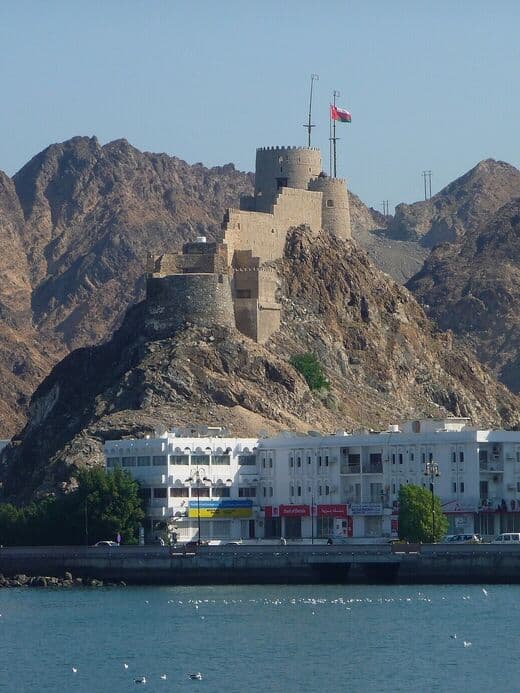
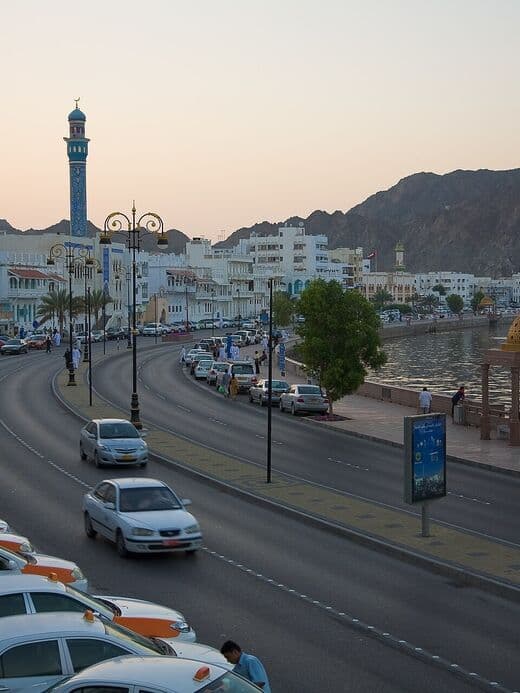
The atmospheric heart of Muscat. The Mutrah Corniche curves along the harbor, lined with old merchant houses and backed by craggy hills. Mutrah Souq is steps away, and you can walk to Mutrah Fort for sunset views. Budget hotels and guesthouses cluster here, ranging from $40-80/night. The downside: limited dining options after 10pm, parking is a headache, and it is 20-30 minutes from the modern commercial areas. Best for: atmosphere-seekers, photographers, budget travelers, first-time visitors who want to feel the old Muscat character.
Old Muscat (Muscat proper)
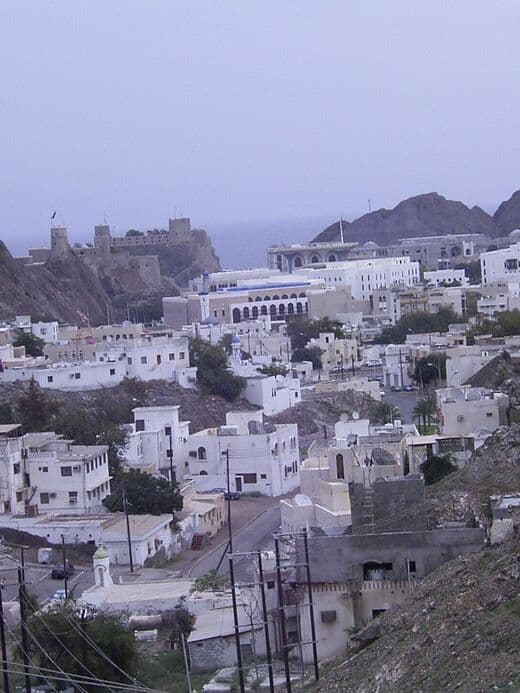
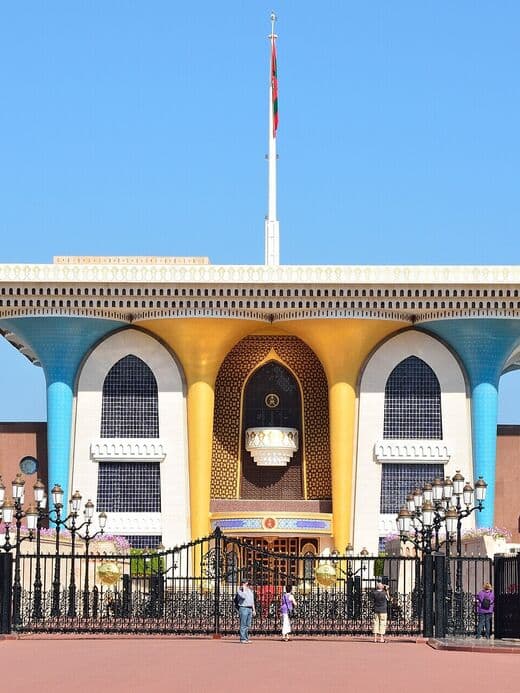
The original walled city, home to Al Alam Palace, the twin forts of Al Mirani and Al Jalali, and several museums. Very few hotels - more of a sightseeing zone than a base. Worth a half-day visit. Accommodation $60-100 where available.
Qurum
The sweet spot for most visitors. Qurum sits in the middle of the city's sprawl and offers the best balance of beaches, restaurants, shopping, and culture. Qurum Beach is a long sandy stretch popular with locals for evening walks. Qurum Natural Park is right behind it - surprisingly lush for a desert city. The National Museum and Opera House are a short drive away. Hotels range from $70-150/night, and you will find good restaurants within walking distance. Best for: families, mid-range travelers, anyone wanting convenience without sacrificing character.
Al Khuwair
The administrative and commercial center, anchored by Al Khuwair Square. This is where government ministries, embassies, and office buildings concentrate. Hotels here tend to be business-oriented ($80-140/night) with good amenities but less soul. Plenty of restaurants and cafes, easy taxi access. Best for: business travelers, those who prioritize modern amenities and central location over atmosphere.
Al Mouj (The Wave)
Muscat's most modern development - a planned waterfront community with a marina, golf course, international restaurants, and upscale apartments. This is where expats brunch on weekends. Hotels run $120-250/night. It feels more international than Omani, which is either a pro or a con depending on your perspective. Good beach access and walkable within the development, but isolated from the rest of Muscat. Best for: luxury travelers, long-stay visitors, those who want resort-style convenience.
Barr Al Jissah
A secluded bay east of Old Muscat, dominated by the Shangri-La resort complex. Stunning setting with mountains plunging into clear water. Rooms start at $180/night. There is nothing outside the resort unless you arrange transport. Beautiful for a splurge, but you will miss the real Muscat if you never leave. Best for: honeymoons, resort lovers, beach holidays with occasional city excursions.
Seeb (As Seeb)
The western end of greater Muscat, closest to the airport. A largely residential area with a local feel, good fish market, and lower prices ($40-70/night). The old Seeb souq is worth a wander. The downside: it is 30-45 minutes from Muttrah and the main sights. Best for: budget travelers with a car, early morning flights, those who want to experience everyday Omani life.
My recommendation: Stay in Qurum for 3-4 nights, then consider one night in Muttrah for the atmosphere. If you are renting a car (and you probably should), the neighborhood matters less since everything is connected by a good highway.
Best Time to Visit Muscat
This is not a destination where timing is optional - get it wrong and you will spend your trip moving between air-conditioned spaces, which defeats the purpose.
The sweet spot: October to March. Temperatures range from 20-30C (68-86F), humidity drops to bearable levels, and the sea is warm enough for swimming. November through February is peak season, and hotel prices reflect that - expect 30-50% markups compared to shoulder months. December and January nights can actually feel cool, dropping to 15-18C (59-64F), which Omanis consider freezing.
Shoulder months (October, April): Excellent value. October still has residual humidity but temperatures have backed off from the summer extremes. April is warming up quickly - expect 35C (95F) by mid-month - but mornings and evenings are pleasant. Hotels drop prices significantly, and tourist sites are less crowded.
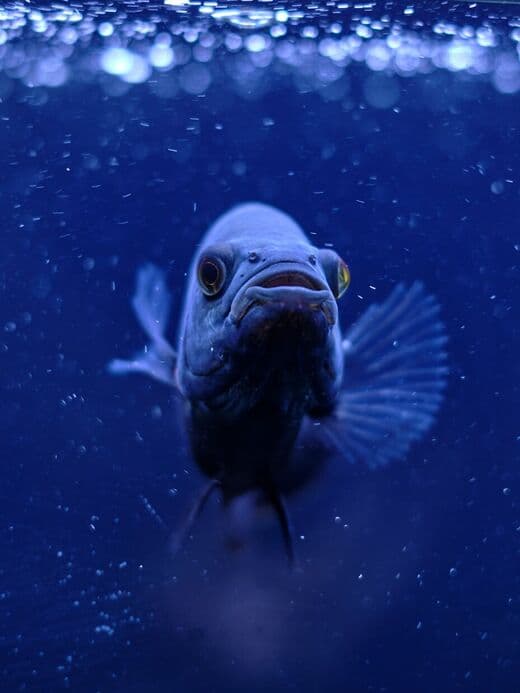
Summer (May to September): Avoid unless you have a specific reason. Temperatures hit 40-48C (104-118F), humidity along the coast reaches 80-90%, and outdoor activity becomes genuinely dangerous. The upside: hotel prices crater to 40-60% of peak rates, and some luxury properties offer remarkable deals. Indoor attractions like the National Museum of Oman, Royal Opera House, and the Oman Aquarium are perfectly comfortable. But wadi hikes and mountain trips are off the table.
Ramadan note: Most restaurants close during daylight (hotel restaurants stay open behind screens). Government offices run short schedules. On the positive side, iftar is a wonderful cultural experience, and after sundown Muttrah Souq has special Ramadan energy.
Events worth timing around: The Muscat Festival (January-February) brings cultural events, concerts, and food stalls. Eid celebrations mean festive energy but also closures - book ahead. The Khareef monsoon in Salalah (June-September, short flight away) transforms the desert green and combines well with Muscat.
Itinerary: 3 to 7 Days in Muscat
Muscat rewards extra days more than most cities. Three days covers the highlights; five days lets you breathe; seven days means you can include the spectacular day trips that, honestly, are half the reason to come.
Day 1: Old Muscat and Muttrah
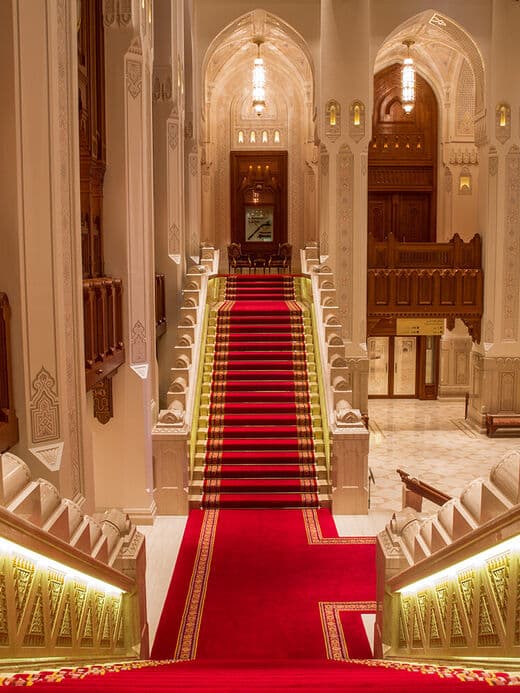
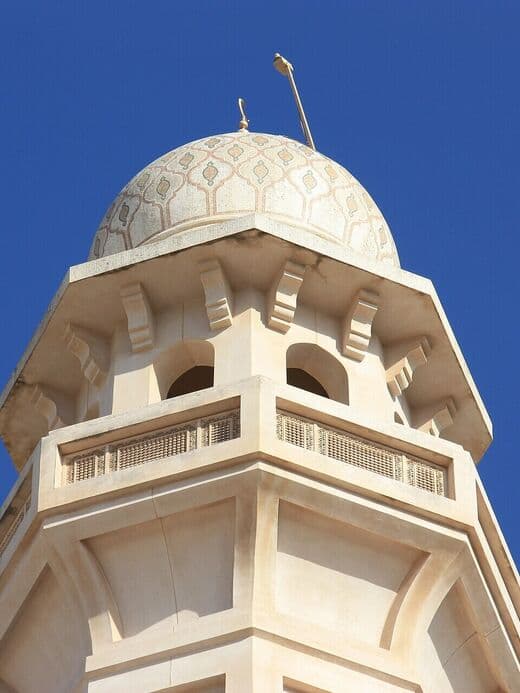
Morning (8:00-12:00): Start at the Sultan Qaboos Grand Mosque - arrive by 8:30am. Non-Muslim visitors welcome Saturday-Thursday, 8:00-11:00am only. The main prayer hall has one of the world's largest hand-woven carpets and an eight-ton Swarovski chandelier. Budget 60-90 minutes. Dress code is strict: women cover hair, arms, and legs; men need long trousers and covered shoulders. Abayas available to borrow at the entrance.
Late morning (11:00-13:00): Drive to Old Muscat. Walk through the walled quarter past Al Alam Palace (exterior viewing only - it is a working royal palace). The twin Portuguese-built forts, Al Mirani Fort and Al Jalali Fort, frame the harbor dramatically. Visit the Bait Al Zubair Museum ($5 entry) for a beautifully curated look at Omani heritage - traditional weapons, jewelry, costumes, and a model village. Allow 45-60 minutes.
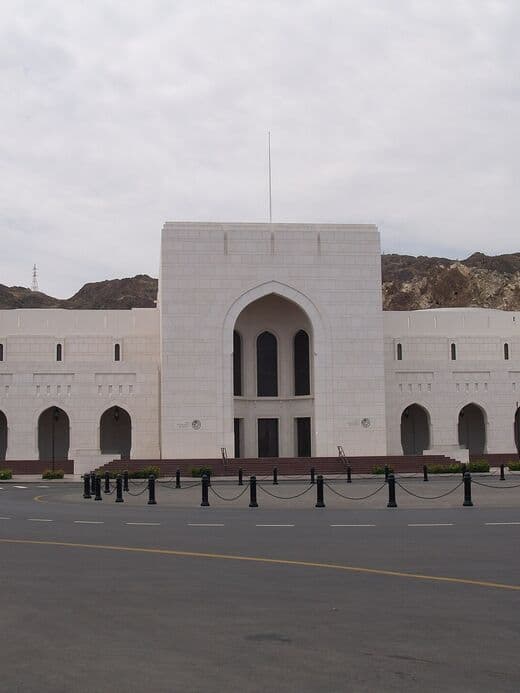
Afternoon (14:00-17:00): Head to the National Museum of Oman ($5 entry), which opened in 2016 and is genuinely world-class. The maritime gallery and the frankincense exhibit are highlights. Give it at least 90 minutes. If you still have energy, the Muscat Gate Museum is a quick 30-minute stop nearby.
Evening (17:00-21:00): Walk the Mutrah Corniche as the light softens - this is Muscat at its most photogenic. Continue into Mutrah Souq as it comes alive for evening shopping. Bargain for frankincense ($3-8 for a bag of good quality), Omani halwa (the traditional sweet), pashminas, and silver khanjar daggers. Dinner at one of the restaurants along the corniche - grilled fish with rice runs about $8-12.
Day 2: Qurum, Culture, and Coast
Morning (8:00-11:00): Walk or jog along Qurum Beach before it gets hot. The beach stretches for nearly 2km and is popular with locals for morning exercise. Grab breakfast at one of the cafes along the strip - a full Omani breakfast with karak chai costs about $5-7.
Late morning (11:00-13:00): Explore Qurum Natural Park, a surprisingly lush green space in the middle of the city. It includes mangroves, walking trails, and birdwatching opportunities. The park is free and relatively quiet on weekday mornings.
Afternoon (14:00-17:00): Visit the Royal Opera House Muscat - even if you do not attend a performance, the guided tours ($5) are worthwhile. The building is architecturally stunning, blending Omani and international design. Check their schedule: performances run October through April and feature surprisingly major international acts. After that, explore Al Khuwair Square area for modern Muscat shopping and cafe culture.
Evening (17:00-20:00): Drive up to Riyam Park for panoramic views over Muttrah harbor. The giant incense burner monument is a Muscat landmark. If it is Thursday or Friday evening, this area buzzes with families and food vendors.
Day 3: Rose Garden and Relaxation
Morning (8:00-12:00): Visit the Sultan Qaboos Rose Garden - best in the cooler morning hours. The garden is beautifully maintained and offers a peaceful contrast to sightseeing intensity. Budget about 60-90 minutes for a proper walk through.
Afternoon: Free time for souvenir shopping, revisiting favorite spots, or simply enjoying the hotel pool. Consider a traditional Omani coffee experience at one of the heritage cafes - Omani kahwa (coffee with cardamom and rosewater) served with dates is a ritual worth savoring.
Evening: Splurge dinner at one of Al Mouj's waterfront restaurants. A good seafood meal with drinks runs $40-60 per person.
Day 4: Daymaniyat Islands (if staying 4+ days)
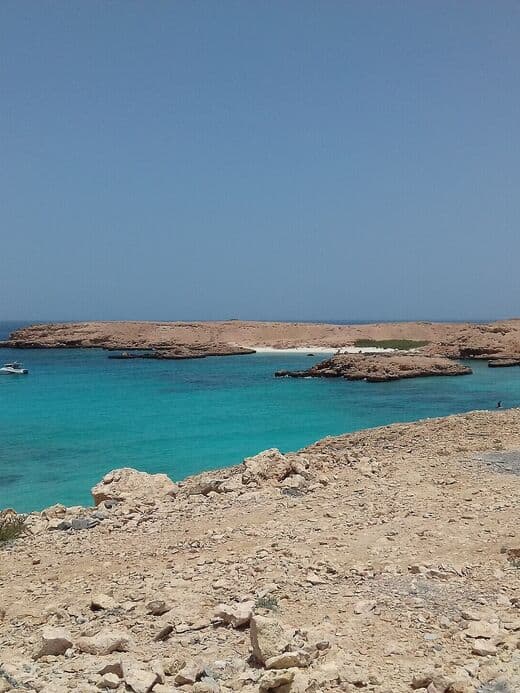
Book a snorkeling or diving trip to the Daymaniyat Islands, a nature reserve about 45 minutes by boat from the coast. The marine life is exceptional - sea turtles, reef sharks, rays, and vibrant coral. Full-day tours run $80-120 per person including equipment and lunch. Book at least a day ahead through your hotel or a local operator. The islands are closed June-October for turtle nesting season. Tip: Bring reef-safe sunscreen and a rash guard - the sun on the water is intense even in winter.
Day 5: Wadi Shab (if staying 5+ days)
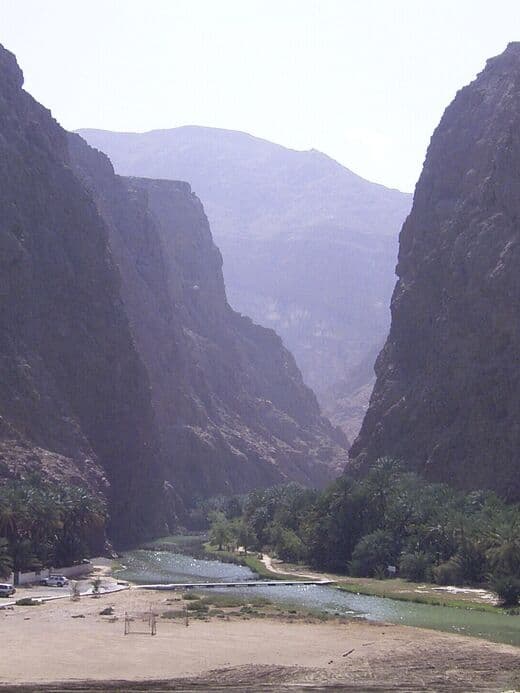
The jewel of any Muscat trip. Wadi Shab is 90 minutes southeast - leave by 7:00am. Cross the wadi entrance by boat ($1), hike 45 minutes along a canyon trail with turquoise pools, then swim through narrow passages to a hidden waterfall cave. Allow 4-5 hours total. Bring water shoes, a dry bag for your phone, and 2+ liters of water. Critical: No summer attempts - flash floods and extreme heat make it dangerous.
Day 6: Bimmah Sinkhole + Coast Drive
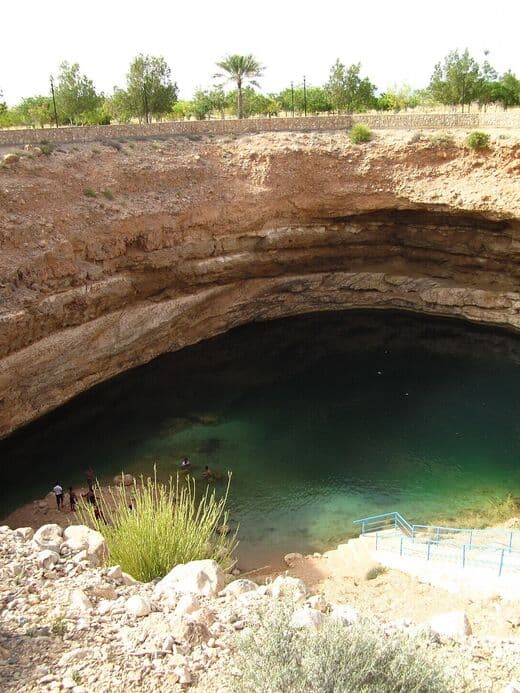
Combine with Wadi Shab if short on time, or enjoy as a separate leisurely day. Bimmah Sinkhole is a geological wonder - a collapsed limestone cave filled with stunning turquoise water. It is free to visit and you can swim in it (there are stairs down). The water contains small fish that nibble dead skin - a natural fish spa. Arrive before 10am to avoid crowds. The coastal drive between Muscat and Sur along the eastern seaboard is spectacular, with dramatic cliffs, fishing villages, and empty beaches.
Day 7: Flexible Day
Options: revisit Muttrah Souq for shopping, take a dhow cruise ($30-50 for 2 hours), visit the Seeb fish market at dawn, drive to Jebel Akhdar (2 hours, 4x4 required, worth an overnight), or do a Wahiba Sands desert excursion (3 hours south, overnight camps $80-150 per person with dinner and breakfast).
Where to Eat: Restaurant Guide
Muscat's food scene does not get the attention it deserves. The city has a culinary identity shaped by Omani tradition, Indian Ocean trade routes, and a sizeable South Asian community that has been here for generations. Here is how to eat well at every budget level.
Street Food and Cheap Eats ($2-6)
Muttrah Souq area is your best bet for casual eating. Look for the shawarma stands near the souq entrance - the chicken shawarma wraps are enormous and cost about $1.50. The juice stalls sell fresh pomegranate, sugarcane, and mixed fruit juices for $1-2. For breakfast, find a bakery selling rgag (thin Omani bread) with cheese and honey - a local staple at about $2.
Al Mina fish market area has several no-frills restaurants where fishermen and market workers eat. Grilled fish with rice, salad, and bread runs $4-6. Point at what looks good - language barriers dissolve when food is involved. These places are at their best at lunchtime.
Indian restaurants in Ruwi - the old commercial district - offer some of the best South Asian food outside the subcontinent. A full thali (rice, dal, curries, bread, pickle) costs $3-5. The competition keeps quality high. Biryani shops in particular are outstanding.
Mid-Range Restaurants ($12-25)
Omani cuisine: Seek out restaurants serving traditional Omani food - it is harder to find than you would expect, since many locals eat these dishes at home. Look for places advertising shuwa (slow-roasted lamb), machboos (spiced rice with meat), or harees (wheat porridge with meat). A full Omani meal with drinks typically runs $12-18.
Seafood: Muscat sits on one of the richest fishing grounds in the Arabian Sea. Restaurants along the Qurum and Muttrah waterfronts serve fresh kingfish, hammour (grouper), lobster, and shrimp. Grilled kingfish with Omani spices and lemon rice is the quintessential Muscat meal - expect $12-20 per person.
Lebanese and Turkish: The city has excellent Lebanese restaurants, particularly in the Al Khuwair and Qurum areas. Meze platters, grills, and fresh bread make for a satisfying dinner at $15-22 per person.
Fine Dining ($40-80+)
The Shangri-La, Al Bustan Palace, and W Muscat all have destination-worthy restaurants. Japanese, Italian, and fusion dominate. Budget $50-80 per person without alcohol. Friday brunch at upscale hotels is a Muscat institution - all-you-can-eat with beverage packages at $40-80 per person. Book ahead.
Cafes and Coffee Culture
Third-wave cafes in Al Mouj, Qurum, and Al Khuwair pour single-origin beans for $3-5. But do not skip traditional kahwa - pale, fragrant coffee with cardamom, saffron, and rosewater, served in tiny cups with dates and halwa. Offered as a welcome gesture everywhere - accepting is both polite and delicious.
Alcohol note: Oman is not dry, but alcohol is only in licensed hotel restaurants and bars. Beer $7-10, cocktails $12-18. No standalone bars outside hotels. Do not bring duty-free alcohol to drink in public - illegal with real enforcement.
What to Try: A Food Guide to Muscat
Omani cuisine is the undiscovered gem of Gulf gastronomy. While neighboring countries get the food-tourism attention, Oman's dishes reflect centuries of Indian Ocean spice trade - complex, aromatic, and unlike anything you have had before. Here are the essentials.
Shuwa - The king of Omani food. A whole lamb marinated in cumin, coriander, chili, garlic, and dried lime, wrapped in palm leaves, slow-cooked underground for 24-48 hours. Fall-apart tender, deeply spiced. Traditionally for Eid, but some restaurants serve it year-round. If you see it on a menu, order it.
Machboos (Kabsa) - Omani spiced rice with meat or fish, dried limes, whole spices, and tomatoes. Every household has a different recipe. Less fiery than Saudi kabsa. Available everywhere, $6-10 for a generous portion.
Harees - Cracked wheat slow-cooked with meat until it reaches a smooth, porridge-like consistency. Seasoned simply with cinnamon, cardamom, and ghee. It sounds plain but is deeply comforting and rich. Popular during Ramadan and winter months. Think of it as the Omani equivalent of risotto - humble ingredients elevated by patience.
Mishkak - Omani kebabs: small pieces of marinated meat (usually beef or chicken) grilled over charcoal on wooden skewers. The marinade includes turmeric, cumin, and dried lime. You will find them at street stalls for $2-3 for a generous portion. Best eaten standing up at the stall, served in flatbread with hot sauce.
Omani Halwa - Nothing like the crumbly halva you know. A sticky, gelatinous sweet from starch, sugar, ghee, rosewater, saffron, and nuts. Texture like thick fragrant jelly, served with coffee. Buy a box in Muttrah ($3-8) - keeps well and makes a great gift.
Samak Mashwi - Whole grilled fish (kingfish or hammour) with baharat, turmeric, and lime, stuffed with herbs and charcoal-grilled. Best at beachside or fish market restaurants. A whole kingfish for two costs $10-15.
Rgag - Paper-thin flatbread cooked on a domed griddle. Eaten with honey and cheese, egg, or used to scoop stews. Watch souq bread makers flip the dough - mesmerizing. An ideal $2 breakfast.
Karak Chai - Strong black tea with condensed milk, cardamom, and sometimes saffron. Every karak shop serves it for $0.50-1. Having a karak at 10pm from a roadside shop while watching traffic is a quintessential Muscat moment.
Luqaimat - Small fried dough balls drizzled with date syrup and sesame seeds. Crispy outside, soft inside. Popular evening snack from vendors near mosques after prayer. About $2 a plate.
Eating tip: Lunch is the main meal - restaurants put out their best dishes noon-2pm. Want shuwa or machboos? Go at lunch. Eating with your right hand is traditional - try it once for the full experience.
Local Secrets and Insider Tips
After spending real time in Muscat, these are the things I wish someone had told me on day one.
1. Friday is the weekend, not Sunday. The Omani weekend is Friday-Saturday. Many shops and attractions close or have reduced hours on Friday morning (prayer time). Museums typically open Friday afternoon. Plan your sightseeing accordingly - Thursday evening and Saturday are ideal for souq visits.
2. Dress modestly and you will be treated better. Oman is conservative but not oppressive about it. Covering shoulders and knees (both genders) in public areas is not legally required outside mosques, but it is deeply appreciated and will change how locals interact with you. At the beach and in hotels, normal resort wear is fine.
3. Photography etiquette matters. Always ask before photographing Omanis, especially women. Government buildings, military installations, and the palace are no-photo zones - enforcement is real. Landscapes and architecture are fine. Locals will often happily pose if you ask politely.
4. Wadi flash floods kill tourists every year. This is not an exaggeration. If it has rained anywhere in the mountains upstream - even if the sky above you is clear - wadis can flood in minutes. Check weather forecasts, tell someone where you are going, and never camp in a wadi bed. The beauty of places like Wadi Shab comes with real risk.
5. The Muttrah fish market at 6am is better than any museum. Fishermen unloading the catch, auctioneers calling prices in rapid Arabic, silver heaps of sardines and massive tuna. Go early, bring a camera, stay for breakfast at adjacent cafes.
6. Frankincense is the souvenir. Forget fridge magnets. Hojari-grade frankincense from Dhofar is among the world's finest. Buy from older stalls deeper inside Muttrah Souq, not tourist shops at the front. $5-15 for a bag that lasts months. Merchants will explain grades and burn samples.
7. Fill your tank outside the city. Petrol is cheap ($0.65/liter, $2.50/gallon) but city stations have queues. Fill on the highway, and always top off completely before wadi or interior drives - stations are sparse.
8. Learn three Arabic phrases. As-salaam alaikum, shukran, and inshallah get you smiles everywhere. Omanis appreciate minimal effort with Arabic. English works in tourist areas; less so in souqs and rural spots.
9. The Grand Mosque on a cloudy day is better. Bright sun on white marble washes out details and photos. Overcast mornings bring out the calligraphy and mosaic work beautifully.
10. Haggling rules in Muttrah Souq. Start at 40-50% of asking price for textiles, jewelry, and decoratives. Frankincense and halwa are more fixed - maybe 10-15% room. Be friendly, never aggressive. Walking away is your strongest move. Do not haggle in shops with marked prices.
11. Turtle nesting at Ras al-Jinz. 2.5 hours from Muscat, guided nighttime viewing of green turtles nesting (June-November peak). Book the official tour ($10-15) - freelance night visits prohibited. Genuinely magical.
12. Hotel pools are your summer survival strategy. If you visit in summer, plan around AC spaces and pool time. Many hotels sell day passes ($15-30) with pool and beach access, some including F&B credit.
Transport and Connectivity
Getting From the Airport to the City
Muscat International Airport (MCT) is in Seeb, on the western end of the metropolitan area. It is a modern, efficient airport - immigration typically takes 15-30 minutes. From there:
Taxi: Official taxis from a booth outside arrivals. Fixed rates: Qurum $15-20, Muttrah $20-25, Al Mouj $15. Ride is 20-40 minutes. Use official taxis only (white with orange markings) - avoid freelance drivers inside the terminal.
Hotel transfer: Most hotels offer pickup for $25-40. Worth it for late-night arrivals. Book in advance.
Rental car: Available at the airport from Hertz, Europcar, Budget, and local operators. Compact cars $25-35/day; SUVs $50-70/day (worth it for wadis and mountains). Roads are excellent, signed in English, traffic manageable outside rush hours (7-9am, 5-7pm). Drive on the right.
Getting Around the City
Taxis: No meters - agree on price before getting in. Within central Muscat (Qurum to Muttrah) $5-10. To airport from Qurum $12-18. Uber and Careem have limited presence but work for short hops.
Mwasalat buses: Cheap ($0.50-1) but limited routes and low frequency (every 30-60 minutes). Modern and air-conditioned but not practical for sightseeing.
Rental car (recommended): The best way to experience Muscat. The city is too spread out for walking between neighborhoods, taxis add up, and day trips to wadis are impossible without wheels. International licenses accepted. Petrol is cheap. Parking generally free outside malls. Speed cameras are everywhere - fines start at $100+.
Walking: Feasible within neighborhoods (Corniche to souq, around Qurum beach, within Al Mouj) but not between them. Sidewalks are inconsistent and summer heat makes walking impractical. That said, an evening Corniche stroll is one of Muscat's best experiences.
SIM Cards and Internet
Airport SIM: Buy a tourist SIM at the airport from Ooredoo or Omantel (both have kiosks in arrivals). A 10GB data package costs about $10-15, valid for 30 days. Bring your passport - registration is required. Signal coverage in Muscat is excellent; coverage in remote wadis and mountains can be spotty.
eSIM: If your phone supports it, purchase an Airalo or Holafly eSIM before departure. Prices are similar ($8-12 for 5-10GB). This lets you land with data already working - useful for navigation from the airport.
WiFi: Hotels universally offer free WiFi (quality varies from excellent to maddening). Cafes and restaurants in tourist areas have WiFi. Shopping malls offer free WiFi with registration.
Useful apps: Google Maps is the best navigation tool and more reliable for restaurant reviews than TripAdvisor here. WhatsApp is the primary messaging app - businesses and tour operators all use it. Download an Arabic keyboard for pasting names into searches.
VPN note: Oman blocks VoIP calls (FaceTime Audio, WhatsApp calls, Skype). Download and configure a VPN before arriving if you need internet calls.
Who Muscat Is For: The Honest Summary
Muscat is ideal for: Culture-curious travelers who want the Middle East beyond the cliches. Couples looking for romance without pretension. Families with older kids who can handle heat and hiking. Divers and snorkelers. History and architecture enthusiasts. Foodies willing to look beyond hotel restaurants. Anyone who has done Dubai and wants something real.
Muscat is not ideal for: Party seekers and nightlife lovers. Travelers who need everything walkable and compact. Those on ultra-tight budgets (backpacker infrastructure is limited). Visitors who are uncomfortable with conservative dress norms. Anyone who wilts above 30C and can only travel in summer.
How many days: Three days covers the city highlights. Five days lets you add Wadi Shab and the Daymaniyat Islands. Seven days means you can explore the coast road, visit Nizwa and Jebel Akhdar, and still have time for a lazy beach morning. If you can swing it, five days is the sweet spot - enough to feel like you have genuinely experienced Muscat, not just checked boxes.