About
Luxembourg Travel Guide: The Tiny Grand Duchy That Packs a Serious Punch
Here is something that will probably surprise you: Luxembourg, a country smaller than Rhode Island, has free public transport for everyone, a UNESCO World Heritage old town carved into cliff faces, more Michelin-starred restaurants per capita than France, and a population where nearly half the residents are foreign-born. It is one of the wealthiest nations on Earth, yet it feels nothing like a sterile financial hub. Instead, you get deep river valleys, ruined castles draped in moss, vineyards tumbling down to the Moselle, and a capital city that looks like someone stacked a medieval fortress on top of a dramatic gorge and then added excellent coffee shops.
I have visited Luxembourg multiple times over the years, and every single time I have been caught off guard by how much there is to do in a country you can drive across in under an hour. Most travelers treat it as a day trip from Brussels or a layover on the way to somewhere else. That is a mistake. Give Luxembourg three days minimum, a week ideally, and you will discover one of Europe's most underrated destinations.
This guide is not a Wikipedia summary. It is the kind of advice I would give a friend over coffee before their trip -- specific, honest, occasionally opinionated, and packed with the practical details that actually matter when you are on the ground. Whether you are coming from New York, London, Sydney, or Toronto, here is everything you need to know.
1. Why You Should Actually Visit Luxembourg (And Not Just Pass Through)
Let me be honest with you upfront: Luxembourg does not have the obvious draw of Paris, the Instagram appeal of Santorini, or the nightlife of Berlin. What it has instead is something rarer and, I would argue, more valuable -- it is a place that rewards curiosity. The longer you stay, the more it reveals.
Start with the practical stuff. Since March 2020, all public transport in Luxembourg is completely free. Trains, buses, trams -- no tickets, no validating, no fumbling with machines. You just get on. This is not some pandemic-era experiment that quietly ended. It is permanent national policy. Luxembourg is the first country in the world to do this, and it changes the entire dynamic of exploring the country. You can hop on a train to a random village, wander around a castle, and hop back without spending a cent on transport. For budget travelers, this is transformative.
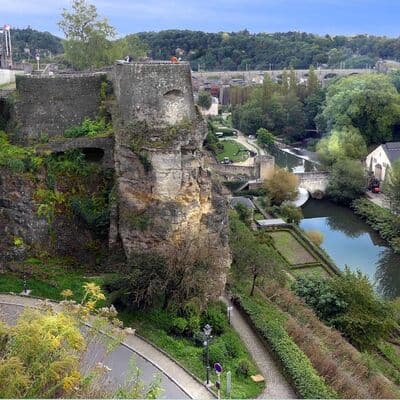
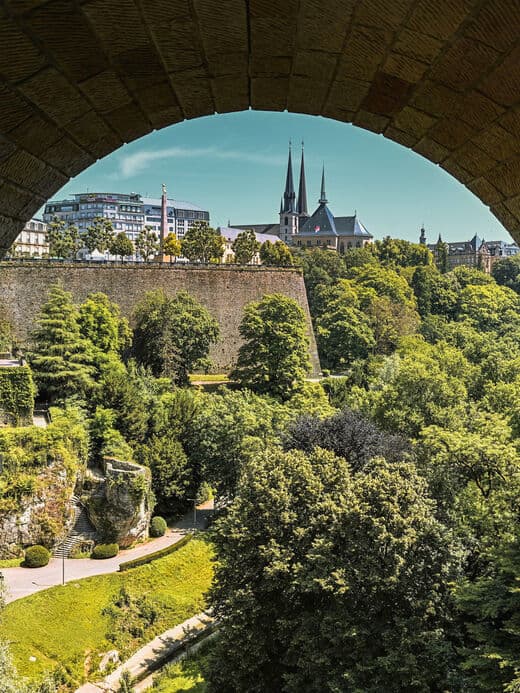
Then there is Luxembourg City itself. The old town, perched on a rocky promontory above the Alzette and Petrusse valleys, has been a UNESCO World Heritage Site since 1994. The Bock Casemates -- a network of underground tunnels carved into the rock over centuries -- once sheltered 35,000 people during World War II. Today you can walk through them and look out over the Grund quarter far below, where the river winds between old stone buildings that now house some of the city's best restaurants. The contrast between the upper city's sleek EU-quarter modernity and the lower city's almost village-like charm is genuinely striking.
Safety is another factor that deserves mention. Luxembourg consistently ranks among the safest countries in the world. Violent crime is exceptionally rare. You can walk around the capital at 2 AM without a second thought. For solo travelers, especially solo female travelers, this matters enormously. You spend less mental energy on situational awareness and more on actually enjoying where you are.
The food scene is far better than a country this size has any right to claim. Luxembourg has earned its place on the European culinary map with a Michelin star density that rivals much larger nations. The cuisine itself is a fascinating crossroads -- French technique, German portions, and local traditions involving smoked pork, freshwater fish, and surprisingly excellent wine from the Moselle Valley. More on all of this later.
The castle situation is absurd. For a country roughly 80 kilometers long and 57 kilometers wide, Luxembourg has an extraordinary concentration of medieval fortifications. Vianden alone, with its fairy-tale hilltop castle, would justify a visit. But there are dozens more, some restored and museum-ready, others crumbling romantically in forests. The Valley of Seven Castles is a real hiking route, not a tourist board invention.
And here is what genuinely sets Luxembourg apart from its neighbors: the multilingual, multicultural atmosphere. Luxembourgish, French, and German are all official languages. Nearly 48 percent of the population are foreign nationals -- Portuguese, French, Italian, Belgian, and increasingly people from all over the world. Walk through the Gare district on a Saturday and you will hear six languages in five minutes. There is an openness to outsiders here that you do not always find in small European countries. As an English speaker, you will have zero communication problems in the capital and very few elsewhere.
The downsides? Luxembourg is expensive. Not Monaco expensive, but firmly in the Scandinavia bracket. A decent dinner for two with wine will set you back 80-120 euros without trying hard. Hotels in the capital start around 120 euros a night for something acceptable. And honestly, if you only have one day, you might leave thinking it was pleasant but not spectacular. Luxembourg is a slow burn. It needs time to work on you. The good news is that free transport and the compact size mean your biggest expense is accommodation and food, not getting around.
One more thing worth mentioning: Luxembourg is an exceptional base for exploring the wider region. Trier, Germany -- the oldest city in Germany with remarkable Roman ruins -- is 50 minutes by train. Metz, France, with its stunning Centre Pompidou outpost, is even closer. Brussels is three hours by rail. You can combine Luxembourg with the Belgian Ardennes, the German Moselle, or the Lorraine region of France without any logistical headaches.
So who is Luxembourg for? It is for travelers who have done the major European capitals and want something different. It is for history enthusiasts, castle lovers, wine drinkers, hikers, and anyone who appreciates a well-organized country that does not take itself too seriously. It is for people who find joy in stumbling onto a perfect bakery in a village of 200 people, or discovering a waterfall in a forest that is not in any guidebook. If that sounds like you, keep reading.
2. Regions of Luxembourg: A Complete Breakdown
Most first-time visitors never leave the capital. That is like visiting California and never leaving San Francisco airport. Luxembourg has six distinct regions, each with its own character, landscapes, and reasons to visit. Here is the full picture.
Luxembourg City and Surroundings
Luxembourg City is where most trips begin, and for good reason. It is one of Europe's most dramatically situated capitals, built across a series of deep gorges that were originally what made it such an effective fortress. The city essentially exists on two levels: the Ville Haute (upper town) with its grand boulevards, government buildings, and commercial center, and the Ville Basse (lower town) with its narrow streets, riverside charm, and some of the most picturesque neighborhoods in the country.
The Luxembourg Old Town is the UNESCO-listed core, and it deserves a full day minimum. Start at the Bock Casemates, the extraordinary underground tunnel network that dates back to 1644. The Spanish originally carved these passages into the sandstone cliff, and they were later expanded by the Austrians and then the French. At their peak, the casemates stretched over 23 kilometers -- today about 17 kilometers survive, and you can explore a fascinating section of them. The views from the casemate openings over the Grund quarter and the Alzette Valley are among the best in the city. Entry is 8 euros for adults and well worth it.
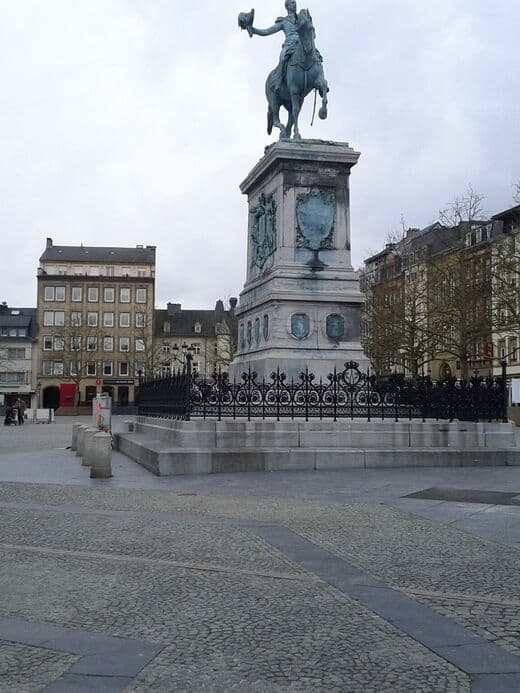
Place Guillaume II, known locally as the Knuedler, is the main square and the beating heart of the upper town. The equestrian statue of Grand Duke William II anchors the space, which hosts a lively market on Wednesdays and Saturdays. The Town Hall (Hotel de Ville) occupies the south side of the square. On market days, you will find local cheese, bread, flowers, and seasonal produce -- it is a great place to assemble a picnic.
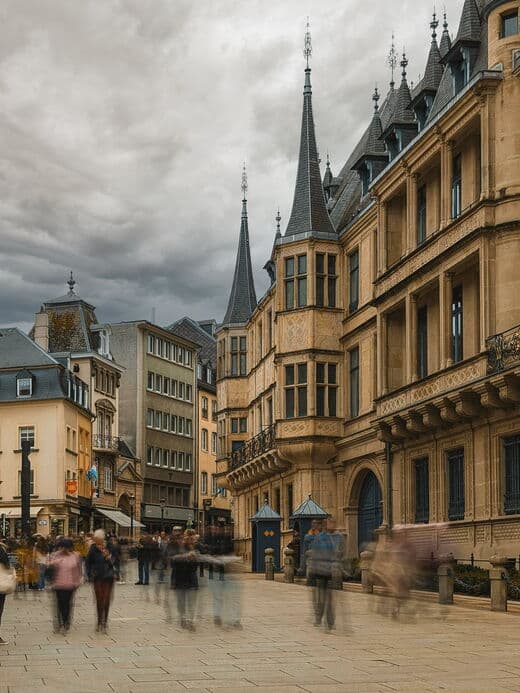
The Grand Ducal Palace is just around the corner on Rue du Marche-aux-Herbes. This is the official residence of the Grand Duke, and you can tell when he is in town because the flag will be flying. The Renaissance facade is gorgeous, especially in morning light. During summer months (typically mid-July to early September), guided interior tours are available and highly recommended -- the interiors are far more opulent than the relatively modest exterior suggests. Tickets sell out fast, so book ahead through the Luxembourg City Tourist Office.
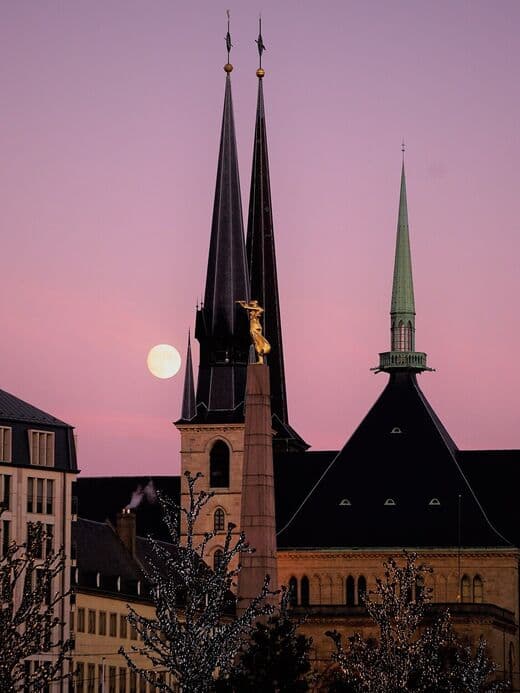
Notre-Dame Cathedral is a late Gothic structure from the early 17th century that blends Gothic austerity with Renaissance flourishes. The interior is notable for its black marble columns and the crypt containing the tomb of John the Blind, one of Luxembourg's most storied historical figures (and the King of Bohemia who died fighting at Crecy in 1346 despite being, as his name suggests, actually blind). It is free to enter and usually quiet enough for genuine contemplation.
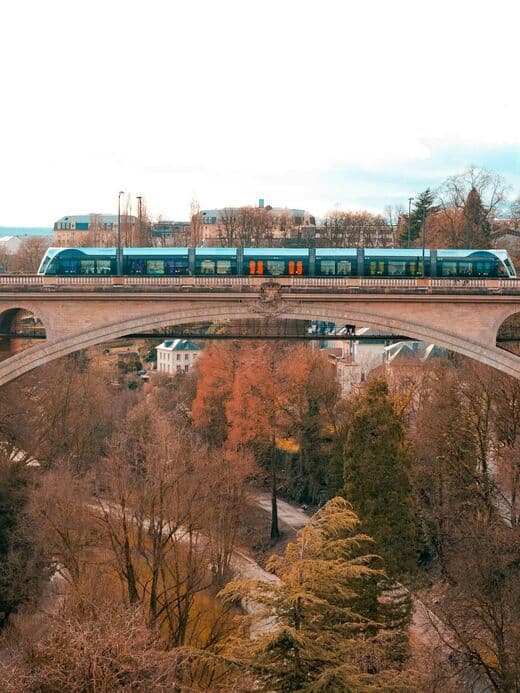
Do not skip the Petrusse Valley. This green gorge cuts through the center of the city, and walking along the river at the bottom while the modern city towers above you on both sides is a surreal experience. It takes about 30-40 minutes to walk through, and it connects the upper town to the station district. The Adolphe Bridge, the city's iconic stone arch bridge built in 1903, spans the valley and offers sweeping views in both directions. At the time of its construction, it had the largest stone arch in the world.
Municipal Park (Parc Municipal, also called Stadtpark by German speakers) is a welcome green space on the eastern edge of the old town. It is beautifully maintained, with mature trees, a small stream, and plenty of benches. On warm days, office workers from the nearby EU institutions fill the lawns at lunchtime. The park connects to the Pescatore Foundation gardens and eventually to the European quarter -- the walk through here is far more pleasant than going along the main roads.
Beyond the historic core, the Kirchberg plateau is home to the European Court of Justice, the European Investment Bank, the Philharmonie concert hall (stunning building by Christian de Portzamparc), and the MUDAM (Museum of Modern Art Grand-Duc Jean), designed by I.M. Pei. If you have even a passing interest in modern architecture, Kirchberg is worth the tram ride.
The Grund quarter, nestled in the Alzette Valley below the old town, is where the city's nightlife concentrates. Former industrial buildings now house bars, restaurants, and creative spaces. Take the free panoramic elevator from the upper town (near the Holy Spirit Citadel) to get down without destroying your knees. Scott's Pub, Pygmalion, and the eateries along Rue de la Boucherie and Rue Munster are reliable starting points for an evening out.
Mullerthal: Luxembourg's Little Switzerland
The Mullerthal region, about 30 kilometers northeast of the capital, is Luxembourg's answer to those who say the country is flat and boring. Known as "Little Switzerland" -- a nickname that sets expectations a bit high, to be fair, but is not entirely undeserved -- this area is defined by dramatic sandstone rock formations, dense forests, narrow gorges, and a trail network that would keep a serious hiker busy for days.
The star attraction is the Mullerthal Trail, a 112-kilometer long-distance footpath divided into three routes. Route 1 runs from Echternach to Berdorf, Route 2 goes through the most dramatic rock formations (the Schiessentumpel waterfall is here, featured on countless Luxembourg tourism posters), and Route 3 connects to the Moselle region. You do not need to do the whole thing. Plenty of circular day hikes of 8-15 kilometers let you see the best parts.
Echternach, the country's oldest town, sits on the German border at the eastern edge of the Mullerthal. Founded around an abbey in 698 AD, it has a beautifully preserved old town and is famous for the Hopping Procession (Sprangprozessioun) on Whit Tuesday -- a UNESCO-listed tradition where participants literally hop through the streets. Even outside festival time, the basilica, the abbey gardens, and the reconstructed Roman villa nearby are all worth visiting. Echternach is also the main trailhead for Mullerthal hikes.
Berdorf and Consdorf are small villages that serve as additional bases for hiking. Accommodation options here lean toward guesthouses and holiday apartments rather than hotels. The Huel Lee cave near Berdorf is an impressive natural formation accessible from the trail.
Practical tip: the Mullerthal is at its most atmospheric in spring when the forests are carpeted in wild garlic and the waterfalls are running high, or in autumn when the beech trees turn gold. Summer weekends can be surprisingly busy on the main trails.
The Ardennes: Castles, Forests, and Genuine Wildness
The northern third of Luxembourg is part of the Ardennes, the same forested uplands that extend into Belgium and saw some of the fiercest fighting of World War II (the Battle of the Bulge in winter 1944-45). This is the least densely populated and most ruggedly beautiful part of the country. If you want to feel like you have escaped into actual wilderness while still being within an hour of the capital, the Ardennes delivers.
Vianden is the headliner. This tiny town on the Our River is dominated by one of the most impressive feudal castles in Europe. Vianden Castle, perched on a hilltop above the town, dates back to the 10th century and has been extensively restored. The Romanesque chapel, the grand hall, and the panoramic views from the upper battlements are genuinely spectacular. Victor Hugo lived in exile here and sketched the castle obsessively -- you can visit the house where he stayed, now a small museum. The chairlift (telecabine) that runs from the town to a viewpoint above the castle is a fun way to get the full panorama, though it only operates from April to October.
Clervaux, further north, is best known for the Family of Man photographic exhibition, permanently housed in Clervaux Castle. This collection of 503 photographs from 273 photographers in 68 countries was curated by Edward Steichen (himself Luxembourgish-American) for the Museum of Modern Art in New York in 1955. It is a UNESCO Memory of the World, and seeing it in the atmospheric setting of a medieval castle is a profoundly moving experience. Clervaux also has a Benedictine abbey on the hill above town where you can attend Gregorian chant services.
Bourscheid Castle is less visited than Vianden but arguably more atmospheric. The ruins sit on a rocky spur 150 meters above the Sure River, and the approach -- whether you drive or hike in along the river -- is dramatic. The castle is partially restored, with excellent information panels, and the views down the valley are extraordinary. Visit late in the afternoon when the light turns the stone golden.
Esch-sur-Sure is a tiny village almost completely encircled by a loop of the Sure River, with castle ruins above. The setting is so picturesque it looks fake. The Upper Sure Natural Park surrounding it is excellent for kayaking, mountain biking, and hiking. The lake (reservoir) behind the Esch-sur-Sure dam is where locals go swimming in summer.
The Ardennes is also Battle of the Bulge territory. The National Museum of Military History in Diekirch has one of the best collections on the battle anywhere, with life-sized dioramas, personal artifacts, and detailed accounts that bring the winter 1944-45 fighting to vivid life. If you have any interest in WWII history, do not miss it. The Patton Memorial and American military cemetery in nearby Hamm (just outside Luxembourg City) are also deeply moving.
The Moselle Valley: Wine Country
The eastern border of Luxembourg follows the Moselle River, and the slopes above it are covered in vineyards. If you think of Luxembourg wine at all, you probably think of it as a minor footnote. You would be wrong. The Moselle Valley produces excellent Riesling, Pinot Gris, Pinot Blanc, Auxerrois, and above all, Cremant -- a sparkling wine made in the traditional method that rivals many Champagnes at a fraction of the price.
Remich is the unofficial capital of Luxembourg wine country, a pleasant riverside town with a promenade, boat tours, and several major wine producers. The Caves St Martin and Domaine Clos des Rochers both offer cellar tours and tastings. If you visit in September during the grape harvest, you will catch the Grevenmacher wine festival, one of the liveliest events in the country.
The wine route (Route du Vin) runs about 42 kilometers along the river from Schengen in the south to Wasserbillig in the north. You can drive it, cycle it, or take the bus -- remember, free transport means you can bus from winery to winery without worrying about a designated driver. Many estates offer tastings for 5-10 euros, usually waived if you buy a bottle.
Speaking of Schengen -- yes, that Schengen. The tiny village at the southern tip of the Moselle is where the Schengen Agreement was signed in 1985 aboard a boat at the junction of three countries (Luxembourg, France, Germany). There is a small museum and monument. It is genuinely moving to stand there and think about what borderless travel in Europe means, especially if you have just driven across three countries without showing a passport. The European Museum in Schengen is free and well done.
Grevenmacher and Wormeldange are other wine villages worth stopping in. Ehnen has an excellent wine museum housed in a historic winemaker's house. The entire valley has a relaxed, almost Mediterranean feel on sunny days -- cafe terraces overlooking the river, unhurried lunches, a pace of life completely different from the capital.
Terres Rouges: Industrial Heritage Reimagined
The southwest corner of Luxembourg, known as Terres Rouges (Red Lands) for its iron-rich soil, is the country's former industrial heartland. For over a century, this region powered Luxembourg's economy through steel production. Today, it is undergoing a fascinating transformation from rust belt to cultural district.
Esch-sur-Alzette, Luxembourg's second-largest city, was named a European Capital of Culture in 2022 and has used the momentum to reinvent itself. The Belval district -- built on the site of a massive former steelworks -- is the most striking example. The university, concert venues, and cultural spaces are literally built among the preserved blast furnaces. Walking through Belval at night, with the old industrial structures dramatically lit, is a uniquely powerful urban experience.
The National Museum of Resistance and Human Rights (renamed and expanded) in Esch-sur-Alzette documents Luxembourg's experience under Nazi occupation. The "Red Rock" geological trail near Rumelange takes you through the landscape that made the steel industry possible. The Minett Trail -- a 90-kilometer hiking route through the region -- connects many of these industrial heritage sites through surprisingly beautiful countryside.
This is not the Luxembourg of tourism posters, and that is precisely the point. If you are interested in how post-industrial landscapes get reimagined, or if you want to see a side of Luxembourg that most visitors miss entirely, the Terres Rouges is fascinating.
Guttland: The Rural Heartland and the Valley of Seven Castles
Guttland (literally "Good Land") is the central and southern agricultural region -- rolling farmland, small villages, and an absurd concentration of castles. The Valley of Seven Castles (Vallee des Sept Chateaux) follows the Eisch River from Mersch to Koerich, passing by seven medieval fortifications in roughly 37 kilometers. You can hike it in a long day, cycle it in half a day, or drive it with stops in a few hours.
The seven castles range from well-preserved (Ansembourg, with its beautiful baroque gardens) to romantically ruined (Schoenfels, Hollenfels). Each has its own character and story. Septfontaines Castle sits dramatically at the confluence of several streams. The Ansembourg New Castle and its formal gardens are a highlight -- they are some of the finest baroque gardens in the country.
Mersch, the unofficial capital of Guttland, is a pleasant market town with a small castle and good transport connections. It makes a reasonable base for exploring the region if you prefer a quieter alternative to the capital.
Useldange is another village worth a stop. Its castle has been partially restored with an innovative approach -- modern steel and glass elements contrast with the medieval stonework. There is also an excellent playground for kids built into the castle grounds, making it one of the best family-friendly castle visits in the country.
The agricultural character of Guttland means you will find farm shops, local produce stands, and a handful of excellent ferme-auberge (farm restaurants) where the food is hyper-local and seasonal. Ask at tourist offices for current listings.
3. Castles of Luxembourg: A Detailed Guide
For a country this small, Luxembourg's castle density is frankly ridiculous. There are over 50 castles and fortified sites across the country, ranging from fully restored showpieces to atmospheric ruins in forests. Castles were central to Luxembourg's history -- the country literally began as a castle. In 963 AD, Count Siegfried acquired a small fortification called Lucilinburhuc (little castle) on the Bock promontory, and from that single structure, the nation grew.
Here are the castles that deserve your time, in rough order of how impressive they are.
Vianden Castle
This is the big one. Vianden Castle is Luxembourg's most-visited castle and one of the finest feudal residences in Europe. Built between the 11th and 14th centuries on the foundations of a Roman castellum, it sits on a hilltop above the Our River valley. The castle fell into ruin in the 19th century after being sold off piecemeal by King William I of the Netherlands. It was eventually donated to the state and painstakingly restored over decades.
Today, the restoration is essentially complete, and the castle is magnificent. The Romanesque chapel with its unique three-level design, the grand banqueting hall, the Byzantine-influenced gallery, and the panoramic terrace are all highlights. The museum collection includes medieval weapons, furniture, and tapestries. Plan at least 90 minutes for the visit. Adult entry is 10 euros (about 11 USD).
Best approach: take the chairlift up for the views, then walk down through the town. Visit on a weekday morning to avoid the weekend crowds that can build up, especially in summer.
Beaufort Castles
Beaufort actually has two castles side by side: the medieval ruins (12th-16th century) and the adjacent Renaissance castle (17th century). The ruins are the more atmospheric of the two -- the dungeon, the torture chamber (with an actual rack still in situ), and the views from the walls are memorable. The Renaissance castle has period furnishings and hosts occasional events.
What really puts Beaufort on the map, though, is the liqueur. Chateau de Beaufort produces its own blackcurrant liqueur (Cassero), and you can sample it as part of the castle visit. The combination of medieval ruins and artisanal spirits is very Luxembourg.
Entry to the medieval castle is 7 euros. Allow about an hour for both castles.
Bourscheid Castle
The largest castle by footprint in Luxembourg, Bourscheid occupies a commanding position on a rocky ridge 150 meters above the Sure River. The ruins are extensive -- you can spend an hour exploring the upper and lower castle, the towers, and the curtain walls. The views of the Sure Valley from the ramparts are outstanding.
Bourscheid does not get the visitor numbers of Vianden, which is part of its appeal. On a weekday in spring or autumn, you might have the place almost to yourself. There is an excellent circular hiking trail from the village that approaches the castle from below, giving you the full dramatic effect of the site.
Entry is 5 euros. The small visitor center has an informative film about the castle's history.
Larochette Castle
Perched on a rocky outcrop above the White Ernz River, Larochette (also known by its Luxembourgish name Fiels) has two distinct manor houses within its walls. One has been restored and contains a small museum; the other remains a picturesque ruin. The castle was destroyed by fire in 1565 and only partially rebuilt.
The town of Larochette below is a quiet base for exploring the Mullerthal region. There is a pleasant walk from the town center up through the forest to the castle that takes about 15 minutes.
Clervaux Castle
Clervaux Castle is notable less for its architecture (it is a solid but not spectacular 12th-century fortification) and more for what it contains: the Family of Man exhibition. This collection of over 500 photographs, curated by Edward Steichen for MoMA in 1955, is one of the most important photographic exhibitions ever assembled. Seeing it in the intimate, stone-walled rooms of a medieval castle is a completely different experience from a modern gallery space. The castle also houses a museum of castle models showing what Luxembourg's various fortifications looked like in their prime.
The Valley of Seven Castles
The Eisch Valley route takes you past seven castle sites: Mersch, Schoenfels, Hollenfels, Septfontaines, Ansembourg (old and new), and Koerich. Not all are open to visitors -- some are privately owned, some are youth hostels (Hollenfels and Beaufort are both Luxembourg Youth Hostel Association properties, which is a uniquely Luxembourgish use of medieval castles). The two Ansembourg castles are the highlights: the old castle is a dramatic ruin on the hilltop, and the new castle below has magnificent formal gardens open to the public.
The full valley can be hiked in a day (about 37 kilometers) or split into sections. The route is well-marked and follows the river for most of its length.
Practical Tips for Castle Visiting
The Luxembourg Card is worth serious consideration if you plan to visit multiple castles. The card (available for 1, 2, or 3 days at 17, 28, or 38 euros respectively) gives free entry to over 60 attractions, including most castles, plus free public transport (which is free anyway, but the card also covers some special services). If you visit three or four castles plus a museum, the card pays for itself in a day.
Opening hours vary seasonally. Most castles are open daily from April to October, with reduced hours or weekend-only access in winter. Vianden is open year-round. Always check current hours on the visitluxembourg.com website before planning a visit.
Wear proper shoes. Many castle sites involve uneven ground, steep stairs, and exposed ramparts. This is not the place for flip-flops.
4. When to Visit Luxembourg
Luxembourg has a temperate climate that shares characteristics with Belgium and western Germany -- which is a polite way of saying it rains a fair amount and you should always pack a waterproof layer regardless of when you visit. That said, each season has genuine appeal.
Spring (April - May)
This is my favorite time to visit. Temperatures climb from around 8-10C (46-50F) in April to a pleasant 15-18C (59-64F) in May. The forests in the Mullerthal and Ardennes explode with wildflowers. Cherry blossoms line the Moselle Valley vineyards. Castle ruins look their most romantic draped in fresh green. The big tourist crowds have not arrived yet, so you will have hiking trails and attractions largely to yourself.
The downside is that spring is also the wettest season. Rain showers are frequent but usually short-lived. Layering is essential -- mornings can be chilly, afternoons warm, and evenings cool again. Some outdoor attractions (the Vianden chairlift, certain boat services on the Moselle) may not open until late April or early May.
Summer (June - August)
Summer brings the warmest weather (average highs 22-25C / 72-77F, occasionally reaching 30C+ / 86F+) and the busiest tourist season. This is event season in Luxembourg. National Day on June 23 is the highlight -- the celebration actually starts the evening of June 22 with a torchlight procession, live music throughout Luxembourg City, and spectacular fireworks over the Petrusse Valley. The whole country takes the day off on the 23rd for parades, ceremonies, and general festivities.
The Schueberfouer, held from late August through early September on the Glacis fairground in Luxembourg City, is one of Europe's oldest and largest funfairs -- it has been running since 1340. Think Oktoberfest meets a county fair, with rides, food stalls (try the Gromperekichelcher, crispy potato fritters), beer tents, and a genuinely festive atmosphere. It runs for about three weeks and is a highlight of the Luxembourg calendar.
Other summer events include the Blues and Jazz Rallye in July (live music in bars and squares across the Grund quarter), the MeYouZik world music festival, and various wine festivals along the Moselle.
Summer downsides: accommodation prices peak, popular sites like Vianden Castle and the Mullerthal Trail can feel crowded on weekends, and the occasional heatwave can make sightseeing uncomfortable. Book accommodation well in advance, especially around National Day.
Autumn (September - November)
Autumn is the second-best season to visit, in my opinion. September is often warm and dry -- locals call it the "golden month." The grape harvest in the Moselle Valley makes September and early October a wonderful time to visit wine country. The fall foliage in the Mullerthal and Ardennes is gorgeous, typically peaking in late October.
Temperatures gradually drop from around 18C (64F) in September to 5-8C (41-46F) in November. Days shorten noticeably. By late November, you are looking at sunset around 4:30 PM, which limits daylight sightseeing hours but creates wonderful atmospheric light for photography.
The Nuit de la Culture in October transforms Luxembourg City museums and cultural spaces with a night of free events, performances, and exhibitions running late into the evening.
Winter (December - March)
Winter in Luxembourg is cold and grey. Expect temperatures between -2C and 5C (28-41F), frequent overcast skies, and occasional snow (especially in the Ardennes, which can get enough snow for cross-country skiing).
The big draw is the Winterlights festival, running from late November through early January. Luxembourg City's Christmas markets, centered on Place Guillaume II, Place d'Armes, and the Place de la Constitution, are charming without the overwhelming crowds of Strasbourg or Cologne. Mulled wine (Gluhwein), roasted chestnuts, handcrafted gifts, and a genuine local atmosphere -- these markets feel authentically Luxembourgish rather than generically touristic.
Museum visits, cozy restaurant meals, and the city's excellent cafe culture make winter viable. Just be aware that some outdoor attractions close entirely between November and March, and daylight is limited. If you are specifically coming for hiking or castles, winter is not the best choice unless you enjoy solitude and do not mind short days.
5. How to Get to Luxembourg
Luxembourg is surprisingly well-connected for its size, though direct intercontinental flights are limited. Here is how to get there from major English-speaking countries.
By Air
Luxembourg Findel Airport (LUX) is small, efficient, and just 6 kilometers from the city center. It serves as a hub for Luxair (the national airline) and handles flights from most major European cities. The bus ride from the airport to the central station takes about 25 minutes -- and remember, it is free.
From the UK: Ryanair operates direct flights from London Stansted to Luxembourg, usually taking about an hour. Luxair flies from London City Airport. These are the most straightforward options. Fares on Ryanair can be as low as 20-30 GBP if booked well ahead.
From the US and Canada: There are no direct flights from North America to Luxembourg. Your best options are connecting through major European hubs. Icelandair via Reykjavik, Lufthansa via Frankfurt or Munich, KLM via Amsterdam, and Brussels Airlines via Brussels all offer convenient connections. Frankfurt is the closest major hub -- the onward flight is about 45 minutes, or you can take the train (about 4 hours but scenic). From the east coast, total travel time with a connection is typically 10-14 hours.
From Australia and New Zealand: The journey is long regardless. Singapore Airlines via Singapore to Frankfurt/Amsterdam, then onward to Luxembourg, is one of the smoother routing options. Emirates via Dubai to a European hub is another. You are looking at 22-28 hours total travel time minimum. Consider arriving in Brussels or Frankfurt instead and taking the train.
By Train
Train travel to Luxembourg is comfortable, scenic, and often the best option if you are already in continental Europe.
- From Paris: The TGV runs from Paris Gare de l'Est to Luxembourg in about 2 hours 10 minutes. This is one of the easiest and most pleasant rail journeys in Europe. Book through SNCF or trainline.com. Early-booking fares can be as low as 29-39 euros. Even full-fare tickets rarely exceed 80 euros.
- From Brussels: Direct trains take about 3 hours. The route goes through Namur and the Belgian Ardennes, which is beautiful. IC (InterCity) trains run roughly every hour. Fares start around 20 euros if booked in advance.
- From Frankfurt: About 4 hours with a change in Koblenz or Trier. The stretch along the Moselle Valley between Koblenz and Trier is one of the most scenic rail routes in western Europe -- vineyards, castle ruins, and the winding river right beside the tracks.
- From Trier (Germany): Just 50 minutes by regional train, with departures roughly every 30 minutes. Trier is a natural day trip from Luxembourg or vice versa.
- From Metz (France): Under 50 minutes by TER (regional train). Multiple daily departures.
- From Amsterdam: About 5-6 hours with one change (usually in Brussels). Not the quickest, but a comfortable ride.
Luxembourg's main station (Gare Centrale) is in the city center, about a 15-minute walk from the old town. The station itself has been modernized and is clean, safe, and well-organized.
By Bus
FlixBus connects Luxembourg to dozens of European cities at budget prices. Paris from about 15 euros, Brussels from 10 euros, Frankfurt from 20 euros. The journey takes longer than the train (Paris by bus is about 5 hours versus 2 hours by TGV), but the savings can be significant. Buses arrive at the Gare Routiere next to the train station.
By Car
Luxembourg is at the intersection of major European motorways. The A6 from Belgium, the A1/A3 from France, and the A1 from Germany all converge on the capital. Driving times: Brussels 2.5 hours, Paris 3.5 hours, Frankfurt 3 hours, Amsterdam 4 hours.
If you are renting a car from a neighboring country, be aware that Luxembourg petrol (gas) prices are typically lower than in Belgium, France, or Germany, thanks to lower fuel taxes. You will notice gas stations near the borders are always busy -- locals from neighboring countries drive in specifically to fill up.
Motorways in Luxembourg are free (no tolls, no vignette). Parking in Luxembourg City, however, is expensive -- 2-3 euros per hour in city-center garages, and street parking is hard to find. Consider using the Park and Ride facilities at the edge of the city (free parking, then free tram or bus into the center).
Entry Requirements
Luxembourg is part of the Schengen Area. Citizens of the US, UK, Canada, Australia, and New Zealand can enter visa-free for up to 90 days within any 180-day period. You need a passport valid for at least 3 months beyond your planned departure date.
Important update for 2025-2026: The European Entry/Exit System (EES) is scheduled to launch in October 2025. This biometric system will register non-EU travelers entering the Schengen Area with fingerprints and facial images. It replaces the manual passport stamping. Your first entry may take a few extra minutes as your biometric data is captured, but subsequent entries should be faster. The ETIAS (European Travel Information and Authorization System), which will require an online pre-authorization similar to the US ESTA or Australian ETA, is planned for late 2026 but has been delayed multiple times. Check current requirements before your trip.
For Americans specifically: TSA liquid rules and other US-specific airport security requirements apply on your outbound flight. Remember that EU airport security rules may differ on your return -- for example, duty-free purchases bought airside in the EU are permitted, but you may need to recheck them if connecting through a US airport.
6. Getting Around Luxembourg
This is where Luxembourg genuinely shines compared to almost any other country in Europe. The public transport situation here is exceptional, and I do not use that word lightly.
Free Public Transport
Since March 1, 2020, all public transport in Luxembourg -- buses, trains, and trams -- is free for everyone. Not just residents, not just EU citizens, not just on certain routes. Everyone, everywhere, all the time. Second class on all modes is completely free. You do not need a ticket, a card, or any registration. You simply board and go.
The only exception is first class on trains, which requires a paid upgrade (3 euros per trip). Honestly, second class on Luxembourg trains is perfectly comfortable -- clean, modern rolling stock with good legroom. The first-class upgrade is a luxury, not a necessity.
This policy was implemented partly to reduce traffic congestion (Luxembourg City had some of the worst commute times in Europe relative to its size, due to the massive daily influx of cross-border workers from France, Belgium, and Germany) and partly as an environmental measure. For visitors, it simply means one less thing to think about and one less expense on your trip.
Trains (CFL)
The national railway (CFL - Chemins de Fer Luxembourgeois) operates a compact but efficient network connecting the major towns. The main lines radiate from Luxembourg City:
- North to Ettelbruck, Diekirch, and Clervaux (for the Ardennes)
- Northeast to Echternach (bus connection from Diekirch, or direct bus from city)
- East to Wasserbillig and Trier, Germany
- South to Esch-sur-Alzette and the Terres Rouges
Trains are clean, punctual, and frequent -- typically every 15-30 minutes on main routes. Journey times are short: Luxembourg City to Ettelbruck is 25 minutes, to Esch-sur-Alzette 20 minutes, to Clervaux about 55 minutes. The CFL Mobile app shows real-time departures and is very reliable.
One limitation: the rail network does not reach some of the more remote areas, particularly in the Mullerthal and parts of the Moselle Valley. For these, you need buses.
Buses
Luxembourg's bus network fills in the gaps left by the trains, with over 250 routes covering essentially the entire country. Regional buses (RGTR lines) connect smaller towns and villages that the train does not reach. City buses in Luxembourg City are run by AVL (Autobus de la Ville de Luxembourg) and cover all neighborhoods.
Key regional routes for tourists:
- Line 110: Luxembourg City to Echternach (excellent for Mullerthal access)
- Line 570: Grevenmacher along the Moselle wine route
- Line 500: Luxembourg City to Vianden (via Ettelbruck or direct depending on schedule)
- Line 100: Luxembourg City to Esch-sur-Alzette (fast and frequent)
Bus stops display real-time arrival information, and the Mobiliteit.lu app (see Apps section) is the essential tool for planning multimodal journeys.
Tram
Luxembourg City's modern tram line opened in 2017 and runs from Luxexpo on the Kirchberg plateau through the city center to the Gare Centrale (central station), with extensions continuing south. It is clean, fast, and connects the EU quarter/Kirchberg to the old town efficiently. Free, of course.
Taxis
Taxis are available but expensive -- Luxembourg is not a country where you casually hail cabs. The base fare starts around 2.50 euros plus 2.50-3.00 euros per kilometer. A taxi from the airport to the city center will run about 25-35 euros (30-40 USD). Given that the bus is free and takes only 25 minutes, the taxi is really only justified if you arrive very late at night or have excessive luggage.
The main taxi app is WebTaxi, which works similarly to Uber (which is not available in Luxembourg). Colux is another taxi service. Both can be booked by app or phone.
Car Rental
A car is not necessary for Luxembourg City or the well-connected towns along the rail network. However, for exploring the Valley of Seven Castles, remote parts of the Ardennes, and the full Moselle wine route at your own pace, a car adds significant flexibility.
Major rental companies (Hertz, Avis, Europcar, Sixt) are at the airport and in the city. Expect to pay 40-70 euros per day for a compact car. Fuel costs are among the lowest in Western Europe. Roads are excellent and well-signposted in multiple languages. Traffic is generally light outside of Luxembourg City rush hour (which, to be fair, can be absolutely brutal -- avoid driving in or out of the capital between 7:30-9:00 AM and 5:00-7:00 PM on weekdays).
Parking: use the excellent park-and-ride facilities at the edge of Luxembourg City (Bouillon, Kockelscheuer, and others) and take the free bus or tram into the center. Parking in the city center is expensive and frustrating.
Cycling
Luxembourg has an impressive network of dedicated cycling paths (pistes cyclables), particularly along the river valleys. The Moselle cycle path, the Alzette valley path, and the former railway line converted into a bike path (PC12, Fond-de-Gras to Bettembourg) are all excellent.
In Luxembourg City, the vel'oh bike-sharing system offers electric bikes for short trips. Registration is via the vel'oh app. The first 30 minutes are free, then 1 euro per additional 30 minutes. Stations are spread across the city center and Kirchberg.
For longer rides, several rental shops in the capital and in tourist towns like Echternach and Vianden rent bikes by the day. E-bikes are widely available and highly recommended -- Luxembourg is hillier than it looks on the map.
The Mobiliteit.lu App
This is the one essential app for transport in Luxembourg. It combines all modes -- trains, buses, trams, cycling -- into a single journey planner with real-time information. It shows the fastest route from point A to point B using any combination of public transport. Since all public transport is free, you never need to worry about fare calculations. Just check the route, check the time, and go. Available in English, French, German, and Luxembourgish.
7. Cultural Code: Understanding Luxembourg
Luxembourg is a fascinating cultural puzzle. It is simultaneously one of the smallest countries in Europe and one of the most international. Understanding the cultural dynamics will enrich your visit and help you avoid the occasional faux pas.
The Language Situation
Luxembourg has three official languages: Luxembourgish (Letzebuergesch), French, and German. In practice, the usage breaks down roughly like this:
- Luxembourgish: The national language, spoken by native Luxembourgers in daily conversation. It sounds like a Germanic language with heavy French influence (or vice versa, depending on your perspective). Street signs, bus announcements, and casual conversations among locals are often in Luxembourgish.
- French: The dominant language of business, government, and service industries. Menus, official documents, and most commercial signage are in French. In shops and restaurants, staff will typically address you in French first.
- German: Used in media (many newspapers are in German) and education (children learn in German before transitioning to French). The eastern part of the country, closer to the German border, leans more German.
- English: Widely spoken, especially in Luxembourg City, the financial sector, and anywhere that caters to the large international community. You can absolutely get by with English alone in the capital. In smaller towns and rural areas, French or German will be more useful, but you will almost always find someone who speaks some English.
- Portuguese: Luxembourg has a huge Portuguese community (about 16% of the population). You will hear Portuguese everywhere and find Portuguese restaurants, bakeries, and cultural events throughout the country.
A practical tip: learning even a few words of Luxembourgish will earn you enormous goodwill. "Moien" (hello, pronounced "MOY-en") and "Merci" (same as French) are good starting points. "Ech schwetzen keen Letzebuergesch" (I don't speak Luxembourgish) will usually get a smile and a switch to English or French.
The International Character
Nearly 48% of Luxembourg's roughly 670,000 residents are foreign nationals. This is one of the highest proportions in the world. Add in the approximately 200,000 cross-border commuters who pour in from France, Belgium, and Germany every workday, and you get a country where "locals" is a complicated concept.
This extreme internationalism shapes the culture in ways you will notice immediately. Restaurants serve everything from Luxembourgish classics to Portuguese bacalhau to Italian trattoria fare. Business meetings might switch between three or four languages mid-sentence. The atmosphere is cosmopolitan without being impersonal -- Luxembourg is too small for anonymity.
Etiquette and Social Norms
Luxembourgers tend to be reserved on first meeting but warm once a connection is established. Some things to keep in mind:
- Greetings: A firm handshake is standard for first meetings. Among friends and acquaintances, three kisses on the cheek (left-right-left) is common. Wait for the other person to initiate the kisses rather than going in unprompted.
- Punctuality: Valued. Arriving 5-10 minutes late to a social engagement is acceptable, but being late to a business meeting or a restaurant reservation is not.
- Noise and behavior: Luxembourgers value their peace and quiet. Loud conversations in public spaces, especially on trains and in residential areas, are frowned upon. This is particularly noticeable compared to, say, American social norms around volume.
- Sunday: Luxembourg largely shuts down on Sundays. Most shops outside the train station and airport are closed. Restaurants usually open, but many small businesses, bakeries, and local shops will be closed. Plan your shopping accordingly.
- Queue etiquette: Orderly queuing is expected. Cutting in line will not cause a scene, but it will earn you silent disapproval.
Tipping
Luxembourg is not a heavy tipping culture. Service charges are included in prices by law. That said, a small tip is appreciated and customary:
- Restaurants: Round up to the nearest euro or add 5-10% for good service. A 15-20% tip like in the US would be unusually generous (but not unwelcome).
- Cafes: Rounding up to the nearest euro is standard. Leaving a few coins on the table is fine.
- Taxis: Round up to the nearest euro or add 1-2 euros.
- Hotels: 1-2 euros per bag for porters, 1-2 euros per day for housekeeping (left at the end of your stay) is appropriate for nicer hotels.
Sensitive Topics
Luxembourg is a generally tolerant and open-minded country, but there are a few topics to approach with some awareness:
- Tax haven reputation: Luxembourgers are sensitive about the "tax haven" label. The country has worked to reform its financial regulations and does not appreciate being reduced to a stereotype about corporate tax structures. The LuxLeaks scandal of 2014 remains a sore point. Do not lead with this topic.
- WWII occupation: Luxembourg was annexed by Nazi Germany, and many Luxembourgish men were forcibly conscripted into the Wehrmacht. This period, known as the "forced conscription" (Zwangsrekrutierung), is deeply traumatic in national memory. The National Strike of 1942, when Luxembourgers refused to comply with conscription orders, is a source of enormous national pride. Approach this history with respect.
- National identity: As a small country between large neighbors, Luxembourg has a strong but sometimes insecure sense of national identity. Treating it as "basically Belgium" or "sort of German" will not win you friends. Luxembourg has been an independent entity since 963 AD -- longer than most of its neighbors.
- Size jokes: Luxembourgers have heard every small-country joke. They can laugh at themselves, but leading with "wow, your country is so tiny" gets old fast.
8. Safety in Luxembourg
Luxembourg is one of the safest countries in Europe and, by extension, the world. Violent crime is extremely rare. Petty crime exists but at lower rates than in most European capitals. You can walk around Luxembourg City at any hour feeling secure. The police presence is visible but relaxed.
General Safety
The biggest "risks" in Luxembourg are honestly quite mundane: getting overcharged at a touristy restaurant, twisting an ankle on an uneven cobblestone, or underestimating the steepness of the paths in the Petrusse Valley. Serious crime against tourists is essentially non-existent.
That said, basic precautions apply as they do anywhere:
- Keep valuables out of sight in crowded areas (the Christmas markets, Schueberfouer fair, and the Gare district are the most "crowded" Luxembourg gets).
- The area around the train station (Gare district) is slightly grittier than the rest of the city and can feel less comfortable late at night, though it is still objectively very safe.
- Lock rental bikes and do not leave bags unattended. Opportunistic theft exists, even in Luxembourg.
- If driving, do not leave valuables visible in parked cars, especially at trailhead parking areas in the countryside.
Scams to Watch For
Luxembourg has very few scams by European standards, but you should be aware of:
- Fake police: Very rare, but has been reported. Real Luxembourg police will have proper identification and will not ask to inspect your wallet or credit cards. If someone in plainclothes claims to be police and asks to see your money, refuse politely and offer to walk to the nearest police station together.
- Taxi overcharging: The meter should always be running. If a driver claims the meter is broken or tries to negotiate a flat rate significantly above what apps estimate, insist on the meter or exit the cab. Use the WebTaxi app to book rides with upfront pricing.
- Fake charity collectors: Occasionally present in the pedestrian zone around the old town. The clipboard petition scam (where you sign something and then are pressured for a "donation") exists but is uncommon. Simply say "no thank you" and walk on.
- Restaurant bill padding: Always check the bill against what you ordered. In tourist-heavy restaurants, items you did not order occasionally appear. This is rare but not unheard of.
Emergency Numbers
- 112: General emergency number (police, fire, ambulance) -- works throughout the EU
- 113: Police only
- Poison Control: 8002 5500
English is spoken at emergency call centers. The response time for emergency services in Luxembourg is impressively fast -- typically under 10 minutes in urban areas, under 15-20 minutes in rural areas.
Natural Hazards
Luxembourg has no significant natural hazard risks. No earthquakes, no hurricanes, no dangerous wildlife. The Mullerthal Trail can be slippery in wet conditions, and flash flooding very occasionally affects low-lying river valleys after heavy rain, but these are minor concerns. Check weather forecasts before hiking and use common sense.
9. Health and Medical Care
Luxembourg has an excellent healthcare system, and you are unlikely to need it. But here is what to know just in case.
Before You Go
EU/EEA citizens: Bring your European Health Insurance Card (EHIC) or the new replacement card where applicable. This gives you access to state-provided healthcare on the same terms as Luxembourg residents -- you will typically still need to pay upfront and claim reimbursement, but costs are significantly reduced.
UK citizens: Post-Brexit, the UK-issued GHIC (Global Health Insurance Card) still provides some coverage in EU countries, including Luxembourg. Carry it, but also get proper travel insurance -- the GHIC does not cover everything, including repatriation.
US, Canadian, Australian, NZ citizens: Your domestic health insurance almost certainly does not cover you in Luxembourg. Travel health insurance is essential. A good travel insurance policy costs relatively little (typically $50-100 USD for a two-week European trip) and provides peace of mind for what could otherwise be ruinous medical bills. Companies like World Nomads, SafetyWing, and Allianz Travel are all reputable options.
No special vaccinations are required for Luxembourg. Make sure your routine vaccinations (tetanus, measles, COVID-19 boosters if applicable) are up to date.
Medical Facilities
Luxembourg's hospitals are excellent. The main hospitals in the capital are the Centre Hospitalier de Luxembourg (CHL) and Hopital Kirchberg (now part of the Robert Schuman Hospitals group). Both have emergency departments that handle everything from minor injuries to serious conditions. Standards are comparable to the best in Western Europe.
For non-emergency medical issues, pharmacies (look for the green cross sign) are your first stop. Luxembourg pharmacies are well-stocked and pharmacists can advise on minor ailments and dispense many medications without a prescription that might require one in other countries. Opening hours are typically Monday to Friday 8:00-18:30, Saturday 8:00-12:30. A duty pharmacy (pharmacie de garde) is always available for after-hours needs -- the list is posted on the door of every pharmacy and available at pharmacie.lu.
Tap Water
Tap water in Luxembourg is safe to drink everywhere. It is well-regulated, clean, and tastes fine. Restaurants will serve you tap water if you ask for "une carafe d'eau" (a carafe of water), though some may try to steer you toward bottled water, which is more profitable for them. You are within your rights to insist on tap water.
Allergies and Dietary Requirements
Restaurants in Luxembourg are required by EU law to provide allergen information. Staff are generally knowledgeable and accommodating about dietary restrictions. Vegetarian and vegan options have expanded dramatically in recent years, especially in the capital. Gluten-free options are widely available in supermarkets and increasingly in restaurants. If you have severe allergies, carrying a translated card in French explaining your allergies is a sensible precaution.
10. Money and Budget
Luxembourg uses the euro. As a Eurozone country, you will not need to exchange currency if you are coming from another euro country. If you are coming from the US, UK, Australia, or elsewhere, you will need euros.
Cards and Cash
Luxembourg is very card-friendly. Visa and Mastercard are accepted virtually everywhere -- restaurants, shops, museums, even small cafes and market stalls. Contactless payment is standard. Apple Pay and Google Pay work widely.
American Express is accepted at some higher-end establishments and hotels but not universally. If Amex is your primary card, bring a Visa or Mastercard as backup.
Cash is not strictly necessary but is useful for small purchases, market stalls, and some rural establishments. ATMs (distributeurs automatiques) are widely available and typically charge no fee for withdrawals (though your home bank may charge its own fees). Withdraw from bank-affiliated ATMs (BCEE, BGL BNP Paribas, Spuerkeess) rather than independent machines to avoid surcharges.
Currency exchange: the airport has exchange counters, but rates are poor. Use ATMs instead for the best exchange rate. Banks in the city center can also exchange currency but may charge commissions.
Budget Breakdown
Let me be straight with you: Luxembourg is expensive. It is one of the wealthiest countries in the world, and prices reflect that. However, the free public transport and the compact size help offset some costs. Here is a realistic daily budget breakdown per person:
Budget (80-120 EUR / 88-132 USD per day):
- Hostel or budget hotel: 30-50 EUR
- Food (supermarket lunch, one sit-down dinner): 25-40 EUR
- Attractions: 10-20 EUR (many are free or included with Luxembourg Card)
- Transport: 0 EUR (free!)
- Incidentals: 10-15 EUR
Mid-Range (150-250 EUR / 165-275 USD per day):
- 3-star hotel or good Airbnb: 90-150 EUR
- Food (cafe lunch, restaurant dinner with wine): 50-70 EUR
- Attractions and activities: 15-30 EUR
- Transport: 0 EUR
- Incidentals: 15-25 EUR
Luxury (300+ EUR / 330+ USD per day):
- 4-5 star hotel: 200-400+ EUR
- Fine dining: 80-150+ EUR
- Guided tours, premium experiences: 50-100 EUR
- Transport: 0 EUR (unless you want first-class train or taxis)
- Incidentals: 30-50 EUR
Money-saving tips that actually work:
- Luxembourg Card: If visiting multiple attractions, the Luxembourg Card (17/28/38 EUR for 1/2/3 days) includes entry to 60+ sites and free public transport. It pays for itself if you visit 3-4 attractions per day.
- Lunch specials: Many restaurants offer a plat du jour (dish of the day) at lunch for 12-18 EUR -- far cheaper than the dinner menu. This is where locals eat their main meal.
- Supermarket strategy: Auchan (in the Gare district and Kirchberg), Cactus, and Delhaize all have decent prepared food sections. A supermarket lunch for 5-8 EUR is perfectly acceptable.
- Free museum days: Some museums offer free entry on specific days or during cultural events like the Nuit des Musees.
- Water: Always ask for tap water in restaurants. Bottled water at 5-8 EUR is a needless expense.
Tipping Reminder
As mentioned in the Cultural Code section, tipping is modest in Luxembourg. Service is included in all prices. Rounding up or adding 5-10% is generous. Do not feel obligated to tip 15-20% as you might in the US -- servers in Luxembourg are paid a living wage (the minimum wage is about 2,570 EUR per month, one of the highest in Europe).
11. Suggested Itineraries
Here are four itineraries based on how much time you have. Each builds on the previous one, so if your trip changes length, you can adjust. All itineraries assume you are based primarily in Luxembourg City, using the free public transport to make day trips.
7 Days: The Essential Luxembourg
One week is the sweet spot for a first visit. You will see the capital thoroughly and get a taste of each region.
Day 1: Luxembourg City - Old Town and Fortifications
Start at the Bock Casemates when they open at 10:00 AM. Spend about 90 minutes exploring the tunnels and absorbing the views over the Grund. Walk to the Grand Ducal Palace and through the old town streets -- Rue du Marche-aux-Herbes and Rue de la Boucherie are particularly atmospheric. Stop at Place Guillaume II (visit on a Wednesday or Saturday to catch the market). Lunch at a bistro on Place d'Armes. Afternoon: walk down through the Petrusse Valley, cross the Adolphe Bridge for the classic city panorama, and visit Notre-Dame Cathedral. Evening: dinner in the Grund quarter.
Day 2: Luxembourg City - Museums and Modern City
Take the tram to Kirchberg. Visit MUDAM (Museum of Modern Art Grand-Duc Jean) -- the building itself, designed by I.M. Pei, is worth the trip even if modern art is not your thing. Walk to the Philharmonie to admire the architecture. The Luxembourg City History Museum (Musee d'Histoire de la Ville) in the old town is excellent -- the building spans several medieval houses and the glass elevator offers great views. Afternoon: browse the boutiques on Grand-Rue and Rue Philippe II. Visit Municipal Park for a green interlude. Evening: try a traditional Luxembourgish restaurant -- Mousel's Cantine in the Clausen district is a classic, or Am Tiirmschen in the old town for refined local cuisine.
Day 3: Mullerthal (Little Switzerland)
Take bus 110 from Luxembourg City to Echternach (about 45 minutes). Do the Mullerthal Trail circular hike from Echternach -- the route via the Wolfsschlucht (Wolf's Gorge) and the Gorge du Loup is about 12 kilometers and takes 4-5 hours including stops. You will pass through narrow sandstone gorges, moss-covered rock formations, and dense forest. Pack a picnic or eat at one of the trail-adjacent restaurants in Berdorf. Back in Echternach, explore the basilica and the old town center. Return to Luxembourg City by evening bus.
Day 4: Vianden and the Ardennes
Take the train to Ettelbruck (25 minutes), then bus 570 to Vianden (another 25 minutes). Spend the morning at Vianden Castle -- one of the most impressive medieval castles in Western Europe. Take the chairlift for aerial views. Walk down through the town, visit the Victor Hugo House. Lunch at a restaurant on the main street (Hotel Heintz's restaurant is a good bet). Afternoon: explore the town, walk along the Our River. If time allows, take the bus to Diekirch and visit the National Museum of Military History for an excellent Battle of the Bulge exhibition. Train back to Luxembourg City from Ettelbruck.
Day 5: Moselle Wine Route
Take the bus to Remich on the Moselle (about 40 minutes). Start with a wine tasting at Caves St Martin or Domain Clos des Rochers. Walk along the river promenade. Take the bus north along the wine route, stopping at Ehnen for the wine museum and Wormeldange for another tasting. If the weather cooperates, a boat trip on the Moselle from Remich offers a different perspective on the valley. Lunch at a riverside restaurant -- fresh Moselle fish (trout or pike-perch) with local wine is the move. Continue to Schengen if you want to see the European Museum and the monument where the Schengen Agreement was signed. Return to Luxembourg City by bus or a combination of bus and train.
Day 6: Valley of Seven Castles and Guttland
Rent a car for the day (or use bus and walking combinations, though a car is more practical here). Drive the Eisch Valley from Mersch to Koerich. Stop at the Ansembourg castles -- the baroque gardens of the new castle are a highlight. Explore the ruins at Hollenfels and Septfontaines. Lunch at a rural inn or farm restaurant in the area (ask at the tourist office in Mersch for current recommendations). If you prefer hiking over driving, the Eisch Valley trail from Mersch to Ansembourg is about 12 kilometers one way and follows the river through gentle countryside. Return to Luxembourg City by late afternoon.
Day 7: Terres Rouges and Departure Prep
Train to Esch-sur-Alzette (20 minutes). Walk through the Belval district and marvel at how former blast furnaces have been integrated into a university campus and cultural center. Visit the National Museum of Resistance if it is open. Have lunch in the increasingly interesting restaurant scene in Esch. Afternoon: return to Luxembourg City for any last shopping (pick up a bottle of Cremant, some Oberweis chocolates, or Villeroy and Boch porcelain). Farewell dinner at a restaurant you bookmarked earlier in the week.
10 Days: Going Deeper
With ten days, you can explore Luxembourg at a more relaxed pace and add some deeper experiences.
Days 1-5: Follow the 7-day itinerary above, but at a gentler pace.
Use the extra time to linger longer at each stop. Spend two days in the Mullerthal instead of one -- the extra day lets you hike Route 2 of the Mullerthal Trail, which has the most dramatic rock formations and includes the Schiessentumpel waterfall. Or split Day 4 into two separate days: Vianden plus a full day, and Diekirch plus Bourscheid on another.
Day 6: Bourscheid and the Sure Valley
Train to Ettelbruck, then bus to Bourscheid. Explore the impressive castle ruins (the largest in Luxembourg by footprint). Hike the circular trail from Bourscheid-Plage along the Sure River. Bus to Esch-sur-Sure and explore this enchanting village wrapped in a river loop. If it is summer, swim in the lake. Return via Ettelbruck.
Day 7: Clervaux and Northern Ardennes
Train to Clervaux (about 55 minutes, a scenic ride through the Ardennes). Visit the Family of Man exhibition in Clervaux Castle -- plan at least 90 minutes for this extraordinary photography collection. Walk up to the Benedictine abbey. If you time it right, attend a Gregorian chant service (usually at set times -- check the abbey's website). Explore the town, maybe hike to the nearby forest viewpoints. Return by evening train.
Day 8: Full Day Moselle Immersion
Return to the Moselle for a deeper exploration. Start in Grevenmacher, visit a Cremant producer (Poll-Fabaire or Bernard-Massard both offer excellent tours), cycle along the river to Wormeldange and back. Stop at every village that catches your eye. This is a day for no fixed schedule -- just the river, the vineyards, and excellent wine.
Day 9: Luxembourg City - Hidden Gems
Spend a day on things you missed. The Casino Luxembourg contemporary art space. The Drai Eechelen fortress and museum near MUDAM. The Neumunster Abbey cultural center in the Grund. The markets at Place Guillaume II if you have not caught one yet. A walk along the Wenzel Circular Walk, a marked route through the old fortifications that most tourists miss. Evening: splurge on a Michelin-starred dinner at Clairefontaine, Mosconi, or La Cristallerie at the Hotel Le Place d'Armes.
Day 10: Flexible Day / Departure
Use this for whatever you wish you had more time for. Revisit a favorite spot, do final shopping, or simply enjoy a long breakfast and a leisurely walk through the Municipal Park before heading to the airport.
14 Days: Luxembourg and the Border Region
Two weeks lets you combine Luxembourg with some exceptional destinations just across the border.
Days 1-10: Follow the 10-day itinerary above.
Day 11: Trier, Germany
Train to Trier (50 minutes). This is the oldest city in Germany, founded by the Romans as Augusta Treverorum in 16 BC. The Porta Nigra (a massive Roman gate), the Imperial Baths, the amphitheater, and the Basilica of Constantine are all extraordinary. The cathedral (Dom) has been in continuous use since the 4th century and is a UNESCO World Heritage Site. The Karl Marx House (yes, he was born here) is a small museum worth a quick visit. Walk the old town, cross the Roman bridge, enjoy a German lunch (the portions will be notably larger than Luxembourg). Return by evening train.
Day 12: Metz, France
Train to Metz (under 50 minutes). Metz is an underrated gem. The Centre Pompidou-Metz is an outpost of the famous Paris museum, housed in a stunning building by Shigeru Ban. The Cathedral Saint-Etienne has the largest expanse of stained glass in the world -- Chagall windows included. The old town is beautiful, with a covered market (Marche Couvert) that is a foodie paradise. French lunch prices are noticeably cheaper than Luxembourg. Return by afternoon train, leaving time for a final evening in the capital.
Day 13: Belgian Ardennes Day Trip
Drive or take buses across the Belgian border to the area around Bouillon. The Chateau de Bouillon is dramatically perched above the Semois River and has a fantastic falconry display. The town of Durbuy claims to be "the smallest city in the world" and is ridiculously picturesque. La Roche-en-Ardenne has a castle ruin and access to excellent hiking along the Ourthe River. This is a car-friendly day -- public transport connections to the Belgian Ardennes from Luxembourg are limited.
Day 14: Reflection and Departure
A slow morning. Revisit your favorite cafe, walk through the Luxembourg Old Town one last time, pick up any final souvenirs. Early afternoon bus to the airport if flying out, or train to your next destination.
21 Days: The Grand Tour of the Greater Region
Three weeks is ambitious but allows for a genuinely comprehensive exploration of Luxembourg and its neighborhood.
Days 1-14: Follow the 14-day itinerary above.
Days 15-16: Brussels, Belgium
Train to Brussels (3 hours). Two days gives you time for the Grand Place, the Magritte Museum, the Comic Strip Museum, the Atomium, a proper Belgian waffle versus a tourist trap waffle comparison study, and the excellent bar scene. Brussels is a fascinating, messy, multilingual city that rewards exploration. Stay in the Saint-Gery or Ixelles neighborhoods for the best food and nightlife. Use the train -- Luxembourg to Brussels is easy and comfortable.
Days 17-18: Bruges or Ghent, Belgium
From Brussels, take the train to either Bruges (1 hour) or Ghent (30 minutes) -- or both if you are ambitious. Bruges is the fairy-tale medieval city, with canals, chocolate, and lace. Ghent has a more lived-in, student-city energy with fantastic food and the breathtaking Ghent Altarpiece at St Bavo's Cathedral. Both are day-trippable from Brussels or deserve an overnight stay.
Day 19: Maastricht, Netherlands
From Brussels or Luxembourg, reach Maastricht by train. This is the most "un-Dutch" city in the Netherlands -- hilly, Catholic, Burgundian in spirit, with excellent food, a beautiful old town, and the extraordinary Boekhandel Dominicanen (a bookshop in a 13th-century church). The Bonnefanten Museum has a good art collection. The St. Pietersberg caves are quirky and worth a guided tour.
Day 20: Return to Luxembourg
Travel back to Luxembourg. Spend the afternoon on any remaining wishlist items. Revisit a favorite spot. Have dinner at a place you did not get to earlier.
Day 21: Departure
Final morning in Luxembourg. Airport transfer via free bus. Departure with the smug satisfaction of having thoroughly explored one of Europe's most overlooked corners.
12. Staying Connected: Internet and Phone
Luxembourg is a small, wealthy, well-connected country. Getting online is straightforward.
EU Roaming
If you have a SIM card from any EU/EEA country, roaming charges within the EU are abolished. Your home plan works in Luxembourg at no extra cost (within reasonable use limits). This is the simplest option for European travelers.
UK visitors: post-Brexit roaming policies vary by carrier. Some UK networks still offer free EU roaming; others have reintroduced charges. Check with your provider before traveling.
For Non-EU Visitors (US, Canada, Australia, etc.)
Your home mobile plan almost certainly charges expensive roaming rates in Europe. You have several good options:
- eSIM (recommended): If your phone supports eSIM, buy a European data plan before you leave home. Airalo, Holafly, and Nomad are popular providers. A 5GB European eSIM plan for 2 weeks typically costs 15-25 USD. You keep your home number for calls/texts over WiFi while using the eSIM for data. This is the most convenient option by far.
- Local SIM card: Luxembourg has three mobile operators: POST (the national telco), Orange, and Tango. POST has the best coverage, especially in rural areas. You can buy prepaid SIM cards at airport shops, POST offices, and electronics stores. A prepaid SIM with 5-10GB of data costs about 15-20 EUR. You will need your passport for registration. Remember that a Luxembourg SIM also works throughout the EU under roaming rules, so if you are continuing to other European countries, one SIM covers you.
- T-Mobile (US) international plans: If you are on T-Mobile Magenta or Magenta Max in the US, you may already have international data included (albeit at slower speeds). Check your plan details before spending on an eSIM.
WiFi
WiFi availability is excellent. Hotels, cafes, restaurants, and public buildings almost always have free WiFi. The HotCity network provides free public WiFi hotspots across Luxembourg City -- look for the HotCity SSID. Connection is typically reliable and reasonably fast.
Libraries, museums, and many public spaces also offer free WiFi. The central train station has free WiFi.
Connectivity Quality
Luxembourg has one of the best internet infrastructures in Europe. 4G/LTE coverage is essentially universal, even in rural areas. 5G is being rolled out in the capital and major towns. You will not struggle for connectivity anywhere in this country.
13. Food and Drink: What to Eat in Luxembourg
Luxembourgish cuisine is one of the country's best-kept secrets. It sits at the crossroads of French finesse and German heartiness, with its own distinctive traditions that you will not find anywhere else. Add in the enormous Portuguese community's culinary contributions, the Michelin star density, and the underrated Moselle wines, and you have a food scene that punches absurdly above its weight class.
Traditional Luxembourgish Dishes You Must Try
Judd mat Gaardebounen -- This is the national dish, and for good reason. It is smoked collar of pork served with broad beans in a cream sauce, usually accompanied by boiled potatoes. The pork is brined and smoked, giving it a depth of flavor that is genuinely addictive. Every traditional restaurant does its own version. At its best, it is comfort food elevated to an art form. Mousel's Cantine in the Clausen district does a definitive version. Expect to pay 18-25 EUR for a generous plate.
Bouneschlupp -- Green bean soup with potatoes, bacon, and onions. Sounds simple, tastes extraordinary. It is the kind of peasant cooking that works because every ingredient matters. In summer, when the beans are fresh, this is particularly good. Many restaurants serve it as a starter, and it often comes with a small boat of cream to swirl in.
F'rell am Riesling -- Trout cooked in Riesling sauce. The Moselle provides the trout and the wine. The dish is a beautiful expression of terroir -- everything on the plate comes from the same river valley. The sauce is typically made with local Riesling, cream, and sometimes a touch of mustard. It is served in restaurants all along the Moselle and in the capital. One of the best fish dishes in landlocked Europe.
Kniddelen -- Luxembourgish flour dumplings, similar to German Knodel but with their own character. They can be served savory (with cream sauce, bacon, and onions) or sweet (with compote and cinnamon sugar). The savory version is more traditional and makes an excellent hearty lunch on a cold day. Some restaurants make them with wild garlic in spring, which is a delightful seasonal variation.
Gromperekichelcher -- Crispy potato fritters flavored with onion, parsley, and sometimes shallots. These are Luxembourg's answer to hash browns, and they are superb. You will find them at the Schueberfouer fair, at Christmas markets, and in traditional restaurants. Street food versions from fair vendors, eaten standing up and scorching hot, are arguably the best. They are the kind of thing you say you will have one of and then eat four.
Kuddelfleck -- Tripe in breadcrumbs, deep-fried. This is not for the squeamish, but if you enjoy offal, it is fantastic. Crispy exterior, tender interior, served with a simple salad or frites. A dying tradition that a few restaurants still do well.
Rieslingspaschteit -- A pork and Riesling pate baked in pastry. Served cold as a starter or snack, it is the kind of thing you buy at a charcuterie and take on a picnic. Beautifully seasoned, with the Riesling giving a subtle acidity that cuts through the richness.
Quetschentaart -- Plum tart, made with damson plums in late summer and autumn. The pastry is typically a short crust, and the plums are arranged in concentric circles with a light dusting of cinnamon and sugar. It is Luxembourg's most beloved dessert, and during plum season, every bakery has them in the window.
Wine: Luxembourg's Best-Kept Secret
The Moselle Valley produces white wines that genuinely compete with the best in the region. The key grapes:
- Riesling: The star. Luxembourg Riesling tends to be drier and crisper than German versions, with mineral notes from the limestone soils. Excellent examples from Domaine Alice Hartmann, Domaine Sunnen-Hoffmann, and Clos Mon Vieux Moulin.
- Cremant de Luxembourg: This is the real showstopper. Made in the traditional method (same process as Champagne), Luxembourg Cremant is excellent value -- typically 8-15 EUR for bottles that would cost three times as much if they came from Champagne. Look for Poll-Fabaire, Bernard-Massard, and Caves St Martin. A bottle of Cremant is the single best souvenir you can bring home from Luxembourg.
- Auxerrois: A grape you rarely see elsewhere, producing soft, rounded whites with apple and almond notes. It is distinctly Luxembourgish and worth seeking out.
- Pinot Gris: Fuller-bodied whites, often with a touch of residual sweetness. Goes beautifully with the richer Luxembourgish dishes.
- Pinot Blanc: Light, fresh, perfect as an aperitif or with lighter dishes.
- Elbling: The oldest grape variety in the Moselle, producing sharp, acidic whites that work well as a spritzer base. An acquired taste but historically important.
Wine quality in Luxembourg is controlled by the Marque Nationale appellation system. Look for "AOP Moselle Luxembourgeoise" on the label. Wines marked "Vendanges Tardives" (late harvest) are sweeter and richer.
Beer
Luxembourg has a small but respectable beer culture. The main national breweries are Bofferding (the largest), Diekirch, Battin, Simon, and Mousel. Bofferding and Diekirch are the most widely available -- both produce solid, unpretentious pilsner-style lagers. For more interesting brews, look for the craft beer scene that has grown in recent years. The Bare Brewing Company, Totenhopfen, and the Brasserie de Luxembourg (within the Grand Hotel Cravat in the capital) offer more adventurous options.
Luxembourg's proximity to Belgium means that Belgian beers are widely available too. If you want a Chimay, an Orval, or a Westmalle with your dinner, you will find them on most menus.
The Michelin Scene
For its size, Luxembourg punches dramatically above its weight in the Michelin guide. The country has multiple starred restaurants at any given time, and the overall quality of even non-starred restaurants is impressively high. A few notable spots:
- Clairefontaine (1 star) -- French-influenced fine dining in the heart of the old town. Chef Arnaud Magnier's cuisine is precise and elegant. Expect to spend 100-150 EUR per person for the tasting menu.
- Mosconi (1 star) -- Italian fine dining in the Grund quarter. The Mosconi family has been running this restaurant for decades, and the pasta is made fresh daily. The truffle dishes in season are legendary.
- Ma Langue Sourit (1 star in Moutfort, about 20 minutes from the capital) -- More relaxed atmosphere, creative cuisine with Asian influences. A unique dining experience.
- Lea Linster (in Frisange) -- While no longer Michelin-starred, Lea Linster won the Bocuse d'Or in 1989 (the only woman ever to do so) and her restaurant remains a Luxembourg institution. The fried potato dish she won with has become a national icon.
Portuguese Influence
With roughly 100,000 Portuguese residents, Luxembourg has an exceptional Portuguese food scene. The Gare district and Bonnevoie neighborhood in particular are full of Portuguese restaurants, bakeries, and grocery stores. Look for:
- Pastel de nata (custard tarts) -- available at virtually every Portuguese bakery and often fresher and better than what you get in Lisbon's tourist zone
- Bacalhau (salt cod) prepared in dozens of different ways
- Francesinha -- a Porto-style meat sandwich smothered in cheese and tomato-beer sauce
- Bitoque -- steak with egg, fries, rice, and salad. A hearty, affordable lunch.
Portuguese restaurants are often the best value in Luxembourg. A full lunch with wine for under 15 EUR is possible at the more casual spots.
Where to Eat: Practical Tips
- Lunch is the best value meal. The "plat du jour" or "menu du midi" (typically 12-18 EUR for a main course, sometimes including a starter or dessert) is standard at most restaurants.
- Reservations are advisable for dinner, especially on weekends. Starred restaurants require booking well in advance.
- The Grund quarter has the highest concentration of restaurants but also the most tourist-trap potential. Ask locals for recommendations.
- The Gare district has become increasingly interesting for dining -- less polished than the old town but more diverse and often cheaper.
- Sunday brunch culture is growing in Luxembourg City. Several hotels and restaurants offer weekend brunch menus for 25-40 EUR that are excellent value.
14. Shopping: What to Bring Home
Luxembourg is not a shopping destination in the way that Paris or Milan are. But there are several products that are genuinely worth buying here, either because they are local specialties or because Luxembourg's tax situation makes them good value.
Best Buys
Cremant de Luxembourg: The single best souvenir. Luxembourg sparkling wine made in the traditional method is excellent and costs a fraction of Champagne. A good bottle runs 8-15 EUR. Bernard-Massard, Poll-Fabaire, and Caves St Martin are reliable producers. Buy from the wine estates along the Moselle or from supermarkets. You can pack it in checked luggage (wrap it well) or buy at the airport duty-free.
Moselle wines: Riesling and Auxerrois from Luxembourg are distinctive and rarely available outside the country. Bring a couple of bottles home and enjoy the conversation when people ask where Luxembourg wine comes from.
Oberweis chocolates: Oberweis is Luxembourg's premier chocolatier and patissier. The chocolates are handmade and beautifully presented. The flagship store is on Grand-Rue in the capital. A box of pralines costs 15-30 EUR depending on size and is a classy gift. Their pastries (especially the tarts and macarons) are excellent too, though obviously you need to eat those on the spot.
Villeroy and Boch: This iconic porcelain and ceramics company was founded in Audun-le-Tiche (now in France, but originally Luxembourg) in 1748 and has deep roots in the Grand Duchy. The factory outlet store in Rollingergrund (Luxembourg City) offers significant discounts on seconds and discontinued lines. A Villeroy and Boch piece is a substantial but high-quality souvenir. Even a single coffee cup is a lasting reminder of the trip.
Beaufort liqueur (Cassero): The blackcurrant liqueur made at Chateau de Beaufort is a unique local product. Buy it at the castle or at specialty shops in the capital. A bottle costs about 12-15 EUR.
Local honey and preserves: Luxembourg's agricultural regions produce excellent honey and fruit preserves. Look for them at the weekly markets on Place Guillaume II or at farm shops in the Guttland region. Mirabelle plum jam is a particular highlight.
Books about Luxembourg: The bookshops in the capital (Librairie Ernster on Rue du Fosse is the best) have a good selection of English-language books about Luxembourg's history, castles, and hiking routes. A walking guide to the Mullerthal Trail or a coffee-table book of Luxembourg castles makes a thoughtful gift.
Shopping Areas
Grand-Rue and Rue Philippe II in the old town are the main commercial streets, with a mix of international brands and local shops. For more independent and interesting stores, explore Rue de la Boucherie and the streets around the Fish Market in the old town.
The Auchan Kirchberg and La Belle Etoile shopping centers have the usual chain stores if you need practical items.
The Saturday morning market on Place Guillaume II is the best place for food shopping -- cheese, bread, charcuterie, flowers, and seasonal produce from local farms.
Tax-Free Shopping
Non-EU residents (including Americans, Canadians, Australians, and post-Brexit UK citizens) can claim a VAT refund on purchases over 74.01 EUR from a single shop in a single day. Luxembourg's standard VAT rate is 17% (one of the lowest in the EU), and the refund will be a percentage of that after the processing fee.
To claim:
- Ask the shop for a Tax Free form at the time of purchase.
- Keep the goods unused in their original packaging.
- At the airport (or your last point of departure from the EU), present the goods, receipts, and forms to customs for stamping.
- Submit the stamped forms for your refund (cash at the airport or credit card refund later).
Honestly, unless you are making a large purchase (Villeroy and Boch, high-end jewelry, designer goods), the hassle-to-savings ratio of tax-free shopping is not great. But for purchases over 200 EUR, it is worth doing.
15. Essential Apps
You do not need many apps for Luxembourg. The country is small, well-organized, and easy to navigate. But these will make your life easier:
- Mobiliteit.lu -- The essential transport app. Combines all bus, train, and tram schedules with a real-time journey planner. Since transport is free, you never need to worry about tickets -- just check the next departure and go. Available in English.
- CFL Mobile -- The national railway app. More detailed train information than Mobiliteit, including platform numbers and delay notifications. Useful if trains are your primary mode.
- vel'oh -- Bike-sharing app for Luxembourg City. Register once, then unlock electric bikes at stations across the city. First 30 minutes free.
- WebTaxi -- Luxembourg's main taxi-hailing app. Book, pay, and rate rides. Useful for late-night returns or airport transfers when you do not want to wait for the bus.
- Wolt / Uber Eats -- Food delivery apps that work in Luxembourg City. Useful for lazy evenings in your hotel.
- Google Maps / Apple Maps -- Both work well in Luxembourg with accurate transit directions (reflecting the free transport). Google Maps tends to have more up-to-date business listings.
- Luxembourg Card app -- If you buy the Luxembourg Card, the companion app shows participating attractions, opening hours, and your card status.
16. Final Thoughts: Why Luxembourg Stays With You
I want to be honest about what Luxembourg is not. It is not a country that overwhelms you with spectacle. It does not have the Eiffel Tower, the Colosseum, or the Acropolis. If you judge destinations by their single most famous landmark, Luxembourg will lose that contest every time.
But there is a different kind of travel experience that Luxembourg offers, and it is one I have come to value more as I have gotten older. It is the experience of a place that is genuinely, consistently excellent without ever being ostentatious about it. The public transport works perfectly and costs nothing. The food is wonderful without the Parisian attitude. The castles are spectacular without the Disneyland crowds. The hiking is beautiful without the Instagram-driven hordes. The people are welcoming without being performative about it.
Luxembourg is a country that respects your intelligence as a traveler. It does not shout at you. It does not hard-sell you. It simply exists at an extraordinarily high level of quality and lets you discover it at your own pace. The free transport system is not just a practical convenience -- it is a philosophical statement. It says: come, explore, stay as long as you want, and we will not nickle-and-dime you along the way.
I think about Luxembourg more than I expected to. I think about the view from the Bock Casemates on a misty morning, the Alzette River winding through the Grund, a glass of Cremant at a vineyard overlooking the Moselle. I think about the silence in the Mullerthal forest, broken only by birdsong and the sound of water on rock. I think about Vianden Castle catching the last light of a summer evening, and the Family of Man photographs in that stone-walled room in Clervaux.
There is a reason that people who visit Luxembourg once tend to come back. It is not because any single thing there is the best in the world. It is because the whole package -- the safety, the convenience, the beauty, the food, the culture, the warmth -- adds up to something that is quietly, persistently hard to beat.
Give it a week. You will understand.
And you will probably start planning your return trip before you even leave.
Practical Quick Reference
- Currency: Euro (EUR)
- Languages: Luxembourgish, French, German (English widely spoken)
- Emergency: 112 (general) / 113 (police)
- Time zone: CET (UTC+1), CEST in summer (UTC+2)
- Electricity: 230V, Type C/F plugs (same as most of continental Europe). US/UK visitors need an adapter.
- Driving: Right-hand side
- Country code: +352
- Public transport: Free nationwide (second class)
- Tap water: Safe to drink
- Visa (US/UK/AU/CA): Not required for stays under 90 days