About
Brunei Travel Guide: The Hidden Gem of Southeast Asia
When people talk about Southeast Asian destinations, Brunei rarely makes the shortlist. Thailand, Vietnam, Indonesia, Malaysia - these are the names that dominate travel conversations. But tucked away on the northern coast of Borneo, sandwiched between two Malaysian states, lies a tiny sultanate that offers something genuinely different from anywhere else in the region. This is Brunei Darussalam - the Abode of Peace - and after spending considerable time exploring its rainforests, water villages, and gleaming mosques, I can tell you it deserves far more attention than it receives.
This guide is written specifically for English-speaking travelers from the US, UK, Australia, Canada, and similar countries. I will give you the honest, practical advice you need to plan an unforgettable trip to one of the world's least-visited nations. No sugar-coating, no tourist board talking points - just real information from someone who has navigated the country's quirks and discovered its genuine treasures.
1. Why Visit Brunei: The Case for This Unexpected Destination
Let me be upfront with you: Brunei is not for everyone. If you are looking for vibrant nightlife, budget backpacker hostels, or beaches lined with cocktail bars, you should look elsewhere. But if you are the kind of traveler who gets excited about genuine cultural immersion, pristine rainforests, and destinations that have not been overrun by tourism, Brunei might just become one of your most memorable trips.
A Genuine Alternative to Over-touristed Southeast Asia
There is something profoundly refreshing about visiting a place where you are not constantly dodging tour groups or fighting through crowds at major attractions. Brunei receives fewer than 300,000 tourists annually - compare that to Thailand's nearly 40 million or even neighboring Malaysia's 26 million. At the Sultan Omar Ali Saifuddien Mosque, widely considered one of the most beautiful in Asia, you might find yourself completely alone during off-peak hours. At the Ulu Temburong National Park canopy walkway, you will likely share the experience with just a handful of other visitors.
This is not because Brunei lacks attractions - it has plenty. It is because the country has never aggressively marketed itself as a tourist destination. Oil and gas revenues mean the government does not need tourism dollars the way other Southeast Asian nations do. The result is a destination that feels authentic, unhurried, and genuinely welcoming to the visitors who do make the effort to come.
Unparalleled Safety in Southeast Asia
Brunei consistently ranks as one of the safest countries in Southeast Asia, and arguably one of the safest in the world. Violent crime against tourists is essentially unheard of. Petty theft, while possible anywhere, is remarkably rare. The strict legal system and strong social cohesion mean you can walk the streets of Bandar Seri Begawan at any hour without concern. For solo travelers, families with children, or anyone who prioritizes safety, this peace of mind is invaluable.
I have traveled extensively throughout Southeast Asia, and I can say without hesitation that Brunei is the only country in the region where I have never once felt the need to be watchful of my belongings or cautious about my surroundings. Your biggest safety concern will likely be sunburn or mosquito bites - serious issues in their own right, but a far cry from the pickpocketing, scams, and occasional violent crime that travelers must navigate elsewhere.
Pristine Rainforest Experiences
Approximately 70% of Brunei remains covered in primary rainforest - ancient, untouched jungle that has never been logged. The Ulu Temburong National Park offers one of the most accessible old-growth rainforest experiences anywhere in Borneo. Unlike Sabah or Sarawak, where logging roads and palm oil plantations have fragmented the forest, Brunei's Temburong district remains almost entirely wilderness.
The canopy walkway at Ulu Temburong - a series of aluminum towers rising 50 meters above the forest floor - provides views across an unbroken sea of green stretching to the horizon. On a clear day, you can see all the way to the South China Sea. This is the real Borneo, the Borneo of documentaries and dreams, and in Brunei it remains remarkably accessible.
Cultural Depth Without the Hard Sell
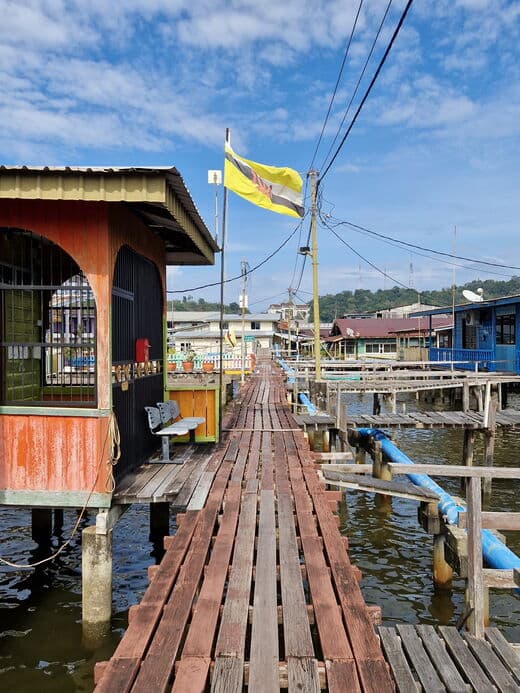
Brunei offers fascinating insights into Malay Islamic culture, but without the aggressive commercialization you find elsewhere. Kampong Ayer Water Village, the world's largest water village, is not a museum or a tourist attraction - it is a living community of 30,000 people who have chosen to maintain their traditional lifestyle despite the option of moving to modern housing on land. When you visit, you are seeing real life, not a performance.
Similarly, the country's magnificent mosques are active places of worship first and tourist sites second. The Jame'Asr Hassanil Bolkiah Mosque, with its 29 golden domes, welcomes visitors but has no entrance fee, no gift shop, and no crowd of touts outside. This is a country where culture and religion are simply lived, not packaged and sold.
A Window into Incredible Wealth
Brunei is one of the wealthiest nations on Earth per capita, and while the Sultan does not exactly flaunt this wealth, evidence of it is everywhere. The Istana Nurul Iman - the Sultan's official residence - is the world's largest residential palace, with 1,788 rooms, 257 bathrooms, and a 110-car garage. While it is only open to the public during Hari Raya celebrations, just seeing its exterior gives you a sense of the scale involved.
More accessible evidence of wealth includes the excellent road infrastructure, the well-maintained public spaces, and the sheer abundance of high-end vehicles on the roads. The Sultan himself reportedly owns over 7,000 cars, including the world's only 24-karat gold-plated Rolls Royce. Brunei offers a unique glimpse into what happens when a small population sits atop vast oil and gas reserves.
The Honest Downsides
In the interest of giving you complete information, I should mention the challenges. Brunei is not a budget destination - while not expensive by Western standards, it costs more than neighboring Malaysia or Indonesia. Public transportation is limited, making a rental car almost essential for independent exploration. The alcohol ban means no cold beer after a hot day of sightseeing (though non-Muslims can import limited quantities for personal consumption). Many restaurants and shops close during prayer times. The country essentially shuts down during the month of Ramadan.
But for travelers who come prepared and with appropriate expectations, these are minor inconveniences easily outweighed by what Brunei offers: authentic experiences, stunning nature, fascinating culture, and the rare privilege of exploring somewhere genuinely off the beaten path.
2. Regions of Brunei: Understanding the Four Districts
Brunei is divided into four districts, each with its own character and attractions. Understanding this geography is essential for planning your trip, as the districts are quite different from one another and travel between them requires some planning - particularly for Temburong, which is physically separated from the rest of the country by Malaysian territory.
Brunei-Muara District: The Heart of the Nation
This is the smallest district by area but contains the vast majority of the population and all of the major urban attractions. If you have limited time in Brunei, you could spend it entirely in Brunei-Muara and come away satisfied - though you would miss the rainforest experiences that make Temburong so special.
Bandar Seri Begawan (BSB)
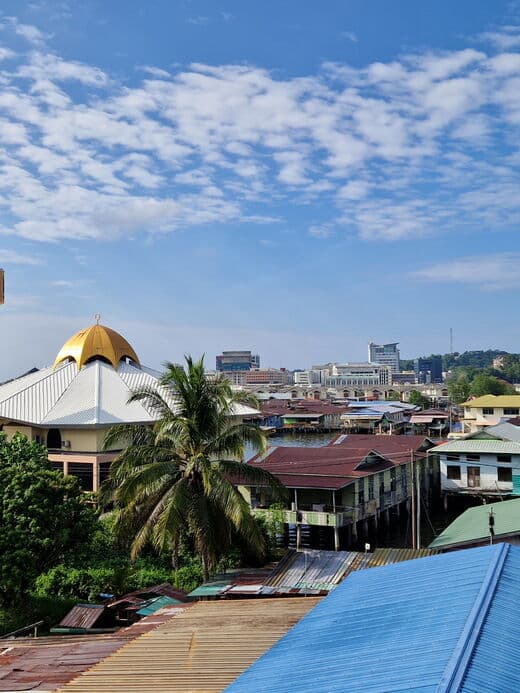
The capital city is compact, walkable in its center, and home to most of the country's significant cultural attractions. With a population of around 100,000, it has the feel of a large town rather than a major city. The waterfront area along the Brunei River is the focal point, with the iconic Sultan Omar Ali Saifuddien Mosque dominating the skyline.
The mosque itself is a masterpiece of modern Islamic architecture, completed in 1958 and built with materials from around the world: marble from Italy, granite from Shanghai, chandeliers from England, and carpets from Saudi Arabia. Its golden dome is visible from almost everywhere in the city center, and at night the illuminated structure reflects beautifully in the surrounding artificial lagoon. Non-Muslim visitors are welcome outside of prayer times, though modest dress is required and you will need to remove your shoes.
A short walk from the mosque brings you to the waterfront, where wooden water taxis wait to ferry passengers across to Kampong Ayer. These small boats, powered by outboard motors, are the traditional transportation link between the water village and the mainland. A crossing costs just 1-2 BND (roughly $0.75-1.50 USD) and takes only a few minutes, but the experience of zipping across the river with the golden dome rising behind you is worth far more.
Kampong Ayer itself deserves extensive exploration. This is not a small collection of stilt houses - it is a genuine city on the water, with 42 villages, schools, mosques, police stations, fire stations, and more than 30,000 residents. The wooden walkways connecting the houses stretch for kilometers, and you could easily spend half a day wandering through the community. Most residents are genuinely welcoming to visitors, and you will likely be invited into homes for tea if you show interest and respect.
The Kampong Ayer Cultural and Tourism Gallery provides excellent context for understanding the water village's history and contemporary life. Admission is free, and the air conditioning provides welcome relief from the heat.
Back on the mainland, the Brunei Museum offers good exhibits on local history, Islamic art, and natural history, though some sections have grown dated. The Royal Regalia Museum is more impressive, displaying the ceremonial objects and gifts received by the Sultan over his long reign. The sheer quantity of gold, jewels, and precious materials on display gives you some sense of the country's wealth. Both museums are free to enter.
The Tamu Kianggeh Market, located along the river near the city center, is the best place to see local produce, handicrafts, and everyday Bruneian life. It is most active in the early morning, so try to arrive before 8am for the full experience. The food stalls here offer excellent breakfast options at very reasonable prices.
Muara Town and Beaches
About 25 kilometers from BSB, the port town of Muara offers a change of pace from the capital. Muara Beach is the most accessible beach in the country, with calm waters suitable for swimming (though not as pristine as you might find elsewhere in the region). Serasa Beach nearby is quieter and offers water sports facilities.
The main reason most visitors come to Muara is to catch the ferry to Labuan, the Malaysian island that serves as a duty-free zone - and notably, a place where alcohol is legal and affordable. Many Bruneians and expatriates make regular trips to Labuan for this reason. For travelers, it is also a convenient way to enter or exit Brunei if you are exploring the broader Borneo region.
Jerudong
This upscale area about 20 kilometers from BSB is home to the Empire Hotel and Country Club, one of the most luxurious hotels in Southeast Asia. Even if you are not staying there, the property is worth visiting for its restaurants, spa, and access to Jerudong Beach. The architecture is over-the-top opulent in a way that captures Brunei's oil wealth perfectly.
Jerudong Park Playground was once a world-class amusement park that the Sultan built for the public and kept entirely free of charge. While it has scaled back significantly from its peak in the 1990s, it still operates with reduced attractions and remains free to enter. It is worth a visit more for the novelty than for the rides themselves.
Temburong District: The Wild Heart of Brunei
Temburong is where Brunei reveals its true natural beauty. This district is physically separated from the rest of the country by a narrow strip of Malaysian Sarawak, making it feel almost like visiting a different country. Until the Temburong Bridge opened in 2020, the only way to reach the district was by a long boat journey through the mangroves and up the Temburong River - a memorable experience that many travelers still choose even though the bridge now offers a faster road route.
Getting There: The Traditional Way
The boat journey from BSB to Bangar (the main town in Temburong) is an adventure in itself. You start at the Temburong Express jetty near the city center, boarding a covered speedboat that holds about 20 passengers. The first stretch takes you through Brunei Bay, across open water where you might spot dolphins on a lucky day. Then you enter the mangrove-lined channels of the Limbang district of Sarawak, technically crossing through Malaysian territory (no immigration formalities required for this transit).
The mangrove section is stunning - narrow channels cutting through dense forest, with proboscis monkeys sometimes visible in the trees, herons standing motionless in the shallows, and the occasional crocodile basking on mudflats. After about 45 minutes, you arrive at Bangar, a sleepy town that serves as the gateway to Ulu Temburong National Park.
Getting There: The New Bridge
The Temburong Bridge, also known as the Sultan Haji Omar Ali Saifuddien Bridge, is Southeast Asia's longest over-water bridge at 30 kilometers. It slashes the travel time to Temburong to about 20 minutes by car, making day trips from BSB much more practical. The bridge itself is an impressive piece of engineering, and driving across it offers views across Brunei Bay and the mangrove forests below.
If you have time, I recommend taking the boat one way and the bridge the other - you get both experiences without repeating either.
Ulu Temburong National Park
This is the crown jewel of Brunei's natural attractions and the primary reason most visitors come to Temburong. The park covers about 550 square kilometers of pristine primary rainforest, but tourist access is limited to a small area around the research station - a deliberate decision to preserve the forest's integrity.
Visiting the park requires booking through an authorized tour operator; independent visits are not permitted. The standard day trip includes transportation from BSB (either by boat, bridge, or a combination), a longboat journey up the Temburong River (a thrilling ride through rapids in a shallow wooden boat), a short trek through the forest, and the highlight: climbing the canopy walkway.
The canopy walkway consists of a series of aluminum towers connected by narrow walkways, reaching a maximum height of about 50 meters above the forest floor. The climb is strenuous - especially in the heat and humidity - but the views from the top are extraordinary. On a clear morning, you look out across an unbroken expanse of rainforest stretching to the horizon, with mist rising from the valleys below. The sounds of the forest - gibbons calling, hornbills flying overhead, the constant buzz of insects - surround you. This is one of the most accessible old-growth rainforest experiences anywhere in Borneo.
Most tours also include swimming in the cool, clear waters of the river - a welcome relief after the canopy climb - and a simple local lunch. The whole experience typically takes 8-10 hours including transportation.
Bangar and Surrounding Areas
Bangar itself is a quiet town with limited tourist infrastructure, but it has a certain charm. The market is worth a brief visit, and there are a few simple restaurants serving local food. Several eco-resorts in the surrounding area offer multi-day stays for those wanting deeper immersion in the rainforest environment. Sumbiling Eco Village is a popular choice, offering comfortable accommodations and a range of jungle activities.
The Peradayan Forest Reserve, accessible from Bangar, offers hiking trails through lowland rainforest to Bukit Patoi, where you can enjoy views across the district. This is a good option for those wanting nature experiences beyond the national park.
Tutong District: Lakes and Beaches
Tutong is often overlooked by visitors focusing on BSB and Temburong, but it offers some unique attractions for those with time to explore.
Tasek Merimbun
Brunei's largest natural lake is a peaceful spot surrounded by lowland forest. A wooden boardwalk extends across part of the lake, offering good opportunities for birdwatching and photography. The area is home to the tasek or white-collared kingfisher, along with numerous other bird species. An island in the middle of the lake can be reached by boat and has walking trails through the forest.
The lake is best visited in the early morning or late afternoon when birdlife is most active and the light is best for photography. There are basic facilities including picnic areas and toilets, but no food vendors, so bring your own supplies.
Tutong Town
The district capital is a modest town with a pleasant riverside market (tamu) that is particularly active on Thursday and Friday mornings. The market sells local produce, handicrafts, and traditional foods, and is much less touristed than the markets in BSB.
Seri Kenangan Beach
Also known as Pantai Seri Kenangan, this beach on the South China Sea is popular with locals for weekend picnics. It is not a swimming beach due to strong currents, but it is a pleasant spot for a walk along the sand, especially at sunset.
Belait District: Oil Country
Belait is where Brunei's wealth comes from - this district is home to the oil and gas fields that have made the country rich. The main town, Seria, is dominated by the petroleum industry, and while it is not a typical tourist destination, it offers interesting insights into this crucial aspect of Bruneian life.
Seria Town
The nodding donkey oil pumps scattered around town - including one on the beach that has become a local landmark - make for unusual photo opportunities. The Oil and Gas Discovery Centre is a well-designed interactive museum explaining the history and technology of Brunei's petroleum industry. It is particularly good for families with children, with plenty of hands-on exhibits.
Kuala Belait
The largest town in Belait district, Kuala Belait (often called KB) has more of an expat presence due to the oil industry workforce. This means slightly more international dining options than elsewhere in Brunei. The town is also the main border crossing point to Miri in Malaysian Sarawak, making it a useful transit point for those exploring the wider region.
Luagan Lalak Recreation Park
This freshwater swamp forest reserve near Labi offers boardwalk trails through the wetland habitat. It is an excellent spot for birdwatching and nature photography, particularly during the wet season when the water levels are higher. The park is free to enter and rarely crowded.
Labi Longhouses
The area around Labi, accessed via a road through the forest from Seria, is home to several Iban longhouse communities. These traditional communal dwellings offer a glimpse into the indigenous culture that predates Islam and Malay influence in the region. Some longhouses accept visitors, though it is best to arrange this through a tour operator or local contact to ensure you are welcome.
3. Unique Attractions: What Makes Brunei Special
Beyond the district-by-district breakdown, certain attractions stand out as uniquely Bruneian experiences that you will not find anywhere else in quite the same way.
Sultan Omar Ali Saifuddien Mosque
I have mentioned this mosque already, but it deserves more detailed attention because it truly is one of the most beautiful religious buildings in Asia. Completed in 1958 and named after the 28th Sultan (father of the current ruler), it represents the pinnacle of modern Islamic architecture while incorporating traditional Mughal influences.
The golden dome, standing 52 meters high and covered in pure gold leaf, dominates the Bandar Seri Begawan skyline. The interior is equally impressive, with marble columns, stained glass windows, and crystal chandeliers from England. The ceremonial barge, a replica of a 16th-century royal vessel, floats in the lagoon and was used in religious celebrations.
What makes visiting this mosque special is the absence of crowds and commerce. Unlike major mosques in Istanbul or Kuala Lumpur, there are no tour groups being herded through, no souvenir shops clustered around the entrance, no touts or selfie-stick vendors. You can appreciate the architecture in relative peace, and if you visit during late afternoon, you might have certain angles entirely to yourself.
Non-Muslims are welcome to enter outside of prayer times. Modest dress is required - long trousers or skirts, covered shoulders for women, and headscarves provided for women who need them. Shoes must be removed. There is no admission fee, but donations are welcome.
Jame'Asr Hassanil Bolkiah Mosque
If the Omar Ali Saifuddien Mosque represents elegant restraint, the Jame'Asr Hassanil Bolkiah Mosque represents unrestrained opulence. Built in 1992 to mark the 25th anniversary of the current Sultan's reign, it is the largest mosque in Brunei and one of the largest in Southeast Asia.
The complex features 29 golden domes - symbolizing the current Sultan's status as the 29th ruler of Brunei - and can accommodate up to 5,000 worshippers. The interior gleams with gold, marble, and crystal. The surrounding gardens, featuring fountains and manicured lawns, are immaculately maintained.
This mosque is located in Kampong Kiarong, about 3 kilometers from the city center. Non-Muslim visitors are welcome outside of prayer times, with the same dress requirements as the city mosque. The scale is impressive, though some visitors find the Omar Ali Saifuddien Mosque more aesthetically pleasing due to its waterfront setting and more refined proportions.
Kampong Ayer: The World's Largest Water Village
I want to emphasize again just how remarkable Kampong Ayer is. This is not a tourist attraction created to show visitors how people used to live - it is a fully functioning urban settlement where over 30,000 people have chosen to maintain their traditional lifestyle on the water despite having the option of government-subsidized housing on land.
The water village has existed for more than 1,000 years, making it one of the oldest continuously inhabited settlements in Southeast Asia. When the Italian explorer Antonio Pigafetta arrived with Magellan's expedition in 1521, he described it as the "Venice of the East" - a comparison that still holds some validity today, though the wooden houses and motorized water taxis create a very different atmosphere from the Italian city.
Walking through Kampong Ayer on the wooden boardwalks that connect the houses, you pass mosques, schools, fire stations, and the full infrastructure of a small city. Many houses have satellite dishes and air conditioning units, and speedboats are parked outside like cars in a mainland driveway. The contrast between traditional architecture and modern amenities is fascinating.
To visit, simply walk to the waterfront in BSB and hail one of the water taxis. Tell the driver you want to visit Kampong Ayer, and for a few dollars they will drop you at one of the villages. The Kampong Ayer Cultural and Tourism Gallery is a good starting point, providing context before you explore on foot.
Respect is essential when visiting - this is people's home, not a museum. Do not photograph individuals without permission, do not peer into windows, and do not leave the main walkways without invitation. Most residents are friendly and may invite you for tea or to see inside their homes. Accept these invitations graciously - this kind of genuine interaction is what makes Kampong Ayer special.
Istana Nurul Iman
The Sultan's official residence is the largest residential palace in the world. With 1,788 rooms, 257 bathrooms, a banquet hall that seats 5,000 guests, and a mosque that accommodates 1,500 worshippers, it dwarfs every other palace on Earth, including Buckingham Palace and the Vatican.
Unfortunately, the palace is closed to the public for most of the year. The exception is the three days of Hari Raya Aidilfitri (the celebration marking the end of Ramadan), when the Sultan opens the palace to all visitors, regardless of religion or nationality. During this time, you can walk through some of the public rooms, shake hands with members of the royal family, and enjoy a meal provided by the palace.
If you are not visiting during Hari Raya, you can still see the palace exterior from the road. There is a viewpoint near Taman Persiaran Damuan, a pleasant riverside park, from which you can photograph the palace across the river. The sheer scale of the building is impressive even from a distance.
The Temburong Canopy Walkway
I have described this earlier in the Temburong district section, but it bears repeating as perhaps the single most memorable experience Brunei offers. Standing 50 meters above the rainforest floor, surrounded by the sounds of the jungle, looking out across an unbroken green landscape, you understand why people fall in love with Borneo.
The aluminum structure sways slightly in the wind, which can be disconcerting for those uncomfortable with heights. The climb is strenuous, particularly in high humidity. But the reward is worth the effort - this is the kind of experience that stays with you long after you leave.
Book your Ulu Temburong tour in advance, especially during peak season (July-August and December-January). Tours typically cost 80-150 BND (roughly $60-110 USD) per person depending on inclusions and group size.
The Royal Regalia Museum
This museum in the heart of BSB houses the ceremonial objects, gifts, and regalia of the Sultan of Brunei. The collection includes the chariot used in the Sultan's 1968 coronation, replicas of the royal crown jewels, and an astonishing array of gifts from foreign heads of state.
Walking through the displays, you gain a sense of Brunei's diplomatic relationships and the respect the Sultan commands internationally. You also see the staggering amount of gold, jewels, and precious materials that accompany Bruneian royalty. The silver and gold gallery alone contains items that would be centerpieces in any other museum's collection but here are almost overwhelming in their quantity.
Admission is free. Photography is not permitted inside, but the building itself is architecturally interesting and can be photographed from outside.
Proboscis Monkey River Cruises
Brunei offers some of the most accessible proboscis monkey viewing in Borneo. These distinctive primates, with their large pendulous noses and pot bellies, are endemic to Borneo and best observed in the mangrove forests along the country's rivers.
Several tour operators offer late afternoon river cruises specifically for proboscis monkey viewing. The boats depart a few hours before sunset, when the monkeys emerge from the forest to feed on riverside vegetation. A good guide knows where family groups are likely to appear, and on most trips you will see multiple monkeys, often quite close to the boat.
After dark, the same tours often include spotlight searches for crocodiles, which can be seen along the riverbanks with their eyes glowing red in the torchlight. It makes for an exciting contrast - gentle herbivores at sunset, prehistoric predators after dark.
These tours typically cost 40-60 BND (roughly $30-45 USD) per person and run 3-4 hours. They depart from various points depending on the operator - some from the BSB waterfront, others from locations closer to the mangrove areas.
4. When to Visit Brunei: Seasons and Timing
Brunei has a tropical climate with two main seasons: wet and dry. However, the distinction is less dramatic than in some other Southeast Asian countries, and you can visit year-round with appropriate expectations.
The Dry Season (February to October)
The drier months offer the best overall conditions for travel. Rainfall is reduced (though never absent), and humidity is slightly lower. The early dry season (February-April) is particularly pleasant, with clearer skies and calmer waters for boat trips.
June through August sees a slight uptick in visitors, particularly families taking advantage of summer holidays. This is still not "crowded" by any normal tourism standard, but you may notice more people at popular attractions and should book Temburong tours further in advance.
The Wet Season (November to January)
The monsoon brings increased rainfall, with November typically being the wettest month. Afternoon thunderstorms are common, though they usually pass within a few hours. Morning activities are often possible before the rains arrive.
The wet season has some advantages: the landscape is greener, waterfalls in Temburong are more impressive, and you will have many attractions to yourself. However, river trips can be cancelled or disrupted by high water levels, and the canopy walkway may close temporarily during severe weather.
Ramadan Considerations
If your visit coincides with Ramadan, be prepared for significant changes to daily life. Most restaurants close during daylight hours, as Muslims are fasting. Those that remain open typically cater to non-Muslims and may have limited hours or menus. It is illegal to eat, drink, or smoke in public during fasting hours, even for non-Muslims - a law that is actively enforced.
On the positive side, visiting during Ramadan offers cultural insights you will not get at other times. The evening break-fast (iftar) at local markets is a wonderful experience, with families gathering to share meals as the sun sets. If you are invited to an iftar meal, it is an honor and an excellent opportunity to connect with local culture.
Ramadan dates vary each year as they follow the Islamic lunar calendar. Check the dates before booking your trip and decide whether the restrictions align with your travel style.
Hari Raya: The Best Time to Visit
If you want the most immersive Bruneian cultural experience, consider timing your visit to coincide with Hari Raya Aidilfitri, the celebration marking the end of Ramadan. This is when the Sultan opens Istana Nurul Iman to the public, allowing visitors of all backgrounds to tour the palace and meet the royal family.
The entire country takes on a festive atmosphere during Hari Raya. Families dress in their finest traditional clothing, homes are decorated, and special foods are prepared. Many Bruneians hold open house events during this period, welcoming visitors of all backgrounds to share in the celebrations.
The downside is that many businesses close for several days, and transportation can be disrupted as families travel to visit relatives. Book accommodations well in advance, and be prepared for some services to be unavailable.
Temperature and What to Pack
Temperatures in Brunei are remarkably consistent year-round, typically ranging from 24-32 degrees Celsius (75-90 degrees Fahrenheit). Humidity is high throughout the year, often exceeding 80%.
Pack light, breathable clothing in natural fabrics. Long trousers or skirts and covered shoulders are required for mosque visits and are appropriate for any formal settings. Comfortable walking shoes are essential for exploring Kampong Ayer and hiking in Temburong. A light rain jacket or umbrella is useful year-round.
Do not underestimate the sun - the equatorial location means intense UV exposure even on cloudy days. Bring high-SPF sunscreen, a hat, and sunglasses. Insect repellent is essential for evening activities and jungle visits.
5. Getting to Brunei: Flights, Land, and Sea
Brunei is less well-connected than its larger neighbors, but reaching the country is straightforward with some advance planning.
By Air
Brunei International Airport (BWN) is the only airport in the country and serves as the hub for Royal Brunei Airlines, the national carrier. The airport is modern, efficient, and small enough that you will never wait long at immigration or baggage claim.
From the US: There are no direct flights from North America to Brunei. The most common routing is through Singapore, Kuala Lumpur, or Hong Kong, with the connecting flight on Royal Brunei Airlines or the connecting carrier. Singapore offers the most frequent connections, with multiple daily flights on Royal Brunei. Total travel time from the US West Coast is typically 18-22 hours depending on layover duration.
From the UK: Similarly, there are no direct flights from London. Common routings go through Dubai, Singapore, or Kuala Lumpur. Royal Brunei used to operate direct flights to London but has suspended this route; check current schedules as it may resume.
From Australia: Royal Brunei operates direct flights from Melbourne and Brisbane, making Australia one of the easiest long-haul departure points for Brunei. Flight time is approximately 6 hours from the Australian east coast.
From regional destinations: Royal Brunei flies to numerous destinations across Southeast Asia and Asia, including Singapore, Kuala Lumpur, Bangkok, Manila, Hong Kong, Shanghai, and several Indonesian cities. If you are already in the region, connecting through Singapore or Kuala Lumpur is usually the easiest option.
A note about Royal Brunei Airlines: As a carrier from a dry country, Royal Brunei does not serve alcohol on any of its flights, regardless of destination. The airline is otherwise comfortable and professional, with reasonable service standards. Be prepared for a dry flight if you are coming directly to Brunei.
By Land
Brunei shares land borders with the Malaysian state of Sarawak, with two main crossing points.
From Miri (Sarawak): The Kuala Lurah border crossing connects Miri to Brunei via Kuala Belait. Buses run between Miri and Seria/Kuala Belait several times daily, and the journey takes about 3 hours including the border crossing. From Kuala Belait, you can continue to BSB by bus or private transport.
From Limbang/Lawas (Sarawak): The Tedungan border crossing in Temburong connects to the Limbang division of Sarawak. This is a useful option if you are traveling through Sarawak and want to visit Temburong without going through the main part of Brunei first.
Border crossings are generally efficient, with English widely understood by immigration officers. Have your passport and any required documentation ready. US, UK, Australian, and Canadian citizens receive visa-free entry for stays up to 90 days.
By Sea
Ferries connect Brunei to Labuan, a Malaysian federal territory in the South China Sea that serves as a duty-free zone.
Ferries depart from Muara, about 25 kilometers from BSB, and the crossing takes approximately 1.5-2 hours depending on conditions. Several sailings operate daily, with tickets costing around 30-40 MYR (roughly $7-9 USD) for economy class.
Labuan offers connections onward to Kota Kinabalu in Sabah by ferry, making this a useful option if you are combining Brunei with exploration of Malaysian Borneo.
Less formal boat connections exist between various points along the Brunei and Sarawak coast, but these are generally used by locals rather than tourists and may not meet the safety standards international travelers expect.
Visa Requirements
Citizens of the United States, United Kingdom, Canada, Australia, New Zealand, and most European countries can enter Brunei without a visa for stays up to 90 days. Your passport must be valid for at least 6 months beyond your planned departure date.
You will receive a stamp in your passport at immigration - there is no visa sticker or separate document. The immigration officer may ask about your intended stay, accommodation, and onward travel plans, but the process is typically quick and hassle-free.
If you plan to stay longer than 90 days, you will need to apply for a visa extension at the Immigration Department in BSB. Long-term visas for work or study require sponsorship from a Bruneian employer or educational institution.
6. Getting Around Brunei: Transportation Options
Transportation is one of the more challenging aspects of traveling in Brunei. The country has limited public transit, and most visitors find that renting a car or joining organized tours is the most practical approach.
Rental Cars
Renting a car is by far the most convenient way to explore Brunei independently. The road network is excellent - one of the best in Southeast Asia - and driving is straightforward if you are comfortable with right-hand traffic (Brunei drives on the left, like the UK, Australia, and Malaysia).
Several international and local car rental companies operate at the airport and in BSB. Prices typically start around 60-80 BND per day (roughly $45-60 USD) for a basic sedan. Larger vehicles and 4WDs are available at higher rates.
An international driving permit is technically required for foreign license holders, but in practice rental companies often accept major national licenses (US, UK, Australian, Canadian) without one. Confirm with your chosen rental company before arriving.
Fuel is extraordinarily cheap in Brunei - among the cheapest in the world. At around 0.53 BND per liter (roughly $0.25 per liter or about $0.95 per gallon), you can fill a typical car tank for under $10 USD. This is one of the few remaining countries where driving costs almost nothing for fuel.
Parking is generally free and easy to find, even in BSB city center. Traffic is light by Southeast Asian standards, though can build up slightly during peak hours in the capital.
Taxis and Ride-Hailing
Traditional taxis exist in Brunei but are not as common or convenient as in many other countries. There is no hailing taxis on the street - you need to call for one or find them at designated stands (mainly at the airport and major hotels).
Dart is Brunei's only ride-hailing app, similar to Uber or Grab but much smaller in scale. Coverage is reasonable in BSB and surrounding areas but limited or non-existent in rural areas. Download the app before you arrive and register your payment method.
Fares are reasonable by Western standards. A typical ride within BSB costs 3-8 BND (roughly $2-6 USD). Airport transfers run about 25-35 BND depending on destination.
Be aware that ride availability can be limited, especially outside business hours or in less central locations. Having backup transportation options is advisable.
Public Buses
Brunei has a public bus network operated by various companies, but it is limited in coverage and frequency. Routes mainly connect BSB to surrounding towns and some district capitals. Buses typically run from early morning until early evening, with no night service.
For tourists, the bus network is challenging to navigate. Route information is not always clearly posted, schedules are approximate at best, and many drivers speak limited English. Unless you are very patient and adventurous, buses are not recommended as your primary transportation method.
That said, if you want to try the experience, the main bus terminal in BSB is located near the Tamu Kianggeh market. Fares are very low - typically 1-2 BND for most routes.
Water Taxis
For getting around the waterfront area of BSB and visiting Kampong Ayer, water taxis are essential. These small motorized boats cluster along the river and can be hailed with a wave.
Standard fares are 1-2 BND for a river crossing to Kampong Ayer. Longer trips - such as a tour through the water village or upriver - can be negotiated but expect to pay 20-50 BND for an hour or more of the boatman's time.
Water taxis also provide the traditional route to Temburong, though with the new bridge open, this is now a choice rather than a necessity. See the Temburong section for details on the boat journey.
Organized Tours
For many attractions - particularly Ulu Temburong National Park, proboscis monkey viewing, and visits to the Labi longhouses - organized tours are the most practical option and sometimes the only option.
Several reputable tour operators are based in BSB, including:
- Borneo Guide - well-established operator with a range of nature and cultural tours
- Freme Travel Services - the largest tour company in Brunei with comprehensive offerings
- Sunshine Borneo Tours - good options for wildlife-focused itineraries
Prices vary widely depending on the tour type, duration, and group size. Budget 80-200 BND per person for full-day tours, with multi-day packages available at higher rates. Booking in advance is recommended, especially for Temburong trips during peak season.
Distances and Travel Times
Brunei is small enough that nowhere is more than a few hours' drive from BSB. Approximate driving times from the capital:
- Muara (ferry terminal): 25 minutes
- Jerudong: 20 minutes
- Tutong town: 40 minutes
- Seria: 1 hour
- Kuala Belait: 1.5 hours
- Temburong (via bridge): 45 minutes to Bangar
These times assume normal traffic conditions, which rarely cause significant delays outside of central BSB during rush hours.
7. Cultural Code: Navigating Brunei's Conservative Society
Brunei operates under a dual legal system combining secular law with Sharia (Islamic law), which was formally implemented in 2014. Understanding and respecting the cultural norms is essential for a positive experience - and in some cases, for staying out of legal trouble.
The Alcohol Ban
The sale of alcohol is completely banned in Brunei. You will not find alcohol in restaurants, hotels, or shops anywhere in the country. This is perhaps the most significant adjustment for many Western visitors.
However, non-Muslims are permitted to import limited quantities of alcohol for personal consumption. The current limit is 2 liters of alcohol (wine or spirits) plus 12 cans of beer per entry. You must declare this at customs when arriving, and the alcohol is strictly for private consumption - drinking in public is prohibited.
Many visitors stock up in Labuan (the Malaysian duty-free island accessible by ferry from Muara), where alcohol is legal and relatively cheap. Others simply accept the dry trip as part of the Brunei experience.
Be aware that being intoxicated in public, even from alcohol legally brought into the country, can result in serious legal consequences. Keep your drinking private and discreet.
Dress Code
Brunei is conservative by Southeast Asian standards, and appropriate dress is important, particularly outside of beach and resort areas.
For mosque visits, both men and women must have legs covered (below the knee minimum, ideally to the ankle) and shoulders covered. Women must also cover their heads - scarves are available for loan at mosque entrances.
In general public settings, locals appreciate modest dress. Shorts and sleeveless tops are technically acceptable but will mark you as a tourist and may attract disapproving looks in more traditional areas. Long trousers or skirts and sleeved shirts are recommended, particularly outside of clearly tourist-oriented locations.
Swimwear is fine at beaches and hotel pools, but cover up when walking to and from swimming areas.
Ramadan Etiquette
During Ramadan, Muslims fast from sunrise to sunset. Eating, drinking, or smoking in public during daylight hours is prohibited for everyone, including non-Muslims. This is an actual law with real consequences, not just a custom.
If you need to eat during the day during Ramadan, do so in your hotel room or in designated areas for non-fasters. Some hotels and restaurants catering to tourists may have screened-off areas where non-Muslims can eat.
Be especially considerate of those who are fasting. Avoid eating, drinking, or smoking in their presence, even if technically permitted. The gesture of respect goes a long way.
Photography Restrictions
Ask permission before photographing people, particularly women. Many Bruneians are happy to be photographed if asked politely, but others prefer not to be, and their wishes should be respected.
Photography may be restricted or prohibited in certain areas, including government buildings, military installations, and some religious sites. When in doubt, ask before shooting.
In Kampong Ayer and other residential areas, be respectful about what you photograph. Peering into homes or photographing people going about their daily lives without permission is intrusive.
Public Displays of Affection
Keep romantic displays of affection private. Hand-holding between couples is generally tolerated, but kissing or embracing in public is inappropriate and may attract negative attention or even legal consequences.
This applies equally to heterosexual and same-sex couples, though same-sex couples should be particularly discreet - homosexuality is technically punishable under Sharia law, including by death, though these extreme penalties have never been enforced against tourists.
Friday Prayers
Friday is the Islamic holy day, and many businesses close for extended periods around midday prayers (usually from about 11am to 2pm). Plan activities and meals around this schedule on Fridays.
Non-Muslims should not enter mosques during prayer times, which occur five times daily. The largest mosques post prayer times at their entrances.
Interacting with Locals
Bruneians are generally friendly and welcoming to visitors, though more reserved than, say, Thais or Filipinos. Initiating conversation is appreciated, but do not be surprised if interactions remain somewhat formal.
Use your right hand for giving and receiving items, eating, and greeting - the left hand is considered unclean in Islamic culture. If you need to use your left hand (for example, if carrying something), excuse yourself.
Pointing with your index finger is considered rude. Instead, gesture with your whole hand or use your thumb with fingers folded.
Remove your shoes when entering homes and mosques. If in doubt, look for a pile of shoes by the entrance or ask.
Gender Interactions
Interactions between unrelated men and women are more restricted than in Western countries. In more traditional settings, men and women may socialize separately.
If you are a man meeting a Bruneian woman, do not initiate a handshake - wait to see if she offers her hand first. Many Muslim women prefer not to touch non-family males. A polite nod or hand-on-heart gesture is an appropriate alternative.
Similarly, women should not be surprised if Bruneian men seem somewhat distant or avoid prolonged conversation. This is cultural respect, not unfriendliness.
8. Safety in Brunei: One of the Safest Destinations in Asia
Brunei is exceptionally safe for travelers. Violent crime is rare, petty crime like pickpocketing is uncommon, and scams targeting tourists are essentially non-existent. This does not mean you should abandon common sense, but you can relax your guard more than in most Southeast Asian destinations.
Crime Rates
Brunei consistently ranks as one of the safest countries in Asia and the world. The strict legal system, strong social cohesion, and widespread prosperity mean that crime rates are remarkably low.
Violent crime against tourists is practically unheard of. I am not aware of any recent cases of tourists being robbed, assaulted, or attacked in Brunei. This does not mean it could never happen, but the risk is lower than almost anywhere else you might travel.
Petty theft does occasionally occur, so normal precautions are still sensible: do not leave valuables unattended, use hotel safes for important documents, and be aware of your belongings in crowded areas. But the vigilance required in, say, Bangkok or Jakarta is unnecessary here.
Traffic Safety
Your greatest physical risk in Brunei is probably traffic-related. Roads are good and traffic is relatively light, but driving standards can be erratic. Always wear seatbelts, exercise caution when driving (especially at night), and be aware that pedestrian infrastructure is limited outside of central BSB.
If you are crossing roads on foot, be careful - drivers do not always yield to pedestrians as they might in some Western countries.
Natural Hazards
The tropical climate brings its own risks. Heat-related illness is possible if you overexert yourself during the middle of the day. Stay hydrated, seek shade during the hottest hours, and acclimatize gradually if arriving from a cooler climate.
In the rainforest, standard jungle precautions apply: watch your footing on slippery trails, do not touch plants or animals you cannot identify, and tell someone your plans before venturing off established paths.
Mosquito-borne diseases including dengue fever occur in Brunei. Use insect repellent, wear long clothing when possible (especially around dusk when mosquitoes are most active), and consider sleeping under a mosquito net if your accommodation does not have screens or air conditioning.
Crocodiles inhabit the rivers and coastal areas. Do not swim in rivers or mangrove areas, and heed any warning signs. Guided tours operate safely, but do not venture into these waters independently.
Political Stability
Brunei is politically stable under the long-ruling Sultan. There is no recent history of political violence, protests, or civil unrest. The government maintains tight control, and public dissent is effectively non-existent.
For travelers, this means you are unlikely to encounter any politically-related disruptions. However, be aware that criticizing the Sultan or the government - even casually - can have serious legal consequences. Keep any political opinions to yourself.
Sharia Law and Legal Risks
The implementation of Sharia law in 2014 created significant concern internationally, particularly regarding harsh penalties for offenses including homosexuality, adultery, and blasphemy. In practice, these extreme penalties (including death by stoning) have never been enforced, and the government has stated that very high evidentiary standards make their application unlikely.
However, the laws exist, and more common offenses can result in serious consequences. Drug possession, even of marijuana, carries harsh penalties. Public drunkenness, eating during Ramadan fasting hours, and other violations of Islamic law can result in fines or imprisonment.
For most visitors exercising normal good judgment, these laws will not be an issue. Respect local customs, follow the guidelines in this guide, and you will have a trouble-free visit.
LGBTQ+ Travelers
Brunei's Sharia law technically prescribes death by stoning for homosexual acts. While this extreme penalty has never been enforced and the government has announced a moratorium on its application, the law remains on the books and creates a hostile legal environment.
In practice, LGBTQ+ travelers who are discreet about their identity visit Brunei without incident. However, any public displays of same-sex affection, open discussion of sexuality, or behavior that could be perceived as homosexual may attract negative attention and potentially legal consequences.
LGBTQ+ travelers should carefully weigh whether they are comfortable visiting a country with these laws, even if enforcement is unlikely. If you do visit, extreme discretion is essential.
Emergency Contacts
Police: 993
Ambulance: 991
Fire: 995
Tourist hotline: +673 223 8229
The main hospital is RIPAS Hospital in BSB, which has an emergency department. Private clinics offer faster service for non-emergencies but are more expensive.
9. Health Considerations
Brunei has good healthcare infrastructure and few major health risks for travelers. Standard tropical precautions apply, but you do not need to worry about many of the issues that complicate travel in other parts of Southeast Asia.
Before You Go
No vaccinations are legally required for entry to Brunei (unless you are arriving from a yellow fever endemic area, in which case proof of vaccination may be required). However, the following vaccines are recommended for travelers:
- Hepatitis A and B
- Typhoid
- Tetanus-diphtheria
- Measles-mumps-rubella (if not already immune)
Malaria is not a significant risk in Brunei - it has been essentially eliminated from the country. However, dengue fever occurs year-round. There is no vaccine available for most dengue strains, so prevention focuses on avoiding mosquito bites.
Japanese encephalitis vaccination is worth considering if you plan to spend extended time in rural areas, particularly during the wet season.
Healthcare Facilities
Healthcare standards in Brunei are good. RIPAS Hospital (Raja Isteri Pengiran Anak Saleha Hospital) in BSB is the main public hospital, with modern facilities and English-speaking staff. Emergency care is free for everyone, including tourists.
Private clinics and hospitals offer faster service for non-emergencies and are reasonably priced by Western standards. Jerudong Park Medical Centre is a well-regarded private option.
Pharmacies are well-stocked with common medications. Many drugs that require prescriptions in Western countries are available over the counter in Brunei, though you should still bring supplies of any regular medications you need.
Common Health Issues
Heat-related illness: The equatorial climate means high temperatures and humidity year-round. Drink plenty of water, avoid strenuous activity during the middle of the day, and allow time to acclimatize if arriving from a cooler climate.
Sunburn: The strong tropical sun can cause severe sunburn quickly, even on cloudy days. Use high-SPF sunscreen, wear a hat and sunglasses, and seek shade during peak UV hours (roughly 10am-4pm).
Mosquito-borne diseases: Dengue fever is the main concern. Use DEET-based repellent, wear long clothing especially around dusk and dawn, and consider staying in air-conditioned or screened accommodation.
Food and water: Tap water in Brunei is generally safe to drink, though bottled water is widely available if you prefer. Food hygiene standards are good, and you can eat at local restaurants and markets without undue concern about food poisoning.
Travel Insurance
Comprehensive travel insurance is strongly recommended. While healthcare costs in Brunei are reasonable, medical evacuation to Singapore (the nearest major medical hub) can be expensive if required. Ensure your policy covers emergency evacuation and repatriation.
10. Money and Budget: What to Expect
Brunei uses the Brunei Dollar (BND), which is pegged at par to the Singapore Dollar (SGD). Singapore currency is accepted throughout Brunei at equal value, and you can use the currencies interchangeably.
Currency and Exchange
At the time of writing, 1 BND equals approximately 0.74 USD, 0.59 GBP, or 1.12 AUD. Check current rates before your trip, as these fluctuate.
You can exchange currency at the airport, banks, and authorized money changers in BSB. Rates are generally fair without the significant spreads you might encounter in some countries. US dollars and major currencies are easily exchanged.
ATMs are widely available in urban areas and accept international cards. Visa and Mastercard are the most commonly accepted networks. Inform your bank of your travel plans to avoid cards being blocked for suspicious foreign transactions.
Credit cards are accepted at hotels, larger restaurants, and modern shops, but many smaller businesses operate on cash only. Always carry some cash for markets, small restaurants, water taxis, and rural areas.
Budget Breakdown
Brunei is not as cheap as Vietnam or Indonesia, but it is more affordable than Singapore and comparable to Malaysia for most costs.
Accommodation:
- Budget: 40-80 BND ($30-60 USD) - basic hotels and guesthouses
- Mid-range: 80-200 BND ($60-150 USD) - comfortable hotels with good amenities
- Luxury: 200+ BND ($150+ USD) - top hotels including The Empire Hotel
Food:
- Local restaurants and markets: 3-8 BND ($2-6 USD) per meal
- Mid-range restaurants: 15-30 BND ($11-22 USD) per meal
- Hotel restaurants and fine dining: 40+ BND ($30+ USD) per meal
Transportation:
- Water taxi: 1-2 BND ($0.75-1.50 USD) per crossing
- Dart ride within BSB: 3-8 BND ($2-6 USD)
- Car rental: 60-80 BND ($45-60 USD) per day
- Fuel: Around 0.53 BND per liter ($0.25 per liter) - extremely cheap
Activities:
- Museum entry: Free for most
- Ulu Temburong day tour: 80-150 BND ($60-110 USD)
- Proboscis monkey cruise: 40-60 BND ($30-45 USD)
Daily Budget Estimates
Budget traveler: 80-120 BND ($60-90 USD) per day - staying in basic accommodation, eating local food, using public transport and water taxis, doing mostly free activities.
Mid-range traveler: 150-250 BND ($110-185 USD) per day - comfortable hotel, mix of local and restaurant dining, car rental or tours, several paid activities.
Luxury traveler: 350+ BND ($260+ USD) per day - top hotels, fine dining, private tours, premium experiences.
Tipping
Tipping is not customary in Brunei and is not expected in most situations. Service charges are often included in restaurant bills at larger establishments. That said, tips are appreciated for exceptional service and will not be refused - rounding up or leaving a small amount is a nice gesture.
For tour guides and drivers, a tip of 10-20 BND per person for a full-day tour is appropriate if you are satisfied with the service.
Bargaining
Bargaining is less common in Brunei than in some Southeast Asian countries. Fixed prices are the norm in most shops and restaurants. At markets, some gentle negotiation may be possible for handicrafts and souvenirs, but do not expect dramatic discounts and do not haggle aggressively.
11. Suggested Itineraries: 7, 10, 14, and 21 Days
Brunei is small, and its main attractions can be seen in a relatively short time. However, longer visits allow for a more relaxed pace and opportunities to explore neighboring Malaysian Borneo. Here are suggested itineraries for various trip lengths.
7-Day Itinerary: Brunei Highlights
A week is enough to see Brunei's main attractions at a comfortable pace, with time to absorb the atmosphere rather than rushing from sight to sight.
Day 1: Arrival and BSB Orientation
Arrive at Brunei International Airport and transfer to your hotel. After settling in, take an evening walk along the waterfront to watch the sunset over the Sultan Omar Ali Saifuddien Mosque. Have dinner at one of the local restaurants near the waterfront, trying traditional dishes like ambuyat or nasi katok. Rest early to recover from travel.
Day 2: BSB Cultural Exploration
Start early at Tamu Kianggeh morning market for breakfast and a glimpse of local life. Visit the Sultan Omar Ali Saifuddien Mosque (open to non-Muslims outside prayer times). Cross the river by water taxi to explore Kampong Ayer, visiting the Cultural and Tourism Gallery and wandering the wooden walkways. Have lunch in the water village or back on the mainland. In the afternoon, visit the Royal Regalia Museum and the Brunei Museum. End the day with a late afternoon proboscis monkey river cruise.
Day 3: Ulu Temburong National Park
Full-day tour to Ulu Temburong National Park. Depart early for the journey to Temburong (by boat, bridge, or both). Continue by longboat up the Temburong River to the park headquarters. Trek through the rainforest and climb the canopy walkway. Swim in the river to cool off before the return journey. Arrive back in BSB in the evening, pleasantly exhausted.
Day 4: Jame'Asr Hassanil Bolkiah Mosque and Jerudong
Rent a car or arrange transportation to visit the Jame'Asr Hassanil Bolkiah Mosque in the morning (open outside prayer times). Continue to Jerudong to see the Empire Hotel - even if not staying, you can visit for lunch or to walk the grounds. Spend the afternoon at Jerudong Beach or exploring the area. Return to BSB for dinner.
Day 5: Tutong and Tasek Merimbun
Drive to Tutong district to visit Tasek Merimbun, Brunei's largest natural lake. Walk the boardwalk, look for birds, and enjoy the peaceful natural setting. Stop in Tutong town for lunch and a visit to the local market. Return to BSB via the coastal road, stopping at beaches along the way.
Day 6: Belait District Exploration
Drive to Seria and Kuala Belait. Visit the Oil and Gas Discovery Centre to learn about Brunei's petroleum industry. See the nodding donkey oil pumps, including the one on the beach. If time permits, drive the road to Labi and visit Luagan Lalak wetland reserve. Return to BSB or stay overnight in Kuala Belait for a change of scenery.
Day 7: Final Morning and Departure
Use the morning for any missed sights, souvenir shopping at the local markets, or simply relaxing. Transfer to the airport for your departure, taking with you memories of one of Southeast Asia's most unique destinations.
10-Day Itinerary: Brunei in Depth
With 10 days, you can explore Brunei more thoroughly and potentially add a day trip to Malaysian territory.
Days 1-3: Follow the first three days of the 7-day itinerary (arrival, BSB exploration, Temburong).
Day 4: Second Day in BSB
Revisit Kampong Ayer in the morning, going deeper into the water village to areas less visited by tourists. In the afternoon, visit the Brunei Arts and Handicrafts Training Centre to see traditional crafts being made and purchase authentic souvenirs directly from artisans. Evening at leisure.
Day 5: Jame'Asr Mosque, Istana Nurul Iman viewpoint, and river cruise
Morning visit to the Jame'Asr Hassanil Bolkiah Mosque. Drive to Taman Persiaran Damuan park for views of Istana Nurul Iman across the river. Have lunch in the park area, then spend the late afternoon on a sunset river cruise for another chance at proboscis monkey sightings and crocodile spotting after dark.
Day 6: Temburong Extended
Return to Temburong for a different experience - perhaps staying overnight at an eco-lodge like Sumbiling Eco Village. This allows for early morning birdwatching when the forest is most active, night walks to spot nocturnal wildlife, and a more immersive jungle experience than the day trip provides.
Day 7: Morning in Temburong, Return to BSB
Early morning activities at the eco-lodge before checking out. Return to BSB via the scenic boat route (if you took the bridge on the way there). Afternoon at leisure, perhaps visiting the waterfront area again or exploring neighborhoods you have not yet seen.
Day 8: Day Trip to Labuan
Take the morning ferry from Muara to Labuan, the Malaysian duty-free island. Explore this small island's attractions including the WWII memorial, Chimney, and beaches. Shop for duty-free goods (alcohol is legal and affordable here). Return on the afternoon ferry.
Day 9: Tutong and Belait
Combine the Tutong and Belait explorations from the 7-day itinerary into one fuller day, or choose one district for more thorough exploration. If you have not yet visited Tasek Merimbun or the Oil and Gas Discovery Centre, this is your opportunity.
Day 10: Final Day and Departure
Morning for last-minute activities or relaxation before airport transfer.
14-Day Itinerary: Brunei and Sarawak
Two weeks allows you to combine Brunei with exploration of Malaysian Sarawak, giving a broader Borneo experience.
Days 1-7: Follow the 7-day Brunei itinerary.
Day 8: Cross to Miri, Sarawak
Drive from BSB to the Kuala Lurah border crossing, then continue to Miri in Malaysian Sarawak. This town is a jumping-off point for many Sarawak adventures. Settle into your hotel and explore Miri's waterfront and night markets.
Days 9-10: Gunung Mulu National Park
Fly from Miri to Gunung Mulu National Park, a UNESCO World Heritage Site famous for its limestone karst formations and vast cave systems. Tour Deer Cave (home to millions of bats) and Lang Cave. If you are adventurous, tackle the summit trek or the adventure caving options. The bat exodus at dusk is one of Borneo's great wildlife spectacles.
Day 11: Return to Miri, Continue to Kuching
Fly from Mulu back to Miri, then continue to Kuching, the charming capital of Sarawak. The city has excellent museums, a beautiful waterfront, and a more bohemian atmosphere than BSB.
Days 12-13: Kuching and Surroundings
Explore Kuching's Old Town, Carpenter Street, and the Waterfront. Visit the excellent Sarawak Museum and the Cat Museum (Kuching means "cat" in Malay). Day trip options include Bako National Park for wildlife and proboscis monkeys, or the Semenggoh Wildlife Centre to see rehabilitated orangutans.
Day 14: Return to Brunei and Depart
Fly from Kuching back to Brunei (via Miri or direct) for your international departure. Alternatively, arrange your international flight from Kuching if that works better for your routing.
21-Day Itinerary: Comprehensive Borneo
Three weeks allows for a grand tour of Borneo including Brunei, Sarawak, and Sabah.
Days 1-7: Brunei exploration as in the 7-day itinerary.
Days 8-10: Miri and Gunung Mulu as in the 14-day itinerary.
Days 11-14: Kuching and surroundings with more time for day trips - Bako National Park, Semenggoh, Annah Rais longhouse, and Sarawak Cultural Village.
Day 15: Fly from Kuching to Kota Kinabalu, capital of Sabah.
Days 16-17: Mount Kinabalu National Park. While the summit climb requires more time and fitness, the park offers excellent trails at lower elevations, hot springs, and the Kinabalu Park botanical gardens.
Days 18-19: Sepilok and Kinabatangan. Fly to Sandakan and visit Sepilok Orangutan Rehabilitation Centre - the best place in Borneo to see orangutans. Continue to the Kinabatangan River for wildlife-spotting boat cruises (pygmy elephants, proboscis monkeys, crocodiles, and more).
Day 20: Return to Kota Kinabalu. Explore the city, visit the markets, and enjoy the seafood restaurants.
Day 21: Return to Brunei for international departure, or fly out from Kota Kinabalu if your routing allows.
Tips for All Itineraries
- Book Temburong tours in advance, especially during peak season
- Rent a car for flexibility, especially for Tutong and Belait exploration
- Build in rest time - the heat and humidity can be exhausting
- Check prayer times and Ramadan dates when planning daily schedules
- Consider domestic flights in Malaysian Borneo rather than long drives
12. Staying Connected: Internet and Communications
Brunei has good telecommunications infrastructure, and staying connected is straightforward for international visitors.
Mobile Networks and SIM Cards
Brunei has three mobile operators: DST (the largest), Progresif, and Imagine. All offer prepaid SIM cards that tourists can purchase easily.
SIM cards are available at the airport arrivals hall, mobile operator shops in malls, and some convenience stores. You will need to show your passport for registration. Prices for a tourist SIM with data start around 10-20 BND for a week's worth of reasonable data.
4G LTE coverage is good in urban areas and along major highways. Coverage becomes patchy in rural areas and is limited or absent in the rainforests of Temburong (though the park headquarters usually has some signal).
If your phone supports eSIM, you can also purchase international travel eSIMs before arrival, avoiding the need to swap physical SIM cards.
WiFi Availability
WiFi is available at most hotels, from budget guesthouses to luxury properties. Connection speeds vary but are generally adequate for email, messaging, and basic browsing. Video streaming may be challenging on slower connections.
Many restaurants and cafes in BSB offer free WiFi, though you may need to ask staff for the password.
Free public WiFi is available in some areas, including around the Omar Ali Saifuddien Mosque and the waterfront, though speeds and reliability are inconsistent.
Internet Censorship
Brunei does practice some internet censorship. Certain categories of websites are blocked, including explicit adult content, some gambling sites, and content deemed critical of the government or Islam.
Social media platforms (Facebook, Instagram, Twitter, WhatsApp, etc.) are accessible without restriction. Google, YouTube, and major news sites also function normally.
If you need to access blocked content for legitimate purposes, a VPN will usually bypass the restrictions, though using VPNs to access prohibited material carries some theoretical legal risk.
Calling Home
International calls via mobile can be expensive. For cheaper options, use internet-based calling apps like WhatsApp, Skype, or FaceTime when you have WiFi access.
The country code for Brunei is +673.
13. Food and Cuisine: What to Eat in Brunei
Bruneian cuisine reflects the country's Malay heritage with influences from Chinese, Indian, and Middle Eastern cooking. While Brunei is not known as a culinary destination like Thailand or Vietnam, the food is tasty, affordable, and offers some unique dishes you will not find elsewhere.
Signature Dishes
Ambuyat
This is the national dish of Brunei, and it is utterly unlike anything you have probably eaten before. Made from the interior of the sago palm, ambuyat is a starchy, almost gelatinous substance with a gluey texture and virtually no flavor of its own. You eat it with a special two-pronged fork called a candas, twirling it around the utensil and dipping it into savory sauces (usually fish or shrimp-based) for flavor.
Ambuyat is traditionally eaten with various side dishes - grilled fish, vegetables, sambal (chili paste), and more. The dish is an experience as much as a meal, and even Bruneians debate whether it is delicious or just nostalgic. Try it at least once for the cultural experience, but do not be surprised if you do not become a convert.
Nasi Katok
If ambuyat is the ceremonial dish, nasi katok is the everyday fuel of Brunei. This simple combination of rice, fried chicken, and sambal is sold everywhere, from morning market stalls to late-night roadside vendors. The name comes from the tradition of knocking (katok) on the vendor's door or window to purchase the food.
Nasi katok is cheap (often just 1 BND for a basic serving), satisfying, and surprisingly variable - each vendor has their own recipe for the sambal that makes or breaks the dish. Finding your favorite nasi katok spot is a rite of passage for any Brunei resident or extended visitor.
Roti Canai
This flaky flatbread, called roti canai in Malaysia and roti prata in Singapore, is a breakfast staple throughout the region. In Brunei, you will find it at most local restaurants and markets, served with curry sauce or dhal for dipping. Fresh off the griddle, it is simple but delicious.
Soto
A spiced soup with rice cakes (ketupat), shredded chicken, bean sprouts, and various garnishes, soto is comfort food for many Bruneians. The broth is aromatic with turmeric and other spices, and the combination of textures makes it satisfying despite appearing simple.
Kuih
These are the colorful traditional cakes and sweets that fill market stalls throughout Brunei and Malaysia. Made from rice flour, coconut milk, palm sugar, and various flavorings, kuih come in dozens of varieties - some steamed, some baked, some filled with sweet bean paste, some layered with different colored batters. They are sold individually for just 50 sen (about $0.40 USD) or so, making them perfect for sampling many types.
Malay Classics
Beyond specifically Bruneian dishes, you will find the full range of Malay cuisine:
Rendang: Dry curry of beef or chicken, slowly cooked in coconut milk and spices until the sauce has been almost entirely absorbed. Rich, complex, and intensely flavored.
Satay: Grilled meat skewers served with peanut sauce, cucumber, and rice cakes. A classic street food found throughout the region.
Laksa: Spicy noodle soup with various regional variations. Brunei laksa is closer to the Malay/Singapore style with coconut milk-based broth.
Nasi lemak: Coconut rice with anchovies, peanuts, cucumber, sambal, and usually a protein like fried chicken or egg. A breakfast staple.
Mee goreng: Stir-fried noodles with vegetables, egg, and usually shrimp or chicken. Ubiquitous and reliable.
Chinese Influence
Brunei's Chinese community has contributed to the local food scene, though not as dominantly as in Malaysia or Singapore. You will find:
Dim sum: Steamed and fried dumplings, buns, and other small dishes, particularly popular for weekend breakfast.
Char kway teow: Stir-fried flat rice noodles with shrimp, egg, and bean sprouts.
Bak kut teh: Herbal pork rib soup - though note this is only available at Chinese (non-halal) establishments.
Where to Eat
Tamu Kianggeh: The morning market near the BSB waterfront is the best place for breakfast and morning snacks. Arrive early (before 8am) for the full selection.
Gadong Night Market: Open from late afternoon into the evening, this is the place for dinner. Stalls offer everything from satay to nasi katok to international options.
Tamu Selera: Another food court-style area with multiple stalls offering local dishes at low prices.
Local restaurants: Look for places that are busy with locals - this is always a good sign of quality. Do not be put off by simple decor; some of the best food comes from the most modest establishments.
Hotel restaurants: For more upscale dining, hotel restaurants offer both local and international cuisine. The Empire Hotel has several excellent restaurants, though prices are significantly higher than street food.
Halal Considerations
Brunei is a Muslim country, and the vast majority of food establishments are halal. Pork is not served at most restaurants, and alcohol is not available.
Some Chinese establishments are non-halal and may serve pork dishes. These are typically found in Chinese neighborhoods and are clearly marked. Muslims and those keeping halal should confirm the status of unfamiliar restaurants before ordering.
Vegetarian and Special Diets
Vegetarian options are available but require some effort to find. Many Malay dishes are meat-based, and even vegetables may be cooked with shrimp paste or meat broth.
Your best options are Indian restaurants (which often have vegetarian selections), Chinese Buddhist vegetarian restaurants (limited but they exist), and international hotels that can accommodate special diets.
When ordering at local restaurants, be explicit about no meat, fish, or shrimp paste if you are strictly vegetarian. "Saya vegetarian, tak makan daging" (I am vegetarian, I do not eat meat) is a useful phrase.
Vegans will find Brunei more challenging and should be prepared to self-cater for some meals.
14. Shopping in Brunei
Brunei is not a major shopping destination, but there are worthwhile items to purchase as souvenirs or practical acquisitions during your stay.
Traditional Handicrafts
The Brunei Arts and Handicrafts Training Centre is the best place to purchase authentic local crafts directly from artisans. Products include:
Kain tenunan: Hand-woven fabric with traditional patterns, often incorporating gold or silver thread.
Silverwork: Brunei has a tradition of silver craftsmanship, producing jewelry, decorative items, and ceremonial objects.
Brassware: Traditional brass items including gongs, pots, and decorative pieces.
Basketry: Woven baskets and containers made from local materials.
These items are not cheap - the work is labor-intensive and skills are becoming rare - but you are getting genuinely handmade products that support local craftspeople.
Local Products
Kain songket: This brocade fabric with metallic threads is used for traditional formal wear. A length of quality songket makes a distinctive souvenir.
Brunei honey: Wild honey from the rainforests is available at markets and specialty shops.
Spices and sambal: Local spice mixes and prepared sambals make good gifts for food-loving friends.
Kuih: While not practical as souvenirs (they do not keep well), traditional cakes make good gifts if you are visiting Bruneian friends or have neighbors at home who appreciate Southeast Asian sweets.
Modern Shopping
For everyday shopping, Brunei has several modern malls:
The Mall Gadong: The largest shopping center in Brunei, with international brands, a cinema, and food courts.
Times Square: Another major mall in Gadong with diverse shops and dining.
Yayasan Sultan Haji Hassanal Bolkiah Complex: A large commercial complex near the waterfront in central BSB.
Do not expect the same range of international brands as Singapore or Kuala Lumpur - Brunei's small market means some retailers are absent or have limited selections.
What Not to Buy
Be cautious of:
- Supposed antiques - authenticity is difficult to verify, and export restrictions may apply to genuine items
- Wildlife products - even if legal in Brunei, they may be prohibited from import to your home country
- Counterfeit goods - while less prevalent than in some neighboring countries, they do exist
Duty-Free
Brunei does not have the same duty-free culture as Singapore or Hong Kong. For duty-free shopping, many residents and visitors take the ferry to Labuan, Malaysia, which is a designated duty-free zone with lower prices on alcohol, tobacco, and some other goods.
15. Useful Apps and Digital Tools
A few apps will make your Brunei trip smoother:
Dart: The only ride-hailing app in Brunei. Download and register before you need it, as setup requires phone verification.
Google Maps: Works well in Brunei with accurate navigation for driving and walking. Download offline maps for areas where data coverage is weak.
Google Translate: While English is widely spoken, the ability to translate Malay text on signs or menus is occasionally useful. Download the Malay language pack for offline use.
XE Currency: Real-time currency conversion for budgeting and shopping.
Muslim Pro: If you want to understand prayer times (useful for planning around mosque closures and business hours), this app provides accurate local times.
WhatsApp: The dominant messaging app in Brunei. Many businesses communicate via WhatsApp, including some tour operators and restaurants for reservations.
Weather apps: Any reliable weather app will help you plan around rain, though be aware that tropical weather can change quickly regardless of forecasts.
16. Conclusion: Is Brunei Worth Visiting?
After all this information, you might still be wondering: should I actually go to Brunei? The honest answer is that it depends on what kind of traveler you are and what you want from your trip.
Brunei is Perfect For:
Nature lovers: The pristine rainforests of Temburong offer some of the most accessible old-growth jungle experiences in Borneo. If standing 50 meters above an untouched forest canopy sounds appealing, Brunei delivers.
Cultural enthusiasts: The opportunity to explore a traditional Malay Islamic society without the overwhelming tourism of more popular destinations is genuinely special. Kampong Ayer alone justifies the visit for those interested in how traditional lifestyles persist alongside modernity.
Architecture admirers: The mosques of Brunei are among the most beautiful in Southeast Asia, and visiting them in relative solitude makes the experience even more powerful.
Safety-conscious travelers: If personal safety is a priority, few destinations in the region can match Brunei. Solo travelers, families, and those who worry about scams and crime can relax here.
Off-the-beaten-path seekers: If your travel ego requires destinations that your friends have not heard of, Brunei delivers. It is genuinely less touristed than almost anywhere in Southeast Asia.
Brunei May Not Suit:
Budget backpackers: While not expensive, Brunei costs more than Vietnam, Indonesia, or even mainland Malaysia. The limited public transportation and absence of a hostel scene make it harder to travel cheaply.
Party travelers: The alcohol ban and conservative culture mean no nightlife in the conventional sense. If drinking and dancing are important parts of your travel experience, look elsewhere.
Beach lovers: Brunei has beaches, but they are not the country's strength. For pristine tropical beaches, neighboring Sabah and Sarawak offer better options.
Fast-paced sightseers: Brunei's attractions can feel limited if you measure destinations by the number of checkmarks on a must-see list. The country rewards slow, immersive travel rather than rapid touring.
Final Thoughts
I have traveled extensively throughout Southeast Asia, and Brunei holds a unique place in my experience. It is not the most exciting destination in the region, nor the most beautiful, nor the most affordable. But it offers something increasingly rare: authenticity. When you visit Kampong Ayer, you are seeing how people actually live, not a performance for tourists. When you enter the Sultan Omar Ali Saifuddien Mosque, you are experiencing a place of genuine worship, not a museum. When you climb the Ulu Temburong canopy walkway, you are standing above real, untouched rainforest that has not been degraded for tourism infrastructure.
There is value in visiting places before they change, and Brunei feels like a destination that exists in a particular moment. The oil wealth that has sustained the country will not last forever, and when it diminishes, the country will need to change in ways that will likely make it more accessible but less unique. Visiting now means seeing Brunei in something close to its natural state - wealthy, conservative, peaceful, and genuinely unlike anywhere else.
If you have read this far, you probably already know whether Brunei appeals to you. If it does, go. You will not regret it. You will return with stories that your friends cannot match, photographs of places they have never seen, and memories of a country that defies easy categorization.
And if you decide Brunei is not for you, that is fine too. Southeast Asia offers countless alternatives for every type of traveler. But at least now you know what you are missing - and you can make that choice from a position of knowledge rather than ignorance.
Safe travels, wherever they take you.
Quick Reference: Essential Information
Currency: Brunei Dollar (BND), pegged 1:1 to Singapore Dollar. 1 BND = approximately $0.74 USD.
Language: Malay (official), English widely spoken.
Visa: Visa-free for US, UK, CA, AU, NZ, and most European citizens for up to 90 days.
Best time to visit: February-October (dry season), avoiding Ramadan unless you want that specific experience.
Getting there: Fly via Singapore, Kuala Lumpur, or other regional hubs. No direct flights from North America or Europe.
Getting around: Rent a car for independence, or use Dart app and organized tours.
Must-do experiences:
- Ulu Temburong canopy walkway
- Kampong Ayer water village
- Sultan Omar Ali Saifuddien Mosque at sunset
- Proboscis monkey river cruise
Key rules:
- No alcohol sale; non-Muslims can import 2L spirits + 12 cans beer for personal use
- Dress modestly; cover up for mosque visits
- No eating/drinking in public during Ramadan fasting hours
- Respect for the Sultan and Islam is required
Emergency numbers: Police 993, Ambulance 991, Fire 995
This guide was written based on extensive personal experience and research. Information is accurate as of the publication date but may change. Always verify current visa requirements, transport schedules, and other practical details before your trip.