Goreme Open-Air Museum
Göreme Open Air Museum is the heart of Christian Cappadocia, a complex of rock-carved churches and monasteries with thousand-year-old frescoes. UNESCO included it on the World Heritage list for good reason: nowhere else will you find such a concentration of Byzantine art in such an unusual landscape.
History of the Place
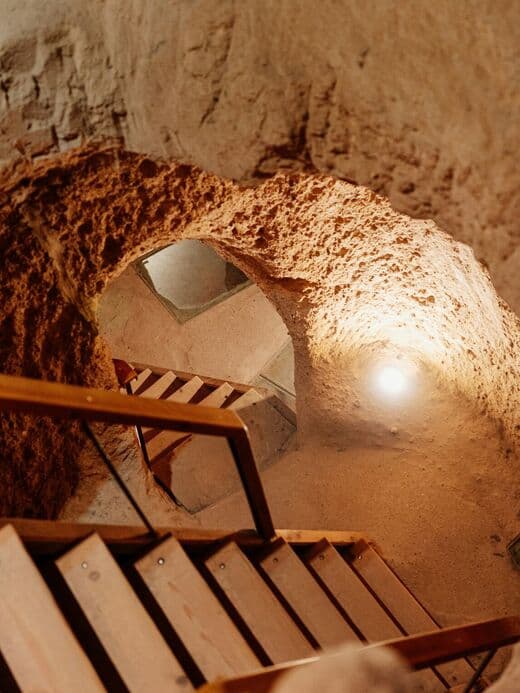
Christians came to Cappadocia in the first centuries CE, fleeing Roman persecution. The soft tuff allowed easy cave-carving, while the complex terrain provided refuge.
By the 4th century, monastic communities had formed here. The Cappadocian Fathers—Basil the Great, Gregory the Theologian, Gregory of Nyssa—created rules for communal monasticism that influenced all of Christianity.
In the 9th-13th centuries, the region flourished. Churches were decorated with frescoes, monasteries grew. Then came the Seljuk Turks, Christians gradually departed, temples emptied. But the dry climate preserved the paintings remarkably well.
What to See
The museum is a valley with about a dozen rock churches connected by pathways. The main ones:
Dark Church (Karanlık Kilise)—the museum's jewel. 11th-century frescoes survived almost perfectly thanks to the absence of light (hence the name). The blue color—real lapis lazuli—amazes with its intensity. Entry costs extra, but it's worth it.
Apple Church (Elmalı Kilise)—four columns, nine domes, paintings depicting Gospel scenes. The name comes either from an apple orchard nearby or from a red orb in Archangel Michael's hand.
Snake Church (Yılanlı Kilise)—a fresco of St. George slaying a dragon (hence the name). Nearby is an unusual image: St. Onuphrius with a woman's breasts and a man's beard.
Sandal Church (Çarıklı Kilise)—named for footprint-like marks in the floor at the entrance. 12th-century frescoes in good condition.
Nunnery—a multi-story complex with cells, refectory, and chapel. You can imagine how nuns lived here a thousand years ago.
Frescoes: What They Show
Cappadocian church paintings depict Gospel scenes: Nativity, Baptism, Transfiguration, Crucifixion, Resurrection. Also saints, prophets, archangels.
The style is provincial Byzantine. Not as refined as Constantinople, but with special charm. Figures are expressive, colors vivid, compositions understandable even without preparation.
Many faces are scratched out—the result of iconoclasm (8th-9th centuries) and the Muslim prohibition on images. But the overall picture survives.
Practical Information
The museum is open 8:00 AM to 7:00 PM (summer) or 5:00 PM (winter). The Dark Church closes an hour earlier.
Main ticket plus separate ticket for the Dark Church. Turkish Museum Pass is valid.
Allow at least 2 hours for viewing, preferably 3. Arrive early morning—by noon, buses with tour groups arrive.
Inside churches—no photography (definitely not with flash, without flash varies). Large backpacks are best left in storage.
Getting There
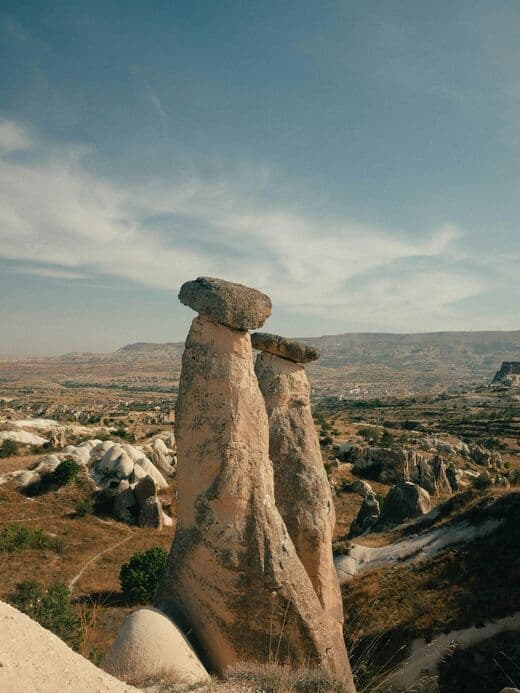
The museum is 1.5 km from Göreme center—a pleasant 20-minute walk past fairy chimneys. Or take a taxi/dolmuş.
From Nevşehir and Ürgüp—regular buses to Göreme, then walk.
What Else Is Nearby
Tokalı Church (Tokalı Kilise)—100 meters from the museum entrance, ticket included. Cappadocia's largest rock church with magnificent 10th-century frescoes. Many skip it—don't make that mistake.
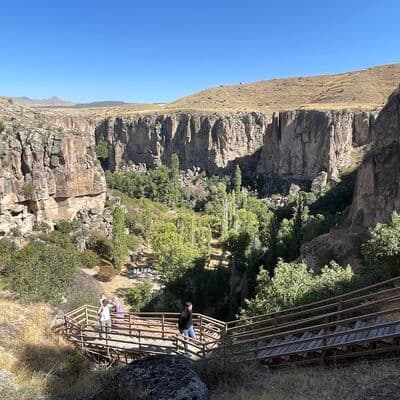
Swords Valley (Kılıçlar Vadisi)—hiking trail from the museum with views of rock formations.
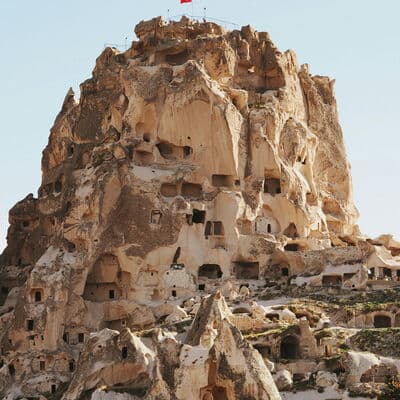
Uçhisar Castle—a few kilometers away, visible from afar.
Atmosphere and Character
Göreme Museum is where nature and faith created something unique. People didn't build these churches—they carved them from rock, like sculptors freeing form from stone.
A thousand years ago, monks prayed here, hiding from the world in caves. Today tourists come—but the sense of sanctity remains. In the dimness of rock temples, under the gaze of ancient faces, time slows.
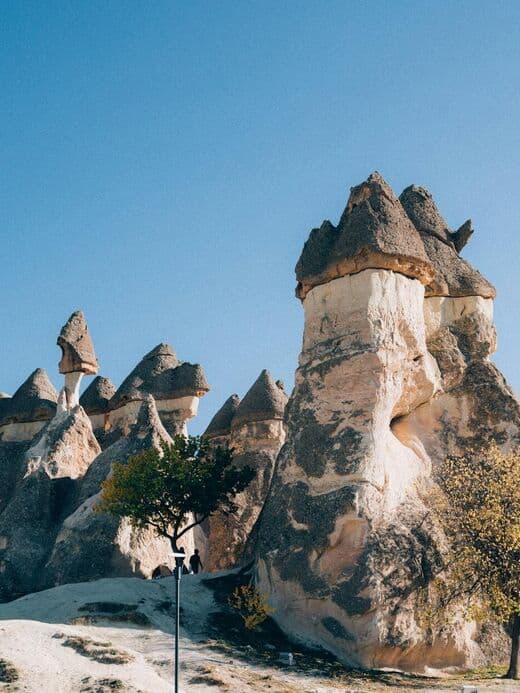
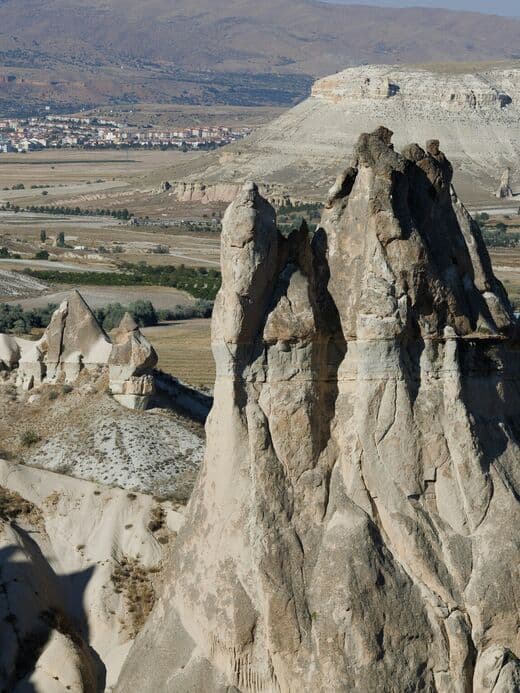
After the museum, walk through the surrounding valleys. Fairy chimneys, abandoned dwellings, paths between rocks—it's all one story. The museum provides context; the valleys provide space.