Toulouse
Toulouse 2025: Complete Guide to France's Pink City
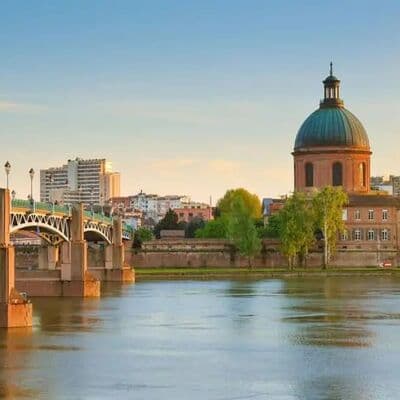
Toulouse is a city the French affectionately call 'Ville Rose' (Pink City) for the terracotta hue of its brick facades that turn soft pink at sunset. France's fourth-largest city and capital of the Occitanie region is an extraordinary blend of thousand-year-old history and cutting-edge technology. Here they assemble Airbus aircraft, prepare space satellites, and simultaneously preserve Romanesque churches from the 12th century and aristocratic mansions from the Renaissance.
In 2025, Toulouse presents itself as a dynamic metropolis with a population of over 500,000 within city limits and more than 1.3 million in the greater metropolitan area. It is France's largest student center after Paris - more than 130,000 students give the city youthful energy and a cosmopolitan atmosphere. Yet Toulouse retains its southern charm: people don't rush here, long lunches on terraces are cherished, and the art of enjoying life is second nature.
City History: From Romans to the Space Age
Tolosa - that's what the Romans called this Celtic settlement that became one of the most important cities in Gaul. During the Roman Empire, trade routes intersected here, and the city flourished thanks to trade in grain and wine. Few archaeological remains survive from the Roman period, but the center's layout still preserves memory of the Roman past.
In the Middle Ages, Toulouse became the capital of the powerful County of Toulouse, controlling vast territories in southern France. This was the era of Occitan cultural flowering, troubadours, and courtly poetry. However, the 13th century brought tragedy - the Albigensian Crusade destroyed the Cathars and led to the region's annexation to the French crown.
Toulouse's golden age came in the 15th - 16th centuries when the city grew rich on the trade in woad (pastel) - a blue dye that was more expensive than gold before the arrival of indigo from America. It was then that local merchants built the luxurious mansions that still adorn the historic center today. The Basilica of Saint-Sernin, the Capitole, numerous churches - all this is the heritage of that era of prosperity.
The 20th century transformed Toulouse into the capital of French aviation. Here in 1919 the legendary Aéropostale mail flights began, with Antoine de Saint-Exupéry among the pilots. After World War II, the city became an aircraft manufacturing center - first the Caravelle, then the Concorde, and now Airbus. Today Toulouse is Europe's aerospace capital.
Historic Center: Architectural Treasures
The Capitole and Its Square
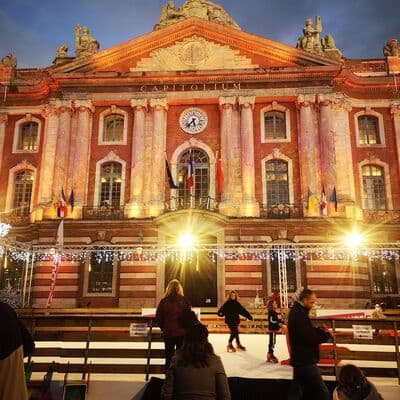
Place du Capitole is the heart of Toulouse and one of France's largest squares. The majestic Capitole building with its neoclassical pink brick facade stretches 128 meters. It houses both the city hall and the opera house - a symbolic union of political and cultural power.
The Capitole takes its name from the capitouls - members of the city council who governed Toulouse from the 12th century. The current building was constructed in the 18th century, but its interiors impress with their splendor: the Hall of Famous People with portraits of great Toulousains, the Henri Martin Hall with Impressionist paintings, and the grand staircase with allegorical murals.
The square itself is a vast space paved with light stone featuring an Occitan cross in the center. Cafés with terraces line the perimeter, where Toulousains spend hours over aperitifs. On Wednesdays a flea market sets up here, and before Christmas the square transforms into a fairytale market with lights and mulled wine.
Basilica of Saint-Sernin
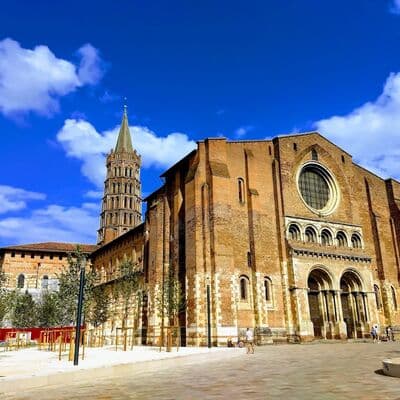
The Basilica of Saint-Sernin is the largest Romanesque church in Europe and one of the most important monuments on the pilgrimage route to Santiago de Compostela. Listed as a UNESCO World Heritage Site, this magnificent basilica was built from the 11th to 13th centuries and is dedicated to Saint Saturninus - Toulouse's first bishop, who was martyred in 250 AD.
Saint-Sernin's architecture is strikingly perfect. The five-tiered octagonal bell tower, standing 65 meters high, dominates the cityscape and has become a symbol of Toulouse. The apse with radiating chapels, typical of pilgrimage churches, creates an impressive silhouette. Inside - the austere beauty of Romanesque style: massive columns, semicircular arches, muted light.
The basilica houses a rich collection of relics and Romanesque sculpture. The 11th-century marble altar table, 12th-century wooden crucifix, and capitals with biblical scenes make Saint-Sernin a true museum of medieval art. Don't miss the crypt with saints' relics and the Romanesque capitals in the ambulatory.
Church of the Jacobins
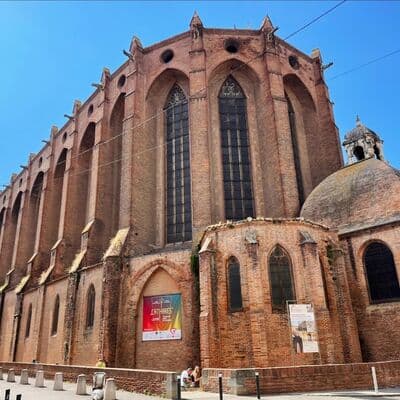
The Church of the Jacobins is a masterpiece of Southern Gothic and one of France's most impressive religious buildings. Built by the Dominicans in the 13th - 14th centuries, it astonishes with its architectural boldness: a single row of central columns supports two naves, and the famous 'palm tree' - ribs fanning out from above the altar - has no equivalent in world architecture.
Here rest the relics of Thomas Aquinas - the greatest theologian of the Catholic Church. His remains were transferred to Toulouse in 1369 and are kept in a gilded reliquary beneath the main altar. The church interior impresses with the height of its vaults (28 meters) and the play of light on the brick walls.
The adjoining cloister is one of the finest in France. Double marble columns with carved capitals surround a peaceful garden. On summer evenings, classical music concerts are held here - the acoustics of the monastery courtyard create an unforgettable atmosphere.
Old Quarters and Mansions
Toulouse's historic center is a labyrinth of narrow streets with brick facades, where every turn reveals a new architectural masterpiece. Renaissance mansions built with money from the pastel trade compete with each other in the splendor of their inner courtyards and carved portals.
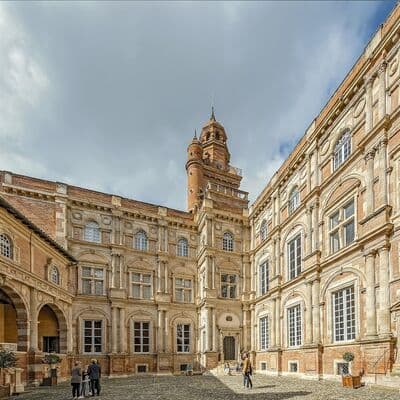
Hôtel d'Assézat is perhaps Toulouse's most beautiful private mansion. Built between 1555 - 1557 for Pierre d'Assézat, the wealthiest pastel merchant, it combines Italian influence with local traditions. Today it houses the Bemberg Foundation - an excellent collection of paintings from the Renaissance to Impressionism.
Hôtel de Bernuy on Rue Gambetta is another Renaissance architectural masterpiece. Its keep tower, inner courtyard with Corinthian columns, and rich décor reflect the ambitions of merchants who wanted to live no worse than aristocrats. The mansion now houses a lycée.
Space City: Aviation and Space Exploration
Cité de l'Espace - Space City
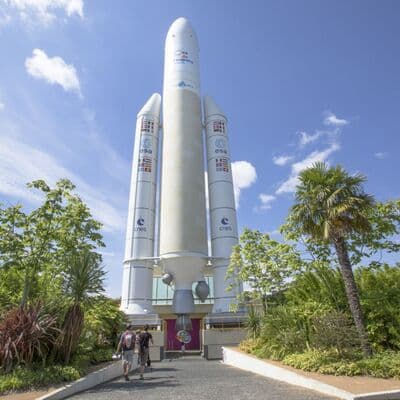
Cité de l'Espace (Space City) is one of Europe's largest theme parks dedicated to space. On 5 hectares of grounds, real spacecraft are displayed: a full-scale Ariane 5 rocket, the Mir space station, a Soyuz capsule, satellites, and probes.
Interactive exhibits let you feel like an astronaut: zero-gravity trainers, docking simulators, a planetarium with programs about the universe. Children and adults can spend an entire day here learning about the history of space flight and modern technologies.
A special place is occupied by the Airbus pavilion, which tells the story of the European aerospace corporation. Aircraft models, interactive displays, virtual flights - all this makes the visit unforgettable. Don't miss 'Astronomical Night' - special evening programs with stargazing.
Airbus Factory
Toulouse is the world capital of Airbus. All models of the European aviation giant are assembled here: from the narrow-body A320 to the massive A380. A factory tour is a unique opportunity to see how aircraft are born.
The 'Let's Visit Airbus' tour includes a visit to the A350 assembly line, where you can observe the entire process - from fuselage arrival to finished airliner. The scale is impressive: hangars the size of several football fields, robotic systems, thousands of workers. Tours should be booked in advance, especially during tourist season.
Aeroscopia - the aviation museum next to the factory - complements the experience. Legendary aircraft are exhibited here: the Concorde, Caravelle, and Super Guppy (used to transport Airbus parts). You can go inside some exhibits and feel the atmosphere of different aviation eras.
Toulouse Museums
Musée des Augustins
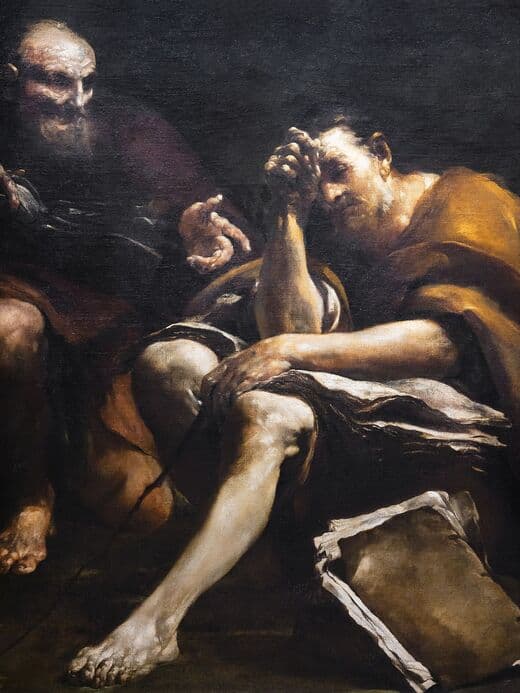
The Musée des Augustins, housed in a former 14th-century monastery, is Toulouse's main art museum. The collection spans from the Middle Ages to the early 20th century, but its Romanesque sculpture is particularly strong - capitals from demolished churches in the region have been gathered here, presenting a unique panorama of medieval art.
The monastery's Gothic cloister is itself a masterpiece. High vaults, delicate arcades, an atmosphere of peace - the perfect setting for art contemplation. The galleries feature works by Rubens, Delacroix, Toulouse-Lautrec (a native of the city), and other masters.
Natural History Museum
Toulouse's Natural History Museum is France's third largest. After extensive reconstruction, it has become one of the country's most modern science museums. Collections cover paleontology, zoology, ethnography, and botany.
The dinosaur section is of particular interest with complete skeletons and interactive exhibits. The museum's botanical garden is an oasis of greenery in the city center with rare plants and themed gardens.
Musée Paul-Dupuy
The Musée Paul-Dupuy is dedicated to decorative arts and Toulouse's history. The clock collection is one of France's finest, from medieval mechanisms to 18th-century masterpieces. Also displayed are faience, textiles, furniture, and apothecary items.
Toulouse Gastronomy
Cassoulet - The Culinary Symbol
Cassoulet is a dish worth coming to Toulouse for. It's a slowly stewed casserole of white beans with meat: pork sausages, duck or goose confit, sometimes lamb. Cooked in a clay pot (cassole, hence the name) for many hours, it forms a golden crust on top.
Debates about 'authentic' cassoulet have gone on for centuries. Toulouse, Carcassonne, and Castelnaudary all claim to be the dish's birthplace, and each region has its own recipe. The Toulouse version must include Toulouse sausage - a fresh pork sausage with a distinctive flavor. The best restaurants prepare cassoulet according to traditional recipes: Le Bibent, Chez Emile, Au Gascon.
Other Regional Specialties
Foie gras - southwestern France, including Toulouse, is the main producer of goose and duck liver. Here it's served in all variations: as terrines, seared, in salads. Victor Hugo Market is the best place to buy authentic foie gras.
Duck confit is another pillar of local cuisine. Duck legs slowly cooked in their own fat are served with fried potatoes or white beans. It's the foundation of many traditional dishes in the region.
Toulouse violets are an unexpected delicacy. Since the 19th century, the city has been famous for candied violets used in confectionery and liqueurs. Maison de la Violette on the Canal du Midi offers a full range of violet treats.
Markets and Restaurants
Victor Hugo Market is a covered market in the city center operating since 1892. Here over 80 vendors offer the region's best products: cheeses, meats, seafood, fruits, and vegetables. Restaurants on the upper floor cook with products from the market - an ideal lunch for foodies.
Toulouse's restaurant scene is diverse. From traditional bistros with cassoulet to Michelin-starred establishments, from trendy wine bars to ethnic restaurants - the choice is vast. The Carmes quarter is particularly rich in good addresses.
Canal du Midi
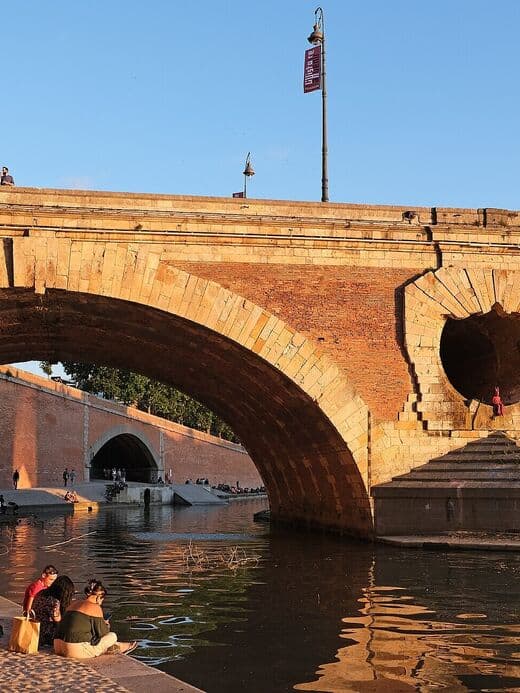
The Canal du Midi is a 17th-century engineering masterpiece and UNESCO World Heritage Site. This 240-kilometer waterway connects Toulouse with the Mediterranean, and via the Garonne with the Atlantic. Construction under Pierre-Paul Riquet's direction lasted from 1666 to 1681 and was the greatest engineering project of its time.
The canal passes right through Toulouse, creating picturesque quays for strolling. Plane trees along the banks (unfortunately, many are dying from a fungal disease and being replaced) create shady allées. Locks, bridges, and Port Saint-Sauveur are all part of the urban landscape.
Barge trips along the canal are a popular activity. You can rent a boat and navigate several locks yourself, enjoying the leisurely pace. Organized cruises offer routes of varying lengths - from a few hours to a week.
Practical Information for 2025
Getting There
Toulouse-Blagnac Airport is located 8 kilometers from the center. It's France's fourth busiest airport with flights throughout Europe and to some cities beyond. A shuttle and tram T2 connect the airport to the center in 20 - 30 minutes.
TGV trains connect Toulouse to Paris in 4 hours 10 minutes (once the high-speed line is completed, travel time will decrease). Direct trains also run to Bordeaux (2 hours), Marseille (4 hours), and Barcelona (3 hours). Matabiau railway station is a 15-minute walk from the center.
Getting Around
Toulouse's metro consists of two automated lines covering the main districts. It's one of the world's most modern metro systems - driverless trains run at 1 - 2 minute intervals during rush hour. Tram lines complement the network.
The historic center is compact and ideal for walking. The VélôToulouse bike-sharing system with 283 stations allows quick travel around the city. The first 30 minutes of each ride are free with a daily or weekly pass.
Best Time to Visit
Toulouse is pleasant year-round thanks to southern France's mild climate. The optimal months are April through June and September through October, when it's warm but not hot and there are fewer tourists.
Summer (July-August) is hot - temperatures often exceed 30°C. Many Toulousains leave for the coast, and the city becomes quieter. Winter is mild, snow is rare, but it can be windy due to the famous Autan wind.
Where to Stay
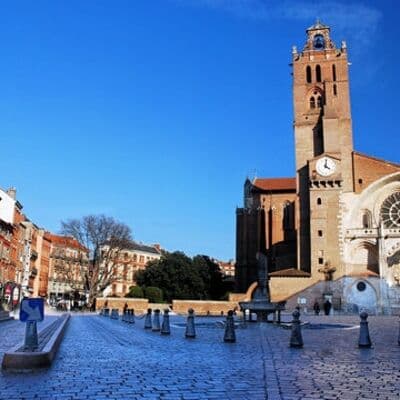
The historic center is the best choice for a first visit. Hotels around Place du Capitole let you explore everything on foot. The Saint-Étienne district near the cathedral offers a quieter atmosphere.
For business travelers, the Compans-Caffarelli district near the conference center and metro is convenient. Budget options can be found near Matabiau station or in student neighborhoods.
Around Toulouse
Albi
Albi is a city 80 kilometers from Toulouse, known for the Sainte-Cécile Cathedral and Toulouse-Lautrec Museum. The red brick cathedral - the world's largest brick cathedral - impresses with its size and interior featuring 15th-century frescoes. The museum occupies the bishops' palace and houses the largest collection of the artist's works, who was born in Albi.
Carcassonne
Carcassonne with its medieval fortress is an essential day trip from Toulouse. The Cité - a fortified city with double walls, 52 towers, and a castle - seems like an illustration from a knightly romance come to life. Listed as a UNESCO site, Carcassonne attracts millions of tourists annually.
The Pyrenees
The Pyrenees begin an hour's drive from Toulouse. In winter, there are ski resorts (Saint-Lary, Peyragudes, Ax-les-Thermes); in summer, hiking trails and thermal spas. The Pyrenees National Park with the Cirque de Gavarnie is a gem of mountain tourism.
Toulouse for Different Travelers
For History Lovers
The Basilica of Saint-Sernin, Church of the Jacobins, Renaissance mansions - Toulouse offers a rich program. Three to four days will allow you to see the main monuments and museums, including a day trip to Albi or Carcassonne.
For Technology Enthusiasts
Space City, Airbus factory, Aeroscopia museum - Toulouse, like no other city, reveals the history and future of aviation and space exploration. Set aside at least two days for aerospace themes.
For Foodies
Cassoulet, foie gras, confit, violets - the gastronomic program is intense. Victor Hugo Market is essential, as is dinner at a traditional restaurant. Don't forget the wines of the Southwest: Fronton, Gaillac, Cahors.
For Families
Space City is a dream for children of all ages. The Natural History Museum with dinosaurs, boat trips on the canal, playgrounds in parks - Toulouse is family-friendly.
Conclusion: Why Visit Toulouse
Toulouse is a city that surprises. Behind the pink facades lies a rich history; behind the provincial charm, cutting-edge technology. Here you can examine a Romanesque basilica from the 11th century in the morning, visit a factory where 21st-century aircraft are assembled in the afternoon, and enjoy cassoulet on a terrace under plane trees in the evening.
Toulouse isn't as crowded with tourists as Paris or Nice, making it an ideal place to experience real France. Student energy gives the city youth, the southern location brings mild weather and a special art de vivre. This is France as the French themselves love it.
Plan your trip to Toulouse in 2025. The Pink City awaits those ready to discover one of Europe's most underrated yet beautiful cities.