Marseille
Marseille 2025: Complete Guide to France's Oldest City
Marseille is a city of legends, a gateway to the Mediterranean, and a crossroads of civilizations. Founded by Greek seafarers in 600 BC, it stands as the oldest city in France and one of the most ancient in Western Europe. Today, Marseille is France's second-largest city, capital of the Provence-Alpes-Côte d'Azur region, and a gateway through which millions of people from around the world have passed over the centuries.
In 2025, Marseille is experiencing a true renaissance. Since serving as European Capital of Culture in 2013, the city has continued its transformation with new museums, revitalized neighborhoods, modern infrastructure, and a renewed waterfront. Marseille isn't postcard-perfect France with boutiques and croissants - this is the real, living, multifaceted France with character and history.
A City's History: From Greeks to Modern Day
Massalia - that's what the ancient Greeks from Phocaea called this city when they founded a trading colony here around 600 BC. It was the first Greek colony in Gaul, and from it springs the entire urban history of France. The Greeks brought viticulture, olive cultivation, and writing. Massalia quickly became a thriving commercial center linking the Mediterranean to Celtic lands.
In 49 BC, the city was captured by Julius Caesar's forces after siding with his rival Pompey in the civil war. This marked the beginning of the Roman period, which left its mark on the city's architecture and layout. The Middle Ages brought plague epidemics and decline, but Marseille always rebounded thanks to its strategic position.
The 19th century was Marseille's golden age. The opening of the Suez Canal in 1869 transformed the city into France's main gateway to the East. Trade with colonies in North Africa, Indochina, and Madagascar flowed through Marseille's port. The population multiplied, and the city acquired grand boulevards and architectural masterpieces.
The 20th century brought new waves of immigration - from Italy, Armenia, North Africa, and the Comoros Islands. Each community left its mark, transforming Marseille into a unique melting pot of cultures. Today, it's one of Europe's most multicultural cities, where dozens of languages can be heard on the streets.
The Old Port and Historic Center
Vieux-Port: The Heart of Marseille
The Old Port is where the city was founded and where its heart still beats. Surrounded by cafés and restaurants, it comes alive every morning with the fish market, where fishermen sell their catch directly from their boats. This is the best place to buy fresh fish for bouillabaisse - Marseille's famous fish soup.
The mirrored canopy designed by architect Norman Foster, installed in 2013, has become a new symbol of the port. The polished stainless steel structure reflects the sky, sea, and faces of passersby, creating a kaleidoscopic effect. In the evening, lighting transforms the canopy into a work of art.
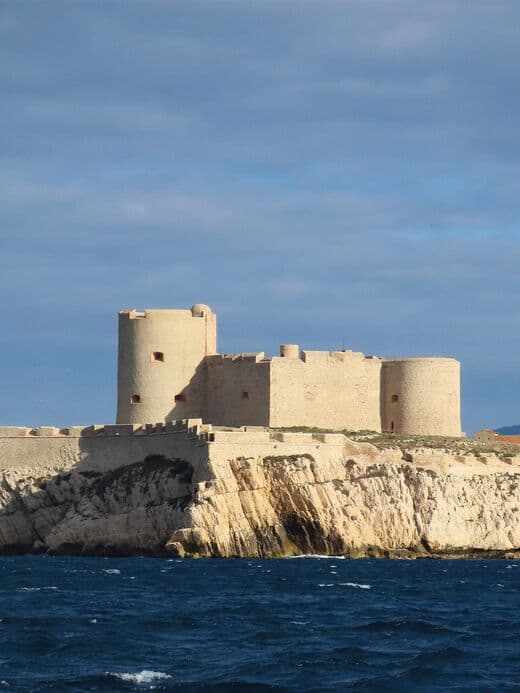
From the Old Port, pleasure boats depart for the Frioul Islands and Château d'If - the famous prison immortalized in Alexandre Dumas's "The Count of Monte Cristo." Visiting Château d'If is an essential item on any tourist's Marseille itinerary.
Le Panier: The Oldest Quarter
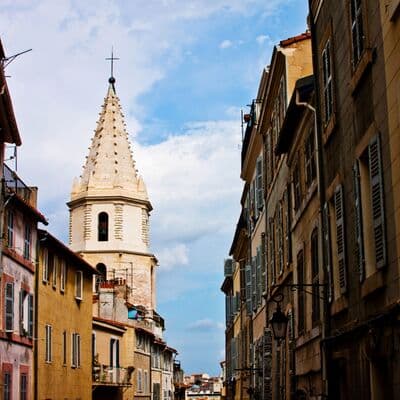
Le Panier is France's oldest residential neighborhood, located on a hill north of the Old Port. Narrow streets climbing the slope, colorful house facades with wooden shutters, laundry hanging between windows - all create the unmistakable atmosphere of a Mediterranean city.
The quarter was long the center of the city's marginal life, but in recent decades has undergone gentrification. Today, trendy galleries, artists' workshops, and designer boutiques are opening, yet Le Panier has retained its popular character. On Place de Lenche, locals gather every evening to play pétanque and discuss the latest news.
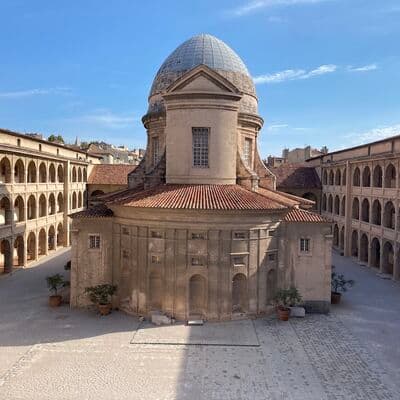
One of the quarter's main attractions is La Vieille Charité, a former 17th-century poorhouse now converted into a cultural center with museums of archaeology and African, Oceanic, and American arts. The baroque chapel with its oval dome by Pierre Puget is a masterpiece of Provençal architecture.
Notre-Dame de la Garde: Symbol of the City
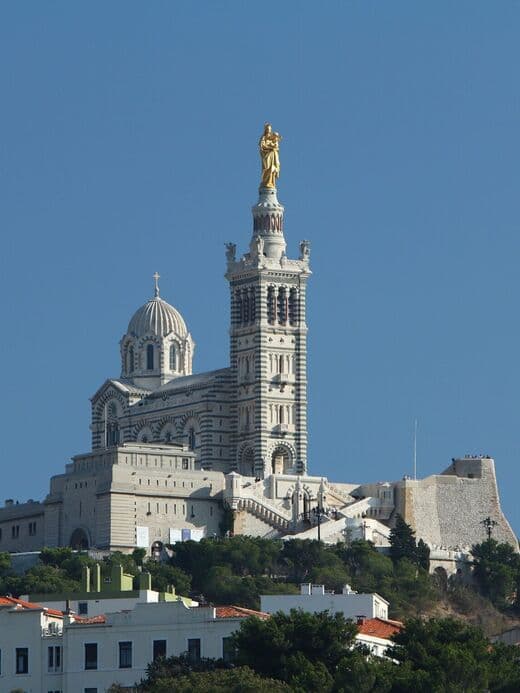
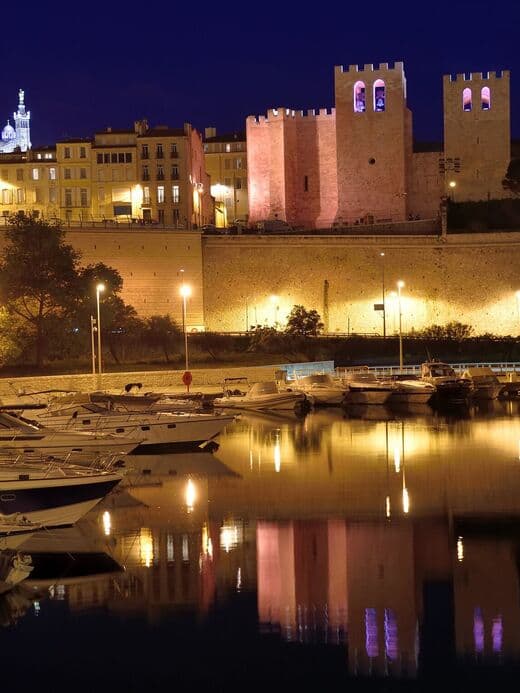
The Basilica of Notre-Dame de la Garde, or "La Bonne Mère" (The Good Mother) as Marseillais affectionately call it, is the city's main symbol. Located at Marseille's highest point (154 meters above sea level), it's visible from virtually anywhere in the city and from the sea, serving as a beacon for sailors.
The basilica was built in the mid-19th century in Neo-Byzantine style. It's crowned by a gilded statue of the Virgin Mary over 11 meters tall, which in popular belief protects the city and its inhabitants. The interior is richly decorated with mosaics on gold backgrounds, and the walls are covered with ex-votos - thanksgiving plaques from sailors saved from shipwrecks.
Climbing to the basilica is a pilgrimage that every visitor to Marseille undertakes. You can walk up through picturesque streets, take a bus, or ride a special tourist train. From the terrace, you get a 360-degree panorama: the Old Port, the Frioul Islands, the hills of Provence, and the endless blue of the Mediterranean Sea.
Modern Marseille: Districts of Renewal
La Joliette and the New Port
The La Joliette district north of the Old Port tells a story of grand transformation. Former 19th-century docks and industrial warehouses have become a cultural and business center. The crown jewel is Les Docks Village - restored port warehouses now housing offices, shops, restaurants, and exhibition spaces.
This is also home to CMA CGM headquarters, the world's third-largest shipping company. Its 147-meter skyscraper designed by Zaha Hadid has become the architectural landmark of the new Marseille. The building's curved forms evoke ship sails - a tribute to the city's maritime heritage.
MuCEM and Fort Saint-Jean
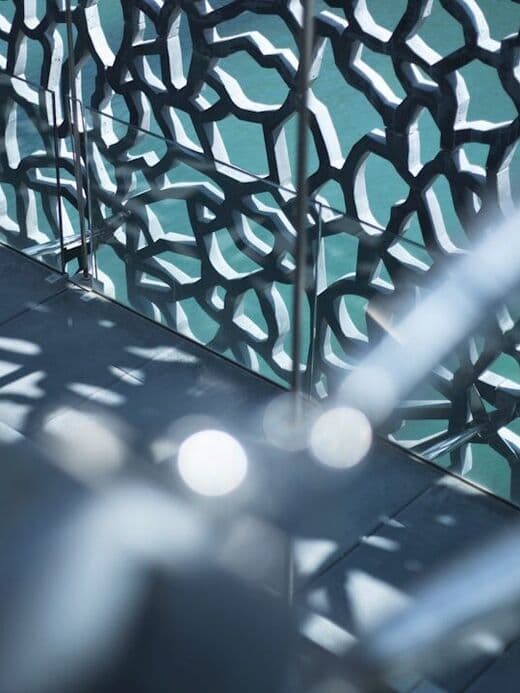
The Museum of European and Mediterranean Civilisations (MuCEM) is modern Marseille's flagship museum, opened in 2013. The building by architect Rudy Ricciotti is a cube wrapped in a lace-like concrete shell resembling lace or coral. Inside are collections devoted to Mediterranean cultures from antiquity to the present.
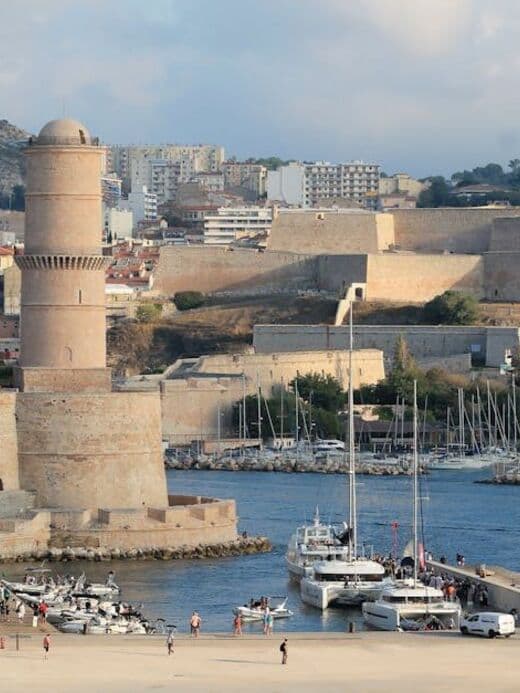
A pedestrian bridge connects the museum to Fort Saint-Jean - a medieval fortress that guarded the entrance to the Old Port. The fort has been restored and converted into an extension of the museum space with gardens of Mediterranean plants. Its ramparts offer stunning views of the port, sea, and Notre-Dame de la Garde basilica.
La Friche Belle de Mai: The Culture Factory
On the site of a former tobacco factory in the working-class Belle de Mai district, a unique cultural cluster has emerged. La Friche comprises 45,000 square meters of creative space: concert halls, theaters, artists' studios, a rooftop skate park, and restaurants with city views. La Friche is alternative Marseille - a city of underground culture and experimentation.
The Calanques: A Natural Wonder
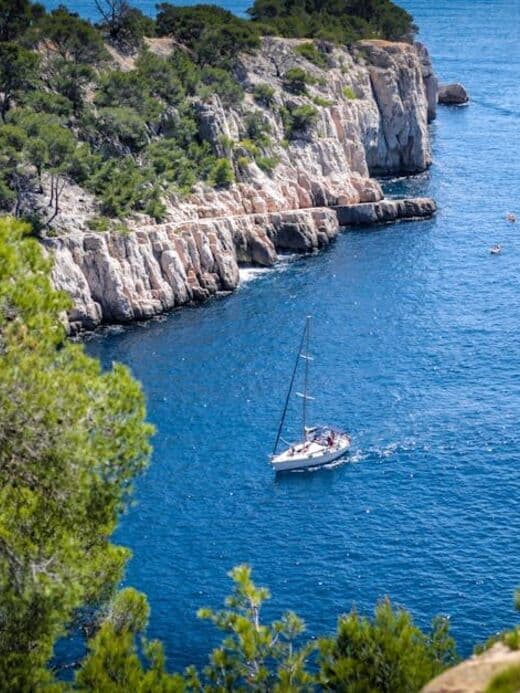
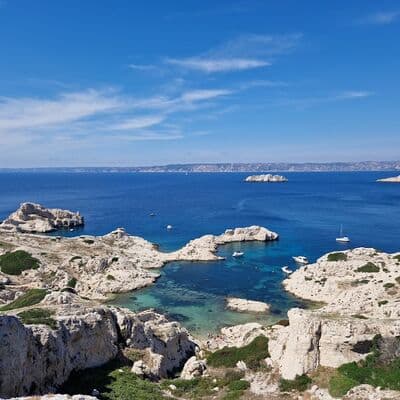
The Calanques are a chain of rocky inlets between Marseille and Cassis, designated as a national park. White limestone cliffs plunge into the turquoise waters of the Mediterranean, creating landscapes of incredible beauty. This is one of the most beautiful places in all of France and a true paradise for hiking, rock climbing, and boat excursions.
The most famous calanques are Sormiou, Morgiou, En-Vau, and Port-Pin. Some are accessible on foot from Marseille (Calanque de Sormiou is the most accessible), while others are better reached by boat. In summer, park access is restricted due to fire risk, so the best time to visit is spring and autumn.
Tour boats from the Old Port offer calanque excursions lasting from two to six hours. This is ideal for those not ready for hours of hiking under the blazing sun. From the water, you'll see cliff views inaccessible to hikers.
Bouillabaisse and Marseille Gastronomy
Bouillabaisse isn't just fish soup - it's Marseille's culinary symbol, a dish with a history stretching back centuries. Originally, it was poor fishermen's food, who boiled a stew from unsold small fish. Over time, bouillabaisse evolved into an elegant dish of several types of Mediterranean fish, served in two stages: first the broth with croutons and rouille sauce, then the fish.
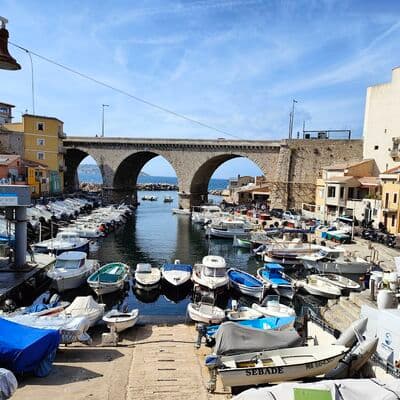
Authentic bouillabaisse must contain at least four types of fish: scorpionfish, red mullet, conger eel, and sea bass. The Bouillabaisse Charter, signed by leading Marseille restaurants, protects the traditional recipe. The best places to taste it are restaurants around the Old Port and in the fishing villages of Vallon des Auffes and l'Estaque.
Beyond bouillabaisse, Marseille cuisine is famous for pizza (yes, indeed - pizza came to France through Marseille's Italian immigrants), navettes (boat-shaped cookies with orange blossom water), and pastis - an anise-flavored aperitif drunk diluted with water. Pastis 51 and Ricard are Marseille brands, essential for an aperitif on a terrace under the Mediterranean sun.
Practical Information for 2025
Getting There
Marseille Provence Airport is located 25 kilometers northwest of the city center. An express bus connects the airport to Saint-Charles railway station in 25 minutes. You can also take a taxi or rent a car.
The TGV high-speed train brings you to Marseille from Paris in 3 hours 20 minutes, from Lyon in 1 hour 40 minutes. Saint-Charles station, situated on an elevation in the city center, is itself an attraction thanks to its monumental staircase with city views.
From Nice and other Côte d'Azur cities, TER regional trains run to Marseille along the coast - one of France's most scenic railway lines.
Getting Around the City
Marseille has two metro lines, three tram lines, and an extensive bus network. A single ticket is valid on all transport types for one hour. For tourists, a one-day or three-day CityPass offering unlimited transport and admission to major museums is economical.
The city center is compact and walkable. Le Vélo bike-share with 130 stations allows quick travel between attractions. The first 30 minutes of each ride are free.
Best Time to Visit
Marseille is beautiful year-round thanks to its Mediterranean climate. Summer is hot (up to 35°C/95°F), but sea breezes bring relief. It's ideal for beaches and boat trips, though the calanques may be closed due to fire risk.
Spring and autumn are best for hiking the calanques and sightseeing without tourist crowds. Winter is mild, with temperatures around 10°C (50°F), but the mistral - a cold northern wind - can spoil a walk.
Where to Stay
For a first visit, the best choices are hotels near the Old Port or in the Prado-Perier area. Budget options can be found near Saint-Charles station. For those who prefer an alternative atmosphere, there are boutique hotels in Le Panier or the Noailles district.
InterContinental Marseille - Hotel Dieu occupies an 18th-century former hospital building with Old Port views. Sofitel Marseille Vieux-Port offers classic luxury with stunning vistas. For hipsters, Hotel Mama Shelter Marseille features Philippe Starck design.
Neighborhoods and Attractions Beyond the Center
The Corniche and Beaches
The Corniche Kennedy is a scenic coastal road stretching from the Old Port to Marseille's southern beaches. Along the way, views open onto the islands and endless sea. It's a favorite spot for locals' walks, jogs, and bike rides.
The Prado beaches are Marseille's main beach area, created in the 1970s from excavation spoil during metro construction. Sandy and pebbly sections, volleyball courts, skate parks, and children's areas make this ideal for family recreation. The water is clean and calm.
Château d'If and the Frioul Islands
Château d'If is a 16th-century fortress on a small island in Marseille Bay, made famous by Dumas's novel. Although Edmond Dantès is a fictional character, you can see the cell shown as his dungeon. From the fortress terraces, stunning views of Marseille unfold.
The Frioul archipelago consists of four islands 4 kilometers from Marseille, popular for day trips. Wild landscapes, secluded swimming coves, lazaret ruins - all make the islands an ideal escape from urban bustle. The ferry from the Old Port takes 20 minutes.
L'Estaque and Impressionist Art
The fishing village of l'Estaque in northwest Marseille has become a pilgrimage site for art lovers. Cézanne, Renoir, Braque, and Dufy worked here, drawn by the special light and color. Today, l'Estaque retains the charm of a Provençal village with colorful houses, boats on the shore, and seafood restaurants.
Safety and Practical Tips
Marseille has a reputation as a "tough" city, but with normal precautions, it's perfectly safe for tourists. Central areas and tourist zones are well-patrolled. As in any big city, guard valuables in crowds and avoid dark alleys at night.
Some northern districts (the 15th and 16th arrondissements) are best avoided by tourists without local accompaniment. But main attractions are in safe zones, and Marseille is generally much safer than its reputation suggests.
Marseillais are known for their southern temperament - they're expressive, loud, and hospitable. Don't be surprised by animated gestures and emotional conversations - that's just their communication style. A few words in French will be appreciated, though English is spoken in tourist areas.
Marseille for Different Travelers
For History and Culture Lovers
Three to four days will cover the main museums (MuCEM, Vieille Charité, Marseille History Museum), historic quarters, and the basilica. Don't miss the underground excavations of the Roman port beneath the shopping center near the Old Port.
For Nature Lovers
The calanques require at least a full day, preferably two or three for different trails. The Frioul Islands are another day. For serious calanque hiking, plan a week.
For Foodies
The morning fish market at the Old Port, bouillabaisse at a certified restaurant, Noailles market with products from across the Mediterranean, pizza in l'Estaque, and an aperitif with pastis on a terrace - that's the minimum gastronomic program.
For Families
Prado beaches with children's areas, a boat trip to Château d'If (kids love the Count of Monte Cristo story), interactive exhibits at MuCEM, and Mare Nostrum aquarium - Marseille is family-friendly.
Conclusion: Why Visit Marseille
Marseille isn't glossy tourist France - this is the real, living, sometimes rough but always honest country. Here cultures and eras have mixed, here you feel the pulse of the Mediterranean and the breath of 26 centuries of history. Marseille doesn't try to please - it simply is what it is, and in that authenticity lies its greatest charm.
Unlike Paris or Nice, Marseille doesn't reveal itself immediately. It needs time; you need to immerse yourself in its rhythm, try its cuisine, wander its streets, sit in its cafés. Then the city will open in all its beauty - the rugged beauty of a Mediterranean port that has survived centuries and preserved its soul.
Plan your trip to Marseille in 2025 and discover a city that will change your perception of France. Marseille awaits those ready to see the real thing.