Syracuse
Syracuse - Ancient City of Archimedes on Sicily's Shore
Syracuse is one of the greatest cities of the ancient world, a cradle of Western civilization and birthplace of the genius Archimedes. This city on Sicily's southeastern coast once rivaled Athens and Rome in power and wealth. Today, Syracuse is a living open-air museum: a grand Greek theater, mysterious quarries, the baroque island of Ortygia, and crystal-clear sea. The historic center is inscribed on the UNESCO World Heritage List.
History - From Greek Colony to World Power
Syracuse was founded in 734 BC by Corinthian colonists on the island of Ortygia. Within a few centuries, the city transformed into the largest and wealthiest polis of the Greek world. In the 5th century BC, under the tyrants Gelon and Hieron I, Syracuse defeated the Carthaginians and became the dominant force in the Western Mediterranean.
In 415-413 BC, Syracuse achieved an epic victory over the Athenian expedition - Athens' greatest military defeat, which became a turning point of the Peloponnesian War. Under Dionysius I (405-367 BC), the city reached its peak with a population of around 500,000.
Here lived and worked the greatest scientist of antiquity, Archimedes (287-212 BC). During the Roman siege of Syracuse, his war machines terrorized the invaders. According to legend, he was killed by a Roman soldier despite the order of general Marcellus to spare his life.
After the Roman conquest in 212 BC, Syracuse remained an important city of the empire. In the Middle Ages, it was ruled by Byzantines, Arabs (878-1038), Normans, then Spanish. The earthquake of 1693 destroyed the city, but it was rebuilt in baroque style.
Neapolis Archaeological Park
The Neapolis Archaeological Park is Syracuse's main historical attraction, included on the UNESCO list. Here are concentrated grand monuments of the Greek and Roman eras.
Greek Theater
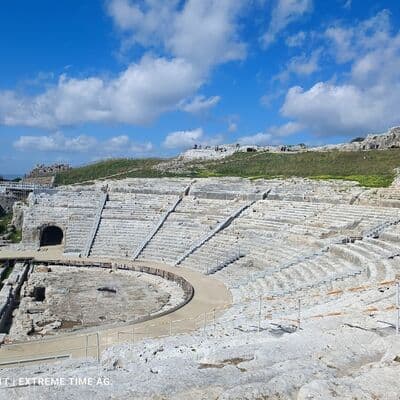
The Teatro Greco is one of the largest and best-preserved Greek theaters in the world. Carved into rock in the 5th century BC, it held up to 15,000 spectators. Here premiered tragedies by Aeschylus, specially written for Syracuse. Every year in May-June, the theater comes alive with the Festival of Greek Drama featuring ancient tragedies and comedies.
Ear of Dionysius
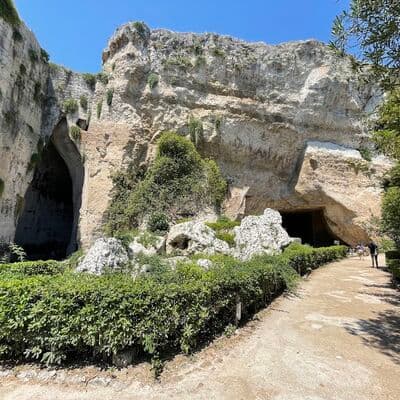
The Orecchio di Dionisio is an artificial cave 23 meters high with unique acoustics: even a whisper can be heard throughout. According to legend, the tyrant Dionysius used it as a prison to eavesdrop on prisoners' conversations. The name was coined by the painter Caravaggio, who visited Syracuse in 1608. Nearby are other quarries - the Latomie, where 7,000 Athenian prisoners were held after the failed expedition.
Roman Amphitheater
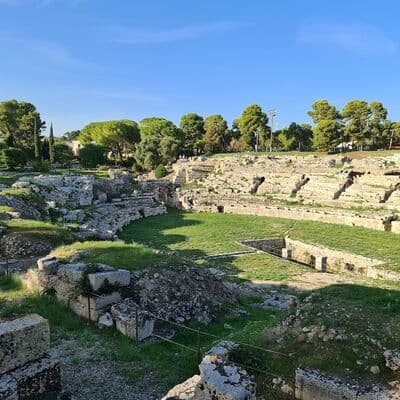
The Anfiteatro Romano is one of the largest Roman amphitheaters, built in the 3rd century AD for gladiatorial combat. Its dimensions (140 x 119 meters) are surpassed only by the Colosseum and the arena in Verona. Underground corridors for releasing beasts and gladiators are preserved beneath the arena.
Altar of Hieron II
The Ara di Ierone II is a gigantic sacrificial altar 198 meters long, built in the 3rd century BC for mass sacrifices (reportedly up to 450 bulls simultaneously). This is the largest altar of the Greek world, though only its foundation survives.
Ortygia Island - Heart of the City
Ortygia is a small island connected to the mainland by bridges, the historic and spiritual center of Syracuse. The ancient Greek city was located here, and today it's a labyrinth of baroque streets, palaces, and churches.
Piazza del Duomo
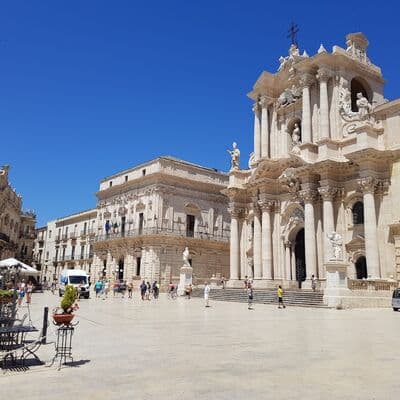
Piazza del Duomo is one of Italy's most beautiful squares, surrounded by baroque palaces and churches. Its elongated shape follows the outline of the ancient agora. In the evening, when the lamps are lit, the square transforms into a theatrical setting.
Cathedral
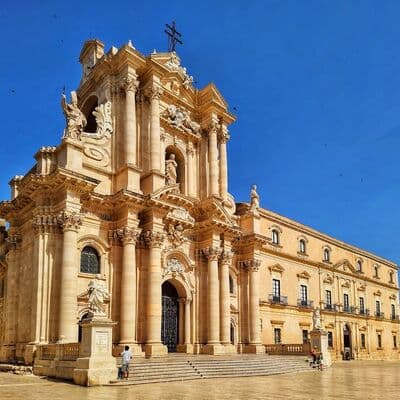
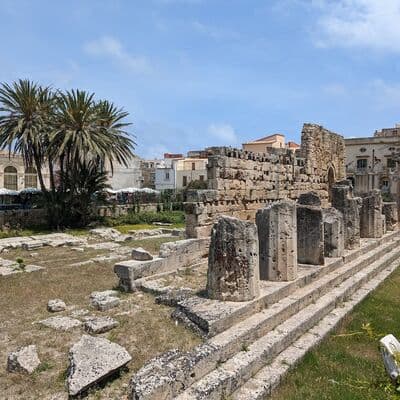
The Duomo di Siracusa is a unique temple built inside an ancient Greek Temple of Athena (5th century BC). The Doric columns of the ancient temple are embedded in the cathedral walls and visible both inside and outside. The baroque facade (18th century) was added after the 1693 earthquake. Inside are Renaissance artworks and a Norman baptismal font from the 12th century.
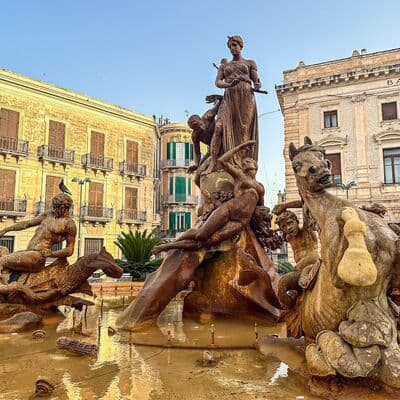
Arethusa Fountain
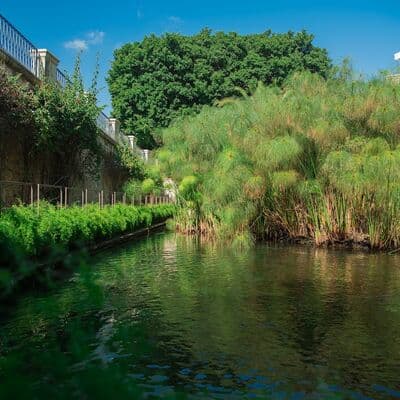
The Fonte Aretusa is a natural freshwater spring by the sea, connected to a beautiful legend. The nymph Arethusa, fleeing the pursuit of the river god Alpheus, was transformed by the goddess Artemis into a spring. Papyrus grows here - one of the few wild papyrus groves in Europe.
Maniace Castle
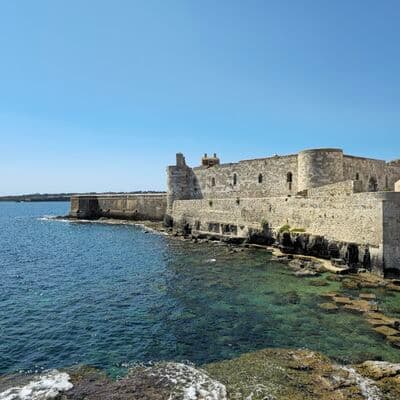
Castello Maniace is a powerful fortress at the tip of Ortygia, built by Emperor Frederick II Hohenstaufen around 1240. Square in plan with round towers at the corners, it's a masterpiece of medieval military architecture. Today it hosts exhibitions and concerts.
Jewish Quarter
The Giudecca is a medieval Jewish quarter with narrow streets and a preserved mikveh (ritual bath) from the 6th century. Syracuse's Jewish community was one of the oldest in Europe until its expulsion in 1492.
Museums of Syracuse
Paolo Orsi Regional Archaeological Museum
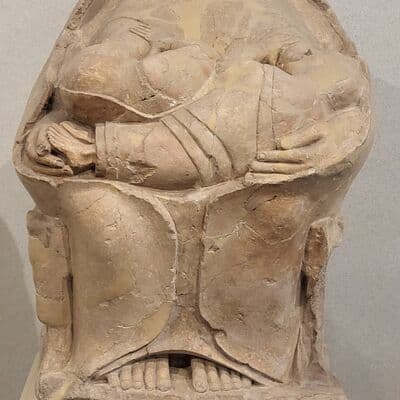
The Museo Archeologico Regionale Paolo Orsi is one of Europe's most important archaeological museums with a rich collection of Greek and Roman antiquities. The famous Landolina Venus (Roman copy of a Greek statue), Corinthian vases, terracotta figurines, finds from necropolises.
Palazzo Bellomo Gallery
The Galleria Regionale di Palazzo Bellomo is a museum of medieval and baroque art in a 14th-century Gothic palace. The masterpiece is the "Annunciation" by Antonello da Messina (1474), one of the greatest works of the Italian Renaissance.
Papyrus Museum
The Museo del Papiro is the world's only museum dedicated to the history of papyrus. Here you can see ancient Egyptian papyri and learn about the technology of making this ancient writing material.
Beaches and Surroundings
Syracuse Beaches
Beautiful sandy beaches stretch south of the city: Fontane Bianche (fine white sand, ideal for families), Arenella (wild beach), Vendicari Nature Reserve (unspoiled nature, flamingos, sea turtles).
Noto
30 km from Syracuse is Noto - the "capital of Sicilian baroque," completely rebuilt after the 1693 earthquake. The cathedral, palaces, and churches of golden limestone are UNESCO-listed. Every May, the Infiorata flower carpet festival takes place.
Modica and Ragusa
Baroque cities an hour's drive from Syracuse, also UNESCO-listed. Modica is famous for its chocolate, made according to an ancient Aztec recipe (without milk, with spices).
Pantalica
A Bronze Age necropolis 40 km from Syracuse - over 5,000 tombs carved into canyon cliffs. UNESCO-listed together with Syracuse. Impressive landscape and atmosphere of antiquity.
Gastronomy
Syracuse cuisine features the freshest seafood, vegetables from rich volcanic soils, and ancient recipes.
What to Try
Pasta with sea urchins (ricci di mare) - a spring delicacy. Swordfish (pesce spada) - grilled, carpaccio, involtini. Caponata - Sicilian eggplant stew. Almond milk and granita with brioche for breakfast. Cassatelle - fried pastries with ricotta.
Wines
The region is famous for Nero d'Avola wines (red) and Moscato di Noto (sweet white). Many wineries are open for visits.
Practical Information
Getting There
The nearest airport is Catania (60 km). Interbus and AST buses connect Syracuse with Catania (1-1.5 hours), Noto (30 minutes), Ragusa (2 hours). Trains run from Catania and Messina, but buses are faster. From Taormina - about 2 hours by bus.
Getting Around
The historic center (Ortygia) is compact and perfectly explored on foot. The Neapolis Archaeological Park can be reached on foot (20 minutes) or by bus. A rental car is convenient for visiting surroundings (Noto, Modica).
When to Visit
The best time is spring (April-June) and autumn (September-October). May-June is especially good thanks to the Greek Drama Festival. Summer is hot but the sea is wonderful. Winter is mild with few tourists.
How Long to Stay
Minimum 2 full days: one for Ortygia and museums, another for the archaeological park. For visiting surroundings (Noto, Modica, Vendicari), add 1-2 more days.