Rennes
Rennes: Capital of Brittany and Gateway to the Celtic World
Rennes is a city where medieval history meets the modern energy of university life. The capital of Brittany captivates travelers with its colorful half-timbered houses, majestic Parliament building, and lively squares where young people gather in countless cafes and bars. This city of approximately 220,000 inhabitants (with over 60,000 students) is the second-largest university center in France after Paris. Rennes is a place where Breton culture intertwines with French charm, creating a unique atmosphere that cannot be found anywhere else.
History of Rennes: From the Celts to Modern Times
The history of Rennes spans more than two thousand years and is inextricably linked with the fate of Brittany - a region with a unique Celtic identity. The city was founded by the Gallic tribe of Redones around the 2nd century BC and was called Condate (meaning 'confluence of rivers'). The Romans captured the settlement in 57 BC and transformed it into an important administrative center.
In the Middle Ages, Rennes became the capital of the Duchy of Brittany - an independent state that long maintained its autonomy from the French crown. Breton dukes ruled here until 1532, when the region was definitively annexed to France. However, Brittany retained its special status and its own Parliament, which sat in Rennes.
The Great Fire of 1720
On December 23, 1720, a devastating fire broke out in Rennes that raged for six days and destroyed almost the entire city center - approximately 850 houses. This tragic event, however, gave the city a chance for rebirth. Architect Jacques Gabriel developed a plan for new construction in the classical style, which is why medieval half-timbered quarters that miraculously survived the fire now neighbor majestic 18th-century buildings in Rennes.
Student Capital
In the 20th century, Rennes transformed into the largest educational center in western France. The University of Rennes, founded as early as 1461, today includes two major campuses and numerous specialized schools. The student atmosphere defines the character of the city - it is always bustling, lively, and modern, while the historic center preserves its unique medieval charm.
Parliament of Brittany: Symbol of Independence
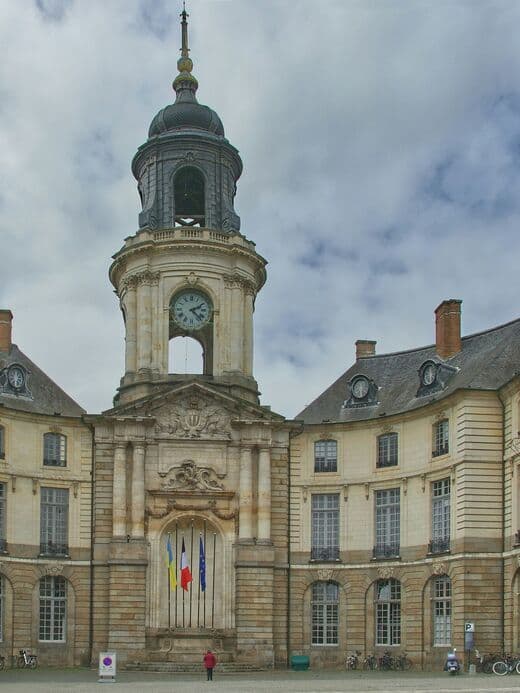
The Parliament of Brittany (Parlement de Bretagne) is a magnificent 17th-century building that serves as Rennes' main architectural landmark and a symbol of Breton autonomy. Built between 1618 and 1655, it served as the meeting place for the Breton Parliament - the province's highest judicial body.
Architecture and Interiors
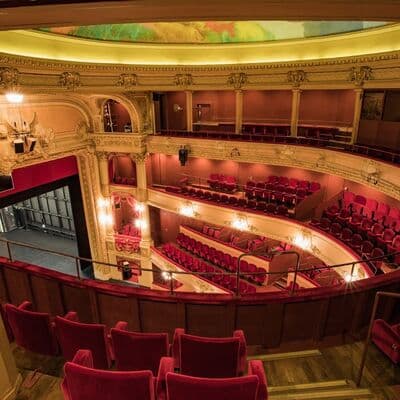
The Parliament building is a masterpiece of French classicism. Its facade is adorned with Ionic columns and sculptural compositions symbolizing justice and law. Inside, luxurious halls with gilded ceilings, tapestries, and 17th-century paintings have been preserved. The Grand Chamber (Grande Chambre) with its coffered ceiling and allegorical paintings is particularly impressive.
The 1994 Fire and Restoration
On February 5, 1994, during a fishermen's demonstration, a fire broke out in the Parliament building, causing serious damage to the interiors. Restoration took more than ten years and cost approximately 50 million euros. Today, the Parliament is once again open to visitors, and tours allow one to appreciate both the original elements and the craftsmanship of the restorers.
Old Town: A Labyrinth of Half-Timbered Streets
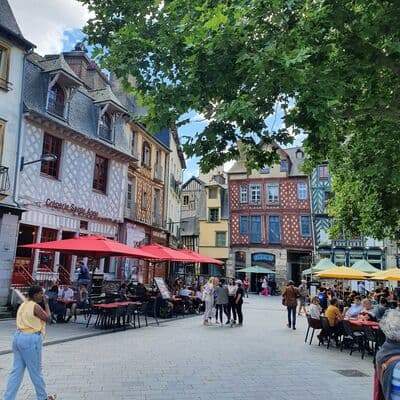
The historic center of Rennes is a true open-air museum where every alley tells its own story. Approximately 300 half-timbered houses from the 15th to 17th centuries form a picturesque labyrinth that miraculously survived the great fire of 1720.
Rue Saint-Georges
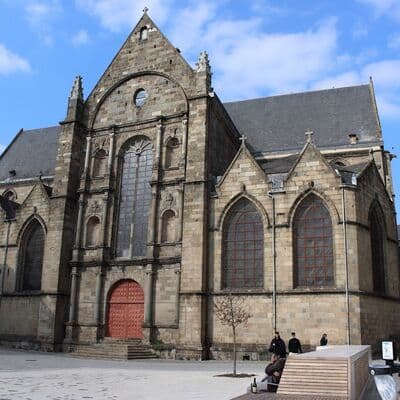
Rue Saint-Georges is considered one of the most beautiful streets in the city. Here, colorful half-timbered houses with characteristic projecting upper floors have been preserved. Each house has its own unique appearance - carved beams, multicolored facades, antique signs. The street leads to the church of the same name in the Flamboyant style.
Place du Champ-Jacquet
Place du Champ-Jacquet is the heart of medieval Rennes. It is surrounded by picturesque 17th-century half-timbered houses, and in the center stands a statue of Mayor Jean Leperdit, who saved the city during the Revolution. The square is a favorite meeting place for locals and tourists, with cozy cafes and restaurants.
Place des Lices and the Market
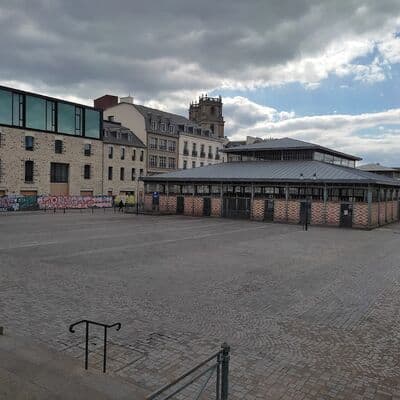
Place des Lices is a huge space where jousting tournaments were held in the Middle Ages. Today, every Saturday one of the largest markets in France unfolds here. More than 300 vendors offer fresh produce, Breton specialties, flowers, and local delicacies. The Saturday market at Place des Lices is a must-do for all food lovers.
Portes Mordelaises
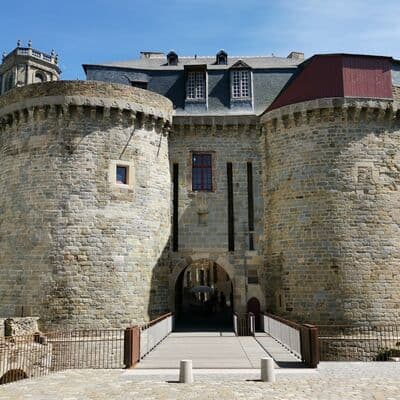
The Portes Mordelaises are the only surviving fragment of Rennes' medieval fortifications. These massive 15th-century towers once served as the main entrance to the city. It was through these gates that the Breton dukes entered their capital for coronation. Today, the gates are a symbol of Rennes' medieval past.
Thabor Park: The City's Green Jewel
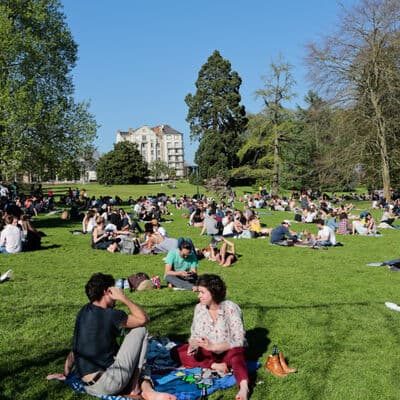
Thabor Park (Parc du Thabor) is one of the most beautiful urban parks in France, covering approximately 10 hectares in the very center of Rennes. Created on the site of a former monastery garden, the park combines several styles of landscape design.
French and English Gardens
The park is divided into several zones: a formal French garden with geometric parterres and trimmed hedges, a romantic English landscape garden with picturesque ponds and artificial grottos, and a botanical garden with more than 3,000 plant species. The park's rose garden features approximately 2,000 rose varieties and is particularly beautiful in June.
Aviary and Bandstand
The park houses a large aviary with exotic birds and a historic 19th-century music bandstand where concerts are held in summer. Thabor Park is a favorite relaxation spot for Rennes residents and an ideal place for a picnic, stroll, or simply contemplating nature in the city center.
Museums of Rennes: Art and History
Despite its relatively modest size, Rennes boasts an impressive collection of museums covering art, history, and science.
Museum of Fine Arts
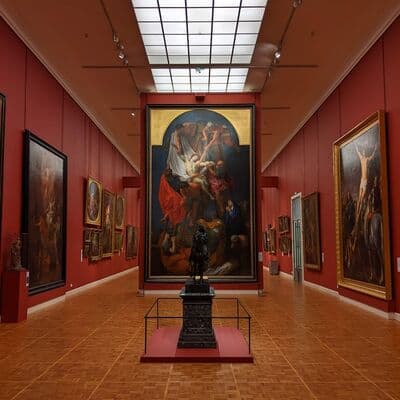
The Rennes Museum of Fine Arts (Musée des Beaux-Arts) is housed in a former 19th-century university building. Its collection includes works by European masters from antiquity to the present day. Among the museum's treasures are works by Rubens, Veronese, Georges de La Tour, and an impressive collection of Impressionists. The collection of Breton art is of particular interest.
Museum of Brittany
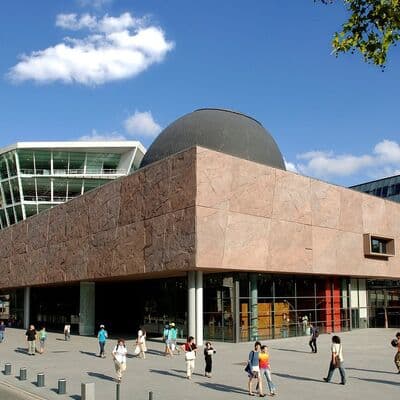
The Museum of Brittany (Musée de Bretagne) tells the story of this unique region's history and culture. Located in the modern Champs Libres cultural center, the museum presents exhibitions on Celtic heritage, medieval history, traditional life, and modern Brittany. Interactive exhibits make the visit engaging for all ages.
Écomuseum of Rennes
The Écomuseum (Écomusée du Pays de Rennes) is located at the Bintinais farm in the suburbs and is dedicated to rural life in Brittany. Here you can see traditional Breton buildings, learn about local animal breeds, and discover the agricultural traditions of the region.
Breton Gastronomy: Galettes, Cider, and Seafood
Rennes is the perfect place to discover Breton cuisine, which differs significantly from classic French fare. Here, simple but incredibly tasty dishes based on buckwheat, seafood, and dairy products reign supreme.
Galettes and Crêpes
The galette is the calling card of Breton cuisine. This buckwheat pancake is served with various fillings: the classic complète includes ham, egg, and cheese. The sweet version made from wheat flour is called a crêpe and is served with butter, sugar, caramel, or Nutella. Rennes has hundreds of crêperies where you can try these traditional dishes.
Cider and Chouchen
Brittany is cider country, and in Rennes, you can taste many varieties of this refreshing apple drink. Traditionally, cider is served in ceramic cups (bolées). Chouchen, a Breton honey drink similar to Scandinavian mead, pairs excellently with sweet crêpes.
Seafood and Oysters
The proximity of the Atlantic Ocean accounts for the abundance of seafood on the menus of Rennes restaurants. Oysters from Cancale, mussels, Saint-Brieuc scallops, Breton lobsters - all can be tasted at specialized restaurants in the city. The cotriade, a Breton fish stew, is particularly recommended.
Butter Cookies and Kouign-Amann
Brittany is famous for its butter and pastries made with it. Butter cookies (palets bretons) and the famous kouign-amann - a layered cake with caramelized sugar and butter - make ideal souvenirs from Rennes.
Nightlife and Student Culture
Thanks to its huge student population, Rennes boasts one of the most dynamic nightlife scenes in France. The city literally comes alive after dark, especially in the area around Rue Saint-Michel.
Rue Saint-Michel (Rue de la Soif)
Rue Saint-Michel is known among locals as 'Rue de la Soif' (Thirst Street) due to the incredible concentration of bars in a small area. Here, dozens of pubs, wine bars, and music clubs are located where young people gather every evening. The atmosphere is friendly and democratic, with prices significantly lower than in Paris.
Cultural Events
Rennes is a city of festivals. Dozens of cultural events are held here annually: the Trans Musicales festival (alternative music in December), Mythos (spring festival of spoken word), Tombées de la Nuit (street art in July). These events attract thousands of visitors and emphasize the creative character of the city.
Around Rennes: Breton Gems
Rennes serves as an excellent base for exploring Brittany. Some of the region's most impressive attractions are within an hour's drive.
Mont Saint-Michel
The legendary island abbey of Mont Saint-Michel is approximately an hour's drive from Rennes. It is one of the most visited sites in France and a UNESCO World Heritage Site. The medieval abbey rising above the bay with Europe's highest tides creates an unforgettable impression.
Saint-Malo
The walled city of Saint-Malo on the English Channel coast is another gem of the region, located 50 minutes from Rennes. Its mighty walls, corsair history, and beautiful beaches make it an ideal destination for a day trip.
Fougères
The medieval town of Fougères is famous for its impressive castle - one of the largest in Europe. Located 50 kilometers northeast of Rennes, it transports visitors to the era of knights and sieges.
Brocéliande Forest
The legendary Brocéliande Forest (Paimpont), located 30 kilometers west of Rennes, is believed to be the setting of Arthurian legends. Here you can see Merlin's tomb, the Fountain of Youth, and other places connected to the legends of King Arthur.
Practical Information
How to Get There
Rennes is well connected to the rest of France. The TGV high-speed train from Paris reaches Rennes in 1 hour 25 minutes. Rennes-Bretagne Airport serves flights to major cities in France and Europe. By car from Paris - approximately 3.5 hours via the A81 motorway. From Nantes - about 1 hour 15 minutes.
When to Visit
Rennes is beautiful any time of year. Spring (April-May) - ideal time for the blooming Thabor Park. Summer (June-August) - warm weather and street festivals. Autumn (September-October) - golden colors and the beginning of the cultural season. Winter (November-December) - Christmas markets and the Trans Musicales festival. Note that rain is possible year-round in Brittany.
Where to Stay
The historic center is the best choice for tourists wanting to be in the thick of things. The station area is convenient for those planning to travel extensively around the region. Place de la République offers a central location with many hotels of various categories.
Getting Around
Rennes' historic center is compact and ideal for walking. The city has a modern metro system (one line), buses, and a STAR bike-sharing system. For trips around the surroundings, renting a car is most convenient.
Rennes for Different Travelers
For History Lovers
The Parliament of Brittany, half-timbered quarters of the old town, Portes Mordelaises, the Museum of Brittany with its exhibition on the region's Celtic past.
For Foodies
The Saturday market at Place des Lices, crêperies in the old town, cider tastings, Breton pastries, and seafood.
For Young People and Students
Lively nightlife on Rue Saint-Michel, numerous festivals, democratic prices, modern cultural centers.
For Families with Children
Thabor Park with its aviary, the Écomuseum, river cruises, interactive exhibitions at the Champs Libres cultural center.
Tips for Travelers
- Be sure to visit the Saturday market at Place des Lices - arrive before 10 AM to avoid crowds
- Book a tour of the Parliament of Brittany in advance - places are limited
- Try a galette-saucisse - Breton fast food in the form of a sausage wrapped in a galette
- In rainy weather (and it's not uncommon here), bring an umbrella or raincoat
- For a trip to Mont Saint-Michel, leave early in the morning to avoid tourist crowds
- Try local craft beer - Brittany has many interesting breweries
- Check the festival schedule in advance - they can greatly enrich your visit
- Many shops are closed on Sundays and Mondays - plan your shopping accordingly
- Use Rennes as a base for exploring Brittany - it's convenient to reach all major attractions from here
- Don't miss the sunset in Thabor Park - the view of the city is especially beautiful in the golden light
Rennes is a city that surprises and enchants. Here, the medieval romance of half-timbered streets neighbors the energy of youth culture, and Breton traditions are organically woven into modern French life. Whether you're searching for historical treasures, embarking on a gastronomic journey, or simply wanting to immerse yourself in the atmosphere of a lively student city - Rennes will provide unforgettable experiences. It is the gateway to the amazing world of Brittany, where Celtic heritage lives in every stone, every legend, and every sip of cider.