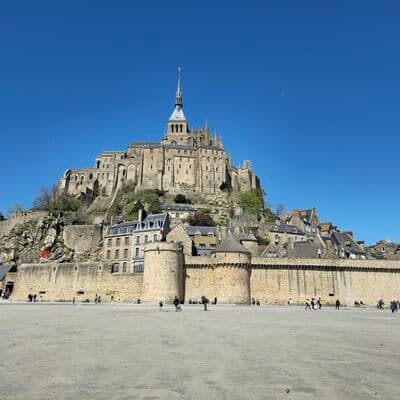
Mont Saint-Michel
Mont-Saint-Michel 2026: What You Need to Know Before You Go
There are places you visit, and then there are places that rearrange something inside you. Mont-Saint-Michel is firmly in the second category. Rising from the tidal flats of Normandy like a medieval fever dream, this granite island topped by a soaring abbey has been pulling pilgrims, artists, and wanderers across the sand for over a thousand years. And despite the crowds, despite the overpriced omelets, despite the fact that your calves will burn from climbing those stone steps -- it delivers. Every single time.
Quick answer: What should you see in Mont-Saint-Michel? Start with the Mont Saint-Michel Abbey at the summit, explore The Marvel (La Merveille) -- a Gothic masterpiece of halls and cloisters, walk the Ramparts for panoramic bay views, wander Grand Rue for shops and restaurants, and time your visit to witness the extraordinary tides in the Tidal Bay.
Who is Mont-Saint-Michel for? History lovers, photographers, architecture nerds, couples looking for something genuinely romantic, and anyone who wants to feel like they have stepped into a medieval manuscript. Families with older kids (8+) will find it magical too. It is one of those rare UNESCO sites that actually lives up to the hype.
The honest truth -- pros and cons:
- Pros: Architecturally jaw-dropping, unlike anything else in Europe, the tidal phenomenon is genuinely thrilling, staying overnight transforms the experience, the surrounding bay is hauntingly beautiful, excellent food culture in the region
- Cons: Day-trip crowds can be suffocating (especially July-August), the island itself is tiny and expensive, accessibility is poor for anyone with mobility issues, the shuttle system from parking to island adds time, and rural Normandy has limited English -- though the island itself caters to tourists
Mont-Saint-Michel Areas: Where to Stay
Where you sleep makes or breaks this trip. Most visitors come as day-trippers, which means they miss the best part: the island at dawn and dusk, when the crowds vanish and the stones seem to glow. Here is a breakdown of your options, from splurge to budget.
On the Island ($$$) -- For the Ultimate Experience
There are only a handful of hotels actually on Mont-Saint-Michel, and they are small, expensive, and book up months in advance. Expect to pay EUR 180-350 (roughly $195-380) per night for a basic double room. The rooms tend to be compact -- these are medieval buildings, after all -- and do not expect elevators or modern amenities. But waking up on the island, stepping outside at 6 AM to empty cobblestone streets with the abbey looming above you in the morning mist? That is priceless. La Mere Poulard and Auberge Saint-Pierre are the most well-known options. Book at least 3-4 months ahead for summer, 6-8 weeks for shoulder season.
La Caserne -- Mainland Village ($$) -- The Golden Middle
This is the small cluster of hotels and restaurants at the foot of the bridge on the mainland side, about 2.5 km from the island. It was developed as part of the major restoration project that removed the old causeway. Hotels here run EUR 100-200 ($110-215) per night, and you get proper modern rooms with parking. The big advantage: you can walk or take the free shuttle to the island in minutes, and you are close enough to pop over for sunset or sunrise without any hassle. Le Relais Saint-Michel has rooms with direct views of the Mont -- watching the Night Illumination from your balcony with a glass of Calvados is hard to beat.
Beauvoir ($-$$) -- Quiet and Authentic
The nearest actual village, about 5 km south. A handful of B&Bs (chambres d'hotes) and small guesthouses, typically EUR 70-120 ($75-130) per night. This is where you start to feel actual Normandy -- stone farmhouses, apple orchards, cows in fields. You will need a car, but parking at Mont-Saint-Michel is only about 10 minutes away. Good choice if you want a slower pace and genuine French countryside atmosphere. English is limited here, so brush up on your "bonjour" and "merci."
Pontorson ($$) -- Budget Base with a Train Station
The nearest town with a proper SNCF train station, about 9 km south. This is your best option if you are arriving by train from Paris or Rennes without a car. Hotels and guesthouses run EUR 60-110 ($65-120) per night. Pontorson itself is a quiet Norman town -- not particularly charming, but functional. There are a few decent brasseries and a supermarket for self-catering. Local bus #A connects Pontorson station to Mont-Saint-Michel (about 20 minutes, EUR 3). The last bus back is usually around 7-8 PM, so check schedules if you want to stay for sunset.
Countryside Chateaux and Manors ($$$) -- For a Special Occasion
Within a 20-30 km radius, you will find several converted manor houses and small chateaux offering luxury stays. Think four-poster beds, manicured gardens, gourmet dining, and absolute silence. Prices range from EUR 200-500+ ($215-540+) per night. These are perfect for honeymoons, anniversaries, or anyone who wants to combine Mont-Saint-Michel with a broader Normandy experience. You will absolutely need a car. La Jacotiere and Chateau de Bouceel are particularly good options.
Saint-Malo ($-$$$) -- Beach Resort, 55 km Away
The walled port city of Saint-Malo is about an hour's drive from Mont-Saint-Michel, and many travelers combine the two. Saint-Malo has a wide range of accommodation from hostels (EUR 25-40) to boutique hotels (EUR 150-250), plus beaches, excellent seafood restaurants, and a lively atmosphere. It makes a good base if you want a more traditional vacation feel with a day trip to the Mont. The drive is easy and scenic. Some organized tours run from Saint-Malo as well. Just be aware that a day trip means you will hit the Mont during peak hours and miss the magical quiet moments.
Best Time to Visit Mont-Saint-Michel
Timing matters enormously here -- not just for weather, but for crowds and tides.
Sweet Spot: May-June and September-October
These are the ideal months. Weather is pleasant (15-22C / 59-72F), daylight hours are long, and while you will not have the place to yourself, it is manageable. Late September and early October bring stunning light for photography and the autumn equinox tides (more on that below). May and June offer wildflowers in the surrounding meadows and the famous salt-meadow lambs are at their best.
High Season: July-August
Be warned: Mont-Saint-Michel receives roughly 2.5 million visitors per year, and a disproportionate number come in July and August. The island's single main street, Grand Rue, becomes a slow-moving human river. Temperatures can hit 28-30C (82-86F), and there is precious little shade on the ramparts. If you must come in summer, arrive before 9 AM or after 5 PM. Staying overnight is practically mandatory to enjoy it. On the plus side, the longest days mean spectacular late sunsets over the bay.
Low Season: November-March
This is when Mont-Saint-Michel shows its true medieval character. Fog rolls across the bay, storms batter the ramparts, and you might have entire sections of the abbey to yourself. Temperatures hover around 5-10C (41-50F), and some island restaurants and shops close or reduce hours. But the atmosphere is incomparable -- brooding, dramatic, almost mystical. Bonus: the abbey is free on the first Sunday of each month from November through March. Bring warm layers and waterproof everything.
The Great Tides: March and September Equinoxes
This is the real spectacle. During the spring and autumn equinoxes (roughly March 20-21 and September 22-23, plus or minus a few days), the tidal coefficient can exceed 110, meaning the water rises over 14 meters (46 feet) and rushes into the bay at startling speed -- sometimes described as "faster than a galloping horse," though in reality it is more like a brisk walk. Still, watching the water encircle the island and turn it back into a true island is extraordinary. Check tide schedules at maree.info well in advance and plan your trip around these dates if possible. The Tidal Bay is never more dramatic than during these events.
Festivals and Events
The Feast of the Archangel Michael (September 29) brings special ceremonies at the abbey. Les Medievales (usually July) features costumed reenactments on the island. The Marathon de la Baie (late May) sees runners crossing the bay itself. And Normandy's various music and cultural festivals in Avranches, Granville, and Saint-Malo provide excellent side entertainment throughout summer.
Mont-Saint-Michel Itinerary: 3 to 7 Days
Most people treat Mont-Saint-Michel as a half-day stop. That is a mistake. The island itself takes a full day to explore properly, and the surrounding region -- from D-Day beaches to medieval towns to oyster villages -- deserves much more. Here are three itinerary options.
3 Days: The Essentials
Day 1: The Island
Arrive by early afternoon and check into your accommodation (ideally on the island or at La Caserne). Walk across the bridge to the island -- yes, walk, it takes 35 minutes but the views are worth it. Spend the afternoon exploring Grand Rue and the lower village. Climb to the Ramparts for sunset views over the bay -- the western ramparts catch the light beautifully. Have dinner on the island (book ahead in summer). If you timed it right, catch the Night Illumination -- the abbey glows against the dark sky from dusk until midnight.
Day 2: The Abbey and the Bay
Be at the Mont Saint-Michel Abbey when it opens at 9:30 AM (9 AM in summer). Allow 2-2.5 hours for a proper visit. The abbey church, the cloisters, the refectory, and especially The Marvel (La Merveille) -- three floors of Gothic halls stacked on the north face of the rock -- are genuinely awe-inspiring. Audio guides (EUR 3) are available in English and add excellent context. After the abbey, grab lunch, then join a guided bay walk in the afternoon. Licensed guides lead groups across the tidal flats, through quicksand zones and river crossings -- it sounds dramatic, and it is. Walks last 2-3 hours, cost EUR 10-15 per adult, and should be booked at least a day ahead. You will get your feet wet and muddy. Wear shorts and bring sandals you can strap on.
Day 3: Saint-Malo and Cancale
Drive to Saint-Malo (55 km, about 1 hour). Spend the morning exploring the walled old town (Intra-Muros) -- walk the ramparts for views of the English Channel, visit the cathedral, browse the shops. After lunch, drive 15 minutes east to Cancale, Brittany's oyster capital. At the Marche aux Huitres along the waterfront, you can buy a dozen oysters for EUR 5-8 and eat them on the seawall with a squeeze of lemon. Bring your own wine and bread. This is one of the great simple food experiences in France. Return to Mont-Saint-Michel area or continue your journey.
5 Days: Adding History and Coast
Days 1-3: As above.
Day 4: D-Day Beaches and Bayeux
Drive east to Bayeux (about 1.5 hours). Start with the Bayeux Tapestry -- 70 meters of 11th-century embroidery telling the story of the Norman Conquest of England. It is far more vivid and detailed than you expect. Allow 1.5 hours including the excellent audio guide (EUR 12 adult). After lunch in charming Bayeux old town, head to the D-Day beaches. Omaha Beach and the American Cemetery at Colleville-sur-Mer (free entry) are profoundly moving -- over 9,000 white crosses overlooking the beach where so many fell. Pointe du Hoc, where Army Rangers scaled 30-meter cliffs under fire, is equally powerful. The craters from naval bombardment are still visible. Allow 3-4 hours for the beaches and cemetery combined.
Day 5: Granville and the Chausey Islands
Drive to Granville (30 km north along the coast), a charming fishing port sometimes called "the Monaco of the North" -- an exaggeration, but the upper town perched on a headland is genuinely attractive. Visit the Christian Dior Museum (the fashion designer grew up here; the clifftop garden alone is worth the EUR 9 entry). In summer (April-September), catch the Jolie France ferry to the Iles Chausey (50 minutes, about EUR 25 return). This tiny granite archipelago has no cars, no crowds, and some of the best tidal pools in Normandy. Pack a picnic and swimming gear. The last ferry back is usually around 5 PM.
7 Days: The Complete Experience
Days 1-5: As above.
Day 6: Dinan and Dinard
Cross into Brittany to visit Dinan (about 1 hour from Mont-Saint-Michel), one of the best-preserved medieval towns in France. The half-timbered houses along Rue du Jerzual, the 14th-century ramparts, and the old port on the River Rance are genuinely stunning -- and far less crowded than Mont-Saint-Michel. Allow 3-4 hours to explore. After lunch, drive 30 minutes north to Dinard, an elegant Belle Epoque beach resort. Walk the Promenade du Clair de Lune along the coast, swim at Plage de l'Ecluse if the weather cooperates, and have cocktails at one of the seafront bars watching the sun set over Saint-Malo across the estuary.
Day 7: Fougeres Castle and Cider Farms
Spend your final day inland. Fougeres (about 1 hour south of Mont-Saint-Michel) has one of the largest medieval fortresses in Europe -- a sprawling castle with 13 towers that Victor Hugo described as "a marvel." Allow 2 hours (EUR 8 adult). The town itself is pleasant for a wander. On the way back, stop at a cidre fermier (farmhouse cider) operation in the countryside south of Avranches. Many welcome drop-ins for tastings -- look for signs reading "Degustation" or "Vente directe." Try the cidre brut (dry), poire (perry/pear cider), and if you are feeling brave, Calvados (apple brandy). Most farms will let you buy bottles for EUR 3-6 -- far cheaper than shops or restaurants. Drive carefully afterward.
Where to Eat: Restaurants and Cafes
Let me be straight with you: eating on the island is expensive. You are paying for the location, not the culinary genius. That said, the region around Mont-Saint-Michel produces some of France's finest ingredients -- salt-meadow lamb, butter, cream, cider, oysters, mussels -- so the raw materials are world-class even when the execution is tourist-oriented.
On the Island
La Mere Poulard ($$$$) -- The most famous restaurant on the island, known for its fluffy omelets beaten over an open wood fire since 1888. Is it worth EUR 35-45 for an omelet? Honestly, it is more spectacle than substance -- you can watch the chefs beating the eggs in copper bowls from the street, and that is genuinely entertaining. The omelet itself is airy and buttery but polarizing. Some love it, others find it underwhelming. Go once for the experience, but do not expect it to be the best meal of your trip. They also serve proper Norman cuisine (lamb, fish) at even higher prices.
La Confiance ($$$) -- A quieter alternative on the island with genuinely good galettes (buckwheat crepes) and seafood. The moules frites are reliable, and the terrace has views toward the bay. Main courses EUR 15-25. Smaller and less hectic than La Mere Poulard.
Les Remparts ($$$) -- Decent Norman cooking with good views from the terrace. The pre-sale lamb is the star here -- if it is on the menu, order it. The prix fixe lunch menu (EUR 22-28) is the best value on the island.
Quick bites: There are several takeaway crepe stands and sandwich shops along Grand Rue. A galette complete (ham, cheese, egg) runs EUR 6-9 and is perfectly adequate fuel for climbing. The island also has a small grocery (epicerie) near the entrance where you can grab water and snacks at only mildly inflated prices.
Mainland -- La Caserne
Le Pre Sale ($$-$$$) -- Named after the famous salt-meadow lamb, and they do it justice. This is probably the best restaurant within walking distance of the Mont without being on the island itself. The lamb shoulder slow-cooked for seven hours is extraordinary. Main courses EUR 18-30. Book for dinner in summer.
La Rotisserie ($$) -- More casual, with rotisserie chicken, salads, and Norman comfort food. Good for families. Main courses EUR 12-20.
Surroundings
Ferme de la Baie ($-$$) -- A working farm near Beauvoir that serves its own lamb, vegetables, and cider. The epitome of farm-to-table. Simple but excellent. Call ahead as hours are irregular.
Pontorson brasseries ($-$$) -- Nothing fancy, but you will find honest plats du jour (daily specials) for EUR 12-15 that are perfectly fine. Le Couesnon and La Creperie Pontorson are reliable choices. Cash is useful here -- some smaller places do not take cards for amounts under EUR 15.
Cancale oyster market ($) -- If you are doing the Saint-Malo day trip, this is unmissable. Oyster stalls line the waterfront. A dozen costs EUR 5-10 depending on size and type. Buy, find a spot on the wall, eat. No plates, no waiters, no fuss. Bring bread, butter, and white wine. Lemons are usually provided. This is arguably the best food experience within a two-hour radius of Mont-Saint-Michel.
Breakfast and Coffee
If you are staying on the island, breakfast is typically included with your hotel (and it is usually good -- fresh croissants, bread, jam, butter, coffee). At La Caserne, hotel breakfasts run EUR 12-18. For coffee specifically, France is not Italy -- expect decent but not exceptional espresso. If you are a specialty coffee addict, bring your own pour-over kit or accept what you get. The nearest proper specialty coffee shop is in Rennes or Saint-Malo.
What to Try: Food of Mont-Saint-Michel
The bay area is a genuine culinary destination. Here are the things you absolutely must eat.
1. Agneau de Pre-Sale (Salt Meadow Lamb) -- The star of the region. Sheep graze on the salt marshes surrounding the bay, eating halophytic grasses and herbs that give the meat a distinctive, slightly saline flavor unlike any lamb you have tasted. It has its own AOC designation (like wine). Order it roasted simply with white beans or with a thyme jus. Available at better restaurants year-round, but best in late spring and autumn. Expect to pay EUR 25-35 for a main course portion.
2. Omelette Mere Poulard -- The iconic souffled omelet, beaten to a froth and cooked in a long-handled copper pan over an open wood fire. Whether it qualifies as a great omelet is debatable -- it is more of a savory souffle. But the technique dates to 1888 and the spectacle of the chefs rhythmically beating the eggs is genuinely fun. Try it once.
3. Galettes de Sarrasin (Buckwheat Crepes) -- You are on the Normandy-Brittany border, and buckwheat crepes are the default quick meal. The galette complete (ham, cheese, egg) is the classic. More adventurous fillings include andouille sausage, goat cheese with honey, or scallops with leek cream. EUR 7-14 depending on filling and venue.
4. Moules de Bouchot (Rope-Grown Mussels) -- Cultivated on wooden stakes (bouchots) in the bay itself. Smaller and sweeter than Dutch or Spanish mussels. Served in a big pot with frites -- moules mariniere (white wine, shallots, cream) is the standard preparation. Look for "Moules de la Baie du Mont-Saint-Michel" on the menu for the genuine local product. EUR 14-20 for a generous pot.
5. Cidre et Poire (Cider and Perry) -- Normandy is cider country. Forget the mass-produced stuff; local farmhouse ciders range from bone-dry (brut) to gently sweet (doux), and the best are complex and fascinating. Poire (perry, made from pears) is lighter and floral. Order a bollee (traditional ceramic cup) with your galette -- this is the correct pairing, not wine. EUR 3-5 per glass, EUR 5-8 per bottle in restaurants.
6. Camembert and Norman Cheeses -- You are in Camembert country. But also try Pont-l'Eveque (washed rind, earthy), Livarot (stronger, nicknamed "The Colonel" for the strips of raffia around it), and Brillat-Savarin (a triple cream that is basically edible butter). Any cheese plate at a decent restaurant will feature these. Buy from a fromagerie, not a supermarket -- the difference is vast.
7. Calvados -- Apple brandy aged in oak barrels, and Normandy's most famous spirit. Young Calvados (2-3 years) is fiery and fruity; aged Calvados (10+ years) is smooth, complex, and dangerously drinkable. The trou normand tradition -- a shot of Calvados between courses to "make room" -- is alive and well. A glass runs EUR 5-12 depending on age and venue. If buying a bottle, expect EUR 20-50 for something good.
8. Salicorne (Samphire/Sea Asparagus) -- This bright green, crunchy sea vegetable grows wild in the salt marshes. It is often served as a side dish, lightly sauteed in butter, or pickled. Salty, fresh, and uniquely coastal. You will find it accompanying lamb or fish at better restaurants.
What NOT to order: Avoid the overpriced "tourist menus" on Grand Rue offering generic pasta or burgers -- you are in one of France's great food regions, eat like it. The pre-packaged "biscuits du Mont-Saint-Michel" sold in every souvenir shop are mediocre industrial cookies. And avoid any restaurant with photos of food on the menu -- a universal red flag in France.
For vegetarians: This is a meat-and-seafood region, so options are limited but exist. Galettes can be filled with cheese, mushrooms, or ratatouille. Most restaurants will offer a salad Chevre chaud (warm goat cheese salad). The cheeses and ciders are obviously meat-free. Ask for "plat vegetarien" and most places will accommodate you, though do not expect the creativity you would find in Paris or London.
Mont-Saint-Michel Secrets: Local Tips
After multiple visits in different seasons, here is what I wish someone had told me the first time.
1. Stay overnight. I cannot stress this enough. The island transforms completely after 6 PM when the day-trippers leave. By 8 PM, you are sharing the cobblestones with maybe fifty other people instead of five thousand. The Night Illumination turns the abbey into something from a fairy tale, and sunrise over the bay with no one around is worth the entire trip. Even one night makes an enormous difference.
2. Free parking after 7 PM. The main parking area charges EUR 14.90 per day (24-hour period), but if you arrive after 7 PM, parking is free until the next morning. If you are staying overnight, this saves you a day's fee. Motorcycles park free at all times.
3. Free abbey entry on the first Sunday, November through March. The abbey normally costs EUR 11 for adults (free for under-18s and EU residents under 26). But from November 1 to March 31, the first Sunday of each month is free for everyone. Combined with low-season atmosphere, this is an unbeatable deal.
4. Detour from Grand Rue. Most visitors trudge up Grand Rue, the main commercial street, and never explore anything else. Take the rampart path instead -- turn left after the main gate and follow the Ramparts along the south and east sides. You will find quiet gardens, stunning bay views, and a fraction of the people. The north side of the island (below La Merveille) is particularly peaceful.
5. Do not skip Saint-Pierre Church. Everyone rushes to the abbey and overlooks this tiny parish church halfway up the island. It is free to enter, usually empty, and contains a beautiful silver statue of Saint Michael. Light a candle and catch your breath before the final climb.
6. Check the tide schedule. This is not optional. The bay's tides are among the most dramatic in the world -- the difference between high and low tide can exceed 14 meters. During the highest tides (grandes marees), the island is completely surrounded by water. Check maree.info for exact times and coefficients. A coefficient over 100 means a major tide; over 110 is exceptional. The incoming tide is best watched from the bridge or the western ramparts.
7. Walk the bridge, skip the shuttle. The free shuttle from the parking area runs every few minutes, but the 2.5 km walk (or the horse-drawn carriage -- la maringote -- for EUR 6.20 one way) is far more atmospheric. The bridge is pedestrian-friendly, gives you time to absorb the approaching silhouette, and offers great photo angles. Allow 35 minutes on foot.
8. Wear proper shoes. The island is essentially a steep pile of granite steps, cobblestones, and uneven medieval paths. Flip-flops, heels, and smooth-soled shoes are a bad idea. Comfortable walking shoes with grip are essential. If you are doing a bay walk, bring shoes you do not mind getting muddy and wet -- old trainers or water sandals work well.
9. Bring water and snacks. A bottle of water on the island costs EUR 3-4. Bring your own (refill at the public taps near the entrance) and a few snacks. There is no supermarket on the island, just overpriced tourist shops.
10. Best photo spots. For the classic postcard view of the full island, stop at the viewpoint on the D976 road approaching from the south, about 3 km before the parking area. For reflections, the flooded salt meadows at high tide (accessible from the path near the dam/barrage on the Couesnon river) are extraordinary. On the island itself, the abbey terrace looking west at sunset and the north ramparts looking toward Tombelaine are your best bets.
11. Tombelaine: the secret island. That smaller island visible 3.5 km north of Mont-Saint-Michel is Tombelaine -- an uninhabited granite rock that was once a rival fortification. It is a protected bird sanctuary and landing is prohibited from April to July (nesting season), but guided walks across the bay to its base are available during other months. Ask at the Maison de la Baie visitor center. Few tourists know about this, and the perspective looking back at Mont-Saint-Michel from Tombelaine is magnificent.
12. Learn three French phrases. "Bonjour" (always greet before asking anything -- this is non-negotiable in France), "L'addition, s'il vous plait" (the bill, please), and "Ou sont les toilettes?" (where are the toilets?). These will get you through 90% of situations. Staff on the island mostly speak English; once you move to smaller towns, French becomes more important.
Transport and Connectivity
Getting to Mont-Saint-Michel
From Paris by car: 3.5-4 hours via the A13/A84 motorways (about 360 km). The route is straightforward and well-signposted. Tolls total roughly EUR 25-30 one way. Parking at Mont-Saint-Michel costs EUR 14.90 per 24-hour period (free after 7 PM until the next morning). The parking area is large and rarely fills completely, even in high season, though you may end up far from the shuttle stop on busy days.
From Paris by train: Take the TGV from Paris Montparnasse to Rennes (1 hour 25 minutes, EUR 30-80 depending on booking time) or to Dol-de-Bretagne (2 hours 40 minutes). From Rennes, transfer to the Keolis bus (line MSM, about 1 hour 15 minutes, EUR 15). From Dol-de-Bretagne, a bus connects directly. Total journey: about 4-4.5 hours. Book TGV tickets on sncf-connect.com as early as possible -- advance fares are dramatically cheaper. There is also a direct TGV to Pontorson (via Villedieu-les-Poeles change) with connecting bus from Pontorson station.
From London: Eurostar to Paris Montparnasse (change at Gare du Nord, metro to Montparnasse), then TGV + bus as above. Total about 6-7 hours. Alternatively, fly to Rennes (seasonal Ryanair flights) or to Dinard airport (near Saint-Malo, seasonal flights from London Stansted), then rent a car or take a bus.
From the US (East Coast): Fly to Paris CDG, then train or rental car. Some travelers fly into Nantes (4 hours drive) or Jersey (Channel Islands) with a ferry connection to Saint-Malo. Total transit from NYC is typically 10-12 hours including connections.
From Saint-Malo: About 55 km, roughly 1 hour by car. Keolis bus available but infrequent (check schedules). This is an easy and scenic drive.
From Rennes: About 80 km, roughly 1 hour 15 minutes by car. The Keolis express bus runs several times daily.
Parking to Island: Last Mile
You cannot drive to the island. Park in the designated lot, then choose your approach:
- Free shuttle (navette): Runs every few minutes from the parking area to within 400 meters of the island gate. Takes about 12 minutes. Accessible for wheelchairs and strollers. Runs from early morning until midnight in summer, shorter hours in winter.
- Horse-drawn carriage (maringote): EUR 6.20 one way. A charming but slow alternative. Runs from the shuttle drop-off area to the island entrance. Children love it.
- Walk: 2.5 km from parking to island, about 35 minutes at a relaxed pace. The purpose-built bridge (completed 2014) is flat, wide, and offers the best views of the approaching island. This is the recommended option for anyone physically able.
Bay Walks with Licensed Guides
Do NOT attempt to cross the bay on your own. The tidal flats contain areas of quicksand (lises), the tide comes in fast, and the river channels shift constantly. Every few years, someone gets into serious trouble. Licensed guides (guides de la baie) lead safe, fascinating walks across the bay -- you will learn about the ecosystem, cross rivers, sink knee-deep in mud (intentionally, it is fun), and see the Mont from perspectives most visitors never experience. Walks cost EUR 10-18 per adult, last 2-4 hours depending on the route, and should be booked at least a day ahead in high season. Chemins de la Baie and Decouverte de la Baie are reputable operators. Wear clothes you do not mind getting muddy and bring spare shoes for the car afterward.
WiFi, SIM, and Connectivity
WiFi is available at most hotels, both on the island and at La Caserne, though speeds are not blazing -- do not plan on streaming video. The island has decent 4G/5G mobile coverage from major French carriers (Orange, SFR, Bouygues, Free). If you need data, a French prepaid SIM from Orange (Mobicarte) or Free costs EUR 10-20 for generous data. Even better: buy an eSIM before you leave home -- Airalo, Holafly, and similar services offer France/Europe plans from about $5-15 for a few GB. Activate it at the airport and you are connected immediately.
Useful Apps
- Maree.info -- Essential for tide times and coefficients. The single most important app for your visit.
- SNCF Connect -- Train booking and schedules for all French rail.
- BlaBlaCar -- Ridesharing app popular in France. Can be useful for getting to/from Mont-Saint-Michel if public transport does not align with your schedule.
- Google Maps / Waze -- Both work well for driving navigation in France. Waze is particularly good for avoiding speed cameras and traffic.
- Google Translate -- The camera feature (point at French text for instant translation) is invaluable for menus, signs, and schedules.
Who Is Mont-Saint-Michel For: Summary
Ideal for: History and architecture enthusiasts, photographers (the light and compositions are extraordinary), couples seeking genuine romance (not manufactured resort romance), families with children old enough to handle stairs and walking, anyone who appreciates places where nature and human achievement intersect dramatically.
Not ideal for: Beach holidaymakers (the bay is mud flats, not sandy beaches -- head to Saint-Malo or Dinard for that), nightlife seekers (the island is asleep by 10 PM), visitors with significant mobility challenges (the island is steep, cobblestoned, and has minimal accessibility infrastructure), and travelers on very tight budgets (though it can be done cheaply with a day trip from Pontorson and a packed lunch).
How much time? Minimum: a half-day visit (but you will wish you had stayed longer). Optimal: 1-2 nights, giving you time to experience the island at its best and explore the immediate surroundings. Maximum: 5-7 days if you combine it with Saint-Malo, D-Day beaches, Dinan, and the Norman countryside. Beyond a week, you are really doing a Normandy-Brittany trip with Mont-Saint-Michel as the anchor -- which is an excellent idea.