Nara
Nara 2026: What to Know Before You Go
Nara is the kind of place that makes you wonder why everyone rushes to Kyoto and skips it entirely. Just 45 minutes from Osaka and 35 from Kyoto, this compact former capital of Japan packs more UNESCO World Heritage sites per square mile than almost anywhere in the country. It was the seat of Japanese imperial power from 710 to 784 AD, and the temples, shrines, and gardens from that era are not just preserved - they are alive, functioning, and surrounded by over 1,200 freely roaming deer that bow to you for crackers.
The quick version: Nara is a mid-sized city in the Kansai region where you can walk from a 1,300-year-old wooden temple housing a 15-meter bronze Buddha to a quiet garden to a street food alley - all within an hour. Most day-trippers from Kyoto or Osaka see Todai-ji Temple and the deer and leave. That is a mistake. Nara rewards those who stay overnight, wander its backstreets, and eat its underrated food.
Why Nara works:
- Walkable - the main sights cluster within a 2 km radius of the train stations
- Cheaper than Kyoto or Osaka for accommodation and food
- Far less crowded, especially mornings and evenings when day-trippers leave
- The deer interaction is genuinely unique - nowhere else in Japan offers this
- World-class temples without the ticket lines of Kyoto's famous spots
The honest downsides:
- Nightlife is nearly nonexistent - the city sleeps early
- Summer heat and humidity (July-August) can be brutal
- Some attractions close by 4:30-5:00 PM, limiting evening sightseeing
- Restaurant options thin out after 8:00 PM outside the station areas
- The deer can be aggressive with food - more on that later
Nara Neighborhoods: Where to Stay
Nara is not a big city, which means your neighborhood choice affects convenience more than safety or vibe. Here are the five zones worth considering, each with a different personality and price point.
Naramachi (Historic Quarter) - $$-$$$
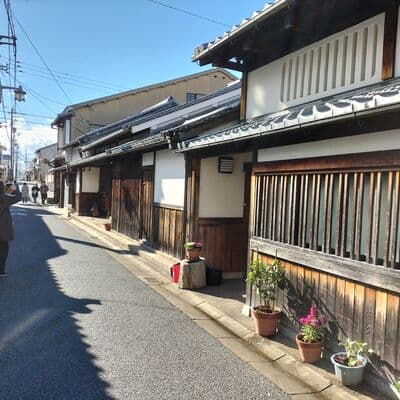
Naramachi is the old merchant district south of Kofuku-ji Temple, a grid of narrow streets lined with converted machiya (traditional wooden townhouses). Many of these have been turned into guesthouses, cafes, and craft shops. Staying here puts you within a 10-minute walk of both major temple complexes and Nara Park. Expect to pay 8,000-18,000 JPY ($53-$120) per night for a machiya guesthouse or boutique ryokan. The tradeoff: streets are quiet after dark and the nearest convenience store might be a 5-minute walk. Best for couples and anyone who values atmosphere over convenience. Recommended spots include Nara Backpackers (budget end) and various machiya-stay properties bookable through Japanese platforms like Jalan or Rakuten Travel.
Kintetsu Nara Station Area - $-$$
This is the practical choice and where most savvy travelers end up. Kintetsu Nara Station sits closer to the sights than JR Nara (about 5 minutes walk to the park versus 15), and the surrounding streets - particularly Higashimuki and Mochiidono shopping arcades - are packed with restaurants, drugstores, and souvenir shops. Hotels here run 6,000-15,000 JPY ($40-$100) per night. You get chains like Dormy Inn (with onsen baths on the top floor), Super Hotel, and Comfort Hotel. The area stays lively until about 9 PM. Best for first-timers and solo travelers who want easy access to everything.
JR Nara Station Area - $
JR Nara Station is about 1 km southwest of Kintetsu, connected by a pleasant walk through Sanjo-dori street. The hotels here skew budget - 4,500-10,000 JPY ($30-$67) per night - and include reliable chains like Toyoko Inn and Hotel Nikko Nara (the fanciest option at the JR end). The station itself connects to Osaka via the Yamatoji Line (about 50 minutes, covered by JR Pass) and to Kyoto via the Miyakoji Rapid (also JR Pass compatible). If you are using a JR Pass and doing lots of day trips, this location saves you money twice: cheaper rooms and free train rides. The downside is the 15-20 minute walk to Todai-ji and the park, though city buses from the station reach there in 8 minutes (220 JPY / $1.50).
Nara Park Area - $$$
A handful of premium ryokan and hotels sit inside or adjacent to Nara Park itself. The standout is Nara Hotel, a grand Western-style property built in 1909 that has hosted Einstein, Chaplin, and multiple emperors. Rooms start around 25,000-45,000 JPY ($167-$300) per night. There are also a few traditional ryokan on the park's eastern edge near Kasuga-taisha Shrine, where you wake up to deer grazing outside your window. This zone is for splurgers and those celebrating special occasions. The morning experience - walking through a misty park with deer before any tourists arrive - is genuinely magical and worth the premium if your budget allows.
Nishinokyo Area - $
About 20 minutes west of central Nara by bus or bicycle, Nishinokyo is home to two spectacular UNESCO temples - Yakushi-ji and Toshodai-ji - that get a fraction of the visitors of their eastern counterparts. A few small guesthouses and minshuku (family-run inns) operate here at 4,000-7,000 JPY ($27-$47) per night. You will need a bicycle or bus pass to reach the main sights, but you gain a residential Japanese neighborhood experience that the central areas cannot provide. Best for repeat visitors to Nara, long-term budget travelers, or anyone who actively wants to avoid tourist zones.
Best Time to Visit Nara
Nara is a year-round destination, but each season offers a fundamentally different experience. Here is what to expect, month by month.
Spring (Late March - May)
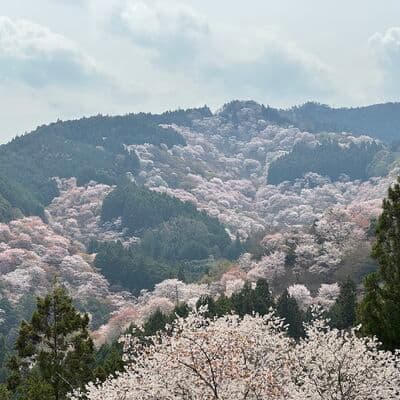
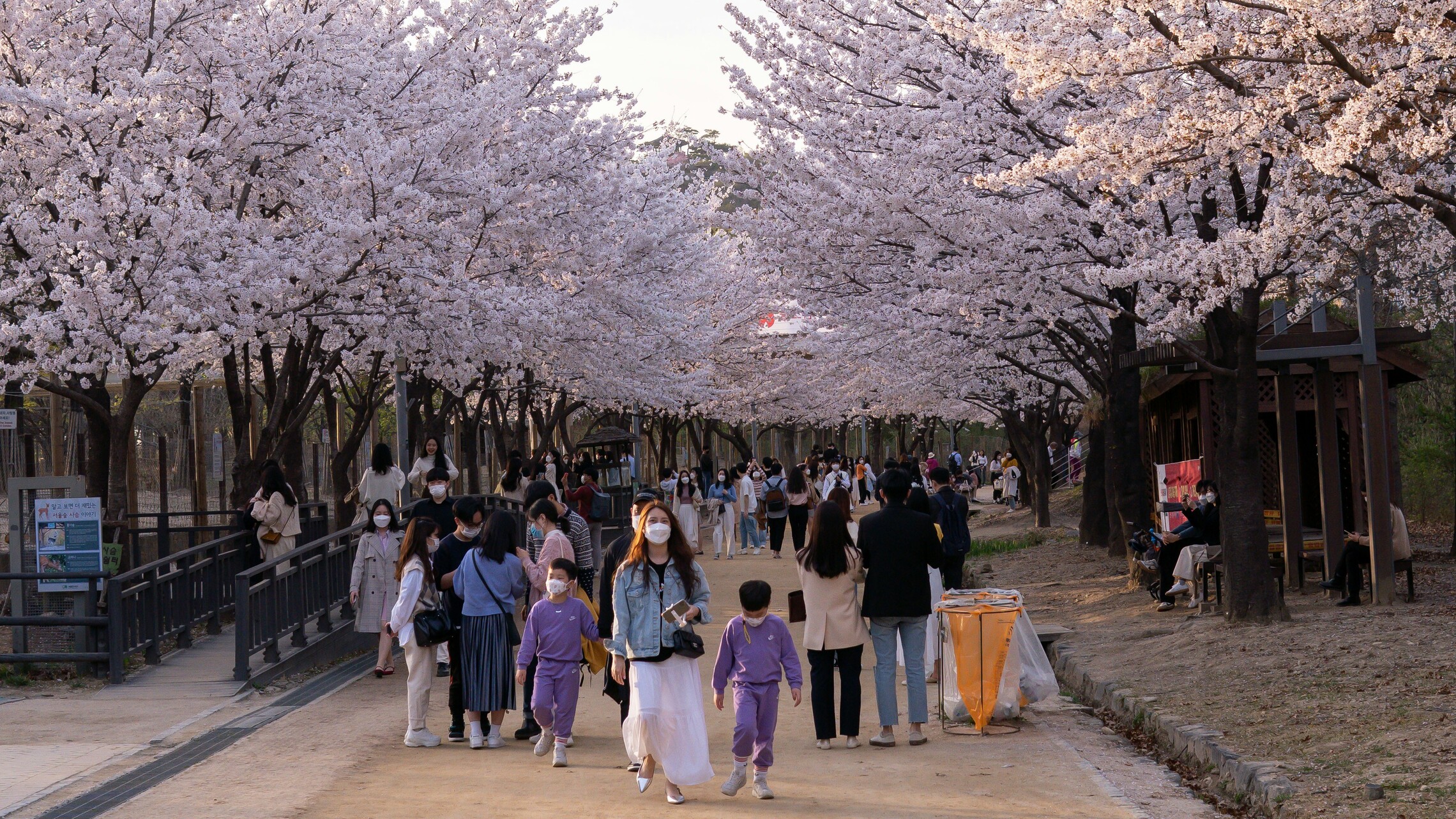
Peak season, and for good reason. Cherry blossoms hit Nara Park around late March to early April, with the deer-and-sakura photo opportunities drawing huge crowds. The real insider move is heading to Mount Yoshino, about 90 minutes south by train, where 30,000 cherry trees bloom across an entire mountainside in waves from lower to upper slopes - it is considered the single best cherry blossom spot in all of Japan. Temperatures hover around 15-20C (59-68F). Book accommodation at least 2-3 months ahead for late March through mid-April. May is excellent: warm, green, fewer crowds than April, and prices drop.
Summer (June - August)
Hot and humid - daily highs of 30-35C (86-95F) with oppressive humidity. June starts with rainy season (tsuyu), which lasts about 3 weeks of intermittent rain. July and August are sweltering but offer unique events: the Mantoro lantern festival at Kasuga-taisha in mid-August lights up 3,000 stone and bronze lanterns along the shrine approach - hauntingly beautiful and one of Nara's most atmospheric nights. Hotel prices are actually lower in summer, and you will find temples nearly empty on weekday mornings. Bring a hand towel, stay hydrated, and start early.
Autumn (September - November)
The second peak season. Autumn foliage in Nara peaks from mid-November to early December, later than Tokyo. The maples in Isuien Garden and around Kasuga-taisha's primeval forest turn spectacular shades of red and gold. Temperatures are comfortable - 12-22C (54-72F) - and the light is beautiful for photography. Late October through November weekends get busy, but nothing like Kyoto's autumn crush. September is underrated: still warm, typhoon risk exists but is manageable, and tourist numbers are low.
Winter (December - February)
Nara's quiet secret. Temperatures drop to 2-8C (36-46F) with occasional frost but almost never snow in the city. The annual Shikayose deer gathering ceremony in mid-December is extraordinary: a musician plays a French horn to summon hundreds of deer across the park. The Wakakusa Yamayaki mountain burning festival in late January sets an entire hillside ablaze in a controlled fire - visible across the city. Hotel prices hit their annual low. If you do not mind bundling up, winter Nara offers crowd-free temples, crisp air, and a contemplative atmosphere that matches the ancient setting perfectly.
Nara Itinerary: 1 to 5 Days
Most visitors give Nara half a day. That is enough to see exactly one temple and feel rushed doing it. Here is how to actually do it right, depending on your available time.
Day 1: The Essential Circuit
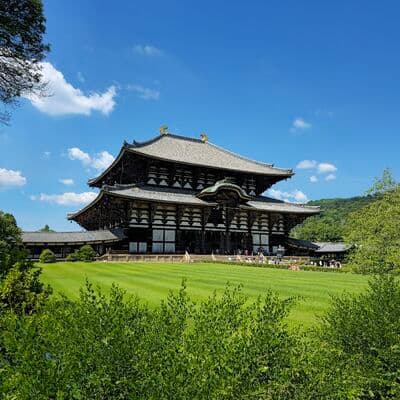
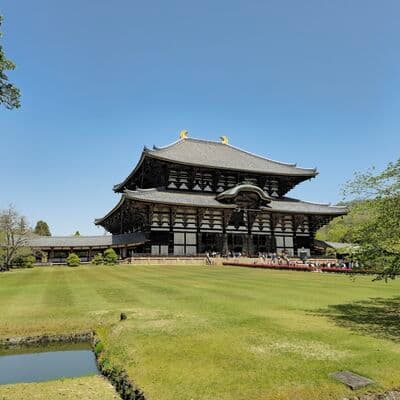
Start early - ideally arrive by 8:30 AM. Walk from Kintetsu Nara Station east through the park to Todai-ji Temple (entry: 600 JPY / $4, opens 8:00 AM April-October, 8:00 AM November-March). The Great Buddha Hall (Daibutsuden) is the world's largest wooden building and houses a 15-meter bronze Buddha cast in 752 AD. Go early because by 10 AM the tour groups arrive and the hall becomes shoulder-to-shoulder. Take your time here - the scale genuinely overwhelms in person.
From Todai-ji, walk south through Nara Park. Buy a stack of deer crackers (shika senbei, 200 JPY / $1.30 per bundle) and feed the deer. Technique matters: break crackers into small pieces, hold them high, and bow to the deer - they bow back. Hide the rest behind your back or the deer will mob you. This is not a joke; they can be pushy. Move away from the cracker vendors where the most aggressive deer congregate.
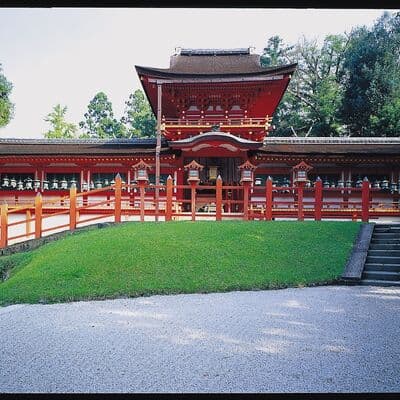
Continue south to Kasuga-taisha Shrine (main hall entry: 500 JPY / $3.30). The approach through a forest path lined with nearly 2,000 stone lanterns is the highlight - take the longer path through the woods rather than the direct road. Inside, the shrine's 1,000 bronze lanterns create an otherworldly atmosphere.
For lunch, head to the Higashimuki arcade near Kintetsu Station. Grab kakinoha-zushi (mackerel sushi wrapped in persimmon leaves) from Hiraso - it is a takeaway-friendly Nara specialty and costs about 800-1,200 JPY ($5-$8) for a set.
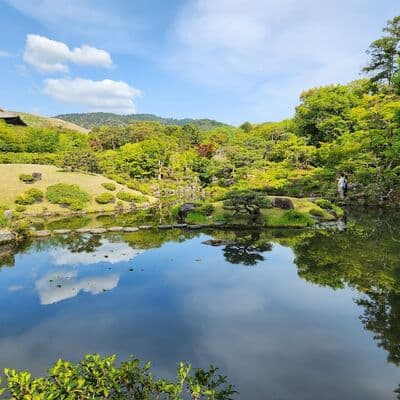
Afternoon: visit Isuien Garden (entry: 1,200 JPY / $8, includes the adjacent Neiraku Art Museum). This is the finest stroll garden in Nara, designed to 'borrow' the scenery of Todai-ji's roof and Mount Wakakusa as part of its landscape. Spring and autumn are peak beauty, but it is gorgeous in any season. Budget 45-60 minutes.
End the day exploring Naramachi. Wander without a specific plan - duck into machiya that have been converted to galleries, find a craft sake bar, and notice the small red cloth charms (migawari-zaru) hanging from house eaves. Dinner in Naramachi at one of the small izakaya or at Kura (excellent local fare, expect 2,500-4,000 JPY / $17-$27 per person with a drink).
Day 2: Deeper Into History
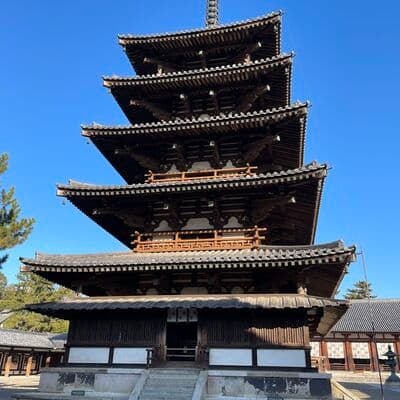
Morning: take the Kintetsu or JR line to Horyuji Temple (30 minutes by bus from JR Horyuji station, entry: 1,500 JPY / $10). This is the oldest surviving wooden structure on Earth - built in the early 7th century, predating Todai-ji by over a century. The five-story pagoda, the Main Hall, and the Treasure Gallery alone justify the trip. Budget 2-2.5 hours including travel.
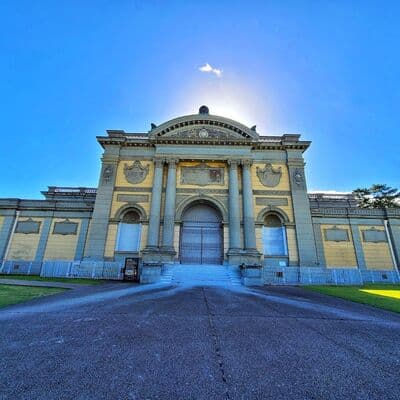
Afternoon: return to central Nara and visit the Nara National Museum (entry: 700 JPY / $4.70). The permanent Buddhist sculpture gallery is world-class - row after row of statues spanning 1,400 years. The special exhibition hall hosts rotating shows that are often outstanding. Allow 1.5-2 hours.
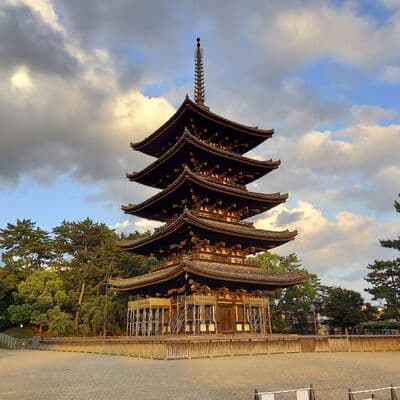
From the museum, walk to Kofuku-ji Temple. The five-story pagoda (the second tallest in Japan) is visible from across Sarusawa Pond - one of Nara's most iconic viewpoints, especially at sunset when the pagoda reflects in the still water. The National Treasure Hall (entry: 700 JPY / $4.70) houses an extraordinary collection of Buddhist statuary including the famous three-headed, six-armed Ashura figure from 734 AD.
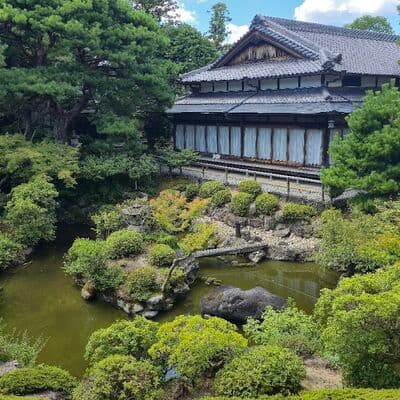
If you have energy left, walk to Yoshiki-en Garden (free for foreign passport holders - just show your passport at the gate). This is three gardens in one: a moss garden, a pond garden, and a tea ceremony garden. Far fewer visitors than Isuien despite being right next door. A quiet end to a temple-heavy day.
Day 3: Beyond Central Nara
Two options depending on your interests:
Option A: Mount Yoshino - best in cherry blossom season (early April) but rewarding year-round. Take the Kintetsu line from Nara to Yoshino (about 90 minutes, 1,000 JPY / $6.70 one way). The mountain is a pilgrimage site dotted with temples, ryokan, and hiking trails. In spring, the 30,000 cherry trees bloom in four stages from base to summit over a 2-3 week period. Even without blossoms, the mountain offers excellent hiking, the ancient Kinpusen-ji Temple (one of the most important yamabushi mountain asceticism sites in Japan), and panoramic views. Pack lunch - restaurants on the mountain are limited and close early.
Option B: Asuka Village - Japan's true original capital, 40 minutes south of Nara by Kintetsu train. Rent a bicycle at the station (800-1,000 JPY / $5-$7 per day) and pedal through rice paddies to ancient burial mounds, the mysterious Ishibutai megalithic tomb, and the Takamatsuzuka Tomb murals. This is rural Japan at its most authentic - almost no tourists, farming villages, and history stretching back to the 6th century. Combine well with Yoshino if you start very early.
Days 4-5: Off the Tourist Map
Day 4: Yagyu Village and the Sword Trail. The Yagyu clan were legendary swordsmen who served the Tokugawa shoguns. Their village, about 45 minutes northeast of Nara by bus, is connected to the city by an ancient hiking trail (the Takisaka-no-michi/Yagyu Kaido path, roughly 15 km one way). You can hike one direction and bus the other. Along the trail: moss-covered stone Buddhas carved into boulders, a bamboo forest, abandoned farmhouses, and almost no other hikers. In Yagyu itself, visit the family dojo grounds, the small museum, and stop for tea at one of the village's few shops. This is a full day activity - bring water, snacks, and proper shoes.
Day 5: Dorogawa Onsen and Mitarai Canyon. About two hours south of Nara, Dorogawa is a tiny hot spring town in the mountains where yamabushi (mountain monks) have gathered for centuries. The Mitarai Canyon hike (about 7 km, 2.5 hours, easy-moderate) follows a turquoise river through gorges and over suspension bridges. After hiking, soak in one of the public onsen (600-800 JPY / $4-$5) and eat tofu-centric mountain cuisine. Not easy to reach without a car, but possible by combining Kintetsu train to Shimoichiguchi and then a bus. Check schedules in advance - buses run infrequently.
Where to Eat in Nara
Nara is not a food destination the way Osaka is, and anyone who tells you otherwise is being generous. But it has genuine specialties, excellent value, and a handful of places that would hold their own in any Japanese city. Here is where to find them.
Street Food and Quick Bites
Nakatanidou (Sanjo-dori, near Kintetsu Station) - famous for their yomogi mochi (mugwort rice cakes), hand-pounded in a dramatic high-speed performance that draws crowds throughout the day. The pounding happens roughly every 30-45 minutes; the mochi is soft, warm, and costs 150 JPY ($1) per piece. This is the single most popular street food stop in Nara, and it is worth the brief wait.
Higashimuki and Mochiidono arcades - covered shopping streets near Kintetsu Station with takoyaki stands, dango vendors, and small shops selling kakinoha-zushi. Lunch here easily stays under 1,000 JPY ($6.70). Look for the small shops making warabi mochi (bracken starch jelly dusted in kinako powder) fresh to order.
Deer cracker vendors - obviously not for you. But worth noting: the official shika senbei are rice bran crackers with zero seasoning. Some tourists try them. Do not be that tourist.
Local Restaurants (Budget to Mid-Range)
Mangyoku (Naramachi) - a small family-run place serving home-style Nara cuisine. The daily set lunch (1,200-1,800 JPY / $8-$12) typically includes a main dish, rice, pickles (including narazuke, Nara's famous sake-lees pickles), miso soup, and a small side. Fills up fast at lunch - arrive by 11:30 or expect a wait. Cash only.
Kura (Naramachi) - an izakaya in a converted storehouse serving local sake and seasonal small plates. The atmosphere is excellent - exposed wooden beams, warm lighting, a long counter where you can watch the kitchen. Expect 2,500-4,000 JPY ($17-$27) per person with drinks. Reservations recommended on weekends. They have a small English menu.
Kasuga Bento - multiple shops near Kasuga-taisha sell bento boxes designed for park picnics. A solid choice for a lunch between temples. Budget 800-1,500 JPY ($5-$10).
Mid-Range and Special Meals
Tsukihitei (near Nara Park) - kaiseki-style lunch sets in a beautiful traditional building with garden views. The lunch courses (3,500-6,000 JPY / $23-$40) are seasonal and beautifully presented. Dinner courses start around 8,000 JPY ($53). Reservations essential. One of the few restaurants in Nara where the setting matches the quality of the food.
Tengyokudo (Naramachi) - a confectionery that has been operating since the Edo period, specializing in traditional Japanese sweets and matcha. Not a full meal, but their seasonal wagashi with tea (600-900 JPY / $4-$6) is an essential Nara experience. The building itself, with its deep wooden interior and garden, is worth the visit even if you are not hungry.
Fukuden - Buddhist vegetarian cuisine (shojin ryori) served in courses near Todai-ji. A full vegetarian lunch course runs 3,000-5,000 JPY ($20-$33). This is not trendy plant-based food - it is a centuries-old culinary tradition tied to temple life, delicate and thoughtful. Good for vegetarians and vegans, though note that some dishes use dashi (fish stock) - ask to confirm if this matters to you.
Cafes and Tea
Nara has a surprisingly strong cafe scene. Rokumei Coffee near Naramachi is a specialty roaster serving single-origin pour-overs (500-700 JPY / $3-$5). Cafe Kotodama occupies a 100-year-old building with a courtyard garden. For traditional Japanese tea, find one of the small tea houses inside Isuien Garden or Yoshiki-en Garden where matcha is served with a sweet overlooking the garden - 500-800 JPY ($3-$5) and utterly peaceful.
Must-Try Nara Foods
Nara has its own food identity, distinct from neighboring Osaka and Kyoto. These are the dishes and products specific to the region that you will not find easily elsewhere.
Kakinoha-zushi - mackerel (or salmon) pressed sushi wrapped in persimmon leaves. The leaves are not eaten - they serve as natural preservative and give the sushi a subtle fragrance. Originally developed as a way to transport fish from the coast to landlocked Nara. Hiraso and Tanaka are the two most established brands. A box of 8-12 pieces runs 1,000-1,800 JPY ($7-$12). Eat at room temperature, not cold. This is the single most representative Nara food and makes an excellent train snack for your departure.
Yomogi Mochi - rice cakes made with Japanese mugwort, giving them a distinctive green color and herbaceous flavor. Nakatanidou's version (hand-pounded, served warm with sweet red bean filling) is the benchmark. Available from multiple shops along Sanjo-dori. About 150-200 JPY ($1-$1.30) per piece.
Chagayu - rice porridge cooked in roasted green tea. A traditional Nara breakfast dish with roots in temple cuisine, soothing and simple. Some ryokan serve it as part of the morning meal. The flavor is gentle - think savory tea-infused congee. Not glamorous, but authentically local.
Miwa Somen - extremely thin wheat noodles from the Miwa area south of Nara city. Served cold in summer with dipping sauce, or hot in broth in winter. The best versions have an almost silk-like texture. Several restaurants in Naramachi serve them. A cold somen set in summer runs about 900-1,300 JPY ($6-$9).
Narazuke - vegetables (typically gourd, cucumber, or ginger) pickled in sake lees for months or even years. The result is deeply flavored, slightly alcoholic, and an acquired taste. You will find narazuke shops throughout the city selling vacuum-packed versions as souvenirs. Try before you buy - some shops offer samples. A small pack costs 500-1,200 JPY ($3-$8). Either you love it or you do not; there is no middle ground.
Kuzu Mochi and Kuzu Kiri - Yoshino, south of Nara, produces Japan's finest kuzu (arrowroot starch). Kuzu mochi is a translucent, cool jelly with a delicate texture unlike anything made with regular starch. Kuzu kiri (cut noodle-style) is served cold with brown sugar syrup. Available at tea houses and confectioneries throughout Nara. Around 600-900 JPY ($4-$6) per serving.
Kakigori (Shaved Ice) - Nara has become a kakigori destination in recent years. Housekiya near Kintetsu Station and several Naramachi cafes serve elaborate shaved ice creations using natural syrups, local matcha, and seasonal fruits. Summer-only at most places. A premium kakigori runs 800-1,500 JPY ($5-$10). The texture of properly made kakigori - powdery, fluffy, nothing like a Western snow cone - is worth experiencing at least once.
Yamato Yasai - heirloom vegetables unique to the Nara (Yamato) region. You will encounter these in upscale restaurants and ryokan meals: Yamato-mana greens, Tsukinose taro, Shibukawa chestnuts, and others. Not something you seek out independently, but worth appreciating when they appear on your plate - they represent pre-industrial agricultural varieties that survived here when other regions modernized their crops.
Local Secrets and Practical Tips
These are the things that separate a good Nara visit from a great one. Some are well-known to repeat visitors; most are not in guidebooks.
- Stay overnight. This is the single best advice anyone can give you about Nara. By 5 PM, the day-trip crowds from Kyoto and Osaka vanish. The temples close, but the park, the deer, and the streets become yours. Dawn in Nara Park with only deer and mist is one of the most serene experiences in Japan. Even one night transforms the visit.
- Feed the deer strategically. Buy crackers away from the main vendor stands near Todai-ji. The deer near those stands are the most aggressive - they have learned that tourists with crackers near the vendors are easy targets. Walk 200 meters into the park before feeding. The deer further from the tourist path are calmer and more likely to bow politely. Also: the deer near Kasuga-taisha are generally gentler than the Todai-ji crowd.
- Yoshiki-en Garden is free for foreigners. Show your non-Japanese passport at the entrance and you walk in free. It is right next to Isuien Garden (which costs 1,200 JPY) and arguably just as beautiful, with three distinct garden styles. Almost empty on weekdays. One of the best free experiences in all of Kansai.
- Take Kintetsu, not JR, for most trips. The Kintetsu Nara line is faster and more convenient than JR for Osaka-Nara and Kyoto-Nara connections. Kintetsu Nara Station is also closer to the sights. The exception: if you have a JR Pass, use it - the JR Miyakoji Rapid to Kyoto and Yamatoji Line to Osaka are included. But if buying individual tickets, Kintetsu wins on time and station location. Kintetsu express to Kyoto: 35 minutes, 760 JPY ($5). Kintetsu express to Osaka-Namba: 40 minutes, 680 JPY ($4.50).
- Attend the Shikayose deer gathering (December-March). Every morning at 10 AM from mid-December through March, a musician plays a natural horn to summon deer from across the park to a central gathering point near Tobihino Field. Hundreds of deer come running - it is surreal and photogenic. Free to watch. Arrive by 9:45 AM for a good viewing spot. This tradition dates back to 1892.
- Visit Hokke-do (Sangatsudo) at Todai-ji. Most visitors see the Great Buddha Hall and leave. Walk 5 minutes uphill to Hokke-do, the oldest building in the Todai-ji complex (dating to 733 AD). Inside is a breathtaking collection of Nara-period statues - the dry-lacquer Fukukenjaku Kannon surrounded by guardian figures is one of the finest sculptural ensembles in Japan. Entry: 600 JPY ($4). Fraction of the crowds of the main hall.
- Find Ukimido at dusk. This small hexagonal pavilion sits on Sagi Pond in the southern part of the park. It is illuminated at night and the reflection in the still water is one of Nara's most photographed scenes. Almost no one visits during the day; the magic happens at twilight. Free. About a 15-minute walk south from Kofuku-ji.
- Try Nara sake. Nara is considered the birthplace of Japanese sake - the Bodaimoto brewing method originated at Shoryaku-ji temple in the hills east of the city during the Muromachi period (14th-15th century). Several small breweries operate in the city, and Naramachi has tasting bars where you can sample local varieties. Harushika and Umenoyado are two respected Nara breweries. A tasting flight of 3-5 sakes runs about 800-1,500 JPY ($5-$10).
- Avoid Golden Week (April 29 - May 5) and Obon (mid-August) unless you enjoy crowds. These are Japan's peak domestic travel periods. Hotel prices double, the deer area becomes a zoo (ironic), and temple visits become exercises in crowd management. If you must visit during Golden Week, arrive before 8 AM and stick to secondary sites.
- Carry a compact umbrella always. Nara weather changes quickly, particularly in spring and autumn. A light rain can roll in without warning, and the park offers minimal shelter between the temples. The upside: rain makes the moss glow green, empties the tourist paths, and creates beautiful atmosphere in the lantern-lined approach to Kasuga-taisha. Some of the best temple photos happen in light rain.
Transport and Connectivity
Getting to Nara
From Kyoto: Kintetsu Limited Express - 35 minutes, 1,280 JPY ($8.50) reserved seat. Kintetsu Kyoto Line rapid - 45 minutes, 760 JPY ($5) unreserved. JR Miyakoji Rapid - 45 minutes, 730 JPY ($4.90), covered by JR Pass. All three options run frequently (3-6 trains per hour). Kintetsu is the default choice unless you have a JR Pass.
From Osaka: Kintetsu Nara Line from Namba - 40 minutes express, 680 JPY ($4.50). JR Yamatoji Line from Tennoji - 30 minutes rapid, 480 JPY ($3.20), JR Pass compatible. From Osaka Station (Umeda): JR Yamatoji Rapid - 50 minutes, 820 JPY ($5.50). Note: there is no direct Kintetsu line from Umeda/Osaka Station - you would need to get to Namba first.
From Tokyo: Shinkansen to Kyoto (2 hours 15 minutes, 13,970 JPY / $93, covered by JR Pass), then transfer to JR Miyakoji Rapid or Kintetsu to Nara. Total journey: about 3-3.5 hours. Some travelers take the shinkansen to Shin-Osaka instead, then transfer to the JR or subway to Namba for the Kintetsu - marginally faster in some cases but more connections. A JR Pass covers the shinkansen and JR trains to Nara, making this route effectively free after the pass purchase.
From Kansai International Airport (KIX): Nankai line to Namba, then Kintetsu to Nara - about 100-120 minutes total, 1,800-2,200 JPY ($12-$15). Or the Airport Limousine Bus direct to JR/Kintetsu Nara - 85-90 minutes, 2,100 JPY ($14), runs several times daily but less frequent than trains. The bus is convenient if you have heavy luggage.
Getting Around Nara
Walking is the primary mode. The central sights are all within a 2 km radius. A typical sightseeing day involves 8-15 km of walking. Wear comfortable shoes - temple grounds often involve stairs and gravel paths.
City buses operate a circular route connecting JR Nara, Kintetsu Nara, the park, and Kasuga-taisha. Single ride: 220 JPY ($1.50). A one-day bus pass costs 600 JPY ($4) and pays for itself after 3 rides. Useful if you are based at JR Station or heading to Nishinokyo temples.
Rental bicycles are available at both stations for 800-1,500 JPY ($5-$10) per day. Excellent for reaching Nishinokyo (Yakushi-ji, Toshodai-ji) and the Heijo Palace ruins. Also useful for exploring Asuka on a day trip. Nara is flat enough for casual cyclists. E-bikes available for slightly more.
Taxis are plentiful at both stations. A ride from JR Nara Station to Todai-ji costs about 1,000-1,300 JPY ($7-$9). Useful for reaching trailheads or if you are traveling in a group of 3-4 (cheaper than individual bus fares).
Connectivity and Digital Essentials
SIM/eSIM: Get an eSIM before arriving in Japan. Ubigi, Airalo, and Holafly all offer Japan data plans starting around $5-$15 for 7-14 days. Physical SIM cards are available at Kansai Airport vending machines and BIC Camera electronics stores. Avoid pocket WiFi rental unless you are in a group - eSIM is cheaper and simpler for solo/couple travelers.
WiFi: Free WiFi is available at both train stations, major temples, and convenience stores (7-Eleven's WiFi is the most reliable). Coverage in the park itself is spotty. Download offline maps before heading out.
Useful apps: Google Maps works excellently for Japanese transit (real-time schedules, walking directions). Navitime or Jorudan provide more detailed train information including platform numbers. Google Translate's camera feature reads Japanese signs and menus in real time - genuinely useful in restaurants. PayPay is Japan's dominant mobile payment app if you want to go cashless, though setting it up as a tourist can be tricky.
Cash vs. cards: Nara is more cash-dependent than Tokyo or Osaka. Major temples, chain hotels, and stations accept credit cards. Small restaurants, market vendors, machiya guesthouses, and some attractions are cash-only. Keep 10,000-15,000 JPY ($67-$100) in cash at all times. 7-Eleven and Japan Post ATMs accept foreign cards reliably; most bank ATMs do not. IC cards (Suica, ICOCA, Pasmo) work on all trains and buses and at many convenience stores - load one at any station.
Who Nara is For: Summary
Nara is ideal for: History and temple enthusiasts. Photographers (deer + ancient architecture is an unbeatable combination). Families with kids (the deer interaction is a hit with children of all ages). Travelers who have seen Kyoto and want something quieter and more authentic. Budget-conscious visitors to Kansai. Anyone seeking a slower, more contemplative side of Japan.
Nara might not suit: Nightlife seekers (the city is asleep by 10 PM). Shopping-focused travelers (Osaka is right there for that). Those who need constant entertainment and stimulation. Visitors with very limited mobility (temple grounds involve stairs and uneven terrain, though the main paths in the park are flat and accessible).
How many days: One full day covers the highlights. Two days lets you breathe and explore properly. Three days opens up Mount Yoshino or Asuka. Four to five days makes Nara a base for exploring the entire southern Kansai region at a relaxed pace. Most travelers find two nights to be the sweet spot - enough to experience the empty park at dawn, catch a sunset at Sarusawa Pond, and still have time for Horyuji and a leisurely Naramachi evening.
Nara does not try to impress you. It does not need to. Thirteen centuries of history, living traditions, and 1,200 deer who bow for crackers - it simply is what it is, and that turns out to be more than enough.