Hua Hin
Hua Hin 2026: What You Need to Know Before You Go
Hua Hin is Thailand's oldest beach resort town, sitting about 200 kilometers southwest of Bangkok on the Gulf of Thailand. The Thai royal family has been vacationing here since the 1920s, and that legacy shaped the town into something quite different from the islands down south. There are no full-moon parties here, no backpacker ghettos, no neon-lit strip clubs. What you get instead is a genuine Thai town that happens to have a long stretch of beach, excellent seafood, and a growing community of expats and digital nomads who discovered that life here costs a fraction of what it does back home.
The short version for search engines: Hua Hin is a relaxed beach town 2.5 hours from Bangkok, best visited November through February, ideal for couples, families, and long-stay travelers who want authentic Thailand without the chaos of the islands. Budget 1,500-3,000 THB ($42-85 USD) per day for comfortable mid-range travel.
Who is Hua Hin for? It is for people who want a real Thai experience with enough Western comforts to feel at ease. It is for families who need safe beaches and kid-friendly activities. It is for couples who want romantic seafood dinners without the tourist markup of Phuket. It is for retirees and remote workers who want to settle in for a month or three. And it is for anyone who wants easy access to national parks, caves, vineyards, and elephant-watching without spending half their trip on ferries and domestic flights.
The honest downsides: the beach is not postcard-perfect white sand (it is wide and pleasant, but the water can be murky), the nightlife is limited compared to Bangkok or the islands, and during weekends the town floods with Bangkok residents which drives up prices and fills restaurants. The town also sprawls along the coast without a compact walkable center, so you will need some form of transport to get around.
Hua Hin Neighborhoods: Where to Stay
Hua Hin stretches roughly 15 kilometers along the coast, and where you stay dramatically affects your experience. Here is a breakdown of the seven main areas, from north to south.
Center / Clock Tower Area
This is the historic heart of Hua Hin, anchored by the iconic clock tower roundabout. Within walking distance you have the Hua Hin Railway Station, the night market, Dechanuchit Road food stalls, and the northern end of Hua Hin Beach. The streets are narrow, slightly chaotic, and full of character. You will find everything from 300 THB guesthouses to boutique hotels charging 2,500 THB per night.
Vibe: Old-town charm, walkable, a bit noisy on weekends. Price range: $ to $$ (800-3,000 THB / $23-85 USD per night). Best for: First-time visitors, short stays, travelers without a scooter who want to walk everywhere. Downside: Traffic congestion around the clock tower, limited parking, some buildings showing their age.
Bo Fai (Soi 6-38 Area)
Bo Fai sits just west of Phetkasem Road (the main highway running through town) in the northern-central area. This is where a large chunk of the expat community lives. You will find Western-style cafes, international restaurants, fitness studios, and co-working spaces. The area is residential and quiet, with modern condos and townhouses lining the sois.
Vibe: Suburban, international, comfortable. Price range: $$ (1,500-4,000 THB / $42-113 USD per night for serviced apartments; long-term rentals from 12,000-25,000 THB per month). Best for: Digital nomads, long-stay expats, people who want Western grocery stores and gyms within walking distance. Downside: Not beachfront (10-15 minute drive to the coast), lacks the Thai character of the center.
North-Central (Soi 53-70)
This stretch along Phetkasem Road has exploded with development over the past few years. Major shopping centers like BluPort and Market Village are here, along with hospitals, banks, and chain restaurants. The beach access via various sois is decent, and the accommodations tend to be newer mid-range hotels and condo complexes.
Vibe: Modern, convenient, slightly suburban. Price range: $$ (1,200-3,500 THB / $34-99 USD per night). Best for: Families who want access to shopping and services, travelers who prefer modern amenities over charm. Downside: The area feels like a generic Thai commercial strip in parts, and the sois leading to the beach can be long and unshaded.
Nong Kae / Soi 94-102
South of the center, this area has a quieter, more local feel. The beach here is less crowded than the main Hua Hin stretch, and you will find a mix of budget guesthouses and surprisingly good mid-range resorts. The Cicada Market (weekends) is a highlight, with its art galleries and live music performances in an open-air setting.
Vibe: Relaxed, semi-local, artsy on weekends. Price range: $ to $$ (700-2,800 THB / $20-79 USD per night). Best for: Budget-conscious travelers, couples who want quiet beaches, weekend market enthusiasts. Downside: Limited restaurant options on weekdays, need transport to reach the center.
Khao Takiab
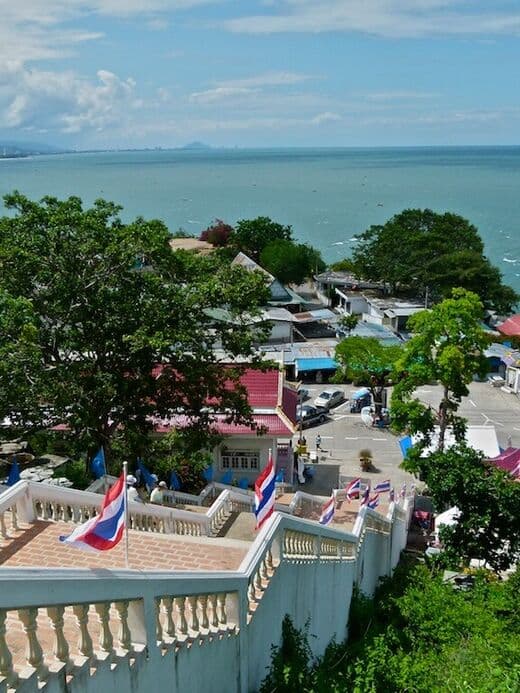
Named after the mountain (Khao Takiab / Monkey Mountain) at the southern end of the main beach, this area feels like a separate village. The hillside temple with its giant Buddha statue overlooks a long, quiet stretch of Khao Takiab Beach. Several luxury resorts are clustered here, and a small fishing village at the base of the mountain serves some of the freshest seafood in town.
Vibe: Resort-like, scenic, peaceful. Price range: $$ to $$$ (2,000-8,000 THB / $57-226 USD per night). Best for: Couples on a romantic getaway, resort lovers, photographers. Downside: Isolated from town (15-20 minutes by car), the monkeys are aggressive and will steal your food, limited dining options outside the resorts and fishing village.
Khao Tao
About 12 kilometers south of the center, Khao Tao is a small, undeveloped coastal area with a reservoir, a quiet beach, and a hilltop temple. This is where you go when even Hua Hin feels too busy. Accommodation is limited to a handful of guesthouses and homestays.
Vibe: Rural, secluded, off-the-grid. Price range: $ (500-1,500 THB / $14-42 USD per night). Best for: Nature lovers, experienced Thailand travelers who want solitude, people with their own transport. Downside: Very limited services, no nightlife, need a scooter or car for everything.
Pranburi
Technically a separate district about 25 kilometers south of Hua Hin center, Pranburi has become the upscale alternative. Pranburi Beach is quieter and cleaner than Hua Hin's main beach, and the area is dotted with boutique resorts, organic cafes, and art galleries. It also serves as the gateway to Khao Sam Roi Yot National Park.
Vibe: Upscale rustic, hipster-ish, nature-focused. Price range: $$ to $$$ (2,500-10,000 THB / $71-283 USD per night). Best for: Design-conscious travelers, nature enthusiasts, couples who want something special, families who prioritize a calm beach. Downside: Far from Hua Hin's restaurants and markets, limited public transport, prices are higher than in town.
Best Time to Visit Hua Hin
Hua Hin sits on the western side of the Gulf of Thailand, which gives it a slightly different weather pattern than the Andaman coast or the eastern Gulf islands. The good news is that Hua Hin is one of the driest places in Thailand, receiving significantly less rain than Phuket or Koh Samui.
November to February: Peak Season (Best Weather)
This is when Hua Hin shines. Temperatures hover around 28-32 degrees Celsius during the day with low humidity and almost no rain. The sea is calm and swimmable, the skies are blue, and the evenings are pleasantly cool. The tradeoff is that this is also when prices peak and weekends get crowded with Bangkok visitors. Hotel rates are 30-50% higher than low season. Book accommodation at least two weeks ahead for weekend stays.
March to May: Hot Season (Budget-Friendly)
March and April bring temperatures up to 35-38 degrees Celsius, and the humidity starts creeping in. April is the hottest month. Many visitors find the heat oppressive, but if you can handle it, this is when you get the best deals on hotels and the town is noticeably quieter. Songkran (Thai New Year, April 13-15) is an exception, when the town fills up and everyone throws water at each other in the streets. It is chaotic, joyful, and thoroughly soaking.
June to October: Green Season (Rainy but Not Ruined)
Unlike Phuket, where the monsoon can dump rain for days straight, Hua Hin's rainy season is manageable. You typically get a heavy downpour in the late afternoon lasting 30-90 minutes, followed by clear skies. Mornings are usually fine for beach time and sightseeing. September and October are the wettest months. Hotel prices drop 40-60% from peak season, and you will have beaches and restaurants largely to yourself. The downside is that some boat tours may be cancelled, and the sea can be rough for swimming.
Festivals Worth Planning Around
- Hua Hin Jazz Festival (January-February): Free outdoor concerts on the beach with international and Thai jazz musicians. The atmosphere is magical, with the stage set right on the sand.
- Songkran (April 13-15): The Thai New Year water festival. Hua Hin's celebration is family-friendly compared to Chiang Mai's or Bangkok's. Expect water guns, music, and parades along the main road.
- Hua Hin Vintage Car Rally (June): Classic and vintage cars parade through town. A quirky event that draws car enthusiasts from across Southeast Asia.
- Loy Krathong (November, full moon): One of Thailand's most beautiful festivals. People release small decorated floats (krathong) onto the water and lanterns into the sky. The beach celebrations in Hua Hin are more intimate than Bangkok's but equally atmospheric.
Hua Hin Itinerary: 3 to 7 Days
Here is a practical day-by-day plan. Adjust the pace to your preference. I have included specific times, but Hua Hin rewards a slower approach, so do not feel pressured to check every box.
3-Day Essential Itinerary
Day 1: Hua Hin Center, Beach, and Night Market
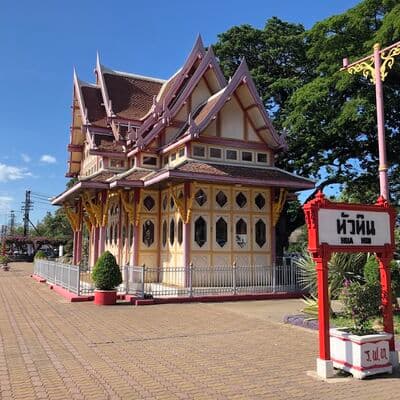
Morning (8:00-11:00): Start at the Hua Hin Railway Station, one of the most photogenic train stations in Asia. The red-and-cream wooden building dates back to the 1920s and the royal waiting room is a highlight. Spend 30-40 minutes here, then walk 10 minutes east to Hua Hin Beach. The northern section near the Hilton is the most developed, with beach chairs for rent (50-100 THB) and vendors selling fresh fruit and cold drinks. Take a long walk south along the sand.
Lunch (11:30-13:00): Head to the seafood restaurants along Naresdamri Road near the fishing pier. Chaolay Seafood has been serving fresh catches since the 1950s. Order the steamed sea bass with lime and garlic (250-350 THB) and a plate of stir-fried morning glory (60-80 THB). The view of the fishing boats from the terrace is worth the slightly higher prices.
Afternoon (13:30-17:00): Walk through the center, poking into the small sois (alleys) between Phetkasem Road and the coast. You will find art galleries, quirky shops, and old wooden houses. If it is too hot, duck into BluPort shopping center for air conditioning, a movie, or a Thai massage at one of the in-mall spas (300-400 THB for a one-hour Thai massage).
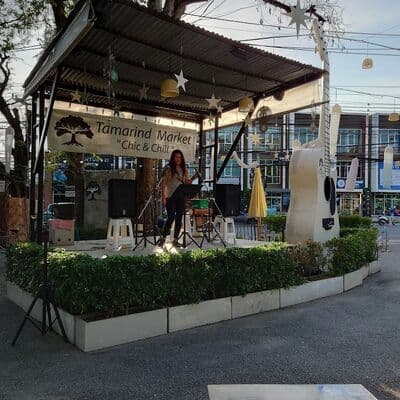
Evening (17:30-21:00): As the sun drops, head to Tamarind Market, one of Hua Hin's best night markets. The food stalls here serve excellent pad thai (50-80 THB), grilled seafood skewers (40-100 THB per stick), mango sticky rice (60-80 THB), and fresh coconut ice cream (40-60 THB). Walk through the clothing and souvenir stalls, then finish with a cold Chang or Leo beer (60-80 THB) at one of the open-air bars nearby.
Day 2: Khao Takiab, Markets, and Sunset
Morning (7:00-10:00): Get an early start and head to Khao Takiab / Monkey Mountain, about 6 kilometers south of the center. The climb to the hilltop temple takes 15-20 minutes and rewards you with panoramic views of the coastline in both directions. Warning: the macaques here are bold and will grab anything shiny or edible. Leave sunglasses and food in your bag, keep zippers closed, and do not make eye contact. Seriously. After the temple, walk down to the fishing village at the base and grab a fresh-grilled squid on a stick (30-50 THB) for breakfast.
Mid-morning (10:30-12:00): Walk or ride along Khao Takiab Beach, which is quieter and less developed than the main Hua Hin stretch. If you want to swim, this is one of the better spots, with cleaner water and fewer jet ski operators.
Lunch (12:00-13:30): Try Fah Muey seafood restaurant, a local favorite that most tourists miss. It is on the road between Khao Takiab and the center. The tom yum kung (spicy shrimp soup) here is outstanding (150-250 THB depending on size), and the fried sea bass with mango salad is worth ordering every time.
Afternoon (14:00-17:00): Rest at your hotel during the heat of the day. This is standard Thai scheduling and you will enjoy your trip more if you adopt it. Use this time for a pool session or a proper Thai massage (250-350 THB for one hour at a street-side shop).
Evening (17:00-21:00): If it is a weekend, check out Cicada Market (open Friday through Sunday, 16:00-23:00). It is an upscale art and design market with live music, handmade crafts, artwork, and gourmet food stalls. The atmosphere is more refined than the typical Thai market. For dinner, try the Dechanuchit night food street near the center for a proper street food crawl.
Day 3: Khao Sam Roi Yot and Phraya Nakhon Cave
Early Morning (6:30-7:30): This is the big day trip, so start early. Drive or arrange transport to Khao Sam Roi Yot National Park, about 45 minutes south of Hua Hin. The park entrance fee is 200 THB for foreigners (40 THB for Thai nationals).
Morning (8:00-12:00): The main attraction is Phraya Nakhon Cave, a massive sinkhole cave with a royal pavilion inside that gets lit up by sunbeams in the morning. The hike to the cave takes about 30-45 minutes each way over rocky, uneven terrain. Wear proper shoes, not flip-flops. Bring at least 1.5 liters of water per person. The best light hits the pavilion between 10:00 and 11:30, when the sun is directly overhead and floods through the collapsed ceiling. Arrive at the trailhead by 8:30 at the latest to reach the cave in time. This is one of the most photographed places in Thailand, and the morning light truly is spectacular.
Lunch (12:30-13:30): After the hike back, eat at one of the small restaurants near the park entrance or at the boat pier in Laem Sala Beach. The fried rice with crab (100-150 THB) is simple but satisfying after a sweaty hike.
Afternoon (14:00-16:00): Explore the rest of the park. The mangrove boardwalk trail is easy and beautiful, taking you through a quiet mangrove forest where you might spot monitor lizards, kingfishers, and mudskippers. If you have energy left, the viewpoint trail offers views over the 'Three Hundred Peaks' limestone mountains that give the park its name.
Evening: Return to Hua Hin for a final seafood dinner. Saeng Thai, perched right on the beach near the fishing pier, is an excellent choice for a memorable last meal. Watch the fishing boats lit up offshore while eating grilled prawns with garlic and pepper (300-450 THB).
Extending to 5 Days
Day 4: Pala-U Waterfall and Monsoon Valley Vineyard
Morning (8:00-12:00): Drive west into the hills to Pala-U Waterfall, about 60 kilometers from town (1 hour drive). This multi-tiered waterfall in Kaeng Krachan National Park is stunning during and just after the rainy season (October-January). The first three levels are easy walks; levels 4-7 require moderate hiking. Park entrance is 300 THB for foreigners. Bring mosquito repellent and a change of clothes if you plan to swim in the pools.
Afternoon (13:00-17:00): On the way back, stop at Monsoon Valley Vineyard (also called Hua Hin Hills Vineyard), one of the few working wineries in Southeast Asia. The setting is gorgeous, with vines stretching across rolling hills framed by limestone karsts. A wine tasting flight costs 350-500 THB, and the restaurant serves decent Thai-Western fusion food with vineyard views. The Colombard and Shiraz are surprisingly good.
Day 5: Mrigadayavan Palace and Suan Son Beach
Morning (9:00-12:00): Visit Mrigadayavan Palace, also known as the 'Palace of Love and Hope.' Built in 1924 for King Rama VI, this elevated teak wood palace stretches along the beach connected by covered walkways. The architecture is unique, all open-air and designed to catch sea breezes. Entry is 30 THB for foreigners. The palace grounds include manicured gardens and a quiet stretch of beach. Allow 1.5-2 hours.
Afternoon (12:30-17:00): After the palace, head to nearby Suan Son Beach, a pine-tree-lined beach used by the Thai military but open to visitors. It is one of the prettiest beaches in the Hua Hin area, with actual shade from the casuarina trees and calm, clean water. Rent a mat under the pines (20-50 THB) and spend the afternoon swimming and napping. There are basic food stalls selling grilled chicken, papaya salad, and cold drinks.
Extending to 7 Days
Day 6: Kui Buri Elephants or Golf
Option A: Kui Buri National Park (Half Day): Drive south to Kui Buri National Park (about 90 minutes from Hua Hin), one of the best places in Thailand to see wild elephants. The park arranges guided afternoon drives (starting around 15:00-16:00) to pineapple plantations where herds of 10-30 elephants come to feed. Sightings are common between June and December. Entry is 300 THB plus 500 THB for the mandatory guide and vehicle. This is a genuine wildlife experience, not an elephant camp, and the animals are truly wild.
Option B: Golf: Hua Hin is Thailand's golf capital outside Bangkok, with seven courses within 30 minutes of town. Banyan Golf Club consistently ranks among the best in Thailand, with green fees around 4,000-5,500 THB ($113-156 USD) including caddie. Royal Hua Hin Golf Course, established in 1924, is the most historic course in Thailand and significantly cheaper at 1,500-2,200 THB. Black Mountain is the championship-level option, hosting Asian Tour events.
Day 7: Phetchaburi Day Trip or Vana Nava Water Park
Option A: Phetchaburi (Full Day): Drive north to the ancient city of Phetchaburi (about 1 hour), one of Thailand's most underrated historical towns. The hilltop palace Phra Nakhon Khiri offers sweeping views and beautiful Khmer-influenced architecture (150 THB entry, or take the cable car for 70 THB extra). Below, the town's temples span centuries of Thai architectural styles. Wat Mahathat and Wat Kamphaeng Laeng (Khmer ruins) are highlights. The local specialty is khanom mor gaeng, a rich custard dessert, available in shops near the main temple for 20-40 THB per piece.
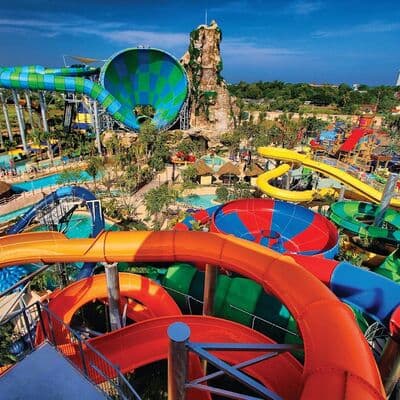
Option B: Vana Nava Water Jungle (Half Day): If you are traveling with kids, or just want an adrenaline day, this water park delivers. It is built into a hillside with a tropical jungle theme, featuring a wave pool, lazy river, and several genuinely thrilling water slides. Entry is 1,250-1,500 THB for adults, 750-900 THB for children. Go on a weekday morning to avoid the crowds. The park opens at 10:30 and you can easily spend 4-5 hours here.
Where to Eat in Hua Hin
Hua Hin's food scene punches well above its weight for a town this size. The combination of fresh Gulf seafood, a large expat community demanding quality, and competition from Bangkok weekend visitors has created a diverse and excellent dining landscape.
Street Food and Markets
Dechanuchit Road night market (open nightly from around 17:00) is the iconic food street, running a few blocks near the center. The stalls here serve everything from grilled squid and pad thai to mango sticky rice and roti. Expect to spend 100-250 THB for a full meal. Get there before 19:00 on weekends or prepare to queue. The Pae Mai market (Tuesdays, 15:00-21:00) is a local secret, significantly less touristy, with excellent vendors selling curry pastes, dried seafood, and street food at local prices. The food court at the back of Market Village shopping center is another solid option for cheap, clean Thai food (50-100 THB per dish) in air-conditioned comfort.
Seafood Restaurants
Hua Hin is a seafood town, and you should eat it frequently. Fah Muey is a local institution south of the center, popular with Thai families (a sign of quality). The steamed crab with glass noodles and the deep-fried sea bass are both excellent. Expect 400-800 THB for two people. Chaolay Seafood near the fishing pier has the best location, perched over the water, and the food matches the view. The grilled river prawns (350-500 THB) are massive and perfectly cooked. Saeng Thai sits right on the beach and is the most atmospheric option for sunset dining. Prices are slightly higher (500-1,000 THB for two), but the setting is worth it. For the cheapest and freshest option, head to the Khao Takiab fishing village at the base of Monkey Mountain, where tiny family-run restaurants serve whatever came off the boats that morning. Grilled whole fish from 120-200 THB.
International Restaurants
The expat community has attracted genuinely good international kitchens. SOM'S TABLE is a Thai-international fusion spot with creative plating and excellent cocktails. Mains run 250-450 THB. Trattoria by Andreas serves authentic Italian food made by an actual Italian chef, with handmade pasta and proper Neapolitan pizza (200-400 THB per dish). Ogen does surprisingly good Israeli-Mediterranean food, with excellent hummus, shakshuka, and grilled meats (200-350 THB). Say Cheese is an unassuming little shop making proper grilled cheese sandwiches, burgers, and comfort food that homesick Americans will weep over (150-300 THB). Chow Mong serves Thai-Chinese food in a beautiful old shophouse and is popular with both locals and visitors for its roast duck and dim sum (150-350 THB).
Cafes and Bakeries
The Museum is an Instagram-worthy coffee shop in a converted house with art on the walls and excellent single-origin Thai coffee (80-150 THB). Adreanna's Bakery makes some of the best bread and pastries in town, run by a German-Thai couple who clearly know what they are doing. The croissants (65-85 THB) rival anything in Bangkok. Cha Bar Coffee is a local favorite near the center with strong iced Thai tea (50-70 THB) and a relaxed vibe. Yummy Corner is a tiny bakery that has been making cakes, pies, and pastries for years, and is the kind of place where expat regulars have their own reserved table.
Bars and Nightlife
Hua Hin's nightlife is low-key compared to Bangkok or the islands, but there are options. COAST Beach Club at Centara Grand is the upscale choice, with DJ sets on weekends, cocktails (250-400 THB), and a pool-and-beach setting. Vana Nava Sky, the rooftop bar at the water park complex, has the best views in town and decent cocktails (200-350 THB). Seenspace is a beachfront lifestyle complex with several bars and restaurants in shipping container-style buildings, popular with younger Bangkok weekenders. Soi Bintabaht is the small bar street near the center, with a mix of sports bars, live music venues, and local watering holes where a beer costs 80-120 THB. It is friendly and safe, if a bit rough around the edges.
Must-Try Food in Hua Hin
Thai food varies by region, and Hua Hin has its own coastal specialties shaped by the Gulf's bounty. Here are the dishes you should not leave without trying.
Hoi Tod (Crispy Mussel Pancake)
A crispy, eggy pancake studded with fresh mussels, served on a bed of bean sprouts with a sweet chili dipping sauce. This is Hua Hin's signature street food, available at markets and street stalls everywhere. Look for vendors with a hot flat griddle turning out orders to a queue. Price: 60-100 THB. Best at: Dechanuchit night food stalls.
Tom Yum Kung (Spicy Shrimp Soup)
You can get this everywhere in Thailand, but in Hua Hin the prawns are often pulled from the Gulf that same day, which makes a noticeable difference. The broth should be fragrant with lemongrass, galangal, kaffir lime, and chili. Ask for 'nam sai' for the clear broth version or 'nam khon' for the creamy version with roasted chili paste. Price: 150-300 THB depending on prawn size and restaurant. Best at: Fah Muey or Chaolay Seafood.
Pla Samli Tod (Crispy Fried Threadfin)
Small threadfin fish deep-fried until the bones are crunchy and edible, then tossed with a sweet-sour-spicy green mango salad. Intensely flavorful and addictive. This is a classic Thai drinking snack but works as a main dish too. Price: 120-200 THB. Best at: any seafood restaurant or beer garden.
Kung Yang (Grilled River Prawns)
Massive freshwater prawns split and grilled over charcoal, served with a seafood dipping sauce (nam jim seafood). The head contains rich, orange prawn fat that Thais consider the best part. Hua Hin's proximity to both the Gulf and freshwater farms means these are always available and always fresh. Price: 300-600 THB for a plate of 3-4 large prawns. Best at: Chaolay Seafood or the Khao Takiab fishing village.
Roti Dui (Thai Roti with Toppings)
A flaky, pan-fried flatbread topped with condensed milk, sugar, banana, egg, Nutella, or whatever else the vendor offers. Watching the roti maker spin and stretch the dough is half the entertainment. This is a late-night street food staple. Price: 30-80 THB depending on toppings. Best at: night market stalls, look for the vendor with the longest queue.
Mango Sticky Rice (Khao Niaow Mamuang)
Warm coconut-milk sticky rice served with slices of fresh ripe mango and a drizzle of sweetened coconut cream. Simple, perfect, and available from March through June when Thai mangoes are at their peak. Off-season versions use preserved mango and are still good but not the same. Price: 60-120 THB. Best at: any market vendor or Mae Varee-style stall.
Coconut Ice Cream
Made from fresh coconut milk, served in a coconut shell with toppings like roasted peanuts, sticky rice, corn, and palm seeds. It sounds odd but the combination works beautifully. Available at every market and beach. Price: 40-80 THB. Best at: Tamarind Market or beach vendors along Hua Hin Beach.
Longan Juice
Fresh longan fruit blended with ice makes a fragrant, subtly sweet drink that is incredibly refreshing in the heat. Hua Hin is close enough to longan-growing regions that you get it fresh and cheap. Price: 35-60 THB. Available at: fresh juice stalls in any market.
For vegetarians: Thai food is not always vegetarian-friendly, as fish sauce and oyster sauce sneak into almost everything. Look for the yellow 'jay' flag at market stalls (the Thai Buddhist vegetarian symbol). Most restaurants can make dishes without meat if you ask, but confirm they will skip the fish sauce ('mai sai nam pla'). Pad thai without shrimp, green curry with tofu, and most papaya salad can be made vegetarian.
Allergy note: Peanuts and shellfish are extremely common in Thai cooking. If you have severe allergies, carry a translated allergy card in Thai. Most street vendors cannot accommodate complex allergy requests, but sit-down restaurants usually can.
Hua Hin Secrets: Local Tips
After spending extended time in Hua Hin, here are the things I wish someone had told me on day one.
- Visit on weekdays, not weekends. Hua Hin transforms on Friday evening when the Bangkok crowd arrives. Hotel prices jump 30-50%, restaurants fill up, and the beach gets significantly more crowded. If your schedule allows, plan for Tuesday through Thursday and you will get a completely different, much more relaxed experience.
- Rent a scooter early in the day. The best rental shops run out of good bikes by 10:00 AM, especially on weekends. Expect 200-300 THB per day for an automatic scooter. You need an international driving permit technically, but enforcement is rare. Wear a helmet always, not just because of the law but because Thai drivers are unpredictable. Check brakes before you ride off.
- Monkey Mountain monkeys are not cute. They are territorial macaques who will grab sunglasses, phones, water bottles, and food right out of your hands. Do not carry anything shiny or edible visibly when climbing Khao Takiab. Do not smile at them (showing teeth is a threat display in macaque language). Keep a respectful distance and you will be fine.
- Food courts beat tourist restaurants every time. The food courts inside Market Village and BluPort malls serve the same Thai dishes you would get on the street, but in air-conditioned comfort with clean bathrooms. Load a food court card at the entrance (refundable deposit) and spend 50-100 THB per dish. The quality is consistently solid.
- Take the train from Bangkok at least once. The journey from Bangkok's Hua Lamphong station takes 3.5-4 hours, costs 44-1,252 THB depending on class, and passes through gorgeous countryside. Third-class seats are wooden benches with open windows and cost almost nothing. First-class has air conditioning and comfortable seats. The train arrives at the beautiful Hua Hin Railway Station right in the center of town. It is slower than driving but infinitely more scenic and memorable.
- Time your Phraya Nakhon Cave visit carefully. The sunbeam hitting the royal pavilion inside Phraya Nakhon Cave is the money shot, and it only happens when the sun is high enough to shine directly through the sinkhole. Between 10:00 and 11:30 is ideal. This means starting the hike by 8:30-9:00 at the latest. Going in the afternoon means you miss the light show entirely.
- Pranburi is the hidden gem. Most visitors never make it south to Pranburi Beach and the surrounding area, which is a shame. The beach is cleaner and quieter than Hua Hin's, the boutique hotels offer far better value than the big resorts in town, and the proximity to Khao Sam Roi Yot National Park makes it perfect for nature lovers.
- Songthaews are cheaper than Grab. The green songthaews (shared pickup trucks) run along Phetkasem Road and cost 10-20 THB per ride. Wave one down, hop in the back, and press the buzzer when you want to stop. They do not run on fixed schedules and stop operating around 18:00-19:00, but during the day they are the cheapest way to move up and down the main road.
- Massage prices vary wildly. Tourist-zone massage shops along the beach charge 350-500 THB for a one-hour Thai massage. Walk two blocks inland, and the same massage costs 200-300 THB. The quality is often identical or better at the cheaper places, which cater to Thai locals. Avoid any shop that quotes in dollars or euros.
- Mrigadayavan Palace closes on Wednesdays. This catches many visitors off guard. The palace is also closed on certain holidays. Check before making the drive. The grounds close at 16:00 and last entry is at 15:30.
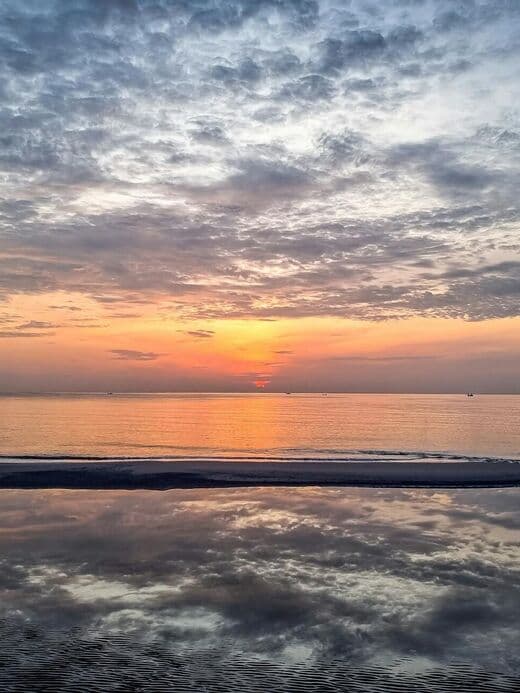
- Best sunset spots are not the main beach. For sunset, skip the crowded central beach and head to either Suan Son Beach (pine trees frame the sky beautifully), the hilltop temple at Khao Takiab (panoramic views), or any of the beachfront restaurants in Pranburi where the horizon is unobstructed and the crowd is thin.
Transport and Connectivity
Getting to Hua Hin from Bangkok
By car or taxi (2.5-3.5 hours): The most convenient option. Take the motorway south from Bangkok, then Highway 4 (Phetkasem Road) through Cha-am to Hua Hin. Private taxi from Bangkok airport costs 2,500-3,500 THB ($71-99 USD) through Grab or pre-booked services. Toll fees add about 200-300 THB. Traffic on Friday evenings and Sunday evenings can extend the drive to 4-5 hours, so avoid those windows if possible.
By bus or minivan (3-3.5 hours): Buses leave from Bangkok's Southern Bus Terminal (Sai Tai Mai) every 30-60 minutes. Air-conditioned bus tickets cost 180-250 THB. Minivans are faster but more cramped, departing from Victory Monument or Sai Tai Mai for 200-280 THB. Some services also run from Suvarnabhumi Airport directly, which is convenient if you are arriving internationally. The minivans drop you at the Hua Hin bus station, about 1 kilometer from the center.
By train (3.5-4.5 hours): Trains depart from Bangkok's Hua Lamphong or Bang Sue Grand Station. Third-class ordinary: 44 THB (no reserved seats, open windows, wooden benches, and an authentic experience). Second-class air-conditioned: 282-502 THB. First-class: 852-1,252 THB. The scenery through the salt flats and farmland is beautiful, and you arrive at Hua Hin Railway Station in the center of town. Book first or second-class tickets in advance through the State Railway of Thailand website or the 12Go app.
Getting Around Hua Hin
Songthaew (shared truck): Green songthaews run along the main road for 10-20 THB per ride. Wave them down, hop in the back, press the buzzer to stop. Operating hours roughly 6:00-19:00. Not useful for beach access or off-main-road destinations.
Grab (ride-hailing app): Works well in Hua Hin. A ride from the center to Khao Takiab costs 80-150 THB. To Khao Sam Roi Yot, expect 400-600 THB one way. Availability can be limited late at night or early morning. Always have cash as a backup in case the driver prefers it.
Scooter rental: The most popular option for independent travelers. 200-300 THB per day for an automatic 110-125cc scooter. Weekly rates bring it down to 150-200 THB per day. You will need to leave your passport or a deposit (typically 2,000-3,000 THB). Check brakes, tires, lights, and take photos of any existing damage before riding off. Petrol stations are everywhere, and a full tank costs 70-100 THB.
Car rental: From 800-1,500 THB per day through local agencies or 1,200-2,000 THB through international chains. Useful if you are based in Pranburi or planning day trips to national parks. Driving in Hua Hin itself is straightforward once you get used to Thai traffic patterns. Most roads are well-maintained. International driving permit required.
Bicycle: Several shops rent bicycles for 50-150 THB per day. The flat terrain makes cycling viable, but the main road (Phetkasem) has no bike lane and heavy traffic, so stick to the beach road and quieter sois. Some hotels provide free bicycles for guests.
SIM Cards, Wi-Fi, and Essential Apps
SIM/eSIM: Tourist SIM cards from AIS, TrueMove, or DTAC are available at 7-Eleven and the airport. A 15-day tourist SIM with unlimited data costs 299-599 THB. eSIM options from providers like Airalo or Holafly work well and save you the hassle of a physical card. Data speeds in Hua Hin are good, with 4G coverage everywhere and 5G in the center.
Wi-Fi: Most hotels, cafes, and restaurants have free Wi-Fi. Speed varies from barely functional (some guesthouses) to excellent (co-working spaces and modern cafes). For reliable work sessions, try the cafes in the Bo Fai area, which cater to digital nomads and usually have fast, stable connections.
Essential apps:
- Grab - ride-hailing, food delivery, courier services. Essential.
- Google Maps - works well for navigation, restaurant reviews, and finding businesses. More reliable than Apple Maps for Thailand.
- LINE - Thailand's dominant messaging app. Many restaurants, tour operators, and even some hotels communicate primarily through LINE. Download it and get a LINE ID.
- Foodpanda / GrabFood - food delivery. Useful on lazy days or when the rain pours down. Most restaurants in the center are available.
- Google Translate - the camera feature that translates Thai text in real time is genuinely useful for menus and signs. Download the Thai language pack for offline use.
- 12Go - for booking trains, buses, and ferries. Clean interface and reliable.
Who Should Visit Hua Hin: The Honest Summary
Hua Hin is ideal for: Couples looking for a romantic, low-key beach getaway with excellent food. Families with children who need safe beaches and activities like Vana Nava Water Jungle. Serious foodies who want world-class seafood at local prices. Golfers who want multiple championship courses within minutes. Digital nomads and remote workers seeking affordable long-term living with reliable internet and a pleasant environment. Retirees who want comfort, safety, and healthcare access (Hua Hin has excellent hospitals).
Hua Hin is not ideal for: Nightlife seekers who want clubs, bars, and all-night partying (go to Pattaya or the islands instead). Travelers who specifically want white-sand, turquoise-water beaches (head to Koh Lipe or the Similan Islands). Party crowds looking for a backpacker scene (Koh Phangan or Khao San Road). Anyone who needs constant entertainment and stimulation (Hua Hin is laid-back by design).
How long to stay: Three days covers the essential highlights. Five to seven days lets you explore at a relaxed pace, make day trips, and discover the town's character. Two to four weeks is perfect for a winter escape or digital nomad stint, long enough to find your favorite restaurants, learn the rhythms of the town, and genuinely unwind.