Avignon
Avignon: City of Popes, Theatre Festival, and the Famous Bridge
Avignon is a gem of Provence, a city with an extraordinarily rich history that served as the residence of the Roman popes in the 14th century. Located on the banks of the Rhône in Southern France, it has preserved the majestic Papal Palace, impressive ramparts, and the famous Pont Saint-Bénézet celebrated in folk song. Every July, Avignon transforms into the world capital of theatre thanks to its renowned festival. Listed as a UNESCO World Heritage Site, the city combines medieval grandeur with vibrant Provençal culture.
History of Avignon: From Roman Colony to Papal Capital
Avignon's history stretches back to ancient times. Even before the Roman conquest, a Gallic settlement called Avenio existed here. The Romans recognized the city's strategic position on the Rhône and transformed it into an important trading center.
The turning point in Avignon's history came in 1309 when Pope Clement V moved the papal residence here from Rome. This began the period known as the 'Avignon Papacy', lasting until 1377. During this time, seven popes ruled the Christian world from Avignon, transforming a small provincial town into a center of global importance.
Building the Papal Palace
The popes undertook massive construction, and its crowning achievement was the magnificent Papal Palace - the largest Gothic building in the world. The city was surrounded by mighty ramparts stretching nearly 5 kilometers, preserved to this day.
After the Papal Period
After the popes returned to Rome, Avignon and the surrounding Comtat Venaissin remained papal territory until the French Revolution of 1791, when they were annexed to France. The city has preserved its historical heritage and today is one of Provence's main tourist destinations.
Papal Palace: The Largest Gothic Fortress
The Palais des Papes is a monumental structure that leaves an indelible impression with its size and grandeur. It is the largest Gothic palace in the world, covering an area of approximately 15,000 square meters.
Architecture and Layout
The palace consists of two parts: the Old Palace (Palais Vieux), built under Benedict XII in 1334-1342 in an austere Romanesque style, and the New Palace (Palais Neuf), constructed under Clement VI in 1342-1352 in a more refined Gothic style. The complex includes towers, chapels, audience halls, and the popes' private quarters.
Interiors and Frescoes
Although many interior rooms suffered during the Revolution, unique frescoes by Matteo Giovannetti survive in the Chapel of Saint John and the Chapel of Saint Martial. The Great Audience Hall, Clement VI's chapel, and the papal apartments impress with their scale and remnants of former splendor.
Visiting the Palace
Today the palace is open year-round. A modern audio guide leads you through 25 rooms, telling the story of life at the papal court. In summer, theatrical festival performances take place in the square before the palace.
Pont Saint-Bénézet: Avignon's Legend
The Bridge of Saint Bénézet, known as the Pont d'Avignon, is one of the world's most famous bridges thanks to the French folk song 'Sur le pont d'Avignon'. Today only four arches remain of the original twenty-two.
Construction History
According to legend, a young shepherd named Bénézet received a divine command to build a bridge across the Rhône. Despite mockery, he miraculously lifted an enormous stone and began the construction. The bridge was completed in 1185 and became one of the few crossings over the Rhône, a vital trade route between Italy and Spain.
Destruction and Current State
Over the centuries, the bridge repeatedly suffered from floods and wars. After a particularly devastating flood in 1668, it was abandoned. The surviving four arches with the Chapel of Saint Nicholas have become a romantic symbol of the city.
Visiting the Bridge
A walk across the bridge is included in the combined ticket with the Papal Palace. The best view of the bridge is from the opposite bank of the Rhône or from Île de la Barthelasse.
Ramparts: Defense of the Papal Capital
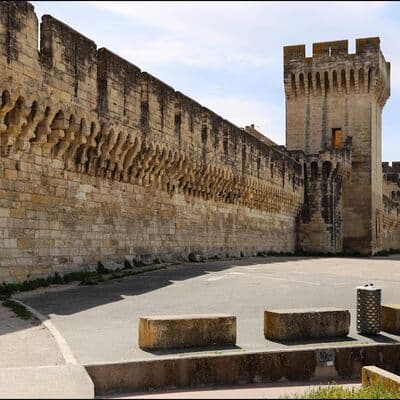
Avignon is surrounded by one of the best-preserved medieval fortifications in Europe. Nearly 4.5 kilometers of walls with 39 towers form a continuous ring around the historic center.
Construction of Fortifications
The walls were built in the 14th century under Popes Innocent VI and Urban V to protect the city from bands of mercenaries roaming France during the Hundred Years' War. In the 19th century, Viollet-le-Duc restored the fortifications.
Walking Along the Walls
Today a walking route runs along the walls, allowing you to circle the entire old town. The section along the Rhône with views of Pont Saint-Bénézet is particularly picturesque.
Historic Center: Strolling Through the Old Town
Avignon's historic center is a labyrinth of narrow streets, squares with fountains, medieval churches, and elegant 17th-18th century mansions. The entire center is a pedestrian zone.
Place de l'Horloge
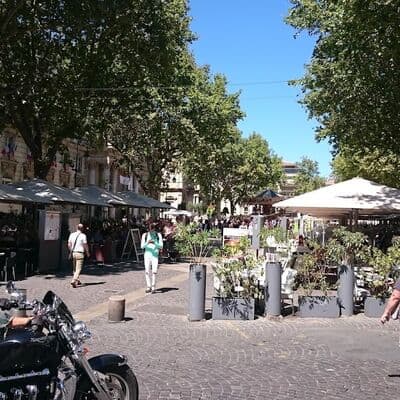
Place de l'Horloge is the city's main square, surrounded by cafés and restaurants with terraces. Here you'll find the town hall and opera house. In summer, the square becomes the center of festival life, filled with street performers.
Notre-Dame des Doms Cathedral
Avignon's cathedral rises on the rock next to the Papal Palace. The 12th-century Romanesque building is crowned by a gilded statue of the Virgin Mary. Inside is the Gothic tomb of Pope John XXII.
Rocher des Doms Gardens
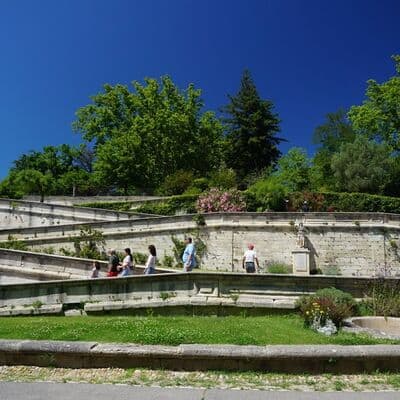
This park on the rock above the Rhône is the city's best viewpoint. From here you can see panoramas of the river, Pont Saint-Bénézet, Villeneuve-lès-Avignon on the opposite bank, and on clear days, Mont Ventoux.
Avignon Theatre Festival
The Festival d'Avignon is one of the oldest and most important theatre festivals in the world, held annually in July. Founded in 1947 by Jean Vilar, it transforms the entire city into a giant theatrical stage.
Official Program
The main festival program (Festival IN) presents about 50 productions in the courtyard of the Papal Palace and other historic venues. These are avant-garde productions by leading world directors, premieres, and experimental theatre.
Fringe Program
Running parallel is the OFF festival - the largest theatre fringe in the world with over 1,500 shows. Companies from around the world perform in any available space: cellars, courtyards, chapels, garages.
Festival Atmosphere
During the festival, the city is transformed. Streets fill with performers distributing flyers, street shows, and music. An atmosphere of creative madness reigns from morning until late at night.
Museums of Avignon
Avignon possesses a rich museum collection spanning art from antiquity to the present day.
Petit Palais Museum
The Musée du Petit Palais is housed in a former 14th-century bishop's palace. The collection includes a unique assembly of Italian painting from the 13th-16th centuries, including works by Botticelli, Carpaccio, and the Avignon School.
Lambert Collection
The Collection Lambert is a contemporary art museum in two 18th-century mansions. It features works by Cy Twombly, Anselm Kiefer, Jean-Michel Basquiat, and other major contemporary artists.
Calvet Museum
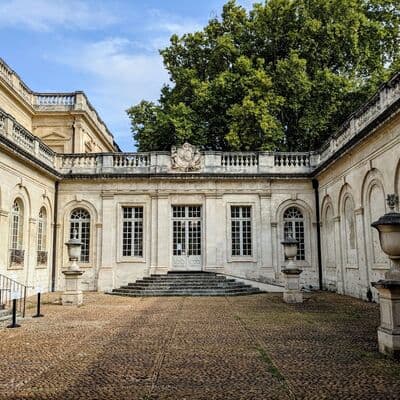
The Musée Calvet occupies a magnificent 18th-century mansion and presents painting, sculpture, and decorative arts from the 15th-20th centuries.
Gastronomy of Avignon
Avignon is the gateway to gastronomic Provence with its famous wines, olive oil, and Mediterranean cuisine.
Provençal Cuisine
At Avignon's restaurants, be sure to try dauphinois gratin, Sisteron lamb, ratatouille with local vegetables, and olive tapenade. For dessert, try Papalines d'Avignon - papal candies with herbal liqueur.
Rhône Valley Wines
Avignon is surrounded by famous Rhône Valley vineyards: Châteauneuf-du-Pape 18 kilometers away, Tavel, Gigondas, Vacqueyras. Many wineries are open for visits and tastings.
Markets
The central covered market Les Halles operates every morning except Monday. Here you can buy fresh Provençal products: vegetables, cheeses, honey, olives. On weekends, a large open market operates on Place Pie.
Villeneuve-lès-Avignon: City of Cardinals
On the opposite bank of the Rhône lies Villeneuve-lès-Avignon - a town where cardinals of the papal court resided. It deserves a separate visit.
Fort Saint-André
This mighty 14th-century fortress towers over the town. From its walls you have the best panoramic view of Avignon, the Papal Palace, and the Rhône Valley.
Chartreuse du Val de Bénédiction
This 14th-century Carthusian monastery is one of the largest in France. Romantic ruins, gardens, and chapels create a special atmosphere. In summer, festival performances take place here.
Around Avignon
Avignon is an ideal base for exploring Provence and the Rhône Valley.
Pont du Gard
The famous 1st-century Roman aqueduct is just 25 kilometers away. This three-tiered structure standing 49 meters tall is one of the wonders of ancient engineering and a UNESCO site.
Les Baux-de-Provence
A picturesque village perched on a rock with medieval castle ruins and the multimedia center Carrières de Lumières - one of Provence's most beautiful spots.
Luberon
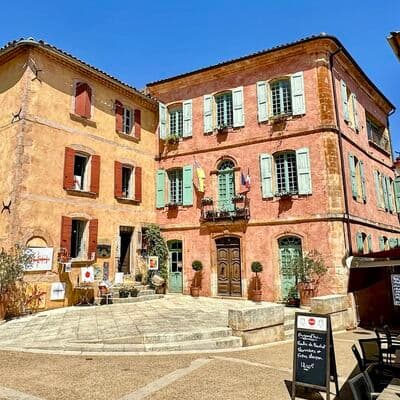
The regional natural park with its picturesque villages of Gordes, Roussillon, and Ménerbes is a popular destination for a day trip from Avignon.
Practical Information
Getting There
Avignon has two railway stations: Avignon TGV on the high-speed line (2 hours 40 minutes from Paris) and Avignon Centre in the city center. The nearest airport is Marseille-Provence (80 km), with bus connections. Avignon is linked by bus to Marseille, Aix-en-Provence, and Nice.
Getting Around
Avignon's historic center is compact and ideal for walking. All attractions are within 15 minutes' walk of each other. For trips to the surroundings, car rental is convenient.
When to Visit
Avignon is beautiful year-round. July is festival time, but the city is crowded and prices peak. Spring and autumn are ideal with mild weather and fewer tourists. Winter is quiet and atmospheric, with Christmas markets.
Where to Stay
Inside the ramparts (intra-muros) is the best choice for immersing yourself in the atmosphere. The area near the Papal Palace is the most prestigious. For the festival, book accommodation six months ahead.
Avignon for Different Travelers
For History Lovers
Papal Palace, cathedral, ramparts, Petit Palais museum. Day trips to Villeneuve-lès-Avignon and Pont du Gard.
For Theatre Enthusiasts
The July festival is essential. But even at other times, several theatres operate in Avignon.
For Foodies
Les Halles market, cooking classes, wine tours to Châteauneuf-du-Pape and other Rhône Valley appellations.
For Families
Interactive tour of the Papal Palace, walk across Pont Saint-Bénézet, Rocher des Doms gardens with playgrounds and views.
Travel Tips
- The 'Avignon Passion' combined ticket offers discounts on all attractions
- For the festival, book accommodation and tickets several months ahead
- The best view of the bridge is from the opposite bank (free)
- Les Halles market operates from morning until 1:30 PM - arrive early
- The Mistral (north wind) can be very strong - bring a jacket
- Sunday is quiet - many establishments are closed
- Collection Lambert contemporary art museum is open until 8 PM
- The evening illumination of the Papal Palace is impressive - visit after sunset
- From Avignon, it's easy to visit Nîmes, Arles, and other cities
- Local specialty is Côtes du Rhône, especially red wines
Avignon is a city where medieval grandeur meets creative energy, where magnificent papal chambers stand alongside street theatre performances, and Provençal charm is felt in every alley. Here you can touch seven centuries of European history, enjoy the world's finest theatre, and discover the gastronomic treasures of southern France. Avignon is not just a stop on the way through Provence - it's a place that deserves several days of unhurried exploration.