About
San Marino: The Ultimate Travel Guide to the World's Oldest Republic
Why Visit San Marino
Perched atop Monte Titano in the heart of the Italian peninsula, San Marino is one of those places that sounds almost too good to be true. The world's oldest surviving republic, continuously governed since 301 AD, is also one of the smallest countries on earth -- just 61 square kilometers of dramatic limestone ridges, medieval towers, and sweeping views that stretch from the Apennine Mountains to the Adriatic Sea. And yet, for all its diminutive size, San Marino packs an outsized punch when it comes to history, charm, and genuine surprises.
Let me be honest with you from the start: San Marino is not a place you visit for its nightlife, its beaches, or its cutting-edge cuisine. If you are looking for a party destination or a culinary revolution, you should probably keep driving south along the coast to Rimini. What San Marino offers instead is something rarer and, in my opinion, far more valuable -- a living, breathing medieval republic that has somehow survived 1,700 years of wars, invasions, and the relentless march of modernity without losing its identity or its independence.
The first time I walked through the Porta San Francesco and into the old town, I was struck by how genuinely different it felt from the Italian cities I had just left behind. Yes, the architecture is similar. Yes, the language is Italian (with a distinctive Romagnol flavor). But there is an unmistakable sense of pride and self-determination here that you do not find in, say, a Tuscan hill town. San Marino is not a museum piece preserved for tourists. It is a functioning microstate with its own parliament, its own postal service, its own license plates, and its own fiercely independent spirit.
For American visitors, here is a useful frame of reference: San Marino is smaller than Manhattan. You could fit roughly four San Marinos inside the District of Columbia. The entire country has a population of about 34,000 people -- roughly the size of a mid-sized suburb. And yet this tiny nation has its own army (yes, really -- about 80 soldiers, plus a corps of crossbowmen), its own stamps and coins (hugely collectible), and a political system that dates back to a time when the Roman Empire was still a going concern.
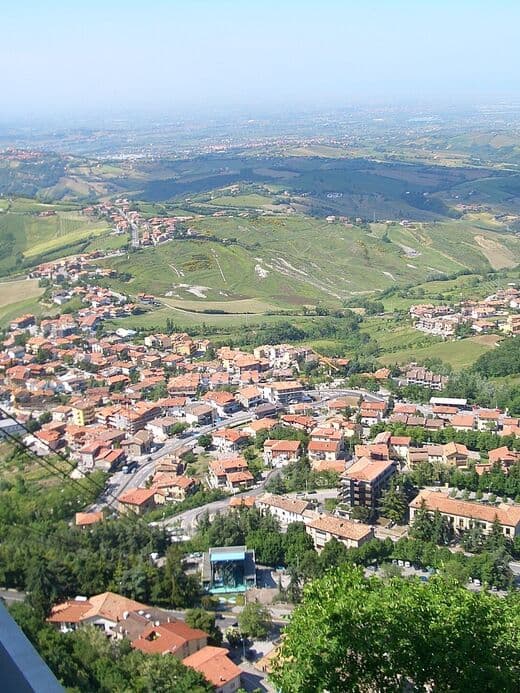
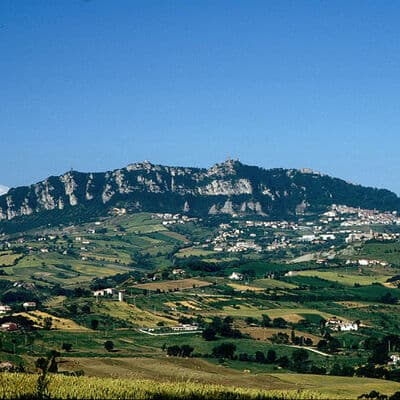
The setting alone justifies the visit. Monte Titano rises to 739 meters above sea level, and on a clear day the views from the Three Towers are genuinely breathtaking. You can see the entire Romagna coast, the sparkling blue of the Adriatic, the patchwork of farms and villages in the valley below, and on the clearest days, the distant mountains of Croatia across the water. I have visited hilltop towns all over Italy, and I can tell you that Monte Titano's panorama is in the top tier -- comparable to Orvieto or the best viewpoints in Umbria.
But San Marino is more than just a pretty view. It is a place where history is not something you read about in textbooks but something you walk through, touch, and experience firsthand. The Palazzo Pubblico is not a museum -- it is the actual seat of government where the two Captains Regent still preside over parliamentary sessions. The crossbow tournament held every September is not a reenactment for tourists -- it is a living tradition that has been practiced here for centuries. The guards in their blue and white uniforms are not actors -- they are real soldiers serving their country.
There is also the simple pleasure of visiting a place that most people have never heard of or, if they have, could not find on a map. When you tell friends you spent the weekend in San Marino, you will get blank stares followed by genuine curiosity. It is one of those travel experiences that makes for great stories precisely because it is so unexpected. You went to a country inside Italy? That is not Italy? That has been independent since the Roman Empire? Yes, yes, and yes.
I should also mention the practical appeal. San Marino is incredibly easy to add to an existing Italian itinerary. If you are spending time on the Adriatic coast -- in Rimini, Riccione, or Pesaro -- San Marino is a 30-minute bus ride away. If you are based in Bologna, it is a comfortable day trip. Even from Florence, it is doable in a long day, though I would recommend staying overnight to get the full experience. The point is that visiting San Marino does not require a major detour or significant extra planning. It is one of those rare destinations that delivers far more than the effort required to get there.
And finally, there is the shopping. San Marino has long been a duty-free haven, and while the days of jaw-dropping bargains are somewhat behind us, you can still find good deals on perfumes, electronics, sunglasses, and alcohol. More importantly, you can buy stamps, coins, and other uniquely Sammarinese souvenirs that you literally cannot get anywhere else on earth. The country's philatelic and numismatic output is legendary among collectors, and even if you are not a collector yourself, a set of San Marino stamps or a commemorative coin makes for a far more interesting souvenir than yet another refrigerator magnet.
Regions of San Marino
San Marino is divided into nine administrative districts called castelli (literally "castles"), each with its own character and local identity. While most visitors focus exclusively on the historic center, understanding the full layout of the country gives you a much richer appreciation of this remarkable little republic. Let me walk you through each one.
Citta di San Marino (City of San Marino)
The capital and historic heart of the republic, City of San Marino is where the vast majority of visitors spend their time -- and with good reason. Perched on the western slope of Monte Titano, the old town is a dense web of narrow cobblestone streets, medieval buildings, and stunning viewpoints that reward every turn and climb.
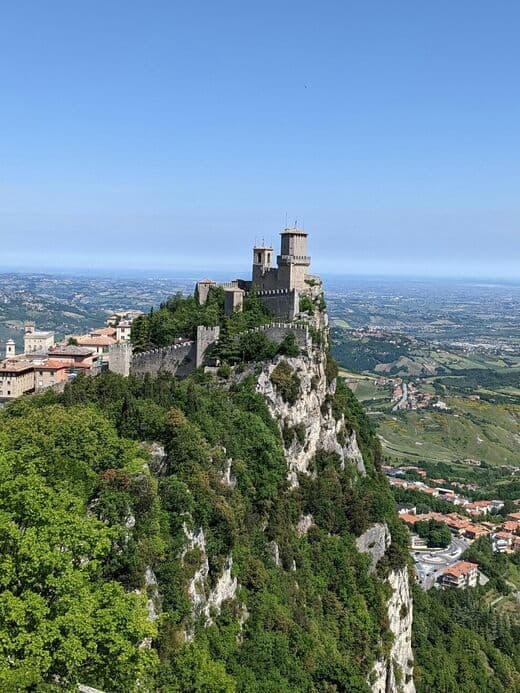
The undisputed centerpiece is the Three Towers of San Marino, the iconic fortifications that crown the three peaks of Monte Titano and appear on everything from the national flag to the country's euro coins. The First Tower (Guaita), built in the 11th century and expanded in the 15th, is the most visited and arguably the most photogenic. The Second Tower (Cesta or Fratta), sitting on the highest point of Monte Titano at 739 meters, houses a museum of ancient weapons. The Third Tower (Montale), the smallest and most remote, is not open to visitors but provides a dramatic silhouette visible from miles away. Walking the ridge path that connects all three towers is the single best thing you can do in San Marino -- a roughly 45-minute walk with views that will make your jaw drop.
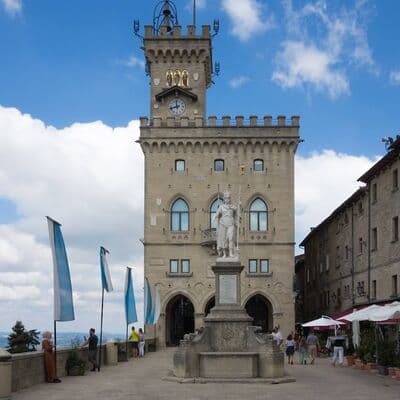
The Palazzo Pubblico dominates Piazza della Liberta, the main square of the old town. Built in the late 19th century in a neo-Gothic style that blends seamlessly with the medieval surroundings, it serves as the seat of government and the ceremonial heart of the republic. The changing of the guard takes place here every 30 minutes during summer months and is worth catching -- the guards wear elaborate blue uniforms with white plumes that look like something out of a Renaissance painting.
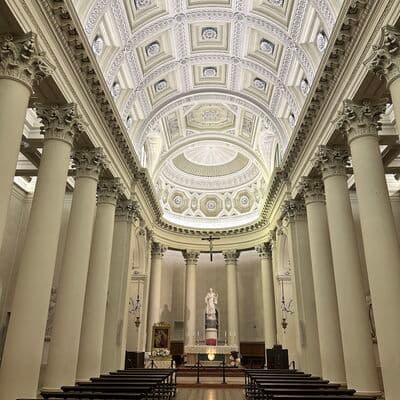
The Basilica of San Marino is the principal church of the republic, built in the early 19th century on the site of a much older church. Inside, you will find the relics of Saint Marinus, the stonemason from Rab (in modern-day Croatia) who, according to tradition, founded the republic in 301 AD to escape Roman persecution of Christians. The neoclassical facade is imposing without being overwhelming, and the interior is a cool, peaceful refuge from the summer heat.
The State Museum (Museo di Stato) is housed in Palazzo Pergami Belluzzi and offers an excellent overview of Sammarinese history, from prehistoric artifacts to medieval art to the famous stamp and coin collections. It is well-curated and not too large -- you can see everything in about an hour. The collections of Egyptian artifacts and Byzantine icons are surprisingly good for such a small museum, donated by various collectors over the centuries.
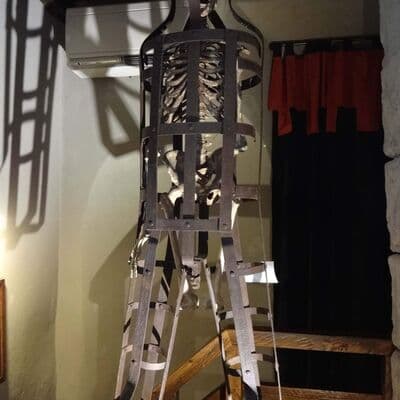
For something completely different, the Museum of Torture (Museo della Tortura) is one of San Marino's quirkier attractions. Housed in a medieval building, it displays over 100 instruments of torture from the Middle Ages and Renaissance. It is gruesome, fascinating, and oddly popular -- expect a crowd in summer. Whether you find it educational or exploitative depends on your perspective, but there is no denying it makes an impression. The iron maiden alone is worth the price of admission if you have a strong stomach.
The San Marino Cable Car (Funivia) connects the old town with Borgo Maggiore below and is both a practical transport link and a tourist attraction in its own right. The ride takes about two minutes and offers spectacular views of the valley and the Adriatic coast. I recommend riding it at least once in each direction -- the views are completely different going up versus coming down, and at sunset the light is absolutely magical.
Borgo Maggiore
Sitting at the base of Monte Titano directly below the capital, Borgo Maggiore is the commercial heart of San Marino and the main arrival point for most visitors. If you come by bus from Rimini, this is where you will be dropped off, and from here you can either walk up the steep road to the old town (about 20-25 minutes of solid uphill climbing) or take the cable car (two minutes, much easier on the knees).
Borgo Maggiore has a charm of its own that most visitors miss because they head straight up the mountain. The town center features a handsome medieval square with a weekly outdoor market on Thursday mornings that has been running since the 13th century. This is where locals actually shop -- you will find fresh produce, cheese, cured meats, clothing, and household goods at prices considerably lower than anything in the old town above. It feels authentic in a way that the tourist-oriented shops of the capital sometimes do not.
The lower station of the Cable Car is here, along with the main public parking areas that serve visitors to the old town. If you are driving, Borgo Maggiore is where you will most likely park (more on parking logistics later). There are several good restaurants here that cater more to locals than tourists, and the prices reflect that -- expect to pay 20-30% less for the same quality of food you would get in the capital.
Borgo Maggiore also hosts some of the country's most important events, including the annual Medieval Days festival and various seasonal markets. The Christmas market here in December is particularly atmospheric, with the illuminated towers of Monte Titano providing a backdrop that no decorator could improve upon.
Serravalle
The largest and most populous of the nine castelli, Serravalle is the modern commercial center of San Marino. Located in the northern part of the country, it is home to the majority of San Marino's population and most of its everyday businesses -- supermarkets, car dealerships, industrial parks, and residential neighborhoods.
For tourists, Serravalle's main draw is the Stadio Olimpico, where the San Marino national football (soccer) team plays its home matches. If you are a football fan, catching a San Marino match is a uniquely memorable experience. The team is, to put it diplomatically, not competitive at the international level -- they are regularly ranked last or near-last in the FIFA rankings and have won only one competitive match in their entire history (a 1-0 victory over Liechtenstein in 2004). But the atmosphere at home matches is wonderful -- passionate, self-deprecating, and genuinely fun. The stadium holds about 6,000 people and tickets are cheap and easy to get.
Serravalle is also where you will find the Crossbow Museum, the Centro Commerciale Atlante (the country's largest shopping center), and the Maranello Rosso Collection -- a museum devoted to Ferrari and Abarth cars that is a must-visit for any automobile enthusiast. The collection includes race cars, prototypes, and memorabilia spanning decades of Italian motorsport history.
From a practical standpoint, Serravalle is where many of the country's larger hotels are located, often at lower prices than accommodation in the historic center or Borgo Maggiore. If you have a car and want a comfortable base with easy parking, Serravalle is a sensible choice.
Domagnano
Northeast of the capital, Domagnano is a quiet residential castello that most tourists never see. It is a pleasant area of gentle hills, small farms, and suburban homes. The main point of interest is the 6th-century Domagnano Treasure, a collection of Ostrogothic gold jewelry that was discovered here in 1893 -- though the actual artifacts are now split between the State Museum in San Marino and the Germanisches Nationalmuseum in Nuremberg.
Domagnano is also home to several of the country's olive groves and small vineyards, and a drive or walk through its countryside gives you a sense of the agricultural life that sustained San Marino for centuries before tourism became an economic factor. If you are staying for more than a day, an afternoon stroll through Domagnano's lanes is a peaceful counterpoint to the tourist bustle of the old town.
Faetano
The southeastern-most castello, Faetano was the last to join the republic, incorporated from the Papal States in 1463. It retains a distinctly rural character, with scattered farmhouses, fields of grain and sunflowers, and a tranquility that feels miles from the busy streets above. The parish church of San Paolo is worth a brief stop if you are passing through, and the small river valley that forms the border with Italy is a pleasant spot for a picnic.
Faetano is where you come if you want to see the "real" San Marino -- not the tourist San Marino of souvenir shops and museum tickets, but the San Marino of working farms, local cafes where everyone knows everyone, and a pace of life that has not changed much in generations. There is no public transport to speak of, so you will need a car or a willingness to walk.
Acquaviva
West of Borgo Maggiore, Acquaviva is a residential castello with a growing commercial district along its main road. The name means "living water," a reference to the springs that once supplied the area. Today it is perhaps best known as the home of the Stadio di Acquaviva, a smaller sports venue used for domestic league matches.
The area around Acquaviva offers some of the best countryside walks in the republic, with gentle trails through oak and chestnut woods. In spring, the wildflowers here are exceptional -- carpets of orchids, primroses, and anemones that would be the envy of any English garden. The local agricultural cooperative sells excellent honey, olive oil, and preserves if you are looking for edible souvenirs.
Chiesanuova
The southern castello of Chiesanuova ("new church") is the most rural and least visited part of San Marino. It borders the Italian province of Pesaro-Urbino and has a distinctly Marchigiana feel -- rolling hills, isolated farmhouses, and views that extend deep into the Italian countryside.
For hikers, Chiesanuova offers the best network of marked trails in the country, winding through forests of oak, elm, and chestnut. The area around the old quarries is particularly scenic, with dramatic rock formations and views back toward Monte Titano that make the towers look almost fairy-tale-like in the distance. Bird-watchers will find good habitat here, especially during spring and fall migration periods.
There is very little in the way of tourist infrastructure in Chiesanuova -- no hotels, no museums, just a couple of trattorie and a lot of beautiful countryside. That is precisely its appeal.
Montegiardino
The smallest castello, Montegiardino is a tiny walled village with a preserved medieval core that feels like a miniature version of the capital but without the crowds. The old walls are remarkably intact, and walking through the narrow streets you will likely have the place entirely to yourself -- a striking contrast to the shoulder-to-shoulder crowds in the Citta di San Marino during peak season.
Montegiardino is home to the University of San Marino, giving it a slightly more intellectual atmosphere than its size might suggest. There is a small but excellent ceramic workshop in the village that produces traditional Romagnol pottery, and the local church contains some surprisingly fine Renaissance frescoes. If you are visiting San Marino for more than a day, an afternoon excursion to Montegiardino is highly recommended -- it is a 15-minute drive from the capital and offers a perspective on Sammarinese life that most visitors never discover.
Fiorentino
In the south of the country, Fiorentino is another quiet residential castello with a small but well-preserved medieval village at its center. The castello is named after the Florentines who, according to local tradition, settled here in the Middle Ages, though the historical evidence for this is debatable.
The main attraction is the Santuario della Beata Vergine della Consolazione, a small but atmospheric church set in peaceful grounds. Fiorentino also has good countryside walking, particularly along the valley of the San Marino River (which, despite its grand name, is really more of a creek). The annual Fiorentino Medieval Festival in July is a smaller, more intimate affair than the larger celebrations in the capital, and all the better for it.
If you are a golfer, the San Marino Golf Club is located in Fiorentino -- a compact but well-maintained 9-hole course with views of Monte Titano that will make it hard to concentrate on your swing.
What Makes San Marino Unique
Every travel destination claims to be unique, but San Marino genuinely has a list of attributes that no other place on earth can match. Let me walk you through what makes this tiny republic truly one of a kind.
The World's Oldest Republic
This is not a marketing slogan -- it is a verified historical fact. San Marino was founded on September 3, 301 AD, according to tradition, by a Christian stonemason named Marinus who fled religious persecution on the island of Rab (now in Croatia) and established a small community on Monte Titano. The republic has been continuously self-governing since then, making it the oldest surviving sovereign state and constitutional republic in the world.
To put that in perspective: San Marino was already 500 years old when William the Conqueror invaded England. It was already 1,000 years old when Columbus sailed to the Americas. It has survived the fall of the Roman Empire, the barbarian invasions, the rise and fall of the Papal States, Napoleon (who offered to expand its territory -- San Marino wisely declined), two World Wars, and the entire Cold War. Through all of this, it has maintained its independence and its republican form of government.
The political system is genuinely fascinating. Two Captains Regent serve as co-heads of state for six-month terms, a system that has been in place since 1243. They are sworn in on April 1 and October 1 each year in a ceremony at the Palazzo Pubblico that is open to the public and genuinely moving to witness. The idea is that no single person should hold too much power for too long -- a principle that many larger democracies might learn from.
Monte Titano and UNESCO World Heritage Status
The historic center of San Marino and Monte Titano were inscribed as a UNESCO World Heritage Site in 2008. The citation praises San Marino as "an exceptional testimony to a living cultural tradition" and recognizes the remarkable continuity of its republican institutions. It is one of the smallest UNESCO sites in the world and one of the most visually dramatic.
Monte Titano itself is a limestone ridge that rises abruptly from the surrounding plains, creating a natural fortress that has been central to San Marino's ability to maintain its independence. The mountain is not particularly high by Alpine standards -- 739 meters at its peak -- but its sheer-sided cliffs and commanding views over the Romagna plain made it virtually impregnable in the medieval period. Standing on the walls of the Three Towers and looking down, you understand immediately why no invading army ever successfully conquered this place. The climb would be suicidal under even minimal defensive fire.
The Three Towers
The Three Towers of San Marino -- Guaita, Cesta, and Montale -- are the country's most iconic symbols and one of the most recognizable skylines in Europe. Built at different times between the 11th and 14th centuries, they crown the three peaks of Monte Titano's ridge and are connected by a spectacular walking path called the Passo delle Streghe (Witches' Pass).
The First Tower, Guaita, is the oldest and most massive. Originally built as a prison, it was expanded and fortified over centuries and now houses a small museum and some of the best viewpoints in the country. The inner courtyard is particularly atmospheric, with its rough stone walls and medieval well. The Second Tower, Cesta, sits on the absolute highest point of Monte Titano and houses the Museum of Ancient Weapons, with an impressive collection of swords, crossbows, armor, and firearms spanning several centuries. The Third Tower, Montale, is the smallest and cannot be entered, but it provides a dramatic full stop to the ridge walk and features a deep pit that was historically used as a dungeon.
Stamps and Coins
San Marino has been issuing its own postage stamps since 1877, and they have become some of the most collectible in the world. The Philatelic and Numismatic Office on Piazza Garibaldi is a pilgrimage site for collectors, and even if you have zero interest in stamps, it is worth popping in to see the beautiful designs and learn about how this tiny country punches far above its weight in the postal world.
The same goes for coins. San Marino mints its own euro coins (with national designs on the reverse), and special commemorative editions regularly sell for many times their face value. A 2-euro coin from San Marino can fetch 10-20 euros among collectors, and rare editions go for much more. The coin sets sold at the Philatelic Office make excellent gifts for the collector in your life.
Rallying and Motorsport
San Marino punches massively above its weight in motorsport. The annual Rallylegend event, held in October, transforms the country's narrow mountain roads into a world-class rally stage. Former WRC champions, legendary Group B cars, and thousands of passionate fans descend on the republic for four days of noise, spectacle, and controlled chaos. If you are even remotely interested in rallying, Rallylegend is a bucket-list event -- the combination of the stunning setting, the historic cars, and the intimate scale (you can literally stand meters from the action) is unmatched anywhere in the world.
San Marino also lends its name to the San Marino Grand Prix, held at the Autodromo Enzo e Dino Ferrari in nearby Imola, Italy. While the race technically takes place outside San Marino's borders, the connection is a source of enormous national pride, and Grand Prix weekends bring a festive atmosphere to the entire region.
Medieval Traditions
The Crossbow Tournament (Palio dei Balestrieri), held on September 3 each year -- the national holiday commemorating the republic's founding -- is not a tourist show. It is a genuine sporting competition between the republic's crossbow teams, using traditional equipment and techniques that have been passed down for centuries. The event takes place in the Cava dei Balestrieri, a natural amphitheater below the First Tower, and the atmosphere is electric -- imagine a combination of the Super Bowl and a Renaissance faire, but with real medieval weapons and genuine national pride at stake.
Medieval Days (Giornate Medievali) in July is a broader festival that transforms the old town into a medieval marketplace with period costumes, traditional crafts, fire-eaters, jugglers, and food stalls serving historical recipes. It is touristy, sure, but it is also genuinely fun and gives you a sense of what life in the republic might have looked like centuries ago.
Hiking Trails
Despite its tiny size, San Marino offers a surprising network of hiking trails that range from easy strolls to moderately challenging ridge walks. The signature hike is the Witches' Pass connecting the Three Towers, but there are also excellent trails in the southern castelli (Chiesanuova and Fiorentino) that take you through forests, past old quarries, and along ridgelines with spectacular views.
The entire country can theoretically be walked end to end in a single day -- the maximum distance from the northernmost point of Serravalle to the southern border of Chiesanuova is only about 13 kilometers. A motivated hiker could conceivably traverse the entire nation before lunch, which is a claim very few countries can make.
When to Visit San Marino
San Marino's climate is broadly similar to the Emilia-Romagna region that surrounds it -- hot summers, cold winters, and pleasant shoulder seasons. But the elevation of Monte Titano creates its own microclimate, and conditions in the old town can be significantly different from the coast just 20 kilometers away.
Spring (April - May)
This is my favorite time to visit. Temperatures in the old town range from 12-22 degrees Celsius (54-72 Fahrenheit), the wildflowers are in full bloom, and the summer crowds have not yet arrived. April is slightly rainy, but May is often glorious -- warm sunshine, clear views, and a feeling of freshness that the summer heat burns away. The Captain Regent inauguration on April 1 is a highlight if your timing works out.
Summer (June - August)
Peak tourist season, with temperatures in the old town reaching 28-32 degrees Celsius (82-90 Fahrenheit). July and August are extremely busy, especially on weekends when day-trippers from the Rimini coast arrive en masse. The narrow streets of the old town can feel uncomfortably crowded, and waits at museums and restaurants can be significant. That said, summer evenings on Monte Titano are magical -- the light turns golden, the crowds thin, and the views are at their most spectacular. If you must visit in summer, arrive early in the morning or stay until sunset.
Autumn (September - October)
September is excellent, especially around the national holiday on September 3 when the Crossbow Tournament takes place. The weather is still warm (18-25 degrees Celsius / 64-77 Fahrenheit) but more comfortable than the summer peak, and the autumn light is exceptionally beautiful for photography. October brings Rallylegend and the beginning of the fall colors -- the chestnut and oak forests below Monte Titano turn shades of gold and amber that make the entire landscape glow.
Winter (November - March)
The quiet season. Temperatures in the old town drop to 0-8 degrees Celsius (32-46 Fahrenheit), and fog can shroud Monte Titano for days at a time. Many of the smaller museums and shops close or reduce their hours. But there is a real charm to visiting San Marino in winter -- the old town is virtually empty, prices are at their lowest, and on those rare clear winter days, the views are sharper than at any other time of year. The Christmas market in December is genuinely festive. Just bring warm clothing, because the wind on Monte Titano in January is no joke.
Events Calendar
Key dates to plan around: Captain Regent inauguration (April 1, October 1), Medieval Days (July), Crossbow Tournament (September 3), Rallylegend (October), Christmas Market (December). The national holiday on September 3 is the single biggest day of the year and well worth building a trip around.
How to Get There
San Marino has no airport, no railway station, and no seaport. Getting there means coming through Italy, and the most common gateway is the Adriatic coastal city of Rimini, about 25 kilometers to the northeast.
From Rimini by Bus
This is how most visitors arrive. Two companies operate regular bus services from Rimini to San Marino: Bonelli Bus and Benedettini. The journey takes approximately 40-50 minutes, depending on traffic and stops, and the fare is around 5-6 euros each way (roughly $5.50-6.50 USD).
Important note for 2026 visitors: Due to construction work at the Rimini train station area, the San Marino bus terminal has been temporarily relocated. From January through approximately March 2026, buses depart from an alternate stop near Piazzale Clementini rather than the usual location at Piazzale Gramsci. Check the Bonelli Bus or Benedettini websites for current departure points before you travel -- the temporary stop is only about 300 meters from the original one, but it can be confusing if you are not expecting the change.
Buses run roughly every hour from early morning until mid-evening, with more frequent service in summer. The last bus back from San Marino to Rimini typically departs around 7:30-8:00 PM, but check current schedules as they change seasonally. The bus drops you in Borgo Maggiore, at the base of Monte Titano, from where you can take the cable car or walk up to the old town.
From Bologna
If you are flying into Bologna Guglielmo Marconi Airport (the nearest major international airport), you have two options. The simplest is to take the train from Bologna to Rimini (about 1 hour 15 minutes by regional train, around 10-12 euros) and then catch the bus as described above. Alternatively, if you rent a car in Bologna, the drive to San Marino takes about 2 hours via the A14 autostrada to Rimini and then the SS72 superstrada up the valley to San Marino.
By Car
Driving to San Marino is straightforward. The main approach is via the SS72, a well-maintained two-lane road that climbs from the Rimini coast up through the Marecchia valley to Borgo Maggiore. There is no border control -- you will cross from Italy into San Marino without even realizing it unless you notice the small border markers on the roadside.
From the north (Bologna, Modena, Parma): Take the A14 autostrada south to the Rimini Nord exit, then follow signs for "Repubblica di San Marino" via the SS72.
From the south (Ancona, Pesaro): Take the A14 north to the Rimini Sud exit, then follow signs for San Marino.
From Florence: Take the E45 north to Cesena, then the SS72 east to Rimini, then follow signs for San Marino. Alternatively, cross the Apennines via the SS67 to Forli and then south to San Marino. Total drive time is about 3 hours either way.
Parking in the old town is extremely limited (more details in the Getting Around section below), so plan to park in Borgo Maggiore or at one of the designated lots and take the cable car or bus up.
From Other Italian Cities
From Venice, the train to Rimini takes about 3 hours and the entire journey (train plus bus) can be done comfortably in a day trip, though I would not recommend it -- that is a lot of travel time for a brief visit. From Rome, the train to Rimini takes about 3.5-4 hours, making San Marino a realistic if somewhat ambitious day trip. Honestly, if you are coming from Rome or Venice, you should plan to spend at least one night in the Rimini area to make the journey worthwhile.
Getting Around San Marino
The good news about getting around San Marino is that it is tiny. The entire country is smaller than some city parks, and the historic center -- where most visitors spend their time -- is compact enough to explore entirely on foot in a few hours. The less good news is that "on foot" means "on foot and climbing," because Monte Titano is steep and the old town is built on a hillside.
Walking
This is the primary way to get around the historic center, and honestly it is the best way. The old town is pedestrianized, so you have no choice but to walk once you are inside the walls. The main drag -- from Porta San Francesco up through Contrada del Collegio and Contrada del Pianello to Piazza della Liberta -- is a steady uphill climb that takes about 10-15 minutes. From the Piazza to the Three Towers is another 15-20 minutes of steeper climbing.
Wear comfortable shoes with good grip. The cobblestones are uneven and can be slippery when wet. In summer, bring water and take your time on the uphills -- there is no shame in pausing to catch your breath, and the views from every resting point are worth the stop.
The Cable Car
The San Marino Cable Car (Funivia di San Marino) connects Borgo Maggiore to the old town and is both a practical transport link and a scenic experience. The ride takes about two minutes and runs every 15 minutes during operating hours (roughly 8:00 AM to 8:00 PM in summer, shorter hours in winter). A single ticket costs 2.80 euros, a return ticket 4.50 euros. I recommend buying a return -- you will want to ride it at least twice.
The cable car deposits you near the center of the old town, close to Piazza della Liberta, saving you the 20-25 minute uphill climb from Borgo Maggiore. In peak season, queues can build up, especially around midday -- try to ride it before 10 AM or after 4 PM for a more comfortable experience.
Buses
A small network of local buses connects the various castelli, but service is infrequent (every 30-60 minutes on main routes, less often on secondary routes) and designed more for commuters than tourists. The most useful route for visitors is the one connecting Borgo Maggiore with Serravalle, which passes through the commercial district. Bus tickets cost 1.50 euros and can be purchased at tabacchi (tobacco shops) or on board.
Parking
If you are driving, parking is one of the most important practical details to get right. San Marino's old town has extremely limited parking, and during peak season the lots fill up early. Here is what you need to know:
P1 (Borgo Maggiore): The main parking area at the base of the cable car in Borgo Maggiore. This is the most convenient option for visiting the old town -- park here and ride the cable car up. It is a large lot that rarely fills up completely, and the cost is around 1.50 euros per hour or 6-8 euros for the full day. This is my top recommendation for most visitors.
P3 (Cava Antica): Located partway up Monte Titano, closer to the old town than P1 but smaller. This is a good option if you want to minimize your walking but do not mind a slightly more challenging drive on narrow mountain roads. Pricing is similar to P1.
P9 (Porta della Fratta): Near the main entrance to the old town (Porta San Francesco), this is the most convenient lot if you want to walk directly into the historic center without using the cable car. It is small and fills up very quickly in summer -- arrive before 9 AM if you want a space. Slightly more expensive than the lower lots.
P11 (below the Second Tower): A smaller lot near the ridge path to the towers. Useful if your primary interest is the Three Towers walk rather than the town itself. Access is via a narrow road that can be intimidating if you are not comfortable with mountain driving.
General parking tips: In summer, arrive before 10 AM or after 3 PM -- the midday rush from coast tourists is intense. Free parking is available in Serravalle and Domagnano, but you will need to bus or drive from there. Many lots accept only coins or cash, so come prepared. The parking meters typically operate from 8 AM to 8 PM, with free parking overnight.
Cultural Code
Understanding San Marino's cultural identity is essential to being a respectful and well-informed visitor. The single most important thing to know -- and I cannot stress this enough -- is that Sammarinese people are not Italian. Yes, they speak Italian. Yes, they are culturally similar to their Italian neighbors in many ways. Yes, their country is entirely surrounded by Italy. But calling a Sammarinese person Italian is like calling a Canadian American or a New Zealander Australian. It is inaccurate, mildly insulting, and guaranteed to get you a polite but firm correction.
National Identity
The Sammarinese are intensely proud of their independence and their republic's extraordinary longevity. This is a people who have maintained their sovereignty for over 1,700 years through a combination of diplomacy, strategic neutrality, and sheer stubbornness. They take their political institutions seriously -- the changing of the Captains Regent is a genuine national event, not a ceremonial afterthought, and voter turnout in elections is typically very high.
When talking with locals, expressing genuine interest in their history and institutions will earn you goodwill. Asking questions about the republic's political system, its relationship with Italy, or its history of independence is appreciated. What is not appreciated is the suggestion that San Marino is somehow not a "real" country, or that it is merely an Italian curiosity. It is a sovereign nation with a proud history, and treating it as such is basic courtesy.
Language
The official language is Italian, specifically the Romagnol variety spoken in the surrounding Italian region of Emilia-Romagna. Many Sammarinese, especially older generations, also speak Sammarinese (Sammarinese Romagnol), a local dialect that is distinct from standard Italian and is considered a cultural heritage worth preserving.
In tourist areas, English is widely understood, and you will have no trouble communicating at hotels, restaurants, museums, and shops in the historic center. Outside the tourist zones, English is less common, and a few words of Italian (per favore, grazie, scusi) go a long way. Learning to say "Buongiorno" (good morning) and "Buonasera" (good evening) and using them when entering shops and restaurants is both polite and appreciated.
Tipping
Like Italy, San Marino does not have a strong tipping culture. A service charge (coperto) of 1.50-3.00 euros per person is typically included in restaurant bills. Beyond that, tipping is appreciated but not expected. If you have received particularly good service, rounding up the bill or leaving a few euros is a nice gesture but nobody will chase you out the door if you do not. For coffee at a bar, tipping is virtually unheard of -- just pay the listed price.
Dining Etiquette
Meals in San Marino follow the Italian rhythm: a light breakfast (usually just coffee and a pastry), a substantial lunch between 12:30 and 2:00 PM, and dinner from 7:30 PM onwards. Many restaurants close between lunch and dinner service (roughly 2:30-7:00 PM), so plan accordingly. Asking for a meal outside these hours will usually result in disappointment.
Cappuccino is a morning drink -- ordering one after lunch or dinner will mark you instantly as a tourist. If you want a coffee after a meal, order an espresso (just say "un caffe"). And for the love of all that is holy, do not ask for a "latte" thinking you will get a coffee drink -- "latte" means "milk" in Italian, and that is exactly what you will receive.
The Crossbow Tradition
The Federazione Balestrieri (Crossbow Federation) is one of San Marino's most important cultural institutions. The crossbow has been the national weapon since medieval times, and the annual crossbow tournament on September 3 is a major event. If you happen to visit during this time, treat the event with the respect it deserves -- this is not a Renaissance faire performance but a genuine sporting and cultural tradition with deep roots in the national identity.
Dress Code
San Marino is generally casual, but as with most southern European countries, a neat appearance is valued. In the old town, smart casual is appropriate for restaurants and churches. If you plan to enter the Basilica of San Marino or any other church, shoulders and knees should be covered -- this is enforced more strictly than in many Italian churches. At the beach in Rimini, anything goes; in the medieval streets of San Marino, a little more effort is expected.
Photography
Photography is welcomed almost everywhere in San Marino, including in most museums (without flash). The main exceptions are inside active government buildings during sessions and during certain religious ceremonies. When in doubt, ask. Locals are generally happy to be photographed but, as anywhere, it is polite to ask first rather than sticking a camera in someone's face.
Safety
San Marino is one of the safest countries in the world, full stop. The crime rate is extraordinarily low -- violent crime is virtually nonexistent, and even petty crime like pickpocketing is rare. The entire country has a population of 34,000 people, everyone knows everyone, and the social fabric is tight enough that criminal activity has very few places to hide.
Petty Crime
That said, the old town does attract over 2 million tourists per year, and where there are tourists, there are occasionally pickpockets. The risk is significantly lower than in any major Italian city, but basic precautions apply: keep your wallet in a front pocket, do not leave bags unattended, and be aware of your surroundings in crowded areas like Piazza della Liberta during peak season. I have never personally experienced or witnessed any crime in San Marino, and I have visited dozens of times.
Road Safety
The mountain roads in and around San Marino can be steep, narrow, and winding. If you are not accustomed to driving in mountainous terrain, take it slow and be prepared for tight turns with limited visibility. Local drivers tend to be confident and fast on these roads, so give way when appropriate. The road from Borgo Maggiore up to the old town is particularly challenging, with hairpin turns and limited space for two-way traffic.
Mountain Safety
The walking paths along Monte Titano's ridge are well-maintained but do involve some exposed sections with steep drops. The path between the towers has guardrails at the most dangerous points, but there are still areas where a stumble could have serious consequences. Stay on marked paths, watch your footing, and keep children close. In wet or icy conditions, the limestone rocks become extremely slippery -- exercise extra caution.
Emergency Numbers
In case of emergency, the following numbers apply in San Marino:
- General Emergency: 112 (European emergency number, works throughout San Marino and Italy)
- Police (Gendarmeria): 0549 888888
- Medical Emergency: 118
- Fire Brigade: 115
San Marino's police force, the Corpo della Gendarmeria, is professional and courteous. Most officers speak at least some English. The country also has a small but well-equipped civil protection service for mountain emergencies.
Health
San Marino presents no particular health concerns for visitors. The country has a modern healthcare system with standards comparable to Italy and other Western European nations.
Medical Facilities
The Ospedale di Stato (State Hospital) in Borgo Maggiore is the country's main medical facility. It is a modern, well-equipped hospital with emergency services, and it can handle most medical situations. For very serious or specialized cases, patients are transferred to hospitals in Rimini or Bologna, both of which are within easy reach.
There are pharmacies (farmacie) throughout the country, including several in the old town and Borgo Maggiore. Pharmacies in San Marino follow the same rotation system as Italy -- one pharmacy in each area is always open for emergencies, even at night and on weekends. The rotation schedule is posted on the door of each pharmacy. Common over-the-counter medications are readily available, though brand names may differ from what you are accustomed to at home.
Water
Tap water in San Marino is safe to drink. The water supply comes from a combination of local springs and imports from Italy, and it meets EU quality standards. That said, the water has a slightly mineral taste that some visitors find off-putting -- if that bothers you, bottled water is cheap and available everywhere.
Sun Protection
The elevation of Monte Titano means stronger UV exposure than you might expect, especially in summer. The old town offers limited shade, and the reflective limestone surfaces can amplify sun exposure. Wear sunscreen (SPF 30 minimum), a hat, and sunglasses, and carry water. I have seen more sunburned tourists staggering down from the towers in July than I care to count -- do not join their ranks.
Travel Insurance
San Marino is not part of the EU, which means the European Health Insurance Card (EHIC) does not technically apply here. In practice, the Italian healthcare system and San Marino's system are closely integrated, and emergency treatment will not be refused regardless of your insurance status. However, I strongly recommend comprehensive travel insurance for any trip to Europe, including San Marino. Medical costs can be significant if you need treatment, and insurance gives you peace of mind.
Money
San Marino uses the euro as its official currency, despite not being a member of the European Union. This makes financial transactions straightforward for anyone familiar with the eurozone.
Cash vs. Cards
Credit and debit cards (Visa, Mastercard, and increasingly American Express) are widely accepted in hotels, restaurants, museums, and larger shops in the old town and Borgo Maggiore. However, smaller shops, market stalls, and some cafes may be cash-only, so always carry some cash. ATMs are available in the old town, Borgo Maggiore, and Serravalle -- look for Bancomat signs.
A heads-up for Americans: many ATMs and card machines in San Marino will ask if you want to be charged in euros or your home currency. Always choose euros. The "dynamic currency conversion" offered by the machine gives you a terrible exchange rate -- your own bank will almost certainly give you a better deal.
Budget Breakdown
Here is what a typical day in San Marino costs, based on recent prices:
Budget traveler (roughly 50-70 EUR / $55-75 USD per day):
- Hostel or budget hotel in Serravalle or Rimini: 25-40 EUR
- Bus from Rimini: 10-12 EUR return
- Cable car: 4.50 EUR return
- One museum entry: 4-8 EUR
- Lunch (piadina + drink): 8-12 EUR
- Coffee and pastry: 3-4 EUR
Mid-range traveler (roughly 120-180 EUR / $130-195 USD per day):
- Hotel in Borgo Maggiore: 70-100 EUR
- Multi-museum pass (San Marino Card): 12-15 EUR
- Cable car: 4.50 EUR
- Sit-down lunch: 20-30 EUR
- Dinner at a good restaurant: 35-50 EUR
- Cocktail with a view: 8-12 EUR
Luxury traveler (250+ EUR / $270+ USD per day):
- 4-star hotel in the old town: 150-250 EUR
- Private guided tour: 100-150 EUR
- Fine dining: 60-100 EUR
- Shopping and souvenirs: variable
Where to Save Money
The San Marino Card (available at the tourist office and some hotels) gives discounted or free entry to multiple museums and attractions and is worth it if you plan to visit more than two sites. Eating in Borgo Maggiore rather than the old town saves 20-30% on meals. Visiting in the off-season (November-March) brings hotel prices down significantly. And parking in the lower lots rather than near the old town saves a few euros per day.
Itineraries
Whether you have half a day or three weeks, here are detailed itineraries to help you make the most of San Marino and the surrounding region.
One Day in San Marino
This is the most common visit duration, and it is enough to hit the highlights if you start early and keep moving.
Morning (9:00 - 12:30):
Arrive in Borgo Maggiore by bus from Rimini (departs around 8:15 AM) or by car (park at P1). Take the Cable Car up to the old town. Start at Piazza della Liberta and watch the changing of the guard if the timing works out. Visit the Palazzo Pubblico (30 minutes). Walk up through the old town to the Three Towers, starting with the First Tower (Guaita). Take the ridge walk to the Second Tower (Cesta) and visit the weapons museum inside. If you have the energy, continue to the Third Tower (Montale) for the full ridge walk experience. This section alone is worth the entire trip -- the views are extraordinary.
Lunch (12:30 - 1:30):
Head back toward the center and grab lunch at one of the restaurants along Contrada del Collegio. Try a piadina (the local flatbread sandwich) for something quick and authentic, or sit down for a proper Romagnol meal of passatelli in brodo (pasta in broth) followed by rabbit stew.
Afternoon (1:30 - 5:00):
Visit the State Museum for an overview of Sammarinese history (1 hour). Pop into the Basilica of San Marino (15 minutes). If you enjoy the macabre, spend 30-45 minutes at the Museum of Torture. Use any remaining time for shopping along the main streets -- San Marino's duty-free shops offer good deals on perfume, sunglasses, and alcohol.
Late Afternoon (5:00 - 6:30):
Take the Cable Car back down to Borgo Maggiore and explore the town square briefly before catching the bus back to Rimini (last buses around 7:30-8:00 PM). Alternatively, if you are driving, head to one of the viewpoints on the road below Borgo Maggiore for a final look back at the illuminated towers as dusk falls.
Two Days in San Marino
With two days, you can slow down, go deeper, and see the parts of San Marino that day-trippers miss.
Day 1: The Historic Center
Follow the one-day itinerary above but at a more leisurely pace. Spend more time at each tower -- the First Tower has hidden corners and viewpoints that most visitors miss because they rush through. Have a proper sit-down lunch with wine. Visit the Stamp and Coin Museum on Piazza Garibaldi. End the day with an aperitivo at one of the bars near Piazza della Liberta and watch the sunset from the city walls. Dine at a restaurant in the old town -- the evening atmosphere, after the day-trippers have departed, is magical. The old town is almost empty, the towers are lit up, and you feel like you have the entire country to yourself.
Day 2: Beyond the Old Town
Morning: Drive or take the bus to Serravalle and visit the Maranello Rosso Collection (Ferrari museum) -- even non-car-enthusiasts will enjoy the beautiful machines and the stories behind them (1.5 hours). Continue to the Crossbow Museum if you are interested in medieval weapons and sport.
Afternoon: Drive to Montegiardino, the smallest castello, and explore its medieval walls and quiet streets (1 hour). Continue to Fiorentino for a walk along the San Marino River valley. Stop at a local farmhouse (agriturismo) for a late lunch of home-cooked Romagnol food.
Evening: Return to the old town for a final evening walk along the ridge path. The towers at twilight, with the lights of the Romagna plain sparkling below, is an image you will carry with you long after you leave.
Seven Days: San Marino and the Romagna Coast
A week gives you time to thoroughly explore San Marino and combine it with the best of the surrounding region. Base yourself in San Marino or Rimini and alternate between the two.
Day 1: Arrival and San Marino Old Town
Arrive in Rimini, check into your hotel, and take the afternoon bus to San Marino for a first overview. Ride the Cable Car up, walk to Piazza della Liberta, and get your bearings. Stroll through the main streets and have dinner in the old town.
Day 2: San Marino In Depth
Full day in the old town. Visit all Three Towers with the ridge walk. Tour the Palazzo Pubblico, State Museum, Basilica, and Museum of Torture. Lunch at a restaurant with valley views. Visit the Stamp and Coin Museum and do some shopping in the afternoon.
Day 3: San Marino Countryside
Rent a car (or join a guided tour if available) and explore the outer castelli. Morning in Serravalle (Ferrari museum, Crossbow Museum). Lunch at an agriturismo in Faetano or Chiesanuova. Afternoon hike through the countryside trails of Chiesanuova. Drive through Montegiardino and Fiorentino before returning.
Day 4: Rimini
Spend the day exploring Rimini, a city that deserves far more attention than it gets as merely a beach resort. Visit the Tempio Malatestiano (a Renaissance masterpiece), the Arch of Augustus (the oldest surviving Roman triumphal arch), the Ponte di Tiberio (a 2,000-year-old Roman bridge still in daily use), and the excellent City Museum. Spend the afternoon on the beach if the weather cooperates. Evening passeggiata (stroll) along Corso d'Augusto.
Day 5: Ravenna
Day trip to Ravenna, about 1 hour north of Rimini by train. Ravenna is home to the finest Byzantine mosaics outside Istanbul -- the Basilica of San Vitale and the Mausoleum of Galla Placidia are genuinely jaw-dropping, among the most beautiful things I have ever seen in decades of travel. Also visit the Basilica of Sant'Apollinare Nuovo and Dante's Tomb (yes, the author of the Divine Comedy is buried here, not in Florence). Return to Rimini for dinner.
Day 6: Gradara
Day trip to the medieval fortress of Gradara, about 30 minutes south of Rimini. This is one of the best-preserved medieval castles in Italy and the setting for the famous love story of Paolo and Francesca immortalized in Dante's Inferno. The castle itself is impressive, but the real magic is the perfectly preserved medieval village surrounding it -- all towers, ramparts, and narrow streets with views to the Adriatic. Combine with a visit to nearby Pesaro if time allows.
Day 7: Final Day
Return to San Marino for a morning visit to any sites you missed. Pick up last-minute souvenirs (stamps, coins, local wine). Take a final ride on the Cable Car and say goodbye to Monte Titano. Afternoon departure from Rimini.
Ten Days: San Marino, Romagna, and the Marche
Ten days lets you add Bologna and the beautiful Marche region to the mix.
Days 1-3: San Marino
Follow the first three days of the seven-day itinerary above. With three full days, you can explore every corner of the republic at a relaxed pace.
Day 4: Bologna
Take the train from Rimini to Bologna (1 hour 15 minutes). Spend the day in one of Italy's most underrated cities. Climb the Asinelli Tower for panoramic views, explore the medieval porticoes (a UNESCO World Heritage Site), visit the Basilica of San Petronio, and eat some of the best food in Italy -- this is the gastronomic capital, home of ragu (Bolognese sauce), tortellini, mortadella, and Parmigiano-Reggiano. The Quadrilatero market area is food heaven. Overnight in Bologna.
Day 5: Bologna and Return
Morning in Bologna -- visit the University (the oldest in the Western world, founded 1088), the National Gallery, or simply wander the beautiful streets. Afternoon train back to Rimini area.
Day 6: Rimini
Full day in Rimini as described in the seven-day itinerary.
Day 7: Ravenna
Day trip to Ravenna as described above.
Day 8: Gradara and Pesaro
Morning at Gradara castle. Afternoon in Pesaro -- birthplace of Rossini (the opera composer), with a beautiful old town, a good archaeological museum, and a lovely seafront. If visiting in August, the Rossini Opera Festival is world-class.
Day 9: Urbino
Day trip to Urbino, about 1.5 hours south of Rimini. This hill town is one of the jewels of the Italian Renaissance -- the Palazzo Ducale is one of the finest Renaissance palaces in Italy, and the town's art gallery contains works by Raphael (who was born here), Piero della Francesca, and Titian. The town itself is a UNESCO World Heritage Site and spectacularly beautiful, with honeyed stone buildings and dramatic views over the surrounding hills. One of the most undervisited great art cities in Italy.
Day 10: Departure
Final morning for any remaining sightseeing or shopping. Depart from Rimini or Bologna.
Fourteen Days: The Deep Dive
Two weeks gives you time to go really deep into San Marino and the northeastern Italian region.
Days 1-3: San Marino
Three full days exploring every castello, every museum, every trail. Include a sunset dinner at one of the restaurants with Monte Titano views. Visit the Philatelic Museum, the Wax Museum, the Reptilarium (unexpectedly good), and the Museum of Curiosities. Take the countryside hikes in Chiesanuova. Attend any local events happening during your visit.
Days 4-5: Rimini
Two days to properly explore Rimini. Day one for historical Rimini (Roman and Renaissance sites), day two for the beach and the modern seafront. Take an evening walk through the Borgo San Giuliano neighborhood, the old fishing quarter with its colorful murals inspired by Federico Fellini (who was born in Rimini).
Day 6: Ravenna
Full day in Ravenna. With more time, add Sant'Apollinare in Classe (a 6th-century basilica outside town with extraordinary mosaics) and the Domus dei Tappeti di Pietra (underground Roman mosaic floors). These are world-class sites that most day-trippers miss.
Day 7: Cesena and Forli
Two smaller Romagnol cities that most tourists overlook entirely. Cesena has the magnificent Biblioteca Malatestiana, the first public library in Europe (1452) and a UNESCO Memory of the World site. Forli has an excellent art museum in the San Domenico complex. Both cities have excellent food scenes without tourist markups.
Days 8-9: Bologna
Two full days in Bologna. Beyond the highlights mentioned above, visit the MAST photography museum, the Archiginnasio Library (with its incredible anatomical theater), and the Santo Stefano complex (seven churches in one). Take a food tour of the markets. Drive to nearby Dozza, a village where every building is covered in murals, for an afternoon excursion.
Day 10: Gradara and Pesaro
As described in the ten-day itinerary.
Day 11: Urbino
Full day in Urbino with time to visit the Oratorio di San Giovanni (jaw-dropping Gothic frescoes) and explore the back streets. Lunch on the piazza, watching the world go by.
Day 12: San Leo and Verucchio
Two remarkable hill towns in the Marecchia valley behind Rimini. San Leo is a dramatic fortress perched on an almost vertical cliff -- it was here that the infamous Count Cagliostro (alchemist, Freemason, and con artist) was imprisoned until his death. Verucchio has an excellent archaeological museum with Villanovan artifacts and a well-preserved medieval fortress. These are genuine off-the-beaten-path gems that very few tourists visit.
Day 13: Santarcangelo di Romagna
A charming small town just south of Rimini with mysterious underground caves (tufaceous grottos of uncertain origin), a medieval fortress, and one of the best food scenes in the region. The Thursday evening market in summer is a local institution. Santarcangelo is also the home of the Mutonia artistic community, where sculptors create art from recycled industrial materials.
Day 14: Final Day
Return to San Marino for a farewell visit. Buy your final souvenirs, ride the cable car one last time, and take one more photo of those unforgettable towers against the sky. Depart from Rimini or Bologna.
Twenty-One Days: The Grand Tour of Northeastern Italy
Three weeks lets you combine San Marino with a comprehensive exploration of one of Italy's richest regions.
Days 1-3: San Marino
The full three-day San Marino experience as described above. Take your time with every museum, every trail, and every view. Have dinner in a different restaurant each night. Get to know the country properly.
Days 4-6: Rimini and the Coast
Three days for Rimini and the surrounding coastline. Day one for historical Rimini, day two for the beach and Fellini museum, day three for a drive along the coast visiting Riccione (upscale beach town with good nightlife), Cattolica (smaller, more family-friendly), and Gabicce Mare (the last town in Emilia-Romagna before the Marche border, with a beautiful clifftop drive).
Day 7: Ravenna
Full day of mosaics and history as described above.
Day 8: Cervia and Comacchio
North along the coast. Cervia has ancient salt pans that are now a nature reserve, with flamingos and other wading birds. Comacchio, built on 13 islands connected by bridges, is often called "Little Venice" -- it is far less famous but almost as photogenic as its larger namesake, and you can eat eels prepared in the traditional way at the local restaurants.
Days 9-11: Bologna
Three days to truly experience Italy's food capital. Day one for the historic center and museums. Day two for a food-focused exploration -- visit Eataly (the original is nearby in Parma, but Bologna's branch is excellent), take a pasta-making class, eat at a traditional osteria. Day three for a day trip to Parma (Parmigiano-Reggiano dairies, Parma ham producers, the cathedral's Correggio frescoes, and the magnificent Farnese Theater) or Modena (balsamic vinegar producers, the Ferrari Museum, the cathedral with its Romanesque sculptures).
Day 12: Ferrara
Day trip from Bologna to Ferrara, a magnificent Renaissance city and UNESCO World Heritage Site. The Este Castle (a moated medieval fortress in the middle of the city), the cathedral, the Palazzo dei Diamanti (with its extraordinary diamond-studded facade), and the Jewish quarter are all essential. Ferrara is also Italy's cycling capital -- rent a bike and ride the city walls for one of Italy's most pleasant urban cycling experiences.
Days 13-14: The Marche
Two days exploring the Marche region south of San Marino. Day one for Urbino and its Renaissance treasures. Day two for the Furlo Gorge (a dramatic river canyon with Roman tunnels), Fano (a pleasant seaside town with Roman ruins), and the caves of Frasassi (among the most spectacular underground cave systems in Europe).
Day 15: Gradara, San Leo, and the Marecchia Valley
A full day exploring the hill forts and medieval villages of the Marecchia valley. Start at Gradara, continue to Verucchio, then San Leo, and finish at Pennabilli (a tiny village that hosts the wonderful Museo del Calcolo, dedicated to the history of mathematics).
Days 16-17: Cesena, Forli, and Inland Romagna
Two days for the smaller Romagnol cities and countryside. Visit the Malatesta Library in Cesena, the San Domenico museum in Forli, the thermal baths of Bagno di Romagna (excellent for a rest day), and the hill town of Bertinoro (known as the "Balcony of Romagna" for its spectacular views and excellent wine).
Day 18: Santarcangelo and the Malatesta Trail
Explore Santarcangelo in the morning, then drive the "Malatesta Trail" through the small castles and fortified villages that once belonged to the powerful Malatesta family -- Mondaino, Saludecio, and Montegridolfo are all charming and virtually tourist-free.
Day 19: Return to San Marino
After nearly three weeks of exploring the region, return to San Marino for a final visit. You will see the country with completely different eyes now -- with context for its place in the broader regional history and culture. Visit any sites you missed the first time, or simply sit on the walls and enjoy the view.
Day 20: Wine Country
Dedicate a day to the wines of the Sangiovese di Romagna region. Visit wineries in the hills around Predappio, Bertinoro, or Castel San Pietro. The wines here are excellent and far less expensive than their Tuscan cousins just across the mountains. Many wineries offer tastings and cellar tours -- book in advance.
Day 21: Departure
Final packing and departure from Rimini or Bologna. If time allows, a last morning walk along the Rimini seafront or through Bologna's porticoes is a fitting farewell to one of Italy's most rewarding corners.
Connectivity
Staying connected in San Marino is generally straightforward, though there are a few quirks worth knowing about.
Mobile Networks and Roaming
San Marino has its own mobile network operator, San Marino Telecom, but in practice most visitors will find their phones connecting to Italian networks (TIM, Vodafone, WindTre) which bleed across the border. If your phone plan includes EU roaming (as most US, UK, and Australian international plans do), you should be covered without any issues. However, if your plan specifically excludes San Marino (check the fine print), you may incur unexpected roaming charges when your phone connects to the San Marino Telecom network.
The safest approach is to ensure your phone is set to manual network selection and choose an Italian carrier. Alternatively, pick up a local Italian SIM card in Rimini before heading to San Marino -- prepaid SIMs from TIM, Vodafone, or WindTre are readily available at phone shops and tabacchi for around 10-20 euros including several gigabytes of data.
eSIM
If your phone supports eSIM, this is the easiest option. Services like Airalo, Holafly, and Ubigi offer European eSIMs that work throughout Italy and San Marino. You can purchase and activate before you leave home, eliminating any connectivity anxiety upon arrival. Prices start around $5-10 USD for a few days of data.
WiFi
Free WiFi is available at most hotels, many restaurants and cafes in the old town, and at some public spaces. The tourist office near Piazza della Liberta offers free WiFi for visitors. Connection quality varies -- do not expect high-speed streaming at a medieval cafe, but for basic browsing, messaging, and social media, it is adequate. The cable car station in Borgo Maggiore also has free WiFi.
Food and Drink
San Marino's cuisine is essentially Romagnol -- the food of the Emilia-Romagna region that surrounds it -- with a few distinctly Sammarinese touches. This is hearty, rustic, deeply satisfying food built on fresh pasta, cured meats, good cheese, and simple but excellent ingredients. If you have eaten well in Bologna or Rimini, you know what to expect. If you have not, you are in for a treat.
Must-Try Dishes
Piadina: The undisputed king of Romagnol street food. A thin, unleavened flatbread cooked on a griddle and filled with prosciutto, squacquerone (a soft, tangy local cheese), arugula, and whatever else the cook fancies. Every piadineria has its own recipe and its own fiercely defended claim to authenticity. A good piadina is one of the great simple pleasures of Italian food -- warm, chewy, savory, and utterly addictive. In San Marino, you will find piadina stands throughout the old town, with prices ranging from 4-8 euros depending on the filling. My advice: go for the classic prosciutto crudo and squacquerone on your first one, then experiment.
Passatelli: A pasta made from breadcrumbs, Parmigiano-Reggiano, eggs, and nutmeg, pressed through a special tool to create thick, rough-textured strands. Traditionally served in a rich beef or capon broth (passatelli in brodo), it is the ultimate Romagnol comfort food -- warm, savory, and deeply satisfying. Some modern restaurants also serve passatelli asciutti (dry, with a sauce), but the traditional broth version is what you should try first. This is a winter dish at heart, but good restaurants serve it year-round.
Strozzapreti: Hand-rolled pasta twisted into irregular, elongated shapes -- the name literally means "priest stranglers," a reference that varies depending on who tells the story. Some say priests were so greedy for this pasta that they choked on it; others say the name reflects anticlerical sentiment. Either way, the pasta is excellent, typically served with a hearty ragu or a simple tomato and basil sauce. The rough texture from hand-rolling holds sauce beautifully.
Cappelletti: Small filled pasta similar to tortellini but with a distinctive hat-like shape (cappello means "hat"). In Romagna, cappelletti are traditionally filled with a mixture of soft cheeses (ricotta, squacquerone) rather than the meat filling used in Bolognese tortellini, and they are served in brodo (in broth) -- particularly at Christmas. If you see cappelletti in brodo on a menu in San Marino, order it without hesitation.
Tagliatelle al ragu: What the rest of the world incorrectly calls "spaghetti Bolognese." Proper Romagnol ragu is a slow-cooked meat sauce (beef, pork, sometimes rabbit) served over fresh egg tagliatelle -- never spaghetti, which does not hold the sauce properly. The version you get in San Marino, made with locally sourced meat and fresh pasta rolled by hand, is likely to ruin you for every "Bolognese" you eat elsewhere.
Coniglio in porchetta: Rabbit stuffed with wild fennel, garlic, and herbs, then roasted until the skin is crackling and the meat is falling off the bone. This is a traditional Sammarinese dish that you will find on menus throughout the old town. Rabbit may not be a familiar protein for many American visitors, but in this preparation it is tender, flavorful, and not at all gamey. Think of it as a more interesting version of roast chicken.
Torta Tre Monti: The most famous Sammarinese dessert, a layered wafer cake (named after the Three Towers on Monte Titano) covered in chocolate. It is crunchy, sweet, and deeply chocolatey -- essentially a luxury version of a KitKat, if KitKat were made by someone who actually cared about quality. You will find Torta Tre Monti in every souvenir shop and bakery in the old town, and it makes an excellent edible souvenir. The version by the Cafe Titano brand is the most widely available and consistently good.
Bustrengo: A traditional Sammarinese cake made with bread, dried fruits, pine nuts, and honey. It is dense, moist, and aromatic -- more of a holiday or special-occasion dessert than an everyday treat. The recipe varies from family to family, and the best versions have a complex sweetness that balances the fruit, honey, and spice beautifully. Ask at bakeries and restaurants if they make it -- it is not always on the menu but is often available on request.
Wine
San Marino produces a small quantity of its own wine, and while it will never trouble the great wine regions of Italy, it is perfectly pleasant and worth trying as a local experience.
Sangiovese: The same grape that makes Chianti and Brunello di Montalcino, grown here in the Romagnol style -- lighter, fruitier, and more immediately drinkable than its Tuscan cousins. A good Sangiovese di San Marino pairs beautifully with the local cured meats and pasta dishes. It is an everyday wine, not a collector's item, and all the better for it.
Biancale: A white grape variety that produces a crisp, aromatic wine with floral notes. It is refreshing on a summer afternoon with a plate of piadina and prosciutto. Production is limited, so look for it specifically -- it is a genuine local rarity.
Tessano: A red wine made from a blend of local grape varieties, typically medium-bodied with cherry and herb notes. Like Biancale, it is produced in small quantities and rarely seen outside San Marino, making it a worthwhile discovery for wine enthusiasts who enjoy hunting down obscure local varieties.
Street Food
Beyond piadina, the old town offers various street food options catering to the tourist crowd. You will find gelato (of varying quality -- look for "produzione propria" or "artigianale" signs indicating it is made on-site), porchetta sandwiches (slow-roasted pork, excellent), fried olives stuffed with meat (olive ascolane), and various fried snacks. The quality is generally decent if not exceptional -- remember that you are in a tourist zone, and adjust expectations accordingly.
Where to Eat
The old town is full of restaurants, but quality varies widely. As a general rule, the restaurants on the main tourist drag (Contrada del Collegio, Contrada del Pianello) are the most expensive and least interesting. For better food at better prices, look for places slightly off the beaten path -- down side streets, near the lower gates of the old town, or in Borgo Maggiore below. Restaurants that cater to locals rather than tourists will generally have Italian-only menus, smaller portions of higher quality, and prices that are 30-40% lower than the tourist traps above.
For a special meal, Righi and Cesare are well-regarded restaurants in the old town that serve elevated versions of traditional Romagnol cuisine. For a more casual experience, the piadinerie along the main streets serve excellent piadina at fair prices. And for the best value, head down to Borgo Maggiore where the trattorias serve honest, hearty food at local prices.
Shopping
San Marino has been a shopping destination for decades, thanks to its historically favorable tax regime. While the duty-free advantages have diminished somewhat over the years (EU pressure has led to increased harmonization), there are still genuine bargains to be found and, more importantly, unique products that you cannot buy anywhere else.
Tax-Free Shopping
San Marino is not part of the EU, which means purchases made here are technically duty-free. In practice, this means savings of 10-20% on certain goods compared to Italian prices, particularly on perfumes, cosmetics, electronics, and alcohol. The savings are real but not dramatic -- do not expect the kind of bargains you might find in a Dubai duty-free. The biggest advantage is on larger purchases where the percentage savings translate into meaningful amounts.
Be aware of customs limits when returning to Italy (and by extension to the EU). Current allowances for personal use include 200 cigarettes, 1 liter of spirits, and goods up to a certain value (check current limits, as they change). Going significantly over these limits can result in taxes and fines at the Italian border -- though in practice, border checks between San Marino and Italy are extremely rare for tourists.
What to Buy
Stamps and coins: The single most distinctive souvenirs from San Marino. The Philatelic and Numismatic Office sells mint stamps, first-day covers, and coin sets that are genuine collector's items. Prices range from a few euros for individual stamps to 50+ euros for special edition sets. These make exceptional gifts for collectors and anyone who appreciates beautiful design.
Torta Tre Monti: As mentioned in the food section, this layered wafer cake is the quintessential Sammarinese food souvenir. Available in various sizes from small individual packages (2-3 euros) to gift boxes (10-15 euros). It travels well and keeps for several weeks.
Local wine: A bottle of Sangiovese, Biancale, or Tessano makes a wonderful souvenir and conversation starter at home. Prices are reasonable (5-15 euros for a decent bottle) and the wines are virtually impossible to find outside San Marino.
Ceramics: Traditional Romagnol pottery, often decorated with the Three Towers motif, is widely available in the old town. Quality ranges from mass-produced souvenirs to genuinely handcrafted pieces. For the best quality, seek out the small workshops rather than the tourist shops.
Perfume and cosmetics: Several shops in the old town specialize in duty-free perfumes and cosmetics at prices below Italian retail. The savings are most significant on higher-end brands.
Gift Ideas by Budget
Under 5 euros: Postage stamps (a set of current commemoratives), a postcard mailed from the San Marino post office (with a Sammarinese postmark), individual Torta Tre Monti bars, a refrigerator magnet with the Three Towers.
5-20 euros: A San Marino coin set, a Torta Tre Monti gift box, a bottle of local wine, a ceramic coaster or small plate, a crossbow-themed keychain or ornament.
20-50 euros: A premium coin set (gold-plated or special edition), a larger ceramic piece, a bottle of premium Sangiovese, a leather goods item from one of the old town shops.
50+ euros: Collector's edition stamps or coins, high-end ceramics, leather bags or jackets (San Marino has several leather shops with prices below Italian boutiques), replica medieval weapons.
A Note on Replica Weapons
San Marino's old town is filled with shops selling replica medieval swords, daggers, crossbows, and armor. These range from cheap tourist trinkets to surprisingly high-quality reproductions. They are legal to purchase and own in San Marino and most European countries. However, if you are flying home to the US, be aware that TSA will absolutely not allow swords, daggers, or other edged weapons in carry-on luggage. They must go in checked bags. And even in checked bags, some airlines have restrictions on bladed items. If you buy a replica weapon, ask the shop about shipping options -- many shops will mail purchases internationally for a fee, which avoids the airport hassle entirely. For UK, Australian, and Canadian visitors, similar restrictions apply to carry-on luggage, so plan accordingly.
Useful Apps
A handful of apps will make your San Marino visit smoother:
- Google Maps / Apple Maps: Both work well in San Marino for navigation and walking directions. Google Maps has better detail for the old town's pedestrian paths.
- Trenitalia / Italo: For booking trains to Rimini from elsewhere in Italy.
- Moovit: Useful for bus schedules and routes in the Rimini-San Marino area.
- Google Translate: The camera translation feature is invaluable for menus and signs in Italian.
- XE Currency: For quick EUR/USD conversions.
- Booking.com / Airbnb: For accommodation in San Marino and the surrounding area.
Traveling with Kids
San Marino is a surprisingly good destination for families, though it does require some practical planning to keep children happy and safe on those steep medieval streets.
What Kids Will Love
The Three Towers are a hit with children of all ages -- what kid does not want to explore a real medieval castle? The towers have enough stairs, ramparts, and narrow passages to satisfy any budding knight or princess. The ridge walk between the towers is exciting without being genuinely dangerous (though keep young children close at the exposed sections). Most kids also love the Museum of Torture, though parents should use their judgment about age-appropriateness -- the exhibits are graphic, and younger children may find them frightening rather than fascinating. I would suggest age 10+ for most children.
The Cable Car is always a hit with kids, and riding it up and down a few times costs very little. The changing of the guard at Piazza della Liberta is brief enough to hold shorter attention spans, and the colorful uniforms make it visually engaging.
In Serravalle, the Reptilarium (home to crocodiles, snakes, turtles, and other reptiles) is a genuine family attraction, and the Ferrari museum appeals to car-obsessed children of all ages. The Adventure Park San Marino (Parco Avventura) offers zip lines and treetop courses for active kids.
Practical Tips for Families
Strollers are essentially useless in the old town -- the cobblestones, stairs, and steep gradients make wheeled transport impractical. If you have a baby or toddler, bring a carrier instead. The Cable Car is stroller-accessible, but once you are in the old town, you will need to fold it up and carry it along with everything else.
There are limited public bathrooms in the old town -- the ones near Piazza della Liberta are the most accessible. Most restaurants and cafes will let you use their facilities if you are a customer, or even if you ask politely.
For meals, children will be welcomed warmly in virtually every restaurant. Italian culture is extremely child-friendly, and San Marino is no exception. Most restaurants can provide a simple plate of pasta with butter or tomato sauce (pasta in bianco or pasta al pomodoro) for picky eaters, even if it is not on the menu. Gelato shops are abundant and serve as both a treat and a bribe for good behavior during museum visits.
Plan for shorter activity periods than you might with adults. The old town can be explored in 2-3 hours with kids, versus the 4-5 hours an adult might spend. Build in regular breaks, factor in more time for the uphills (small legs tire faster on cobblestones), and have a flexible plan that lets you cut activities if energy levels drop. The cable car ride makes a good midday break -- kids enjoy it, and it gives everyone a chance to sit down.
Sun protection is especially important for children. The exposed stone streets of the old town reflect heat and UV radiation, and there is limited shade. Hats, sunscreen, and plenty of water are essential in summer.
Accommodation
San Marino offers a range of accommodation options, from charming hotels in the historic center to budget-friendly options in the surrounding area. Here is what you need to know to choose the right base.
Hotels in the Historic Center
Staying inside the walls of the old town is the premium experience. You get the extraordinary privilege of seeing San Marino after the day-trippers have left -- the empty streets, the illuminated towers, the silence that falls over the medieval city once the last bus has departed. The downside is that options are limited (there are only a handful of hotels in the old town), prices are higher than elsewhere, and you will need to haul your luggage up steep cobblestone streets (though some hotels offer parking nearby and luggage assistance).
Top picks include the Hotel Titano (elegant, well-located near Piazza della Liberta, excellent restaurant, rooms with valley views), Hotel Cesare (a more affordable option with clean, comfortable rooms and a central location), and the Grand Hotel San Marino (the most luxurious option in the old town, with a pool and panoramic terrace). Expect to pay 100-250 EUR per night depending on season and room type.
Hotels in Borgo Maggiore
Staying in Borgo Maggiore gives you easy access to the old town via the Cable Car (a 2-minute ride) while offering lower prices and easier logistics. Hotels here tend to be modern, comfortable, and well-equipped, with parking available. This is my top recommendation for most visitors -- you get the convenience of the cable car connection without the premium prices and logistical challenges of staying in the old town itself.
Prices in Borgo Maggiore typically range from 60-120 EUR per night, and the selection includes both business-style hotels and smaller family-run options. Several hotels offer views up to Monte Titano and the towers, which is a pretty nice thing to see from your breakfast table.
Serravalle and Other Castelli
For budget-conscious travelers or those with a car, the newer town of Serravalle offers several modern hotels at the lowest prices in San Marino (40-80 EUR per night). These are functional rather than atmospheric -- think chain-hotel comfort without the medieval charm -- but they are clean, comfortable, and have easy parking. Several also have pools, which is a significant advantage in the summer heat.
Agriturismi
For a more immersive experience, several farmhouses in the outer castelli (particularly Chiesanuova, Faetano, and Fiorentino) offer agriturismo accommodation -- rooms or apartments on working farms, often with home-cooked meals featuring the farm's own produce. This is the most authentic way to experience rural Sammarinese life, and the value for money is excellent. Expect to pay 50-90 EUR per night for a double room with breakfast, with multi-course dinners available for an additional 20-30 EUR. The downside is that you will definitely need a car, as these properties are well off the bus routes.
Rimini as a Base
Many visitors, especially those spending only a day in San Marino, base themselves in Rimini on the coast. This makes sense if you want to combine San Marino with beach time, and the bus connection between the two is reliable and frequent. Rimini offers a vastly larger selection of hotels, hostels, and apartments at every price point, from 20-euro hostels to luxury beachfront resorts. The 40-50 minute bus ride is scenic and inexpensive, making it a perfectly viable option for a San Marino day trip.
Photography Tips
San Marino is one of the most photogenic countries in Europe, and with a little planning you can come home with images that will make your friends jealous and your Instagram followers envious.
Best Spots
The First Tower (Guaita): The most iconic viewpoint in San Marino. From the ramparts, you get sweeping views in every direction -- the Romagna plain to the north and east, the Apennine foothills to the west, and the Adriatic Sea glittering in the distance. The tower itself is also incredibly photogenic, especially shot from below with the sky behind it. Early morning light (golden hour starts around 6:00 AM in summer) gives the warm stone walls a gorgeous glow.
The Ridge Walk between the Towers: The path connecting the Three Towers offers continuous photographic opportunities. The view of the Second Tower from the approach path, silhouetted against the sky, is one of the classic images of San Marino. The Third Tower (Montale) makes a great background element in landscape shots from the Second Tower's terrace.
Piazza della Liberta: The Palazzo Pubblico is particularly photogenic during the changing of the guard, with the colorful uniforms providing a splash of blue and white against the grey stone. The square is also a good place for people-watching shots.
The Passo delle Streghe (Witches' Pass): The narrow path along the cliff edge between the First and Second Towers. Dramatic drop-offs and vertiginous views make for powerful landscape photography. Be careful here -- do not lean over railings for a shot.
The approach road from Borgo Maggiore: The classic postcard view of San Marino -- the towers on the ridge with the old town cascading down the hillside below -- is best captured from the road below Borgo Maggiore, particularly from the viewpoints along the SS72 as you approach from Rimini.
Timing
The best light for photography in San Marino is early morning and late afternoon/evening. In summer, the harsh midday sun washes out colors and creates deep shadows that are unflattering for architecture. The golden hour before sunset (roughly 7:00-8:30 PM in midsummer) is magical, painting the limestone walls in warm tones and casting long shadows that add drama and depth.
For photos without crowds, arrive before 9:00 AM or stay after 5:00 PM. The old town empties dramatically once the last day-trippers leave, and you can have entire streets and viewpoints to yourself. Nighttime photography of the illuminated towers is also rewarding -- bring a tripod or find a stable surface.
Foggy mornings (common in autumn and winter) can produce ethereal, moody images of the towers emerging from clouds. If you wake up to fog, do not despair -- grab your camera and head up the mountain. The effect of the towers floating above a sea of white mist is unforgettable.
Gear Recommendations
A wide-angle lens (16-35mm equivalent) is essential for the sweeping panoramas and cramped medieval streets. A telephoto (70-200mm equivalent) is useful for compressing the layers of rooftops and towers. For the ridge walk, a polarizing filter cuts through haze and deepens the blue of the sky and sea. A tripod is useful for low-light shooting but burdensome on the steep streets -- a lightweight travel tripod or a GorillaPod is a good compromise.
Smartphones produce excellent results in San Marino -- the dramatic scenery and strong Mediterranean light are flattering for phone cameras. The panorama mode is particularly useful on the ridge walk, where the 360-degree views beg to be captured in a single sweep.
Accessibility
Let me be straightforward about this: San Marino's old town is challenging for visitors with mobility limitations. The historic center was built on a steep mountainside in the Middle Ages, and its narrow cobblestone streets, countless steps, and significant gradients were not designed with accessibility in mind. That said, there are ways to experience San Marino even if you cannot manage the full walking route.
What is Accessible
The Cable Car from Borgo Maggiore to the old town is wheelchair accessible, with staff available to assist. This gets you into the old town without the grueling uphill walk from below. Once in the old town, the main street from the cable car station to Piazza della Liberta is relatively flat by San Marino standards, and the Piazza itself is accessible. The Palazzo Pubblico has limited ground-floor access. Some restaurants and shops on the main drag have step-free entrances.
What is Not Accessible
The Three Towers themselves are not wheelchair accessible -- all three involve significant stair climbing with no elevator alternatives. The ridge walk between the towers is also inaccessible for wheelchairs due to steps, uneven surfaces, and narrow passages. Many of the smaller museums are in historic buildings with stairs and no elevators.
Practical Advice
If you have limited mobility but can manage some walking with assistance, the old town center (cable car to Piazza della Liberta and back) is manageable and gives you a good flavor of San Marino without the most strenuous climbs. The views from the Piazza area are excellent, and you can see the towers from below even if you cannot climb to them.
For wheelchair users, I would recommend focusing on Borgo Maggiore (which is flatter and more accessible than the old town), taking the cable car for the views, and exploring the accessible parts of the main street. The Serravalle area is also more accessible, with modern buildings and flat terrain around the commercial district and museums.
Tour companies in the Rimini area occasionally offer accessible tours of San Marino -- inquire at your hotel or the Rimini tourist office. Having a knowledgeable guide who knows which routes avoid the worst steps and gradients can make a significant difference.
San Marino for Different Travelers
For Romantics
San Marino is tailor-made for romantic getaways. The medieval setting, dramatic views, and intimate scale create an atmosphere that is hard to beat. For the ultimate romantic experience, stay overnight in the old town, dine at a restaurant with valley views, and walk the city walls at sunset when the towers are silhouetted against a golden sky and the lights of the Romagna coast begin to twinkle far below. The Cable Car at dusk is particularly romantic -- the slow ascent through the fading light, with the towers growing closer above and the valley falling away below, is genuinely swoon-worthy.
Proposal spot recommendation: the terrace below the First Tower, facing east toward the Adriatic, at sunset. You will have the towers behind you, the sea before you, and a view that nobody could say no to. Plan ahead, bring a small bottle of prosecco, and the moment will be unforgettable.
For a romantic dinner, the Hotel Titano's restaurant combines excellent food with one of the best views in the country. Book a window table and arrive before sunset to watch the light change over the valley as you eat. Alternatively, the smaller trattorie in the quieter parts of the old town offer more intimate settings -- look for places with outdoor terraces tucked into the medieval walls.
For History Buffs
San Marino is a history lover's paradise. The continuity of the republic's institutions -- 1,700+ years of unbroken self-governance -- is staggering, and the physical evidence of that history is everywhere. Serious history buffs should plan at least two days to do justice to the museums and sites.
Start with the State Museum for context, then visit the Palazzo Pubblico to see the republic's government in action. The Three Towers are essential -- they tell the story of San Marino's defensive strategy over centuries. The weapons museum in the Second Tower (Cesta) is particularly good, with well-curated displays that bring medieval military history to life.
Beyond the main sites, history buffs should explore the smaller churches, the Franciscan monastery (Museo San Francesco), and the old gates and walls of the city. A day trip to San Leo -- where the great Renaissance fortress was designed by Francesco di Giorgio Martini and where Count Cagliostro was imprisoned -- adds depth to the medieval military history theme.
For those interested in modern history, San Marino's role in World War II is fascinating. The republic declared neutrality and briefly sheltered over 100,000 refugees (more than ten times its population at the time) as the Gothic Line passed nearby. The country was briefly occupied by both German and Allied forces in 1944, and the scars of that period are still visible if you know where to look.
For Shoppers
The old town's main streets are lined with shops, and for dedicated shoppers, San Marino offers a solid half-day of retail therapy. The key shopping streets are Contrada del Collegio and Contrada del Pianello, where you will find a mix of duty-free perfume and electronics shops, souvenir stores, leather goods, and specialty food shops.
The best shopping strategy is to browse on a first pass, identify what you want, and then compare prices. Many shops sell similar products, and prices can vary by 10-15% for identical items. Do not be afraid to ask for a discount on larger purchases -- it is not universally expected, but some shopkeepers will offer a small reduction for cash payments or multiple items.
For more everyday shopping, the commercial district in Serravalle has supermarkets, clothing chains, and a shopping center. Prices here are standard European retail -- the duty-free advantage is most pronounced in the tourist-oriented shops of the old town.
For Foodies
If food is your primary motivation, San Marino itself is a solid but not spectacular culinary destination -- the restaurant scene is good rather than great, constrained by the tourist economy and the small market. However, the broader region is one of Italy's absolute food capitals, and using San Marino as a base for culinary exploration of Emilia-Romagna is a brilliant strategy.
In San Marino, focus on the traditional Romagnol dishes described in the Food section above. The piadina here is genuinely excellent, the pastas are made fresh, and the local wines are underrated. For a deeper food experience, book a cooking class or food tour in Rimini or Bologna -- both cities offer excellent options that will teach you to make fresh pasta, visit local producers, and understand the region's extraordinary food culture.
The Thursday market in Borgo Maggiore is a must for food lovers -- local cheeses, cured meats, fresh bread, seasonal produce, and the chance to see what Sammarinese people actually eat when they are not cooking for tourists. Pick up some squacquerone cheese, a wedge of Parmigiano-Reggiano, and a bottle of Sangiovese for a perfect picnic on the Monte Titano trails.
For Solo Travelers
San Marino is an excellent destination for solo travelers. The compact size means you never feel lost or overwhelmed, the safety level is exceptional (you genuinely do not need to worry about personal security at any hour), and the mix of history, views, and food provides plenty to fill a day or two on your own.
The main challenge for solo travelers is that San Marino is primarily a couples and families destination, and eating alone at restaurants can feel slightly awkward during the evening. My recommendation: enjoy a sit-down lunch (when solo dining is more common and less conspicuous), and for dinner, go for casual options like piadina stands or bar snacks. Alternatively, join one of the guided walking tours offered by the tourist office -- these are a good way to meet other travelers and learn local history at the same time.
Solo travelers with a car have the advantage of being able to explore the outer castelli at their own pace -- the countryside hikes around Chiesanuova and Fiorentino are particularly enjoyable alone, when you can set your own pace and stop to photograph whatever catches your eye without feeling guilty about holding up a companion.
For Adventure Seekers
San Marino is not, by any stretch, an adrenaline destination. But it does offer some moderate adventure activities that add variety to a culture-heavy itinerary. The ridge walk between the towers has genuinely exposed sections that will quicken your pulse if you have any sensitivity to heights. The Adventure Park in Serravalle offers zip lines and high-ropes courses. Mountain biking trails in the southern castelli provide solid riding through mixed terrain.
The biggest adventure draw is Rallylegend in October. Even if you are not behind the wheel, standing meters from Group B rally cars screaming through narrow mountain roads at competition speeds is a visceral, thrilling experience that will leave your ears ringing and your heart racing.
For more serious adventure activities (paragliding, climbing, water sports), you will need to look to the surrounding Italian region. Paragliding is available from Monte Titano's slopes through local operators, and the Adriatic coast offers windsurfing, kitesurfing, and sailing from Rimini's beaches.
Visa and Entry Requirements
San Marino has no border controls of its own -- you enter through Italy, so Italian (and by extension Schengen) entry requirements apply to your journey.
US citizens: No visa required for stays up to 90 days in the Schengen Area (which includes Italy). Your passport should be valid for at least three months beyond your planned departure date from the Schengen Area. Note that your time in San Marino counts toward your 90-day Schengen limit, since you must transit through Italy to get there.
UK citizens: Since Brexit, UK passport holders can visit the Schengen Area (including transit through Italy to San Marino) for up to 90 days in any 180-day period without a visa. Passport must be valid for at least three months beyond your planned departure and must have been issued within the last 10 years. From 2025, UK citizens need to register with ETIAS (European Travel Information and Authorisation System) before traveling -- this is a quick online process costing 7 euros.
Australian citizens: No visa required for stays up to 90 days in the Schengen Area. Same passport validity requirements as above. ETIAS registration will also be required.
Canadian citizens: No visa required for stays up to 90 days in the Schengen Area. Same passport validity requirements. ETIAS registration required.
San Marino itself does not stamp passports as a matter of course, but you can get a decorative San Marino passport stamp at the tourist office near Piazza della Liberta for a small fee (around 5 euros). It is a fun souvenir, especially for passport stamp collectors, but it has no legal significance.
Day Trips from San Marino
San Marino's central location in the Romagna region makes it an excellent base for exploring some of northeastern Italy's finest destinations. Here are the best day trips, all achievable within a comfortable driving or public transport radius.
Rimini (25 km, 40 minutes by bus)
The obvious day trip and the one most visitors combine with San Marino. Rimini is far more than a beach resort -- it is a historically rich city with Roman ruins, Renaissance architecture, and the spirit of Federico Fellini (who was born here and used the city as inspiration throughout his career). Do not miss the Tempio Malatestiano, the Arch of Augustus, and the Ponte di Tiberio. The Fellini Museum, opened in 2021 in the restored Castel Sismondo, is a creative, immersive experience even for those unfamiliar with the director's work.
Ravenna (80 km, 1.5 hours by car)
Home to the finest Byzantine mosaics in the Western world. The Basilica of San Vitale, the Mausoleum of Galla Placidia, and the Basilica of Sant'Apollinare Nuovo contain mosaics of such extraordinary beauty and preservation that they genuinely take your breath away. Ravenna was the capital of the Western Roman Empire and later the seat of Byzantine power in Italy, and its artistic heritage reflects that imperial grandeur. Also the final resting place of Dante Alighieri. An absolute must-see.
Bologna (130 km, 2 hours by car or train)
Italy's great food city and home to the oldest university in the Western world (founded 1088). Bologna deserves at least a full day -- climb the Asinelli Tower for panoramic views, explore the medieval porticoes (UNESCO-listed), eat tortellini and ragu at a traditional trattoria, and wander the atmospheric Quadrilatero market district. The city's red-brick architecture gives it a warm, earthy character unlike anywhere else in Italy.
Gradara (30 km, 40 minutes by car)
One of Italy's best-preserved medieval castles, famous as the setting for the tragic love story of Paolo and Francesca (immortalized in Dante's Inferno, Canto V). The castle's halls, towers, and ramparts are superbly maintained, and the surrounding village with its intact medieval walls is charming. Combine with a seafood lunch in nearby Gabicce Mare for a perfect half-day excursion.
Urbino (60 km, 1.5 hours by car)
A Renaissance jewel and UNESCO World Heritage Site. The Palazzo Ducale, built for Duke Federico da Montefeltro, is one of the finest Renaissance palaces in Italy, and its art gallery contains masterworks by Raphael (born here), Piero della Francesca, and others. The town's honey-colored stone buildings and dramatic hilltop setting make it one of the most beautiful small cities in all of Italy. Seriously undervisited compared to its Tuscan equivalents.
San Leo (15 km, 25 minutes by car)
A dramatic fortress perched on an almost vertical rock cliff, with history stretching back to Roman times. The fortress was considered impregnable and served as a prison for various notable inmates, most famously Count Alessandro di Cagliostro. The views from the fortress walls are extraordinary, and the small town below has a Romanesque cathedral and a pleasant medieval center. An easy half-day trip from San Marino.
Seasonal Events and Festivals
San Marino's event calendar is surprisingly busy for such a small country. Here is a month-by-month guide to the major events worth planning your visit around.
January-February: Quiet months. The old town is at its most atmospheric -- empty streets, occasional fog wrapping around the towers, and an almost eerie calm. Carnival celebrations in February bring some life, with parades and costumes primarily in Borgo Maggiore and Serravalle. Not a major carnival by Italian standards, but cheerful and family-friendly.
March-April: Spring begins to warm the streets. The Captain Regent inauguration on April 1 is the first major event of the year -- a ceremonial occasion with parades, music, and genuine national pride. Easter brings special church services at the Basilica and traditional food markets.
May-June: The tourist season kicks into gear. The San Marino Bike Festival in June attracts cycling enthusiasts for rides through the country's hills and countryside. Outdoor concerts and cultural events begin in the old town squares.
July: Medieval Days (Giornate Medievali) is the big event, transforming the old town into a medieval marketplace with period costumes, crafts demonstrations, jousting, fire-eating, and traditional food. It is the most atmospherically immersive event of the year and a genuine highlight. Arrive early, as the streets get very crowded by midday.
August: Peak tourist season. The old town is at its busiest, but the long summer evenings are magical. Various outdoor concerts and cultural events take place in the towers and squares. The Feast of San Marino on August 23 is a religious celebration with processions and services.
September: The national holiday on September 3 is the biggest day of the year. The Crossbow Tournament (Palio dei Balestrieri) takes place in the Cava dei Balestrieri, and the entire country celebrates with parades, concerts, fireworks, and general festivity. This is the single best time to visit if you want to experience Sammarinese culture at its most vibrant and authentic. Book accommodation well in advance.
October: Rallylegend takes over the country for four days (usually the second weekend of October). Legendary rally cars, famous drivers, and passionate fans create an atmosphere unlike anything else in San Marino's calendar. The mountain roads become rally stages, and the sound of flat-six engines echoing off medieval walls is gloriously incongruous. Even if you are not a motorsport fan, the spectacle is worth seeing.
November: The quiet season returns. The Captain Regent inauguration on October 1 is technically an autumn event (see April description). By November, the tourist crowds have largely departed, and the old town returns to its quiet winter rhythm. The chestnuts are falling in the forests of Chiesanuova, and the local wine harvest is complete.
December: The Christmas market (Natale delle Meraviglie -- "Christmas of Wonders") runs from late November through early January and is one of the most atmospheric in the region. The old town is decorated with lights, market stalls sell gifts and food along the main streets, and the towers provide a dramatic backdrop to the festivities. It is smaller than the famous Christmas markets of Germany or Austria, but its medieval setting gives it a unique charm. The New Year's Eve celebrations, with fireworks launched from the towers, are spectacular.
History in Brief
You cannot fully appreciate San Marino without understanding its extraordinary history. Here is a condensed version of 1,700+ years of fiercely guarded independence.
301 AD: According to tradition, a Christian stonemason named Marinus from the island of Rab (in modern-day Croatia) fled the anti-Christian persecution of Emperor Diocletian and established a small monastic community on Monte Titano. His dying words, according to legend, were "Relinquo vos liberos ab utroque homine" ("I leave you free from both men"), referring to freedom from both the Emperor and the Pope. This has been the republic's founding principle ever since.
Medieval Period: San Marino gradually developed from a monastic community into a self-governing commune, adopting its constitution (the Leges Statutae Republicae Sancti Marini) in 1600, though democratic institutions existed long before. The republic's tiny size and the natural fortress of Monte Titano, combined with shrewd diplomacy, allowed it to maintain independence while larger neighbors rose and fell around it.
1463: The republic reached its current borders after acquiring the castelli of Fiorentino, Montegiardino, and Serravalle from the Malatesta family, with Papal approval. The territory has not changed since -- over 560 years of stable borders, which must be some kind of record.
1797: Napoleon, during his Italian campaign, reportedly offered to expand San Marino's territory significantly. The Sammarinese, displaying the characteristic caution that had kept them independent for 1,500 years, politely declined. Napoleon, impressed by the republic's commitment to liberty, respected its sovereignty. This moment is a source of immense national pride.
1861: When the Kingdom of Italy was unified, San Marino's independence was recognized and guaranteed by treaty. Abraham Lincoln wrote to the Captains Regent in 1861, calling San Marino proof that "government founded on republican principles is capable of being so administered as to be secure and enduring."
World War II: San Marino declared neutrality in 1940 and managed to maintain it for most of the war, sheltering over 100,000 refugees (its own population was about 15,000). In September 1944, the country was briefly occupied by German forces and then bombed by the British (who later apologized and paid reparations). Allied forces entered in late September, and the republic returned to self-governance.
Post-War: San Marino became a tourist destination in the second half of the 20th century, building an economy based on tourism, finance, stamps, and light manufacturing. It joined the United Nations in 1992 and the Council of Europe in 1988, but has chosen not to join the European Union, maintaining its independent status and customs union with Italy.
Environmental Tips and Responsible Tourism
San Marino welcomes over 2 million visitors per year in a country of just 61 square kilometers. That volume of tourism in such a small space has inevitable environmental impacts, and responsible visitors can help minimize their footprint.
Waste: Dispose of trash in the designated bins throughout the old town. San Marino has a recycling system similar to Italy's -- separate bins for paper, plastic/metal, glass, and general waste. Many visitors, unfortunately, treat the old town as a picnic site and leave trash on walls and benches. Do not be that visitor.
Water: Carry a refillable water bottle. Tap water is safe to drink, and there are several public fountains in the old town where you can refill. Buying bottled water in single-use plastic containers is unnecessary and wasteful.
Transport: Use the bus from Rimini rather than driving if possible. The bus reduces traffic congestion, parking pressure, and emissions. If you do drive, consider parking in Borgo Maggiore and taking the cable car rather than driving up to the old town -- it reduces congestion on the narrow mountain roads and is a more pleasant experience anyway.
Walking: Stay on marked paths, especially on the ridge walk between the towers. The limestone terrain is fragile, and off-path walking causes erosion. This is especially important in the areas below the towers, where the steep slopes are vulnerable to disturbance.
Spending: Support local businesses. Buy from small shops and local artisans rather than the larger chain-style souvenir stores. Eat at locally owned restaurants. Stay in Sammarinese-owned hotels and agriturismi. Your money goes further in the local economy when it stays in local hands.
Common Mistakes to Avoid
Based on years of visiting San Marino and watching other tourists stumble, here are the most common mistakes and how to avoid them.
Mistake 1: Treating it as a quick stop. Many visitors spend just 2-3 hours in San Marino, rush through the main street, snap a few photos, and leave. They miss the towers, the museums, the ridge walk, and the magic of the old town after the crowds thin. Give San Marino at least a full day -- or better, stay overnight.
Mistake 2: Not walking to the towers. Some visitors arrive in the old town, browse the shops on the main street, and leave without ever climbing to the Three Towers. This is like going to Paris and skipping the Eiffel Tower. The towers and the ridge walk are the highlight of any San Marino visit. Do not skip them.
Mistake 3: Visiting only in peak season. July and August are the worst months to visit -- the crowds are intense, the heat is oppressive, and the prices are at their highest. Spring (April-May) and early autumn (September-October) offer far better conditions with fewer people.
Mistake 4: Not bringing comfortable shoes. The old town is all cobblestones, steps, and steep gradients. Sandals, flip-flops, and heels are recipes for blisters, twisted ankles, and misery. Wear proper walking shoes or sneakers.
Mistake 5: Eating at the first restaurant you see. The restaurants at the top of the main street near the bus arrival point are often the most expensive and least good. Walk further into the old town, explore side streets, or head to Borgo Maggiore for better value.
Mistake 6: Confusing San Marino with Italy. As mentioned in the Cultural Code section, San Marino is an independent country with its own identity. Treating it as "just another Italian town" or referring to Sammarinese people as Italian will not win you any friends. Show respect for the country's unique identity and remarkable history.
Mistake 7: Missing the cable car. The San Marino Cable Car is both a practical transport link and a scenic experience. Some visitors walk up from Borgo Maggiore and walk down again without ever riding it. Take the cable car at least once -- the views are different from anything you get from ground level.
Mistake 8: Not checking the weather. Monte Titano creates its own microclimate. It can be sunny and warm on the coast while foggy and cold on the mountaintop. Check the weather specifically for San Marino (not just Rimini) before you visit, and bring layers. The temperature difference between the coast and the summit can be 5-10 degrees Celsius.
Practical Information Quick Reference
Country: Republic of San Marino (Serenissima Repubblica di San Marino)
Capital: City of San Marino
Area: 61 square kilometers (24 square miles)
Population: Approximately 34,000
Language: Italian (official), Romagnol dialect
Currency: Euro (EUR)
Time Zone: CET (UTC+1), CEST (UTC+2) in summer
Electricity: 230V, 50Hz. Plugs are Type C, F, and L (same as Italy). US and UK visitors will need an adapter.
Driving: Right-hand side. International driving licenses accepted. Speed limits similar to Italy.
Country Code: +378 (though Italian +39 numbers also work in most situations)
Internet Domain: .sm
Budget Summary
Here is a realistic daily budget breakdown for different travel styles, based on current prices:
Shoestring (40-60 EUR / $44-65 USD per day): Stay in a Rimini hostel, take the bus to San Marino, eat piadina and street food, visit the free viewpoints and exterior of the towers (interior requires tickets), skip the museums. This gives you the views and atmosphere without the costs, but you miss a lot of what makes San Marino special.
Budget (60-100 EUR / $65-110 USD per day): Budget hotel in Rimini or Serravalle, bus to San Marino, San Marino Card for museum discounts, one sit-down lunch, street food for dinner. This is the sweet spot for value -- you see everything important without overspending.
Mid-Range (120-200 EUR / $130-220 USD per day): Hotel in Borgo Maggiore or the old town, all museums and towers, good sit-down lunch and dinner, cable car, shopping for souvenirs. Comfortable and comprehensive without being extravagant.
Luxury (250+ EUR / $275+ USD per day): 4-star hotel in the old town, private guided tour, fine dining, extensive shopping. San Marino does not have ultra-luxury options on par with Venice or Florence, but you can be very comfortable for well under what those cities charge.
Language Essentials
While English is widely spoken in tourist areas, a few Italian phrases will enhance your experience and earn you smiles from locals:
- Buongiorno (bwon-JOR-no) -- Good morning/Hello (used until mid-afternoon)
- Buonasera (bwon-ah-SEH-rah) -- Good evening (used from late afternoon)
- Grazie (GRAH-tsee-eh) -- Thank you
- Per favore (pair fah-VOH-reh) -- Please
- Scusi (SKOO-zee) -- Excuse me
- Quanto costa? (KWAHN-toh KOS-tah) -- How much does it cost?
- Il conto, per favore (eel KON-toh, pair fah-VOH-reh) -- The bill, please
- Dov'e...? (doh-VEH) -- Where is...?
- Mi scusi, parla inglese? (mee SKOO-zee, PAR-lah een-GLEH-zeh) -- Excuse me, do you speak English?
- Molto bello! (MOL-toh BEL-loh) -- Very beautiful!
Using even a few of these phrases when entering shops, ordering food, or asking for directions shows respect for the local culture and almost always results in warmer service. The Sammarinese appreciate the effort, even if your pronunciation is terrible.
Packing List
What to bring depends on the season, but some items are essential regardless of when you visit:
- Comfortable walking shoes -- Non-negotiable. The cobblestones will destroy anything less than proper shoes.
- Layers -- Monte Titano is always several degrees cooler than the coast, and weather can change quickly.
- Sunscreen and hat -- Essential in spring through autumn. The limestone reflects UV intensely.
- Water bottle -- Refillable. Tap water is safe.
- Camera/phone -- You will take more photos here than almost anywhere else in Italy.
- Small backpack -- For water, camera, sunscreen, and souvenirs on the steep streets.
- Cash -- Some small shops are cash-only. ATMs are available but bringing some cash avoids fees.
- Power adapter -- If coming from the US, UK, or Australia. Type C/L plugs (same as Italy).
- Rain jacket -- Weather changes fast on the mountain. A light, packable rain jacket takes up little space.
In summer, add breathable clothing and swimwear (for Rimini beach trips). In winter, add a warm coat, scarf, and gloves -- the wind on the ridge walk in January is biting.
Getting the Passport Stamp
One of the quirkier traditions of visiting San Marino is getting the decorative passport stamp. Since there is no formal border control between Italy and San Marino, you would not normally get any evidence of having visited another country. The San Marino tourist office has solved this by offering a commemorative stamp for your passport.
Visit the tourist information office (Ufficio del Turismo) on Contrada del Collegio, near Piazza della Liberta. For a fee of approximately 5 euros, they will stamp your passport with the official San Marino stamp. It has no legal significance -- it will not affect your visa status or cause any issues at immigration -- but it is a wonderful souvenir and a conversation starter when border agents in other countries notice it.
A few important notes: the tourist office is only open during regular business hours (roughly 9 AM - 5 PM, with possible midday closures), so plan your visit accordingly. In peak season, there can be a short queue. And make sure you actually want a non-standard stamp in your passport -- some travelers prefer to keep their passports clean of informal markings, though in my experience it has never caused any issues anywhere.
Comparison with Other European Microstates
San Marino is one of six European microstates (along with Monaco, Liechtenstein, Andorra, Vatican City, and Malta -- though Malta is considerably larger). How does it compare?
vs. Monaco: Monaco is wealthier, flashier, and more expensive. San Marino is more historical, more authentic, and far more affordable. If you want yachts and casinos, go to Monaco. If you want medieval towers and genuine history, come to San Marino.
vs. Liechtenstein: Both are tiny alpine/mountain states with dramatic settings. Liechtenstein has better skiing and hiking; San Marino has better history and food. Both are easy day trips from larger cities (Zurich for Liechtenstein, Rimini for San Marino).
vs. Andorra: Andorra is primarily known for skiing and duty-free shopping. San Marino offers more cultural depth and historical significance. Andorra is harder to reach; San Marino is a quick bus ride from the Italian coast.
vs. Vatican City: The Vatican is technically the smallest country in the world and has incomparably more famous art (Sistine Chapel, St. Peter's). But it is also overwhelmingly crowded and feels more like a museum than a country. San Marino feels like a real, living place where people actually go about their daily lives.
The bottom line: San Marino offers the best combination of historical significance, natural beauty, authentic culture, and value for money of any European microstate. It may lack Monaco's glamour or the Vatican's art, but it more than makes up for it with character, charm, and 1,700 years of stubborn independence.
Conclusion
San Marino is one of those rare destinations that delivers more than it promises. On paper, it sounds like a novelty -- a tiny country on a mountaintop, smaller than most cities, with a population that would barely fill a minor league baseball stadium. How much could there possibly be to see and do?
The answer, as I hope this guide has shown, is: quite a lot. The Three Towers on their limestone ridge are among the most dramatic skylines in Europe. The Palazzo Pubblico in Piazza della Liberta is not a museum piece but a working seat of government with an unbroken democratic tradition stretching back over a millennium. The food is excellent, the wine is underrated, the views are world-class, and the entire country can be explored at a pace that feels genuinely relaxing rather than rushed.
But what makes San Marino truly special is not any single attraction or experience. It is the cumulative effect of spending time in a place that has chosen, over and over again for 1,700 years, to remain free and independent. In a world of superpowers and mega-states, there is something profoundly inspiring about a country of 34,000 people on a 61-square-kilometer mountaintop that has outlasted every empire that ever tried to absorb it. San Marino is living proof that size is not destiny, that principles matter more than power, and that a small community with a clear sense of identity can endure through anything.
Visit San Marino. Climb to the towers. Walk the ridge. Eat the piadina. Get the passport stamp. And when you stand on the walls of the First Tower and look out over the Romagna plain stretching to the Adriatic Sea, take a moment to appreciate that you are standing in one of the most remarkable places on earth -- a place that has been free since before the fall of Rome, and that, with any luck, will still be free long after the rest of us are dust.
It is not just a day trip. It is a pilgrimage to the idea that freedom, stubbornly and wisely defended, can last forever.
Information current as of 2026. Check visa requirements and transport schedules before your trip.