About
Iceland: The Complete Travel Guide to the Land of Fire and Ice
Why Iceland Deserves a Spot on Your Bucket List
Iceland is not just another European destination to tick off your travel checklist. This is a place that fundamentally challenges everything you thought you knew about what planet Earth could look like. Here, you will encounter landscapes that seem genuinely extraterrestrial: black volcanic deserts stretching to the horizon, glaciers the size of small countries, geysers blasting boiling water dozens of feet into the air, and waterfalls so powerful that their roar can be heard from miles away.
This nation of just 380,000 people consistently ranks at the top of global indexes for quality of life, safety, and happiness. Icelanders live in harmony with a nature that is not merely a backdrop to life but its principal character. The ground beneath your feet is literally alive: volcanoes erupt with remarkable regularity, tectonic plates drift apart creating unique rifts, and geothermal activity provides the country with nearly free energy while allowing people to soak in hot springs surrounded by snow-covered plains.
But Iceland is far more than just nature. This is a country with a rich Viking history, home to one of the oldest parliaments in the world, a unique culture where belief in elves and hidden folk persists to this day, a modern music scene of global significance (Bjork, Sigur Ros, Of Monsters and Men, Kaleo), and a gastronomy that has transformed over recent years from a collection of peculiar dishes into one of Northern Europe's most exciting culinary destinations.
Yes, Iceland is expensive. This is a reality you need to accept and plan for. But what Iceland offers in return is an experience you simply cannot replicate anywhere else on the planet. The Northern Lights dancing overhead in absolute silence. Walking on a glacier that has existed for thousands of years. Soaking in a hot spring surrounded by a lava field. Watching whales surface just feet from your boat. Sunsets that stretch for hours and seamlessly blend into sunrise. This is Iceland, and it is worth every single dollar you spend here.
It is important to understand that Iceland demands a certain mindset. This is not a beach vacation, and it is not a leisurely museum tour. Weather here can shift dramatically every thirty minutes. Wind can literally knock you off your feet. Some attractions require hours of hiking to reach. But if you are ready for adventure, if unpredictability does not scare you, and if you can find beauty in severity, Iceland will become one of the most profound experiences of your entire life.
For American and Canadian travelers, Iceland occupies a uniquely convenient position. Located roughly midway between North America and Europe, it makes for an ideal stopover destination. Icelandair even offers a free Stopover program allowing you to spend up to seven days in Iceland at no additional airfare when flying between North America and Europe. For Brits, Australians, and other Commonwealth citizens, Iceland represents accessible adventure at its finest, just a few hours flight from the UK.
English is spoken virtually everywhere. Unlike traveling through much of continental Europe, you will rarely encounter language barriers in Iceland. The tourism infrastructure is sophisticated and well-developed, yet the country never feels overcrowded or overly commercialized outside peak summer months. You get the best of both worlds: raw, untamed nature with the safety net of modern amenities.
Regions of Iceland: Where to Go and Why
The Capital Region and Reykjanes Peninsula
Reykjavik holds the distinction of being the world's northernmost capital city and Iceland's only true urban center. Roughly two-thirds of the entire national population lives in the greater Reykjavik area, yet even by the standards of modest European cities, Reykjavik feels tiny. You can walk across the entire center in a couple of hours. The heart of town is a charming collection of colorful houses with corrugated iron roofs, cozy coffee shops, design boutiques, and some of Northern Europe's most exciting restaurants.
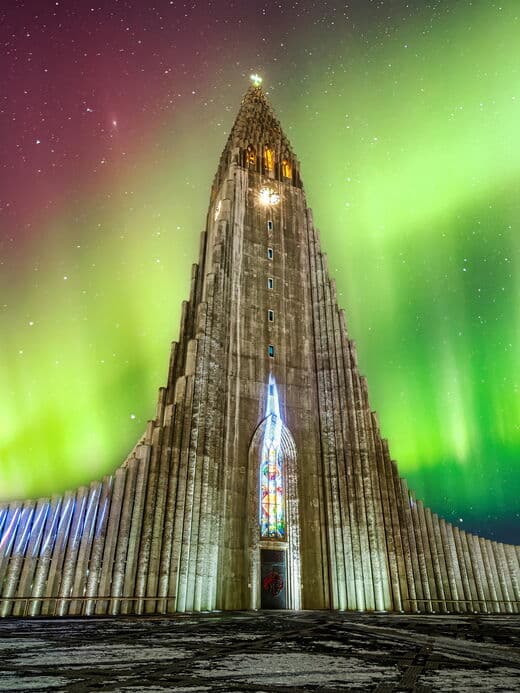
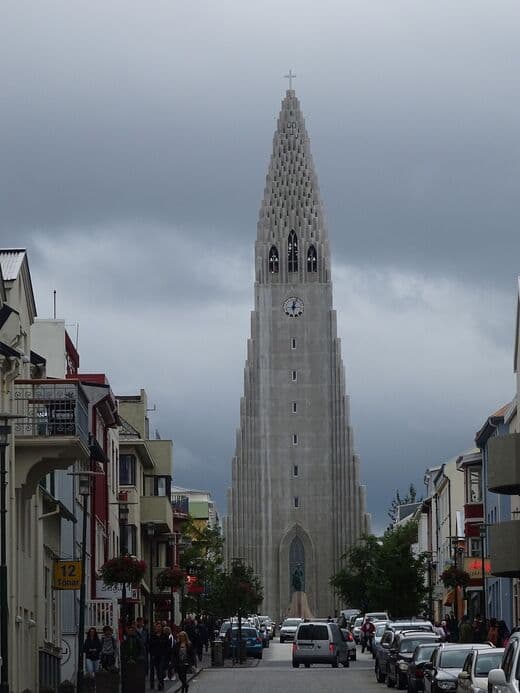
The architectural landmark that dominates the skyline is Hallgrimskirkja Church, a concrete expressionist giant whose silhouette evokes basalt columns. The observation deck atop its tower offers panoramic views across the city and the surrounding mountains. Beside it stands a statue of Leif Eriksson, the Viking who reached America five centuries before Columbus. The statue was actually a gift from the United States in 1930, commemorating the millennium of the Icelandic parliament.
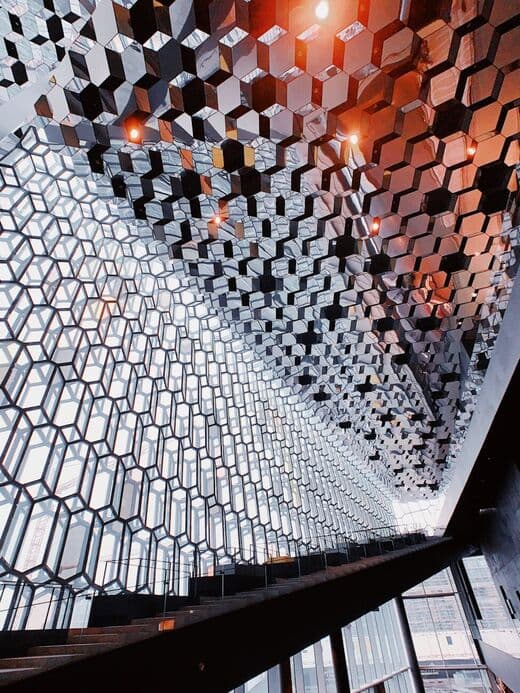
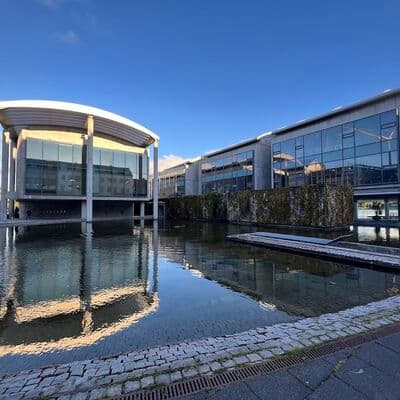
Down by the waterfront rises Harpa Concert Hall, a futuristic structure of glass and steel designed by a Danish-Icelandic architectural firm in collaboration with artist Olafur Eliasson. The facade composed of colored glass panels transforms throughout the day as light changes. This is home to the Icelandic Symphony Orchestra, opera productions, and the annual Iceland Airwaves music festival.
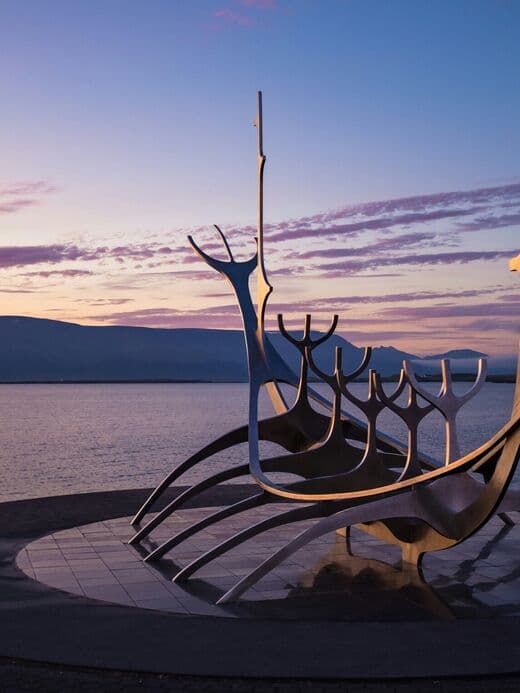
A walk along the harbor will bring you to the Sun Voyager sculpture, a stylized steel Viking ship that has become one of Iceland's most photographed monuments. The best time for pictures is sunset, when the sun drops directly behind the sculpture, creating a dramatic silhouette against the bay and distant mountains. Contrary to what many believe, the sculpture does not point toward the setting sun but rather toward the north, toward a symbolic undiscovered territory.
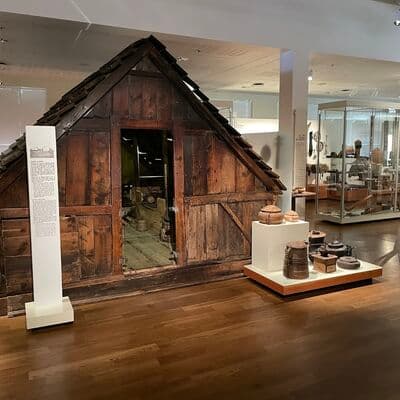
For a deep dive into Icelandic history, visit the National Museum of Iceland. Its collection spans from the Viking settlement era through modern times. The medieval carved wooden church doors and silver jewelry from the pagan period are particularly compelling. Plan for at least two to three hours here if you have any interest in history.
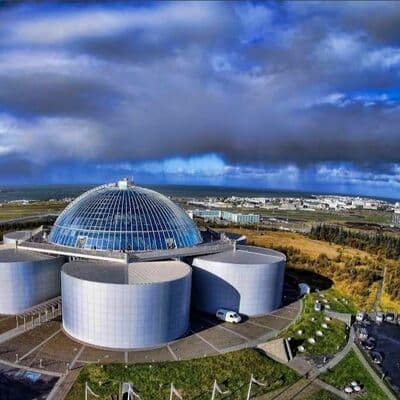
Perlan Museum occupies a distinctive structure that once served as hot water storage tanks. Today it houses an excellent science center where you can walk through an artificial ice cave, watch a planetarium show about the Northern Lights, and learn about Iceland's geology and natural history. The observation deck provides another excellent viewpoint over the city, and there is a fine-dining restaurant if you want to combine education with an upscale meal.
Reykjavik City Hall sits on the shore of Lake Tjornin, a modernist building that exemplifies Scandinavian design philosophy. Inside you will find an enormous relief model of Iceland that gives you a better sense of the country's geography than any map could. It is worth stopping in briefly to orient yourself before heading out to explore.
The Reykjanes Peninsula south of the capital is a volcanic landscape that actively reminds you of Iceland's geological nature. This is where a new eruption cycle began in 2021 and continues to this day. In 2024 and 2025, volcanic activity near Mount Sundhnukur forced the evacuation of the town Grindavik and temporarily closed the Blue Lagoon. As of early 2026, the situation has stabilized and the lagoon operates normally, but it is worth monitoring news before your visit since eruptions here can begin with just a few hours warning.
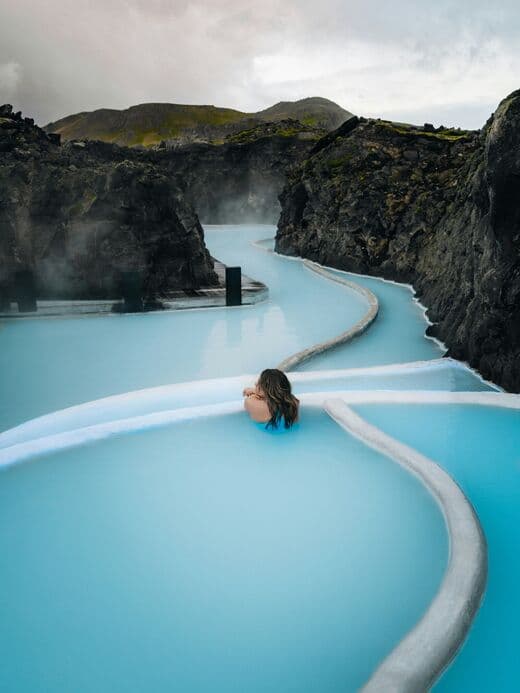
Blue Lagoon remains Iceland's most famous attraction and perhaps its most touristy spot. This geothermal spa complex features milky blue water maintained at roughly 100 to 104 degrees Fahrenheit (38-40 Celsius). The water is rich in silica, algae, and minerals that give it the characteristic color and are supposedly beneficial for skin. Slathering yourself with the white silica mud from the bottom of the lagoon is a mandatory ritual for all visitors.
You must book Blue Lagoon well in advance, sometimes several weeks ahead during peak season. Basic Comfort admission runs around 80 to 110 USD (75-100 EUR), with premium packages offering additional amenities up to several hundred dollars for private lounges. If the Blue Lagoon feels too crowded or expensive, consider Sky Lagoon closer to Reykjavik. It is a more modern facility with ocean views and a seven-step Scandinavian spa ritual at slightly lower prices.
Also on the Reykjanes Peninsula you will find the Bridge Between Continents, a symbolic structure spanning the rift where the North American and Eurasian tectonic plates diverge. You can literally walk from one continent to another in a few steps. It is more of a photo opportunity than a natural wonder, but the concept alone makes it worth a brief stop.
The Golden Circle
The Golden Circle is not a geographic region but rather Iceland's most popular tourist route, a loop that can be completed in a single day from Reykjavik. Three main stops define the circuit: Thingvellir National Park, the Geysir geothermal area, and Gullfoss waterfall. This is the first taste of Icelandic nature for most visitors, and despite its popularity, it genuinely delivers on the hype.
Thingvellir carries dual significance. Geologically, this is a rift valley where two tectonic plates are actively pulling apart. You can literally see the earth tearing itself in two, with the Almannagja fault creating dramatic basalt walls that tower above you. Historically, this is where the Althing parliament was founded in 930 AD, making it one of the oldest legislative assemblies in world history. Vikings from across Iceland would gather on these plains to pass laws and settle disputes. It was also here in the year 1000 that Iceland officially adopted Christianity when the lawspeaker Thorgeir Thorkelsson announced the new faith after three days of deliberation.
For diving enthusiasts, Thingvellir offers an extraordinary opportunity: diving or snorkeling in the Silfra fissure. The water here is glacial melt that has been filtered through lava rock for decades, resulting in visibility that can exceed 300 feet. The water temperature hovers around 35 to 39 degrees Fahrenheit (2-4 Celsius) year-round, so dives are conducted in dry suits. Even if you are not a certified diver, snorkeling tours allow you to experience this incredible clarity. It is genuinely one of the top diving sites on the planet.
Geysir is the geothermal valley that gave its name to geysers in every language on Earth. The Great Geysir itself is now dormant, but its neighbor Strokkur reliably shoots a column of boiling water 60 to 100 feet into the air every five to ten minutes. Around it bubble mud pots, fumaroles vent steam, and colorful sulfur deposits paint the ground yellow and orange. The smell of hydrogen sulfide permeates the area, but you get used to it quickly. The timing of Strokkur is unpredictable enough to keep you watching, building anticipation before each dramatic eruption.
Gullfoss, the Golden Waterfall, ranks among the most powerful falls in Europe. The Hvita River plunges in two stages into a deep canyon, generating a constant mist cloud and rainbows on sunny days. The history of this waterfall involves a remarkable preservation story. In the early 20th century, there were plans to build a hydroelectric plant here, but a local farmer's daughter named Sigridur Tomasdottir devoted her life to protecting it, reportedly threatening to throw herself into the waterfall if construction proceeded. Her memorial stands at the viewing platform, and the waterfall remains untouched.
You can easily extend the Golden Circle with a few additions. Kerid crater is a perfectly circular volcanic lake with red walls and turquoise water. Admission is around 5 USD, and the views are worth it. The Secret Lagoon in the village of Fludir offers a more authentic geothermal bathing experience than Blue Lagoon, with lower prices and a more local atmosphere. Laugaras Lagoon opened in late 2025 right along the Golden Circle route, providing yet another option for combining sightseeing with hot spring relaxation.
The South Coast
The South Coast is the most accessible yet simultaneously one of the most spectacular regions of Iceland. A paved road follows the coastline, allowing you to see waterfalls, glaciers, black sand beaches, and glacial lagoons in just one or two days. This is the must-do route for any first-time visitor, combining dramatic scenery with straightforward driving.
Your first major stop driving east from Reykjavik will be Seljalandsfoss waterfall. What makes it unique is the cave behind the water curtain that allows you to walk completely behind the falls. The sensation is unforgettable, but prepare to get thoroughly soaked. Waterproof layers are not optional here. Nearby hides the lesser-known Gljufrabui waterfall, tucked inside a narrow canyon. To see it properly, you need to wade through a shallow stream over rocks, but the hidden grotto is worth the wet feet.
Skogafoss is one of Iceland's most photogenic waterfalls. A powerful 80-foot-wide (25 meter) curtain of water drops from 200 feet (60 meters), creating a permanent rainbow in sunny conditions. A staircase to the right leads to a viewing platform atop the falls, offering views down the coast and access to the famous Fimmvorduhals hiking trail that winds between glaciers. This is also the site of a Viking legend claiming a treasure chest lies hidden behind the falls, though all attempts to find it have failed.
Beyond Skogafoss, the road passes two glaciers: Eyjafjallajokull and Myrdalsjokull. The former became globally infamous in 2010 when its eruption paralyzed European air traffic for weeks, stranding millions of travelers. Beneath the latter sleeps the supervolcano Katla, which geologists consider one of the most dangerous in Europe. An eruption has been anticipated for decades. This is a reminder that in Iceland, geology is not just history but an ongoing process.
Vik is Iceland's southernmost settlement, a village of around 300 people crowned by the famous black sand beach Reynisfjara. Black volcanic sand, basalt column formations, the sea stacks of Reynisdrangar rising from the surf, this beach consistently appears in lists of the world's most beautiful and unusual beaches. It has served as a filming location for numerous productions including Game of Thrones. But heed the warnings: the waves here are treacherous. Sneaker waves can surge far up the beach without warning, and tourists die here every year because they ventured too close to the water for a photograph. No picture is worth your life.
Past Vik stretches the Eldhraun lava field, a vast expanse of ancient lava covered with thick moss. The 1783-1784 eruption of Laki volcano created this desert and triggered a climate catastrophe that killed a quarter of Iceland's population and affected weather patterns across the entire Northern Hemisphere. The moss that has slowly reclaimed this terrain is incredibly fragile and takes decades to recover from footprints. Stay on marked paths.
Vatnajokull National Park and the Skaftafell area serve as the gateway to Europe's largest glacier. This is where glacier hiking excursions depart, as well as trails to Svartifoss waterfall surrounded by black basalt columns and to the Skaftafellsjokull glacier tongue. Walking on a glacier with crampons and ice axes is one of Iceland's signature experiences. You will need a guided tour for safety, as crevasses can be hidden beneath snow and conditions change rapidly.
Jokulsarlon is the glacial lagoon where icebergs calved from the glacier drift slowly toward the ocean. Blue, white, and crystalline chunks of ice float against a backdrop of dark mountains and gray skies, creating a surreal scene. Boat tours in amphibious vehicles or kayaks navigate between the icebergs. Adjacent Diamond Beach is where ice chunks wash up on black sand and glitter in sunlight like scattered gems. This is arguably Iceland's most otherworldly landscape.
Fjadrargljufur is a relatively young canyon, only around 9,000 years old. A two-kilometer (1.2 mile) gorge with winding walls up to 330 feet (100 meters) high and a river running through the bottom. The canyon gained global fame after being featured in a Justin Bieber music video and scenes from Game of Thrones. The resulting tourist influx has led to occasional closures for vegetation recovery. Check access status before visiting.
The East Fjords
The East Fjords represent Iceland's least visited region and possibly its most underrated. There are no world-famous landmarks here, no single attraction that draws masses. But there is something the south lacks: solitude, authenticity, and landscapes you will not share with crowds of tourists.
Driving through the eastern fjords means navigating switchbacks along steep slopes, passing through fishing villages with colorful houses, and glimpsing narrow bays with mirror-still water. Each fjord feels like its own separate world with its own microclimate. Rain may be falling in one valley while sunshine and calm prevail just over the next mountain pass.
Seydisfjordur is the most picturesque village in eastern Iceland. Reaching it requires crossing the Fjardarheidi pass, which is often closed in winter due to snow. The village is famous for its blue church, rainbow-painted street, artist studios, and the Norrona ferry that connects Iceland with the Faroe Islands and Denmark. Every summer the LungA arts festival transforms this quiet fishing village into a creative hub.
Egilsstadir is the largest town in the east with a population of about 2,500, serving as the logistical hub for the region. There is a domestic airport with flights to Reykjavik, supermarkets, banks, and all necessities for travelers. Nearby Lake Lagarfljot allegedly harbors a monster called Lagarfljotsormurin, Iceland's answer to Nessie. While no one has proven its existence, locals enjoy keeping the legend alive.
The east is home to Iceland's only permanently inhabited forest, Hallormsstadaskogur. In a country virtually devoid of trees, this sounds unusual, but Icelanders actively pursue reforestation, and this is the primary site. You can walk marked trails through birch and conifer stands, a rare experience in Iceland.
For hikers, the eastern fjords offer routes far from crowds. Mount Snaefell at 6,000 feet (1,833 meters) is the highest peak not covered by a glacier, with several routes of varying difficulty. Clear-weather views from the summit span the entire region. If you want wilderness without the tour bus crowds, the east delivers.
Northern Iceland
The north is a region of contrasts. Here you will find Iceland's second-largest city Akureyri, the most powerful waterfall in Europe Dettifoss, the geothermal zone Namafjall, and Lake Myvatn with its unique ecosystem. The north is drier than the south, sees more sunny days, and in summer experiences white nights when the sun barely dips below the horizon.
Akureyri with a population around 19,000 serves as the capital of the north. The city is cozy and compact, featuring a botanical garden that claims the title of world's northernmost, a picturesque church overlooking the fjord, and a respectable selection of cafes and restaurants. From here you can explore the entire north since main attractions are one to two hours away by car.
Lake Myvatn is one of Iceland's most biologically diverse areas. The name translates to Midge Lake, and in summer you will understand why. Swarms of midges (not mosquitoes, despite the name) can be overwhelming. But these insects attract birds, and thousands of ducks of various species nest here. Around the lake you will find bizarre lava formations, the Skutustadir pseudocraters, the dark fortress of Dimmuborgir (a stone labyrinth of solidified lava), and geothermal zones.
Namafjall is an alien landscape near Myvatn. Yellow, orange, and red hillsides of Mount Namaskard, bubbling mud pots, fumaroles venting steam. The sulfur smell here is particularly intense. This is one of those places where you viscerally understand that the ground beneath your feet is just a thin crust above churning magma.
Myvatn Nature Baths is the northern alternative to Blue Lagoon. Geothermal pools with views across the lake and surrounding mountains. Much cheaper and calmer than its famous southern counterpart, around 35 to 45 USD (30-40 EUR) versus 100 or more. The experience is just as good, arguably better due to the setting and smaller crowds.
Dettifoss claims the title of Europe's most powerful waterfall by volume of water. The gray-brown glacial Jokulsa a Fjollum river crashes into a canyon from 150 feet (45 meters) high and 330 feet (100 meters) wide. The roar can be heard from kilometers away, spray felt from dozens of meters. This waterfall appeared in the opening sequence of the film Prometheus as a symbol of primordial natural power. Nearby are Selfoss upstream (wider and lower) and Hafragilsfoss downstream (deeper in the canyon).
Asbyrgi is a horseshoe-shaped canyon that legend attributes to a strike from the eight-legged horse of Odin, Sleipnir. Geologists explain the shape through catastrophic floods of the past. The canyon stretches about two miles (3.5 km) with vertical walls up to 330 feet (100 meters), a birch forest at the bottom, and one of the most peaceful atmospheres in the country.
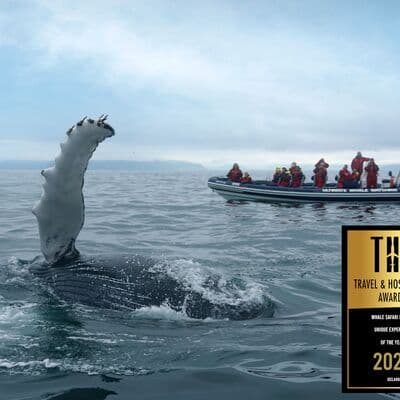
Husavik is Iceland's whale-watching capital. From this small fishing village depart the most successful whale-watching tours in the country, with higher chances of seeing humpback whales than anywhere else around Iceland. The town also houses the Whale Museum and the unusual Phallological Museum, the only one of its kind in the world.
On the far northeast, the Melrakkaslettta peninsula features a lighthouse at Cape Rifstangi, the northernmost point of mainland Iceland. From here the Arctic Circle is within reach, and the island of Grimsey that actually sits on the circle is about 25 miles (40 km) by sea.
The Westfjords
The Westfjords represent Iceland's most remote and least accessible region. This peninsula connects to the rest of the country by a narrow isthmus and is deeply incised by fjords with serpentine roads. Most roads here are gravel, many close in winter, and cellular coverage is spotty at best. But this is precisely what makes the Westfjords special. This is Iceland as it existed before the tourism boom, raw and unspoiled.
Isafjordur is the capital of the Westfjords with a population around 2,700. Set in a dramatic fjord surrounded by steep mountains, it features a domestic airport with one of the world's most challenging landing strips. Planes approach between mountains and turn sharply at the last moment. The town preserves historical architecture from the 18th and 19th centuries, offers museums, restaurants, and all necessary infrastructure for visitors.
Dyngeyri is a tiny village that has become a pilgrimage site for fans of Icelandic fashion. Here you will find the factory outlet and workshop of 66 North, one of Iceland's premier outdoor clothing brands. You can purchase items at discount prices and see how they are made.
Latrabjarg cliffs are the westernmost point of Europe after the Azores. Vertical cliffs rise up to 1,450 feet (440 meters) and stretch for 9 miles (14 km). During summer, millions of seabirds nest here including puffins, those charming birds with colorful beaks that have become an Icelandic symbol. Puffins here allow remarkably close approach, practically showing no fear of humans.
Raudasandur is a beach with red and golden sand, unique in Iceland where volcanic black beaches are the norm. The beach extends for about 6 miles (10 km), and on a good day you might momentarily forget you are near the Arctic. Just do not be tempted to swim; the water temperature will quickly remind you of your latitude.
Dynjandi is the queen of Icelandic waterfalls. A cascade of seven waterfalls with a total height of around 330 feet (100 meters) fans down a mountainside. The shape of the main fall, triangular and widening toward the base, makes it one of the most photogenic in the country. You need to walk about 15 minutes from the parking area to reach the base.
Hornstrandir is a nature reserve on the extreme northwest of the peninsula, accessible only by boat from Isafjordur. There are no roads, no permanent residents, no infrastructure. Only hiking trails through wild landscapes, bird cliffs, and the chance to see Arctic foxes, Iceland's only native land mammal. This is a place for experienced hikers ready for complete self-sufficiency.
Snaefellsnes Peninsula
Snaefellsnes is often called Iceland in miniature because this relatively compact peninsula contains nearly all typical Icelandic landscapes: glacier, volcanoes, lava fields, waterfalls, black beaches, fishing villages, and bird cliffs. You can complete a loop of the peninsula in a single (long) day from Reykjavik, though spending a night or two allows for better exploration.
Snaefellsjokull glacier caps the volcano of the same name at the peninsula's western tip. This mystical location was chosen by Jules Verne as the entrance to the subterranean world in Journey to the Center of the Earth. On clear days the glacier is visible from Reykjavik across the bay. Snowmobile tours venture onto the ice, offering a unique way to experience the summit.
Snaefellsjokull National Park covers the western portion of the peninsula. Here you can walk across ancient lava fields, descend into a lava tube, see the Londrangar basalt cliffs rising from the sea like ruined castle towers, and admire the Gatklettur rock arch.
Budir Black Church is a solitary wooden church amid a lava field, one of Iceland's most photographed sites. The 18th-century church against snow-capped mountains and black earth creates a stark, minimalist image that appears on countless postcards and Instagram feeds.
Kirkjufell is often called Iceland's most photogenic mountain. Its symmetrical pyramidal shape makes it ideal for photographs, especially with Kirkjufellsfoss waterfall in the foreground. The mountain appeared in Game of Thrones as the Arrowhead Mountain beyond the Wall. Photographers gather here for sunrise and sunset shots.
Stykkisholmur is a charming town on the north coast of the peninsula, departure point for ferries to islands in Breidafjordur Bay. The town is known for its colorful houses, volcano museum exploring the region's geological connections, and Sjavarpakkhusid restaurant specializing in local seafood.
The Highlands (Interior)
The Highlands are Iceland's heart, a vast uninhabited territory between coastal regions. There is no permanent population here, roads are F-roads (mountain roads) open only in summer and requiring 4WD vehicles with high clearance. But this is where Iceland reveals its most primordial power.
Landmannalaugar is the most accessible interior destination. Rhyolite mountains in every shade of red, yellow, green, and purple create a psychedelic landscape. Hot springs right at the parking area allow you to soak after the journey. From here begins the famous Laugavegur trek, a four-day hiking route to Thorsmork through volcanic deserts, glaciers, and green valleys, consistently ranked among the world's best multi-day hikes.
Thorsmork is the valley of the god Thor nestled between three glaciers. A green oasis surrounded by icy wastelands, with day hikes of varying difficulty. Access requires specialized highland buses or super jeeps due to river crossings that would swallow a regular vehicle.
Askja is an enormous volcanic caldera in central Iceland. Lake Oskjuvatn in the caldera is the country's deepest at 720 feet (220 meters). Nearby lies the geothermal lake Viti where you can swim in milky-blue water at around 77 degrees Fahrenheit (25 Celsius). The road to Askja is one of the country's most challenging, demanding serious preparation and a capable vehicle.
Kerlingarfjoll is a mountain range with geothermal fields and glaciers. One of the few highland huts operates here in summer. Trekking through colorful mountains with steaming fumaroles offers an alternative to the more famous Landmannalaugar.
The F35 road (Kjolur) is one of the easier F-roads, connecting south and north through the country's center. It passes between Langjokull and Hofsjokull glaciers, past the Hveravellir geothermal area with hot springs. You can drive from Reykjavik to Akureyri in one long day using this route, though it requires a suitable vehicle.
Unique Natural Phenomena of Iceland
Volcanoes and Geothermal Activity
Iceland ranks among the most volcanically active places on Earth. The country sits atop the Mid-Atlantic Ridge where the Eurasian and North American tectonic plates diverge, and simultaneously over a mantle hotspot. This combination creates a geological laboratory unlike anywhere else.
On average, an eruption occurs every four to five years, but recent activity has intensified. Since 2021, a new eruption cycle began on the Reykjanes Peninsula. In 2024-2025, a series of eruptions near Mount Sundhnukur forced the evacuation of Grindavik and threatened geothermal power infrastructure. As of early 2026, there is no active eruption, but geologists warn that a new one could begin at any moment as magma continues accumulating beneath the surface.
Geothermal activity permeates the entire country. Hot water from underground provides roughly 90 percent of Iceland's heating, warms greenhouses where tomatoes and cucumbers grow, and feeds geothermal power plants. Iceland is a global leader in renewable energy use, deriving nearly 100 percent of its electricity from geothermal and hydroelectric sources.
Hot springs are part of everyday Icelandic life. Every town has public swimming pools with hot geothermal water where locals gather in the morning before work or in the evening after. This is not just swimming; it is a social ritual, a place for conversation and catching up on news. Tourists can join: pools cost around 10 to 15 USD, operate from early morning to late evening, and offer a chance to experience local culture more authentically than any museum.
Beyond commercial lagoons like Blue Lagoon, Sky Lagoon, and Myvatn Nature Baths, Iceland has hundreds of wild hot springs. Some are equipped with changing rooms, others are natural pools in rivers where hot and cold water mix. Some are easily accessible like Seljavallalaug in the valley behind Seljalandsfoss. Others require hiking, like Reykjadalur near Hveragerdi where a hot stream flows through a green valley amid steaming hillsides.
Glaciers
Approximately 11 percent of Iceland's territory is covered by glaciers, an area larger than some European countries. Glaciers are not merely frozen water; they are living, moving masses of ice that shape landscapes, feed rivers, and create unique ecosystems.
Vatnajokull is Europe's largest glacier, covering about 8 percent of Iceland's territory. Its thickness reaches 3,280 feet (1,000 meters), and beneath it hide several volcanoes including the notorious Grimsvotn and Bardarbunga. Vatnajokull National Park is Europe's largest, encompassing the glacier itself and surrounding territories.
Iceland's glaciers are melting rapidly. Over the past 100 years they have lost around 770 square miles (2,000 square kilometers), and the process is accelerating. Okjokull officially ceased being a glacier in 2014 when its area dropped below 0.4 square miles (1 square kilometer). A memorial plaque titled A Letter to the Future was installed where the glacier once stood, a reminder of climate change consequences.
Glacier hiking is one of Iceland's quintessential experiences. Excursions to Solheimajokull and Skaftafellsjokull glacier tongues of Myrdalsjokull and Vatnajokull respectively include training on crampons and ice axes, walks through blue crevasses and ice formations. In winter, ice caves inside glaciers open up, natural cathedrals of blue ice that reshape themselves every year. These caves only exist when temperatures are cold enough to stabilize the ice, typically November through March.
Glacial lagoons are where glaciers meet the sea. Jokulsarlon is the most famous and largest, but alternatives exist: Fjallsarlon is less crowded, Heinabergslon is practically deserted. At these lagoons you can take boat rides among icebergs, and from shore you might spot seals resting on ice floes.
Waterfalls
Iceland is a country of waterfalls. Thanks to abundant precipitation, melting glaciers, and dramatic terrain, waterfalls appear literally everywhere. Every Icelandic waterfall has its own name, its own character, and its devoted fans.
Gullfoss, the Golden Falls, is the Golden Circle classic. Two cascades totaling 105 feet (32 meters), enormous water volume, rainbows dancing in the mist. Dettifoss is Europe's most powerful by volume, gray glacial water crashing into a canyon with deafening thunder. Seljalandsfoss is the one you can walk behind. Skogafoss has perfect form and a constant rainbow. Godafoss, the Waterfall of the Gods, is where according to legend pagan idols were thrown when Christianity was adopted.
Many equally impressive waterfalls are less famous. Hengifoss is the country's third tallest at 420 feet (128 meters), with red clay layers in the basalt cliffs telling stories of ancient eruptions. Glymur was once considered Iceland's tallest at 650 feet (198 meters), requiring a hike that includes crossing a river on a log. Haifoss is a pair of falls 400 feet (122 meters) high dropping into the Fossa River canyon. Svartifoss surrounded by black basalt columns inspired the architect of Harpa Concert Hall.
For waterfall hunters, Iceland is paradise. You could spend a week visiting nothing but waterfalls and discover something new every day. Many are unmarked on maps with no parking areas. You find them by the sound of water while pushing through shrubs.
The Northern Lights
Aurora Borealis is one of the most captivating natural phenomena on the planet, and Iceland is among the best places to see it. The entire country lies within the auroral zone, the belt of maximum Northern Lights probability.
Northern Lights season in Iceland runs from mid-August through mid-April. The best months are September through October and February through March, when nights are dark enough but weather not as severe as mid-winter. During summer months the lights are not visible due to the Midnight Sun.
2024 through 2026 represents the peak of the 11-year solar cycle, the so-called solar maximum. This means heightened Northern Lights activity, with better chances of displays than during typical years. Additionally, on August 12, 2026, Iceland will experience a total solar eclipse, a rare astronomical coincidence worth planning around if your schedule permits.
To see the Northern Lights you need: dark skies (away from cities), clear weather (clouds are the primary obstacle), and patience. The Icelandic Meteorological Office issues daily aurora forecasts (en.vedur.is/weather/forecasts/aurora/) showing expected activity and cloud cover by region.
Organized Northern Lights tours from Reykjavik are convenient for those without a car. Guides monitor forecasts and drive groups to locations with the best chances. If the lights do not appear, most tours offer a free rebooking. For self-driving travelers, the ideal scenario is renting a car and heading out of town when forecasts look promising. Popular chasing spots include the Grotta lighthouse area west of Reykjavik, and the Thingvellir area.
Wildlife: Birds and Marine Life
Iceland is a paradise for birdwatchers. Millions of seabirds nest on cliffs and islands during summer, attracted by fish-rich waters. Puffins with their colorful beaks and awkward waddle are the unofficial symbol most beloved by tourists.
Best places for puffin watching: Latrabjarg cliffs in the Westfjords (Europe's largest colony), the Vestmannaeyjar (Westman Islands), and Dyrholaey on the south coast. The season runs from mid-April to mid-August, with peak activity in June and July. Puffins are remarkably tolerant of human presence and often allow approach within arm's length.
Beyond puffins, Iceland hosts breeding colonies of gannets, guillemots, kittiwakes, skuas, and Arctic terns (which hold the record for longest migration, flying from Arctic to Antarctic and back each year). Lake Myvatn is one of the world's largest duck breeding sites, with species rare elsewhere in Europe.
Whales are another reason to visit Iceland. Over 20 species of cetaceans inhabit waters around the island. Most commonly encountered are minke whales and humpback whales. Less frequent but regular sightings include orcas, blue whales (the largest animals on Earth), sperm whales, and dolphins.
Whale watching from Reykjavik is a convenient option for time-pressed visitors. Tours depart from the Old Harbor and last around three hours. Summer success rates approach 90 percent. Husavik in the north is the dedicated whale-watching capital with even higher chances, particularly for close encounters with humpbacks. From Husavik you can also take tours specifically targeting blue whales.
Seals are commonly seen in glacial lagoons, on beaches of the Vatnsnes peninsula, and elsewhere. Two species, harbor seals and grey seals, live in Iceland year-round. They often haul out on ice floes at Jokulsarlon, creating excellent photo opportunities.
When to Visit Iceland
Summer (June through August)
High season and the best time for a first visit. Temperatures reach 50 to 59 degrees Fahrenheit (10-15 Celsius), occasionally touching 68 F (20 C) on sunny days. Nearly 24-hour daylight means more time for activities. All roads are open including interior F-roads. You can see everything: glaciers, waterfalls, birds, whales, green valleys.
Downsides include crowds at popular attractions, high accommodation and rental car prices, and the necessity of booking everything well in advance. The Northern Lights are not visible since it never gets dark. Midges at Lake Myvatn can be overwhelming.
Mid-June brings the White Nights and longest days. On June 21 in Reykjavik, the sun barely dips below the horizon. In the north, especially on Grimsey Island, you can witness the true Midnight Sun.
For Americans and Canadians, summer aligns with school breaks and typical vacation schedules, making it the obvious choice for family trips despite the premium pricing. Europeans with flexible schedules might consider shoulder seasons for better value.
Fall (September through October)
A transitional season with declining daylight and increasing storm probability. But also advantages: fewer tourists, dropping prices, the start of Northern Lights season, autumn colors in valleys particularly in Thorsmork and the east.
September remains fairly mild with most roads still open. By October, highland roads begin closing and weather becomes unpredictable. This is a good time for travelers willing to accept weather trade-offs in exchange for fewer crowds.
Fall is particularly photogenic with the contrast between snow-dusted peaks and golden valley floors. Photographers often consider this the optimal season.
Winter (November through February)
The dark season with only four to five hours of daylight in December and January. Temperatures hover around freezing 32 F (0 C), but strong winds and humidity make conditions feel harsher. Many roads close including nearly all highland routes and parts of the Westfjords.
Why visit in winter: Northern Lights at peak activity, ice caves inside glaciers are open, snow-covered landscapes are stunningly beautiful, and accommodation prices drop significantly. This is a time for travelers prepared for limited daylight and unpredictable weather.
Christmas and New Year in Iceland offer unique experiences. The 13 Icelandic Yule Lads (Jolasveinarnir) are mischievous spirits who arrive one by one each night before Christmas. New Year's Eve fireworks in Reykjavik rank among the most impressive in the world when the entire city erupts in a thundering light show, with locals buying their own fireworks to add to the spectacle.
For travelers from the northern United States and Canada, Icelandic winter weather may feel familiar. British visitors often find it comparable to Scottish Highlands conditions. Australians should pack more seriously than they might expect; this is genuine cold.
Spring (March through May)
Nature awakens, daylight increases, but weather remains unpredictable. March resembles winter, May approaches summer. This is a good compromise: fewer tourists than summer, more light than winter. Northern Lights remain visible until mid-April.
Late April and early May bring returning birds, especially puffins. Roads gradually reopen, though F-roads typically remain closed until June. The landscape transitions from white to green, creating constantly changing scenery.
Festivals and Events
June 17 is Iceland's Independence Day. Parades, festivals, and celebrations occur across the country.
First weekend of August brings the Verslunarmannahelgi (August Bank Holiday Weekend), the largest national festival. Thousands of Icelanders head outdoors, especially to the Westman Islands where the main open-air festival takes place.
Thorrablot in mid-winter is a traditional food festival when the most exotic Icelandic dishes appear: fermented shark, sheep heads, blood pudding.
Iceland Airwaves in early November is a music festival that draws music lovers worldwide for concerts in clubs, churches, and unexpected venues throughout Reykjavik. This is one of the best ways to experience Iceland's disproportionately influential music scene.
Secret Solstice in June offers a major music festival during the Midnight Sun, with continuous daylight creating a unique festival atmosphere.
Getting to Iceland
From the United States and Canada
Keflavik International Airport is Iceland's sole international gateway. Located on the Reykjanes Peninsula about 31 miles (50 km) from Reykjavik, it handles all international arrivals. Do not confuse it with Reykjavik's domestic airport, which serves only internal routes.
Direct flights to Iceland operate from numerous North American cities. Icelandair, the national carrier, flies direct from Boston, New York JFK, Washington Dulles, Seattle, Minneapolis, Denver, Orlando, and Toronto. Flight time from the US East Coast is roughly five to six hours, from the West Coast about eight hours.
PLAY, the Icelandic low-cost carrier that emerged after WOW Air's bankruptcy, offers budget-friendly fares from Boston and New York with connections through Iceland to European destinations. Base fares are low but baggage and meals cost extra. Read the fine print carefully.
Delta also operates seasonal routes from JFK. United flies from Newark. The key advantage of Icelandair is its free Stopover program: you can spend up to seven days in Iceland at no additional airfare when traveling between North America and Europe. This makes Iceland an easy add-on to any European trip.
TSA rules apply for departures from US airports. Standard liquids restrictions (3.4 oz containers in a quart bag) apply. For Iceland-specific considerations, pack your layers in carry-on since weather can change rapidly and checked bag delays happen. Camera gear and electronics should stay with you.
No visa required for US and Canadian citizens for stays up to 90 days. Iceland is part of the Schengen Area, so your 90-day allowance includes any time spent in other Schengen countries within a 180-day window. Your passport must be valid for at least three months beyond your intended departure date from the Schengen Area.
From the United Kingdom and Ireland
Multiple carriers connect the UK with Iceland. Icelandair operates from London Heathrow, Manchester, and Glasgow. PLAY flies from London Stansted. easyJet and Wizz Air offer seasonal routes from various UK airports. British Airways also serves the route from London.
Flight time from London is roughly three hours, making Iceland one of the most accessible exotic destinations from Britain. Weekend trips are entirely feasible, though a week allows much better exploration.
UK citizens do not need a visa for Iceland for stays up to 90 days. Since Brexit, British passport holders no longer have EU free movement rights, but the visa-free arrangement with Iceland remains. Ensure your passport has sufficient validity.
From Ireland, Icelandair operates from Dublin. Flight time is about two and a half hours.
From Australia and New Zealand
No direct flights connect Australasia with Iceland. Most travelers route through London, Copenhagen, or other European hubs. Typical journey time is 24 to 30 hours including layovers.
Qantas and British Airways offer convenient connections through London. Finnair through Helsinki provides another option, sometimes with competitive fares. Given the distance, many Australian and New Zealand travelers combine Iceland with broader European or Scandinavian itineraries.
Australian and New Zealand citizens enjoy visa-free entry to Iceland for up to 90 days within the Schengen Area.
Airport Transfer to Reykjavik
Flybus operates coaches between Keflavik Airport and the BSI bus terminal in Reykjavik, with optional dropoff at hotels. Cost is around 30 to 35 USD (25-30 EUR) one way. Journey time is roughly 45 minutes.
Airport Direct is a similar service with slightly nicer vehicles.
Taxis cost approximately 175 to 220 USD (150-180 EUR) to central Reykjavik. This makes sense for groups of three or four splitting the fare.
If you plan to explore independently, pick up your rental car directly at the airport. All major rental companies have desks there, and you can begin your adventure immediately.
The Ferry Alternative
Smyril Line's Norrona ferry offers an alternative for those who prefer not to fly or want to bring their own vehicle. The route runs Hirtshals (Denmark) to Torshavn (Faroe Islands) to Seydisfjordur (eastern Iceland). The crossing takes about two days and offers the opportunity to stop in the Faroe Islands, a destination worthy of exploration itself. The ferry operates spring through fall.
This option is more expensive than flying and takes significantly longer, but offers a unique travel experience and allows you to bring camping gear, bicycles, or your own vehicle without rental concerns.
Getting Around Iceland
Renting a Car
Independent travel by rental car is the best way to experience Iceland. It gives you freedom to stop wherever inspiration strikes, adjust plans based on weather, and reach places inaccessible by public transport. For most visitors, this is the recommended approach.
Vehicle selection depends on your route:
- Standard 2WD compact or economy: sufficient for the Golden Circle, south coast to Jokulsarlon, and the Ring Road in summer. Most budget-friendly option.
- 4WD (all-wheel drive): mandatory for F-roads, strongly recommended for the Westfjords and winter driving. Icelandic law prohibits 2WD vehicles on F-roads.
- Super jeep or high-clearance SUV: for river crossings, deep snow, extreme interior routes. These vehicles sit high and have modified suspension.
Rental costs range from 50 to 80 USD (45-70 EUR) per day for a compact car in summer, 100 to 175 USD (90-150 EUR) for a 4WD SUV. Winter rates are slightly lower. Book as early as possible since vehicles sell out during peak season, sometimes months in advance.
Insurance is a critical consideration. Basic CDW (Collision Damage Waiver) is typically included. Consider adding:
- SADW/GP: Sand and Ash Protection, covering damage from volcanic sand which can strip paint
- SAAP/GP: Gravel Protection against chips from rocks kicked up on gravel roads
- TP: Tire Protection, wheels being the most vulnerable component
Rental companies will aggressively upsell additional coverage. Some is reasonable precaution, some is profit margin. Check whether your credit card provides any rental car coverage, and understand exactly what each insurance product covers before deciding.
Driving rules: Iceland drives on the right. Seat belts are mandatory for all occupants. Headlights must be on at all times, even in daylight. Speed limits are 31 mph (50 km/h) in towns, 50 mph (80 km/h) on gravel roads, and 56 mph (90 km/h) on paved highways. Fines are steep, starting around 110 USD (100 EUR) for speeding. Speed cameras are widespread and rental companies will pass tickets along to you.
Off-road driving is strictly prohibited and heavily punished. Iceland's nature is extremely fragile. Tire tracks on moss can persist for decades. Drive only on marked roads. This is not just a rule; it is a fundamental principle of visiting Iceland responsibly.
Fuel is expensive at around 2.50 to 3.00 USD per liter (roughly 9.50 to 11.50 USD per gallon). Gas stations exist in all towns and many villages. On remote stretches of the Ring Road, distances between stations can reach 125 miles (200 km). Monitor your fuel level carefully. Many rural stations require a PIN for card payment or cash prepayment.
Check road conditions daily at Road.is (Vegagerdin), which shows real-time road status, closures, and webcam feeds throughout the country.
Campervans
Renting a campervan combines transportation and accommodation, potentially saving money compared to renting a car plus paying for hotels. Iceland has numerous campgrounds throughout the country, with fees typically running 15 to 25 USD per person per night.
Campervan rental costs vary widely based on vehicle size and season, from around 150 USD per day for a basic two-person setup to 400 USD or more for larger models with better facilities. In summer, you need to book months ahead.
Wild camping is not permitted in Iceland. You must use designated campgrounds or seek permission from landowners. This rule is strictly enforced and violations can result in significant fines.
Campervan travel works best in summer when campgrounds are fully operational and weather is mildest. Winter campervanning is possible but challenging due to cold temperatures, reduced campground availability, and shorter days.
Public Transportation
Public transportation in Iceland is limited. There are no railways whatsoever. Bus service exists but is sparse.
Straeto operates city buses in Reykjavik and surrounding areas. The Klappid app allows ticket purchase and real-time bus tracking. A single ticket costs about 5 USD, with day passes and multi-day passes available.
Straeto intercity buses connect Reykjavik to Akureyri, the Snaefellsnes Peninsula, and points along the south coast. But departures are infrequent, schedules inconvenient, and many attractions require additional travel from bus stops.
Tourist buses are more practical for those without cars. Companies like Reykjavik Excursions, Gray Line, and Trex offer routes to popular destinations with stops for sightseeing. Combination tickets covering multiple routes are available.
In summer, specialized highland buses operate to Landmannalaugar, Thorsmork, and Askja. These traverse river crossings impossible for regular vehicles.
Domestic Flights
To save time, consider domestic flights. Icelandair Connect (formerly Air Iceland) flies from Reykjavik's domestic airport to Akureyri, Egilsstadir, Isafjordur, the Westman Islands, and Grimsey Island.
The flight from Reykjavik to Akureyri takes 45 minutes versus five hours driving. Fares start around 100 to 175 USD (90-150 EUR) one way, with discounts for early booking.
Icelandic airports are small, check-in is quick, but flights frequently depend on weather and can cancel at short notice. Have backup plans.
Organized Tours
For those who prefer not to drive or are traveling solo, organized tours offer a convenient alternative. Day tours from Reykjavik cover the Golden Circle, south coast, Snaefellsnes Peninsula, Blue Lagoon, and other highlights. Multi-day tours circumnavigate the Ring Road, venture into the highlands, or explore the Westfjords.
Specialized activities include glacier hiking, ice cave exploration, snorkeling in Silfra, whale watching, and Northern Lights chasing. Prices exceed self-guided visits but include transportation, guides, and often equipment.
Reputable tour operators include Guide to Iceland (an aggregator for many companies), Arctic Adventures, Extreme Iceland, and Troll Expeditions. Read reviews and compare options.
Understanding Icelandic Culture
The Icelandic People
Iceland's population of roughly 380,000 is concentrated in the capital region, with over half living in greater Reykjavik. This is one of the most homogeneous nations on Earth: nearly all Icelanders descend from Norwegian Vikings and Celtic slaves who settled the island in the 9th and 10th centuries. Genetic diversity is so limited that an app called Islendinga-App exists allowing Icelanders to check whether they are too closely related before beginning romantic relationships.
Icelanders speak Icelandic, a language that has changed remarkably little over a thousand years. Modern Icelanders can read medieval sagas from the 10th to 13th centuries in the original. The language is a point of national pride, and Icelanders actively resist loanwords, creating new terms from native roots instead. Computer is tölva (combining number and prophetess), telephone is simi (an ancient word for thread).
English is spoken almost universally, especially by younger generations. Communication with tourists is never a problem. You will rarely need a translation app or phrasebook, though learning a few Icelandic words earns appreciation.
Icelanders tend to be reserved but friendly. Do not expect effusive hospitality or hovering service staff. Restaurant service that might seem cold by American standards is simply the norm here, not rudeness. Once conversation begins though, Icelanders are open and direct.
The relationship with nature is central to Icelandic identity. The concept of utivist (outdoor life), spending time in nature, runs deep. Do not be surprised to encounter 70-year-olds on mountain trails. Respect for nature also means strict prohibitions against littering, trampling moss, or leaving marked paths.
Beliefs and Superstitions
Officially most Icelanders are Lutheran, but religion plays a modest role in daily life. Far more interesting is the belief in huldufólk, the hidden folk: elves, trolls, and other beings from Icelandic folklore.
Yes, a significant portion of Icelanders allow for the possible existence of elves. No, this does not mean they believe in tiny winged creatures. Huldufólk represents a parallel world coexisting with ours, populated by beings who occasionally intervene in human affairs. There are documented cases where road construction was rerouted to avoid disturbing rocks where, according to locals, elves reside.
This is not medieval superstition but rather cultural tradition intertwined with respect for nature and environmental consciousness. If a rock is important to the local community, whether due to elves or historical significance, it will be preserved.
Tipping and Payment
Tipping is not customary in Iceland. Service is included in prices, wages are fair, and additional gratuity is not expected. You may tip for exceptional service, but it is neither required nor anticipated.
Iceland is nearly cashless. Cards are accepted everywhere, even in the smallest villages and at unstaffed gas stations. Apple Pay and Google Pay work throughout the country. Cash is essentially unnecessary; you can complete an entire trip without touching Icelandic krona in physical form.
As of January 1, 2026, Iceland introduced a new road tax replacing the previous fuel-included tax. For rental cars, this is usually included in the rental price, but confirm when booking.
Etiquette
Remove shoes when entering homes. Always. Icelanders value cleanliness, and dirty shoes indoors are a serious faux pas.
Before entering any swimming pool, whether public or at a hotel, you must shower without a swimsuit. Changing areas are gender-separated. This hygiene requirement is taken seriously, with attendants sometimes checking compliance.
Punctuality is valued. If you agree to meet at a specific time, be there on time.
Discussion of money and salaries is not taboo. Icelanders are fairly open about these topics. However, discussing whaling can be sensitive, as opinions vary and the topic is contentious.
Safety in Iceland
Crime
Iceland consistently ranks among the world's safest countries. Crime rates are extremely low, violent crime is rare. Police walk unarmed except for specialized units. You can walk through Reykjavik at any hour without concern.
That said, basic precautions remain wise: do not leave valuables visible in your car, keep an eye on belongings in bars on Friday and Saturday nights when alcohol flows freely.
Natural Hazards
The primary threat in Iceland is not people but nature. Weather changes rapidly and unpredictably. Wind can reach hurricane force. There have been incidents of gusts knocking people down and even flipping vehicles.
Sneaker waves on black sand beaches pose a genuine danger. Every year tourists die at Reynisfjara beach by approaching the water too closely. Waves arrive irregularly; after several calm minutes, a large wave can surge up the beach, knocking people down and dragging them into the ocean. Keep a safe distance. No photograph is worth your life.
Glaciers and ice caves are dangerous without preparation and equipment. Crevasses can be hidden by snow, ice is slippery, structures are unstable. Visit glaciers only with certified guides on organized tours.
Geothermal areas feature boiling water and unstable ground. Stay on marked paths only. Falling into a mud pot can result in fatal burns.
F-roads and mountain routes require experience and appropriate vehicles. River crossings are particularly treacherous: water levels change throughout the day, bottoms can be silty. If uncertain, do not attempt it. Wait for another vehicle to gauge conditions or turn back.
Volcanic activity requires monitoring, especially when visiting the Reykjanes Peninsula. Official information is available at safetravel.is and government.is. Register your travel plans with Safe Travel before heading into wilderness areas.
Tourist Traps and Scams
Iceland is not a country of street scams, but a few concerns exist:
Currency exchange at the airport and dedicated exchange bureaus offers poor rates. Simply pay by card, which provides much better rates. If you need cash, withdraw from ATMs but decline dynamic currency conversion when the ATM offers to convert to your home currency.
Some hotels quote prices in euros but charge in krona at unfavorable rates. Clarify when booking.
Following market liberalization, unofficial taxis have appeared. The standard fare from the airport to Reykjavik is approximately 175 USD (150 EUR) per car. If someone demands significantly more, it is a scam. Use official transfers or pre-booked taxis.
Icelandic souvenirs made in China are common, especially sweaters. A genuine handknit lopapeysa costs 230 to 350 USD (200-300 EUR) or more. If offered cheaper, it is likely machine-knit or imported. Buy from verified sources: the Handknitting Association of Iceland or certified retailers.
Bottled water is a waste of money. Tap water in Iceland is among the purest in the world, filtered through lava rock. Carry a reusable bottle and drink for free.
Rental car insurance is partly reasonable precaution, partly fear-based selling. Take basic coverage but do not accept everything the agent offers without consideration.
Health and Medical Care
Medical care in Iceland is excellent but expensive. EU citizens can use the European Health Insurance Card (EHIC). Everyone else should obtain comprehensive travel insurance with adequate coverage. Medical evacuation from remote areas can cost tens of thousands of dollars without insurance.
Pharmacies (Apótek) exist in towns and keep regular hours. Most medications require prescriptions. Basic items like pain relievers and antiseptics are available over the counter.
Tap water is perfectly safe and delicious. This is some of the purest water in the world. Hot water may smell of sulfur due to its geothermal origin. This is normal and harmless, though it takes getting used to.
No vaccinations are required. There are no dangerous animals or insects, apart from summer midges that do not bite but can be intensely annoying around Lake Myvatn.
Sunburn is possible even on cloudy days. At high elevations and with reflection from snow or water, UV exposure intensifies. Bring sunscreen and sunglasses, especially if visiting glaciers.
Hypothermia is a real risk for the unprepared. Dress in layers, bring waterproof outerwear, check forecasts. Wet cold with wind is more dangerous than dry freezing temperatures.
Money and Budget
Currency
The Icelandic krona (ISK, islensk krona) is the only official currency. Exchange rates float, currently around 140 to 150 ISK per US dollar, 155 to 165 ISK per euro. Check current rates before your trip. Euros and dollars are not accepted anywhere; it is krona only.
As mentioned, cash is practically unnecessary. Visa and Mastercard work everywhere. American Express is accepted in larger establishments.
Price Levels
Iceland is expensive. One of the most expensive countries in the world. This is a reality to accept and plan for.
Sample prices as of 2026:
- Cup of coffee: 4-6 USD (500-700 ISK)
- Beer at a bar: 10-14 USD (1200-1600 ISK)
- Casual lunch: 20-30 USD (2500-4000 ISK)
- Restaurant dinner: 40-80 USD (5000-10000 ISK)
- Street hot dog: 4-6 USD (500-700 ISK)
- Gallon of gas: 9-11 USD
- Hostel bed: 40-65 USD (5000-8000 ISK)
- Mid-range hotel room: 150-260 USD (20000-35000 ISK)
How to Save Money
Accommodation: Campgrounds are the cheapest option at around 15-25 USD per person. Hostels exist but are not particularly cheap. Renting a campervan may be more economical than hotel plus car for some travelers.
Food: Bonus (look for the pink pig logo) and Kronan supermarkets are cheapest. Cook your own meals when possible. Hot dogs (pylsur) at street stands are the cult fast food, cheap and satisfying. Order yours with everything (með öllu): fried onion, raw onion, ketchup, sweet mustard, and remoulade. Bakeries and supermarkets sell sandwiches and prepared foods cheaper than restaurants.
Alcohol: Bar and restaurant prices are astronomical. Buy from state-run Vinbudin stores instead. These are not everywhere and have limited hours, so plan ahead.
Fuel: Gas station chains (N1, Orkan, Olis) offer loyalty programs with discounts. Rental companies often provide loyalty cards; ask.
Attractions: Most natural sites are free. Paid items include some parking lots (use the Parka app), Blue Lagoon and other geothermal spas, museums, and glacier tours.
Trip Budgets
Budget travel (camping, cooking your own food, no organized tours): 90-120 USD per day per person plus car rental.
Mid-range (guesthouses, some meals out, a couple of tours): 175-230 USD per day per person.
Comfortable (good hotels, restaurants, glacier and whale tours): 290-400 USD per day per person.
These are rough guidelines. Iceland allows you to spend as much as you want; there is no upper limit.
Suggested Itineraries
7 Days: Classic Iceland
An optimal itinerary for a first visit, covering the main attractions of the south and west.
Day 1: Arrival and Reykjanes Peninsula
Arrive at Keflavik, pick up your rental car. On the way to Reykjavik, stop at Blue Lagoon (book well ahead) or explore the Gunnuhver geothermal area and Reykjanesviti lighthouse. Evening in Reykjavik: walk the center, dinner.
Day 2: Reykjavik
Explore the capital: Hallgrimskirkja Church observation tower, Sun Voyager sculpture, Harpa Concert Hall, National Museum of Iceland. Perlan Museum with its artificial ice cave and planetarium. Evening at a restaurant featuring Icelandic cuisine or bar-hopping along Laugavegur street.
Day 3: Golden Circle
Thingvellir National Park: walk between continental plates. Geysir geothermal area: watch Strokkur erupt. Gullfoss waterfall. Optional additions: Kerid crater, Secret Lagoon in Fludir. Overnight near Selfoss or Hella.
Day 4: South Coast to Vik
Seljalandsfoss waterfall: walk behind it. Hidden Gljufrabui waterfall nearby. Skogafoss waterfall: climb the stairs to the top. Reynisfjara black sand beach: respect the waves. Basalt columns and Reynisdrangar sea stacks. Village of Vik. Overnight in Vik or continue east.
Day 5: Glacier Lagoon and Skaftafell
Eldhraun lava field: brief stop. Fjadrargljufur canyon if accessible. Skaftafell National Park: glacier hike with a guide (book ahead) or hike to Svartifoss waterfall. Jokulsarlon glacier lagoon: boat ride among icebergs. Diamond Beach at sunset. Overnight near the lagoon.
Day 6: Return Along the Coast
Morning at the lagoon if needed. Return west, stopping at any missed spots. Alternative: Reykjadalur hot spring river hike near Hveragerdi. Overnight in Reykjavik.
Day 7: Departure
If time permits, drive to Snaefellsnes Peninsula for a morning loop, or take a whale watching tour from Reykjavik. Return rental car, fly home.
10 Days: Ring Road (Southern and Eastern Iceland)
An expanded route adding the eastern fjords and north.
Days 1-5: As in the 7-day itinerary but with a more relaxed pace.
Day 6: Eastern Fjords
Depart from the Jokulsarlon area. Town of Hofn (try the langoustine). Drive through the eastern fjords: switchbacks, tunnels, scenic villages. Stop in Djupivogur. Overnight in Egilsstadir.
Day 7: Seydisfjordur and Toward Myvatn
Morning drive over the pass to Seydisfjordur: blue church, rainbow street. Return to Egilsstadir and head north toward Lake Myvatn. En route: Dettifoss waterfall (accessible from east or west side). Overnight at Myvatn.
Day 8: Myvatn and Surroundings
Full day exploring the lake area: Skutustadir pseudocraters, Dimmuborgir lava labyrinth, Namafjall geothermal zone. Evening soak at Myvatn Nature Baths. Climb Hverfjall crater for panoramic views. Overnight at Myvatn or drive to Akureyri.
Day 9: Akureyri and Waterfalls
Explore Akureyri: botanical garden, church, town center. Godafoss waterfall on the way south. Return to Reykjavik via the Ring Road or the F35 highland route if conditions permit and you have a suitable vehicle. Alternative: fly from Akureyri. Overnight in Reykjavik.
Day 10: Reykjavik and Departure
Finish exploring the capital, shopping, departure.
14 Days: Complete Ring Road with Westfjords or Snaefellsnes
Days 1-9: As in the 10-day itinerary.
Days 10-12: Westfjords (Option A)
From Akureyri head west. Day 10: drive to Isafjordur via ferry or mountain passes. Day 11: Dynjandi waterfall, Latrabjarg cliffs, Raudasandur beach. Day 12: return via the southern part of the fjords, overnight on Snaefellsnes.
Days 10-12: Snaefellsnes Peninsula (Option B)
Day 10: north coast, Stykkisholmur, Breidafjordur Bay islands. Day 11: Kirkjufell mountain, Snaefellsjokull National Park, Budir black church. Day 12: lava caves, Londrangar cliffs, return to Reykjavik.
Day 13: Flex Day
Golden Circle if not visited, Blue Lagoon, whale watching, or simply relaxing in Reykjavik.
Day 14: Departure
21 Days: Complete Iceland with Highlands
Three weeks allows you to see nearly everything, including the remote interior territories.
Days 1-12: Ring Road with Westfjords as in the 14-day itinerary.
Days 13-14: Snaefellsnes Peninsula
Unhurried exploration of the full peninsula.
Days 15-17: Highlands
Day 15: transfer to Landmannalaugar (requires 4WD or specialized bus). Trek the colorful rhyolite mountains, soak in hot springs. Day 16: day hike from Landmannalaugar to obsidian fields or Lake Frostastadarvatn. Day 17: transfer to Thorsmork or return to the coast.
Days 18-19: Thorsmork and Fimmvorduhals
Explore Thor's Valley between three glaciers. Day hikes to glaciers and viewpoint summits. Optional: the Fimmvorduhals trail, 15 miles (25 km) between glaciers down to Skogafoss (requires preparation and good conditions).
Day 20: Vestmannaeyjar (Westman Islands)
Ferry from Landeyjahofn to the islands. Eldfell volcano that erupted in 1973, Eldheimar volcano museum, puffins on the cliffs in summer. Return by evening ferry or overnight on the island.
Day 21: Reykjavik and Departure
Connectivity and Internet
Mobile coverage extends across most populated areas and main roads. In remote locations (highlands, parts of Westfjords, mountain passes) signal can be nonexistent.
Main carriers are Siminn, Vodafone, and Nova. Tourist SIM cards are available at the airport and shops. Cost runs around 15-25 USD (2000-3000 ISK) for a card with several gigabytes of data.
eSIM provides a convenient alternative. Services like Airalo and Holafly offer Iceland packages that you can activate before departure. For Americans accustomed to T-Mobile or AT&T international plans, check whether your existing plan includes Iceland coverage, as many do.
WiFi is available in most hotels, cafes, and even some buses and gas stations. Quality varies.
If venturing into remote areas, consider renting a satellite phone or satellite communicator (Garmin inReach, Zoleo) for emergency communication. This is particularly relevant for highland travel or Westfjords exploration.
Icelandic Food: What to Try
Traditional Icelandic Cuisine
Icelandic cuisine is survival cooking born of harsh conditions. Traditional preservation methods, fermentation, smoking, drying, created flavors that are not for everyone.
Hakarl: fermented shark. Greenland shark meat is aged for several months until ammonia levels drop to a supposedly edible level. The smell still knocks you back. The taste is approximately what you would expect from rotted fish. This is tourist initiation: try a piece, heroically avoid spitting it out, record a video. Available at markets and at the Bjarnarhofn Shark Museum on Snaefellsnes Peninsula.
Svid: singed and boiled sheep's head, served split in half. The eye is considered a delicacy. The cheeks are genuinely the tastiest part. Served during the winter festival Thorrablot and at some restaurants.
Slatur: blood sausage in two varieties, blodmor (with blood) and lifrarpylsa (with liver). Tastes similar to blood sausages from other cultures, nowhere near as extreme as hakarl.
Hardfiskur: dried fish, typically haddock or cod. Hard as cardboard but nutritious. Eaten with butter as a snack. The Viking ancestor of jerky.
Modern Icelandic Cuisine
Fish and seafood form the foundation of the Icelandic diet. Cod, haddock, Arctic char, salmon, langoustine (marketed as lobster), scallops: all exceptionally fresh. Reykjavik has dozens of seafood restaurants from casual fish and chips to fine-dining establishments with tasting menus.
Lamb is Iceland's primary meat. Sheep graze freely all summer, eating grass and moss, resulting in tender meat without the gamey taste common elsewhere. Lamb is milder, mutton more intense. The traditional dish hangikjot is smoked lamb.
Skyr is an Icelandic dairy product, technically a cheese but with the consistency of Greek yogurt. Low-calorie and protein-rich. Eaten with sugar, berries, or as an ingredient in desserts. Available in every supermarket.
Pylsur: the Icelandic hot dog is national fast food. A sausage of lamb, pork, and beef in a bun, generously topped with mustard, ketchup, remoulade, fried onion, and raw onion. The legendary stand is Baejarins Beztu by the old harbor in Reykjavik, operating since 1937. Bill Clinton ate here.
Icelandic tomatoes sound improbable, but vegetables grown in geothermal greenhouses are surprisingly flavorful. The town of Hveragerdi is the center of greenhouse agriculture.
Beverages
Coffee: Icelanders rank among the world's top coffee consumers per capita. Coffee culture is well-developed with local roasters, specialty coffee shops, and farm cafes with homemade pastries.
Brennivin: the Black Death, Icelandic schnapps made from potato and caraway. Traditionally accompanies hakarl. Strong at 37.5 percent, with a distinctive anise-like flavor.
Beer was banned in Iceland until 1989, while wine and spirits were not, a peculiar prohibition explained by political considerations around Danish breweries. Today the country experiences a craft beer boom. Local breweries Borg, Einstok, Olvisholt, and Kaldi produce excellent beers. Bar prices are steep at 10-14 USD per pint, but quality justifies the cost.
Water deserves special mention. Icelandic tap water is so pure and delicious that you should simply drink it everywhere. Carry a reusable bottle and hydrate for free.
Where to Eat
Reykjavik offers everything from Michelin-recognized restaurants to hot dog stands. Some recommendations:
- Grillid: high-end dining with city views, tasting menus from local ingredients
- Dill: Iceland's first Michelin-starred restaurant
- Messinn: excellent fish in an accessible format, great value
- Baejarins Beztu: the legendary hot dogs
- Hlemmur Matholl: food hall with various cuisines under one roof
- Braud & Co: best cinnamon rolls in town
- Grandi Matholl: another excellent food hall near the harbor
- Rok: modern Icelandic small plates
- Snaps: French-Icelandic bistro, popular brunch spot
In smaller towns and villages, options are limited but pleasant surprises exist. Pakkhus Restaurant in Hofn is famous for langoustine soup. Vogafjos by Lake Myvatn serves dishes with views of cows being milked for the milk in your coffee.
What to Bring Home from Iceland
Clothing and Wool Products
Lopapeysa: the traditional Icelandic sweater with a circular yoke pattern. Hand-knit from unspun Icelandic wool (lopi), it is incredibly warm yet breathable. A genuine lopapeysa costs 230-460 USD (200-400 EUR), but it is an investment for decades. Buy from the Handknitting Association of Iceland on Skolavordustigur 19 or certified retailers.
66 North: Iceland's outdoor brand since 1926. Jackets, fleeces, base layers designed for local conditions. The flagship store is in central Reykjavik, with an outlet in Hafnarfjordur and the factory in Dyngeyri.
Wool accessories: hats, scarves, mittens, socks: practical gifts that people will actually use.
Food and Drink
Skyr: if you can find dried or powdered versions, these make excellent gifts. Regular fresh skyr will spoil during travel.
Hardfiskur: dried fish. Lightweight, non-perishable, traditional snack.
Icelandic sea salt: sea salt with lava, seaweed, or other additives. Beautifully packaged, unusual gift.
Noa Sirius chocolate: Icelandic chocolate with unexpected additions: licorice, sea salt, berries.
Brennivin: a bottle of Black Death for the adventurous.
Icelandic honey: rare due to the short season but very tasty.
Cosmetics
Blue Lagoon skincare: products based on minerals from geothermal water. Masks, creams, scrubs with the characteristic blue tint.
Bioeffect: Icelandic cosmetics with a patented active ingredient EGF grown in barley. Premium segment.
Soley Organics: organic cosmetics based on Icelandic herbs.
Souvenirs
Lava rock items: processed lava in various forms, from jewelry to decorative objects.
Music: Iceland produces disproportionately excellent music. CDs or vinyl from local artists are meaningful gifts for music lovers.
Books: sagas in translation, Icelandic literature, photography books.
Puffin souvenirs: from plush toys to magnets, puffins appear everywhere. They make cute, distinctly Icelandic gifts.
Tax Refund
For purchases exceeding 12,000 ISK (roughly 85 USD or 80 EUR) at a single store, you can claim a VAT refund of up to 15 percent. Request the Tax Free form at the store, fill it out, and claim your refund by card at the airport or cash at refund points. The process is straightforward and the savings meaningful on larger purchases like sweaters or outdoor gear.
Essential Apps for Iceland
Vedur: The official Icelandic Meteorological Office app. Weather forecasts, storm warnings, Northern Lights predictions. Absolutely essential.
Road.is / Vegagerdin: Real-time road conditions, webcams, closed sections. Check every morning before driving.
Klappid / Straeto: Reykjavik and area public transport. Ticket purchase, schedules, bus tracking.
Parka: Parking payment at tourist sites. Many lots only accept payment through this app.
SafeTravel: Register your itinerary with search and rescue services. Essential for hiking or remote travel.
112 Iceland: Emergency app. One button sends your coordinates to rescue services.
Appy Hour / Barhopp: Find happy hour specials at Reykjavik bars, a way to save on expensive alcohol.
Google Maps / Maps.me: Navigation. Google Maps works well, but Maps.me is useful for offline maps in areas without cell coverage.
Final Thoughts
Iceland is not a destination you simply check off a list. People do not come here just for Instagram photos, though those will be remarkable, or to add another country to their tally. Iceland demands presence: full, conscious, open.
Here you will encounter nature of such power and beauty that it rarely exists elsewhere. Waterfalls that take your breath away. Glaciers that remind you of the planet's fragility. Volcanoes that demonstrate the earth beneath your feet is alive. Northern Lights that freeze you in silent wonder.
But Iceland is also a test. Prices that strain budgets. Weather that can ruin any plan. Wind that literally knocks you over. Roads that demand skill and attention. This is not a destination for those seeking easy relaxation.
Yet for those ready for adventure, Iceland reveals itself fully. You will soak in hot springs surrounded by snowy plains. Drink the purest water directly from streams. Watch whales surface mere feet from your boat. Walk on ice that has existed for millennia. Sit on the ocean's edge as the sun rolls along the horizon for hours, never quite setting.
Plan ahead: book your car, hotels, and popular tours months in advance. But leave room for spontaneity. The best moments happen when you simply stop at an unmarked waterfall or turn down a gravel road to a distant farm.
Above all, respect this land. It is fragile despite its power. Stay on trails, leave no trace, do not disturb wildlife. Icelanders protect their nature fiercely, and every visitor should do the same.
Iceland changes people. Perhaps after this journey you will become somewhat different: more attentive to beauty, more humble before natural forces, more grateful for the chance to witness such places. And most likely, you will want to return.
Information current as of March 2026. Volcanic activity, road conditions, and visa requirements can change. Check current information before travel at safetravel.is and government.is.
Appendix: Practical Quick Reference
Emergency Information
The emergency number in Iceland is 112 for police, fire, and ambulance. English is spoken. The 112 Iceland app provides GPS coordinates to dispatchers.
Search and rescue teams (ICE-SAR) are volunteer organizations that respond to emergencies in wilderness areas. Registration at safetravel.is is strongly recommended before backcountry travel.
Hospitals in Reykjavik: Landspitali National University Hospital provides full emergency services. Medical clinics exist in larger towns including Akureyri, Isafjordur, and Hofn.
Electricity
Iceland uses European standard outlets: Type C and F plugs, 230V, 50Hz. American and Canadian travelers need adapters. British plugs also require adapters though many newer Icelandic buildings include UK outlets in addition to European ones.
Time Zone
Iceland operates on Greenwich Mean Time (GMT/UTC+0) year-round. There is no daylight saving time. This means Iceland matches UK time in winter but is one hour behind in summer. For US East Coast travelers, Iceland is 5 hours ahead in winter, 4 hours ahead in summer.
Drinking Age and Alcohol
The legal drinking age is 20. Alcohol is sold only at state-run Vinbudin stores, not at regular supermarkets. Store hours are limited, typically 11am to 6pm weekdays with earlier closing on weekends. Plan purchases accordingly.
Driving Distances and Times
Ring Road complete circuit: approximately 830 miles (1,332 km), minimum 16-17 hours driving without stops
Reykjavik to key destinations:
- Blue Lagoon: 30 miles (50 km), 45 minutes
- Thingvellir: 30 miles (50 km), 45 minutes
- Geysir: 62 miles (100 km), 1.5 hours
- Vik: 110 miles (180 km), 2.5 hours
- Jokulsarlon: 230 miles (370 km), 4.5 hours
- Akureyri: 245 miles (390 km), 5 hours
- Snaefellsnes Peninsula (Kirkjufell): 110 miles (180 km), 2.5 hours
- Isafjordur: 280 miles (450 km), 6 hours
Packing Essentials
- Waterproof outer layer (jacket and pants)
- Multiple warm layers for variable conditions
- Sturdy waterproof hiking boots
- Swimsuit for hot springs (you will use it daily)
- Sunglasses and sunscreen
- Reusable water bottle
- Power adapter for European outlets
- Camera and extra batteries (cold drains batteries faster)
- Motion sickness medication if susceptible (boat tours, winding roads)
Photography Tips
Iceland is extraordinarily photogenic but challenging. Weather changes rapidly, so be prepared to wait for conditions or return to locations. The golden hour extends for hours during shoulder seasons, providing extended optimal shooting time.
Protect camera gear from spray at waterfalls and on boat tours. A waterproof bag is essential. Rain covers for cameras prevent damage in sudden showers.
Bring tripods for waterfall long exposures and Northern Lights photography. Many photographers consider a tripod non-negotiable for Iceland.
Battery life decreases significantly in cold. Carry multiple batteries and keep spares warm in pockets.
Sustainable Travel
Iceland is an environmentally fragile destination. Follow these principles:
- Stay on marked trails to protect moss and vegetation
- Pack out all trash including biodegradable items
- Do not collect rocks, plants, or other natural souvenirs
- Never approach or disturb wildlife
- Use designated facilities for restroom needs
- Support local businesses over international chains
- Consider carbon offset for flights
Learning More
Official tourism site: visiticeland.com provides comprehensive planning information.
Road conditions: road.is (essential daily check)
Weather: vedur.is with Northern Lights forecasts
Safety: safetravel.is for alerts and travel registration
Government information: government.is for visa requirements and official advisories
Common Icelandic Words
- Takk: thank you
- Ja/Nei: yes/no
- Bless: goodbye
- Gódan dag: good day
- Foss: waterfall
- Jokull: glacier
- Vatn: water or lake
- Fjordur: fjord
- Dalur: valley
- Fell: mountain
- Vik: bay
- Reykur: smoke or steam
Pronunciation tip: double letters are pronounced longer, not differently. The letter eth (ð) sounds like th in this. The letter thorn (þ) sounds like th in thing.
Icelandic Names and Patronymics
Icelanders use patronymic surnames rather than family names. A son of Jon would be Jonsson, a daughter would be Jonsdottir. This explains why Icelandic phone books are organized by first name. When addressing Icelanders, use first names even in formal situations.
Seasonal Considerations Summary
Summer (June-August): Midnight sun, all roads open, peak prices and crowds, no Northern Lights
Fall (September-October): Northern Lights begin, autumn colors, fewer tourists, weather unpredictable
Winter (November-February): Northern Lights peak, ice caves open, limited daylight, many roads closed
Spring (March-May): Increasing daylight, bird migration begins, shoulder season pricing, variable weather
Whatever season you choose, Iceland delivers experiences unavailable elsewhere on Earth. Come prepared, stay flexible, and let this remarkable island work its magic on you.
This guide was created to help English-speaking travelers plan unforgettable journeys through Iceland. Safe travels, and may your adventures exceed your expectations.