About
Czech Republic: The Complete Travel Guide to the Land of Beer, Castles, and Bohemian Soul
Why Visit the Czech Republic
The Czech Republic is that rare European destination that manages to be both incredibly tourist-friendly and genuinely authentic at the same time. Yes, the crowds on Charles Bridge at noon can rival rush hour on the London Underground. But step into a side alley of Mala Strana or catch a train to any town beyond the capital, and you will find yourself in an entirely different world. One where locals leisurely sip beer in garden restaurants, where medieval streets look like time stopped somewhere in the 16th century, and where the pace of life invites you to slow down and simply be present.
What sets the Czech Republic apart from most European destinations is the extraordinary value for money. Yes, Prague is no longer as cheap as it was a decade ago, but venture outside the capital and you will still find an excellent lunch for 150-200 CZK (about $6-8 USD), half a liter of superb beer for 40-50 CZK, and a comfortable hotel for $50-70 per night. The quality of service and infrastructure, meanwhile, matches Western European standards. For American and British travelers accustomed to European prices, the Czech Republic offers a refreshing break for the wallet without any compromise on quality.
This is a country for those who love history not from textbooks but through experience. Here you can descend into medieval underground passages, climb the towers of Gothic cathedrals, walk the same streets where Kafka once wandered, and drink beer in a brewery that has been following the same recipe for five hundred years. This is not an open-air museum but living history that continues to unfold before your eyes. The stones beneath your feet in Prague have witnessed empires rise and fall, revolutions succeed and fail, and somehow the city has preserved it all with remarkable integrity.
Another compelling argument for the Czech Republic is its compact size. In two to three weeks, you can traverse the entire country, experiencing mountains, castles, spa towns, and vibrant cities. Travel times between destinations rarely exceed two or three hours, and the transportation system works with Swiss precision. RegioJet and Ceske drahy connect all major cities with comfortable trains, and if you are driving, the roads are excellent and the distances laughably short by American or Australian standards. You could fit the entire country into West Virginia with room to spare.
And then, of course, there is the beer. The Czech Republic is the birthplace of lager, the country with the highest per capita beer consumption in the world (approximately 140 liters per person annually), and a place where the golden beverage is treated with almost religious reverence. Beer here is cheaper than water in restaurants, and this is not a joke but economic reality. Pilsner Urquell, Budweiser Budvar, Staropramen, Kozel, these names are known worldwide, but only here will you taste them as they were meant to be: fresh, properly poured, with the perfect head of foam. If you consider yourself a beer lover and have not visited the Czech Republic, you have homework to do.
For English speakers, the Czech Republic offers additional advantages. English is widely spoken in Prague and tourist areas, especially among younger generations. You will rarely encounter significant language barriers in hotels, restaurants, or attractions. The country is well connected to major US and UK hubs with direct flights to Prague from New York, Chicago, London, and Manchester, among others. And as an EU member state, it offers all the conveniences of Schengen travel for those already exploring Europe.
The Czech Republic also punches well above its weight culturally. This small nation of ten million people has produced writers like Kafka and Kundera, composers like Dvorak and Smetana, and a film industry that has contributed to countless Hollywood productions. The Barrandov Studios in Prague are the largest in Europe, having hosted everything from Mission: Impossible to The Chronicles of Narnia. Walking through Prague, you might stumble upon a film crew, such is the city's status as a cinematic destination.
Regions of the Czech Republic: Which One to Choose
Prague and Central Bohemia
Prague is the heart of the Czech Republic in every sense. The capital, the largest city, the economic and cultural center. But most importantly, it is one of the most beautiful cities in Europe, one that miraculously survived World War II and preserved its historical character virtually untouched. Romanesque foundations, Gothic spires, Renaissance palaces, Baroque churches, Art Nouveau facades, here architectural eras do not replace each other but coexist, creating a unique urban fabric that no other city quite replicates.
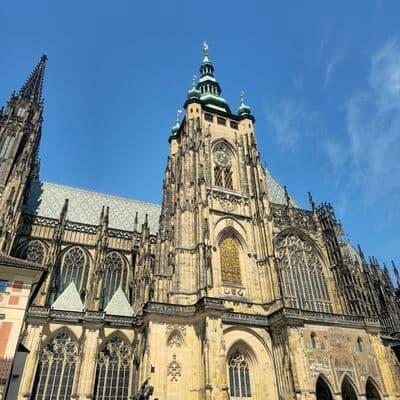
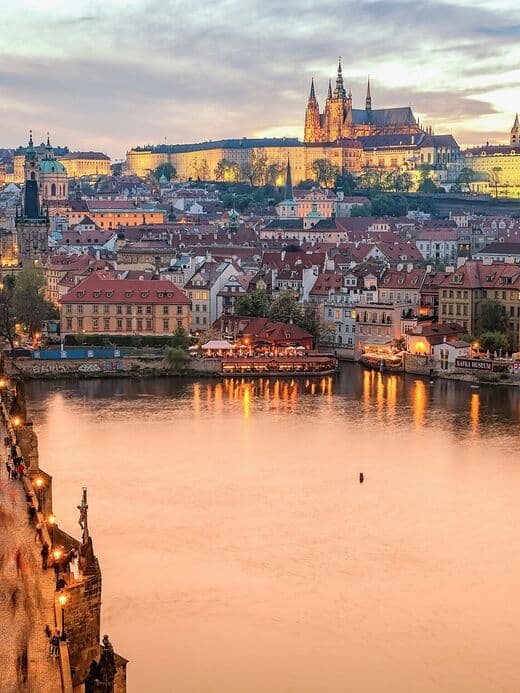
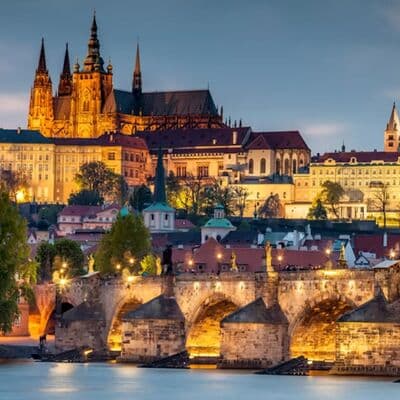
Prague Castle holds the Guinness World Record as the largest ancient castle complex in the world. This is not merely a tourist attraction but the functioning residence of the Czech president, a place where the country's history has been shaped for over a thousand years. St. Vitus Cathedral within the complex took six hundred years to build, started in the 14th century and finished in the 20th, and this shows in the blend of styles that creates its unique atmosphere. The castle complex is best approached in the early morning before the crowds arrive, or in the late afternoon as the day-trippers depart.
Charles Bridge is, yes, always crowded. Yes, there are vendors and street musicians everywhere. But it remains a place you must see. Come at sunrise, around five or six in the morning during summer, and you will find the bridge nearly empty, shrouded in morning mist rising from the Vltava. This is an entirely different experience from jostling through at midday. The thirty baroque statues lining both sides of the bridge tell stories of saints and legends, and the views of the castle on one side and the Old Town on the other are simply unforgettable.
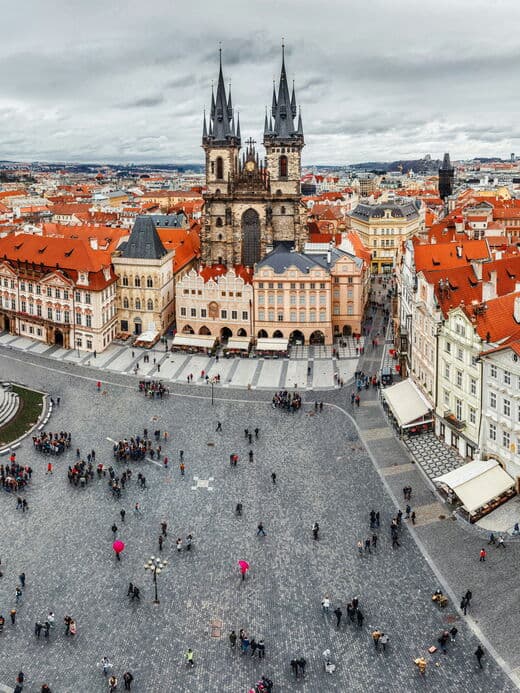
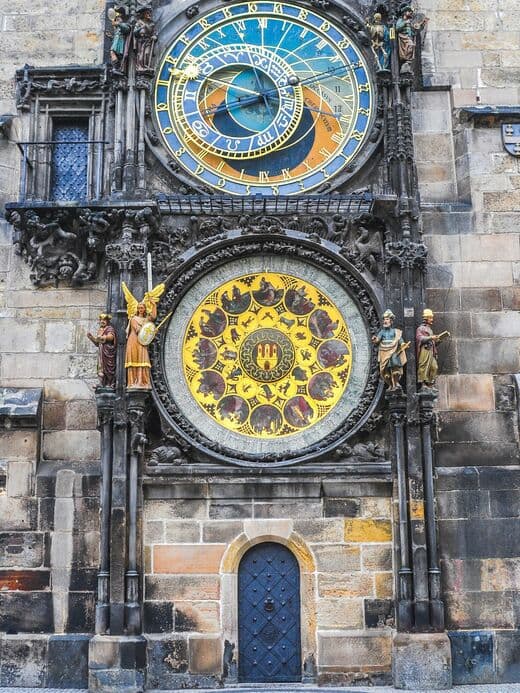
Old Town Square with its astronomical clock, the Orloj, serves as Prague's tourist epicenter. The clock chimes every hour from 9 AM to 11 PM, and crowds gather to watch the procession of apostles. Honestly, the show itself is rather modest, the figures appear for only a few seconds, but the 15th-century mechanism that still functions is impressive in its own right. The square itself is surrounded by stunning architecture, from the Gothic Tyn Church with its distinctive spires to colorful Baroque townhouses.
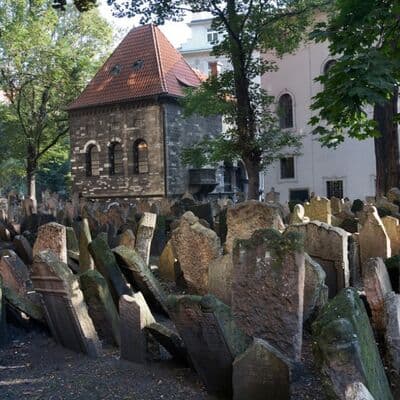
The Jewish Quarter, Josefov, is one of the best-preserved Jewish quarters in Europe. The Old Jewish Cemetery, where tombstones crowd together in twelve layers due to lack of space, makes a profound impression. The cemetery dates back to the 15th century, and the layered graves tell the story of a community that lived and died here for centuries. The quarter's synagogues now operate as museums telling the story of Prague's Jews, including the haunting collections documenting the Holocaust.
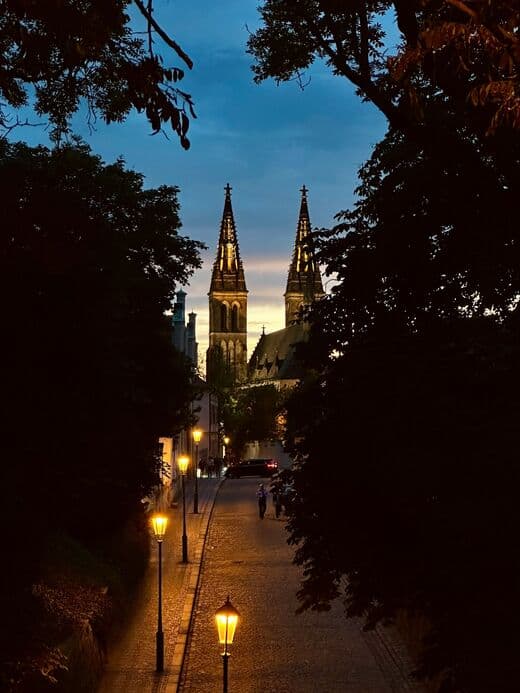
Vysehrad is a fortress on a hill above the Vltava, less known to tourists than Prague Castle but no less impressive. There are fewer people here, excellent views of the city, and a romantic cemetery where Dvorak, Smetana, and other Czech greats are buried. This is a place where Praguers themselves come for picnics, walks, and to sit on the grass with views of the river. The Romanesque rotunda of St. Martin, dating to the 11th century, is one of the oldest surviving buildings in Prague.
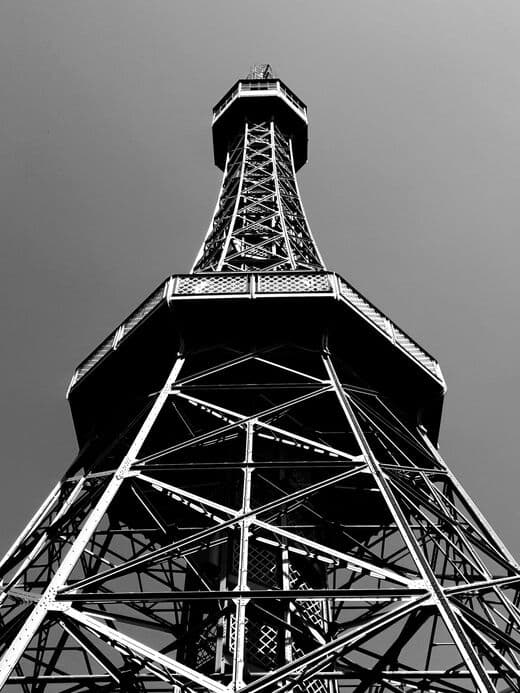
Petrin Tower is a smaller version of the Eiffel Tower on Petrin Hill. You can climb the 299 steps or take the elevator. The views of Prague from here are among the best, especially at sunset when the city's spires catch the golden light. Nearby you will find a mirror maze, a rose garden, and an observatory. Important note: the funicular to Petrin is closed for reconstruction and will reopen in spring 2026, so for now you need to walk or take a bus up the hill.
Beyond Prague, Central Bohemia offers dozens of castles and palaces within day-trip distance of the capital. Karlstejn is a Gothic castle built by Charles IV about 20 miles from Prague, one of the most visited in the country and looking exactly like a fairytale castle should. Konopiste is a castle housing the enormous hunting trophy collection of Archduke Franz Ferdinand, the one whose assassination triggered World War I. Kutna Hora is a town with a Gothic cathedral and the famous Sedlec Ossuary, a chapel decorated with the bones of approximately 40,000 people.
Southern Bohemia
If you have time for only one region beyond Prague, choose Southern Bohemia. This is the quintessence of Czech countryside: medieval towns, fish ponds dotted across the landscape, rolling hills, and castles around every bend. Here time flows more slowly, prices are lower, and the beauty rivals anything in the capital. This region is what many travelers picture when they imagine Central Europe, and it delivers on every romantic expectation.
Cesky Krumlov is the jewel of the region and one of the most photogenic small towns in Europe. The Vltava River makes a sharp bend here, wrapping around a historic center that is entirely UNESCO-listed. Cesky Krumlov Castle is the second largest in the Czech Republic after Prague Castle, and its tower offers commanding views over the red rooftops below. In summer, you can float down the Vltava in a kayak or raft, an easy route suitable for beginners and a memorable way to see the town from a different perspective.
Ceske Budejovice is the regional capital and birthplace of Budweiser Budvar beer. Yes, this is the beer that has been the subject of a trademark dispute with American Budweiser for over a century. In the Czech Republic and much of Europe, the American beer is sold as Bud because the rights to the Budweiser name belong to the Czechs. A visit to the Budvar brewery is essential, with daily tours explaining the traditional brewing process and generous tastings included.
Trebon is a charming town famous for its fish ponds. Carp is raised here and traditionally served at Czech Christmas dinners. The area around Trebon is a nature reserve with cycling paths along the ponds, an ideal destination for peaceful outdoor activities. The town itself has a well-preserved historic center and excellent spa facilities using local peat.
Hluboka nad Vltavou features a snow-white castle rebuilt in the 19th century in English neo-Gothic style, modeled after Windsor Castle. It looks like a set from a Disney animation but is a real residence where one of Europe's wealthiest families, the Schwarzenbergs, once lived. The contrast between this fairy-tale castle and the more austere Gothic fortresses elsewhere in the country is striking.
Tabor is a city founded by the Hussites in the 15th century. They attempted to build an ideal society here based on principles of equality and communal property. The experiment did not succeed, but the town preserved its unique layout with confusing streets designed for defense against attackers. The underground passages beneath Tabor can be visited with a guided tour, offering insight into medieval urban engineering and the city's turbulent past.
Western Bohemia and the Spa Triangle
Western Bohemia is the region of famous spa towns where European aristocracy has come to take the mineral waters since the 18th century. Karlovy Vary, Marianske Lazne, and Frantiskovy Lazne form the so-called spa triangle, collectively inscribed on the UNESCO World Heritage List in 2021. These towns represent the grandeur of 19th-century European wellness culture and remain popular destinations for those seeking both relaxation and architectural beauty.
Karlovy Vary is the most famous and largest of the spas. The town sits in a narrow valley lined with elegant 19th-century buildings in Art Nouveau and Neoclassical styles. Tradition calls for strolling with a porcelain drinking cup, sampling water from different springs, of which there are more than 80 in town. The taste of the water is, to put it mildly, distinctive and not what most palates would call pleasant, but this is part of the experience. Beyond the waters, Karlovy Vary is known for Becherovka liqueur, produced here from local herbs, Moser crystal glass, and the Karlovy Vary International Film Festival held each July.
Marianske Lazne is a more intimate and tranquil spa with an expansive park and a singing fountain that performs light and music shows every two hours during the season. Goethe, Chopin, Edison, and Mark Twain all visited here, and memorial plaques mark the houses where they stayed. The town feels like stepping back into the Belle Epoque, with ornate colonnades and meticulously maintained gardens.
Plzen is the city where, in 1842, the pilsner was invented, that clear, golden lager that today dominates global beer production. The Pilsner Urquell brewery is an essential stop for beer enthusiasts. The tour includes a descent into the historic cellars where beer matures in oak barrels and a tasting of unfiltered beer straight from the barrel, something you simply cannot experience anywhere else. The city itself has a handsome historic center with the Cathedral of St. Bartholomew, featuring the tallest church tower in the Czech Republic.
Northern Bohemia
Northern Bohemia is a region of contrasts. On one side are industrial cities with complicated histories; on the other, some of the most spectacular natural landscapes in the country. This duality makes it fascinating for travelers willing to look beyond the obvious attractions.
Bohemian Switzerland, or Ceske Svycarsko, is a national park on the German border, famous for its sandstone rock formations, gorges, and natural arches. The main attraction is Pravcicka Brana, the largest natural sandstone arch in Europe, an iconic sight that has graced countless photographs and even appeared in The Chronicles of Narnia. The park offers excellent hiking routes of varying difficulty, from easy walks to serious treks. There was a significant forest fire in the park during 2022-2023 that affected part of the territory, but most trails have reopened and the landscape remains stunning.
Litomerice is a historic town with one of the most beautiful main squares in the country. Nearby is Terezin, a former concentration camp from World War II, now a memorial and museum. The visit is emotionally heavy but important for understanding history. Terezin was used by the Nazis as a transit camp and ghetto, and the museum does an excellent job of documenting this dark chapter with sensitivity and thoroughness.
Liberec is the largest city in the region, situated at the foot of the Jizera Mountains. The Jested television tower on the summit of the mountain of the same name is an architectural masterpiece from the 1960s, resembling a flying saucer that has landed on the peak. Inside is a restaurant and hotel with panoramic views extending into Germany and Poland on clear days.
Eastern Bohemia
A less touristy region, which makes it attractive for those who want to see the authentic Czech Republic without the crowds. Here you will find genuine local life, fewer English menus, and experiences that feel more personal.
Kutna Hora technically belongs to Central Bohemia but is often visited as part of an eastern journey. The silver mines here in the Middle Ages made this town second in importance only to Prague. The Gothic Cathedral of St. Barbara is one of the most beautiful in the Czech Republic, a masterpiece of late Gothic architecture with flying buttresses and a roof shaped like a tent. And of course, there is the Sedlec Ossuary, a small chapel whose interior is decorated with the bones of approximately 40,000 people. It sounds gruesome but appears mesmerizing, a unique artistic achievement born of space constraints and spiritual creativity.
Hradec Kralove is a university town with a beautiful historic center and numerous buildings in Czech Cubist and Functionalist styles. Locals call it the most livable city in the Czech Republic, and it has a youthful energy thanks to its large student population. The architecture here represents some of the best examples of early 20th-century Czech design.
Litomysl is a small town with a Renaissance castle inscribed on the UNESCO World Heritage List. The composer Bedrich Smetana was born here, and the castle courtyard hosts an opera festival under the open sky each summer. The castle's sgraffito decoration, with over 8,000 individual designs scratched into the plaster, is unlike anything else in the country.
Moravia
Moravia is the eastern part of the Czech Republic, historically and culturally distinct from Bohemia. Here there are different traditions, a different dialect, and different cuisine. If Bohemia is about beer, Moravia is about wine. The South Moravian region is the country's largest winemaking area, with a mild climate ideal for viticulture. The rolling hills covered in vineyards create landscapes that could rival Tuscany or Burgundy.
Brno is the second-largest city in the Czech Republic and the capital of Moravia. For a long time it was considered a boring industrial center, but in recent years it has transformed into a trendy city with an excellent gastronomic scene, bars, cafes, and cultural life. Villa Tugendhat is a masterpiece of modernist architecture designed by Mies van der Rohe, a UNESCO World Heritage Site and one of the most important buildings of the 20th century. The Brno ossuary is the second largest in Europe after the Paris catacombs and was only discovered in 2001, containing the remains of an estimated 50,000 people.
Olomouc is a university town with a Baroque center often compared to Prague but without the crowds. The Holy Trinity Column on the main square is the largest Baroque sculpture in Central Europe, a UNESCO World Heritage Site rising 115 feet into the sky. The local cheese, tvaruzky, smells terrible but is considered a delicacy. Trying it is worth the experience, though perhaps not right before a long bus journey. The astronomical clock here, rebuilt in the socialist-realist style after World War II damage, is a curious contrast to Prague's medieval original.
Mikulov and the Lednice-Valtice Cultural Landscape are the heart of Moravian winemaking. Lednice and Valtice castles, connected by a park with romantic pavilions, temples, and artificial ruins, form one of the largest designed landscapes in the world and a UNESCO World Heritage Site. Here you can cycle between vineyards, taste wine in small family cellars, and enjoy views that seem painted rather than real. The region is perfect for a slower pace of travel, where the journey between destinations is as pleasant as the destinations themselves.
Ostrava is the third-largest city in the country, a former center of coal mining and metallurgy. The industrial heritage has been transformed into cultural venues: Dolni Vitkovice is a gigantic metallurgical complex converted into a cultural center with a museum, concert venues, and an observation tower on the former blast furnace. This is not for everyone, but if you are interested in industrial archaeology and urban regeneration, this place is unique in Europe.
Silesia
A small region in the northeast of the country, on the border with Poland. Here you will find ski resorts in the Beskid Mountains, Hradec nad Moravici castle, and the town of Opava with its Austro-Hungarian architecture. The region is less touristy but interesting for those who want to see the Czech Republic away from the beaten path. The Polish influence is palpable here, and the food takes on different character with more hearty, meat-focused dishes.
What Makes the Czech Republic Unique
Beer Culture
Beer in the Czech Republic is not merely a beverage; it is national identity. Czechs consume more beer per capita than any other country in the world, approximately 140 liters annually. For comparison, Americans drink about 75 liters, and the British about 70. Yet the quality of beer here is exceptionally high, while the price remains exceptionally low. A half-liter of excellent draft beer in a local pub can cost less than a bottle of water in a tourist restaurant.
The pilsner, a pale lager invented in Plzen in 1842, represented a revolution in brewing. Before this, most beers were dark and cloudy. A Bavarian brewer named Josef Groll, invited to Plzen, used the soft local water, Moravian barley malt, and Saaz hops to create a transparent golden beer with a characteristic bitterness. This style today dominates world brewing, from Budweiser to Heineken, all of them to some degree copying the Czech original. But only here will you taste what the original was truly meant to be.
Saaz hops, or Zatec in Czech, are among the noble hop varieties of the world. The town of Zatec in Northern Bohemia is the global capital of hop cultivation. There is a Temple of Hops and Beer here, an interactive museum with a lighthouse from which you can view endless hop fields stretching to the horizon.
Beer spas, or pivni koupel, are not a joke. At several Czech breweries and spa centers, you can take a bath in warm beer while drinking more of it. Beer yeast is supposedly good for the skin. It sounds absurd, but the experience is memorable and makes for excellent social media content, if you are into that sort of thing.
Tank beer, or tankove pivo, is beer that arrives at a restaurant directly from the brewery in tanks, without bottling or pasteurization. It is fresher and tastier and served only at establishments with special tanks. Look for signs saying tankovna, this is a mark of quality. The difference between tank beer and bottled beer is immediately noticeable to anyone who cares about such things.
Craft beer has also arrived in the Czech Republic, though it exists alongside rather than replacing the traditional lagers. Prague has several excellent craft breweries and bars serving everything from IPAs to stouts. But the real pleasure remains in the classic Czech lager, perfected over centuries and still superior to its imitators worldwide.
Castles and Palaces
The Czech Republic has more than 2,000 castles and palaces, more than any other country in the world per square mile. Gothic fortresses, Renaissance residences, Baroque palaces, 19th-century romantic ruins, everything is here. For castle enthusiasts, this country is essentially paradise.
Most castles are open from April to October. In winter, many are closed or operate only on weekends with reduced programs. Tours are usually conducted in Czech, but larger castles offer tours in English and German, as well as audio guides in various languages. It is always worth checking ahead for English tour times, as they may be limited to certain hours.
Among the must-visits are the already mentioned Karlstejn, Konopiste, Hluboka, and the castles of Cesky Krumlov and Litomysl. But equally interesting are less famous ones: Krivoklat is one of the oldest and best-preserved castles, a favorite hunting residence of Czech kings. Pernstejn is a mighty Gothic fortress practically untouched by later renovations. Loket is a picturesque castle on a cliff above the Ohre River, near Karlovy Vary, where Goethe stayed during his visits to the spa. Each castle tells different stories of different eras, and even a castle enthusiast could spend weeks exploring without exhausting the possibilities.
Bohemian Glass and Crystal
Bohemian glass is a traditional Czech craft with a history spanning more than 700 years. Moser from Karlovy Vary is the most famous brand, whose products decorate palaces and embassies around the world. But there are many lesser-known manufacturers producing quality products at more accessible prices. The craftsmanship involved in creating fine Czech glass and crystal is genuinely impressive, representing skills passed down through generations.
Beware of fakes in tourist shops in Prague. Much of what is sold as Bohemian glass is actually made in China. Buy from manufacturer stores or at factories to ensure authenticity. The price difference between genuine Bohemian glass and Chinese imitations is usually significant, but so is the quality and the story behind each piece.
Puppet Theaters and Marionettes
The Czech Republic is the world capital of puppet arts. The tradition of marionette theater here goes back centuries and is inscribed on the UNESCO Intangible Cultural Heritage list. In Prague, several professional puppet theaters show both children's performances and serious productions for adults, including Don Giovanni and Faust. The craftsmanship of the puppets themselves, the complexity of the staging, and the artistry of the puppeteers make these performances genuinely impressive regardless of your age.
Handmade wooden marionettes are a popular souvenir. But again, tourist shops carry many Chinese fakes. Genuine Czech marionettes are sold in specialized stores and cost from 1,000 CZK and up. Look for shops like Marionety Truhlar or Loutky for authentic craftsmanship.
Cinematography
The Czech Republic is one of the world's leading film production countries. Barrandov Studios in Prague is the largest in Europe, having hosted Mission: Impossible, Casino Royale, The Chronicles of Narnia, and countless series and commercials. Walking through Prague, you might encounter a film crew, this is an ordinary occurrence. The combination of well-preserved architecture, relatively lower costs compared to Western Europe, and excellent technical facilities makes Prague a magnet for international productions.
The Karlovy Vary International Film Festival is one of the oldest in the world, held annually in July. World cinema stars attend, and the town transforms into one giant movie theater for a week. If your visit coincides with the festival, expect both excitement and elevated prices in the spa town.
When to Visit the Czech Republic
Spring (April-May)
This is the ideal time for a visit. The weather is mild, with daytime temperatures of 59-68F (15-20C), tourist numbers are lower than summer, and hotel prices drop accordingly. Gardens and parks are in bloom, cherry blossoms are particularly beautiful in Prague in April, creating photo opportunities throughout the city. Castles begin opening after their winter break, and outdoor cafe culture returns to the squares.
Easter is an important holiday in the Czech Republic, accompanied by traditional markets, egg decorating, and the curious custom of pomlazka, where men symbolically swat women with braided willow switches. It sounds strange, but it is an ancient pagan rite connected to fertility and the return of spring. Easter markets in Prague rival the famous Christmas markets for charm, though with fewer international visitors.
The downside of spring is possible rain and changeable weather. Pack an umbrella and dress in layers. April especially can see rapid weather changes within a single day.
Summer (June-August)
Peak season. Warm temperatures of 77-86F (25-30C), sometimes higher, long days, everything is open. This is the best time for hiking in the mountains, river rafting, and visiting castles. But it is also the time of maximum prices and maximum crowds, especially in Prague and Cesky Krumlov. Book accommodation well in advance and be prepared for busy attractions.
Summer festivals, musical, beer-related, and folk, take place throughout the country. The Karlovy Vary Film Festival in July is a highlight, as is the Prague beer festival in late May to early June. Numerous open-air music events dot the calendar. The cultural calendar is rich, and there is always something happening.
August can bring thunderstorms and brief but intense downpours. Weather can change quickly, so always have a rain jacket handy. The heat in Prague during August can be intense, with temperatures occasionally exceeding 95F (35C).
Fall (September-October)
Many consider fall the best time to visit the Czech Republic. Tourists thin out, prices fall, and the weather remains comfortable, 59-68F (15-20C) in September, 50-59F (10-15C) in October. Forests turn gold and crimson, especially beautiful in Bohemian Switzerland and Moravia. The light takes on that particular autumn quality that photographers love.
The grape harvest season in South Moravia means new wine, burcak, and festivals. This is an excellent opportunity to see the region at its best, with harvest celebrations in villages throughout the wine country. Burcak, the young, still-fermenting wine available only in September and October, is sweet and dangerously drinkable, with unpredictable alcohol content.
November is already late autumn with rain and chill, not the best time for a visit unless you specifically enjoy the melancholy of gray skies and falling leaves.
Winter (December-March)
Christmas markets in December are the main argument for a winter trip. Prague's markets on Old Town Square and Wenceslas Square are among the most beautiful in Europe, featuring mulled wine, trdelnik, traditional pastries, handcrafted goods, and a festive atmosphere that genuinely delivers on the promise of a European Christmas. For Americans especially, the traditional market experience offers something not easily found at home.
Ski resorts such as Spindleruv Mlyn, Harrachov, and Pec pod Snezkou operate from December to March. By Alpine standards, these are small resorts with elevation drops of 1,500-2,000 feet, but for beginners and families with children, they offer excellent infrastructure and accessible prices. Do not expect Aspen or the Alps, but do expect good value and a relaxed atmosphere.
Winter drawbacks include short days, cold temperatures of 32 to 23F (0 to -5C), sometimes lower, and many castles being closed. But hotel prices are the lowest of the year, except during the New Year holiday period. Prague under snow, though increasingly rare due to climate change, is genuinely magical.
What to Avoid
The New Year holiday period from December 25 to January 2 brings maximum prices, fully booked accommodations, and many businesses closed. If you visit during this time, book everything months in advance.
Easter weekend is also a peak period with higher prices and crowded attractions.
July in Prague means peak tourist season, crowds, heat, and queues everywhere. If possible, visit the capital in the shoulder seasons instead.
How to Get to the Czech Republic
By Air
Vaclav Havel International Airport in Prague (PRG) is the country's main air gateway. Airlines from around the world fly here, including direct flights from major US and UK hubs. From the United States, direct flights operate from New York (JFK and Newark), with seasonal service from other cities. From the UK, numerous carriers serve Prague from London (Heathrow, Gatwick, Stansted, Luton), Manchester, Edinburgh, and other airports. Flight times are approximately 9-10 hours from the East Coast of the US and about 2 hours from London.
For those already in Europe, budget carriers like Ryanair, EasyJet, and Wizz Air offer inexpensive flights to Prague from cities across the continent. These can be excellent value if you book ahead and pack light to avoid baggage fees.
Getting from the airport to central Prague is straightforward. Bus 119 runs to Nadrazi Veleslavin metro station (Line A), then you continue by metro. Total travel time is about 45 minutes, cost is 40 CZK for a 90-minute ticket (or about 32 CZK through the PID Litacka app). Note that since January 2026, Prague transport prices have increased by 15-30 percent, so these figures may have changed slightly.
Taxis from the airport to the city center cost around 600-800 CZK, roughly $25-35 USD. Use only official services: Uber, Bolt, AAA Taxi, or Tick Tack. Do not take taxis off the street at the airport, as the risk of being overcharged by a factor of two or three is real.
Airport Express (AE) is a direct bus to the main train station. Since 2026, the ticket price increased to 200 CZK (previously 100 CZK), but the direct route and luggage space make it convenient for those headed to the station.
By Train
The Czech Republic has excellent rail connections with neighboring countries. Ceske drahy (Czech Railways) and the private operator RegioJet connect Prague with Vienna (4 hours), Budapest (6 hours), Berlin (4 hours), Munich (5 hours), and Krakow (7 hours). Train travel offers a civilized, scenic way to arrive and avoids airport hassles.
Since December 2025, Ceske drahy launched new international routes: trains now run to Copenhagen via Berlin and Hamburg, and to Villach in Austria, close to the Slovenian and Italian borders. This makes the Czech Republic an even more convenient hub for European rail travel.
RegioJet is an excellent alternative to state trains: comfortable carriages, free Wi-Fi, outlets at every seat, and coffee and snacks included in the ticket price. Prices are often lower than Ceske drahy, especially with early booking. The bright yellow trains are impossible to miss at stations.
For travelers coming from London, the journey by train involves Eurostar to Brussels or Paris, then onward connections through Germany. The total journey takes about 12-14 hours but can be broken up with an overnight stop. For rail enthusiasts, this is a pleasant way to travel.
By Bus
FlixBus and RegioJet are the main international bus operators. Buses are comfortable, with Wi-Fi and toilets, and prices start from $15-20 for trips to neighboring countries when booked early. This is often the cheapest option for budget travelers.
The main bus station in Prague is Florenc (UAN Florenc), located in the city center next to the metro station of the same name. The station has been renovated in recent years and is now a comfortable modern facility.
By Car
The Czech Republic is part of the Schengen Area, so borders with Germany, Austria, Poland, and Slovakia are open and crossings are seamless. For driving on highways, you need a vignette (dalnicni znamka). You can buy it online at edalnice.cz or at gas stations. Cost: 10 days costs 310 CZK, 1 month costs 440 CZK, 1 year costs 1,500 CZK (2026 prices). The vignette is electronic and linked to your license plate number; no stickers on the windshield are needed anymore.
The fine for driving without a vignette is up to 5,000 CZK, and foreigners may be issued a fine on the spot. Police checks are common, especially near borders.
For Americans and others with driver licenses from outside the EU, an International Driving Permit is recommended alongside your regular license, though enforcement can be inconsistent. Rental car companies may require one.
Transportation Within the Country
Trains
The Czech rail network is one of the densest in Europe. Trains run practically everywhere, even to small towns that might seem too minor for rail service. Ceske drahy is the state operator, while RegioJet is a private competitor on the most popular routes (Prague to Brno to Ostrava, Prague to Vienna).
Types of trains include: Os (Osobni vlak), slow suburban trains that stop everywhere; Sp (Spesny vlak), semi-fast trains; R (Rychlik), express trains; Ex (Express), expresses on main routes; EC/IC, international trains; and SC Pendolino, high-speed trains on the Prague to Ostrava route.
Tickets can be purchased online at cd.cz or in the Muj vlak app for Ceske drahy, at regiojet.cz for RegioJet, and also at station ticket counters and machines. Online purchases often come with discounts, especially for advance bookings. First-class tickets are available on longer routes and offer more space and sometimes complimentary refreshments.
For route planning, use the IDOS app, which shows schedules for all trains and buses in the country, including connections. The app is in Czech but reasonably intuitive, and Google Maps also shows Czech train and bus routes accurately.
Buses
The bus network complements the railways, especially in areas without train service. FlixBus and RegioJet operate intercity routes, while local carriers serve regional lines. Buses are often faster than trains for certain routes, particularly to smaller towns.
Important: on weekends and holidays, bus frequency drops sharply, especially in rural areas. Plan your trips in advance and do not assume the same schedule applies as on weekdays.
Car Rental
For those who want to see castles and small towns at their own pace, a car is the best option. Roads in the Czech Republic are excellent quality, signage is clear, and traffic jams only occur in Prague during rush hour. The country is small enough that nowhere is more than a few hours from anywhere else.
Rental costs start from $30-40 per day for an economy class vehicle. All major international companies (Hertz, Avis, Europcar, Sixt) are represented at the airport and in central Prague. Local rental companies often offer lower prices but may have less flexible policies.
Requirements include a minimum age of 21 years (25 for some categories), a valid driver license, and a credit card. An International Driving Permit is recommended for non-EU licenses. Definitely get full insurance coverage, as accidents happen and repair costs without insurance can be substantial.
Parking in central Prague is expensive and complicated. Blue zones are for residents only, orange zones are paid with time limits. Better to leave the car at a P+R parking lot on the outskirts and take the metro into the center. Most P+R lots charge around 50-100 CZK per day and include transport tickets.
Speed limits are 50 km/h (31 mph) in built-up areas, 90 km/h (56 mph) on roads, and 130 km/h (81 mph) on highways. Fines are substantial and cameras are everywhere. The blood alcohol limit for driving is strictly 0.0 percent, meaning any amount of alcohol in your system is a serious offense with large fines and possible license suspension.
Public Transportation in Prague
Prague has one of the best public transportation systems in Europe. Three metro lines (A is green, B is yellow, C is red), dozens of tram and bus routes, a funicular to Petrin (closed until spring 2026 for renovations), and night trams and buses create a comprehensive network. You can reach anywhere in the city efficiently by public transport.
The ticketing system is unified for all modes of transportation. Tickets are sold through the PID Litacka app (cheapest, with 15-20 percent discount), in machines at metro stations and some tram stops, and in tobacco shops (Trafika). The app is essential for regular use and works well even for visitors.
Important: Since January 2026, prices for paper tickets increased by 25-30 percent. A 30-minute ticket costs around 30-35 CZK, a 90-minute ticket costs 50-55 CZK. Tickets purchased through the app are cheaper. Day passes and multi-day passes are worthwhile if you plan to use transit frequently, with 24-hour passes costing around 120 CZK.
Tickets must be validated when entering the metro or boarding a tram or bus. Electronic tickets are activated in the app before your journey. Inspectors check frequently and fine without mercy, with the penalty for traveling without a valid ticket at 1,500 CZK payable on the spot.
Important change: Since January 2026, electric scooters (e-scooters) are banned in Prague. Companies like Lime and Bolt have ceased operations. This decision was made for safety reasons after numerous accidents with pedestrians. Bicycles remain available through some sharing programs, and walking remains the best way to experience the historic center.
The Cultural Code of the Czech Republic
Czech Character
Czechs are reserved people, not inclined to external displays of emotion. Do not expect broad smiles from strangers, as this is not rudeness but simply the norm. Service may seem cold compared to Italy or the Mediterranean countries, but this is just a different style. Warmth here is expressed differently, through reliability, honesty, and eventually, dry humor once you get to know people.
That said, Czechs value politeness. Always greet when entering a shop or restaurant: Dobry den (good day) is the universal greeting. When leaving, say Na shledanou (goodbye). These simple phrases will make interactions noticeably warmer and show respect for local customs.
Czechs are proud patriots of their country but not prone to pomposity. They take pride in their history, culture, and beer, but with self-irony and a certain knowing skepticism. If you engage in conversation about Czech beer or hockey, you will break through any reserve. Expressing genuine appreciation for the country goes a long way.
Language
Czech is a Slavic language that can be challenging for English speakers. The grammar is complex with seven cases, and pronunciation includes sounds unfamiliar to English ears, such as the famous r with a hacek that produces a sound somewhere between an r and a zh.
English is widely spoken in Prague and tourist areas, especially among younger people. Service workers in the hospitality industry almost always speak at least basic English. Outside the capital, English proficiency drops but is still common in hotels and major attractions. German is understood by many older people, especially in western regions near the border.
Useful phrases include: Dobry den (Good day, formal greeting); Ahoj (Hello, informal); Dekuji (Thank you); Prosim (Please, also used as You're welcome); Pivo, prosim (Beer, please); Ucet, prosim (Check, please); Kde je...? (Where is...?); Kolik to stoji? (How much does it cost?); Nerozumim (I do not understand); and Mluvite anglicky? (Do you speak English?).
Even attempting a few Czech words is appreciated by locals and can transform interactions from transactional to friendly.
Tipping
Tips in the Czech Republic are customary but not obligatory. The standard is to round up the bill to a convenient figure or leave 5-10 percent for good service. If the bill is 475 CZK, you might leave 500 or 520 CZK.
Important: tips are given in cash, even if paying by card. When the server asks if you are ready to pay, you state the amount including the tip: the bill is 475, you say 500, and the server will bring change from 500. Do not leave tips on the table after departing, as this is not the custom and may not reach your server.
Tipping in taxis means rounding up to the nearest 10-20 CZK, no more. Tipping hotel housekeeping is not obligatory but 20-50 CZK per day is appreciated.
Taboos and What Not to Do
Do not confuse the Czech Republic with Chechnya. Czechs find this confusion annoying, and it happens more often than you might think. Know your geography.
Do not call Czech beer German. This is genuinely offensive, as the Czech brewing tradition predates and influenced German brewing.
Do not criticize Vaclav Havel. He is a national hero who led the country through the Velvet Revolution and its transition to democracy.
Do not photograph people without permission, especially children. Privacy is valued.
Do not talk loudly or laugh boisterously in public places. Restraint is valued and drawing attention to yourself is considered poor form.
Do not smoke indoors. This is prohibited by law since 2017, including in all restaurants and bars.
Do not eat or drink on Prague public transportation. Technically allowed, but practically frowned upon and considered impolite.
Useful Customs
When meeting friends, Czechs typically exchange a handshake. With close friends, a triple kiss on the cheek (left-right-left) is common, but only if you know each other well. Do not initiate this with new acquaintances.
When entering someone's home, it is customary to remove shoes. Hosts usually offer slippers. Arriving with flowers or wine when invited to dinner is appreciated.
The toast when drinking beer is Na zdravi! (To health!). Important: look into the eyes of the person you are clinking glasses with. Do not cross arms with others when toasting at a large table. After the toast, take a drink; do not set your glass down without drinking.
Safety in the Czech Republic
Overall Safety Level
The Czech Republic is one of the safest countries in Europe. The level of violent crime is extremely low, and even late at night you can walk safely through most neighborhoods. According to police data, registered crimes in 2024 decreased by 6.4 percent compared to the previous year. The country consistently ranks among the safest in global indices.
The US State Department classifies the Czech Republic as a Level 1 country (lowest risk), Exercise Normal Precautions. The UK Foreign Office similarly notes few concerns for travelers. This is genuinely a low-risk destination.
Pickpockets
The main danger for tourists is pickpockets, especially in Prague. High-risk zones include: Old Town Square and Karlova Street; Charles Bridge; Wenceslas Square; Trams 22 and 23 (tourist routes to Prague Castle); Mustek metro station; and the Main Train Station (Praha hlavni nadrazi).
Standard precautions apply: wear your backpack in front in crowds, do not keep phones and wallets in back pockets, do not leave bags on the back of chairs in cafes. Use a money belt for large amounts of cash and keep copies of important documents separate from originals.
Common Tourist Scams
Currency Exchange. Exchange offices with No Commission signs often offer terrible rates. Before exchanging, calculate how many crowns you will receive; this should be shown on the display. A normal euro to crown rate is around 25; if you are offered 20, that is a 20 percent loss. The best option is to withdraw cash from bank ATMs, avoiding Euronet machines, which charge enormous fees. When an ATM asks about conversion, always choose No and withdraw in local currency; your own bank will give you a better rate.
Taxis. Historically, taxis in Prague were problematic. Drivers overcharged, took circuitous routes, and used rigged meters. The situation has improved thanks to Uber and Bolt, but at train stations and the airport, you can still encounter scammers. Use only apps to order taxis or trusted companies like AAA Taxi or Tick Tack. Never accept rides from drivers who approach you unsolicited.
Fake Police. Scammers in police-like uniforms ask to see documents and your wallet, supposedly to check bills for counterfeits, then disappear with your money. Real police never ask to see your wallet or cash on the street. If in doubt, ask to go to a police station. This scam is less common than it once was but still exists.
Petitions and Charity. People with clipboards ask you to sign a petition for something worthy, then demand a donation. Since March 2025, collecting signatures and donations on the streets in central Prague is prohibited. If someone approaches you with such a request, it is likely a scam.
Restaurant Overcharges. Check your bill before paying. Some restaurants add automatic tips or cover charges without warning. Bread and snacks brought without ordering are often chargeable. If in doubt, ask before eating anything you did not order.
Old Prague Ham. The famous ham on Old Town Square is sold by weight, and sellers cut enormous portions. It seems like you are buying 100 CZK worth but pay 400. If you want to try it, ask the price first and specify the amount you want to spend.
Neighborhoods to Avoid
There are practically no such neighborhoods in the Czech Republic. Even in Prague, all central districts are safe. Some caution is warranted in the Smichov and Zizkov districts late at night, where there are more bars and potentially more intoxicated people, but these are not dangerous areas, just livelier.
In northern Czechia (Usti nad Labem, Most), there are socially disadvantaged neighborhoods, but tourists rarely visit these areas and would have no reason to.
Emergency Numbers
112 is the single European emergency number. 155 is ambulance. 158 is police. 150 is fire service. All operators speak English.
Health and Medicine
Medical Care
The level of medicine in the Czech Republic is high, comparable to Western European standards. In Prague and major cities, there are hospitals with modern equipment and English-speaking staff. For emergency care, go to the Urgentni prijem (emergency department) of any hospital. The main hospital in Prague is Vseobecna fakultni nemocnice (General University Hospital).
For EU citizens, medical care is free with a valid European Health Insurance Card (EHIC). For citizens of other countries, travel insurance is essential. Without insurance, a doctor's visit costs around 1,000-2,000 CZK, and emergency services are significantly more expensive. Americans should check whether their domestic health insurance provides any overseas coverage and consider supplemental travel insurance regardless.
Pharmacies
Pharmacies (Lekarna) typically operate weekdays from 8 AM to 6 PM, some longer. In Prague, there are 24-hour pharmacies: Lekarna Palackeho at Palackeho 5, Praha 1 (open 24 hours), and Lekarna U Aesculapa at Stepanska 6, Praha 1 (until midnight).
Many medications that are over-the-counter in the US or UK require a prescription in the Czech Republic. Basic painkillers like paracetamol (acetaminophen) or ibuprofen can be purchased freely, but antibiotics and stronger medications require a prescription. If you take regular medications, bring sufficient supply from home.
Vaccinations
No mandatory vaccinations are required for visiting the Czech Republic. Standard vaccinations for tetanus and hepatitis A are recommended as they are for most travel. If you plan to hike in forests, consider vaccination against tick-borne encephalitis, as ticks are common in the Czech Republic. Consult your doctor or a travel clinic before departure.
Ticks
From April to October, ticks are active in forests and parks and can carry encephalitis and Lyme disease (borreliosis). After walks in the forest, inspect yourself for ticks. If you find an attached tick, remove it as soon as possible with tweezers, twisting counterclockwise. If a red ring appears around the bite site or symptoms develop (fever, headache), see a doctor promptly. Tick repellent sprays are effective and widely available.
Water
Tap water in the Czech Republic is safe to drink. In some regions it is hard and may have a distinctive taste, but this is not harmful. Mineral water from spa sources has a peculiar taste that takes getting used to but is safe to drink. If you prefer, bottled water is inexpensive and available everywhere.
Food
Food safety standards are high, and sanitary control is effective. Street food (trdelnik, sausages) is safe to eat. The only risk is overeating, because portions in Czech restaurants are enormous. Vegetarians may find traditional Czech restaurants challenging, but Prague especially has many vegetarian and vegan options.
Money and Budget
Currency
The official currency is the Czech crown (CZK or Kc). The Czech Republic is not part of the eurozone and has no immediate plans to join. Euros are sometimes accepted in tourist areas of Prague, but the exchange rate is usually unfavorable. Plan to use crowns for most transactions.
Approximate exchange rates in 2026: 1 EUR equals approximately 25 CZK, 1 USD equals approximately 23 CZK, 1 GBP equals approximately 29 CZK.
Where to Exchange and Withdraw Money
The best method is to withdraw cash from bank ATMs using your debit card. Avoid Euronet ATMs, which offer their own conversion rates (dynamic currency conversion) that are always unfavorable. Choose ATMs from banks: Ceska sporitelna, Komercni banka, CSOB, Raiffeisenbank.
When an ATM asks if you want conversion, always select No and withdraw in local currency (CZK). Your home bank will provide a better exchange rate. This applies regardless of which country your card is from.
Exchange offices (smenarna) should be a last resort. If you do exchange, check the rate on Google beforehand and calculate what you should receive. Avoid exchange offices with No Commission signs in tourist areas, as they make their money on poor rates instead.
Cards
Visa and MasterCard are accepted everywhere in cities. Small village shops, markets, and some cafes may be cash only. American Express is accepted less frequently, mainly at upscale hotels and restaurants. UnionPay is accepted at larger stores and hotels.
Contactless payment is ubiquitous, and Google Pay and Apple Pay work throughout the country. Many Czechs rarely carry cash at all in urban areas.
Trip Budget
Budget level (hostel, street food, public transport):
- Hostel: 400-600 CZK/night ($17-26 USD)
- Food: 300-400 CZK/day ($13-17 USD)
- Transport: 100-150 CZK/day ($4-7 USD)
- Attractions: 200-300 CZK/day ($9-13 USD)
- Total: 1,000-1,500 CZK/day ($43-65 USD or 35-55 GBP)
Mid-range level (3-star hotel, restaurants, occasional taxi):
- Hotel: 1,500-2,500 CZK/night ($65-110 USD)
- Food: 600-800 CZK/day ($26-35 USD)
- Transport: 200-300 CZK/day ($9-13 USD)
- Attractions: 300-500 CZK/day ($13-22 USD)
- Total: 2,600-4,100 CZK/day ($115-180 USD or 90-140 GBP)
Comfort level (4-5 star hotels, fine dining, taxis):
- Hotel: 4,000-7,000 CZK/night ($175-305 USD)
- Food: 1,500-2,500 CZK/day ($65-110 USD)
- Transport: 500-800 CZK/day ($22-35 USD)
- Attractions: 500-1,000 CZK/day ($22-43 USD)
- Total: 6,500-11,300 CZK/day ($285-490 USD or 220-385 GBP)
Outside Prague, costs are significantly lower. Hotels in smaller towns start from 800 CZK, restaurant lunches from 150 CZK, and beer from 35 CZK. Your money goes considerably further once you leave the capital.
Beer as a Measure of Cost
Czechs joke that beer is the national currency, and it serves as a useful reference point. A half-liter mug (pullitr) of beer costs from 35-40 CZK in an ordinary pub, 50-70 CZK in a tourist location, and up to 100 CZK in an upscale establishment. If beer costs more than 80 CZK in a regular restaurant, you are probably being overcharged. If someone quotes you 150 CZK for a beer in a tourist area, find another establishment immediately.
Itineraries Through the Czech Republic
7 Days: Classic Bohemia
The ideal itinerary for a first encounter with the country, covering the main highlights.
Days 1-3: Prague
Three days is the minimum for Prague. On the first day, explore the Old Town: Old Town Square with the Astronomical Clock, the Powder Tower, the Art Nouveau Municipal House, and the Jewish Quarter Josefov. In the evening, enjoy dinner at a traditional restaurant like Lokal or U Medvidku.
On the second day, focus on the left bank of the Vltava: Charles Bridge early morning (before 8 AM there is almost no one), the Lesser Town (Mala Strana) with Baroque palaces, Prague Castle and St. Vitus Cathedral. Descend via Nerudova Street, stopping at a cafe on Lesser Town Square. In the evening, climb Petrin Hill on foot (the funicular is under repair until spring 2026).
The third day is for Vysehrad in the morning (fewer people, romantic atmosphere), then the New Town and Wenceslas Square, and museums of your choice (National Museum, Mucha Museum in the new Savarin Palace building). Evening means craft beer tasting at a local bar.
Day 4: Kutna Hora
Day trip from Prague by train (1 hour). The Sedlec Ossuary is a chapel decorated with the bones of 40,000 people. St. Barbara's Cathedral is a masterpiece of late Gothic architecture. Walk through the old town, then return to Prague in the evening. The bone church alone is worth the trip, but the cathedral and town deserve time as well.
Days 5-6: Cesky Krumlov
Travel from Prague by RegioJet bus (3 hours) or by car. An overnight stay in Cesky Krumlov is essential; the town transforms completely in the evening and night when day-trippers leave. Explore the castle, find viewpoints over the town, try rafting on the Vltava, and have dinner overlooking the river. The atmosphere after dark, when the streets empty and lights reflect off the water, is magical.
Day 7: Hluboka Castle and Return
On the way back to Prague, stop at Hluboka nad Vltavou castle (30 minutes from Cesky Krumlov). This neo-Gothic white castle resembles Disneyland but is genuine. The tour takes 1.5-2 hours. Return to Prague by evening for your final night or departure.
10 Days: Bohemia and Moravia
An expanded itinerary adding Moravia, the other Czech Republic, where wine replaces beer as the beverage of choice.
Days 1-3: Prague
As in the 7-day itinerary.
Day 4: Kutna Hora
As in the 7-day itinerary.
Days 5-6: Brno
Travel from Prague to Brno by RegioJet train (2.5 hours). Brno is the capital of Moravia, a city of students, bars, and surprising architecture. Villa Tugendhat (book in advance as tours sell out) is a UNESCO World Heritage Site and architectural pilgrimage destination. See the Cathedral of Saints Peter and Paul on the hill, explore the Brno underground, and visit the ossuary beneath St. James Church. Evening means bars and restaurants on Zelny trh (Cabbage Market).
Days 7-8: South Moravia
From Brno by car (or organized tour), explore the wine region. The Lednice-Valtice Cultural Landscape includes Lednice and Valtice castles, a romantic park with pavilions, and some of the most beautiful designed landscapes in Europe. Mikulov is a charming hilltop town where you can taste local wines in family cellars. Overnight in Mikulov or Valtice. The wine here rivals anything from more famous regions, at a fraction of the price.
Day 9: Olomouc
Travel to Olomouc (2 hours from Mikulov). This Baroque city is often called little Prague but without the crowds. The Holy Trinity Column (UNESCO) dominates the main square. The astronomical clock on the town hall, rebuilt in socialist-realist style, is a fascinating contrast to Prague's medieval original. The local cheese tvaruzky is for the brave; it smells terrible but tastes interesting.
Day 10: Return via Litomysl
On the way to Prague, stop in Litomysl. The Renaissance castle with unique sgraffito (designs scratched into plaster) is a UNESCO site, and composer Smetana was born here. Allow 2-3 hours to explore, then continue to Prague.
14 Days: Complete Czech Republic
Two weeks allow you to see the country without rushing, including nature and spa towns.
Days 1-4: Prague and Surroundings
Four days for the capital and day trips. Day 4 includes Karlstejn Castle (half an hour by train), the Gothic fortress of Charles IV where crown jewels were once stored.
Days 5-6: Karlovy Vary
The elegant spa town with 19th-century architecture. Stroll with a porcelain cup from spring to spring, visit the Moser glassworks, and take a tour of the Becherovka factory. Evening concerts in the spa colonnade or simply walking along the Tepla River complete the experience. Consider a spa treatment; you are in spa country after all.
Day 7: Plzen
Birthplace of pilsner. The Pilsner Urquell brewery tour is essential for beer lovers; the historic cellars and tasting straight from the barrel justify the journey alone. After the tour, walk through the historic center and see St. Bartholomew Cathedral with the highest church tower in the Czech Republic.
Days 8-9: Cesky Krumlov and South Bohemia
As in the 7-day itinerary, plus a day for the region: Trebon with fish ponds, Tabor with Hussite history, and Rozmberk castle perched above the river.
Days 10-11: Bohemian Switzerland
Travel to the north of the country. Bohemian Switzerland National Park features sandstone cliffs, gorges, and natural arches. Pravcicka Brana is the largest natural arch in Europe and the park's iconic sight. Trails of varying difficulty are available; combine hiking with a boat ride through the Kamenice Gorge for a varied experience.
Days 12-13: Brno and South Moravia
As in the 10-day itinerary.
Day 14: Return to Prague
The final day for rest, shopping, and a farewell walk through favorite spots before departure.
21 Days: Deep Immersion
Three weeks are for those who want to know the Czech Republic genuinely, including places off the tourist circuit.
Days 1-5: Prague and Central Bohemia
Five days in the capital allow you to explore beyond the main attractions. Add: the Vinohrady and Zizkov neighborhoods (more local atmosphere, excellent bars), Letna Gardens with city panoramas, Strahov Monastery with its stunning library, Prague Zoo (a new Arctic pavilion opens in 2026), and a day trip to Terezin, the former concentration camp that now serves as a memorial.
Days 6-7: Kutna Hora and Eastern Bohemia
Kutna Hora with an overnight stay (the town is beautiful and empty in the evening). Then Hradec Kralove, an architectural gem featuring Czech Cubism and Functionalism that architecture enthusiasts will appreciate.
Days 8-10: Northern Bohemia
Bohemian Switzerland (2 days of trekking), Litomerice, and Terezin. Liberec with the Jested TV tower offers commanding views in multiple directions.
Days 11-13: Western Bohemia
Karlovy Vary (2 days allows time for spa treatments), Marianske Lazne with its singing fountain and elegant parks, and Plzen.
Days 14-16: Southern Bohemia
Cesky Krumlov, Hluboka, Trebon, and Tabor. Kayaking on the Vltava offers a different perspective on the landscape. Cervena Lhota Castle, set on an island in the middle of a lake, is one of the most romantic castles in the country and appears on countless postcards.
Days 17-18: Brno and Moravian Karst
Brno plus an excursion to the Moravian Karst, a cave system with underground rivers and the Macocha Abyss, 450 feet deep. The boat ride along the underground river is a unique experience found few places in Europe.
Days 19-20: South Moravia
The Lednice-Valtice Cultural Landscape, Mikulov, and the vineyards. A bicycle tour between wineries allows you to taste wines without worrying about driving. Local varieties to try include Palava, Ryzlink rynsky, and Rulandske.
Day 21: Olomouc and Return
Olomouc on the way back to Prague, or a direct flight home from Brno if available.
Connectivity and Internet
Mobile Service
Three main operators serve the Czech Republic: T-Mobile, O2, and Vodafone. For tourists, the easiest option is a prepaid SIM card (predplacena karta). T-Mobile Twist costs about 200 CZK for a starter package with 1 GB of internet. O2 Datamanie offers packages with larger data volumes. Vodafone has similar offers.
SIM cards are sold at operator stores, supermarkets (Tesco, Albert), and gas stations. You need your passport to purchase, as required by law.
eSIM
If your phone supports eSIM, this is the most convenient option. Airalo, Holafly, Nomad, and other providers offer eSIM for the Czech Republic or for all of Europe. Activation takes minutes, and you do not need to find a store. For frequent travelers, an international eSIM plan can cover multiple countries on a single trip.
Wi-Fi
Free Wi-Fi is available practically everywhere: hotels, cafes, restaurants, and shopping centers. Prague has a city network called Praha Free WiFi that is free but slow and requires registration. For reliable connectivity, a local SIM or eSIM is preferable.
The Prague metro has Wi-Fi at stations but not in trains. Ceske drahy and RegioJet trains offer free Wi-Fi, though quality varies with network coverage along the route.
Roaming for US and UK Travelers
Americans should check with their carriers about international roaming plans before departure. Major carriers like AT&T, Verizon, and T-Mobile USA offer international day passes that can be cost-effective for shorter trips. T-Mobile USA often includes free international data, though at reduced speeds.
UK travelers will find that since Brexit, EU roaming regulations no longer apply. Check with your provider about roaming charges, as these vary significantly. Some UK plans still include European roaming at no extra cost, while others charge substantial fees.
What to Try in the Czech Republic
Main Dishes of Czech Cuisine
Czech cuisine is hearty, meat-focused, and not for the calorie-conscious. Portions are large, flavors are robust. This is the cuisine of a country with cold winters where calories were once necessity. Come hungry and be prepared to leave satisfied.
Svickova na smetane is beef sirloin in cream sauce with dumplings, the number one national dish. The sauce is prepared from root vegetables (carrot, celery, parsnip), cream, and a touch of vinegar. It is served with cranberry jam and whipped cream. This sounds odd, but the combination works beautifully. Every Czech has an opinion about whose svickova is best, and grandmothers across the country guard their recipes jealously.
Vepro-knedlo-zelo is roasted pork with dumplings and sauerkraut, the classic of Czech pubs. Simple, honest, filling. The pork should be crispy on the outside, tender within, and the combination with tangy sauerkraut and soft dumplings is satisfying in the most fundamental way.
Gulas (goulash) in the Czech style differs from Hungarian goulash with less paprika and a thicker consistency. It comes with bread dumplings that perfectly absorb the sauce. Order it with a dark beer for the full experience.
Smazeny syr is fried cheese. It sounds primitive, but this is a cult dish of Czech fast food. A thick slice of Edam or hermelin cheese in breadcrumbs, deep-fried, served with french fries and tartar sauce. A cholesterol bomb, but delicious. Vegetarians will find this one of the few traditional options available to them.
Trdelnik is sweet dough wrapped around a cylinder and baked over coals with sugar and cinnamon. Sold on every corner in tourist areas. Czechs will tell you it is actually Slovak, not Czech, but it has become a symbol of Prague regardless. Variations with ice cream, Nutella, and berries are for tourists, but the plain version is perfectly satisfying.
Knedliky (dumplings) come in many forms: bread dumplings (houskove), potato dumplings (bramborove), and fruit dumplings (ovocne, filled with plums, apricots, or strawberries). They accompany virtually everything and are essential to the Czech dining experience.
Bramboraky are potato pancakes with garlic and marjoram, the Czech answer to hash browns or latkes. Best eaten fresh and hot from a pub kitchen.
Kulajda is a thick mushroom soup with potatoes, dill, and sour cream, served with a poached egg. Especially good in cold weather and wonderfully comforting.
Nakladany hermelin is marinated cheese similar to Camembert, aged in oil with garlic, peppers, and spices. A perfect accompaniment to beer.
Utopenec, which translates as drowned man, is a pickled sausage in vinegar with onions and peppers. Another classic beer snack that tastes better than it sounds.
Drinks
Beer (pivo) deserves its reputation. Main styles include svetly lezak (pale lager, the pilsner), tmave pivo (dark beer), nefiltrovane (unfiltered), and kvasnicove (yeast beer). When ordering, specify size: male (0.3 liter) or velke (0.5 liter). The default is always velke unless you specify otherwise.
Becherovka is an herbal liqueur from Karlovy Vary, infused with more than 20 herbs and spices. The recipe remains secret. It is drunk chilled as a digestif or in cocktails. The flavor is distinctive, herbal, and slightly medicinal in the best sense.
Slivovice is plum brandy, a strong distillate especially good from Moravia. Drunk as a shot, usually before meals to stimulate appetite. Be warned: this is serious alcohol, typically 45-50 percent ABV.
Moravian wine includes excellent whites (Ryzlink vlassky, Veltlinske zelene, Palava) and respectable reds (Frankovka, Svatovavrinecke). Burcak is young, still-fermenting wine available only in September and October. It is sweet, easy to drink, and deceptively strong with unpredictable alcohol content that can range from 4 to 8 percent. Proceed with caution.
Where to Eat
Beer halls (Pivnice, Hospoda) are traditional establishments with Czech cuisine and draft beer. This is where locals eat. Menus are simple, portions large, prices low. Examples in Prague include Lokal (multiple locations), U Medvidku, and U Fleku (touristy but historic, brewing its own dark beer since 1499).
Restaurants (Restaurace) are more formal with diverse menus. In tourist areas of Prague, many are overpriced and tourist-oriented. Look for places away from main streets or check reviews on TripAdvisor and Google Maps. The best finds are often on side streets where you will not see English menus in the window.
Hospudka is a small pub, often family-run, with a homey atmosphere. The best experiences are found away from tourist areas, where locals gather after work.
Cafes (Kavarna) reflect Prague's excellent coffee culture. Viennese influence shows in traditional cafes with cakes and strudel. The modern specialty coffee scene is one of the best in Central Europe, with independent roasters and skilled baristas.
Food Tips
Lunch (obed) is the main meal, usually from 11:30 AM to 2 PM. Many restaurants offer daily menus (denni menu) at significant discounts, a complete lunch for 100-150 CZK. This is how working Czechs eat, and it represents excellent value.
Bread and sauces brought without ordering are often chargeable. Ask before consuming anything you did not order.
Portions are large. You can order one main dish to share or request a half portion if available.
Vegetarians face challenges in traditional establishments because Czech cuisine is very meat-centric. Look for modern restaurants or Indian and Asian establishments. Prague has excellent vegetarian and vegan options; smaller towns less so.
In tourist areas, always check the bill. Items may be added incorrectly, whether by mistake or design.
What to Bring Back from the Czech Republic
Gastronomy
Becherovka from Karlovy Vary is sold everywhere, but at the factory in Karlovy Vary it is cheaper and exclusive variations are available.
Oplatky are thin wafers from Karlovy Vary with various fillings (chocolate, nuts, vanilla). The originals are round, large, and crispy. They make excellent gifts and survive travel well.
Czech beer in bottles makes sense only if it is something special. Ordinary Pilsner Urquell is available in most countries. But craft beer from small breweries makes an excellent souvenir for beer-loving friends back home.
Hermelin cheese, marinated or plain, travels reasonably well if it does not get too warm. The marinated version in oil can last several days unrefrigerated.
Moravian wine costs from 200-300 CZK for a good bottle. Czech wines are little-known abroad, but quality is high. Bringing back a few bottles introduces friends to something genuinely unusual.
Crafts and Souvenirs
Bohemian glass and crystal ranges from small ornaments to vases and chandeliers. Buy from manufacturer stores (Moser, Ruckl, Egermann), not tourist shops. Prices are high, but quality matches. Properly packed, glassware travels well.
Garnets (Granaty) are semi-precious dark red stones mined in Bohemia for centuries. Jewelry with garnets, including rings, earrings, and brooches, is a traditional Czech souvenir. Many fakes exist, so buy from certified stores. Granat Turnov is the main producer and guarantees authenticity.
Marionettes are handmade starting from 1,000 CZK and up. Cheaper ones are factory-made or Chinese fakes. Good shops include Marionety Truhlar and Loutky. A quality marionette is a genuine piece of Czech craftsmanship.
Ceramics include traditional Moravian designs with floral patterns. Beautiful and practical for everyday use.
Wooden smoking pipes from applewood are prized for their quality. Czech pipes have an excellent reputation among pipe smokers worldwide.
Tax Free
When purchasing goods for more than 2,001 CZK (as of 2026) in a single store, you can claim a VAT (DPH) refund. The VAT rate in the Czech Republic is 21 percent, but the actual refund is around 12-15 percent after fees. Process the paperwork in the store and collect money at the airport at Global Blue or Planet counters. Keep receipts and forms together and arrive at the airport with time to spare for processing.
Where to Shop
Antique stores and flea markets in Prague include shops on Tynska and Truhlarska streets and the Kolbenova market on weekends. Arrive early for the best selection.
Shopping centers include Palladium in central Prague (most convenient) and Chodov in the south (largest). For mainstream brands, these are reliable options.
Farmers markets include Naplavka on Saturdays (the Vltava embankment) and the market at Jirak. Excellent local products, cheeses, and sausages. Arriving early gets the best produce.
Useful Apps
Transport
PID Litacka is the official Prague public transport app for purchasing tickets, planning routes, and real-time information. Essential for Prague and works flawlessly.
IDOS shows schedules for all trains and buses in the country. Invaluable for planning trips across the country. The interface is Czech but reasonably intuitive.
Muj vlak is the Ceske drahy app for purchasing train tickets. Advance booking gets discounts.
RegioJet is the app for buying RegioJet train and bus tickets. The yellow trains and buses are excellent value.
Uber and Bolt work in Prague and major cities. Prices are transparent, and payment by card eliminates uncertainty.
Maps and Navigation
Mapy.cz offers Czech maps with excellent detail, including hiking and cycling routes, attractions, and restaurants. Offline mode works well. Often better than Google Maps for Czech Republic specifically.
Google Maps serves for general navigation and works reliably throughout the country.
Language and Translation
Google Translate with the camera feature can translate menus and signs in real time, making unfamiliar Czech menus accessible.
DeepL provides higher quality text translation for more complex communications.
Food and Restaurants
Restu is the Czech equivalent of Yelp for restaurants, with more current local reviews than international platforms.
Wolt and Bolt Food offer delivery in major cities.
Practical
XE Currency is a currency converter for quick price checks.
Prague Visitor Guide is the official tourism app for Prague with useful information and maps.
Instead of a Conclusion
The Czech Republic is a country that knows how to surprise. It seems like you already know everything: beer, castles, Prague, Charles Bridge. But dig deeper and layers reveal themselves that you never suspected. Moravian vineyards producing world-class wines. Industrial quarters of Ostrava transformed into art spaces. Small towns where time stopped in the 18th century. People who seem reserved but open up over a mug of beer.
This is a country for slow travel. Yes, you can rush through Prague in two days and check a box. But better to linger. Sit in a beer hall watching locals. Get lost in the alleyways of Mala Strana. Take a train to some town nobody has heard of and discover a castle, a Renaissance square, and a restaurant with the best goulash of your life. The Czech Republic rewards those who slow down and pay attention.
The Czech Republic is accessible. You do not need a huge budget to travel comfortably here. Logistics are simple: everything works, trains run on schedule, cards are accepted everywhere. It is safe: you can walk at night without looking over your shoulder. It is beautiful: every turn brings a postcard view. And unlike some destinations, the infrastructure matches the beauty.
And it is simply good here. Not touristically, performatively good, but genuinely, humanly good. When in the morning you drink coffee in an old cafe with high ceilings, in the afternoon you walk along cobblestones beside the river, and in the evening you dine in a pub where the waiter remembers your order from yesterday, you understand that you could live like this. Maybe briefly. Maybe forever. The Czech Republic does not impose itself; it simply shows you how life can be lived and invites you to try.
Come. Do not rush. Drink beer slowly. Look around. And definitely return, because once will never be enough.
Information current as of 2026. Prices, schedules, and regulations may change, so verify current details before your trip. For US, UK, Australian, and Canadian citizens, the Czech Republic is visa-free for stays up to 90 days within the Schengen Area. From 2025, the EU requires ETIAS authorization for visa-exempt travelers, which can be obtained online before departure.