Rotterdam
Rotterdam 2026: What You Need to Know Before You Go
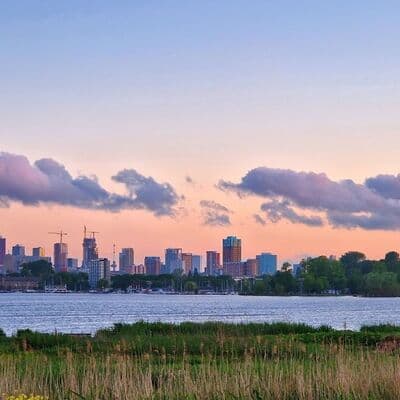
Rotterdam is a city that could not care less about tradition. While Amsterdam sells postcard-perfect views of canals and bicycles, Rotterdam builds skyscrapers with mirrored facades and residential buildings shaped like cubes. This is the second-largest city in the Netherlands, the biggest port in Europe, and one of the world capitals of contemporary architecture.
The short version: Rotterdam deserves a visit for its futuristic architecture - the Cube Houses, Markthal, and Depot Boijmans Van Beuningen. Add to that a world-class food market, panoramic views from the Euromast, the historic Delfshaven district, and day trips to the windmills of Kinderdijk. Plan for 3-4 days to properly explore the city and its surroundings.
The city was almost completely destroyed during World War II - German bombing in May 1940 wiped out the historic center in a matter of hours. What rose from the ashes was not a reconstruction of the old, but something radically new. Rotterdam became an urban laboratory where architects could experiment freely. The result is a cityscape that feels more like Chicago or Singapore than a typical Dutch town. Here you will find buildings by Rem Koolhaas, MVRDV, and practically every major name in contemporary architecture.
Rotterdam is also a working city in a way that Amsterdam is not. The port employs tens of thousands of people, cranes dominate the horizon, and there is a grittiness here that the capital has long since polished away. This is not necessarily a downside - it means fewer tourist crowds, lower prices, and a more authentic urban experience. The locals are famously direct (even by Dutch standards), and the multicultural population gives the city an energy that feels distinctly 21st century.
Rotterdam Neighborhoods: Where to Stay and What to Expect
Rotterdam spreads out more than Amsterdam, and the neighborhoods have distinct personalities. Choosing where to stay shapes your experience significantly, so here is a breakdown of the main areas worth considering.
City Center (Centrum)
This is where you will find most of the architectural landmarks: the Markthal, Cube Houses, Laurenskerk (the only medieval building that survived the bombing), and the main shopping streets. The central station itself is worth seeing - a dramatic pointed structure that won multiple architecture awards after its 2014 renovation. Hotels here tend to be business-oriented but convenient. Expect to pay EUR 120-180 per night for a decent room (roughly USD 130-195). The area is safe, well-connected, and walkable, though it lacks the cozy charm of Amsterdam's canal belt.
Kop van Zuid
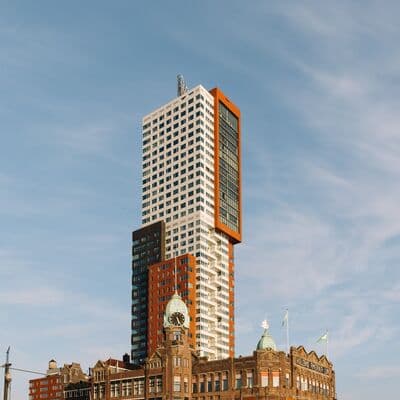
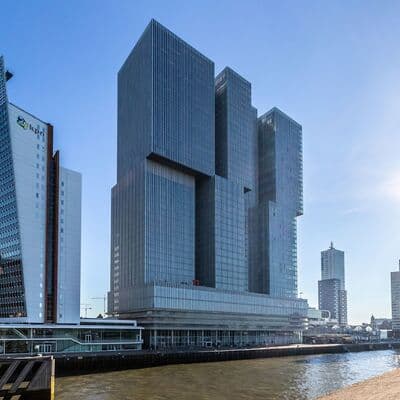
Cross the Erasmus Bridge and you enter Rotterdam's Manhattan - a cluster of high-rises on the former docks of the south bank. The De Rotterdam building (Rem Koolhaas, 2013) dominates the skyline. This is where you will find Hotel New York, housed in the former headquarters of the Holland America Line, from which millions of emigrants departed for the United States. The area has excellent restaurants and a cosmopolitan feel. Hotels run EUR 100-160 per night. The downside: it can feel a bit corporate and sterile, especially on weekends when the office workers disappear.
Witte de Withstraat and the Museum Quarter
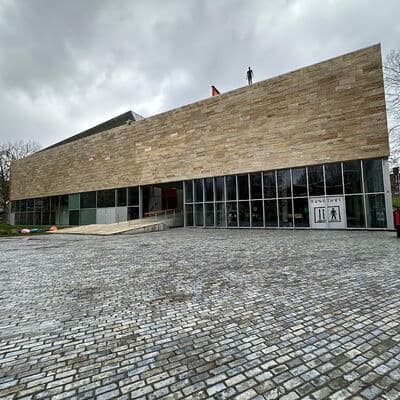
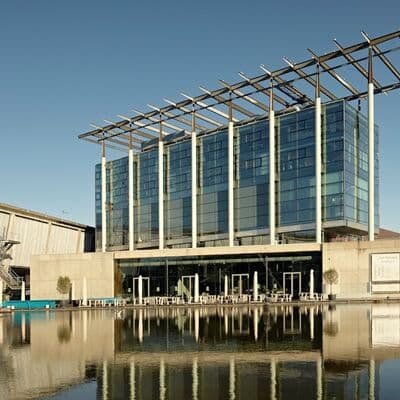
If you want Rotterdam's creative side, this is your neighborhood. Witte de Withstraat is the main artery of the art scene - lined with galleries, independent shops, bars, and restaurants that stay open late. The Kunsthal and Nieuwe Instituut are walking distance away. Accommodation options range from boutique hotels to Airbnbs in renovated townhouses, typically EUR 90-150 per night. This is where Rotterdam feels most like a proper European city - human scale, good sidewalk cafes, and actual street life. The tradeoff is some noise at night and fewer major sights within immediate walking distance.
Delfshaven
Delfshaven is the exception to Rotterdam's modernist rule. This small harbor district survived the war and looks like a film set for a 17th-century Dutch Golden Age drama: brick warehouses, moored boats, cobblestone streets. It is where the Pilgrim Fathers worshipped before sailing to America. Today it is a pleasant residential area with a few cafes and the Pilgrim Fathers Church. Hotels are limited here - mostly B&Bs and vacation rentals, EUR 80-120 per night. Choose Delfshaven if you want quiet evenings and do not mind a 15-minute tram ride to the center.
Katendrecht
Once Rotterdam's red-light district (nicknamed Cape Nostalgia by sailors), Katendrecht has transformed into one of the city's most interesting neighborhoods. The peninsula juts into the Maas River and offers great views of the skyline. The Fenix cultural center anchors the area, and there are excellent restaurants, particularly along the main street Deliplein. Accommodation is mostly Airbnb and short-term rentals, EUR 85-130 per night. The neighborhood rewards exploration - it still has rough edges, which is part of the appeal. Getting to the center takes about 20 minutes by water taxi or metro.
Noord (North)
Rotterdam Noord is a working-class, predominantly immigrant neighborhood that most tourists never see. This is where you will find the best Turkish bakeries, Surinamese roti shops, and Moroccan butchers. It is not pretty in a conventional sense, but it is real, and the food is significantly cheaper than anywhere else in the city. I would not recommend staying here unless you specifically want a local experience and are comfortable navigating areas without English-language signage. Budget hotels and hostels run EUR 50-80 per night.
My recommendation: For a first visit, stay in the city center or near Witte de Withstraat. You can walk to most attractions, the public transport connections are excellent, and you will get a sense of what makes Rotterdam different. Save Kop van Zuid and Katendrecht for dinner outings and exploration.
Best Time to Visit Rotterdam
Rotterdam is not a seasonal destination the way beach cities or ski resorts are. The city functions year-round, and each season has trade-offs worth considering.
Spring (April to May)
This is arguably the sweet spot. Temperatures hover between 10-18 degrees Celsius (50-64 Fahrenheit), tulips bloom in the parks, and the city shakes off winter without yet attracting summer crowds. King's Day on April 27th transforms the entire country into an orange-clad street party - Rotterdam's version is less chaotic than Amsterdam's but still memorable. The downside: Dutch spring weather is unpredictable. Pack layers and expect rain at least a few days per week.
Summer (June to August)
Temperatures reach 20-25 degrees Celsius (68-77 Fahrenheit), outdoor terraces fill up, and the city comes alive. Summer hosts several major events: the North Sea Jazz Festival in July (one of the world's biggest), the Rotterdam Unlimited street carnival, and Architecture Day when buildings normally closed to the public open their doors. Hotel prices peak and you will need to book popular restaurants in advance. The beaches at Hoek van Holland are 30 minutes away by metro if you need an escape.
Autumn (September to November)
September remains pleasant - still warm enough for outdoor dining, but with noticeably fewer tourists. October brings the World Port Days when the harbor opens for tours of working facilities and naval vessels. By November, the weather turns gray and rainy, though museums become more appealing and prices drop. This is a good time for architecture enthusiasts who want to photograph buildings without crowds.
Winter (December to February)
Rotterdam winters are mild by northern European standards - temperatures rarely drop below freezing - but the combination of cold, damp, and short daylight hours can feel oppressive. December has Christmas markets and ice skating rinks to compensate. January and February are the quietest months, with the lowest hotel prices (EUR 80-100 for rooms that cost EUR 150 in summer) and zero waiting times at attractions. If you are primarily interested in museums and indoor experiences, winter works fine. Just bring a warm, waterproof jacket.
Practical note: Rotterdam is a conference city, and business travel spikes in spring and autumn. Check if major events coincide with your dates - hotels can sell out and triple their prices during big conferences.
Rotterdam Itinerary: 3 Days, 5 Days, or One Week
Rotterdam rewards exploration more than ticking off a checklist. The architecture and neighborhoods benefit from wandering, stopping, and looking. Here is how I would structure visits of different lengths.
Day 1: Architectural Core
Start at Rotterdam Centraal station and take a moment to appreciate the building itself - the dramatic pointed roof has become one of the city's symbols. Walk south through the shopping district to the Markthal, a horseshoe-shaped food hall with apartments built into the arch. The ceiling is covered in a massive digital artwork depicting oversized fruits and flowers. Spend an hour exploring the market stalls and grab lunch here - I recommend the Dutch cheese stands or the Surinamese roti.
Next door are the Cube Houses (Kubuswoningen), tilted 45-degree residential cubes designed by Piet Blom in 1984. One unit operates as a museum (EUR 3.50 / USD 3.80 entry) if you want to see how people actually live in these impractical but fascinating structures. Continue to the Laurenskerk, the only medieval building in the city center, now surrounded by modernist towers - the contrast is striking.
After lunch, walk to the Depot Boijmans Van Beuningen. This mirrored bowl-shaped building opened in 2021 and completely reimagines what an art storage facility can be. Unlike traditional museums that show perhaps 8% of their collection, the Depot displays all 151,000 objects across multiple floors. Book tickets online in advance (EUR 22.50 / USD 24.50). The rooftop garden offers excellent city views.
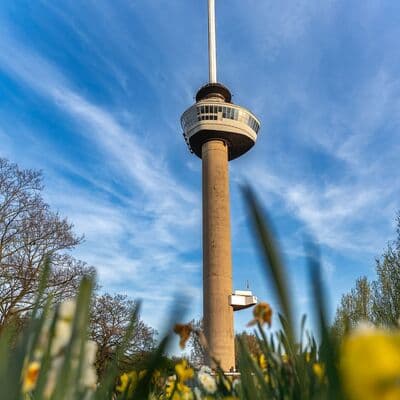
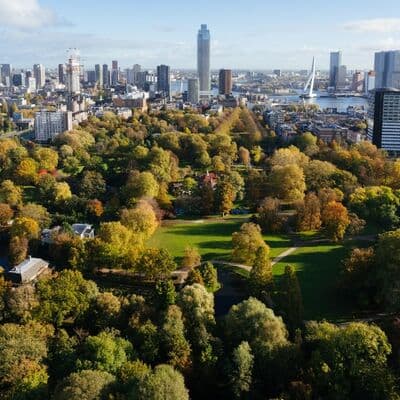
End the day at the Euromast, the 185-meter observation tower. The elevator ride up costs EUR 14.50 (USD 15.75), and the views extend to the port, the Erasmus Bridge, and on clear days all the way to The Hague. There is a restaurant at the top if you want dinner with a panorama, though the food is mediocre - better to descend and eat in Het Park at the tower's base.
Day 2: Museums and the South Bank
Dedicate the morning to museums. The Kunsthal does not have a permanent collection but hosts rotating exhibitions ranging from photography to fashion to contemporary art. Plan 2 hours. The Nieuwe Instituut focuses on architecture and design - essential if you want to understand why Rotterdam looks the way it does. Both museums charge EUR 17-19 (USD 18.50-20.50).
Cross the Erasmus Bridge on foot. The 800-meter span, nicknamed "The Swan" for its asymmetrical pylon, opened in 1996 and remains one of the most photographed structures in the Netherlands. On the south side, explore Kop van Zuid and the Hotel New York building - even if you are not staying there, the restaurant is open to visitors and has excellent views back to the city.
Continue to Katendrecht and the Fenix cultural center in a converted warehouse. The permanent exhibition "Fenix Emigration Story" chronicles the 3 million Europeans who departed from these docks to start new lives in America, Australia, and South America. It is genuinely moving, especially for visitors whose ancestors passed through Rotterdam. Tickets are EUR 17.50 (USD 19).
Dinner in Katendrecht is strongly recommended - De Matroos en Het Meisje for Dutch cuisine, or Cevicheria for Peruvian seafood.
Day 3: Historic Rotterdam and the Harbor
Take the metro to Delfshaven in the morning. This small district survived the 1940 bombing and looks like a different city entirely - Golden Age architecture, small boats bobbing in the harbor, windmills on the horizon. Visit the Pilgrim Fathers Church (Pelgrimvaderskerk) where the religious group worshipped before departing for America. The Delfshaven brewery (De Pelgrim) serves excellent local beers if you need a mid-morning break.
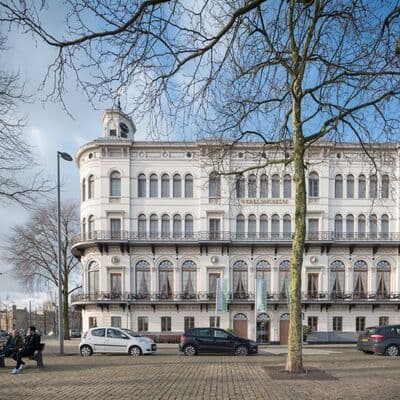
Return to the center and visit the Maritime Museum if shipping history interests you, or the Wereldmuseum for ethnographic collections from around the world. Both are solid but not essential - if you are selective with museum time, you can skip one.
In the afternoon, take a harbor tour. Spido cruises (EUR 16.50 / USD 18, 75 minutes) depart from near the Erasmus Bridge and navigate through the working port - container ships, cranes, oil refineries. It sounds industrial, and it is, but the scale is genuinely impressive. Rotterdam handles more cargo than any other European port, and seeing it from water level puts the city's economic engine into perspective.
Days 4-5: Day Trips
Rotterdam makes an excellent base for exploring the surrounding region. Two destinations stand out:
Kinderdijk - 19 historic windmills arranged along canals, a UNESCO World Heritage site, and the most photogenic spot in the Netherlands. Take Waterbus 202 from Rotterdam Erasmusbrug (EUR 5.50 one way, 40 minutes) directly to the windmills. Go early morning or late afternoon for the best light. Entry to the windmill complex costs EUR 16 (USD 17.50). You can rent a bike on site and cycle the full 3-kilometer route.
Delft - a 15-minute train ride (EUR 3.50) brings you to this perfectly preserved historic city, famous for blue-and-white pottery and the painter Johannes Vermeer. The old town is compact enough to see in half a day. Visit the Royal Delft factory if ceramics interest you (EUR 16 / USD 17.50), or simply wander the canals and church squares. Return to Rotterdam for dinner.
Days 6-7: Extended Exploration
With a full week, slow down. Spend a morning in Kralingse Bos, the largest urban park, where locals jog, sail, and picnic. The Nederlands Fotomuseum on Wilhelmina Pier has excellent photography exhibitions. Miniworld Rotterdam is surprisingly good even for adults - a detailed miniature version of Rotterdam and the Netherlands with moving trains and day-night lighting cycles.
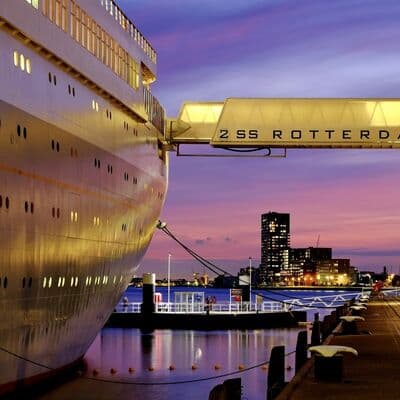
Visit the SS Rotterdam, a restored 1959 ocean liner now permanently moored as a hotel and museum. You can tour the engine room, bridge, and first-class cabins (EUR 16 / USD 17.50). Finally, if weather permits, take the metro to Hoek van Holland (30 minutes, included in regular transit pass) and walk the beach where the Maas River meets the North Sea.
Where to Eat in Rotterdam: Restaurants Worth Your Time
Rotterdam's dining scene punches above its weight. The multicultural population means you can eat excellent Indonesian, Surinamese, Turkish, and Moroccan food that does not exist at this quality level in most European cities. Meanwhile, a new generation of Dutch chefs has turned local ingredients into something worth seeking out.
Fine Dining
FG Restaurant - Francois Geurds holds two Michelin stars and runs one of the best kitchens in the Netherlands. The tasting menu (EUR 185-225 / USD 200-245) focuses on technical precision and theatrical presentation. Book weeks in advance.
Joelia - Another Michelin-starred option in the Hilton Hotel, more accessible than FG. Chef Mario Ridder's cooking leans Mediterranean with Dutch ingredients. Tasting menus from EUR 115 (USD 125).
Restaurant Fred - Slightly under the radar but excellent. Chef Fred Mustert serves a single eight-course menu (EUR 95 / USD 103) that changes completely every few weeks. The dining room seats only 24 people.
Mid-Range Favorites
De Jong - Possibly my favorite restaurant in Rotterdam. Chef Jim de Jong serves a fixed five-course menu (EUR 55 / USD 60) using only Dutch ingredients, much of it from his own farm. The cooking is simple but the ingredients are exceptional. Reservations essential.
Ayla - Eastern Mediterranean meets Dutch restraint. The lamb dishes and mezze platters are excellent. Dinner for two with wine runs about EUR 90-110 (USD 98-120).
De Matroos en Het Meisje - Traditional Dutch food done properly in Katendrecht. Herring, mussels, and stamppot in a cozy setting. Around EUR 35-45 (USD 38-49) per person.
Casual and Budget
Bazar - A cavernous Middle Eastern restaurant on Witte de Withstraat. Enormous portions, reasonable prices (mains EUR 12-18 / USD 13-20), and a bazaar-like interior design that makes every meal feel like an event. Great for groups.
Warung Mini - Tiny Indonesian warung serving some of the best rijsttafel (rice table) in the city. No reservations, cash only, lines out the door. About EUR 20 (USD 22) for a full meal.
Ter Marsch and Co - Legendary burger joint with locations in the city center and Katendrecht. Properly aged beef, homemade sauces, and a menu that goes beyond the standard options. Burgers EUR 12-16 (USD 13-17).
Markets and Quick Bites
The Markthal is worth revisiting for meals - the Dutch cheese stands, Moroccan grilled meats, and fresh stroopwafels are all excellent. For a local market experience, the Saturday market at Binnenrotte (next to the Markthal) has produce, fish, flowers, and cheap street food. Haringhandel Verwijs near the Erasmus Bridge serves fresh herring (broodje haring, EUR 5 / USD 5.40) the traditional Dutch way - raw with onions and pickles.
What to Eat: Rotterdam's Food Culture
Dutch cuisine has a reputation problem. Visitors expect bland boiled potatoes and not much else. Rotterdam disproves this in two ways: by celebrating immigrant food traditions and by reimagining local ingredients.
Dutch Classics
Bitterballen - Deep-fried balls of ragout, served with mustard, essential with beer. Every bar serves them. Order a portion (usually 6 for EUR 7-9 / USD 7.60-9.80) and judge a place by how crispy the outside and how creamy the inside.
Stamppot - Mashed potatoes mixed with vegetables (kale, sauerkraut, or carrots and onions) and served with smoked sausage or meatballs. Working-class comfort food that tastes better than it sounds. De Matroos en Het Meisje does an excellent version.
Kibbeling - Battered and fried fish chunks, usually cod, with garlic sauce. The Dutch answer to fish and chips. Freshest at market stalls and harbor-side stands.
Stroopwafels - Two thin waffles sandwiched around caramel syrup. Buy them fresh from market vendors (not packaged from supermarkets) and place them over your coffee cup to warm them. Life-changing.
Immigrant Cuisines
Indonesian - The Netherlands colonized Indonesia for 350 years, and the culinary legacy is everywhere. Rijsttafel (rice table) is the essential experience: a dozen small dishes - satay, rendang, sambal, fried vegetables - served with rice. Budget EUR 25-40 (USD 27-43) per person. Warung Mini and Loh Po for the real thing.
Surinamese - Surinam was another Dutch colony, and its fusion cuisine (Indian, Indonesian, African, Dutch) is unique to the Netherlands. Order roti (curried chicken or vegetables wrapped in flatbread) or moksi meti (mixed meats with rice and beans). Warung Swietie and Roopram Roti have loyal followings.
Turkish and Moroccan - Rotterdam Noord has the best kebab shops, bakeries, and spice markets. Lahmacun (Turkish pizza), doner, and harira (Moroccan soup) are all excellent and cheap - figure EUR 6-10 (USD 6.50-11) for a filling meal.
Drinks
Beer - The Netherlands has had a craft beer revolution. Look for breweries like Kaapse Brouwers (based in Fenix), Stadsbrouwerij De Pelgrim in Delfshaven, and national favorites like La Trappe and Brand. Order "een biertje" at any bar for a standard pilsner.
Jenever - Dutch gin, the ancestor of London gin, served in a tulip-shaped glass filled to the brim. Traditionally you bend down and take the first sip without using your hands. Order "oud" (old) for a smoother, maltier taste or "jong" (young) for something closer to vodka. Wynand Fockink in Amsterdam is famous but Delfshaven's Jeneverhuisje is more local.
Coffee - The Dutch drink more coffee per capita than almost any country on Earth. Order "koffie verkeerd" for a latte-style drink (literally "wrong coffee" - coffee with too much milk). Rotterdam has excellent specialty coffee shops: Man met Bansen Koffiebar and Hopper are favorites.
Local Tips: What the Guides Do Not Tell You
After spending significant time in Rotterdam, here are the things I wish someone had told me at the start.
Architecture Photography
The best light for photographing the Markthal interior is early morning when the sun comes through the windows and illuminates the ceiling artwork. For the Cube Houses, late afternoon gives dramatic shadows. The Erasmus Bridge looks best at blue hour (just after sunset) when the city lights come on - shoot from the south bank looking north. For the Depot Boijmans, cloudy days work better than sunny ones because the mirrored surface reflects a white sky rather than patchy clouds.
Avoiding Crowds
The Markthal gets extremely crowded on Saturdays. Visit on a weekday morning if possible. The Depot Boijmans has timed entry so it never feels overcrowded, but the rooftop is busiest around sunset - go at opening time for empty photos. The Cube Houses museum is always quiet because most tourists take exterior photos and leave.
Free Attractions
The architecture is free to view from the outside, obviously, but there are other cost-free options. Het Nieuwe Instituut has a free garden with a reconstructed Sonneveld House (Modernist architecture from 1933). The roof of the Depot is accessible without paying museum admission - you can take the elevator up for free. Many galleries on Witte de Withstraat have free entry. And Kinderdijk windmills are viewable from the outside without paying the complex entry fee if you just want photos.
Weather Strategies
Dutch weather changes rapidly. Keep a foldable rain jacket in your bag at all times, even on sunny mornings. The North Sea wind is persistent and can make temperatures feel 5-10 degrees colder than the forecast. If caught in rain, duck into the Markthal, a museum, or any "bruin cafe" (brown cafe - traditional Dutch pubs with dark wooden interiors).
Getting Around
Rotterdam is more spread out than Amsterdam, and the tram and metro systems are genuinely useful here. Buy an OV-chipkaart at any metro station (EUR 7.50 for the card plus balance) and load it with EUR 20-30 for a few days of travel. Single rides cost about EUR 2.50-4 depending on distance. The water taxi (Watertaxi Rotterdam) is more expensive (EUR 5 minimum) but a fun way to cross the Maas River if you are heading to Katendrecht or Hotel New York.
Money Matters
The Netherlands is largely cashless. Most restaurants, shops, and even market vendors accept cards (debit preferred over credit). However, some smaller establishments, particularly in Noord and ethnic neighborhoods, are cash-only. ATMs are widely available, and banks do not charge withdrawal fees for foreign cards, though your home bank might.
Tipping
Tipping is not expected at Dutch restaurants the way it is in the US. Service charges are included in menu prices. That said, rounding up the bill or leaving 5-10% for good service is appreciated. For taxis and bars, rounding up to the nearest euro is standard.
Transport and Connectivity in Rotterdam
Getting There
By Air: Rotterdam The Hague Airport is small and serves mostly European destinations. For intercontinental flights, you will arrive at Amsterdam Schiphol Airport, which connects to Rotterdam Centraal by direct train every 15-20 minutes (EUR 15.90 / USD 17.30, 25 minutes). Trains run from approximately 6 AM to midnight. From London, Eurostar runs direct trains to Rotterdam in 2 hours 45 minutes (from EUR 50 / USD 54 one-way if booked in advance).
By Train: Rotterdam Centraal is excellently connected. High-speed Thalys trains reach Brussels in 1 hour 10 minutes (from EUR 29 / USD 31), Paris in 2 hours 40 minutes (from EUR 35 / USD 38), and Amsterdam in 40 minutes (EUR 17.50 / USD 19). Domestic trains are frequent and reliable - NS (Dutch Railways) runs services to most cities every 10-30 minutes.
Getting Around the City
Metro and Tram: The RET operates Rotterdam's public transport. Five metro lines and multiple tram routes cover the city. The system is clean, safe, and runs frequently (every 5-10 minutes during the day). All vehicles accept contactless payment or OV-chipkaart. Day passes cost EUR 8.50 (USD 9.25) for unlimited travel.
Bicycle: This is the Netherlands - cycling is the default mode of transport. Donkey Republic and HTM Fiets offer rental bikes via apps (EUR 10-15 / USD 11-16 per day). Rotterdam is flatter than a pancake and has dedicated bike lanes on virtually every street. That said, the city is larger than Amsterdam, and some distances are substantial. Combining cycling with metro makes sense.
Walking: The city center is walkable, and walking remains the best way to appreciate the architecture. Budget 30-40 minutes to walk from Centraal Station to the Euromast, or 20 minutes to cross the Erasmus Bridge to Kop van Zuid.
Water Taxi: Watertaxi Rotterdam operates small speedboats that cross the Maas River and serve various points along the waterfront. Fares start at EUR 5 (USD 5.40) per person. It is practical for reaching Katendrecht, Hotel New York, or the SS Rotterdam, and adds a bit of adventure to getting around.
Connectivity
Free WiFi is available in most cafes, hotels, and public buildings. The Markthal has free WiFi, as do all RET metro stations. Mobile data works normally for EU residents. For visitors from the US, UK (post-Brexit), and other non-EU countries, check with your carrier about roaming packages. Dutch SIM cards are available from providers like Lebara, Lyca, and KPN at phone shops and supermarkets - expect to pay EUR 10-20 (USD 11-22) for a prepaid card with data.
Useful Apps:
- 9292 - public transport journey planner for all of the Netherlands
- NS - Dutch Railways app for train tickets and live departures
- Google Maps - works well for walking and cycling routes
- Rotterdam Tourist app - official city guide with offline maps
- Thuisbezorgd - food delivery if you prefer eating in
Final Thoughts: Is Rotterdam Worth It?
Rotterdam will not give you the picture-postcard Netherlands of windmills, tulips, and Anne Frank. That is Amsterdam's job. What Rotterdam offers instead is a city that rebuilt itself from destruction and chose boldness over nostalgia. It is a place where architects are celebrities and where a food market can also be a work of art.
The city works best for travelers who appreciate design, urbanism, and food culture. If you want museums, Amsterdam and The Hague have stronger collections. If you want charm, Delft and Haarlem are hard to beat. But if you want to see what a 21st-century European city can look like - diverse, functional, surprising, and relentlessly forward-looking - Rotterdam has no competition.
Three days is enough to see the highlights. A week allows you to explore neighborhoods, take day trips, and find your own favorites. Either way, Rotterdam will change your idea of what Dutch cities can be.