Hong Kong 2025: The Complete Guide to Asia's World City
Hong Kong defies simple description. Soaring skyscrapers pierce the clouds while ancient temples nestle at their feet. Street markets overflow with the aroma of dim sum while Michelin-starred restaurants serve culinary masterpieces. All of this compressed into a territory smaller than Los Angeles. This Special Administrative Region of China has maintained its unique identity: double-decker trams share roads with one of the world's most advanced metro systems, and traditional junks bob alongside gleaming superyachts in Victoria Harbour.
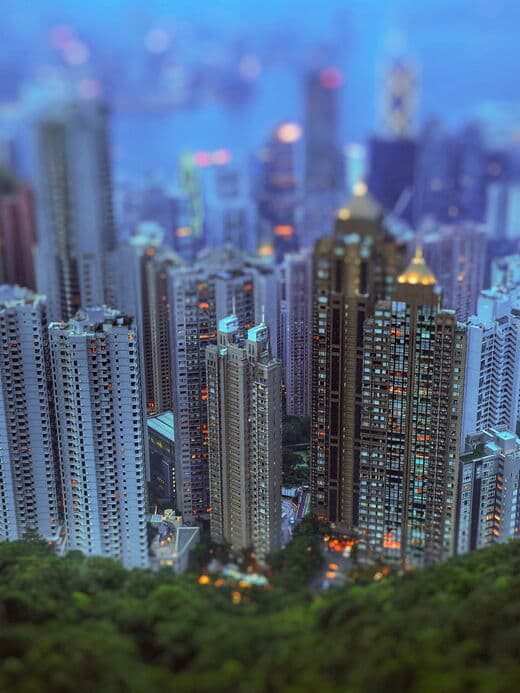
Having spent considerable time in Hong Kong across different seasons, I can confirm: this city captivates from the first moment. Standing on Victoria Peak at twilight, watching millions of lights flicker to life below, you understand why Hong Kong is called the world's most vertical city. Life here flows not just horizontally along streets, but vertically - through skyscrapers, escalators, elevated walkways, and mountain trails that offer escape just minutes from the urban jungle.
Best Time to Visit Hong Kong
Hong Kong's subtropical climate means each season offers a different experience. The city dazzles year-round, but timing can significantly impact your trip.
Autumn (October - December) - Peak Season
This is Hong Kong at its finest. Temperatures hover between 68-82°F (20-28°C), humidity drops to comfortable 60-70%, and rain is rare. Clear skies mean spectacular views from Victoria Peak. November brings the Wine & Dine Festival, while December transforms the city into a Christmas wonderland with dazzling decorations on every skyscraper.
Winter (January - February)
Mild winter with temperatures of 57-68°F (14-20°C). Locals consider this cold and bundle up, but visitors from colder climates find it pleasant. Chinese New Year (usually late January-February) is spectacular with parades, fireworks, and festive atmosphere. Note: many businesses close for the holiday week, and hotel prices spike.
Spring (March - May)
Transitional season with increasing humidity and frequent fog. Temperatures rise from 64-82°F (18-28°C). March-April can be rainy, but this shoulder season offers good hotel deals. The Ching Ming Festival in April showcases traditional ancestor worship customs.
Summer (June - September)
Hot (86-91°F / 30-33°C), humid (up to 90%), and rainy. Typhoon season can disrupt plans - the city occasionally shuts down for major storms. However, this is the best time to explore islands and beaches. Air conditioning runs full blast everywhere (sometimes too cold - bring a light jacket).
Major Events and Festivals 2025
- January 29 - February 4, 2025: Chinese New Year (Year of the Snake) - magnificent parades, harbour fireworks
- April: Ching Ming Festival - traditional ancestor remembrance
- May: Cheung Chau Bun Festival - unique island celebration
- June: Dragon Boat Festival - races across the harbour
- October-November: Wine & Dine Festival - gourmet paradise
- December: Winterfest - Christmas lights and New Year countdown
How to Get to Hong Kong
From North America
Direct flights operate from major US cities. From New York (JFK): Cathay Pacific, 16 hours. From Los Angeles: Cathay Pacific, United, 15 hours. From San Francisco: United, Cathay Pacific, 14 hours. From Vancouver: Cathay Pacific, 13 hours. Round-trip prices range from $800-1,500 depending on season and booking time.
From Europe
Direct flights from London (Heathrow): Cathay Pacific, British Airways, 12 hours. From Paris: Cathay Pacific, 12 hours. From Frankfurt: Cathay Pacific, Lufthansa, 11 hours. Budget options via Middle Eastern hubs (Emirates through Dubai, Qatar through Doha) add time but save money.
Hong Kong International Airport (HKG)
Chek Lap Kok Airport consistently ranks among the world's best. Located on reclaimed land off Lantau Island, 34 km from Central.
Getting from Airport to City:
Airport Express - Fastest option. Reaches Hong Kong Station (Central) in 24 minutes. Cost: HKD 115 (~$15) one-way, HKD 205 round-trip. Trains every 10 minutes from 5:54 AM to 12:48 AM. Free shuttle buses connect Airport Express stations to major hotels.
Airport Buses - Cheaper but slower. Routes A11, A21 serve Hong Kong Island and Kowloon. Cost: HKD 40-50 (~$5-7). Journey time 45-70 minutes depending on traffic and destination.
Taxis - Convenient with luggage. To Central approximately HKD 350-400 (~$45-50), to Kowloon HKD 300-350. Add 20% for late night.
Uber/Pre-booked Transfer - Book through Klook or use Uber/HKTaxi apps. Similar pricing to taxis but fixed rates.
Getting Around Hong Kong
Hong Kong's public transport sets the global standard - clean, punctual, safe, and reaching every corner of the territory.
Octopus Card - Essential
First purchase upon arrival: the Octopus card. This contactless card works for transport, shops, restaurants, and vending machines. Available at MTR stations, 7-Eleven, and the airport. Cost: HKD 150, including HKD 100 stored value and HKD 50 refundable deposit. Top up at machines, convenience stores, or via the app.
MTR (Mass Transit Railway)
Hong Kong's metro ranks among the world's finest. 11 lines cover most of the territory. Trains arrive every 2-4 minutes. Spotlessly clean, powerful air conditioning (bring a jacket!). Announcements in Cantonese, Mandarin, and English. Operates 6:00 AM to 1:00 AM.
Fares depend on distance: HKD 5-60. Octopus users pay less than single-journey tickets. Tourist day pass HKD 65, 3-day pass HKD 140.
Trams (Ding Ding)
Double-decker trams have served Hong Kong Island's northern shore since 1904. The 13 km route runs from Kennedy Town to Shau Kei Wan. More attraction than transport - grab an upper deck front seat and enjoy the views. Cost: just HKD 3 (~$0.40) regardless of distance! Pay with Octopus when exiting.
Buses
Extensive network reaches where the MTR doesn't. Double-decker buses with air conditioning. Pay when boarding (Octopus or exact change). Fares HKD 5-50 depending on route.
Star Ferry
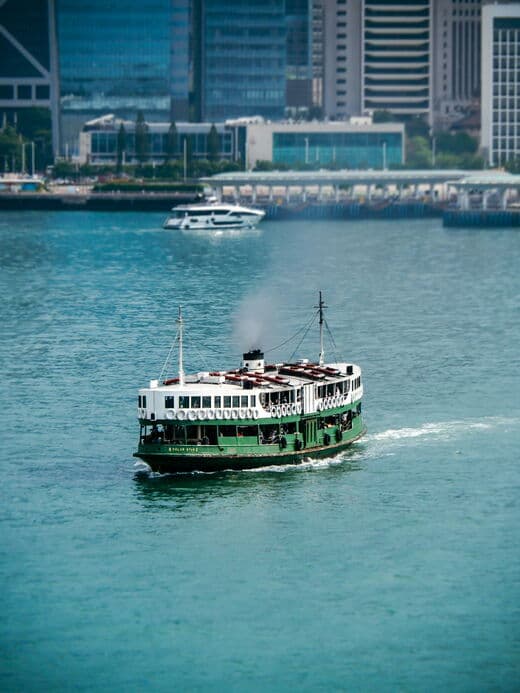
These legendary ferries between Hong Kong Island and Kowloon have operated since 1888. The Central to Tsim Sha Tsui crossing takes 8 minutes and costs just HKD 3-5. Not just transport - it's the best way to experience Victoria Harbour. Operates 6:30 AM to 11:30 PM.
Minibuses (Green and Red)
Green minibuses follow fixed routes with set fares. Red minibuses are more chaotic, mainly for locals. Tourists find green minibuses easier. Shout "Yau lok!" when you want to stop.
Taxis
Three colors: red (urban), green (New Territories), blue (Lantau). Flag fall HKD 27, then HKD 1.9 per 200 meters. Luggage HKD 6 per piece. Most accept cash, many take Octopus. Apps: HKTaxi, Uber.
Peak Tram
The funicular to Victoria Peak has operated since 1888. The 8-minute ascent climbs grades up to 27°. Cost: HKD 62 one-way, HKD 88 round-trip. Combo ticket including Sky Terrace 428 observation deck: HKD 118.
Central-Mid-Levels Escalator
World's longest outdoor covered escalator system - 800 meters connecting Central to Mid-Levels. Runs downhill 6:00-10:00 AM (rush hour), uphill after 10:00 AM. Free and incredibly convenient!
Hong Kong Neighborhoods: Where to Stay
Hong Kong Island
Central and Admiralty
The business district with towering skyscrapers, banks, and luxury hotels. Home to IFC Mall, Star Ferry terminal, and the Mid-Levels Escalator. Hotels are expensive ($200+/night) but location is unbeatable. Best for those who value convenience and can splurge.
Wan Chai and Causeway Bay
A blend of old and new Hong Kong. Wan Chai, the former red-light district, now features bars and restaurants. Causeway Bay offers shopping paradise with Times Square and SOGO. Mid-range hotels ($100+/night). Excellent choice for most visitors.
SoHo and Lan Kwai Fong
Nightlife central with bars, restaurants, and galleries. SoHo (South of Hollywood Road) is the bohemian quarter with antique shops and street art. Lan Kwai Fong is party headquarters. Hotels from $80/night, but noisy at night.
Western District (Sheung Wan, Sai Ying Pun)
Authentic Hong Kong: temples, dried seafood markets, traditional shops. Sheung Wan has trendy coffee shops and galleries. Hotels from $70/night. Great balance of price and atmosphere.
Kowloon
Tsim Sha Tsui (TST)
Tourist hub with the waterfront Avenue of Stars, museums, and shopping malls. Best views of Hong Kong Island's skyline. Hotels for every budget - from hostels ($25) to five-star Peninsula ($500+). Ideal district for first-time visitors.
Jordan and Yau Ma Tei
The real Hong Kong without pretense: Temple Street Night Market, Jade Market, traditional tea houses. Hotels from $50/night. Authentic atmosphere, excellent transport links.
Mong Kok
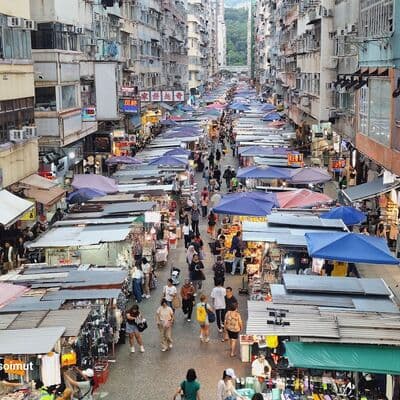
The planet's most densely populated neighborhood. Markets galore: Bird Garden, Flower Market, Ladies Market, Sneaker Street. Chaotic, loud, genuine. Budget hotels from $40/night. For those who love street life.
New Territories and Islands
Lantau
Island home to Big Buddha and Tai O fishing village. Also Hong Kong Disneyland and Citygate Outlets. Resort accommodation available near Disneyland, but far from city center.
Lamma
Car-free island with beaches and seafood restaurants. Perfect for day trips or peaceful retreat. A few guesthouses from $50/night.
Top Hong Kong Attractions
Victoria Peak
Hong Kong's premier viewpoint at 428 meters. Reach it via Peak Tram (HKD 88 round-trip), Bus 15 from Central (HKD 12), or taxi. At the top, Peak Tower houses the Sky Terrace 428 observation deck (HKD 75). Best time: arrive an hour before sunset to see the city in daylight and illuminated. Weekend tram queues are massive - visit on weekdays or buy Fast Track tickets.
Victoria Harbour and Symphony of Lights
Every evening at 8:00 PM, the Symphony of Lights illuminates the harbour - skyscrapers on Hong Kong Island synchronize their lights to music. Free! Best viewing: Avenue of Stars, waterfront near Cultural Centre.
Big Buddha (Tian Tan Buddha)
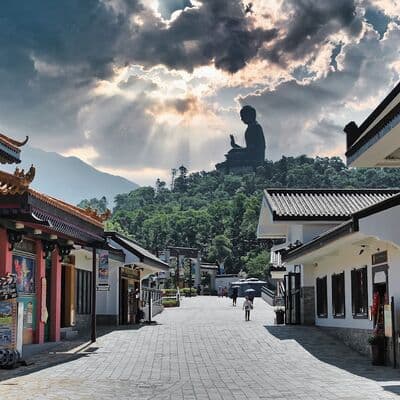
This 34-meter bronze statue sits atop Lantau Island. Take MTR to Tung Chung, then Ngong Ping 360 cable car (HKD 250 round-trip, glass-bottom cabin HKD 315). The statue requires climbing 268 steps. Adjacent Po Lin Monastery features an excellent vegetarian restaurant.
Man Mo Temple
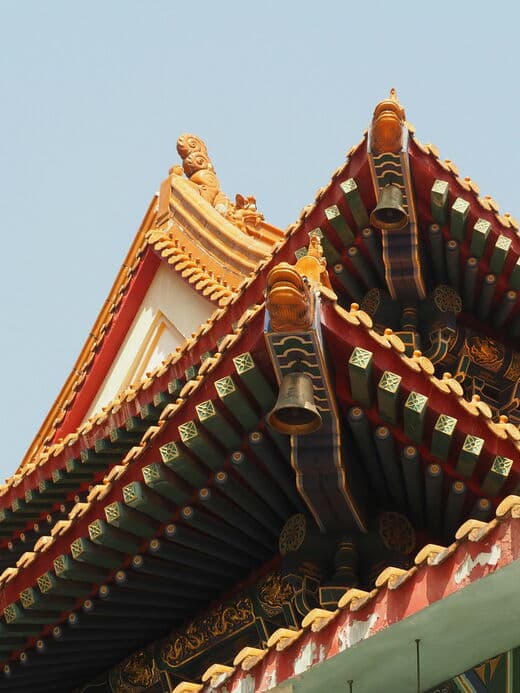
Atmospheric Taoist temple from 1847 on Hollywood Road. Dedicated to the gods of literature and war. Giant spiral incense coils create mystical ambiance. Free entry.
Temple Street Night Market
Famous night market in Yau Ma Tei. Opens at 4:00 PM, peaks after 7:00 PM, winds down by midnight. Souvenirs, electronics, clothing, fortune tellers, street opera. Bargain hard - initial prices are inflated 3-4 times!
Ten Thousand Buddhas Monastery
In Sha Tin district - 12,800 Buddha statues line 400 steps up a hillside. Free admission. Peaceful atmosphere, beautiful views. Access: MTR to Sha Tin, 15-minute walk.
Tai O Fishing Village
Stilt houses in a fishing village on Lantau Island. Dried seafood, pink dolphins (boat tours available), old Hong Kong without skyscrapers. Bus 11 from Tung Chung, approximately 50 minutes.
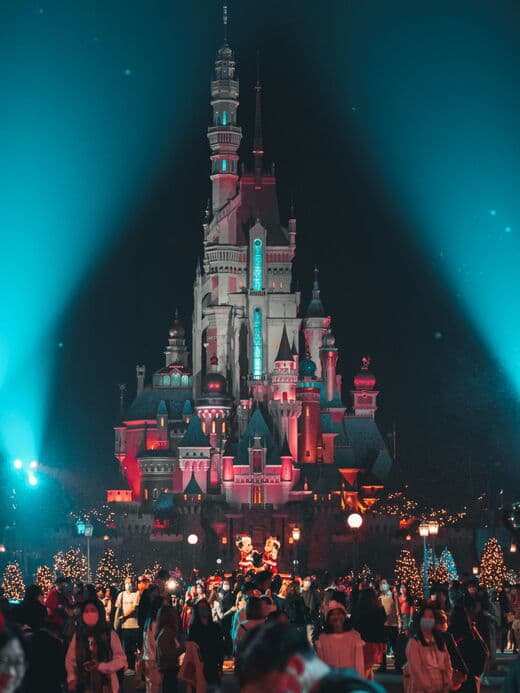
Hong Kong Disneyland
Compact but atmospheric park on Lantau Island. Shorter queues than other Disney parks worldwide. Tickets from HKD 639 for adults. MTR to Disneyland Resort station.
Ocean Park
Massive theme park and aquarium. Roller coasters, pandas, dolphin shows. Full day of activities. Tickets HKD 498. MTR South Island Line to Ocean Park station.
What's New in Hong Kong 2025
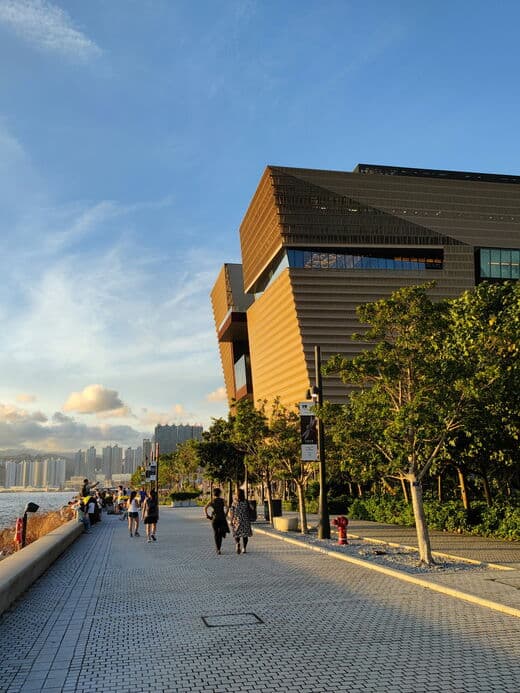
M+ Museum - Now in Full Swing
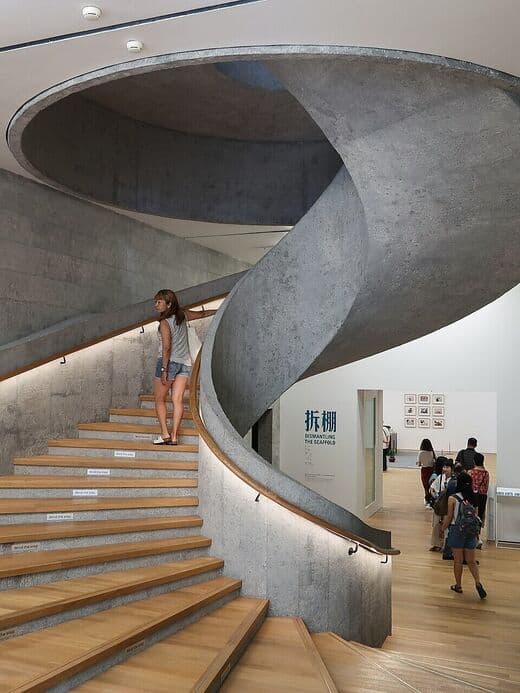
The contemporary visual culture museum in West Kowloon Cultural District, opened in 2021, has now hit its stride. World-class collection of Asian contemporary art, design, and architecture. Permanent collection is free! Special exhibitions from HKD 120.
Kai Tak Sports Park
New sports complex on the former Kai Tak Airport site. Main stadium seats 50,000 with retractable roof. International competitions and world-class concerts throughout 2025.
Northern Metropolis Development
Ambitious project developing northern territories near the Shenzhen border. New MTR stations, tech parks, residential communities. Still in progress but interesting new areas emerging.
Enhanced Ngong Ping 360
Upgraded cable car cabins with panoramic glazing and improved observation points. Even more spectacular journey to Big Buddha.
Digital Tourism
Contactless payment everywhere. Apple Pay, Google Pay, Alipay, WeChat Pay accepted even at tiny stalls. QR codes for restaurant menus. MTR Mobile app with journey planning and phone-based fare payment.
Sustainable Tourism Initiatives
New eco-hiking trails in mountains and on islands. Electric ferries on some routes. Restaurant programs reducing plastic waste.
Hong Kong Food: Culinary Paradise
Hong Kong ranks among the world's great food cities. Over 80 Michelin-starred restaurants, yet the best experiences often await in unassuming local spots.
Must-Try Dishes
Dim Sum
Traditional Cantonese brunch/lunch. Small portions in bamboo steamers: har gow (shrimp dumplings), siu mai (pork dumplings), char siu bao (BBQ pork buns), cheung fun (rice noodle rolls). Classic experience: restaurants with trolleys - staff wheel carts past, you point at what you want. Price: HKD 30-50 per dish.
Where: Tim Ho Wan - Michelin-starred dim sum at democratic prices (from HKD 200 for two). Maxim's Palace in City Hall - traditional trolley experience. Lin Heung Tea House - authentic and chaotic.
Wonton Noodles
Soup with shrimp wontons and thin egg noodles - perfect snack. Price HKD 35-60.
Where: Mak's Noodle, Tsim Chai Kee.
Char Siu (叉燒)
Cantonese glazed BBQ pork - sweet, caramelized, tender. Served with rice (char siu fan) or in buns.
Where: Yat Lok - Michelin star for HKD 50. Joy Hing - local favorite.
Roast Goose (燒鵝)
Roasted goose with crispy skin - Hong Kong's signature dish. Served with rice and plum sauce.
Where: Yung Kee - legendary since 1942 (HKD 200+). Kam's Roast Goose - Michelin quality, reasonable price.
Egg Waffles (鷄蛋仔)
Iconic street food: waffles in bubble shape, crispy outside, soft inside. HKD 20-30.
Where: Mammy Pancake, Lee Keung Kee.
Egg Tart
Portuguese heritage via Macau. Silky custard in shortcrust pastry. HKD 8-15 each.
Where: Tai Cheong Bakery - favorite of last governor Chris Patten. Honolulu Coffee Shop - generous portions.
Fish Balls and Curry
Street food: fish or beef balls on skewers in spicy curry sauce. HKD 15-25.
Milk Tea (奶茶)
Strong black tea with evaporated milk - Hong Kong's signature drink. Served hot or iced. HKD 20-30.
Where: Lan Fong Yuen - inventors of silk stocking tea.
Cha Chaan Teng (茶餐廳)
Traditional Hong Kong cafes - must visit! Menus spanning 10+ pages, fast service, democratic prices. Try: French toast sandwich (HKD 30), macaroni with ham in soup (breakfast!), milk tea. Atmosphere is bustling, staff may seem brusque - that's normal.
Dai Pai Dong
Open-air street restaurants. Seafood, fried noodles, claypot rice. Most authentic atmosphere. Best spots: Temple Street, Yau Ma Tei markets.
Fine Dining
For special occasions: Lung King Heen at Four Seasons - first Chinese restaurant with three Michelin stars. Amber at Landmark Mandarin Oriental - modern French. 8½ Otto e Mezzo Bombana - best Italian in Asia.
Hong Kong Nightlife
Lan Kwai Fong
Nightlife epicenter on Hong Kong Island. Several streets packed with bars and clubs. Friday and Saturday nights see crowds spilling onto streets, drinks in hand. Dragon-i - cult club for local celebrities. Volar - electronic music. Plenty of Irish and British pubs.
SoHo and Staunton Street
More relaxed alternative to LKF. Cocktail bars, wine bars, craft beer. Quinary - molecular cocktails from renowned bartender. Stockton - trendy speakeasy.
Tsim Sha Tsui
Sky bars with harbour views. Ozone at Ritz-Carlton - world's highest bar (118th floor, cocktails from HKD 200). Aqua - panoramic views and modern cuisine. Felix at Peninsula - Philippe Starck design.
Wan Chai
Mix from dive bars to clubs. More local vibe than LKF. Dusk Till Dawn - legendary bar. Neptune Disco - retro vibes.
Useful Tips
- Happy hour typically 5:00-9:00 PM - drinks half price
- Club entry often free before midnight
- Dress code: smart casual, no flip-flops or shorts at serious venues
- Taxis run all night, MTR closes around 1:00 AM
Shopping in Hong Kong
Hong Kong is a shopper's paradise: no sales tax, enormous selection, from luxury to bargain.
Luxury Shopping
Harbour City (TST) - largest mall, 450+ stores. All luxury brands.
IFC Mall (Central) - Apple Store, Lane Crawford, premium brands.
Elements (West Kowloon) - modern mall with Hermès, Chanel, Louis Vuitton.
The Landmark (Central) - ultra-luxury, Harvey Nichols.
Mid-Range
Times Square (Causeway Bay) - 16 floors of shops and restaurants.
SOGO (Causeway Bay) - Japanese department store.
K11 Musea (TST) - art mall with installations and concept stores.
Budget Shopping and Markets
Ladies Market (Mong Kok) - clothing, bags, souvenirs. Bargain hard!
Temple Street Night Market - electronics, souvenirs, atmosphere.
Sneaker Street (Mong Kok) - trainers from every brand.
Jardine's Crescent (Causeway Bay) - local street market.
Electronics
Apliu Street (Sham Shui Po) - geek paradise: components, gadgets, second-hand tech.
Wan Chai Computer Centre - multiple floors of electronics shops.
Broadway, Fortress - official chains, warranties, fair prices.
Outlets
Citygate Outlets (near airport) - 30-70% off brands. Convenient before departure.
Horizon Plaza (Ap Lei Chau) - 28 floors of furniture, fashion, outlet stores.
What to Buy in Hong Kong
- Electronics (verify compatibility and warranty)
- Tea - pu-erh, oolong, tieguanyin
- Traditional medicines and balms
- Local designer clothing (Shanghai Tang, G.O.D.)
- Egg rolls and sweets from Kee Wah Bakery
- Dried seafood (check customs regulations)
Hong Kong Trip Budget
Currency and Payment
Hong Kong Dollar (HKD). Rate: approximately 1 USD = 7.8 HKD.
Cards accepted almost everywhere. Visa/Mastercard work smoothly. UnionPay also widespread. Apple Pay, Google Pay work well. Markets and small shops: cash only.
Budget Travel: HKD 600-800/day (~$75-100)
- Hostel/guesthouse: HKD 200-350
- Food at cha chaan teng and street food: HKD 150-200
- Transport with Octopus: HKD 50-80
- Free attractions + 1-2 paid: HKD 100-200
Mid-Range: HKD 1,500-2,500/day (~$190-320)
- 3-4 star hotel: HKD 800-1,500
- Mid-range restaurants: HKD 300-500
- Transport + occasional taxi: HKD 100-200
- Attractions and entertainment: HKD 300-500
Luxury: HKD 4,000+/day (~$500+)
- 5-star hotel: HKD 2,500+
- Fine dining: HKD 800+
- Taxis/transfers: HKD 300+
- Premium experiences
Free in Hong Kong
- Symphony of Lights every evening
- TST waterfront promenade
- Temples (Man Mo, Wong Tai Sin - donation optional)
- Hiking trails (Dragon's Back, Lion Rock)
- Mid-Levels Escalator
- Star Ferry (almost free - HKD 3-5)
- M+ Museum - permanent collection
- Parks and gardens
- Plane spotting at Tung Chung
Money-Saving Tips
- Octopus provides transport discounts
- Order set lunch menus - half the price of dinner
- Happy hour at bars: 50% off drinks
- Buy combo attraction tickets through Klook
- Accommodation in Yau Ma Tei/Mong Kok cheaper than Central/TST
Culture and Etiquette
Language
Official languages: Cantonese and English. Since the handover to China, Mandarin has spread, but locals speak Cantonese. English is understood in tourist areas, but taxi drivers may struggle - show addresses in Chinese characters.
Useful Cantonese Phrases:
- Hello - Néih hóu (nay ho)
- Thank you (for service) - M̀h'gōi (mm-goy)
- Thank you (for gift) - Dōjeh (doh-jeh)
- How much? - Géidō chín? (gay-doh chin)
- Bill please - Màaih dāan (my-dahn)
- Too expensive - Taai gwai la (tie gwy la)
Behavioral Guidelines
- Queuing - Sacred. Hong Kongers queue disciplinedly everywhere.
- Escalator etiquette - Stand right, walk left.
- No food on MTR - Strictly prohibited. Fine HKD 2,000!
- Tipping - Not required. Restaurants usually add 10% service charge. Round up taxi fares.
- Chopsticks - Never stick vertically in rice (funeral ritual). Don't pass food chopstick-to-chopstick.
- Gifts - Give and receive with both hands. Never give clocks (death symbol).
Holidays
Major holidays: Chinese New Year (January-February) and Mid-Autumn Festival (September-October). Many businesses close, but atmosphere is spectacular.
Local Quirks
- Hong Kongers walk fast - don't stop in the middle of sidewalks
- Air conditioning blasts everywhere - carry a jacket
- Smoking prohibited indoors and in many public areas
- People may seem rude - it's just direct communication style
- Feng shui matters: many buildings have holes for energy flow
Practical Tips
Visa Requirements
US, UK, EU, Canadian, and Australian citizens receive 90-day visa-free entry. Just show up with a valid passport and return ticket. Other nationalities should check Hong Kong Immigration Department requirements.
Internet and Connectivity
Free Wi-Fi widely available: hotels, cafes, MTR, malls. For mobile data:
- Tourist SIMs from China Mobile, CSL, 3HK - HKD 50-100 for 5-10 GB weekly
- eSIMs via Airalo, Holafly - from $5 per 1 GB
- Your home carrier roaming (check rates)
No VPN needed - Hong Kong maintains free internet. Google, Instagram, WhatsApp work without restrictions.
Safety
Hong Kong ranks among the world's safest cities. Walking at night poses no concerns. Petty theft possible in tourist areas - watch belongings on markets and crowded MTR. Scams minimal, but count change at markets.
Healthcare
Medical care is expensive but excellent. Travel insurance essential! Doctor visits from HKD 500, hospitalization thousands of dollars daily. Pharmacies (Watson's, Mannings) everywhere, but many medications require prescriptions.
Electricity
British-style outlets (Type G) - three rectangular pins. Voltage 220V. Adapters available at any 7-Eleven or from hotel reception.
Weather and Packing
- Light jacket/cardigan - for intense air conditioning
- Umbrella/rain jacket - sudden showers common
- Comfortable shoes - lots of walking and stairs
- Sunscreen - even in winter
Useful Apps
- MTR Mobile - metro journey planner
- Citymapper - all transport modes
- HKTaxi - taxi booking
- OpenRice - local Yelp for restaurants
- Klook - discounted attraction tickets
- Google Maps - works perfectly
- Octopus App - card balance and NFC payment
Sample Hong Kong Itinerary
Day 1: Classic Hong Kong
Morning: Arrive, Airport Express to Central. Check in, buy Octopus card.
Afternoon: Walk through Central → Mid-Levels Escalator → SoHo → Man Mo Temple → Hollywood Road.
Evening: Star Ferry to TST → Avenue of Stars waterfront walk → Symphony of Lights at 8:00 PM.
Dinner: Dim sum at Tim Ho Wan (TST) or street food on Temple Street.
Day 2: Peak and Islands
Morning: Peak Tram to Victoria Peak (arrive by 9:00 AM to avoid queues). Sky Terrace 428 observation deck.
Afternoon: Lunch at Peak Galleria → Walk down Old Peak Road (40 minutes, beautiful views) → Hong Kong Park.
Evening: Ferry to Lamma Island → Hung Shing Yeh Beach → Seafood dinner in Sok Kwu Wan village → Ferry back.
Day 3: Lantau and Big Buddha
Morning: MTR to Tung Chung → Ngong Ping 360 cable car (Crystal Cabin for the brave).
Afternoon: Big Buddha → Po Lin Monastery → Ngong Ping Village → Bus to Tai O.
Evening: Tai O fishing village → Bus back to Tung Chung → Shopping at Citygate Outlets.
Day 4: Kowloon
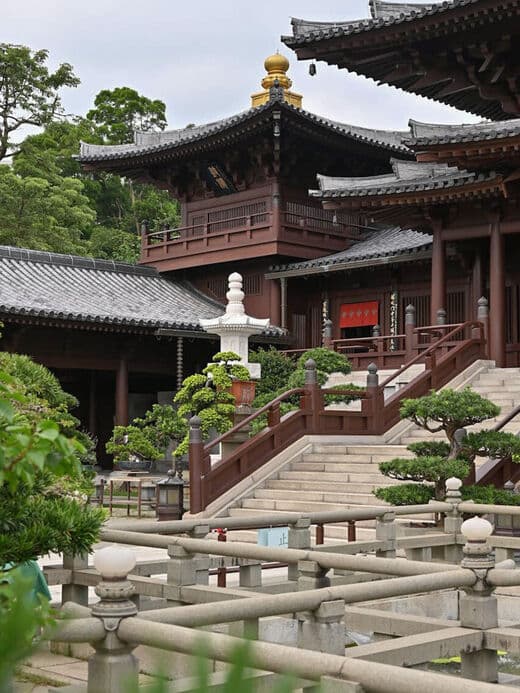
Morning: Wong Tai Sin Temple → Chi Lin Nunnery and Nan Lian Garden (free, incredibly beautiful).
Afternoon: Roast goose lunch at Yat Lok → Explore Mong Kok: Sneaker Street, Ladies Market, Flower Market.
Evening: Dinner with a view (Hutong or Aqua) → Drinks at Ozone bar, 118th floor.
Day 5: Hiking and Departure
Morning: Dragon's Back trail (2-3 hours, stunning ocean views) → Shek O Beach.
Afternoon: Lunch in Shek O → Return to city → Final shopping.
Evening: Airport Express to airport.
With More Time
- Day trip to Macau (1-hour ferry) - casinos, Portuguese architecture
- Day visa to Shenzhen - modern Chinese megacity
- Ocean Park - full day of entertainment
- Hong Kong Disneyland - for families
- Cheung Chau or Peng Chau islands - old Hong Kong atmosphere
Frequently Asked Questions
Do I need a visa for Hong Kong?
US, UK, EU, Canadian, and Australian citizens get 90-day visa-free entry. Just show valid passport and return ticket. Check requirements for other nationalities.
How many days do I need in Hong Kong?
Minimum 3-4 days for main attractions. 5-7 days to explore islands, hike, and relax. 10+ days including Macau and Shenzhen excursions.
Is Hong Kong expensive?
Accommodation and alcohol are pricey. Food and transport are moderate. Budget travel possible (from $80/day), luxury unlimited. Average tourist spends $150-200/day.
Is Hong Kong safe?
Very safe - one of the world's safest cities. Low crime rate, safe to walk at night, solo female travelers face no issues.
What language is spoken in Hong Kong?
Cantonese and English are official. English understood in tourist areas, signage is bilingual. Taxi drivers may need addresses in Chinese characters.
When is the best time to visit Hong Kong?
Ideal: October-December (dry, comfortable temperatures). Good: January-March. Hot and humid: June-September (typhoon season).
Do I need a VPN in Hong Kong?
No, Hong Kong maintains free internet. Google, Instagram, WhatsApp, YouTube - everything works without restrictions.
Can I drink tap water?
Technically safe, but locals prefer boiled or bottled water. Hotels and restaurants serve tea - it's tradition.
How do I get from the airport?
Airport Express (24 minutes to Central, HKD 115) - fastest. Buses A11/A21 (45-70 minutes, HKD 40-50) - cheaper. Taxi to Central ~HKD 350.
What's the difference between Hong Kong and mainland China?
Hong Kong operates under "one country, two systems" - different currency (HKD), free internet, separate immigration, English widely spoken. Feels distinctly different from mainland China.