Chamonix
Chamonix: The Legendary Resort at the Foot of Mont Blanc
Chamonix-Mont-Blanc is not just a ski resort - it is the world capital of mountaineering and the birthplace of winter sports. Nestled in a narrow valley at the foot of Western Europe's highest peak, Mont Blanc (4,810m), this French town hosted the first Winter Olympic Games in 1924. Today, Chamonix offers skiing for every taste: from gentle slopes for beginners to the legendary Vallée Blanche - the longest off-piste descent in the Alps. In summer, mountaineers, hikers, and mountain enthusiasts from around the world flock here to experience the majesty of the Alps.
History of Chamonix: From First Ascent to the Olympics
The history of Chamonix is inseparably linked to the conquest of the Alps. Until the 18th century, the Chamonix valley was an isolated peasant community surrounded by glaciers and forbidding peaks. Everything changed in 1741 when British travelers William Windham and Richard Pococke 'discovered' the valley for European audiences, describing its glaciers and mountain vistas.
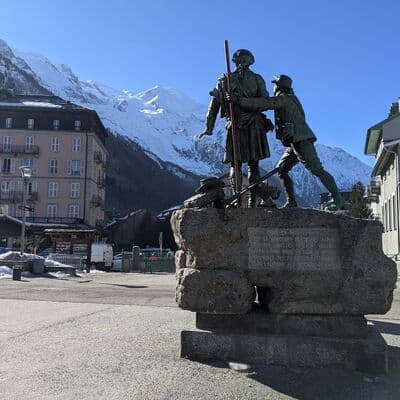
The turning point came on August 8, 1786 - the day of the first ascent of Mont Blanc. Jacques Balmat and Michel-Gabriel Paccard reached the summit, marking the beginning of the mountaineering era. A year later, Swiss scientist Horace-Bénédict de Saussure made his famous ascent with scientific instruments. These events transformed Chamonix into the mecca of alpinism.
Birth of Winter Tourism
In the 19th century, Chamonix became a fashionable resort for European aristocracy. The construction of the railway in 1901 and the cable car to Aiguille du Midi in 1955 made the mountains accessible to everyone. In 1924, Chamonix hosted the first Winter Olympic Games, forever inscribing its name in sports history.
Modern Chamonix
Today, Chamonix is a town of approximately 9,000 inhabitants welcoming over 5 million tourists annually. The authentic Alpine village atmosphere with wooden chalets remains intact, while offering all the infrastructure of a world-class modern resort.
Aiguille du Midi: To the Summit in 20 Minutes
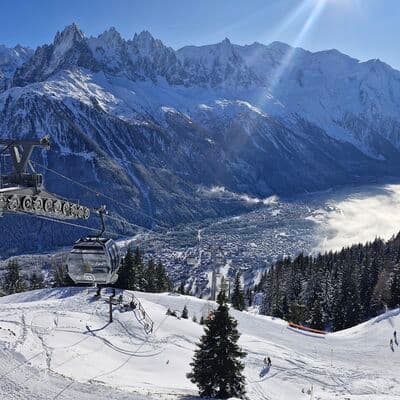
The Aiguille du Midi cable car is an engineering marvel and Chamonix's main attraction. In just 20 minutes, it lifts you from 1,035m to 3,842m - a vertical rise of over 2,800 meters, one of the greatest in the world.
What Awaits at the Top
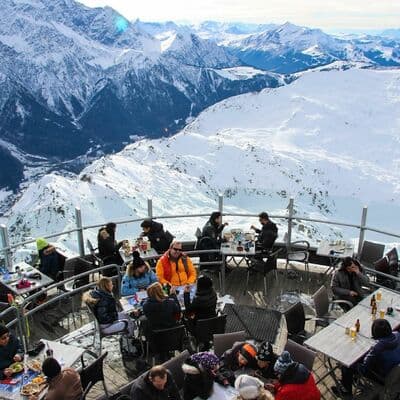
The summit of Aiguille du Midi features an entire complex of viewing platforms. 'Step into the Void' - a glass cube jutting out over a 1,000-meter abyss - is not for the faint-hearted. The panoramic terrace offers views of Mont Blanc, the Matterhorn, Monte Rosa, and an endless chain of Alpine peaks.
Panoramic Mont-Blanc
From Aiguille du Midi, you can continue to the Italian side via the Panoramic Mont-Blanc cable car. The cabins float over the Vallée Blanche glacier at over 3,500 meters - the highest cable car in the Alps. The final destination is Pointe Helbronner in Italy.
Practical Information
Book Aiguille du Midi tickets online in advance, especially during high season. It's significantly colder at the summit than in the valley - bring warm clothing even in summer. Those with heart conditions or altitude sensitivity should be cautious due to the rapid ascent.
Skiing: Five Areas for Every Level
Chamonix offers skiing across five linked areas with approximately 150km of total piste. Each area has its own character and suits different skill levels.
Grands Montets
Grands Montets (1,235 - 3,275m) is paradise for experts. Home to the steepest and most technically demanding runs on the resort, abundant off-piste terrain, and stunning views. The famous descent from Pointe de Vue challenges even professionals.
Brévent-Flégère
Brévent (1,030 - 2,525m) and Flégère (1,877 - 2,480m) are two linked areas facing Mont Blanc, offering the best views of the peak. Varied runs from blue to black. This is the sunniest side of the valley.
Les Houches
Les Houches (950 - 1,900m) is ideal for families and beginners. Gentle, tree-lined slopes protected from bad weather, plus an Olympic downhill course for advanced skiers. Less crowded than the central areas.
Domaine de Balme
Balme (1,453 - 2,270m) on the Swiss border is a quiet area with good intermediate runs and beautiful valley views. An excellent spot for relaxed skiing.
Vallée Blanche: The Legendary Off-Piste Route
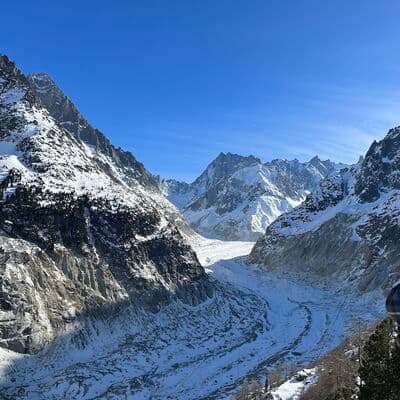
The Vallée Blanche is not just a descent - it's a true adventure covering up to 24km. The route begins at Aiguille du Midi (3,842m) and descends via the Mer de Glace glacier all the way to Chamonix.
What You Need to Know
The Vallée Blanche is not a groomed piste but a glacial route with crevasses, seracs, and changing conditions. A mountain guide is mandatory, even for experienced skiers. Specialized equipment is required: avalanche transceiver, probe, shovel, and harness.
Route Variations
Several descent options exist: the classic route via Mer de Glace, the more challenging Petit Envers du Plan, and the extreme Grand Envers. Choice depends on conditions and group ability. The descent takes 3 to 6 hours.
Mer de Glace: France's Largest Glacier
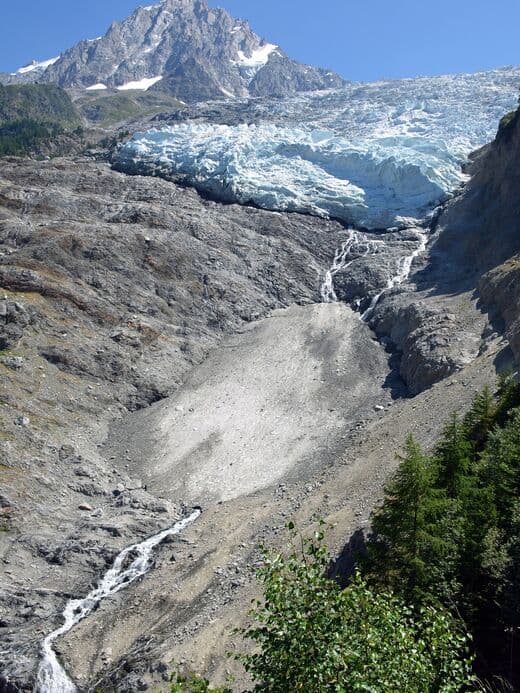
Mer de Glace ('Sea of Ice') is France's largest glacier and the second largest in the Alps. It stretches approximately 7km with an area of 40 sq km. Unfortunately, due to climate change, the glacier is retreating by about 30 meters per year.
Getting There
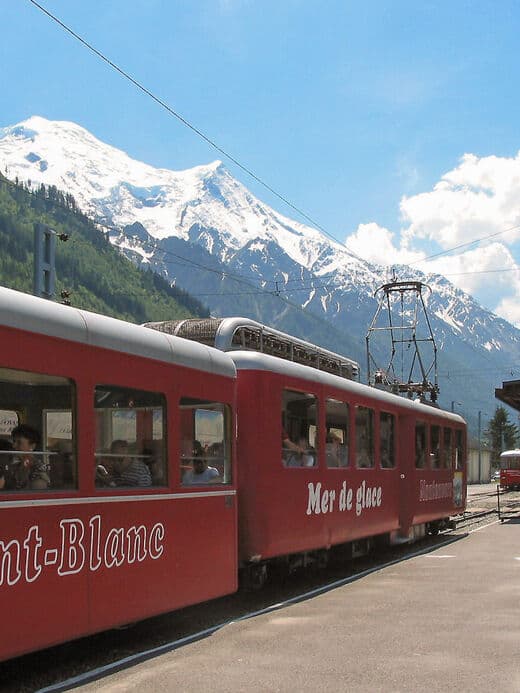
The historic Montenvers rack railway, built in 1909, leads to the glacier. The train departs from central Chamonix and climbs to 1,913m in 20 minutes. From there, a gondola and staircase (about 400 steps) descend to the ice cave.
Ice Cave
Each year, a new cave with ice sculptures is carved into the glacier body. Inside, the temperature stays around -2°C year-round. The cave dramatically illustrates how quickly the glacier is retreating - markers on the rock show ice levels from different years.
Summer Chamonix: Hiking and Mountaineering
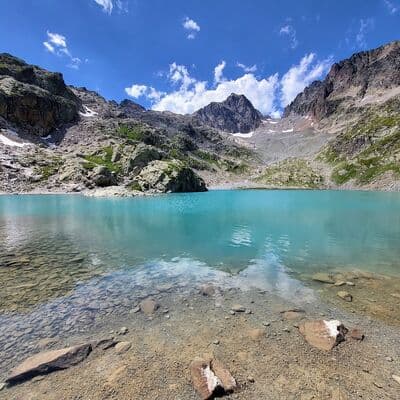
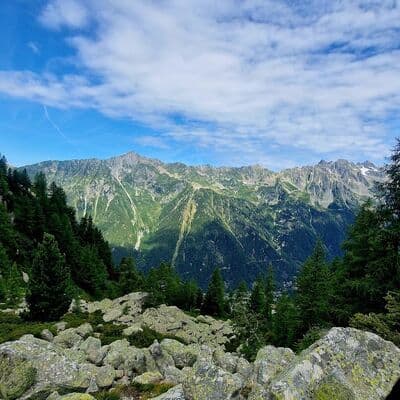
Summer in Chamonix is equally popular as winter. Over 350km of marked trails, from easy valley walks to challenging high-altitude routes, attract hundreds of thousands of mountain enthusiasts.
Famous Routes
The Tour du Mont-Blanc is a legendary 170km trek around the Mont Blanc massif through France, Italy, and Switzerland. The full route takes 10-12 days. Grand Balcon Sud and Grand Balcon Nord are panoramic trails at around 2,000m with views of the entire valley.
Mountaineering
Chamonix remains the world capital of alpinism. Climbing Mont Blanc is many people's dream, but requires good preparation and acclimatization. The Goûter route is classic but not easy: people die on Mont Blanc every year. Always hire a certified guide.
Paragliding
Tandem paragliding flights are one of the most thrilling ways to see the Alps. Launch from Brévent or Planpraz, land in a meadow in the valley - 15-30 minutes of unforgettable experience.
Chamonix Town: Alpine Charm
Chamonix town has preserved its historic Alpine village atmosphere despite its status as a world-renowned resort. The main street with equipment shops, restaurants, and bars buzzes with life in every season.
Church of Saint-Michel
The 18th-century Baroque church is the heart of old Chamonix. Nearby lies the mountaineers' cemetery with graves of those who perished in the mountains, including monuments to the first ascenders.
Alpine Museum
The Musée Alpin tells the story of Mont Blanc's conquest and the development of alpinism. The collection includes equipment from first ascenders, historical photographs, and artifacts from the 1924 Olympics.
Maison de la Montagne
The Mountain House is an information center where you can get route conditions, weather updates, find a mountain guide, and book excursions. It also houses the Compagnie des Guides de Chamonix - the world's oldest mountain guide association, founded in 1821.
Chamonix Cuisine
Chamonix cuisine features hearty Savoyard dishes designed to restore energy after a day in the mountains.
Savoyard Specialties
Must-tries include fondue savoyarde (three local cheese varieties), raclette (melted cheese with potatoes and cured meats), and tartiflette (a gratin with potatoes, bacon, and Reblochon cheese). For snacks - crozets (small buckwheat pasta) and diots (Savoyard sausages).
Where to Eat
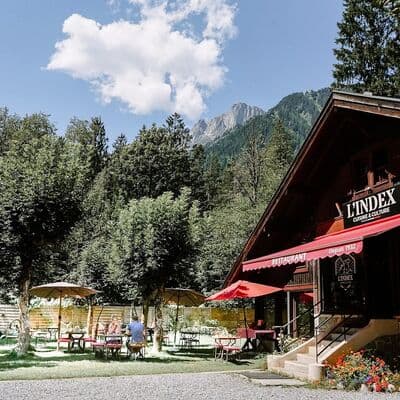
From mountain restaurants on the slopes to Michelin-starred establishments in the valley, Chamonix offers options for every taste and budget. Restaurants in old farmhouses with wooden interiors and Mont Blanc views are particularly atmospheric.
Après-ski
After skiing, life moves to bars and clubs. Chamonix is known for lively nightlife by ski resort standards. Bars on the main street, live music, and international crowds create a special atmosphere.
Around Chamonix
The Chamonix valley and surroundings offer numerous excursion destinations.
Courmayeur (Italy)
The Italian side of Mont Blanc is just 20 minutes through the tunnel. Courmayeur offers excellent skiing, Italian cuisine, and a more relaxed atmosphere. You can combine skiing in both countries in one day.
Geneva (Switzerland)
Geneva international airport is the nearest major hub (80km, 1 hour). The city itself is worth visiting for its lake, old town, and museums.
Annecy
Annecy with its turquoise lake and medieval center makes an excellent summer day trip (100km).
Practical Information
Getting There
The nearest airport is Geneva (80km, regular transfers). From Paris, take the TGV to Saint-Gervais (5 hours), then a local train to Chamonix. By car from Geneva - about 1 hour via motorway and mountain road. From Lyon - approximately 2.5 hours.
When to Visit
Winter season: December - April, best time January - March. Summer season: June - September, peak July - August. Shoulder seasons (May, October - November) - many lifts closed, but fewer tourists and lower prices.
Ski Pass
Mont Blanc Unlimited is a single ski pass covering all Chamonix zones, Courmayeur, and other regional resorts. You can purchase passes for individual areas only if you don't plan to ski everywhere.
Accommodation
From hostels and apartments to five-star hotels. Central Chamonix is convenient for après-ski and restaurants. Les Houches and Argentière are quieter and closer to the slopes. Book early in high season.
Chamonix for Different Travelers
For Experts
Off-piste skiing at Grands Montets, guided Vallée Blanche, steep couloirs at Brévent. Heli-skiing and ski touring in the surroundings. Climbing Mont Blanc in summer.
For Families
Les Houches area with gentle slopes and kids' zones. Train to Mer de Glace and ice cave. In summer - easy trails and adventure parks.
For Non-skiers
Ascent to Aiguille du Midi, snowshoe walks, dog sledding, spa centers. Shopping and gastronomy in town.
For Mountaineers
Mountaineering schools, ice climbing courses, guided ascents of all difficulty levels. Compagnie des Guides is the best choice for organizing climbs.
Travel Tips
- Book Aiguille du Midi tickets online in advance - queues can be enormous
- Mountain weather changes rapidly - always check forecasts and have a backup plan
- For Vallée Blanche, hire a guide without exception - this is serious terrain
- Mont Blanc Unlimited ski pass pays off after 3-4 days of intensive skiing
- Altitude sickness is possible at Aiguille du Midi - descend gradually if feeling unwell
- In summer, refuge reservations need to be made months ahead
- Central Chamonix parking is expensive - use free lots on the outskirts and buses
- Mont Blanc Tunnel is toll - approximately €50 one way for a car
- Mountain restaurants are expensive - bring snacks
- Insurance covering mountain sports and helicopter evacuation is essential
Chamonix is where humanity meets the grandeur of nature. Here, at the foot of the Alps' highest peak, mountaineering was born and the first Winter Olympics were held. Today, Chamonix offers everything: from extreme off-piste skiing to family holidays, from climbing Mont Blanc to leisurely strolls through Alpine meadows. This is not just a ski resort - it's a legend that must be experienced firsthand.