About
Tajikistan: The Complete Travel Guide for Adventurous Travelers
Why Visit Tajikistan
Tajikistan is the kind of destination that rewrites everything you thought you knew about Central Asia. Forget the polished resorts and well-worn tourist trails of Southeast Asia or Europe. This is a country where 93% of the land is mountains -- not gentle rolling hills, but serious, lung-crushing, snow-capped peaks that define every aspect of life here, from the food on your plate to the roads under your wheels to the warmth of the people who call these valleys home. If you have ever dreamed of a place where the landscape feels genuinely untouched, where you can drive for hours without seeing another tourist, and where hospitality is not a service industry but a deeply held cultural value, Tajikistan deserves a place at the very top of your list.
The Pamir Highway is the headline act, and rightly so. This legendary road -- one of the highest international highways on Earth -- threads its way from Dushanbe through the eastern half of the country to the Kyrgyz border, climbing over passes above 4,600 meters and passing turquoise lakes frozen at nearly 4,000 meters above sea level. Every major travel publication, from Lonely Planet to National Geographic, has placed the Pamir Highway in its top ten road trips on the planet. In 2026, Lonely Planet named Tajikistan in its prestigious 'Best in Travel' list, and visitor numbers reflect this growing recognition: in the first nine months of 2025, the country welcomed 1.38 million visitors, a 24% increase over the same period the previous year. The word is getting out, but Tajikistan is still far from crowded.
Yet the Pamir Highway is only part of the story. The Fann Mountains in the western part of the country offer some of the finest trekking in all of Central Asia -- think Nepal without the crowds. Dozens of trails wind past lakes of impossible colors (Iskanderkul, the Alauddin Lakes, Kulikalon), over passes above 3,800 meters, and through alpine meadows where the only sounds are wind and birdsong. The ancient Silk Road cities of Penjikent and Istaravshan hold traces of the Sogdian civilization that once controlled trade between China and the Mediterranean. And the hot springs of Garm-Chashma on the Pamir, where 60-degree water cascades over travertine terraces surrounded by mountains, are a natural spa that no luxury resort could ever replicate.
There is a practical argument too: Tajikistan is one of the cheapest countries to travel in anywhere in Asia. A full meal at a traditional teahouse (chaikhona) costs $2-3. A night in a guesthouse on the Pamir, with dinner and breakfast included, runs $10-15. Hiring a 4x4 with a driver for the entire Pamir Highway costs $60-100 per day for the whole vehicle -- split that among three or four travelers and you are paying less per day than a mid-range hotel room in Bangkok. The experience-to-cost ratio is, quite simply, off the charts.
Timing matters. Tajikistan is opening up, but it has not yet been transformed by mass tourism. There are no international hotel chains outside Dushanbe (the Hyatt Regency and Serena Hotel being the exceptions), no hop-on-hop-off buses, no souvenir shops selling fridge magnets with 'I heart Tajikistan' on them. The guesthouses on the Pamir are family homes where you sleep on the floor, eat what the family eats, and leave as something closer to a friend than a customer. This will change. Give it ten years and the Pamir Highway will have proper rest stops and organized bus tours. But right now, in 2026, Tajikistan still belongs to those willing to embrace a genuine adventure -- rough roads, basic accommodation, uncertain schedules, and all. If that sounds like your kind of travel, read on.
Regions of Tajikistan: Choosing Your Adventure
Dushanbe and Surroundings
Dushanbe is the capital and the main gateway into the country. Almost every international flight lands here, and most travelers begin and end their journey in this surprisingly pleasant city. Give it at least two full days -- Dushanbe is not just a transit point, and dismissing it would be a mistake.
The city defies the dusty, provincial image that many visitors arrive with. Broad, tree-lined boulevards (the plane trees on Rudaki Avenue are magnificent), clean streets, a handful of genuine architectural highlights, and a growing restaurant scene make Dushanbe a comfortable base. The population is around one million and growing, and the city has the energy of a place that knows it is on the way up.
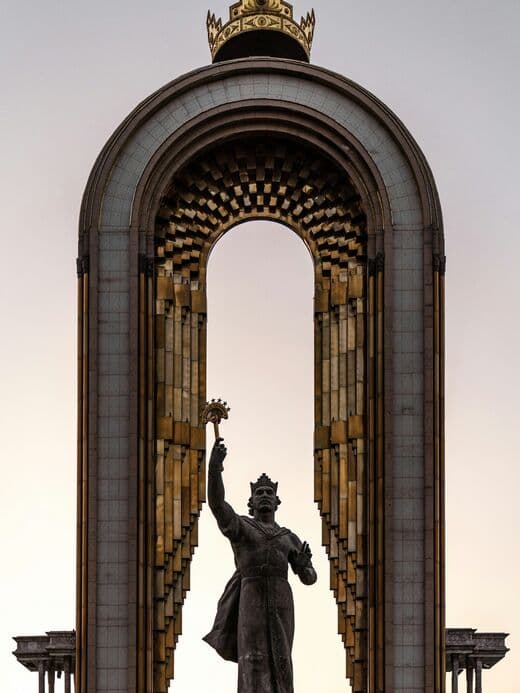
The National Museum of Tajikistan is one of the best museums in Central Asia. Its centerpiece is the 'Buddha in Nirvana,' a 13-meter reclining Buddha statue discovered during excavations at Ajina-Tepa in southern Tajikistan. The museum also covers Tajik history from the Stone Age through the Silk Road era to independence. Nearby, Dosti (Friendship) Square features a monumental arch and a statue of Ismoil Somoni, the 10th-century founder of the Tajik state and the man whose face appears on the national currency.
Mehrgon Bazaar is a mandatory stop. This enormous covered market sells everything from spices and dried fruits to carpets and traditional textiles. Wander through the dried fruit section and vendors will press handfuls of apricots, almonds, and mulberries into your hands simply because you are a guest. The Rohat Teahouse in the city center is a living piece of history -- carved wooden columns, carpets, raised platforms (topchon) where you sit cross-legged, and what locals claim is the best plov (rice pilaf) in the city. It has been operating since Soviet times and the atmosphere is like stepping into a time machine.
Day trips from Dushanbe include the Hissar Fortress (25 km, about 30 minutes by car), a partially reconstructed fortification with a 2,500-year history, flanked by a 16th-century madrassa and an avenue of ancient plane trees. The Nurek Reservoir, created by one of the tallest dams in the world (300 meters), is worth a detour for its sheer engineering audacity. And the Varzob Gorge, just north of the city, offers riverside teahouses, swimming spots, and a quick escape from the summer heat -- Dushanbe regularly hits 40 degrees Celsius in July and August.
For accommodation, Dushanbe offers the full range: the Hyatt Regency and Serena Hotel for those who want luxury, several mid-range hotels, hostels for budget travelers, and local guesthouses for those who prefer a more personal experience. The city is also where you will find all the major tour operators for Pamir and Fann Mountains trips, and where you should arrange your GBAO permit if you have not already done so online.
Gorno-Badakhshan Autonomous Region (GBAO) and the Pamir
GBAO covers nearly half of Tajikistan's territory but is home to only about 230,000 people. This is the legendary Pamir -- the 'Roof of the World.' To enter GBAO, you need a special permit. The easiest way for foreign travelers is to add the GBAO permit to your e-visa application when applying online. The cost is approximately $20, and it is usually issued within a few working days. If you did not request it with your visa, you can apply in Dushanbe, but this takes 1-3 days and involves bureaucratic hassle. Without the permit, you will be turned back at the checkpoint entering GBAO. One important caveat: the GBAO permit can be suspended with little or no warning due to security concerns or political events. This happened as recently as 2022. Check the latest situation before committing to a Pamir itinerary.
The Pamir Highway (M41) is the main artery of the region and one of the highest-altitude paved (loosely speaking) roads in the world. The drive from Dushanbe to Khorog, the capital of GBAO, takes 12-16 hours through mountain switchbacks, depending on road conditions. The road crosses the Khaburabod Pass (3,252 m) and runs along the Afghan border -- you will literally see Afghan villages across the river Panj. From Khorog to Murghab and on to the Kyrgyz border is another 10-14 hours, but this is the section that most travelers consider the most spectacular.
Khorog is a small city of about 30,000 people, squeezed into a gorge at the confluence of the Gunt and Shakhdara rivers. It has a bazaar, several guesthouses, a small but interesting museum of Pamiri music, and the Khorog Botanical Garden at 2,320 meters -- the second-highest botanical garden in the world. In July, Khorog hosts the Roof of the World Festival, featuring traditional Pamiri music, dance, and crafts from across the region.
Ishkashim, south of Khorog, is the gateway to the Wakhan Corridor and the hot springs of Garm-Chashma. On Saturdays, a cross-border market operates here where both Tajik and Afghan traders sell goods -- a genuinely unique experience. From Ishkashim, the road follows the Wakhan Valley southward, with Tajik mountains on one side and the Hindu Kush of Afghanistan on the other. The Wakhan is one of the most beautiful stretches of the Pamir and is dotted with ancient fortresses, Buddhist stupas, and rock carvings.
Murghab is the highest town in Tajikistan at 3,600 meters. The population is predominantly Kyrgyz, and the culture, food, and language differ markedly from the rest of the country -- expect more meat, fewer vegetables, and yurts rather than Pamiri houses. From Murghab, you can reach Lake Karakul (3,914 m), a vast crater lake of impossibly deep blue, surrounded by barren mountains. Nearby, the Ak-Baital Pass at 4,655 meters is the highest point on the Pamir Highway. Other landmarks on the Eastern Pamir include Lake Yashilkul, Lake Zorkul (on the Afghan border, in a nature reserve), and the petroglyphs at Langar -- more than 6,000 rock carvings spanning thousands of years.
The Pamiri people are predominantly Ismaili Muslims, followers of the Aga Khan IV. Their practice of Islam is notably open and tolerant compared to many other Muslim communities. Women do not wear the full veil, participate fully in social life, and interact freely with visitors. Traditional Pamiri houses (chid) are architectural marvels -- five pillars representing the five holy figures of Islam, a skylight in the roof, and a communal living space where the whole family gathers. Staying in a Pamiri home is one of the most memorable experiences Tajikistan offers.
The Fann Mountains
The Fann Mountains sit at the junction of the Zeravshan and Hissar ranges, roughly 5-6 hours by road from Dushanbe. For many trekkers, the Fanns are the primary reason to visit Tajikistan. The range is compact -- about 40 by 30 kilometers -- but packed with variety: more than 30 lakes, dozens of peaks above 5,000 meters, glaciers, alpine meadows, and deep gorges. And unlike the popular trekking routes of Nepal or Peru, you will often have the trails entirely to yourself.
Iskanderkul is the 'pearl of the Fann Mountains,' a lake at 2,195 meters named after Alexander the Great. Legend has it that his horse Bucephalus drowned here (historians are skeptical, but it makes a good story). The lake is ringed by cliffs and forest, and a basic turbaza (guesthouse) offers simple rooms. From here, you can hike to the 'Fann Niagara' waterfall (38 meters) and start several multi-day routes.
The Alauddin Lakes sit at 2,700-2,800 meters and are among the most photogenic spots in all of Central Asia. The water shifts between turquoise and emerald depending on the light, and the surrounding peaks -- including Chimtarga (5,489 m), the highest in the Fanns -- create a dramatic backdrop. Camp Alauddin serves as a base for climbers and trekkers. The Kulikalon Lakes, at a similar altitude, are less visited and equally stunning.
The classic Fann Mountains trek takes 7-10 days and crosses the Alauddin Pass (3,860 m), linking the Kulikalon and Alauddin lake systems before descending to Iskanderkul. Trails are not marked with the precision you might expect in the Alps, so either hire a local guide (highly recommended) or come with solid navigation skills and a downloaded offline map. The season runs from mid-June to mid-September, with July and August being optimal. Even in summer, nighttime temperatures at 3,000 meters can drop below freezing, so bring a warm sleeping bag rated to at least -5 Celsius.
Sughd Province (Khujand and the North)
Khujand is Tajikistan's second city, with a population of about 200,000, and serves as the capital of Sughd Province in the north. The city sits on the Syr Darya, one of the two great rivers of Central Asia, and was founded by Alexander the Great as Alexandria Eschate -- 'the Furthest' -- the most distant city of his empire. Today it is a lively place with good infrastructure, a rich history, and an enormous bazaar.
Panjshanbe Bazaar is one of the largest covered markets in Central Asia. Despite the name ('Thursday' in Tajik), it operates every day and sells dried fruits, nuts, spices, fabrics, ceramics, and just about everything else. The atmosphere is that of a genuine Central Asian market, not a tourist-oriented souk. Khujand's fortress, partially restored with a museum inside, sits near the river. The Syr Darya embankment is pleasant for evening walks, and the city lights up attractively at night.
From Khujand, it is a short trip to Istaravshan, a city with more than 2,500 years of continuous history. The old quarters contain mosques, madrassas, and active workshops of knife-makers (Istaravshan knives are a famous Tajik craft) and potters. The Shahriston Pass (3,378 m) between Khujand and Dushanbe used to be a dramatic switchback journey, but the Istiqlol Tunnel (5.2 km) now cuts the travel time significantly.
Northern Tajikistan is warmer and drier than the south, with the Tajik portion of the Fergana Valley being one of the most fertile regions in Central Asia. Grapes, apricots, pomegranates -- everything grows here. Khujand is also a convenient entry point from Uzbekistan: the Oybek border crossing is one of the easiest in the region, and the journey from Tashkent takes only a few hours.
Khatlon Province (South)
Khatlon is the most populated province but the least developed for tourism. The main city, Bokhtar (formerly Kurgan-Tyube), has limited appeal, but the region holds a few gems worth a detour. The archaeological site of Ajina-Tepa, where the famous 13-meter Buddha was found, is here. Kulob, one of the oldest cities in Central Asia with a claimed 2,700-year history, has the 14th-century Mausoleum of Mir Sayyid Ali Hamadoni, an important Islamic scholar.
For most travelers, Khatlon is a transit zone on the way to the Pamir via the southern route through Kulob. This route is less popular than the northern route via Kala-i-Khumb but offers its own scenery. If you have the time and inclination, a stop in Kulob adds historical depth to your trip without requiring a major detour.
Zeravshan Valley (Central)
The Zeravshan Valley is the historical heartland of Tajikistan. Penjikent -- sometimes called the 'Pompeii of Central Asia' -- was a thriving Sogdian city destroyed by Arab invaders in the 8th century. Excavations have revealed extraordinary frescoes depicting banquets, hunting scenes, and religious rituals. The originals are in the Hermitage Museum in St. Petersburg, but the local museum in Penjikent has good reproductions and original artifacts. Modern Penjikent is a small, quiet town, and the border crossing to Samarkand in Uzbekistan is only 60 km away -- making a combined Tajikistan-Uzbekistan trip very feasible.
The Zeravshan Valley also provides access to the Fann Mountains. From the village of Shing, trails lead to the Kulikalon Lakes; from Artuch, you can reach the Alauddin Lakes. The valley itself is fertile and beautiful: apricot orchards, walnut groves, and stone villages clinging to mountain slopes.
Rasht Valley and Karategin (Central East)
The Rasht Valley is the green, fertile corridor between Dushanbe and the Pamir, and the main transit route for travelers taking the northern road to Khorog via Kala-i-Khumb. The main town is Garm. The valley is known for its honey, walnuts, and apricots, and it provides one of the entry points to the Tajik National Park, a UNESCO World Heritage Site and the largest protected area in Central Asia.
The Tajik National Park covers 2.6 million hectares of glaciers, lakes, and high-altitude desert across the Pamir Mountains. It was inscribed on the UNESCO World Heritage List in 2013. The park is home to snow leopards, Marco Polo sheep, brown bears, and other rare species. Visiting the park requires a permit, which is usually processed together with the GBAO permit. For most travelers, the park is experienced from the road rather than through backcountry exploration, but serious mountaineers and wildlife enthusiasts can arrange guided expeditions from Dushanbe.
Unique Natural Wonders of Tajikistan
The Pamir Highway: A Road on the Roof of the World
The Pamir Highway deserves its own section because it is not just a road -- it is an experience that fundamentally changes the travelers who drive it. Historically part of the Silk Road, the modern highway was built by the Soviets as a strategic military road in the 1930s. Today, it stands as one of the last great road adventures on Earth, a journey through landscapes so vast and empty that the concept of 'civilization' starts to feel relative.
Technically, the M41 runs from Mazar-i-Sharif in Afghanistan through Dushanbe to Bishkek in Kyrgyzstan, but the section commonly called the 'Pamir Highway' refers to the stretch from Dushanbe (or Khorog) to Osh via Murghab. There are two main routes: the northern route (via Kala-i-Khumb, following the Panj River along the Afghan border) and the southern route (via Kulob). Most travelers choose the northern route for its more dramatic scenery.
What to expect: the road is partly asphalt, partly gravel, and partly whatever you want to call it. The section between Khorog and Murghab can be genuine no-road territory, especially after winter or heavy rain. Average speed is 30-40 km/h. Plan at minimum 4-5 days from Dushanbe to Osh, and ideally a full week so you can stop at the dozens of places that demand your attention: hot springs, ancient fortresses, high-altitude lakes, mountain passes, and remote villages where life has barely changed in centuries.
Key waypoints: the Ak-Baital Pass (4,655 m) is the highest point on the highway and one of the highest road passes in the world. The Kyzyl-Art Pass (4,280 m) marks the Kyrgyz border. Lake Karakul (3,914 m) sits in an ancient meteorite crater and is one of the most visually arresting places on the route -- a vast, dark blue lake ringed by lifeless mountains, where the water barely reaches 10 degrees Celsius even in summer and freezes solid in winter. At night, the absence of any artificial light for hundreds of kilometers means the stargazing is beyond anything most people have ever witnessed.
The Pamir Highway is also one of the world's great cycling routes. Every summer, hundreds of touring cyclists from around the globe pedal this road, carrying everything they need on their bikes. It is a serious undertaking -- altitude, wind, lack of services, and distances of up to 100 km between settlements -- but for prepared cyclists, it is a once-in-a-lifetime experience. Homestays along the route are spaced every 40-60 km, making it feasible without carrying a full camping setup, though most cyclists bring a tent as insurance.
Lakes of Tajikistan
Tajikistan could legitimately be called the country of lakes. Beyond Iskanderkul and Karakul, dozens of other lakes each have their own character and story. Sarez Lake is one of the youngest major lakes on Earth, formed in 1911 when a massive earthquake triggered a landslide that dammed the Murghab River. At 3,263 meters, the lake is 75 km long and up to 505 meters deep. It is also considered potentially dangerous: if the natural dam were to fail, the resulting flood would devastate valleys all the way to the Amu Darya River hundreds of kilometers downstream. Access is restricted and requires a special permit beyond the standard GBAO permit.
Yashilkul ('Green Lake,' 3,734 m) is a beautiful high-altitude lake on the Pamir, also formed by a landslide. Zorkul ('Great Lake,' 4,126 m) sits on the Afghan border within a nature reserve. Shorkul, Rangkul, and Bulunkul -- every lake on the Eastern Pamir has its own color and mood. The Seven Lakes of Marguzor in the Fann Mountains are a cascade of seven lakes in a single valley, each a different shade of blue and green, each with its own local name and, according to legend, its own personality.
Hot Springs
Tajikistan has more than 200 hot springs, most of them wild and lacking any infrastructure at all. Garm-Chashma is the most famous, located 40 km from Khorog in the Shakhdara Valley. Water at 60 degrees Celsius flows over travertine terraces, forming natural pools. There are separate bathing areas for men and women, and the site is free to visit. A basic guesthouse operates nearby.
Bibisht ('Paradise') in the Wakhan Valley is less known but equally striking. Jawshangoz sits near the lake of the same name on the Eastern Pamir, with views of Peak Karl Marx (6,726 m). Obigarm, about 80 km from Dushanbe, is a Soviet-era spa town with thermal waters and sanatoriums. Khoja-Obigarm is another thermal resort, wilder and more authentic. For many travelers, finding and soaking in an unmarked hot spring in the middle of the Pamir, with no one else around and mountains in every direction, is one of the defining memories of the trip.
Fedchenko Glacier
The Fedchenko Glacier is the longest glacier outside the polar regions at 77 km. It lies within the Tajik National Park on the Pamir. Reaching it requires a serious expedition -- this is not a day trip -- but even from a distance, viewed from the road or surrounding ridges, its scale is humbling. For scientists and mountaineers, Fedchenko is an object of global significance. For regular travelers, it serves as a reminder of just how vast and wild the Pamir Mountains truly are. The glacier has been retreating due to climate change, and scientists estimate it has lost approximately 20% of its ice volume since the early 20th century.
Peak Ismoil Somoni (formerly Peak Communism)
At 7,495 meters, Peak Ismoil Somoni is the highest point in Tajikistan and all of Central Asia. Climbing it requires serious mountaineering experience and a minimum of three weeks. Base camp at Moskvina Meadow is accessible to a broader range of visitors -- a helicopter from Dushanbe can get you there (expensive but unforgettable, around $500-800 per person depending on group size). Nearby stands Peak Korzhenevskaya (7,105 m), another 7,000-meter peak, making the area one of the few places in the world where you can stand within sight of two peaks above 7,000 meters.
When to Visit Tajikistan
Tajikistan has a sharply continental climate, and the temperature range is extreme. In Dushanbe, summer temperatures regularly hit 40 degrees Celsius. On the Eastern Pamir, at the same time of year, daytime temperatures might reach 10-15 degrees and nighttime temperatures can drop to -5 or below. So the answer to 'when should I go?' depends entirely on what you plan to do.
For trekking in the Fann Mountains, the optimal season runs from mid-June to mid-September. July and August are peak season: passes are open, nighttime temperatures are manageable (around 0 degrees at 3,000 m), and rain is infrequent. June and September are 'shoulder' months -- cheaper, fewer people, but some high passes may still be snowbound.
For the Pamir Highway, the best window is June through October. In May and November, the high passes (Ak-Baital, Kyzyl-Art) may be closed by snow. Summer on the Eastern Pamir (Murghab, Karakul) means cool, sunny days -- ideal traveling weather. From November through April, the Pamir Highway is effectively closed to tourists: passes are snowed in, guesthouses are shuttered, and there is no public transport.
For the cities (Dushanbe, Khujand), spring (April-May) and autumn (September-October) are the sweet spots. Summer in the lowland valleys is punishingly hot. Winter is mild but gray and damp.
Major events worth timing your trip around: Navruz (March 21) is the biggest holiday of the year, the Persian New Year, celebrated with feasting, music, and festivities across the country. The Roof of the World Festival in Khorog (July) brings together traditional musicians, dancers, and artisans from across the Pamir. The Tulip Festival in the Hissar Valley (April) coincides with wildflower season and is a beautiful time to visit the area around Dushanbe. If you want to experience Tajikistan in festive mode, Navruz is the time to come.
How to Get to Tajikistan
The main international airport is Dushanbe International (DYU). There are no direct flights from the United States, United Kingdom, Canada, or Australia. The most common routing for Western travelers is via Istanbul (Turkish Airlines, Pegasus Airlines -- flight time approximately 4 hours from Istanbul to Dushanbe) or Dubai (FlyDubai). From Istanbul, there are multiple weekly flights, making it the most convenient hub for travelers coming from Europe or North America. From Dubai, FlyDubai operates regular service. Other connections include Almaty (Air Astana), and Urumqi (China Southern). Total travel time from London or New York, including the layover, is typically 12-18 hours.
Khujand Airport (LBD) is the country's second international airport, with flights from several regional cities. If your itinerary starts in the north (perhaps combining with a trip to Uzbekistan), flying into Khujand can save you the 5-6 hour overland journey from Dushanbe.
Overland border crossings: Tajikistan shares borders with Uzbekistan, Kyrgyzstan, China, and Afghanistan. The most commonly used crossings for tourists are: Oybek/Khujand (from Uzbekistan -- easy and efficient), Penjikent/Samarkand (from Uzbekistan -- perfect for a combined trip, though note this crossing may have limited hours), and Kyzyl-Art (from Kyrgyzstan -- for those who have driven the Pamir Highway and are continuing to Osh). The Karamyk crossing to Kyrgyzstan is also used but is more remote. The border with China at Kulma is periodically open but difficult due to Chinese restrictions. The crossings into Afghanistan at Ishkashim and Nizhny Panj exist but are not standard tourist routes.
There is no international rail service to Tajikistan. All previous rail connections ran through Uzbekistan and service has been unreliable. The most dependable ways to arrive are by air or by bus/shared taxi from neighboring countries.
Visa information for Western travelers: most citizens of the US, UK, EU, Canada, Australia, and many other countries can obtain an e-visa online through the official Tajik e-visa portal. The standard tourist e-visa is valid for 60 days and costs approximately $50. Processing takes 2-5 working days. Crucially, if you plan to visit the Pamir (GBAO), you must add the GBAO permit to your e-visa application -- it costs an additional $20 and can only be added at the time of the initial application or by applying separately in Dushanbe. Some nationalities qualify for visa-free entry for stays of up to 30 days. Check your specific nationality before traveling. Always carry a printed copy of your e-visa, as border officials may not have reliable internet access to verify electronic documents.
Getting Around Tajikistan
Shared Taxis and Minibuses (Marshrutka)
The backbone of Tajikistan's transport system is the shared taxi and the marshrutka (minibus). Marshrutkas run between major cities: Dushanbe to Khujand, Dushanbe to Khorog, Dushanbe to Kulob. Shared taxis -- usually Toyota sedans or aging Mercedes -- depart when they have four passengers. Waiting times range from 30 minutes to several hours depending on the route and time of day. Prices are effectively fixed, though some gentle bargaining is possible.
Key routes and approximate costs: Dushanbe to Khujand by marshrutka takes 5-6 hours through the Istiqlol Tunnel and costs about $8-10 (80-100 somoni). Dushanbe to Khorog by shared taxi takes 14-18 hours and costs $20-30 (200-300 somoni). The road is grueling but the scenery is extraordinary. Night departures exist but are not recommended -- the roads are dangerous in darkness, and you will miss all the views.
On the Pamir itself (Khorog to Murghab and beyond), public transport is essentially nonexistent. Marshrutkas run sporadically, sometimes only every few days. The main options here are private vehicles, hitchhiking, or hiring a car with a driver.
Hiring a Car with Driver
This is the optimal way to travel the Pamir. A Toyota Land Cruiser or Mitsubishi Pajero with an experienced local driver costs $60-100 per day for the whole vehicle (3-4 passengers). The driver knows the road, speaks the local language, knows where to stop for food and accommodation, and can handle breakdowns -- which are not uncommon. Fuel is usually included, but confirm this in advance. You can find drivers through guesthouses in Dushanbe, through tour operators, or through PECTA (Pamir Eco-Cultural Tourism Association) in Khorog. It is common for solo travelers to post on Facebook groups or hostel notice boards looking for others to share costs.
Self-Drive Car Rental
Self-drive rental is theoretically available in Dushanbe, but it is strongly discouraged for the Pamir. The reasons are practical: roads can be extreme, fuel stations on the Pamir are rare (you must carry spare fuel in jerry cans), if you break down help may be dozens of kilometers away, and local traffic rules are treated as suggestions at best. For driving around Dushanbe and Khujand, self-drive is feasible. You will need both your national driver's license and an International Driving Permit (IDP).
Domestic Flights
Tajik Air and Somon Air operate flights from Dushanbe to Khorog and Khujand. The Dushanbe to Khorog flight (1 hour versus 14+ hours by road) is often described as one of the most scenic flights in the world -- the plane threads between mountain peaks close enough that you feel you could reach out and touch them. However: flights are frequently canceled due to weather (especially in winter and spring), schedules are unreliable, and booking well in advance is essential. Do not build a tight itinerary around these flights. Have a backup plan.
Cycling the Pamir Highway
The Pamir Highway is a bucket-list route for touring cyclists worldwide. Every summer, hundreds of riders tackle this epic journey. It is not to be underestimated: altitude, relentless headwinds (especially on the Eastern Pamir), lack of services, and distances of up to 100 km between settlements demand serious preparation and fitness. Season is June through September. Essentials include spare tubes and tools, ample water and food capacity, warm clothing (temperatures can drop below freezing even in summer at altitude), a comprehensive first aid kit, and a tent. Homestays along the route every 40-60 km mean you can often sleep indoors, but do not count on it. The cycling community has produced excellent route guides on sites like Caravanistan.com -- study them carefully before setting out.
The Cultural Code of Tajikistan
Hospitality
Tajik hospitality is not a marketing phrase. It is a deep cultural value that you will encounter from your very first hour in the country, and it can be genuinely overwhelming for travelers accustomed to more transactional tourist-host relationships. You will be invited into homes, fed, given tea, offered a place to sleep -- and your hosts will refuse payment. This is especially true on the Pamir, where the tradition of welcoming strangers is considered sacred.
How to respond: accept invitations (refusing can cause offense), but bring gifts. Tea, sugar, and sweets for the household are always appropriate. Pens, notebooks, and small toys for children are appreciated. Photographs of your home country make excellent conversation starters. If you want to leave money, do so discreetly and not as a direct 'payment' for hospitality. Leaving cash tucked under a pillow or inside a book is a common and gracious approach.
Language
The official language is Tajik (Forsi-Tojiki), which is closely related to Persian (Farsi). If you speak Farsi, you will be largely understood. On the Pamir, people speak Pamiri languages (Shughni, Rushani, Wakhi, and others), but everyone understands Tajik. Russian is widely spoken, particularly among the older generation and in urban areas. In Dushanbe, almost everyone speaks Russian. On the Pamir, Russian proficiency is lower but basic communication is possible. English is spoken mainly in the tourism sector and even then, not always reliably.
Useful Tajik phrases: 'Salom' -- Hello. 'Tashakkur' or 'Rahmat' -- Thank you. 'Bale' -- Yes. 'Ne' -- No. 'Chand pul?' -- How much? 'Khub' -- Good. 'Nomi man...' -- My name is... Even learning just 'Salom' and 'Tashakkur' will earn you warm smiles and appreciation. Download a translation app before you go -- Google Translate has limited Tajik support, but Yandex Translate handles Tajik well.
Religion and Dress
Tajikistan is a secular state, but the population is predominantly Muslim (Sunni in most of the country, Ismaili on the Pamir). Islam here is moderate: women wear headscarves but not universally, and in cities young people dress in Western fashion. Respectful behavior is important: remove shoes when entering mosques, and women should cover shoulders and knees in religious settings. In rural villages, dress more conservatively than you would in the city. Swimwear at Iskanderkul is fine; a bikini in a village is not.
Pamiri Ismailis practice a distinctly open and tolerant form of Islam. Women participate fully in public life, there are no strict dress codes, and the community is known for its welcoming attitude toward outsiders. Visiting an Ismaili home on the Pamir and learning about their traditions, their relationship with the Aga Khan Foundation (which funds schools, hospitals, and infrastructure throughout the region), and their unique architectural traditions is one of the genuine highlights of travel in Tajikistan.
Tipping
Tipping is not obligatory but is appreciated. In restaurants, 10% is a generous gesture. For a driver on the Pamir, $5-10 per day beyond the agreed fee is customary. For a trekking guide, $10-15 per day is appropriate. In guesthouses on the Pamir, cash tips are not expected, but gifts of tea, sugar, or sweets are always welcome and more culturally appropriate than money.
Photography
Tajik people are generally comfortable being photographed, but always ask permission, especially with women. In border zones along the Afghan frontier, be careful with your camera -- do not photograph military installations or the bridges over the Panj River. Everywhere else, photograph freely. Locals often ask to have their picture taken with foreign visitors, and showing people photos of themselves on your camera screen is a reliable way to make friends.
Safety in Tajikistan
Tajikistan is a safe country for tourists. Street crime rates are very low, and violent crime against visitors is extremely rare. You can walk through cities at night without concern, leave belongings in guesthouses without worry, and generally feel secure throughout the country. The real risks in Tajikistan are not criminal but environmental and infrastructural.
Altitude sickness is the primary medical risk on the Pamir. Above 3,000 meters, your body begins to react to the reduced oxygen. Symptoms include headache, nausea, shortness of breath, and insomnia. Rules: do not ascend too quickly (no more than 500 meters of altitude gain per day above 3,000 m), drink plenty of water, avoid alcohol, and descend immediately if symptoms become severe. Acetazolamide (Diamox) can aid acclimatization but has side effects (tingling in extremities, increased urination) -- consult your doctor before the trip.
Road safety is a genuine concern. Mountain roads with no guardrails, rockslides, and drivers who overtake on blind curves are all real hazards. Choose your driver based on recommendations, do not hesitate to ask them to slow down, and absolutely refuse night driving on mountain roads. The stretch from Dushanbe to Khorog has seen fatal accidents, and the Eastern Pamir roads are even more demanding.
Police checkpoints: these are common throughout the country, especially on the road to the Pamir and within GBAO. Usually they are routine -- the officer checks your passport and GBAO permit and waves you through. However, some travelers report police officers inventing minor infractions (expired permit, wrong documentation) as a pretext for requesting payment. If this happens to you: stay calm, ask politely to see the specific regulation you have violated, request a written receipt for any fine, and offer to resolve the matter at the nearest police station. In most cases, this will end the encounter. Do not volunteer to pay informal fines. Having clear photocopies of all your documents and a phone with the number of your embassy can help.
Border zones: the Afghan border is safe, but do not approach the Panj River too closely -- it is an international frontier. The Tajik-Kyrgyz border near Vorukh and Batken has seen periodic tensions (including a brief military conflict in 2021 and sporadic incidents since). This area is off the normal tourist route -- the standard Pamir Highway crosses into Kyrgyzstan at Kyzyl-Art, well away from the disputed areas.
Scams are almost nonexistent. Tajikistan is one of the few countries where you are genuinely unlikely to be cheated. The only exception is bazaar pricing -- foreigners may be quoted higher prices, but this is tradition, not fraud. Bargain, and you will arrive at a fair price. Airport taxi drivers may try to overcharge; agree on a fare before getting in. From Dushanbe airport to the city center should cost no more than $3-5 (30-50 somoni).
Emergency numbers: 101 (fire), 102 (police), 103 (ambulance). Tourist police: +992 37 221-09-09. In practice, on the Pamir, asking local residents for help will get you faster and more effective assistance than calling the police.
Natural hazards to be aware of: earthquakes are common in Tajikistan (the country sits on an active seismic zone), though most are minor. Landslides and rockfalls are a real risk on mountain roads, particularly in spring and after heavy rain. Flash floods can affect valleys and gorges, especially in June and July. Avalanches are a winter and spring hazard in high mountain passes. None of these should deter you from visiting, but they are worth factoring into your planning and risk assessment. Stay informed about weather conditions, follow local advice, and do not take unnecessary risks on mountain roads during or after storms.
For women travelers: Tajikistan is generally safe for solo women travelers, though the usual precautions apply. In cities, you are unlikely to experience harassment beyond occasional staring. In rural areas, dressing modestly (covering shoulders and knees) will reduce unwanted attention and show respect for local customs. On the Pamir, the Ismaili communities are particularly welcoming to women travelers. Many women have completed the Pamir Highway solo without incident. That said, as with any destination, trust your instincts, avoid isolated areas at night, and consider linking up with other travelers for remote stretches.
Health and Medical Considerations
No special vaccinations are required for entry into Tajikistan, but the following are recommended: Hepatitis A and B, typhoid, and tetanus (make sure your routine boosters are up to date). The malaria risk is minimal, confined to low-lying southern areas in summer only. There is no malaria risk on the Pamir or in the mountains.
Medical infrastructure in Tajikistan is limited. In Dushanbe, there are private clinics of acceptable standard (Prospekt Medical Center, Ibn Sino). Outside the capital, only basic government hospitals exist, with minimal equipment. On the Pamir, medical facilities are reduced to small dispensaries in larger villages. Travel insurance with emergency medical evacuation coverage is absolutely essential -- this is not optional. A serious injury on the Pamir could require helicopter evacuation to Dushanbe or even to Almaty, Kazakhstan. Make sure your policy covers helicopter evacuation and repatriation, and that the coverage amount is adequate (minimum $100,000 recommended, $250,000 or more is better for high-altitude activities).
Water: tap water in cities is technically safe but not great-tasting; stick to bottled or boiled water. In the mountains, water from streams above settlements is generally clean, but a filter or purification tablets are prudent. Food: street food is broadly safe, especially items cooked in front of you (kebabs, samsa from the tandoor oven). Be cautious with salads and unwashed fruit.
Sun exposure at altitude is fierce. SPF 50+ sunscreen, quality UV-blocking sunglasses, and a hat are mandatory on the Pamir. You can burn seriously in an hour at 4,000 meters, even on an overcast day. Lip balm with SPF is essential -- lips are particularly vulnerable to altitude sunburn and wind chapping.
Pharmacies exist in every city, but their stock is limited and unpredictable. Bring everything you might need: altitude medication, prescription drugs, specific first aid supplies, contact lens solution, and any other personal medical items. On the Pamir, there are essentially no pharmacies at all. Pack a comprehensive personal medical kit before leaving Dushanbe.
Money and Budget
The currency is the Tajikistani somoni (TJS). As of 2026, 1 USD equals approximately 10.9 somoni. Banknotes come in denominations of 1, 3, 5, 10, 20, 50, 100, 200, and 500 somoni. Coins (dirams, 100 to a somoni) exist in theory but are not used in practice.
Where to exchange: banks and exchange offices in Dushanbe and major cities offer consistent rates. US dollars are the best currency to bring -- clean, undamaged bills only (Tajik exchange offices will reject torn, stained, or heavily creased notes, and older-series bills may be refused). Euros are accepted but at slightly worse rates. Bring small denominations: breaking a $100 bill on the Pamir is impossible. Exchange enough cash in Dushanbe before heading to the Pamir -- there are no exchange services between Khorog and the Kyrgyz border, and even in Khorog options are limited.
Bank cards: Visa and Mastercard work in Dushanbe (supermarkets, hotels, restaurants) and at ATMs. Outside the capital, it is cash only. On the Pamir, cards work nowhere. ATMs in Dushanbe exist (Amonatbank, Orienbank, First MicroFinance Bank) but withdrawal limits are typically 1,000-2,000 somoni ($100-200), and machines can run out of cash or be offline. Do not rely on ATMs as your primary source of funds. Bring the cash you will need for your entire Pamir trip before leaving Dushanbe.
Daily budget guidance (2026 prices): A budget traveler can get by on $20-30 per day (guesthouse, local food, shared transport). A mid-range traveler should budget $50-80 per day (better guesthouse, restaurant meals, some private transport). A comfortable traveler will spend $100-150 per day (hotel, private car, guide). A Pamir road trip with a hired driver, split among 4 people, costs $80-120 per day total for the group.
Sample prices to help you plan: a meal at a local teahouse (chaikhona) costs 15-30 somoni ($1.50-3). Plov (rice pilaf) is 12-20 somoni. A round of naan bread is 2-3 somoni. A pot of tea is 3-5 somoni. A night in a Pamir guesthouse with dinner and breakfast is 100-150 somoni ($10-15). A hostel bed in Dushanbe is 50-80 somoni. A mid-range hotel in Dushanbe is 200-400 somoni ($20-40). The Hyatt Regency starts from about 800 somoni ($75+). Marshrutka from Dushanbe to Khujand is 80-100 somoni. Gasoline costs about 12 somoni per liter ($1.10). Museum entry fees are 10-30 somoni ($1-3).
Itineraries for Tajikistan
7 Days: 'Introduction to Tajikistan'
This itinerary covers the highlights of western and northern Tajikistan, skipping the Pamir but giving you a strong taste of what this country offers. It works well as a standalone trip or as the first half of a longer Central Asian journey combining Tajikistan with Uzbekistan.
Day 1: Dushanbe
Arrive, check into your accommodation, and recover from the journey. Afternoon walk through the city center: Dosti Square, Rudaki Avenue, the National Flagpole Park (the flagpole is 165 meters tall -- one of the tallest in the world). Dinner at the Rohat Teahouse -- order the plov and a pot of green tea. If you still have energy, visit the National Museum (it stays open until 17:00).
Day 2: Dushanbe and Hissar
Morning at Mehrgon Bazaar -- arrive early for the best atmosphere. The dried fruit section is unmissable. Late morning, visit the National Museum if you did not make it yesterday. After lunch, drive to Hissar Fortress (30 minutes from the city). The ancient fortification, 16th-century madrassa, and plane tree avenue are worth the trip. Return to Dushanbe for dinner. Try kurutob -- flatbread soaked in yogurt sauce with fresh vegetables -- at one of the specialized restaurants in the city.
Day 3: Dushanbe to Iskanderkul
Early departure for Iskanderkul (4-5 hours by road). The drive takes you over the Anzob Pass (3,372 m) and through a spectacular gorge. Arrive at the lake, check into the turbaza (basic guesthouse). Walk around the lake and hike to the 'Fann Niagara' waterfall (38 meters). Sunset over Iskanderkul, with the surrounding peaks turning gold and pink, is one of those moments that stays with you.
Day 4: Iskanderkul to Penjikent
Morning at the lake -- the early light is beautiful for photography. Drive to Penjikent (3-4 hours). Visit the ancient Sogdian ruins (5th-8th century) and the museum with reproductions of the famous frescoes (originals are in the Hermitage in St. Petersburg). Wander through Penjikent's bazaar, which is one of the most colorful in the country.
Day 5: Seven Lakes of Marguzor
Full-day excursion to the Seven Lakes (Haftkul). Seven lakes cascading down a single valley, each a different color. The road requires a 4x4 or a willingness to walk. Pack a picnic lunch and spend the day hiking between lakes. If the weather cooperates, swimming is possible in the lower lakes (the upper ones are cold). Return to Penjikent for the night.
Day 6: Penjikent to Khujand
Drive to Khujand (3-4 hours via the Shahriston Pass or Istiqlol Tunnel). Afternoon exploring Khujand: the fortress and its museum, the Syr Darya embankment, and the enormous Panjshanbe Bazaar. Khujand has a more relaxed, cosmopolitan feel than Dushanbe, and the evening stroll along the river is a pleasure.
Day 7: Khujand, Istaravshan, and Departure
Morning excursion to Istaravshan (1 hour from Khujand). Explore the old town, visit the knife-making workshops (Istaravshan knives make excellent souvenirs -- they are hand-forged and beautifully crafted), and browse the ceramic workshops. Lunch in Istaravshan. Afternoon: either fly out from Khujand airport, or drive back to Dushanbe (5-6 hours) for a later departure.
10 Days: 'Fann Mountains Trek and Cities'
This itinerary adds a multi-day trek through the Fann Mountains to the 7-day route. It requires reasonable fitness and appropriate gear (or gear rental from a Dushanbe outfitter). A guide is strongly recommended for the trekking portion.
Days 1-2: Dushanbe
As in the 7-day itinerary. Use the second day to finalize trekking logistics: purchase trail food (nuts, dried fruit, chocolate, instant noodles -- all available at Mehrgon Bazaar), confirm your guide arrangements, and rent any gear you need. Several operators in Dushanbe rent sleeping bags, mats, and trekking poles.
Day 3: Dushanbe to Artuch
Drive to the Fann Mountains (5-6 hours). Artuch is the traditional starting point for treks. Check into the alpine camp, meet your guide if you have hired one, organize your pack, and get an early night. You are at about 2,200 meters -- a good acclimatization starting point.
Day 4: Artuch to Kulikalon Lakes
Trek from Artuch to the Kulikalon Lakes (4-5 hours, 800 meters of elevation gain). The trail climbs steadily through alpine meadows before opening out at the lakes, which sit at about 2,800 meters in a natural amphitheater of rock. The water ranges from deep turquoise to pale aquamarine depending on the light. Camp beside the lakes.
Day 5: Kulikalon to Alauddin Lakes via Alauddin Pass
The crux of the trek: crossing the Alauddin Pass at 3,860 meters (6-8 hours). This is a demanding day with significant elevation gain, loose scree near the top, and potentially cold conditions at the pass. The reward is the descent to the Alauddin Lakes, which are among the most beautiful high-altitude lakes in the world -- water in every shade of blue and green, ringed by peaks above 5,000 meters.
Day 6: Rest Day at Alauddin Lakes
A well-earned rest day. Options include a day hike to the Mutnye (Turbid) Lakes, walking to the base of Chimtarga Peak (5,489 m) for close-up views of the glaciers, or simply sitting by the lake with a book and a cup of tea. Swimming is for the hardy -- water temperature is about 8 degrees Celsius.
Day 7: Alauddin Lakes to Iskanderkul
Trek from the Alauddin Lakes to Iskanderkul (6-7 hours). Cross a high pass and descend through a scenic valley to the lake. Arrive at the turbaza. A hot shower after days of camping feels like luxury. Sleep in an actual bed.
Day 8: Iskanderkul to Penjikent
Morning at the lake. Drive to Penjikent. Visit the Sogdian ruins and museum.
Day 9: Penjikent to Seven Lakes to Khujand
Morning trip to the Seven Lakes of Marguzor. After lunch, drive to Khujand. Evening visit to Panjshanbe Bazaar.
Day 10: Khujand and Departure
Morning: fortress, river embankment, final souvenir shopping. Fly from Khujand or drive to Dushanbe for your departure.
14 Days: 'The Pamir Highway'
This is the classic Pamir Highway itinerary, combining Dushanbe with the full eastern circuit. You will need a GBAO permit (arrange this before arrival via the e-visa portal, or budget 1-3 days in Dushanbe to obtain it). Hire a vehicle with driver from Dushanbe -- this is not the route for public transport.
Days 1-2: Dushanbe
Explore the city as described above. Use day 2 to finalize your GBAO permit (if not already arranged), purchase supplies for the Pamir (extra water, snacks, gifts for Pamiri hosts -- tea, sugar, sweets, notebooks and pens for children), and find travel companions to share the vehicle cost. Check hostel notice boards and Facebook groups for the Pamir Highway. Four passengers in one Land Cruiser is ideal.
Day 3: Dushanbe to Kala-i-Khumb
Early departure. This is a long day: 10-12 hours on the road. The route follows gorges and runs alongside the Panj River, which forms the border with Afghanistan. You will see Afghan villages across the water -- sometimes close enough to make out individual people. Kala-i-Khumb is a small town on the river. Guesthouse, dinner, early to bed.
Day 4: Kala-i-Khumb to Khorog
6-8 hours along the Panj River. The scenery becomes increasingly dramatic: a narrow gorge with the river roaring below and Afghanistan literally across the road. Arrive in Khorog, the capital of GBAO. Visit the bazaar, walk through town, and rest. Khorog is small enough to explore on foot in a few hours.
Day 5: Khorog
A day to explore Khorog and catch your breath. Visit the Botanical Garden (at 2,320 m, one of the highest in the world). Browse the small but interesting city bazaar. Stop by the museum of Pamiri music. This is also the day to decide your onward route: south through the Wakhan Corridor, or direct east toward Murghab. The Wakhan adds a day but is spectacularly beautiful.
Day 6: Khorog to Ishkashim to Langar (Wakhan Corridor)
Take the southern route through the Wakhan Valley. Stop at Ishkashim and the Kaahka Fortress. Continue along the Wakhan: Tajik mountains on your left, the Hindu Kush of Afghanistan on your right. Arrive in Langar, where more than 6,000 ancient petroglyphs cover the rocks above the village. This is one of the most significant rock art sites in Central Asia.
Day 7: Langar to Alichur
Leave the Wakhan and climb onto the Eastern Pamir. The Khargush Pass (4,344 m) marks a dramatic transition: the narrow valleys give way to vast, high-altitude plateaus that look almost lunar. The scale is disorienting -- distances seem to shrink in the clear air, and a mountain that looks an hour's walk away might be a full day's trek. Alichur is a tiny settlement with a guesthouse.
Day 8: Alichur to Murghab
Stop at Lake Yashilkul for photographs. Continue east across the high plateau. Cross the Ak-Baital Pass (4,655 m) -- the highest point on the entire Pamir Highway. The air is thin enough here that you will feel it. Arrive in Murghab (3,600 m), a frontier-feeling town that is culturally Kyrgyz rather than Tajik. The bazaar is stocked mainly with Chinese goods. The food here is heavier -- more meat, more dairy, fewer vegetables.
Day 9: Murghab to Lake Karakul
Drive to Lake Karakul (2-3 hours from Murghab). The lake sits at 3,914 meters in an ancient meteorite crater, surrounded by snow-capped peaks. The water is an almost unreal dark blue. Stay in a yurt camp on the shore. The night sky at Karakul, with zero light pollution for hundreds of kilometers in every direction, is genuinely one of the most extraordinary sights you will ever see. Bring a warm sleeping bag -- temperatures drop well below freezing at night even in July.
Day 10: Lake Karakul to Murghab
Morning at the lake. Return to Murghab. Optional side trip to the Jawshangoz hot springs. Walk the town and market in the afternoon.
Day 11: Murghab to Khorog (Northern Route)
Return to Khorog via the northern route through Jelondy and along the Murghab River. 10-12 hours of driving through different landscapes than the outbound journey. Arrive exhausted but satisfied. Rest in Khorog.
Day 12: Khorog to Garm-Chashma
Day trip to the Garm-Chashma hot springs (40 km from Khorog). Soak in the natural thermal pools, where 60-degree water cascades over travertine terraces. Separate bathing areas for men and women. The setting -- steaming water against a backdrop of snow-covered mountains -- is extraordinary. Return to Khorog for a final night.
Day 13: Khorog to Dushanbe
A very long day (14-18 hours by road) or a scenic flight (1 hour, if weather permits -- check availability well in advance). If driving, depart at dawn and expect to arrive late in the evening. The drive retraces the outbound route but somehow looks completely different in the opposite direction.
Day 14: Dushanbe and Departure
Final morning in Tajikistan. Souvenir shopping at Mehrgon Bazaar. A farewell plov at Rohat Teahouse. Evening flight home.
21 Days: 'The Complete Tajikistan'
Three weeks gives you time to see virtually everything Tajikistan has to offer: the cities, the Fann Mountains, and the full Pamir Highway circuit. This is the trip for those who want to go deep.
Days 1-3: Dushanbe and Surroundings
Full exploration of the capital: National Museum, Dosti Square, Mehrgon Bazaar, Rohat Teahouse, Varzob Gorge. Day 3: Hissar Fortress, Nurek Reservoir. Use the evenings to plan logistics for the coming weeks, arrange your GBAO permit if not yet in hand, and stock up on supplies.
Days 4-8: Fann Mountains Trek
Drive to the Fann Mountains. Five-day trek: Artuch to Kulikalon Lakes, over the Alauddin Pass to the Alauddin Lakes, rest day with day hikes, then descent to Iskanderkul. Five days of tents, campfires, mountain silence, and no mobile phone signal. This segment is physically demanding but provides some of the most spectacular mountain scenery in Central Asia.
Days 9-10: Penjikent and Khujand
Sogdian ruins at Penjikent, the Seven Lakes of Marguzor, and a drive to Khujand. Panjshanbe Bazaar, the fortress, the Syr Darya embankment. Day trip to Istaravshan for the knife workshops and old town.
Day 11: Khujand to Dushanbe
Drive back to the capital (5-6 hours). Rest day before the Pamir. Do laundry, restock supplies, confirm your GBAO permit, and find travel companions for the Pamir leg.
Days 12-20: The Pamir Highway
Follow the 14-day itinerary (days 3-13), but with the luxury of extra days. Use them for: an additional day in the Wakhan Valley (visit Yamg village, its fortress, and the Buddhist stupa), an extra day from Murghab (side trip to Rangkul or a Kyrgyz summer pasture/jailoo), and a full day at Lake Karakul (the walk around the lake takes 6-8 hours and is deeply rewarding). The extra time means less rushing, more spontaneous stops, and the chance to actually get to know the places rather than just driving through them.
Day 21: Dushanbe and Departure
Final souvenirs, a farewell meal, and departure -- with the knowledge that you have seen one of the most extraordinary countries on Earth at a depth that very few travelers achieve.
Connectivity and Internet
Mobile coverage in Tajikistan works well in cities and larger towns. The main operators are Tcell (best overall coverage), TK Mobile (formerly MegaFon Tajikistan), ZET Mobile, and Babilon-Mobile. For tourists, Tcell is the best choice: they have an office at Dushanbe airport and throughout the city, and a SIM card with a data package costs about 30-50 somoni ($3-5). You will need your passport to purchase a SIM; the process takes 10-15 minutes.
4G is available in Dushanbe, Khujand, and Khorog. 3G works in most district centers. On the Pamir between settlements, there is no signal at all. Murghab has weak and intermittent coverage. Karakul has none. The Wakhan Valley has spotty 2G at best. If you are traveling the Pamir Highway, expect to be completely offline for stretches of several days. Warn family and friends before you leave, and establish a check-in schedule that accounts for this reality.
Wi-Fi: available at hotels in Dushanbe (quality varies). At guesthouses on the Pamir, do not expect any internet connection. If you need constant connectivity, an eSIM from international providers like Airalo or Holafly can help, but coverage will be no better than the local networks since they rely on the same infrastructure.
Social media and messaging: YouTube, WhatsApp, and Telegram all work without restrictions in Tajikistan. No VPN is needed. Internet calls via WhatsApp or Telegram are the best way to stay in touch with home when you have Wi-Fi. The government launched a new 'Tourism Map of Tajikistan' app in 2025 that includes offline maps, tourist information, and points of interest -- worth downloading before your trip alongside Maps.me or OsmAnd for offline navigation. Satellite messengers (Garmin inReach, Zoleo) are worth considering for the Pamir if you want the ability to send SOS signals and basic messages from areas with zero cell coverage -- peace of mind for you and your family back home.
Food and Drink: The Tajik Table
Main Dishes
Plov (osh) is the undisputed national dish. Tajik plov differs from its Uzbek cousin: the rice is cooked separately and then mixed with meat, carrots, chickpeas, and spices. Variations include 'kabuli' (with raisins and carrots) and 'bakhsh' (the celebratory version, loaded with ingredients). The best plov is found at the Rohat Teahouse in Dushanbe or at any large bazaar. Plov is a lunch dish, not a dinner dish, and it is best eaten around noon when it is freshly prepared. Arrive at 12:00 and you will get it at its peak; arrive at 15:00 and you may find the pot empty.
Qurutob is Tajikistan's signature dish, found nowhere else in the world. It consists of pieces of flatbread (fatir) soaked in a tangy sauce made from dried yogurt balls (qurut), topped with onions, tomatoes, cucumbers, fresh herbs, and a generous drizzle of oil. It sounds simple. It tastes unexpectedly excellent -- cool, tangy, satisfying, and perfect for a hot summer day. Several restaurants in Dushanbe specialize in qurutob, and it is a dish you should try at least twice: once to be surprised, and once to confirm that you like it as much as you thought.
Kabob (shashlik/kebab) comes in several forms: cubes of marinated lamb, beef, or chicken on skewers, and lyulya-kabob, made from seasoned ground meat shaped around the skewer. It is served with flatbread, raw onion rings, and sliced tomatoes. The best kabob comes straight off the grill at a bazaar stall, where the smoke and sizzle are half the experience. A full kabob plate at a bazaar costs about $1.50-2.
Mantu are large steamed dumplings filled with seasoned meat and onion (sometimes with pumpkin added). They are served with sour cream or a tomato-based sauce and are hearty, filling, and delicious. Tuhum-barak are egg-filled dumplings, a distinctly Tajik dish worth seeking out. Sambusa (samsa) are triangular pastries filled with meat, baked in a tandoor oven. Fresh sambusa, straight from the oven and still too hot to hold, is one of the great street food experiences anywhere in the world. Expect to pay about 3-5 somoni (30-50 cents) per piece.
Soups
Shurbo (shurpa) is a rich, hearty soup with meat, potatoes, carrots, and onions. It comes in clear-broth and tomato-based versions. On the Pamir, shurbo is often the only hot food available at guesthouses, and after a long day in the cold mountain air, it is exactly what you need. Ugro is a soup with homemade noodles. Mastoba is a soup with rice and vegetables in a yogurt-based broth -- lighter and tangier than shurbo.
Bread
Non (flatbread/naan) holds a sacred place in Tajik culture. The rules around bread are important: never place bread upside down on the table, never throw bread away, and never cut it with a knife -- always break it by hand. Varieties include 'noni obi' (plain water bread), 'noni shirmal' (enriched with butter), 'noni patir' (layered), and 'noni toki' (baked in a tandoor). Every region has its own style, and bread is served with every meal without exception. When invited into a Tajik home, the first thing you will see on the table is bread.
Drinks
Tea (choy) is the lifeblood of Tajik social life. Green tea (kabud) is preferred in hot weather, black tea (siyoh) in cold. But the drink that will truly test your culinary adventurousness is shirchai -- tea made with milk, butter, and salt. It is the traditional Pamiri drink, and your first sip will probably make you question your host's intentions. But give it time. At 4,000 meters, in a cold Pamiri house, with the wind howling outside, a bowl of hot, salty, buttery shirchai is genuinely warming and sustaining. Many travelers come to love it by the end of their Pamir journey.
Dugh is a yogurt-based drink similar to Turkish ayran, served cold and slightly salty. It is the perfect thirst-quencher in summer. Kompot -- a sweet drink made from stewed dried fruits -- is served at most teahouses and is refreshing and inexpensive.
Alcohol: Tajikistan is a Muslim country but alcohol is not prohibited. Local beer (Sim-Sim, Khujand) is sold widely. Vodka is readily available. Restaurants in Dushanbe serve wine and spirits. On the Pamir, alcohol is harder to find but can be purchased in Khorog and Murghab. Drinking in public or in rural conservative areas is best avoided out of respect.
Dried Fruits and Nuts
Tajikistan is paradise for anyone who loves dried fruits and nuts. Apricots (the Tajik dried apricot is considered among the best in the world), raisins, prunes, dried figs, and dried mulberries -- all organic, unsulphured, and intensely flavorful. Walnuts, almonds, and pistachios are sold at a fraction of Western prices. Bazaar vendors will press samples into your hands and refuse to let you leave without tasting everything. Buy in bulk at Mehrgon Bazaar in Dushanbe or Panjshanbe Bazaar in Khujand.
Eating on the Pamir
Food on the Pamir is simpler and more limited than in the lowlands. The diet centers on meat (lamb, yak on the Eastern Pamir), bread, potatoes, and legumes. Fresh vegetables and fruit are scarce, especially on the Eastern Pamir. A typical guesthouse meal: breakfast of bread, butter, jam, eggs, and tea; dinner of shurbo or plov, a simple salad (if available), bread, and more tea. Shirchai is constant. If you have dietary restrictions (vegetarian, vegan, gluten-free), bring supplementary food from Dushanbe -- guesthouses have limited ability to accommodate special diets, though they will do their best if asked.
What to Buy: Shopping in Tajikistan
Dried Fruits and Nuts
The best souvenir from Tajikistan is edible. Tajik dried apricots are famous across Central Asia and beyond. Buy them at Mehrgon Bazaar in Dushanbe or Panjshanbe Bazaar in Khujand. Prices are absurdly low by Western standards: a kilogram of premium dried apricots costs 30-50 somoni ($3-5). Walnuts, almonds, and pistachios in attractive bags make perfect gifts.
Textiles
Atlas is a traditional Tajik silk fabric with bold, striped ikat patterns in vivid colors. It is used for dresses, bedspreads, and cushion covers, and makes a striking souvenir. Suzani are embroidered wall hangings or bedspreads -- a traditional form of women's needlework found across Central Asia. Genuine hand-embroidered suzani cost $50-200 depending on size and quality; machine-made versions are cheaper but lack the character. Dzhurabs are hand-knitted woolen socks with bright geometric patterns -- the signature Pamiri souvenir. On the Pamir, a pair costs from 30 somoni ($3).
Crafts
Istaravshan knives are the most famous Tajik craft -- hand-forged blades with handles of bone or wood, made by master craftsmen using techniques passed down through generations. Buy directly from the workshops in Istaravshan for the best prices and selection. Simple knives start at 50 somoni ($5); collector-grade pieces can cost $50 or more. Note: check your airline's carry-on restrictions before buying -- you will need to pack knives in checked luggage. Ceramics from Istaravshan (plates, bowls, tea sets with traditional patterns) are another good option. Tubeteikas (traditional skullcaps) vary by region and make lightweight, packable souvenirs.
Pamiri Souvenirs
Beyond dzhurabs, look for: Pamiri-style hats (a distinctive skullcap with a turned-up brim), semi-precious stones from the Pamir (agates and lapis lazuli are sold at the Khorog bazaar), and items made from yak wool. In Khorog, the PECTA (Pamir Eco-Cultural Tourism Association) shop sells crafts made by local artisans -- purchasing here directly supports the Pamiri community.
A word of warning about gems: stones sold as 'rubies' on the Pamir are almost certainly red spinel, not actual rubies. Spinel is a beautiful stone in its own right but is worth far less than ruby. More importantly, exporting gemstones from Tajikistan without proper documentation is technically illegal and can result in confiscation at the border. If you want to buy stones, treat them as inexpensive souvenirs rather than investments, and do not attempt to export large quantities.
Tax Free
There is no Tax Free system in Tajikistan. Given the extremely low prices, this is not something that should concern you.
Packing tips for shopping: bring a sturdy, sealable bag for dried fruits and nuts -- they can leak oil onto your clothes. Vacuum-sealed bags (available at larger stores in Dushanbe) are ideal for keeping dried fruit fresh on the long journey home. Knives must go in checked luggage -- wrap them securely. Textiles pack flat and add negligible weight, making them ideal souvenirs. Be realistic about customs limits for food items entering your home country -- most Western countries allow dried fruits and nuts but check your specific regulations before buying kilos of apricots at the bazaar.
Useful Apps and Websites
Maps.me / OsmAnd -- Offline maps. Critically important on the Pamir, where there is no internet. Download the Tajikistan map before you leave home. Maps.me shows trails, guesthouses, shops, and points of interest. OsmAnd offers more customization. Either will serve you well.
iOverlander -- An app for independent travelers and overlanders. Shows guesthouses, fuel stations, water sources, and camping spots on the Pamir. Data is crowd-sourced and updated by other travelers, making it very current.
Caravanistan.com -- Not an app but an indispensable website for planning travel in Central Asia. Permits, visas, routes, transport, border crossings -- all up to date and detailed. The Pamir Highway section is particularly thorough.
WhatsApp / Telegram -- The main messaging apps in Tajikistan. Use them to communicate with drivers, guesthouse owners, and tour operators. Many guesthouses on the Pamir can only be booked via WhatsApp.
Tourism Map of Tajikistan -- A new app launched in 2025 by the Tajik tourism authorities. Includes offline maps, tourist information, and curated points of interest. Download it and see if it adds value to your trip -- the content is still being built out but improving.
Yandex Translate -- Handles Tajik language better than Google Translate, which has limited Tajik support. Useful for bazaar negotiations and basic communication in villages.
Final Thoughts
Tajikistan is not a destination for travelers seeking comfort. The roads are rough, the hotels outside Dushanbe are basic, and the concept of a 'schedule' is fluid at best. But Tajikistan offers something that most well-trodden tourist destinations simply cannot: authenticity. Real mountains, real people, real adventures. The Pamir Highway is called one of the last great road trips on Earth for good reason -- drive it, and you will carry the memory for the rest of your life.
Tajikistan teaches you to slow down. When the marshrutka is three hours late, when the pass is closed, when the guesthouse has no hot water -- the initial frustration gives way, gradually, to something more valuable. You learn to accept what is and find beauty in imperfection. Tea on a raised platform at a roadside teahouse, the night sky over Karakul with the Milky Way so bright it casts shadows, the shy smile of a child in a Pamiri village -- these moments are worth every inconvenience, every bumpy road, every cold shower.
If you are hesitating -- go. Tajikistan has not yet become mainstream, and that is precisely its greatest asset. Here, you are not a tourist in a crowd but a guest who will be remembered. The country opens itself to those who come without prejudice and rewards them generously. 'Khush omaded' -- welcome. Tajikistan is waiting for you.
For those coming from the United States, United Kingdom, or Australia, Tajikistan will feel like a true departure from the familiar -- and that is precisely the point. This is not a destination with an established tourist infrastructure catering to Western expectations. It is a place where the journey itself is the destination, where the unpredictable is the norm, and where the rewards are proportional to the effort you invest. The travelers who love Tajikistan most are those who embrace uncertainty, who find joy in problem-solving, and who value genuine human connection over polished service. If that describes you, Tajikistan will become one of your favorite places on Earth. One last piece of advice: bring gifts for the people you will meet. Pens and notebooks for children, tea and sugar for guesthouse hosts, photographs of your home country to share over dinner. Small gestures of thoughtfulness mean more here than any amount of money. Because Tajikistan is a country where the greatest wealth is not measured in dollars or somoni, but in human warmth -- and on that measure, it is one of the richest places on Earth.
Information is up to date as of 2026. Please verify visa requirements before your trip.