About
Mongolia: The Complete Travel Guide to the Land of Eternal Blue Sky
Why Mongolia Should Be on Your Bucket List
Let me be straight with you: Mongolia is not a country you visit for a relaxing beach holiday or a curated Instagram experience. There are no infinity pools overlooking rice terraces, no charming cobblestone streets lined with gelato shops, no readily available avocado toast. What Mongolia offers instead is something increasingly rare in a world where even the most remote corners have been commodified for tourism: a landscape so vast and so empty that it rewires your sense of scale, and a culture so deeply rooted in the rhythms of the natural world that it makes everything else feel slightly artificial.
Here is a number that tells you everything: Mongolia covers 604,000 square miles -- larger than France, Germany, the United Kingdom, and Italy combined. Its population? Just over 3.4 million. Half of those people live in the capital, Ulaanbaatar. The rest are scattered across steppes, mountains, and deserts. The population density works out to roughly 5 people per square mile. For comparison, the UK has about 710 per square mile. Mongolia is, quite possibly, the last place on Earth where you can genuinely understand what the word 'space' means -- not the abstract concept, but the physical, overwhelming, horizon-in-every-direction reality of it.
There is no mass tourism here in any recognizable sense. No queues at attractions, no selfie-stick crowds at every monument, no hop-on-hop-off buses. Instead, there are endless grasslands where herds of wild horses gallop across the horizon. The Gobi Desert, where paleontologists still find dinosaur bones 70 million years old. Lake Khuvsgul -- the 'younger sibling of Baikal' -- a pristine freshwater lake 860 feet deep. The Altai Mountains with glaciers and Kazakh eagle hunters who train golden eagles to hunt foxes and wolves. All of this exists within a single country that you can reasonably explore in two to three weeks.
The years 2025 and 2026 have been transformative for Mongolian tourism. The country entered the top 20 fastest-recovering tourism destinations globally, with international arrivals up 44% compared to pre-pandemic levels. In 2026, Mongolia is expected to welcome over one million foreign tourists for the first time. New direct flights from Toronto (Air Transat) and year-round service from Singapore have expanded access significantly. Citizens of 34 countries -- including the US, UK, Canada, Australia, and most EU nations -- can now visit Mongolia visa-free for up to 30 days. Infrastructure is developing rapidly: even remote ger camps now have Starlink satellite internet, and Ulaanbaatar is welcoming international hotel chains like Shangri-La, Kempinski, Novotel, and soon Movenpick. But despite all this development, Mongolia remains Mongolia -- wild, raw, and unapologetically itself.
What makes Mongolia different from other adventure destinations? It is the combination of extreme remoteness with genuine cultural access. In Patagonia, you see stunning landscapes but rarely interact with local culture in a meaningful way. In Nepal, the trekking routes are so well-worn that you are essentially walking through an outdoor shopping mall. In Mongolia, a nomadic family will invite you into their ger (the Mongolian word for yurt) for salty milk tea, and it will be the most sincere gesture of hospitality you have ever encountered -- not because they are getting paid, not because you booked it on Airbnb, but because that is what nomads do when a stranger appears on the steppe. This is not a country that performs its culture for tourists. It simply lives it, and if you happen to be there, you are welcome to participate.
Regions of Mongolia: Where to Go and What to Expect
Central Mongolia and Ulaanbaatar
Ulaanbaatar is the capital and the only truly large city in the country. About 1.5 million people live here -- nearly half the entire national population. It is a city of sharp contrasts: glass skyscrapers stand next to hillside ger districts, Louis Vuitton sits across the road from a market selling horse meat, and a brand-new Kempinski hotel overlooks neighborhoods that still lack proper sewage. Many travelers treat UB (as everyone calls it) as a necessary layover before escaping into the countryside. That is a mistake. Ulaanbaatar deserves at least two full days.
What to see in Ulaanbaatar: The National Museum of Mongolia is the single best place to understand the country's history from the Stone Age through the Mongol Empire to the Soviet period and beyond. Plan 2-3 hours. The Gandantegchinlen Monastery is the largest functioning Buddhist monastery in the country, home to a stunning 85-foot gilded statue of Migjid Janraisig (Avalokiteshvara). Chinggis Khaan Square (formerly Sukhbaatar Square) is the heart of the city, dominated by the grand Parliament building. The new Chinggis Khaan Museum, opened in 2022, is a massive modern complex with an extraordinary collection of Mongol Empire artifacts -- this alone justifies a day in UB. The Winter Palace of the Bogd Khan is the residence of Mongolia's last monarch, surprisingly well-preserved, with a fascinating collection of gifts from world leaders.
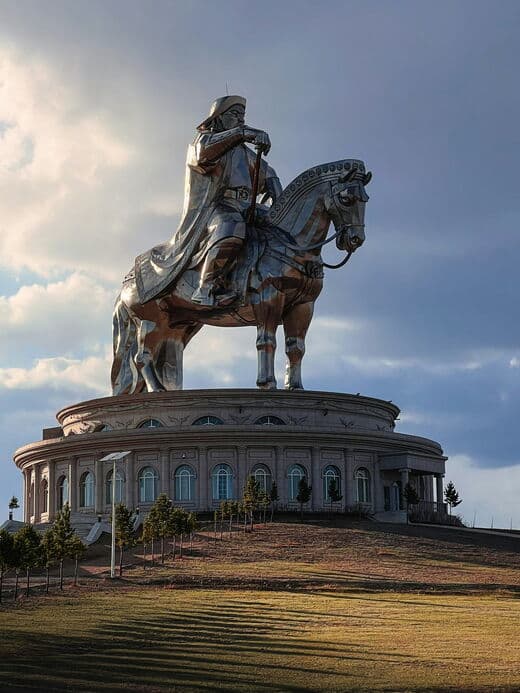
Central Mongolia beyond the capital is the gateway to the country's most accessible highlights. Gorkhi-Terelj National Park is just 43 miles from Ulaanbaatar and covers 1,106 square miles. This is the easiest place to get your first taste of Mongolian nature: bizarre granite rock formations (the most famous shaped like a turtle), alpine meadows, rivers for rafting, and the Aryabal Meditation Temple perched on a mountainside. Near the park entrance stands the 130-foot Chinggis Khaan Equestrian Statue -- the largest equestrian statue in the world, made of stainless steel. You can take an elevator to the horse's head and survey the surrounding steppe from above. Entrance fee: about $4. Worth every penny for the surreal experience of standing on Genghis Khan's horse's head looking out at endless grassland.
Hustai National Park (Khustain Nuruu) is the only place in the world where you can see Przewalski's horses (takhi) in the wild. These are the last truly wild horses on Earth -- not feral, but genuinely never domesticated. They were on the edge of extinction: by the 1960s, only 12 remained in captivity worldwide. A careful reintroduction program has brought the park's population to around 400, and watching a herd of takhi grazing against a steppe sunset is one of Mongolia's most powerful moments. The park is 62 miles from UB and doable as a day trip, though staying overnight at the park's ger camp is better -- the horses are most active at dawn and dusk.
The Orkhon Valley and Karakorum
The Orkhon Valley is a UNESCO World Heritage Site and one of the most historically significant places in Central Asia. This is where Karakorum stood -- the capital of the Mongol Empire, founded by Chinggis Khaan in 1220. At its peak, Karakorum was the center of the largest contiguous land empire in human history, receiving ambassadors from the Pope, the King of France, and the rulers of Persia and China. Today, almost nothing remains of the great city -- the Mongols were nomads and did not build to last. But the Buddhist monastery of Erdene Zuu, erected in 1585 using stones from Karakorum's ruins, is impressive. Its 108 white stupas form a square perimeter around three surviving temples with original 16th-century frescoes. It is the oldest Buddhist monastery in Mongolia.
The Orkhon Waterfall (Ulaan Tsutgalan) is a 79-foot cascade formed by volcanic activity and earthquakes. It is most impressive in June and July when fed by summer rains. Getting there requires horses or a capable 4x4 -- the drive takes several hours across open steppe, but that is part of the adventure. Along the way, you will encounter nomadic families who will offer you airag (fermented mare's milk) and show you how they make aaruul (dried curd). These encounters are not staged -- they are simply what happens when you drive through a landscape where people still live as they have for a thousand years.
The entire Orkhon Valley is a living museum of nomadic culture. You can stay in ger camps run by nomadic families, participate in herding livestock, milk yaks, and learn to saddle a Mongolian horse. A tip for Americans and Canadians: if you have never ridden a horse, this is not the place to start with a gentle trail ride. Mongolian horses are small, semi-wild, and they go where they want. Take at least a brief lesson before heading out for a multi-hour ride.
The Gobi Desert
The Gobi is not an endless sea of sand dunes like the Sahara. The Mongolian Gobi is predominantly rocky steppe with sparse vegetation, camel pastures, and landscapes that look like they belong on another planet. It covers 500,000 square miles -- the fifth-largest desert on Earth -- and is one of the most diverse: sand dunes, ice-filled canyons, red cliffs, and oases all exist within the same vast space.
Khongoryn Els -- the 'Singing Dunes' -- is the most spectacular sand formation in Mongolia. The dune field stretches 112 miles long, up to 17 miles wide, with individual dunes reaching 980 feet in height. When the wind drives sand along the crests, the dunes produce a deep humming sound that carries for miles -- hence the name. Climbing to the top takes about an hour and is genuinely exhausting (bring at least a liter of water per person), but the sunset view from the summit is one of those moments that makes you understand why people travel. At the base of the dunes, a small river flows through an oasis of green trees -- the contrast between barren sand and lush vegetation is almost absurd.
Bayanzag -- the 'Flaming Cliffs' -- is where American paleontologist Roy Chapman Andrews discovered the first-ever dinosaur nests with eggs in the 1920s. The red sandstone cliffs at sunset genuinely look like they are on fire. Fossils 70-80 million years old still protrude from the cliff faces -- you can see them right there, no museum glass between you and a velociraptor rib. The site is completely undeveloped: no fences, no ticket booths, no signs. Just red rock, endless steppe, and the feeling of being utterly alone in deep time. For Americans used to the bureaucratic layers of National Parks, this feels almost illegal in how accessible it is.
Yolyn Am (Eagle Valley) is a deep gorge in the Gurvan Saikhan Mountains where ice on the canyon floor persists well into summer (though climate change has reduced the ice significantly in recent years). The canyon is named for the lammergeier vultures (yolyn means lammergeier) that soar above the cliffs. The hiking trail along the canyon floor runs about 2 miles one way, and you will likely spot pikas (small rodents that look like hamsters with short ears) and ibex on the cliffs above. The trailhead has a small natural history museum with dinosaur eggs and taxidermy -- quirky but charming.
Khermen Tsav -- the 'Red Canyon' -- is one of the most remote and least-visited places in the Gobi. The canyon is 6 miles long and up to 650 feet deep, with erosion formations that look genuinely Martian. Getting here requires a fully equipped 4x4 and an experienced driver, as there are no marked roads for the last several hours. This is for those who have already seen the 'standard' Gobi highlights and want to go deeper. Think of it as the Mongolia equivalent of running a marathon after finishing a 10K -- same sport, entirely different experience.
Lake Khuvsgul and Northern Mongolia
Lake Khuvsgul is Mongolia's crown jewel: the deepest lake in Central Asia (860 feet) and the 14th-largest source of fresh water in the world. It is called the 'younger sibling of Lake Baikal,' and this is not just marketing -- Khuvsgul sits only 125 miles south of Baikal and holds roughly 2% of the world's fresh water. The water is so clean that you can (and people do) drink directly from the lake.
The shores of Khuvsgul are surrounded by taiga forest and mountains covered in larch trees. The area is home to moose, Siberian red deer, wolves, lynx, and in the mountain regions, even snow leopards. The lake has excellent fishing -- grayling and lenok -- though you need a permit. In summer, you can kayak and take boat tours. In winter, the lake freezes solid enough to drive vehicles across, and the Ice Festival (held in March) is one of Mongolia's most photogenic winter events, with ice sculptures, horse races on ice, and traditional wrestling on the frozen surface.
Near Lake Khuvsgul live the Tsaatan -- reindeer herders who are one of the smallest indigenous communities in the world, numbering only 200 to 400 people. The Tsaatan live in teepee-like structures, herd reindeer, and maintain a way of life that has remained essentially unchanged for centuries. Visiting the Tsaatan is a unique but challenging experience: reaching their camps requires several days of horseback riding through the taiga, and you should be prepared for rugged conditions. This is not for everyone, but those who make the journey consistently describe it as one of the most profound travel experiences of their lives. If you are considering it, budget at least 5 extra days and about $500-800 for a guided trip from Khatgal.
The town of Murun is the gateway to Khuvsgul. From there, it is about 62 miles to the lake on a dirt road. Flights from Ulaanbaatar to Murun take 1.5 hours -- far preferable to driving (12-15 hours, with portions of the route being merely a vague direction across the steppe). The village of Khatgal on the southern shore is the main tourist base, with ger camps, restaurants, and boat rentals.
Western Mongolia and the Altai
Western Mongolia is a completely different world from the central steppe. This is where the Altai Mountains begin -- a magnificent range with snow-capped peaks reaching 14,350 feet (Khuiten Peak, Mongolia's highest point), glaciers, and high-altitude lakes. It is also the most ethnically diverse region: home to Kazakhs, Tuvans, and other ethnic groups, each with their own language, culture, and traditions. For American and British travelers who have visited Central Asia, this region will feel familiar in unexpected ways -- the Kazakh culture here has more in common with Kazakhstan than with the rest of Mongolia.
The main attraction of the region is eagle hunting. Kazakh eagle hunters (berkutchi) maintain a tradition that is not a tourist show but a living practice passed from generation to generation. In October, the town of Bayan-Ulgii hosts the Golden Eagle Festival -- one of the most spectacular events in Mongolia. Dozens of hunters in traditional dress, mounted on horses with golden eagles perched on their arms, compete in accuracy and speed. This is a genuinely unique spectacle that exists nowhere else in the world. If you can plan your trip around it, do. Flights from UB sell out months in advance during the festival, so book early. Expect to pay $200-300 for a 3-day festival package including accommodation in Bayan-Ulgii.
Altai Tavan Bogd National Park covers 2,456 square miles and includes the five highest peaks of the Mongolian Altai. Here you can see Bronze Age petroglyphs, glaciers, deer stones, and Turkic stone figures (balbals). Climbing Khuiten Peak requires good physical fitness and basic mountaineering gear (crampons, ice axe), but the route is not technically difficult. The ascent takes 2-3 days from base camp. The view from the summit -- simultaneously overlooking Mongolia, Russia, China, and Kazakhstan -- is genuinely extraordinary. For experienced hikers from the US/UK/AU who have done peaks like Rainier or Snowdon, this is a significant step up in remoteness but not necessarily in technical difficulty.
Lake Tolbo Nuur is a high-altitude lake at 6,824 feet, surrounded by mountains and offering superb wild camping. Lakes Khoton and Khurgan in the Tavan Bogd park are two connected lakes that rank among Mongolia's most beautiful, with Kazakh gers on their shores where you can stay with nomadic families.
Getting to Bayan-Ulgii -- the regional capital -- requires a flight from Ulaanbaatar (3.5 hours). Driving takes 2-3 days on dirt roads. If you drive, budget at least a week for the entire region -- distances are enormous, roads are brutal, but the scenery repays every mile.
Eastern Mongolia
Eastern Mongolia is the least-visited region by tourists, and that is precisely its appeal. This is an endless flat steppe stretching to the horizon in every direction. You can drive for hours seeing nothing but grass, sky, and occasionally -- herds of Mongolian gazelles (dzeren), of which roughly one million live here. The dzeren migration is one of the last great large-mammal migrations on the planet, comparable to the wildebeest migration in the Serengeti.
Choibalsan is the largest city in the east. From here, expeditions head to Lake Buir Nuur on the Chinese border and to the Khalkhin Gol River, where a decisive battle between Soviet-Mongolian and Japanese forces took place in 1939 -- an event that significantly influenced the course of World War II in the Pacific Theater. The battlefield memorial and museum are a must for history buffs, particularly those interested in the often-overlooked Asian dimensions of WWII.
Eastern Mongolia is for those who seek absolute solitude and are prepared for true expedition conditions. There is virtually no tourist infrastructure -- you need a fully self-sufficient vehicle, navigation skills for off-road travel, and a healthy tolerance for days without seeing another human being. If that sounds like your idea of paradise, this is your region.
Southern Mongolia
Southern Mongolia is the transition zone between the central steppe and the Gobi Desert. The region is interesting for its mix of landscapes: semi-arid plains give way to mountain massifs, and oases contain surprisingly lush vegetation. Dalanzadgad is the main city and the gateway to the Gobi. It has an airport with flights from Ulaanbaatar (1.5 hours), which saves enormous time compared to driving (10-12 hours).
Gurvan Saikhan National Park ('Three Beauties') is Mongolia's largest national park at 10,425 square miles. The park encompasses the Gurvan Saikhan Mountains, Yolyn Am gorge, the Khongoryn Els dunes, and numerous other natural wonders. All major Gobi tourist routes pass through this park, and it is the logical base for exploring the desert's highlights.
Arkhangai and the Khangai Mountains
The Khangai Mountains in central Mongolia are the green heart of the country. These volcanic mountains are covered in forests, threaded with rivers, and dotted with hot springs. This is one of the most pleasant regions for horse trekking and hiking. Tsenkher Hot Springs offers natural thermal pools under the open sky. The water temperature is about 187 degrees Fahrenheit at the source and cools to a comfortable 104-113 in the bathing pools. Several ger camps nearby offer basic accommodation for $30-50 per night including meals.
White Lake (Terkhiin Tsagaan Nuur) is a beautiful volcanic lake at 6,760 feet, surrounded by frozen lava fields. Nearby is Khorgo Volcano, which you can climb in 30 minutes to peer into the crater. The view of the lake from the crater rim is outstanding. This region is ideal for a combined route: Orkhon Valley to Tsenkher to White Lake to Khorgo, which can be done comfortably in 4-5 days by vehicle.
Unique Experiences: Nomadic Culture and Wildlife
Life in a Ger -- Not a Tourist Attraction, But Reality
About 30% of Mongolia's population still leads a nomadic or semi-nomadic lifestyle. This is not a historical reenactment staged for visitors -- people genuinely move with their livestock 2-4 times per year, disassembling and reassembling their gers in a couple of hours. The ger is not a 'primitive dwelling' but a brilliantly engineered structure adapted to an extreme climate: in winter at -40 (Fahrenheit and Celsius converge at this temperature, conveniently), the interior stays warm from a central stove; in summer at 95+ degrees, the felt walls provide insulation and airflow.
When you are invited into a ger, there are unwritten rules. Step in with your right foot and do not step on the threshold (it is considered sacred). Move clockwise (to the left from the door). Do not point your feet at the hearth or altar. Accept food and drink with your right hand or both hands, never with the left alone. The host will offer you the seat of honor -- opposite the entrance, to the left. Refusing food is an insult. You do not have to finish everything, but you must at least taste it. This applies to airag (fermented mare's milk), salty milk tea, and whatever else is offered. A polite sip is enough, but a sip is mandatory.
Tourist ger camps are the compromise between authenticity and comfort. Gers sit on wooden platforms, with beds and mattresses inside, a stove, sometimes electricity from generators or solar panels. Toilets and showers are in separate buildings. Luxury camps (Three Camels Lodge, Mongke Tengri Camp) offer en-suite bathrooms, hot water, restaurants, and cost from $500 per night. Budget camps run $30-50 per night with three meals included. For American and British travelers used to hotel standards, set your expectations for the budget end: think clean but basic, warm but not heated to 72 degrees, and 'shower' means lukewarm water for about 4 minutes.
Homestays with actual nomadic families are the most authentic option and typically cost $20-30 per person per night including meals. You will sleep in the family's ger or a separate guest ger, eat what they eat, and participate in daily activities like herding, milking, and gathering dried dung for fuel. The toilet is a pit behind a hill. The 'shower' is a basin of heated water. But the experience of sitting around a stove with a Mongolian family, communicating through gestures and Google Translate while their children play with your phone and their dog eyes your dinner -- that is something no luxury camp can replicate.
The 'Five Snouts' -- Mongolia's Sacred Animals
Mongolian culture revolves around the concept of 'tavan khoshuu mal' -- the 'five snouts of livestock': horses, yaks, camels, goats, and sheep. These are not merely domestic animals -- they are the foundation of the economy, culture, and identity of nomadic life. Each animal has its role, and understanding this helps you understand Mongolia itself.
Horses are transport, prestige, and national identity. The Mongolian horse is small (about 13 hands), astonishingly tough, and semi-wild. Mongols begin riding before they can walk reliably, and this is not an exaggeration. Horse racing at Naadam -- where children aged 5 to 12 race distances of up to 18 miles across open steppe -- is the national obsession. There are an estimated 4 million horses in Mongolia, more than the human population.
Yaks provide meat, milk, wool, and transport in mountainous regions. A yak can carry up to 330 pounds along mountain trails where no vehicle can pass. Yak milk is made into butter, cheese, and dried curd. Camels -- specifically the two-humped Bactrian camel -- are the transport of the Gobi. They are adapted to extreme temperature swings and their wool is prized for its softness and insulation. Goats provide cashmere -- Mongolia is the world's second-largest cashmere producer after China. One goat yields about 7 ounces of cashmere per year. Sheep are the dietary staple. Mutton is the cornerstone of Mongolian cuisine. Sheep wool is made into felt for ger walls.
Wildlife -- From Snow Leopards to Mongolian Gazelles
Mongolia is one of the last places on the planet with intact megafauna. The Altai, Khangai, and Gobi-Altai mountains harbor an estimated 800-1,000 snow leopards -- one of the largest populations in the world. Seeing one is extremely difficult but possible: specialized expeditions last 2-3 weeks and cost from $5,000, with roughly a 50% chance of a sighting. For wildlife photographers, this is the holy grail.
Przewalski's horses (takhi) in Hustai National Park are the only truly wild horses in the world -- genetically distinct from all domestic breeds. About 400 live in the park, with another 300 in the Gobi-B reserve. Mongolian gazelles (dzeren) -- roughly one million strong -- migrate across the eastern steppe in one of Asia's last great mammal migrations. The Gobi bear (mazaalai) is a subspecies of brown bear living in the desert, with fewer than 40 individuals remaining -- making it the rarest bear on Earth. Wild Bactrian camels -- about 1,000 survive in the Gobi. Argali (Marco Polo sheep) -- the world's largest wild sheep, with horns reaching 75 inches, found in the Altai and Gobi mountains.
Naadam -- The 'Three Manly Games'
Naadam is Mongolia's biggest national festival, held July 11-13. The 'eriin gurvan naadam' -- 'three manly games' -- are wrestling, horse racing, and archery. Despite the name, women compete in archery and horse racing (though not wrestling). The festival dates back centuries and was historically a way for nomadic warriors to display their skills.
Mongolian wrestling (bokh) is the main event. 512 or 1,024 wrestlers in traditional costumes -- a tight vest that leaves the chest exposed (a tradition said to prevent women from competing in disguise) and shorts -- enter the field performing the eagle dance. A wrestler loses when any part of his body above the knee touches the ground. The tournament runs on an elimination bracket, and the final is a genuine spectacle with tens of thousands of spectators. The top wrestlers are national celebrities in Mongolia, with status comparable to NFL quarterbacks in the US.
The horse races involve children aged 5-12 racing distances of 9 to 18 miles across open steppe. This is not a track -- horses gallop across actual grassland, and the finish is one of the most emotionally charged sporting events you will ever witness. The winning horse receives the title 'tumny ekh' -- 'leader of ten thousand.' The horses are trained for months, and Mongolians take these races with the same seriousness Americans bring to the Kentucky Derby, except the jockeys are children and the track is the entire steppe.
Archery uses the traditional Mongolian composite bow -- made from horn, wood, and sinew -- shooting at leather cylinders (sur) at 245 feet for men and 213 feet for women. Judges signal accuracy with a traditional chant of 'ukhai!' The sound of dozens of voices chanting in unison as an arrow hits its mark is hauntingly beautiful.
Naadam in Ulaanbaatar is the largest but also the most commercialized. Local Naadams in the provinces (aimags) are far more authentic: fewer spectators, more participation, and you can stand right next to the wrestling ring. If you want the real thing, head to Arkhangai, Khentii, or Uvs aimag. The UB Naadam, however, is the easiest to attend and still spectacular -- just book your accommodation months in advance, as the city fills up completely during the festival. Expect hotel prices to double or triple during Naadam week.
When to Visit Mongolia
Mongolia has an extreme continental climate. Winter temperatures plunge to -40 degrees (both scales), summer peaks hit 104 Fahrenheit. Daily temperature swings of 50 Fahrenheit degrees are normal: you can sunburn during the day and shiver in your sleeping bag at night. Precipitation is low -- 8-12 inches annually in most regions, under 4 inches in the Gobi. But sun is abundant: about 260 sunny days per year, which is why Mongolia is called the 'Land of the Eternal Blue Sky.'
The best time to visit is mid-June through mid-September. This is the high season: warm (daytime temperatures 68-86 Fahrenheit), roads are passable, ger camps are open, and transport is running. July is peak season: Naadam (July 11-13), maximum green steppe, best weather. But prices are highest and tourists most numerous -- though 'crowded' by Mongolian standards would barely register as 'present' by Thailand or Bali standards.
June is excellent: the steppe is already green, wildflowers are out, temperatures are comfortable. But early June can bring nighttime frost in mountain regions, so pack layers. August is hot in the Gobi (up to 104 Fahrenheit) but perfect in the north. Short rainstorms can turn dirt roads into mud traps -- this is a real logistical concern, not just an inconvenience. September brings golden autumn colors, far fewer tourists, but nights get cold (down to 23 Fahrenheit in mountains), and ger camps begin closing for the season.
Winter (November-March) is for the hardy. Temperatures of -4 to -40 Fahrenheit, short daylight hours, most roads impassable. But: the Ice Festival at Lake Khuvsgul (March), the winter Golden Eagle Festival (February-March), and Tsagaan Sar (Lunar New Year, January-February) are unique events that do not exist in summer. And winter landscapes -- frosted steppe, yak herds in snow, frozen waterfalls -- have their own severe beauty. If you choose winter, bring expedition-grade gear. This is not 'chilly' -- it is legitimately dangerous cold.
Spring (April-May) is unpredictable. Dust storms, extreme temperature swings, mud from melting snow. Not the best time for a first visit. But May brings the first green of the steppe and a kind of raw beauty if you are the adventurous type.
How to Get to Mongolia
Chinggis Khaan International Airport (UBN) is Mongolia's main gateway -- a new, modern terminal opened in 2021, located 32 miles from central Ulaanbaatar. The old Buyant-Ukhaa Airport (ULN) now handles only domestic flights. UBN is clean, well-organized, and a surprisingly pleasant arrival experience for a country this remote.
From North America: The big news for 2026 is the direct Toronto-Ulaanbaatar flight on Air Transat, which has dramatically reduced travel time for Canadian travelers. From the US, the most common routing is through Seoul Incheon (ICN) on Korean Air -- Seoul to UB is about 3 hours. Other good connections include Beijing (Air China, about 2.5 hours), Tokyo Narita (MIAT Mongolian Airlines), and Istanbul (Turkish Airlines, with excellent Business Class if you want to arrive fresh). Budget roughly $800-1,200 for a round-trip economy ticket from the US East Coast via Seoul in high season. From the West Coast, you can sometimes find fares under $700.
From the UK and Europe: Turkish Airlines via Istanbul is often the best value and most comfortable option. Korean Air via Seoul is another excellent choice. MIAT Mongolian Airlines operates seasonal direct flights from Berlin and Frankfurt. From London, expect to pay 500-900 GBP for economy round-trip in high season. From Australia: connections via Seoul, Beijing, or Singapore (with the new year-round Singapore route) are your best options. Budget AUD 1,200-2,000.
Overland options: The Trans-Siberian Railway from Moscow to Ulaanbaatar is a classic route -- about 5 days from Moscow, 24 hours from Irkutsk. Trains run weekly in high season, biweekly in winter. The Beijing-Ulaanbaatar train (resumed in 2025) runs weekly, taking about 30 hours. Both are incredible journeys if you have time. Overland from China via Zamyn-Uud/Erlian is also possible by bus.
Airport transfer to Ulaanbaatar: The express bus runs every 30 minutes and costs about $1.40 (5,000 MNT). A taxi costs $12-17 (40,000-60,000 MNT). Most hotels offer transfers. The drive takes 45-60 minutes depending on UB traffic, which can be catastrophic during rush hour -- factor this into your planning if you have a tight connection or appointment. A pro tip: if your flight arrives in the evening rush (5-7 PM), the bus is actually faster than a taxi because it uses dedicated lanes for part of the route.
Getting Around Mongolia
Hiring a Vehicle with Driver -- The Default Option
The single most important thing to understand about Mongolian transport: outside of Ulaanbaatar, paved roads are scarce. What exists are dirt tracks, rutted paths, and 'directions' -- yes, literally tire tracks across the steppe that fork and rejoin at random. GPS is often useless because the roads are not on any map. Drivers navigate by terrain, sun, and experience. This is not an exaggeration, and it is not charming local color -- it is the fundamental logistical reality of traveling in Mongolia.
Hiring a 4x4 with a driver is the most popular and sensible option for exploring Mongolia. Cost: $80-150 per day for a vehicle (Toyota Land Cruiser or Russian UAZ) with driver and fuel. The driver serves as guide, mechanic, and sometimes cook. Most groups also hire a cook/translator -- another $30-50 per day. Total for two people: about $55-100 per person per day for the complete package (vehicle, driver, fuel, cook). For Americans and Brits, this feels like an incredible bargain -- you are essentially getting a private expedition for the price of a mid-range hotel room.
Self-driving is for the confident and experienced. You need an international 4x4 (Land Cruiser, Hilux, Mitsubishi Pajero -- a sedan will not survive five miles off pavement). The deposit is about $2,000. Essential equipment: two spare tires, jerry cans for fuel (gas stations exist only in aimag centers, 125-310 miles apart), a shovel, tow rope, jack, and tire repair kit. Navigation: offline Maps.me or OsmAnd, but they do not show all tracks. Follow the Tracks is a local company that offers self-drive tours with equipped vehicles, rooftop tents, and planned routes -- a good compromise between independence and support. Budget $100-150 per day for vehicle rental alone.
Domestic Flights
Hunnu Air, MIAT, and Aero Mongolia fly from Ulaanbaatar to aimag capitals: Dalanzadgad (Gobi), Murun (Khuvsgul), Bayan-Ulgii (Altai), Choibalsan (east), and others. Tickets cost $100-250 one way. Schedules are unreliable -- flights may be canceled due to weather or insufficient passengers. Book well in advance during high season (July-August), and always have a backup plan. Cancellation policies are usually flexible precisely because the airlines know their schedules are unreliable.
Long-Distance Buses and Minibuses
Buses and minibuses run from Ulaanbaatar to most aimag centers. Key bus stations: Dragon Center (western routes), Bayangol (southern routes). Prices are low ($10-20 for 190-310 miles), but comfort is minimal and travel time is unpredictable. The UB to Dalanzadgad bus takes 10-12 hours. Shared minibuses depart when full -- this might be in an hour or half a day. This is a legitimate budget option but requires patience and flexibility that many Western travelers find challenging on a tight schedule.
Getting Around Ulaanbaatar
Ulaanbaatar has terrible traffic. 1.5 million residents, and seemingly each owns two cars. During rush hour, a 3-mile trip across downtown can take 2 hours. Public buses cost about $0.14 (500 MNT) per ride. For taxis, UBCab is the local ride-hailing app -- reliable, cheap, and available in English. A cross-city ride costs $1-3 (3,000-10,000 MNT). Regular taxis also exist -- agree on the price before getting in. Walking in the city center is perfectly safe during the day and the most reliable way to get between nearby sights.
Cultural Code: How Not to Offend Anyone
Etiquette and Social Norms
Mongolians are a proud and independent people -- descendants of Chinggis Khaan, and this is not empty rhetoric. Respect is the operative word in all interactions. A few rules that will keep you in good standing:
Do not photograph people without permission. Especially nomads and their children. A gesture or a word of inquiry is enough -- permission is almost always granted, but asking is essential. Do not whistle indoors -- it is believed to attract evil spirits. Do not step on the threshold of a ger -- the threshold is sacred. Do not pour water on a fire -- the hearth fire in a ger is considered sacred and must not be 'insulted' with garbage, dirty water, or sharp objects. Pass and receive objects with your right hand or both hands, never with the left alone -- the left hand is considered 'impure.' If offered food or drink -- at least taste it. Refusal is an insult to the host.
Tipping: In Ulaanbaatar restaurants, 10% is appreciated but not expected. For drivers and guides on countryside trips, $10-15 per person per day is standard if you are satisfied with the service. For cooks in ger camps, $5-10 per day. In the countryside, tipping is not customary. For Americans used to the 20% minimum, Mongolian tipping culture will feel refreshingly relaxed.
Religion and Spirituality
Mongolia is a Buddhist country (Tibetan Gelug school), but with deep layers of shamanism and Tengrism (worship of the Eternal Blue Sky). Ovoo -- sacred stone cairns on mountain passes and at significant locations -- are everywhere. The protocol: walk around the ovoo three times clockwise, place a stone, and if you wish, leave an offering (a coin, candy, or splash of milk). Drivers always stop at ovoo -- this is not a tourist ritual but sincere belief. Participate respectfully or simply observe; both are fine.
At Buddhist monasteries: remove your shoes before entering temples, walk around the temple clockwise, do not point at Buddha statues, and do not turn your back to the altar. Photography inside is usually permitted, but ask first. Mongolians practice a relaxed, syncretic form of Buddhism that is welcoming to curious visitors -- monks are often happy to chat (in Mongolian, with a translator) and explain rituals.
Language
Mongolian uses the Cyrillic alphabet with two additional letters. Useful phrases: 'sain baina uu' (hello), 'bayarlalaa' (thank you), 'tiim' (yes), 'ugui' (no), 'khed ve?' (how much?). English: In Ulaanbaatar, younger people often speak English, especially in tourist areas, restaurants, and hotels. Outside the capital -- virtually zero English. Unlike Southeast Asia or Latin America, where you can usually get by with gestures and a few words, rural Mongolia presents a genuine communication barrier. Google Translate's offline Mongolian package is not perfect but is genuinely useful. Download it before you leave the city. A few older Mongolians (50+) speak Russian from Soviet-era education, but this is increasingly rare and not practically useful for English-speaking travelers.
Safety in Mongolia
Mongolia is one of the safest countries in Asia for tourists. Serious crimes against foreigners are extremely rare. The countryside is remarkably safe -- the biggest 'danger' from nomadic families is being overfed. However, there are several things worth knowing.
Pickpocketing is the main risk. Especially in Ulaanbaatar: at Narantuul Market (also called the 'Black Market' -- it is not actually a black market, just an enormous outdoor bazaar), at crowded bus stops, and in packed buses. Groups work in teams: one distracts, another picks your pocket. The new Chinggis Khaan Airport also has organized pickpocket groups targeting arriving tourists. Keep valuables in a front pocket or under-clothing money belt. Leave your passport in the hotel safe and carry a photocopy.
Fake police: There have been incidents in the Sukhbaatar Square area of criminals in police uniforms robbing tourists. A real police officer will always show ID. If in doubt, call 102 (police). This is rare but worth knowing about. Late-night drunken aggression: In Ulaanbaatar, drunk groups on the streets at night can sometimes target foreigners, particularly during Naadam and holidays. Avoid dark alleys after dark and use UBCab for nighttime transport.
Outside Ulaanbaatar, the main risks are environmental: rivers without bridges that must be forded, sudden lightning storms on the open steppe, dogs at ger encampments (always approach a ger shouting 'nokhoi khori!' -- 'hold the dog!' -- this is not optional; Mongolian herding dogs are large, territorial, and not pets), and snakes in the Gobi (non-aggressive vipers, but present). Road safety is its own category: drunk drivers on dirt tracks, no markings or signs, animals on roads, river crossings. If you are self-driving, carry a satellite communicator (Garmin inReach or similar) for emergencies -- outside aimag centers, cell coverage is nonexistent.
Emergency numbers: 102 (police), 103 (ambulance), 101 (fire). These work in UB; in the countryside, cell service may not exist. This is why a satellite communicator is not a luxury item in Mongolia -- it is safety equipment.
Health and Medical Considerations
No special vaccinations are required for Mongolia, but the following are recommended: Hepatitis A and B, typhoid, and rabies (if you plan contact with animals -- and in Mongolia, this is essentially unavoidable). Tick-borne encephalitis is relevant for northern forested regions (Khuvsgul, Khentii) from May through July. Check with your doctor or a travel health clinic 6-8 weeks before departure. For Americans, the CDC Mongolia page has current recommendations. For UK travelers, check the NaTHNaC TravelHealthPro site.
Travel insurance is not optional -- it is essential. Ensure your policy covers medical evacuation (a helicopter evacuation from the Gobi to Ulaanbaatar can cost $10,000-20,000). World Nomads and SafetyWing are popular options among adventure travelers. For Americans, check that your policy explicitly covers Mongolia (some exclude it or classify it as 'extreme'). In Ulaanbaatar, there are several good clinics: SOS Medica (international clinic with English-speaking doctors), Intermed. Outside the capital, medical care is at the level of a basic rural clinic -- serious cases are evacuated to UB.
Altitude sickness is possible in Western Mongolia (Altai, elevations up to 14,350 feet). Symptoms: headache, nausea, shortness of breath. Treatment: descend, rest, hydrate. If you plan to climb Khuiten Peak, acclimatize for 2-3 days at 6,500-8,200 feet first. Sun exposure: Mongolia sits at 5,000-6,500 feet elevation in most areas, with dry air and almost no cloud cover. The UV index is high even at 59 Fahrenheit. SPF 50 sunscreen, a wide-brimmed hat, and quality sunglasses are mandatory, not optional. You will burn faster than you expect.
Water: Do not drink tap water in cities. In the countryside, river and stream water is usually clean but should be boiled or filtered. Bottled water is widely available in Ulaanbaatar and in aimag centers. Pharmacies in UB are well-stocked and many medications are available without prescription. Outside the capital, bring everything you need. Essential kit: broad-spectrum antibiotic, antihistamine, pain relief, anti-diarrheal, bandages, antiseptic, and insect/tick repellent.
Money and Budget
The currency is the Mongolian tugrik (MNT). As of 2026, the exchange rate is approximately 3,500-3,600 MNT to 1 USD, about 4,400 MNT to 1 GBP, and roughly 2,300 MNT to 1 AUD. Exchange dollars at banks or exchange offices in Ulaanbaatar -- the best rates are on Sambuu Street near the Holiday Inn. Euros and GBP are also accepted but at slightly worse rates. Bring crisp, unmarked, post-2006 bills for the best acceptance.
Credit and debit cards: Visa and Mastercard work in Ulaanbaatar at major shops, restaurants, and hotels. Outside UB -- cash only. ATMs are available in UB (Khan Bank, Golomt Bank, Trade and Development Bank) and in aimag centers, but withdraw more than you think you will need -- ATMs may be out of service or out of cash. A good rule of thumb: carry enough cash for your entire countryside trip before leaving UB. If your bank charges foreign transaction fees, consider a no-fee card (Charles Schwab debit card for Americans, Wise or Revolut for UK/EU travelers, Up or ING for Australians).
Daily budget by category (per person):
Budget ($30-50/day): Guesthouses and hostels in UB ($10-15/night), budget ger camps ($20-30/night with meals), market food and canteens ($3-7 for lunch), public transport, hitchhiking. Feasible but uncomfortable outside the capital. This is genuine backpacker territory -- you will sacrifice comfort and sometimes safety for savings.
Mid-range ($80-150/day): Good hotels in UB ($40-80/night), mid-level ger camps ($50-80/night with meals), hired vehicle with driver (from $80/day for two), restaurants. The sweet spot for most travelers -- you get genuine Mongolian experiences with a base level of comfort and reliable logistics.
Comfort ($200-500/day): Top hotels (Shangri-La, Kempinski -- from $150/night), luxury ger camps (Three Camels Lodge -- from $500/night), private guided tours, domestic flights. This is the 'National Geographic expedition' level -- premium experiences without the roughing-it aspect.
Typical prices: Bottle of water -- $0.30-0.40, lunch at a canteen -- $2-4, lunch at an UB restaurant -- $7-14, beer at a bar -- $1.50-3, gallon of gas -- $2.65-3.20, SIM card with data -- $3-6, museum entry -- $2-5, one-hour horse ride -- $10-15.
Itineraries: 7, 10, 14, and 21 Days
7 Days -- 'The Golden Triangle': Ulaanbaatar, Terelj, Karakorum
This route is the ideal introduction to Mongolia. It covers the most iconic sights without requiring multi-day drives across trackless steppe. Suitable for first-time visitors, families with older children, and those with limited time. You will not see the Gobi or the Altai, but you will get a genuine taste of Mongolia's landscapes, history, and nomadic culture.
Day 1: Arrive in Ulaanbaatar. Airport transfer (45-60 minutes). Check into your hotel. If you arrive before noon, walk around the center: Chinggis Khaan Square, the State Department Store (GUM -- great for initial shopping orientation), pedestrian Seoul Street. Dinner at Modern Nomads -- an excellent introduction to Mongolian cuisine in a contemporary setting. Try the buuz (steamed dumplings) and the horsemeat tartare if you are feeling bold.
Day 2: Ulaanbaatar museum day. Morning: National Museum of Mongolia (plan 2-3 hours for a thorough visit). Lunch on Seoul Street. Afternoon: Gandantegchinlen Monastery -- see the 85-foot golden statue and observe a Buddhist service. Evening: Chinggis Khaan Museum (you can substitute this for the National Museum if military history interests you more than cultural history). Dinner at Rosewood Kitchen + Bar for excellent Mongolian beef steaks.
Day 3: Ulaanbaatar to Terelj (43 miles, 1.5-2 hours). Depart in the morning. En route, stop at the Chinggis Khaan Equestrian Statue (the 130-foot stainless steel horseman -- take the elevator to the horse's head). Then into Gorkhi-Terelj National Park: Turtle Rock, Aryabal Meditation Temple (30-minute climb up stone stairs with Buddhist proverbs at each landing). Check into a ger camp. Afternoon horse ride or hike along the valley. Evening around the campfire with mountain views. This is your first night in a ger -- sleep in your thermal underwear layer if the stove goes out overnight.
Day 4: Terelj to Hustai Nuruu to Karakorum (about 220 miles). Early departure. Stop at Hustai National Park to look for Przewalski's horses (better at dawn or dusk, but daytime sightings are possible). Continue across the steppe to Karakorum. Arrive in the evening. Ger camp overnight. This is a long driving day but the scenery is spectacular -- endless grassland with herds of horses, cattle, and the occasional ger dotting the horizon.
Day 5: Karakorum and the Orkhon Valley. Morning: Erdene Zuu Monastery -- 108 white stupas, three functioning temples with original 16th-century frescoes. Karakorum Museum -- model of the ancient city, empire artifacts. Afternoon: visit a nomadic family in the Orkhon Valley. Taste airag (fermented mare's milk -- prepare yourself), aaruul (rock-hard dried curd), and Mongolian milk tea with salt and butter. If you are lucky, you will see a herd being moved or a ger being assembled.
Day 6: Karakorum to Ulaanbaatar (230 miles, 5-6 hours on relatively good road). Return to the capital on a fairly decent paved road. Arrive by lunchtime. Free afternoon: shopping at the State Department Store (cashmere!), Narantuul Market (watch your pockets, but the atmosphere is incredible -- everything from horse saddles to electronics to sheep heads). Farewell dinner at a restaurant of your choice.
Day 7: Departure. Airport transfer. If your flight is in the evening, visit the Winter Palace of the Bogd Khan or the Choijin Lama Temple Museum (extraordinary Tsam dance masks and Buddhist art).
10 Days -- 'Central Mongolia + The Gobi'
This route adds the Gobi Desert to the Golden Triangle -- two completely different worlds in a single trip. The contrast between green steppe and red desert is one of the most striking things about Mongolia.
Days 1-3: Same as the 7-day itinerary (Ulaanbaatar and Terelj). Alternatively, skip Terelj and spend an extra day in UB if museums and city exploration interest you more than ger camps at this stage.
Day 4: Fly Ulaanbaatar to Dalanzadgad (1.5 hours). Arrive in the Gobi's gateway city. Transfer to your ger camp. First taste of the desert -- watch the sunset paint the steppe in shades of orange and pink. The light in the Gobi is different from anything you have seen -- the dry air creates a clarity that makes distant mountains look close enough to touch.
Day 5: Yolyn Am (Eagle Valley). Drive to the Gurvan Saikhan Mountains (about 30 miles). Hike the canyon floor -- 2 miles one way through a narrowing gorge. In spring and early summer, there is still ice in the canyon -- a surreal sight in a desert. Watch for pikas and lammergeier vultures overhead. Picnic lunch. Return to camp. The museum at the trailhead is worth 30 minutes for its dinosaur eggs and geological displays.
Day 6: Bayanzag -- the 'Flaming Cliffs' (about 62 miles from Yolyn Am). Walk among the red cliffs where the first dinosaur nests were found. Look for fossils (you can look, you cannot take). The saxaul forest nearby is the Gobi's only 'forest' -- trees 6-10 feet tall growing in sand. Sunset at Bayanzag -- when the cliffs genuinely appear to be burning -- is one of the best spectacles in Mongolia. Ger camp overnight nearby.
Day 7: Khongoryn Els -- the 'Singing Dunes' (125 miles from Bayanzag). A long drive through alien landscapes. Arrive at the dunes. Camel ride along the base. Climb a dune at sunset (1-1.5 hours, bring water!) -- the view from the top, with the oasis on one side and endless sand on the other, is unforgettable. Overnight at a camp at the base of the dunes, falling asleep to the sound of wind across sand.
Day 8: Morning at Khongoryn Els (sunrise climb if you missed sunset). Drive back to Dalanzadgad (155 miles, 4-5 hours). Evening flight to Ulaanbaatar.
Day 9: Ulaanbaatar to Karakorum (230 miles). Day trip to the monastery and nomadic families. Return late evening. Or: rest day in UB -- shopping, museums you missed, and some well-earned creature comforts after days in the desert.
Day 10: Departure.
14 Days -- 'Mongolia from Steppe to Desert'
A comprehensive route that allows you to experience Central Mongolia, the Orkhon Valley, and the Gobi at a comfortable pace, without the rush of shorter itineraries. This is the itinerary I most often recommend to first-time visitors who have flexibility.
Days 1-2: Ulaanbaatar -- sightseeing, acclimatization, jet lag recovery (particularly important if coming from North America, where the time difference is 12-14 hours).
Day 3: Ulaanbaatar to Hustai Nuruu (62 miles). Observe Przewalski's horses at sunset. Overnight in the park's ger camp. The horses are most active in the late afternoon -- position yourself on the hills above the valley and wait. Patience pays off.
Day 4: Hustai Nuruu to Tsenkher Hot Springs (155 miles). Soak in natural thermal pools under the open sky after several days on the road. This is a welcome break for sore muscles (horse riding uses muscles you did not know you had). The springs are genuinely hot and the setting is beautiful.
Day 5: Tsenkher to White Lake / Terkhiin Tsagaan Nuur (125 miles). Volcanic lake at 6,760 feet surrounded by frozen lava fields. Climb Khorgo Volcano (30-minute ascent) and look into the crater. The view of the lake from the rim is excellent photography territory.
Day 6: White Lake to Orkhon Waterfall (125 miles). Drive through steppe and forest-steppe. Arrive at Ulaan Tsutgalan waterfall. Walk, photograph, breathe. Overnight with a nomadic family. This day marks the transition from dramatic volcanic landscapes to the pastoral beauty of the Orkhon Valley.
Day 7: Orkhon Waterfall to Karakorum (50 miles). Morning horse ride along the Orkhon Valley. Drive to Karakorum. Erdene Zuu Monastery and museum in the afternoon.
Day 8: Karakorum to Ulaanbaatar (230 miles). Return to the capital. Rest, laundry, resupply. This is your 'reset day' -- take advantage of UB's surprisingly good restaurant scene and hot showers before the Gobi leg.
Day 9: Fly Ulaanbaatar to Dalanzadgad. Begin the Gobi route.
Day 10: Yolyn Am (Eagle Valley). Hike through the canyon, spot wildlife, enjoy the stark beauty of mountains in a desert.
Day 11: Bayanzag -- the 'Flaming Cliffs'. Dinosaur fossil sites, saxaul forest, legendary sunset.
Day 12: Khongoryn Els -- the 'Singing Dunes'. Camel rides, dune climbing, epic desert vistas.
Day 13: Return to Dalanzadgad and fly to Ulaanbaatar. Farewell dinner at one of UB's best restaurants -- you have earned it.
Day 14: Departure.
21 Days -- 'The Grand Mongolian Circuit'
The most comprehensive itinerary, covering Central Mongolia, the North (Khuvsgul), the West (Altai), and the South (Gobi). This is a genuine expedition and the trip of a lifetime for those who have the time and stamina. Be honest with yourself about fitness level and tolerance for discomfort -- 21 days of Mongolian roads will test both.
Days 1-2: Ulaanbaatar. Museums, restaurants, preparation for the journey. Buy everything you will need for the next three weeks: sunscreen, medications, snacks, a headlamp, and wet wipes (your new best friend).
Day 3: Fly Ulaanbaatar to Murun (1.5 hours). Drive to Lake Khuvsgul (62 miles, 3-4 hours on dirt road). Check in at Khatgal on the southern shore. First glimpse of the lake -- after the arid steppe, the deep blue water and forested mountains feel almost Scandinavian.
Day 4: Lake Khuvsgul. Boat tour, fishing (grayling, lenok -- bring your gear or rent locally), hiking along the shore. Drink water straight from the lake -- it is that clean. Visit a local Buddhist monastery.
Day 5: Trek toward the Tsaatan reindeer herders (if you have the preparation and time -- reaching them takes 2-3 days on horseback) or hike along the western shore. Wildlife observation: Siberian red deer, wolf tracks, eagles soaring above.
Day 6: Khuvsgul to Murun. Fly Murun to Ulaanbaatar.
Day 7: Fly Ulaanbaatar to Bayan-Ulgii (3.5 hours). Welcome to Western Mongolia and Kazakh culture. Explore the local market, visit the mosque, try Kazakh cuisine (beshbarmak -- boiled meat with noodles, and kazy -- horse sausage). The cultural shift from Buddhist Mongolia to Muslim Kazakhstan within the same country is fascinating.
Day 8: Bayan-Ulgii to Altai Tavan Bogd National Park (93 miles). Drive to the park. Bronze Age petroglyphs, stone balbals, glacier views. Overnight with Kazakh nomads -- the hospitality is extraordinary and the food is different from central Mongolian fare.
Day 9: Altai Tavan Bogd. Trek to the Potanin Glacier -- the largest in Mongolia at 8.7 miles long. If you have mountaineering experience, begin acclimatization for a possible Khuiten Peak summit attempt.
Day 10: Lakes Khoton Nuur and Khurgan Nuur. Stunning mountain lakes surrounded by snow-capped peaks. Rest, fish, photograph. These are among the most beautiful wild camping sites in Asia.
Day 11: Return to Bayan-Ulgii. Visit an eagle hunter (if it is the right season, you may see training). Fly back to Ulaanbaatar in the evening.
Day 12: Ulaanbaatar -- rest day. Laundry, shopping, preparation for the second half of the trip. Dinner at a good restaurant. Your body will thank you for this break -- the Altai section is physically demanding.
Day 13: Ulaanbaatar to Hustai Nuruu to Karakorum (230 miles). Wild horses, Erdene Zuu Monastery.
Day 14: Karakorum to Tsenkher Hot Springs to White Lake (280 miles). A long but beautiful day. Soak in thermal springs. Overnight at White Lake -- the star viewing here, far from any artificial light, is extraordinary.
Day 15: White Lake to Orkhon Waterfall (125 miles). Khorgo Volcano, horse ride, waterfall.
Day 16: Orkhon Valley to Ulaanbaatar (280 miles). Long drive back. Or: overnight with nomads en route to break up the journey.
Day 17: Fly Ulaanbaatar to Dalanzadgad. Begin the Gobi route.
Day 18: Yolyn Am canyon hike. Then Bayanzag 'Flaming Cliffs' at sunset -- save the cliffs for golden hour, it is worth the wait.
Day 19: Khongoryn Els -- the 'Singing Dunes'. Camels, dune climbing, a sunset that will make every other sunset feel insufficient.
Day 20: Return to Dalanzadgad. Fly to Ulaanbaatar. Farewell dinner. Reflect on three weeks that somehow felt like both an eternity and a blink.
Day 21: Departure.
Connectivity: Internet and Phone Service
SIM cards: Buy a Mongolian SIM card at the airport or in Ulaanbaatar. Main carriers: Mobicom (best coverage), Unitel, Skytel. A SIM card with 10-20 GB of data costs $3-6 (10,000-20,000 MNT). You need your passport for registration. The process takes about 10 minutes at any carrier store.
Coverage: 4G in Ulaanbaatar and major cities. 3G/2G in aimag centers and along main roads. No coverage at all across most of rural Mongolia. In the Gobi, at Khuvsgul, in the Altai Mountains -- service frequently drops to zero. Some ger camps now have Starlink satellite internet, but this is still the exception rather than the rule. Do not count on being able to work remotely from the steppe -- if you need to stay connected for work, plan your trip around the days you will be in UB.
eSIM is a good option if your phone supports it. Airalo, Holafly, and Nomad eSIM offer Mongolia packages. Convenient if you do not want to swap your physical SIM -- you can keep your home number active for iMessage/WhatsApp while using Mongolian data. Prices are comparable to local SIMs.
Wi-Fi: Ubiquitous in Ulaanbaatar hotels and cafes. In ger camps -- sometimes, and often slow. In the countryside -- essentially nonexistent. If you need connectivity for safety or work, consider a Garmin inReach satellite communicator ($12-15/month for the basic plan plus device cost). This also lets you send SOS messages in genuine emergencies -- which, in a country where the nearest hospital may be 300 miles away, is not paranoia but prudence.
Mongolian Cuisine: What to Eat and Drink
Meat -- The Foundation of Everything
Mongolian cuisine is one of the most meat-centric in the world. Historically, nomads ate 'red food' (meat) in winter and 'white food' (dairy) in summer. Vegetables in traditional Mongolian cooking are virtually absent -- potatoes and carrots appeared only in the 20th century under Russian influence. If you are vegetarian or vegan, Mongolia will be challenging (but not impossible -- UB has several vegetarian-friendly restaurants, and you can survive on rice, noodles, and dairy in the countryside if you communicate your needs clearly to your cook).
Buuz are Mongolia's national dish: large steamed dumplings filled with minced mutton or beef and onion. They look like oversized Chinese baozi. The proper way to eat them: pick one up with your hands, bite a small hole in the side, slurp out the hot broth inside, then eat the rest. Buuz are the centerpiece of Tsagaan Sar (Lunar New Year), when families make them by the thousands. Price: $0.15-0.30 each at a street stall, $0.45-0.70 in a restaurant. You will eat a lot of these. They are addictive.
Khuushuur are fried meat pies -- think empanadas or chebureki filled with spiced mutton. They are the signature food of Naadam, sold at stalls throughout the festival grounds. A fresh, hot khuushuur straight from the fryer is one of those simple food experiences that stays with you. Greasy? Absolutely. Delicious? Insanely.
Khorkhog is the most unique dish in Mongolia and impossible to find in restaurants -- it is prepared exclusively in the field. Chunks of mutton are cooked with river stones heated in a fire until white-hot, layered in a metal container (traditionally a milk canister) with potatoes, carrots, and onions. The lid is sealed and the whole thing steams for 1-2 hours. The result is extraordinarily tender, aromatic meat with a smoky flavor unlike anything else. After cooking, the hot stones are passed from hand to hand -- tradition holds that the stones from khorkhog heal and give energy. If your driver or guide offers to make khorkhog, say yes. This is the meal you will tell people about at home.
Tsuivan is stir-fried noodles with meat and vegetables -- the everyday dish of Mongolian life. The noodles are hand-made, thick, and chewy. The meat is mutton or beef. The vegetables are carrot, cabbage, and onion. Simple, filling, and satisfying. Every canteen makes it differently, and debating whose tsuivan is best is a minor Mongolian pastime.
Boodog is a whole goat (or historically, marmot) cooked from the inside with hot stones. The animal is gutted, packed with heated river stones and vegetables, sewn shut, and cooked until done. This is a ceremonial dish for special occasions. Marmot boodog is now rarer due to the risk of bubonic plague -- yes, plague still occurs in Mongolia, and you should absolutely not eat marmot meat unless you are certain of the source and preparation. Goat boodog, however, is safe and extraordinary.
Dairy -- The 'White Food'
Airag (kumiss) is Mongolia's national drink: fermented mare's milk with a mild alcohol content (2-3%). The taste is sour, slightly fizzy, and distinctly... equine. It is available only in summer (July-September). Your first sip may genuinely shock you, but by the third bowl you will start to understand the appeal. In gers, airag is offered to every guest -- you cannot refuse, but you do not have to finish the bowl. Mongolians drink it by the liter and claim it cures everything from ulcers to hangovers. Medical evidence is limited, but the probiotics are real.
Aaruul is dried curd, hard as a rock. Mongolians gnaw on it as a snack the way Americans eat jerky. The taste is intensely sour and astringent. It keeps for months without refrigeration. Sold at every market -- try the sweetened version with sugar, which is more approachable for unaccustomed palates. Suutei tsai (Mongolian milk tea) is tea with milk, butter, and salt. The first time you taste it, your brain will short-circuit: you expect sweet tea and get salty milk broth. But in a ger, after a day of cold steppe wind, this tea is genuinely the best thing in the world. Give it three tries before you decide you hate it.
Where to Eat in Ulaanbaatar
Modern Nomads -- Contemporary Mongolian cuisine. The best introduction to buuz, khuushuur, and traditional dishes in an upscale setting. Rosewood Kitchen + Bar -- International cuisine with Mongolian touches. Excellent steaks from Mongolian grass-fed beef. Veranda -- Italian food for when you need a break from mutton (and you will, around day 5). BD's Mongolian Grill -- An interactive restaurant where you choose ingredients and a chef cooks them on a massive grill. Not authentic, but entertaining and good for families. Seoul Restaurant -- Korean food, which is surprisingly abundant in UB due to the large Korean community. A welcome change of pace. Namaste -- Indian restaurant that is a lifesaver for vegetarians. The Bull -- Burgers and craft beer for when you miss home comforts. Millie's Cafe -- Excellent coffee and Western-style brunch. A popular expat hangout and a good place to connect with other travelers.
What to Drink
Mongolian beer: Chinggis, Borgio, and Sengur are decent lagers. Chinggis Gold is the premium option and genuinely not bad -- comparable to a solid European lager. Craft beer is slowly emerging in UB but still limited. Arkhi is Mongolian milk vodka, distilled from airag or milk. Alcohol content: 10-15%. The taste is... unique. It will be offered in gers, and refusing is difficult. Take a sip, make an appreciative noise, and move on. Imported alcohol is available and reasonably priced in Ulaanbaatar -- a bottle of decent whiskey or wine costs $15-30 in supermarkets.
What to Buy: Shopping in Mongolia
Cashmere -- The Essential Purchase
Mongolia is the world's second-largest cashmere producer, and prices here are dramatically lower than in Europe or North America. A pure cashmere scarf starts at about $15 (50,000 MNT), a sweater from $45-85 (150,000-300,000 MNT). For context, comparable quality in London or New York would cost 3-5 times as much. Best shops: Goyo -- a Mongolian premium brand with quality on par with European luxury labels. Gobi Cashmere -- Mongolia's largest producer with a factory store in Ulaanbaatar. Their cashmere is genuinely excellent, and the factory outlet prices make it one of the best shopping deals in Asia. At Narantuul Market, cashmere is also sold, but quality varies wildly -- they may mix in acrylic, and there is no recourse. Stick to the branded stores unless you can feel the difference between cashmere and synthetic (and be honest -- most people cannot).
Other Souvenirs
Felt products -- slippers, hats, bags, wall hangings with Mongolian motifs. Handmade, beautiful, and practical. Mongolian boots (gutal) -- traditional footwear with upturned toes. More decorative than practical, but some modern versions are wearable. Leather goods -- belts, wallets, bags. Mongolian leather is thick and durable. Silver jewelry -- traditional Mongolian designs with turquoise and coral. Available at markets and antique shops. Paintings -- Mongolian art with Buddhist and nomadic themes. Galleries on Seoul Street. Mongolian vodka -- a bottle of Chinggis Khan or Soyombo in a gift box ($5-15) makes a good conversation-starter souvenir. Horsehead fiddle (morin khuur) -- the traditional Mongolian stringed instrument. Small decorative versions make excellent gifts for music lovers.
Packing List for Shoppers
If you plan to buy cashmere or felt products, bring an extra duffel bag or compression bag -- these items are lightweight but bulky. Cashmere is fragile when wet, so pack it in a plastic bag inside your luggage. For customs purposes, keep receipts from branded stores (Goyo, Gobi) -- US customs allows $800 in duty-free goods per person, UK allows 390 GBP, and Australia allows AUD 900. Cashmere sweaters and scarves are almost never questioned at customs, but having receipts prevents any hassle.
Tax Free and Bargaining
Mongolia does not have a well-developed Tax Free refund system. Prices in shops are final. Bargaining is expected and normal at markets (Narantuul), but not in branded stores. At Narantuul, start at 50% of the asking price and work up to 60-70%. The sellers expect it and the process is friendly, not confrontational. If you are from the US or UK where haggling is not part of everyday culture, think of it as a game both parties enjoy. A smile goes a long way, and walking away is the most powerful negotiating tool -- if the seller calls you back, you know there is room to move on price.
Useful Apps for Mongolia
UBCab -- Taxi in Ulaanbaatar. The local Uber equivalent; reliable, cheap, English interface available. In 2024 they launched UBCab Rent for tourist vehicle rentals. TokTok Delivery -- Food and everything-else delivery in UB. Works 24/7 with over 30,000 couriers. Maps.me or OsmAnd -- Offline maps. Download the Mongolia map before your trip -- there will be no internet in the steppe. These apps show more tracks and paths than Google Maps for Mongolia. Google Translate -- Download the offline Mongolian language pack. Essential for countryside communication. iOverlander -- For self-drivers: campsites, gas stations, water sources, user reviews. Wind and Weather -- Wind and weather forecasts, important for planning in the open steppe. Garmin Explore -- If you have a Garmin inReach satellite communicator, this app handles tracking and messaging.
Dietary Restrictions and Practical Food Tips
Vegetarians will find Mongolia challenging but not impossible. In Ulaanbaatar, several restaurants cater to vegetarian diets: Namaste (Indian), Loving Hut (vegan chain), and most international restaurants can accommodate requests. In the countryside, communicate your dietary needs clearly to your cook at the start of the trip -- bring a translation card in Mongolian that explains what you eat and do not eat. Rice, noodles, potatoes, and dairy products are widely available. Vegans will have a significantly harder time, as dairy is woven into virtually every meal outside UB.
Food safety: Mongolian food is generally safe. The meat is fresh (often slaughtered the same day), and the extreme dryness and UV exposure naturally inhibit bacterial growth. That said, your stomach may need a day or two to adjust to the heavy mutton-and-dairy diet. Bring anti-diarrheal medication and stay hydrated. Avoid marmot meat (plague risk -- this is not a joke; cases occur annually). Street food in UB is safe at busy stalls with high turnover. The buuz and khuushuur at Naadam festival stalls are freshly fried and perfectly fine to eat.
Alcohol culture: Mongolians drink heavily by most standards, and social drinking pressure exists. If you do not drink alcohol, say so clearly and firmly -- 'I do not drink' is respected more than vague excuses. If you do drink, pace yourself: Mongolian vodka (Chinggis Khan brand is the most popular) flows freely at social gatherings, and your hosts will refill your glass the moment it empties. Sip slowly and keep your glass partially full to slow the refills.
Instead of a Conclusion
Mongolia is not simply another country on a list. It is an experience that recalibrates your sense of what travel can be. After several days on the steppe, where the horizon extends in every direction and the only sounds are wind and hoofbeats, you start to see things differently. Space, time, what actually matters -- these concepts shift when your daily reality is measured in miles of grassland rather than notifications and deadlines. The nomads who disassemble their home in two hours and follow their herds to new pasture do not seem 'backward' -- they seem free in a way that is hard to articulate and harder to forget.
Mongolia is a country for those willing to accept discomfort. Roads here are suggestions. The toilet is a pit behind a hill. The shower is a bucket of warm water. But in exchange for these inconveniences, you receive something that cannot be purchased at any price: authenticity. There are no stage sets here, no 'tourist versions' of reality. The nomad who invites you into his ger for tea is not an actor. The eagle hunter releasing his golden eagle on a fox is not performing a show. The herd of yaks blocking your path is not a zoo exhibit. Everything is real, and that realness -- unpolished, uncomfortable, occasionally bewildering -- is the point.
If you have ever dreamed of seeing the world before humanity 'improved' it, Mongolia comes closest to that dream. But the window is closing: tourism is growing, infrastructure is expanding, and in 10-15 years this will be a different country. The wild camps will have Wi-Fi. The dirt tracks will be paved. The nomads will have Instagram. Right now, Mongolia exists in a unique moment -- modern enough to be accessible, wild enough to be transformative. In my experience, very few places in the world still offer that combination.
Go. You will not regret it. But be prepared for the fact that after Mongolia, every other trip will feel slightly less real.
Information current as of 2026. Verify visa requirements, flight schedules, and entry conditions before your trip. For US citizens, check the State Department's Mongolia page. For UK citizens, check FCDO travel advice. For Australians, check Smartraveller. For Canadians, check the Government of Canada travel advisories. Exchange rates, flight schedules, and park fees change -- confirm specifics before booking.
A final practical note: Mongolia rewards flexibility. Flights get canceled, roads wash out, plans change. The travelers who enjoy Mongolia most are those who treat the itinerary as a suggestion and the unexpected detours as the actual trip. The nomads figured this out centuries ago -- maybe there is something to learn from that.