About
Estonia Travel Guide: The Complete Insider's Handbook for 2026
Estonia is one of those countries that keeps surprising people. You mention it at a dinner party and someone says, "Oh, isn't that near Finland?" or "Is that the one with the digital thing?" And yes, it is near Finland -- a quick 80-minute ferry hop across the Gulf of Finland from Helsinki -- and yes, it is the digital one, the country that invented Skype, pioneered e-residency, and lets its citizens vote online from their couches. But Estonia is so much more than a tech success story perched on the Baltic Sea. It is a place where medieval towers cast shadows over craft cocktail bars, where you can walk through a 10,000-year-old raised bog on a wooden boardwalk and not see another soul for hours, and where a nation of just 1.3 million people has built one of the most fascinating small countries in Europe.
I first visited Tallinn on a whim -- a cheap Ryanair fare from London, a free weekend, and a vague idea that the Old Town was photogenic. That was years ago. I have been back more times than I can count, explored the islands, tramped through the forests of Lahemaa, soaked in the university town vibe of Tartu, and eaten more black bread than any non-Estonian probably should. This guide is everything I wish someone had told me before that first trip, and everything I have learned since. It is honest, specific, and occasionally opinionated. If you want a glossy brochure, the tourism board has a lovely website. If you want to know what Estonia is actually like to visit, keep reading.
Why Visit Estonia? 15 Reasons That Go Beyond the Obvious
Let me be upfront: Estonia is not for everyone. If you want guaranteed sunshine, all-inclusive resorts, and beaches packed with fellow tourists, you are looking at the wrong country. But if any of the following sounds appealing, Estonia might just become your new favorite destination.
A Medieval Old Town That Is Actually Livable
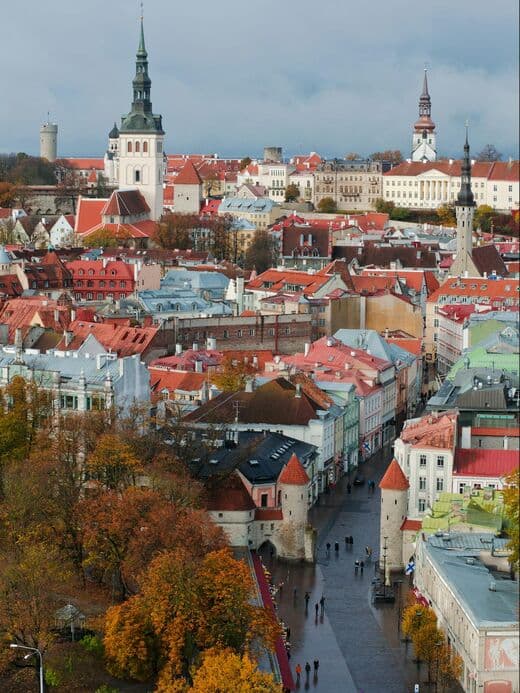
Tallinn's Old Town is a UNESCO World Heritage Site, and it deserves the designation. But unlike some heritage sites that feel like museums you walk through, Tallinn's Old Town is a living, breathing neighborhood. People live here. Restaurants serve locals, not just tourists. The cobblestone streets lead to wine bars, design shops, bookstores, and cafes where Estonians actually hang out. Yes, there are souvenir shops and the occasional medieval-themed restaurant with staff in costume, but the Old Town has not been hollowed out the way some European historic centers have. Walk two blocks off the main square and you will find yourself almost alone, tracing the curve of a 13th-century wall, with the sound of someone practicing piano drifting from an upper window.
Nature That Punches Above Its Weight
Estonia is roughly the size of the Netherlands but with a fraction of the population. More than half the country is forest. There are over 1,500 islands. The coastline stretches for nearly 3,800 kilometers if you count all the inlets and islands. And then there are the bogs -- vast, ancient, eerily beautiful raised bogs that look like something from another planet, especially in the early morning mist. Lahemaa National Park, just an hour east of Tallinn, offers coastal cliffs, waterfalls, manor houses, and hiking trails through old-growth forest. Soomaa National Park is famous for its "fifth season" -- the spring floods that turn the forest floor into a navigable waterway, best explored by canoe. For a small, flat country, Estonia packs in a remarkable amount of natural variety.
Affordability (With Caveats)
Estonia uses the euro, and it is significantly cheaper than Scandinavia, somewhat cheaper than Western Europe, and roughly on par with -- or slightly above -- other Baltic states. A good meal at a mid-range restaurant in Tallinn will run you EUR 15-25 (roughly USD 16-27) per person. A pint of local craft beer is EUR 4-6. A night in a well-located three-star hotel costs EUR 70-120. In smaller towns and on the islands, prices drop further. The caveat: Tallinn's Old Town tourist restaurants can charge Scandinavian prices for mediocre food. Avoid anything with a menu in six languages and photos of the dishes. I will tell you where to eat properly later in this guide.
The Digital Society Thing Is Actually Impressive
You have probably read the headlines about Estonia being the "most digital country in the world." What does that mean for you as a visitor? Practically, it means free public wifi almost everywhere (look for the "wifi.ee" network), contactless payments accepted at even the smallest market stall, and a general technological smoothness to daily life. Tallinn has had free public transport for residents since 2013. You can buy bus tickets with an app, rent electric scooters on every corner, and navigate the country without ever touching a paper ticket. The digital infrastructure is genuinely world-class, and it makes traveling here remarkably hassle-free.
A Music and Cultural Scene That Will Surprise You
Estonia's Song Festival, held every five years (next one in 2029), is one of the largest amateur choral events in the world. Imagine 30,000 singers on a single stage and an audience of 80,000 -- in a country of 1.3 million. That is roughly equivalent to the entire population of the UK showing up at a single concert. The "Singing Revolution" of the late 1980s, when Estonians literally sang their way to independence from the Soviet Union, is one of the most remarkable stories of nonviolent resistance in modern history. The cultural pride that event generated persists. Tallinn has a world-class contemporary art museum (KUMU), a thriving live music scene, and more cultural events per capita than most European capitals.
It Is Easy to Get To (Especially from Europe)
From London, budget airlines like Ryanair and Wizz Air fly direct to Tallinn in about 2.5 hours. Fares can be absurdly cheap if you book early -- I have seen sub-GBP 30 one-way fares. From Helsinki, the ferry takes 80 minutes to 2 hours and costs EUR 15-30 one way. From Stockholm, there is an overnight ferry. From elsewhere in Europe, connections through Helsinki, Riga, Warsaw, or Stockholm are straightforward. From North America, there are no direct flights, but connecting through Helsinki (Finnair), Stockholm (SAS), or any major European hub works well. The Tallinn airport is small, efficient, and literally 10 minutes from the city center by tram.
The Sauna Culture
Estonians do not talk about saunas the way Finns do -- they just quietly have more saunas per capita than almost anyone. Traditional smoke saunas in southern Estonia are on the UNESCO Intangible Cultural Heritage list. The experience is different from a Finnish sauna: earthier, smokier, more ritualistic. Even in Tallinn, there are excellent public saunas where you can experience this tradition. And yes, the part where you jump into a frozen lake or roll in the snow is optional but strongly encouraged.
Craft Beer and Food Renaissance
Estonia's food scene has undergone a quiet revolution. Tallinn now has restaurants that would hold their own in Copenhagen or London, using local ingredients -- wild game, foraged mushrooms, Baltic fish, root vegetables -- in creative ways. The craft beer scene has exploded, with breweries like Pohjala, Lehe, and Tanker producing world-class beers. And the traditional food is worth exploring too: rye bread so dark and dense it is practically a meal, smoked fish from the islands, and a dessert called kama that tastes like nothing else on earth.
It Is Compact and Easy to Explore
You can drive from one end of Estonia to the other in about four hours. The longest domestic train journey is around three hours. This means you can base yourself in Tallinn and do day trips to most of the country, or you can do a relaxed road trip and see an enormous amount in a week or two. Nothing is far away, the roads are good, and the countryside starts almost immediately once you leave the cities.
Friendly but Not Overbearing People
Estonians have a reputation for being reserved, and there is some truth to it. They are not going to hug you at the airport or invite you to Sunday dinner five minutes after meeting you (that is more of a Georgian thing). But they are genuinely warm once you get past the initial reserve, unfailingly helpful when asked, and have a dry, understated sense of humor that grows on you. Do not mistake quietness for unfriendliness. An Estonian who gives you a curt but accurate answer to your question is being perfectly friendly by local standards. And after a few drinks in a Tallinn bar, that reserve tends to dissolve entirely.
Soviet History Without Soviet Drabness
Estonia was under Soviet occupation from 1944 to 1991, and the traces are still visible -- in the architecture of certain neighborhoods, in the Russian-speaking population of the northeast, in the occasional Brutalist building that has been either demolished or cleverly repurposed. But Estonia has done a remarkable job of processing this history without being defined by it. The Vabamu Museum of Occupations and Freedom in Tallinn is excellent, the KGB cells in the basement of the Hotel Viru offer a fascinating tour, and the Linnahall -- an enormous, decaying Soviet-era concert hall on the waterfront -- is a striking piece of urban archaeology. This layer of history adds depth to the experience without making it heavy.
Island Life
Saaremaa and Hiiumaa, Estonia's two largest islands, feel like a different country within a country. Life moves slower. The landscapes are windswept and wild. The local food traditions are distinct. Saaremaa has a medieval castle, a meteorite crater, excellent local beer (the Saaremaa brewery is one of the oldest in the Baltics), and some of the best juniper-smoked fish you will ever eat. Hiiumaa is quieter still, with lighthouses, bird-watching, and a population density that makes rural Montana look crowded. Getting to the islands requires a ferry (easily booked, regularly running), and the crossing itself is scenic and pleasant.
The Bog Walks
I keep coming back to the bogs because they are genuinely one of the most unique natural experiences in Europe. A raised bog is a living ecosystem of sphagnum moss, dwarf pines, dark pools, and cranberries, built up over thousands of years. Walking on a bog boardwalk feels like walking on another planet. The colors -- ochre, rust, deep green, black water -- are unlike anything you see in a typical forest hike. Viru Bog in Lahemaa is the most accessible (45 minutes from Tallinn), but Mukri Bog, Kakerdaja Bog, and the trails in Soomaa National Park are worth seeking out for a quieter experience.
A Startup Scene That Welcomes Visitors
Tallinn is sometimes called the "Silicon Valley of Europe" -- an overstatement, but not by as much as you might think. Per capita, Estonia has produced more startup unicorns than almost any country. Wise (formerly TransferWise), Bolt, Playtech, and Pipedrive all started here. The Telliskivi Creative City, a repurposed industrial complex in Tallinn, is home to co-working spaces, startups, and a vibrant community of digital nomads. If you work remotely, Estonia's digital nomad visa and the general tech-forward infrastructure make it an excellent base.
Value for Time
Perhaps the most compelling reason to visit Estonia is the sheer density of interesting experiences relative to the time and money you invest. In a single week, you can explore a medieval Old Town, hike through ancient forests, visit islands, soak in traditional saunas, eat world-class food, and still have time to sit in a cafe and watch the world go by. Very few countries deliver this much variety in such a compact package. Estonia is not trying to compete with France or Italy on scale or fame. It is doing its own thing, quietly and well, and the people who discover it tend to come back.
Regions of Estonia: A Deep Dive
Estonia divides neatly into five distinct regions, each with its own character, attractions, and reasons to visit. Understanding these regions helps you plan your time and decide what to prioritize.
Tallinn and Harju County: The Capital Region
Tallinn is where most visitors start and where many spend most of their time. That is understandable -- it is the capital, the largest city (about 450,000 people, a third of the country's population), and the most tourist-friendly destination. But there is more to Harju County than the Old Town.
The Old Town (Vanalinn) divides into two parts: Toompea (the upper town), sitting on the limestone hill where the original castle and cathedral stand, and the lower town, the former Hanseatic merchant quarter with its guild halls, churches, and the magnificent Town Hall Square (Raekoja plats). The Town Hall, built in 1404, is the only surviving Gothic town hall in Northern Europe. From the viewing platforms on Toompea -- Patkuli and Kohtu -- you get postcard-perfect views over the red roofs of the lower town to the sea beyond.
But the Old Town is just the beginning. Kalamaja, a former fishing village turned hipster neighborhood northwest of the Old Town, is where much of Tallinn's creative energy lives. The wooden houses -- painted in pastels, many dating from the early 20th century -- have been converted into cafes, galleries, and boutiques. The Telliskivi Creative City, occupying a former industrial complex, is the beating heart of Kalamaja, with street food markets, a flea market on weekends, indie shops, and a constant rotation of pop-up events.
Kadriorg, east of the Old Town, is Tallinn's most elegant neighborhood. Peter the Great built a Baroque palace here in 1718 for his wife Catherine (Kadriorg = Catherine's Valley). Today the palace houses a foreign art museum, and the surrounding park is perfect for a long walk. The real draw is KUMU, Estonia's national art museum, a stunning piece of modern architecture set into the limestone cliff at the edge of the park. Its collection spans Estonian art from the 18th century to the present, with a particularly strong contemporary section.
Pirita, further along the coast, has Tallinn's main beach (decent in summer, atmospheric in winter), the ruins of the 15th-century Pirita Convent, and the Tallinn TV Tower, which offers panoramic views from 170 meters and a genuinely terrifying "walk on the edge" experience where you are harnessed and walk on the outside of the observation deck.
Noblessner, a former submarine factory on the waterfront northwest of the city center, has been transformed into a trendy maritime quarter. The Kai Art Center here is excellent, and Proto Invention Factory is an interactive experience built inside the original submarine hall. Several of Tallinn's best restaurants are in this area.
Beyond Tallinn proper, Harju County offers Lahemaa National Park (Estonia's largest, about an hour's drive east), the coastal towns of Paldiski (a former Soviet submarine base with a haunting atmosphere) and Keila-Joa (with a waterfall and a romantic manor house), and the Padise monastery ruins.
Tartu and South Estonia: The Intellectual Heart
If Tallinn is Estonia's head, Tartu is its heart. Estonia's second city (population around 100,000) is a university town through and through. The University of Tartu, founded in 1632, gives the city an energy and youthfulness that belies its age. The student population means there are more cafes, bars, and cultural events per capita than you would expect from a city this size.
Tartu's Old Town is centered on the Town Hall Square, anchored by a charmingly askew neoclassical Town Hall with its famous "Kissing Students" fountain. The streets radiating outward are lined with colorful buildings, many housing university departments, bookshops, and cafes. Toome Hill (Toomemagi), rising behind the town hall, is a park built around the ruins of the medieval Tartu Cathedral, partly restored to house the University of Tartu Museum. The hill offers pleasant walks and unexpected sights, including the "Angel's Bridge" and "Devil's Bridge" connecting different parts of the university campus.
Tartu's museums are outstanding for a city of its size. The Estonian National Museum, housed in a spectacular modern building on the site of a former Soviet airbase, is one of the best museums in the Baltics. The architecture alone is worth the trip -- the building seems to emerge from the old runway, a deliberate metaphor for a nation taking off from its Soviet past. Inside, the permanent exhibition on Estonian history and culture is comprehensive, thoughtful, and engaging. The AHHAA Science Centre is one of the best interactive science museums in Northern Europe, and the Tartu Art Museum in the leaning house on the town square adds another cultural dimension.
South Estonia beyond Tartu is the country's most rural and traditional region. The landscape is hillier than the rest of Estonia (by Estonian standards, which means gentle rolling hills rather than anything requiring hiking boots). Otepaa is Estonia's "winter capital," a small town surrounded by forested hills that become cross-country skiing paradise in winter. The area is also excellent for hiking, mountain biking, and lake swimming in summer.
The Seto region, in Estonia's far southeast corner along the Russian border, is home to the Seto people, an ethnic group with their own language, Orthodox Christian traditions, and a rich musical heritage. The Seto singing tradition (leelo) is on the UNESCO Intangible Cultural Heritage list. Visiting Seto villages, attending a Seto market, or hearing their polyphonic singing is a genuine cultural experience that few tourists encounter.
Voru County, in the south, is home to the Voro people, another distinct ethnic group with their own language and traditions. The landscape here is Estonia at its most bucolic: small farms, lake-dotted hills, dark forests, and wooden churches. The Haanja Nature Park includes Suur Munamagi, Estonia's highest point at 318 meters -- not exactly Everest, but the observation tower on top offers views into Russia and Latvia on clear days.
The smoke sauna tradition of southern Estonia (Vorumaa) was inscribed on UNESCO's Intangible Cultural Heritage list in 2014. If you can arrange a traditional smoke sauna experience in this region, do it. The saunas are heated for hours, the walls blackened by centuries of smoke, and the ritual of steaming, sweating, and cooling off in a lake or stream is profoundly relaxing. Several farms and guesthouses in the area offer authentic smoke sauna experiences.
West Estonia and the Islands: Wind, Water, and Wild
Western Estonia and the islands are where the country feels most remote and most distinctively itself. The pace slows, the landscapes open up, and the tourist crowds (modest even in Tallinn) thin to nearly nothing.
Parnu, on the southwestern coast, is Estonia's "summer capital" -- a resort town with a long sandy beach, a promenade lined with restaurants and bars, and a gentle, holiday atmosphere from June through August. Outside summer, Parnu is quieter but still pleasant, with good restaurants, a couple of spas, and an attractive wooden-house neighborhood. The Parnu mud baths, a tradition dating to the 1830s, are worth trying even if you are skeptical about the health claims.
Haapsalu, on the northwest coast, is a smaller, quieter resort town with its own charm. The ruined Bishop's Castle is atmospheric, the promenade along the bay is lovely, and the town has a long association with Tchaikovsky, who spent a summer here and loved it. There is a Tchaikovsky bench on the promenade that plays his music when you sit on it -- a small, delightful touch. Haapsalu is also the jumping-off point for ferries to Hiiumaa.
Saaremaa, the largest island, is the crown jewel of the Estonian islands. Getting there requires a ferry from the mainland (about 30 minutes from Virtsu to Muhu island, then a causeway to Saaremaa), and the crossing itself is pleasant -- seabirds, islands, and open water. Kuressaare, Saaremaa's main town, is anchored by an exceptionally well-preserved medieval castle (one of the best in the Baltics) and has a charming small-town center with good restaurants and a thriving local food scene. Beyond Kuressaare, Saaremaa offers the Kaali meteorite crater (formed about 7,500 years ago, the impact of which may be referenced in Norse mythology), the Angla windmills, the dramatic Panga Cliff on the north coast, the Vilsandi National Park (a bird-watching paradise), and a general sense of timelessness that makes the mainland feel hectic by comparison. The local Saaremaa beer is excellent, and the island's juniper-smoked fish is a genuine delicacy.
Hiiumaa, the second-largest island, is even quieter than Saaremaa. It attracts Estonians looking for total relaxation, bird-watchers, and people who find Saaremaa too busy (which gives you an idea of the pace here). The Kopu Lighthouse, one of the oldest continuously operating lighthouses in the world (built in 1531), is the island's most famous landmark. Hiiumaa's forests, beaches, and juniper-covered alvars (limestone grasslands) are beautiful, and the island has a thriving community of artisans, craftspeople, and small-scale food producers.
Matsalu National Park, on the west coast of the mainland, is one of Europe's most important wetland bird habitats. During spring and autumn migration, hundreds of thousands of birds pass through. Even if you are not a dedicated birder, the spectacle of thousands of cranes or geese rising from the marshes at dawn is unforgettable.
Northeast Estonia: The Other Side
Northeast Estonia is the part of the country that most tourists skip, and that is both a shame and an honest reflection of the fact that it is not as conventionally attractive as the west or the islands. This is the region with the heaviest Soviet legacy: the oil shale mining towns of Ida-Viru County, the predominantly Russian-speaking city of Narva on the Russian border, and an industrial landscape that is still recovering from decades of Soviet-era extraction.
But there are compelling reasons to come here. Narva is fascinating -- a city divided by a river, with the medieval Narva Castle on the Estonian side staring directly at the Ivangorod Fortress on the Russian side. The juxtaposition is dramatic and historically loaded. Narva's Old Town was almost entirely destroyed in World War II and rebuilt in Soviet style, but the castle and the Art Residency (housed in a former factory) are worth the trip.
The Narva-Joesuu beach, just north of Narva, is one of the finest beaches in Estonia -- a long stretch of white sand backed by pine forest. It was a fashionable resort in the 19th century, and some of the grand wooden villas from that era survive, lending the town a faded elegance.
Ontika Limestone Cliff, the highest point of the Baltic Klint (a geological feature running from Sweden to Russia), offers dramatic views along the coast. Nearby, the Valaste Waterfall is Estonia's highest at 30 meters -- not Niagara, but pretty in any season and spectacular when it freezes in winter.
The oil shale mining region around Kohtla-Jarve and Kivioli is not conventionally beautiful, but it is genuinely interesting if you are curious about industrial history and post-Soviet transitions. The Estonian Mining Museum in Kohtla offers underground tours of a former mine. The artificial hills created by mining waste have been repurposed -- one is now a ski slope (Kivioli Adventure Center), an impressively creative bit of transformation.
Alutaguse, the forested region in the northeast corner, is the most remote and wild part of mainland Estonia. This is brown bear territory (Estonia has about 700 brown bears, one of the largest populations in Europe relative to land area), and several companies offer bear-watching hides where you can spend a night in a cabin and watch bears emerge from the forest at dusk. Alutaguse also has the best chance of seeing large mammals like lynx (around 900 in Estonia), wolves (around 200), and moose.
Central Estonia: The Quiet Middle
Central Estonia is the part of the country that even most Estonians would struggle to sell as a tourist destination, and I am not going to oversell it either. It is flat, agricultural, and thinly populated. But if you are driving between Tallinn and Tartu (or between Tallinn and the west coast), you will pass through it, and there are a few things worth stopping for.
Soomaa National Park, on the border of central and western Estonia, is one of the most remarkable natural areas in the country. Four rivers converge here, and in spring, the meltwater floods the forest to a depth of several meters, creating the "fifth season" -- a period when the only way to get around is by canoe or dugout boat. Canoeing through a flooded forest is a surreal and magical experience. Even outside the flood season, Soomaa offers excellent bog walks (the Riisa bog trail is one of the best in the country), hiking, and canoeing.
Poltsomaa Castle, in the small town of Poltsomaa, has been carefully restored and is one of Estonia's lesser-known architectural gems. The town was once an important center of the Livonian Order, and the castle reflects that history.
Lake Vortsjarv, Estonia's largest inland lake, is not spectacular but offers pleasant scenery, fishing, and a few lakeside cafes and guesthouses. In winter, it sometimes freezes solid enough for ice fishing and even ice driving.
The main draw of central Estonia, honestly, is the sense of emptiness and agricultural peace. Driving through it, with its flat fields, scattered farmsteads, and vast skies, you get a feeling for the quiet, unassuming character of much of the Estonian countryside. It is not exciting, but it is real, and there is value in that.
Unique Nature: Bogs, Islands, and Ancient Forests
Estonia's natural landscapes deserve their own section because they are genuinely one of the country's greatest assets, and because many visitors do not realize what is on offer until they arrive. This is not a country of dramatic mountains or sun-baked coastlines. Estonia's nature is subtle, atmospheric, and deeply rewarding if you give it time.
The Bogs: Walking on Another Planet
Let me be clear about what I mean by "bog." I am not talking about a muddy patch in a field. Estonia's raised bogs are vast, ancient ecosystems -- some over 10,000 years old -- that have built up layers of peat moss to the point where they sit higher than the surrounding landscape. They create their own water supply from rain, support unique plant communities, and have a haunting, otherworldly beauty.
The classic bog experience involves a wooden boardwalk laid across the sphagnum moss surface. You walk above the soft, waterlogged moss, past dwarf pine trees that may be centuries old but only knee-high, past dark pools of tea-colored water (the tannins from the peat give it the color of strong black tea), past carpets of cranberries and cloudberries in season. The light in the bogs is extraordinary -- the moss reflects and diffuses it in ways that make everything look slightly unreal.
Viru Bog in Lahemaa National Park is the most popular and accessible -- a well-maintained 3.5-kilometer boardwalk loop, about 45 minutes from Tallinn. It gets crowded in summer (by Estonian standards, meaning maybe 20-30 people on the trail at once), but in the early morning, you can have it almost to yourself. The observation tower at the center offers 360-degree views over the bog landscape.
Mukri Bog, near Rapla (about an hour southwest of Tallinn), is less visited and has a longer trail. The sense of isolation here is more pronounced.
Kakerdaja Bog, between Tallinn and Tartu, has a trail that includes bog-shoeing -- strapping on wide, snowshoe-like contraptions and walking directly on the moss surface. It is bouncy, wet, and hilarious.
Soomaa's bogs are the most pristine. The Riisa bog trail is exceptional, and in the "fifth season" (spring floods), you can canoe across flooded bog edges for a truly unique perspective.
Practical tip: Go early in the morning. The mist on the bogs at sunrise is otherworldly. Bring mosquito repellent in summer -- the bogs are buggy. Wear waterproof shoes, even on boardwalk trails, as some sections can be wet. And check the weather -- bogs are exposed, and a sudden rainstorm is no fun with no shelter in sight.
The Islands: 1,500 Reasons to Take a Ferry
Estonia has over 1,500 islands, though only a handful are inhabited and even fewer have regular ferry service. The islands are where Estonia feels most Scandinavian -- windswept, pine-forested, with traditional wooden fishing villages and a pace of life that makes the mainland seem rushed.
Beyond Saaremaa and Hiiumaa (covered in the regions section), several smaller islands are worth knowing about:
Muhu is connected to Saaremaa by a causeway and is the first island you reach by ferry. It is small but charming, known for its traditional thatched-roof farmsteads, the Muhu Museum in Koguva village, and the Padaste Manor -- a beautifully restored manor house hotel with one of the best restaurants in Estonia. Even if you are not staying at Padaste, the restaurant is worth a splurge.
Kihnu, a small island off the coast near Parnu, is one of the most culturally distinct places in Estonia. The women of Kihnu still wear traditional striped woolen skirts as everyday clothing, and the island's cultural space was inscribed on UNESCO's Intangible Cultural Heritage list. Getting there requires a small ferry or a tiny plane (the flight from Parnu takes about 10 minutes), and the island is small enough to explore on foot or by bicycle in a day. It is a genuinely unique cultural experience.
Ruhnu, in the middle of the Gulf of Riga, is Estonia's most isolated inhabited island. It has a tiny permanent population, a medieval wooden church (the oldest wooden building in Estonia), and an overwhelming sense of remoteness. Getting there is an adventure in itself -- a small plane from Parnu or a seasonal ferry.
Vormsi, Estonia's fourth-largest island, once had a significant Swedish population (most left in 1944). It is quiet, sparsely inhabited, and has some of the most distinctive stone crosses in any Estonian cemetery -- the Vormsi cemetery is genuinely atmospheric.
Ancient Forests and National Parks
More than half of Estonia is forest, and a significant portion of that is old-growth or semi-natural forest with a richness of biodiversity that has been lost in much of Western Europe. Walking through an Estonian old-growth forest is a fundamentally different experience from walking through a managed forest in, say, Germany or the UK. The trees are a mix of species and ages, the understory is lush and varied, fallen logs decompose slowly into nurse logs for new growth, and the diversity of fungi, mosses, and lichens is remarkable.
Lahemaa National Park is the most accessible from Tallinn and offers the best combination of forest, coast, bogs, and cultural heritage. The four manor houses in the park -- Palmse, Sagadi, Vihula, and Kolga -- are architectural highlights, with Palmse being the most fully restored and Sagadi housing the Estonian Forest Museum. The coastal trails, particularly the section from Kasmu to Vosu, are excellent, passing through pine forests with sudden dramatic views over boulder-strewn beaches.
Soomaa National Park is wilder and less visited. The forests here are some of the most pristine in Estonia, and the spring floods create a unique hydrological environment. The park is also one of the best places in Estonia for beaver spotting -- the rivers are full of beaver dams and lodges.
Alutaguse National Park (Estonia's newest, established in 2018) in the northeast is the most remote and least visited. It protects large tracts of old-growth taiga forest and is the heartland of Estonia's large mammal population. Bear-watching hides here offer a genuine chance to see brown bears in the wild, and the forest trails can be eerily quiet and beautiful.
Vilsandi National Park, encompassing the western tip of Saaremaa and surrounding islands, is primarily a marine and bird-watching park. The grey seal colony on the western islets is one of the largest in the eastern Baltic, and the bird watching, particularly during spring and autumn migration, is outstanding.
Estonia's forests are also mushroom and berry picking paradise. The right to roam (similar to Scandinavia's "everyman's right") means you can walk through forests and pick berries and mushrooms freely. In late summer and autumn, Estonians head to the forests en masse to pick chanterelles, porcini, lingonberries, and cranberries. If you visit during mushroom season (August-October), local markets will be overflowing with foraged goods.
When to Visit Estonia
Estonia has four distinct seasons, and each offers a genuinely different experience. There is no single "best time" -- it depends on what you want to do.
Summer (June - August)
The classic tourist season, and for good reason. Days are long (Tallinn gets about 19 hours of daylight around the summer solstice, and it never gets fully dark in June -- the famous "white nights"). Temperatures are pleasant, typically 18-25C (64-77F), occasionally reaching 30C (86F) during heat waves. This is the time for beaches, islands, outdoor festivals, and long evenings on terraces. Jaanipaev (Midsummer Night, June 23-24) is a major national celebration -- Estonians head to the countryside, light bonfires, and stay up all night. If you can experience Midsummer in a rural setting, do it. The Parnu beach is in full resort mode, the islands are at their most accessible, and the national parks are lush and green.
The downside: it is peak season, so prices are higher and popular spots are busier. "Busy" is relative -- we are talking about Estonia, not Barcelona -- but book accommodation in advance, especially for the islands and Parnu in July.
Autumn (September - November)
September is arguably the best month to visit Estonia. The summer crowds have thinned, the weather is still pleasant (15-20C / 59-68F in September), and the forests are beginning to turn. Estonian autumns are spectacular -- the mix of birch, aspen, and maple against the dark green of pines and spruces creates a color palette that rivals New England. October brings cooler temperatures and often grey skies, but the forests are at peak color. By November, it is getting cold and dark, but Tallinn's Old Town is atmospheric in the gloom, and you will have the place almost to yourself.
Autumn is also mushroom and cranberry season, which means market stalls overflowing with foraged goods, and restaurants featuring seasonal menus heavy on game, mushrooms, and root vegetables.
Winter (December - February)
Cold, dark, and magical if you embrace it. December days in Tallinn have only about 6 hours of daylight, and temperatures regularly drop to -10C to -20C (14F to -4F). But Tallinn's Christmas Market (on the Town Hall Square, consistently ranked among the best in Europe) is genuinely charming -- mulled wine, gingerbread, handmade crafts, and a massive Christmas tree. The Old Town under snow, with the towers and spires illuminated, is stunning.
Winter is also the time for saunas (the cold makes the hot-cold contrast even more dramatic), cross-country skiing in Otepaa and the south, ice fishing on frozen lakes, and -- if conditions allow -- ice roads. Yes, ice roads. In a cold enough winter, the sea between the mainland and the islands freezes solid, and official ice roads open for car traffic. Driving across the frozen Baltic Sea is a surreal experience.
The downside: it is cold and dark. If you are from a southern climate, the short days and bitter temperatures can be challenging. But with proper clothing (layers, a good hat, insulated waterproof boots), winter in Estonia is entirely manageable and has a unique beauty.
Spring (March - May)
Spring comes slowly to Estonia. March is still winter in all but name. April brings the thaw, and by May, everything is bursting into life -- the birch trees leaf out, the bogs turn green, and migratory birds return in enormous numbers. This is the time for the "fifth season" in Soomaa (the spring floods, usually April), for bird-watching at Matsalu, and for the general sense of excitement that comes when a northern country emerges from winter.
Temperatures in May are typically 10-18C (50-64F), which is pleasant for hiking and sightseeing. Late May and early June, before the main tourist season kicks in, can be ideal for visiting the Old Town and national parks without the summer crowds.
Major Festivals
- Tallinn Music Week (March/April): The biggest showcase of new music in the Baltics, with concerts across the city in every genre
- Jazzkaar (April): International jazz festival in Tallinn, one of the oldest in Northern Europe
- Jaanipaev/Midsummer (June 23-24): National holiday, bonfires, all-night celebrations
- Parnu Film Festival (July): Documentary and anthropological film festival
- Viljandi Folk Music Festival (July): One of the largest folk music festivals in the Baltics, in a beautiful small town with a castle ruin
- Tallinn Christmas Market (late November - early January): One of Europe's most charming Christmas markets
- POFF (Black Nights Film Festival) (November): Tallinn's international film festival, a FIAPF-accredited A-category festival
How to Get to Estonia
Getting to Estonia is easier and cheaper than most people expect, especially from Europe. Here are your options, ranked by practicality.
By Air
Tallinn Airport (TLL, officially Lennart Meri Tallinn Airport) is the main international gateway. It is a small, efficient airport about 4 kilometers from the city center -- you can be from the arrivals hall to the Old Town in 15-20 minutes by tram (line 4, EUR 2 with a contactless card tap), 10 minutes by taxi (EUR 8-12), or 25 minutes on foot if you are traveling light.
From the UK: Ryanair and Wizz Air operate direct flights from London (Stansted and Luton). Flight time is about 2.5 hours. Fares can be remarkably cheap -- GBP 20-50 one way if booked well in advance, though baggage fees push the real cost higher. Seasonal routes sometimes operate from other UK cities.
From North America: There are no direct flights from the US or Canada to Tallinn. The most convenient connections are through Helsinki (Finnair, about 30 minutes onward to Tallinn by air, or take the ferry), Stockholm (SAS), Frankfurt (Lufthansa), Amsterdam (KLM), or Warsaw (LOT). Total travel time from the East Coast is typically 10-14 hours with one connection. Finnair's routing through Helsinki is usually the smoothest, and you can combine Finland and Estonia into one trip easily.
From elsewhere in Europe: Direct flights connect Tallinn to most major European cities, including Berlin, Munich, Vienna, Amsterdam, Brussels, Oslo, Stockholm, Helsinki, Riga, Vilnius, and Warsaw. AirBaltic (based in Riga), Finnair, Nordica (Estonia's national carrier), LOT, and various budget airlines operate these routes.
Tartu also has a small airport with limited connections (mainly to Helsinki via Finnair), which can be useful if South Estonia is your primary destination.
By Ferry
The Helsinki-Tallinn ferry is one of the most popular ferry routes in the world (about 8 million passengers per year). Three companies operate the route:
- Tallink/Silja Line: Large cruise ferry, 2-2.5 hours. Comfortable, onboard shops and restaurants, but slower. Fares from EUR 15-35 one way for a foot passenger.
- Viking Line: Similar to Tallink, around 2.5 hours. Competitive fares.
- Eckeroline: Faster vessel, about 2 hours. Often the cheapest option.
The ferry is a fantastic way to arrive. The approach into Tallinn, with the Old Town skyline rising above the port, is one of the great European arrivals. The ferry terminal is a 15-minute walk from the Old Town.
Tallinn as a cruise port: Tallinn is a popular stop for Baltic Sea cruises, and the cruise terminal (at the Old City Harbour) is very close to the Old Town. If you are on a cruise with a day in Tallinn, you can walk into the Old Town in about 10 minutes from the terminal. The city is well set up for cruise visitors, with clear signage, tourist information at the port, and plenty to do within walking distance.
From Stockholm: Tallink operates an overnight ferry (about 16 hours). It departs in the evening and arrives in the morning -- a decent way to travel if you do not mind sleeping on a ship. Cabins are available, and the onboard restaurant and bar make the crossing quite pleasant.
By Bus
Long-distance buses connect Tallinn to Riga (about 4.5 hours, EUR 15-25), Vilnius (about 8 hours, typically via Riga), and St. Petersburg (about 7 hours, though cross-border service availability depends on the current geopolitical situation). Lux Express is the main operator, and their buses are genuinely comfortable -- leather seats, wifi, personal screens, free coffee. For the Riga route, the bus is more convenient than the train and usually cheaper than flying.
By Train
International train connections are limited. There is no regular train service from Tallinn to Riga (though Rail Baltica, a major infrastructure project connecting the three Baltic capitals and Warsaw, is under construction, with completion expected around 2030). Currently, trains are mainly useful for domestic travel within Estonia.
By Car
Driving to Estonia is straightforward from Latvia (the Via Baltica highway runs from Warsaw through Vilnius and Riga to Tallinn) or via a ferry from Finland or Sweden. The roads are generally good, and driving in Estonia is easy -- flat terrain, low traffic, well-maintained highways. From Riga, the drive takes about 4-4.5 hours. From Helsinki, it is a ferry to Tallinn (car ferries are frequent). If you are planning to explore the islands and countryside, having a car is the most convenient option.
Getting Around Estonia
Estonia's compact size means you are never more than a few hours from anywhere, but the best way to get around depends on your itinerary and preferences.
Free Public Transit in Tallinn
Tallinn made public transport free for registered residents in 2013, and while tourists still pay, the fares are low. A single ride is EUR 2 with a contactless bank card (tap on the reader when you board) or EUR 1.50 with a Tallinn Card (Uhiskaart, available from kiosks). A 24-hour pass is EUR 5.50, and a 72-hour pass is EUR 8 -- both worth considering if you are staying a few days.
The network includes trams (the most useful for tourists, especially line 1 to Kadriorg and line 4 to the airport), buses, and trolleybuses. Service is frequent and reliable during the day, less so in the evenings. Google Maps and the Tallinn Transport (TLT) app work well for route planning.
Elron Trains
Elron operates Estonia's domestic rail network. Trains are modern, clean, and punctual. The main routes useful for tourists are:
- Tallinn to Tartu: 2-2.5 hours, EUR 12-18, several departures daily. The most useful train route in Estonia.
- Tallinn to Parnu: About 2 hours, EUR 10-14. A convenient way to reach the summer capital.
- Tallinn to Viljandi: About 2.5 hours via Turba. Useful for the folk festival.
- Tallinn to Narva: About 2.5 hours, EUR 12-16. Useful for the northeast.
- Tallinn to Haapsalu: About 2 hours. Gateway to Hiiumaa.
Buy tickets via the Elron app or at the station. Trains can sell out on popular routes (especially Tallinn-Tartu on Friday evenings and Sunday evenings when students travel), so booking a day or two ahead is wise.
Buses
For destinations not served by trains (and some that are), long-distance buses fill the gaps. Lux Express and ATKO are the main operators. The Tpilet app/website (tpilet.ee) lets you search and book all bus routes in one place. Buses tend to be cheaper than trains and serve more destinations, but they are less comfortable for longer journeys.
Bolt (and Other Ride-Hailing)
Bolt (the Estonian-founded ride-hailing app -- think of it as the European Uber) works throughout Estonia. In Tallinn, Bolts are ubiquitous and cheap -- a ride across the city rarely exceeds EUR 8-10. In Tartu and Parnu, coverage is good. In smaller towns, coverage is spotty. Bolt also operates electric scooters in Tallinn and Tartu.
Traditional taxis exist but are largely unnecessary given Bolt's reliability. If you do take a taxi, insist on the meter or agree on a price beforehand. Tallinn Airport taxis are regulated and fine, but taxis lurking near the Old Town or cruise terminal can be overpriced.
Car Rental
If you want to explore the countryside, islands, and national parks at your own pace, renting a car is the best option. All the major international agencies (Sixt, Europcar, Hertz, Avis, Budget) have offices at Tallinn Airport and in the city center. CityBee, a local car-sharing service, offers short-term rentals via an app -- useful for quick day trips.
Driving in Estonia is straightforward. Roads are well maintained (some rural roads are gravel, but passable in any car), traffic is light outside Tallinn, and navigation is easy. Speed limits are 50 km/h in towns, 90 km/h on main roads, and 110-120 km/h on the few motorway stretches. Police are strict about speed limits and drunk driving -- zero tolerance, and the fines are steep.
For the islands: You can take your rental car on the ferries to Saaremaa and Hiiumaa. Book the car ferry in advance during summer, especially for weekends. The Virtsu-Kuivastu ferry (to Muhu/Saaremaa) runs frequently, and the Rohukulka-Heltermaa ferry (to Hiiumaa) somewhat less so. Fares for a car are around EUR 10-15 one way, plus per-person passenger fees.
Ferries to the Islands
The national ferry operator, Kihnu Veeteed and Praamid (part of the national ferry system), operates ferries to the main islands. The major routes:
- Virtsu to Kuivastu (Muhu/Saaremaa): About 30 minutes, frequent departures (every 30-60 minutes in summer)
- Rohukulka to Heltermaa (Hiiumaa): About 1.5 hours, several departures daily
- Parnu/Munalaid to Kihnu: About 1 hour, limited schedule
Book through praamid.ee or the app. In summer, the Saaremaa ferry can have waits of 1-2 hours for cars if you have not booked, so reserving in advance is recommended. Foot passengers can usually walk on without booking.
Cycling
Estonia is increasingly bicycle-friendly. Tallinn has a public bike-sharing system, and the flat terrain makes cycling practical. Long-distance cycling routes, particularly along the coast and on the islands, are well-established. Saaremaa and Hiiumaa are particularly good for cycling -- flat, low traffic, and scenic. You can rent bikes in most tourist towns and on the islands.
Estonian Cultural Code: What You Need to Know
Every country has its unwritten rules, and knowing them makes the difference between feeling like a tourist and feeling like a welcome guest. Here is what you need to know about Estonian culture and customs.
The Reserved Thing
Yes, Estonians are reserved. No, this does not mean they dislike you. Estonian culture values personal space, quiet, and not imposing on others. Small talk with strangers is not really a thing. In an elevator, people stare at their phones. In a queue, people stand at comfortable intervals. This is normal and does not indicate hostility. If you need help, ask -- Estonians will go out of their way to assist you. They just will not start the conversation.
The flipside is that when an Estonian does warm up to you (usually after some time or some alcohol), the friendship is genuine and lasting. Estonians find the American habit of instant friendliness -- "Oh my God, I LOVE your shirt!" -- baffling and slightly suspicious. Do not take the reserve personally.
Sauna Culture
Sauna is serious business in Estonia. There are an estimated 1.7 million saunas for 1.3 million people (this includes private saunas in homes, which are almost universal in rural areas). The sauna is a place for physical and spiritual cleansing, for socializing, and -- historically -- for giving birth and preparing the dead.
If you are invited to someone's home sauna, accept. Here is the etiquette: you will be naked (swimsuits in a private sauna are like wearing shoes to bed -- technically possible but deeply wrong). You will alternate between the hot room and cooling off (cold water, outdoor air, or -- in winter -- snow or a frozen lake). Someone may beat you gently with birch branches (viht or vihta) -- this improves circulation and is pleasant, not painful. The whole process takes 2-3 hours and involves conversation, snacks, and often beer.
Public saunas have different conventions -- swimsuits may be required in mixed-gender facilities. Check the rules. In Tallinn, try Kalma Saun (a traditional Soviet-era public sauna, no-frills but authentic), the Iglupark sauna experience on the sea in winter, or the spa hotels in Parnu and Haapsalu for a more polished experience.
Tipping
Tipping is not expected in Estonia in the way it is in the US. Service staff are paid a reasonable wage, and tips are a bonus, not a necessity. That said, rounding up or leaving 10% at a restaurant for good service is appreciated. At bars, tipping is not expected. For taxis (Bolt), you can tip through the app but few people do. Do not stress about it -- nobody will be offended if you do not tip, and nobody will be surprised if you do.
The Digital Society
Estonia's digital infrastructure is not just a government project -- it is woven into daily life. Estonians carry an ID card that lets them access virtually all government services digitally, from filing taxes (takes about 3 minutes) to voting in elections (from their couch). Prescriptions are digital. Business registration takes 18 minutes online. The joke is that the only things you cannot do digitally in Estonia are get married, get divorced, and buy property -- everything else is online.
For visitors, the practical implications are: cashless payment is universal (I have gone entire trips without touching cash), free wifi is everywhere (the wifi.ee public network covers buses, parks, and many public spaces), and most services are available through apps. Estonia feels 5-10 years ahead of most European countries in terms of daily digital convenience.
Language
Estonian is a Finno-Ugric language, related to Finnish and (distantly) to Hungarian, and unrelated to the other Baltic languages (Latvian and Lithuanian are Indo-European). It is difficult for English speakers to learn -- the grammar has 14 cases, no grammatical gender, and no future tense -- but a few words go a long way:
- Tere (TEH-reh) - Hello
- Tanan (TAH-nahn) - Thank you
- Palun (PAH-loon) - Please / You're welcome
- Vabandust (VAH-bahn-doost) - Sorry / Excuse me
- Jah (yah) - Yes
- Ei (ay) - No
- Terviseks (TEHR-vee-seks) - Cheers (when drinking)
English is widely spoken in Tallinn and Tartu, especially by younger people. In rural areas and among older people, English is less common, but you can usually get by with gestures and a translation app. In the northeast (Narva, Ida-Viru County), Russian is the dominant language. German is sometimes useful with older Estonians, particularly in academic contexts.
The Song Festival and Singing Culture
The Estonian Song Festival (Laulupidu), held every five years, is not just a concert -- it is the soul of the nation. The tradition dates to 1869, when the first festival was a pivotal moment in Estonian national awakening. During the Soviet occupation, the festivals became acts of quiet resistance, and in 1988, the "Singing Revolution" -- massive spontaneous singing gatherings -- was a key catalyst for independence.
Even outside the festival years, singing is central to Estonian culture. Choirs are everywhere -- schools, workplaces, communities. The Song Festival Grounds, on the eastern edge of Tallinn, are worth visiting at any time. The enormous curved stage (designed to accommodate 30,000 singers) and the sloping amphitheater are impressive even when empty, and there are often smaller concerts and events.
Drinking Culture
Estonians drink. Not excessively by Nordic standards, but enough that it is a notable part of social culture. Beer is the default drink -- Estonia has a strong beer tradition and a booming craft beer scene. Vodka is traditional, and the local brand Viru Valge is perfectly drinkable. The national liqueur, Vana Tallinn, is a sweet, dark, herbal liqueur that is an acquired taste but worth trying.
The legal drinking age is 18. Alcohol is sold in shops until 11 PM. Prices are lower than in Finland and Scandinavia, which is why the Helsinki-Tallinn ferries are packed with Finns stocking up on cheaper booze (this is a genuine economic factor in the ferry traffic).
Safety in Estonia
Estonia is one of the safest countries in Europe, and violent crime against tourists is extremely rare. That said, you are not in a bubble, and the usual urban precautions apply.
General Safety
Estonia ranks consistently high on global safety indexes. Walking alone at night in Tallinn or Tartu is generally safe, even for solo female travelers. The countryside is even safer -- the idea of locking your door in a rural Estonian village is almost quaint. Emergency number is 112 (EU standard).
Pickpockets and Petty Theft
The main risk for tourists is pickpocketing in Tallinn's Old Town, particularly around the Town Hall Square, Viru Gate, and the viewing platforms on Toompea. The risk is modest compared to, say, Barcelona or Rome, but it exists, especially in summer and when cruise ships are in port. Keep your valuables secure, be aware of your surroundings, and you will be fine.
Car break-ins can happen in parking areas at popular tourist sites (Lahemaa, the Old Town parking lots). Do not leave valuables visible in your car.
Scams to Watch For
Taxi scams: The most common tourist scam in Tallinn. Unlicensed or unmetered taxis outside the Old Town, near the port, or at the airport can charge outrageous fares. Always use Bolt or insist on the meter. A ride from the airport to the Old Town should be EUR 8-12, not EUR 30-40. Legitimate taxis have a yellow license plate and a meter.
Bar scams: A persistent but diminishing problem in the Old Town. The setup: a friendly local (often an attractive woman) strikes up a conversation and suggests going to a "great bar" they know. You go, have a drink or two, and the bill arrives at EUR 200+. The bar is in on the scam. Rule: never go to a bar suggested by someone who approaches you on the street. If you are in a bar and the menu does not have prices, leave.
Pedicab scams: Bicycle taxis/rickshaws in the Old Town sometimes charge absurd prices (EUR 50+ for a 5-minute ride). If you want to use one, agree on the price before getting in, and make sure you have it in writing or at least clearly stated. Better yet, just walk -- the Old Town is small enough.
"Free" walking tours: Not exactly a scam, but be aware that "free" walking tours in Tallinn are tip-based, and guides may pressure for EUR 20+ per person at the end. The tours are often good, but go in with clear expectations.
Nightlife Safety
Tallinn has a lively nightlife scene, centered on the Old Town and Kalamaja/Telliskivi areas. It is generally safe, but standard precautions apply: do not leave drinks unattended, be cautious of very drunk people (weekend nights can get rowdy), and stick to established venues. The Stag Party Problem that plagued Tallinn in the 2010s (when it was a popular cheap destination for British stag dos) has diminished but not disappeared entirely -- some weekend nights in the Old Town can be boisterous.
Natural Hazards
Estonia has no dangerous wildlife to worry about (bears are shy and avoid humans, wolves even more so). The main natural hazards are ticks (see Health section below) and the cold in winter. Hypothermia is a real risk if you are underdressed in winter, especially if you are hiking or spending extended time outdoors. Dress in layers and do not underestimate the windchill, particularly on the coast and islands.
In spring, the spring floods in Soomaa and other low-lying areas can make some roads impassable. Check conditions before driving in rural areas in April-May.
Health and Medical Care
Estonia has a modern, functional healthcare system. You are unlikely to need it, but here is what to know just in case.
European Health Insurance Card (EHIC)
If you are from the UK (GHIC), EU, or EEA, your health insurance card entitles you to the same public healthcare as Estonians. This means emergency treatment and necessary care at public hospitals and clinics. It does not cover private healthcare, repatriation, or non-emergency dental work. Carry your card.
If you are from the US, Canada, Australia, or elsewhere, you will need travel insurance. Healthcare in Estonia is good and not prohibitively expensive (a doctor's visit might cost EUR 50-100 without insurance), but hospital stays and specialist care add up. Get travel insurance -- it is cheap and essential.
Pharmacies
Pharmacies (apteek) are widespread, well-stocked, and staffed by knowledgeable pharmacists. Many common medications that require a prescription in the US are available over the counter in Estonia. Pharmacists speak English in Tallinn and Tartu. Opening hours vary, but there are 24-hour pharmacies in Tallinn (look for Sudameapteek on Parnumnt in the city center).
Ticks
This is the biggest health concern for visitors spending time outdoors in Estonia. Ticks are common in forests and grassy areas from April through November, and they can carry both Lyme disease and tick-borne encephalitis (TBE). TBE is more concerning -- it is a viral infection that can cause serious neurological problems.
Prevention: Wear long pants and sleeves when hiking, use tick repellent (available at pharmacies), and check yourself thoroughly after spending time in nature. Tuck pants into socks -- it looks ridiculous but works.
TBE vaccination: Strongly recommended if you plan significant outdoor activity. The vaccination requires two doses given 1-3 months apart, with a booster after a year. Plan ahead. If you are already in Estonia without vaccination, be extra vigilant about tick checks.
If bitten: Remove the tick promptly with tweezers or a tick removal tool (available at pharmacies). Grasp it as close to the skin as possible and pull straight out. Save the tick in a small container -- pharmacies can test it for pathogens. If you develop a rash (especially a circular "bullseye" rash) or flu-like symptoms in the weeks after a bite, see a doctor immediately.
Water
Tap water in Estonia is safe to drink throughout the country. It may taste slightly different from what you are used to (higher mineral content in some areas), but it is clean and safe. Bottled water is cheap and available everywhere if you prefer it. The tap water in Tallinn is particularly good.
Air Quality and Allergies
Air quality in Estonia is generally excellent -- low population density and limited heavy industry mean clean air. If you have birch pollen allergies, be aware that May and June can be intense. The birch pollen season in the Baltics is one of the heaviest in Europe.
Money, Budget, and Costs
Estonia uses the euro (EUR), having adopted it in 2011. This makes things simple for visitors from the eurozone and straightforward for everyone else.
Cards and Cash
Estonia is essentially cashless. Contactless card payment is accepted virtually everywhere -- restaurants, cafes, shops, market stalls, public transport, parking meters. I have gone entire week-long trips without using cash once. Apple Pay and Google Pay work at most terminals. The only places you might need cash are some very small rural establishments, certain market vendors, and possibly a few parking situations on the islands. An ATM withdrawal of EUR 50-100 as backup is all you need.
ATMs (pangaautomaat) are widespread in cities and towns. Most accept international cards. Avoid ATMs from non-bank providers (Euronet, for example), which charge high fees and offer unfavorable exchange rates. Use bank ATMs (SEB, Swedbank, Luminor, LHV) for the best rates.
Budget Breakdown
Here is what things actually cost in Estonia (2026 prices, EUR, approximate USD equivalent at 1 EUR = 1.08 USD):
Budget Traveler (EUR 50-70 / USD 55-76 per day):
- Hostel dorm: EUR 15-25 per night
- Supermarket food and occasional cheap restaurant: EUR 15-20 per day
- Public transport: EUR 2-5 per day
- Free activities: walking tours, parks, churches, window shopping
Mid-Range Traveler (EUR 100-150 / USD 108-162 per day):
- Good 3-star hotel or boutique guesthouse: EUR 70-120 per night
- Meals at mid-range restaurants: EUR 30-50 per day
- Transport including occasional taxi: EUR 10-15 per day
- One paid attraction/activity: EUR 10-20
Comfort Traveler (EUR 200-350 / USD 216-378 per day):
- 4-5 star hotel: EUR 150-300+ per night
- Fine dining: EUR 60-100 per day
- Car rental: EUR 40-60 per day
- Premium activities and experiences: EUR 30-50
Specific costs:
- Cappuccino in a cafe: EUR 3-4.50
- Pint of local beer: EUR 4-6
- Glass of wine in a restaurant: EUR 5-8
- Main course at mid-range restaurant: EUR 12-20
- Tasting menu at a fine dining restaurant: EUR 55-85
- Bolt ride across Tallinn: EUR 5-10
- Tallinn to Tartu by train: EUR 12-18
- Ferry to Saaremaa (foot passenger): EUR 3-5
- Museum entry: EUR 8-15
- 1 liter of petrol: EUR 1.65-1.80
Money-saving tips:
- The Tallinn Card (24/48/72 hours) gives free public transport, free entry to major museums, and discounts. Worth it if you plan to visit 3+ museums.
- Lunch menus (paevapakkumine) at Estonian restaurants offer a set lunch for EUR 7-12 -- a full meal at a fraction of dinner prices.
- Supermarkets (Selver, Prisma, Coop, Rimi) are well-stocked and reasonably priced. The prepared food sections are surprisingly good for picnic supplies.
- Free wifi (wifi.ee) means you do not need a local SIM for basic connectivity.
- Many museums have free entry on certain days (often the last Sunday of the month). Check individual museum websites.
Visa and Entry Requirements
Estonia is part of the Schengen Area, which means the same visa rules that apply to most of Western Europe apply here.
Visa-Free Travel
Citizens of the US, UK, Canada, Australia, New Zealand, and many other countries can enter Estonia (and the rest of the Schengen Area) without a visa for up to 90 days within any 180-day period. You need a passport valid for at least 3 months beyond your planned departure date from the Schengen Area.
EES (Entry/Exit System) - From October 2025
The EU's new Entry/Exit System (EES) requires non-EU citizens entering the Schengen Area to register fingerprints and a facial photo at border control on first entry. This replaces passport stamping. Subsequent entries will be faster (automated gates). The system is designed to prevent overstaying. Your first entry after EES launches may take slightly longer at border control, but subsequent visits should be quicker.
ETIAS (European Travel Information and Authorisation System) - Expected Late 2026
ETIAS will require visa-exempt travelers (US, UK, Canadian, Australian citizens, etc.) to obtain an online travel authorization before traveling to the Schengen Area. It is similar to the US ESTA or Australian ETA. The process is online, costs EUR 7, and the authorization is valid for 3 years. It is not a visa -- it is a pre-screening. At the time of writing, ETIAS is expected to launch in late 2026. Check the latest status before booking.
Sample Itineraries
Estonia is compact enough that even a week gives you a solid overview, but two weeks or more lets you explore at a more relaxed pace. Here are four itineraries, from a punchy one-week trip to an expansive three-week journey.
7 Days: The Essential Estonia
This itinerary covers the highlights without rushing. You will need a car for days 4-7 (rent in Tallinn, return in Tallinn).
Day 1: Arrive in Tallinn, Old Town
Arrive at Tallinn Airport, take tram 4 to the city center (15 minutes). Check into your hotel and head straight for the Old Town. Start on Toompea Hill -- walk up from the Danish King's Garden (where legend says the Danish flag fell from the sky in 1219) to the Alexander Nevsky Cathedral (an ornate Russian Orthodox church that annoys Estonian nationalists with its presence on their most historically significant hill, but is undeniably beautiful). Walk past the pink Toompea Castle (home to the Estonian parliament), cross to the Patkuli viewing platform for the classic panoramic photo, then descend to the lower town via the Long Leg (Pikk Jalg) passage. Explore the winding streets: stop at St. Olaf's Church (climb the 258 steps to the top for the best view in the city, EUR 5, but check opening hours -- it is closed in winter), wander through the Katariina Guild passage (artisan workshops), and end up at the Town Hall Square for a drink at one of the outdoor cafes. Dinner at Rataskaevu 16 -- a reliably good restaurant in the Old Town that has not been ruined by tourism, or Kaerajaan for modern Estonian food in a medieval cellar.
Day 2: Tallinn -- Kalamaja, Telliskivi, Lennusadam
Start the morning at the Balti Jaam (Baltic Station) market for breakfast -- fresh pastries, local cheeses, and coffee. Walk into Telliskivi Creative City, browsing the shops and galleries as they open. From there, it is a 15-minute walk to the Lennusadam (Seaplane Harbour) Maritime Museum, one of the best museums in the Baltics, housed in early-20th-century seaplane hangars. The centerpiece is the Lembit, a 1930s submarine you can walk through. Allow 2-3 hours. After the museum, walk along the coastal path toward the Noblessner quarter for lunch at one of the restaurants there. In the afternoon, take tram 1 or 3 to Kadriorg for the KUMU art museum and a walk through the park. If the weather is good, continue to Pirita Beach for a sunset walk. Dinner in Kalamaja -- F-Hoone is a beloved neighborhood restaurant in a former factory.
Day 3: Tallinn -- Vabamu, KGB Museum, Food Tour
Morning at Vabamu (Museum of Occupations and Freedom), which covers Estonia's 20th-century history -- Soviet and Nazi occupations, resistance, and the path to independence. It is well done and emotionally powerful. Follow up with the KGB Museum in the former Hotel Viru -- the KGB operated a surveillance station in the top floor of this hotel during the Soviet era, and the tour is fascinating. Afternoon: explore the areas you missed on Day 1, visit the Estonian History Museum in the Great Guild Hall, or do a food tour (several operators offer them, and they are a great way to discover Estonian cuisine with context). Evening: Tallinn's bar scene. Start at Speakeasy by Sveta (a hidden cocktail bar -- find the unmarked door on Aia street) and wander through the Rotermanni Quarter for more options.
Day 4: Tallinn to Lahemaa National Park (1 hour drive)
Pick up your rental car and drive to Lahemaa. First stop: Viru Bog for the classic boardwalk walk (1.5 hours, go early for the best light). Then drive to Palmse Manor, the most fully restored of the four manor houses in the park -- an elegant 18th-century estate with beautiful grounds. Have lunch at the Palmse tavern. Afternoon: drive to the fishing village of Kasmu (the "Captain's Village"), known for its maritime history and beautiful coastal landscape. Walk the Kasmu peninsula trail (about 6 km, 2 hours), which passes through pine forests and along boulder-strewn beaches. If time allows, visit the Sagadi Manor and the Estonian Forest Museum. Stay overnight in Lahemaa -- Sagadi Manor Hotel or Vihula Manor are excellent options in atmospheric settings.
Day 5: Lahemaa to Tartu (2.5 hours drive)
Morning: explore one more Lahemaa site -- the Beaver Trail near Oandu is short and pleasant, or the Altja fishing village for traditional coastal architecture. Then drive south to Tartu, arriving around lunchtime. Walk the Town Hall Square, see the "Kissing Students" fountain, and climb Toome Hill to the ruined cathedral. Afternoon at the Estonian National Museum -- plan at least 2-3 hours for this; the permanent exhibition on Estonian history is comprehensive and beautifully presented, and the building itself is architecturally stunning. Walk through the university campus, peek into the University of Tartu main building (the assembly hall on the upper floor is impressive). Dinner at Holm, a restaurant in an old wooden house that does creative Estonian food, or Aparaat, a trendy neighborhood spot near the market.
Day 6: Tartu to Saaremaa (4 hours drive including ferry)
Leave Tartu in the morning and drive west to the Virtsu ferry terminal (about 2.5 hours). Take the ferry to Muhu island (30 minutes), then cross the causeway to Saaremaa. Stop in Kuressaare and visit the medieval Bishop's Castle -- one of the best-preserved medieval castles in the Baltics, now housing the Saaremaa Museum. Walk the castle walls, explore the inner courtyard, and learn about the island's history. In the afternoon, drive to the Kaali meteorite crater -- a eerily circular lake formed by a meteorite impact about 7,500 years ago. Then drive north to the Angla windmills, the most photographed windmills in Estonia. Dinner at one of Kuressaare's excellent restaurants -- Arensburg or Saaremaa Veski (a restaurant in a windmill). Stay overnight in Kuressaare.
Day 7: Saaremaa, then return to Tallinn
Morning: drive to the Panga Cliff on Saaremaa's north coast -- dramatic limestone cliffs overlooking the sea. If time allows, visit the Vilsandi National Park area (accessible from the western coast of Saaremaa) or the Sorvemaa peninsula lighthouse. Then drive back to the ferry, cross to the mainland, and drive to Tallinn (about 3 hours including the ferry). Return the rental car at the airport. If your flight is not until the next day, spend a final evening in the Old Town -- a farewell dinner and a walk through the illuminated streets.
10 Days: Estonia in Depth
Follow the 7-day itinerary for the first 6 days, then extend as follows:
Day 7: Saaremaa Full Day
Instead of rushing back, spend a full day exploring Saaremaa. Morning: Panga Cliff and the Ninase peninsula (wild, empty coastline). Drive to the Sorvemaa peninsula in the south -- the Saaremaa Lighthouse (Sorve tuletorn) at the tip of the peninsula offers sweeping views. Have lunch in one of the small villages (local fish, smoked on-site, if you can find it). Afternoon: visit Kihelkonna, a small village with a medieval church, and the nearby Pidula crocodile farm (yes, really -- a quirky little attraction that kids love). Or spend the afternoon at one of Saaremaa's spas -- the Georg Ots Spa in Kuressaare is the most well-known. Stay another night in Kuressaare.
Day 8: Saaremaa to Parnu (3 hours including ferry)
Morning ferry from Saaremaa to the mainland, then drive south to Parnu (about 1.5 hours from Virtsu). Parnu is Estonia's summer capital, and even outside peak summer, it is a pleasant town. Walk the beach promenade, explore the wooden-house neighborhood (Supeluse and surrounding streets), and visit the Parnu Museum for local history. If you are there in summer, the beach itself is lovely -- wide, sandy, and backed by a park. Try a mud bath at one of the spas (Hedon Spa or Tervis Medical Spa) -- it is a Parnu tradition dating to the 1830s. Dinner at Raimond, a popular bistro with good local food. Stay overnight in Parnu.
Day 9: Parnu to Viljandi and Soomaa (day trip)
Drive to Soomaa National Park (about 45 minutes from Parnu) for a morning bog walk on the Riisa trail -- one of the best in Estonia, with a long boardwalk over pristine bog landscape. If the season is right (April-May), you might catch the spring floods and be able to canoe through the flooded forest. From Soomaa, continue to Viljandi (about 30 minutes), a charming small town famous for its folk music festival (held in July). Walk through the castle ruins overlooking the lake, explore the quaint town center, and have lunch at Olukorv or Fellin, two good local restaurants. Return to Parnu in the evening, or drive directly to Tallinn (2 hours from Viljandi).
Day 10: Return to Tallinn, departure
Drive to Tallinn (1.5-2 hours from Parnu). If your flight is in the afternoon, use the morning for last-minute shopping (Viru Center and the Rotermanni Quarter have the best selection), a final Old Town walk, or a visit to any attraction you missed on your first days. Drop off the rental car at the airport and depart.
14 Days: The Comprehensive Estonia Experience
This itinerary covers all five regions and gives you time to breathe. You will need a car for most of it.
Days 1-3: Tallinn
Follow the 7-day itinerary's first three days, but at a more relaxed pace. Add: the Tallinn TV Tower for panoramic views, the Rocca al Mare Open Air Museum (a collection of traditional Estonian buildings -- farmhouses, a church, a schoolhouse -- relocated to a seaside park, excellent for understanding rural Estonian life), and the Fotografiska contemporary photography museum (in a restored former industrial building on the waterfront). If the weather is good, rent bikes and cycle along the coastal path from Pirita to the Tallinn TV Tower area.
Day 4: Lahemaa National Park
As per the 7-day itinerary. Viru Bog, Palmse Manor, Kasmu peninsula trail. Stay overnight in the park.
Day 5: Lahemaa to Narva (2 hours drive)
Drive east along the coast, stopping at the Ontika Limestone Cliff and Valaste Waterfall. Continue to Narva, exploring the castle (Narva Hermann Castle, with views across the river to the Russian fortress of Ivangorod), the Narva Art Residency, and the Kreenholm textile factory ruins (an enormous 19th-century complex that is slowly being redeveloped). Walk along the river promenade. If time allows, drive to Narva-Joesuu for a beach walk. Stay overnight in Narva -- the Vanalinna hotel in the castle area is atmospheric.
Day 6: Narva to Tartu via Alutaguse (3-4 hours with stops)
Drive south from Narva through the Alutaguse region. Stop at the Iisaku Museum of the Northeast Estonian Forest Industry for context on the region's logging and peat history, or arrange a bear-watching experience (these are typically overnight, so plan ahead if interested). Drive through the vast forests, stopping at Ontika or Pannjaarve for short walks. Continue to Tartu, arriving in the late afternoon. Evening in Tartu: walk the university quarter, dinner at Werner Cafe (a historic cafe on the Town Hall Square) or Kolm Tilli for creative Estonian cuisine.
Day 7: Tartu Full Day
Morning at the Estonian National Museum. Afternoon: explore the Supilinn ("Soup Town") neighborhood -- a charming area of wooden houses with streets named after vegetables and fruits (Pea Street, Bean Street, Potato Street). Rent a kayak or canoe on the Emajogi River, or visit the AHHAA Science Centre if the weather is poor. Walk to Tartu's street art -- the city has an growing collection of murals. Evening: the Aparaat neighborhood for dinner and bars.
Day 8: Tartu to Otepaa and South Estonia (1-1.5 hours drive)
Drive to Otepaa, Estonia's "winter capital." In summer, the surrounding hills and lakes are excellent for hiking and swimming. Walk around Puhajarv Lake (one of the most beautiful lakes in Estonia), climb the Tehtvere observation tower for views over the rolling landscape, and visit the Otepaa Church (one of the most historically significant in Estonia -- the blue, black, and white Estonian flag was consecrated here in 1884). Drive to the Seto region in the southeast for a taste of this unique culture. Visit a Seto farm museum, the Obinitsa Seto Museum-Exhibition, or attend a Seto cultural event if one is happening. Stay overnight in Otepaa, Rogue, or the Haanja area.
Day 9: South Estonia -- Haanja, Suur Munamagi, Smoke Saunas
Drive to Haanja Nature Park. Climb Suur Munamagi (318m, Estonia's highest point -- the observation tower gives views into Russia and Latvia on clear days). Explore the Rogue valley, one of the most picturesque in Estonia, with its ancient burial sites, primeval valley, and traditional farmsteads. This is the heartland of the smoke sauna tradition -- try to arrange a traditional smoke sauna experience at a local farm (book in advance; Mooska Farm or similar). It is an unforgettable experience: the darkened sauna room, the smell of birch and smoke, the ritual of steaming and cooling off. Drive to Viljandi or Parnu in the late afternoon (2-2.5 hours). Stay overnight.
Day 10: Soomaa National Park and Viljandi
As per the 10-day itinerary's Day 9: Soomaa bog walk, canoe trip if the season allows, Viljandi castle ruins and town. Stay in Viljandi or continue to Parnu.
Day 11: Parnu
A relaxed day in Parnu. Beach (summer), spa and mud bath, Parnu Museum, wooden-house neighborhood walk, riverside path, shopping for local crafts. Consider a half-day trip to Kihnu island if the ferry schedule allows (check in advance -- service is limited). Stay overnight in Parnu.
Day 12: Parnu to Haapsalu to Saaremaa (3-4 hours with stops)
Drive north to Haapsalu (1.5 hours). Walk through the Bishop's Castle ruins, sit on the Tchaikovsky bench on the promenade, and explore the old wooden neighborhood. Have lunch in Haapsalu -- Wiiu and Hapsal Dietrich are both good. Then drive to the Virtsu ferry terminal (45 minutes from Haapsalu), take the ferry to Muhu, and drive to Kuressaare on Saaremaa. Afternoon: the Bishop's Castle in Kuressaare, then a walk through the town. Stay overnight in Kuressaare.
Day 13: Saaremaa Full Day
A full exploration of Saaremaa: Kaali crater, Angla windmills, Panga Cliff, and the Sorvemaa peninsula. Add the Vilsandi National Park area if you are interested in bird-watching (best reached by boat from the western coast, or by a long drive and walk). Try local cuisine: juniper-smoked fish at a roadside stand, Saaremaa craft beer at the local brewery, and the island's own bread (saaremaa leib -- dark, dense, and excellent). If you have the time and interest, visit the Mihkli Farm Museum for a look at traditional island farming life. Stay another night in Kuressaare.
Day 14: Saaremaa to Tallinn, departure
Morning ferry, then drive to Tallinn (about 3.5 hours with the ferry). Final shopping, a farewell lunch in the Old Town or Kalamaja, and departure from Tallinn Airport.
21 Days: The Complete Estonia Adventure
Three weeks lets you see everything at a leisurely pace, with time for spontaneous detours and deeper exploration. Follow the 14-day itinerary and add:
Day 15: Hiiumaa Island
Instead of driving directly from Saaremaa to Tallinn, take the ferry from Saaremaa to Hiiumaa (seasonal route) or drive to the mainland and take the Rohukulka-Heltermaa ferry. Explore Hiiumaa: the Kopu Lighthouse (one of the oldest in the world), the Kassari peninsula causeway and nature trails, the Tahkuna Lighthouse on the northern tip. Hiiumaa is best experienced by bicycle -- rent one in Kardla (the main town) and cycle the quiet island roads. Stay overnight on Hiiumaa.
Day 16: Hiiumaa, continued
Second day on Hiiumaa for a deeper exploration. Visit the Hiiumaa Museum in Kassari, explore the juniper-covered alvars (unique limestone grasslands), and visit the Reigi Church (one of the oldest in Estonia). Seek out local artisans -- Hiiumaa has a thriving community of craftspeople producing wool textiles, ceramics, and food products. Take the ferry back to the mainland (Heltermaa to Rohukulka) in the late afternoon and drive to Haapsalu or Tallinn. Stay overnight.
Day 17: Matsalu National Park and the West Coast
Drive to Matsalu National Park (about 1.5 hours from Tallinn, or right next to Haapsalu if you stayed there). This is one of Europe's most important wetland bird habitats. Even if you are not a birder, the landscape is beautiful -- reed beds, coastal meadows, and wide-open skies. The Haeska bird-watching tower offers panoramic views over the bay. In spring and autumn, the migration spectacle is extraordinary. Continue along the west coast, stopping in Lihula (the main town near Matsalu) and exploring the quiet coastal villages. Return to Tallinn in the evening.
Day 18: Tallinn -- Deeper Exploration
Return to Tallinn for things you missed or want to revisit. Explore the Noblessner and Lennusadam area in more depth. Visit Patarei Prison, a former sea fortress and prison that is gradually being developed into a cultural center (check current access status -- it is partially open for tours). Walk the Tallinn city wall -- several sections are accessible, and the Hellemann tower section has an internal walkway along the top. Visit the Dominican Monastery, one of the oldest buildings in Tallinn. Spend the evening at the Tallinn Creative Hub (Kultuurikatel) for an event or exhibition, or explore the Rotermanni Quarter's restaurants and bars.
Day 19: Day Trip from Tallinn -- Paldiski or Keila-Joa
Drive to Paldiski (45 minutes west of Tallinn), a former Soviet submarine base. The town has a haunting, post-industrial atmosphere, with a ruined nuclear submarine training reactor building (viewable from outside), dramatic clifftop walks, and a growing artistic community. On the way back, stop at Keila-Joa for the waterfall (Keila Waterfall, the widest in Estonia) and the Schloss Fall manor house. Alternatively, visit Rummu quarry -- a flooded former prison quarry that has become a surreal swimming and diving spot (open in summer). Return to Tallinn for a final evening of restaurants and bars.
Day 20: Tallinn -- Markets, Shopping, Food
Dedicate a day to Tallinn's markets and food scene. Morning at the Balti Jaam Market and Telliskivi flea market (weekends). Visit the Rotermanni Quarter for design shops and fashion. Explore the Old Town's craft shops -- the Masters' Courtyard (Meistrite Hoov) off Vene Street has high-quality handmade goods. Have a long lunch at one of Tallinn's best restaurants: Noa (with its spectacular sea view), Oku (modern Estonian fine dining), or Lee (Asian-Estonian fusion in the Rotermanni Quarter). Spend the afternoon at the Rocca al Mare Open Air Museum if you have not visited yet, or take the tram to Kadriorg for a final walk through the park and a visit to the Mikkel Museum or the Peter the Great House Museum. Farewell dinner at a restaurant you have been meaning to try.
Day 21: Departure
Final morning in Tallinn. Depending on your flight time, squeeze in a last Old Town walk, pick up souvenirs, or simply enjoy a slow breakfast at a favorite cafe. Tram 4 to the airport, and you are gone -- probably already planning your next visit.
Connectivity: Staying Online in Estonia
Staying connected in Estonia is remarkably easy, thanks to the country's investment in digital infrastructure.
wifi.ee: Free Public WiFi
Estonia's public wifi network, branded as wifi.ee, is available in most public spaces: parks, buses, trains, ferries, cafes, hotels, and many outdoor areas in cities. The connection quality varies, but it is generally adequate for email, messaging, and basic browsing. For video calls or heavy data use, you will want something more reliable, but wifi.ee means you always have a fallback.
SIM Cards and eSIM
If you want reliable mobile data, getting a local SIM or eSIM is the best option. Estonian mobile networks (Telia, Elisa, Tele2) offer prepaid SIM cards with data packages. You can buy them at:
- Tallinn Airport: Small shops in the arrivals hall sell prepaid SIMs. Expect to pay EUR 5-15 for a SIM with 5-10 GB of data.
- Mobile operator shops: Telia, Elisa, and Tele2 have shops in major shopping centers and town centers. Staff speak English.
- R-Kiosk: These convenience stores (found throughout Estonia) sell prepaid SIM cards.
For eSIM users (iPhone XS and later, many Android phones), services like Airalo, Holafly, or Nomad offer Estonia-specific or Europe-wide eSIMs that you can purchase and activate before you arrive. This is the most convenient option -- no physical SIM to deal with, and you can set it up from home.
EU roaming rules mean that if you have an EU-country SIM card, you can use it in Estonia at no extra charge. UK travelers: post-Brexit, roaming charges may apply depending on your operator. Check before you travel.
Mobile Coverage
4G coverage is excellent throughout Estonia, even in rural areas. 5G is rolling out in Tallinn and Tartu. You might lose signal in the deepest forests or on the most remote islands, but for 99% of the country, mobile coverage is solid.
Estonian Cuisine: More Than Black Bread (But Also Black Bread)
Estonian food has a reputation problem. For years, the standard line was "Baltic food is boring -- potatoes, pork, and sauerkraut." And while those elements exist, the reality in 2026 is far more interesting. Estonia has undergone a quiet food revolution, and the combination of traditional staples, Nordic-influenced innovation, and an abundance of wild and foraged ingredients makes it one of the more underrated food destinations in Northern Europe.
The Essentials: What You Must Try
Black bread (must leib): This is not optional. Estonian black bread -- a dense, dark, slightly sour rye bread -- is the foundation of the national cuisine and arguably the country's most important food. Every Estonian has strong opinions about bread. It is served at every meal, and the variety is astonishing: some loaves are dense enough to use as a doorstop, others are lighter and sweeter. The best black bread has a complex flavor -- earthy, slightly sweet, with a hint of malt. Buy it at any supermarket or bakery, but the artisanal bakeries (look for "Leivakoda" or "pagarimuuseum") produce the best versions. Try it with butter, with cottage cheese and herbs, or with kilud (see below). Once you have eaten proper Estonian black bread, you will understand why Estonians get homesick for it.
Kilud (sprats): Tiny smoked fish (Baltic sprats), packed in tins, served on dark bread with butter. Kilud on black bread is the Estonian equivalent of fish and chips, bagels and lox, or tacos -- a national comfort food that transcends class and occasion. The best kilud are from the Saaremaa brand Kiisa. Eat them on fresh black bread with a thin layer of butter. It is salty, smoky, and addictive.
Verivorst (blood sausage): A traditional food associated with Christmas, but increasingly available year-round. Made from pig blood, barley groats, and spices, stuffed into a natural casing and baked or fried. It sounds challenging, but the flavor is mild and pleasant -- earthy, slightly metallic, with the nuttiness of the barley. Served with lingonberry jam (the sweetness cuts the richness) and sauerkraut. If you are in Estonia in December, you will find verivorst everywhere.
Kama: A uniquely Estonian flour mixture made from roasted barley, rye, oat, and pea flour. It is mixed with kefir or buttermilk to make a porridge-like dessert, or mixed with sugar and butter to make a kind of raw cookie dough. Kama shakes and kama ice cream are increasingly popular. The flavor is unusual -- nutty, slightly sweet, earthy -- and very Estonian. Available at supermarkets and in restaurants.
Sült (aspic/head cheese): A cold meat jelly made from pig's head or trotters. It is a traditional winter food, served with mustard and bread. The texture is not for everyone, but the flavor, when well made, is deep and satisfying. Common in traditional restaurants and at Christmas markets.
Mulgipuder: A traditional dish from southern Estonia: mashed potatoes mixed with pearl barley, served with a generous amount of fatty pork and bacon. It is comfort food in its purest form -- hearty, simple, and deeply satisfying on a cold day.
Seafood
Estonia's position on the Baltic Sea means seafood is a major part of the diet. The Baltic herring (raker) is the most common fish, prepared in dozens of ways: smoked, fried, pickled, baked. On the islands, juniper-smoked fish (both herring and larger fish like salmon and trout) is a specialty worth seeking out. In summer, street vendors on Saaremaa and along the coast sell freshly smoked fish -- buy it still warm and eat it with bread.
Crayfish (vahk) are a seasonal delicacy, available from mid-July to September. Crayfish parties, an influence from the Swedish tradition, are a social occasion -- boil a big pot of crayfish with dill, eat them with bread and butter, and drink beer or snaps. Some restaurants offer crayfish in season, and the experience is worth seeking out.
The Modern Restaurant Scene
Tallinn's restaurant scene is genuinely impressive for a city of its size. Several restaurants have received international recognition, and the general quality of cooking -- even at mid-range spots -- is high.
Fine Dining:
- Noa: Perched on the coast with panoramic sea views, Noa offers modern European cuisine with a strong Estonian accent. The multi-course tasting menu (EUR 65-85) is one of the best dining experiences in the Baltics.
- Oku: In the Old Town, modern Estonian-Nordic cuisine with foraged and local ingredients. Beautifully plated, inventive, and not as expensive as you might expect (tasting menu EUR 55-75).
- Lee: Asian-Estonian fusion in the Rotermanni Quarter. The concept sounds gimmicky, but the execution is excellent -- Korean-inspired dishes using Estonian ingredients.
- 180 by Matthias Diether: Modern European fine dining on the top floor of a waterfront building. Spectacular views and sophisticated cooking.
Mid-Range and Casual:
- Rataskaevu 16: Probably the most reliably good restaurant in the Old Town. Estonian and European dishes, good value, always busy (book ahead).
- F-Hoone: A Kalamaja institution. Former factory, industrial-chic interior, Estonian comfort food with a modern twist. The brunch is legendary.
- Kaerajaan: Modern Estonian food in a medieval cellar in the Old Town. Excellent value lunch menus.
- Leib: "Bread" in Estonian -- this restaurant in the Old Town takes traditional Estonian ingredients and elevates them. The bread basket alone is worth the visit.
- Fotografiska Restaurant: In the Fotografiska photography museum, this restaurant focuses on seasonal, local ingredients. Lunch here is an excellent deal.
In Tartu:
- Holm: Modern Estonian cuisine in a wooden house near the town center. Creative, seasonal, and excellent.
- Aparaat: A neighborhood spot popular with students and locals. Good food, good cocktails, good atmosphere.
- Werner Cafe: A historic cafe on the Town Hall Square. Go for the atmosphere (it has been a cafe since 1895) and the excellent pastries.
Craft Beer
Estonia's craft beer scene has exploded in the last decade, and the quality is now world-class. The key names:
- Pohjala: The flagship Estonian craft brewery, now internationally recognized. Their taproom in the Noblessner quarter is a must-visit. The barrel-aged stouts and sour ales are exceptional.
- Lehe: Smaller, more experimental. Their taproom in Telliskivi is a good spot for trying unusual styles.
- Tanker: Known for creative, often humorous beer names and consistently good brewing. Available widely.
- Puhaste: A farmhouse brewery in southern Estonia, producing excellent saison-style and wild ales.
- Saaremaa Brewery: The island brewery produces good mainstream lagers and ales, plus some craft-adjacent specials.
Craft beer bars in Tallinn include Pudel (in Telliskivi), Koht (in the Old Town area), and the Pohjala taproom. Prices for craft beers are EUR 4-7 per half-pint, which is excellent value by international standards.
Traditional Drinks
Vana Tallinn: Estonia's most famous liqueur -- a sweet, dark, herbal drink with a rum base. It comes in various strengths (40%, 45%, 50%). Drink it neat, on ice, in coffee, or mixed with sparkling water. It is an acquired taste -- very sweet and complex -- but a bottle makes an excellent souvenir.
Kali: A traditional fermented drink made from black bread. Similar to Russian kvass, it is slightly sweet, slightly sour, and non-alcoholic (or very low alcohol). Refreshing in summer and available in most supermarkets.
Mead (modu): Traditional honey wine, making a comeback through craft producers. Look for it in specialty shops and at markets.
Shopping and Souvenirs
Estonia is not a shopping destination in the way that Milan or Paris is, but there are several distinctively Estonian products worth seeking out.
What to Buy
Vana Tallinn liqueur: Available at every supermarket, airport shop, and souvenir store. The cream version (Vana Tallinn Cream) is milder and popular with people who find the original too intense. Prices are lowest in supermarkets (EUR 8-15 for a 500ml bottle, depending on strength and variety).
Kalev chocolate: Estonia's oldest chocolate brand (since 1806). The marzipan is the specialty -- Tallinn claims to have invented marzipan, and the Kalev Marzipan Museum-Shop in the Old Town lets you try various varieties and watch marzipan being painted. The dark chocolate bars with unusual fillings (sea buckthorn, juniper, lingonberry) make good gifts.
Knitwear: Estonian knitting traditions are genuine and the quality is high. The Katariina Guild passage in the Old Town has several workshops where you can buy hand-knitted items directly from the makers. Look for traditional patterns from different regions -- Muhu and Kihnu patterns are particularly distinctive. Prices are not cheap (a hand-knitted sweater might be EUR 100-200+), but the quality and craftsmanship are real. The "Knit Market" near Viru Gate (an outdoor line of stalls run by older women selling hand-knitted scarves, hats, mittens, and socks) is touristy but the products are genuinely handmade and reasonably priced.
Linen: Estonian linen products (tablecloths, napkins, clothing) are high quality. The brand Linen House (Linaste Maja) in the Old Town has a good selection.
Juniper products: Juniper is significant in Estonian culture (used for smoking fish, making utensils, and as a natural medicine). Juniper wood cutting boards, spoons, and candle holders are popular souvenirs. The smell of juniper wood is distinctive and pleasant.
Local food products: Black bread, kama flour, Saaremaa mustard, cloudberry jam, smoked fish (vacuum-packed for travel), craft beer, and local honey are all excellent edible souvenirs. The Balti Jaam Market in Tallinn is the best single location for food shopping.
Design and crafts: Estonian design is influenced by both Scandinavian minimalism and local craft traditions. The Estonian Design House (Disainikeskus) in the Old Town, and various shops in Telliskivi Creative City, offer contemporary Estonian design -- ceramics, jewelry, textiles, and homeware.
Tax Free Shopping
Non-EU residents (including US, UK, Canadian, and Australian citizens) can claim VAT refunds on purchases over EUR 38 at participating shops. Look for the "Tax Free" sign, ask for a tax-free form when you pay, and present the form and goods at the customs desk at the airport before check-in. The VAT rate in Estonia is 22%, but the actual refund is typically 12-15% after processing fees. For significant purchases (knitwear, design items), the savings are worthwhile.
Useful Apps
These apps will make your Estonia trip smoother. All are free to download.
- Bolt: Ride-hailing and scooter rental. Essential for getting around Tallinn and Tartu without overpaying for taxis.
- Elron: Buy domestic train tickets and check schedules. The app works well and saves you queuing at the station.
- Wolt: Food delivery, but also useful for browsing restaurant menus and discovering new places to eat.
- CityBee: Car-sharing service for short-term rentals. Useful for day trips from Tallinn without committing to a full car rental.
- Tpilet: Bus tickets for intercity travel. Search routes, compare times, and buy tickets.
- Tallinn Transport (TLT): Public transport routes and schedules for Tallinn buses, trams, and trolleybuses.
- Wise (or Revolut): Not Estonia-specific, but useful for fee-free card payments in EUR. Both work seamlessly in Estonia.
- Google Maps: Works well in Estonia for navigation, public transport routing, and finding restaurants. Offline maps available for download.
Practical Tips and Local Knowledge
A collection of things that do not fit neatly into other sections but will make your trip better.
Electricity
Estonia uses European standard Type F plugs (the same as Germany, France, and most of continental Europe) with 230V/50Hz. If you are from the US, UK, or Australia, you will need an adapter. USB charging works everywhere.
Time Zone
Estonia is in the Eastern European Time zone (EET, UTC+2), or Eastern European Summer Time (EEST, UTC+3) from late March to late October. That is 2 hours ahead of London, 7 hours ahead of New York, and 10 hours ahead of Los Angeles.
Opening Hours
Shops typically open 10:00-18:00 or 19:00 on weekdays, with shorter hours on Saturday and many closed on Sunday. Shopping centers (Viru Center, Ulemiste, Rocca al Mare) are open until 21:00, including weekends. Restaurants typically serve lunch 12:00-15:00 and dinner 18:00-22:00, though many are open throughout the afternoon. Museums generally close on Monday or Tuesday -- check before visiting.
Smoking
Smoking is banned in all enclosed public spaces (restaurants, bars, offices). Some restaurants have outdoor terraces where smoking is allowed. Vaping follows the same rules. Estonia has high tobacco taxes, and cigarettes cost EUR 6-8 per pack.
LGBTQ+ Travel
Estonia legalized same-sex partnerships in 2014 (though the law was slow to implement) and same-sex marriage in 2024, making it the first former Soviet state to do so. Tallinn has a visible LGBTQ+ scene, with a few dedicated bars and a Baltic Pride event. Attitudes in the capital are generally progressive, particularly among younger people. Rural areas and the Russian-speaking northeast may be more conservative in attitude, though open hostility is rare. Estonia is generally a safe and welcoming destination for LGBTQ+ travelers.
Photography
Estonia is extremely photogenic. The best light is in the "golden hours" around sunrise and sunset, which in summer means very early morning and late evening (the low angle of the northern sun creates beautiful long shadows). For the bogs, early morning mist creates the most atmospheric conditions. For the Old Town, dawn is best -- you will have the streets almost to yourself, and the warm light on the medieval walls is magnificent. In winter, the short days mean golden hour conditions last longer, and the snow-covered Old Town is stunning.
Weather Preparedness
Estonian weather is changeable. Even in summer, temperatures can drop suddenly, rain can appear from nowhere, and a sunny morning does not guarantee a sunny afternoon. Pack layers, a waterproof jacket, and comfortable waterproof shoes regardless of the season. In winter, a proper warm coat, insulated waterproof boots, thermal layers, a warm hat, and gloves are essential -- this is not a place for fashion over function when temperatures hit -20C.
Laundry
Self-service laundries exist in Tallinn (search for "pesula" or "iseteeninduspesula") but are not as common as in some countries. Most hotels offer laundry service. For longer stays, Airbnb apartments usually include a washing machine.
Tipping at Hotels
Not expected. Leaving a euro or two per night for housekeeping is appreciated but not customary in Estonia.
Day Trips from Tallinn
If you are based in Tallinn and want to explore beyond the city, several excellent day trips are within easy reach.
Lahemaa National Park
Distance: 70 km east (1 hour drive). Covered in detail in the itineraries section. Viru Bog, Palmse Manor, Kasmu peninsula, and coastal trails. Doable as a day trip by car; tight but possible by bus (public buses run to Palmse and nearby villages).
Paldiski and Pakri Peninsula
Distance: 50 km west (45 minutes drive). A former Soviet submarine base with a haunting atmosphere, dramatic cliff walks on the Pakri peninsula, and a growing food and art scene. The Pakri Lighthouse and the cliff walk are the highlights. Reachable by Elron train (about 45 minutes from Tallinn).
Keila-Joa and Schloss Fall
Distance: 30 km west (30 minutes drive). A romantic manor house above a waterfall (Keila Waterfall, the widest in Estonia). The grounds are pleasant for a walk, and the waterfall is most impressive in spring. Combine with Paldiski for a full day.
Rummu Quarry
Distance: 50 km west (45 minutes drive). A flooded former limestone quarry adjacent to a prison, creating a surreal landscape of turquoise water and half-submerged buildings. Open for swimming, diving, and SUP in summer. Very photogenic and genuinely unique.
Haapsalu
Distance: 100 km west (1.5 hours drive, or 2 hours by Elron train). A charming coastal town with a castle, promenade, and spa traditions. Worth combining with a drive along the western coast. Doable as a long day trip or better as an overnight.
Tartu
Distance: 190 km south (2 hours drive, or 2-2.5 hours by Elron train). Tight as a day trip but possible if you take an early train and a late return. The Estonian National Museum alone justifies the trip. Better with an overnight stay.
Helsinki (Finland)
Distance: Across the Gulf of Finland (80-minute ferry). Technically not a day trip from Estonia, but the Helsinki-Tallinn ferry makes it feasible to visit Helsinki for the day and return in the evening. Ferries run frequently, and the experience of crossing between two countries by sea in under two hours is appealing.
Accommodation Guide
Estonia offers a full range of accommodation, from hostels to luxury hotels, with some uniquely Estonian options in between.
Hotels in Tallinn
Luxury:
- Hotel Telegraaf: In a former telegraph office in the Old Town. Beautiful rooms, excellent restaurant, and a spa. The most elegant hotel in the city.
- Schlossle Hotel: A boutique hotel in a medieval building in the heart of the Old Town. Atmospheric and intimate.
- Hotel St. Petersbourg: On the Town Hall Square, with rooms overlooking the medieval square. Unbeatable location.
Mid-Range:
- Hestia Hotel Kentmanni: Near the Old Town, modern, clean, and well-priced.
- Hotel Cru: A converted warehouse in the Old Town with stylish rooms.
- Tabinoya: A unique guesthouse with Japanese-inspired design in Kalamaja. Small, intimate, and different.
Budget:
- Tallinn Backpackers: A well-run hostel in the Old Town. Social atmosphere, clean facilities.
- Red Emperor Hostel: Another solid Old Town hostel option.
- Euphoria Hostel: Fun, social, with themed rooms.
Accommodation Outside Tallinn
The most memorable accommodation in Estonia is often outside the capital. Manor houses converted into hotels (Padaste Manor on Muhu, Vihula Manor in Lahemaa, Sagadi Manor in Lahemaa) offer a uniquely Estonian experience. Farm stays in the south and on the islands provide a taste of rural life. The Estonian Rural Tourism organization (maaturism.ee) lists vetted rural accommodation options.
Airbnb and Booking.com work well throughout Estonia. In Tallinn, there is a good selection of apartments in the Old Town and Kalamaja. On the islands, vacation rental houses are popular and often the best option for families or groups.
Camping
Estonia's "everyman's right" allows camping in most forests and public lands, provided you are not on private property and follow leave-no-trace principles. There are also numerous organized campsites, particularly in and near the national parks. RMK (the State Forest Management Centre) maintains a network of free-to-use forest shelters, campfire sites, and tent spots throughout the country -- the RMK app shows locations and facilities.
Estonia with Kids
Estonia is an excellent family destination. Here are highlights for travelers with children.
- AHHAA Science Centre (Tartu): One of the best interactive science museums in Northern Europe. Kids of all ages love it.
- Lennusadam Maritime Museum (Tallinn): The submarine, the seaplanes, and the interactive exhibits are a hit with kids.
- Rocca al Mare Open Air Museum (Tallinn): Kids can see how Estonians lived centuries ago -- farmhouses, animals, traditional crafts.
- Tallinn Zoo: A decent-sized zoo with a good range of animals, including Arctic species.
- Bog walks: Kids love the boardwalks, especially the bouncy sections. Bring wellies.
- Saaremaa: The castle, the meteorite crater, and the general sense of island adventure appeal to kids.
- Beaches: Parnu Beach is shallow and sandy -- ideal for young children. Pirita Beach in Tallinn is also family-friendly.
- CityBike rental: Many towns have family-friendly cycling paths, and the islands are flat and safe for cycling.
Estonia is a safe, easy country to travel with children. Restaurants are child-friendly (high chairs available in most places), public transport is easy, and the compact distances mean no child has to endure a long car ride.
Estonia for Digital Nomads
Estonia's Digital Nomad Visa (DNV), launched in 2020, allows remote workers to live and work in Estonia for up to a year. Even without the formal visa, Estonia is a popular base for location-independent workers.
Why it works: Fast internet everywhere, abundant coworking spaces (Lift99, Spring Hub, and Workland in Tallinn; SPARK Hub in Tartu), affordable cost of living, a startup community that is welcoming to outsiders, and a government that genuinely understands and supports remote work.
Practical considerations: The Tallinn tech scene is concentrated in Telliskivi/Kalamaja and the Ulemiste City business district. English is the working language in most startups. The timezone (EET/EEST) works well for collaborating with both European and Asian teams. Monthly costs for a comfortable life in Tallinn (apartment, food, transport, coworking) run to about EUR 1,500-2,500, depending on your lifestyle -- significantly less than London, Amsterdam, or Scandinavia.
A Brief History for Context
You do not need a PhD in Baltic history to enjoy Estonia, but knowing the broad strokes adds depth to what you see.
Estonia has been an independent nation for less than 60 years of the last 800. The medieval period saw conquest by Danes and Germans, who established the manors, castles, and churches that define the architectural landscape. The German Baltic nobility ruled the country for centuries, even as sovereignty shifted between Denmark, Sweden, and eventually Russia. Many of the manor houses you visit (Palmse, Padaste, Sagadi) were built by German Baltic aristocrats.
The 19th century brought national awakening: the first Song Festival in 1869, the development of Estonian-language literature and education, and a growing sense of national identity. Independence was declared in 1918, and the interwar period (1918-1940) was Estonia's first experience of self-rule -- a brief golden age that is remembered with pride.
The Soviet occupation (1944-1991) followed a brief and brutal Nazi occupation (1941-1944). The Soviet period brought industrialization, Russian immigration (particularly to the northeast), collectivized agriculture, and the suppression of Estonian culture and language. The deportations of 1941 and 1949 are national traumas -- tens of thousands of Estonians were sent to Siberia.
The "Singing Revolution" of 1988-1991 -- a largely nonviolent movement for independence, centered on mass singing gatherings -- led to the restoration of independence in 1991. Since then, Estonia has joined NATO and the EU (both in 2004), adopted the euro (2011), and reinvented itself as one of the most innovative small countries in the world.
Understanding this history -- the centuries of foreign rule, the brief independence, the Soviet trauma, and the remarkable post-1991 transformation -- helps you appreciate the fierce national pride, the emphasis on cultural traditions like the Song Festival, and the determination to build a modern, digital, westward-facing society.
Responsible Travel
A few thoughts on traveling responsibly in Estonia.
Environmental awareness: Estonia's natural landscapes are its greatest asset, and they are fragile. Stay on marked trails in bogs and national parks. Follow leave-no-trace principles when camping. Do not pick protected plants (orchids are common in Estonian meadows but protected). If you are mushroom or berry picking, take only what you can use.
Cultural sensitivity: Estonians value their traditions, particularly around singing, sauna, and food. Show genuine interest and respect. Do not treat the Song Festival Grounds as just another photo opportunity -- it is a deeply significant site. In the Seto region, the cultural practices are living traditions, not performances for tourists.
Supporting local: Eat at locally owned restaurants, buy from local artisans, stay at locally owned guesthouses when possible. Estonia's small towns and rural areas benefit directly from tourist spending, and the difference between eating at a chain restaurant in Tallinn and eating at a family-run place in Saaremaa is not just about food quality -- it is about where the money goes.
Overtourism: Estonia does not have an overtourism problem (yet), but Tallinn's Old Town in summer -- especially when multiple cruise ships are in port -- can feel crowded. Visit the Old Town early in the morning or in the evening to avoid the biggest crowds. Better yet, spend time outside the Old Town and outside Tallinn entirely -- the rest of the country is wonderfully uncrowded.
Common Mistakes to Avoid
After many trips to Estonia, here are the mistakes I see visitors making most often.
- Spending all your time in Tallinn's Old Town: The Old Town is wonderful, but it is a small part of what Tallinn and Estonia offer. Get out to Kalamaja, Kadriorg, Noblessner, and -- most importantly -- outside Tallinn entirely.
- Eating in Old Town tourist traps: The restaurants with six-language menus, photos of food on the menu, and hawkers trying to pull you in are reliably mediocre and overpriced. Walk two blocks in any direction and you will find better food for less money.
- Not visiting the islands: Saaremaa and Hiiumaa are among the highlights of any Estonia trip, but many visitors skip them because the ferry adds complexity. It is worth the effort.
- Underestimating the weather: Even in summer, Estonia can be cold and wet. Bring layers and waterproof gear regardless of the season.
- Not trying the local food: Sticking to pizza and pasta in a country with excellent local cuisine is a missed opportunity. Be adventurous -- try the black bread, the kilud, the kama.
- Taking unlicensed taxis: Use Bolt. Always.
- Skipping the bogs: The bog walks are one of the most unique natural experiences in Europe. Make time for at least one.
- Expecting Mediterranean warmth: Even in July, you might need a sweater in the evening. This is a northern country.
- Not learning any Estonian: Even a few words ("tere" for hello, "tanan" for thank you) are appreciated and break the ice.
- Rushing: Estonia rewards a slower pace. The best experiences -- a morning bog walk, a long sauna session, a leisurely meal with local beer -- require time. Do not try to pack too much into each day.
Conclusion: Why Estonia Deserves a Place on Your Travel List
If you have read this far, you probably do not need much more convincing. But let me leave you with this thought: Estonia is one of those rare destinations that manages to be both surprising and comfortable. Surprising because most visitors arrive with low or no expectations and leave genuinely impressed. Comfortable because the infrastructure works, English is widely spoken, the country is safe, and the distances are short.
It is a country where you can stand on a medieval city wall in the morning, walk through a 10,000-year-old bog in the afternoon, and soak in a traditional smoke sauna in the evening. Where a nation of 1.3 million people has produced world-class restaurants, breweries, art museums, and digital innovation. Where the forests are ancient, the islands are wild, and the cultural traditions -- from the Song Festival to the sauna -- are alive and deeply felt.
Estonia is not trying to be the next Barcelona or Prague. It is not interested in mass tourism or Instagrammable cliches (though it has plenty of both, if that is your thing). It is a quiet, confident country that does its own thing and does it well. The people who discover it tend to come back, and they tend to bring friends.
So here is my suggestion: book the flight. Take the ferry. Rent the car. Walk the bogs. Eat the black bread. Sit in the sauna. Let Estonia surprise you. I am fairly confident it will.
And when you are standing on Toompea Hill, looking out over the red roofs of Tallinn to the sea beyond, or sitting on a bog boardwalk in the early morning mist with no one else in sight, or eating juniper-smoked fish on a Saaremaa beach while the sun hangs low on the Baltic horizon -- you will understand why some of us keep coming back.
Welcome to Estonia. You are going to love it.
Quick Reference Card
- Capital: Tallinn (population ~450,000)
- Total population: ~1.3 million
- Area: 45,339 sq km (roughly the size of the Netherlands)
- Currency: Euro (EUR)
- Language: Estonian (Finno-Ugric family)
- Time zone: EET (UTC+2) / EEST (UTC+3 in summer)
- Emergency number: 112
- Electricity: 230V, Type F plug (European standard)
- Driving: Right side
- Country code: +372
- Top-level domain: .ee
- Visa: Schengen rules; 90 days visa-free for US/UK/CA/AU citizens
- Best time to visit: June-September (summer), December (Christmas market), year-round for culture
- Budget per day: EUR 50-70 (budget), EUR 100-150 (mid-range), EUR 200+ (comfort)
- Must-try food: Black bread, kilud (sprats), kama, verivorst
- Must-try drink: Vana Tallinn, local craft beer (Pohjala, Lehe, Tanker)
- Must-do experience: Bog walk, sauna, Old Town at dawn
Useful Estonian Phrases
- Tere - Hello
- Tere hommikust - Good morning
- Tere ohtust - Good evening
- Head aega - Goodbye
- Tanan - Thank you
- Tanan vaga - Thank you very much
- Palun - Please / You're welcome
- Jah - Yes
- Ei - No
- Vabandust - Sorry / Excuse me
- Kas te raagite inglise keelt? - Do you speak English?
- Ma ei saa aru - I don't understand
- Kui palju see maksab? - How much does this cost?
- Arve, palun - The bill, please
- Terviseks! - Cheers! (when drinking)
- Head isu! - Bon appetit!
- Kus on...? - Where is...?
- WC / tualett - Toilet
Getting the Most from Your Trip: Season-by-Season Packing Lists
Summer (June-August)
- Light layers (T-shirts, long-sleeve shirt, light fleece or sweater for evenings)
- Waterproof jacket (rain is always possible)
- Comfortable walking shoes (waterproof preferred)
- Swimsuit (for beaches, saunas, and lakes)
- Sunscreen and sunglasses (the summer sun can be surprisingly strong)
- Mosquito repellent (essential for bog walks and forest hikes)
- Light scarf or hat for cool evenings
- Daypack for hikes and day trips
Autumn (September-November)
- Warm layers (merino wool base layer, fleece, warm sweater)
- Waterproof jacket and waterproof trousers
- Waterproof hiking boots
- Warm hat and gloves (especially October-November)
- Scarf
- Umbrella (compact, windproof)
Winter (December-February)
- Thermal base layers (merino wool recommended)
- Insulated waterproof winter coat
- Insulated waterproof boots (rated to at least -20C)
- Warm hat that covers ears
- Insulated gloves or mittens
- Warm scarf or neck gaiter
- Thermal socks (multiple pairs)
- Hand warmers (disposable chemical warmers are available at pharmacies)
Spring (March-May)
- Layers for variable temperatures (it can be 5C in the morning and 18C in the afternoon)
- Waterproof jacket
- Waterproof boots or shoes (spring mud is real)
- Allergy medication (birch pollen season peaks in May)
- Binoculars (if visiting during bird migration)
Emergency Contacts and Practical Numbers
- Emergency (police, fire, ambulance): 112
- Police (non-emergency): 612 3000
- Roadside assistance: 1888
- Poison information: 16662
- US Embassy in Tallinn: +372 668 8100 (Kentmanni 20)
- UK Embassy in Tallinn: +372 667 4700 (Wismari 6)
- Canadian Embassy: Nearest is in Riga, Latvia (+371 6781 3945)
- Australian Embassy: Nearest is in Stockholm, Sweden (+46 8 613 2900) or Berlin, Germany
Final Thoughts on Planning
The best advice I can give you for planning an Estonia trip is this: do not overthink it. Estonia is a remarkably easy country to visit. The infrastructure works, the people are helpful (if quietly so), English is widely spoken in tourist areas, and the compact size means that even if your plans change, you can reach pretty much anywhere in the country within a few hours.
Book your flight and first night's accommodation. Have a rough idea of whether you want to focus on Tallinn, the islands, the south, or try to see a bit of everything. If it is summer, book your Saaremaa ferry and island accommodation in advance. Otherwise, much of Estonia can be planned on the fly.
Bring an open mind, a waterproof jacket, and a willingness to try unfamiliar foods. Talk to locals when the opportunity arises -- behind the reserve, you will find people who are proud of their country and happy to share it with interested visitors. Visit at least one bog, eat at least one plate of kilud on black bread, and spend at least one evening in a sauna.
Estonia will not overwhelm you with grandeur. It will not shout for your attention. It will quietly, persistently, and thoroughly win you over. That is the Estonian way.