St. Basil's Cathedral
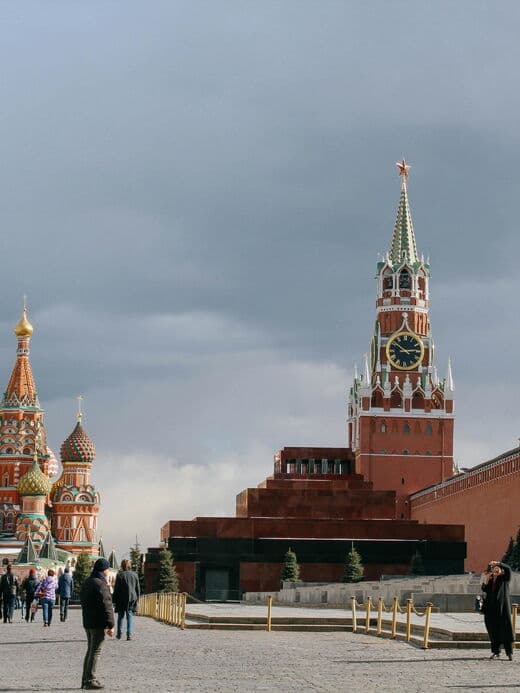
St. Basil's Cathedral is Russia's calling card, an architectural marvel of the 16th century. Nine churches beneath multicolored domes, no two alike. Ivan the Terrible built it to commemorate the capture of Kazan, and legend says the architects were blinded afterward so they could never repeat their masterpiece.
Construction History
1552—Russian forces capture Kazan, the last stronghold of the Tatar khanate. Ivan the Terrible orders a cathedral built to celebrate the victory. Construction is completed in 1561.
The architects were Barma and Postnik (possibly the same person: Postnik Barma). The blinding legend is likely a myth: evidence suggests the masters worked afterward.
The original name is the Cathedral of the Intercession of the Virgin on the Moat (the moat along the Kremlin wall was filled in during the 19th century). "St. Basil's Cathedral" is a folk name, from a chapel added later over the grave of the holy fool Basil.
Architecture
The cathedral is actually nine churches on one foundation. The central one—the Intercession—is the tallest (47 meters). Surrounding it are eight chapels dedicated to saints on whose feast days key events of the Kazan campaign occurred.
Each dome is unique: onions, tents, different sizes, different patterns. The colorful scheme appeared in the 17th century—originally the cathedral was white with golden domes.
Inside is a labyrinth of narrow passages, steep staircases, small churches. Spaces are tight, walls are painted, the feeling is like being in a fairytale tower.
Miraculous Survival
The cathedral survived everything: fires, wars, revolutions. Napoleon wanted to blow it up—he failed (legend says rain extinguished the fuses). Stalin planned to demolish it to widen parade grounds—Kaganovich supposedly talked him out of it.
Architect Baranovsky, responsible for restoration in the 1930s, allegedly sent a telegram: "Demolish the cathedral and I'll shoot myself on its steps." Whether true or not, the cathedral stood.
Visiting
Today the cathedral is a branch of the Historical Museum. Services are held rarely (it's a functioning church, but mainly a museum).
Inside are exhibits on the cathedral's history, icons, and liturgical objects. But the main attraction is the architecture itself: passages between churches, views from the gallery, the sense of space.
Tickets are sold on-site and online. Queues form, especially in summer. An audio guide is recommended—without it, much remains unclear.
Practical Information
Hours: 10:00 AM to 6:00 PM, longer in summer. Closed usually the first Wednesday of the month (verify beforehand).
Inside is tight with many stairs. Not recommended with strollers or for those with limited mobility.
Outside, the cathedral is photogenic anytime, but the best light is morning (sun from the east) or at sunset.
Atmosphere and Character
St. Basil's Cathedral is a building that defies rules. Asymmetry, riot of color, piled-up forms—yet harmony. As if the architects gathered all their ideas and realized them all at once.
On Red Square, it's the main attraction. The Kremlin is backdrop, GUM is scenery, but the cathedral is the star. Photos don't convey the scale and detail—you need to see it in person.
Inside is another world. After the square's grandeur—intimate spaces, low vaults, dimness. The contrast is striking and intentional: outside—triumph; inside—prayer.