Pamukkale Travertines
Pamukkale means "cotton castle" in Turkish. Snow-white travertine terraces filled with turquoise water cascade down the mountainside. This is a geological wonder, thermal spa, and UNESCO World Heritage Site all in one place.
How the Terraces Formed
Hot springs rich in calcium emerge at the surface and flow down the slope. When exposed to air, carbon dioxide escapes, calcium carbonate precipitates, and travertine forms—a white porous limestone.
This process has continued for millennia. The terraces grow a few millimeters each year. What you see is the result of hundreds of thousands of years of accumulation.
The whiteness of the travertines is stunning. In sunlight, the terraces are blinding. At sunset, they turn pink and gold. Water color in the pools depends on depth and lighting—from sky blue to emerald green.
History of the Site
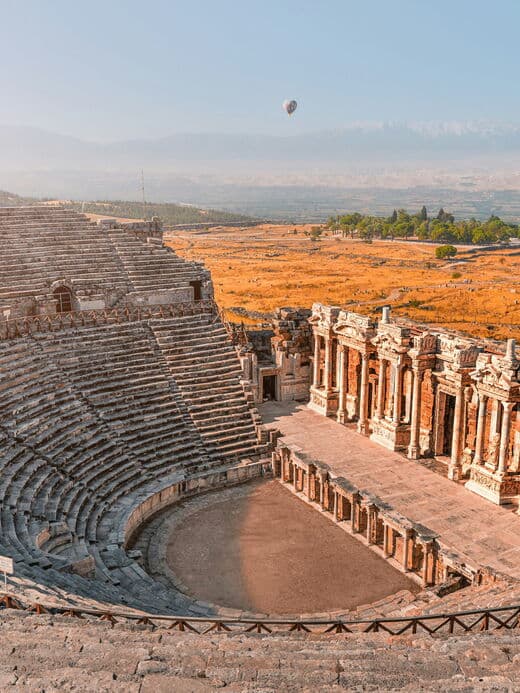
People have used these thermal springs since at least the 2nd century BC. Hierapolis grew nearby—a city that thrived on healing waters.
In the 20th century, hotels were built above the travertines. Pools were filled artificially, tourists walked in shoes, wastewater polluted the springs. By the 1980s, the white terraces had turned gray.
UNESCO insisted on changes. Hotels were demolished, special paths constructed, access restricted. The terraces are gradually recovering their whiteness, though the process isn't complete.
Rules and Regulations
Allowed: walking barefoot on designated terraces (shoes removed at entrance), swimming in permitted pools, photography.
Not allowed: leaving the paths, using soap or cosmetics, littering. Fines are serious, and rules are enforced.
Most terraces are closed for restoration. The open section spans several hundred meters—enough for a memorable experience.
Practical Tips
Best times: sunrise and sunset for photography, but crowded. Early morning (at opening) means fewer crowds and comfortable temperatures. Midday is hot, and the whiteness is blinding.
What to bring: sunscreen, sunglasses, hat. Towel if planning to swim. Bag for shoes (provided at entrance, but your own is more reliable).
Surface: travertine is uneven, slippery in places, sharp in others. Walk carefully, especially when wet. Hold children's hands.
Water temperature: pools are around 35C (95F)—pleasant but not for long soaks. Depth is shallow—knee to waist level.
Visiting Route
Main entrance is from Pamukkale village (south). You walk up the travertines barefoot (30-40 minutes) and emerge at Hierapolis.
Alternative: north entrance (for cars and buses). From there, explore Hierapolis first, then descend to the terraces.
Allow at least half a day for terraces plus Hierapolis. If you want to swim in the antique pool, add more time.
Getting There
Nearest city is Denizli (20 km). Buses from Istanbul (10-12 hours), Antalya (4-5 hours), Izmir (4 hours). Dolmuses from Denizli to Pamukkale run every 20 minutes.
Many visit on day trips from Antalya or stay overnight in Pamukkale village to catch both sunrise and sunset.
Atmosphere and Character
Pamukkale is a place that's hard to describe and impossible to forget. The whiteness hurts your eyes, the water underfoot is surprisingly warm, mountains on the horizon turn blue—an unreal combination.
Yes, there are many tourists. Yes, it's far from untouched nature—humans have intervened for centuries. But the terraces still amaze. Geology works slowly but surely.
Combining with Hierapolis gives the complete picture: natural wonder plus human history. People came here two thousand years ago for the same reasons they come now—beauty and healing.