Hierapolis Ancient City
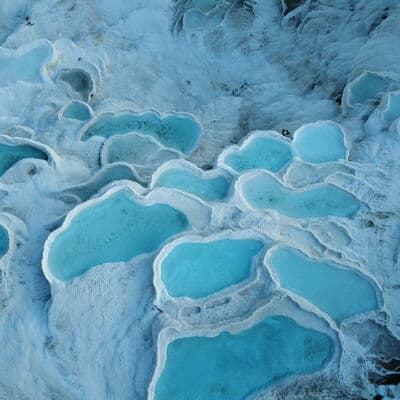
Hierapolis is a sacred city above the white terraces of Pamukkale. Roman ruins on the edge of the travertines: theater, necropolis, temples, baths. People came here to be healed by hot springs; the apostle Philip lived and died here. A city of the dead and a city of healing—in one place.
History of the City
Hierapolis was founded around 190 BC by the Pergamene kings. The name means "sacred city"—probably due to the thermal springs attributed to divine origin.
The city flourished under the Romans. Earthquakes in 17 and 60 AD destroyed it, but it was rebuilt each time. Peak prosperity came in the 2nd-3rd centuries: population reached 100,000.
In Byzantine times, Hierapolis became a center of Christian pilgrimage—the tomb of the apostle Philip was venerated here. After the Seljuk conquest, the city gradually emptied.
What to See
Theater—the best-preserved building. 15,000 seats, richly decorated stage with reliefs. Acoustics are excellent—test them yourself. From upper rows—panorama of the travertines and valley.
Necropolis—one of the largest in the ancient world. Over 1,200 tombs of various types: sarcophagi, crypts, tumuli. Stretches 2 km along the road to the north gate.
Plutonium—a sacred cave, entrance to the underworld. Poisonous gas (carbon dioxide) emerges from the crevice. Priests demonstrated "miracles": animals died, while they (holding their breath) survived.
Temple of Apollo—next to the Plutonium. Apollo and his chthonic powers were especially venerated here.
Martyrium of St. Philip—an octagonal 5th-century church on a hill above the city. According to tradition, the apostle was crucified here. Recent excavations discovered his presumed tomb.
Antique Pool
Cleopatra's Pool (though Cleopatra was never here)—a thermal spring among ruins. Water is 36C (97F), with ancient columns on the bottom that collapsed during an earthquake.
Swimming among marble fragments is a unique experience. Water is rich in minerals, allegedly good for skin. Entrance fee applies; towels and lockers for rent.
The pool is very popular—queues in season. Come at opening or near sunset.
Museum
The archaeological museum is housed in Roman baths. Collection includes sarcophagi, statues, reliefs, coins from Hierapolis and surroundings. Small but quality—allow an hour.
Combining with Pamukkale
Hierapolis and Pamukkale travertines are a single complex with a combined ticket. Logical route:
1. Enter through south gate (from Pamukkale village).
2. Climb the travertines (barefoot, 30-40 minutes).
3. Explore Hierapolis: pool, theater, museum.
4. Necropolis and exit through north gate (or return).
Allow at least 3-4 hours, preferably half a day.
Practical Information
Complex open 6:30 AM to 9 PM (summer) or 5 PM (winter). Single ticket covers travertines and Hierapolis. Antique pool costs extra.
Arrive early morning—fewer people, more comfortable temperature. Sunset is also beautiful but leaves less exploration time.
Comfortable shoes essential—huge territory with uneven surfaces. Water, hat, sunscreen—standard kit.
Getting There
Nearest major city is Denizli (20 km). Buses from Istanbul, Antalya, Izmir. Dolmuses from Denizli to Pamukkale every 20 minutes.
Many visit on day trips from Antalya (4-5 hours travel) or stay overnight in Pamukkale village.
Atmosphere and Character
Hierapolis is where antiquity and nature are inseparably intertwined. White terraces beside white marble ruins. Thermal springs that have drawn people for thousands of years. A city built on healing water and the cult of death.
The necropolis is especially impressive. Hundreds of sarcophagi stand along the road like eternal travelers. Greek and Latin inscriptions tell of merchants, doctors, craftsmen. Ordinary people who died two thousand years ago—and are still remembered.
After the bustle of the travertines (always crowded), Hierapolis offers respite. Here you can wander among ruins, sit in the theater, gaze at the valley—and feel time.