Kaleiçi
Kaleiçi is Antalya's old town behind Byzantine walls. Narrow streets, Ottoman houses, a Roman harbor, minarets and bell towers. It's the tourist heart of the resort, but beneath the layer of souvenir shops lies the living history of two millennia.
District History
Antalya (Attaleia) was founded by Pergamene King Attalus II in the 2nd century BCE. Romans, Byzantines, Seljuks, Ottomans—all left their mark within these walls.
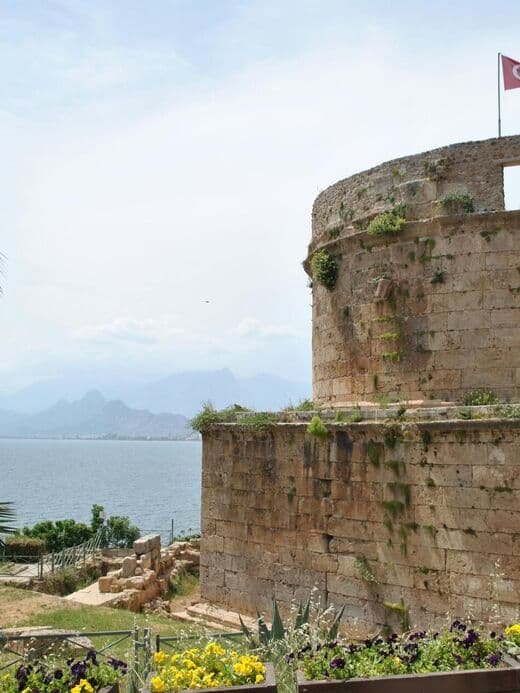
The fortress walls are Byzantine, though the foundations are older. They protected the city until the 20th century, when Antalya expanded beyond its old boundaries.
Until the 1980s, Kaleiçi was an ordinary residential quarter—dilapidated and poor. Restoration transformed it into a tourist center: houses became hotels and restaurants, streets were paved, ruins illuminated.
What to See
Hadrian's Gate—a triumphal arch from 130 CE, built for the emperor's visit. Three archways, Corinthian columns—one of Turkey's best-preserved Roman monuments.
Yivli Minare (Fluted Minaret)—Antalya's symbol. A 13th-century Seljuk minaret 38 meters tall. The fluted surface of red brick uses a technique unusual for the region.
Clock Tower (Saat Kulesi)—a 19th-century Ottoman tower, formerly part of the fortifications. The square nearby offers good views of the harbor.
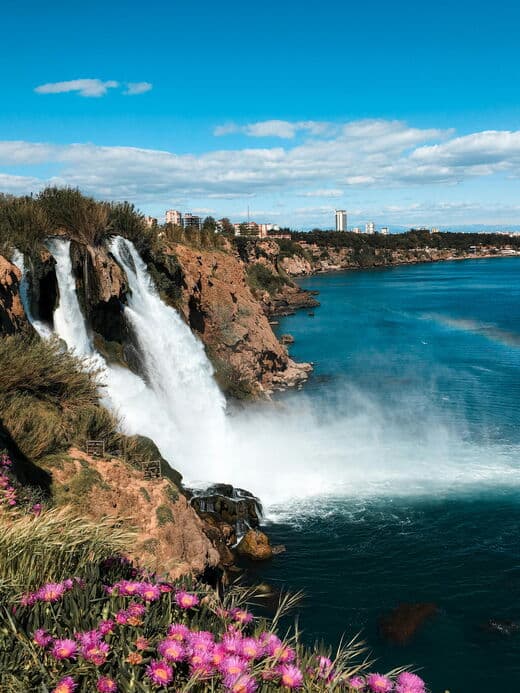
Old Harbor—a Roman harbor still in operation. Yachts, restaurants, sunsets. Excursion boats to Düden Waterfalls depart from here.
Murat Pasha Mosque—a 16th-century Ottoman mosque, the oldest in the city.
Kesik Minare (Truncated Minaret)—ruins of a building that was a temple, church, and mosque. The minaret collapsed in the 19th century; the ruins are preserved.
Streets and Atmosphere
Kaleiçi is a labyrinth. Getting lost is easy, but the district is small—you'll always reach the walls or harbor. That's part of the pleasure: turning into random alleys, finding hidden courtyards, unexpected views.
Ottoman houses with bay windows overhang the streets. Many have been restored with excessive brightness, but some retain authentic patina. Bougainvillea blooms on every corner.
By day Kaleiçi is touristy, by evening—romantic. Lanterns light up, restaurants set out tables, music drifts from bars. This is postcard Antalya—but postcards can be beautiful.
Shopping and Food
Shops offer the standard Turkish set: carpets, ceramics, leather, jewelry, souvenirs. Prices are higher than Istanbul's Grand Bazaar—bargaining is appropriate but don't go overboard.
Restaurants suit any budget. By the harbor—pricier and more touristy. In the alleys—cheaper and more authentic. Fish and seafood are the coastal specialty.
Rooftop cafés are a genre unto themselves. Sea views, minarets, sunset—you pay as much for atmosphere as for food.
Practical Information
Kaleiçi is a pedestrian zone. Cars exist but are few—streets are too narrow. Comfortable shoes are essential: the cobblestones are uneven.
Best time for a stroll is early morning (shops closed, few tourists) or sunset (romance, photogenicity). Midday is hot, especially in summer.
Hotels in Kaleiçi are often in historic buildings. Atmospheric, but air conditioning and quiet aren't guaranteed. Check reviews.
Getting There
From Antalya's newer districts—tram to İsmetpaşa or Müze stop, then 5-10 minutes on foot. Taxis work too, but can't enter Kaleiçi itself.
From the bus station—tram through the center. From the airport—taxi (20-30 minutes) or bus plus tram.
Atmosphere and Character
Kaleiçi is a compromise between museum and shopping center. The old town structure is preserved, but the contents have changed. Fewer residents, more business.
That's not bad—just something to understand. Kaleiçi is beautiful, well-maintained, safe. It's pleasant to stroll, drink coffee with sea views, buy souvenirs. But for authentic Turkey—head to other districts.
However you look at it, this is a place with 2,000 years of history. Hadrian's Gate remembers Roman legions. The minarets heard Ottoman prayers. The harbor has seen ships of all eras. Layers of the past are here—beneath your feet and overhead.