Sanctuaire de Matinloc
Matinloc Shrine : Où la spiritualité rencontre la beauté naturelle
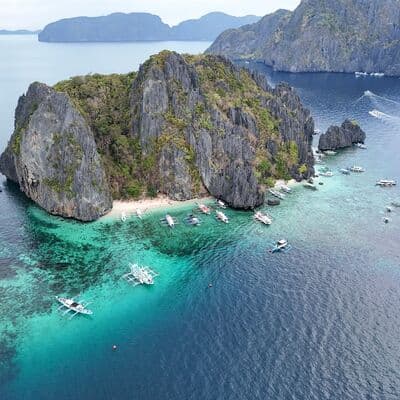
Caché sur une falaise isolée de l'île Matinloc se trouve un lieu qui unit histoire, spiritualité et beauté naturelle à couper le souffle : le Matinloc Shrine. Cette ancienne chapelle, autrefois construite comme lieu de dévotion privé, est devenue l'une des attractions les plus fascinantes de la baie de Bacuit. Ici, les formations calcaires dramatiques d'El Nido se combinent avec une histoire culturelle unique pour créer une expérience qui va bien au-delà de la simple visite de plage.
Le sanctuaire lui-même est un modeste bâtiment blanc construit dans les rochers. Mais sa vraie magie réside dans l'environnement : eaux turquoise, plages cachées, un point de vue spectaculaire et l'atmosphère mystérieuse d'un lieu de culte abandonné créent ensemble une expérience inoubliable.
L'histoire du Matinloc Shrine
L'histoire du sanctuaire est aussi fascinante que le lieu lui-même. Dans les années 1980, un homme d'affaires philippin fortuné nommé Orlando Duenas a fait construire ici une chapelle privée. Le sanctuaire était dédié à sa mère décédée et servait de refuge spirituel au milieu de la nature spectaculaire.
Le domaine comprenait non seulement la chapelle, mais aussi une petite maison d'hôtes et la célèbre statue de la Vierge Marie qui regarde encore aujourd'hui vers la mer. Au fil des années, cependant, le lieu a été abandonné et est partiellement tombé en ruine – ce qui lui confère une atmosphère mystérieuse, presque spirituelle.
Aujourd'hui, le Matinloc Shrine est accessible au public et fait partie des points forts du Tour C. L'histoire du lieu – un mélange de foi privée, de perte et de beauté naturelle – donne à la visite une profondeur émotionnelle qui va au-delà de la pure esthétique.
L'ascension vers le point de vue
Le point fort absolu du Matinloc Shrine est le point de vue au sommet de la falaise. L'ascension commence directement derrière la chapelle et mène par un escalier raide mais court vers le haut. En environ cinq à dix minutes, vous atteignez le sommet – et la vue qui vous attend là en vaut plus que la peine.
D'en haut, vous avez un panorama à 360 degrés sur la baie de Bacuit. Vous voyez les innombrables îles et formations rocheuses qui s'étendent jusqu'à l'horizon, le turquoise lumineux de la mer, et par temps clair même la silhouette des montagnes du continent de Palawan. Ce point de vue est l'un des meilleurs de toute la région et offre des motifs photographiques qui ornent les feeds Instagram du monde entier.
L'ascension est faisable pour la plupart des visiteurs mais nécessite des chaussures solides et un niveau de forme physique de base. Les marches peuvent être glissantes par temps humide – la prudence est particulièrement de mise après les averses.
La statue de la Vierge Marie et la chapelle
Au pied de la falaise, directement au bord de l'eau, se dresse l'emblématique statue blanche de la Vierge Marie. Cette figure grandeur nature regarde calmement vers la mer et est devenue un symbole du Matinloc Shrine. La statue est un motif photographique populaire et dégage une énergie paisible qui touche de nombreux visiteurs.
La chapelle elle-même est petite et simple, mais atmosphérique. Les murs blanchis à la chaux, les bancs en bois simples et la vue à travers les fenêtres ouvertes créent un espace de recueillement. Même si vous n'êtes pas religieux, le silence du lieu invite à la contemplation.
La conception du sanctuaire – niché directement dans les falaises, trônant au-dessus de l'eau – témoigne de la dévotion de son constructeur. Il a fallu des efforts et des ressources considérables pour créer un tel lieu dans cet environnement isolé.
Secret Beach : Le joyau caché
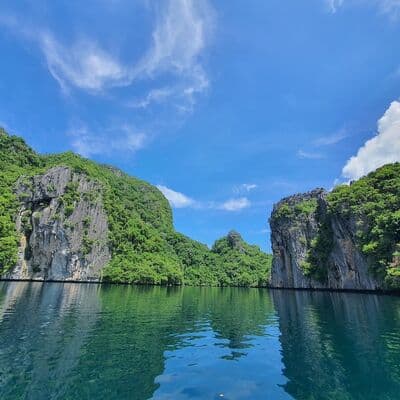
À quelques minutes en bateau du Matinloc Shrine se trouve l'une des plages les plus extraordinaires de la baie de Bacuit : Secret Beach. Cette plage minuscule mais parfaite est entièrement entourée de falaises calcaires et n'est accessible que par une petite ouverture dans le rocher.
L'accès nécessite de nager à travers une étroite ouverture dans la paroi rocheuse – une expérience courte mais excitante. Une fois de l'autre côté, vous vous retrouvez dans une baie protégée qui ressemble à un amphithéâtre naturel : de hauts rochers tout autour, du sable blanc au sol et une eau cristalline qui scintille au soleil.
Secret Beach fait souvent partie du Tour C et est combinée avec le Matinloc Shrine. Le temps de séjour est limité, mais le charme de cet endroit caché reste longtemps en mémoire.
Tour C : Le contexte
Le Matinloc Shrine est une attraction principale du Tour C, considéré comme le plus aventurier des tours réguliers d'island hopping à El Nido. En plus du sanctuaire, le Tour C comprend généralement Hidden Beach, Secret Beach, Star Beach et Helicopter Island.
Le coût du Tour C est d'environ 1500-1700 pesos par personne, incluant transport, déjeuner, équipement de snorkeling et tous les frais. L'excursion part le matin d'El Nido Town et dure toute la journée.
Le Tour C tend à attirer moins de visiteurs que le populaire Tour A, ce qui signifie que vous pouvez souvent profiter des attractions dans une atmosphère plus calme. Pour ceux qui souhaitent vivre El Nido loin des foules, cette excursion est un excellent choix.
Conseils pratiques pour votre visite
Portez des chaussures confortables pour l'ascension au point de vue – les tongs sont possibles mais pas idéales. Les chaussures de sport ou sandales de randonnée offrent plus de stabilité sur les marches raides.
Apportez suffisamment d'eau, surtout pour l'ascension par temps chaud. Le Matinloc Shrine n'a pas de stands de vente ni d'installations – tout ce dont vous avez besoin, vous devez l'apporter vous-même.
La protection solaire est essentielle. Le point de vue n'offre pas d'ombre, et la réflexion de l'eau amplifie les rayons UV.
Pour visiter Secret Beach, vous devez savoir nager et être à l'aise dans l'eau. Le passage peut être plus difficile à traverser par mer agitée.
Conseils de photographie
Le point de vue du Matinloc Shrine offre des possibilités photographiques spectaculaires. Pour les prises de vue panoramiques, apportez un objectif grand angle ou utilisez la fonction panorama de votre smartphone.
Le meilleur moment pour la lumière est en fin de matinée ou en début d'après-midi, quand le soleil illumine l'eau de façon optimale et que les couleurs sont les plus vives. Par temps nuageux, les contrastes sont plus doux, ce qui peut également donner de beaux résultats.
La statue de la Vierge Marie est plus impressionnante quand elle est photographiée avec la mer en arrière-plan. Expérimentez différents angles – d'en bas elle paraît plus majestueuse, de côté plus intime.
Respect et attention
Bien que le Matinloc Shrine soit aujourd'hui une attraction touristique, il reste un lieu de spiritualité pour certaines personnes. Comportez-vous de manière respectueuse, évitez les conversations bruyantes dans la chapelle, et traitez le lieu avec la dignité qu'il mérite.
La nature autour du sanctuaire est fragile. Ne touchez pas les rochers sous l'eau, n'emportez pas de déchets, et ne laissez rien d'autre que des empreintes de pas. La préservation de cet endroit unique est la responsabilité de nous tous.
La magie du Matinloc Shrine
Le Matinloc Shrine est plus qu'un simple arrêt sur une excursion d'island hopping. C'est un lieu où histoire et présent, spiritualité et beauté naturelle, aventure et recueillement se rencontrent. L'ascension vers le point de vue vous récompense avec l'un des panoramas les plus spectaculaires des Philippines, et l'atmosphère du sanctuaire abandonné éveille des sentiments qui vont au-delà de l'ordinaire.
Dans un monde souvent orienté vers la vitesse et la consommation, le Matinloc Shrine offre un moment de pause. Ici, vous pouvez admirer la beauté de la nature, réfléchir à la fugacité de la vie, et peut-être – juste peut-être – trouver un soupçon de la paix que le constructeur de ce lieu cherchait autrefois.
Visitez le Matinloc Shrine non seulement pour les photos, mais pour l'expérience. Laissez l'atmosphère vous imprégner, respirez profondément, et prenez un moment pour apprécier la beauté extraordinaire qui vous entoure.