Ras Al Khaimah
Ras Al Khaimah 2026: What You Need to Know
If someone told you there was an emirate in the UAE where you could zipline off the highest mountain in the country at 9 AM, explore a genuine ghost village at noon, and watch the sunset from a pristine mangrove kayak trail by 5 PM — all without the Dubai price tag — you would probably think they were exaggerating. They are not. That place is Ras Al Khaimah, and it remains one of the most underrated destinations in the Middle East.
RAK, as locals and expats call it, sits at the northern tip of the UAE, about 45 minutes from Dubai International Airport. Think of it as the anti-Dubai: quieter, more affordable, genuinely diverse in its landscapes, and refreshingly unbothered by the race to build the tallest or the flashiest anything. What it lacks in skyscrapers and mega-malls, it makes up for with Jebel Jais — the UAE's highest peak at 1,934 meters — ancient forts, turquoise coastline, and a desert interior that feels like stepping onto another planet.
Who is RAK for? Families looking for an adventure-packed holiday without the sensory overload of Dubai. Couples who want beach and mountains in one trip. Budget-conscious travelers who still want a premium Gulf experience. Hikers and outdoor enthusiasts who have exhausted Oman and want something new. And honestly, anyone who has done Dubai and Abu Dhabi and wants to see the UAE that most tourists never find.
The honest downsides: Nightlife is essentially nonexistent outside hotel bars. Public transport does not exist in any practical sense — you will need a car. The summer heat (June through September) is genuinely brutal, with temperatures regularly exceeding 45C (113F). And if your idea of a vacation is shopping malls and urban energy, RAK will feel sleepy. But if you are willing to trade glitz for substance, this emirate delivers in ways that will surprise you.
Neighborhoods: Where to Stay
RAK is not large — the entire emirate is about the size of Rhode Island — but the character shifts dramatically depending on where you base yourself. Here is an honest breakdown of the seven main areas, so you can match your budget and vibe to the right neighborhood.
Al Marjan Island
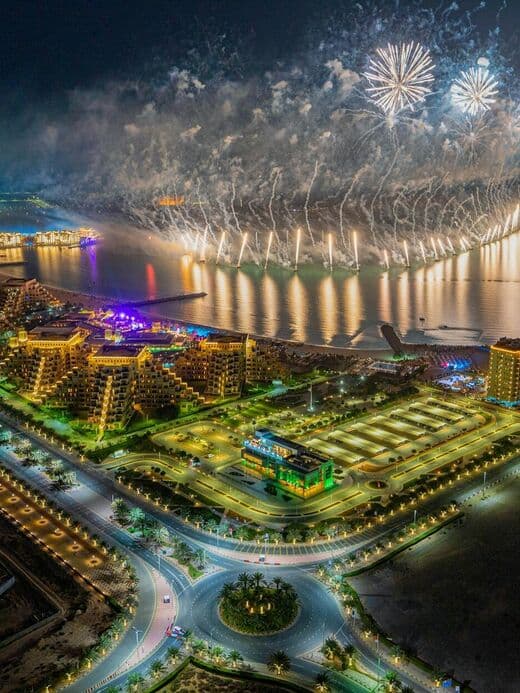
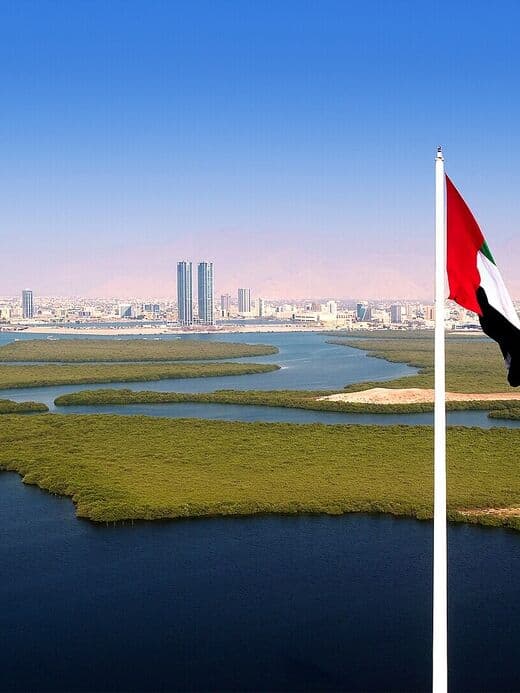
Four man-made coral-shaped islands jutting into the Arabian Gulf — RAK's luxury beach zone. Home to the Rixos Bab Al Bahr, the Hilton Resort, and the new Wynn Resort. Immaculate beaches, turquoise water, best sunset views in the emirate. The downside: it feels isolated from the 'real' RAK, essentially a resort bubble. $180-400/night, though Rixos all-inclusive deals are surprisingly good value for families.
Al Hamra Village
Planned community around the Al Hamra Golf Club — relaxed, suburban, popular with expats. The Waldorf Astoria anchors the luxury end; apartment-hotels work well for longer stays. The 18-hole Peter Harradine golf course with Hajar Mountain views is genuinely excellent. Hotels $120-300/night, apartments from $70.
Downtown RAK (Old Town)
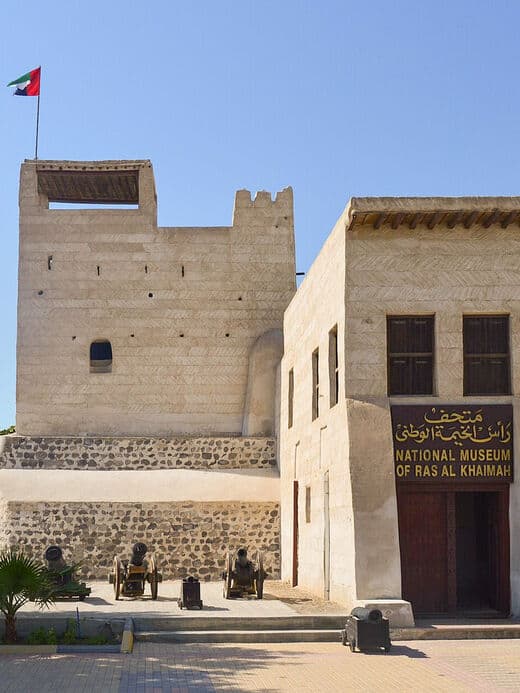
The historical heart, split by RAK Creek — Old RAK to the west, Nakheel to the east. The National Museum, old souks, fish market, and real street life that has largely disappeared from Dubai. Not polished — think dusty side streets and utilitarian blocks — but authentic. $40-60/night. Your base if you want RAK as a living city, not a resort.
Mina Al Arab
Newer waterfront development built around a flamingo sanctuary and mangrove reserve. The Cove Rotana and Anantara are standouts — you can watch flamingos from the hotel pool. Quieter than Al Marjan, 10 minutes from downtown by car. $130-280/night.
Jebel Jais Area
The mountain zone, 40 minutes from the coast. Limited accommodation — the Bear Grylls Explorers Camp offers glamping cabins from $150/night. Best as a one-or-two-night add-on rather than a full-trip base, since the beach is 45 minutes each way.
Al Dhait
Residential suburb south of downtown — the budget option. Clean hotel apartments from $30-50/night, local restaurants, Lulu Hypermarket for self-catering. Not glamorous, but your money goes much further.
Yasmin Village (Khuzam Area)
Mid-range sweet spot along the main highway. DoubleTree by Hilton and City Hotel offer solid four-star comfort at $80-150/night. Well-positioned for day trips, enough restaurants within walking distance. Practical and well-priced.
Best Time to Visit
The short answer: November through March. This is when RAK becomes genuinely idyllic — daytime temperatures hover between 24-30C (75-86F), humidity drops to comfortable levels, and the skies are almost perpetually clear. The sea is still warm enough for swimming (around 23-26C), the mountains are cool and perfect for hiking, and you can actually enjoy a desert safari without feeling like you are inside an oven.
Peak season runs mid-December through February. Prices climb 30-50%, and popular hotels sell out weeks ahead — book 6-8 weeks in advance. The upside: RAK hosts most events during this window, including the RAK Half Marathon (February) and adventure competitions on Jebel Jais.
Shoulder season (October and April) offers the best value. October still carries residual heat (35-38C/95-100F) but is manageable. April is beautiful — low 30s, no rain, prices 20-40% below peak. The Jebel Jais trails are particularly pleasant before summer sets in.
May through September: skip it. Temperatures hit 42-48C (108-118F) with 90%+ humidity. Hotel prices plummet to $80-100 for five-star rooms, but you will spend the trip indoors. Only exception: water parks and spa retreats.
Pro tips: Best deals appear 3-4 weeks before arrival in shoulder season. Check hotel websites directly — RAK properties often beat aggregator prices. Half-board and all-inclusive packages are genuinely worth it given limited dining outside hotel zones.
Itineraries: 3 to 7 Days
RAK rewards both short visits and extended stays. Here are day-by-day plans with specific logistics, timings, and places. Adjust based on your pace — these assume you have a rental car, which you absolutely should.
Day 1: Mountains and Heights
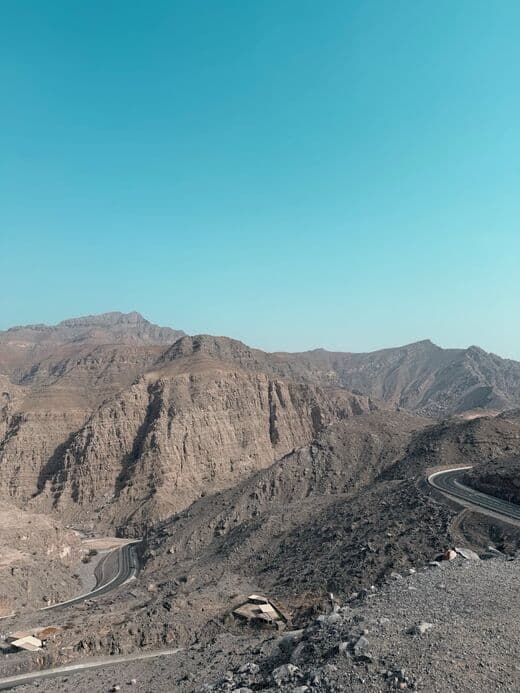
Start early. Leave your hotel by 7:30 AM and drive to Jebel Jais — the road itself is one of the great driving experiences in the Gulf, a beautifully engineered series of switchbacks climbing through bare red-brown mountains that look almost Martian. The drive takes about 45 minutes from the coast.
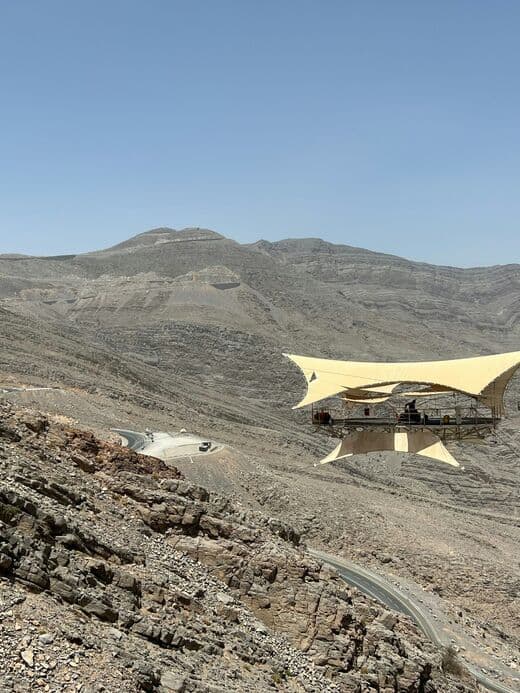
At the summit area, book the Jebel Jais Flight — the world's longest zipline at 2.83 kilometers. Pre-book online ($95/350 AED per person) as it sells out during peak season. The experience takes about 2-3 hours including safety briefing and the flight itself. If ziplines are not your thing, tackle the Jebel Jais Viewing Deck for free panoramic views, or hike one of the marked trails — the Stairway to Heaven trail is challenging but spectacular (allow 4-5 hours round trip, bring at least 3 liters of water).
For lunch, head to 1484 by Puro — named for its altitude in meters, this is the UAE's highest restaurant. The terrace views are extraordinary, and the Mediterranean menu is solid. A main course runs $18-28 (65-100 AED). Get the grilled sea bass and a side of truffle fries.
Descend in the afternoon. If you still have energy, stop at Jebel Jais Camp for via ferrata climbing ($55/200 AED) — a guided climb along fixed iron rungs and cables. Back to your hotel by 5-6 PM for sunset from the coast.
Day 2: History and Local Culture
Drive to Downtown RAK by 9 AM. Start at the National Museum, housed in a beautiful 18th-century fort that served as the ruling family's residence until the 1960s. Admission is just $1.50 (5 AED) — genuinely one of the best cultural bargains in the UAE. Allow 60-90 minutes. The archaeology section, with finds dating back 7,000 years, is more impressive than you might expect.
Walk 10 minutes to the Old Souk (follow signs toward the creek). This is a working market, not a tourist reconstruction — you will find spices, textiles, perfumes, and household goods sold to locals. Prices are already reasonable, but gentle bargaining (10-20% off) is expected and welcomed.
Cross the bridge to the RAK Fish Market. Even if you are not buying, the spectacle of the morning catch being auctioned is worth the visit. Go before 11 AM for the best action. The small restaurants next door will grill your purchased fish for $2-3 (7-10 AED).
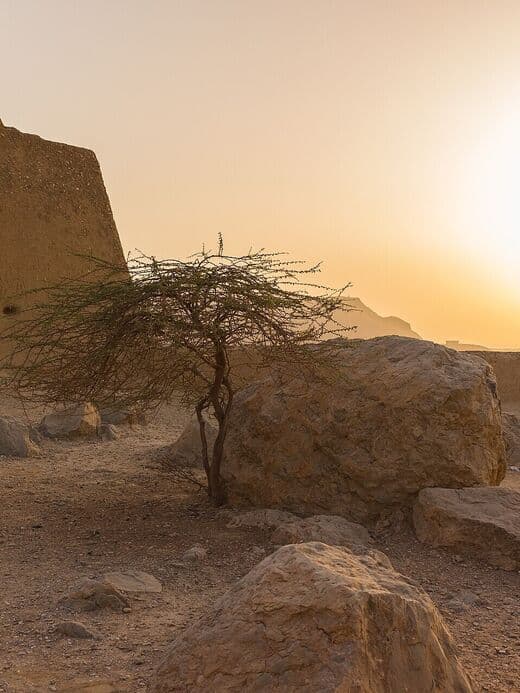
After lunch, drive 20 minutes south to Dhayah Fort — the only surviving hilltop fort in the UAE. The climb is short but steep (15 minutes), and the 360-degree views from the top — mountains behind, palm groves and sea ahead — are stunning. This was the site of the last stand against British forces in 1819, and you can almost feel the strategic logic of the position.
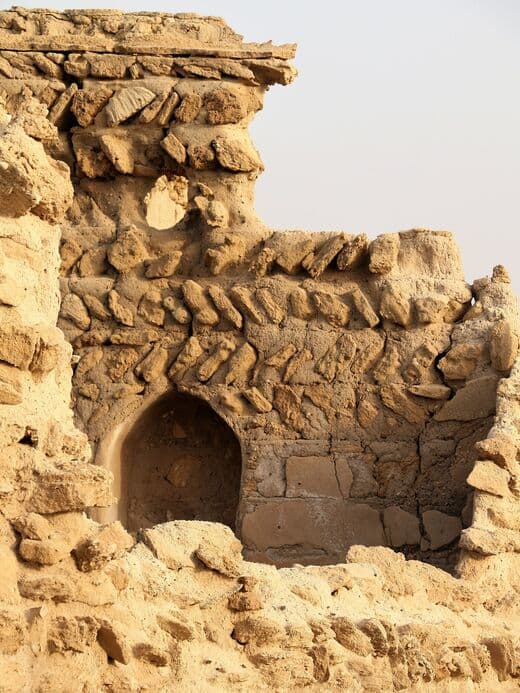
Continue 15 minutes to Al Jazirah Al Hamra, the so-called 'ghost village.' This is a genuinely atmospheric abandoned fishing settlement — entire coral-stone houses, a mosque, and a souk left largely as they were when the village was abandoned in the 1960s. Locals say it is haunted; at the very least, it is beautifully eerie. Best visited in the golden hour before sunset. Give yourself 45-60 minutes to wander.
Day 3: Sea and Desert
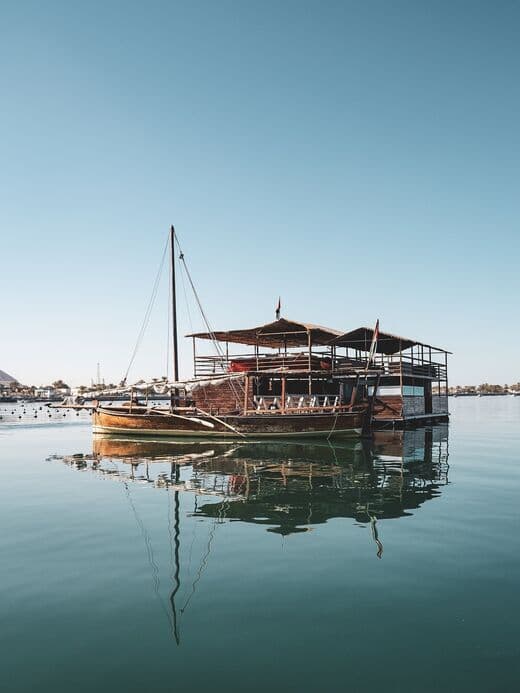
Morning: Mangrove kayaking at Al Rams (north of RAK city, 20-minute drive). Several operators run guided tours starting at 7:30 or 8 AM — Al Rams Kayaking is reliable and charges about $30 (110 AED) for a 2-hour paddle. The mangrove channels are glassy calm in the morning, and you will likely see herons, kingfishers, and possibly turtles. This is the most peaceful experience in RAK.
Late morning: hit the beach. If you are staying at a resort, use your hotel beach. If not, the public beach at Al Hamra is clean and uncrowded on weekdays. Bring shade — there are limited facilities but the swimming is excellent.
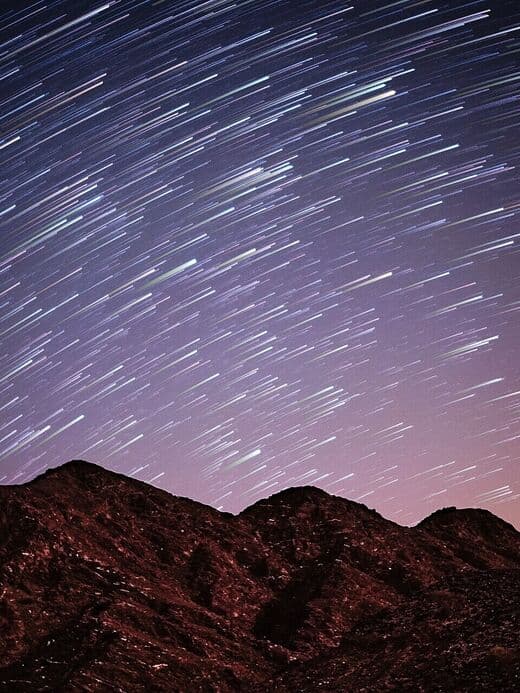
Afternoon and evening: Desert safari. Book through RAK Adventure Centre or Dreamdays Tourism ($65-85/240-310 AED per person). Dune bashing, camel ride, sandboarding, and BBQ dinner at a Bedouin-style camp. Somewhat touristy, yes, but the RAK desert is more rugged and less manicured than Dubai's. The stargazing after dinner, far from city lights, is magnificent.
Days 4-5: Adventure and Relaxation
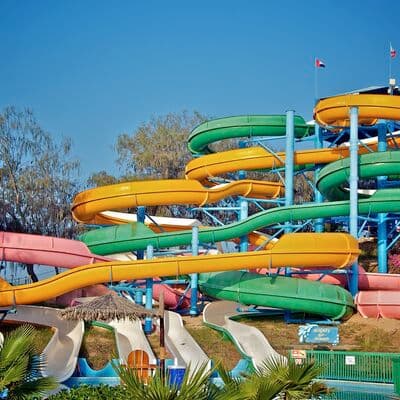
Day 4: Ice Land Water Park at the Rixos — $50 (185 AED) adults, $40 (145 AED) children. Great mix of slides and lazy rivers. Alternatively, drive to Wadi Shawka (40 minutes) for a half-day hike through a rocky canyon with seasonal pools. Bring hiking shoes and plenty of water.
Day 5: Morning at Khatt Hot Springs (25 minutes from downtown). Public springs are basic but free; the Khatt Springs Hotel offers polished spa treatments ($40-80). Afternoon: Suwaidi Pearl Farm in Umm Al Quwain (30 minutes south) — the UAE's only cultured pearl farm, with boat tours and diving experiences from $95 (350 AED).
Days 6-7: Day Trip and Slow Day
Day 6: Dubai day trip. 60-75 minutes on E311. Highlights: Burj Khalifa viewing deck (pre-book 10 AM, $38/140 AED), Dubai Mall, and Old Dubai — Deira and Bur Dubai for gold and spice souks, plus abra rides across the creek ($0.25/1 AED). Return by evening.
Day 7: Slow day. Sleep in. Walk the Corniche for mountain views. Last-minute shopping at Manar Mall. Final lunch at one of the restaurants below. If flying from Dubai, leave by 3 PM for traffic.
Where to Eat
RAK's dining scene is not going to win any Michelin stars, but it has an honest, unpretentious quality that I find more appealing than Dubai's Instagram-driven restaurant culture. Here is where to eat, broken down by category and budget.
Street Food and Markets
The Old RAK fish market area is the best spot for cheap, fresh seafood. Grilled hammour (grouper) with rice and salad for $4-6 (15-22 AED). The small cafeterias (this is what they call basic eateries here) around the Nakheel area serve excellent shawarma ($1-1.50/4-5 AED), falafel wraps, and massive plates of biryani for $3-4 (10-15 AED). Try the Al Nakheel Cafeteria for no-frills Emirati comfort food at rock-bottom prices. Most of these places look unimpressive from the outside — faded signage, plastic chairs, fluorescent lighting — but the food is consistently good and freshly prepared.
Local and Mid-Range Restaurants
Eayshat Awal — Hands down the best Emirati restaurant in RAK. The name means 'the old days' in the local dialect, and the menu is a love letter to traditional Gulf cuisine. Try the machboos with lamb shank and the lugaimat for dessert. Mains $10-18 (35-65 AED). Located near the Corniche.
Al Fanar — A UAE chain specializing in Emirati heritage cuisine, with a beautifully decorated interior that recreates a 1960s-era Gulf village. The menu is extensive and reliable. The chicken machboos and the harees are standouts. Mains $12-22 (45-80 AED). Located at Manar Mall.
Thunder Road — An unexpectedly good American-style burger and grill joint at the Rixos Bab Al Bahr. The burgers are massive and well-executed, and there is a pool table. Mains $14-24 (50-90 AED). Good for families with teenagers who are craving something familiar.
Piaceri da Gustare — Solid Italian run by an actual Italian chef, located in Al Hamra. Handmade pasta, proper wood-fired pizza, and a decent wine list (by RAK standards). Mains $15-28 (55-100 AED). Book ahead on weekends.
Fine Dining
Lexington Grill at the Waldorf Astoria — This is RAK's most upscale dining experience. Premium steaks, seafood, and an impressive wine cellar. The terrace seating overlooking the Gulf is the move. Expect to spend $70-120 (260-440 AED) per person with drinks. Dress code enforced (smart casual minimum). Reserve at least 48 hours ahead during peak season.
1484 by Puro on Jebel Jais — Already mentioned in the itinerary, but worth emphasizing: this restaurant is as much about the setting as the food. The terrace at 1,484 meters with mountain panoramas is unforgettable. The menu leans Mediterranean — pastas, grilled meats, salads. Mains $18-32 (65-120 AED). Lunch is better than dinner (the views are the point, and they disappear after dark). No alcohol served.
Shore House at the Anantara Mina Al Arab — Contemporary seafood with a Southeast Asian twist, right on the beach. The prawn curry and the catch of the day are reliable. The sunset cocktails here are probably the best in the emirate. Mains $22-40 (80-150 AED).
Cafes and Casual Spots
RAK has a growing specialty coffee scene. RAK Roasters in Al Hamra does excellent single-origin pour-over ($4-6/15-22 AED). The Coffee Lab near Manar Mall is another good option. For shisha and Arabic coffee, try any of the traditional coffee shops along the Corniche — a pot of Arabic coffee with dates costs $3-5 (10-18 AED) and the people-watching is free. Shakespeare and Co. at Al Hamra Mall does reliable brunch ($15-25/55-90 AED for a full spread) in a quirky vintage-European setting that somehow works.
Must-Try Food
Emirati cuisine does not get the attention it deserves. It is a fascinating blend of Gulf Arab, Persian, Indian, and East African influences, shaped by a desert-and-sea environment. Here are the dishes you should not leave RAK without trying.
The Main Dishes
Machboos (Majboos) — The national dish. Spiced basmati rice (saffron, turmeric) layered with slow-cooked meat or fish, topped with fried onions and raisins. The Gulf's answer to biryani, but with dried limes (loomi) giving a unique sour-savory depth. Cafeterias: $4-6 (15-22 AED). Restaurants: $15-20 (55-75 AED). The fish version with local hammour is RAK's specialty.
Harees — Cracked wheat slow-cooked with chicken or lamb to a porridge-like consistency, topped with ghee and cinnamon. Sounds plain; tastes extraordinary. Traditionally a Ramadan dish, available year-round. $5-8 (18-30 AED). Best at Eayshat Awal or Al Fanar.
Jasheed — Dried, salted shark meat cooked into a thick stew, served over rice. An acquired taste — rich, intensely savory, slightly funky — but genuinely unique to this region. Ask at local restaurants or fish market eateries. $6-10 (22-35 AED).
Snacks and Street Food
Shawarma — The local spots use a spice blend with cardamom, and the garlic sauce is homemade and punchy. Chicken $1-1.50 (4-5 AED), beef $1.50-2 (5-7 AED). Best found at no-name cafeterias in Nakheel — look for the ones with a line of construction workers at lunch.
Hummus and Baba Ghanoush — The versions at Levantine places in downtown RAK are superb, especially baba ghanoush made with charcoal grilling. $2-4 (7-15 AED) with fresh bread.
Sweets and Drinks
Lugaimat (or Luqaimat) — Deep-fried dough balls drizzled with date syrup (dibs) or honey and sprinkled with sesame seeds. Crunchy outside, fluffy inside, impossibly addictive. The Emirati equivalent of doughnuts, but better. $2-4 (7-15 AED) for a plate. Available at Emirati restaurants and increasingly at food trucks.
Kunafa (Knafeh) — Shredded phyllo dough layered with soft cheese, soaked in sweet syrup, and often topped with pistachios. Warm, gooey, indulgent. Every bakery in RAK makes it; the best versions come from Lebanese bakeries in the Nakheel area. $2-5 (7-18 AED) per portion.
Karak Chai — The unofficial national drink. Strong black tea with evaporated milk, cardamom, and sugar — deep orange-gold color. Every cafeteria and chai stand, $0.25-0.50 (1-2 AED). The social lubricant of Emirati daily life.
Gahwa (Arabic Coffee) — Light, fragrant, brewed with cardamom and sometimes saffron. Served in small handleless cups (finjans) with dates. More ceremonial than caffeinated. $3-5 (10-18 AED) for a pot. Etiquette: accept the first cup; shake your cup gently side to side when you have had enough.
Local Secrets and Tips
Twelve things I wish someone had told me before my first trip to RAK. None of these are in the guidebooks.
1. Rent a car. Seriously. RAK has no usable public transport system. Taxis exist but are expensive and sometimes scarce outside hotel zones. A rental car costs $25-40 (90-150 AED) per day from local agencies (try Shift or local dealers rather than Hertz/Avis for better rates). An International Driving Permit is technically required but rarely checked. Drive on the right. The roads are excellent.
2. Bargaining is expected at souks — but do it gently. Start at 60-70% of the asking price and settle around 75-85%. In malls and shops with price tags, prices are fixed. Never bargain for food or at pharmacies. Smile and be good-humored about it — aggressive haggling is considered rude.
3. Friday is the new Sunday. Friday is the Islamic holy day. Many businesses open late (after Friday prayers, around 1-2 PM) or close entirely. Saturday-Thursday is the regular work week, though many places also take Saturday as a weekend day. Plan your souk and downtown visits for weekday mornings.
4. Drink more water than you think you need. Even in 'cool' winter months, the Gulf air is deceptively dehydrating. Carry a reusable bottle (tap water is safe but tastes desalinated; buy the large 5-liter bottles from supermarkets for $0.80/3 AED and refill). If you are hiking Jebel Jais or doing desert activities, aim for a minimum of 3-4 liters per day.
5. Photography etiquette matters. Do not photograph people — especially women — without explicit permission. Photographing government buildings, military installations, and ports is prohibited and taken seriously. Landscapes, architecture, food, and your own group are fine everywhere.
6. Alcohol is available but regulated. Drink at licensed hotel bars and restaurants only. No public drinking, no beach drinking. Visible intoxication outside a hotel can lead to arrest. The RAK liquor store at Al Hamra Mall sells to tourists — bring your passport.
7. Dress respectfully outside resorts. Swimwear at hotel pools is fine. In public — downtown, souks, museums — cover shoulders and knees (all genders). You will not be arrested for shorts, but expect stares and possible denied entry. A light long-sleeve shirt doubles as sun protection.
8. Download these apps before you arrive: Careem (ride-hailing, more reliable than Uber in RAK), Talabat (food delivery), Entertainer (buy-one-get-one deals at restaurants and attractions — pays for itself in two uses), and Waze (navigation, which handles the UAE road system better than Google Maps).
9. Cash is still useful. While cards are accepted at hotels, malls, and chain restaurants, smaller cafeterias, souks, taxis, and some attractions are cash-only or cash-preferred. ATMs are everywhere and charge minimal fees. Carry $50-100 (180-370 AED) equivalent in cash at all times. AED is pegged to the USD at a fixed rate of 3.67, so there are no exchange rate surprises.
10. Tipping is appreciated but not obligatory. Hotel staff: $1-3 (5-10 AED) per service. Restaurants: 10% if service charge is not included (check your bill — many places add it automatically). Taxi drivers: round up to the nearest 5 AED. Tour guides: $5-10 (20-35 AED) per person. Safari drivers: $5-10 (20-35 AED).
11. Speed cameras are everywhere. Highways: 120 km/h (75 mph). Urban roads: 60-80 km/h (37-50 mph). There is a 20 km/h grace buffer, but do not rely on it. Fines: $110-545 (400-2000 AED), automatically linked to your rental car.
12. Learn five Arabic words. 'Marhaba' (hello), 'Shukran' (thank you), 'Inshallah' (God willing), 'Yalla' (let's go), 'Habibi' (my friend). English is widely spoken, but these five words earn genuine warmth everywhere.
Transport and Connectivity
Getting to RAK
RAK International Airport (RKT) is small but growing. As of 2026, it handles flights primarily from Eastern Europe, India, and select Middle Eastern and Central Asian destinations on budget carriers (Wizz Air Abu Dhabi, Air Arabia, Air India Express, flydubai). Direct flights from London Stansted on Wizz Air are available seasonally. The airport is 20 minutes from the main hotel zone — a taxi to Al Marjan Island costs around $15-20 (55-75 AED).
Dubai International Airport (DXB) is the practical arrival point for most English-speaking travelers — direct flights from New York (14h), London (7h), Sydney (14h), Toronto (13h). From DXB to RAK:
- Hotel transfer: $55-80 (200-300 AED) one way. Driver meets you at arrivals. Worth it after a long flight.
- Shared shuttle: RAK Transport Authority, about $20 (75 AED). Check their website for timetables.
- Taxi: $70-90 (260-330 AED) on the meter. Negotiate a flat rate before departing.
- Rental car: Pick up at DXB (24/7 desks) and drive E311 north. 60-90 minutes; rush hour (7-9 AM, 5-8 PM) on the Sharjah stretch adds 30-45 minutes.
Getting Around RAK
Rental cars are essential. You need a passport, home license, and International Driving Permit. Rates from $25/day; get full insurance ($5-10/day extra) as the basic excess can be $1,000+. Fuel is cheap — about $3.40 per gallon.
Taxis are metered but scarce outside hotels and malls. Flag fall $1 (3.5 AED) plus $0.50/km (1.8 AED). Downtown to Al Marjan: $8-12 (30-45 AED). Use Careem app for reliability.
No public buses for tourist use. Intercity buses to Dubai exist ($5/20 AED, 2+ hours) but are impractical. Do not plan around public transport.
Connectivity
SIM/eSIM: Two carriers: e& (formerly Etisalat) and du. Tourist SIMs at airports and malls: $15-25 (55-90 AED) for 2 weeks with 5-10 GB. Passport required. eSIM via Airalo or Holafly from $5-8. Coverage is excellent everywhere, including Jebel Jais summit.
VoIP is blocked. WhatsApp/FaceTime/Skype voice and video calls do not work in the UAE. Text messaging is fine. Use a VPN (download before arrival) or the paid BOTIM app ($5.50/month).
Essential apps: Waze (navigation + speed cameras), Careem (taxis), Talabat/Deliveroo (food delivery), Entertainer (restaurant deals), Visit RAK (official tourism).
Who Is RAK For: The Honest Summary
RAK is ideal for: Families with children who want adventure and beaches without the Dubai chaos. Couples seeking a romantic getaway with variety (beach one day, mountains the next). Budget travelers who want a Gulf experience at half the Dubai price. Outdoor enthusiasts — hikers, kayakers, divers, and climbers. History buffs interested in pre-oil Arabia. Anyone doing a UAE trip who wants more than just Dubai and Abu Dhabi.
RAK is not for: Nightlife seekers (go to Dubai). Shopping addicts (go to Dubai). People who need constant entertainment and activity options (go to Dubai). Anyone who cannot or will not rent a car. Travelers who want a walkable, pedestrian-friendly city.
How long to spend: Three days is the minimum to hit the highlights — mountains, history, and coast. Five days lets you do it all without rushing and add a desert safari. Seven days is perfect if you include a Dubai day trip and genuinely want to relax. Beyond seven days, you will start running out of new things to do unless you are a dedicated hiker or diver.
RAK is the kind of place that does not scream for your attention. It does not have a Burj Khalifa or a Sheikh Zayed Mosque to anchor your itinerary. What it has is something rarer: an honest, unhurried, beautifully diverse slice of the Gulf that rewards curiosity and punishes only those who refuse to slow down. Give it a chance, and it might just become the part of your UAE trip you remember most vividly.