Hoi An
Hoi An 2026: What You Need to Know
Hoi An is one of those rare places that manages to be both a UNESCO World Heritage Site and genuinely livable. This small town on Vietnam's central coast was once a major trading port, and walking through its narrow streets today, you can still feel echoes of Chinese, Japanese, French, and Vietnamese influences layered over centuries. The Hoi An Ancient Town survived the Vietnam War largely intact, which is why you can still wander past 200-year-old merchant houses, ornate temples, and that iconic Japanese Covered Bridge that graces every postcard.
But here is what the travel brochures skip: Hoi An is also a working town. Yes, there are tourists everywhere, but step two blocks from the main drag and you will find grandmothers making cao lau noodles the same way their grandmothers did, tailors who can copy any garment in 24 hours, and riverside cafes where a beer costs a dollar. The town floods during rainy season, the summer heat can be brutal, and you will be approached by roughly 400 people trying to sell you a boat ride. None of that matters because Hoi An has something that most tourist towns lack: genuine character.
In 2026, Hoi An has found its balance. The crowds have spread out post-pandemic, new cafes and restaurants keep popping up in the surrounding neighborhoods, and the beach areas have developed into legitimate alternatives to staying in the old town core. Whether you are here for three days or three weeks, whether you want to learn Vietnamese cooking or just eat your weight in banh mi, this guide will help you navigate Hoi An like someone who actually lives here rather than someone reading from a guidebook.
Hoi An Neighborhoods: Where to Stay
Choosing where to stay in Hoi An is more important than in most Vietnamese cities because the town is genuinely walkable, and your neighborhood determines your experience. Here is the honest breakdown of each area.
Old Town (Ancient Town Core)
This is the UNESCO-protected zone with yellow walls, red lanterns, and the highest concentration of tourists. Staying here means you can stumble home from dinner at 10 PM through lantern-lit streets, wake up early enough to see the town before the crowds, and never need transportation. The downside: hotels here tend to be converted heritage buildings, which means charming but small rooms, occasional noise from the street, and premium prices. Expect to pay $80-150 per night for a decent boutique hotel, though you can find homestays for $40-60. The best streets are along the Thu Bon River or tucked into the quieter alleys near the Japanese Covered Bridge. Skip anything right on the main pedestrian street unless you enjoy being woken by tour groups at 7 AM.
Cam Pho Ward
This is where budget travelers and longer-term visitors end up, and honestly, it is my favorite area. Cam Pho sits just north of the Ancient Town, close enough to walk everywhere but far enough that you escape the tourist pricing. A solid guesthouse here runs $15-25 per night, and you will find genuine local restaurants where a meal costs $2-3. The streets are residential, the morning market is for locals buying actual groceries, and your neighbors will be Vietnamese families rather than backpackers. The trade-off: you are a 10-15 minute walk from the Ancient Town, there are fewer fancy restaurants, and the area is not particularly photogenic. If you want to live in Hoi An rather than just visit it, Cam Pho is your spot.
An Hoi Peninsula
An Hoi is the narrow island across the Thu Bon River from the Ancient Town, connected by the An Hoi Bridge. This used to be the quiet side of town, but it has developed rapidly into Hoi An's nightlife and mid-range hotel zone. The night market runs along the riverfront here, restaurants and bars line the water, and you get postcard views of the Ancient Town lit up with lanterns. Hotels here range from $50-100 and tend to be newer with better amenities than the heritage properties across the river. The downside: An Hoi can feel a bit artificial, the night market is touristy, and the area floods badly during heavy rains. Good for couples who want romance without paying Old Town prices.
Cam Chau Ward
Head west from the Ancient Town and you enter Cam Chau, where the tourist infrastructure fades into rice paddies, water buffalo, and actual farms. This is where you stay if you want the real Vietnam experience: cycling through villages, watching farmers work, and having your guesthouse owner cook you dinner because there are no restaurants nearby. Accommodation here is mostly homestays and small eco-lodges running $20-45 per night. You will need a bicycle or motorbike to get anywhere, but bikes are usually free from your hotel. The trade-off: you are 20-30 minutes from the Ancient Town, dining options are limited, and you will miss out on the evening atmosphere unless you make the trip in. Perfect for travelers who find tourist towns exhausting.
Beach Area (An Bang and Cua Dai)
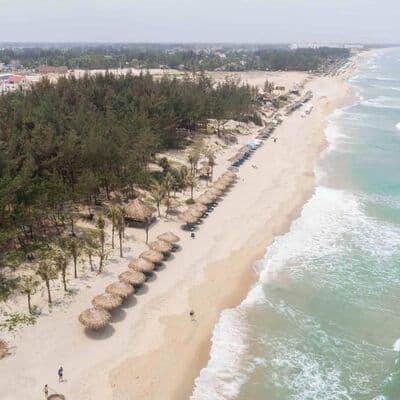
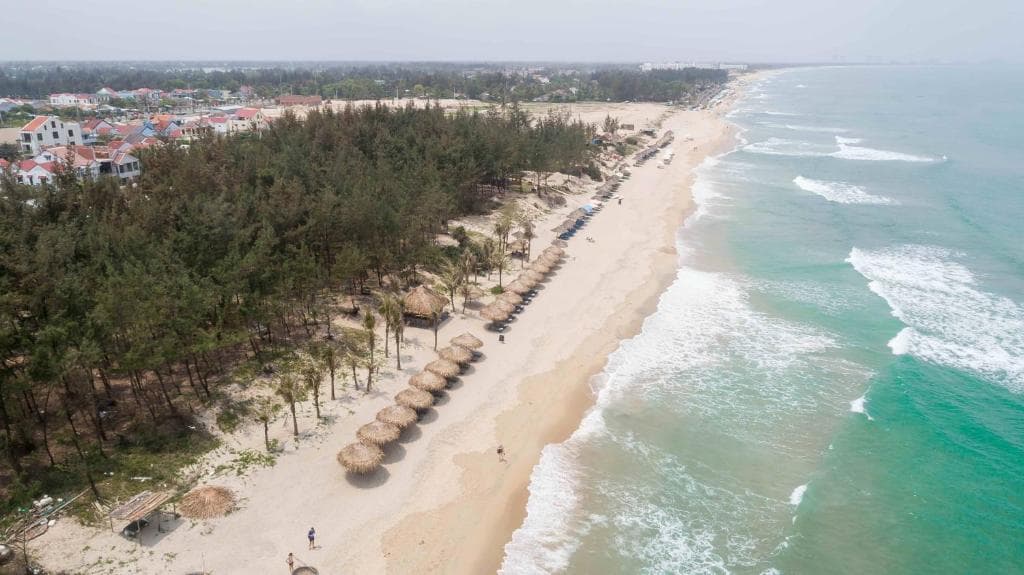
The beach zone sits about 4-5 kilometers east of the Ancient Town, centered on An Bang Beach and the older Cua Dai Beach. This is where you stay if your priority is actually the beach rather than cultural sites. An Bang has developed significantly with beach clubs, seafood restaurants, and boutique resorts lining the sand. Accommodation ranges from basic beach bungalows at $30-50 to luxury resorts at $200-400. The area has its own vibe: more relaxed, more Western, more focused on sun and cocktails than temples and history. The trade-off: you will need a taxi or motorbike to reach the Ancient Town, evening trips back from dinner in town get old fast, and the beach can be windy during winter months. Best for beach lovers staying a week or more who can split time between sand and sightseeing.
Best Time to Visit Hoi An
Hoi An sits in central Vietnam, which has different weather patterns than either Hanoi or Saigon. Understanding this will save you from showing up during flood season wondering why half the restaurants are underwater.
February to April: Peak Season
This is when Hoi An is at its best. Temperatures hover around 25-30 degrees Celsius, humidity is manageable, rain is rare, and the sky stays blue. The catch: everyone knows this. Hotels fill up, prices peak, and the Ancient Town gets genuinely crowded, especially around the full moon lantern festival. Book accommodation at least a month ahead during this window. Expect to pay 30-50% more than low season prices.
May to August: Hot Season
Summer in Hoi An means serious heat, often hitting 35-38 degrees Celsius with high humidity. Most tourists avoid this period, which means lower prices, empty restaurants, and no crowds at major sights. The beach becomes essential rather than optional. If you can handle the heat, this is actually a great time to visit because you will have the town largely to yourself. Just plan activities for early morning and evening, spend afternoons at the beach or in air conditioning, and drink more water than you think you need.
September to January: Rainy Season
This is when Hoi An's geography becomes a problem. The town sits in a low-lying area near the Thu Bon River, and heavy rains can cause significant flooding. The worst months are October and November, when entire streets can be underwater for days. Locals handle this with good humor, setting up boats to ferry people to restaurants and placing platforms for pedestrians, but it is genuinely disruptive. December and January are better, with less rain and cooler temperatures, but you still risk wet days. If you must visit during this period, book refundable accommodation and have backup plans.
Full Moon Festival
On the 14th day of each lunar month, Hoi An turns off its electric lights in the Ancient Town and lights thousands of lanterns. The effect is magical: the entire town glows with candlelight, traditional music plays in the streets, and the Thu Bon River fills with floating lanterns. It is also absolutely packed with tourists, prices spike at restaurants, and moving through the streets becomes a shuffle. My advice: experience one full moon night during your trip, but do not plan your entire visit around it. The next morning, the town returns to normal, and you can explore without fighting crowds.
Hoi An Itinerary: 3 to 7 Days
Hoi An rewards slow travel, but most visitors have limited time. Here is how to structure your days depending on how long you have.
Day 1: Ancient Town Immersion
7:00 AM - Wake up early and walk the Ancient Town before the crowds arrive. The streets between 6-8 AM are nearly empty, perfect for photography and peaceful exploration. Start at the Japanese Covered Bridge and wander the main pedestrian streets.
8:30 AM - Breakfast at Central Market. Find a stall selling banh mi or cao lau and eat where the locals eat. The market is most active in the morning.
10:00 AM - Visit a few of the heritage sites using the Old Town ticket (120,000 VND, about $5). This includes your choice of old houses, assembly halls, and museums. The Tan Ky Old House and Fujian Assembly Hall are particularly worth seeing.
12:30 PM - Lunch at one of the established cao lau or mi quang spots. Try Cao Lau Lien near the market or Bun Thit Nuong Ba Be for a different local specialty.
2:00 PM - Siesta time. Hoi An is hot in the afternoon, and the Vietnamese take a rest break for good reason. Return to your hotel, nap, read, or find an air-conditioned cafe.
4:30 PM - Explore the quieter areas of the Ancient Town: the back alleys, the riverfront, the small temples that most tourists miss. This is when locals start emerging and the golden afternoon light makes everything look incredible.
6:30 PM - Dinner at a riverside restaurant. Watch the sunset over the Thu Bon River while eating fresh seafood or Vietnamese classics.
8:30 PM - Evening walk through the lantern-lit streets. Take a boat ride on the river if you want the full tourist experience, or simply wander and enjoy the atmosphere.
Day 2: Cooking and Culture
8:00 AM - Join a morning cooking class. The best ones start with a market tour where you learn to identify Vietnamese ingredients, then head to a riverside kitchen to cook 4-5 dishes. Expect to pay $30-45 for a half-day class including lunch.
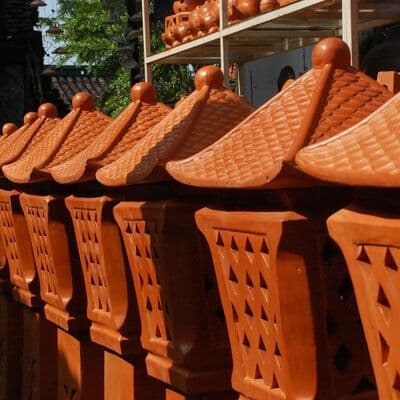
1:00 PM - Visit the Thanh Ha Pottery Village on the outskirts of town. This traditional village has been making terracotta pottery for 500 years, and you can try your hand at the wheel for a few dollars.
3:30 PM - Cycle to Tra Que vegetable village. This organic farming community supplies many of Hoi An's restaurants. Wander the paths between herb gardens, watch farmers work, and stop for a herbal tea.
6:00 PM - Return for sunset, clean up, and head to the night market on An Hoi Peninsula for street food dinner. It is touristy but fun, and you can eat a full meal for $5-8.
Day 3: Beach Day
9:00 AM - Head to An Bang Beach by bicycle or taxi (about 15 minutes). The beach is lined with restaurants and beach clubs where you can rent chairs and umbrellas for the day.
10:00 AM - Settle into a beach spot. The Soul Kitchen and Deck House are popular options with good food and comfortable seating. Chair rental runs about $3-5 with minimum food order.
12:30 PM - Seafood lunch at one of the beach restaurants. Fresh fish, prawns, and crab are excellent here.
3:00 PM - Swim, read, nap, or try stand-up paddleboarding if you are feeling active. The water is warm year-round, though waves can be strong in winter.
5:30 PM - Watch the sunset over the rice paddies on your ride back to town. Stop at a local beer garden for a 15,000 VND bia hoi (fresh draft beer).
7:30 PM - Dinner in Cam Pho ward at a local restaurant the tourists miss. Ask your hotel for recommendations.
Day 4: My Son Sanctuary
6:00 AM - Leave early for My Son Sanctuary, the ancient Cham temple complex about 40 kilometers from Hoi An. Early morning means cooler temperatures and fewer tourists.
8:00 AM - Arrive at My Son. The Hindu temples here date from the 4th to 14th centuries and rival Angkor Wat in historical significance, if not in scale. Allow 2-3 hours to explore the main groups.
11:30 AM - Return to Hoi An. If you joined a tour, it likely includes a boat ride back along the Thu Bon River, which is pleasant but adds time.
1:00 PM - Late lunch and rest during the hot afternoon.
4:00 PM - Visit a tailor if you want custom clothing. Hoi An is famous for made-to-measure suits, dresses, and leather goods. Quality varies enormously; stick to recommended shops and always get multiple fittings.
7:00 PM - Fine dining at Morning Glory or Little Faifo for elevated Vietnamese cuisine.
Day 5-7: Extended Exploration
If you have more time, add these experiences:
Cham Islands Day Trip - These islands 18 kilometers offshore offer excellent snorkeling and diving. Boats leave around 8 AM and return by 4 PM. Best from March to September.
Bay Mau Coconut Forest - Take a bamboo basket boat through the water coconut forest, a unique ecosystem about 7 kilometers from Hoi An. Corny but fun, especially if you can get a driver who does the spinning basket trick.
Marble Mountains Day Trip - These five limestone hills near Da Nang contain caves, temples, and incredible views. Combine with a visit to Da Nang city for contrast.
Second Cooking Class - The first class covered basics; try a specialty class focused on street food, vegetarian cuisine, or regional dishes.
Simply Existing - Hoi An rewards those who stop planning. Spend a day with no agenda: find a riverside cafe, read a book, watch the boats go by, eat when hungry, and let the town reveal itself.
Where to Eat in Hoi An
Hoi An has one of Vietnam's most distinctive food scenes, blending local specialties you will not find elsewhere with excellent Vietnamese standards. Here is where to eat at every price point.
Street Food and Markets
Central Market - The best breakfast spot in town. Find the stall that has the most locals sitting on tiny plastic stools and order whatever they are having. Expect to pay 20,000-35,000 VND ($1-1.50) for a bowl of noodles or banh mi. The market is most active from 6-10 AM.
Ba Le Well - Famous for banh xeo (crispy savory crepes) and do-it-yourself fresh spring rolls. You get a plate of grilled meats, rice paper, vegetables, and instructions to roll your own. Cheap, interactive, and delicious.
Night Market (An Hoi) - Tourist-oriented but convenient for sampling multiple dishes in one evening. Quality is inconsistent; follow the crowds to the popular stalls.
Local Restaurants
Banh Mi Phuong - Anthony Bourdain declared this the best banh mi in the world, and while that is debatable, the sandwiches here are excellent. Expect a line, especially 11 AM-1 PM. The classic banh mi with pork, pate, and vegetables costs about 30,000 VND ($1.25).
Madam Khanh (The Banh Mi Queen) - The alternative choice for best banh mi. Slightly smaller sandwiches, possibly better bread, definitely shorter lines. Make your own decision about which is superior.
Cao Lau Lien - The place for authentic cao lau, Hoi An's signature noodle dish. The family has been making it for generations using water from a specific well (though that origin story may be myth). Cash only, closes early afternoon.
Long Com Ga - Chicken rice done perfectly. The rice is cooked in chicken broth with turmeric, the chicken is tender and flavorful, and the price is about 40,000 VND. Simple food executed well.
Bong Hong Trang (White Rose) - This family invented the white rose dumpling and still makes them by hand for restaurants across town. You can eat them here at the source for the freshest version.
Mid-Range Restaurants
Morning Glory - Chef Trinh Diem Vy's flagship restaurant serves refined Vietnamese street food in a stylish setting. The set menus are a good way to sample multiple dishes. Expect to pay $15-25 per person with drinks.
Little Faifo - Another Trinh Diem Vy project, more casual than Morning Glory but equally good. The mi quang and fresh spring rolls are excellent.
Nu Eatery - Modern Vietnamese with creative presentation. Good for a splurge dinner or when you want air conditioning and wine.
Mango Rooms - Fusion cuisine with river views. The Vietnamese dishes are better than the Western ones. Nice for a sunset meal.
Fine Dining
The Field - Farm-to-table dining in a rice paddy setting outside town. Multicourse tasting menus feature hyper-local ingredients. Book ahead and arrange transport.
Vy's Market Restaurant - Upscale street food experience with cooking demonstrations. Higher prices but excellent quality and interesting atmosphere.
Cafes and Drinks
Reaching Out Tea House - A social enterprise employing deaf staff, serving excellent tea in a peaceful courtyard. You order by writing on paper, communication is gentle and quiet, and the atmosphere is genuinely calming.
Rosie's Cafe - Best Western-style breakfast and coffee if you need a break from Vietnamese food. Good wifi for working.
Diving Bell Coffee - Vietnamese coffee done properly. Try the egg coffee or coconut coffee for something different.
Must-Try Hoi An Food
Hoi An has several dishes you genuinely cannot get elsewhere in Vietnam, plus excellent versions of regional specialties. Here are the ten essential foods to try.
1. Cao Lau - This is the dish that defines Hoi An cuisine. Thick rice noodles (supposedly made with water from a specific ancient well) topped with sliced pork, crispy crackers, herbs, and a small amount of broth. The texture is unlike any other Vietnamese noodle, chewy and substantial. Authentic cao lau is only made in Hoi An because the noodles do not travel well.
2. White Rose Dumplings (Banh Bao Vac) - Delicate translucent dumplings filled with shrimp or pork, shaped to resemble roses. They are steamed and served with crispy shallots and a light dipping sauce. One family has made them for generations and supplies every restaurant in town.
3. Mi Quang - Wide yellow turmeric noodles in a small amount of rich broth, topped with shrimp, pork, quail egg, herbs, peanuts, and rice crackers. This is technically a regional central Vietnamese dish, but Hoi An versions are excellent.
4. Banh Mi - The Vietnamese sandwich reaches its peak in Hoi An. Crusty French bread filled with pate, cold cuts, pickled vegetables, cilantro, and chili. The combination of textures and flavors is perfect. Eat at least three during your visit.
5. Com Ga (Chicken Rice) - Turmeric-yellow rice cooked in chicken broth, served with shredded or sliced chicken, pickled vegetables, and herbs. Sounds simple, tastes incredible. The chicken is usually free-range and notably more flavorful than Western versions.
6. Banh Xeo - Crispy turmeric crepes filled with shrimp, pork, and bean sprouts. You wrap pieces in rice paper with herbs and dip in fish sauce. Interactive eating at its best.
7. Banh Bot Loc - Chewy tapioca dumplings filled with shrimp and pork belly, served with sweet fish sauce. The translucent wrapper has a unique texture that takes some getting used to, but becomes addictive.
8. Fried Wonton (Hoanh Thanh Chien) - Crispy wontons topped with a sauce of ground pork, tomato, and onion. Simple but satisfying, and unique to Hoi An.
9. Bun Thit Nuong - Cold vermicelli noodles with grilled pork, fresh vegetables, herbs, peanuts, and fish sauce dressing. Not unique to Hoi An, but the local versions are excellent for lunch on hot days.
10. Che - Vietnamese sweet soup desserts, available in endless varieties at the night market. Try che ba mau (three-color dessert) with beans, jelly, and coconut milk over ice.
Hoi An Secrets: Local Tips
After spending significant time in Hoi An, here are the insider tips that will improve your experience.
1. Skip the Old Town ticket - The 120,000 VND ticket is technically required to enter heritage sites, but enforcement is inconsistent. You can explore the streets, temples, and most of the town without it. Only buy the ticket if you specifically want to visit the heritage houses and museums.
2. Early morning is everything - The Ancient Town between 6-8 AM is a completely different experience: empty streets, locals doing tai chi by the river, soft morning light perfect for photography. Set an alarm and thank me later.
3. The best tailors are not the cheapest - Hoi An has hundreds of tailors, and quality ranges from excellent to terrible. Cheap suits often fall apart after a few months. Budget at least $150-200 for a decent suit, $300-400 for quality. Get recommendations from recent visitors, insist on multiple fittings, and check stitching carefully.
4. Rent a bicycle, not a motorbike - Hoi An is flat, compact, and has excellent cycling infrastructure. Most hotels offer free bicycles, and renting one costs about $2 per day. Motorbikes are unnecessary unless you are traveling outside town, and parking them in the Ancient Town is restricted anyway.
5. The flood season can be magical - Yes, October and November bring floods, but locals handle it with remarkable good humor. Seeing the Ancient Town from a rowboat, with water lapping at doorsteps, is actually a unique experience. Just book flexible accommodation.
6. Escape the Ancient Town for lunch - Tourist restaurants in the center charge double or triple local prices for the same dishes. Walk 10 minutes in any direction to find restaurants where locals eat, paying $2-3 instead of $8-10 for the same food.
7. The night market is overpriced - The lanterns, clothes, and souvenirs at the An Hoi night market cost 2-3x what you will pay at the day market or shops outside the tourist zone. Bargain hard or shop elsewhere.
8. Learn some Vietnamese - Even basic phrases (xin chao for hello, cam on for thank you, bao nhieu for how much) dramatically improve interactions. Locals appreciate the effort and are more likely to give you the local price.
9. Full moon means full chaos - The lantern festival is beautiful but exhausting. If you visit during full moon, explore the Ancient Town in the morning, then join the evening crowds knowing it will be packed.
10. Da Nang airport is easier - While Hoi An has its own small airport, most international flights arrive in Da Nang (30-40 minutes away). Taxis from Da Nang airport to Hoi An cost about $15-20 or book a hotel transfer.
11. Cash is king but cards work - Most tourist restaurants accept cards, but street food, markets, and local spots are cash-only. ATMs are everywhere but charge fees; withdraw larger amounts to minimize charges.
12. The best photography spot - For the classic lantern shot with reflections, stand on the An Hoi Bridge at night facing the Ancient Town. For sunrise over the river, head to the eastern end of Bach Dang Street. For rice paddies, cycle west toward Cam Chau around 6 PM.
Getting Around Hoi An
Arriving in Hoi An
By Air - Da Nang International Airport (DAD) is the gateway to Hoi An, located about 30 kilometers north. Direct flights operate from Singapore, Bangkok, Seoul, Tokyo, Hong Kong, and other Asian hubs. From the US, UK, or Australia, you will typically connect through one of these cities or through Hanoi or Ho Chi Minh City. From the airport, taxis to Hoi An cost $15-20 (fixed price, agree before departing), or book a hotel transfer for similar cost with the convenience of a driver meeting you with a sign.
By Train - The nearest train station is Da Nang, on the main north-south railway line. From Hanoi, the journey takes 15-17 hours; from Ho Chi Minh City, 16-20 hours. From Da Nang station, take a taxi to Hoi An (about $15, 30-40 minutes).
By Bus - Long-distance buses connect Hoi An to most major Vietnamese cities. The Sinh Tourist and other tourist bus companies run comfortable sleeper buses. The journey from Ho Chi Minh City takes 18-20 hours; from Hanoi, 16-18 hours; from Hue, 3-4 hours. Most buses drop you at the Hoi An bus station, a short taxi ride from the Ancient Town.
Getting Around Town
Walking - The Ancient Town is pedestrianized and compact; you can walk across it in 15 minutes. Walking is the best way to explore, and you will discover more on foot than from any vehicle.
Bicycle - Most hotels provide free bicycles for guests. If yours does not, rental costs about 30,000-50,000 VND ($1.25-2) per day. Hoi An is flat with dedicated bike paths along the river and to the beach. This is genuinely the best way to get around for distances beyond walking.
Motorbike - Available for rent at $5-8 per day, but largely unnecessary within Hoi An. Useful for day trips to My Son, Da Nang, or the Marble Mountains. You need an international driving permit to ride legally, though enforcement is lax.
Grab - The ride-hailing app works in Hoi An and is the best option for airport transfers and longer trips. Prices are fixed in the app, so no negotiating required. GrabCar is available, and GrabBike for solo travelers.
Taxi - Mai Linh and Vinasun are the reliable taxi companies. Always insist on the meter. Expect to pay about 15,000 VND per kilometer.
Practical Information
SIM Cards - Vietnamese SIM cards are cheap and essential. Viettel, Vinaphone, and Mobifone all offer tourist SIM packages with data for about $5-10 at the airport or any phone shop. Data speeds are good throughout Hoi An.
Essential Apps - Grab for transport, Google Maps for navigation (works well in Vietnam), Google Translate for language assistance (download Vietnamese for offline use), and Wise or your travel card for payments. Currency conversion apps help when negotiating at markets.
Money - ATMs are plentiful in the Ancient Town and accept international cards. Most charge 30,000-50,000 VND ($1.25-2) per withdrawal, so take out larger amounts to minimize fees. Credit cards are accepted at tourist restaurants and hotels but not at local spots or markets.
Electricity - Vietnam uses 220V with European-style two-pin plugs. US and UK visitors need adapters.
Who Should Visit Hoi An: Summary
Hoi An works for almost everyone, which is rare for a tourist destination. Couples love the romance of lantern-lit streets and riverside dining. Food travelers find one of Vietnam's most distinctive culinary scenes. History enthusiasts get a UNESCO World Heritage Site that feels lived-in rather than museum-like. Beach lovers have An Bang Beach twenty minutes away. Budget travelers find affordable accommodation and $2 meals, while those wanting luxury have excellent boutique hotels and fine dining.
The only travelers who might struggle in Hoi An are those who dislike tourists entirely (the Ancient Town is popular for good reason) or those who want big-city energy (this is a small town, and the nightlife reflects that). Everyone else will find something to love. Most visitors plan three days and wish they had a week. Those who stay a week often start looking at apartment rentals. Hoi An has that effect on people.
My honest recommendation: give Hoi An at least four nights, stay somewhere you can walk or cycle to the Ancient Town, eat everything, and do not over-plan. The best moments here tend to be accidental: a perfect bowl of cao lau at an unmarked stall, a conversation with a tailor about their family's history, or watching the sunset paint the Thu Bon River gold while sipping a cheap beer. Hoi An will show you those moments if you let it.