Dahab
Dahab 2026: What You Need to Know Before You Go
Dahab is a small coastal town on the southeastern coast of the Sinai Peninsula in Egypt, sitting right on the Gulf of Aqaba. Once a Bedouin fishing village, it transformed into a backpacker haven in the 1980s and has since evolved into one of the Red Sea's most beloved destinations - without losing its laid-back soul. Unlike the resort sprawl of Sharm el-Sheikh or Hurghada, Dahab remains genuinely relaxed, affordable, and walkable.
Quick answer: Dahab is a small Red Sea town in Egypt's Sinai Peninsula, famous for world-class diving and snorkeling at sites like the Blue Hole and Lighthouse Reef. It offers a unique mix of Bedouin culture, desert adventures, and an ultra-relaxed backpacker vibe - all at budget-friendly prices. Most visitors come for the underwater world but stay for the atmosphere.
Who is Dahab for? Divers and snorkelers, obviously - but also rock climbers, kitesurfers, yoga practitioners, digital nomads, backpackers on a shoestring, and anyone who wants to slow down. Families with older kids do well here too, especially in the quieter neighborhoods. If you need a five-star resort with a swim-up bar, Dahab is not your place.
The honest pros: Some of the cheapest diving certification in the world. Snorkeling directly from shore - no boat needed. Food is excellent and affordable. The Bedouin culture adds genuine character. The desert scenery is stunning. WiFi is decent enough for remote work. You can live comfortably on $30-40 a day.
The honest cons: It is remote - the nearest airport is 90 minutes away in Sharm el-Sheikh. The wind can be relentless from March through May. Infrastructure is basic: power outages happen, hot water is not always guaranteed in budget places, and the roads are dusty. Street harassment exists, though less than in Cairo. And if you are not into diving or outdoor activities, you might get bored after three days.
Dahab Neighborhoods: Where to Stay
Dahab stretches along the coast for about 3 kilometers, and each section has its own personality. Choosing the right neighborhood matters more than choosing the right hotel - the vibe changes dramatically from one end to the other. Here is what you need to know about each area.
Assalah: The Backpacker Heart
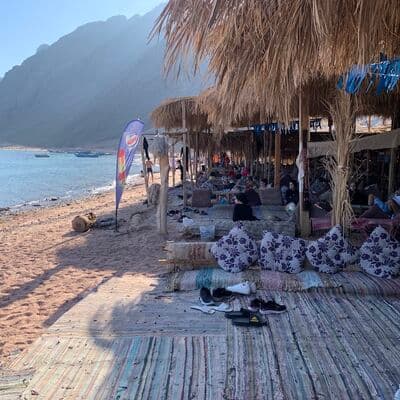
Assalah is where Dahab's hippie soul lives. This is the northern end of town, a maze of narrow alleys, budget guesthouses, Bedouin-run camps, and tiny shops selling everything from dreamcatchers to diving gear. The architecture is low-rise, often half-finished concrete with colorful paint and rooftop terraces. At night, the waterfront comes alive with cushioned seating areas where you can smoke shisha, eat grilled fish, and watch the stars over Saudi Arabia across the gulf.
Price range: $ - Dorm beds from $5-8, private rooms $15-25, Bedouin camps $8-15.
Pros: Cheapest accommodation in town. Authentic atmosphere. Walking distance to many dive shops. Great for meeting other travelers. The Bedouin camps here offer a unique experience you will not find elsewhere.
Cons: Can be noisy. Accommodation quality is hit-or-miss. Some places have unreliable hot water. Not ideal if you want comfort.
Ideal for: Solo backpackers, budget travelers, gap-year adventurers, anyone who values atmosphere over amenities.
Masbat / Lighthouse Area: The Diving Hub
This is Dahab's center of gravity - the stretch along the waterfront promenade between the Lighthouse dive site and the main strip of restaurants. Most dive centers are here or nearby. The promenade itself is one of the most pleasant walks in the Sinai: sea on one side, restaurants on the other, with cats lounging on every available surface. Accommodation ranges from simple hotels to mid-range places with pools.
Price range: $$ - Hotels $30-60, apartments $40-80, nicer guesthouses $25-45.
Pros: Central location, walking distance to everything. Best restaurant selection. Right next to Lighthouse Reef - you can literally snorkel before breakfast. Most dive shops are steps away. ATMs, pharmacies, and shops are all here.
Cons: Pricier than Assalah. Can feel touristy by Dahab standards. Street noise from restaurants and bars until late.
Ideal for: Divers, snorkelers, first-time visitors, couples, anyone who wants convenience without luxury prices.
Mashraba: The Quiet Middle Ground
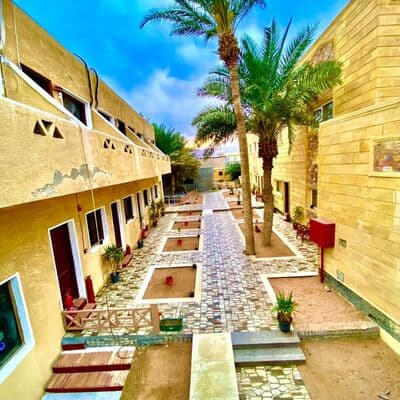
Mashraba sits just south of the Lighthouse area, and it is where Dahab starts to feel residential. The streets are wider, the buildings are slightly nicer, and you will find more mid-range hotels and longer-stay apartments. It is a 10-minute walk to the main promenade but far enough to escape the evening noise. Several good restaurants have opened here in recent years, so you do not have to walk to the center for every meal.
Price range: $-$$ - Hotels $25-50, apartments $35-70 (better value for longer stays).
Pros: Quieter than the center. Better value for mid-range accommodation. Good for families. Still walkable to everything. Some places have pools and gardens.
Cons: Not as much nightlife. Fewer restaurants right on your doorstep. Can feel a bit dead in low season.
Ideal for: Families with kids, couples wanting quiet, digital nomads on monthly rentals, anyone staying more than a week.
Lagoon Area: The Kitesurfer's Paradise
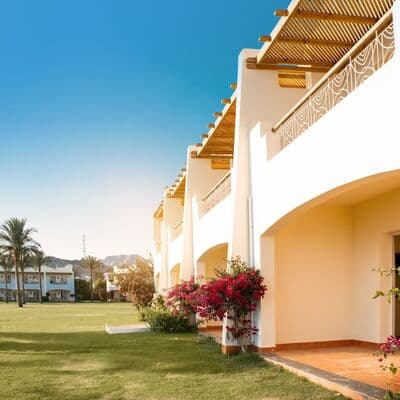
The Dahab Lagoon is about 2 km south of the center, a wide, shallow bay with flat water and consistent wind. This is where the kitesurfing and windsurfing scene is based. The area has its own cluster of hotels, kite schools, and beachfront cafes. It feels like a separate little town within Dahab. The lagoon itself is stunning - turquoise water so shallow you can walk 200 meters out and still be knee-deep.
Price range: $$ - Hotels $35-70, kite-oriented packages $50-100 including lessons.
Pros: Best wind sports location in the region. Flat, shallow water perfect for beginners. Beautiful beach. Less crowded than the center. Some of the newer, nicer hotels are here.
Cons: Isolated from the main strip - you will need transport or a bike to reach restaurants and shops. Limited dining options nearby. Very windy (great for kiting, less great for a quiet beach day). Not ideal if you are here primarily for diving.
Ideal for: Kitesurfers, windsurfers, water sports enthusiasts, anyone who wants beach time over nightlife.
Mubarak Village: Local Egyptian Life
Most visitors never set foot in Mubarak, the inland neighborhood where local Egyptians and Bedouins actually live. There are no hotels aimed at tourists here, but if you are staying long-term, you can find incredibly cheap apartments. The market here - known locally as the 'Mubarak souk' - has the best prices for groceries, produce, and household goods. A few authentic local restaurants serve meals that cost a fraction of the waterfront prices.
Price range: $ - Apartments $200-400/month for long-term rental.
Pros: Cheapest prices for everything. Authentic local experience. Great market for self-catering. You will see a side of Dahab most tourists miss.
Cons: No tourist infrastructure. Limited English spoken. Far from the sea. Not practical for short stays. Basic amenities.
Ideal for: Long-term expats, digital nomads on a tight budget, travelers who want genuine cultural immersion.
Best Time to Visit Dahab
Dahab has a desert climate - which means blazing summers, mild winters, and almost zero rain. But 'best time' depends entirely on what you want to do. Here is the breakdown by season.
October to November: The Sweet Spot
This is when Dahab is at its absolute best. Air temperatures hover around 28-32C (82-90F), the sea is still warm from summer at 25-26C (77-79F), and the wind has calmed down from the spring gusts. Visibility underwater is excellent. The town is busy but not overcrowded, prices are reasonable, and the evenings are perfect for sitting by the sea. If you can only visit once, come in October or early November.
March to April: Good but Breezy
Spring is beautiful in the desert - wildflowers bloom in the wadis, the air is warm (25-30C / 77-86F), and the sea is comfortable. However, this is peak wind season. Kitesurfers love it, but snorkelers and divers may find some days too rough, especially at exposed sites. Late March through April is also high season for European visitors, so book accommodation ahead.
December to February: Cool and Cheap
Winter in Dahab is surprisingly chilly. Daytime temperatures of 20-24C (68-75F) sound pleasant, but the wind can make it feel much colder, and nights drop to 10-12C (50-54F). The sea cools to 21-22C (70-72F) - you will want a wetsuit for diving. The upside? Prices drop significantly, the town is quiet, and the diving conditions are often excellent with calm seas and great visibility. Christmas and New Year are exceptions - Dahab fills up with Egyptian holidaymakers, and prices spike for about two weeks.
May to September: Hot Season
Summer in Dahab is hot. Seriously hot. Temperatures regularly hit 40C+ (104F+), and even the sea reaches a bathtub-like 28-29C (82-84F). Most visitors are Egyptian or Gulf tourists escaping even hotter cities. Some dive shops reduce operations, and many restaurants cut their hours. That said, if you can handle the heat, this is when you will find the cheapest prices and the emptiest dive sites. Early mornings and evenings are manageable, and the sunsets are spectacular.
Festivals and events: The Dahab Festival (usually April or May) brings live music, art, and cultural events. Ramadan dates shift each year - in 2026 it falls roughly in February-March. During Ramadan, some restaurants close during daylight hours, but the iftar meals at sunset are a special experience. Eid holidays (after Ramadan) bring a surge of Egyptian tourists, so book well ahead.
Dahab Itinerary: 3 to 7 Days
Here is how to spend your time in Dahab, whether you have a long weekend or a full week. These itineraries are flexible - Dahab rewards spontaneity, so treat these as frameworks, not rigid schedules.
3 Days: The Essential Dahab
Day 1: Snorkeling and Getting Your Bearings
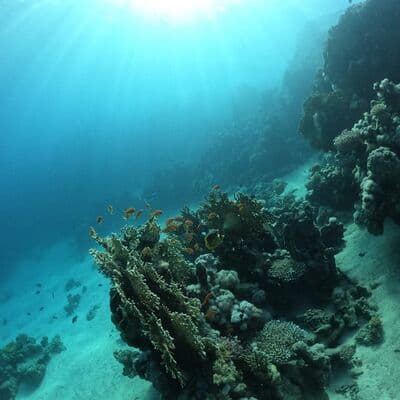
Morning (8:00-12:00): Start at Lighthouse Reef, which is right on the main promenade. Rent a mask and snorkel from any of the shops along the waterfront ($3-5 for the day) and enter the water from the rocky shore. The reef drops off just meters from the entry point, and you will see lionfish, moray eels, clownfish, and if you are lucky, a turtle. Spend 2-3 hours here - the reef is extensive and you can swim both north and south along the wall.
Afternoon (13:00-16:00): Walk the promenade south, grab lunch at one of the waterfront restaurants (try Ali Baba for grilled fish, around $6-8 for a full plate). After lunch, continue to Eel Garden, a 15-minute walk north of the Lighthouse. The site is named for the garden eels that sway like grass on the sandy bottom - mesmerizing from above and even better with a snorkel. The shallow coral gardens here are some of the most colorful in Dahab.
Evening (18:00+): Return to the promenade for sunset. Dahab faces east, so you do not get the classic ocean sunset, but the mountains across the gulf in Saudi Arabia turn pink and gold - it is stunning. Dinner at any seafront restaurant with cushion seating. Try a seafood platter and fresh mango juice. Budget for the day: $20-30.
Day 2: Blue Hole and Ras Abu Galum
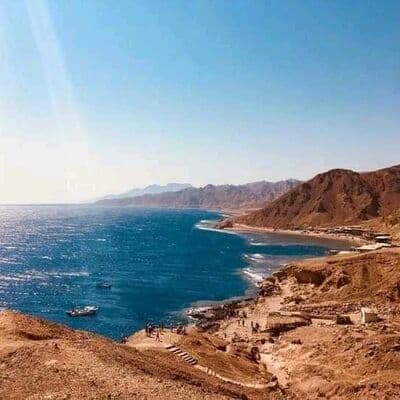
Morning (7:00-8:00): Arrange a pickup truck taxi or minibus to the Blue Hole, about 8 km north of town ($3-5 per person in a shared truck, or $10-15 for a private ride). Arrive early before the crowds. The Blue Hole is a massive underwater sinkhole - 130 meters deep with a coral reef arch at 56 meters that has tragically claimed many free-divers. For snorkelers, the rim of the hole is spectacular: you float over deep blue void surrounded by coral walls teeming with fish. Spend 1-2 hours snorkeling here.
Late morning (10:00-13:00): From the Blue Hole, take the coastal hiking trail to Ras Abu Galum, a protected area about 40 minutes' walk north along the cliffs. The trail is well-marked and stunning - desert mountains on one side, turquoise sea on the other. Ras Abu Galum has a tiny Bedouin settlement with basic huts and a restaurant serving fresh fish and tea. The snorkeling here is arguably the best in the Dahab area - pristine coral with almost no other tourists.
Afternoon (14:00-16:00): Lunch at the Bedouin camp in Ras Abu Galum (fresh fish, rice, salad - about $7-10). Rest on the cushions, swim, and enjoy the isolation. Return to the Blue Hole by the same trail or arrange a camel ride back ($10-15).
Evening (18:00+): Back in town, try Nirvana or Om Mahmoud for dinner. Order a koshari - Egypt's national comfort food. End the night with shisha and Bedouin tea on the waterfront. Budget for the day: $25-40.
Day 3: Colored Canyon Day Trip
Morning (7:00-14:00): Book a Colored Canyon trip through your hotel or any tour agency in town ($25-40 per person including transport and sometimes lunch). The canyon is about 90 minutes inland by jeep, winding through dramatic desert valleys. The canyon itself is a narrow sandstone gorge with layers of purple, red, orange, and yellow rock - the result of millions of years of mineral deposits. The hike through the canyon takes 2-3 hours and involves some scrambling and narrow passages. It is moderately challenging - wear sturdy shoes and bring at least 2 liters of water.
Afternoon (15:00-17:00): Return to Dahab. Cool off with a swim at Lighthouse or just relax. Get a massage at one of the many cheap massage places along the promenade ($15-20 for an hour).
Evening (18:00+): Final night dinner - splurge at Tota or Princess Dahab for a seafood feast. Budget for the day: $35-55.
5 Days: Adding Depth
Day 4: Mount Sinai Sunrise
Night before (22:00): Arrange transport to St. Catherine's ($20-30 per person in a shared minibus). You depart Dahab around 10-11 PM and arrive at the base of Mount Sinai around midnight. The climb takes 2-3 hours in the dark - flashlights are essential. There are two paths: the 'Steps of Repentance' (3,750 stone steps - brutal but faster) and the 'Camel Path' (longer, gentler slope - camels available for $15-20 for part of the route). The sunrise from the summit at 2,285 meters is genuinely one of the most spectacular things you can witness in Egypt. On a clear day, you see across the Gulf of Aqaba into Saudi Arabia and across the Gulf of Suez into mainland Egypt.
Morning (8:00-11:00): Descend and visit St. Catherine's Monastery at the base - one of the oldest continuously operating Christian monasteries in the world, dating to the 6th century. It houses an incredible collection of early manuscripts and icons.
Afternoon (13:00+): Return to Dahab. Nap. You will need it. Easy dinner and early bed. Budget for the day: $30-45.
Day 5: Diving or Bedouin Culture Day
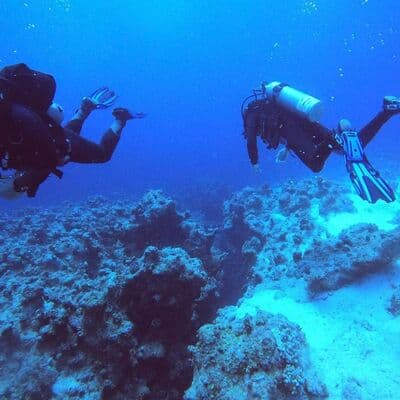
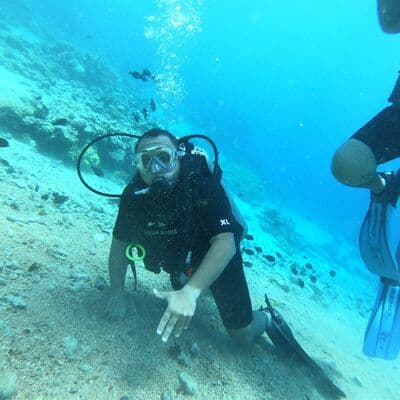
Option A - Diving: If you are not certified, this is a great day for a Discover Scuba Diving experience ($40-60). You will get a pool/shore briefing and then a guided dive at the Lighthouse or Eel Garden to about 12 meters. If you are already certified, book a two-dive morning at The Canyon and Three Pools - two of Dahab's finest sites. The Canyon features a narrow underwater chimney you swim through, while Three Pools has three natural entry points with beautiful coral formations. Two-dive packages run $50-70 with equipment.
Option B - Bedouin Experience: Arrange a half-day desert safari by jeep or camel ($30-50) visiting Bedouin settlements in the interior. You will learn about desert survival, traditional medicine, weaving, and bread-making. Most trips include a traditional lunch cooked over open fire and tea brewed with desert herbs. This is a genuine cultural experience - the Bedouins of Sinai are hospitable people with a rich oral tradition, and spending time with them adds real depth to a Dahab trip.
Evening: Whichever option you chose, end the day with dinner at Tim's Munch or Everyday Cafe. Budget for the day: $40-70.
7 Days: The Full Experience
Day 6: Wadi Wishwashi and Magic Lake
Morning (7:00-12:00): Arrange a jeep trip to Wadi Wishwashi ($30-40 per person), a remote canyon system in the interior mountains. Less visited than Colored Canyon, it offers more dramatic scenery - deep pools (sometimes with water after winter rains), towering rock walls, and Bedouin rock art. The hike is more challenging, so wear proper shoes and bring plenty of water.
Afternoon (13:00-17:00): On the way back, stop at the Magic Lake - a remote inland body of water surrounded by desert mountains. It is surreal: a perfectly still lake in the middle of bare rock. Swimming here is an otherworldly experience, especially in the late afternoon light. Some tours combine both in a single trip.
Evening: Ralph's German Bakery for coffee and cake (their apple strudel is surprisingly authentic), then dinner wherever the mood takes you. Budget for the day: $35-55.
Day 7: Castle Zaman and Relaxation
Morning (9:00-13:00): Visit Castle Zaman, a stunning hilltop restaurant and heritage site about 30 minutes north of Dahab. Built to resemble an ancient Crusader castle, it sits on a cliff overlooking the Gulf of Aqaba with views stretching to Saudi Arabia and Tiran Island. The brunch is famous - a multi-course spread of Middle Eastern dishes with unlimited tea and juice, all for around $25-35. Make a reservation the day before. The pool is open to diners, so bring your swimsuit.
Afternoon (14:00-17:00): Return to Dahab for a final afternoon of snorkeling. Hit up any sites you missed or revisit your favorites. Three Pools is a great last-day choice - calmer water, fewer people, and excellent coral close to shore.
Evening: Final dinner on the promenade. Pick up souvenirs from the Assalah shops - Bedouin jewelry, desert scarves, and hand-painted postcards are the best buys. Budget for the day: $40-60.
Where to Eat in Dahab: Restaurants and Cafes
Dahab punches way above its weight for food. The combination of Egyptian home cooking, Bedouin tradition, fresh seafood, and a decade of expat chefs experimenting has created a food scene that is genuinely excellent - and cheap. Here is where to eat.
Street Food and Quick Bites
Yum Yum: A Dahab institution. This tiny takeaway does the best shawarma in town - chicken or beef in fresh bread with tahini, pickles, and a spicy sauce. A full wrap costs about $1.50-2. Open late, perfect for post-dive hunger.
King Chicken: Another local favorite for roasted and grilled chicken. A whole roast chicken with rice and salad runs $4-5 - enough for two people. They also do excellent kofta sandwiches for under $2. No ambiance, just good food fast.
Falafel and ful carts: In the morning, look for the small carts near the main roundabout selling ta'ameya (Egyptian falafel made from fava beans, not chickpeas) and ful medames (stewed fava beans) in fresh baladi bread. A full breakfast for under $1. This is what locals eat every morning.
Cafes and Bakeries
Ralph's German Bakery: Run by a German expat, this place does real European-style bread, pastries, and cakes. The whole wheat bread is a revelation after days of white baladi. Excellent coffee too. A pastry and coffee runs about $3-4. Popular with the digital nomad crowd for its WiFi and workspace-friendly tables.
Tim's Munch: Great for brunch. They do proper Western breakfasts - eggs Benedict, pancakes, fresh granola bowls - alongside Egyptian options. Portions are generous, coffee is decent, and the rooftop terrace has sea views. Brunch for two: $12-18.
Treats: The go-to spot for smoothie bowls, fresh juices, and healthy snacks. Their acai bowls ($4-5) and date-and-nut energy balls are popular with the yoga crowd. Also does great coffee and has a relaxed garden seating area.
Everyday Cafe: A cozy spot with a varied menu - from hummus plates to pasta to Thai-style curries. The quality is consistently good rather than spectacular, which counts for a lot in a town where restaurants can be hit-or-miss. Reliable WiFi makes it popular for remote workers. Mains $4-7.
Restaurants
Ali Baba: One of the most established seafood restaurants on the promenade. The grilled fish is excellent - you choose your catch from the display, they weigh it and grill it with simple spices. A full fish dinner with sides and drinks comes to about $8-12. The waterfront cushion seating is quintessential Dahab. Book for sunset - the location is prime.
Om Mahmoud: The place for authentic Egyptian home cooking. Run by a local family, the menu is whatever they cooked that day - usually a choice of stewed meats, grilled chicken, rice, and vegetables. The molokhia (jute leaf stew) here is the best in town. Tiny, unpretentious, cash only. A full meal for $4-6.
Nirvana: Indian and international food on the waterfront. The curries are genuinely good - not just 'good for Egypt' but actually good. The butter chicken and dal are reliable choices. Portions are generous. A curry with rice and naan runs $6-9. They also have a rooftop terrace that is perfect for dinner.
Tota: Slightly more upscale seafood restaurant south of the Lighthouse. The fish tagine (slow-cooked in clay pot with vegetables and spices) is their signature dish and worth seeking out. They also do an excellent seafood soup. Dinner for two with drinks: $20-30.
Princess Dahab: One of the nicer restaurants in town, with better presentation and slightly higher prices. The mixed grill is excellent, and they do a good job with both Egyptian and international dishes. Popular for special dinners. Mains $8-14.
What to Try: Dahab Food Guide
Egyptian cuisine does not get the international recognition it deserves. It is hearty, flavorful, and deeply satisfying - and in Dahab you get the added bonus of fresh Red Sea seafood and Bedouin culinary traditions. Here is what to eat.
Egyptian Staples You Must Try
Koshari: Egypt's unofficial national dish. Layers of rice, lentils, pasta, and chickpeas topped with crispy fried onions and a spicy tomato sauce. It sounds bizarre, tastes incredible, and costs under $2. Every Egyptian restaurant has their own version. It is carb-heavy, filling, and surprisingly complex in flavor. Vegetarian by default.
Ta'ameya (Egyptian falafel): Unlike Levantine falafel made from chickpeas, Egyptian ta'ameya uses fava beans, resulting in a greener color and a lighter, herbier flavor. Eaten for breakfast in fresh bread with tahini, pickled vegetables, and sometimes a boiled egg. A proper breakfast of champions for about $0.50-1.
Ful medames: Slow-stewed fava beans seasoned with cumin, garlic, lemon juice, and olive oil. Served in a bowl with bread for dipping or stuffed into a sandwich. This is Egypt's breakfast - eaten by everyone from street vendors to businessmen. Simple, nutritious, and comforting. The best ful comes from street carts that have been simmering the beans overnight.
Molokhia: A stew made from jute leaves (also called Jew's mallow), cooked with garlic and coriander until it reaches a distinctive viscous, almost gooey texture. Served over rice with chicken or rabbit. The texture puts some foreigners off - it is slimy, there is no way around it - but the flavor is uniquely delicious. Om Mahmoud does the best version in Dahab. Try it at least once.
Kofta: Seasoned ground beef or lamb shaped onto skewers and grilled over charcoal. The Egyptian version is heavily spiced with cumin, coriander, parsley, and onion. Served with bread, tahini, and salad. A kofta plate at a local restaurant costs $4-6 and is one of the most satisfying meals you can have.
Shakshuka: Eggs poached in a sauce of tomatoes, peppers, onions, and spices, served bubbling hot in a cast-iron pan with bread for scooping. This is a popular breakfast dish across the Middle East and North Africa, and Dahab cafes do excellent versions. Some add feta cheese or merguez sausage. A filling breakfast for $3-5.
Red Sea Specialties
Fresh grilled fish: Dahab's location means excellent seafood. Red snapper, grouper, and sea bass are the most common catches. The standard preparation is simple - grilled whole with lemon, garlic, and cumin. At the waterfront restaurants, you pick your fish, they weigh it (usually $3-5 per portion), and grill it while you watch the sea. Do not overthink the order - the simpler the preparation, the better the fish shines.
Calamari: Fried or grilled, the squid in Dahab is fresh and tender - nothing like the rubbery rings you get elsewhere. Best ordered as a starter to share.
Bedouin and Desert Specialties
Bedouin tea: Strong black tea brewed with desert herbs - habak (a wild mint), sage, or mormoria. Served extremely sweet by default (ask for 'noss sukkar' meaning half sugar, or 'min gheir sukkar' for no sugar). You will be offered this everywhere - it is a gesture of hospitality, and refusing is considered rude. The herbs give it a distinctive taste you will miss when you leave.
Bedouin bread (fatir): Flatbread cooked on a dome-shaped griddle over open flame. Sometimes filled with cheese or honey. If you do a desert excursion, your Bedouin guide will likely make this fresh - eating it hot off the fire with sweet tea is one of those perfect travel moments.
Fresh Juices
Juice stands are everywhere in Dahab, and the quality is excellent. Mango, guava, strawberry, sugarcane - all freshly squeezed while you wait. A large glass costs $1-2. The mango juice is particularly good when mangoes are in season (June-September). Mixed juices are popular too - mango-strawberry and guava-banana are reliable combinations.
What to Avoid
Sushi and pizza: Some restaurants try to serve international cuisine that they have no business attempting. Sushi made from Red Sea fish sounds adventurous, but the results are usually disappointing. Pizza is generally mediocre - Egypt is not Italy. Stick to what the region does best.
Ice in drinks: At established restaurants, the ice is fine - it is made from filtered water. At street stalls or very cheap eateries, skip it.
Vegetarian note: Egypt is actually great for vegetarians. Koshari, ful, ta'ameya, molokhia (when made with vegetable stock), salads, and fresh vegetables are all widely available. Just be clear when ordering - 'ana nabati' means 'I am vegetarian.'
Dahab Insider Tips: Local Secrets
After spending time in Dahab and talking to long-term residents, here are the things I wish someone had told me before my first visit.
1. Do not overplan your days. Dahab runs on its own clock. Dive boats leave late, restaurants open when they feel like it, and the best experiences are often unplanned - a local inviting you for tea, a spontaneous snorkeling session, a sunset you stumble upon. Build in empty time. You will fill it.
2. Bargain, but do not be aggressive about it. Prices in shops and for tours are usually inflated by 30-50% for tourists. A friendly counter-offer is expected and appreciated. But do not grind people down to the last dollar - these are small businesses in a developing country. If a scarf is quoted at $10 and you pay $7, everyone is happy. Restaurants and dive shops generally have fixed prices.
3. Reef shoes are non-negotiable. The shore entries for snorkeling and diving sites involve walking over sharp coral rubble and sea urchins. You will see plenty of tourists hopping painfully across the rocks in bare feet or flip-flops. Buy proper reef shoes before you arrive (or grab a pair in town for $5-10). Your feet will thank you every single day.
4. Rent a bicycle. Dahab is flat and compact, and a bike transforms your experience. You can reach the Blue Hole, the Lagoon, and everything in between without waiting for pickups or paying for taxis. Rentals are about $3-5 per day, or $15-20 per week. The road north to the Blue Hole has a bike-friendly shoulder and the ride is beautiful - desert mountains on one side, sea on the other.
5. Diving is cheapest here - take advantage. An Open Water PADI certification in Dahab costs $250-350, compared to $400-600 in Southeast Asia and $500+ in the Caribbean. Advanced Open Water is $200-300. The instruction quality is generally high - many instructors are long-term European expats who chose Dahab specifically for its dive sites. Shop around, but do not choose purely on price - check reviews and ask about group sizes.
6. Amanda Market has everything. This small supermarket near the main roundabout is where everyone stocks up. It has imported goods, decent wine (Egypt's Al Ahram label is drinkable), cheese, snacks, and basic toiletries. Prices are fair. The staff is helpful and speaks English. Stock up here instead of paying hotel minibar prices.
7. Drink bottled water, always. Tap water in Dahab is desalinated and technically safe, but the mineral content and taste are off. A 1.5-liter bottle costs about $0.30-0.50 from any shop. Buy a large 5-liter jug ($1) if you are staying somewhere with a fridge. Refill your reusable bottle from the jug to reduce plastic waste.
8. Free shisha is a thing. Many waterfront restaurants offer free shisha (hookah) with your meal or if you order drinks. Just ask. A shisha with apple or mint tobacco while sipping tea and watching the sea is the quintessential Dahab evening experience. If it is not free, it should not cost more than $2-3.
9. Respect Bedouin culture. The Bedouin people of Sinai have lived here for centuries and are the backbone of Dahab's tourism economy. When visiting Bedouin areas: ask before photographing people, dress modestly (shoulders and knees covered), accept tea when offered, and do not haggle aggressively for their handcrafts. Women traveling alone may get more attention but are generally safe - the Bedouin code of hospitality means guests are protected.
10. Protect the coral - it is literally the reason you are here. Do not touch, stand on, or break coral. Do not feed the fish. Use reef-safe sunscreen (mineral-based, not chemical). The reefs in Dahab are remarkably healthy for a popular tourist destination, partly because the community takes conservation seriously. Dive centers will brief you, but snorkelers should self-police too. That coral took decades to grow.
11. Bioluminescence happens. On dark, moonless nights - especially in summer - the sea near the Lighthouse sometimes glows with bioluminescent plankton. Wade into the shallows and wave your hands through the water. If you are lucky, every movement creates a trail of blue-green light. It is not guaranteed, but ask at your hotel if conditions are right. One of those moments that makes travel magical.
12. Watch the tides at snorkeling sites. Tidal changes in the Red Sea are modest (less than a meter), but they affect snorkeling quality. Low tide means shallower water over the reef - easier to see everything, but more risk of accidentally touching coral. High tide means deeper water and sometimes better visibility. The current at the Blue Hole can be strong - always check conditions with dive center staff before going in, especially if you are not a confident swimmer.
Getting Around Dahab: Transport and Connectivity
Getting to Dahab
By air: The nearest airport is Sharm el-Sheikh International (SSH), about 90 km / 1.5 hours south. Most international flights connect through Cairo, though some European budget airlines (Wizz Air, easyJet) fly direct to Sharm from select cities. From the airport, you have several options:
- Private taxi: $40-60 for the whole car. Negotiate before getting in, or better yet, arrange through your hotel. The drive takes about 80-90 minutes on a good road through dramatic desert scenery.
- Shared minibus/transfer: $12-19 per person. Several companies run scheduled transfers - ask your hotel to book one. You may wait up to an hour for enough passengers.
- East Delta Bus: The cheapest option at about $5-7, but schedules are irregular and the bus may not align with your flight. The bus station is outside the airport - you will need a short taxi ride to reach it.
By bus from Cairo: East Delta Bus Company and Go Bus run daily services from Cairo's Turgoman station to Dahab. The journey takes 8-9 hours, costs $10-15, and includes a break at a highway rest stop. Buses typically depart in the evening and arrive early morning. It is a long ride but the buses are air-conditioned and reasonably comfortable. Book Go Bus online for the most reliable service.
By ferry from Jordan: AB Maritime runs a daily high-speed ferry from Aqaba, Jordan to Nuweiba, Egypt (about 1 hour, $65-85). From Nuweiba, Dahab is a 70 km / 1-hour taxi ride north ($20-30) or a cheap minibus ($3-5). This is a popular route for travelers combining Jordan and Egypt - you can visit Petra and Wadi Rum, ferry to Sinai, and be in Dahab by afternoon. Note: you need an Egyptian visa, which citizens of most Western countries can get on arrival at Nuweiba port ($25).
Getting Around Town
Walking: Dahab's main strip is about 2.5 km from the Lagoon to Assalah. Most people walk everywhere. The promenade along the waterfront is pleasant day and night, though it is unpaved in sections. To the Blue Hole (8 km) or beyond, you will need wheels.
Bicycles: The best way to get around. Flat terrain, minimal traffic, and dedicated bike-friendly roads. Rental shops are on every block - $3-5/day, $15-25/week. Check brakes and tires before riding. A bike lock is wise though theft is rare.
Pickup taxis: Dahab's distinctive transport - Toyota Hilux pickup trucks that function as shared taxis. Flag one down on the main road, hop in the back (or the cab if there is room), and pay when you arrive. Standard fares: within town $0.50-1, to the Blue Hole $2-3, to the Lagoon $1-2. They are informal, frequent during the day, and rare after 10 PM.
Private taxis: For trips to Sharm, the airport, or desert excursions, you will need to negotiate a price for a private car. Most hotels can arrange this. Typical rates: to Sharm $40-50, to Blue Hole return trip $15-20, airport transfer $50-60. Always agree on price before departure.
SIM Cards and Connectivity
Egyptian SIM cards: The three main providers are Vodafone, Orange, and Etisalat. All have shops in Dahab. A tourist SIM with 10-15 GB of data costs about $10-15 and is valid for 30 days. You will need your passport to register. Vodafone generally has the best coverage in the Sinai, though all networks can be spotty in the desert interior.
eSIM: If your phone supports it, an eSIM is the easiest option - no shop visits, no passport hassles. Airalo and Holafly both offer Egypt eSIM packages from about $8-12 for 5-10 GB. Set it up before you arrive and activate it when you land.
WiFi: Most hotels, cafes, and restaurants have WiFi. Speed varies wildly - some places have fiber-level connections, others barely load email. For reliable work, Ralph's German Bakery, Everyday Cafe, and some of the newer coworking-friendly cafes on the promenade are your best bets. Download speeds of 10-30 Mbps are typical at good spots.
Useful Apps
- Uber/Careem: Neither works in Dahab. Do not bother installing them for Sinai.
- Maps.me: Download the Sinai map for offline use - Google Maps has gaps in the desert.
- Google Translate: Download the Arabic language pack for offline translation. Useful for menu reading and basic communication outside tourist areas.
- iDive: If you are diving, this app logs dives and has useful Red Sea site information.
- XE Currency: Egyptian pound rates fluctuate. Keep a converter handy. As of early 2026, $1 USD is roughly 50-52 EGP.
Who Should Visit Dahab: Final Verdict
Dahab is for the traveler who values substance over polish. If you want world-class underwater experiences without the resort markup, this is your place. If you want to learn to dive for a fraction of what it costs elsewhere, come here. If you are a kitesurfer chasing wind, a climber looking for granite, a yogi seeking a cheap retreat, or a remote worker who wants to answer emails with the Red Sea outside the window - Dahab delivers.
It is also for the traveler who can roll with imperfection. The power goes out sometimes. The WiFi drops. The wind blows sand into your coffee. The taxi does not show up, and then three show up at once. If these things stress you out, Sharm el-Sheikh is 90 minutes south and has all the predictability you need.
But if you are the kind of person who finds a half-built concrete building charming because someone painted it turquoise and put cushions on the roof - if you would rather eat grilled fish on the ground with Bedouin tea than at a white-tablecloth restaurant - if you understand that the best travel experiences happen in the gaps between plans - then Dahab is not just a destination. It is the kind of place you come for three days and leave three weeks later, wondering how to rearrange your life so you can come back.
Budget for a week: $200-350 for a budget traveler, $400-600 for mid-range comfort, $600-900 if you want to do every activity and eat well. By almost any measure, Dahab is one of the best-value travel destinations in the world.