Chengdu
Chengdu 2026: What You Need to Know Before Your Trip
Chengdu is one of those cities that doesn't try to impress you - it just quietly wins you over. While Beijing and Shanghai fight for the "face of China" title, Chengdu sits in its bamboo chair, sips tea, and couldn't care less. This is a city of 21 million people that somehow feels unhurried. That alone should tell you something.
Quick overview: Chengdu is the capital of Sichuan province in southwestern China. It's famous for giant pandas, face-meltingly spicy food, ancient tea culture, and a lifestyle philosophy locals call "bashu" - essentially, the art of taking it easy. The city has a 2,300-year history, a booming tech sector, and some of the best street food on the planet.
Who is Chengdu for? If you love food - real, no-compromise, locals-eat-here food - Chengdu is your city. If you're into history without the museum fatigue, street life without the tourist traps, and a pace that lets you actually enjoy where you are, you'll fit right in. Chengdu is also the gateway to western Sichuan's mountains, Tibetan plateaus, and some of China's most dramatic landscapes.
The honest upsides: Food that will ruin every other Chinese restaurant for you forever. Genuinely friendly locals (Chengdu people are famously laid-back). Affordable by Chinese mega-city standards. Excellent metro system. World-class tea culture. Pandas, obviously.
The honest downsides: The weather is grey and humid - Chengdu averages about 30 sunny days per year. The spice level is not optional in most local spots; your stomach will need adjustment time. Air quality isn't great, especially in winter. English is rare outside of tourist zones and international hotels. The city is enormous and sprawling, so getting between areas takes time even with the metro.
Chengdu Neighborhoods: Where to Stay
Chengdu is vast, but as a visitor, you'll mostly care about a handful of central districts. Each has its own personality, and where you stay will genuinely shape your trip. Here's the breakdown from someone who's walked them all.
Chunxi Road / Taikoo Li Area
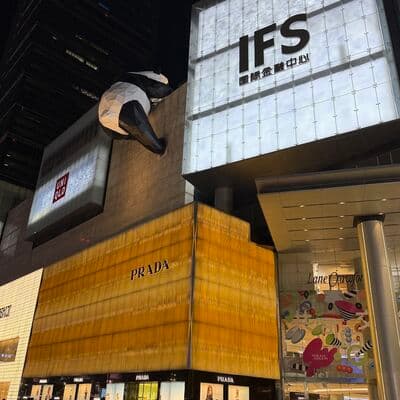
This is Chengdu's commercial heart - think Times Square meets open-air luxury mall. Taikoo Li Chengdu is the anchor: a low-rise, open-plan shopping complex built around a 1,000-year-old monastery. The Chengdu IFS building with its giant panda climbing the wall is the most Instagrammed spot in the city. At night, the neon and crowds make it feel electric.
Vibe: Modern, commercial, buzzing. Young crowds, fashion brands, rooftop bars.
Pros: Central location, walkable to many sights, tons of dining and nightlife options, multiple metro lines converge here.
Cons: Pricey for Chengdu. Can feel generic and mall-heavy. Not much "old Chengdu" character.
Hotels: 400-1,200 CNY/night ($55-$165 USD). International chains and boutique hotels both well-represented.
Kuanzhai Alleys Area
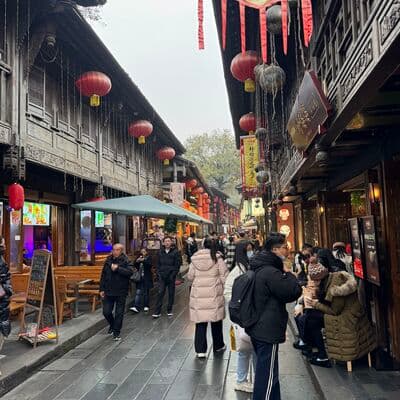
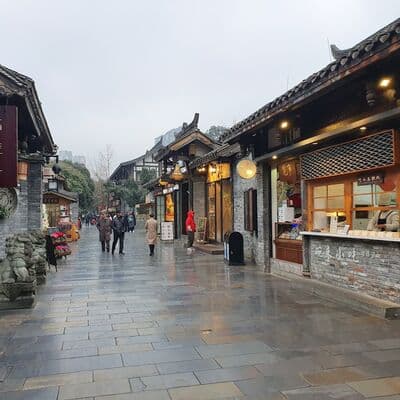
The Kuanzhai Alleys (Wide and Narrow Alleys) are Chengdu's most famous heritage streets - three parallel lanes of restored Qing Dynasty buildings filled with tea houses, craft shops, and snack vendors. The alleys themselves are touristy, but the surrounding neighborhood is genuinely charming with tree-lined streets and local life happening on every corner.
Vibe: Heritage meets hip. Old courtyard architecture, artsy cafes, quieter side streets.
Pros: Beautiful area to walk around, close to People's Park, good mix of old and new, plenty of character.
Cons: The alleys themselves are packed on weekends and holidays. Restaurants inside the alleys are overpriced and mediocre - eat in the surrounding streets instead.
Hotels: 300-900 CNY/night ($40-$125 USD). Some lovely courtyard-style guesthouses if you book early.
Wenshu Monastery Area
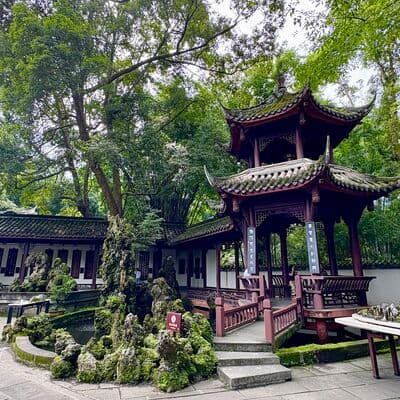
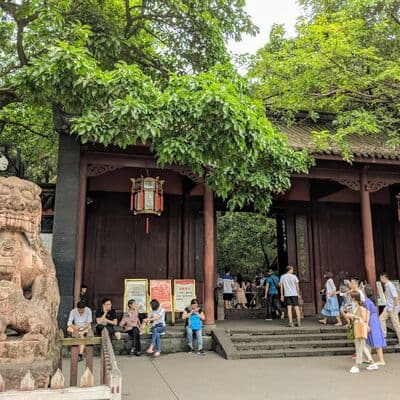
The area around Wenshu Monastery is old Chengdu at its most authentic. Narrow streets, local tea houses where retirees play mahjong all afternoon, and some of the city's best hole-in-the-wall restaurants. The monastery itself is active and atmospheric - incense smoke, chanting, and a vegetarian restaurant that's genuinely excellent.
Vibe: Local, traditional, slightly gritty. Real neighborhood feel.
Pros: Cheapest central area. Authentic food scene. Walking distance to the train station (useful for day trips). Quiet at night.
Cons: Less polished. Fewer English-speaking staff at hotels. The train station area can be chaotic.
Hotels: 150-500 CNY/night ($20-$70 USD). Hostels and budget guesthouses dominate.
Wuhou / Jinli Area
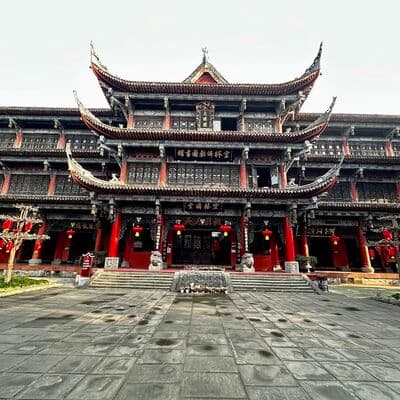
This is the Three Kingdoms history district. The Wuhou Shrine is the main attraction - a sprawling memorial to Zhuge Liang and the Shu Han kingdom. Right next door, Jinli Ancient Street is a reconstructed "old town" street with lanterns, snack stalls, and souvenir shops. It's touristy but undeniably photogenic, especially at night.
Vibe: Historical, tourist-friendly, lantern-lit evenings.
Pros: Close to major sights. Good mid-range hotel selection. Jinli is fun for an evening stroll even if you're staying elsewhere.
Cons: Jinli food is overpriced and not great. The area empties out late at night. Slightly south of center, so add metro time to reach other districts.
Hotels: 250-800 CNY/night ($35-$110 USD). Good value for location.
Tianfu Square Area
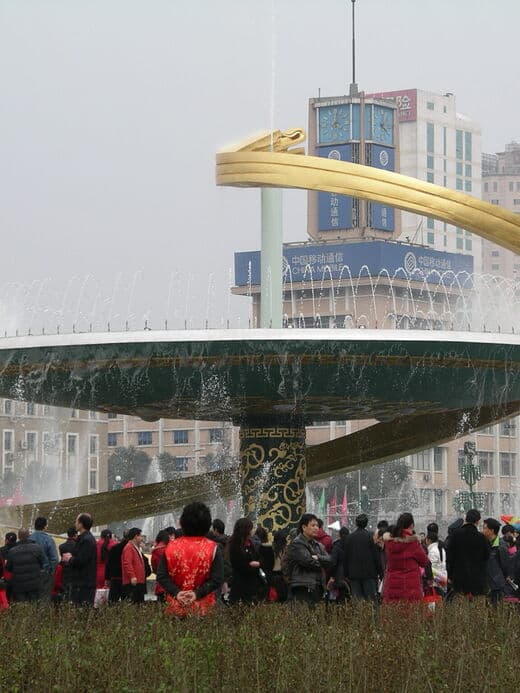
Tianfu Square is Chengdu's central plaza - a massive open space with Mao's statue, the Sichuan Science and Technology Museum, and government buildings. It's not a destination in itself, but it's the geographic and transport center of the city. Every major metro line passes through here.
Vibe: Business district, governmental, functional.
Pros: Maximum connectivity - you can reach anywhere fast. Good selection of business hotels. Safe and well-maintained.
Cons: Soulless. Not much nightlife or character. You'll eat and spend your evenings elsewhere.
Hotels: 300-1,000 CNY/night ($40-$140 USD). Business hotels with good amenities.
Yulin Area
Yulin is where Chengdu locals go to eat, drink, and live. This residential neighborhood south of the center has become the city's most exciting food and bar scene. Tiny restaurants with plastic stools spilling onto sidewalks, craft beer bars, vinyl record shops, and the kind of places you'd never find on a tourist map. If you want to eat where locals eat, stay here.
Vibe: Hipster-local hybrid. Foodie paradise. Late-night energy.
Pros: Best food district in the city. Excellent bar scene. Affordable. Feels like discovering something real.
Cons: Not near major tourist sights. English is basically nonexistent. Can be hard to navigate without Chinese language apps.
Hotels: 200-600 CNY/night ($28-$85 USD). Mostly local hotels and Airbnb-style apartments on Chinese platforms.
Hi-Tech Zone (South)
Chengdu's southern business district is where the tech companies and expats cluster. Clean, modern, with malls and international restaurants. If you need reliable Western food, English-speaking service, or a gym in your hotel, this is your zone. It's also near the Global Center - one of the world's largest buildings, with a water park inside.
Vibe: Corporate, international, suburban-modern.
Pros: International amenities. Newer hotels with modern facilities. Good if you're combining business and tourism.
Cons: Far from old Chengdu. Generic. You could be in any modern Asian city. 30-40 minutes by metro to central sights.
Hotels: 350-1,500 CNY/night ($48-$210 USD). International chains dominate.
Best Time to Visit Chengdu
Let's be honest: Chengdu weather is not a selling point. The city sits in the Sichuan Basin, which traps moisture and blocks sunlight. The old joke is that Sichuan dogs bark at the sun because they see it so rarely. That said, some months are significantly better than others.
Best months: March to May, September to November. Spring brings mild temperatures (15-25C / 59-77F) and the occasional sunny day. Autumn is similar - comfortable, less humid, and the ginkgo trees turn the city gold in November. These shoulder seasons also mean fewer domestic tourists and lower hotel prices.
Acceptable: June, July, August. Summer is hot (30-35C / 86-95F) and very humid. It rains frequently, sometimes in dramatic downpours. The upside: this is when the pandas are most active, and the lush greenery is beautiful. Air conditioning is everywhere. Just carry an umbrella and accept the sweat.
Worst months: December to February. Winter is cold (2-8C / 36-46F), grey, damp, and miserable. The cold is the penetrating kind - humid cold that gets into your bones. Most buildings don't have central heating (Chengdu is technically "south" of the heating line). You'll see locals in full winter gear inside restaurants. Unless you have specific business here, skip winter.
Festivals worth timing your trip around:
- Chinese New Year (January/February): The city is festive with temple fairs and lantern displays at Wuhou Shrine. But half of Chengdu goes home to the countryside, so some restaurants close. Book early - prices spike during the holiday week.
- Duanwu Festival / Dragon Boat Festival (June): Dragon boat races and zongzi (rice dumplings) everywhere. A fun time but very crowded.
- Mid-Autumn Festival (September/October): Mooncakes, family gatherings, and beautiful evening atmospheres at parks and temples. A lovely time to visit.
- Chengdu International Music Festival (October): If you're into music, this brings live performances across the city.
Budget timing: The cheapest time to visit is mid-March to April and mid-October to November. Avoid Golden Week (October 1-7) at all costs - this is when 1.4 billion Chinese people go on holiday simultaneously, and Chengdu is a top domestic destination. Prices double, attractions are sardine-packed, and you'll spend more time in queues than actually seeing things. Same applies to Chinese New Year and the May Day holiday (May 1-5).
Chengdu Itinerary: 3 to 7 Days
Chengdu rewards slow travel, but here's how to make the most of different trip lengths. These itineraries assume you're based centrally (Chunxi, Kuanzhai, or Wuhou area).
3-Day Itinerary: The Essentials
Day 1: Pandas + City Center
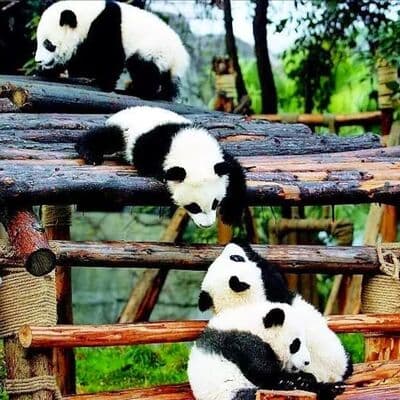
6:30 AM - Yes, really. Get to the Chengdu Research Base of Giant Panda Breeding by opening time (7:30 AM in summer, 8:00 AM in winter). Take DiDi or metro Line 3 to Panda Avenue station, then shuttle bus. The pandas are active in the early morning and basically comatose by noon. Budget 2-3 hours. Tickets: 55 CNY ($7.50 USD) - book online the day before via the official WeChat mini-program or through Trip.com.
11:00 AM - Head to Wenshu Monastery. Free entry. Explore the grounds, watch locals pray, and eat lunch at the monastery's vegetarian restaurant (excellent and cheap - 30-50 CNY / $4-7 USD per person). The courtyard tea garden is also wonderful - order a covered-bowl tea for 15-30 CNY ($2-4 USD) and just sit.
2:00 PM - Walk south to Kuanzhai Alleys (about 20 minutes on foot or one metro stop). Browse the alleys, grab a snack (skip the sit-down restaurants - they're tourist traps). Try the street-side ear cleaning if you're feeling adventurous (30-50 CNY / $4-7 USD).
5:00 PM - Nearby People's Park for Chengdu's most iconic experience: tea at Heming Tea House. Watch locals dancing, playing cards, and getting their ears cleaned. A pot of tea is 20-40 CNY ($3-5.50 USD). Stay until dusk.
7:30 PM - Dinner at a hotpot restaurant near your hotel. Expect to spend 80-150 CNY ($11-21 USD) per person for a proper hotpot feast. First-timers: get the yuan-yang (half-and-half) pot so you have a non-spicy side as backup.
Day 2: History + Evening Scene
9:00 AM - Wuhou Shrine (50 CNY / $7 USD). Even if you know nothing about the Three Kingdoms period, the gardens are beautiful and the red wall corridor is stunning for photos. Budget 1.5-2 hours.
11:30 AM - Du Fu Thatched Cottage (50 CNY / $7 USD). A museum and park dedicated to the Tang Dynasty poet Du Fu. Gorgeous bamboo groves and traditional gardens. Combine it with a walk along the Huanhua Stream. Budget 1.5 hours.
1:30 PM - Lunch in the Yulin neighborhood. Walk down Yulin Road and pick any place that's packed with locals. Noodles, rice bowls, or Sichuan home-cooking - you'll eat spectacularly for 20-40 CNY ($3-5.50 USD).
3:30 PM - Taikoo Li Chengdu and the Chunxi Road shopping district. Window shop, people watch, grab a coffee. The rooftop of Chengdu IFS lets you get close to the famous climbing panda sculpture.
7:00 PM - Jinli Ancient Street at night. This is when the lanterns come on and the street is at its most atmospheric. Grab street snacks as you walk - san da pao (rice balls), bo bo ji (skewers in chili oil), sweet potato noodles. Budget about 30-50 CNY ($4-7 USD) for grazing.
9:00 PM - If you have energy, catch a Sichuan opera "face-changing" show. Several venues near Jinli offer 1-hour performances (150-280 CNY / $20-38 USD). The mask-changing act is genuinely impressive even if you're not an opera fan.
Day 3: Sanxingdui + Departure
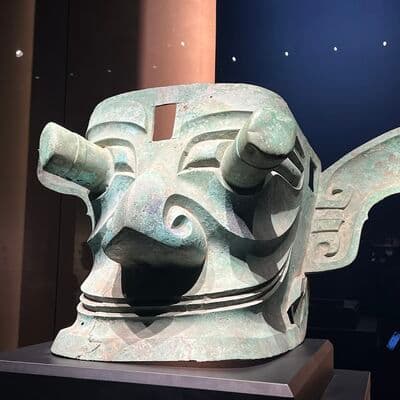
8:00 AM - Day trip to Sanxingdui Museum in Guanghan (about 40 minutes by high-speed train from Chengdu East Station, or 1 hour by DiDi). This is one of the most mind-blowing museums in China - 3,000-year-old bronze masks and artifacts from a mysterious civilization that rewrites Chinese history. The new museum building opened in 2023 and is world-class. Tickets: 72 CNY ($10 USD). Budget 3-4 hours for the museum.
2:00 PM - Return to Chengdu. Spend your remaining time revisiting a favorite spot, doing last-minute shopping at Chunxi Road, or relaxing in a tea house.
5-Day Itinerary: Adding Depth
Follow the 3-day plan above, then add:
Day 4: Local Life + Food Deep Dive
Morning: Take a Sichuan cooking class (half-day classes run 200-400 CNY / $28-55 USD through various providers - book via Trip.com or ask your hotel). You'll visit a local market, learn to cook 3-4 dishes, and eat everything. It's one of the best things you can do in Chengdu.
Afternoon: Explore the area around Tianfu Square and the Sichuan Provincial Museum (free, closed Mondays). The museum gives excellent context for the Sanxingdui artifacts and Sichuan's unique history.
Evening: Dedicated hotpot or barbecue crawl through Yulin. Start with chuan chuan (skewer hotpot) at one place, then move to a maocai spot, then end with craft beer at one of Yulin's microbreweries. Budget 150-250 CNY ($20-35 USD) for the evening including drinks.
Day 5: Day Trip Options
Option A: Mount Qingcheng and Dujiangyan Irrigation System (UNESCO World Heritage Sites). Both accessible by high-speed train (30-40 minutes). The irrigation system is 2,200 years old and still functioning - genuinely impressive engineering. Mount Qingcheng is a forested Taoist mountain with ancient temples. Combined day trip works well. Entry: 80 CNY ($11 USD) each.
Option B: Leshan Giant Buddha. The world's largest stone Buddha (71 meters tall, carved in 713 AD). About 1.5 hours by high-speed train. Book tickets in advance - this is one of China's most popular sights. Entry: 80 CNY ($11 USD).
7-Day Itinerary: The Full Experience
Follow the 5-day plan, then add:
Day 6: Western Sichuan Foothills
If you're up for it, take a day trip (or overnight) to Bifengxia Panda Base - a less crowded alternative to the city panda base, set in a dramatic gorge about 2 hours from Chengdu. Or head to Jiezi Ancient Town for a genuinely untouched water town experience with almost no tourists.
Day 7: Slow Chengdu
Your last day should be about soaking it in. Morning: Revisit People's Park for tea and people-watching. Browse the marriage market corner (where parents post their children's dating profiles - fascinating cultural window). Afternoon: Get a traditional Sichuan massage (80-150 CNY / $11-21 USD for 90 minutes). Wander the streets around your hotel. Have one last explosive hotpot dinner. Evening: Night walk along the Jin River - the city lights reflecting on the water are beautiful.
Where to Eat in Chengdu: Restaurants and Cafes
Chengdu is a UNESCO City of Gastronomy, and it earns that title at every price point. The best food here isn't in fancy restaurants - it's on plastic stools at places with no English menu and a line out the door. Here's how to navigate the food scene.
Street Food and Snack Streets
Jinli Ancient Street has food stalls, but locals consider it overpriced and underwhelming - it's the tourist version. For better street food, head to Jianshi Road (near Sichuan University) or the streets around Wenshu Monastery. Budget 5-15 CNY ($0.70-$2 USD) per item. Look for: jianbing (savory crepes), dan hong gao (egg cakes), liang fen (cold jelly noodles), and grilled skewers.
Fly Restaurants (Cang Ying Guan Zi)
These are Chengdu's soul - tiny, chaotic, family-run restaurants with terrible decor and incredible food. The name "fly restaurant" originally implied they were so small that even flies could find them, though locals have reclaimed the term with pride. You find them by looking for the crowds. If a place has plastic furniture, handwritten menus, and a queue at 11:30 AM, sit down. Meals run 15-40 CNY ($2-5.50 USD) per person. The Yulin area, the streets west of Kuanzhai Alleys, and the university neighborhoods are fly restaurant gold mines.
Hotpot
Chengdu's hotpot is different from Chongqing's - slightly less aggressive on the numbing peppercorn, more aromatic, more complex. The big chains (Haidilao, Xiaolongkan, Dazhai Men) are reliable and some have English menus, but the best hotpot is at local spots. Budget 80-150 CNY ($11-21 USD) per person including drinks. Key tip: the "qing you" (clear oil) hotpot is Chengdu's specialty - less greasy than the traditional tallow-based version. First-timers should absolutely get the yuan-yang (split) pot with one spicy and one mild side.
Mid-Range Restaurants
For a sit-down Sichuan meal with proper service, expect 80-200 CNY ($11-28 USD) per person. Restaurants in the Kuanzhai area and around Taikoo Li offer more curated experiences. Look for places specializing in "Sichuan private kitchen" (si fang cai) - these offer refined versions of classic dishes in elegant settings. Many have photo menus or use translation apps to help non-Chinese speakers.
Cafes and Third-Wave Coffee
Chengdu's cafe scene has exploded. The city has more independent coffee shops per capita than almost anywhere in China. Concentrated around Taikoo Li, Yulin, and the university areas, you'll find everything from minimalist pour-over bars to garden cafes hidden in old courtyards. Americanos run 25-40 CNY ($3.50-5.50 USD). The specialty tea houses are equally worth exploring - Chengdu's gaiwan (covered bowl) tea culture is 2,000 years old and still very much alive. People's Park and Wenshu Monastery have the most atmospheric tea houses in the city.
What to Try: Chengdu Food
Sichuan cuisine is one of China's "Eight Great Cuisines" and arguably the most famous internationally. But what you get in Chengdu is different from what passes for "Sichuan food" abroad. Here are the dishes you absolutely must try, with the Chinese names so you can point at this list in restaurants.
- Mapo Doufu (Tofu) - ma po dou fu - The original Chengdu dish: soft tofu in a sauce of chili oil, fermented bean paste, ground pork, and Sichuan peppercorn. The "ma" (numbing) and "la" (spicy) combination should make your lips tingle. The original restaurant (Chen Mapo Doufu, near Wuhou) has been serving it since 1862. A plate costs about 25-35 CNY ($3.50-5 USD). Don't settle for mild versions - the real thing should challenge you.
- Hotpot - huo guo - A bubbling pot of chili-laden broth where you cook raw ingredients at your table. In Chengdu, order: mao du (beef tripe - sounds scary, tastes amazing), duck intestine, sliced lamb, potato, lotus root, and mushrooms. A full hotpot meal for two runs 160-300 CNY ($22-41 USD) including beer. Go hungry.
- Dan Dan Noodles - dan dan mian - Thin wheat noodles in a sauce of chili oil, preserved vegetables (ya cai), minced pork, and peanuts. Originally sold by street vendors carrying the ingredients on a shoulder pole ("dan"). A bowl costs 8-15 CNY ($1-2 USD). Every shop makes it slightly differently - try several.
- Kung Pao Chicken - gong bao ji ding - Yes, the same dish you know from takeout menus - except the real version is a revelation. Properly made with dried chilies, Sichuan peppercorn, peanuts, and wok-charred chicken. None of the goopy sweet sauce of the Western version. About 35-50 CNY ($5-7 USD) per plate.
- Twice-Cooked Pork - hui guo rou - Sliced pork belly, boiled then stir-fried with fermented bean paste, garlic stems, and chilies. It's the everyday comfort food of Sichuan - what people eat at home. Simple, deeply savory, addictive. About 30-45 CNY ($4-6 USD).
- Chuan Chuan Xiang (Skewer Hotpot) - Like hotpot's casual cousin: you grab skewers of meat, vegetables, and tofu from a rack, cook them in a shared pot, then pay by the skewer (0.5-3 CNY each, $0.07-0.40 USD). More social, more fun, and cheaper than traditional hotpot. Popular evening food, especially in the Yulin area.
- Zhong Dumplings - zhong shui jiao - Sweet, spicy dumplings unique to Chengdu. Pork-filled wontons drenched in sweet soy sauce and chili oil. A plate of 10-12 runs 12-20 CNY ($1.70-2.80 USD). Find them at dedicated dumpling shops throughout the city.
- Rabbit Head - tu tou - This is Chengdu's most "are you serious?" dish. Braised or spiced rabbit heads that locals crack open and eat with their hands. It's intense, but if you can get past the visual, the cheek meat is tender and flavorful. About 12-18 CNY ($1.70-2.50 USD) per head. Available at street stalls throughout the city - look for the characters on handwritten signs. Even if you don't eat one, watching locals demolish them is an education.
- Bo Bo Ji (Cold Skewers) - bo bo ji - Cold skewers of meat and vegetables soaking in a pot of spicy red oil or rattan pepper sauce. You grab what looks good and pay by the skewer. About 1-3 CNY ($0.15-0.40 USD) per stick. The most famous shop is in Leshan, but excellent versions exist throughout Chengdu. Perfect as a snack while bar-hopping.
Chengdu Secrets: Local Tips
These are the things nobody tells you until you've already made the mistake. Twelve tips from time spent on the ground.
- Panda base timing is everything. Arrive at opening (7:30-8:00 AM). By 10 AM, the pandas are sleeping and the base is mobbed with tour groups. The baby panda pavilion has the longest lines - go there first, then work backwards. Weekdays are dramatically better than weekends.
- Learn to say "wei la" (slightly spicy) and "bu la" (not spicy). Even "slightly spicy" in Chengdu is what most people would call "very spicy." Waitstaff will nod when you say "wei la" and then bring you something that still lights you up. This is normal. Carry antacids for the first few days.
- Fly restaurants close by 1:30 PM for lunch and 8:30 PM for dinner. They don't wait around for late customers. The best ones start running out of food even earlier. Plan to eat on a Chinese schedule: lunch at 11:30 AM, dinner at 6:00 PM. Adjust or miss out.
- Tea house culture is not about the tea. When a local invites you for tea, they're inviting you to sit for two hours, chat, snack on sunflower seeds, and watch the world go by. Don't rush it. A 20 CNY pot of jasmine tea at People's Park buys you an entire afternoon of people-watching. This is how Chengdu lives.
- Chengdu's nightlife is underrated. The Jiuyanqiao bar street area along the river is the mainstream party zone - loud, neon, and young. For something more interesting, head to Yulin's back streets for craft beer bars, or the area near the Polycentre for live music venues. Things don't really start until 10 PM.
- Don't bother bargaining at proper shops. Prices at chain stores, malls, and most restaurants are fixed. Bargaining only applies at street markets, souvenir stalls, and some small shops in tourist areas like Jinli Ancient Street. Even then, don't go below 60-70% of the asking price - this isn't Southeast Asia.
- Mahjong is everywhere and everyone plays. The clacking of mahjong tiles is the soundtrack of Chengdu. You'll hear it from tea houses, parks, and apartment windows. If someone offers to teach you, accept - it's a genuine cultural experience and Chengdu locals are patient teachers. Just don't gamble with strangers.
- The humidity is relentless. Pack light, breathable clothes regardless of season. In summer, you'll sweat through everything. In winter, the damp cold penetrates layers. A compact umbrella is essential year-round - Chengdu's drizzle can start without warning. This is also why Sichuanese eat so much chili - Traditional Chinese Medicine says it drives out dampness.
- Cash is nearly dead, but carry some. China runs on WeChat Pay and Alipay. As a foreign visitor, you can now link international Visa/Mastercard to Alipay (they added this for foreign passport holders). Set this up before you arrive. But carry 500-1,000 CNY in cash as backup - some fly restaurants, taxis, and small vendors don't have card readers, and the apps can glitch.
- Slow down. Chengdu's biggest appeal is its pace. Locals here have a saying: "Shaobu, Chengdu" - roughly, "play less, be Chengdu." Don't try to tick off a checklist. Spend an afternoon doing nothing in a park. Eat slowly. Walk the back streets. The city reveals itself to people who aren't rushing.
- Essential apps: WeChat (communication + payments), Alipay (payments), DiDi (taxi/ride-hailing, like Uber), Baidu Maps or Amap (Google Maps doesn't work well in China), Trip.com (hotels and train tickets in English). Download all of these before arriving. Most require a phone number for registration - your home number usually works for initial setup.
- Avoid Golden Week and Chinese New Year travel. October 1-7 and the Lunar New Year week (late January or February) are when domestic tourism reaches apocalyptic levels. The panda base hits its 70,000 daily visitor cap. Train tickets sell out weeks in advance. If these are your only options, book everything early and brace yourself. The May Day holiday (May 1-5) is similarly brutal.
Transport and Connectivity
Getting from the Airport
Chengdu has two airports. Tianfu International Airport (TFU) is the new main airport, opened in 2021, located about 50 km south of the city center. Most international and many domestic flights now use TFU. The Airport Express metro line connects TFU to central Chengdu in about 40-50 minutes (10 CNY / $1.40 USD). DiDi to city center costs 120-180 CNY ($17-25 USD) depending on traffic and time of day. The old Shuangliu Airport (CTU) still handles some domestic flights and is closer to the center - metro Line 10 connects it in about 30 minutes (6-8 CNY / $0.80-1.10 USD).
Direct flights context: From the US, direct flights to Chengdu operate from Los Angeles, San Francisco, and New York (seasonal). From London, there are direct flights on multiple carriers. From Sydney, direct flights resumed in 2024. Flight time from LA is roughly 13 hours, from London about 10 hours.
Metro
Chengdu's metro is excellent - clean, fast, cheap, and expanding constantly. As of 2026, there are 13 lines covering most areas you'll want to visit. Single rides cost 2-10 CNY ($0.28-1.40 USD) depending on distance. Buy tickets from machines at any station using cash or Alipay. The machines have English language options. Trains run from about 6:30 AM to 11:00 PM. Rush hours (7:30-9:00 AM and 5:30-7:00 PM) are extremely crowded - plan accordingly.
Buses
Chengdu has an extensive bus network, but it's essentially Chinese-only. Routes are posted at stops in Chinese, announcements are in Chinese, and you pay with a transit card or Alipay. Flat fare of 2 CNY ($0.28 USD). Buses are useful for short hops that don't align with metro lines, but for tourists, the metro and DiDi are more practical.
Taxis and DiDi
DiDi is your best friend in Chengdu. It works almost identically to Uber - enter your destination, get a price estimate, confirm, and a driver picks you up. The app has an English interface, though drivers speak only Chinese. Rides within the central city typically cost 15-40 CNY ($2-5.50 USD). Tips are not expected. Traditional taxi flagfall is 8 CNY ($1.10 USD) for the first 2 km, then 1.9 CNY ($0.26 USD) per km. Late-night surcharges apply after 10 PM. Always make sure the meter is running in regular taxis.
Shared Bikes
Chengdu is flat and bike-friendly. Meituan (yellow), Hellobike (blue), and Didi bikes (green/orange) are everywhere. Unlock with Alipay or WeChat, ride, park responsibly. About 1.5-2.5 CNY ($0.20-0.35 USD) per 30 minutes. Great for covering short distances, especially along the riverside greenways. The city has invested heavily in cycling infrastructure - many areas have dedicated bike lanes.
SIM Cards and eSIM
Get a Chinese SIM card or eSIM before or upon arrival. China Mobile, China Unicom, and China Telecom all offer tourist SIM cards at airports - typically 100-200 CNY ($14-28 USD) for 7-30 days with data. eSIM providers like Airalo, Holafly, or Nomad offer China data plans starting around $5-15 USD for a week. Data-only eSIMs are easiest - no Chinese phone number, but you get internet access. If you need a Chinese phone number (required for some apps), get a physical SIM at the airport counter.
VPN
Google, Instagram, Facebook, X (Twitter), WhatsApp, and most Western social media are blocked in mainland China. Download and set up a VPN before you arrive - VPN websites are blocked within China. Reliable options for China include Astrill, ExpressVPN (inconsistent but sometimes works), and Surfshark. Keep in mind that VPN connections can be slow and unreliable, especially during politically sensitive periods. Domestic Chinese apps (WeChat, Alipay, Baidu Maps, DiDi) work perfectly without VPN and are frankly more useful for daily life anyway.
Essential Apps Checklist
Before your trip, install: WeChat (messaging, payments, mini-programs for tickets), Alipay (payments - link your international card), DiDi (taxis), Baidu Maps or Amap/Gaode (navigation), Trip.com (hotels, trains, flights in English), Pleco (Chinese dictionary and OCR translation - point your camera at Chinese text), and a VPN app. These seven apps will handle 95% of your daily needs in Chengdu.
Who Is Chengdu For: Summary
Chengdu is for food lovers who want the real thing, not the sanitized export version. It's for travelers who prefer atmosphere over architecture, street corners over landmarks, and conversations over selfies. It's for people who can handle a city that doesn't cater specifically to international tourists - and are better for it.
Ideal for: Food-obsessed travelers. Anyone interested in Chinese culture beyond the greatest hits. Tea drinkers. History buffs. People who want a base for exploring western China's mountains and Tibetan regions. Travelers who appreciate a city with genuine character and a slow pace.
Not ideal for: People who need English everywhere. Travelers who can't handle any spicy food (though mild options exist). Those wanting beach weather or blue skies. Visitors who only have one day - Chengdu needs at least three to show its real face.
Recommended duration: 3 days minimum for the city itself, 5-7 days if you want to include day trips to Sanxingdui, Leshan, or Mount Qingcheng. If you're using Chengdu as a gateway to western Sichuan (highly recommended), plan for 10-14 days total.