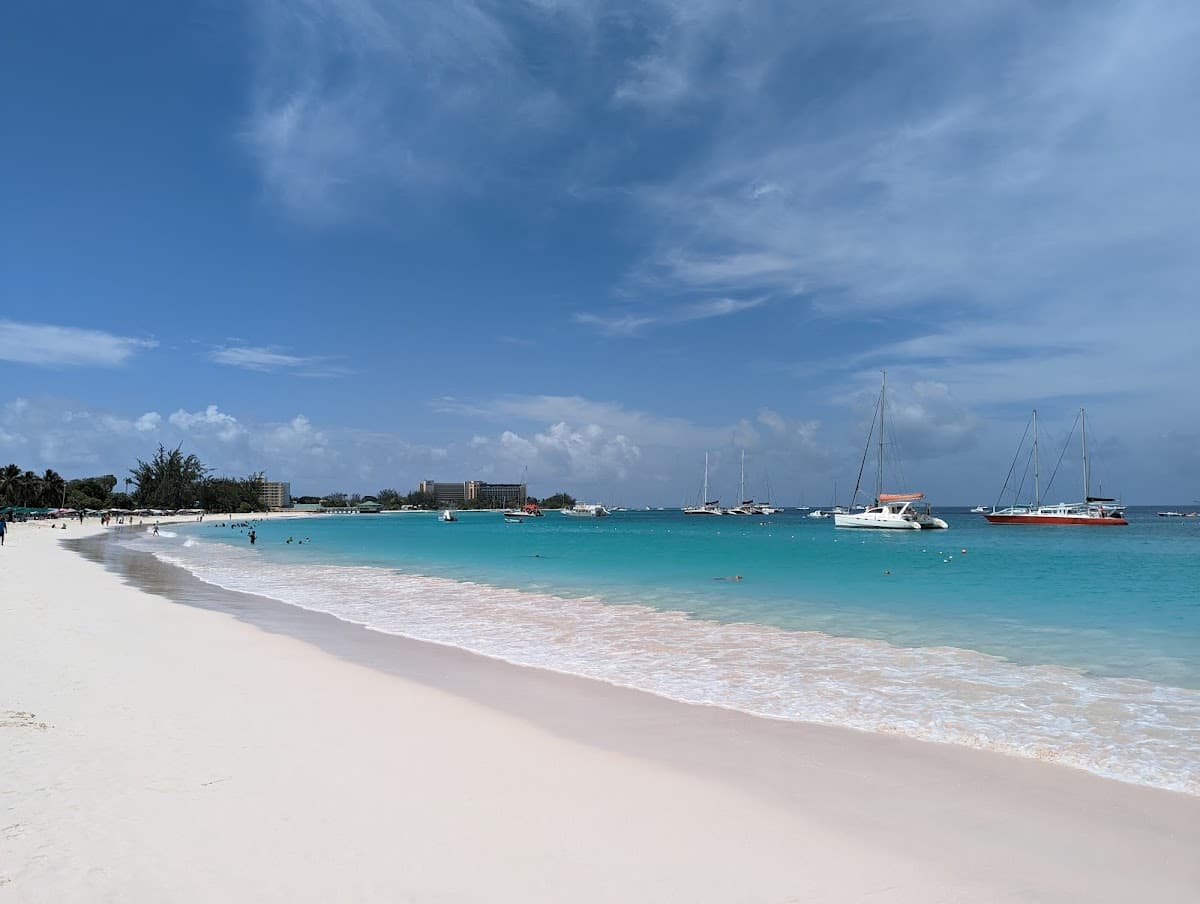
Bridgetown
Bridgetown 2026: What to Know Before You Go
Bridgetown is the capital of Barbados and the only real city on this 166-square-mile island, where 17th-century colonial architecture sits alongside cruise ship terminals, and the smell of fried flying fish mixes with the salt breeze of the Caribbean Sea. This is not your typical Caribbean resort destination where you spend two weeks on a lounger by the pool -- Bridgetown has genuine character, a deep history, and real street life that most visitors never expect.
In short: Bridgetown is worth visiting for its UNESCO-listed historic center, snorkeling with sea turtles and shipwrecks in Carlisle Bay, the underground world of Harrison's Cave, the iconic pink-sand Crane Beach, and the legendary Friday night fish fry in Oistins. Plan for 5 to 7 days to explore the whole island comfortably, using Bridgetown or the south coast as your base.
Barbados is often called the most 'British' island in the Caribbean: they drive on the left, cricket is the national sport, and Parliament has been sitting since 1639 -- making it the third oldest in the world. Yet the vibe is unmistakably Caribbean: relaxed, friendly, fueled by rum and calypso. The pros: it is safe, compact, the food is outstanding, and the people are genuinely welcoming. The cons: it is pricier than most Caribbean islands, public transport can be chaotic, and the wet season (June through November) brings tropical downpours and the occasional hurricane threat.
Neighborhoods: Where to Stay in Bridgetown
Downtown Bridgetown -- History and Character
The historic center is home to the Parliament Buildings, The Careenage, and St. Michael's Cathedral. During the day it buzzes with markets, shops, and office workers. In the evening, the center goes quiet -- this is not a neighborhood for nighttime strolls.
Pros: everything within walking distance, authentic atmosphere, Cheapside Market with tropical fruits right around the corner
Cons: limited accommodation options, noisy during the day, empties out at night
Prices: $$ (guesthouses from $60-80/night)
Best for: travelers who prioritize authenticity and walkability to historic sights
The Garrison -- History Meets the Beach
This neighborhood sits just south of downtown and is a UNESCO World Heritage Site in its own right. It is home to the Barbados Museum, George Washington House (Barbados is the only country outside the US that Washington ever visited), and the Garrison Savannah racetrack. Every morning at dawn, trainers bring racehorses to swim in the ocean here -- a sight that is worth setting your alarm for.
Pros: close to Carlisle Bay, historic colonial architecture, peaceful in the evening
Cons: limited restaurant selection, 15-20 minute walk to downtown
Prices: $$-$$$ (hotels from $100-150/night)
Best for: history buffs, families, anyone who wants both a beach and city access
Hastings and Worthing -- The Sweet Spot
The south coast strip just east of Bridgetown. Great beaches, the South Coast Boardwalk for morning jogs or sunset walks, and dozens of restaurants and cafes. Supermarkets, pharmacies, ATMs -- everything you need for comfortable daily life is here. This is the most practical base for travelers who want beach access and easy trips into town.
Pros: best value for money on the island, many restaurants, beaches within walking distance, the boardwalk
Cons: more touristy than the center
Prices: $$-$$$ (apartments from $80, hotels from $120/night)
Best for: most travelers -- this is the all-rounder choice
St. Lawrence Gap -- Nightlife Central
Locals just call it 'The Gap.' It is a narrow street roughly half a mile long, packed with bars, restaurants, and clubs. After 10 PM, this is where the real Caribbean party kicks off: live music, dancing, rum flowing freely. Harbour Lights is the main beachfront nightclub with regular entertainment shows.
Pros: best nightlife on the island, tons of food options, beach nearby
Cons: loud at night, plenty of tipsy tourists
Prices: $-$$ (hostels from $20, guesthouses from $50/night)
Best for: younger travelers, party-goers, backpackers
Oistins -- The Fishing Village with Soul
A fishing town on the south coast, famous for its Friday night Fish Fry. On other days, it is a quiet spot with affordable accommodation and the freshest seafood on the island. Nearby Miami Beach (yes, Barbados has its own Miami Beach) is one of the best swimming beaches on the south coast -- calm water, white sand, few crowds on weekdays.
Pros: authentic local atmosphere, freshest seafood, budget-friendly accommodation
Cons: a bit far from Bridgetown (20 minutes by bus), not much to do outside of the Friday fish fry
Prices: $ (apartments from $40-60/night)
Best for: budget travelers, seafood lovers, anyone seeking the real Barbados
West Coast (Holetown / Speightstown) -- Luxury and Calm
Known as the 'Platinum Coast,' this is the stretch with the island's finest hotels, villas, and restaurants. The sea here is calm and turquoise, the sand is white, the palms lean just so. Mullins Beach is among the most photogenic spots on the island. Speightstown to the north still has an old colonial charm and far fewer tourists than the south.
Pros: perfect beaches, tranquility, top-tier service
Cons: expensive, far from Bridgetown (30-40 minutes), limited nightlife
Prices: $$$-$$$$ (hotels from $200, villas from $400/night)
Best for: couples, honeymooners, luxury travelers
East Coast (Bathsheba) -- Surfing and Wild Nature
Bathsheba is the spiritual heart of Barbados. Massive boulders rise from the Atlantic surf, powerful waves crash against the shore, and tourists are almost nowhere to be seen. This is where the surfers and artists live. Swimming is dangerous due to strong currents, but the scenery is the most dramatic on the island.
Pros: stunning natural beauty, peace and quiet, world-class surfing
Cons: remote from everything else, no safe swimming, minimal infrastructure
Prices: $ (guesthouses from $40-50/night)
Best for: surfers, photographers, anyone looking for solitude
Best Time to Visit Bridgetown
Peak season: December through April. This is the dry season, with temperatures between 79-86F (26-30C), minimal rainfall, and comfortable humidity. The trade-off: prices are 30-50% higher than in the off-season, and you should book accommodation 2-3 months ahead. If you are flying from the US East Coast or UK, this is when you will find the most direct flight options -- JetBlue, American, British Airways, and Virgin Atlantic all run frequent routes.
Shoulder season: May and November. Prices drop, crowds thin out, and the weather is still quite pleasant. Rain comes in short tropical bursts -- a 20-30 minute downpour followed by sunshine. This is arguably the best time to visit if you want value without sacrificing too much on weather.
Risky period: June through October. Wet season and hurricane territory. Barbados sits further east than most Caribbean islands, so it gets hit by hurricanes less frequently, but the risk exists. The upside: accommodation prices can drop by half, and the island turns a deeper shade of green.
Festivals and events:
- Crop Over Festival (July-August) -- the biggest festival in Barbados, their version of Carnival. Music, elaborate costumes, calypso competitions, street parades. The finale is Grand Kadooment Day (first Monday in August). Book accommodation 3-4 months in advance if you want to experience this.
- Holetown Festival (February) -- a week celebrating the first English settlement on the island. Fairs, live music, food stalls.
- Oistins Fish Festival (Easter) -- four days of seafood, fish-deboning competitions, music, and dancing.
- Barbados Food and Rum Festival (October-November) -- a gastronomy event featuring the island's best chefs and rum blenders.
- Run Barbados (December) -- a marathon and half-marathon along the coastline.
When it is cheapest: September and October offer the lowest prices for both flights and accommodation. Hurricane risk is at its peak, but if the weather cooperates, you get the same Barbados experience for roughly half the cost.
Itinerary: 3 to 7 Days in Bridgetown
3 Days: The Essentials
Day 1: Historic Bridgetown and Carlisle Bay
8:00-10:00 AM -- Start with a walk through Historic Bridgetown. Walk from The Careenage (the old harbor where yachts dock today) to the Parliament Buildings -- a striking neo-Gothic complex framed by palm trees. Stop at Cheapside Market for fresh mangoes and coconut water ($1-2 BBD per coconut, so about 50 cents USD).
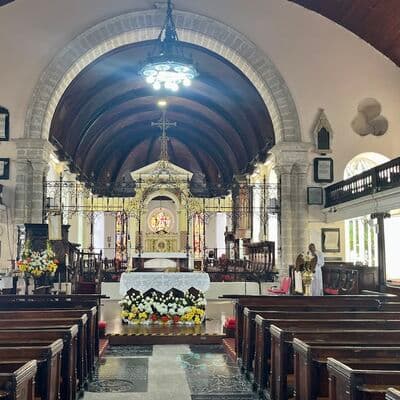
10:00-11:00 AM -- St. Michael's Cathedral, one of the oldest Anglican cathedrals in the Western Hemisphere. Free entry, and it is a cool, quiet escape from the heat.
11:30 AM-3:00 PM -- Carlisle Bay. Rent a mask and snorkel ($10-15 USD) and swim among shipwrecks and sea turtles. There are at least six sunken vessels here at depths of 20-40 feet -- one of the best shore-accessible snorkeling spots in the entire Caribbean. Grab lunch at Cuzz's Fish Stand near Pebbles Beach: their legendary fish cutter (a blue marlin sandwich on salt bread) runs $5-7 USD and is considered the best on the island by taxi drivers and five-star hotel chefs alike.
4:00-6:00 PM -- The Garrison district: Barbados Museum ($7.50 USD) and George Washington House ($7.50 USD). If you can manage an early morning on another day, come to Pebbles Beach between 5:30 and 7:30 AM to watch racehorses being exercised in the ocean -- a spectacular free show.
Evening -- Dinner at Salt Cafe in downtown Bridgetown or along the boardwalk in Hastings.
Day 2: The South Coast
8:00-10:00 AM -- Morning walk along the South Coast Boardwalk from Hastings to St. Lawrence Gap. Breakfast at one of the cafes along the way.
10:00 AM-1:00 PM -- Miami Beach near Oistins. Calm water, white sand, uncrowded on weekdays. Kayak tours and SUP board rentals available nearby ($20-25 USD/hour).
1:00-2:30 PM -- Lunch in Oistins. Even when it is not Friday, you can find excellent fried fish and fresh lobster here.
3:00-5:00 PM -- Mount Gay Rum Distillery tour ($25 USD with tasting). This is the oldest rum distillery in the world, operating since 1703. You will learn the difference between white, gold, and aged rum -- and taste them all.
Evening (if it is Friday) -- Oistins Fish Fry: grilled swordfish, lobster, Banks beer, live music. Arrive by 6:00-7:00 PM before the crowds hit.
Day 3: East Coast and the Interior
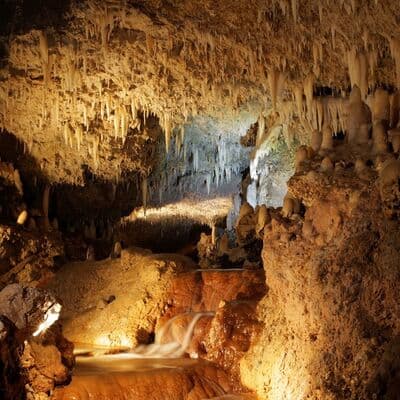
8:00-10:30 AM -- Harrison's Cave ($30 USD for the tram tour, $20 for the walking tour). Underground waterfalls, stalactites, stalagmites, and crystal-clear pools. Book the earliest slot for fewer crowds.
11:00 AM-1:00 PM -- Bathsheba on the east coast. Lunch at Roundhouse, a cliff-top restaurant with ocean views and the famous boulder formations below. Order the fish of the day with rice and peas.
2:00-4:00 PM -- Hunte's Gardens ($20 USD). A tropical garden set in the crater of an extinct volcano. The owner, Anthony Hunte, often greets guests personally -- an eccentric Englishman who moved here decades ago and created something truly magical.
4:30-5:30 PM -- Animal Flower Cave ($12.50 USD) at the northern tip of the island. A sea cave with natural rock pools and views of the Atlantic through dramatic stone arches.
5 Days: Taking Your Time
Days 1-3: Follow the itinerary above, but at a more relaxed pace. Spend more time at each stop and linger over meals.
Day 4: West Coast and the Underwater World
8:00 AM-12:00 PM -- Catamaran cruise along the west coast with a turtle swim stop ($70-90 USD, including lunch and drinks). The turtles come right up to you -- incredible photo opportunities guaranteed.
1:00-3:00 PM -- Mullins Beach, one of the most beautiful beaches on the island. Loungers, a beach bar, and calm water.
3:30-5:00 PM -- Speightstown: explore this small colonial town and visit Arlington House Museum. This is Barbados without the tourist polish.
Evening -- Dinner at The Cliff or Tides on the west coast (book well in advance, $$$$).
Day 5: Beach Day and Shopping
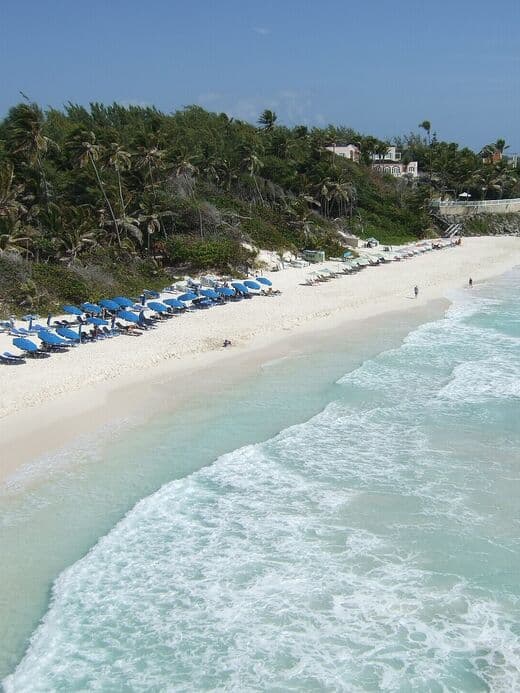
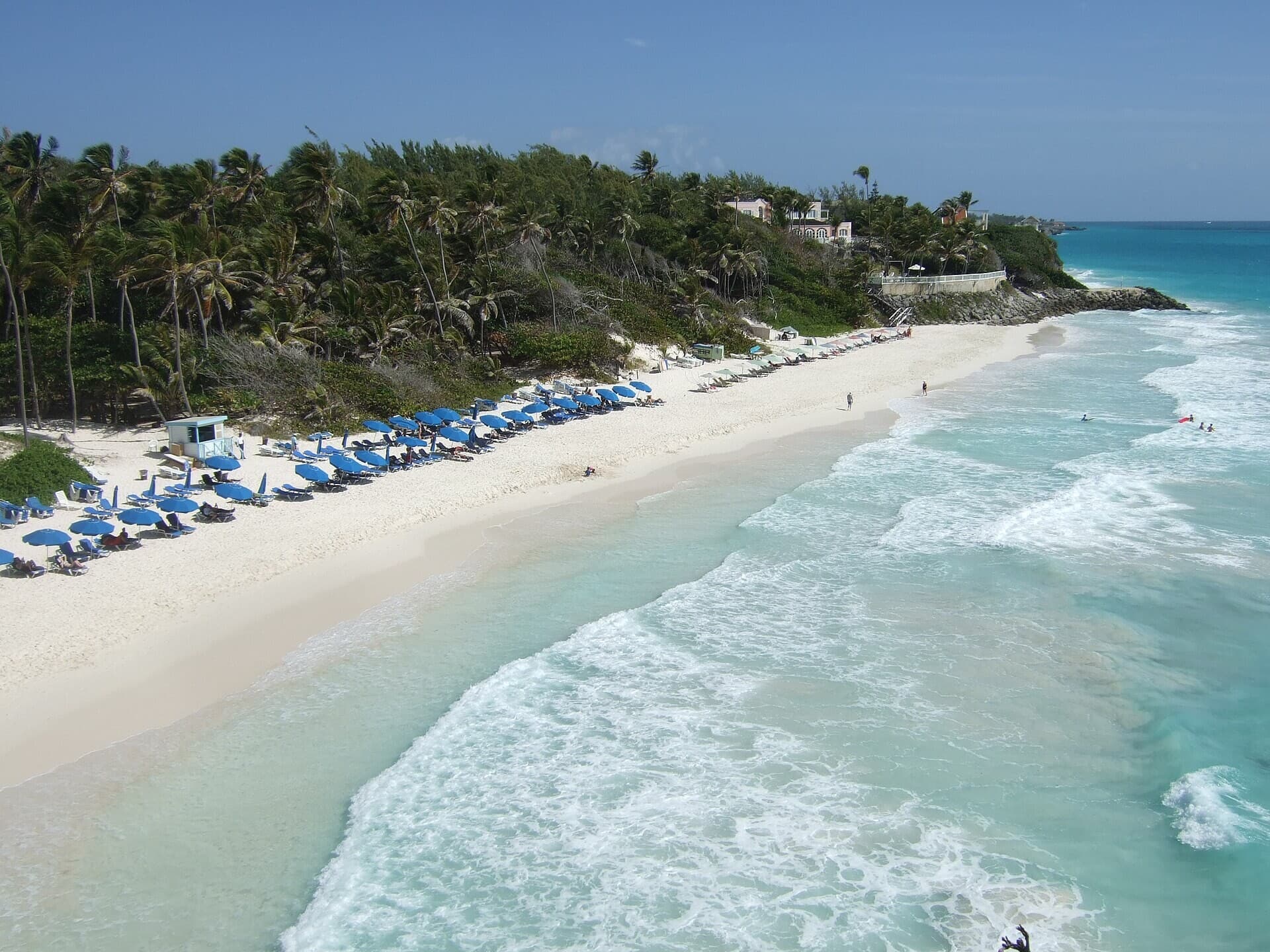
Morning -- Crane Beach on the southeast coast. Pink-tinged sand, powerful waves, dramatic cliffs. The most photogenic beach on the island. You can walk down the 200 steps from The Crane hotel or take the elevator ($1 BBD). Worth every step if you take the stairs.
Afternoon -- Back to Bridgetown for shopping: Broad Street for name brands, Pelican Craft Centre for local souvenirs, rum, and hot sauce. Cheapside Market for fresh spices and fruit to take home.
Evening -- Farewell dinner at Champers on the south coast with sunset views.
7 Days: The Full Experience
Days 1-5: Follow the itinerary above.
Day 6: Adventure Day
Morning -- Surfing at Bathsheba (lessons from $50 USD for 2 hours) or scuba diving at Carlisle Bay (from $80 USD for two dives, PADI-certified shops available).
Afternoon -- Zip-lining or hiking through the tropical forest at Welchman Hall Gully, a ravine filled with tropical plants and green monkeys darting through the canopy.
Evening -- Rum shop crawl. There are over 1,500 rum shops on the island -- roughly one for every 200 residents. Order a Mount Gay Eclipse with coconut water or a classic Rum Punch. Each shop has its own character, its own regulars, and its own recipe.
Day 7: Wind Down
Morning -- Brunch at Green Lime Eco-Cafe (vegan dishes made from breadfruit and plantain, fresh juices).
Afternoon -- A free and easy beach day. One last snorkel at Carlisle Bay or simply lounge by the water with a book.
Evening -- Sunset on the west coast, which has the best sunsets on the island. Barbados is one of the few places where you can spot the 'green flash' at the moment the sun dips below the horizon -- keep your eyes open.
Where to Eat: Restaurants and Cafes
Street Food and Markets
Bridgetown is a street food city. On practically every corner you will find vans and stalls serving fish cutters, fried chicken, and macaroni pie. The golden rule: look for the lines of locals, and follow them.
Cuzz's Fish Stand near Pebbles Beach is legendary -- it has been operating for over 50 years. A blue marlin sandwich on salt bread with tomatoes, lettuce, and pickled pepper. $5-7 USD. Taxi drivers and five-star chefs agree: this is the best fish cutter on the island.
Cheapside Market downtown -- tropical fruits, spices, and hot meals. This is where locals shop: mangoes, papaya, breadfruit, soursop. A rice-and-stew lunch plate goes for $3-5 USD.
Nelson Street -- not pretty, but as real as it gets. Small hole-in-the-wall joints serving home-cooked food: rice and peas, stewed chicken, pudding and souse (a traditional Saturday dish). Follow the smell and ignore the decor.
Local Restaurants
RyAnne's Restaurant and Bar has been open since 1941. No pretensions, just food. Their cou-cou and flying fish -- the national dish of Barbados -- is one of the best preparations on the island. Try the mauby, a local drink made from tree bark -- even if it tastes strange at first, you will grow to appreciate it. Lunch $8-12 USD.
Granny's Restaurant in Oistins -- Creole home cooking, literally run by a grandmother. Over 30 years in business, packed with locals at every meal service. Stewed pork, Bajan pepper sauce, coconut pie. $7-10 USD.
Tip: On Fridays, look for restaurants with a sign that says 'Cou-cou today' -- every place makes it differently, and Friday is the traditional day to eat it.
Mid-Range Restaurants
Salt Cafe in downtown Bridgetown -- fresh seafood and Caribbean dishes with a modern twist. A great spot for lunch after exploring the city. $15-25 USD per main course.
Lobster Alive at Carlisle Bay -- you pick your lobster from the pool, and 20 minutes later it is on your plate. Lobster runs $30-45 USD depending on size. Book a table for sunset -- the view is outstanding.
Tapas in Hastings -- Spanish-Caribbean fusion on the boardwalk. Good cocktails, shareable portions for two people at $40-50 USD total.
Fine Dining
Champers (south coast) -- where locals go to celebrate. Lunch is cheaper than dinner: Caribbean shepherd's pie, curry shrimp, lamb. Lunch $20-30, dinner $35-50 USD per person. The terrace overlooks the ocean -- reserve ahead.
The Cliff (west coast) -- regularly listed among the best restaurants in the Caribbean. Tables literally hang over the water. Dinner runs $80-120 USD per person. Smart casual dress code, book at least a week in advance.
Tides (Holetown) -- seafood in a historic seaside house with a tree growing straight through the dining room. Dinner $50-70 USD per person.
Cafes and Breakfast
Green Lime Eco-Cafe -- a vegan cafe using local ingredients: breadfruit, plantain, passion fruit. Smoothies, fresh juices, light lunches. $8-12 USD.
Cafe Sol in St. Lawrence Gap -- Mexican-Caribbean breakfast, solid coffee, and enormous burritos. Breakfast $8-12 USD.
Coffee culture in Barbados is modest -- locals drink tea, mauby, and juice. For a decent espresso, stick to tourist areas and hotel restaurants.
Must-Try Food in Bridgetown
Flying Fish and Cou-cou -- the national dish, traditionally served on Fridays. Boneless flying fish stewed in a sauce of tomatoes, garlic, onion, and herbs. Cou-cou is similar to polenta, made from cornmeal and okra. Together, they are the perfect pairing. Where to try it: RyAnne's or any local spot with a 'Cou-cou Friday' sign. $8-12 USD.
Fish Cutter -- the Barbadian answer to the burger. Fried or baked blue marlin (or flying fish) in salt bread -- a dense, slightly salty roll. Toppings: lettuce, tomato, pickled pepper, mayo. Find it at: Cuzz's Fish Stand, roadside vans. $4-7 USD.
Macaroni Pie -- do not confuse this with American mac and cheese. This is a baked casserole of pasta with cheddar cheese, eggs, mustard, ketchup, and breadcrumbs on top. Served as a side with fish or meat. Available everywhere, but the homemade version from market vendors is the best. $2-3 USD per portion.
Pudding and Souse -- the traditional Saturday dish. Pudding is a sweet potato sausage with spices. Souse is pickled pork (ears, trotters, snout) in a lime broth with cucumber and hot pepper. It sounds adventurous, but the taste is phenomenal -- tangy, spicy, and completely addictive. Where: any market on Saturday morning. $5-7 USD.
Roti -- a legacy of the Indian diaspora. A thin flatbread wrapped around fillings: chicken curry, chickpeas, potato, or goat. Look for it on Nelson Street and around Baxter's Road. The best late-night snack after a bar crawl. $4-6 USD.
Fish Cakes -- crispy fritters made from salted cod with herbs and spices, deep-fried until golden. The perfect snack paired with fiery Bajan pepper sauce. Sold everywhere: markets, beaches, bars. $1-2 USD each.
Barbecued Pigtails -- yes, these are exactly what they sound like. Grilled pork tails marinated in a spicy sauce. Street food for the adventurous eater. Popular at festivals and fairs. $3-5 USD.
Conkies -- sweet packets made from cornmeal, coconut, pumpkin, sweet potato, and spices, wrapped in a banana leaf and steamed. Traditionally prepared in November for Independence Day, but you can find them year-round at markets. $1-2 USD.
Rum Punch -- the cocktail of Barbados. The recipe follows a simple formula: 'one of sour, two of sweet, three of strong, four of weak' (lime juice, sugar syrup, rum, water or ice). Every bar and every grandmother has their own version. At a rum shop: $2-3 USD. At a restaurant: $6-8 USD.
Mauby -- a local drink made from the bark of the mauby tree. Bittersweet and an acquired taste, but incredibly refreshing in the heat. If you end up liking it, buy a bottle of concentrate at the market ($3 USD) to take home.
What to avoid: tourist restaurants at the cruise terminal -- prices are triple, quality is a third of what you will find elsewhere. 'Bajan buffets' at all-inclusive resorts are watered-down versions of the real thing. If there are no locals eating somewhere, keep walking.
For vegetarians: it is not the easiest island, but it is doable. Chickpea roti, macaroni pie, rice and vegetables are widely available. Green Lime Eco-Cafe has a fully vegan menu. At markets, look for grilled breadfruit, baked plantain, and the incredible variety of tropical fruits.
Local Secrets and Insider Tips
1. Leave the flashy jewelry at the hotel. Local police actively warn tourists about chain-snatching incidents, particularly in Bridgetown. Keep expensive watches and gold chains in your hotel safe. Use a money belt or a simple crossbody bag for valuables when walking around the city.
2. US dollars are accepted everywhere. The exchange rate is fixed at 1 USD = 2 BBD and has been for decades. However, change is almost always given in Barbadian dollars, so you will accumulate a pocketful of BBD coins by the end of your trip. Credit cards are widely accepted at restaurants and shops, though small vendors and rum shops are cash only.
3. Get to Oistins Fish Fry by 6:00 PM, not later. By 8:00 PM the lines are an hour long, the best fish is gone, and finding a table becomes a mission. At 6:00 PM everything is fresh, seats are available, and the atmosphere is already building. Walk to the back stalls -- they tend to be less crowded and just as good.
4. ZR vans are the cheapest way to get around. Small white minivans with 'ZR' on the plates. Routes cover the entire island. Cost: $3.50 BBD (under $2 USD) one way. Fair warning: the driving is aggressive, the reggae and soca is cranked to maximum volume, and stops are on demand -- just shout 'Stopping!' when you want to get off. It is an experience in itself.
5. Racehorses swimming in the ocean -- a free spectacle. Every morning between 5:30 and 7:30 AM at Pebbles Beach (near the Garrison), trainers bring racehorses into the sea for exercise. Watching these powerful animals wade through the surf in the early morning light is one of those moments no guidebook mentions -- but every visitor remembers.
6. Use reef-safe sunscreen. Barbados' coral reefs are under serious stress. Use sunscreen without oxybenzone and octinoxate. You can find reef-safe options in local pharmacies, but they are more expensive here -- bring your own from home if possible.
7. Sunday is a dead day. Most shops are closed, restaurants run reduced hours. Plan a beach day, a nature hike, or a lazy morning. The whole island slows down, and fighting it will only frustrate you -- lean into the pace instead.
8. Haggling is not a thing here. Unlike many Caribbean islands, Barbados has fixed prices. The only exception is souvenir stalls and fruit markets, where you might politely negotiate a small discount on a bulk purchase. In shops, restaurants, and for tours, the price is the price.
9. Tap water is safe to drink. Barbados has one of the best water filtration systems in the Caribbean. Save your money and skip the bottled water. Fill a reusable bottle at your hotel before heading out.
10. Banks Beer is a must-try. The local lager: light, crisp, and perfect in the heat. A bottle at a rum shop costs $2.50 BBD ($1.25 USD). At restaurants, expect to pay double. If you are into craft beer, look for 10 Saints, brewed locally with more character than the big brand.
11. Watch out for manchineel trees. On some beaches you will see trees marked with red paint or a 'Do not touch' sign. The sap causes severe chemical burns, and the small green fruits are poisonous. Do not shelter under them during a rain shower -- the rainwater running off the leaves can burn your skin.
12. Download the BPSA app. The Barbados Public Service App shows bus and ZR van routes in real time. Without it, navigating public transport is essentially guesswork. Also download an offline Google Maps -- cell service can be spotty in the interior and on the east coast.
Transport and Connectivity
Getting from the Airport to Town
Taxi: $35-40 USD to Bridgetown, $25-30 USD to the south coast. Prices are fixed (there is a rate board in the arrivals hall), but confirm the fare before getting in. Travel time: 15-25 minutes depending on traffic.
Public bus: The bus stop is on the highway, about a 5-minute walk from the terminal. A bus to Bridgetown costs $3.50 BBD ($1.75 USD). Travel time: 30-45 minutes with stops. Buses run every 15-20 minutes during the day.
Hotel transfer: Most 3-star and above hotels offer airport pickup for $20-50 USD. Book in advance.
Ride-hailing: Uber does not operate in Barbados. Ride Yellow is the local alternative, but it is not always reliable. For airport transfers, pre-booked taxis are your safest bet.
Getting Around
Government buses -- blue, operated by the Transport Board. Cost: $3.50 BBD ($1.75 USD) one way, cash only to the driver (have exact change ready). Routes cover the entire island, but schedules are approximate at best.
ZR vans -- white minivans, privately operated. Same $3.50 BBD fare. Faster than government buses but with a driving style that can politely be described as 'spirited.' Routes run along the south and west coasts. They operate until late evening.
Route taxis -- yellow minibuses that run the same routes as regular buses but make fewer stops. Same $3.50 BBD fare.
Taxis: No meters -- prices are fixed by zone. Bridgetown to south coast: $10-15 USD. Bridgetown to west coast: $20-30 USD. Bridgetown to Bathsheba: $35-40 USD. Night surcharge: +50%.
Car rental: From $40-50 USD/day. You need to purchase a temporary Barbados driving permit ($5 USD) -- the rental company handles the paperwork in about 5 minutes. Remember: driving is on the left. Roads are generally good but narrow. Parking in Bridgetown is difficult -- use the south coast as your base and bus or taxi into town.
Connectivity
SIM card: Digicel or FLOW are the two local carriers. A tourist SIM with 5GB of data costs $25-30 USD. Buy at the airport or at shops on Broad Street. Passport required for purchase.
eSIM: Airalo, Holafly, and similar services offer Barbados eSIMs from $8-10 USD for 1GB over 7 days. More convenient than a physical SIM if your phone supports it.
Wi-Fi: Available at hotels, cafes, and restaurants. Speeds are acceptable for browsing and video calls, but do not expect to stream 4K content. Some public areas in Bridgetown offer free Wi-Fi.
Useful apps:
- BPSA -- real-time public transport routes
- Ride Yellow -- local ride-hailing (works intermittently)
- What's On In Barbados -- events and festivals calendar
- Google Maps -- works well, but download the offline map before you arrive
- XE Currency -- currency converter (though the BBD/USD rate is easy to remember: just divide by 2)
Who Is Bridgetown For: The Bottom Line
Bridgetown and Barbados as a whole are not about the all-inclusive resort experience. This is an island with genuine character, deep history, outstanding food, and people who actually want to talk to you. You can snorkel over shipwrecks in the morning, explore one of the oldest parliaments in the world after lunch, and dance to calypso with fishermen at night.
Great for: couples, food lovers, snorkeling and diving enthusiasts, history and culture buffs, families with older kids.
Not ideal for: travelers looking for a budget Caribbean vacation (the Dominican Republic or Cuba offer better value), clubbing-focused visitors (nightlife here is intimate, not mega-club), or those who want nothing but a beach -- without an interest in culture, the island may feel too small.
How many days: minimum 3 (Bridgetown and nearby coast only), ideal 5-7 (the whole island without rushing), maximum 10-14 (if you truly want to slow down and absorb the rhythm of the island).
Information is current as of 2026. Prices are approximate and may vary by season.