About
The Complete Guide to Kuwait: Everything You Need to Know Before Your Trip
Why Visit Kuwait
Kuwait is the Persian Gulf country that almost everyone skips. When people dream of Arabian Peninsula getaways, they reach for Dubai with its glass towers and manufactured superlatives, or Doha with its World Cup makeover and museum islands. Maybe Oman, if they are feeling adventurous. But Kuwait? Kuwait barely registers on the tourist radar. And that, paradoxically, is exactly why you should go.
Here is what most travel guides will not tell you: Kuwait is arguably the most authentic country in the Gulf Cooperation Council. While its neighbors have spent the last two decades polishing themselves into tourist-friendly theme parks -- building artificial islands, indoor ski slopes, and the world's tallest everything -- Kuwait has been quietly doing its own thing. It has not tried to become a brand. It has not hired a global PR firm to rebrand itself as a 'destination.' It is simply a real place where real people live, work, argue about politics, sit in traffic, eat incredible food, and carry on traditions that stretch back centuries. For a traveler tired of curated experiences and Instagram backdrops, this is deeply refreshing.
Let me give you some context. Kuwait is one of the wealthiest countries on Earth by GDP per capita. Oil was discovered here in 1938, and the tiny emirate on the northwestern shore of the Persian Gulf transformed from a modest pearling and trading port into a modern state with skyscrapers, six-lane highways, and a standard of living that puts many European nations to shame. But unlike the UAE or Qatar, Kuwait never turned itself into a tourism showpiece. There are no palm-shaped islands, no seven-star hotels with gold-plated fixtures, no theme parks with roller coasters named after luxury brands. Kuwait lives for itself -- and if you are curious enough to come look, it will show you something real.
What makes Kuwait special? Start with history. This is one of the oldest trading centers in the Persian Gulf. Long before anyone drilled a well, Kuwait thrived on pearl diving. For centuries, fleets of dhows -- traditional wooden sailing vessels -- set out each summer, and divers plunged to depths of 50 to 60 feet without any equipment, holding their breath, risking sharks and jellyfish and decompression sickness, all for the luminous pearls that made Kuwait a wealthy trading port. The legacy of this era is woven into every aspect of Kuwaiti culture, from the maritime museums to the annual dhow festival to the old merchants' houses that still line the narrow lanes of the Mubarakiya souq.
Then there is the cultural scene. Kuwait has the oldest and most organic arts community in the Gulf. While Abu Dhabi was importing the Louvre franchise and Dubai was building an opera house to fill a checklist, Kuwait's artists, playwrights, and filmmakers have been producing authentic work since the 1960s. The Sultan Gallery, founded in 1969, is one of the oldest private galleries in the Middle East. The Contemporary Art Platform hosts residencies and exhibitions that rival anything in Beirut or Amman. The Sheikh Jaber Al-Ahmad Cultural Centre is an architectural marvel that actually hosts meaningful programming, not just corporate gala dinners.
Architecture deserves its own mention. Kuwait went through an extraordinary modernist building boom in the 1960s and 1970s, attracting some of the world's greatest architects. The Kuwait Towers, built in 1979, remain one of the most iconic structures in the Middle East -- three soaring towers with blue-green spheres that look like they belong in a science fiction film. The National Assembly building was designed by Jorn Utzon, the same Danish architect who created the Sydney Opera House. Unlike the cookie-cutter glass towers going up across the Gulf, Kuwait's architectural heritage has genuine personality and ideas behind it.
The food alone justifies the flight. Kuwaiti cuisine is not simply 'Arab food' -- it is a unique fusion born from centuries of trade with India, Persia, Iraq, and East Africa. Machboos, the national dish of spiced rice with meat or fish, is one of the great rice dishes of the world. Breakfast in a traditional cafe, with balaleet (sweet vermicelli with egg) and karak chai (spiced milk tea), while watching the morning light hit the Gulf, is an experience that no five-star hotel buffet in Dubai can replicate.
And then there is the desert. Not a manicured dune-bashing experience with a barbecue dinner and belly dancer at the end, but the real thing: vast, flat, harsh, and beautiful. Kuwaiti families are obsessed with desert camping. From October through April, tent cities spring up across the landscape, with families barbecuing, riding ATVs, drinking cardamom coffee under the stars, and sleeping in the profound silence that only a desert can offer. If you are lucky enough to get invited to a Bedouin camp -- and Kuwaitis are spectacularly hospitable -- you will have one of the defining travel experiences of your life.
Finally, there is the human element. Kuwaitis are proud, warm, opinionated, and genuinely curious about visitors. This is not a service culture where every interaction is a transaction. People will invite you for coffee, ask where you are from, tell you about their country, debate politics with you, and send you away with a bag of dates and an insistence that you come back. In a region where tourism can feel transactional and sanitized, Kuwait's unvarnished hospitality is the real luxury.
Regions of Kuwait: Which One to Choose
Kuwait is a small country -- just about 6,880 square miles, roughly the size of Connecticut or slightly larger than Montenegro. You can drive from the Iraqi border in the north to the Saudi border in the south in under three hours. But do not let the size fool you. Each region has its own character, its own rhythm, and its own reasons for visiting. Let me walk you through them in detail, from the capital to the desert fringe.
Kuwait City and the Capital Metropolitan Area
The capital is the heart and brain of Kuwait, home to the vast majority of the country's roughly 4.5 million residents. Kuwait City is not just a city but an entire metropolitan sprawl that seamlessly blends into its suburbs: Hawalli, Salmiya, Farwaniya, Fahaheel. Together they form one continuous urban band along the Gulf coast.
Downtown Kuwait City is a fascinating mix of ultra-modern skyscrapers and pockets of old-world charm. The Corniche -- the main waterfront promenade -- stretches for several miles and is the city's social spine. This is where Kuwaitis come for evening walks, where families stroll with children, where young couples sit on benches watching container ships glide across the Gulf. The light at sunset here is extraordinary: the water turns gold, the towers of the city catch fire, and for a few minutes the whole scene looks like a painting.
The Kuwait Towers stand at the eastern end of the Corniche, and they are the country's most recognizable landmark. Three towers, the tallest reaching 614 feet, capped with distinctive blue-green spheres that house a revolving restaurant and an observation deck. They were built in 1979 and have aged beautifully -- a genuinely futuristic design that still looks fresh nearly five decades later. Go up for the panoramic view of the city and the Gulf. It is the best way to orient yourself on your first day. The towers appear on everything from banknotes to license plates -- they are Kuwait's Eiffel Tower.
The old heart of the city is the Mubarakiya district, and its centerpiece is the Souk Al-Mubarakiya, one of the oldest markets in the Persian Gulf. This is not a sanitized tourist market -- it is the real thing, a labyrinth of narrow alleys crammed with shops selling spices, gold, textiles, perfumes, traditional pottery, and household goods. You could spend half a day here, moving from the spice stalls (the aroma of saffron, cardamom, and dried limes is intoxicating) to the gold shops to the fabric merchants. A word of advice: do not bargain aggressively. Kuwaiti traders value calm conversation and humor. Start a chat, ask about their products, let the price come down naturally. In the side alleys of the souq, you will find traditional coffee shops (gahwa) serving Arabic coffee with dates and halwa -- this is the perfect place to sit, watch, and absorb the atmosphere of old Kuwait.
Adjacent to the souq stands the Seif Palace, the Emir's main palace, with its striking golden-tiled facade facing the waterfront. You cannot go inside, but the exterior is worth photographing, especially at sunset when the gold tiles glow. Nearby is the Grand Mosque of Kuwait, one of the largest in the Middle East, capable of holding 10,000 worshippers. Non-Muslims are welcome on guided tours -- book in advance through the mosque's office. It is free, informative, and one of the best introductions to Islamic architecture and culture you will find anywhere. The guides are articulate, patient, and genuinely happy to answer questions.
The cultural district clusters around the National Museum of Kuwait and the Museum of Islamic Art. The National Museum was badly damaged during the 1990 Iraqi invasion -- looted and partially burned -- but has been carefully restored. The collection traces Kuwait's history from the Stone Age through the pearl diving era to the oil boom. The pearl diving exhibit is unique: models of diving boats, the equipment used by divers, samples of pearls, photographs of an industry that defined a nation. Give yourself at least two hours here.
Green Island (Al-Jazira Al-Khadra) is an artificial island connected to the Corniche by a walkway. It is a pleasant park with an amphitheater, restaurants, and sweeping views of the city skyline. Locals come here at sunset, and they are right to do so -- the sunsets over the Gulf from this vantage point are among the best in the city. It is a quiet, contemplative spot, and a good antidote to the noise of the Corniche.
The Sharq district is the modern commercial heart, home to upscale restaurants, offices, and the Sharq Mall, which overlooks a marina where traditional dhows are still moored. The juxtaposition of ancient wooden boats and gleaming glass towers is pure Kuwait. Sharq is an excellent choice for an evening meal by the water -- several restaurants along the marina offer outdoor seating with views of the boats and the Gulf.
Architecture enthusiasts should make a pilgrimage to the Kuwait National Assembly building, designed by Jorn Utzon. This is considered one of the masterworks of modernist architecture in the Middle East. The enormous sail-like canopy that extends over the entrance creates a dramatic public space, symbolizing openness and democratic discourse. Kuwait was one of the first Gulf states to establish a parliament, and this building embodies that tradition in concrete and light. Tours are available by appointment -- contact the Assembly's public affairs office. Even if you cannot get inside, the exterior is worth the trip.
Hawalli and Salmiya
South of the city center lie Hawalli and Salmiya, the most cosmopolitan districts in all of Kuwait. If Kuwait City is the country's official face, Hawalli is its everyday life. This is where the vast expatriate community -- Indians, Filipinos, Egyptians, Pakistanis, Bangladeshis, Syrians, Lebanese -- lives, eats, shops, and socializes. The result is an astonishing diversity of restaurants that would rival any global food city: authentic Hyderabadi biryani, Filipino adobo, Egyptian koshari, Lebanese manousheh, Pakistani nihari, Thai curries -- all made by people from those countries, at prices that make your wallet weep with gratitude.
Salmiya runs along the coast and is often called the 'shopping capital of Kuwait.' Dozens of malls line its streets, from enormous retail complexes to quirky little boutiques. The main drag, Salem Al-Mubarak Street, is a pedestrianized zone lined with cafes, restaurants, and shops. In the evening it comes alive: families strolling, teenagers clustered around coffee shops, street vendors selling fresh juice and sweets. This is one of the best people-watching spots in Kuwait -- grab a karak chai from a street vendor, find a bench, and just observe. You will see the full spectrum of Kuwaiti life pass by.
Salmiya is also home to the Scientific Center Kuwait, a modern complex housing an aquarium, a wildlife area, and a maritime exhibition. The aquarium is one of the largest in the region, with a dedicated section on Persian Gulf marine life that is genuinely educational. The maritime exhibition traces Kuwait's seafaring and pearl diving history and is worth visiting even if you have no children with you. The building itself, jutting out over the water, is architecturally impressive.
Hawalli proper is a densely packed administrative district with a dizzying concentration of restaurants and cafes. This is where you come for cheap, authentic ethnic food. A plate of biryani for a dinar. A massive foul breakfast for 500 fils. An Egyptian koshari that would make a Cairo street vendor nod in approval. If you are on a budget, Hawalli is your best friend. The Hawalli market also offers textiles, electronics, and clothing at reasonable prices -- just be prepared for the crowds and the energy.
For Americans, Brits, and Australians used to the sanitized shopping mall experience, Hawalli can feel overwhelming at first. The streets are narrow, the shops spill onto the sidewalks, the traffic is chaotic, and everything is loud. But lean into it. This is where Kuwait's multicultural reality is most visible, and the food rewards alone justify the sensory overload.
Fahaheel and the Southern Coast
Fahaheel is a town on Kuwait's southern coast, about 25 miles from the capital. It is one of the oldest settlements in the country, with a deep history of fishing and pearl diving. Fewer tourists come here, which means more authentic Kuwaiti life -- less polish, more substance.
The main attraction in Fahaheel is the waterfront and the old fish market. Arrive early -- we are talking 6 or 7 AM -- and you will see fishermen unloading their catch: zubaidi (silver pomfret, Kuwait's beloved fish), shrimp, hamour (grouper), crabs. This is not a tourist attraction. This is a working market where locals come to buy dinner. The experience is visceral: the smell of salt and fish, the shouting, the flash of silver as fish are tossed into bins. Here is a tip: buy a fish at the market and take it to one of the tiny restaurants nearby. They will cook it for you for a nominal fee -- grilled, fried, or baked with rice. You will eat the freshest fish of your life for a fraction of what a waterfront restaurant would charge.
South of Fahaheel lies Al-Ahmadi, a town built around the oil industry. The town was founded by the Kuwait Oil Company and has a distinctive planned layout -- tree-lined streets, parks, low-rise housing, a very different feel from the high-rise chaos of the capital. The Oil Display Centre here tells the story of Kuwait's petroleum industry from discovery to the present day. The tour is free and provides excellent context for understanding how oil transformed this country from a small trading port into a global economic player. For Americans, it is particularly interesting to see the story told from the Kuwaiti perspective rather than the Western oil company narrative.
Further south, past the industrial zones of Shuaiba and the oil fields of Wafra (not tourist territory), you reach Al-Khiran, a resort area dotted with chalets. 'Chalet culture' is a big deal in Kuwait -- these are beach houses, often quite modest, where families spend weekends by the sea. Barbecuing, fishing, swimming, drinking tea, doing absolutely nothing. If you are invited to a Kuwaiti family's chalet -- and this does happen, especially if you strike up a conversation with locals -- go. It is one of the most authentic Kuwaiti experiences you can have. The pace slows down, the pretenses drop, and you see how Kuwaitis actually relax.
Jahra and the Northwest
Jahra is Kuwait's second-largest city, located about 20 miles west of the capital. This is where the landscape starts to change. The coast falls behind you, and the desert begins in earnest. The terrain becomes flatter, drier, harsher. Jahra has a different energy than the coastal cities -- more conservative, more traditional, more connected to Kuwait's Bedouin roots.
The city's historical claim to fame is the Battle of Jahra in 1920, when Kuwaiti forces under Sheikh Salem Al-Mubarak repelled an attack by Wahhabi forces from Nejd (central Saudi Arabia). The Red Fort (Qasr Al-Ahmar), where the battle took place, still stands and is open to visitors. It is a simple mud-brick fortification, but standing inside it and imagining the defenders fighting off a much larger force gives you a visceral sense of Kuwaiti national identity. This battle is to Kuwaitis what the Alamo is to Texans -- a foundational story of defiance.
The main natural attraction near Jahra is the Jahra Pools Reserve, a unique ecosystem of freshwater pools in the middle of the desert that serve as a stopover for migratory birds. During spring and fall migration, you can spot flamingos, herons, storks, and dozens of other species. The reserve is free to enter, but you need a permit from the Environmental Protection Authority. It is worth the bureaucratic hassle -- seeing flamingos in the Kuwaiti desert is surreal and wonderful.
Northwest of Jahra, the Sabah Al-Ahmad Natural Reserve is one of Kuwait's largest protected areas. Gazelles, desert foxes, hares, and numerous bird species inhabit this surprisingly diverse landscape. Visits are by appointment only, with groups organized through environmental organizations. This is your best chance to see what Kuwait looked like before the oil era -- low scrubland, sand dunes, and a rich web of desert life that most people never imagine exists here.
Kuwait's Islands
Kuwait controls nine islands in the Persian Gulf, but only two are accessible to regular tourists. Both deserve your time.
Failaka Island is the star. This island has been inhabited since the Bronze Age -- archaeologists have found ruins of the Dilmun civilization (3,000 years BCE) and a Greek settlement from the era of Alexander the Great. The Greeks called it Ikaros, and the ruins of their temple and residential quarters are genuinely impressive. But Failaka's modern history is equally compelling. During the 1990 Iraqi invasion, the island was completely evacuated, and it has never fully recovered. Buildings damaged during the occupation have been left as memorials -- bullet-pocked walls, collapsed roofs, empty streets. Walking through the abandoned village, past Bronze Age ruins and Gulf War destruction, is a strange, layered, powerful experience. A ferry runs from Kuwait City (Ras Al-Ard pier), takes about an hour, and there are a few restaurants and an archaeological museum on the island. Bring water and snacks, as infrastructure is limited.
Kubbar Island is a small, uninhabited speck of sand and coral, popular for day trips by boat. The water is crystal clear, the snorkeling is excellent (by Gulf standards), and the solitude is total. You will need to book a private boat or go through a tour operator. It is the perfect escape from the city, especially in the cooler months.
Bubiyan Island, Kuwait's largest, sits near the northern coast close to the Iraqi border. It is a strategic military zone, and tourist access is restricted. However, it harbors a unique ecosystem of mangroves and salt flats that supports migratory birds. Visits are possible with government permission and a guide, but this requires advance planning and some persistence.
The Kuwaiti Desert
Two-thirds of Kuwait is desert. This is not an incidental fact -- the desert is central to Kuwaiti identity, culture, and recreation. The Kuwaiti desert is harsh and flat, with sparse rocky outcrops and an endless horizon that stretches until the earth curves away. In summer, it is hellish -- temperatures soar past 130 degrees Fahrenheit, and nothing survives without extraordinary effort. But in winter, from November through February, the desert transforms. Temperatures drop to a comfortable 60-75 degrees Fahrenheit, sparse vegetation appears, and the landscape takes on a haunting, austere beauty.
Desert camping is a Kuwaiti national obsession. From October through April, the desert fills with tent cities. Families drive out on Thursday evenings (the start of the weekend), set up elaborate camps with carpets, cushions, and portable kitchens, and spend two days barbecuing, riding ATVs, flying kites, and sitting around fires. Children run wild. Teenagers race motorbikes across the sand. Grandmothers sit under canopies drinking tea and dispensing wisdom. If someone invites you to their desert camp, say yes immediately. You will drink cardamom coffee, eat fresh bread cooked over charcoal, watch the stars emerge in a sky so dark and clear it hurts, and understand something essential about this country that no museum or souq can teach you.
The southwestern part of the country, near the Saudi border, offers more varied terrain: low hills, rocky formations, wadis (dry riverbeds that fill with water after rare rains). After winter rains, the desert can turn briefly, startlingly green -- a phenomenon worth timing your trip around if you can manage it. The area around Kazma in the west holds petroglyphs and traces of ancient settlements, accessible by dirt roads that require a 4WD vehicle. Bring water, fuel, and a sense of adventure -- there are no gas stations in the desert.
The Persian Gulf Coastline
Kuwait has roughly 310 miles of coastline, much of it sandy beach. However, public beach access is more limited than you might expect. The best stretches of coast are either owned by private chalet developments or restricted for other reasons. This is a genuine downside -- for a country with this much shoreline, the lack of public beach infrastructure is frustrating.
That said, several public beaches are available. Messila Beach is the most popular, with decent sand, basic facilities, and a family-friendly atmosphere. Marina Beach, adjacent to the Marina Mall, is convenient for families who want to combine shopping with swimming. Al-Khiran on the southern coast offers more seclusion and clearer water.
The Gulf water temperature varies dramatically by season. In summer (June through September), it reaches 95 degrees Fahrenheit -- essentially a warm bath, and not particularly refreshing. In winter, it drops to around 60-64 degrees. The sweet spot for beach time is April-May and October-November, when the water is warm enough to swim comfortably but not so hot that it feels like soup.
For diving and snorkeling, the best spots are around the offshore islands, particularly Kubbar and Umm Al-Maradim. The coral reefs are not as spectacular as the Red Sea (be honest about this), but the marine life is diverse: rays, sea turtles, tropical fish, and the occasional whale shark. Visibility is best in winter when the water is cooler and calmer. Several dive operators in Kuwait City can arrange trips.
What Makes Kuwait Unique: Things You Will Not Find Next Door
Kuwait often gets lost in the shadow of its flashier Gulf neighbors. But this small country has things that you simply cannot find in Dubai, Doha, Muscat, or Riyadh. Let me break down what makes Kuwait genuinely one-of-a-kind.
The Pearl Diving Heritage
Before oil, there was pearl. Kuwait was one of the great pearl diving centers of the Persian Gulf, and this tradition shaped the country's economy, society, and soul for centuries. Every summer, fleets of dhows set sail, and divers -- called ghawwas -- spent months at sea, plunging to depths of 50 feet or more without any equipment, holding their breath for minutes at a time. The work was brutally dangerous: sharks, venomous jellyfish, ear infections, lung damage. Divers sometimes never came up. But the pearls they brought back made Kuwait one of the wealthiest trading ports in the region.
Today, this heritage is preserved with genuine reverence. Every year in late summer, the Annual Dhow Festival recreates historical pearl diving expeditions. Restored dhows sail out into the Gulf, divers demonstrate the old techniques, traditional songs (semba) echo across the water, and historical seafood is prepared using ancestral recipes. This is not a staged tourist show -- it is a deeply felt cultural event. If your visit coincides with the festival, rearrange your schedule to attend.
The National Museum devotes an entire wing to pearl diving: ship models, diving equipment (the bone nose clips, the weighted stones, the mesh bags), pearl samples, photographs of a way of life that vanished barely 80 years ago. In the Mubarakiya souq, you can still buy Kuwaiti pearls -- cultured now, not wild-caught, but beautiful nonetheless.
A Living Parliamentary Democracy
Kuwait is the only country in the Persian Gulf with a real parliament -- the National Assembly (Majlis Al-Umma) -- that wields genuine legislative power. Yes, there is an emir and a ruling family (Al Sabah), but the Kuwaiti parliament is no rubber stamp. Members of parliament regularly grill ministers, block legislation, force cabinet reshuffles, and engage in heated political debates that are broadcast live on television. By Gulf standards, this is astonishing. Kuwait's press is the freest in the region, and political discourse is lively, sometimes raucous, and always real.
For Americans and Brits, this might seem like baseline democracy, but in a region where most countries are absolute monarchies with appointed consultative councils, Kuwait's parliamentary tradition stands out dramatically. The National Assembly building, with Utzon's soaring concrete canopy, is the physical embodiment of this tradition -- architecture as democratic statement. Tours are available by appointment.
The Memory of the 1990 Invasion
On August 2, 1990, Saddam Hussein's Iraqi forces invaded Kuwait. The seven-month occupation that followed was a national trauma that continues to define Kuwaiti identity. For Americans and Brits, this is also personal history -- the Gulf War coalition of 1991 was led by the United States and the United Kingdom, and many veterans of that conflict are still alive. Visiting Kuwait's war memorials is a profoundly moving experience, regardless of where you come from.
The Al-Qurain Martyrs Museum is a house in a residential neighborhood where a group of Kuwaiti resistance fighters held out against Iraqi forces. The building has been preserved exactly as it was after the battle -- bullet holes in the walls, collapsed ceilings, twisted metal. Inside are the personal effects of the fallen fighters, photographs, weapons, and a timeline of the occupation. It is heavy, it is raw, and it is essential. Admission is free.
On Failaka Island, the scars of occupation are everywhere: destroyed buildings, abandoned houses, rusting military equipment. The island was completely evacuated and has never been fully repopulated. Walking through the ruins, with Bronze Age archaeological sites visible nearby, creates a profound sense of time's weight -- destruction and rebuilding, destruction and rebuilding, across millennia.
The burning of Kuwait's oil wells in 1991 -- when the retreating Iraqi army set fire to more than 700 wells -- was one of the most dramatic environmental disasters of the 20th century. Traces are still visible in some parts of the desert: blackened sand, fused earth. The Oil Display Centre in Al-Ahmadi covers this chapter in unflinching detail.
Modernist Architecture
In the 1960s and 1970s, flush with oil revenue and brimming with national ambition, Kuwait invited the world's greatest architects to build a modern nation from scratch. The result was an extraordinary collection of modernist buildings that architectural scholars travel from around the world to see. Besides Utzon's National Assembly, Kuwait attracted Reima Pietila (who designed the extraordinary Ministry of Foreign Affairs), Michel Ecochard, Kenzo Tange, and numerous other luminaries.
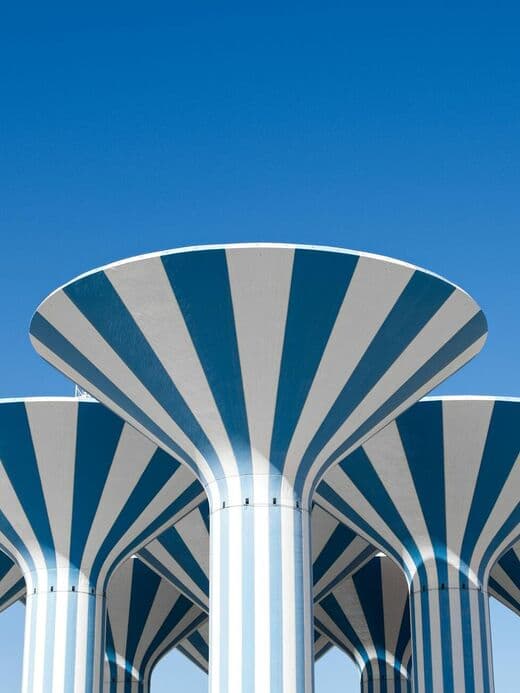
Many of these buildings survive and are accessible. The PACE (Pan Arab Consulting Engineers) project has documented dozens of modernist structures and works to preserve them. Highlights include the Seif Palace Annex, the Shuwaikh Water Towers, the Ministry of Information building, and several residential complexes that look like they jumped off the pages of a 1960s architecture textbook. For anyone with even a passing interest in modern architecture, Kuwait is a treasure trove that rivals Brasilia or Chandigarh -- but with almost no tourists.
New architecture is equally impressive. The Sheikh Jaber Al-Ahmad Cultural Centre (JACC) is a massive complex comprising a concert hall, theater, conference center, and music hall. Designed by the Canadian firm SSH, it resembles a futuristic spacecraft and has become a major regional venue for international performers. Check the program before your visit -- catching a concert or theater performance here is a world-class experience in a world-class building.
Diwaniya Culture
The diwaniya is a uniquely Kuwaiti social institution with no real equivalent anywhere else in the world. It is a regular gathering -- traditionally men only, though women's diwaniyas have become increasingly common -- held in a dedicated reception room attached to a home. The host receives guests, coffee and tea flow endlessly, and conversations range from politics to business to family gossip to philosophy. There is no agenda, no time limit, no dress code beyond respectability.
Diwaniyas are not just social clubs -- they are the invisible connective tissue of Kuwaiti society. Business deals are made here. Political alliances form. Social disputes are mediated. Every prominent Kuwaiti family maintains a diwaniya, and an invitation to attend one is a mark of trust and respect. As a tourist, you are unlikely to stumble into one, but if you have Kuwaiti acquaintances -- or if you stay long enough and show genuine interest in the culture -- the invitation may come. Accept instantly. It is one of the most authentic cultural experiences available in any Gulf country.
Kuwait's Contemporary Art Scene
Kuwait has the deepest, most organic contemporary art scene in the Persian Gulf. Not the biggest (Abu Dhabi's Louvre and Guggenheim dwarf anything in Kuwait) and not the most hyped (Dubai's Art Week gets more press). But in terms of authenticity and creative depth, Kuwait stands alone. Kuwaiti artists have been exhibiting since the 1960s, when neighboring countries had no art infrastructure whatsoever. The scene grew organically, without government megaprojects or international franchise museums.
The Sultan Gallery, founded in 1969, remains a cornerstone. The Contemporary Art Platform (CAP) is a modern space with artist residencies, exhibitions, and lectures. The Amricani Cultural Centre and The Loft in Shuwaikh (an industrial space converted into a gallery) round out a gallery scene that rewards exploration. Every November and December, the Qurain Cultural Festival brings together artists from across the Arab world. If you are planning a trip during this period, build gallery visits into your itinerary -- you will be surprised by the quality and ambition of the work.
When to Visit Kuwait
Kuwait is one of the hottest places on the planet. This is not hyperbole. The country holds some of the highest reliably recorded temperatures on Earth -- in July 2016, Mitribah in northern Kuwait registered 129.2 degrees Fahrenheit (54 degrees Celsius). In summer, the air shimmers, the asphalt softens, and stepping outside feels like opening an oven door. The timing of your visit is not a preference -- it is a survival decision.
The best season is November through March. Winter in Kuwait means daytime temperatures of 59-77 degrees Fahrenheit (15-25 Celsius), cool evenings that can drop to 41 degrees (5 Celsius), rare rain, and comfortable humidity. This is the ideal window for sightseeing, walking the city, desert trips, and beach time. December and January are the most comfortable months, with clear skies and gentle breezes off the Gulf. You might even want a light jacket in the evening -- a concept that seems absurd in the context of a country that regularly tops 130 degrees in summer.
April and October are shoulder months. Temperatures range from 86 to 100 degrees Fahrenheit (30-38 Celsius) -- hot, but manageable if you are not spending all day outdoors. Morning and evening excursions are comfortable, and midday can be spent in air-conditioned museums, malls, or restaurants (which is exactly what Kuwaitis do). These months offer the advantage of lower prices and fewer visitors.
Summer -- May through September -- is emphatically not recommended for tourist visits. Temperatures routinely hit 113-130 degrees Fahrenheit (45-55 Celsius). Humidity along the coast can reach 90 percent. Sandstorms can reduce visibility to zero. Many businesses operate on reduced hours. Kuwaitis who can afford to leave the country do so -- London, Geneva, and Southeast Asia are favorite escapes. Those who remain live in air-conditioned bubbles, dashing from air-conditioned car to air-conditioned building. If you find yourself in Kuwait in summer: drive everywhere, drink at least a gallon of water daily, do not go outside between 10 AM and 5 PM, and accept that your experience will be severely limited.
Ramadan adds another layer of planning. During this holy month (the date shifts each year, moving about 11 days earlier annually), the pace of life slows dramatically. Restaurants close during daylight hours (except those serving non-Muslims, which eat behind screens). Working hours are shortened. The general mood is quiet and contemplative. This does not mean you cannot visit -- but you must respect the rules: no eating, drinking, or smoking in public before sunset. The reward comes at iftar (the evening meal breaking the fast), when the city erupts in festive energy. Night markets open, families feast together, the atmosphere becomes celebratory. Experiencing iftar in Kuwait is genuinely special.
National holidays are worth planning around. National Day (February 25) and Liberation Day (February 26) are two consecutive days of celebration. The skyline lights up in the colors of the Kuwaiti flag. There are fireworks, concerts, parades, and an infectious spirit of joy. Kuwaitis decorate their cars and homes with flags, drive through the streets spraying foam from cans and dousing passersby with water. It is chaotic, jubilant, and genuinely fun. If you want to see Kuwait at its most exuberant, aim for these dates.
How to Get to Kuwait
Kuwait International Airport (KWI) is the country's sole air gateway, located about 10 miles south of downtown Kuwait City. It handles a decent volume of international flights, though it is nowhere near as busy as Dubai or Doha.
From the United States, there are no nonstop flights to Kuwait. Your best connection options are through Istanbul (Turkish Airlines, about 4-5 hours from Istanbul to Kuwait), Dubai (Emirates or FlyDubai, about 1 hour), Doha (Qatar Airways, about 1 hour), or Bahrain (Gulf Air, about 40 minutes). Total travel time from New York JFK or Washington Dulles with one connection is typically 14-18 hours. From the West Coast, add 3-5 hours. Turkish Airlines via Istanbul is usually the best value; Qatar Airways via Doha offers the best service in economy; Emirates via Dubai is the most flexible for scheduling.
From London, Kuwait Airways operates direct flights (approximately 5 hours), and British Airways seasonally offers nonstops as well. Turkish Airlines via Istanbul and Qatar Airways via Doha are excellent alternatives. From Australia, the routing is typically through Dubai, Doha, or Singapore with one or two stops; expect 18-24 hours of total travel time from Sydney or Melbourne.
Kuwait Airways, the national carrier, flies to dozens of destinations including London, Paris, New York (JFK), Bangkok, Manila, and numerous Middle Eastern cities. The airline has upgraded significantly in recent years -- business class is genuinely comfortable, and economy is perfectly acceptable. For budget travelers, Jazeera Airways is Kuwait's homegrown low-cost carrier, flying routes across the Middle East, South Asia, and some European cities. Fares are considerably cheaper than Kuwait Airways, but expect the typical low-cost model: pay extra for checked bags, meals, and seat selection.
The new Terminal 2, designed by Foster + Partners, has dramatically improved the arrival experience. It is spacious, well-signposted, and offers a smooth passport control process. The duty-free area is decent (no alcohol, but good perfume, electronics, and sweets). If you are flying Kuwait Airways, this is likely where you will arrive.
From the airport to the city center, your options are straightforward. A taxi costs 5-7 Kuwaiti dinars ($16-23), and the ride takes 15-30 minutes depending on traffic. Careem (the regional ride-hailing app owned by Uber) operates at the airport and is usually slightly cheaper than a metered cab. Uber itself does not officially operate in Kuwait. Buses exist but are impractical with luggage. Car rental agencies have desks in the terminal -- if you plan to rent, booking in advance will save time and money.
You can also enter Kuwait overland from Saudi Arabia. The Al-Nuwaiseeb border crossing in the south operates 24 hours and handles hundreds of vehicles daily. Bus companies connect Kuwait with Dammam, Riyadh, and other Saudi cities. The Safwan crossing from Iraq exists but is problematic for tourist purposes. There is no passenger ferry service from other Gulf countries, though internal ferries to Failaka Island run regularly from the Ras Al-Ard pier in Kuwait City.
Regarding visas: citizens of the United States, United Kingdom, Canada, Australia, and most EU countries can obtain a visa on arrival at Kuwait International Airport. The process is quick -- typically 10-15 minutes at the immigration desk. The visa is valid for 90 days and costs around 3 KWD ($10). You will need a passport valid for at least 6 months from your date of entry and a return or onward ticket. Note: Kuwait does not accept Israeli passport stamps, so if you have recently visited Israel, be aware that this could cause issues at immigration.
Getting Around Kuwait
Kuwait is a car country. This is the first and most important thing to understand about transportation here. Public transit exists, but it is used primarily by migrant workers. Kuwaitis drive -- period. Distances are small (the country is only about 120 miles from north to south), roads are excellent, and gasoline is among the cheapest in the world (about $0.27-0.54 per liter). For tourists, the best options are renting a car or using ride-hailing apps.
Renting a Car
Renting a car in Kuwait is straightforward and relatively affordable. International agencies (Hertz, Avis, Budget, Europcar, Enterprise) and local companies operate at the airport and major hotels. Expect to pay 8-15 KWD ($26-49) per day for a standard sedan, more for an SUV. Book in advance during high season (December through February), when demand peaks.
Requirements: an international driving permit (IDP) or a license from a country with a reciprocal agreement (US, UK, Canadian, and Australian licenses are generally accepted, but having an IDP is recommended as a backup). You will also need your passport and a credit card for the deposit. Minimum age is typically 21 for standard vehicles and 25 for SUVs and luxury cars.
Roads in Kuwait are excellent. Highways are wide, well-paved, and clearly marked. Navigation is easy with Google Maps, which works well here. But driving culture is... an experience. Kuwaiti drivers are fast and aggressive. Lane changes without signaling, tailgating at 90 mph, high-beam flashing to demand you move aside -- all routine. Do not take it personally. Stay alert, maintain a following distance (even if someone fills it immediately), use your mirrors, and stay calm. Accidents happen, but serious ones are less common than the driving style would suggest.
Parking in central Kuwait City is a chronic headache. Spaces are scarce and cars are plentiful. Use mall parking lots (free) or take advantage of valet parking at restaurants and hotels (usually complimentary or included in the bill). On the street, watch for signage -- parking fines are substantial, and tow trucks are efficient.
If you plan any desert excursions, rent a 4WD. A regular sedan will get stuck on the first unpaved track. The Toyota Land Cruiser is Kuwait's national vehicle for good reason -- it was born for this terrain. Make sure your rental includes a spare tire, jack, and tow rope. In the desert, these are not optional extras; they are survival equipment.
Taxis and Ride-Hailing
Traditional taxis in Kuwait are orange and can be hailed on the street or called by phone. They are metered, but some drivers conveniently 'forget' to start the meter -- always ask them to switch it on, or agree on a fare before getting in. Ride-hailing apps are a much better option.
Careem (owned by Uber) is the dominant ride-hailing app in Kuwait. Fares are transparent, you can pay by card or cash, and there is real-time tracking. Uber itself does not officially operate here. A newer local app called Rink also exists but has not yet caught up to Careem's market share. Download Careem before you arrive -- it will be your most-used app.
Typical taxi costs: a ride within Kuwait City runs 1-3 KWD ($3-10). Airport to downtown: 5-7 KWD ($16-23). Kuwait City to Fahaheel: 4-6 KWD ($13-20). Tipping is not expected but rounding up to the nearest dinar is a nice gesture.
Public Transit
Kuwait's bus network, operated by Kuwait Public Transport Company (KPTC) and City Bus, covers the main routes in the capital and suburbs. Buses run, but not always on schedule. A ride costs 250 fils (less than $1). Buses are a viable option for very budget-conscious travelers, but be aware: stops are not always clearly marked, air conditioning does not work in all vehicles (and without it in summer, you will suffer), and route information can be confusing without Arabic. There is no metro, light rail, or tram -- though plans have been discussed for decades, nothing has materialized as of this writing.
Ferries
The ferry to Failaka Island departs from Ras Al-Ard pier in Kuwait City. Departures run daily (weather permitting), and the crossing takes about an hour. Tickets can be purchased at the pier. The ferry is the only practical way for a regular tourist to reach Failaka (unless you charter a private boat).
The Cultural Code: What You Need to Know
Kuwait is a Muslim country, but it occupies a specific point on the Gulf's cultural spectrum: more liberal than Saudi Arabia, more conservative than the UAE, and more politically open than either. Understanding the cultural code is not just about avoiding faux pas -- it is about understanding and respecting the society you are visiting.
Dress Code
Kuwaiti men wear the dishdasha -- a long white robe that reaches the floor. Kuwaiti women wear the abaya (a long black overgarment) and hijab, though many younger Kuwaiti women wear the hijab as a fashion statement or skip it entirely. Foreigners are not expected to wear national dress, but modest clothing is essential.
For men: long trousers or knee-length shorts, a shirt or t-shirt (not a muscle tank or sleeveless top). For women: shoulders and knees covered, no deep necklines. In malls, restaurants, and public spaces, these guidelines apply without exception. On the beach, swimwear is acceptable -- but only on the beach. Walking around in a bikini top or board shorts outside the beach zone will attract disapproval. When visiting mosques: women should wear long sleeves, a long skirt or trousers, and a headscarf. Men should wear long trousers and a shirt with sleeves. Many mosques provide coverings if you arrive underprepared.
For American and Australian visitors accustomed to casual dress culture, this requires a conscious adjustment. Pack a few lightweight long-sleeved shirts and trousers. Linen is your best friend in the Gulf heat -- breathable, cool, and appropriate.
Greetings and Social Interaction
Kuwaitis are extraordinarily polite and hospitable. A handshake is the standard greeting between men. Between a man and a woman, wait for the woman to extend her hand first. If she does not, place your hand over your heart and give a slight nod -- this is a respectful alternative that is universally appreciated. Between women who know each other, a kiss on the cheek is common; between strangers, a handshake suffices.
Learn a few Arabic phrases -- it makes a disproportionate difference. 'Marhaba' (hello), 'Shukran' (thank you), 'Inshallah' (God willing -- used constantly), 'Ma'a salama' (goodbye). Kuwaitis will light up if you attempt Arabic, even badly. It signals respect, and respect is the currency of social interaction here.
English is widely spoken. In hotels, restaurants, malls, and government offices, everyone speaks English. Signs are bilingual. Kuwait's English proficiency is among the highest in the Gulf region. For American, British, Australian, and Canadian visitors, the language barrier is minimal -- one of the significant advantages of traveling here.
Tipping
Tipping is customary but not obligatory. In restaurants, 10% is standard if service charge is not already included in the bill (check for a 'service charge' line item -- it often is, typically at 10-15%). For taxi drivers, round up to the nearest dinar. Hotel bellhops: 250-500 fils per bag. Housekeeping: 500 fils per day. Valet parking: 250-500 fils. These amounts are modest but appreciated -- service workers in Kuwait are predominantly expats from South and Southeast Asia earning modest wages.
Alcohol
This is the big one for many Western visitors, so let me be clear: Kuwait is completely dry. There are no bars, no restaurants with liquor licenses, no hotel minibars with alcohol, and no duty-free alcohol at the airport. The importation, sale, and consumption of alcohol is illegal. Period.
This is not a guideline or a suggestion -- it is the law, and it is enforced. Customs officers scan luggage at the airport. If they find alcohol, the consequences are serious and can include arrest, fines, and deportation. Do not try to bring alcohol into the country. Do not try to purchase it on the black market. The risk-reward calculation is not even close to favorable.
For travelers who enjoy a drink, this will be an adjustment. The upside: you will discover the incredible depth of Kuwait's non-alcoholic beverage culture. Karak chai, Arabic coffee, fresh juices, jallab (a date-based drink), laban (salted yogurt drink), and an array of mocktails that some of the better restaurants have turned into an art form. After a week of drinking karak chai five times a day, you may find you do not miss alcohol as much as you expected.
Taboos and Sensitive Topics
Do not criticize the Emir, the ruling Al Sabah family, or Islam. This is not merely rude -- it is illegal under Kuwaiti law and can result in prosecution. Do not photograph people without permission, especially women. Do not photograph military installations, oil facilities, or police stations. Do not display excessive physical affection with a partner in public (kissing and embracing are out; married couples holding hands is generally fine). Do not point the sole of your shoe or foot at a person -- this is considered deeply offensive. Do not eat with your left hand in the presence of locals -- the left hand is traditionally considered unclean.
For LGBTQ+ travelers: Kuwait's laws criminalize homosexual conduct, and public displays of same-sex affection should be strictly avoided. While enforcement against tourists is rare, discretion is essential. This is a reality of traveling in the Gulf region that LGBTQ+ travelers need to be aware of and plan for.
Friday
Friday is the holy day and the main weekend day. Most shops and restaurants open after the midday prayer (around 1 PM). In the morning, the city is eerily quiet -- streets that are normally gridlocked are empty. This is normal. Use Friday morning for rest or for a quiet walk along the Corniche, and plan your activities for the afternoon and evening. The Kuwaiti workweek runs Sunday through Thursday; Friday and Saturday are the weekend.
Safety in Kuwait
Kuwait is one of the safest countries in the world for travelers. Violent crime is extremely rare. Theft, mugging, and assault are uncommon. Women can walk alone at most hours in most areas (with the usual common-sense caveats about isolated industrial zones that apply in any country). Children play in the streets late into the evening. Police are polite, professional, and helpful.
That said, common sense applies everywhere. Do not leave valuables visible in your car -- petty theft from vehicles does occur. Keep documents in your hotel safe. And pay attention on the roads -- traffic accidents, not crime, are the primary safety concern in Kuwait. Driving culture is aggressive, and road fatalities per capita are higher than in most Western countries. Whether you are driving or walking near traffic, stay alert.
Areas to Be Cautious About
There are no genuinely dangerous neighborhoods in Kuwait. Some migrant worker areas (Jleeb Al-Shuyoukh, Khaitan) are crowded and less comfortable to walk through, but they are not unsafe. The northern border area near Iraq (Abdali) is a military zone -- do not go there without a specific reason and appropriate permissions.
Common Scams
Tourist scams are minimal in Kuwait -- the country simply does not have enough tourists to support a scam industry. Taxi drivers who 'forget' the meter are the most common nuisance, solved instantly by using Careem. Shops without price tags may quote inflated prices to obvious foreigners -- ask the price before committing. In the Mubarakiya souq, sellers may offer 'antique gold' or 'genuine pearl' at inflated prices -- if you do not know what you are looking at, do not buy. Exchange money only at banks or licensed exchange houses, never with individuals on the street.
Emergency Numbers
The unified emergency number is 112 (same as Europe) for police, ambulance, and fire. This is easy to remember and works from any phone. The US Embassy in Kuwait: +965 2259-1001. The British Embassy: +965 2259-4320. The Australian Embassy's nearest representation is in Riyadh, Saudi Arabia, but honorary consular services are available in Kuwait -- check the Australian government's Smartraveller website before your trip.
Natural Hazards
Sandstorms are the main natural hazard, particularly in spring and summer. Visibility can drop to near zero, the air fills with fine grit, and breathing becomes difficult. If caught outdoors, seek shelter in a building. If driving, pull over, turn on hazard lights, and wait it out. Storms usually last from a few hours to a full day. Weather apps and local news will give advance warning.
Heat is a serious and potentially lethal hazard. Heat stroke symptoms include hot dry skin, confusion, high body temperature, and cessation of sweating. This is a medical emergency -- call 112 immediately. Prevention: drink a gallon or more of water daily in summer, wear a hat, use high-SPF sunscreen, and stay out of direct sunlight during peak hours. Even in winter, the sun is strong -- sunscreen and hydration remain important.
Marine hazards: the Persian Gulf is home to sea snakes (venomous but non-aggressive), jellyfish (especially in spring), and stingrays (shuffle your feet when entering the water to avoid stepping on one). Shark attacks in Kuwaiti waters have not been recorded, but sharks are present in the Gulf.
Health and Medical Care
Medical care in Kuwait is of a high standard. Both government and private hospitals are well-equipped with modern technology, and many physicians have been trained in the US, UK, or Europe. However, medical treatment for tourists is not free -- and it is not cheap. Travel medical insurance is not optional; it is essential. Make sure your policy covers emergency evacuation, as serious cases may require transfer to a larger regional medical center.
No mandatory vaccinations are required for entry into Kuwait (unless you are arriving from a country endemic for yellow fever). Recommended vaccinations include hepatitis A and B, tetanus, and routine boosters. There is no malaria in Kuwait.
Pharmacies are ubiquitous and many medications are available without a prescription. However, some drugs that are over-the-counter in Western countries may be controlled or banned in Kuwait -- notably some painkillers containing codeine, certain anti-anxiety medications, and some sleeping pills. If you take prescription medication, carry your prescription with it, ideally translated into English (if it is not already), to avoid problems at customs. US travelers should check the Kuwaiti embassy website for the latest list of controlled substances before packing medications.
Tap water in Kuwait is desalinated seawater. It is technically safe to drink, but the taste is off-putting (flat, slightly mineral). Most people, including locals, drink bottled water. Restaurants serve bottled water. A 1.5-liter bottle costs 100-200 fils ($0.30-0.65) in a grocery store. Do not worry about ice in restaurants -- it is made from purified water.
Heat is the number one medical risk. Heat stroke symptoms: hot dry skin, confusion, extremely high body temperature (above 104 F / 40 C), cessation of sweating. This is a true medical emergency -- call 112 and begin cooling the person immediately. Prevention: drink 3-5 liters (about a gallon) of water daily in summer, wear light-colored loose clothing, stay out of the sun during peak hours (10 AM to 4 PM), and avoid strenuous outdoor activity in the heat. Even fit, young travelers can succumb to heat illness remarkably quickly in Kuwaiti summer conditions.
Top private hospitals: Dar Al Shifa Hospital, Hadi Hospital, Royale Hayat Hospital. Top government hospitals: Al-Amiri Hospital, Mubarak Al-Kabeer Hospital. In emergencies, ambulances will take you to the nearest government hospital. If you need to choose, private hospitals generally offer faster service and more comfortable facilities, but government hospitals are perfectly competent for emergencies.
Money and Budget
The currency of Kuwait is the Kuwaiti dinar (KWD), which holds the distinction of being the highest-valued currency unit in the world. One Kuwaiti dinar equals approximately $3.25 USD. The dinar is divided into 1,000 fils. Banknotes come in denominations of 0.25, 0.5, 1, 5, 10, and 20 dinars. Coins: 5, 10, 20, 50, and 100 fils. The math takes some getting used to -- a meal that costs 3 dinars is about $10, which seems cheap until you realize that 100 dinars is $325. Keep a currency converter app handy for the first few days.
ATMs are everywhere and accept all major international cards. Visa and Mastercard work virtually universally -- shops, restaurants, taxis, gas stations, even small market stalls. American Express is less widely accepted. Contactless payment is standard. Apple Pay and Google Pay work at most terminals. For Americans: your chip-and-PIN or contactless card will work seamlessly. For those with older magnetic-stripe-only cards, you may occasionally have issues.
Currency exchange: the best rates are at dedicated exchange houses, not at banks or the airport. The main chains are Al Muzaini Exchange, Dollarco, and BEC Exchange. You will find exchange offices in every mall and on major streets. Rates are usually posted, fixed, and commission-free, which makes the process refreshingly simple compared to the exchange-rate scams common in some tourist destinations.
Budget Breakdown
Kuwait is not a budget destination, but it is considerably more affordable than many travelers expect -- especially compared to Dubai or Doha. Here is a realistic daily budget breakdown:
Budget traveler (15-25 KWD / $50-80 per day): Budget hotel or hostel (5-10 KWD), street food and local cafes for all meals (3-5 KWD), public transit or shared Careem rides (1-2 KWD), free attractions (most museums, mosques, markets, beaches). This is doable but requires discipline. Eating in Hawalli's cheap ethnic restaurants is your secret weapon.
Mid-range traveler (40-70 KWD / $130-230 per day): 3-star hotel (15-25 KWD), sit-down restaurants for lunch and dinner (10-15 KWD), Careem for transport (5-10 KWD), entrance fees and occasional tours (5-10 KWD). This is the sweet spot for most visitors -- comfortable without being extravagant.
Comfortable traveler (100+ KWD / $330+ per day): 4-5 star hotel (40-100+ KWD), fine dining restaurants (20-40 KWD), rental car (10-20 KWD/day), all attractions and activities, occasional splurges. At this level, Kuwait offers genuine luxury -- just without the alcohol component.
What is cheap: Gasoline (0.085-0.165 KWD per liter, or roughly $1.00-1.75 per gallon -- Americans will weep with joy), water, local food, public transit, domestic SIM cards. What is expensive: Hotels (especially 4-5 star properties), imported goods, electronics (roughly comparable to European prices), and anything in a high-end mall.
One important note: Kuwait has no value-added tax (VAT) -- the rate is 0%. This means all prices are final. There is no tax-refund scheme because there is no tax to refund. This is a pleasant surprise for travelers from countries where the listed price is never the actual price.
Itineraries for Kuwait
7 Days: 'Getting to Know Kuwait'
Day 1: Arrival and First Impressions
Arrive at Kuwait International Airport. Clear immigration (visa on arrival for US, UK, AU, CA citizens -- quick and painless). Pick up your SIM card at the airport (Zain or Ooredoo counters in arrivals). Check into your hotel and rest if you arrived on a red-eye. In the late afternoon, head to the Corniche for your first walk. Stroll from Green Island to the Kuwait Towers. Go up to the observation deck -- this is the best way to get your bearings and see the city laid out before you. The view at sunset is spectacular. For dinner, head to the Sharq waterfront and try fresh zubaidi (silver pomfret) or grilled shrimp at one of the marina restaurants. Sit outside, watch the dhows in the harbor, and let the first evening wash over you.
Day 2: Historic Kuwait City
Start early at Souk Al-Mubarakiya. Arrive by 9 or 10 AM, before the heat builds and the crowds thicken. Wander through the spice rows -- saffron, cardamom, cumin, dried limes -- and let the aromas guide you. Stop at a traditional coffee shop inside the souq: order gahwa (Arabic coffee with cardamom) and a plate of dates and lugaimat (fried dough balls in honey-saffron syrup). This is quintessential Kuwait. After the souq, walk to the National Museum. Give yourself at least two hours -- the pearl diving exhibit alone deserves a full hour. Lunch at a restaurant near the souq: order machboos (the national dish -- spiced rice with chicken, lamb, or fish). After lunch, visit the Grand Mosque (free guided tour for non-Muslims -- book in advance). End the day with an evening walk through the Sharq district and dinner at one of the marina restaurants.
Day 3: Modern Kuwait
Morning: visit the Sheikh Jaber Al-Ahmad Cultural Centre (JACC). Even if there is no performance, the architecture alone justifies the trip. Check the program -- if anything is on, grab a ticket. Then drive to the Shuwaikh district to explore the art galleries: Sultan Gallery, Contemporary Art Platform (CAP). Have lunch in Salmiya -- the restaurant options are incredible. Afternoon: the Scientific Center and Aquarium (excellent even without children). Walk along the Salmiya waterfront, stopping for a karak chai from a street vendor. Evening: head to The Avenues Mall, Kuwait's largest (and one of the largest in the Middle East). It is a small city unto itself, with themed districts and hundreds of shops. Have dinner at the food court or one of the mall's sit-down restaurants.
Day 4: Failaka Island
Catch the morning ferry from Ras Al-Ard pier (bring water, sunscreen, and snacks). The hour-long crossing is pleasant. On Failaka: visit the Bronze Age and Greek ruins, the Failaka Museum, and the Gulf War-damaged buildings left as memorials. Walking through the abandoned village is haunting and unforgettable. Have lunch at one of the island's basic restaurants (options are limited, so lower your expectations on cuisine). Take the evening ferry back. Dinner in Kuwait City -- you have earned a good meal after a full day of exploration.
Day 5: Southern Kuwait
Drive south to Fahaheel. Start with the fish market at dawn (6-7 AM) -- watch the fishermen unload, buy a fish, take it to a nearby restaurant for cooking. Then visit the Oil Display Centre in Al-Ahmadi (free, fascinating). After lunch, visit the Al-Qurain Martyrs Museum (the Kuwaiti resistance house from the 1990 invasion). This is emotionally heavy but essential for understanding the country. Late afternoon: drive to the Al-Khiran coast for a sunset dinner with a view.
Day 6: Desert and Jahra
Drive west to Jahra. Visit the Red Fort (Qasr Al-Ahmar), site of the 1920 battle. If it is migration season (spring or fall), visit the Jahra Pools Reserve for birdwatching. Then head into the desert. If you have a 4WD rental, explore the dirt tracks (carefully -- do not venture far from the road without desert driving experience). If not, book an organized desert tour. Pack a picnic lunch or buy food in Jahra before heading out. In the evening, return to Kuwait City for a farewell dinner at one of the top Kuwaiti restaurants: Mais Alghanim, Dar Hamad, or Freej Swaleh for the most authentic experience.
Day 7: Final Day and Departure
Morning: last-minute shopping at Mubarakiya souq. Spices, saffron, dates, Arabic coffee, oud perfume -- these are the souvenirs worth carrying home. If your flight is in the evening, revisit a favorite spot or explore a neighborhood you missed. The airport duty-free has good options for perfume, sweets, and electronics (but no alcohol, obviously). Depart with sand in your shoes and stories to tell.
10 Days: 'Kuwait in Depth'
Days 1-5: Follow the 7-day itinerary above (minus the farewell dinner on Day 6).
Day 6: Beach Day and Water Activities
Head to Messila Beach or Marina Beach. Spend the morning swimming and relaxing. You can rent kayaks or stand-up paddleboards at several spots along the coast. After lunch, book an afternoon boat trip to Kubbar Island (half-day tours are available through several operators). Snorkeling in the clear water around the island is the highlight -- bring your own mask and snorkel for the best fit. Return to the mainland for a sunset dinner in the Messila area.
Day 7: Art and Architecture Tour
Dedicate a full day to art and architecture. Morning: revisit the galleries you did not have time for -- or discover new ones. The Amricani Cultural Centre and The Loft in Shuwaikh are worth adding to the list. Take a self-guided walking tour of Kuwait City's modernist architecture: the Kuwait Towers (you have seen them, but see them again from different angles), the National Assembly building, the Shuwaikh Water Towers, and the Ministry of Information. Lunch at a trendy cafe in Shuwaikh -- the area has become a hub for independent coffee shops and restaurants. Evening: check the JACC program. If there is a concert, play, or exhibition, go. Kuwait's performing arts scene punches well above its weight.
Day 8: Full Desert Safari
Book a full day in the desert with a local guide and 4WD vehicle (or through a tour operator). Route: Jahra, then west into the desert, then to a Bedouin camp. Morning: off-road driving, possibly visiting the petroglyphs near Kazma (if accessible). Lunch: Bedouin-style -- rice with lamb cooked over charcoal, fresh flatbread, sweet tea. Afternoon: camel rides (yes, it is touristy, but it is also genuinely enjoyable), desert walks, photography. If you can, arrange to stay for sunset -- watching the sun drop below the flat desert horizon, then watching the stars emerge in a sky free of light pollution, is one of the defining experiences of a trip to Kuwait. Return to the city late.
Day 9: Jahra and Nature Reserves
Morning: the Red Fort in Jahra (if you did not fully explore it on Day 6). Then the Sabah Al-Ahmad Natural Reserve (book in advance). Spend the morning watching for gazelles, desert foxes, and birds. Lunch in Jahra -- local restaurants offer authentic food at low prices. Afternoon: the Jahra Pools Reserve for birdwatching (spring and fall migration seasons are best). Return to Kuwait City for a final waterfront dinner.
Day 10: Farewell
Visit anything you missed. Maybe one last trip to the souq, now as a familiar face rather than a tourist. A final Kuwaiti breakfast: foul (fava bean stew), hummus, fresh flatbread, mint tea. Last purchases, last photographs, last karak chai. Head to the airport with the satisfaction of having seen a country that most travelers never bother with -- and knowing you will be back.
14 Days: 'The Complete Kuwait Experience'
Days 1-10: Follow the 10-day itinerary above.
Day 11: Culinary Deep Dive
Devote an entire day to food. Breakfast at the Mubarakiya souq: balaleet (sweet vermicelli with egg), karak chai with saffron. Then a Kuwaiti cooking class (several hotels and cultural centers offer these). Learn to make machboos from scratch -- the spice blend, the technique, the tradition behind the dish. Lunch in Hawalli's Indian quarter: the best Hyderabadi biryani you will ever eat outside Hyderabad. Afternoon: tour a Kuwaiti sweet shop. Sample lugaimat, halwa, rahash (sesame halva), baklava, and date confections. Evening: dinner at Freej Swaleh or Dar Hamad, the two temples of traditional Kuwaiti cuisine. Order the tasting menu if available -- let the kitchen guide you through the full range of flavors.
Day 12: Day Trip to Saudi Arabia (Optional) or Repeat Favorites
If you have a Saudi visa (available as an e-visa for US, UK, and many other nationalities), consider a day trip across the border to Al-Hofuf (a UNESCO site, home to the world's largest oasis) or even Dammam (3-4 hours' drive). If not, use this day for a second visit to Failaka Island with more time to explore, or head to the southern coast for a full day of snorkeling and beach relaxation. Alternatively, this is your flex day -- revisit whatever captivated you most in the first 11 days.
Day 13: Shopping and Leisure
Morning: The Avenues Mall for international brands, electronics, and fashion. If you have already been, try 360 Mall instead -- smaller but more curated, with premium brands and better architecture. Or explore the antique shops and galleries in Shuwaikh. Afternoon: free time. Get a massage, sit by the hotel pool, or simply walk without a destination. Evening: catch a movie at a Kuwaiti cinema (Hollywood films are shown in English with Arabic subtitles), go bowling, or try karaoke -- all popular Kuwaiti pastimes.
Day 14: Last Day
Wake early for sunrise on the Corniche. One last coffee with a view of the towers. Final souvenir purchases. If your flight is in the evening, visit something you kept putting off, or simply enjoy the luxury of an unhurried final day. Depart Kuwait.
21 Days: 'Kuwait and Beyond'
Days 1-14: Follow the 14-day itinerary above.
Days 15-16: Bahrain Side Trip
Fly to Bahrain (40-minute flight, cheap fares on Gulf Air or Jazeera). Spend two days exploring: the old Manama souq, the Tree of Life, Bahrain Fort, the Pearl Museum. Bahrain is the most relaxed Gulf state -- alcohol is legal, the dress code is less strict, and the atmosphere is noticeably more laid-back than Kuwait. It makes for an interesting contrast and a change of pace. US, UK, and most Western passport holders can get a Bahrain visa on arrival. Return to Kuwait on the evening of Day 16.
Days 17-18: Saudi Arabia's Eastern Province
If you have a Saudi e-visa (straightforward for US, UK, AU, CA citizens), drive south to Al-Ahsa, a UNESCO World Heritage site and the largest oasis in the world. It is a 4-5 hour drive from Kuwait. The old town, date palm plantations, and the Al-Qarah caves are extraordinary. On the way back, stop in Dammam for its Corniche and seafood. Two days allows for a comfortable drive and thorough exploration. This cross-border excursion adds an entirely new dimension to your Gulf experience.
Day 19: Immersion in Everyday Life
No plan, no itinerary, no tourist attractions. Just walk. Find a coffee shop where locals sit, order gahwa, and start a conversation. Browse the souq without buying anything. Sit in a park. Ask your hotel concierge if any local diwaniyas welcome visitors (some do, occasionally). Visit a mosque outside prayer time (non-Muslims are welcome in many). Have dinner at the most ordinary Kuwaiti restaurant you can find -- no tourist markup, no English menu, just point at what the locals are eating. Three weeks in a country gives you the luxury of being a temporary local rather than a perpetual tourist. Use this day to embrace that role.
Day 20: Revisit Your Favorites
Go back to whatever moved you most. Maybe the souq, where the spice seller now recognizes you. Maybe the desert at dawn. Maybe a full day at the beach with a book. Maybe the art galleries, which change exhibitions frequently enough that there might be something new. The beauty of a three-week trip is the absence of FOMO -- you have time to go deep instead of wide.
Day 21: Departure
Morning coffee, one last look at the city, the airport. Carry home spices, dates, oud perfume, and memories of hospitable people and desert sunsets. And make a promise to return -- because Kuwait is one of those places that reveals itself slowly, and three weeks is just the beginning.
Connectivity: SIM Cards, Internet, and Staying Online
Mobile coverage and internet speeds in Kuwait are excellent. The country is small, coverage is essentially universal, and 4G/5G speeds are among the fastest in the region. You will have no trouble staying connected.
Three operators dominate: Zain, Ooredoo, and STC (formerly VIVA). All three offer prepaid SIM cards for tourists, available at the airport (look for the operator booths in arrivals) or at any phone shop in the city. You will need your passport -- SIM registration is mandatory. Zain is generally considered the best for coverage, Ooredoo for value.
Pricing is very reasonable. A prepaid SIM with 10-20 GB of data for a month costs 3-7 KWD ($10-23). Unlimited data for a week runs 2-4 KWD ($7-13). These are significantly cheaper than roaming charges from US, UK, or Australian carriers.
If your phone supports eSIM (most recent iPhones and Android flagships do), this is even easier. You can purchase an eSIM before arrival through services like Airalo, Holafly, or Nomad. Or buy one from a local operator at the airport. Setup takes minutes, and you will have connectivity the moment you land.
Free Wi-Fi is available in hotels, malls, coffee shops (Starbucks, Costa, local cafes), and many restaurants. Quality is generally good. For remote workers, Kuwait's fast internet and abundance of air-conditioned coffee shops make it a surprisingly decent place to get work done -- just not in summer.
One note on VoIP: Kuwait blocks some voice-over-IP services. WhatsApp calling and FaceTime can be unreliable. A VPN solves this problem. Download one before your trip -- VPN use is not prohibited in Kuwait. ExpressVPN, NordVPN, and Surfshark all work well here. For Americans and Brits accustomed to FaceTiming family, this is an important detail to prepare for.
If you prefer not to buy a local SIM, check your home carrier's international roaming packages. AT&T International Day Pass ($10/day), T-Mobile Magenta (free low-speed data in 215+ countries), Verizon TravelPass ($10/day), and EE Max Plan (roaming in 54 destinations) all have options for Kuwait. But local SIM cards are so cheap and easy to get that roaming rarely makes financial sense for trips longer than two or three days.
Kuwaiti Food: What to Eat and Where to Find It
Kuwaiti cuisine might be the single most underrated aspect of this country. It has developed at the crossroads of ancient trade routes connecting India, Persia, Mesopotamia, and the Arabian Peninsula. The result is a unique fusion of flavors, techniques, and ingredients that you will not find replicated anywhere else. If you are a food-motivated traveler, Kuwait deserves to be on your list.
The Essential Dishes
Machboos (also spelled Machbous or Majboos): This is Kuwait's national dish, and it is magnificent. Basmati rice cooked with meat (lamb, chicken, or fish) in a complex spice blend called baharat -- which includes black lime (loomi), saffron, cinnamon, cardamom, cloves, and cumin. Every Kuwaiti family has their own recipe, and arguments about whose machboos is best are a beloved national pastime. The dish is aromatic, layered, slightly smoky, and deeply satisfying. The three best restaurants for authentic machboos: Freej Swaleh (traditional Kuwaiti interiors and the most grandmotherly version of the dish), Dar Hamad (slightly more refined), and Mais Alghanim (broader menu, reliable quality). If you eat only one Kuwaiti dish, make it this one.
Mutabbaq Samak (Fish Flip): This is a show-stopping dish. Fish (usually zubaidi or hamour) is fried, placed at the bottom of a pot, topped with rice cooked with onions and spices, then flipped onto a serving platter so the fish sits on top like a crown. The presentation is dramatic, and the taste -- the fish absorbs the spices from the rice while lending its own flavor upward -- is better than the sum of its parts. Order this at a seafood restaurant and prepare to be impressed.
Margooga: A thick, hearty stew with vegetables and thin flatbread torn and cooked into the liquid, creating a texture somewhere between stew and lasagna. Traditionally a Bedouin dish, made with chicken or lamb, pumpkin, tomatoes, and heavy spicing. This is comfort food at its most elemental -- warming, filling, and deeply flavored. Perfect for cool winter evenings.
Harees: Wheat porridge slow-cooked with meat until it becomes completely smooth and homogeneous. The texture is like thick cream of wheat; the flavor is rich and meaty. Traditionally prepared during Ramadan, but available year-round at traditional restaurants. An acquired taste for some Western palates, but give it a chance -- the depth of flavor from hours of slow cooking is remarkable.
Gabout: Kuwaiti dumplings -- rice flour dough stuffed with spiced meat and onions, cooked in a tomato sauce. They bear a passing resemblance to Indian kofta but have their own distinct personality. A less well-known dish that rewards the curious eater.
Zubaidi (Silver Pomfret): The king of Persian Gulf fish. Grilled whole, fried, or baked with rice, served with salad and pickles. Fresh zubaidi has a delicate, slightly sweet flavor and a buttery texture that is completely different from frozen fish. If you buy it at the Fahaheel fish market in the morning and have it cooked immediately, you will taste one of the great fish dishes of the world. This is not an exaggeration.
Street Food and Snacks
Shawarma: Kuwait's version is excellent. Usually chicken, wrapped in thin flatbread with garlic sauce, pickled vegetables, and -- here is the twist -- french fries stuffed inside. It sounds odd but works brilliantly. The best shawarma spots are the small, busy stands in Hawalli and Salmiya where the line is long and the turnover is fast.
Sambusa: Kuwait's take on the samosa. Triangular pastries filled with spiced meat, cheese, or vegetables. Ubiquitous -- you will find them in bakeries, souqs, cafes, and restaurants. Especially popular during Ramadan, when they are prepared in enormous quantities for iftar.
Falafel: Available everywhere and consistently good. Every neighborhood has at least one falafel shop turning out hot, crispy, perfectly seasoned balls with tahini and fresh salad. It is cheap, filling, and never disappoints.
Rgag (Regag): A traditional thin, crispy flatbread cooked on a hot griddle. Can be eaten plain, with cheese, honey, egg, or zaatar. It is a staple of Kuwaiti breakfast and makes an excellent snack at any hour. Watching the bread maker spin the dough into translucent sheets on the griddle is a minor art form.
Breakfast
Kuwaiti breakfast is a culture unto itself. Balaleet: Sweet vermicelli noodles flavored with cardamom, saffron, and rose water, topped with a thin omelet. Sweet and savory in perfect balance -- one of those dishes that sounds odd but tastes revelatory. Chebab: Kuwaiti pancakes spiced with saffron and cardamom, served with cheese or honey. They look like normal pancakes but taste like nothing from an American diner. Foul: Slow-cooked fava bean stew with olive oil, lemon, and spices. Standard across the Middle East, but Kuwait adds its own aromatic spin. Rgag with cheese and honey: A simple, perfect breakfast -- crispy bread, salty cheese, sweet honey. Add a glass of karak chai and you have the ideal Kuwaiti morning.
Drinks
Gahwa (Arabic Coffee): Light, aromatic, flavored with cardamom and sometimes saffron. Served in small handleless cups called finjaan. Etiquette matters: receive the cup with your right hand, take small sips, and when you have had enough, gently shake the cup side to side to signal you do not want a refill. It is usually served with dates -- the combination of bitter coffee and sweet date is one of the great flavor pairings. You will be offered gahwa everywhere: in shops, homes, hotels, meetings. It is the lubricant of all social interaction in Kuwait.
Karak Chai: Strong tea brewed with milk, cardamom, and generous sugar. This is the Gulf's national addiction, and Kuwait is no exception. A small glass costs 100-200 fils ($0.30-0.65) from a street vendor and is available on literally every corner. It is the best value drink in the country. Try it with extra cardamom for the full experience. Warning: karak chai is extremely addictive. By your third day, you will be consuming four cups daily and wondering how you ever lived without it.
Jallab: A cold drink made from dates, grape molasses, and rose water, garnished with pine nuts and served over ice. Sweet, fragrant, and incredibly refreshing in the heat. Available at most traditional restaurants and juice shops.
Laban: Salted yogurt drink, either still or sparkling. An acquired taste for some, but excellent for digestion and a perfect counterpoint to rich, spicy food.
Fresh Juices and Lassi: Kuwait's large Indian community means that mango lassi is available everywhere and consistently excellent. Fresh juice bars are on every block, offering everything from orange to pomegranate to sugar cane. In summer, these drinks are not just refreshing -- they are survival tools.
Sweets
Lugaimat: Kuwaiti doughnut holes -- fried dough balls drenched in a syrup of honey, saffron, and rose water. Hot, crunchy on the outside, soft on the inside, dripping with fragrant syrup. These are one of the best things you will eat in Kuwait, possibly in your life. Available at the souq, at sweet shops, in restaurants, and from street vendors. Do not leave the country without trying them at least three times.
Rahash: Kuwaiti halva made from sesame paste with cardamom. Dense, crumbly, sweet, and intensely aromatic. Excellent as a souvenir -- it keeps well and travels easily. Available at specialty sweet shops and the Mubarakiya souq.
Dates: Kuwait is not the biggest date producer (Saudi Arabia and Iraq hold that distinction), but date culture is enormous. Specialty shops like Bateel and Al Rifai sell dates with fillings: almonds, walnuts, orange peel, dark chocolate, candied ginger. These make spectacular gifts. A beautifully boxed selection of stuffed dates is the Kuwait souvenir that people actually want to receive.
Where to Eat: A Quick Guide
Kuwait is genuinely a food paradise, and this is not an exaggeration. The diversity of cuisines reflects the diversity of the population: Kuwaiti, Lebanese, Iranian, Indian, Pakistani, Filipino, Egyptian, Turkish, Japanese, Korean, Thai -- all prepared by people from those countries, with authentic ingredients and techniques. This is not sanitized 'Asian fusion' or 'Mediterranean inspired.' It is the real thing.
Best Kuwaiti restaurants: Freej Swaleh (traditional Kuwaiti cuisine in a heritage-style setting), Dar Hamad (traditional, slightly more elegant), Mais Alghanim (broad menu, reliably excellent). Seafood: Sultan Ibrahim, Maki, Al Boom (on a traditional dhow moored at the marina -- a unique dining experience). Indian: Mughal Mahal, Copper Chimney, and any of the dozens of small restaurants along the Hawalli main road. Lebanese: Al Boom, Mais Alghanim (which does excellent Lebanese alongside Kuwaiti). For budget eaters: Hawalli is your neighborhood. Indian, Pakistani, Egyptian, and Filipino cafes serve authentic, generous, inexpensive food. A full meal for under 1 KWD ($3.25) is not only possible but common. Street food at Mubarakiya souq -- sambusa, shawarma, falafel, fresh bread -- is consistently good and astoundingly cheap.
Shopping: What to Buy and Where
Kuwait is not the shopping destination that Dubai is -- it does not have the sheer scale or the tax-free-for-tourists appeal. But it has unique items that you will not find anywhere else, and prices on certain goods (particularly gold, spices, and perfume) can be very competitive.
Spices and Sweets
The Mubarakiya souq is the undisputed champion for spice shopping. Saffron (Iranian, high quality, cheaper than in Europe or the US), cardamom (whole pods and ground), baharat (the Kuwaiti spice blend essential for machboos), dried limes (loomi -- the secret ingredient of Gulf cooking), rose water, and dozens of other aromatics. Buy in bulk and portion them out as gifts back home. Dates in gift boxes from Bateel or Al Rifai are another excellent choice. For sweets: halwa, lugaimat (get them fresh, obviously), rahash, and baklava from traditional confectioneries.
Oud and Bukhoor (Incense)
Arabian incense culture is central to Gulf identity, and Kuwait's perfumeries are some of the best in the region. Oud (agarwood) is the king of Arabian scents -- a single chip of high-quality oud will fill a room with rich, complex fragrance for hours. Bukhoor is a prepared incense blend designed for burning. Mabkhara is the decorative incense burner. All of these are available at the Mubarakiya souq and specialty perfumeries. Attar (concentrated oil-based perfume) comes in ornate glass bottles and makes a beautiful gift -- no alcohol content means it is compliant with Islamic law and also means it is incredibly long-lasting on the skin.
Gold
Kuwait's gold souq is less famous than Dubai's, but prices are often better due to lower overhead and lower tourist markup. Gold is sold by weight plus a workmanship charge. The standard in the Gulf is 22-karat gold (higher purity than the 14-18 karat typical in the US and Europe), with designs ranging from traditional Arabic motifs to modern minimalist pieces. Buy from licensed shops that provide receipts and certificates of authenticity. The gold souq is in the Mubarakiya area -- ask any local for directions.
Traditional Goods
Hand-crafted dhow models make beautiful display pieces -- these are wooden replicas of traditional sailing vessels, made by artisans who understand the boats intimately. Bedouin textiles -- woven rugs (sadu), cushion covers, and decorative pieces -- are authentic and practical souvenirs. Copper and brass items -- coffee pots (dallah), tea sets, serving trays -- have both aesthetic and functional value. Kuwaiti men's headdress -- the ghutra (white or checkered cloth) and agal (black cord ring) -- can be worn as scarves or kept as decorative items.
No VAT, No Tax Refund Hassle
Because Kuwait has a 0% VAT rate, the price you see is the price you pay. There is no tax-refund scheme to worry about at the airport, no forms to fill out, no queues at the refund counter. For American travelers accustomed to sales tax being added at checkout, this is a pleasant surprise. For British, Australian, and European travelers accustomed to VAT-inclusive pricing, it simply means the listed price is genuinely final.
Where to Shop
Souk Al-Mubarakiya: Traditional goods, spices, perfume, gold, textiles. The authentic shopping experience. The Avenues Mall: International brands, electronics, fashion -- the biggest mall in the country and one of the largest in the Middle East. 360 Mall: More intimate, premium brands, better architecture. Marina Mall: Waterfront location, convenient, good mix of shops and restaurants. Gold Souq: In the Mubarakiya area, for gold and jewelry. Shuwaikh: Galleries, antique shops, and independent boutiques for those who prefer to shop off the beaten path.
Essential Apps for Kuwait
Careem: Ride-hailing (the regional Uber equivalent). Install before arrival -- you will use it daily. Works with international credit cards.
Talabat: Food delivery. The dominant platform in the Gulf. If you are too exhausted to leave the hotel, Talabat brings the restaurant to you with an enormous selection.
Google Maps: Navigation works well in Kuwait, including public transit directions. Addresses can be confusing (not all streets have names), so Google Maps is your primary orientation tool.
Deliveroo: Another food delivery option, competing with Talabat. Sometimes has exclusive restaurant partnerships that Talabat does not.
Kuwait Finder: Local app for finding restaurants, cafes, and shops with ratings and reviews from residents.
XE Currency: Currency converter. Essential because the Kuwaiti dinar's high value makes mental arithmetic tricky. Is that 15 KWD meal cheap or expensive? XE will tell you instantly ($49 -- now you know).
Zain / Ooredoo / STC apps: Whichever carrier you choose, install their app to manage your data balance, buy top-ups, and check usage. All have English-language interfaces.
VPN app (ExpressVPN, NordVPN, or Surfshark): For reliable VoIP calling. Install before you arrive in Kuwait.
Instead of a Conclusion
Kuwait is not a typical tourist destination, and that is precisely its appeal. There are no crowds with selfie sticks, no endless queues for attractions, no feeling of being on a conveyor belt. Kuwait is a country that does not try to impress you. It simply lives its life and lets you watch.
Yes, it is hot. Yes, there is no alcohol. Yes, there are not as many 'attractions' in the conventional sense -- no Petra, no pyramids, no Taj Mahal. But if what you seek is not postcard views but genuine experience -- a conversation with a fisherman at the dawn market, a starlit desert sky so vast it makes you feel both tiny and infinite, the taste of machboos made from a recipe passed down through generations, an unexpected invitation to a diwaniya where someone pours you coffee and tells you the story of their family -- Kuwait will give you these things with a generosity that is startling in its sincerity.
This is a country that survived invasion and rebuilt itself. It lives between tradition and modernity, between desert and sea, between oil wealth and Bedouin simplicity. Kuwait does not hide its contradictions -- it displays them openly, sometimes proudly, sometimes with a shrug. And that honesty is what makes it fascinating.
Come in winter, when the desert greens and the evenings are cool. Rent a car and do not be afraid to drive beyond the city limits. Try everything that is offered -- from lugaimat at the souq to dinner on a dhow. Talk to people -- Kuwaitis are remarkably open and genuinely happy to have visitors. And when you leave, carry home not a refrigerator magnet but a story. Because the best souvenirs from Kuwait are not things you can buy -- they are the memories of a place that showed you something real.
For Americans, Brits, Australians, and Canadians considering their next trip: Kuwait probably was not on your shortlist. It should be. In a world of over-touristed destinations and manufactured experiences, this small, proud, complicated country offers something increasingly rare -- authenticity. Give it a chance. It will surprise you.
Information is current as of 2026. Check visa requirements and entry conditions before your trip. For US citizens: consult travel.state.gov. For UK citizens: check gov.uk/foreign-travel-advice. For Australian citizens: see smartraveller.gov.au.